Walt Disney Imagineering has opened its art collection for a rare look at the drawings and paintings that shaped Disneyland as we know it today.
The Prototype Designs for Disneyland
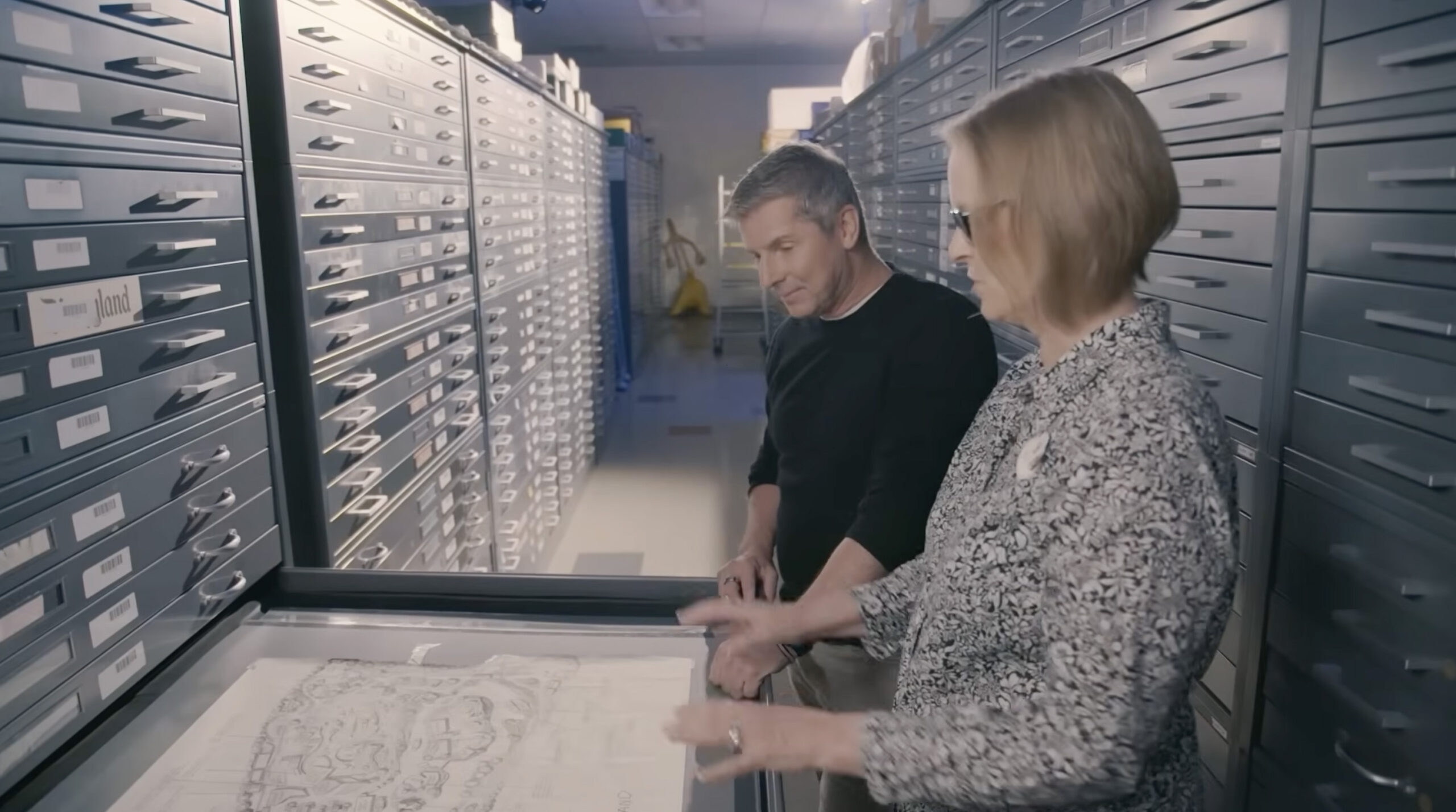
In a bonus installment of “We Call It Imagineering,” Walt Disney Imagineering President and Chief Creative Officer Bruce Vaughn joins host Denise inside the Imagineering Art Collection. Together, they examine three significant pieces representing different stages of Disneyland’s development.
Vaughn uses the artwork to illustrate one of Imagineering’s central creative principles: even the most promising ideas must be tested, adjusted, and sometimes dramatically rearranged before they can become a reality.
The “Crown Jewel” of the Collection
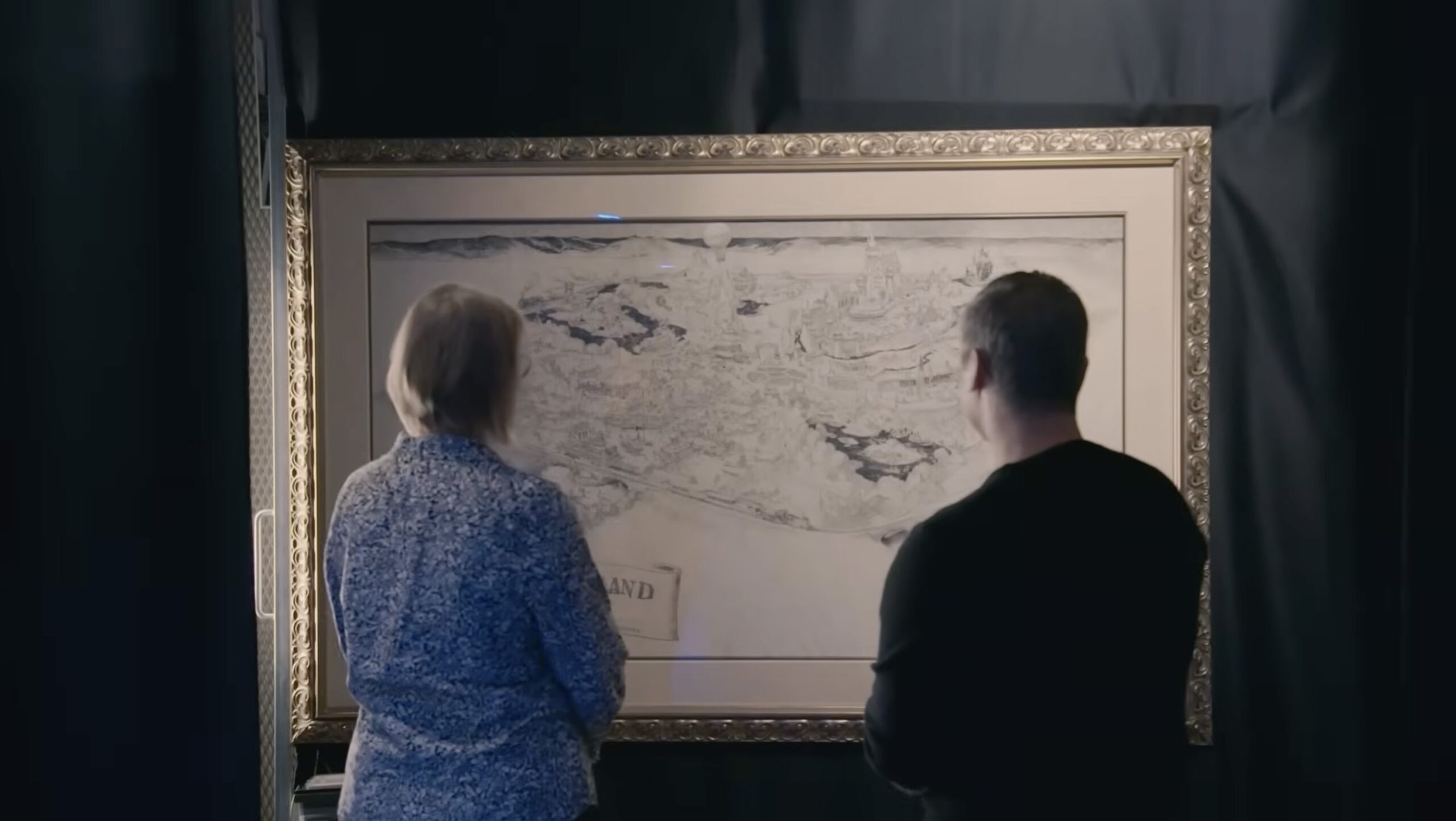
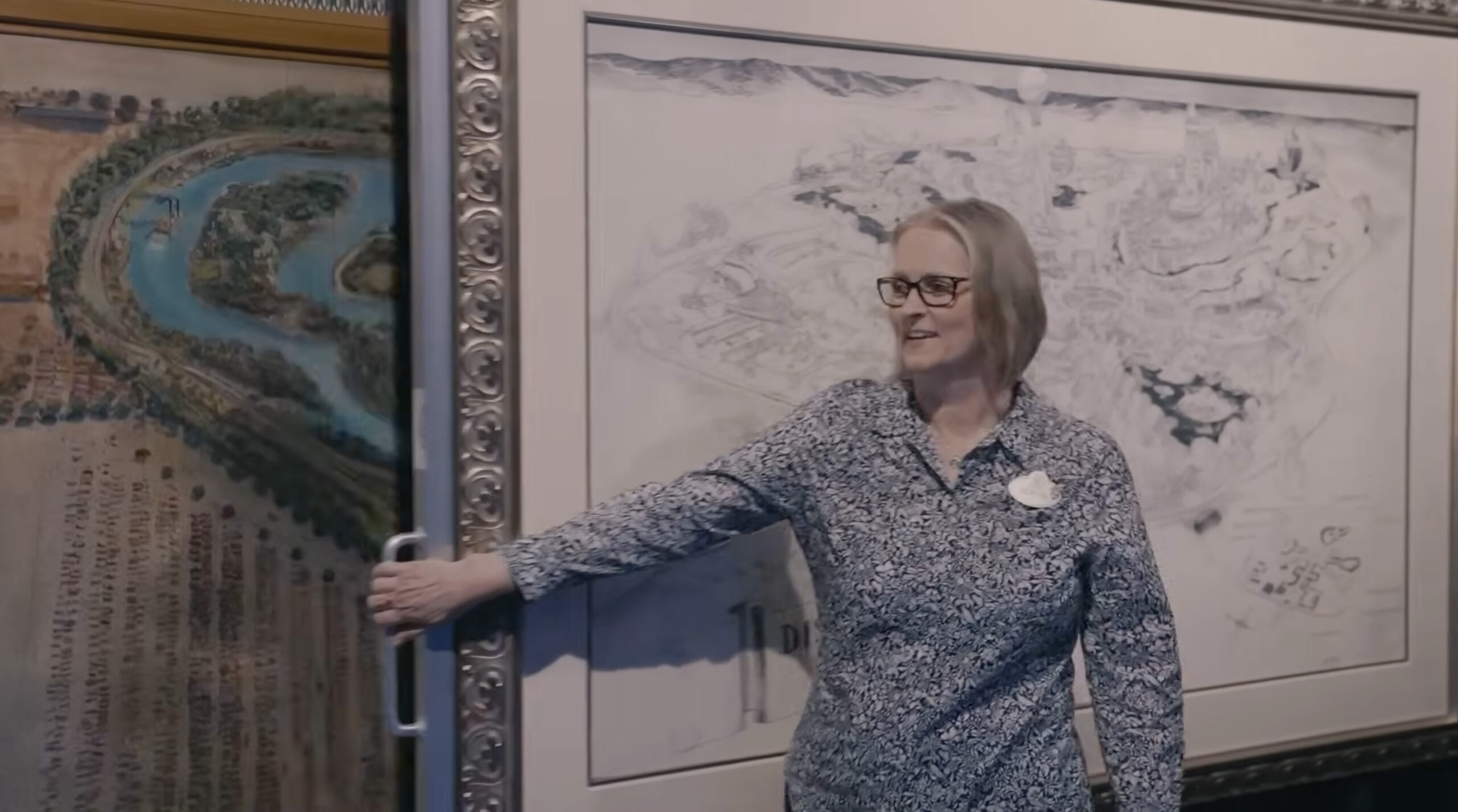
The first piece Vaughn and Denise examine is what they call the “crown jewel” of the collection: Disney Legend Herbert Ryman’s original 1953 concept drawing of Disneyland.
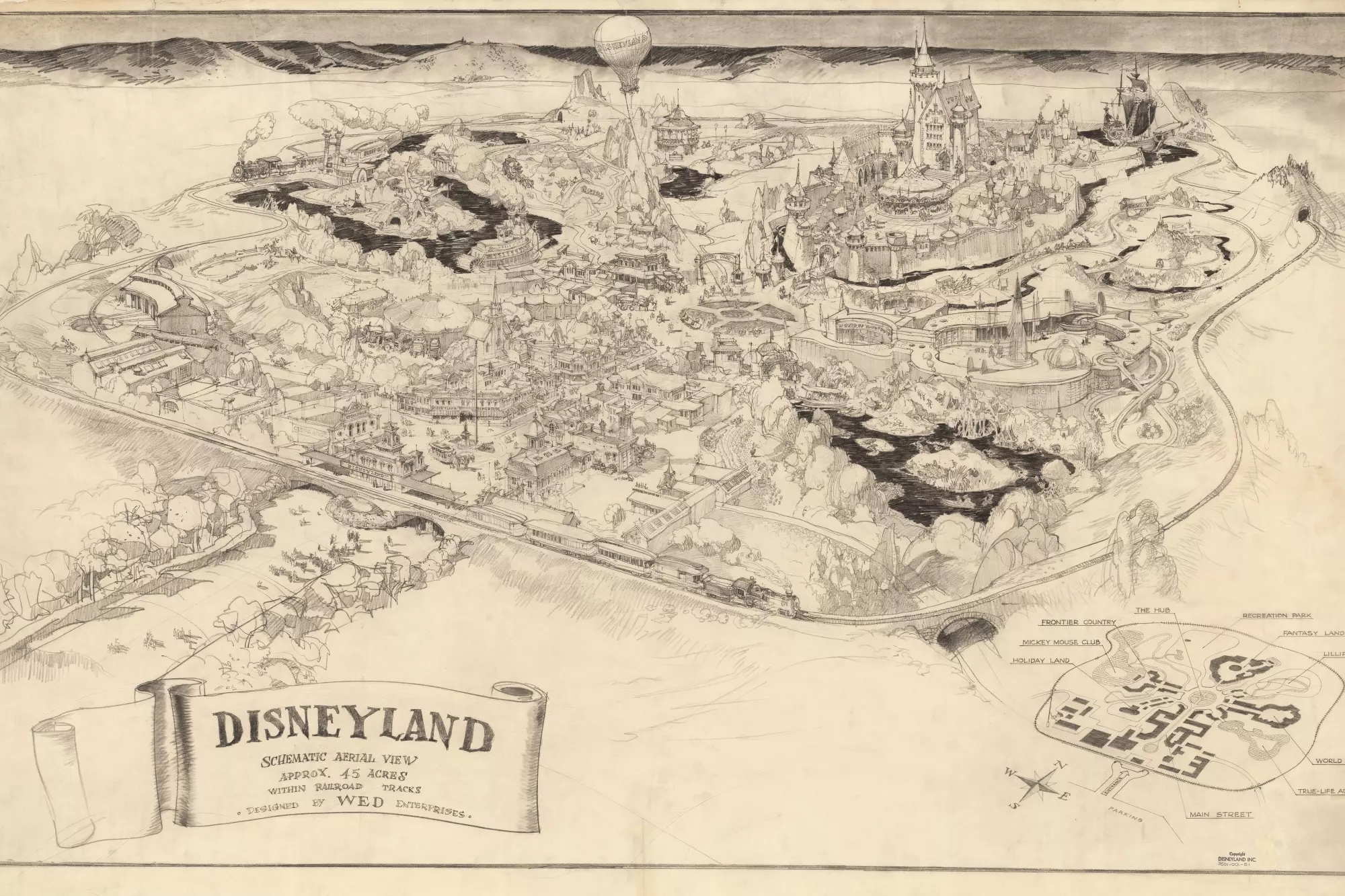
Ryman produced the expansive drawing over the course of a single weekend in September 1953, working directly with Walt Disney to translate his still-developing vision into something others could see and understand.
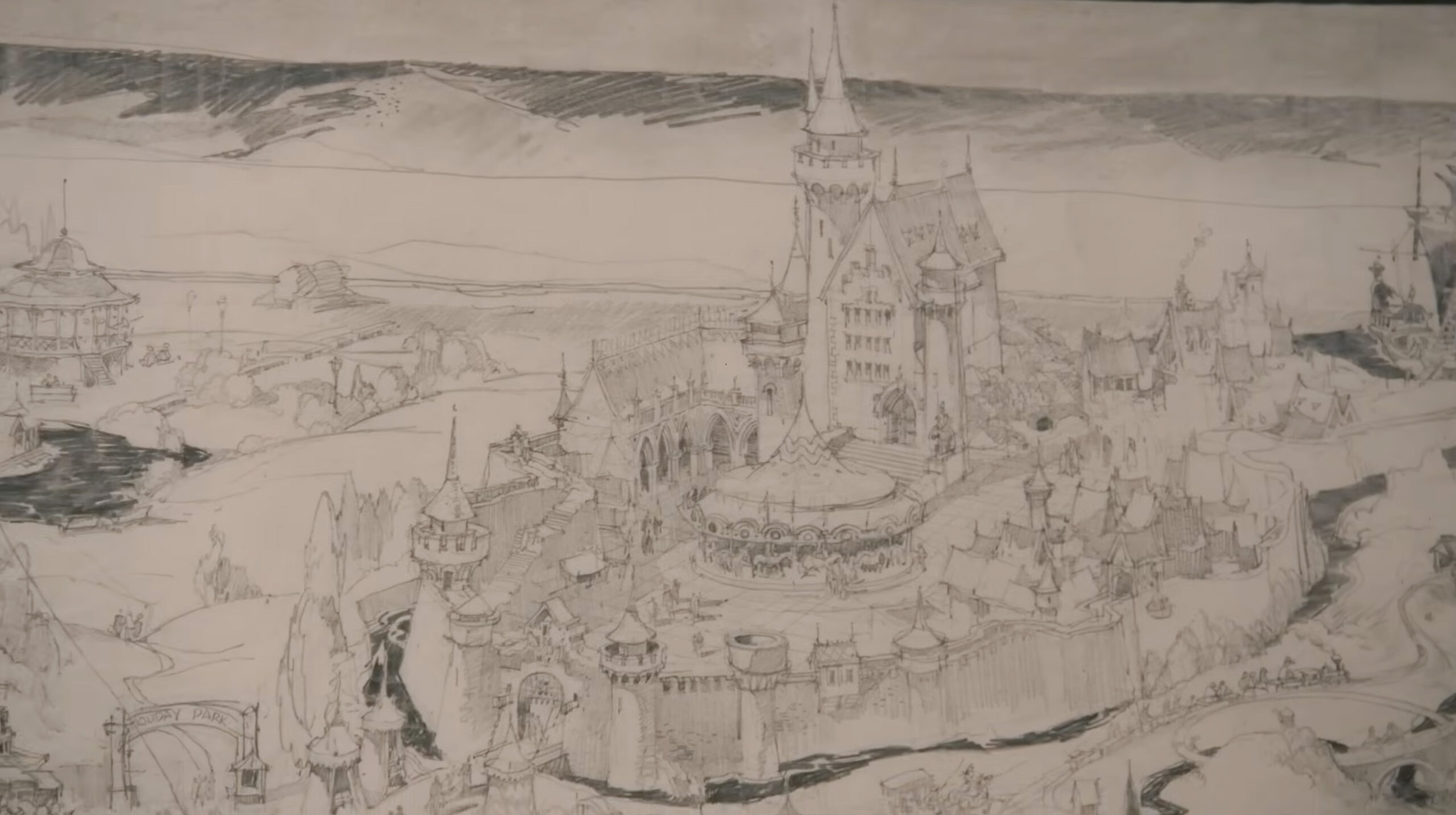
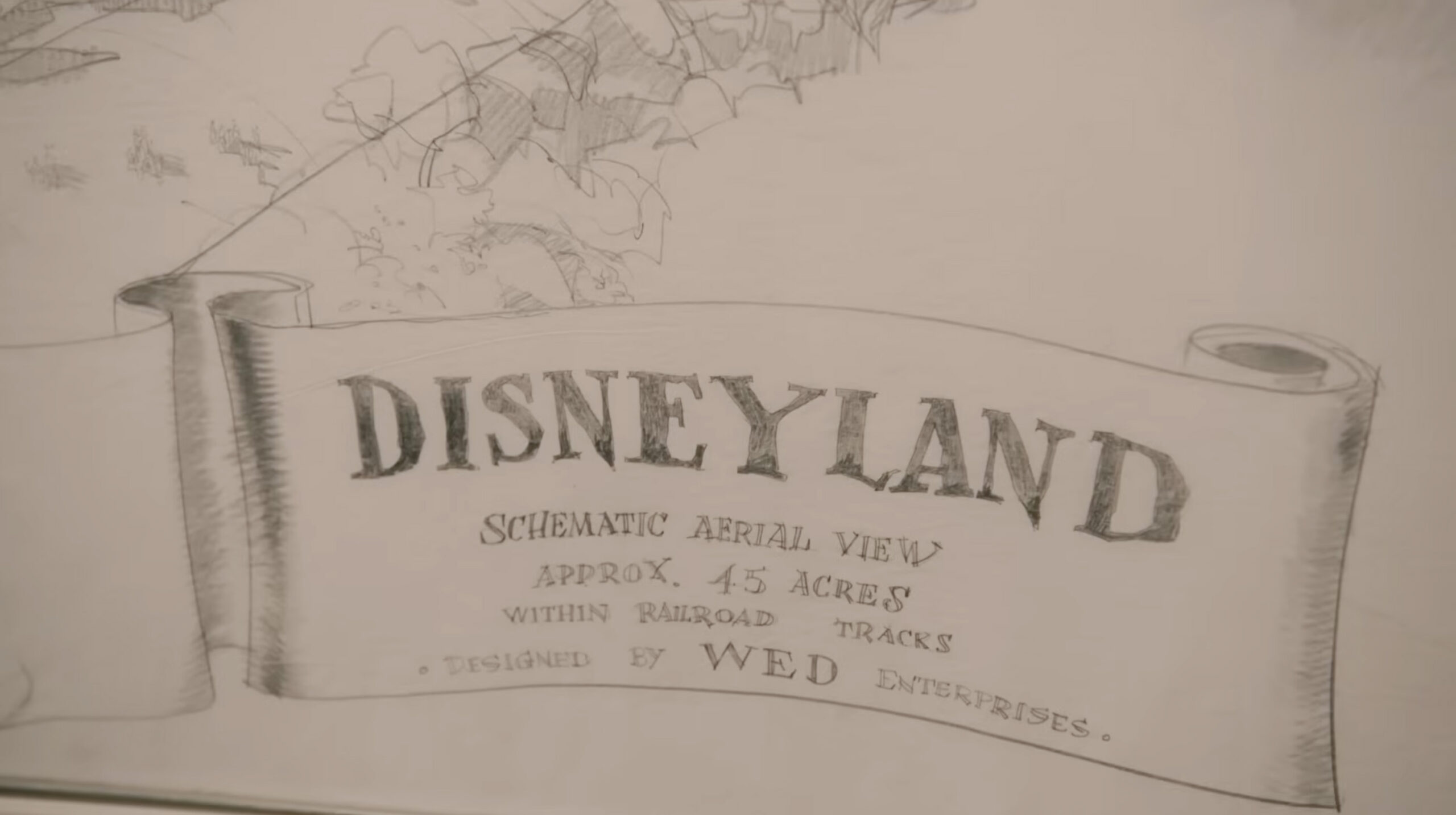
The artwork became a foundational visualization of the proposed park and helped convey the scope of the project before Disneyland was built. As we discussed in our debut episode of Materially Disney, this was not the “first” vision for Disneyland Park put to paper–a fact which Vaughn and Denise will explore later in this clip.
Although much of the familiar Disneyland structure can be recognized in the drawing, Vaughn points out that the final park did not follow it exactly. The castle changed significantly during development, while entire areas moved as Imagineers responded to the practical realities of the Anaheim property.
One particularly notable adjustment involved Adventureland. Vaughn explains that the land was relocated to the opposite side of the park after the team identified trees that could be used to provide the dense landscaping needed for its tropical environment. The change demonstrates how creative design and on-site discoveries shaped Disneyland together.
The anecdote also reinforces Vaughn’s broader point that concept art is not necessarily a fixed set of instructions. It establishes a direction, but the design continues to evolve as Imagineers discover better solutions.
Peter Ellenshaw’s Day-to-Night Disneyland Painting
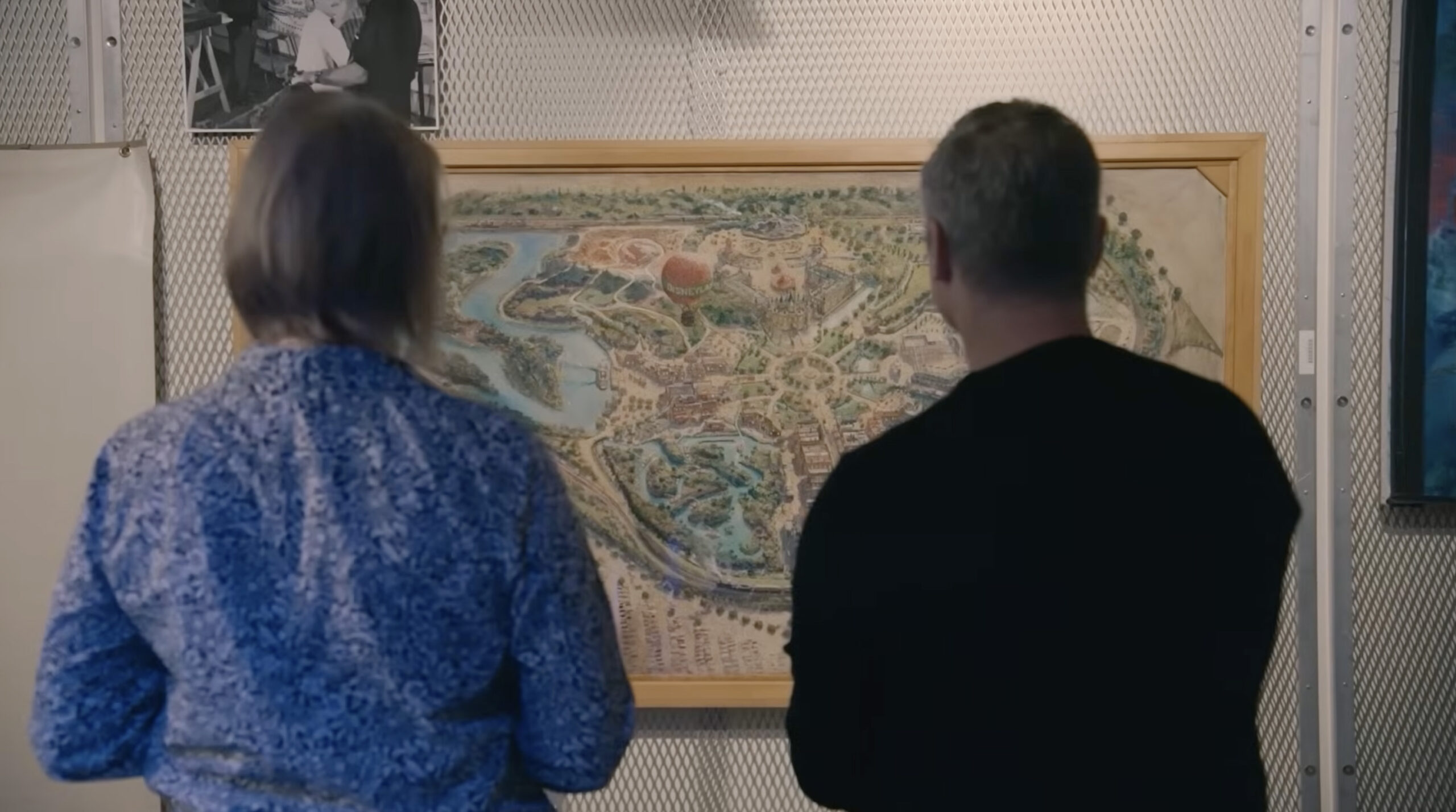
The next piece is a 1954 Disneyland painting created by legendary matte artist Peter Ellenshaw for the “Disneyland” television series.
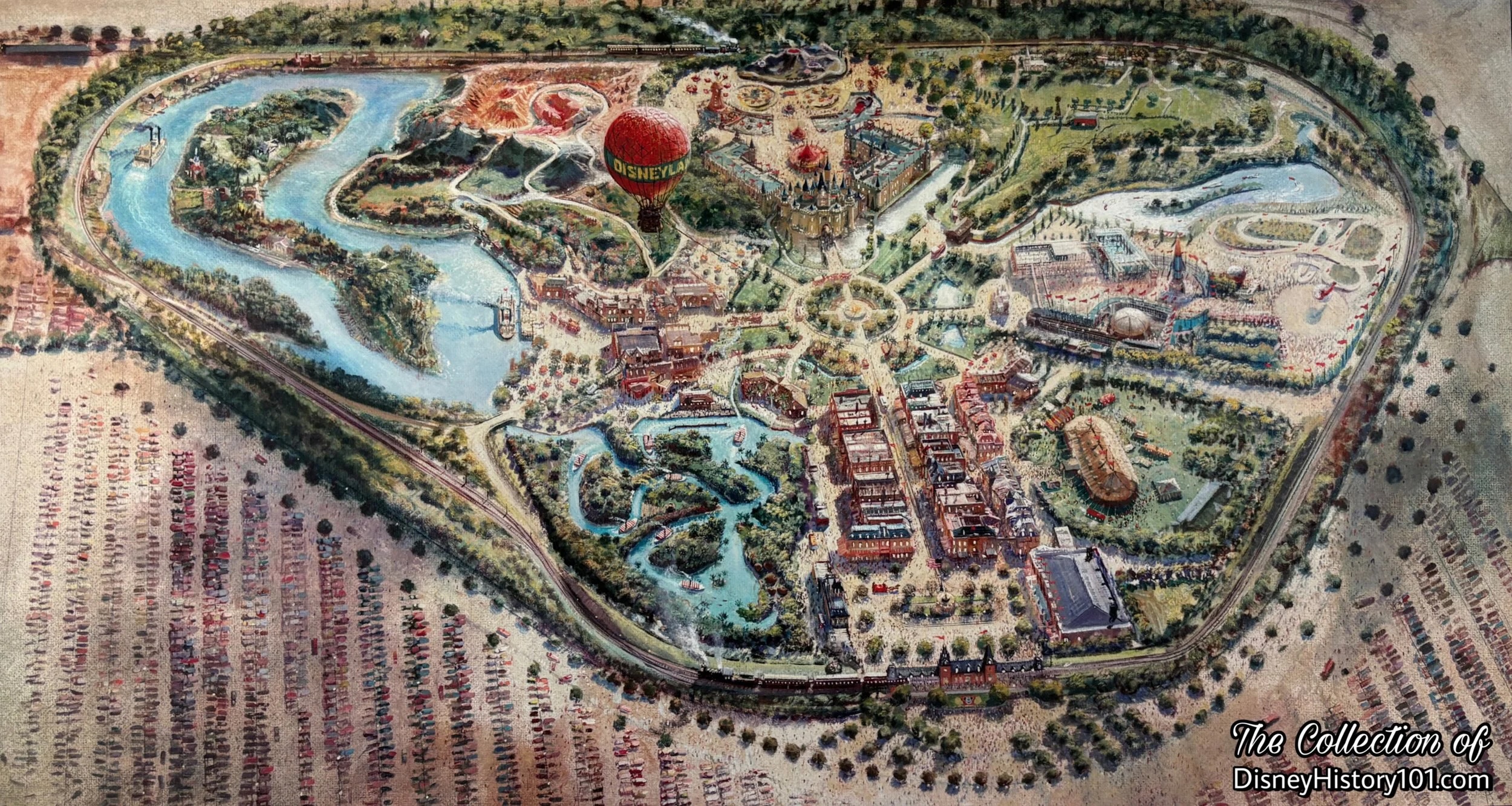
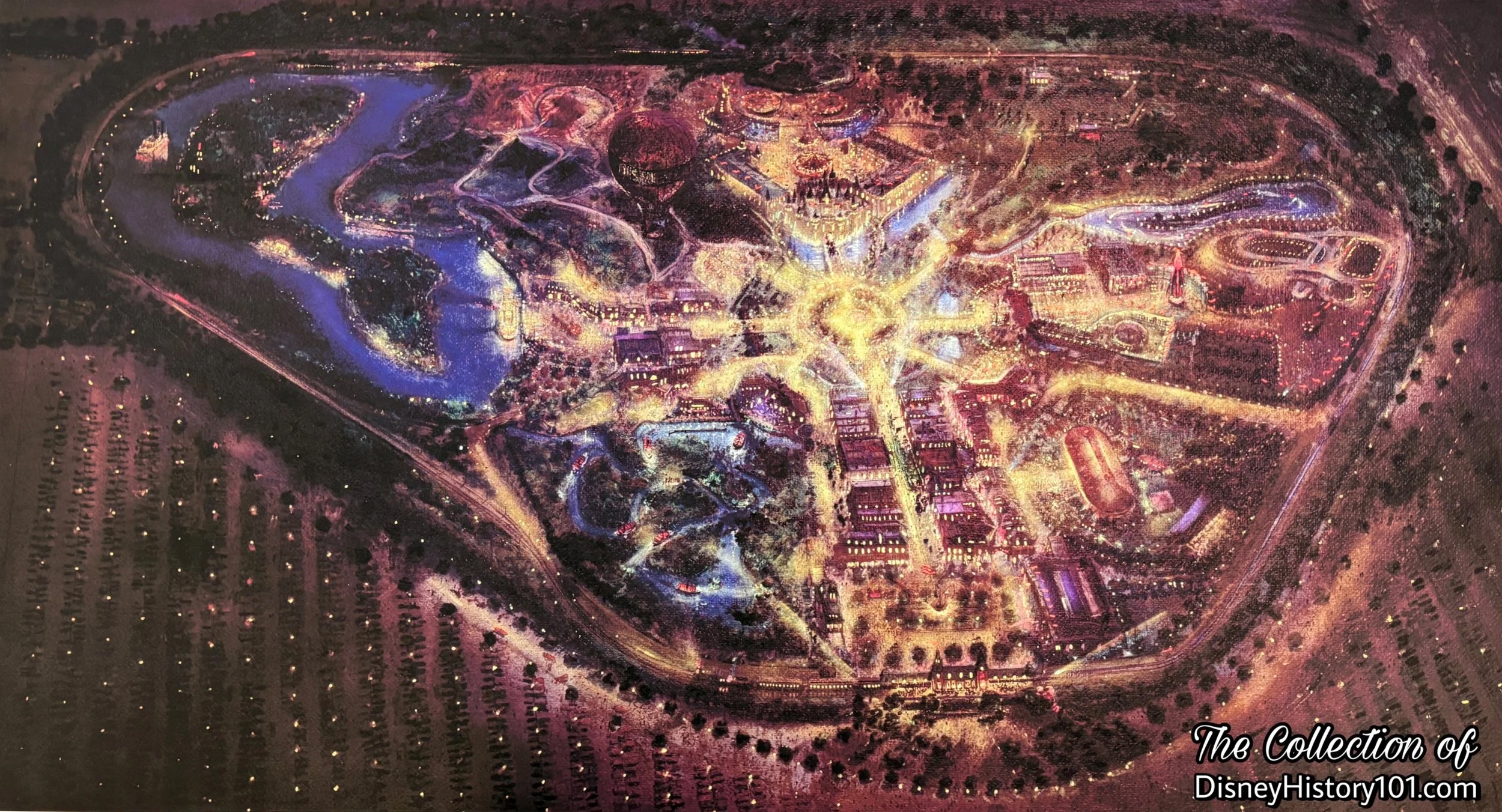
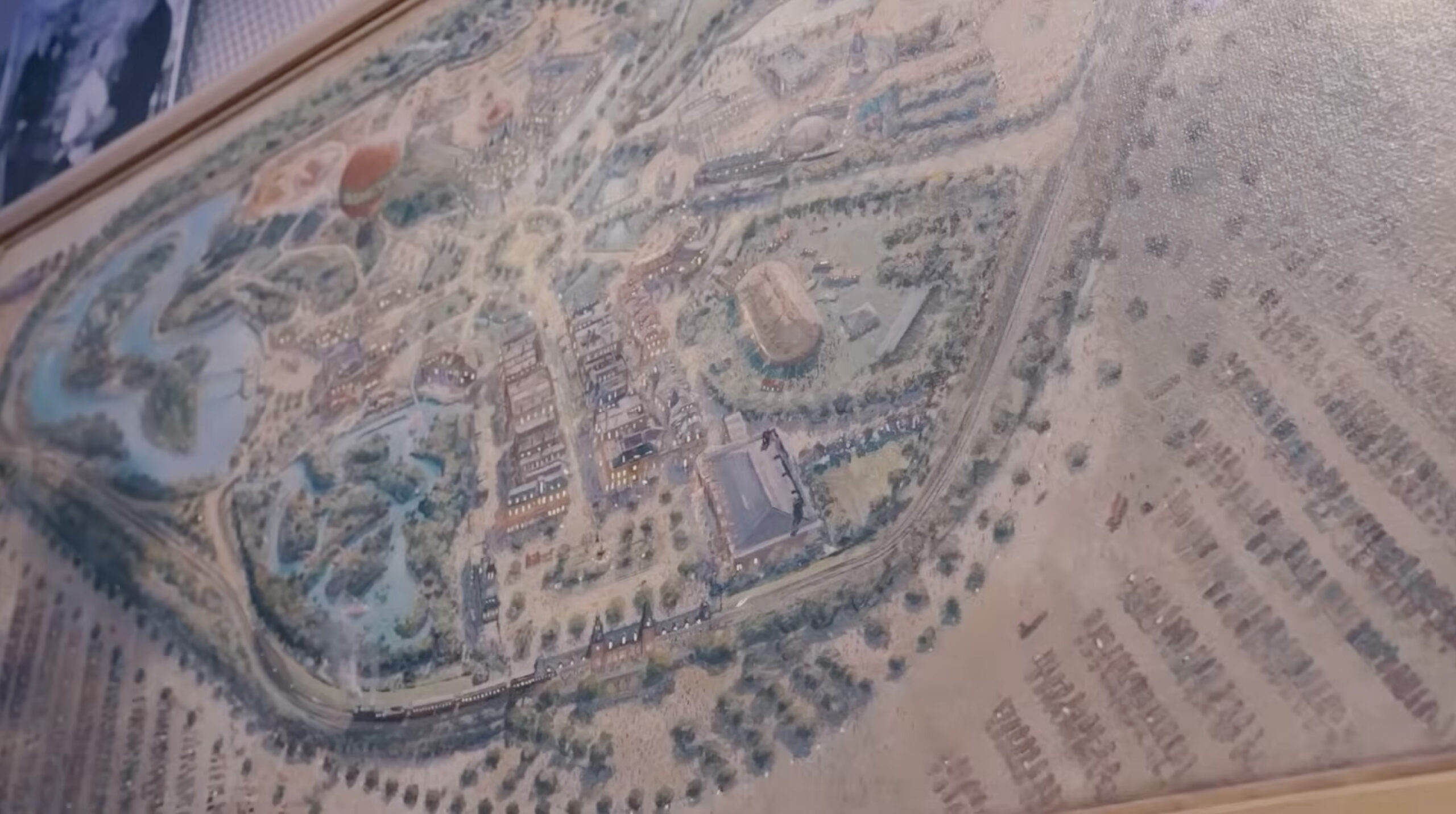
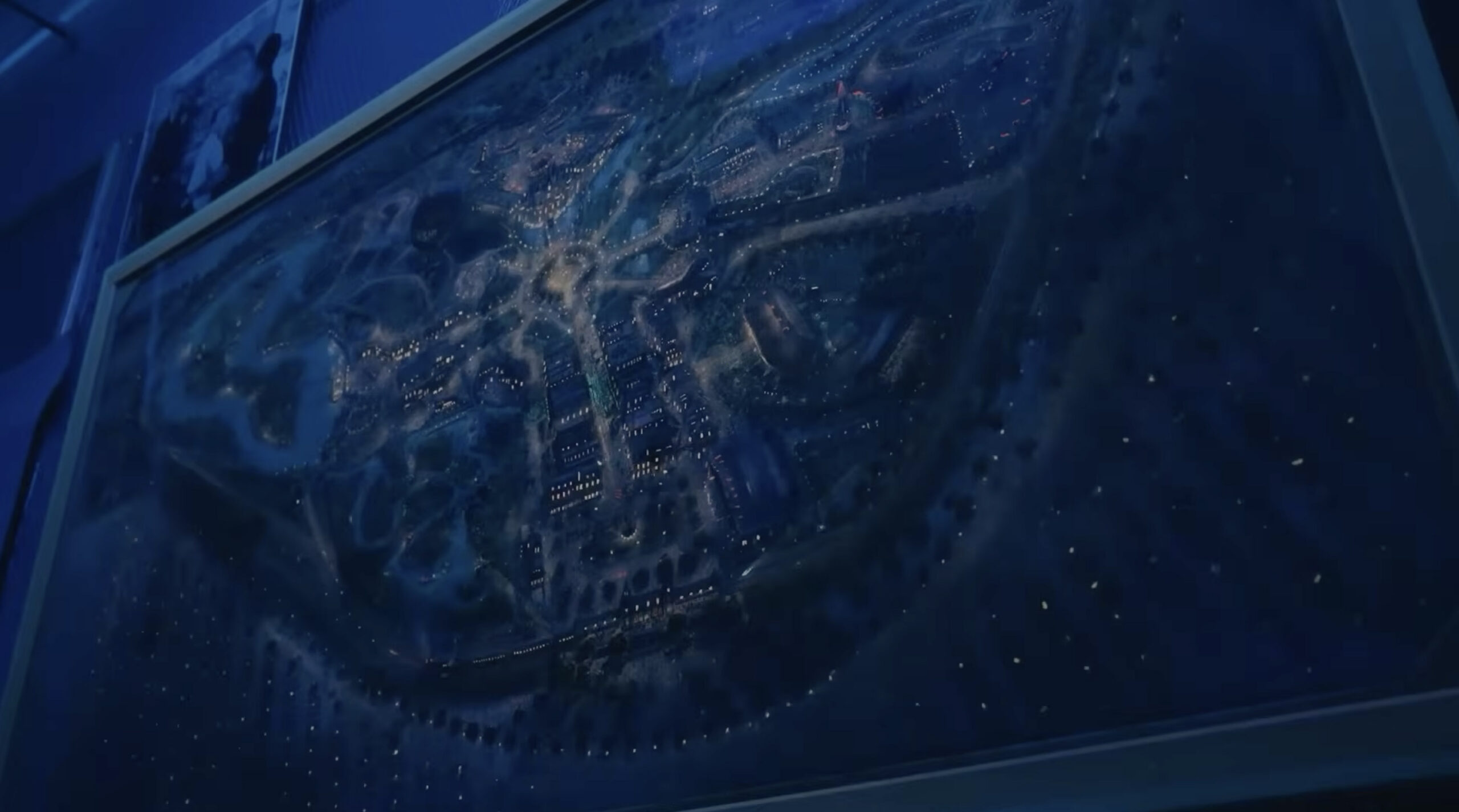
Ellenshaw’s artwork presented viewers with a sweeping visualization of the future park before it opened. The painting was designed to transform between daytime and nighttime appearances through the way its painted layers were illuminated.
Vaughn describes the effect as an example of how Disney artists created visual magic without relying on modern electronics or digital imagery. Different lighting conditions revealed different painted details, allowing the same physical artwork to depict Disneyland beneath a bright daytime sky and later illuminated after dark.
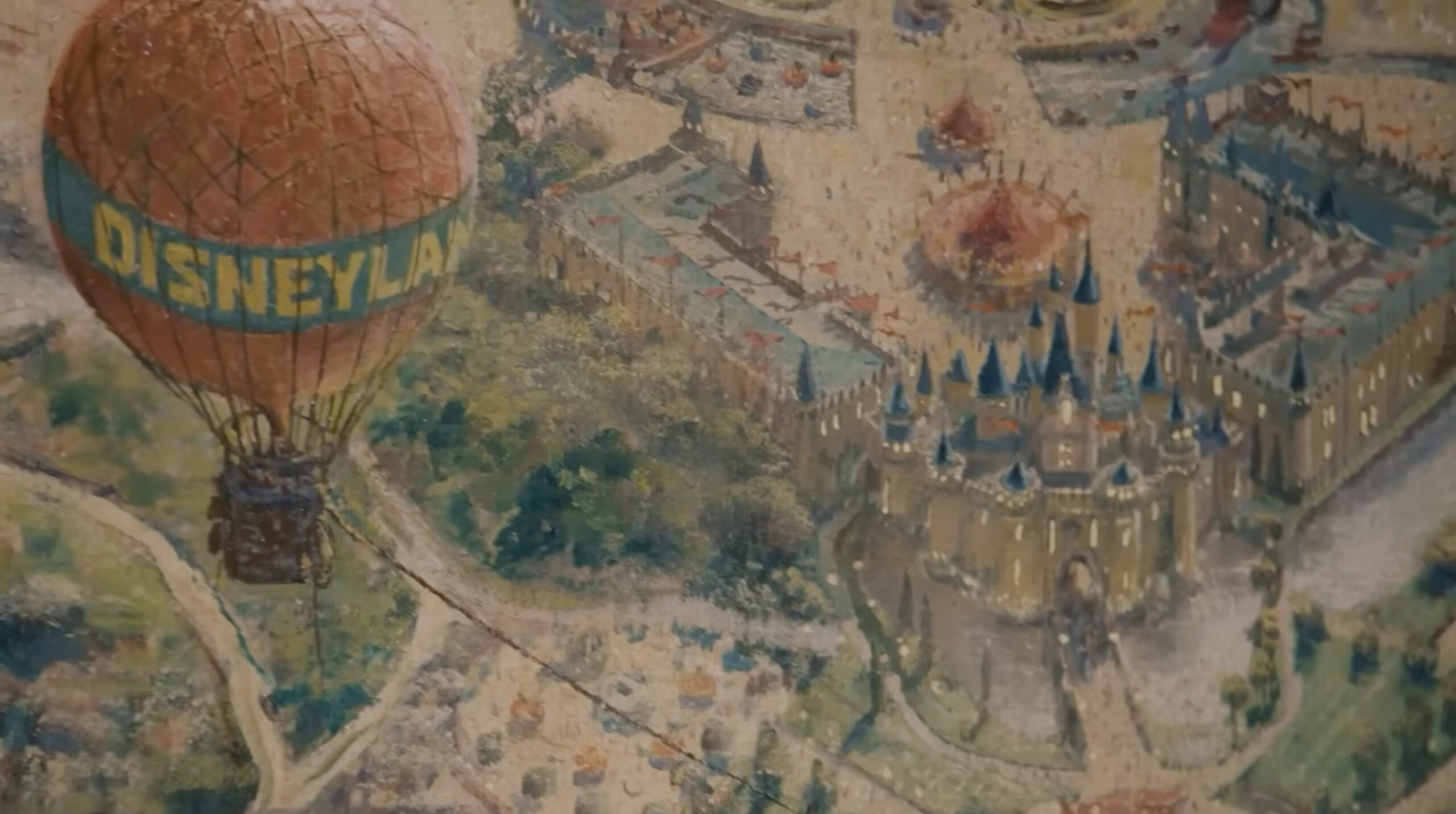
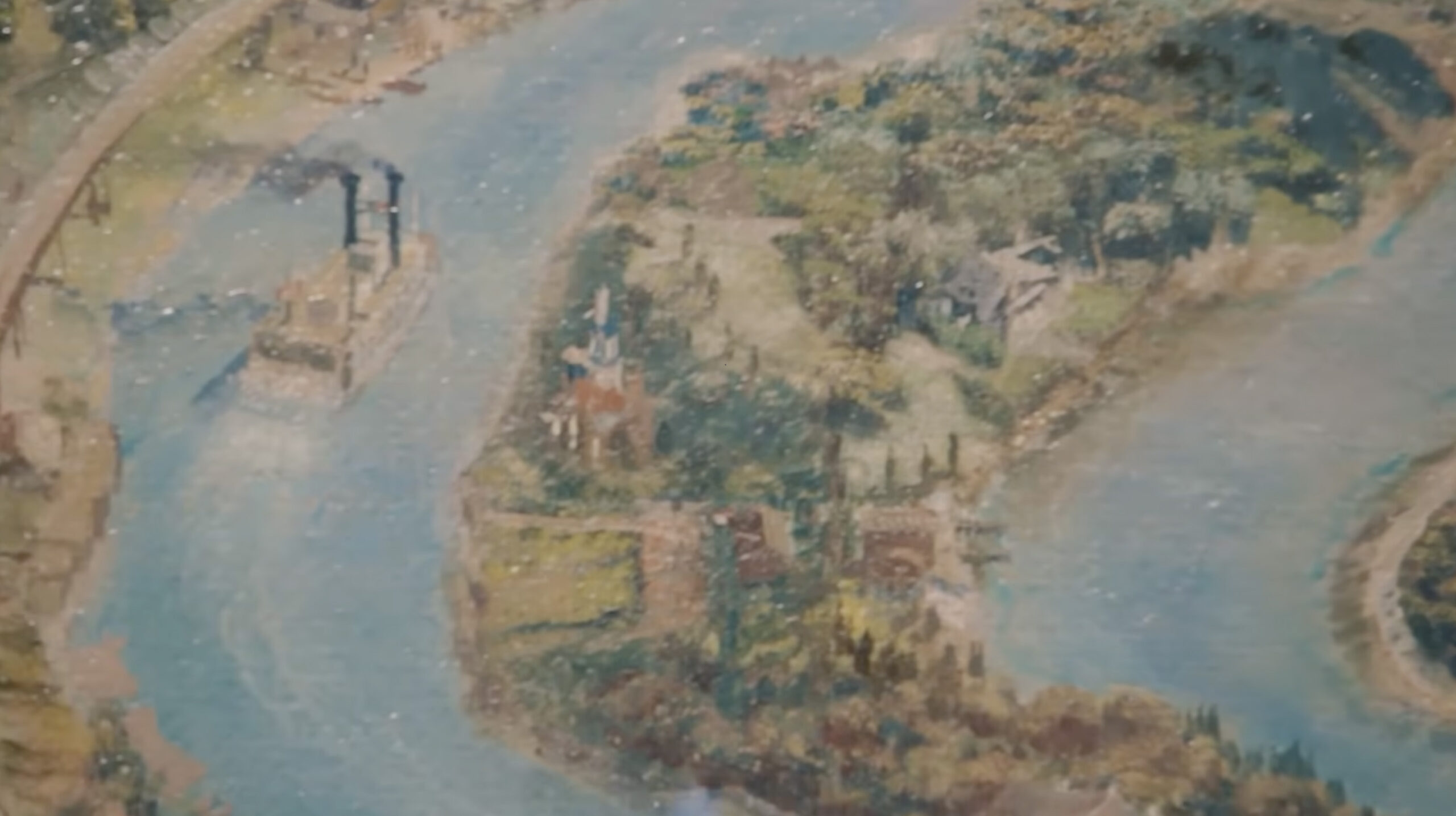
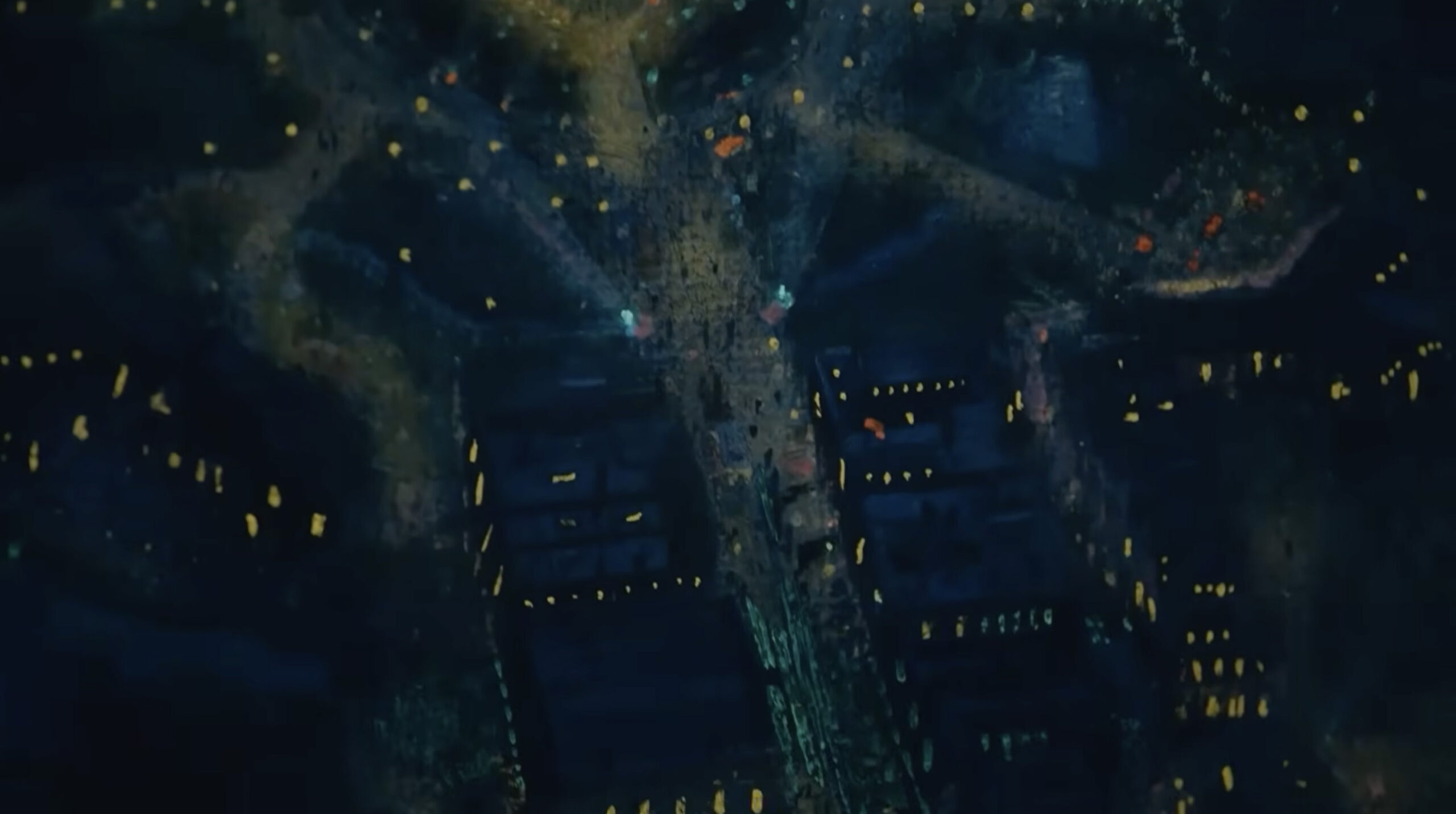
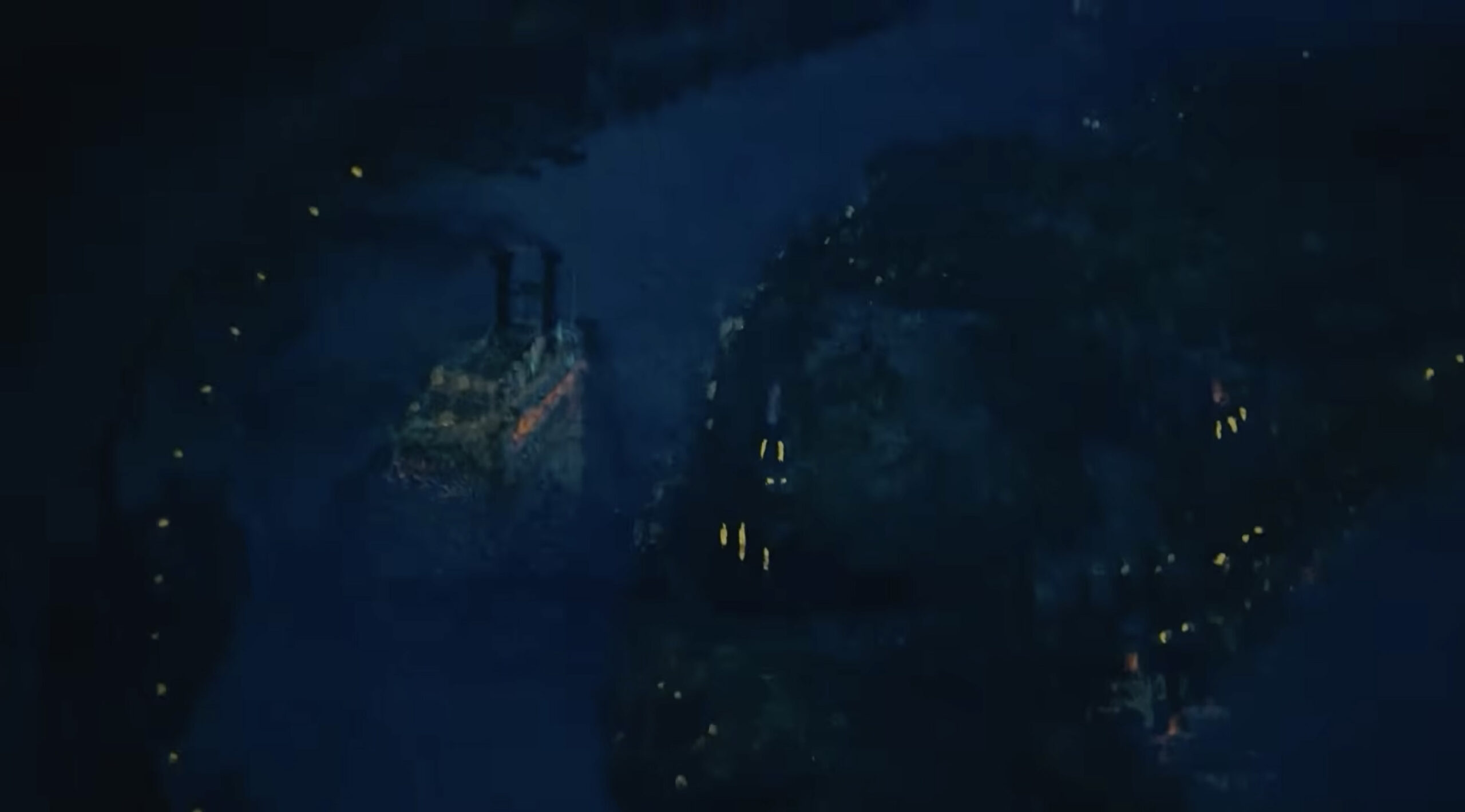
The piece helped television audiences imagine not only Disneyland’s physical layout but also the atmosphere Disney intended the park to have. The “Disneyland” television program became an important platform for introducing the project to the public and building anticipation ahead of its July 1955 opening.
Disneyland’s Abandoned Burbank Design
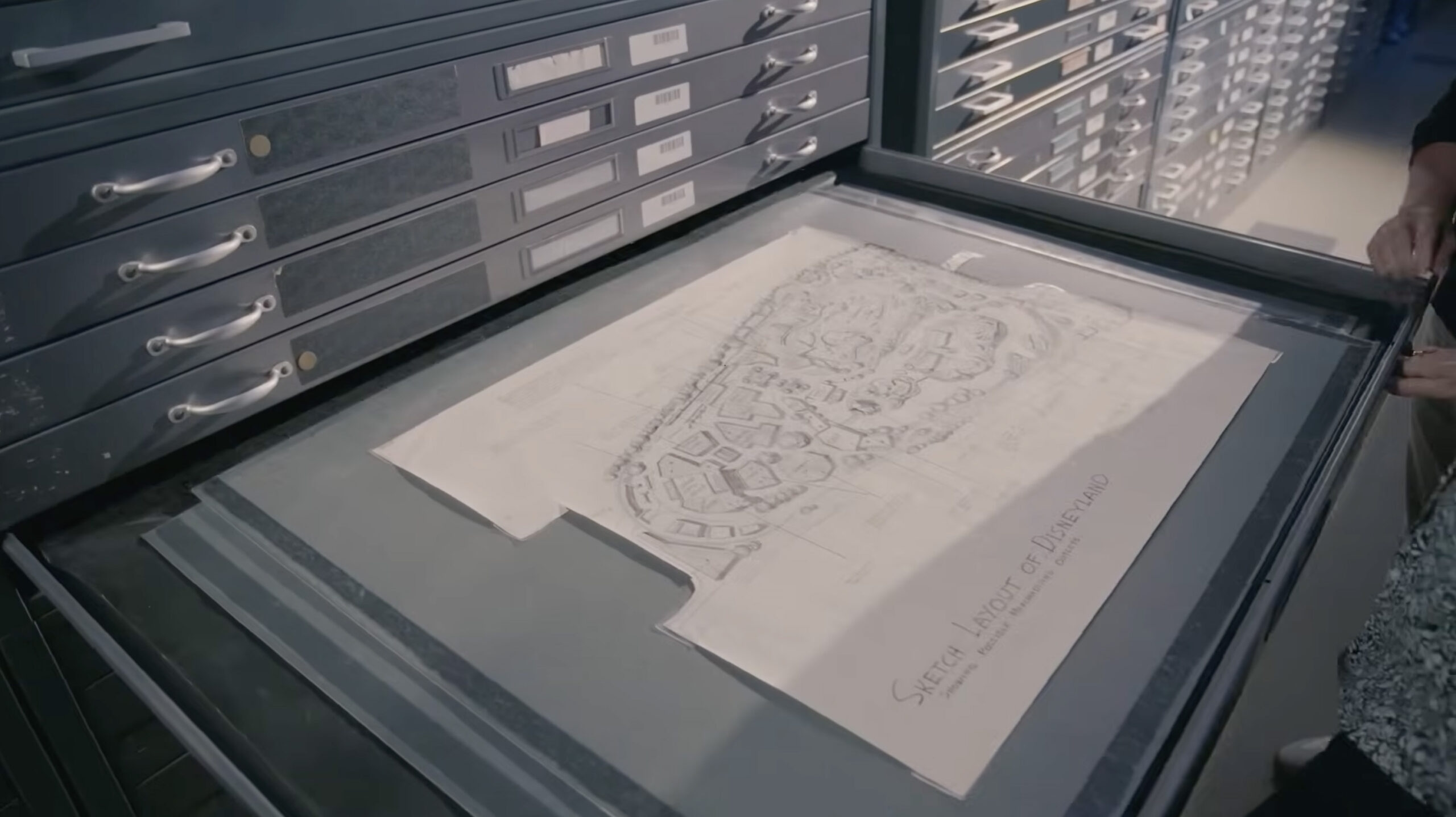
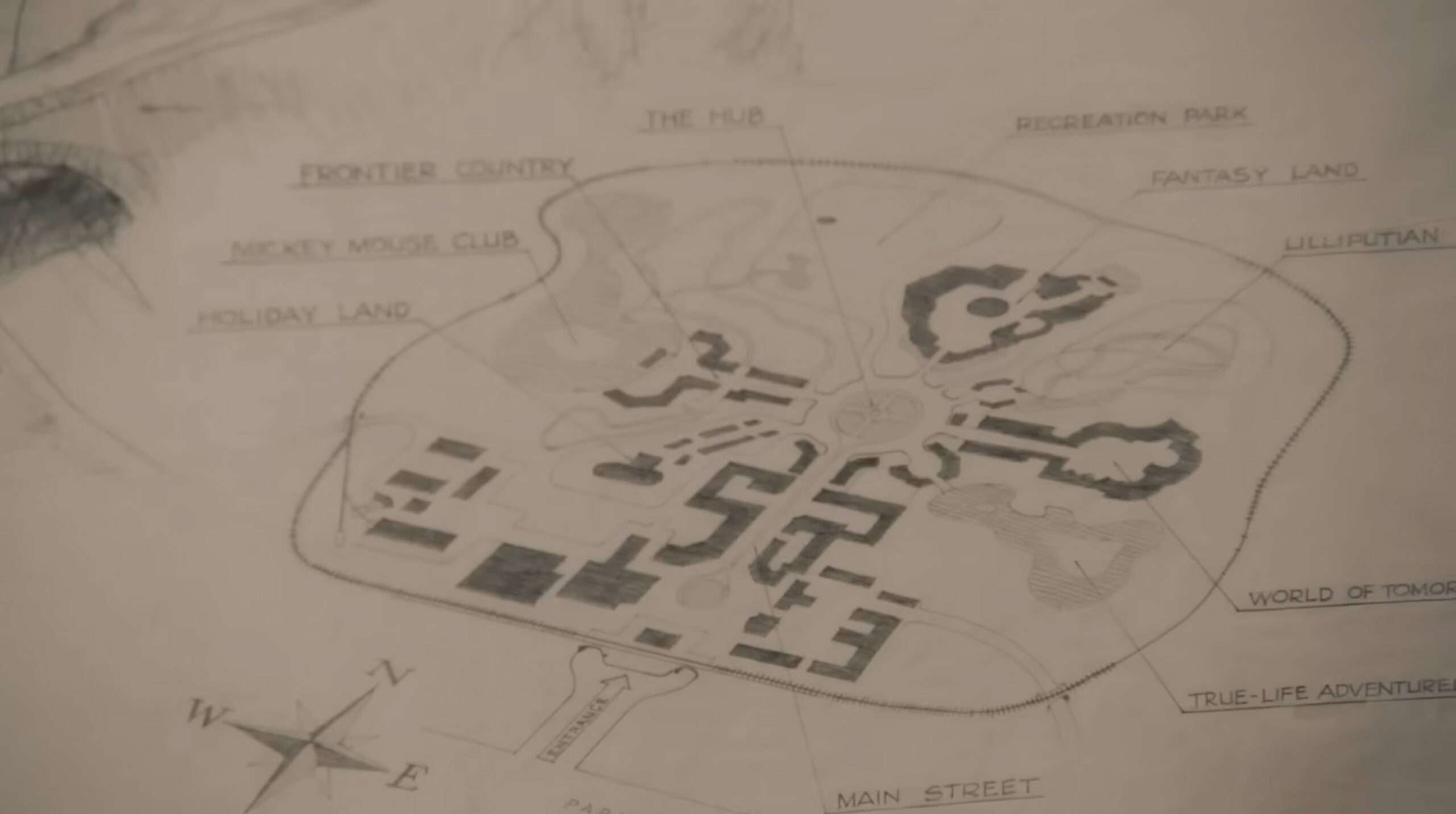
The segment concludes with an especially early Disneyland plan by Disney Legend Harper Goff. Unlike Ryman’s better-known master plan, this artwork was created before Anaheim had been selected as the park’s location.
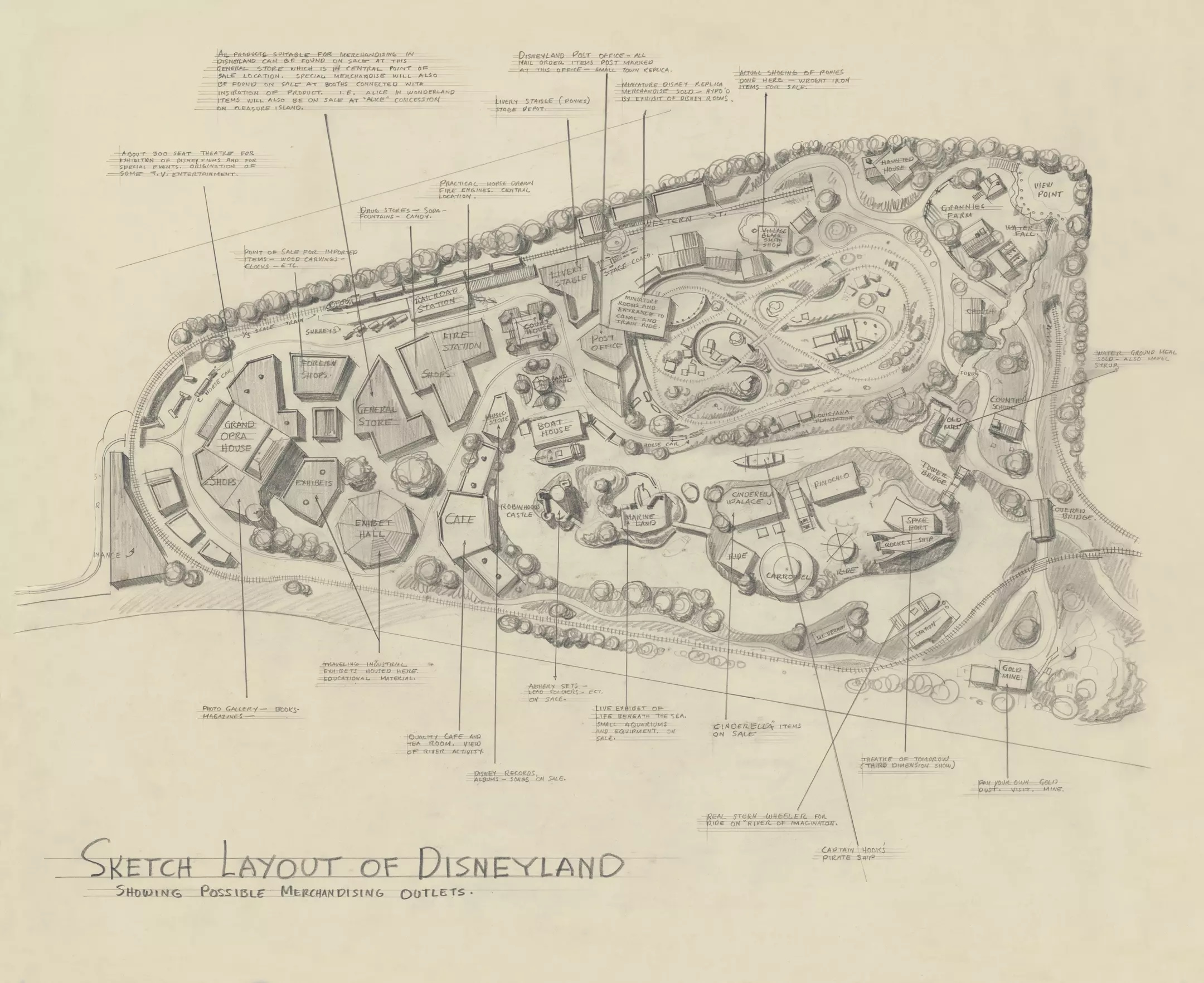
Disney originally considered constructing his entertainment enterprise on a parcel of land across from the Walt Disney Studios in Burbank, a theme park concept that would become known as Mickey Mouse Park. According to the Walt Disney Archives, Disney first asked Goff to produce illustrations for the proposed property as early as 1951.
The available property was substantially smaller than the eventual Disneyland site and had an irregular, wedge-shaped configuration. Goff’s artwork shows how the attractions, streets, landscaped areas, and waterways might have been arranged within those constraints.
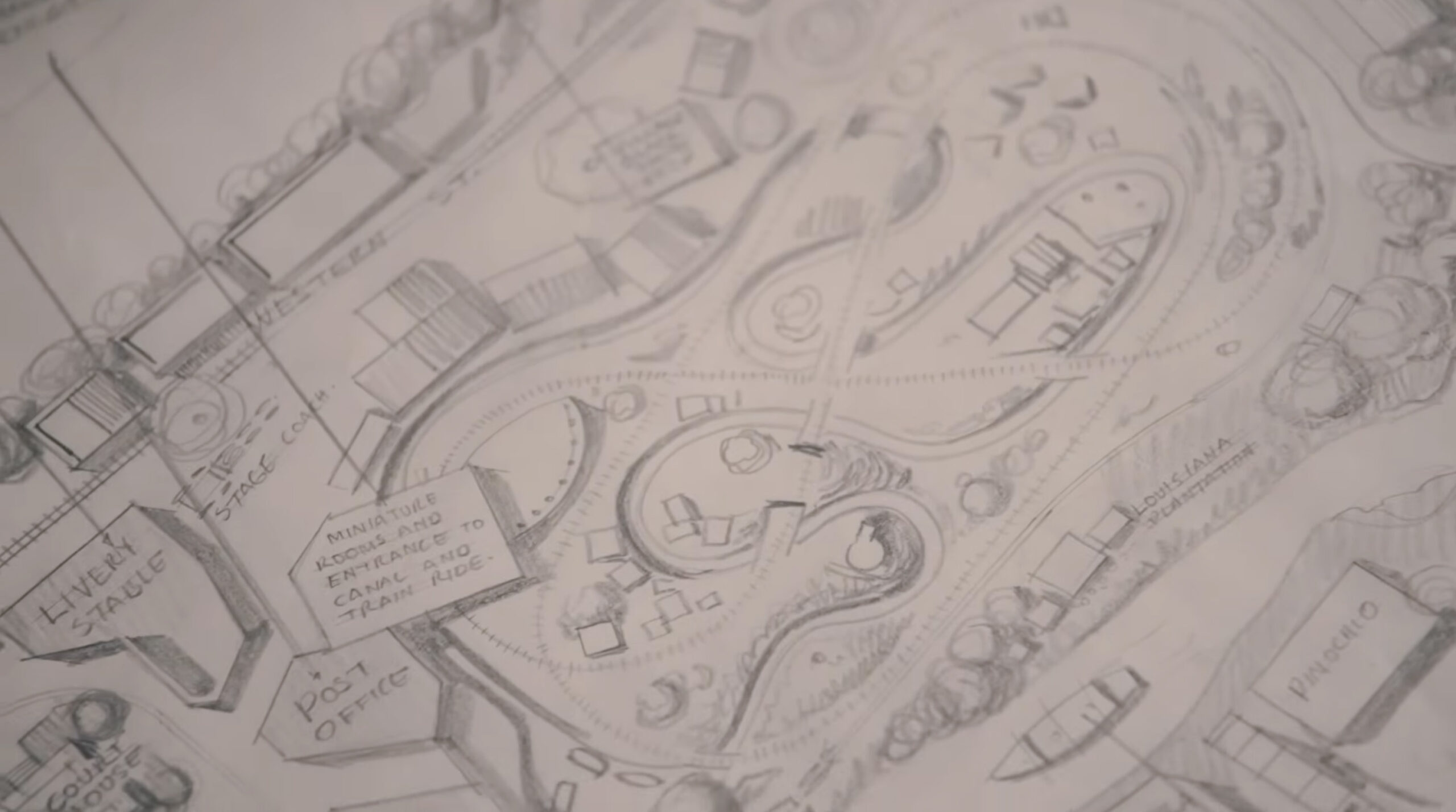
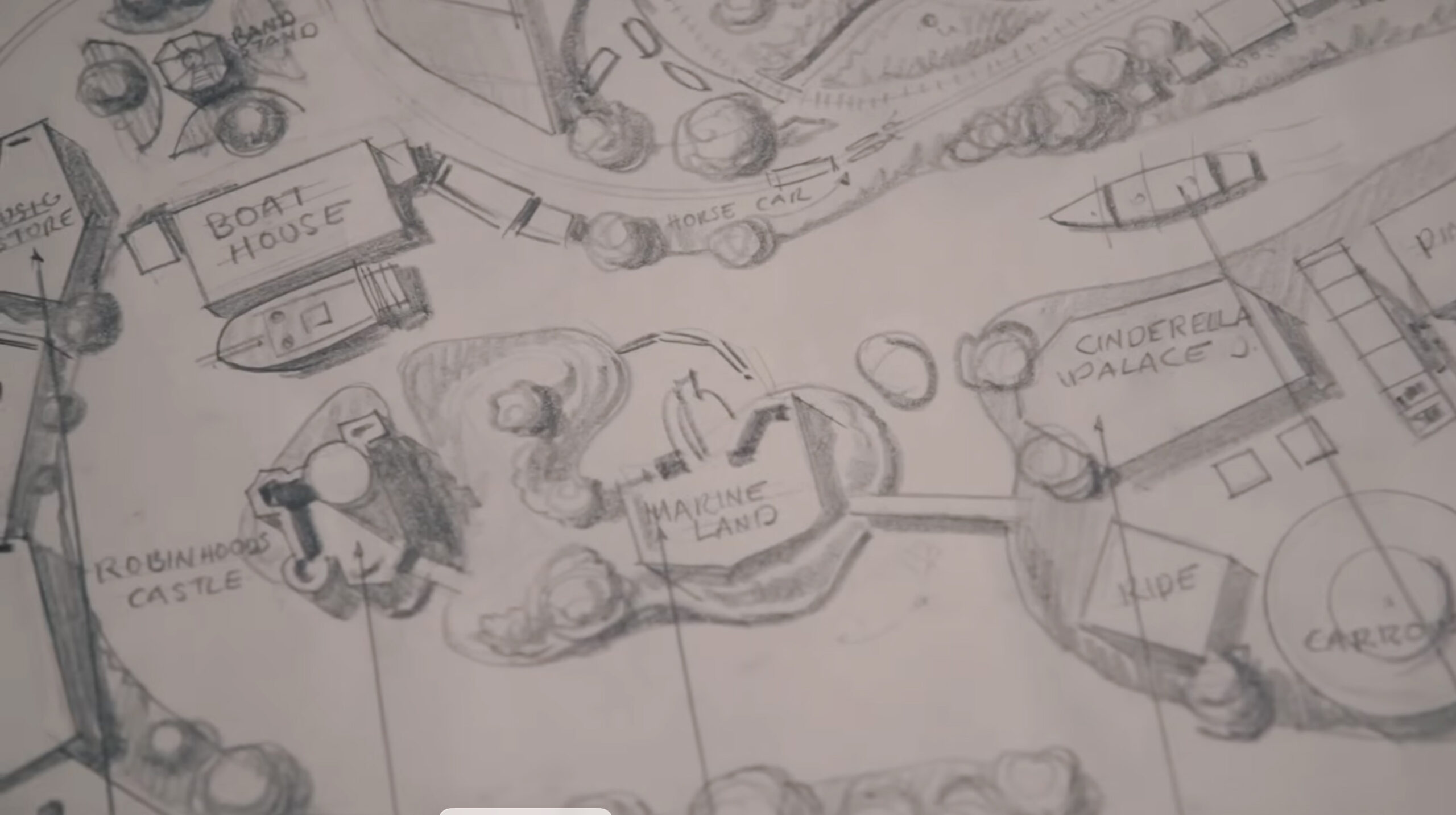
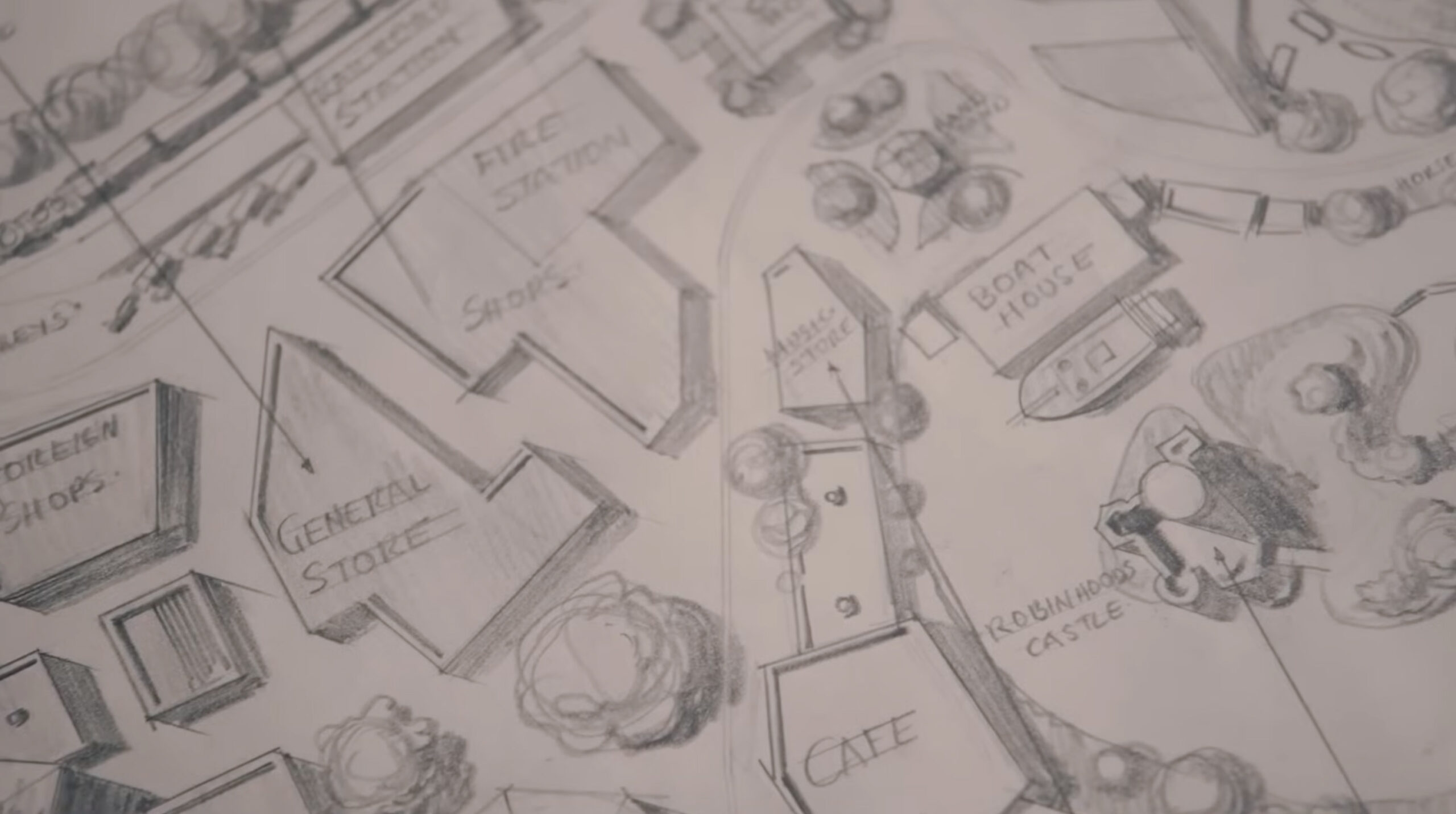
As Vaughn observes, the plan is recognizably connected to the ideas that eventually became Disneyland, but its physical configuration is dramatically different. Moving the project to Anaheim provided enough space for those ideas to grow into a full-scale theme park.
The Burbank proposal also serves as perhaps the video’s clearest illustration of Imagineering’s iterative process. Disneyland did not emerge from one perfect drawing. Its familiar lands and landmarks developed through multiple plans, artists, locations, and revisions.
You can check out the full clip below:
For even more detail on the earliest visions of Disneyland, including a look at perhaps one of the most priceless prototyping artifacts in the history of the company, check out the first episode in our new series, Materially Disney:
Which early Disneyland concept is your favorite from an artistic standpoint? Share your thoughts with us on social media.
For more Disneyland Resort news and info, follow Disneyland News Today on Twitter, Facebook, and Instagram. For Disney Parks news worldwide, visit WDWNT.