Complete History of Dinosaur / Countdown to Extinction
Video
In the late 1980s, Disney and George Lucas roared into their partnership, starting with Captain EO starring Michael Jackson, and then Disneyland’s newest thrill ride, Star Tours. The world’s first motion simulator attraction, to say the wild romp through that galaxy far, far away was a game changer would be a hellacious understatement.
With the first Star Tours open, it was clear it would be a staple across the globe in Tokyo, Orlando, and the then-in-development Euro Disneyland. With Star Wars addressed, it was clear where Disney Imagineers and Lucasfilm had to roll on to next…
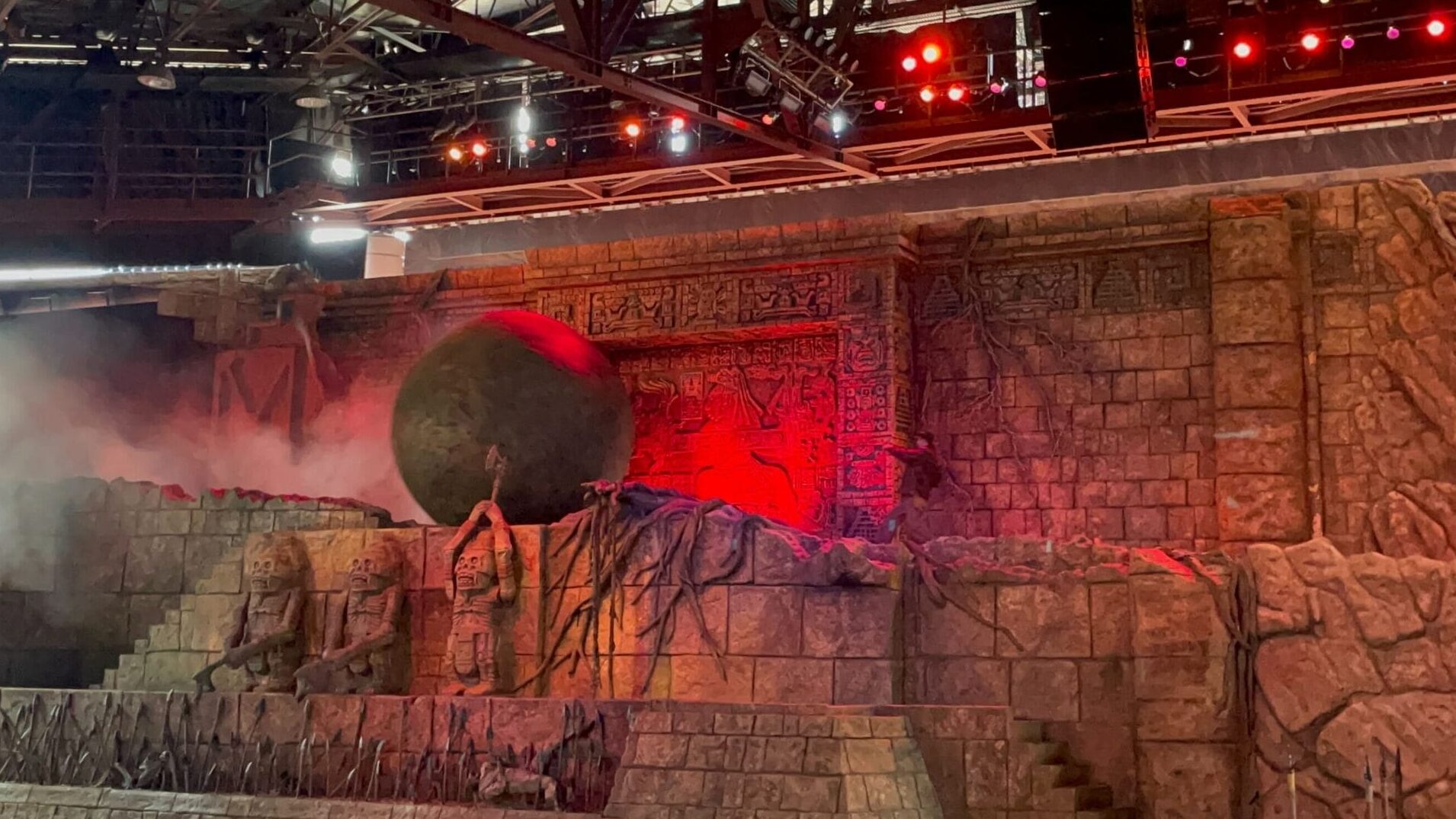
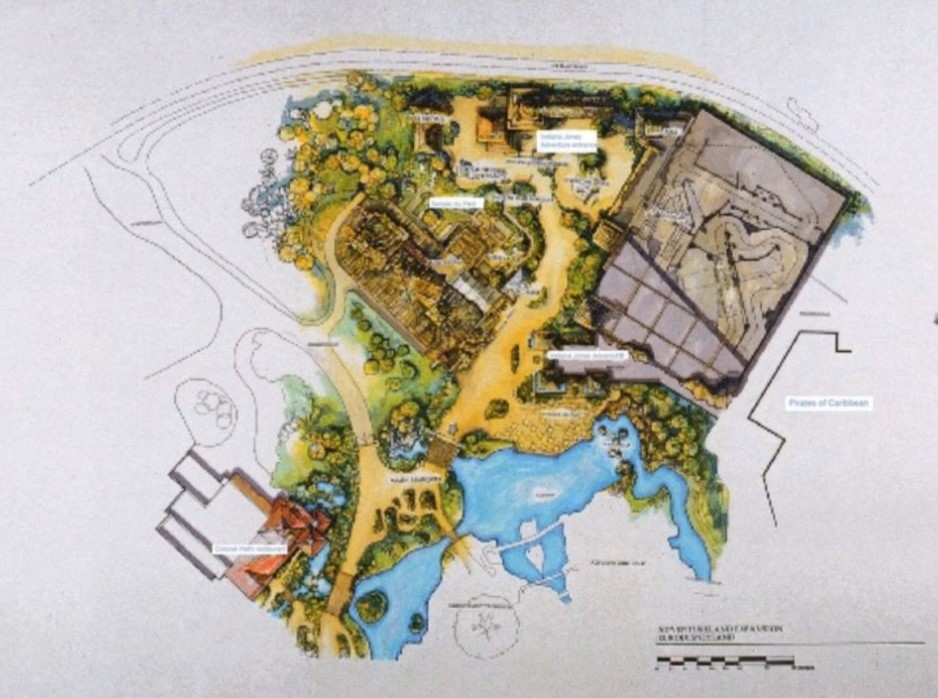
For the globe-trotting adventures of Indiana Jones, Imagineers decided to head to “the lost delta of India.” Several early concepts were considered including a walk-through adventure and a high-speed mine car adventure within a temple based on The Temple of Doom installment of the franchise. Imagineers even considered using the Jungle Cruise to shuttle guests to the loading area of these attractions. The plans were immense and called for radical transformation to the park’s Adventureland and indeed, the park as a whole, creating an entire sub-land dedicated to the khaki-clad adventurer.
This was Indiana Jones and the Lost Expedition. Inside this huge temple ride complex, weaving amongst caves and caverns, guests would have found two brand new attractions – that mine car coaster, and the first-ever Enhanced Motion Vehicle attraction.
Ultimately, Indiana Jones and the Lost Expedition stayed lost. Instead, then-CEO Michael Eisner allegedly fell head over heels for an expansion aimed at the northwest end of the park called the “Zip-A-Dee River Run”, which he’d later insist be called Splash Mountain.
WDI was still developing an “Indiana Jones miniland” for Disneyland Paris’ Adventureland. While those plans included a new, darker, scarier Jungle Cruise, it also included the enhanced motion vehicle jeep ride. Unfortunately, Euro Disneyland had immediate needs for more rides, so it was decided to build just one smaller Indiana Jones offering to be ready shortly after the park opened.
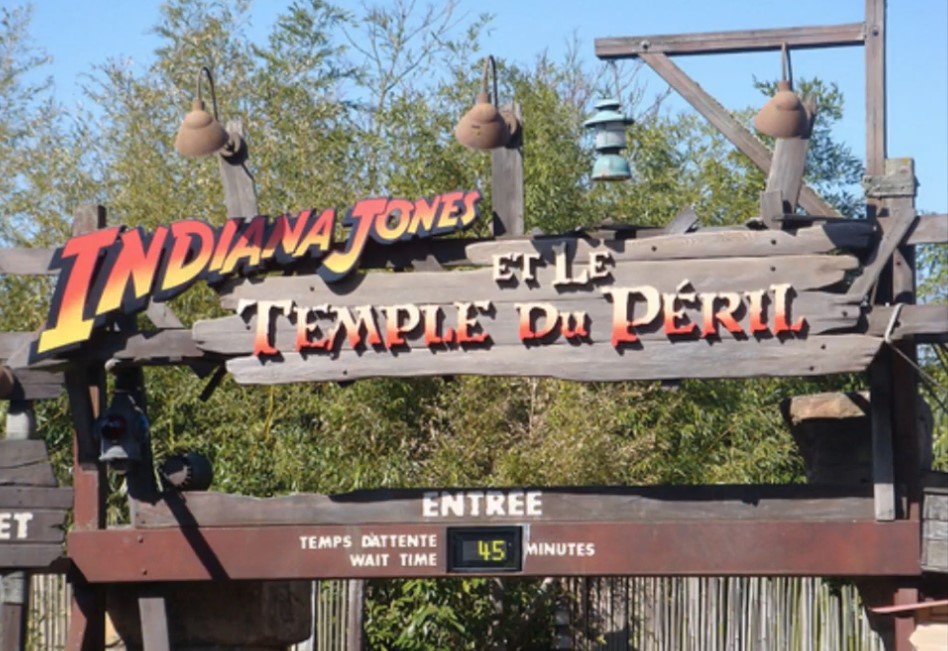
On July 30th, 1993, Indiana Jones and the Temple du Péril was the first ever Disney roller coaster to feature an inversion and the first ever Disney thrill ride to have a track gauge wider than 50 inches at 55. Despite lacking an indoor show building and the same scale as its “blue sky” predecessor, the final attraction stays true to the heavy theming of the original plans, with enough landscaping, winding paths and lush vegetation. However, to this day, there still feels like something is missing just next door to the compact coaster, because, well, there is.
At this point, the Jeep Expedition was in fact still in the works. WDI was developing the attraction for both Disneyland in Anaheim and Disneyland Paris simultaneously. Walt Disney World was also very interested in the project. The ride would take guests through a shorter version of the original jeep expedition but without the inclusion of the Jungle Cruise and Ore car Coaster.
Tony Baxter Talks About Getting the “Green Light” on the Indiana Jones Adventure:
So, what was that ingenious ride system? To simulate the rough road conditions needed for a daring expedition through a cursed temple, Imagineers were inventing the Enhanced Motion Vehicle or EMV. Building off the simulator technology that made Star Tours the biggest hit of themed entertainment in the 1980s, Tony Baxter and co. decided it would be perfect to miniaturize the motion simulator and put it on top of a moving chassis. This would give guests a motion simulator experience, but through a physical ride environment.
Early testing and development of this system was done in a warehouse in Burbank, where a small track was assembled. The system would supposedly also allow for 160,000 unique ride combinations from audio, to car movement, to lighting and much more.
EMVs are driven less than 14 miles per hour (23 km/h) by air-filled tractor-trailer tires atop the surface of a slotted bed. Beneath the slot, a tubular guide rail guides the front wheelset and is responsible for supplying power to the vehicle. The power is divided among the communications, control, safety, audio systems and the two motion systems – propulsion and hydraulics.
The EMV motion base is attached by three hydraulic actuators to the frame of the chassis carrying the bulk of unsprung weight, allowing the low-mass body shell to animate independently and rapidly with micrometer precision by incorporating a position feedback system. Three actuators are used on the chassis motion platform to position the motion base in six degrees of freedom: three thrust planes (x, y & z) with three rotational axes (pitch, roll, and yaw). A guest’s physically intense experience is programmed to achieve the illusion of greater speed and catastrophic mechanical failure using the enhanced-motion vehicle’s ability to add several feet of lift then rapidly descend, shudder and tremble, and intensify cornering with counter-bank and twist.
Each transport would accommodate twelve guests with three rows of seats, four across.The ride system would also offer excellent capacity at a theoretical 2400 an hour.
Groundbreaking for the Temple of the Forbidden Eye occurred in August 1993 in Disneyland Park. More than 400 Imagineers worked on its design and construction. Tony Baxter led a core project team of nearly 100 Imagineers.
A grand opening for The Indiana Jones Adventure: Temple of the Forbidden Eye was scheduled for March 3rd, 1995 for media, with the legendary ride opening to guests on March 5th. Again, the game was changed forever.
Original Commercial:
With the success of the EMV jeep adventure, more iterations of the ride were planned. Early concepts for “Disneyland Asia”, what would eventually be Hong Kong Disneyland, included the attraction. Budget constraints from a truly reviled management regime would keep the ride far from that project, while continued concerns at Disneyland Paris would leave the expansion pad in Adventureland there dormant. However, budget cuts of the time would somehow clear the path for the Enhanced Motion Vehicle to come to Walt Disney World.
In 1987, Imagineer Joe Rohde received the green light to proceed with Walt Disney World’s 4th theme park before the 3rd was even built. The park would be a celebration of animals: real, fantastical, and extinct. With research trips and early conceptual work underway, Dinosaurs were envisioned as a part of the park from the very beginning. The dinosaur craze of the 1990s fueled by Universal Pictures’ Jurassic Park, would only fuel the need for the creatures in the 4th gate. In fact, inspired by the rides in development and Jurassic Park’s success, Disney put an animated Dinosaur film into development.
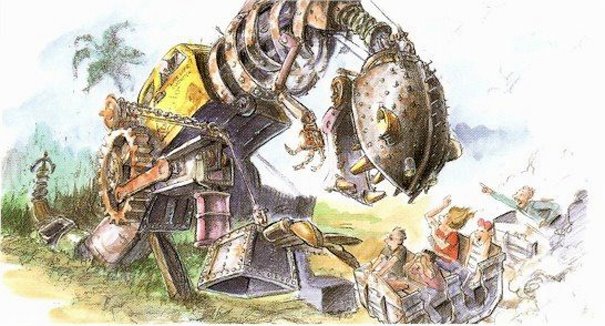
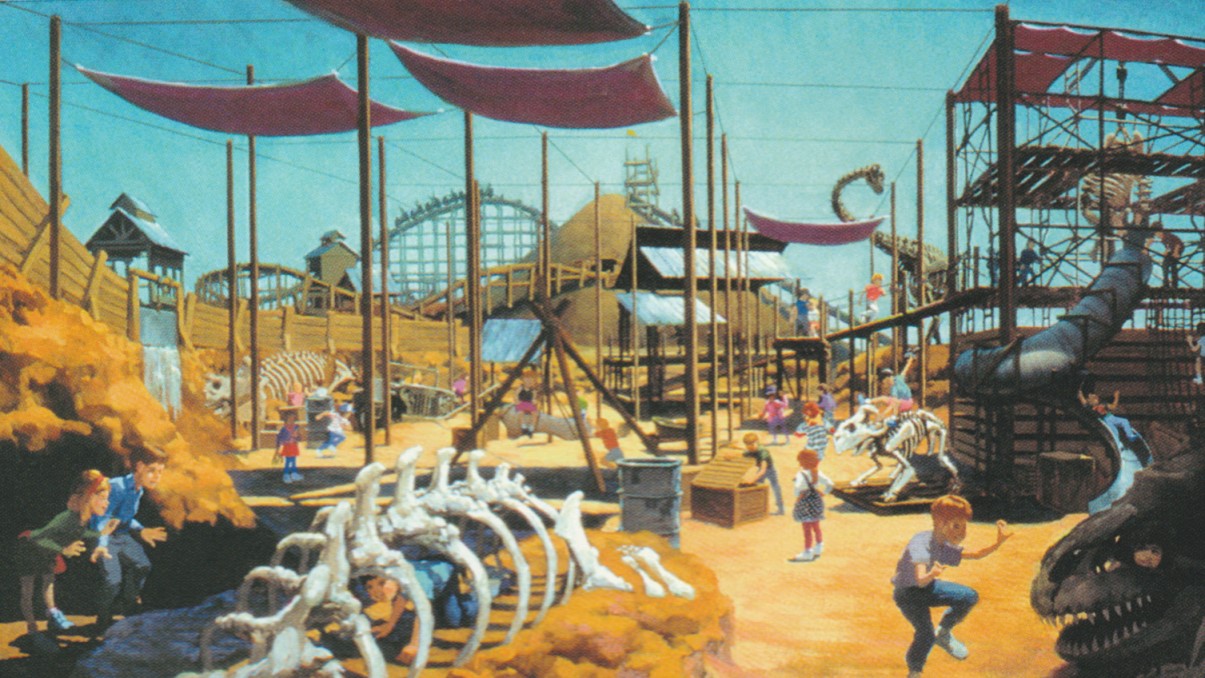
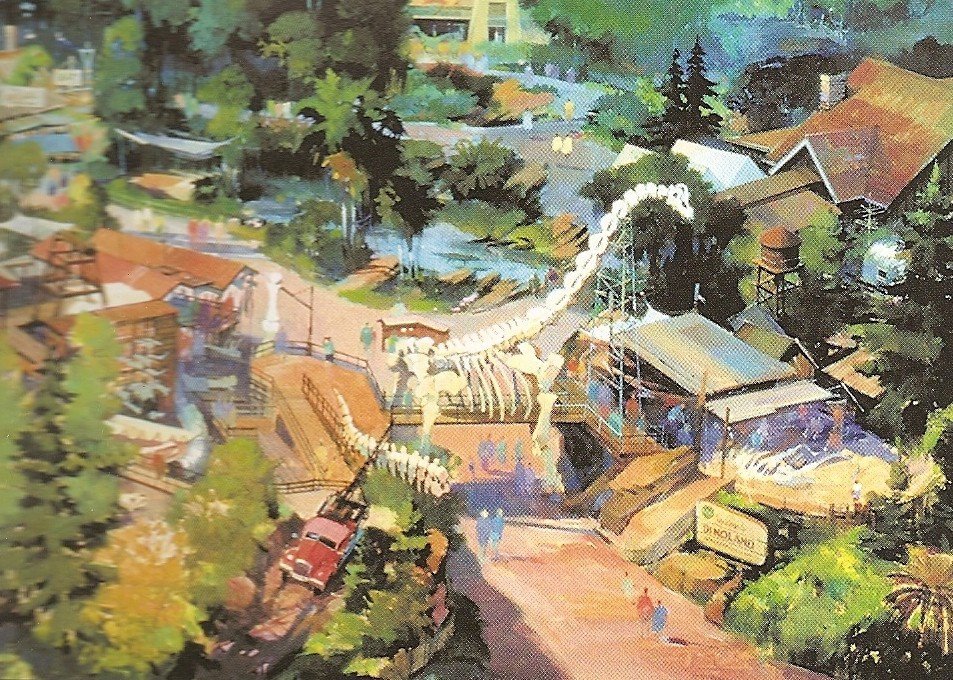
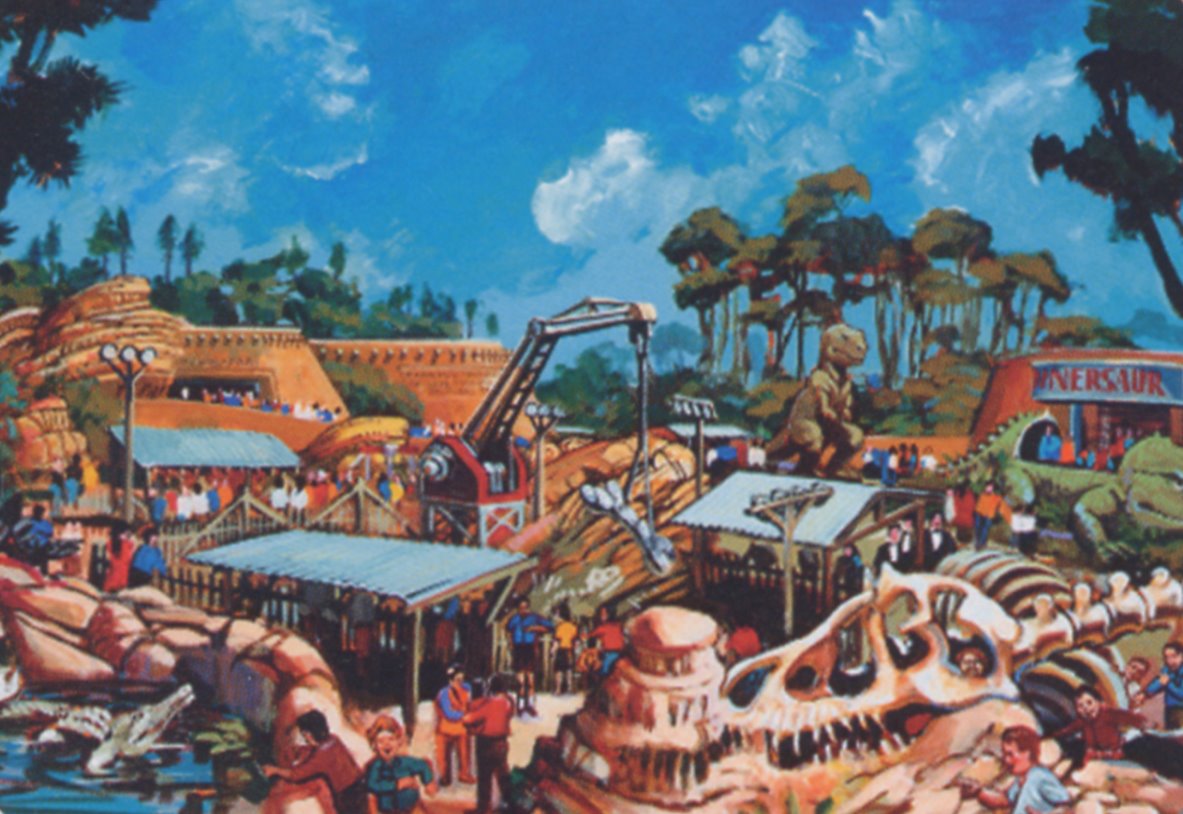
As work on Disney’s Wild Animal Kingdom continued, multiple E-Ticket rides were envisioned. In the Beastly Kingdom of creatures never real, the Dragons Tower suspended roller coaster would’ve taken guests flying into an encounter with a fiery beast. Meanwhile, Dino Nature Land’s thrill ride was The Excavator.
The fossil-fueled area would be set up as a dig site, with a nearby museum. The ride at the museum would take families on a calm journey back to the age of the dinosaurs, starting inside before traveling outside into a prehistoric biome full of realistic audio-animatronics.
Meanwhile, the Excavator would’ve utilized mine cart-style train cars in a ride through the old work site where, in the backstory for the land, the very first bones were found here in Diggs County. ‘Keep out’ warning signs would flank the entry as we board what can be assumed was an attraction set up by the grad students who run the nearby dig site.
During the ride, your mining train would pass through dinosaur bones, and around the centerpiece for this out-of-control wooden coaster: an old excavator that the college kids altered to look like a dinosaur.
“The Excavator” or just simply, the Dig Site Coaster as noted in some of the early concept art, was ultimately cancelled. Most claim it was due to budget cuts, but some also believe the Imagineers just weren’t too excited by the concept. Either way, the adjacent Boneyard playground would come to fruition.
Meanwhile, the tightening budget pushed Beastly Kingdom into phase 2 of the park. With these two E-tickets sidelined, the park needed a thrill ride for opening day. Quickly, the slow-moving outdoor dino safari became something else.
The outdoor attraction did kind of see the light of day, though. On the short-lived Discovery River Boats attraction, which for some reason was Radio Disney themed before Disney gave up on the boring ride altogether, there was an animatronic Iguanadon in the water near Dinoland. He didn’t last long, but he existed.
Utilizing the same ride system and layout as Disneyland’s Indiana Jones Adventure, Countdown to Extinction would act as this land’s version of a safari, while also providing the most thrilling ride for the last park ever built at the Vacation Kingdom of the World. It may have started with the same layout as the Indy ride, but some areas were cut short to save money, including the dino version of the bridge scene.
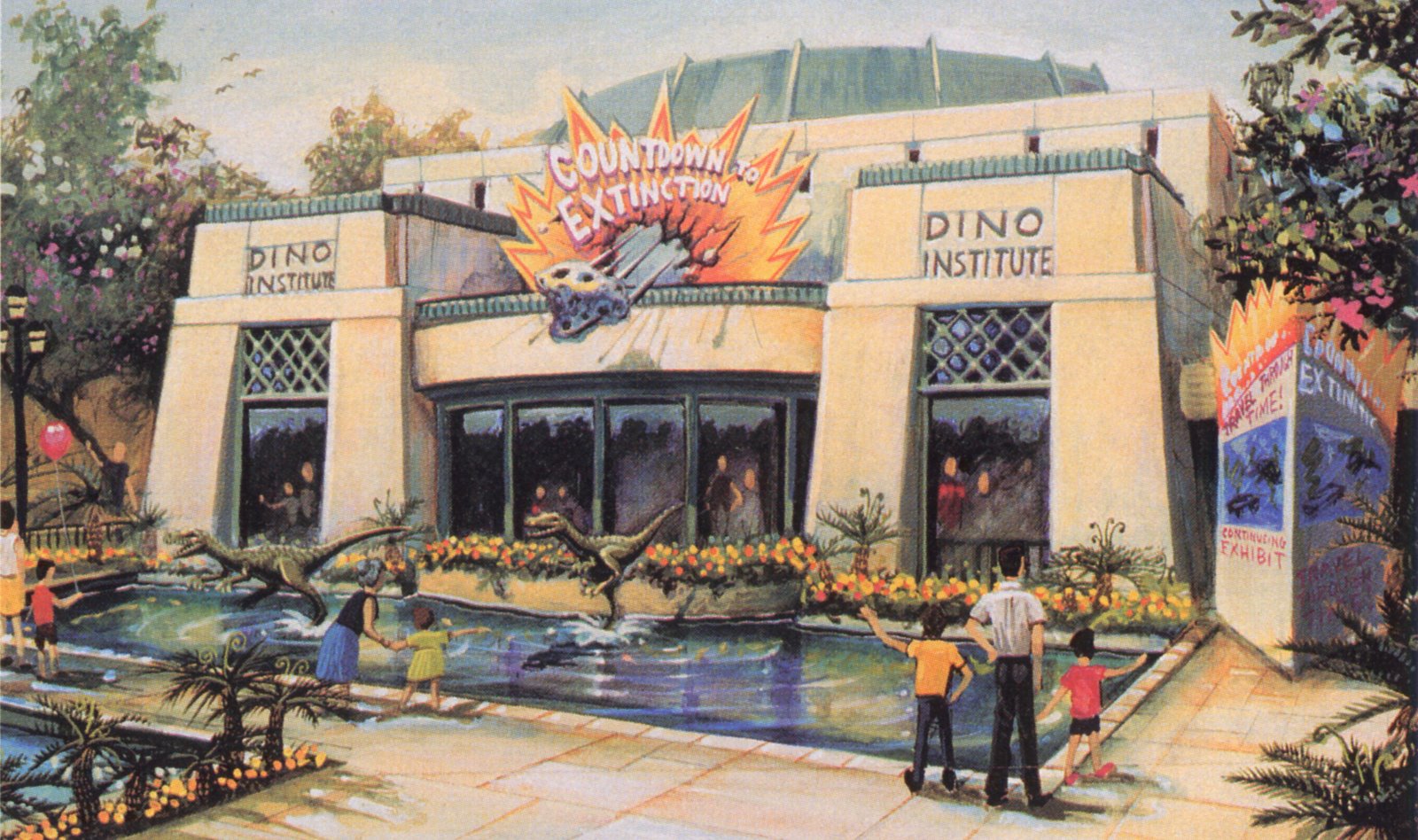
The museum journey to the past storyline would be reworked to still be a time-traveling dinosaur ride. The theme of a scientific institute would be used, one that wants to teach visitors through a hands-on trip back to the early Cretaceous period with the world’s first time machine, the CTX Time Rover. The Time Rover does not accomplish this feat alone, but with the help of a massive time vortex device that was built in a new wing of the Dino Institute.
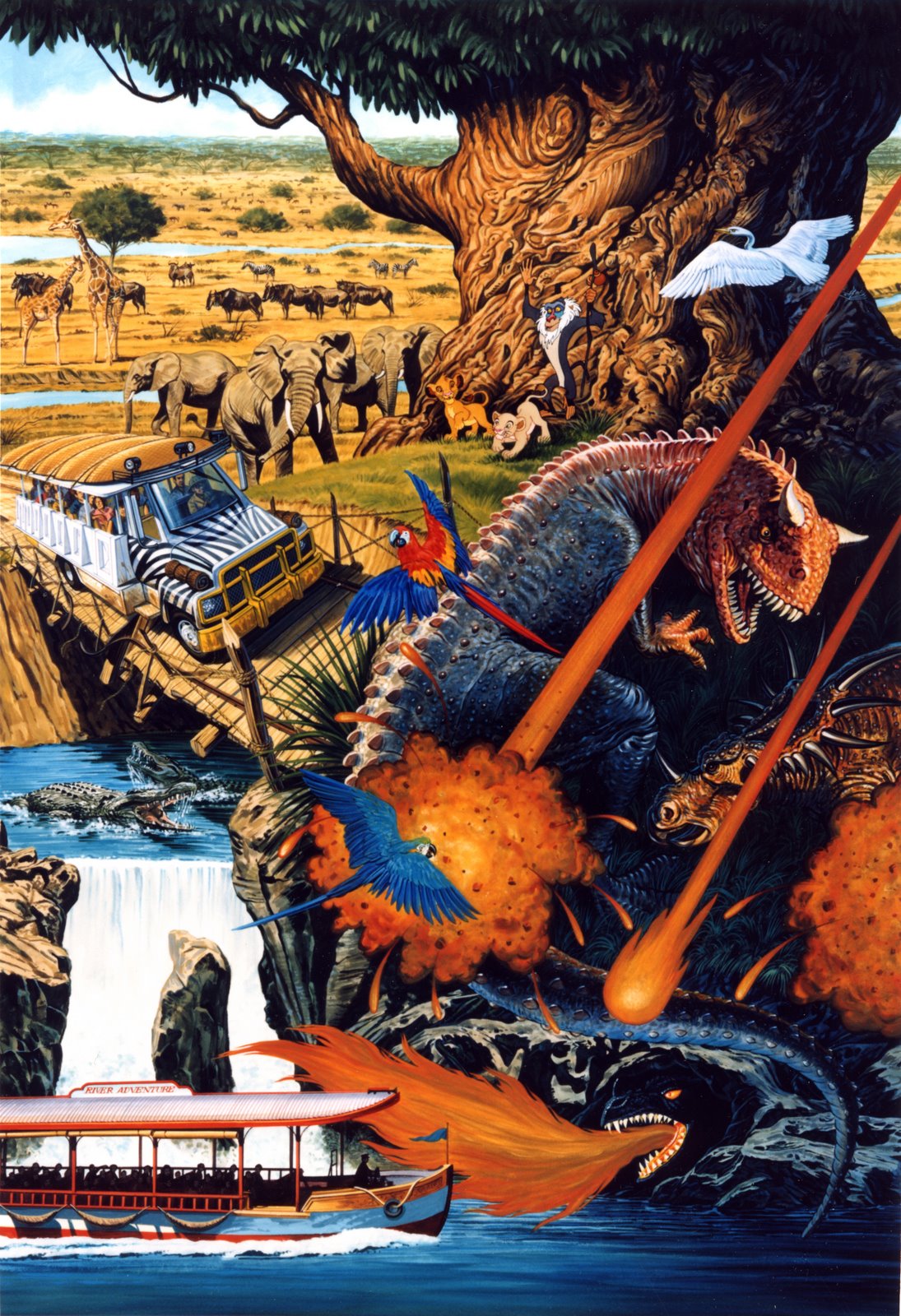
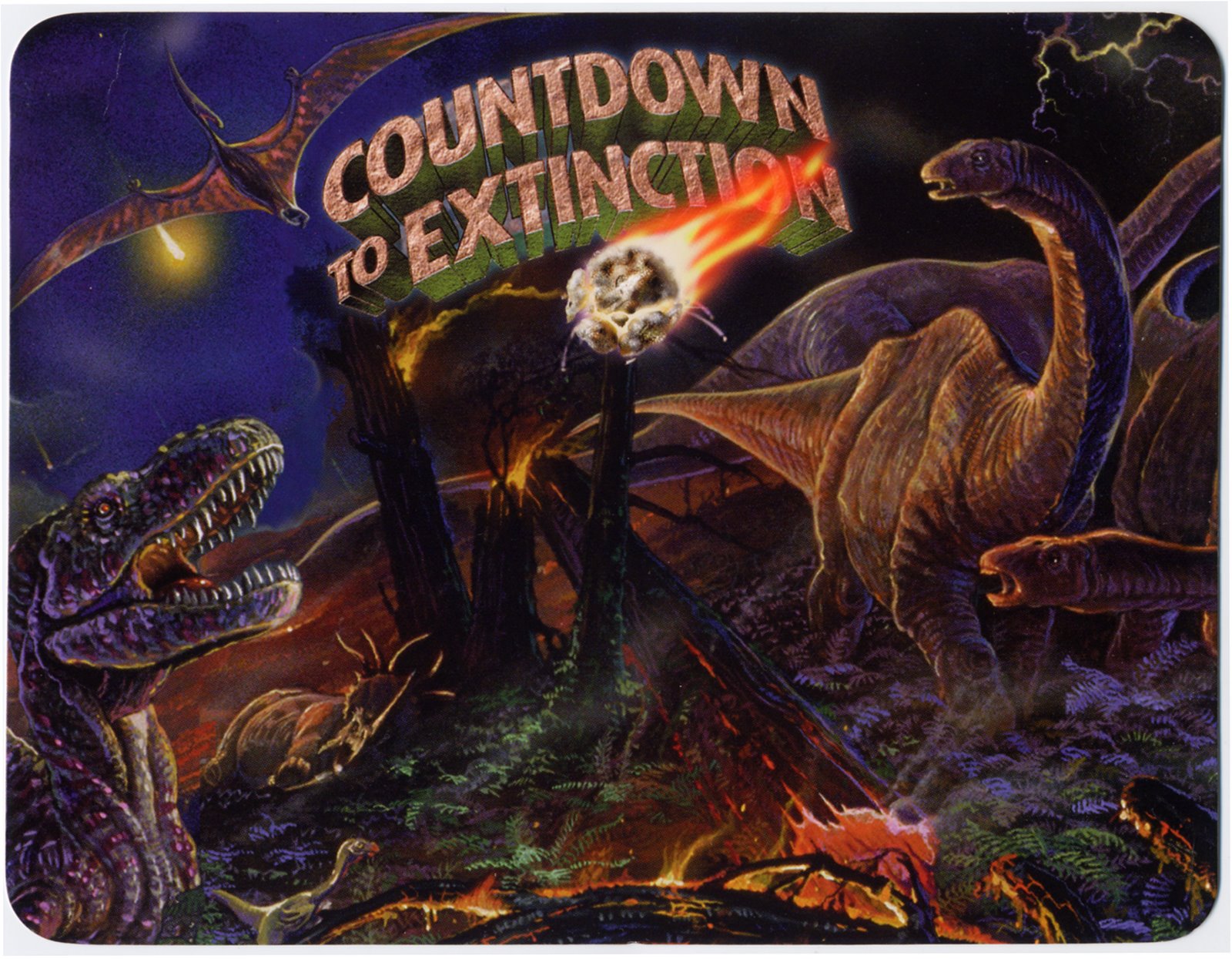
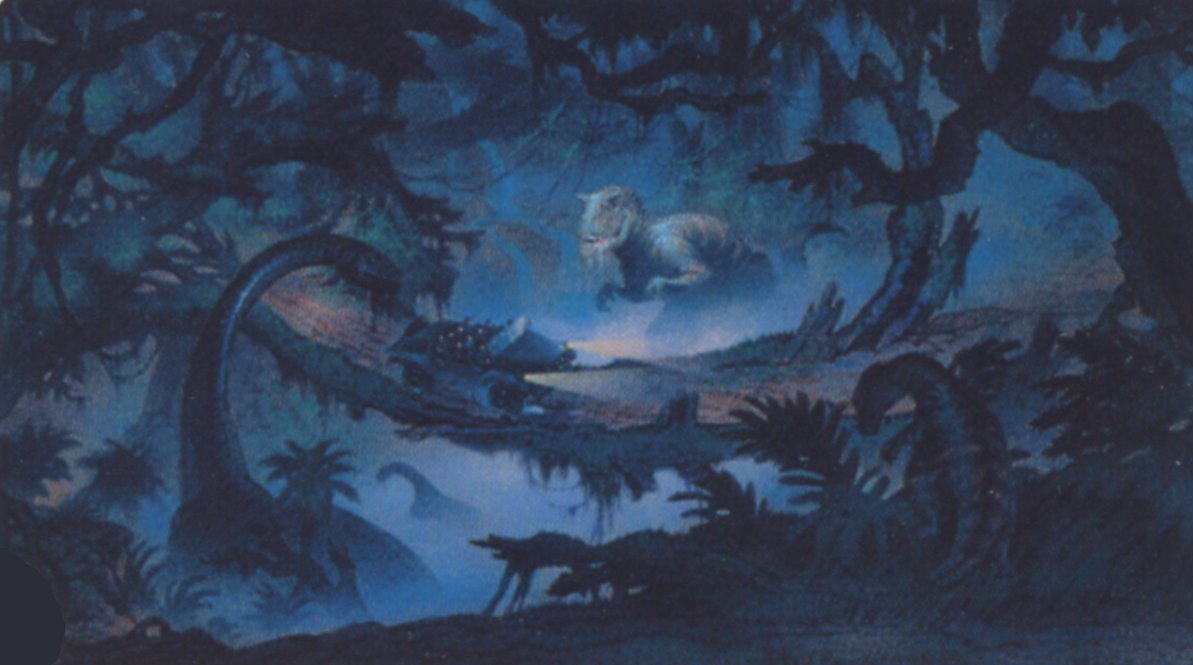
Of course, this is a theme park ride, so the placid trip to the early Cretaceous period doesn’t happen. Instead, guests would arrive moments before an extinction-level event hits Earth: the meteor strike that ended most life on the planet. Searching a primeval jungle looking for an Iguanadon to bring back to the present, all while the big meteor is closing in.
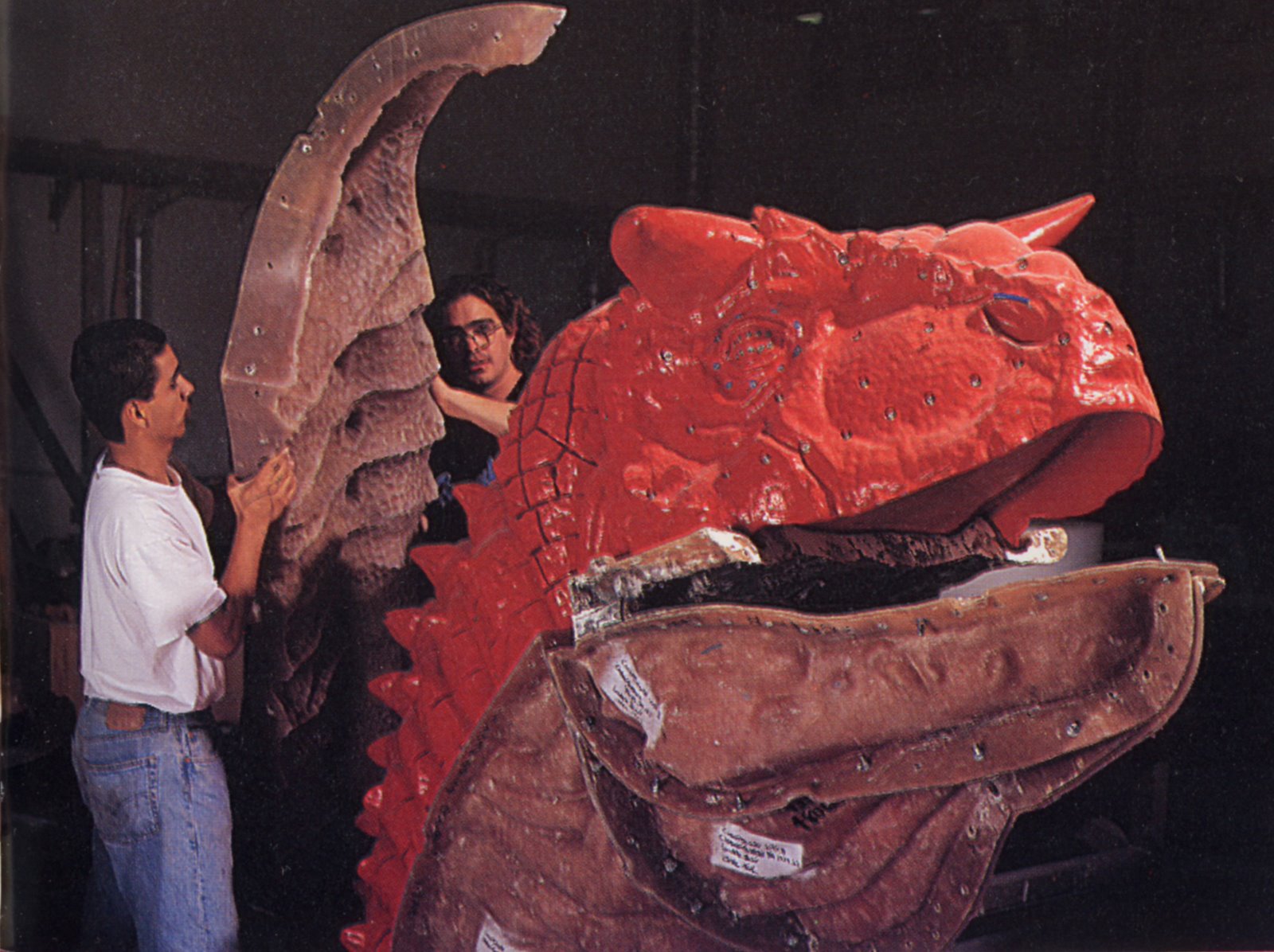
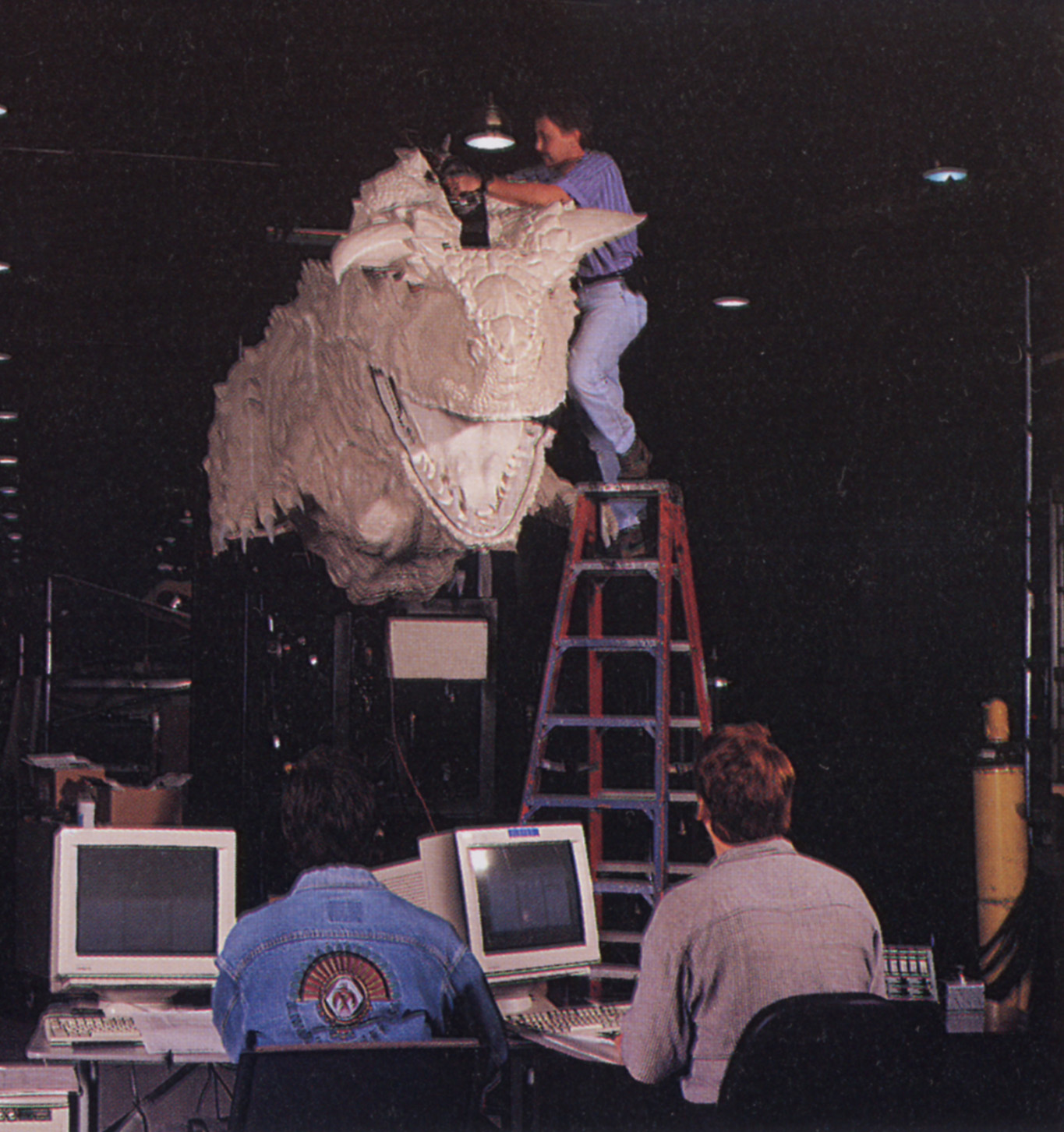
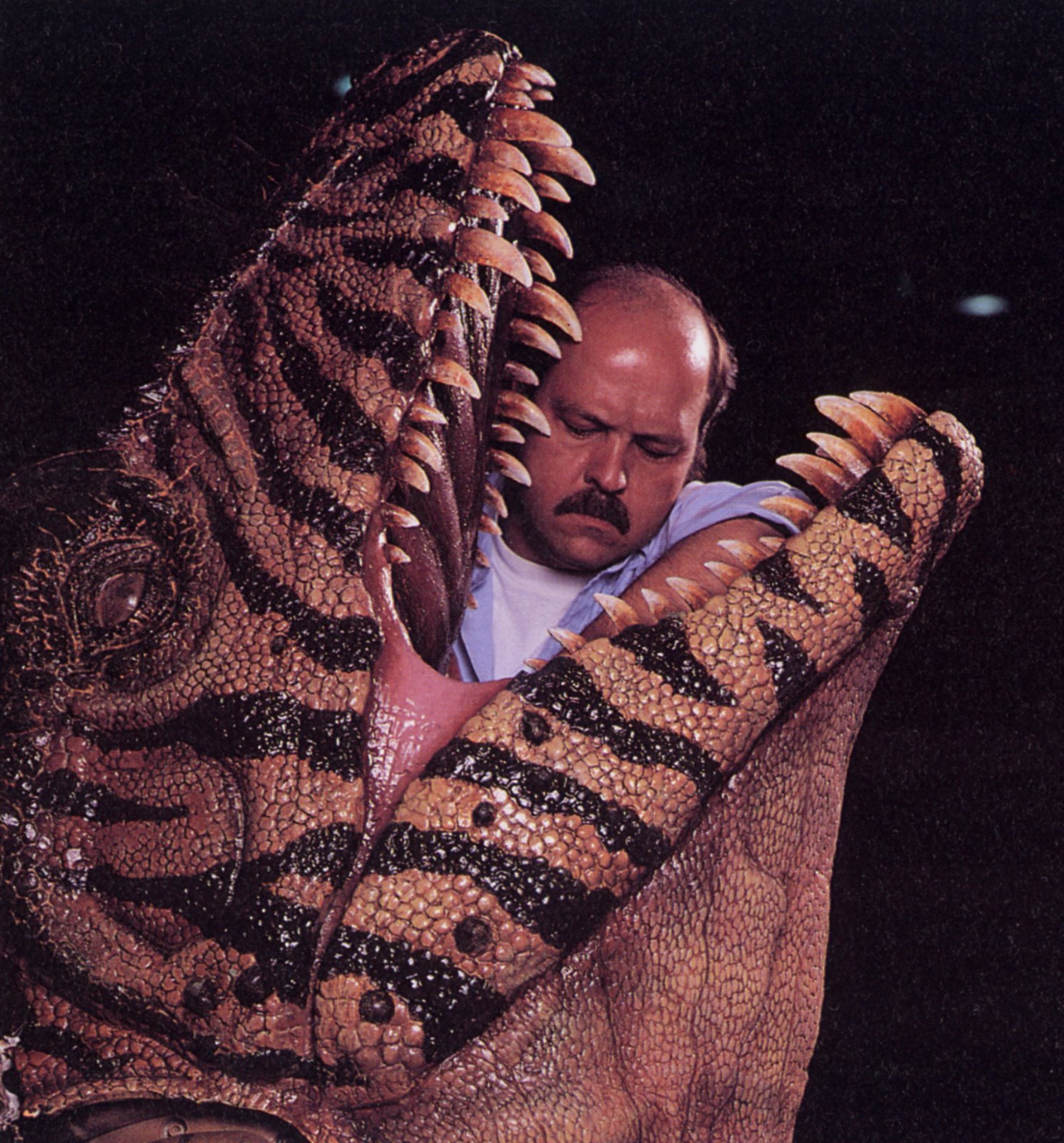
12 of the largest audio animatronics built to that point, and numerous animated figures. One of the largest smoke machine installations in theme park history, as well as lasers, pyrotechnics, and projection effects.
Countdown to Extinction opened, sponsored by a generous grant from McDonald’s Corporation, on April 22, 1998, with the rest of Disney’s Animal Kingdom. The tagine: “It’s Fast. It’s a Blast. It’s in the Past.”
The approach to the Dino Institute featured posters for the experience, large fossils, and eventually a splash pad fountain with a statue of a Styracosaurus in the center. The area meant for kids to have some water play in would eventually be sealed off and become a simple water feature. Guests enter the Dino Institute past those quaint exhibits in the old wing, how dinosaurs had been presented to the public to this point in time.
Guests then passed through one of two orientation rooms where Dr. Marsh, played by Phylicia Rashad, would welcome them to the Institute and explain the breakthrough that they had made with the CTX Time Rover. The video feed would then change to the control center, where Dr. Seeker is intended to give safety instructions to the guests, but instead uses it as an opportunity to enlist them in his unauthorized mission to get an Iguanodon back to the present. Despite a reprimand from Marsh, Seeker still sends guests to the dangerous end of the dinosaurs through the very industrial-looking new wing, a former sewer drain. Flanked by power generators.
A security beam scans the vehicles, which we assume would’ve stopped Dr. Seeker from going with us. The rovers pass the then-empty security station as the system realizes the destination is unauthorized, but it’s too late. The doors open to the vortex, smoke fills the room, and the Time Rovers begin to float through space into the past. Strobes would flash, sparks would fly from the walls, and a laser portal would beacon vehicles forward.
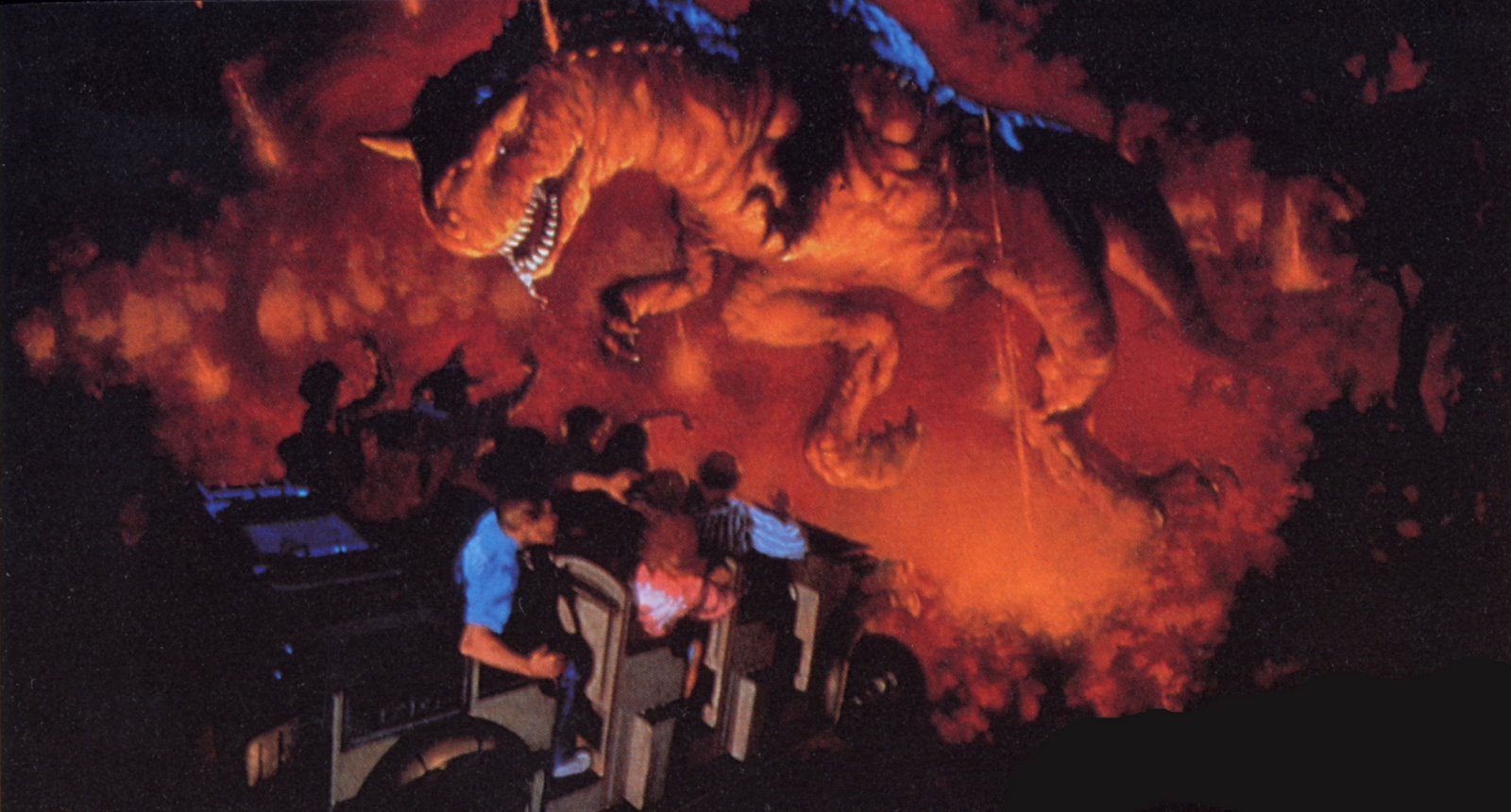
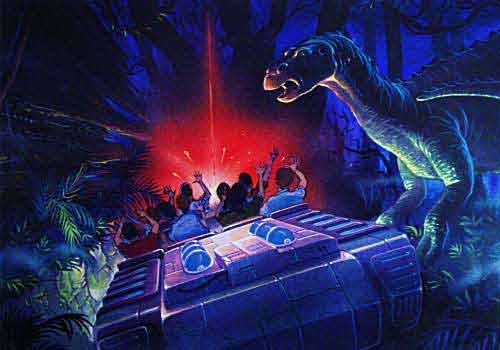
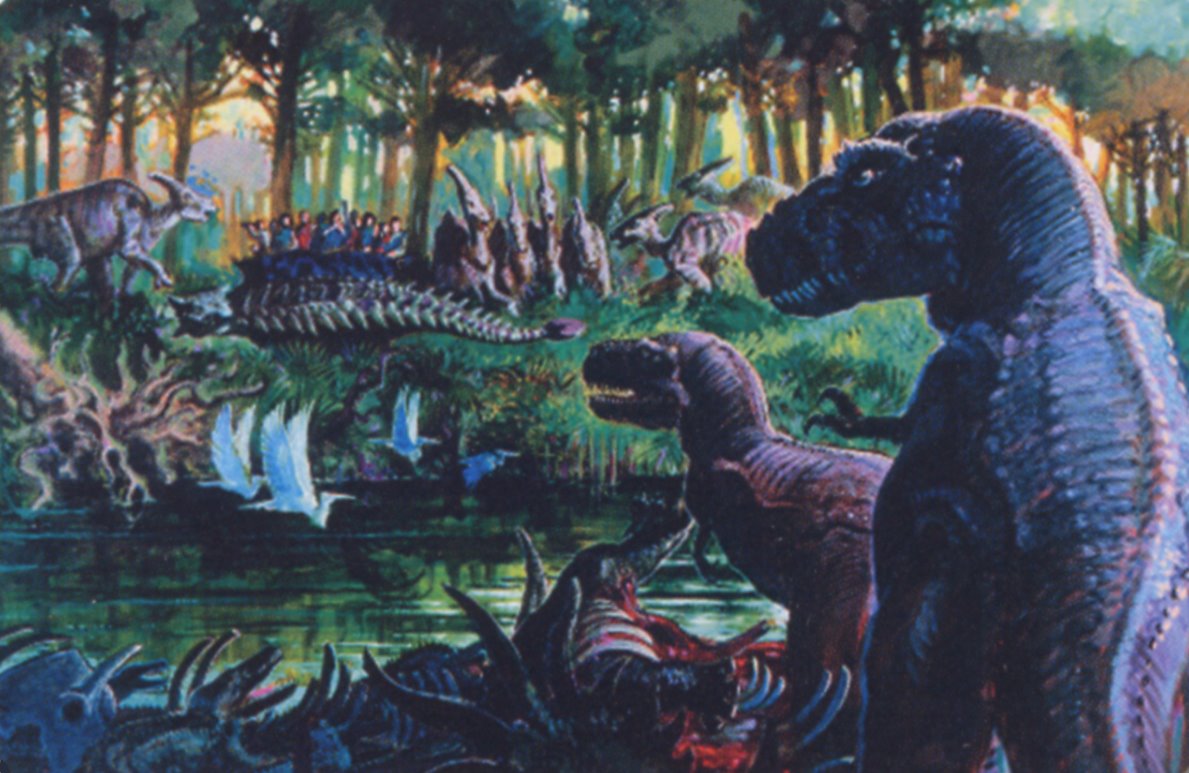
The Time Rover barely makes it through the portal as it closes, but guests are dropped into the jungle. Meteorites are already falling as we encounter our first dinosaur of the Styracosaurus. As the jeep rumbles uphill, we pass an Alioramas mid-meal, a Hadrosaur with her two sleeping babies, and a Velociraptor. The Rover then locks onto a larger dinosaur in the distance.
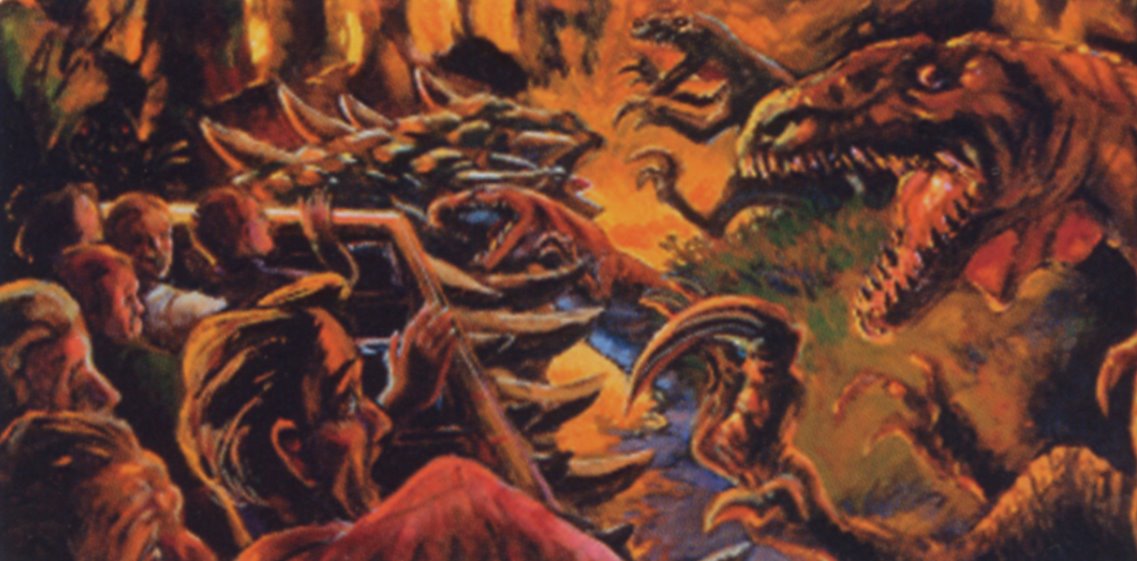
Unfortunately, it is not the herbivore we were looking for, but instead a hungry Carnotaurus. The vehicle rocks as if nudged by the beast, and speeds off to its next encounter with an actual vegetarian dinosaur, the Saltosaurus or Sauropod. After a “Whoops” from Dr. Seeker, which was removed from the audio for some reason in the 2010s, we zoom past a nest full of winged babies, before narrowly missing the mother Pterodactyl overhead. The rover rolls down a hill, startling a series of Compsognathus who leap over the ride path. Now stuck in the mud, the Carnotaurus appears again to the left, but physically charges at the vehicle. Luckily, the rover powers through the mud and begins to haphazardly serpentine through the trees to escape both the monster and the meteorites. Sadly, we run right back into the Carnotaur, who bites towards the tourists before they somehow speed away again. The earthquake that startled the Carnotaurus for us to escape also takes down a tree, which is caught by the Iguandon we have been looking for, saving our lives. At the same time, the vehicle shoots a laser net around the creature. The life-ending meteor is now seconds from impact as Dr. Seeker tries to return the passengers to the present. We see the rock hurtling towards us as we narrowly escape through time and back to the Institute. As we return, we see a monitor showing that the Iguandon made it back with us, now roaming the halls. Original plans had the dino appearing on the back of our vehicle via a Pepper’s ghost effect with a mirror across the hallway, but it was either a budget cut or never quite worked prior to opening, depending on who you talk to. Of course, you would then exit into the Dino Institute gift shop, where we could see the search for the additional passenger we brought back with us continue.
The years were not kind to Countdown to Extinction and its later counterpart. The lasers in the vortex tunnel were broken for years before being restored, albeit still an effect that would occasionally be off. The pyro effects were completely turned off and the strobes were toned down. The “swooping” flying dinosaur stopped moving early in the attraction’s life and was simply lit with a spotlight. The Compies who jumped over the track stopped their motion as well, simply lit in varying positions to simulate their movement. The much simpler laser net for the Iguanodon was turned off as well. Audio effects throughout the ride were toned down as well to make it less scary, including the earthquakes and the sounds of the Carnotaur gaining on guests. The meteorite that careened towards guests would be removed, and the blinding return vortex rarely operated, if ever.
Bigger changes would come on May 1, 2000. To tie in with the theatrical release of the latest Disney film, the attraction was renamed DINOSAUR. Strangely enough, the ride already contained references to the film, which had been in production for years at this point. The dinosaurs from the ride were specifically modeled after those in the film, from the raptors, to the Carnotaurus, to the Iguanodon that resembled Aladar.
The Aladar-looking dino would also grace the attraction entrance in statue form now. The ride profile was reportedly toned down so that the height requirement could be lowered and more children could ride the attraction, now tied into an animated film.
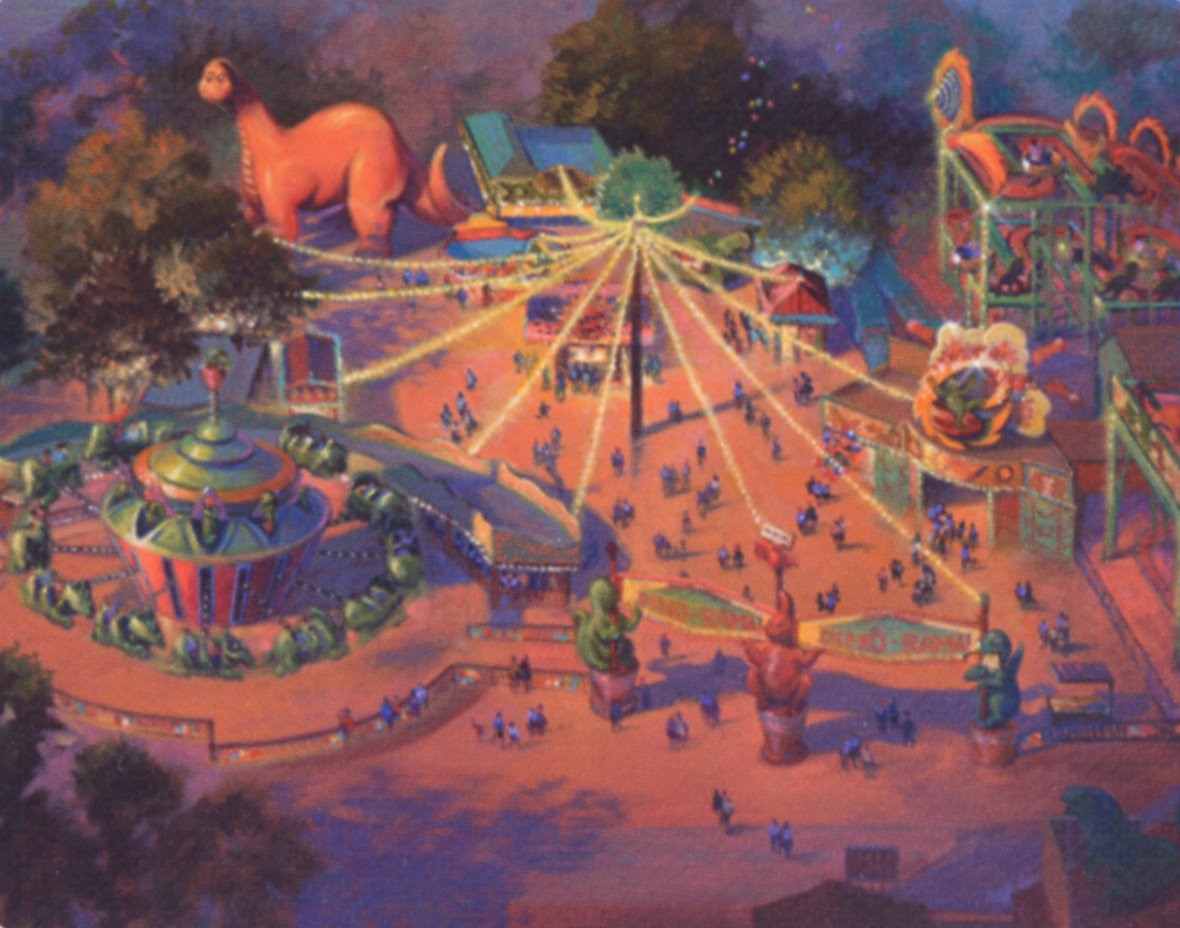
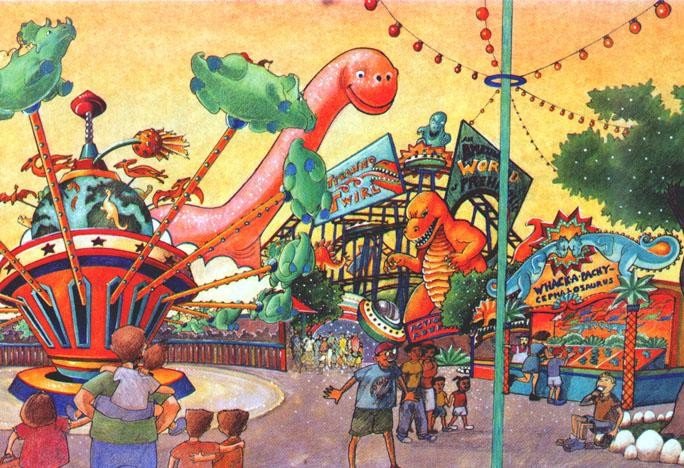
The remainder of the now-titled Dinoland U.S.A. wouldn’t include much more than a McDonald’s french fry kiosk, Restaurantosaurus, Chester and Hester’s Dinosaur Treasures, and the dig site playground. With leftover land and a need for capacity, a temporary tent of fossil exhibits was erected, called the Dinosaur Jubilee and the Fossil Preparation Lab. Some believed the tent was simply holding space for The Excavator coaster, which had been even publicly previewed leading up the park’s opening. Instead, a hastily concocted and poorly funded replacement was quickly developed: Chester and Hester’s Dino-Rama.
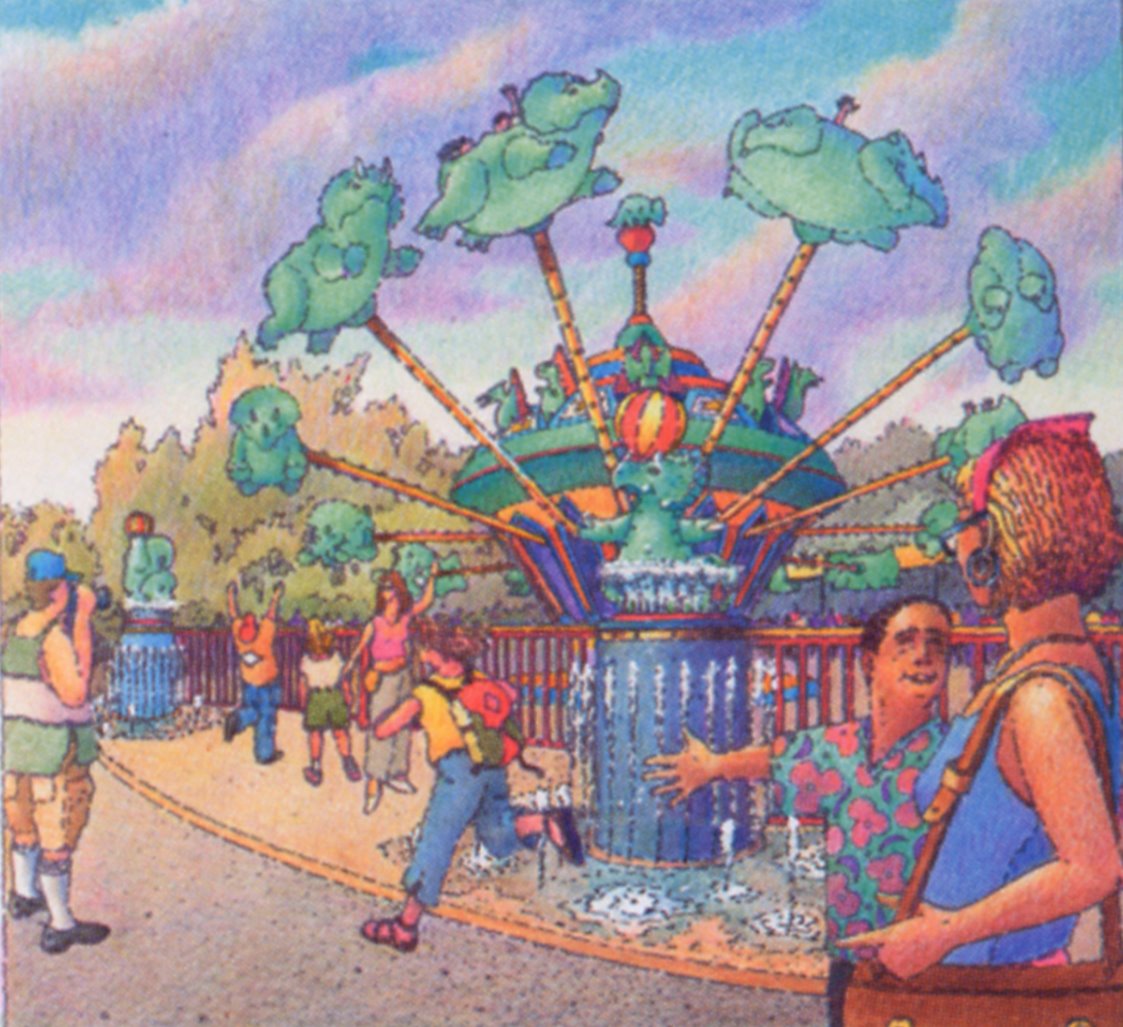
A pre-designed coaster layout was ordered for Primeval Whirl and a simple spinner ride with flying dinosaurs, that for some reason were not Pterodactyls, was called TriceraTop Spin. You know, a tin toy top-themed non-flying dinosaur spinning flying dinosaur ride. It makes sense, right? The best area ever built on a laughable budget was produced, so much so that it developed a following that would actually have nostalgia for the carnival-esque Disney-fied garbage. It opened just a few years after the park in 2002 as a necessary capacity stopgap.
Later, the DINOSAUR attraction would experience a bit of a renaissance. The long-broken laser vortex was restored in 2013. In 2016, a massive refurbishment of the attraction finally replaced the static Compies with projection-based effects. The Time Travel vortex effect was updated, and the laser net finally returned over Aladar’s cousin the ride’s final moments.
At the September 2022 D23 Expo, Disney teased plans to replace DinoLand U.S.A. with two lands: one for Moana and another for Zootopia. It appeared these Blue Sky plans explored the possibility of DINOSAUR being rethemed to a high-speed police chase in the mammalian metropolis, kind of like a thrill ride version of Zootopia: Hot Pursuit at Shanghai Disneyland. However, the plans never reached approval. In August 2024, it was instead announced at D23 that the area that the ride is located in, DinoLand U.S.A., will be replaced with a new one called Tropical Americas, expected to open in Fall 2027, with an Indiana Jones attraction replacing Dinosaur. In September 2025, it was announced that Dinosaur will close on February 2, 2026.
The legacy of DINOSAUR is a strange one. Another masterful piece of 1990s Disney Imagineer storytelling, the ride turned a series of financial and creative mistakes into an indelible attraction that will always live-on in the hearts of the true believers. It may not have resonated with every guest, or every guest who chickened out at the door because they didn’t understand what the cast member meant, that it’s not a roller coaster but a fast jeep ride. No, it doesn’t go upside down, ma’am. Anyway, I’m getting off topic… DINOSAUR and Countdown to Extinction won’t be muttered in the same breath as Horizons, Journey Into Imagination, or The Great Movie Ride, but it will go down as a cult classic the likes of Maelstrom, surely to be kept alive by the most passionate of Disney fans the world over. I guess, in that respect, it made it. I knew it would.