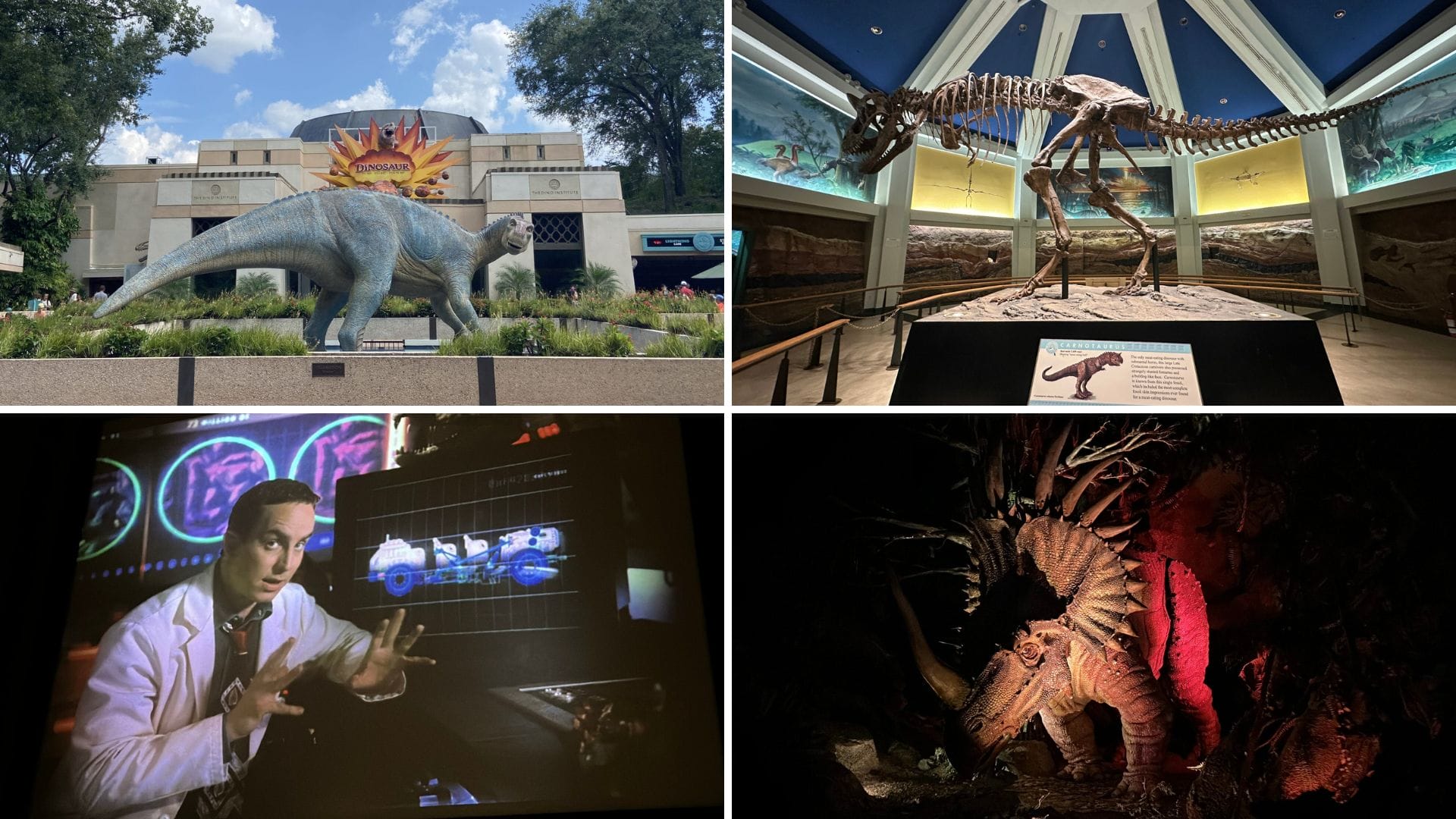
After Sunday, February 1, DINOSAUR at Disney’s Animal Kingdom will officially be extinct. The closure is the last phase of the permanent end of DinoLand U.S.A. Take a look back at the ride.
Last Look at Dinosaur
DINOSAUR History
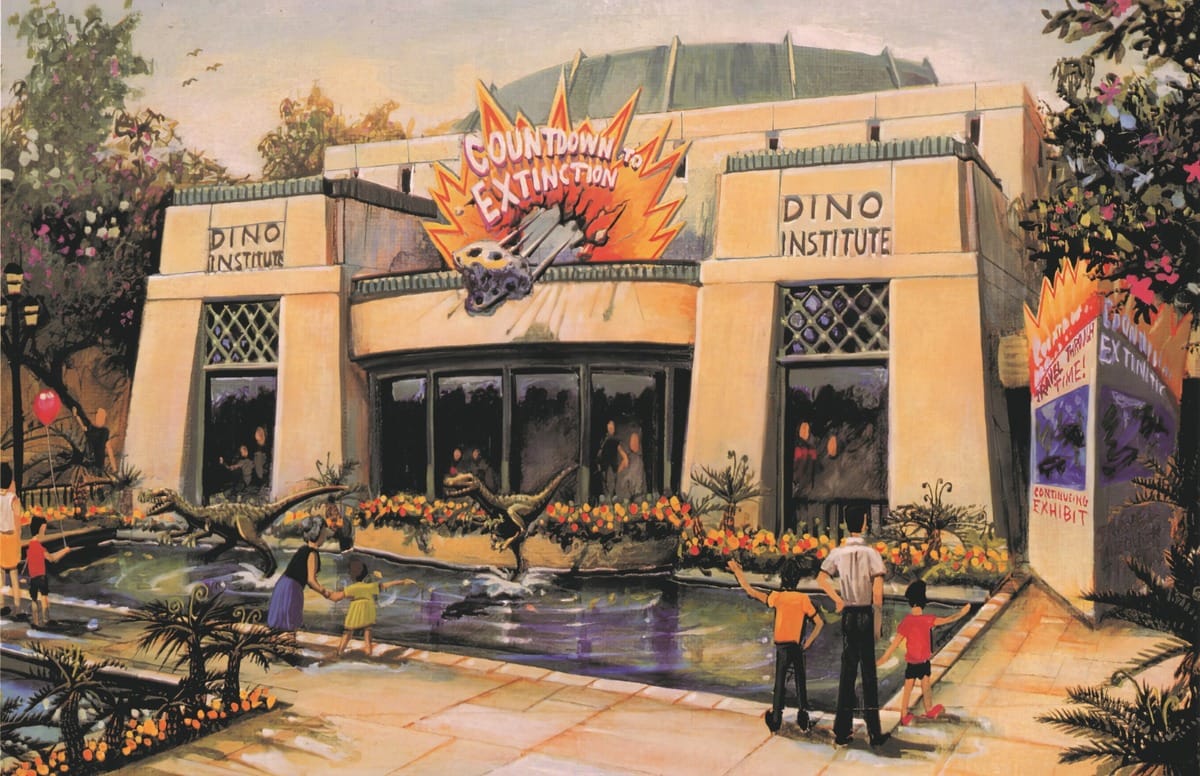
DINOSAUR opened as Countdown to Extinction with Disney’s Animal Kingdom on April 22 (Earth Day), 1998. Though it was developed in tandem with Walt Disney Animation Studios’ Dinosaur, the ride and film are barely connected. The ride system was the same enhanced motion vehicle (EMV) dark ride developed by Walt Disney Imagineering for Indiana Jones Adventure. DINOSAUR also uses almost the same track as Indiana Jones Adventure, which opened at Disneyland to great success in 1995. The DINOSAUR track is about 150 feet shorter.
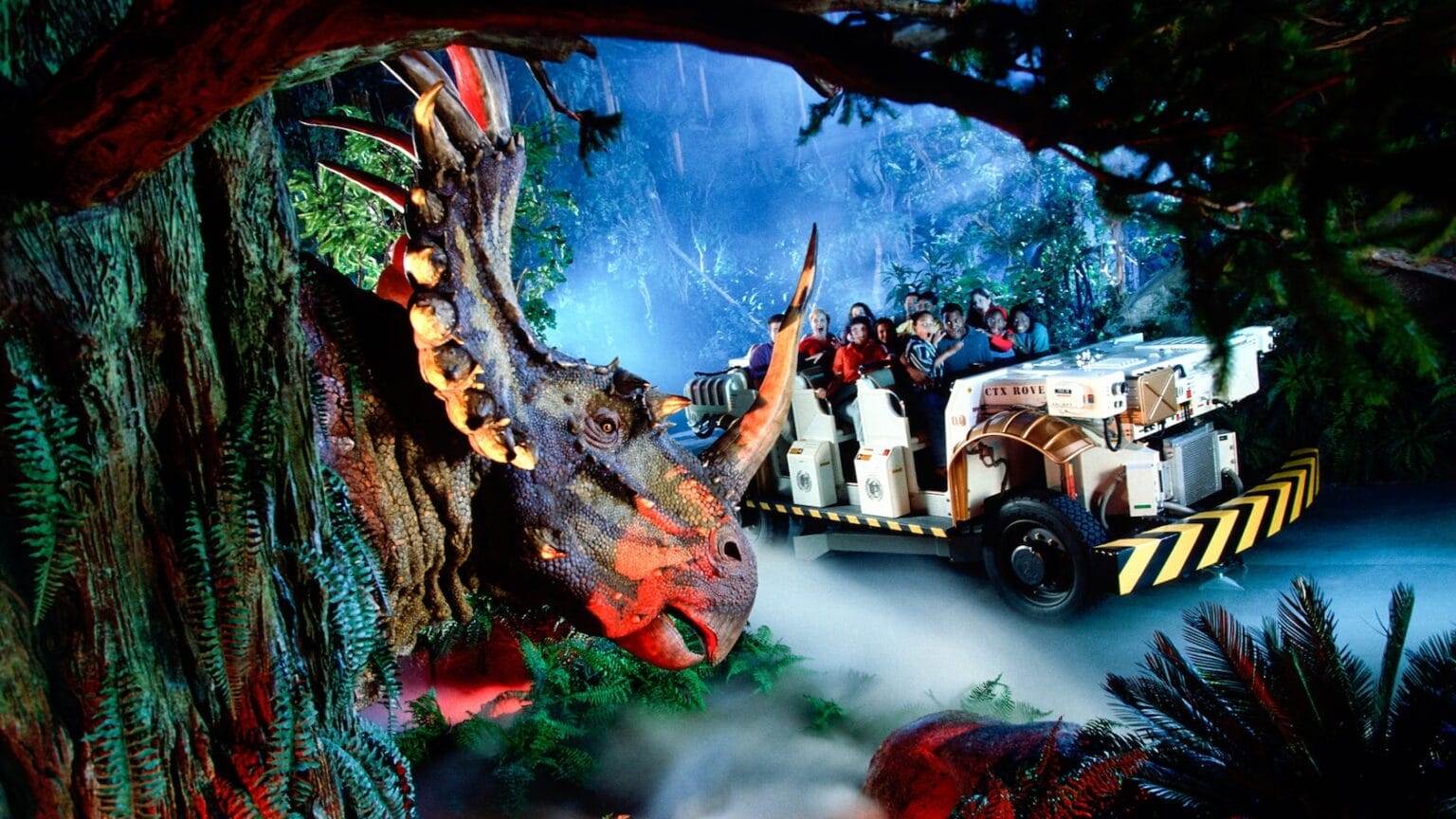
The dinosaur Audio-Animatronics were among the largest that Imagineering had ever built up until that point. There are 11 animatronics visible during an average ride — but there are actually 12 total. There’s one extra Carnotaurus near the on-ride photo for use when the main Carno is broken (the Carnotaurus does not appear in the photo, but is used to make sure guests are looking near the camera).
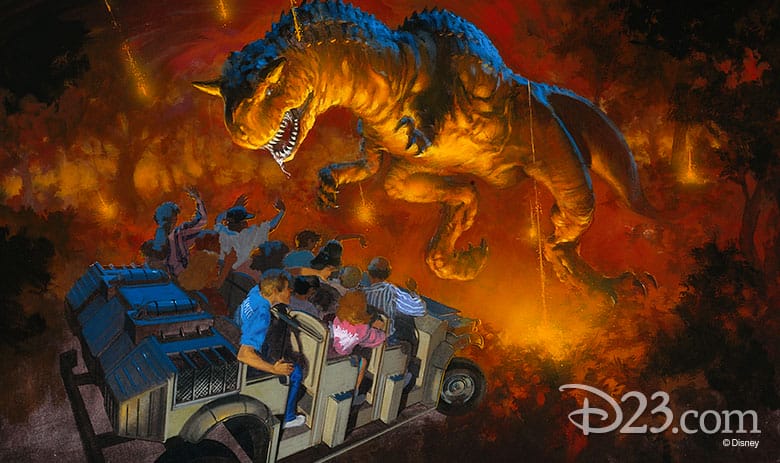
The ride and film feature a Carnotaurus instead of a T. rex as the “villain” because Carnotaurus was discovered in 1984, not long before the development of Dinosaur and Countdown to Extinction began. Disney wanted to use the newly-discovered species to be different.
The film Dinosaur was released on May 19, 2000, after several delays. At that time, Countdown to Extinction was renamed DINOSAUR and slightly updated. Because the movie was for kids, the ride’s intensity was dialed back, allowing the height requirement to be lowered from 46″ to 40″. Changes included an update to the footage of Aladar the Iguanodon used in the pre-show to look more like his final film design, replacing the Styracosaurus statue outside the ride with a statue of Aladar, removing some of the vehicle’s bumpier motions, and scaling back some of the more intense lighting and sound effects.

According to the backstory of DinoLand U.S.A., it was located in the fictional Diggs County, somewhere in the southern United States. In 1947, the town blew up with the discovery of a dinosaur fossil. The Dino Institute was established while a couple, Chester and Hester, created their roadside Dino-Rama to cash in on the publicity.
The Dino Institute flourished when Dr. Helen Marsh became director. She spearheaded the construction of the facility that guests visit and acquired the company ChronoTech. They developed the CTX Time Rovers, the ride vehicles of DINOSAUR, which allow riders to travel back in time.
Read more about the history of Countdown to Extinction / DINOSAUR.
DINOSAUR Entrance
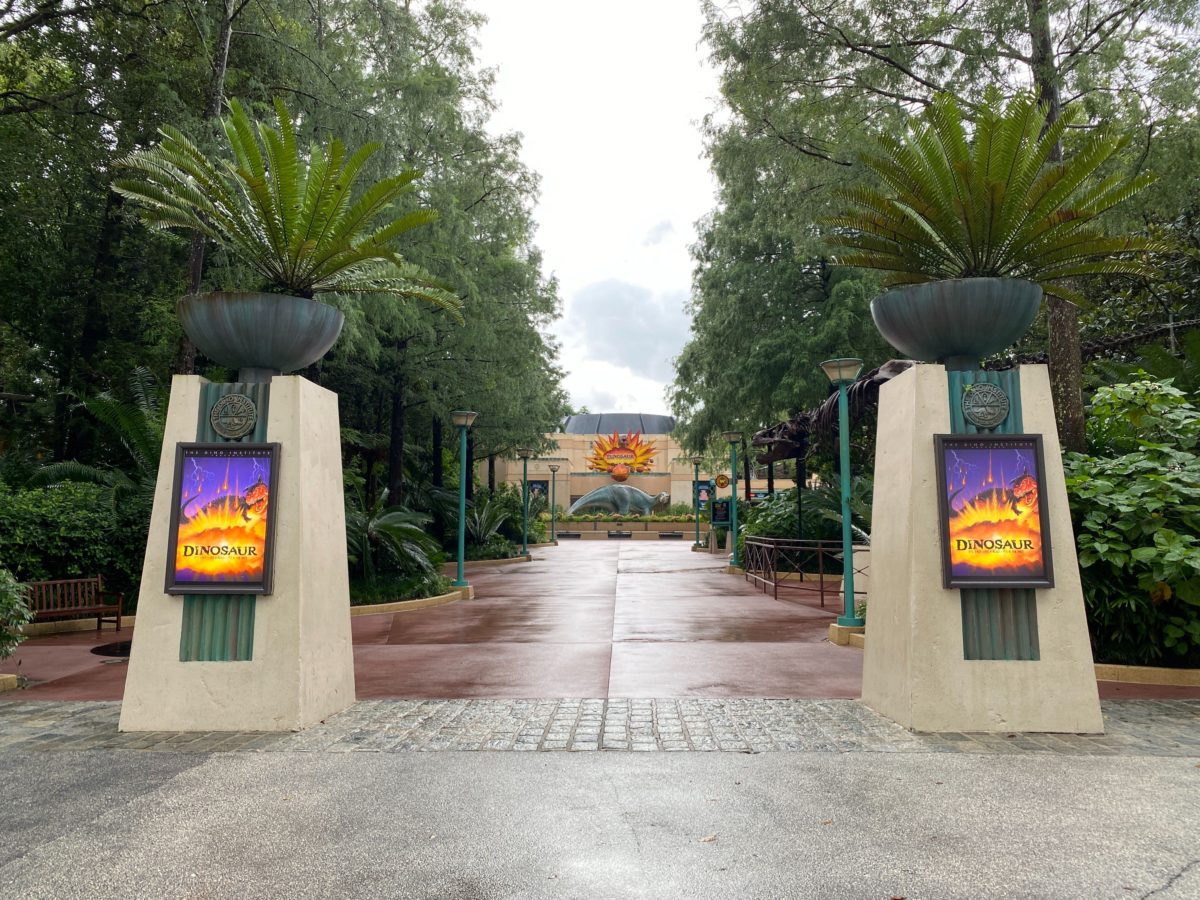
DINOSAUR was tucked away from the rest of DinoLand, past a pair of columns featuring the Dino Institute seal and a DINOSAUR attraction poster. Atop the columns were big ferns.
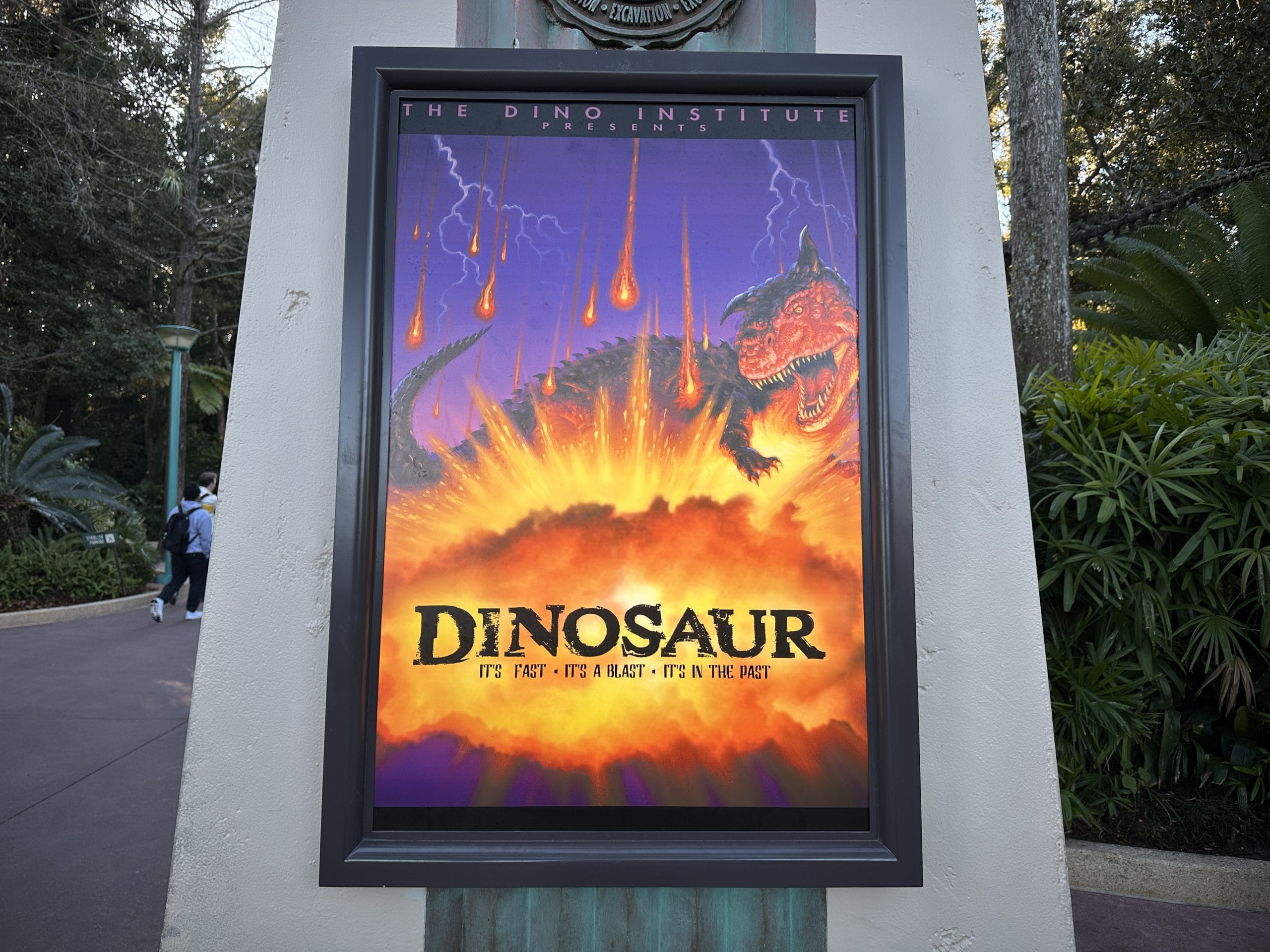
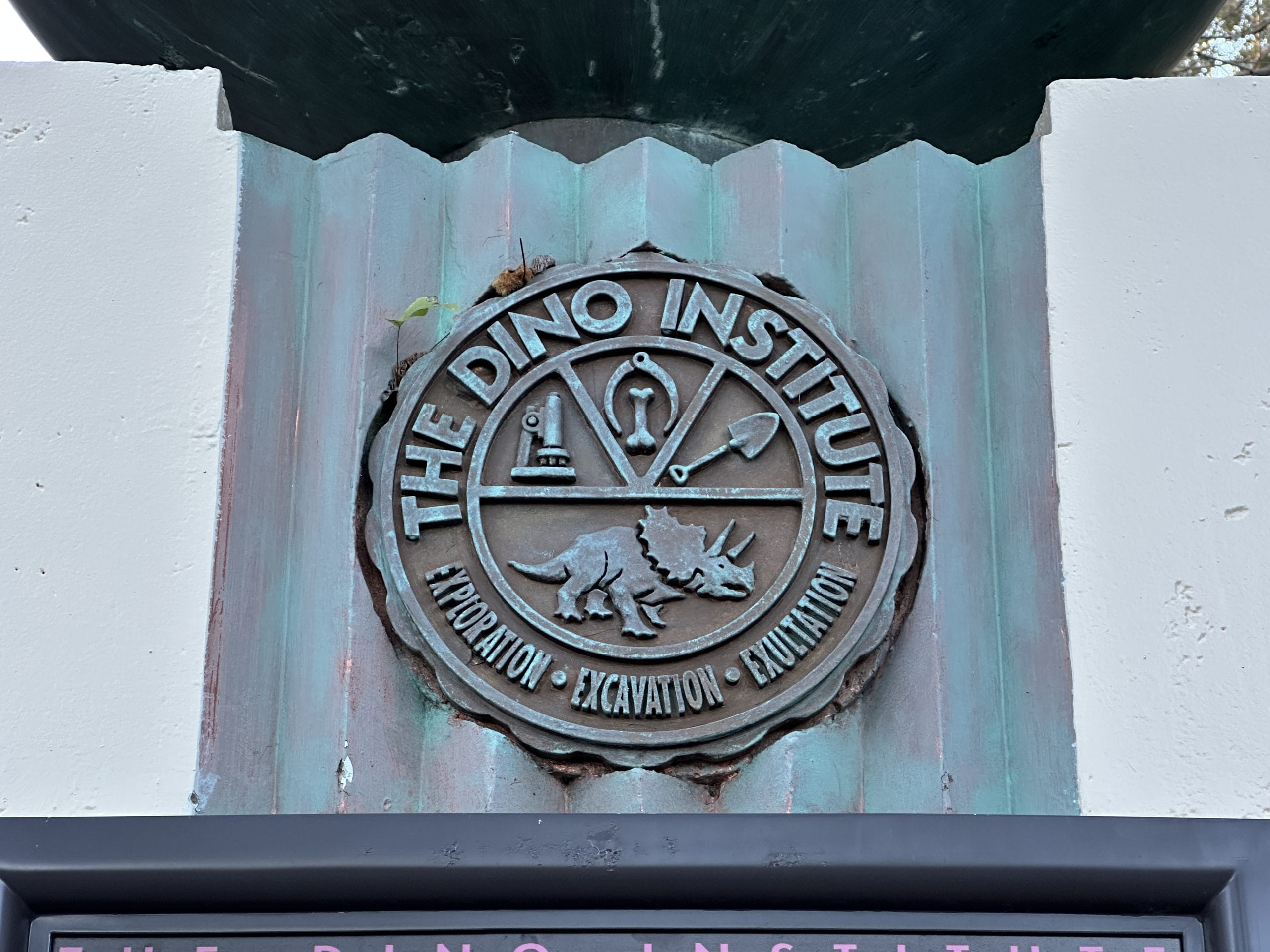
The ride poster featured the Carnotaurus surrounded by falling asteroids and the tagline: “It’s fast – it’s a blast – it’s in the past.” The Dino Institute’s logo consists of a Triceratops with a microscope, a bone under a mechanical claw, and a shovel above the slogan “Exploration, Excavation, Exultation.”
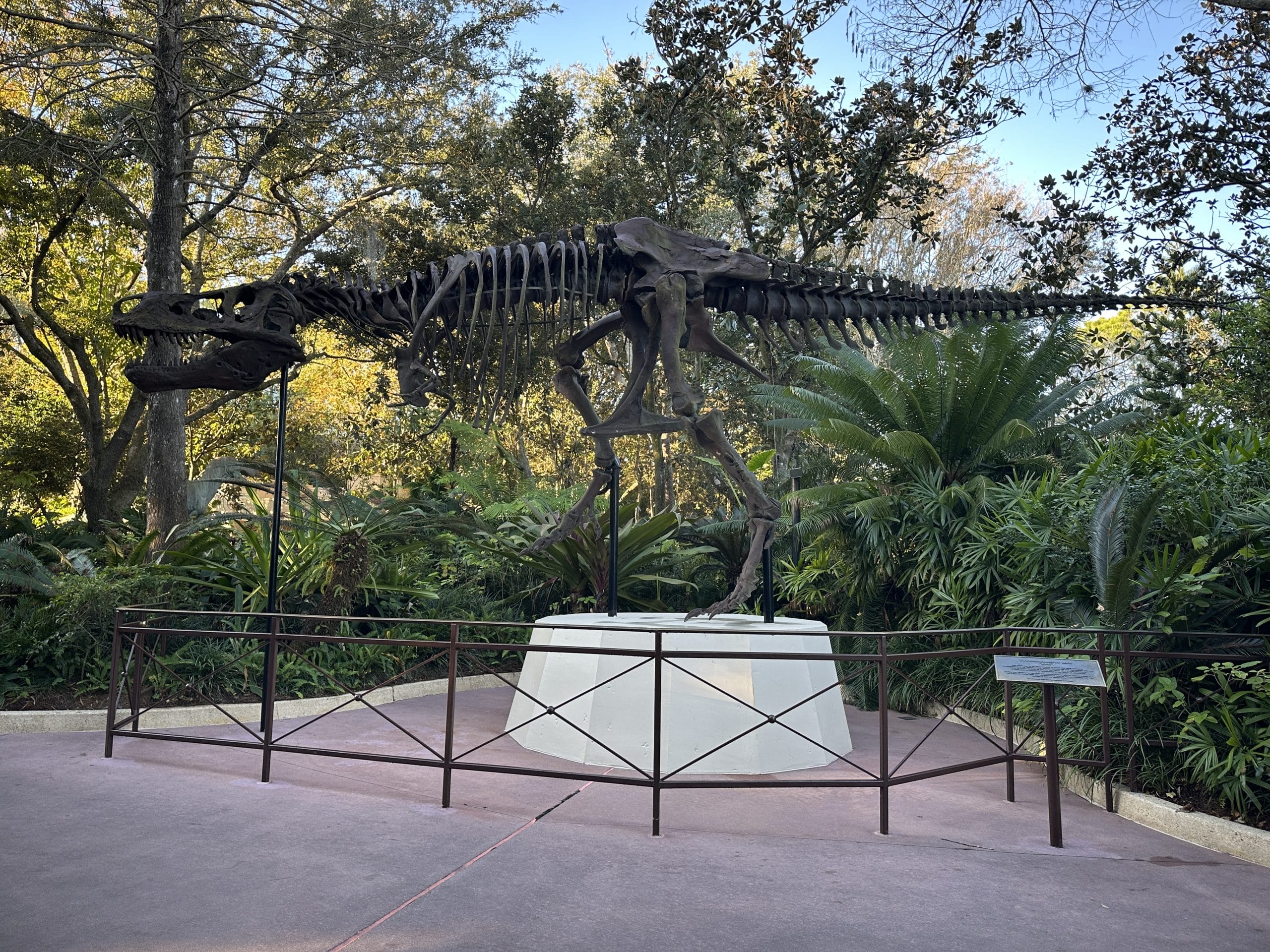
Just past those columns was a replica of Sue the T. rex, a.k.a. Dino-Sue. Discovered in 1990 by Sue Hendrickson in the Black Hills of South Dakota, the original Sue was the largest and most complete T. rex fossil ever found.
After a legal battle regarding ownership of the fossil, it was ultimately sold for $8.3 million at auction in October 1997 to The Field Museum of Natural History, with help from Disney Parks and sponsor McDonald’s.
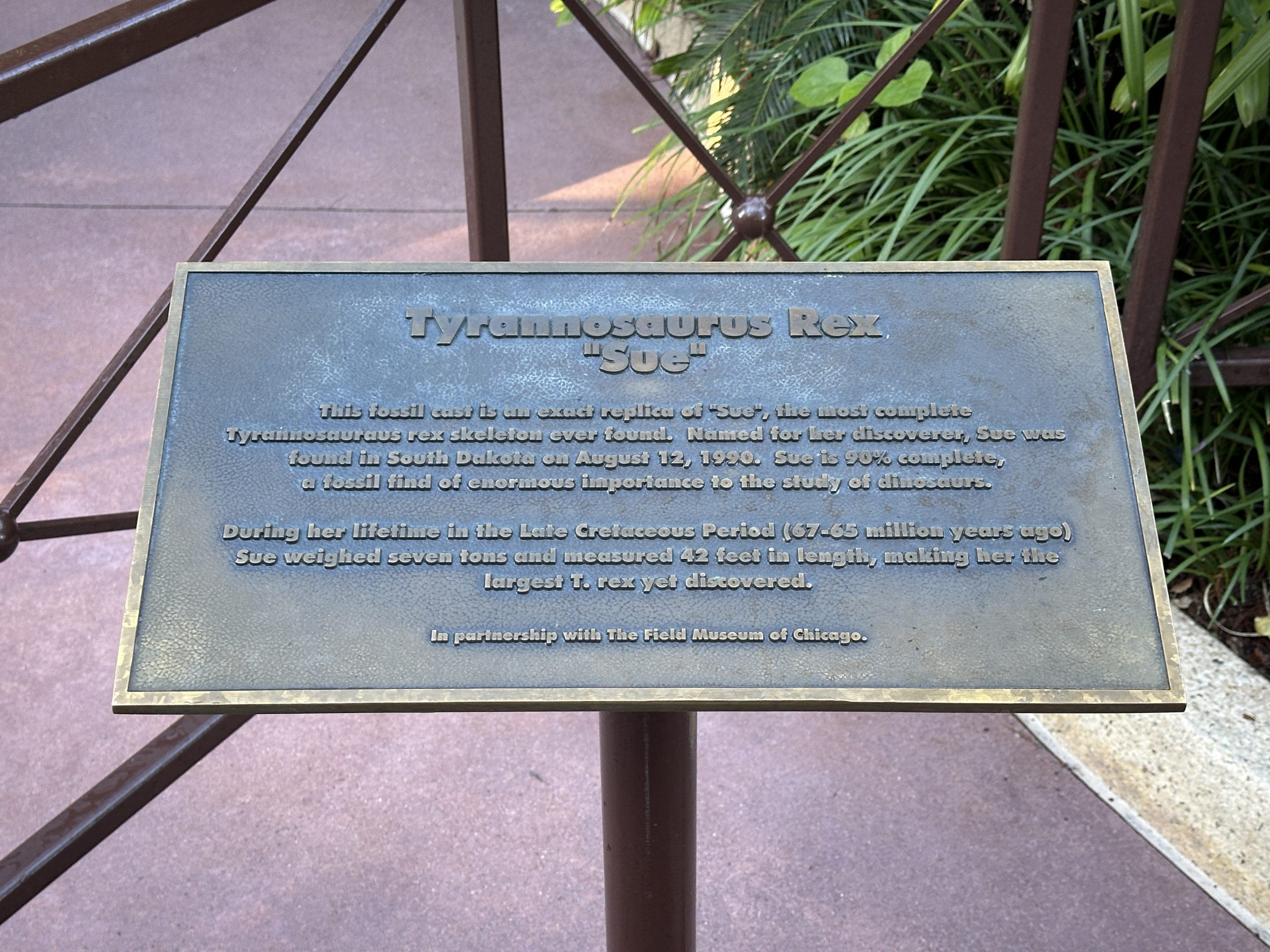
Through the partnership, some of the preparation of Sue’s fossils took place at DinoLand, U.S.A. Guests could watch scientists work in the Fossil Preparation Lab, open from 1998 to 2000, when work was completed.
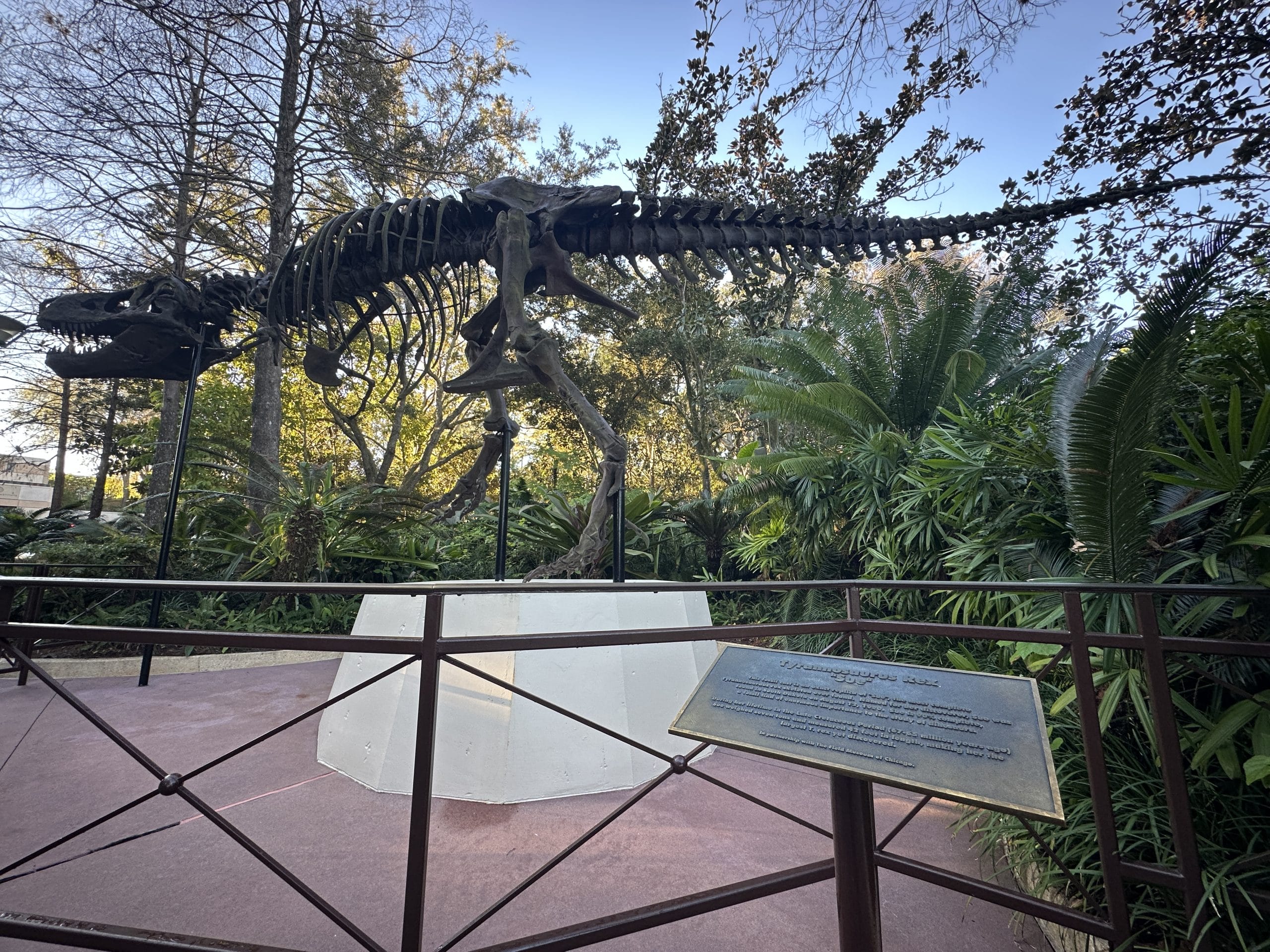
Disney made a cast of Sue to display in the park. The original Sue (who has been re-posed and received previously absent gastralia) remains on display at The Field Museum in Chicago, Illinois.

Guests then reached the Institute, where, since 2000, they were greeted by a statue of Aladar the Iguanodon standing in a pool of water.
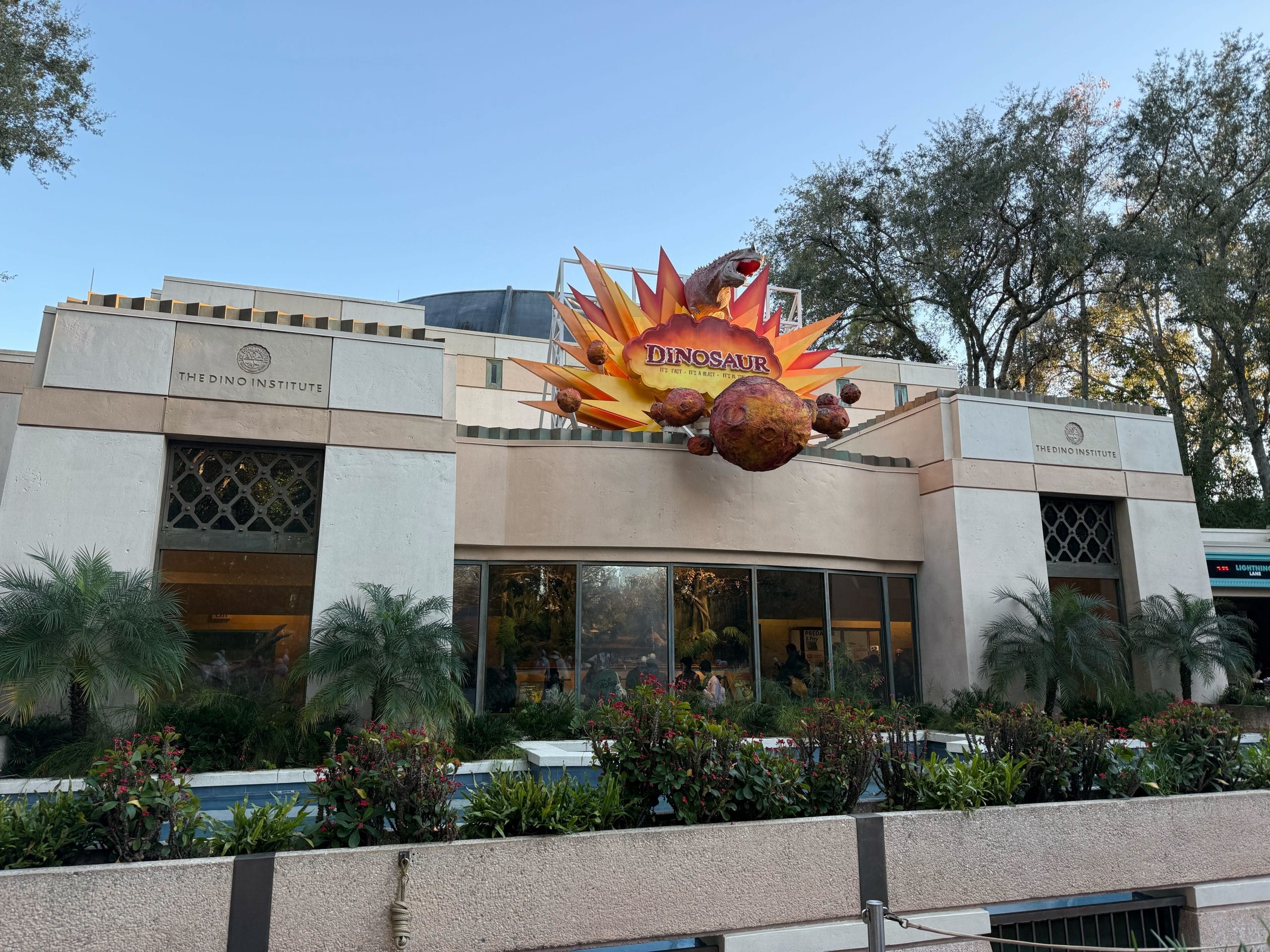
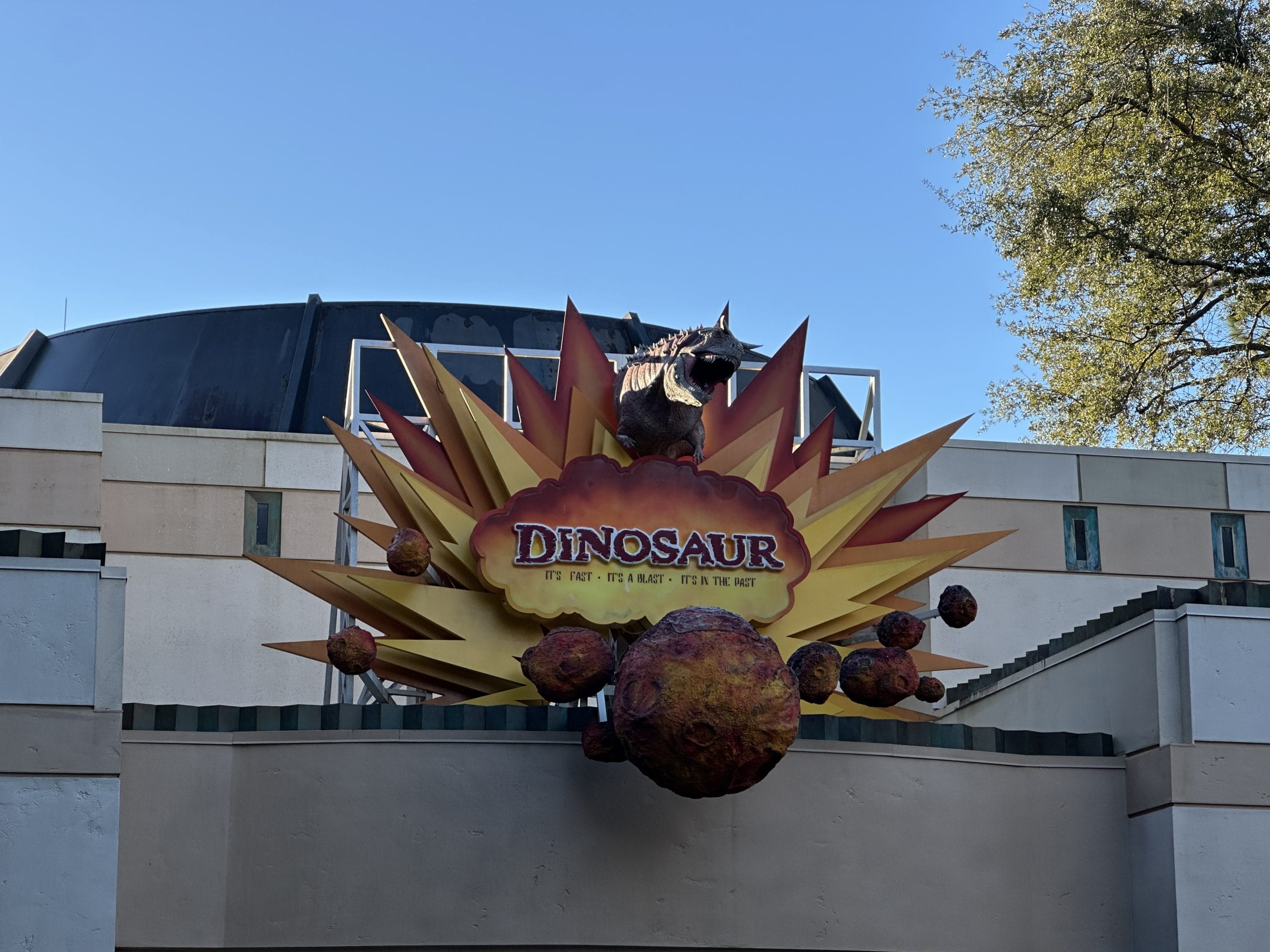
Behind him was another pool directly in front of the entrance building. An explosive DINOSAUR marquee featured the Carnotaurus and meteors. At night, this lit up.
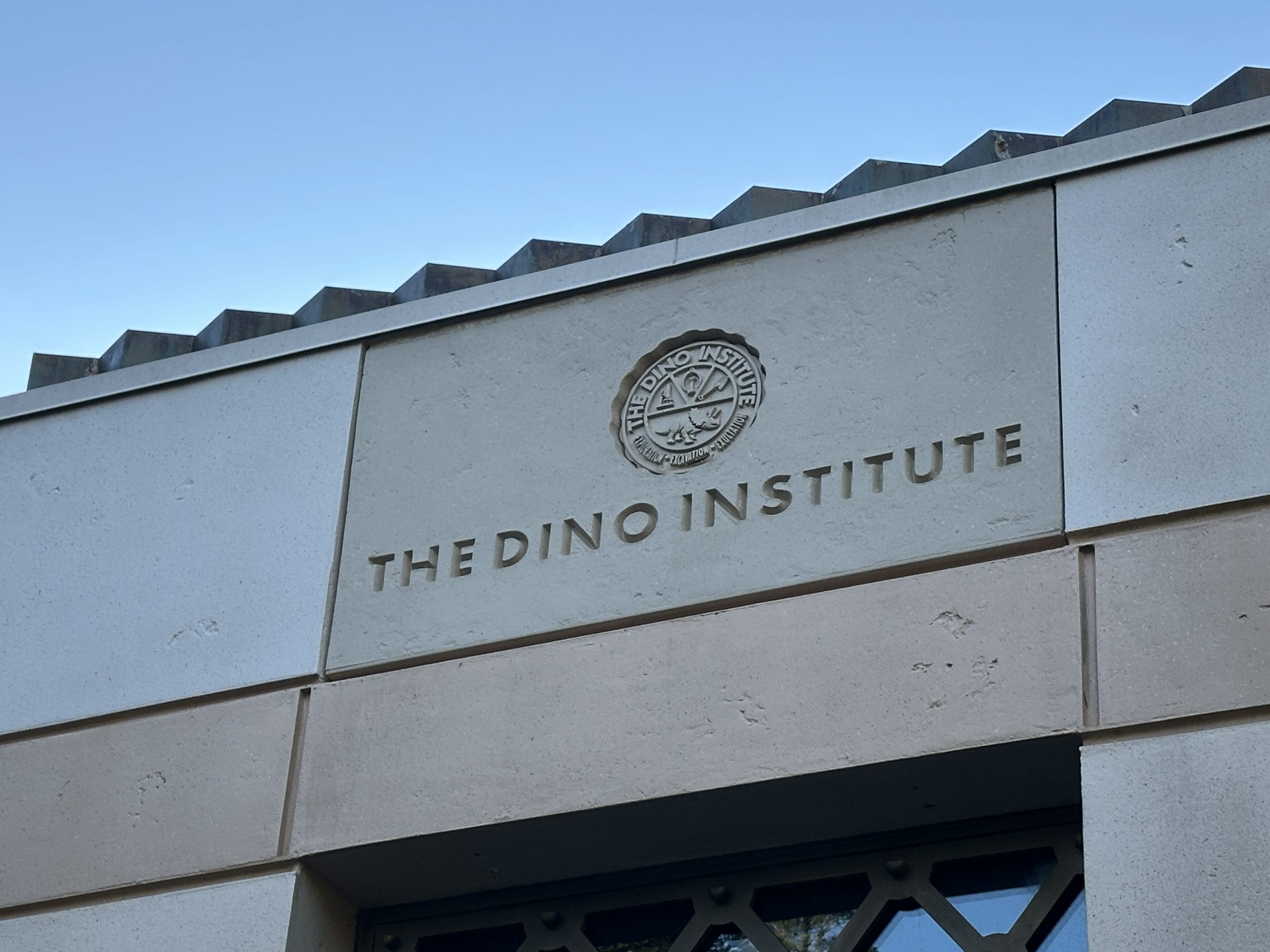
The stone building was also branded with the institute logo. There were windows along the front of the building that looked into the queue.
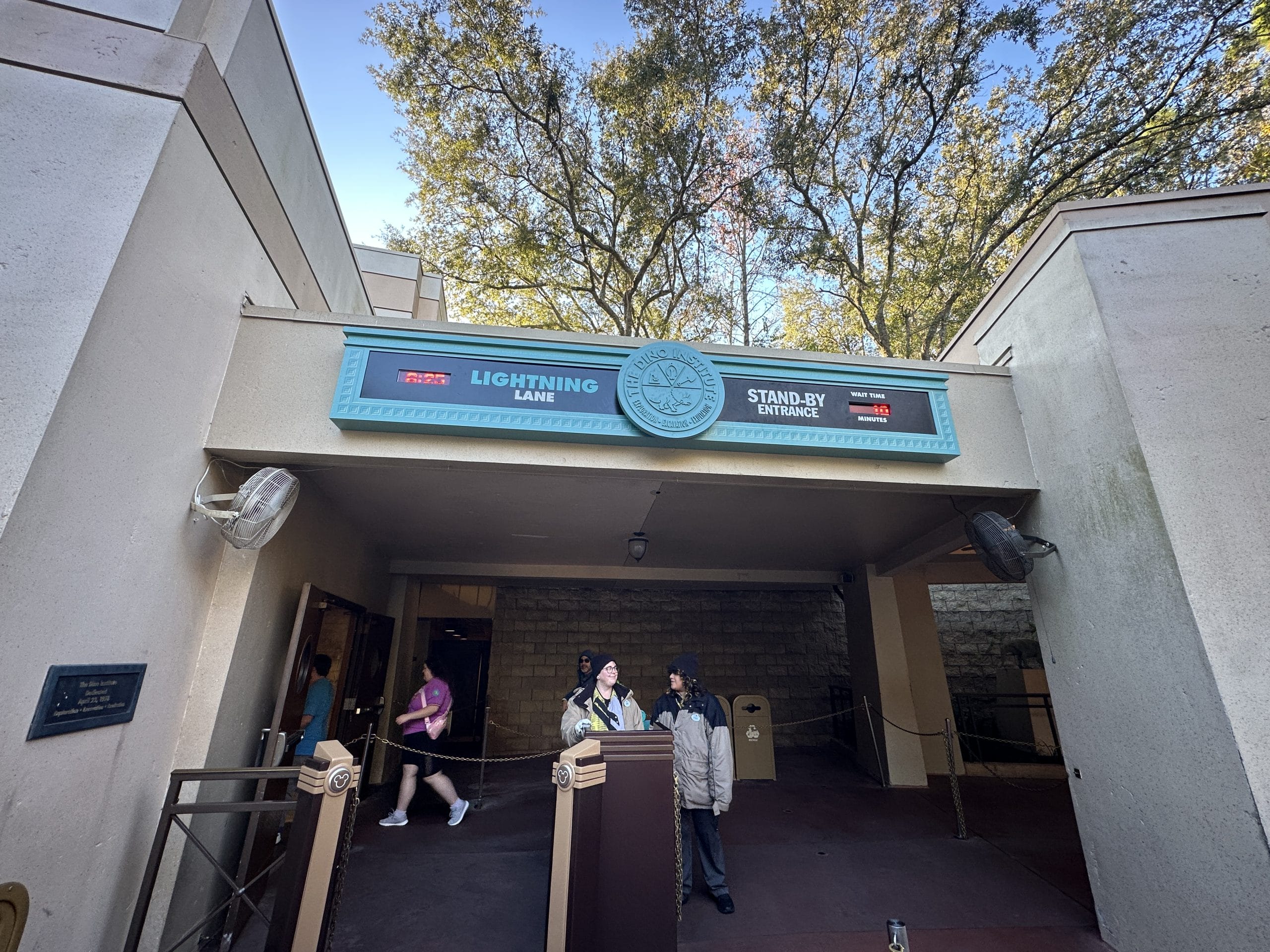
The entrance was on the right under green umbrellas and signage. The left side was for Lightning Lane, and the right side was for stand-by.
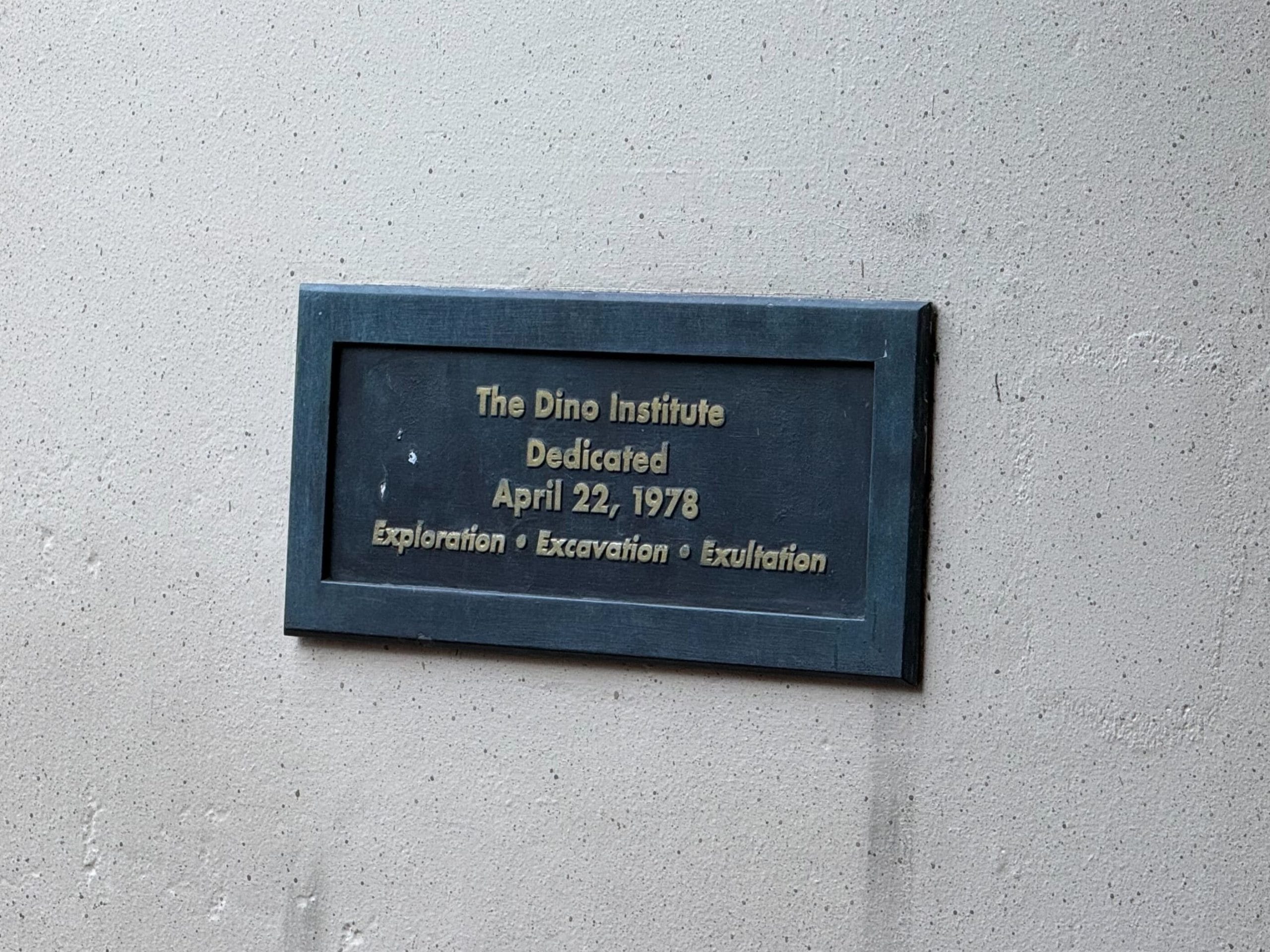
A plaque near the door indicated the institute was dedicated on April 22, 1978 (20 years before the opening of Disney’s Animal Kingdom). It lists their motto of “Exploration, Excavation, Exultation.”
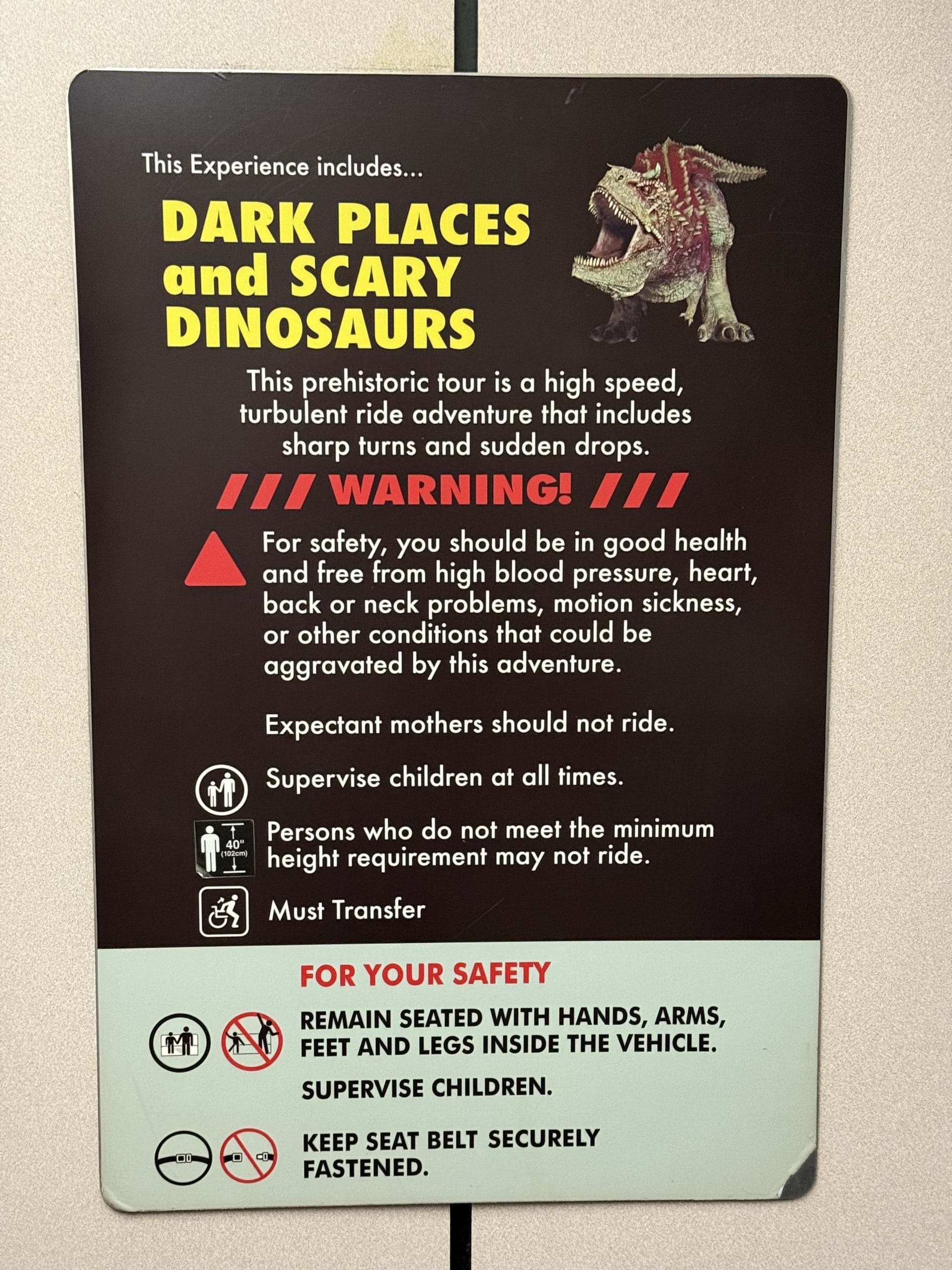
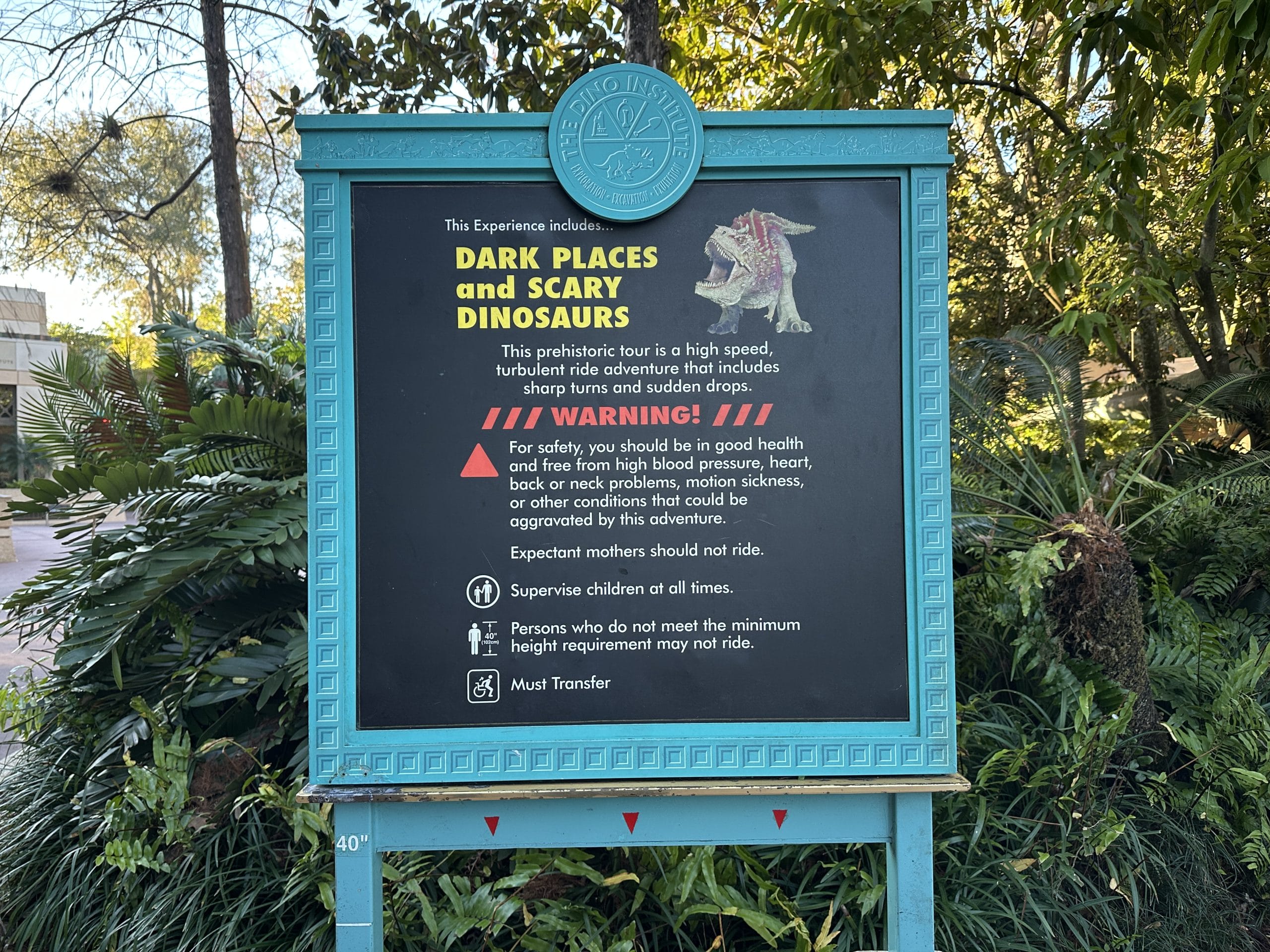
Safety signs warned guests that DINOSAUR included “dark places and scary dinosaurs.” Guests with certain health problems, as well as expectant mothers, were not permitted to ride. The height requirement was 40.” Wheelchair-users needed to transfer.
DINOSAUR Queue
Outdoor Queue
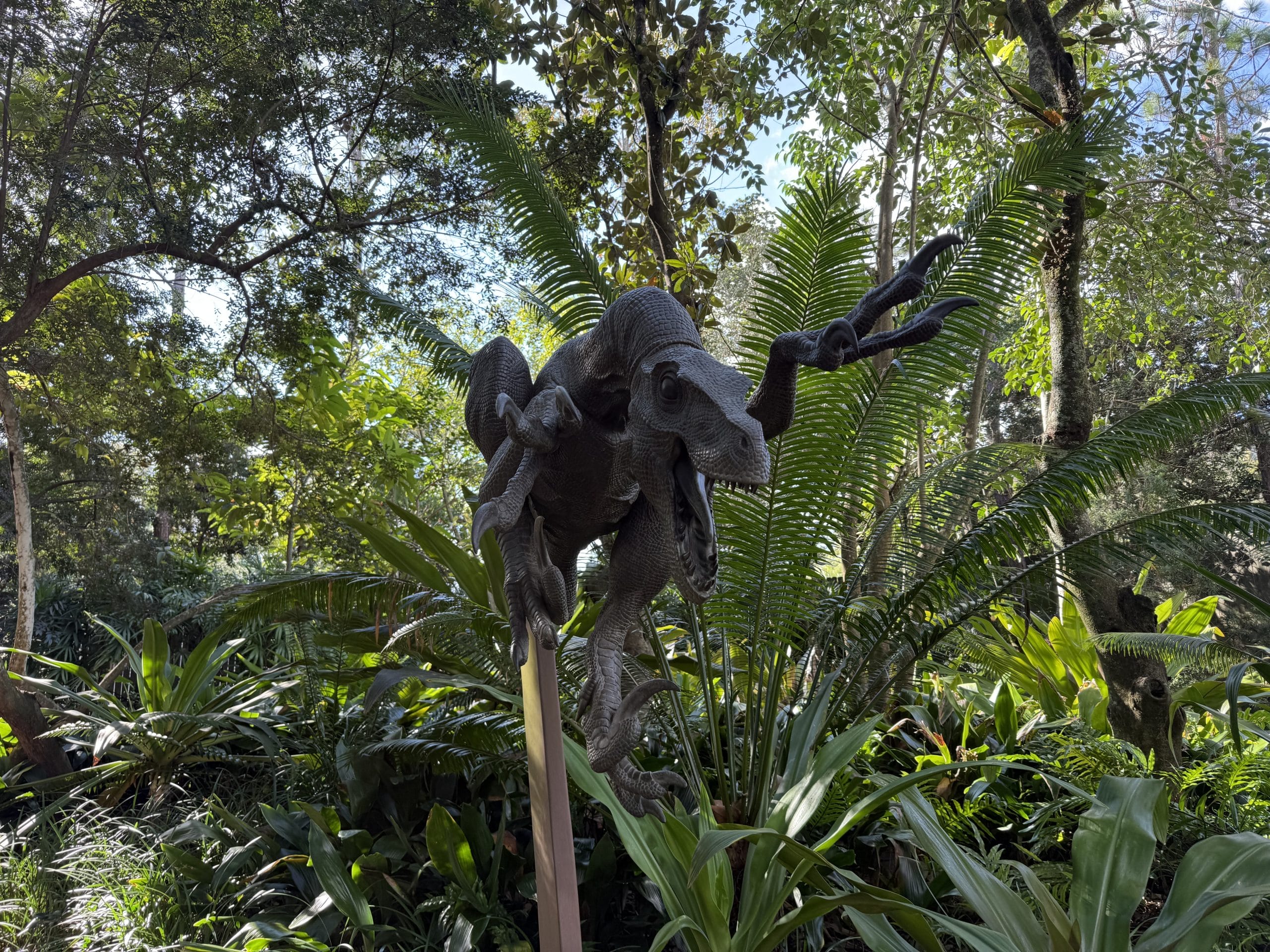
Depending on the wait time, guests might have had to walk through the outdoor queue. This was mostly bare except for plant life and dinosaur statues, like the leaping raptor above.
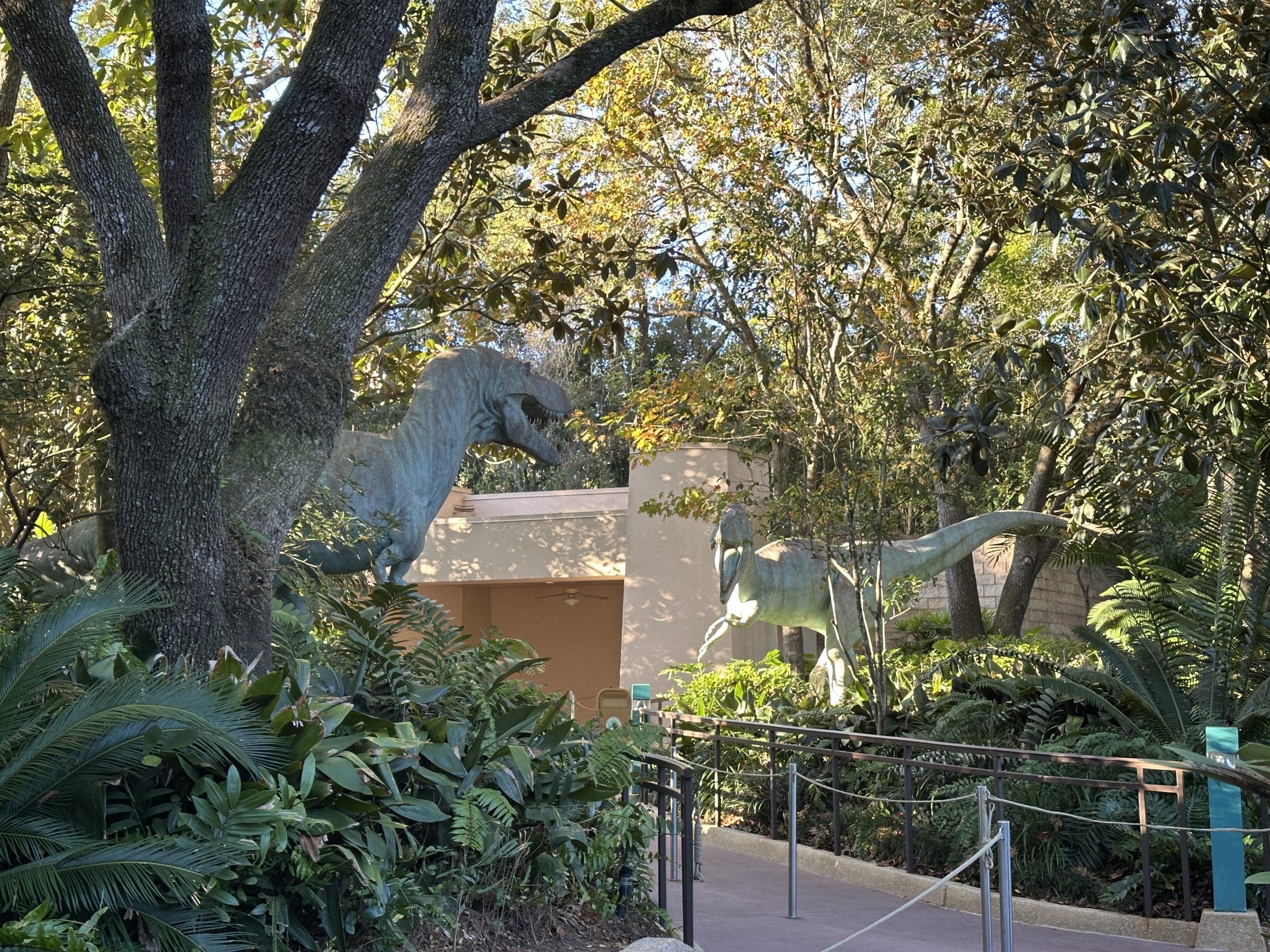
Another raptor and a small T. rex were in the foliage. These statues were patina-like green.
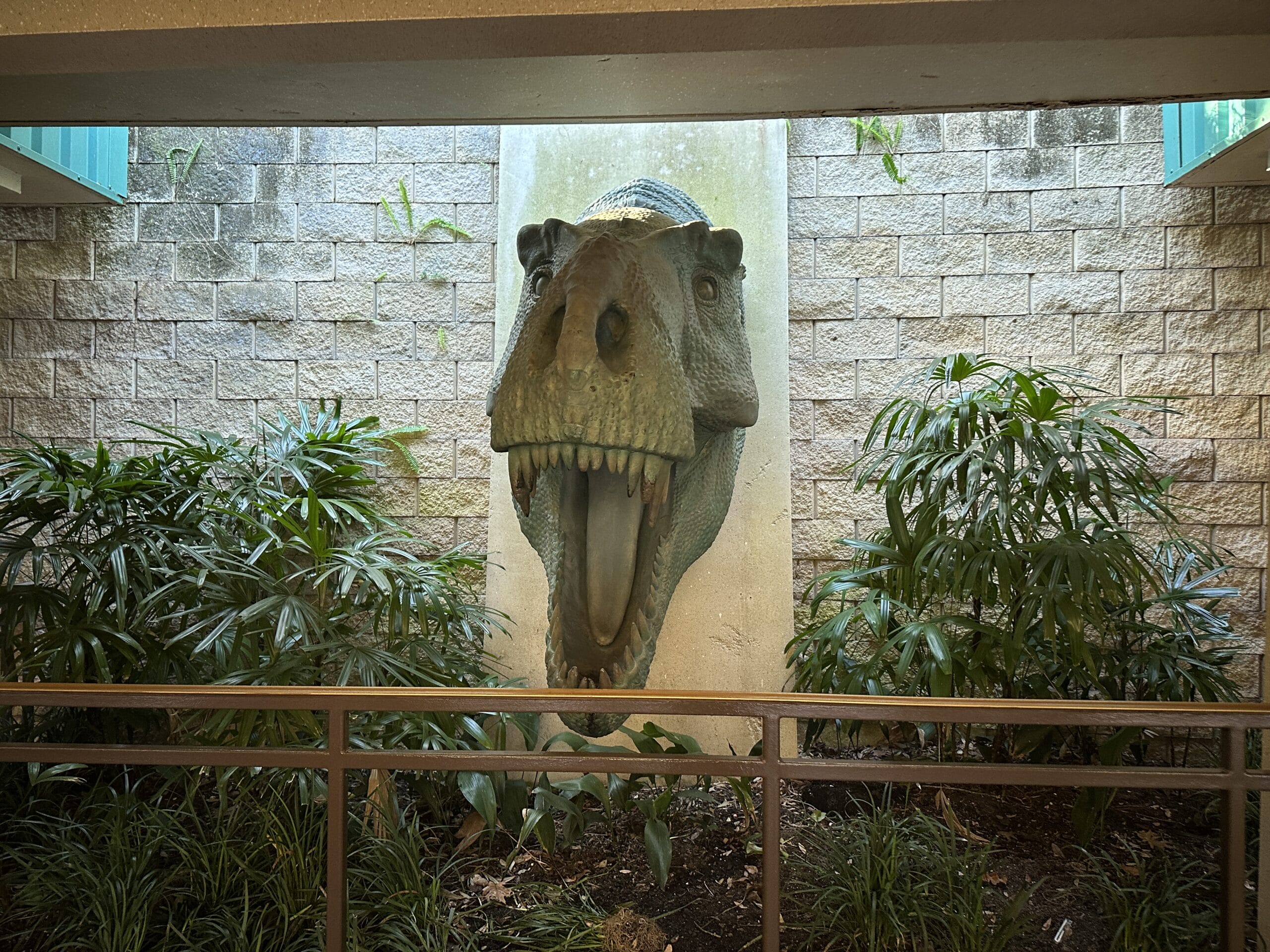
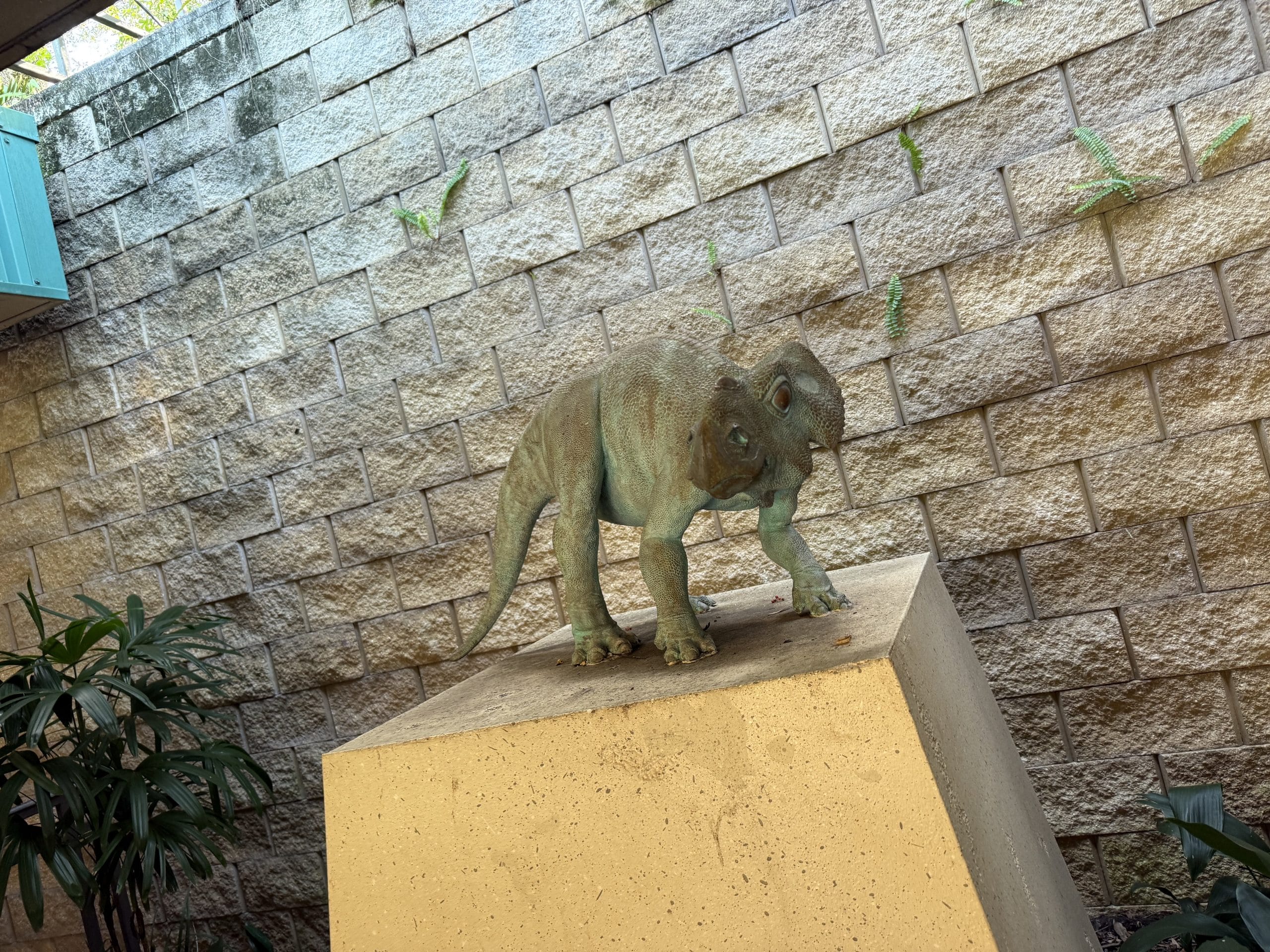
Closer to the building, a sculpture of a T. rex head was mounted on a column. On a dais was a small statue of a Ceratopsian dinosaur.
Interior Hallway
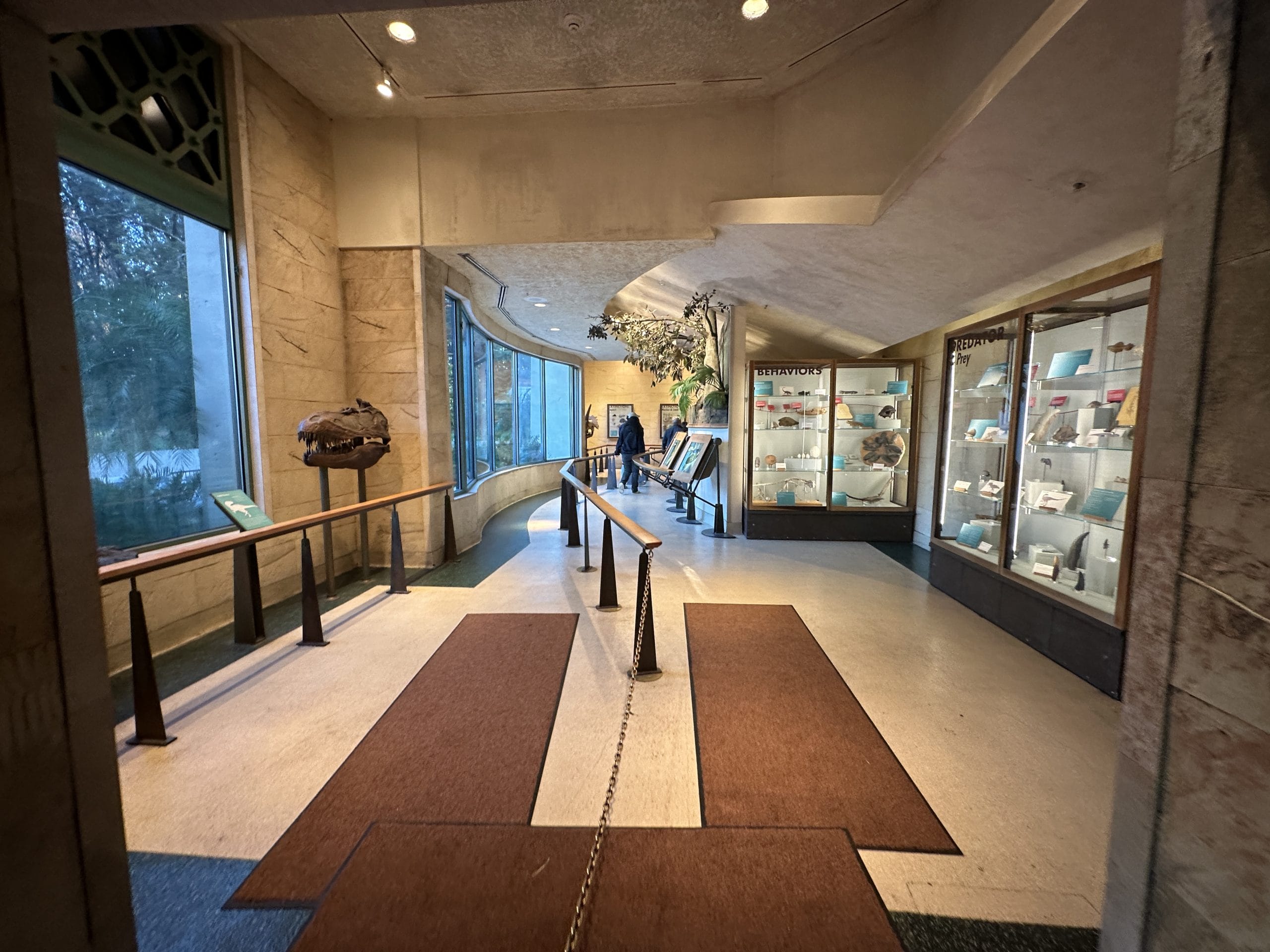
The indoor queue was full of displays, including cases of small fossils. The Lightning Lane queue was on the left, and the regular queue was on the right.
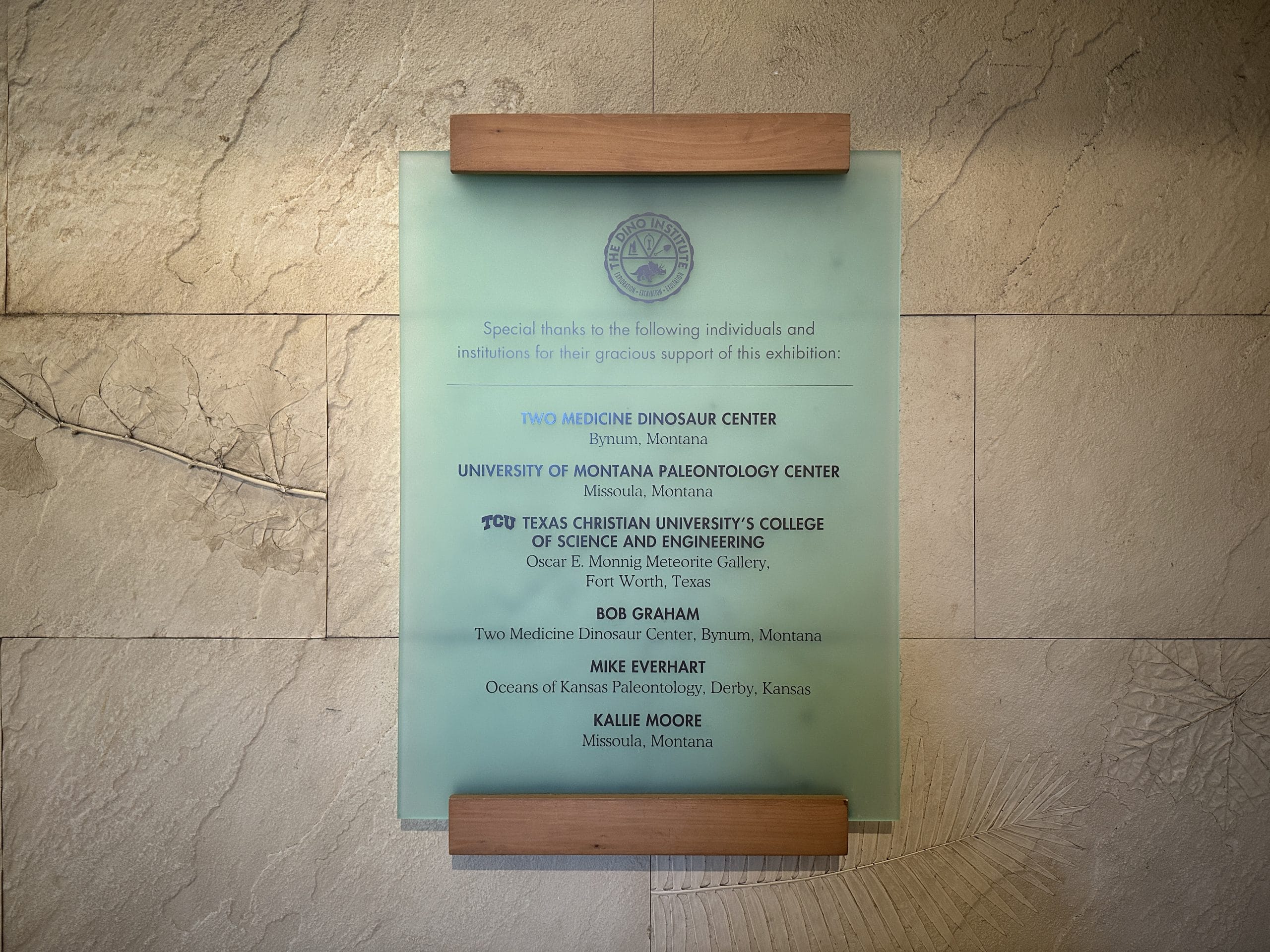
This plaque thanked various individuals and organizations for their contributions to the exhibit.
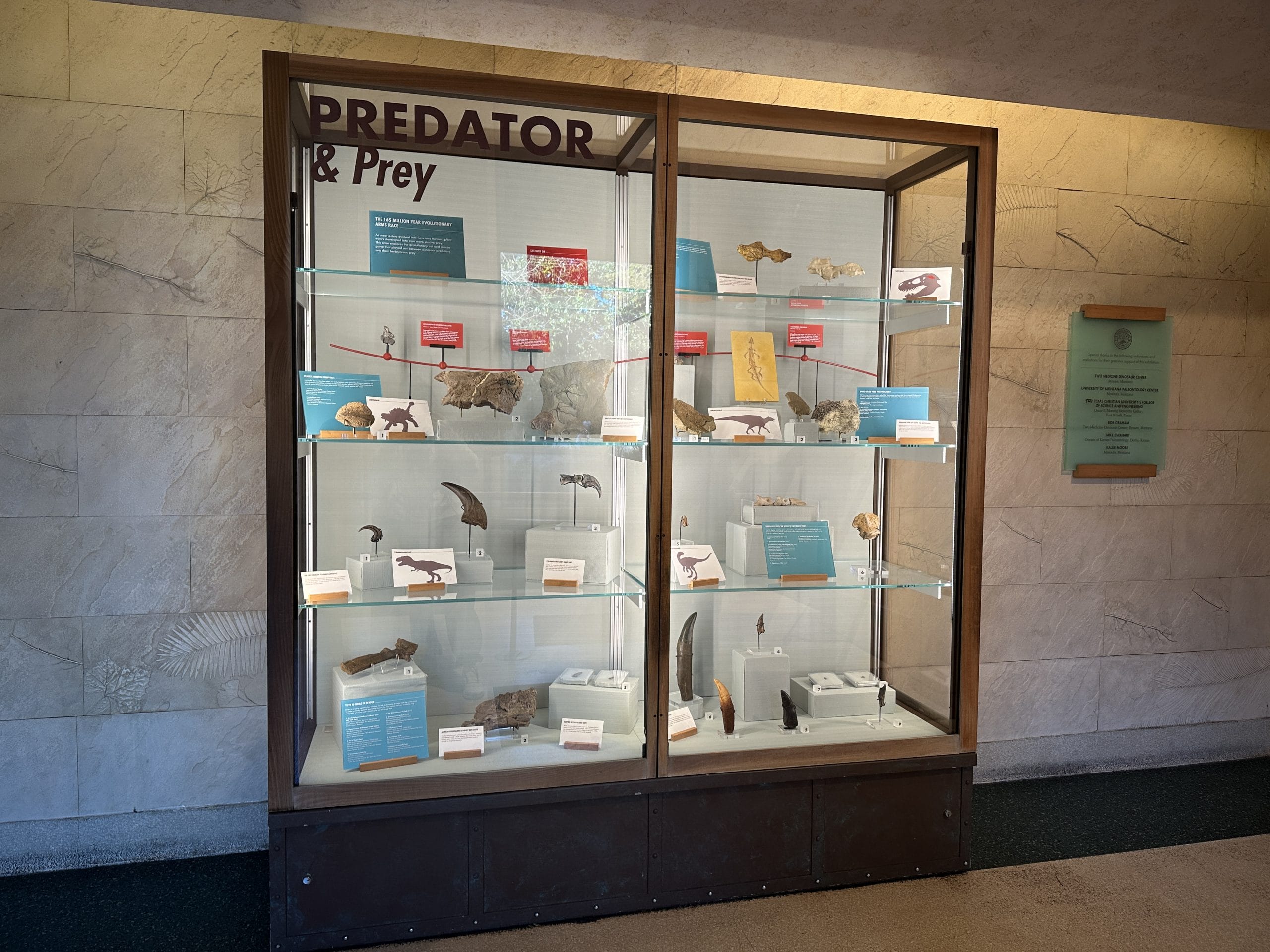
The first display case was dedicated to “Predator & Prey” relationships.
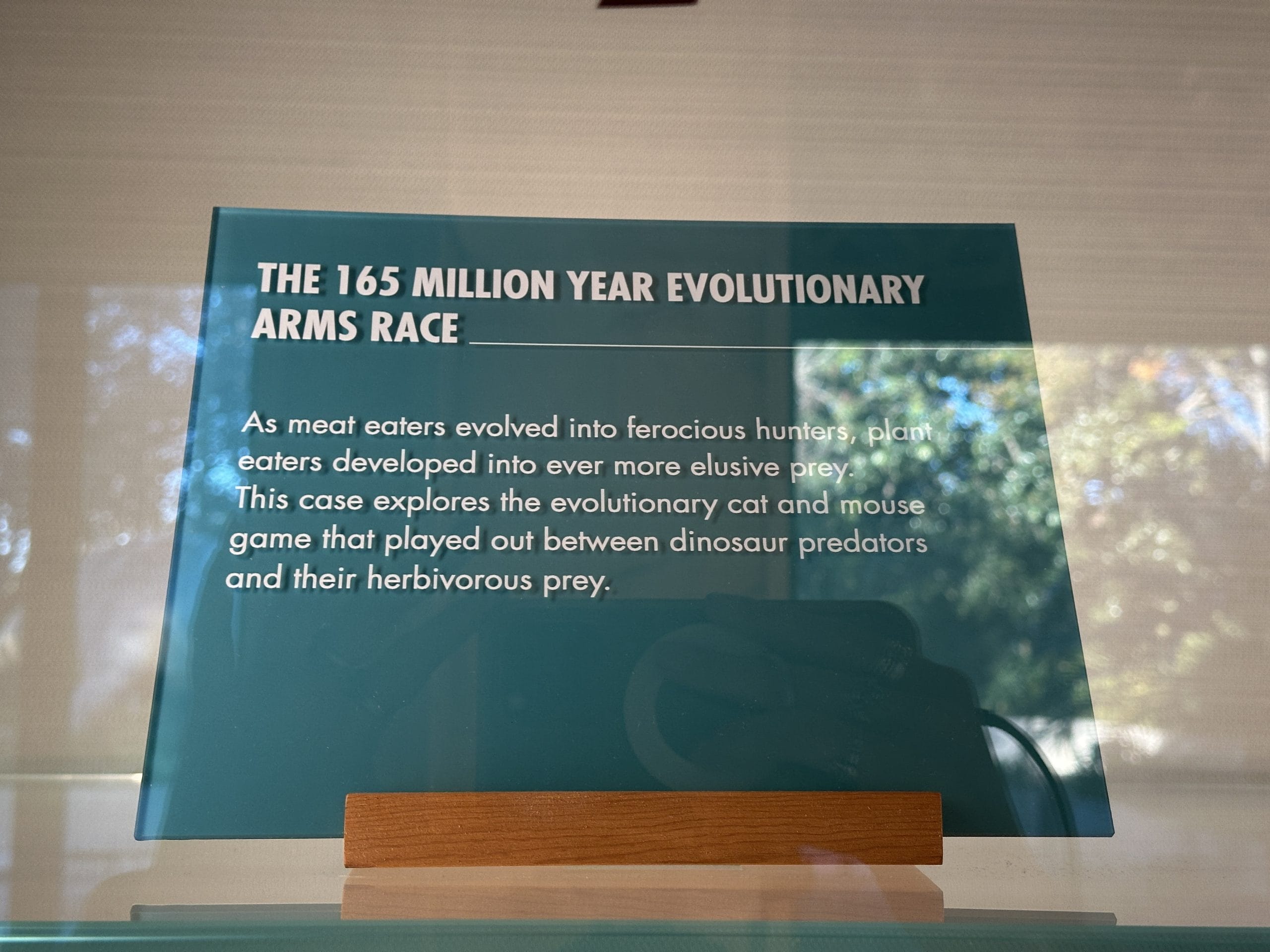
The 165 Million Year Evolutionary Arms Race
As meat eaters evolved into ferocious hunters, plant eaters developed into ever more elusive pray. This case explores the evolutionary cat and mouse game that played out between dinosaur predators and their herbivorous prey.
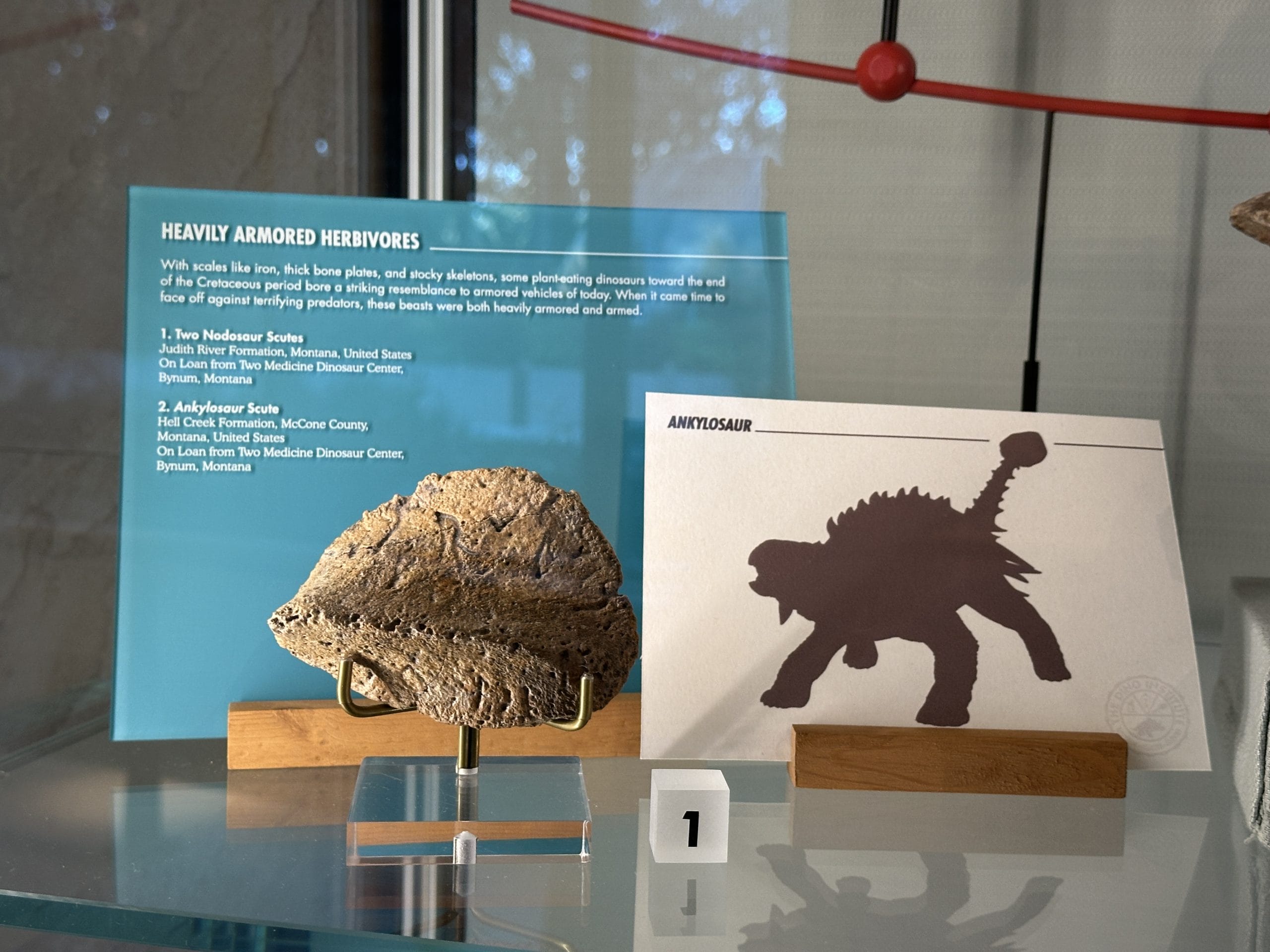
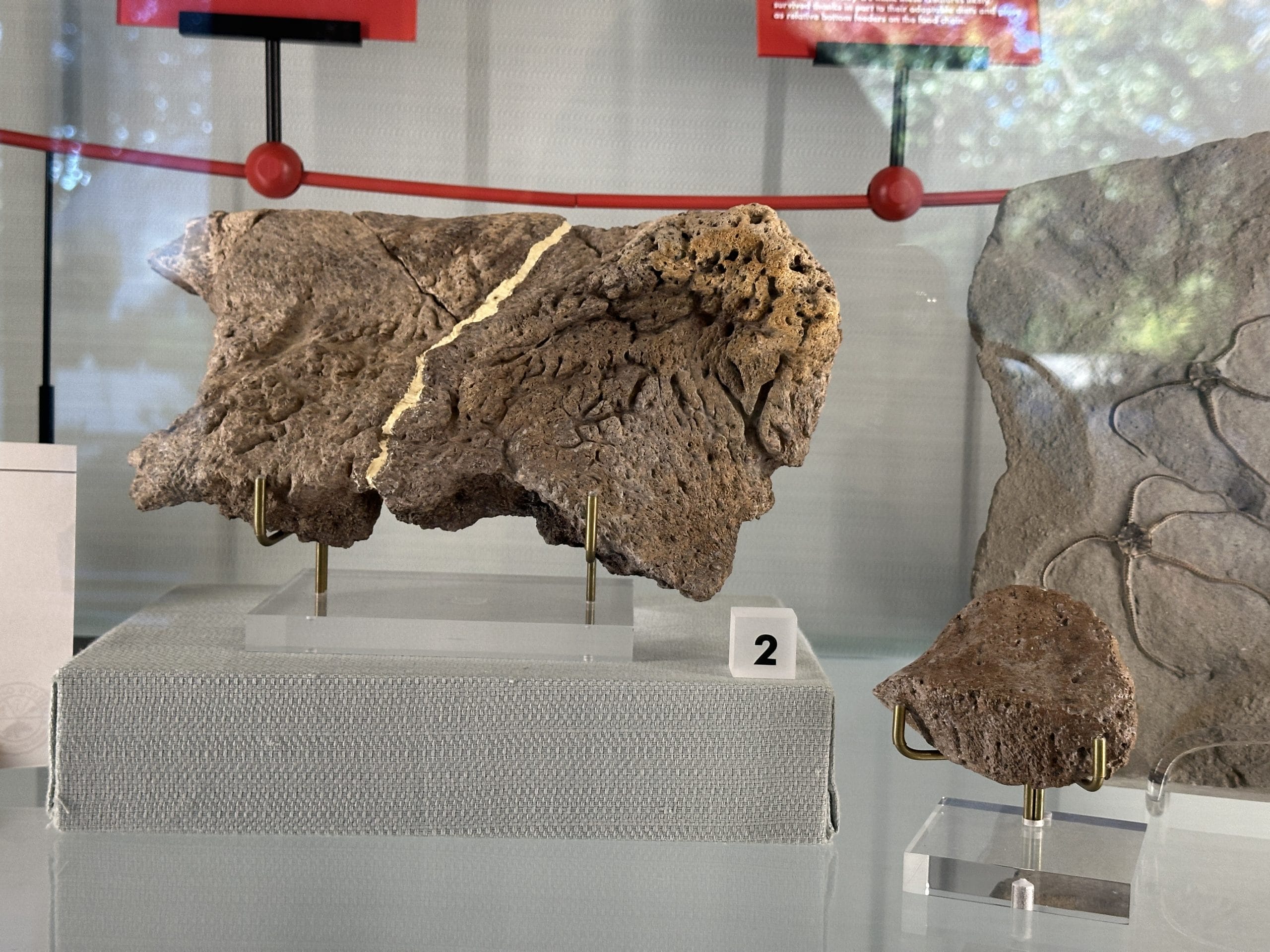
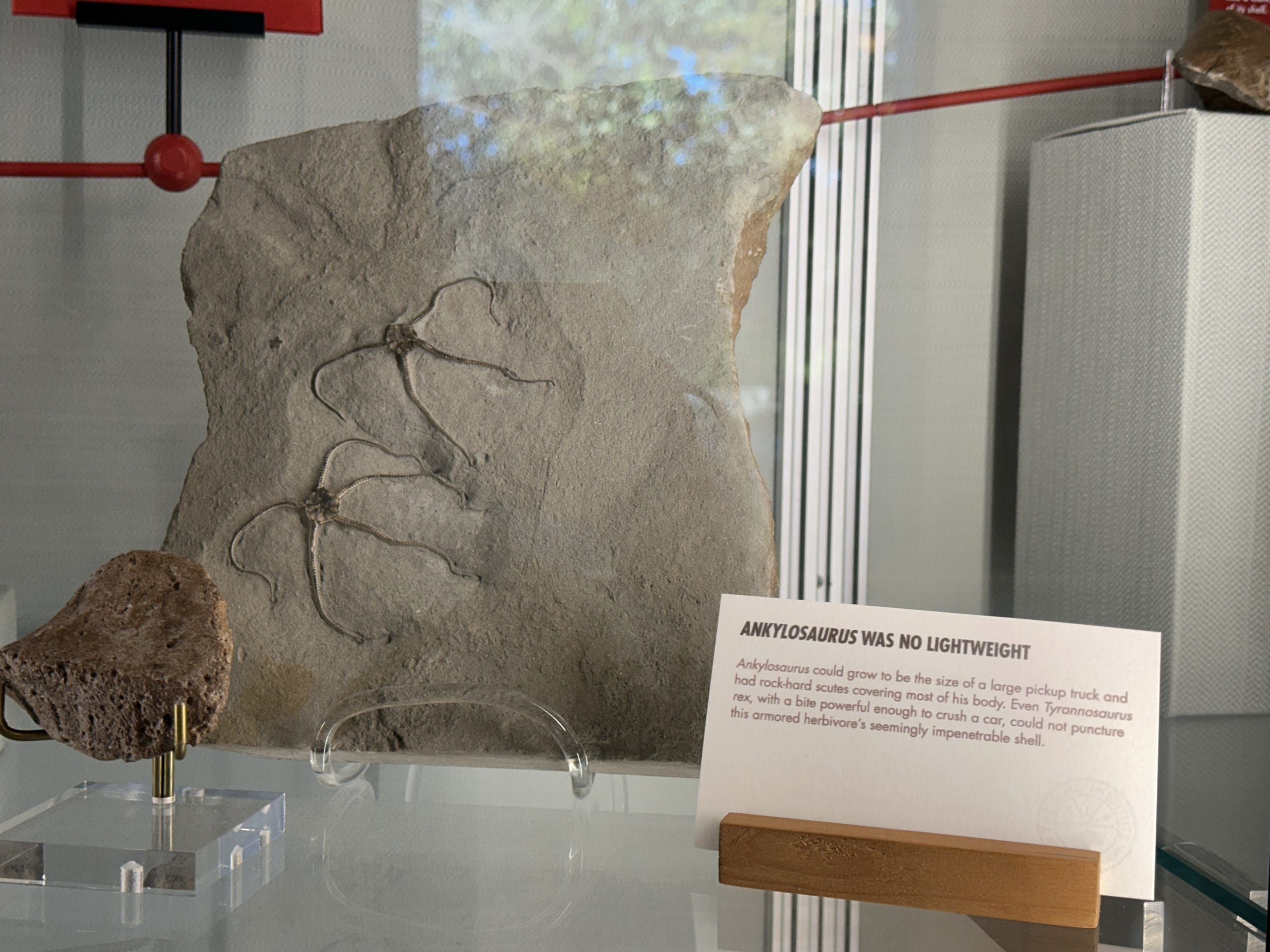
One form of protection that herbivores, such as Ankylosaurus, developed was armor. Here are three scutes (thick bony plates) from such species.
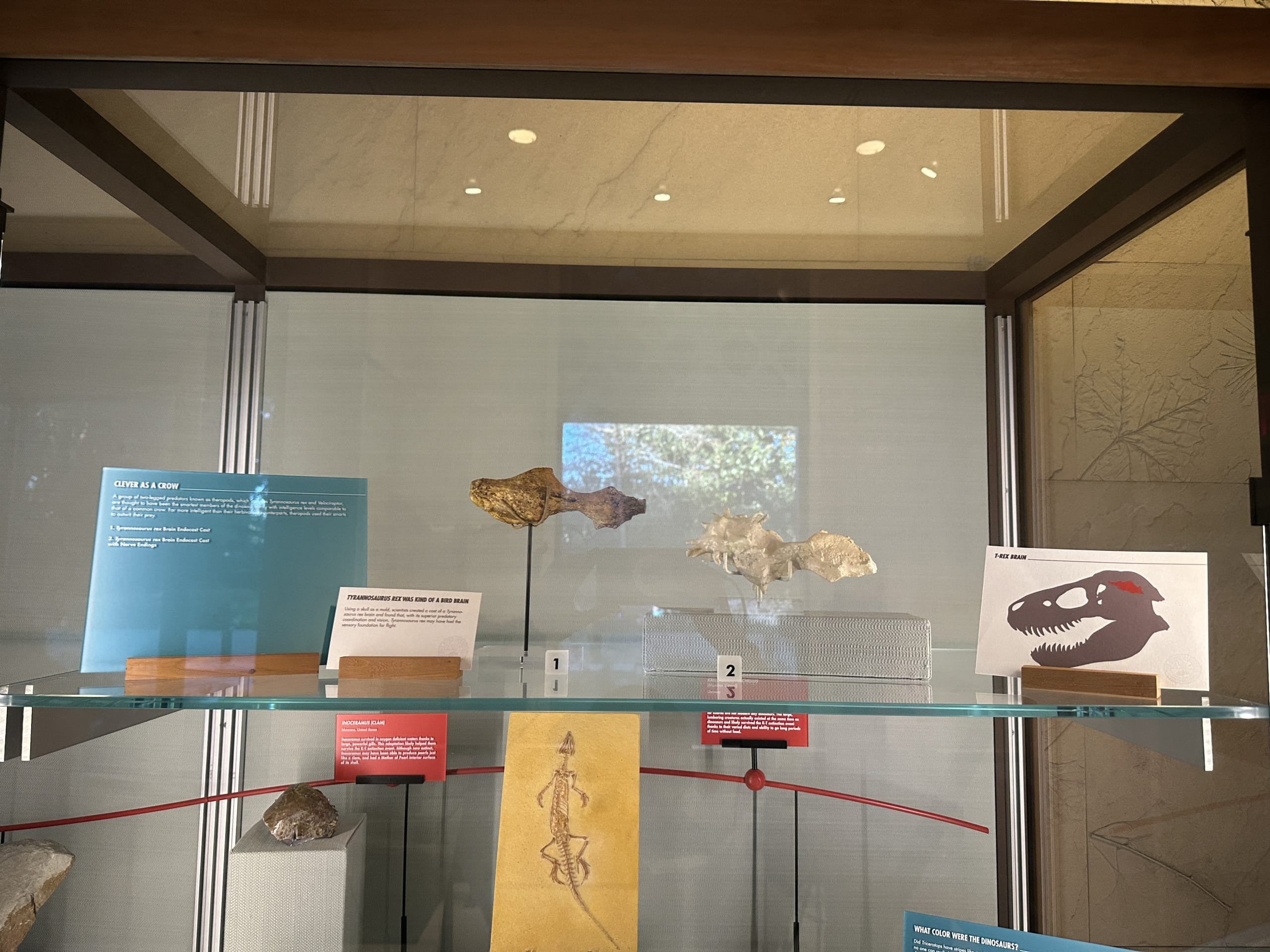
Two-legged predators like T. rex and Velociraptor were thought to be the smartest dinosaurs with intelligence levels comparable to a common crow. They were much smarter than the herbivores, a plaque explains.
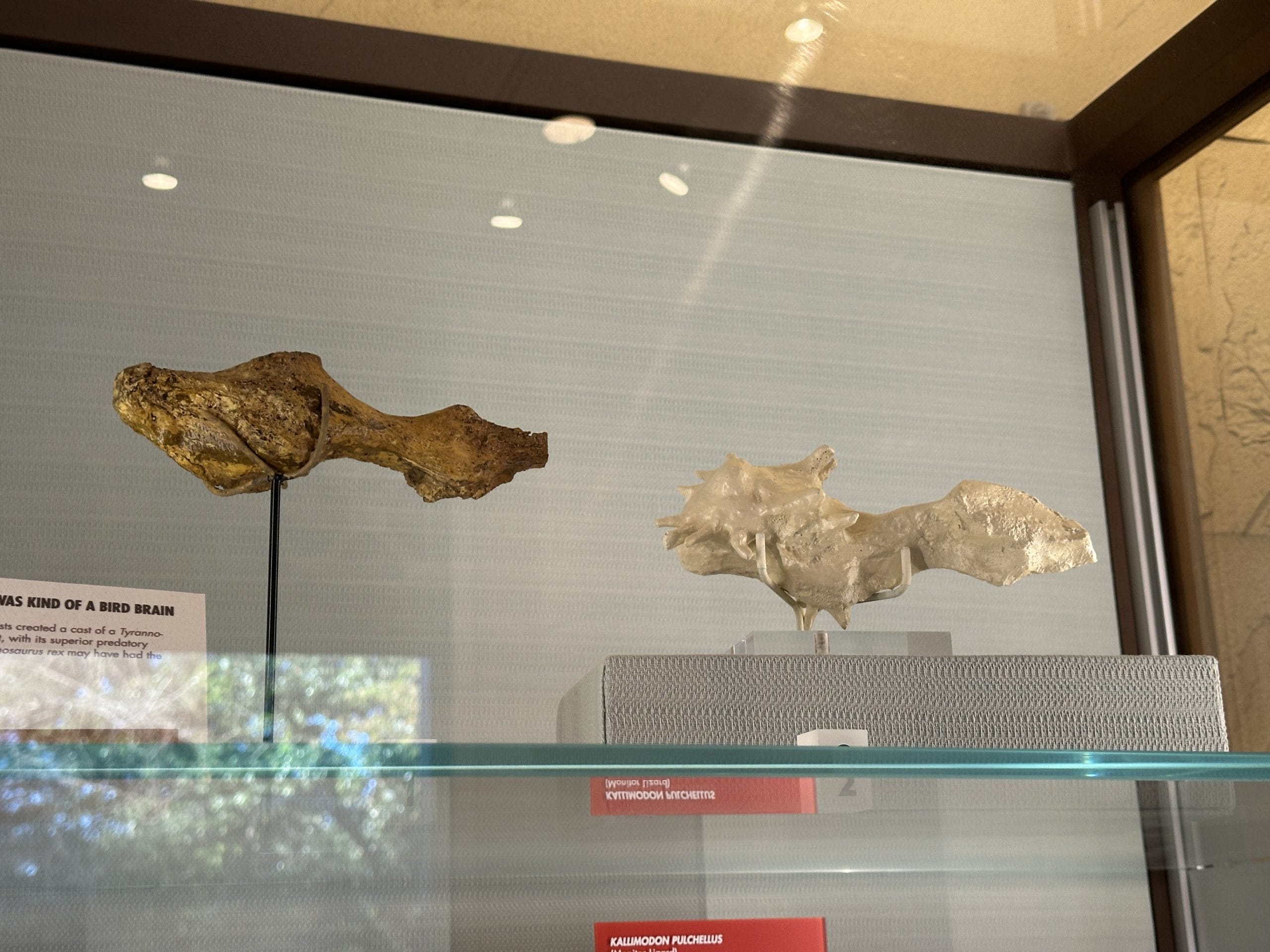
These two casts are brain endocasts of T. rex, one including nerve endings.
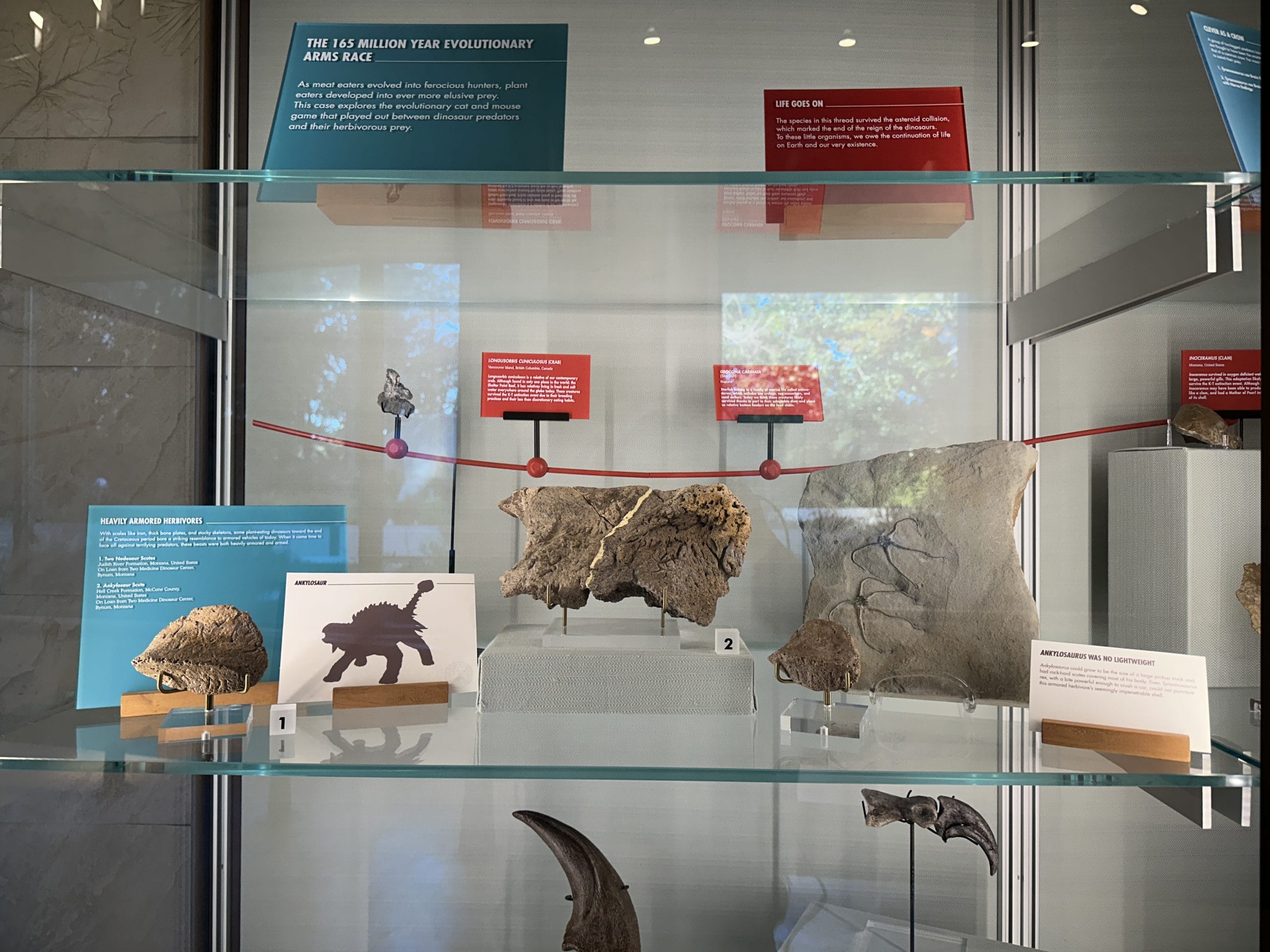
The red thread at the back of the case highlights species that survived the asteroid collision that killed most life on Earth.
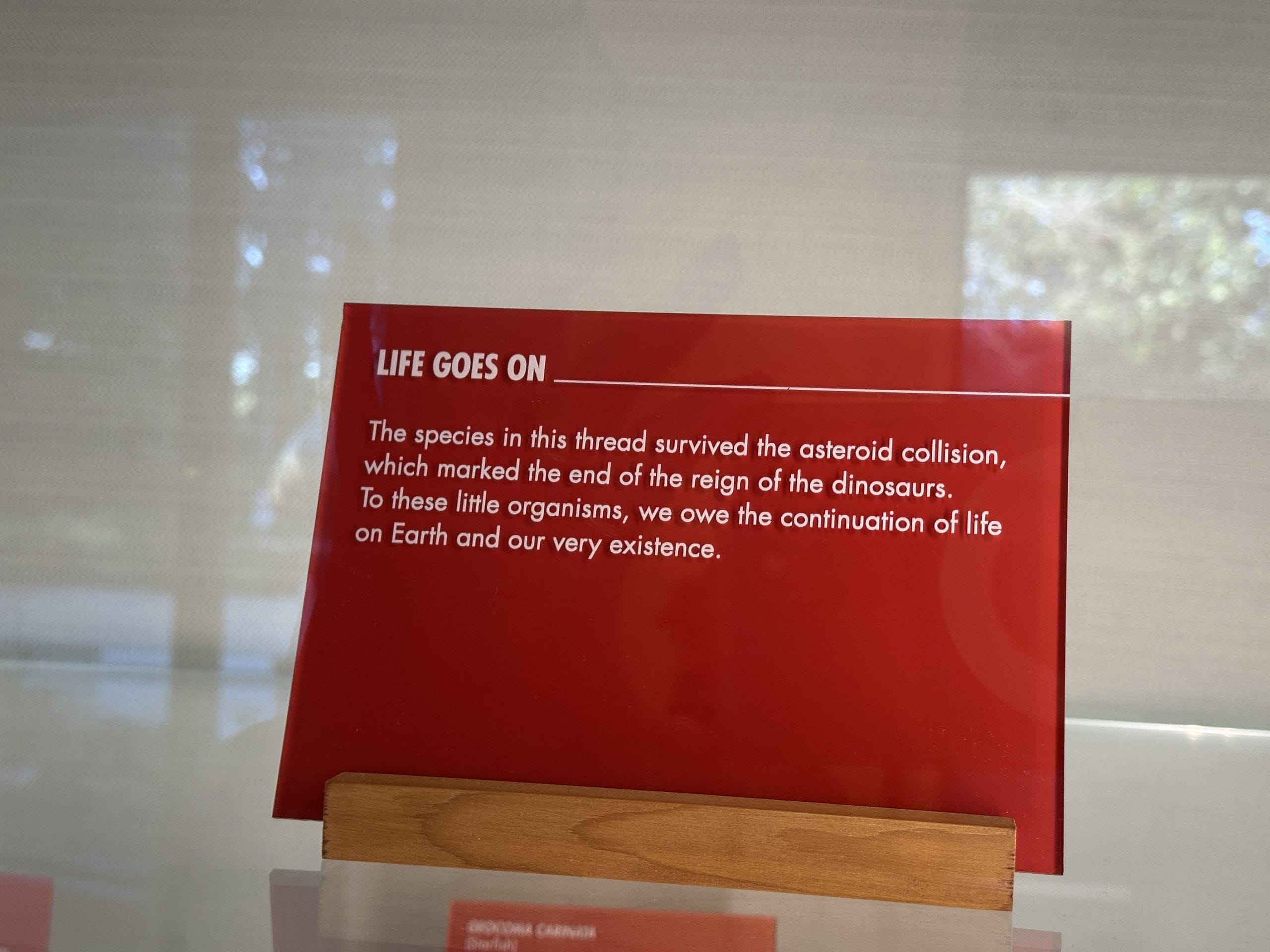
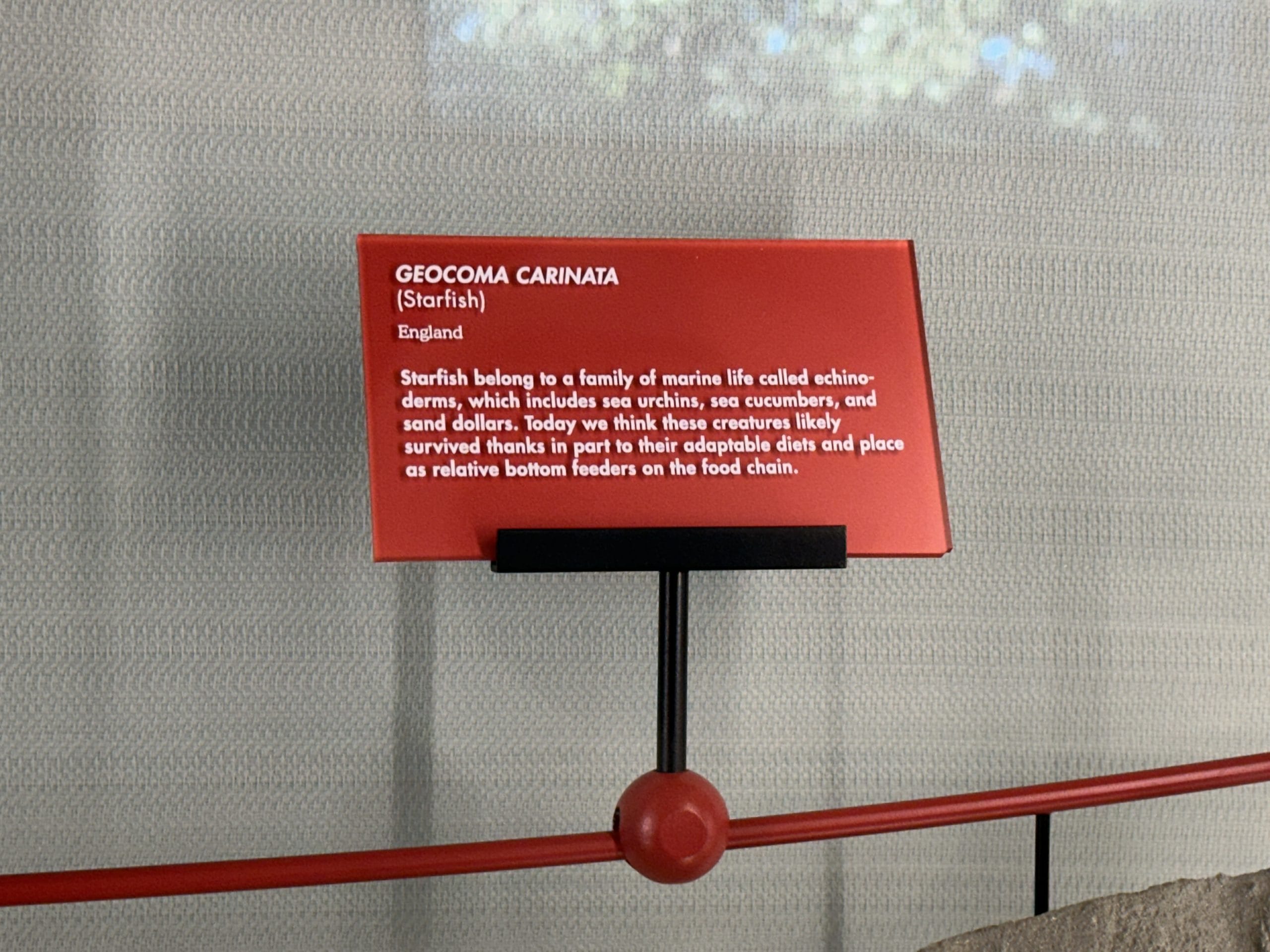
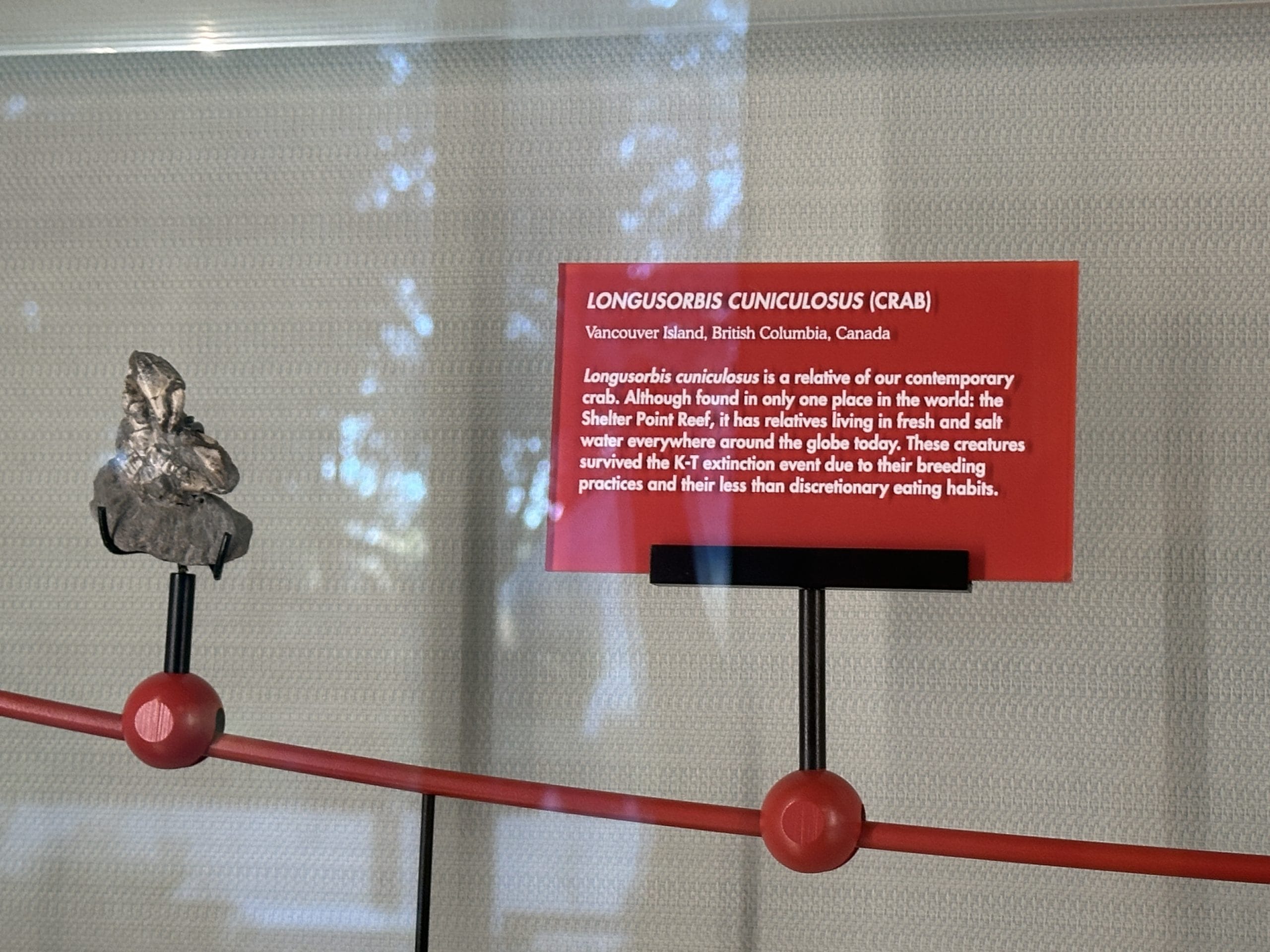
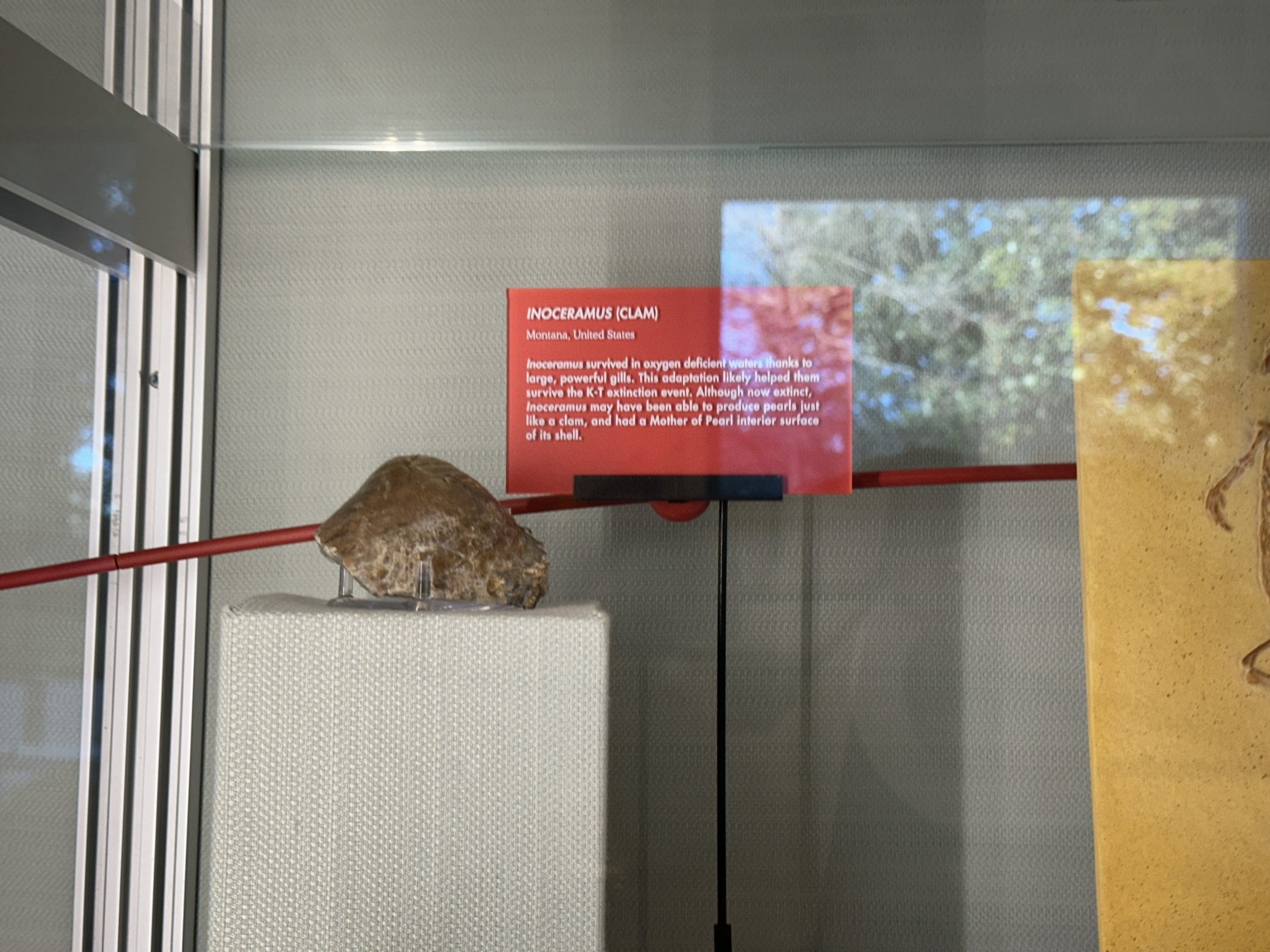
“To these little organisms,” reads a plaque, “we owe the continuation of life on Earth and our very existence.” These organisms include crabs, starfish, and clams.
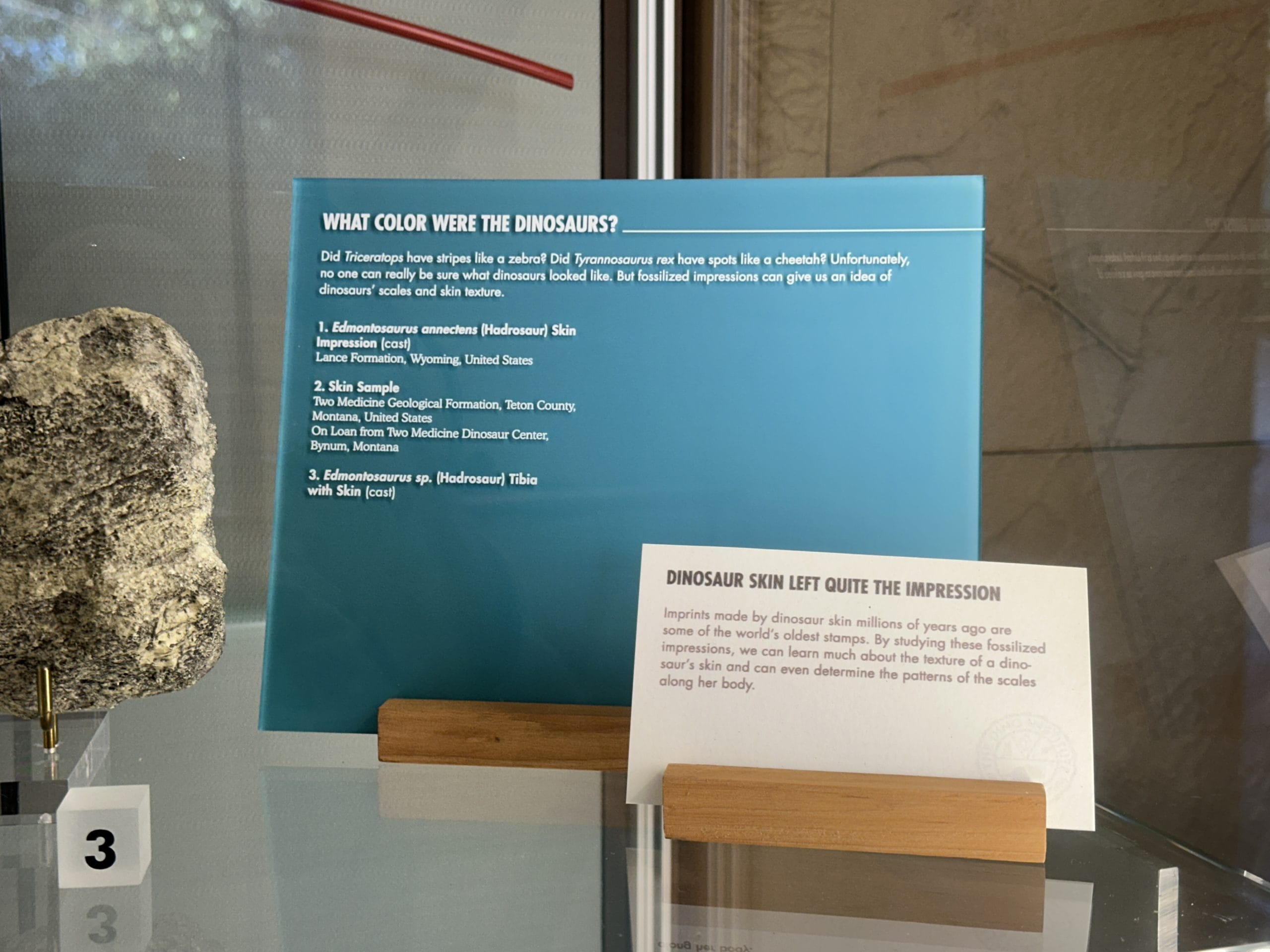
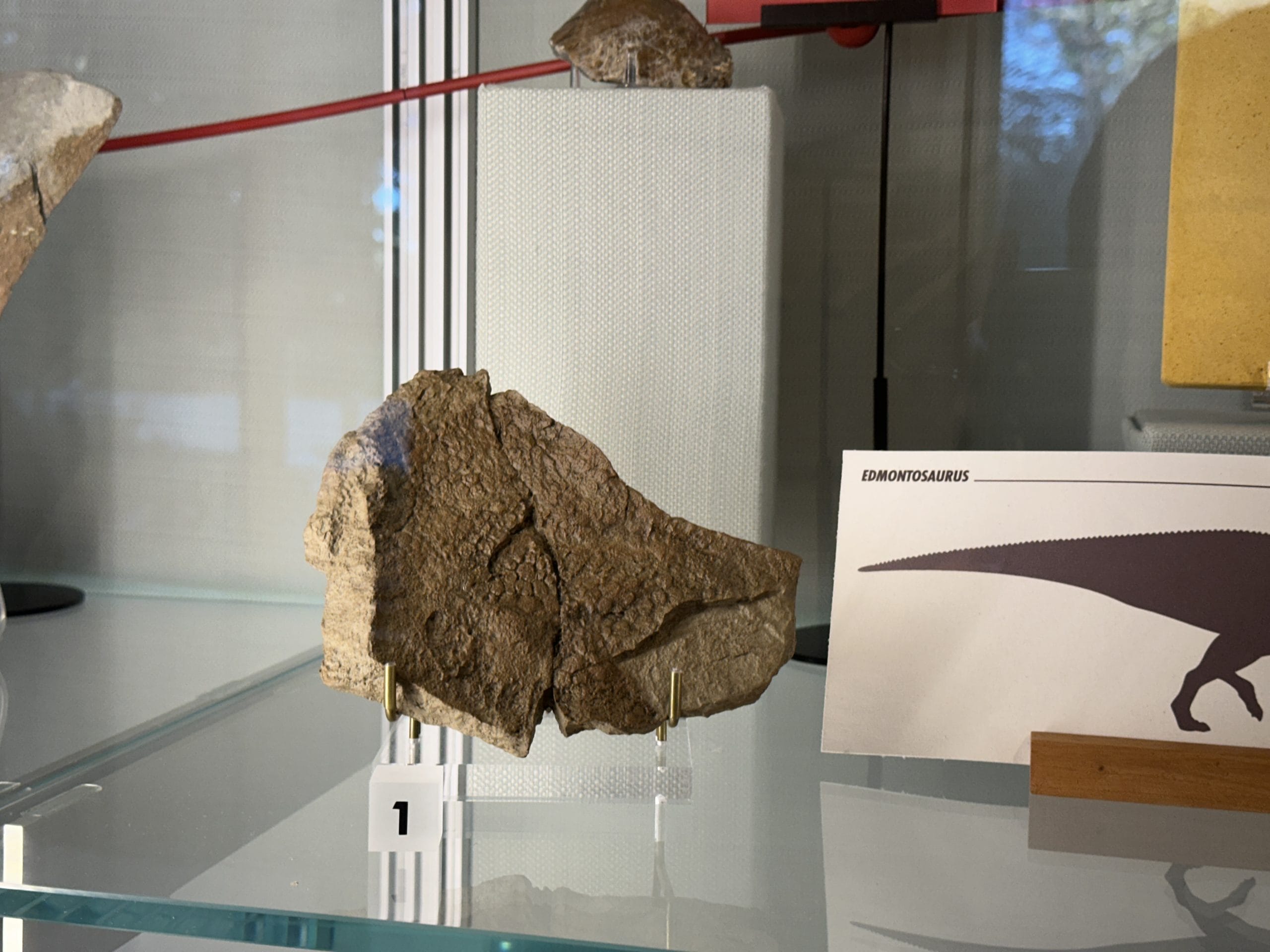
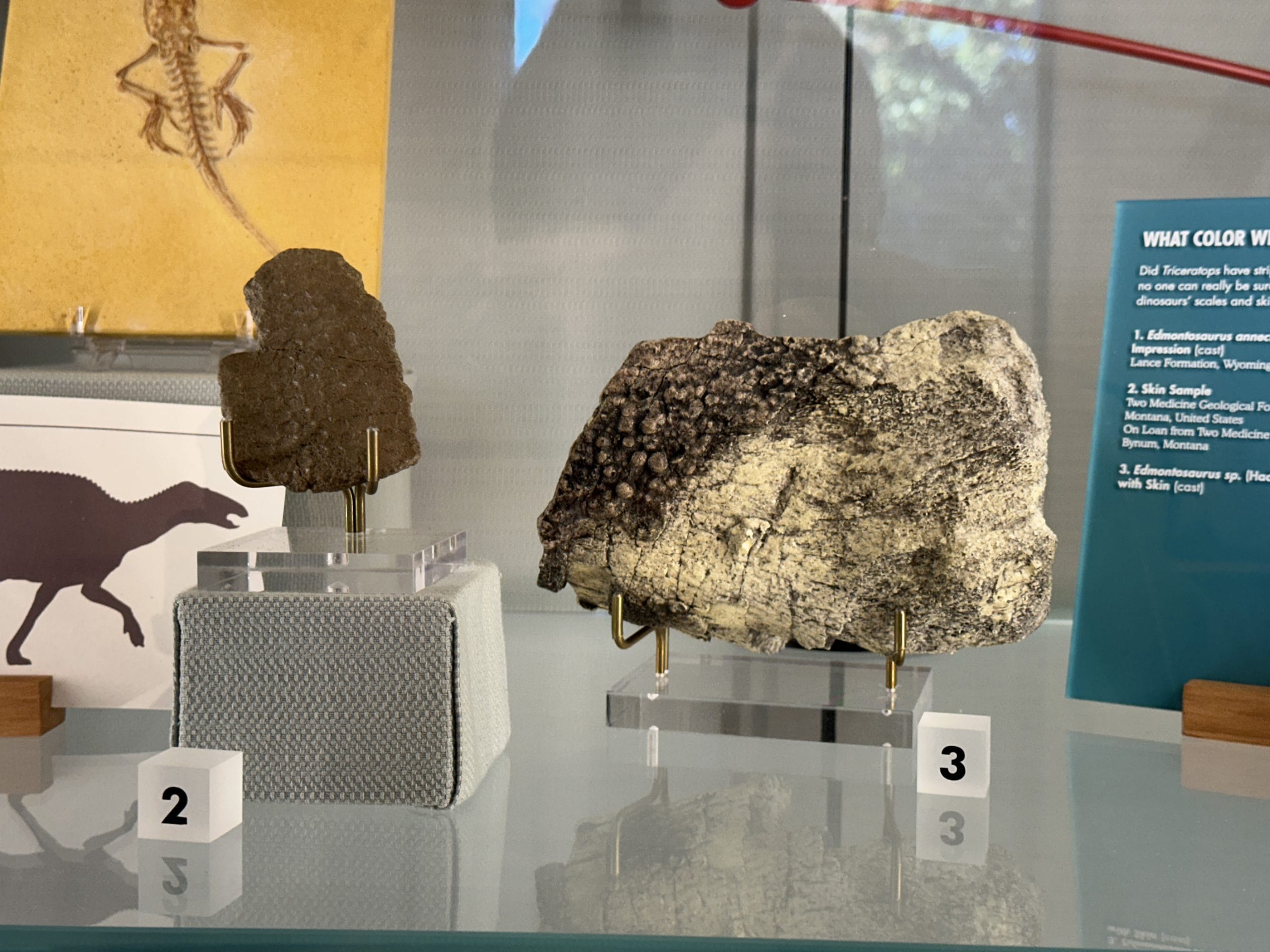
This plaque addresses dinosaur coloring: “Unfortunately, no one can really be sure what dinosaurs looked like. But fossilized impressions can give us an idea of dinosaurs’ scales and skin texture.” There is a cast of a hadrosaur skin impression, a skin sample, and a cast of a hadrosaur tibia with skin.
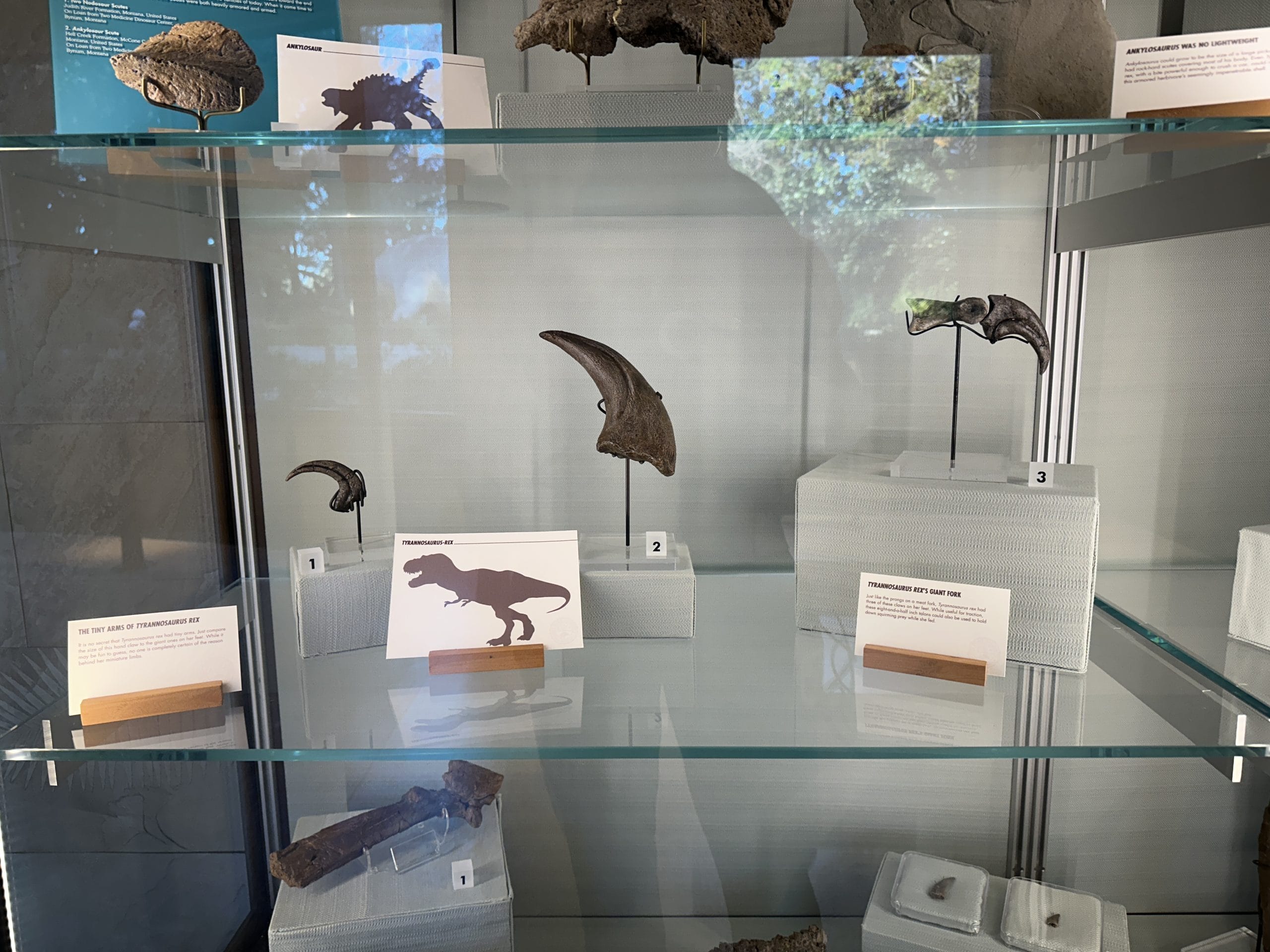
This shelf features the casts of claws. On the left is a Velociraptor’s slashing claw. The larger claw in the center belonged to a T. rex. And on the far right is the three-pronged 8 1/2″ long “fork” talon of a T. rex.
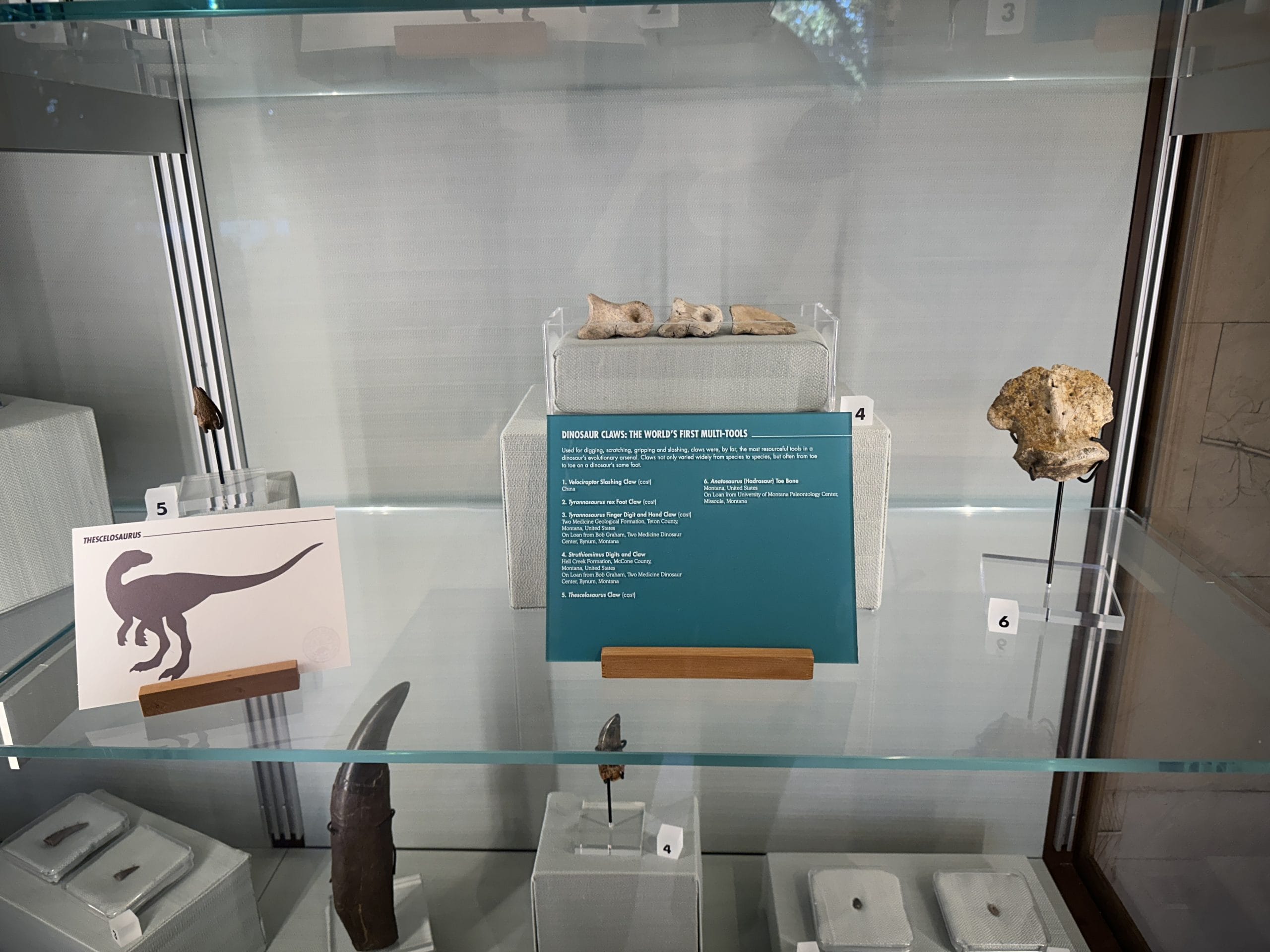
The next shelf features the digits and claw of a Struthiomimus, a Thescelosaurus claw cast, and a hadrosaur toe bone.
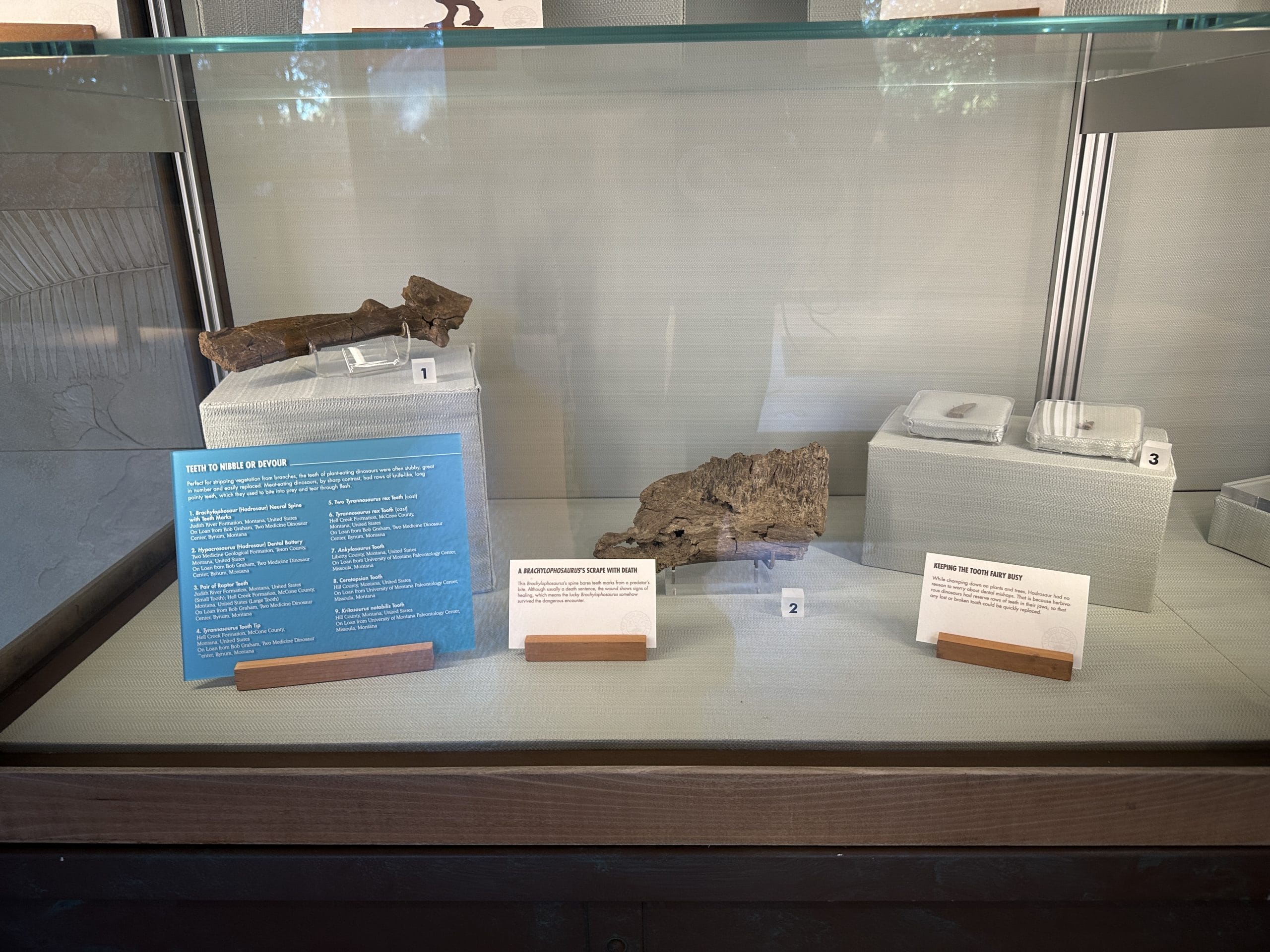
This display highlights the different types of dinosaur teeth. Plant-eating dinosaurs had several stubby teeth for stripping vegetation from branches. Meat-eaters had sharp rows of long, knife-like, pointy teeth for tearing into prey.
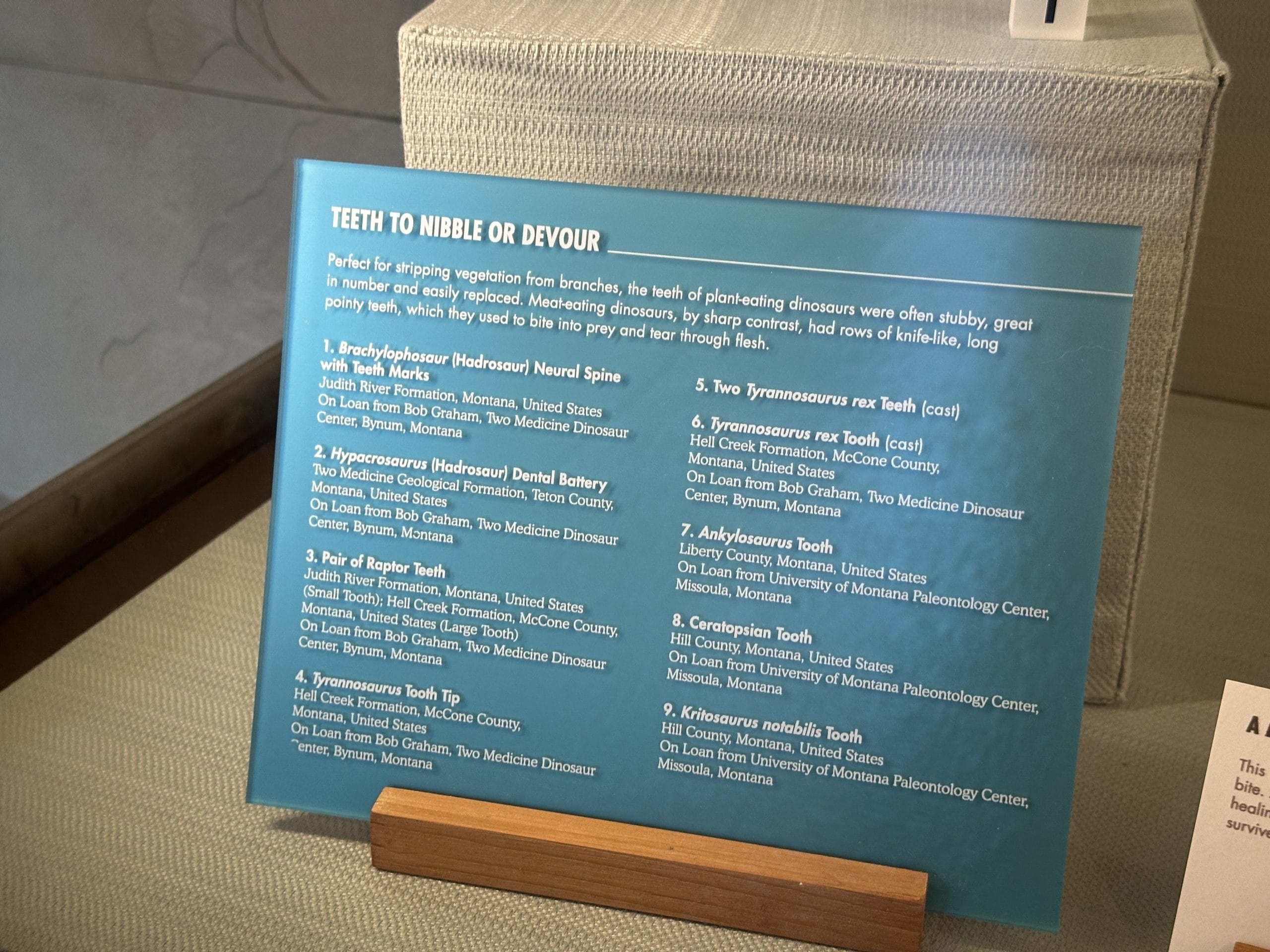
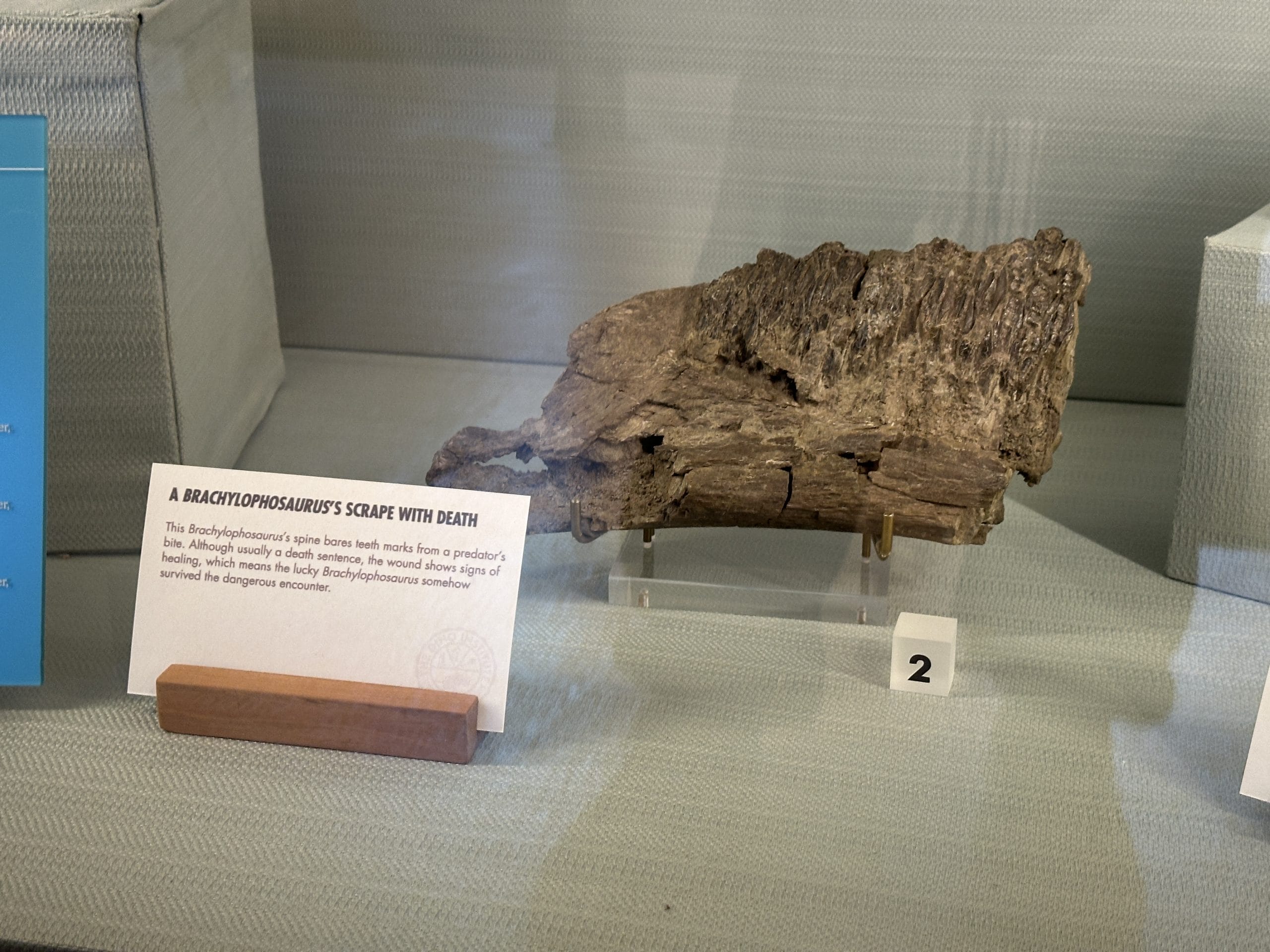
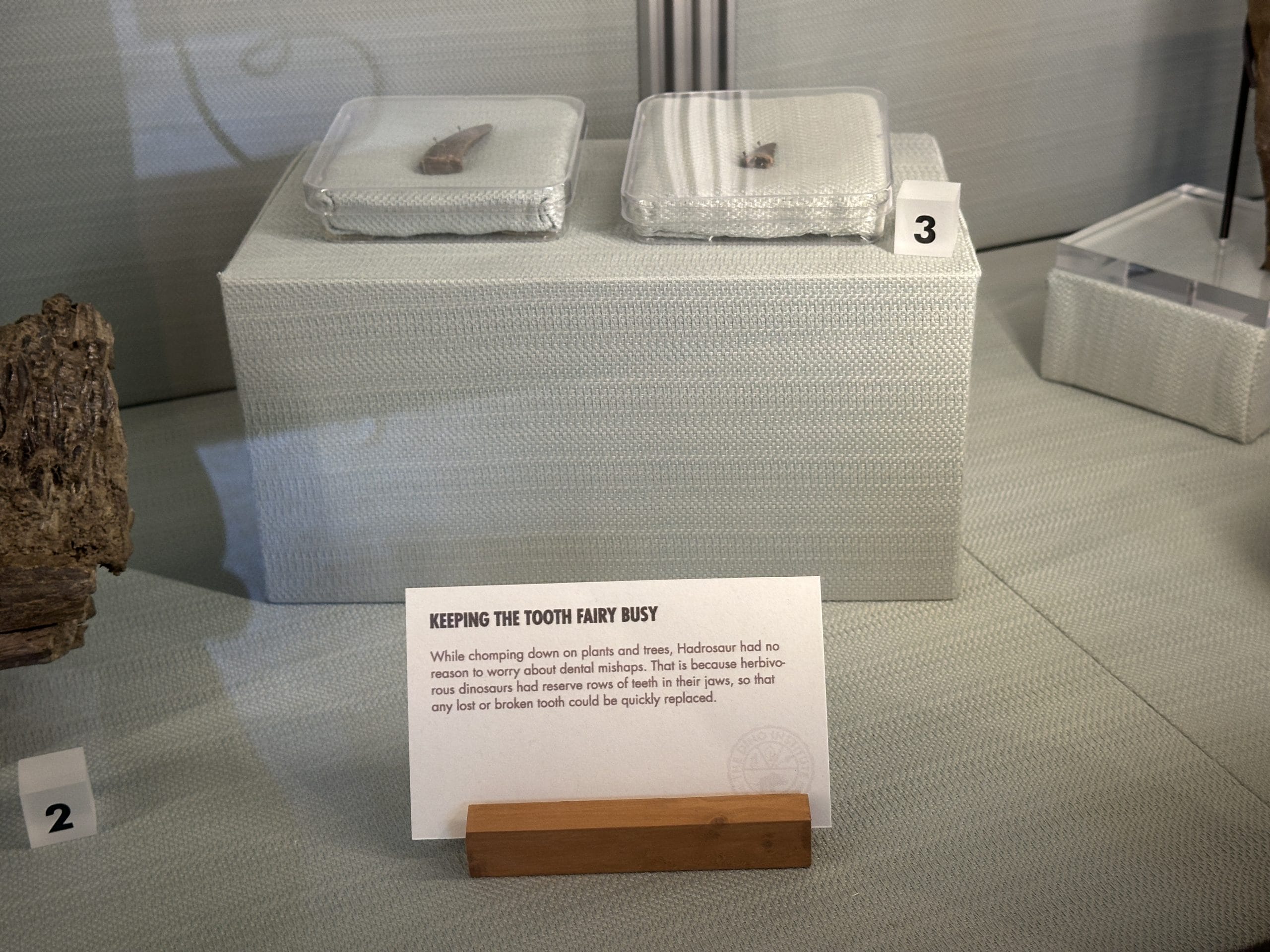
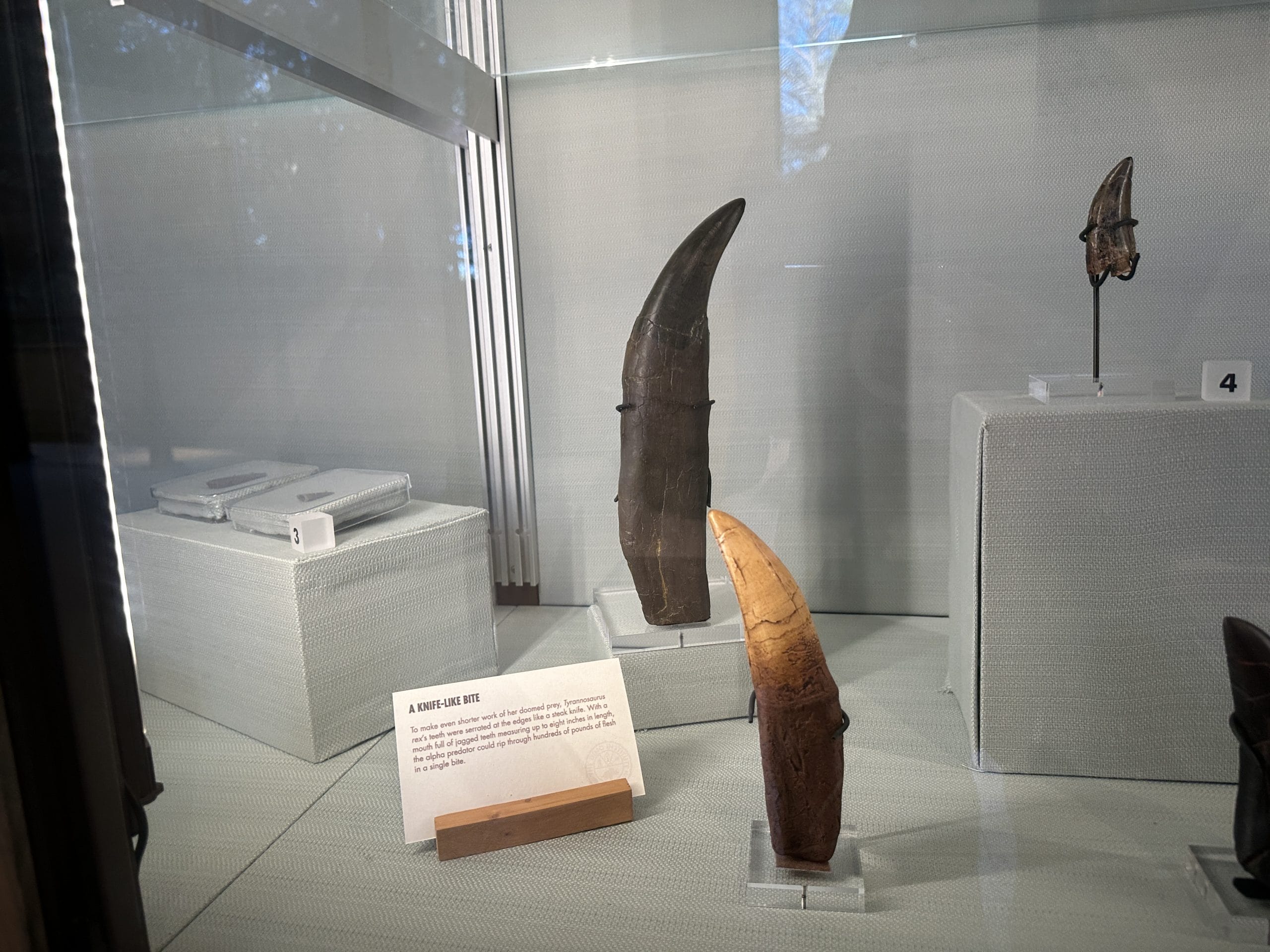
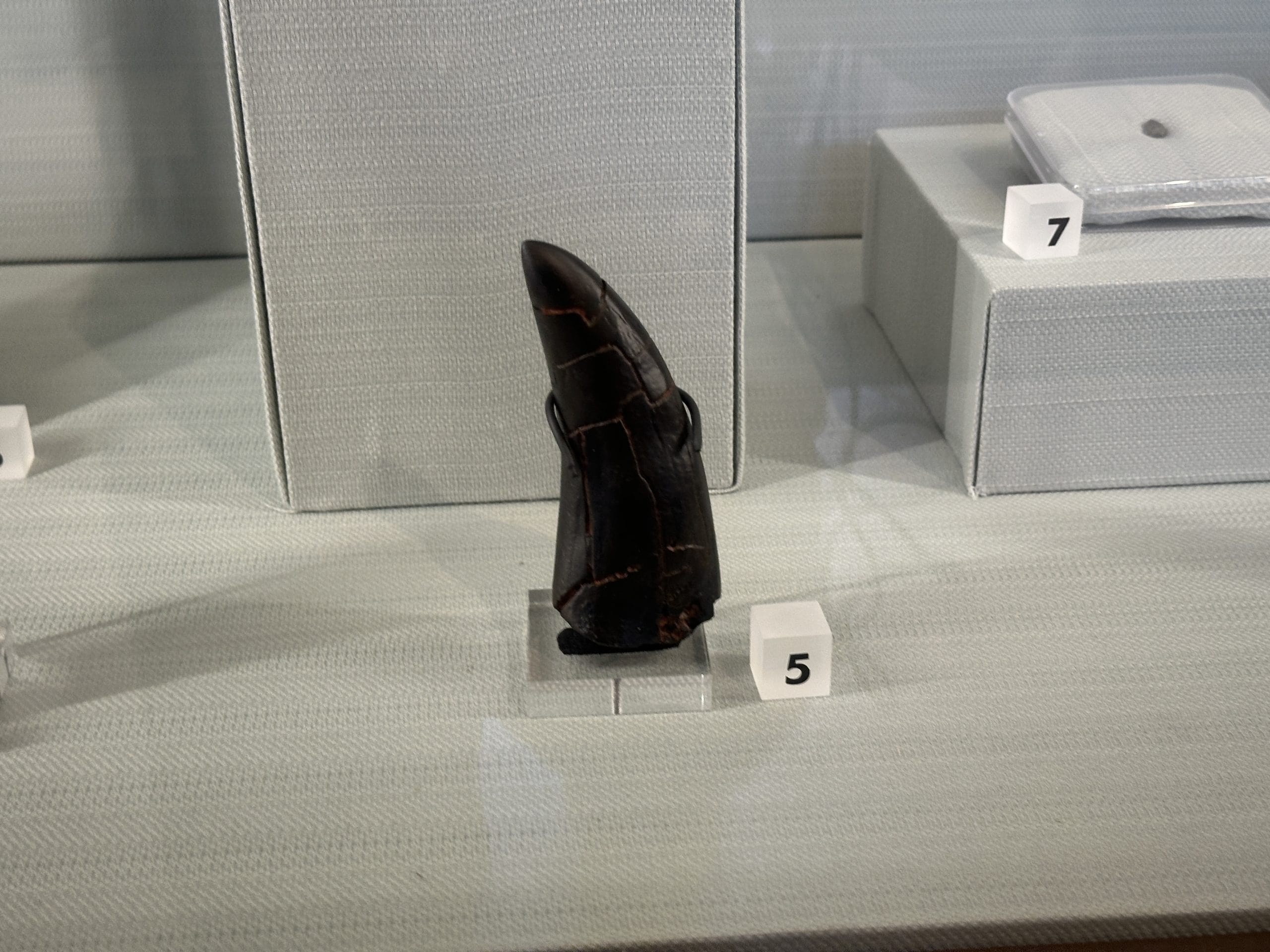
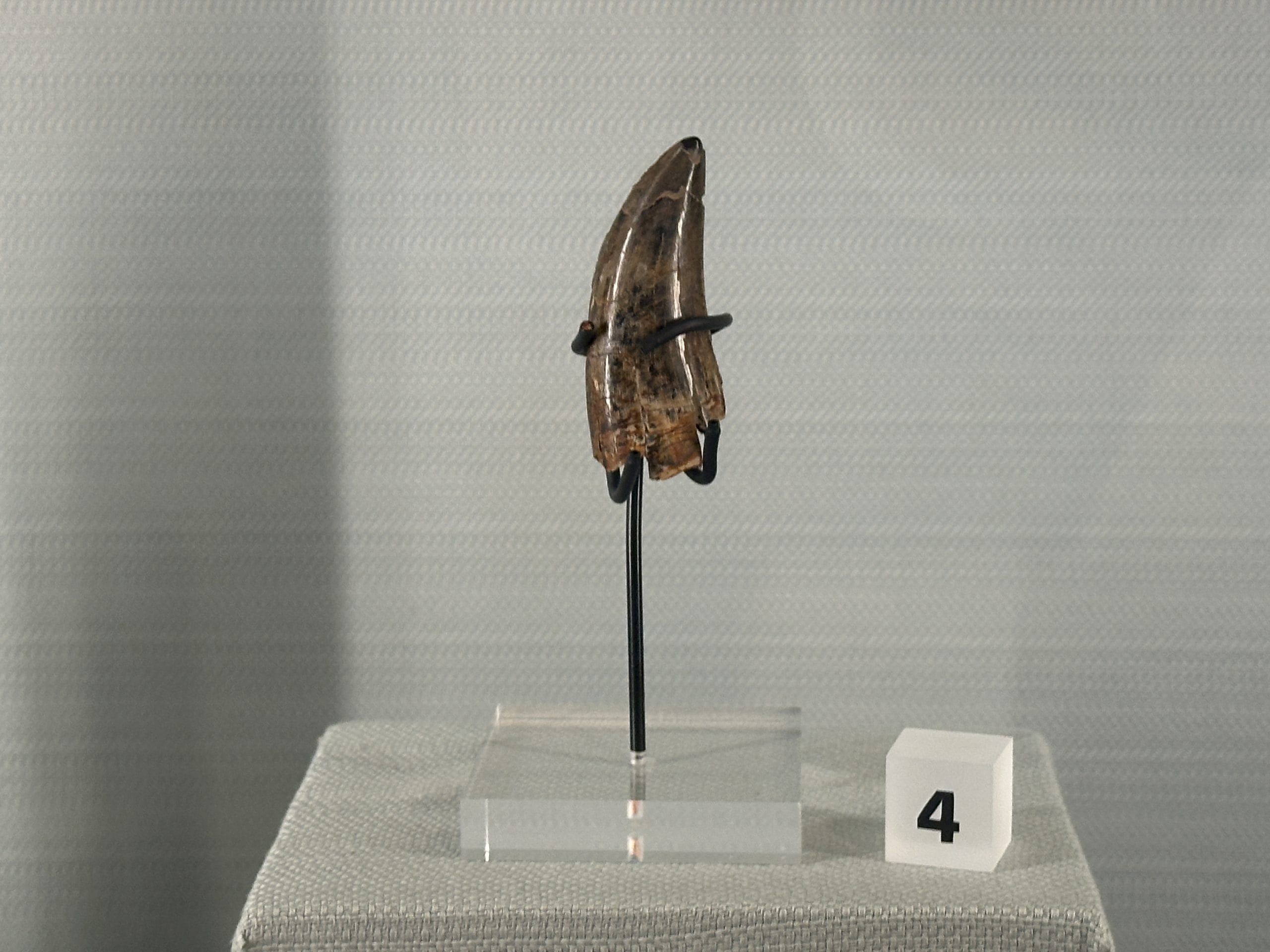
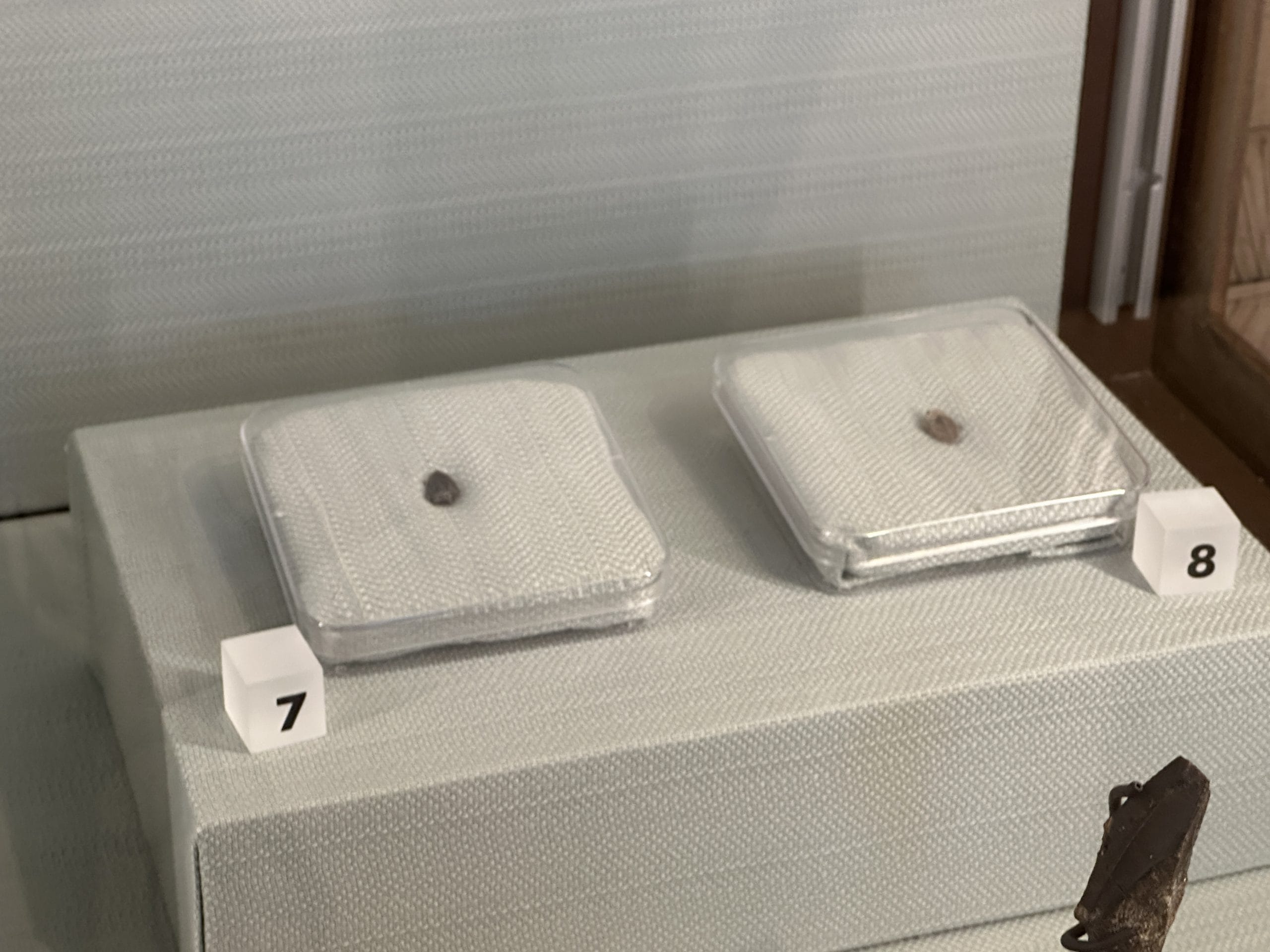
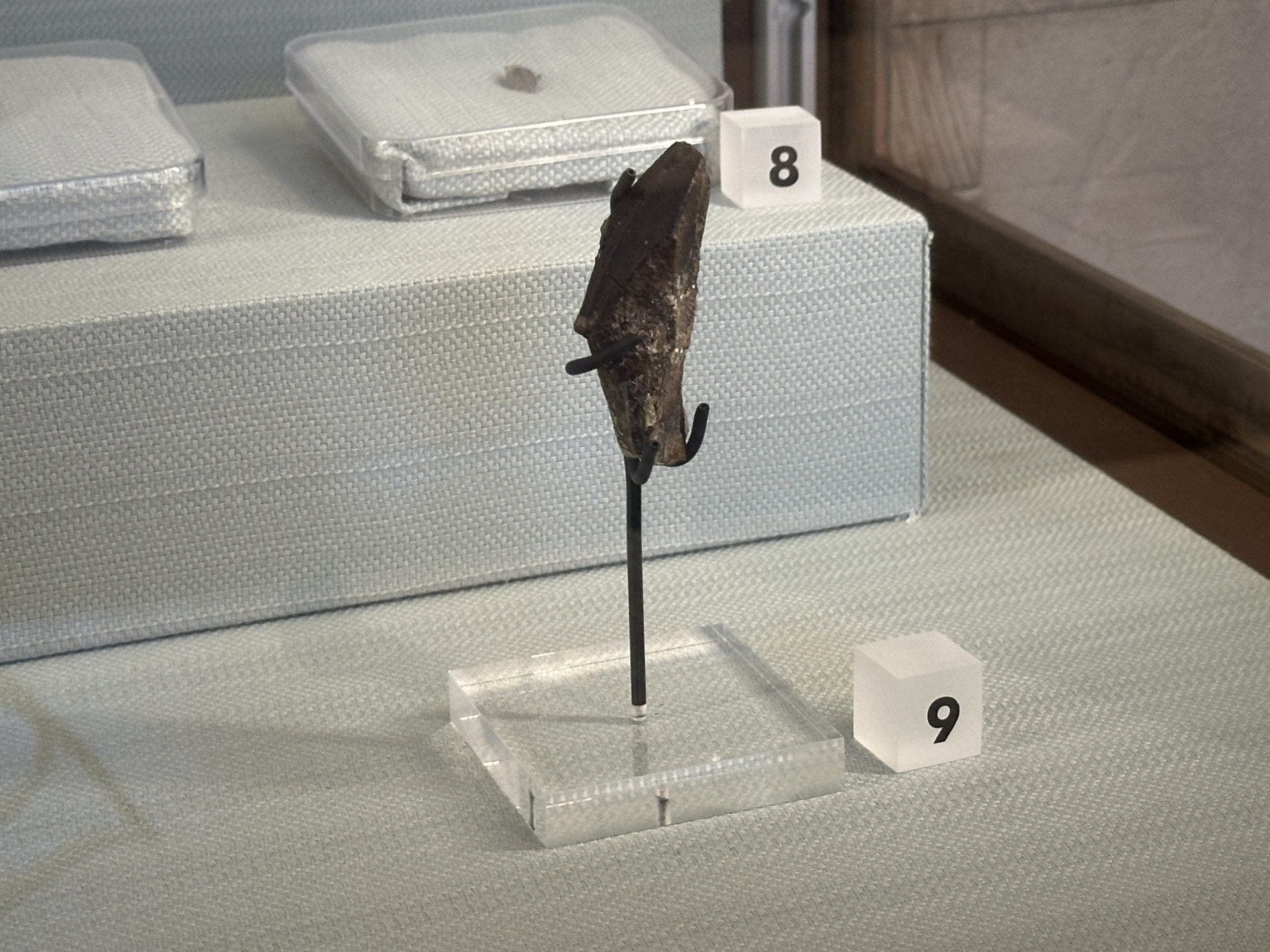
The fossils here include a hadrosaur’s neural spine with tooth marks, a hadrosaur’s dental battery, and different kinds of teeth.
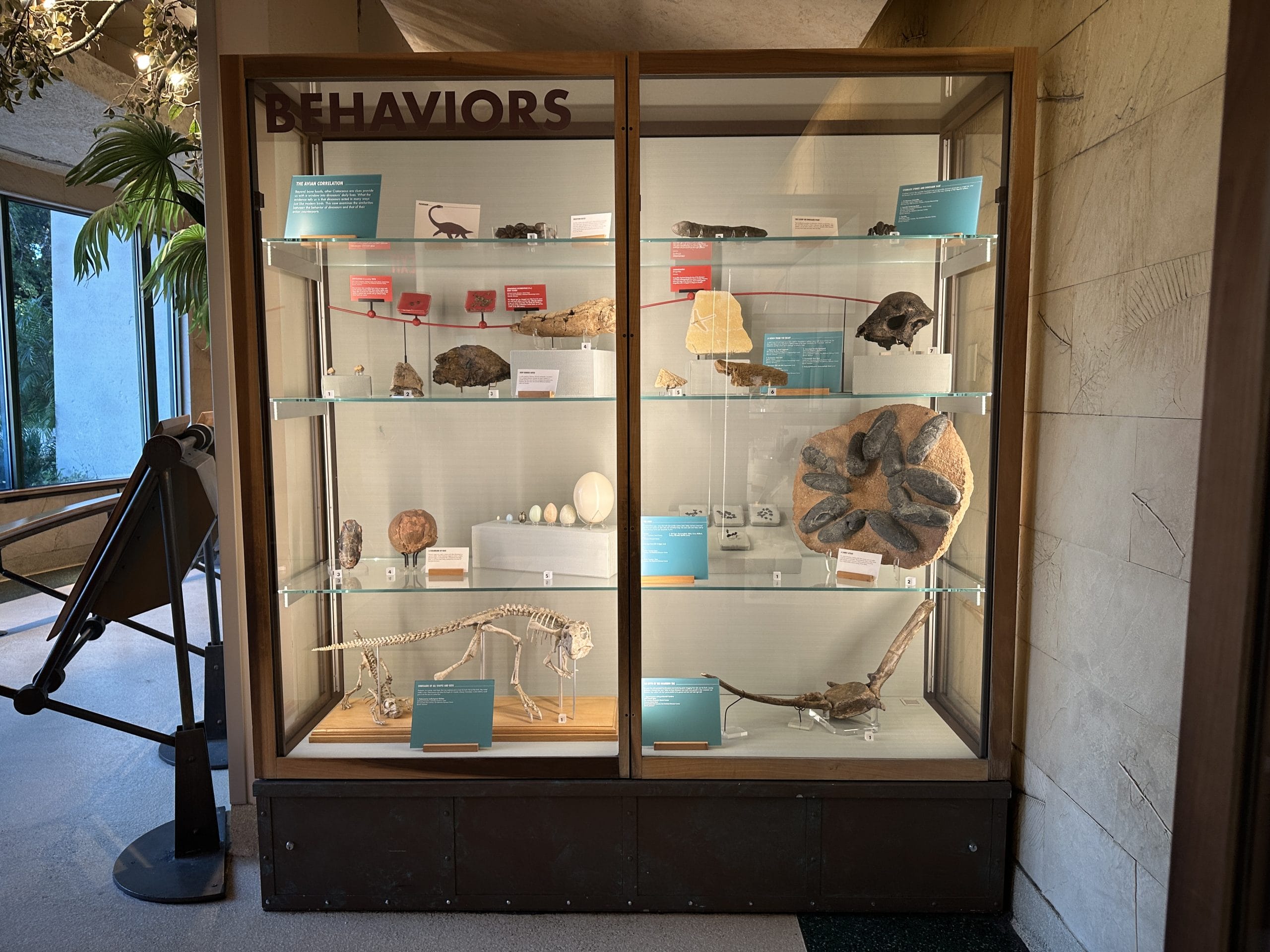
The second case was dedicated to dinosaur “Behaviors.” The red string also continues through the back of this display.
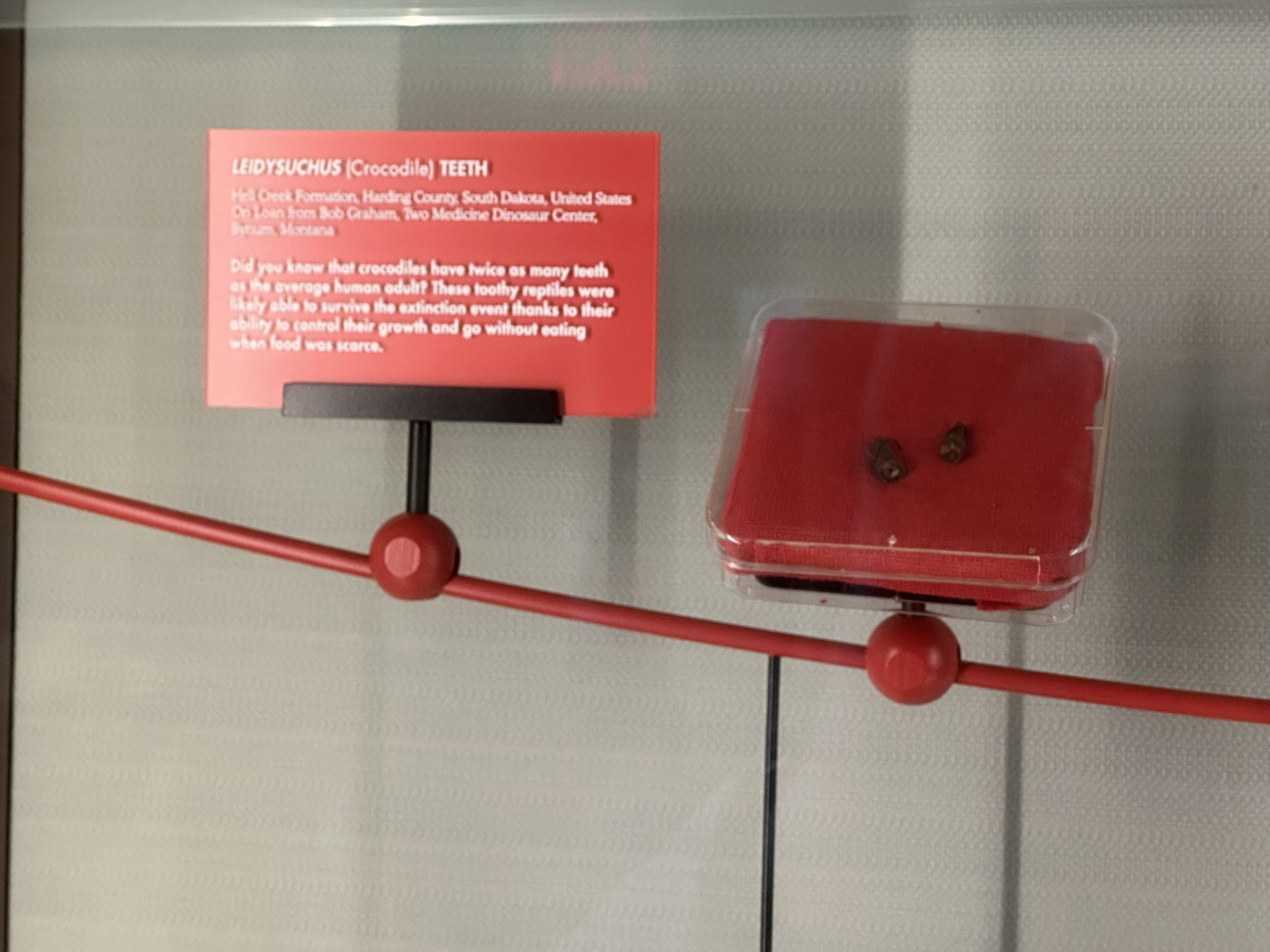
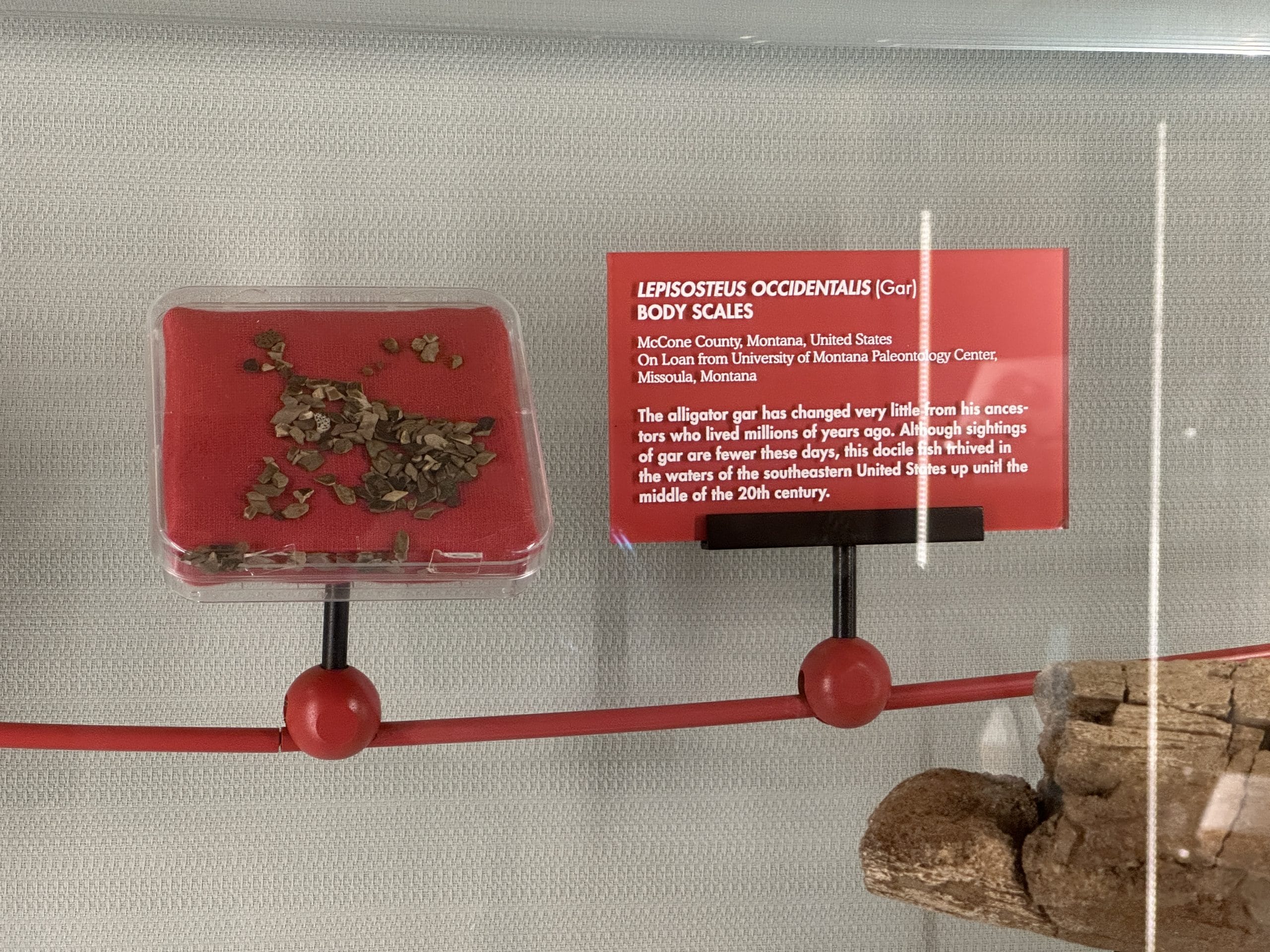
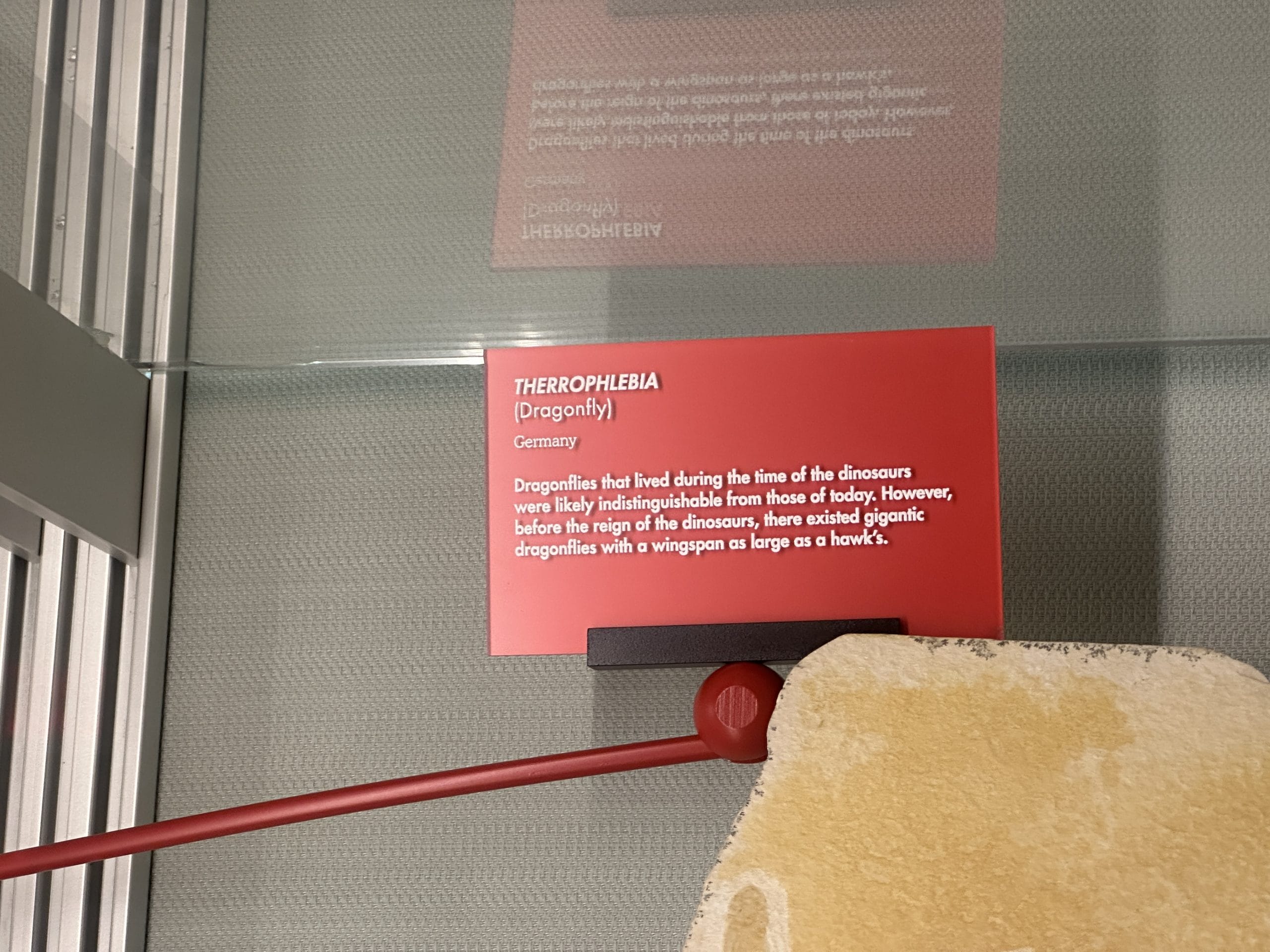
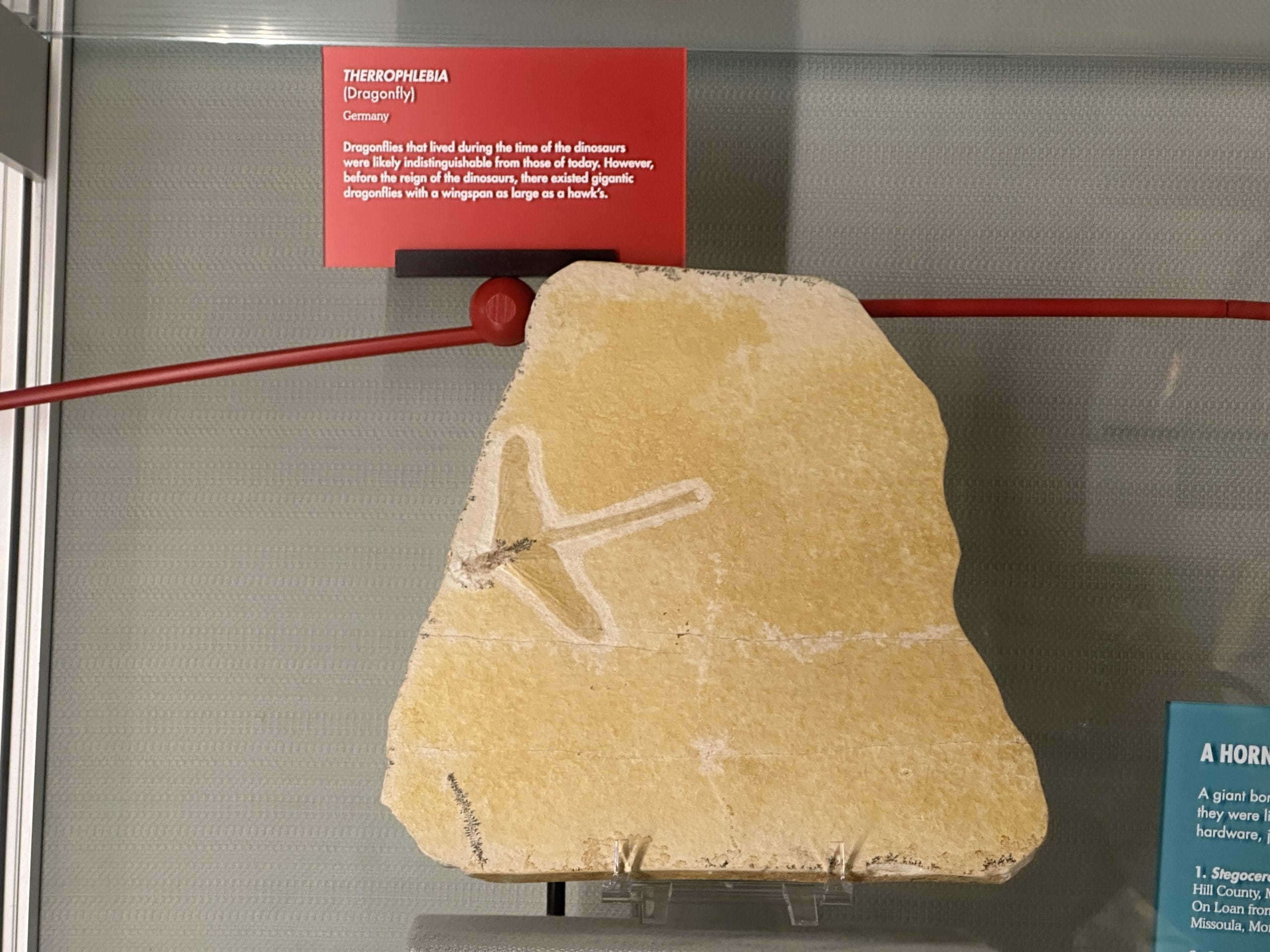
The species in this section of the string included crocodile, gar, and dragonfly.
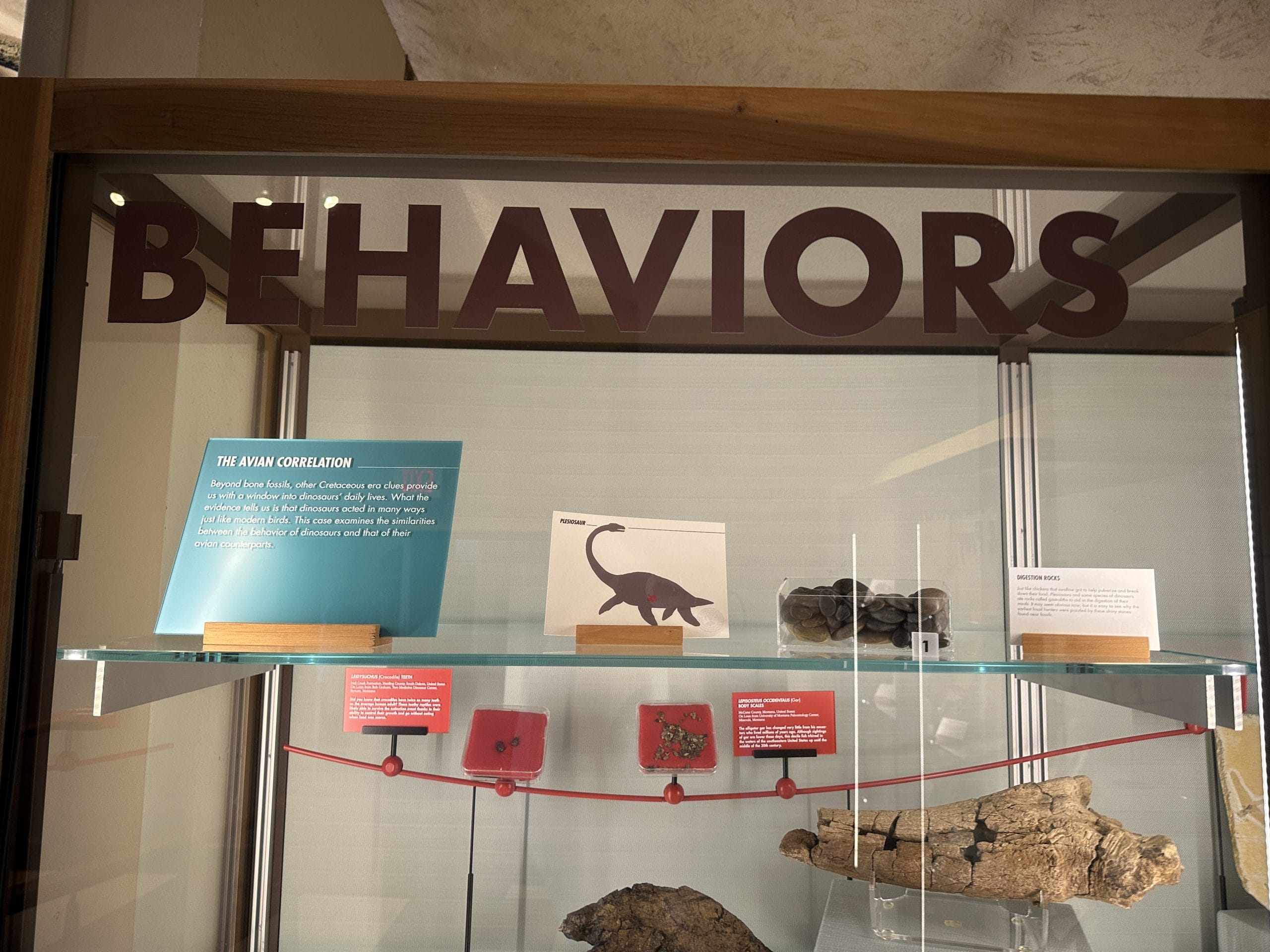
The Avian Correlation
Beyond bone fossils, other Cretaceous era clues provide us with a window into dinosaurs’ daily lives. What the evidence tells us is that dinosaurs acted in many ways just like modern birds. This case examines the similarities between the behavior of dinosaurs and that of their avian counterparts.
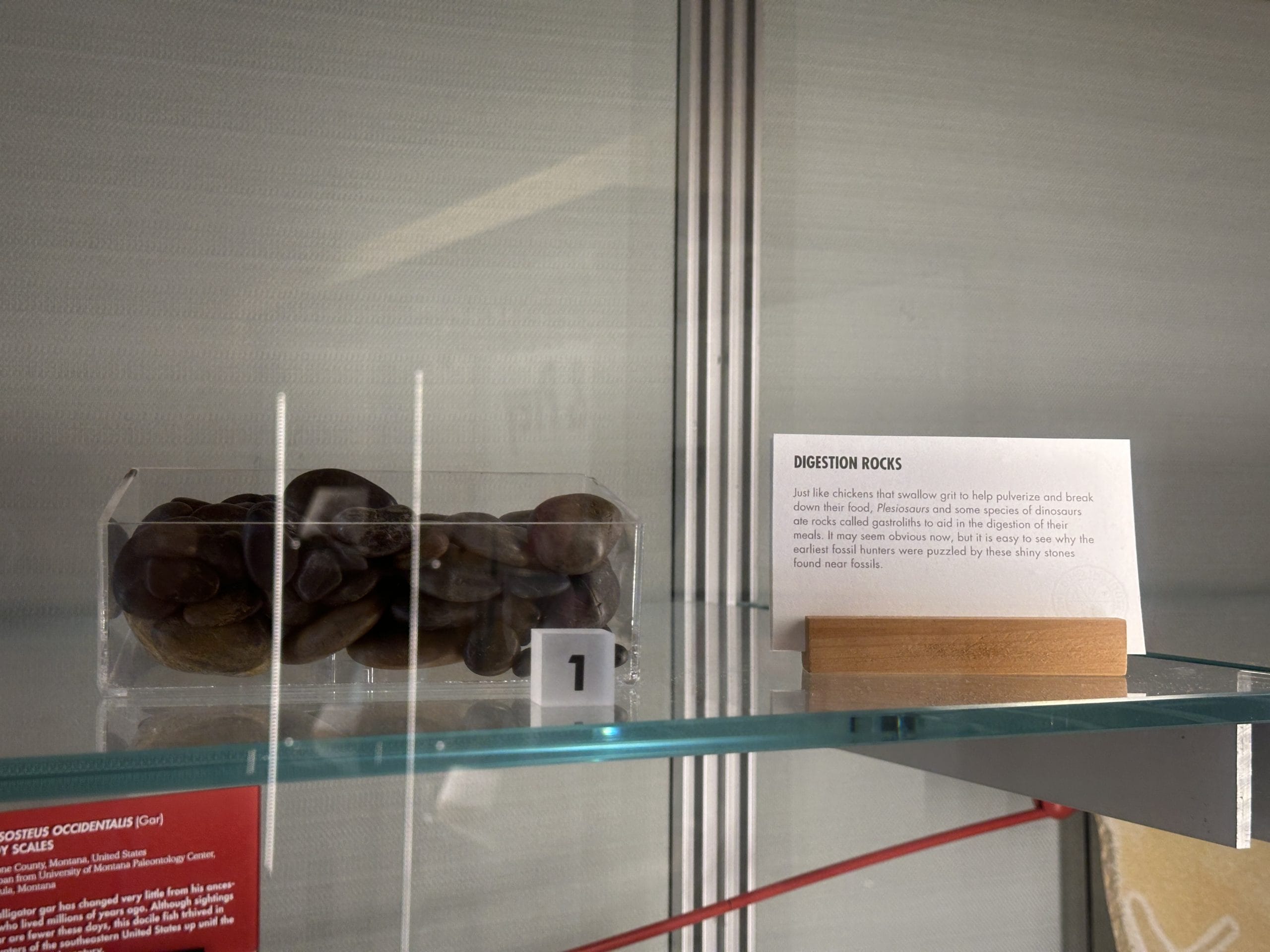
This bin holds digestion rocks that Plesiosaurs and other dinosaur species would have eaten, similar to birds like chickens that swallow grit to help break up their food.
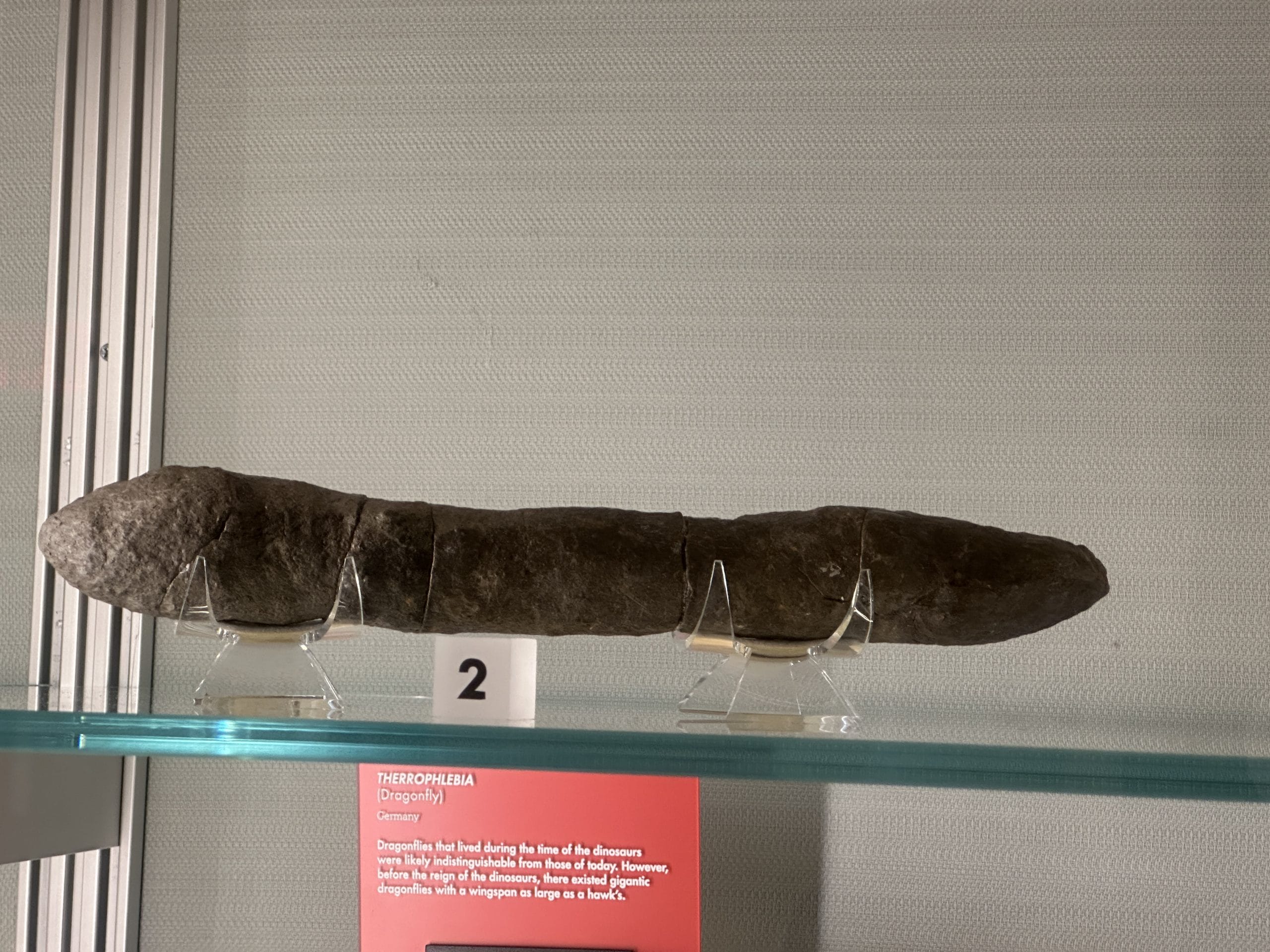
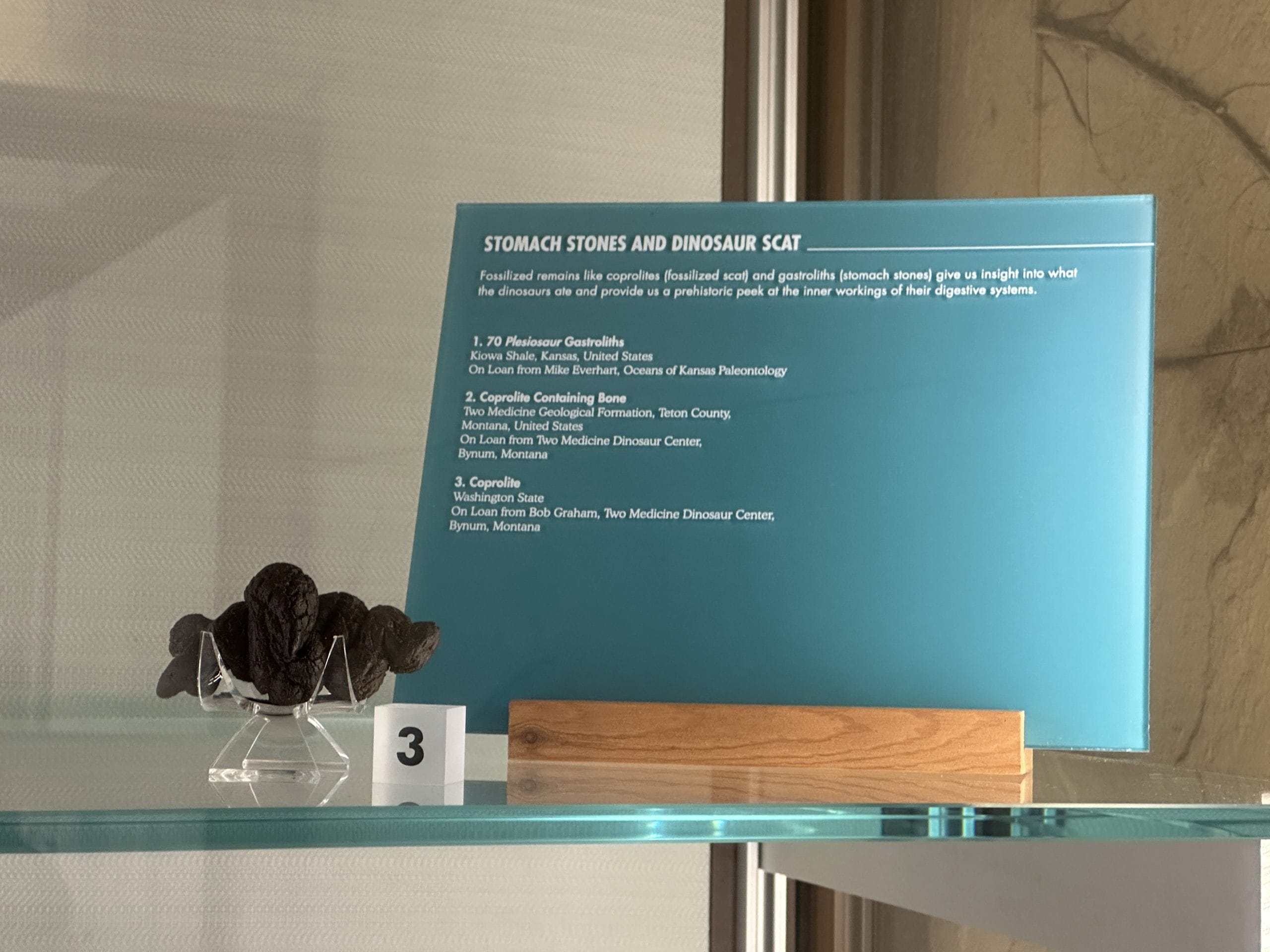
Stomach Stones and Dinosaur Scat
Fossilized remains like coprolites (fossilized scat) and gastroliths (stomach stones) give us insight into what the dinosaurs ate and provide us a prehistoric peek of the inner workings of their degestive systems.
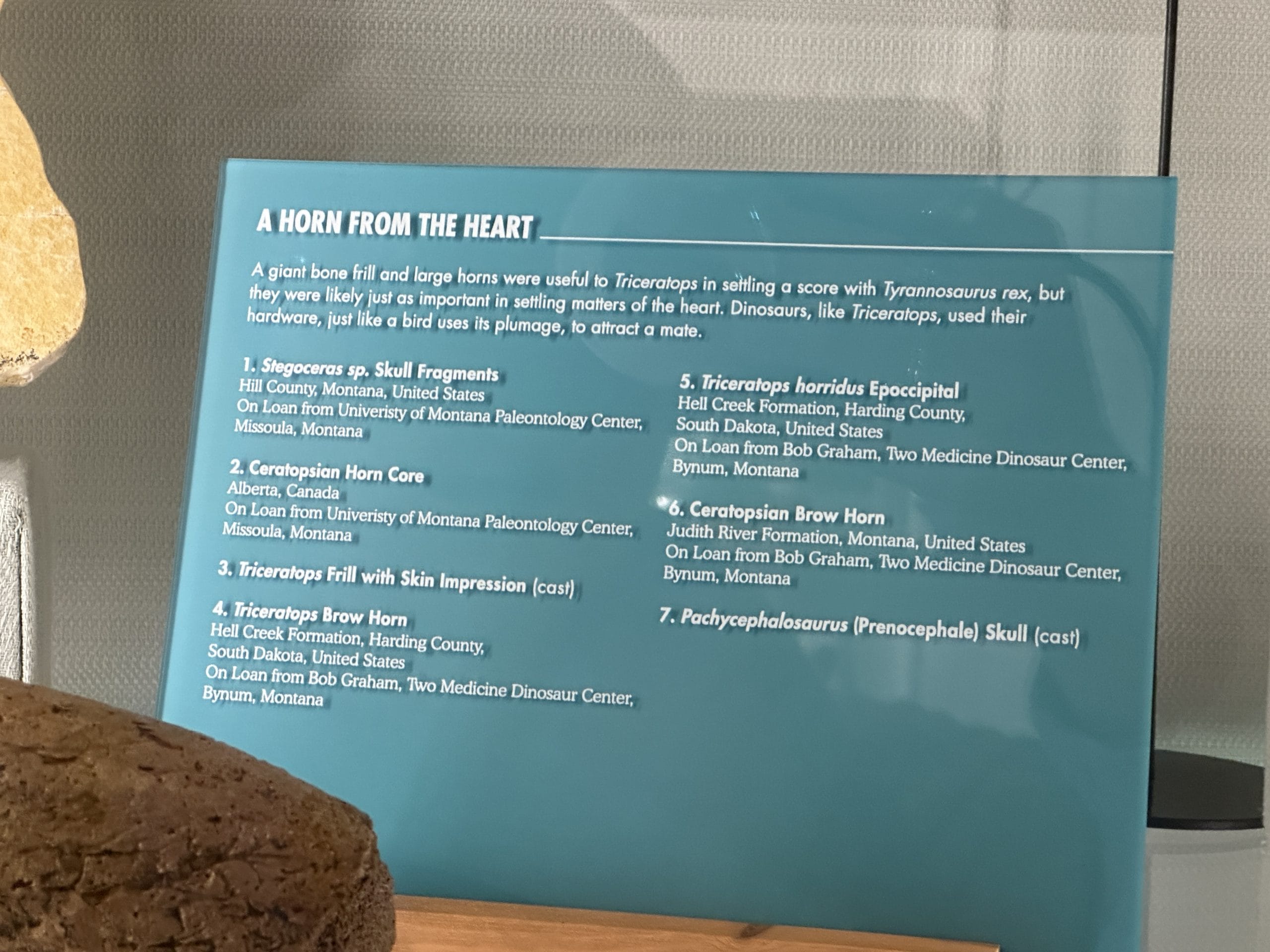
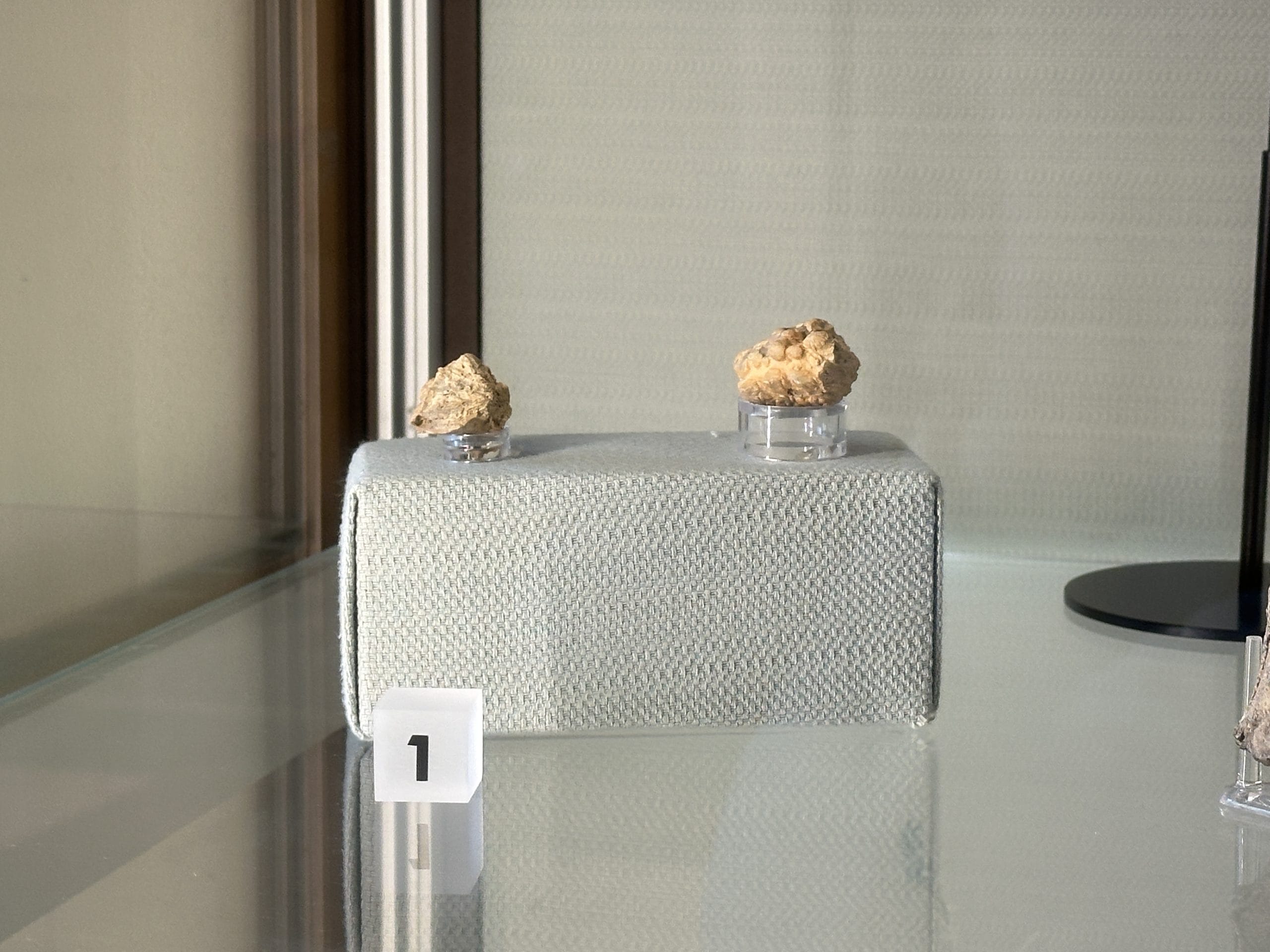
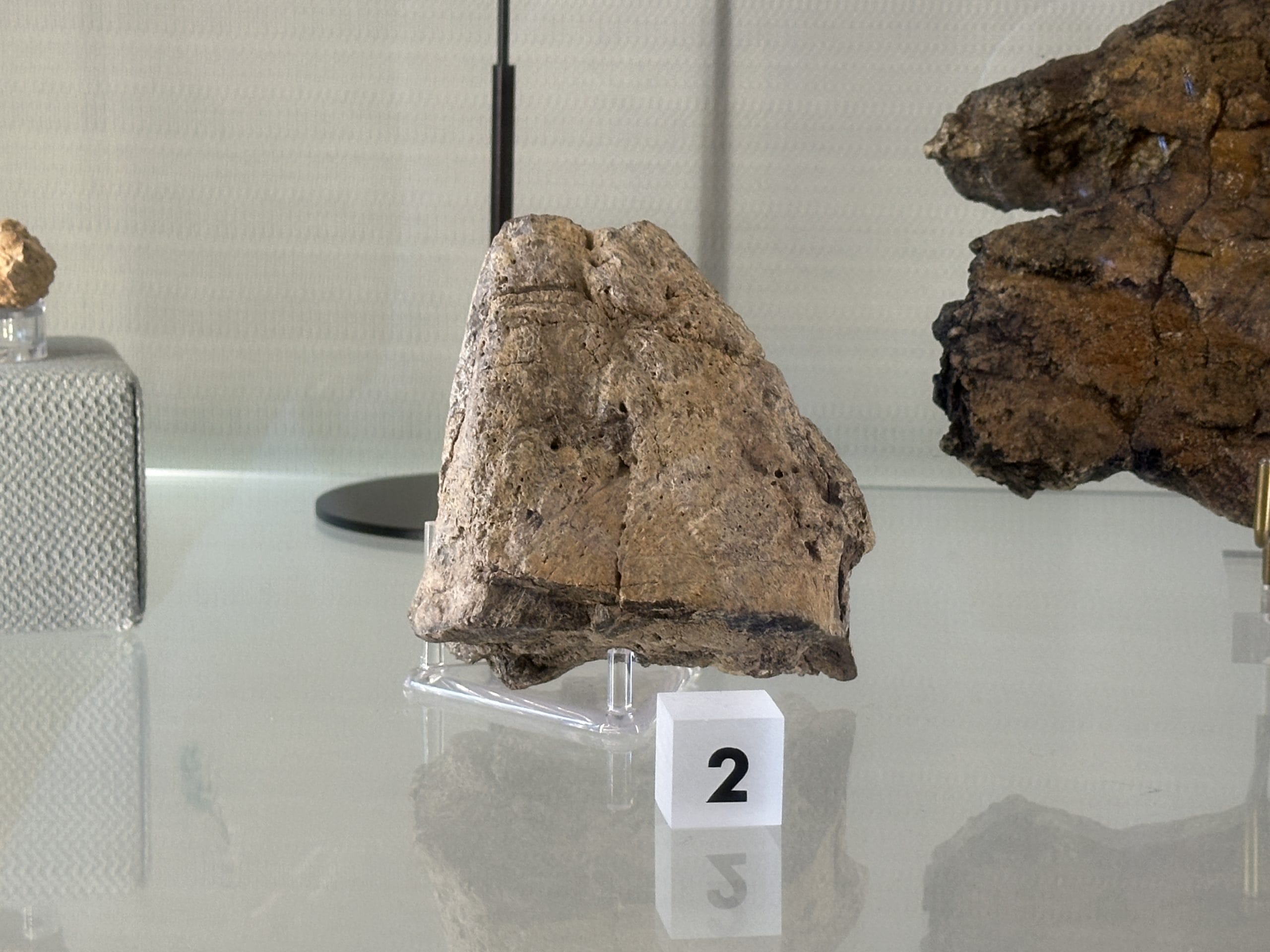
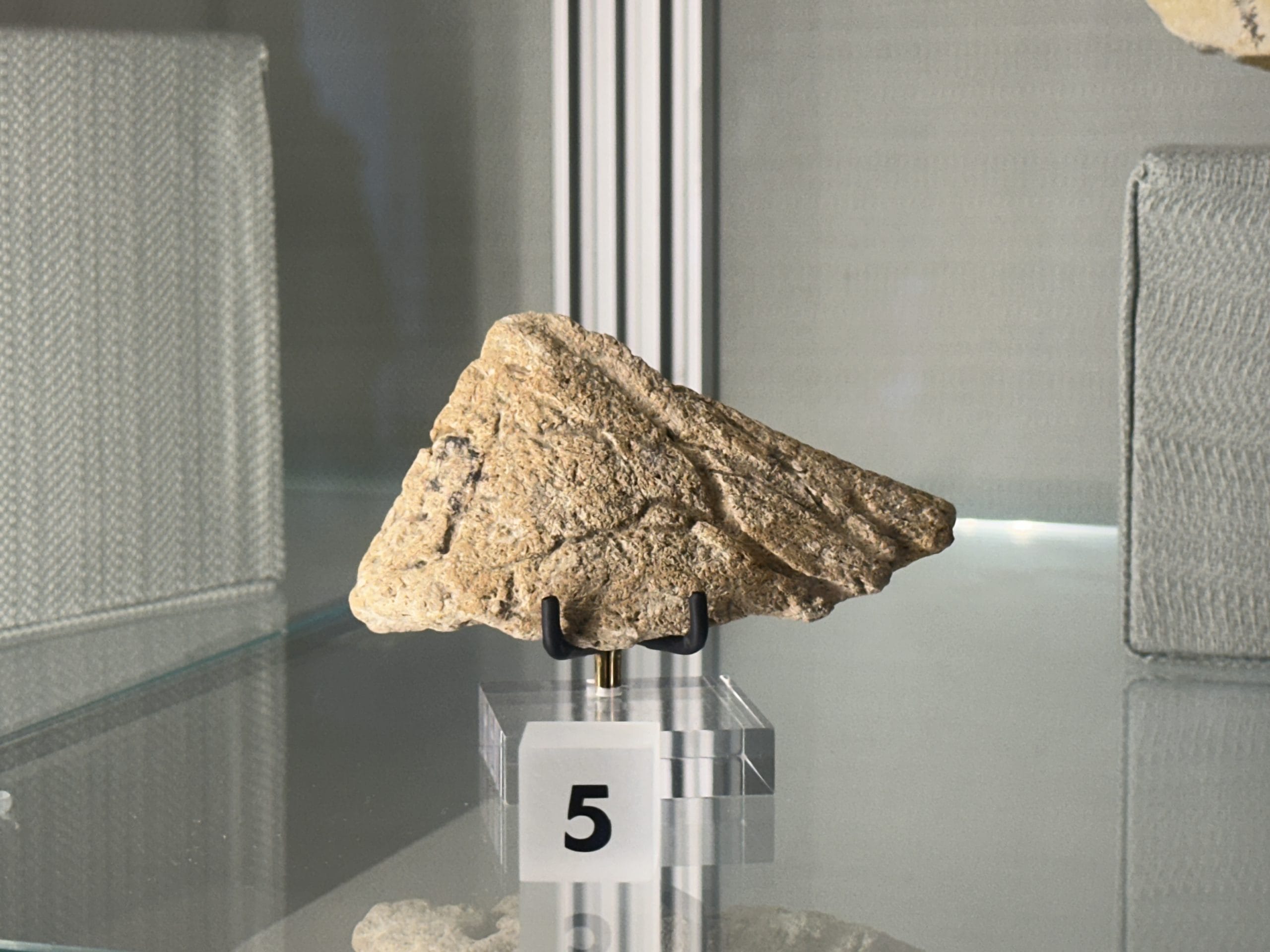
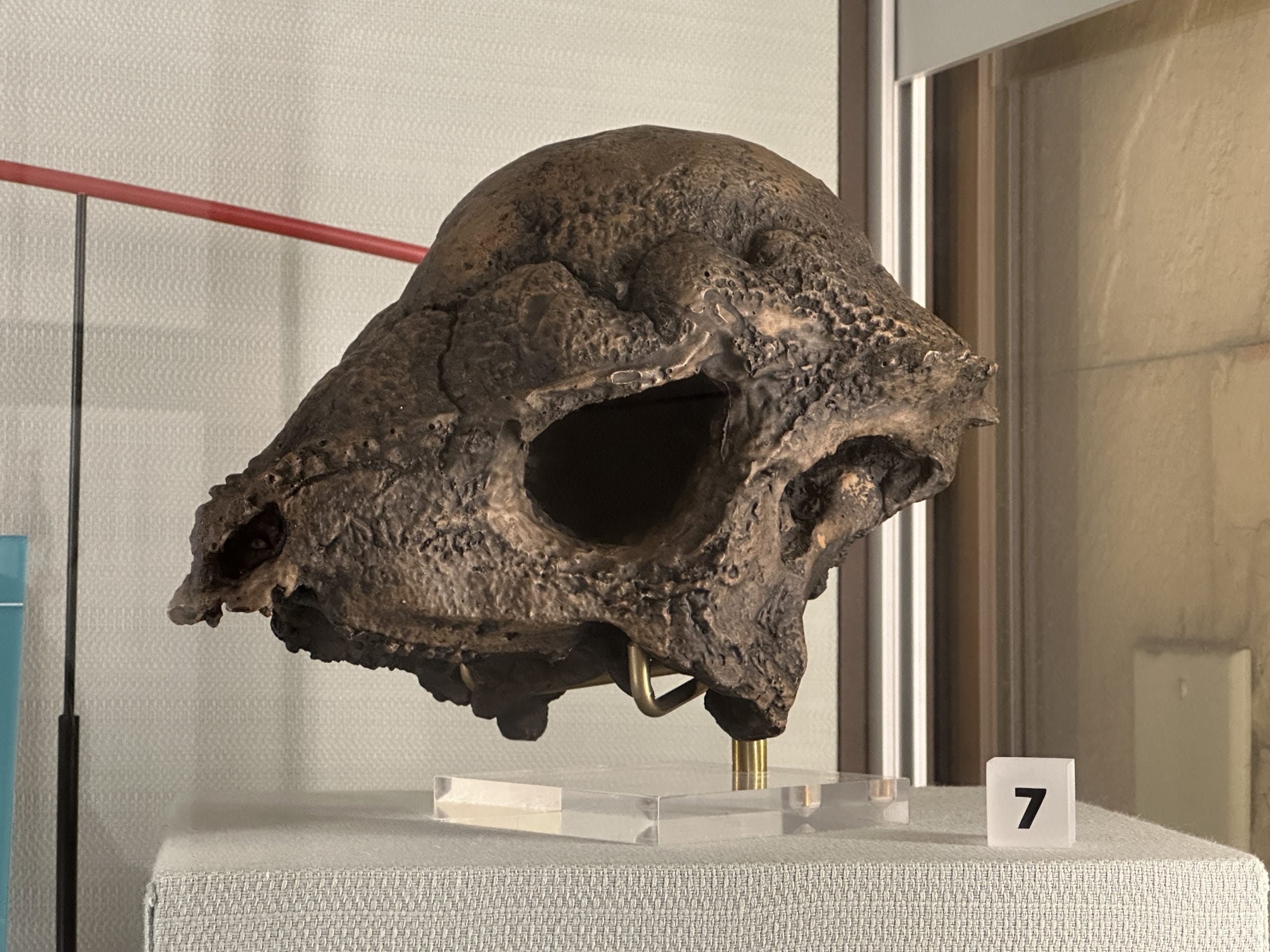
On the next set of shelves were pieces of skulls, horns, and frills.
A Horn From the Heart
A giant bone frill and large horns were useful to Triceratops in settling a score with Tyrannosaurus rex, but they were likely just as important in settling matters of the heart. Dinosaurs, like Triceratops, used their hardware, just like a bird uses its plumage, to attract a mate.
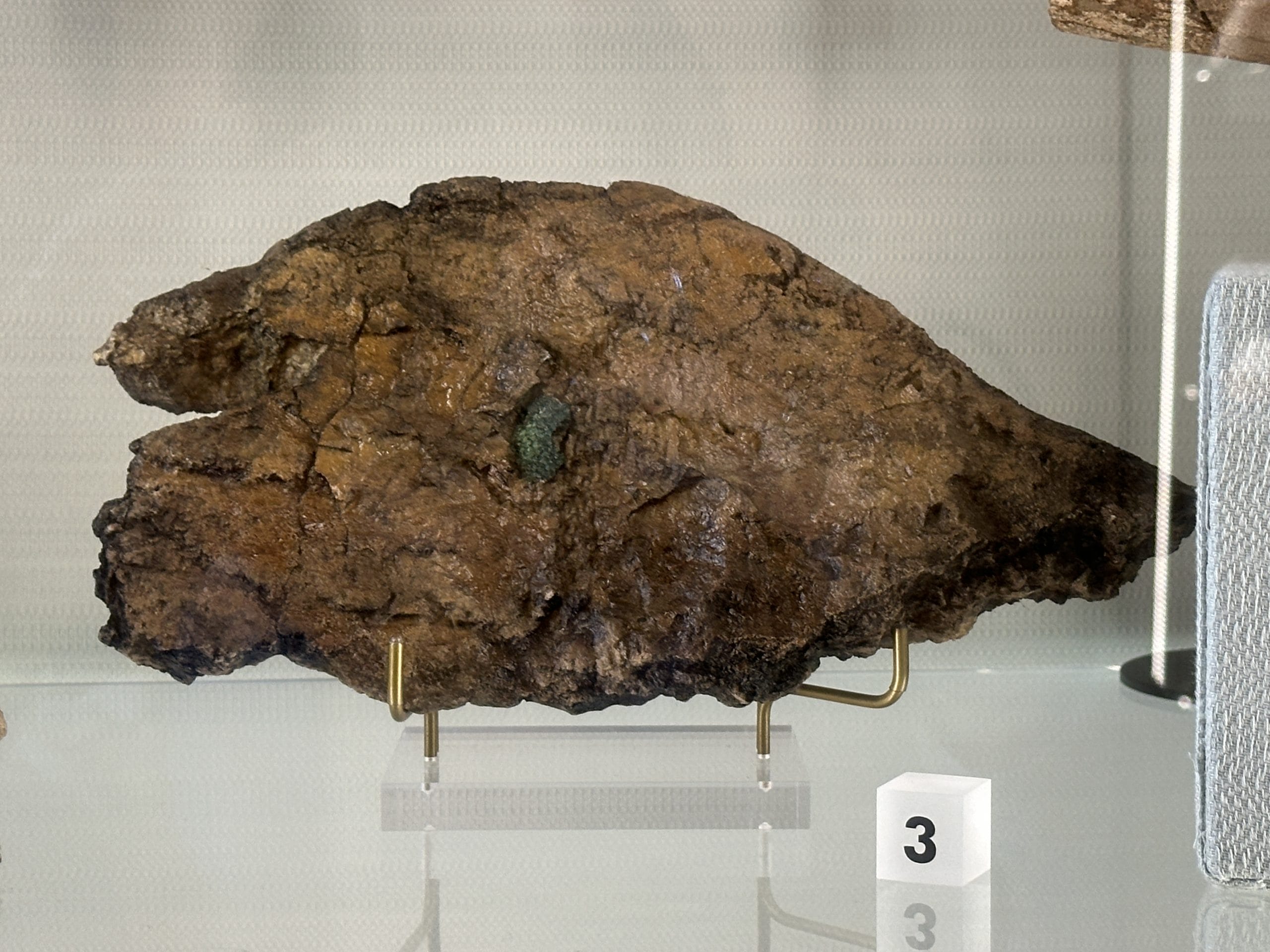
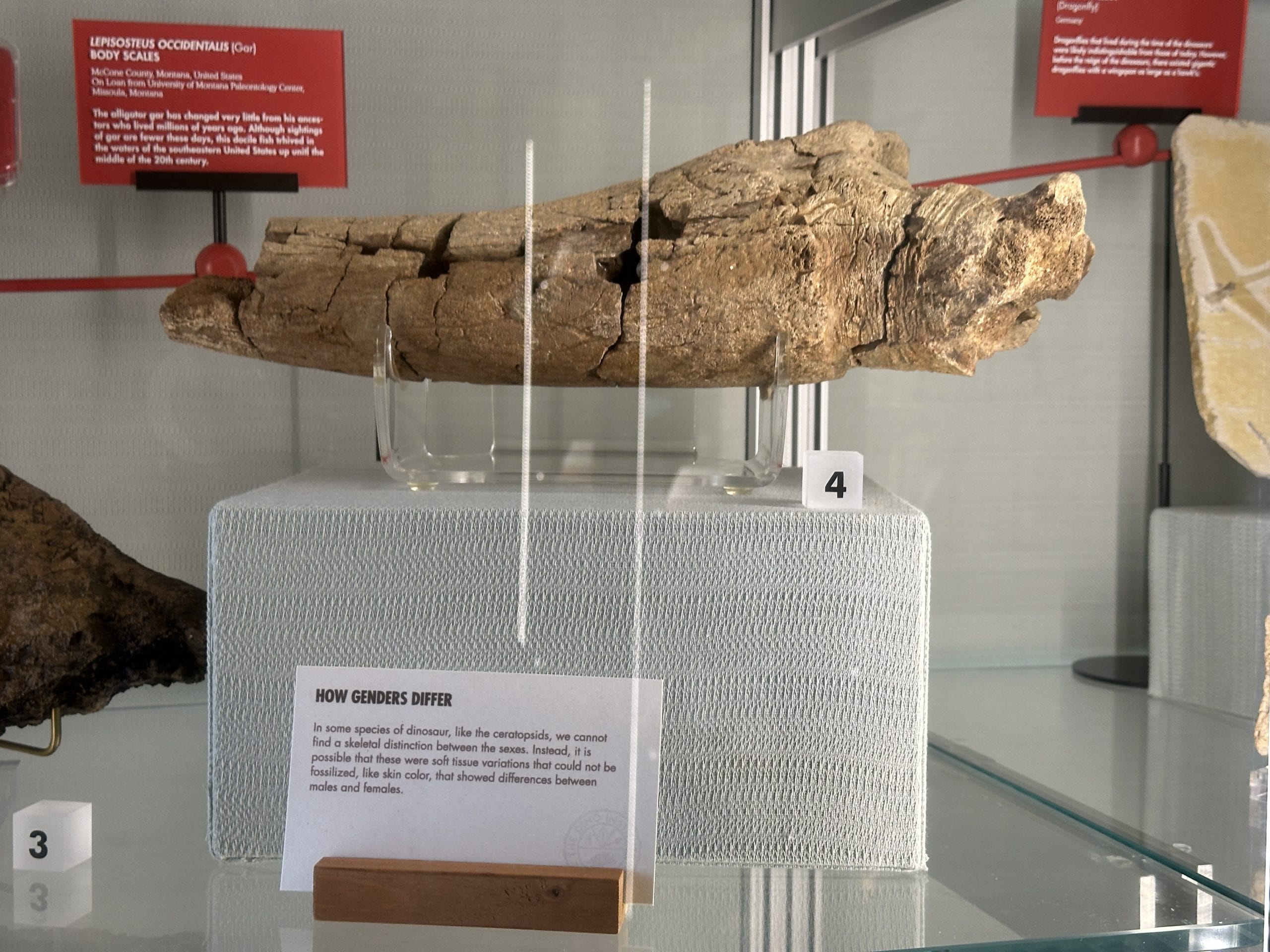
A small card notes that with some species of dinosaurs, we cannot find a skeletal distinction between sexes. They may have instead been distinguished by skin color or something else that cannot be fossilized.
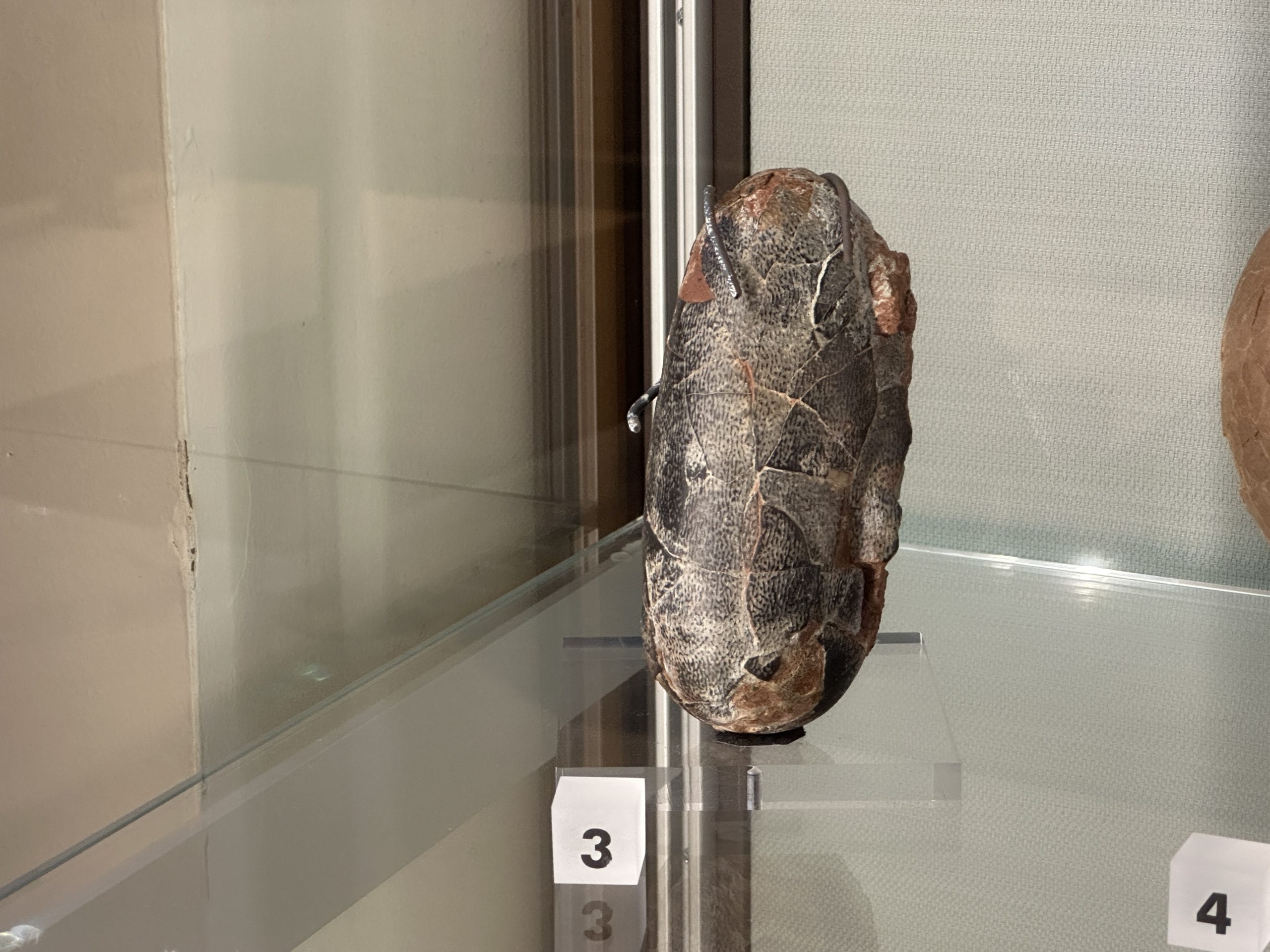
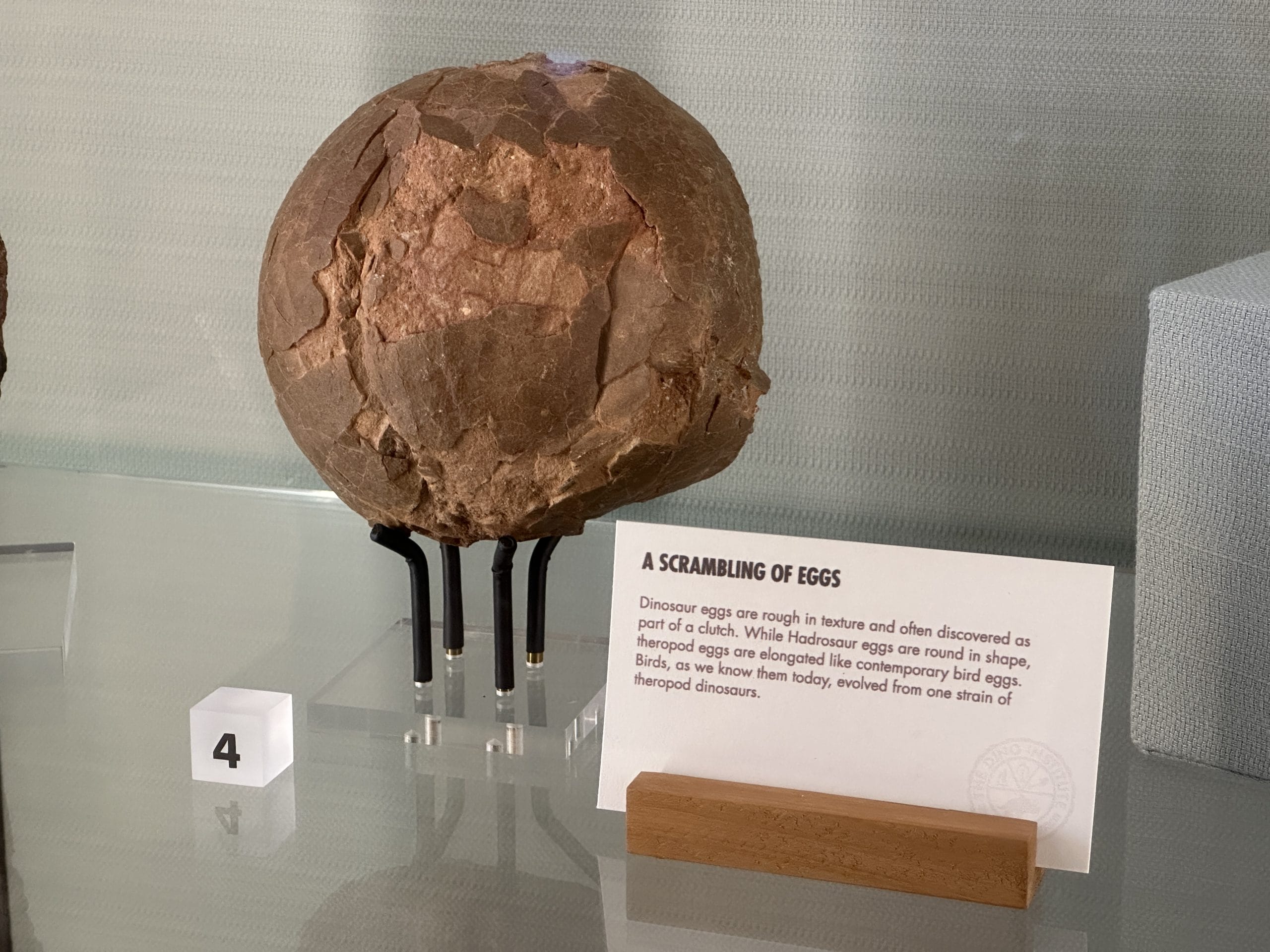
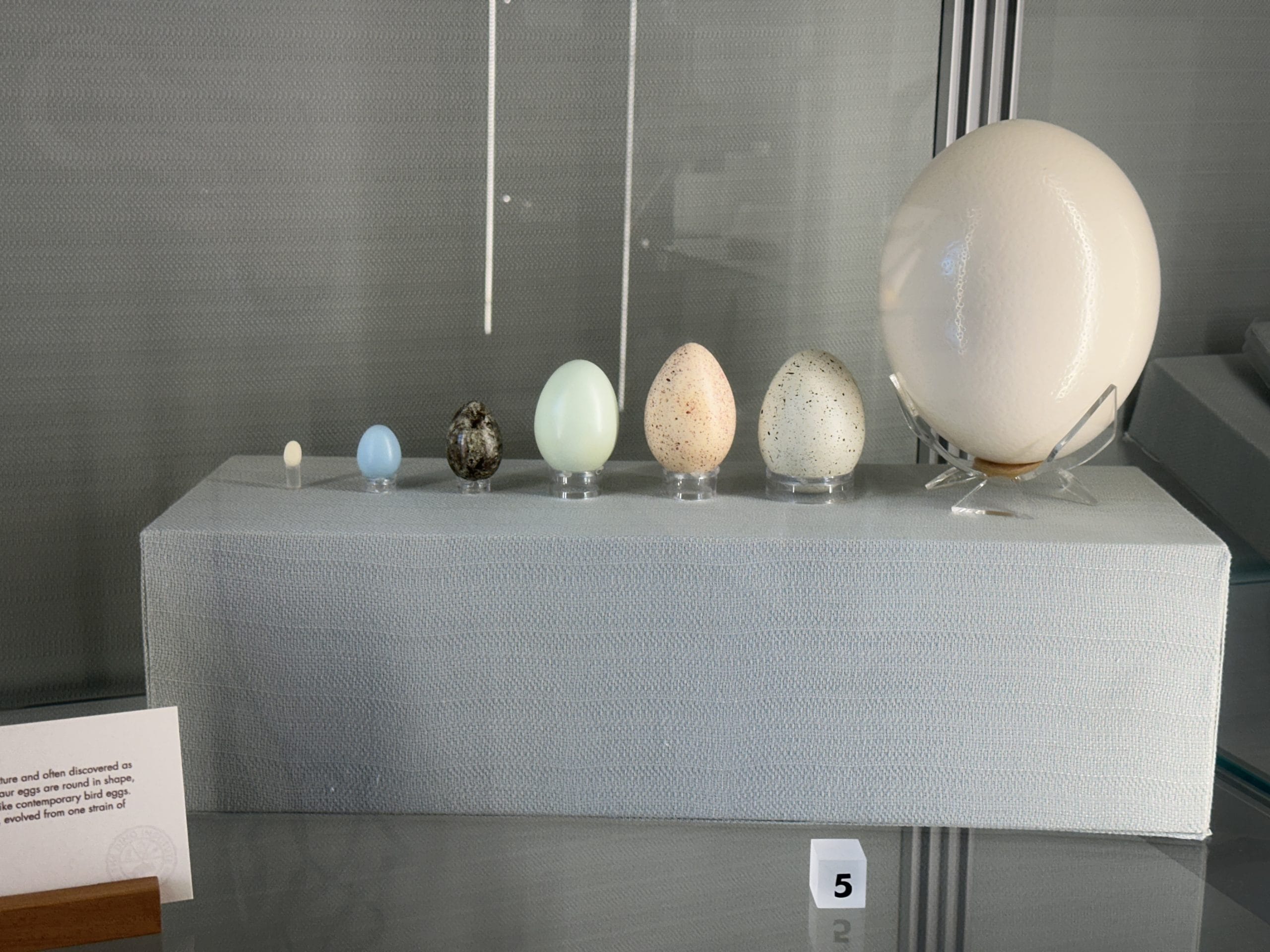
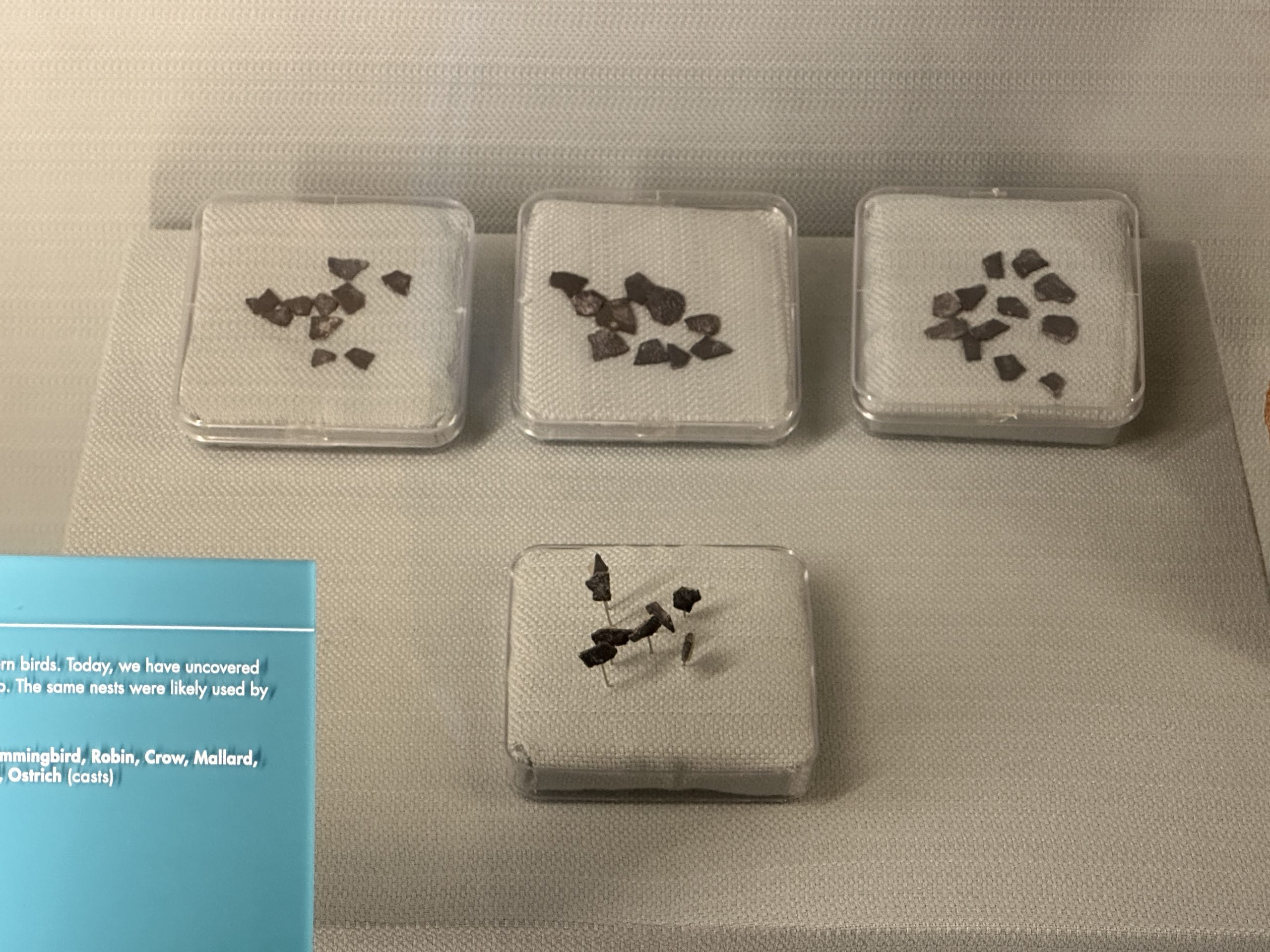
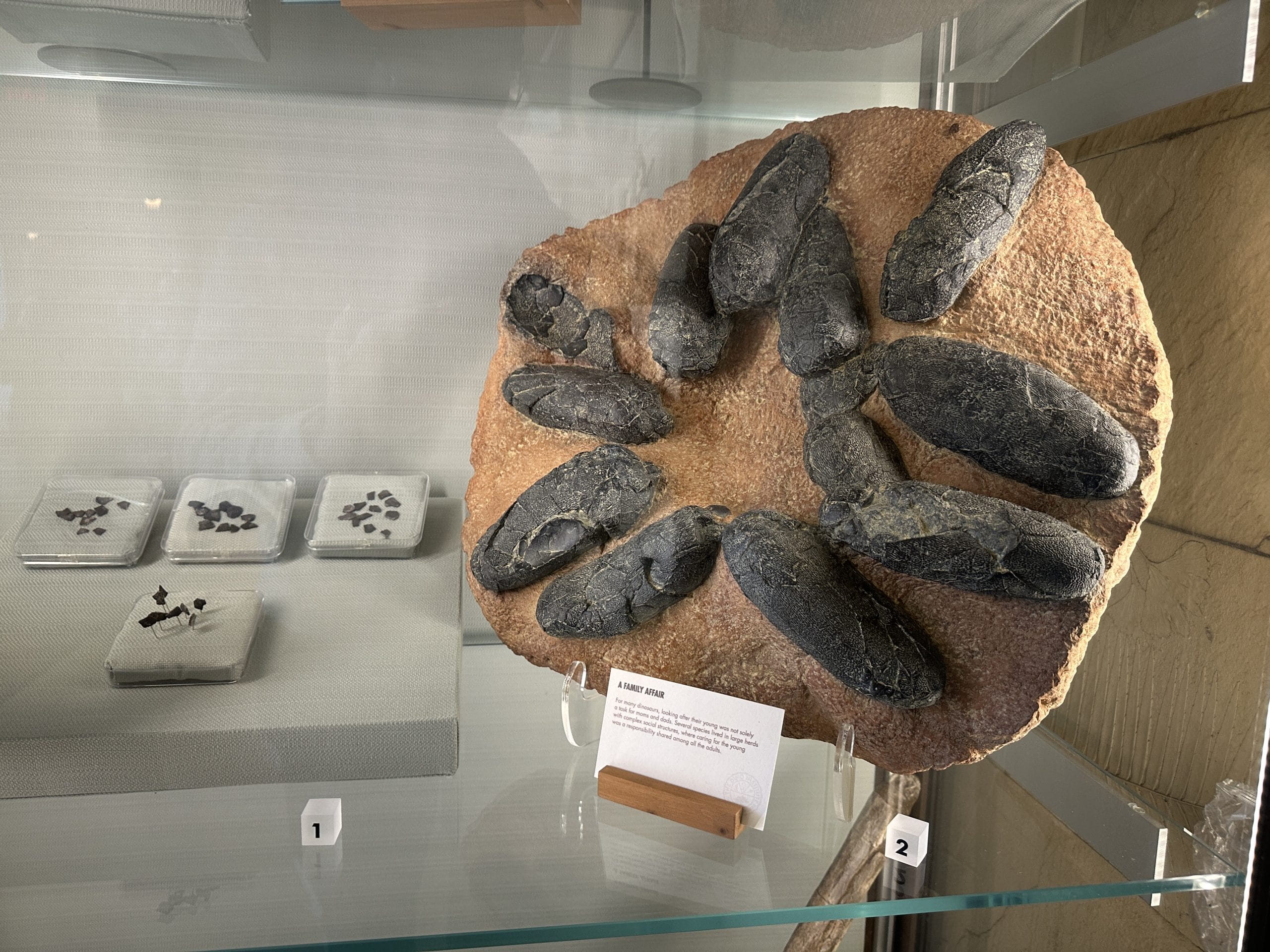
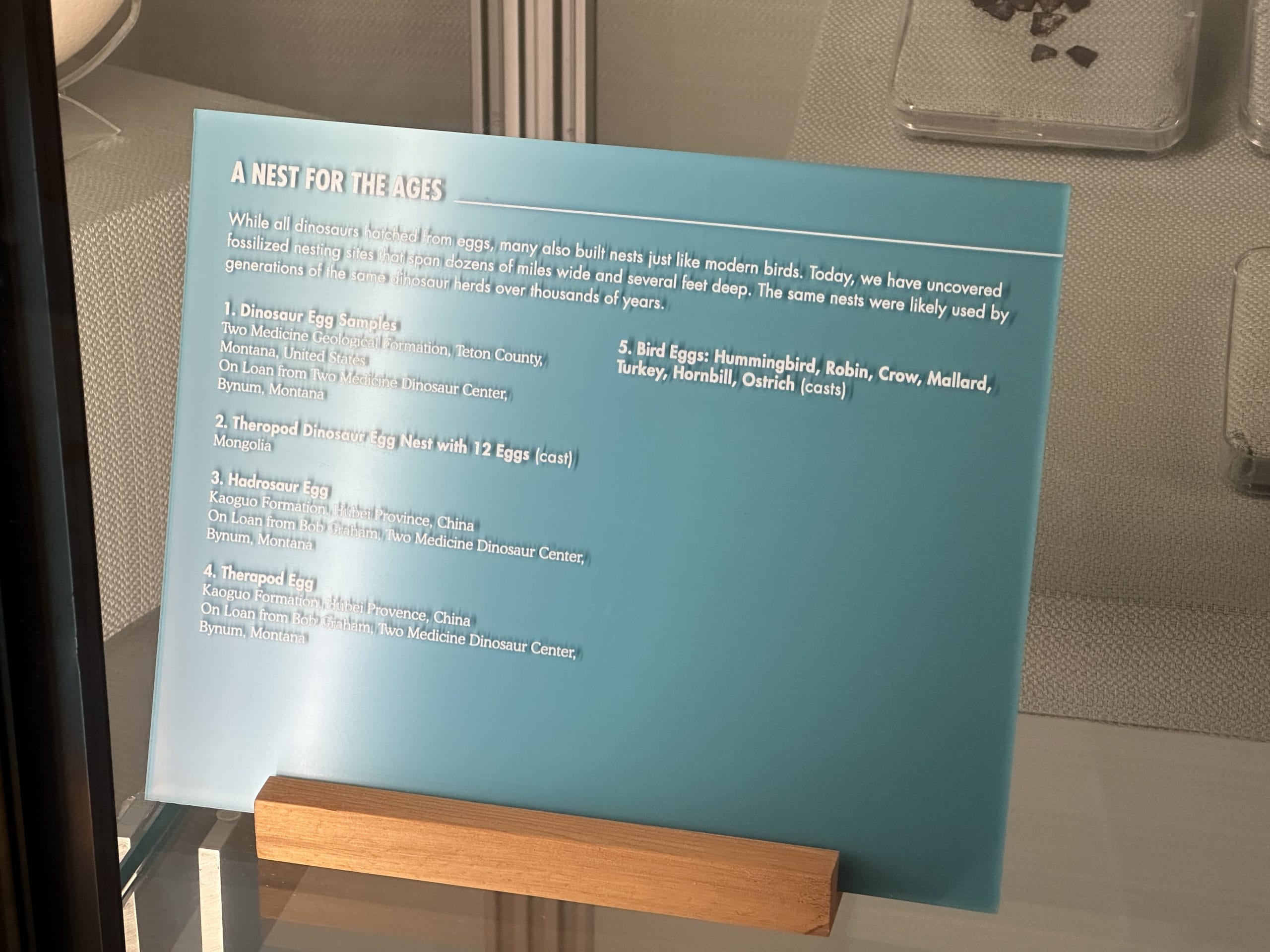
These fossils are eggs and egg samples, including those from different types of dinosaurs and from birds. Dinosaurs would have built nests just like modern birds, which evolved from a strain of theropod dinosaurs.
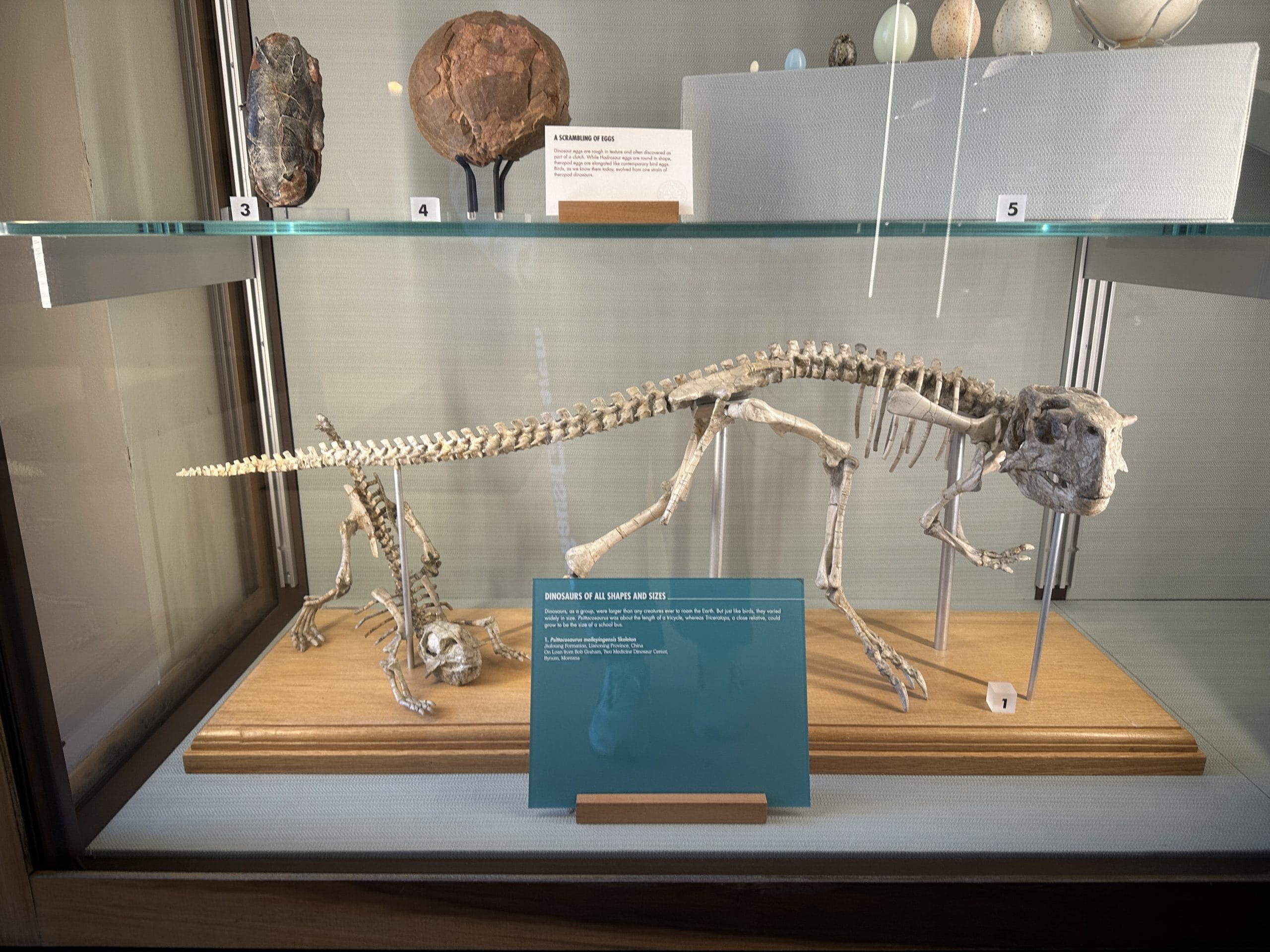
Displayed on the bottom shelf was a Psittacosaurus meileyingensis skeleton.
Dinosaurs of All Shapes and Sizes
Dinosaurs, as a group, were larger than any creatures ever to roam the Earth. But just like birds, they varied widely in size. Psittacosaurus was about the length of a tricycle, whereas Triceratops, a close relative, could grow to be the size of a school bus.
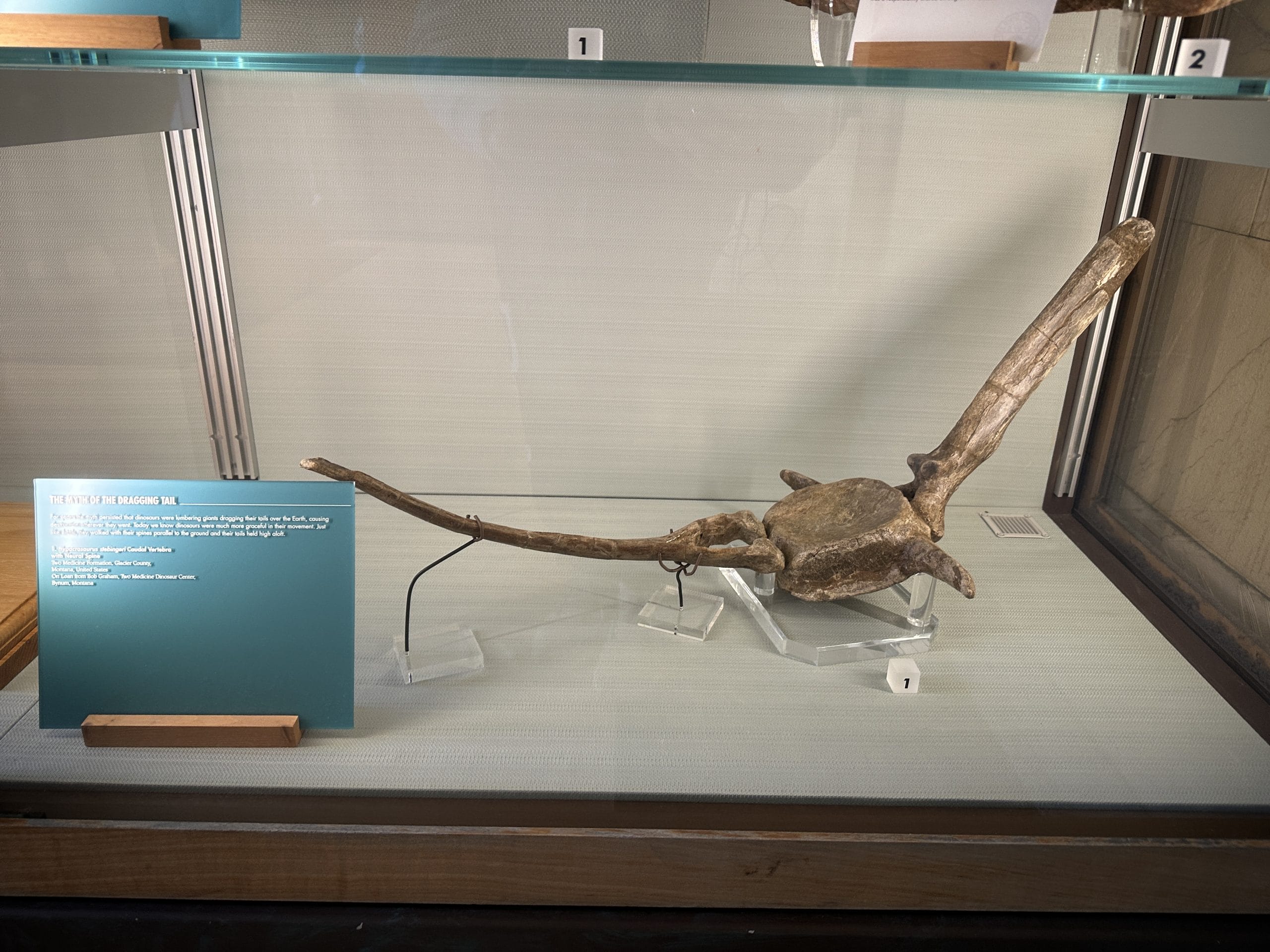
Here is a Hypacrosaurus stebingeri caudal vertebra with a neural spine.
The Myth of the Dragging Tail
For years the myth persisted that dinosaurs were lumbering giants dragging their tails over the Earth, causing destruction wherever they went. Today we know dinosaurs were much more graceful in their movement. Just like birds, they walked with the spines parallel to the ground and their tails held high aloft.
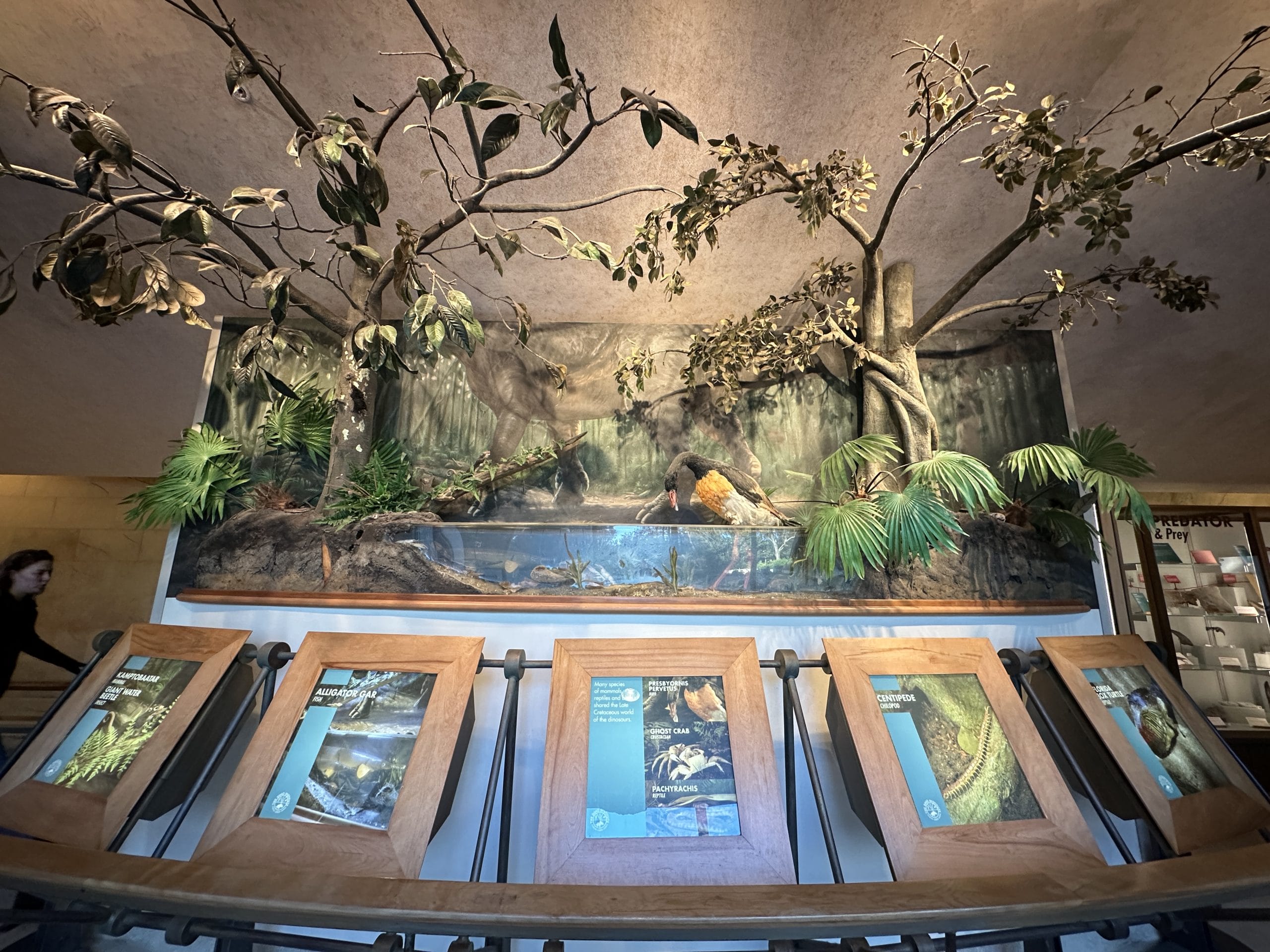
One display featured models of other non-dinosaur animals, some that still exist today, that could be traced back to the prehistoric era.
Many species of mammals, reptiles and birds shared the Late Cretaceous world of the dinosaurs.
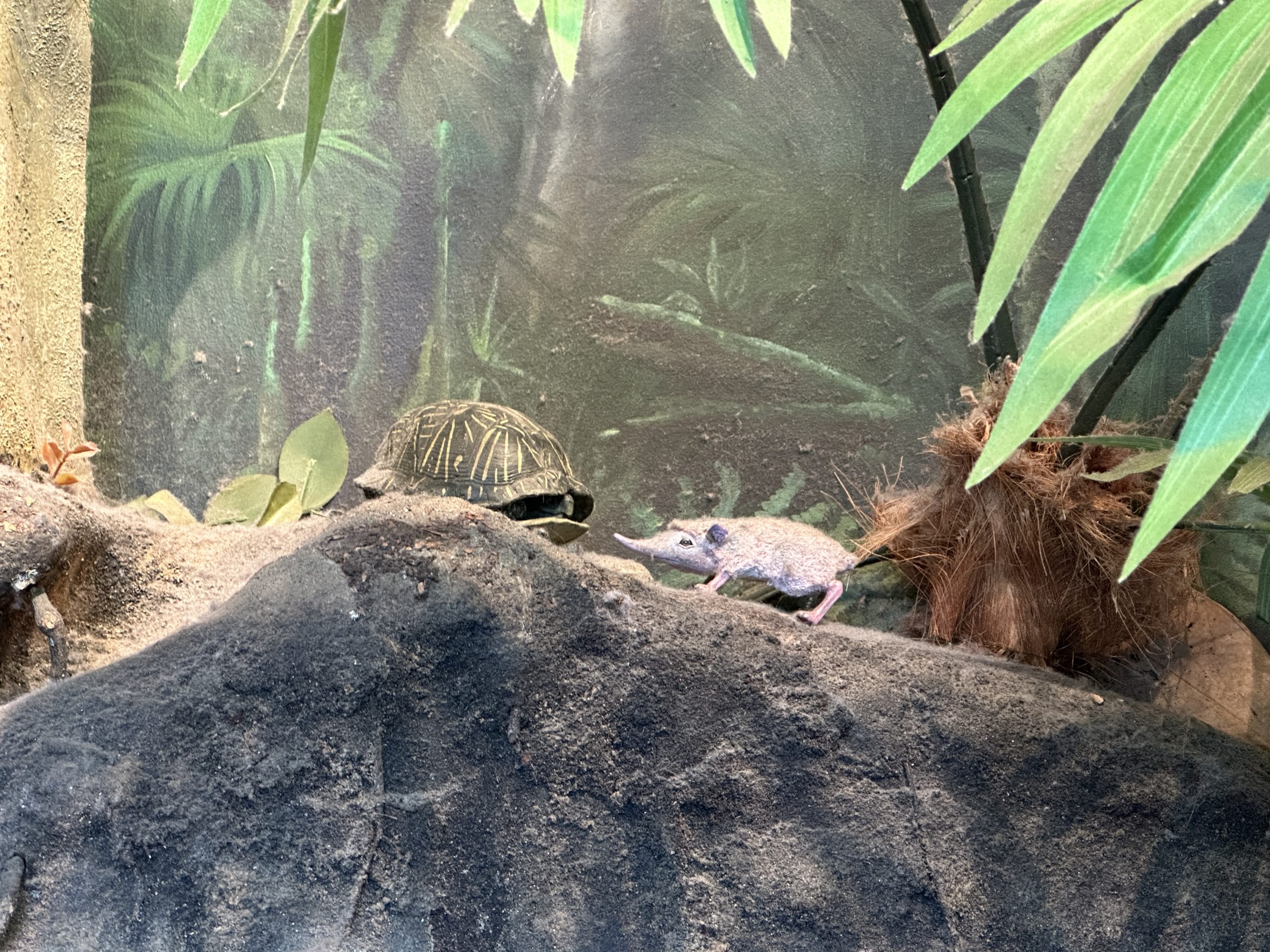
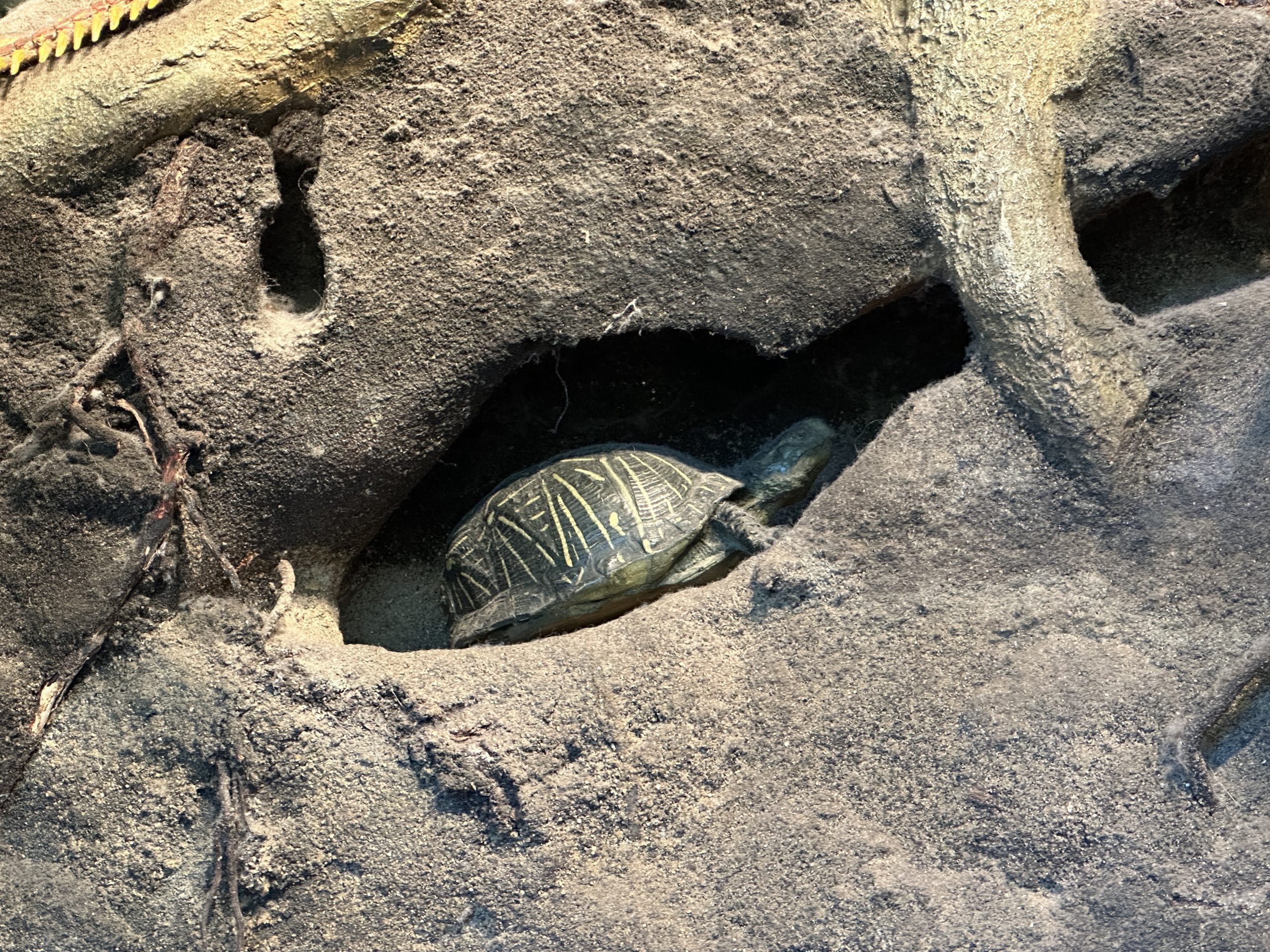
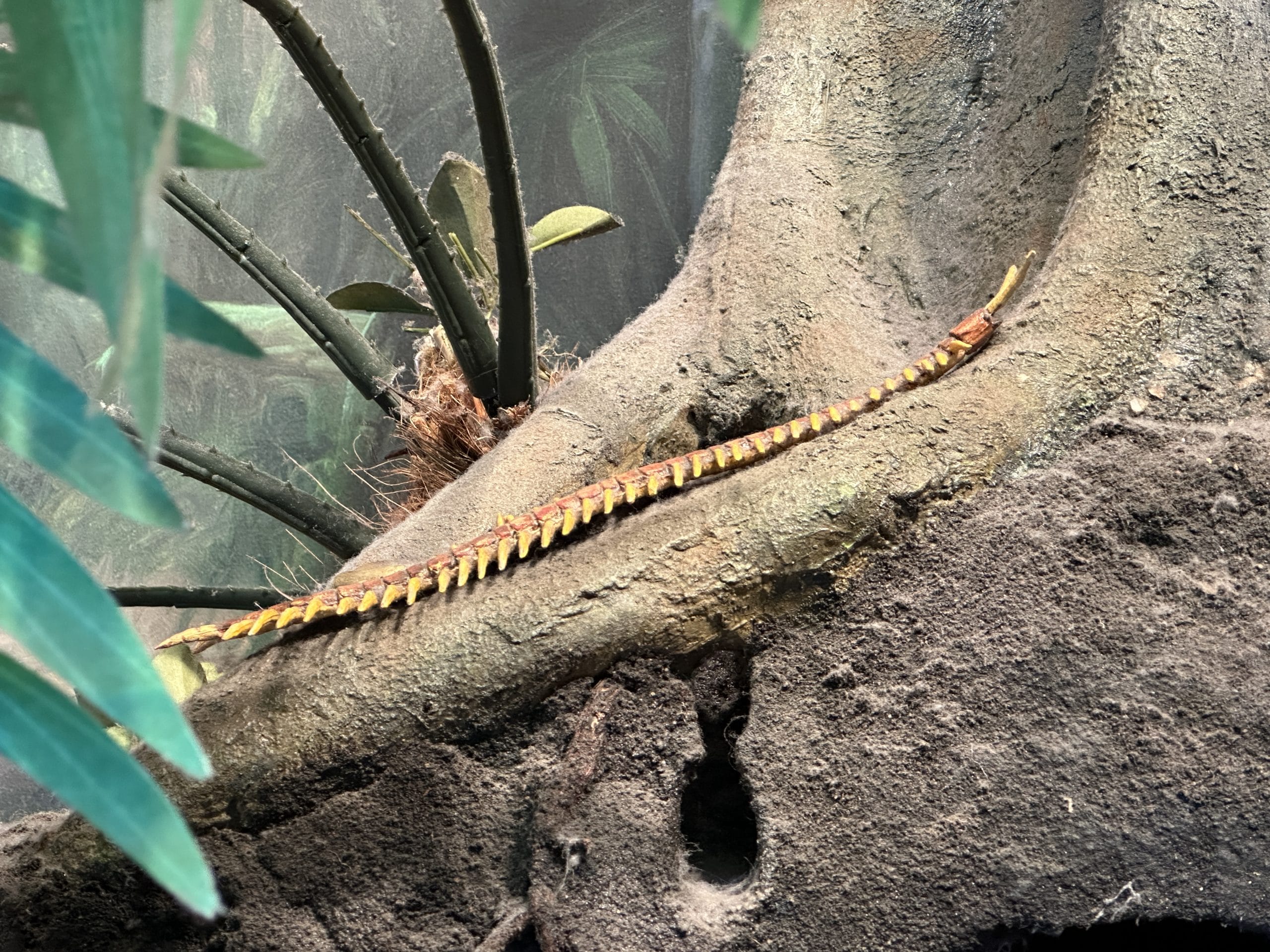
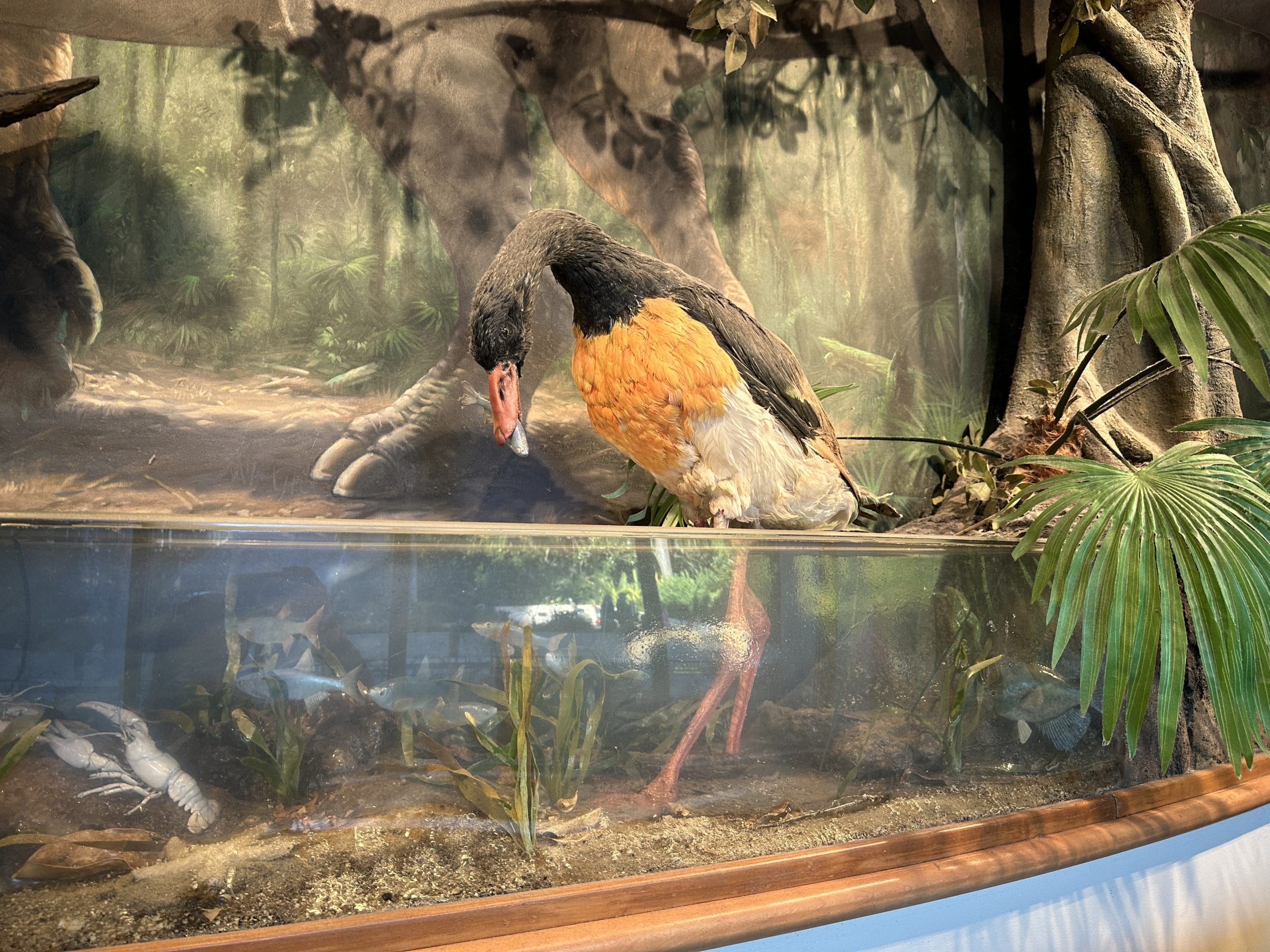
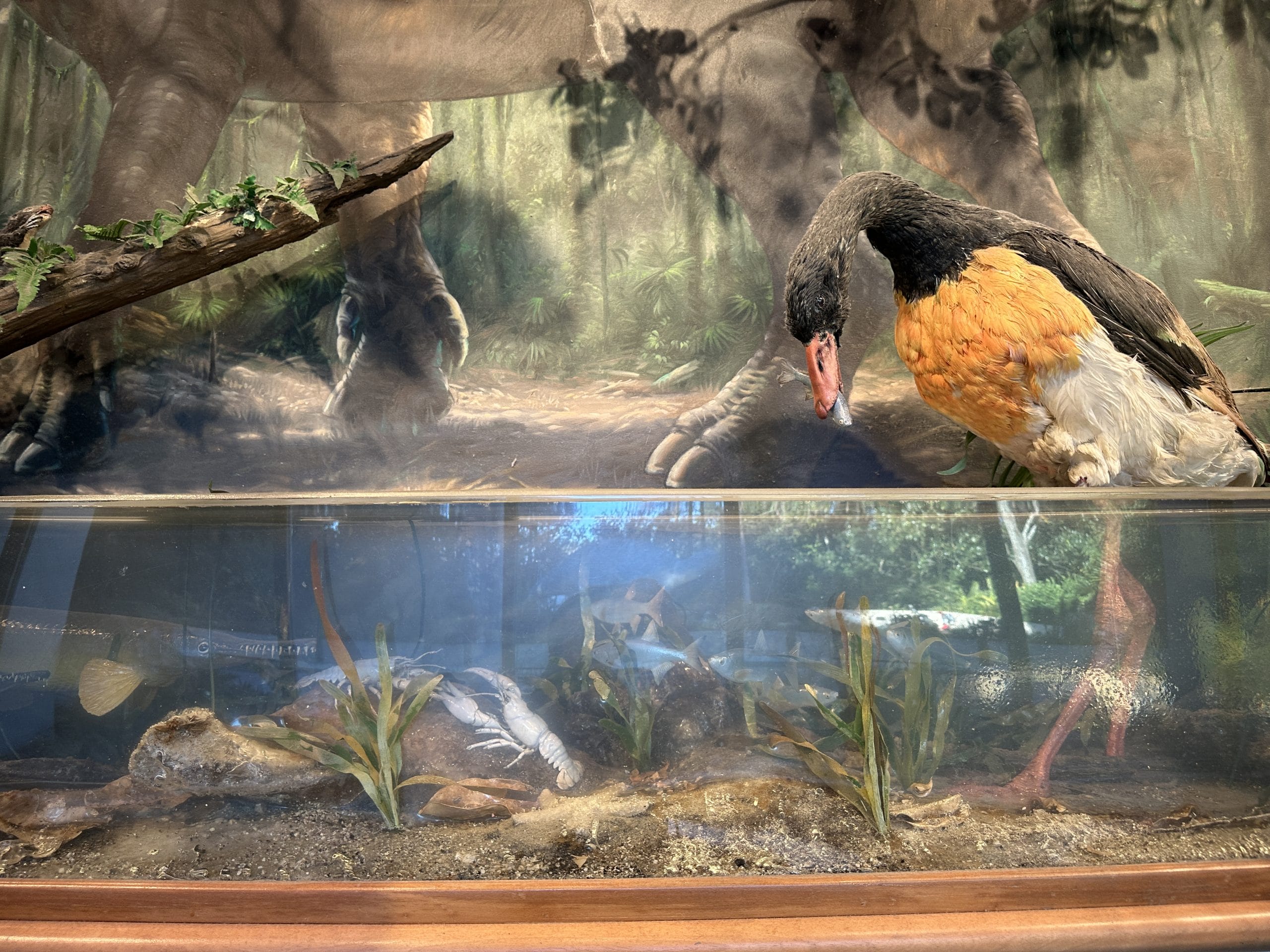
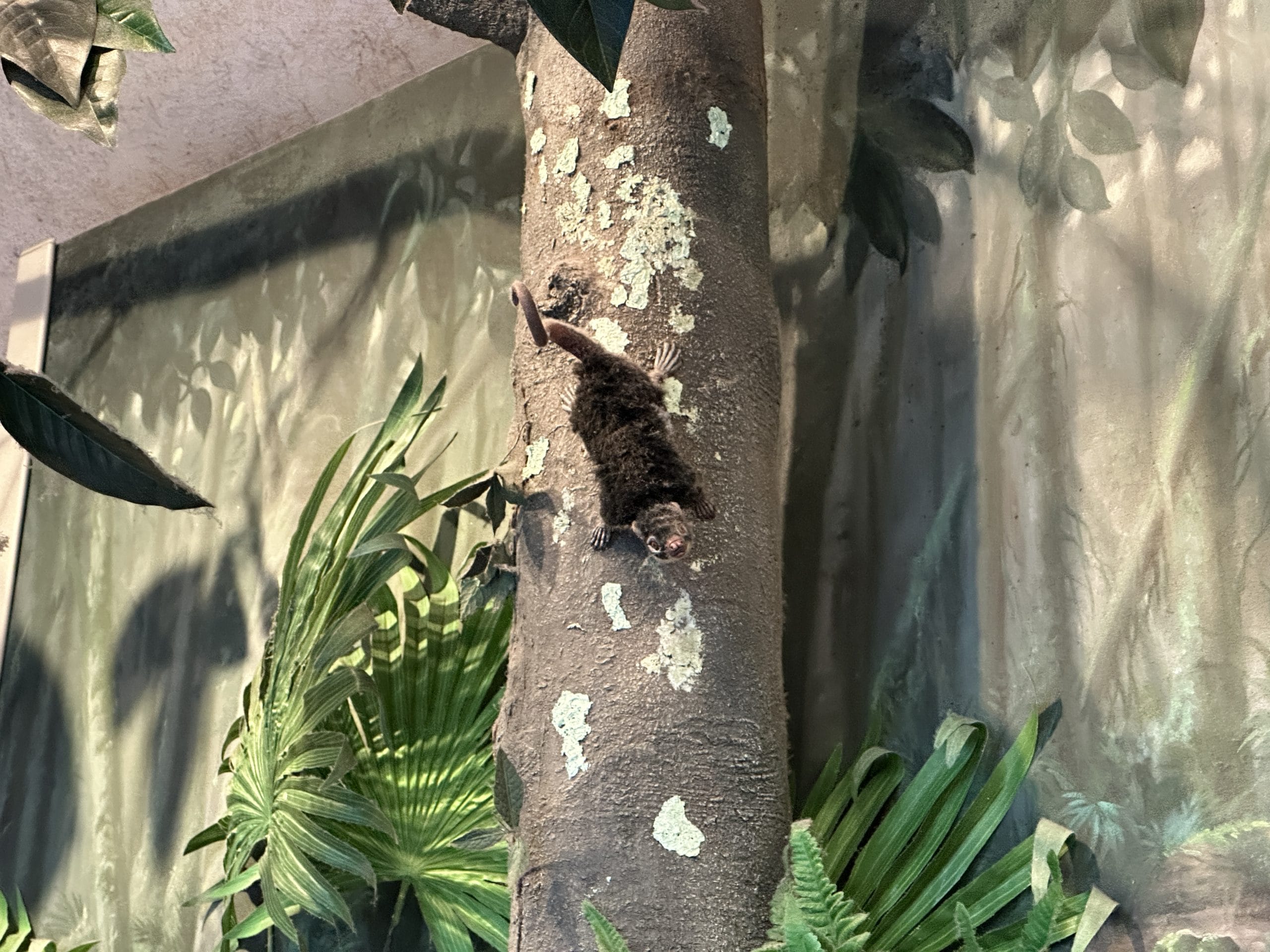
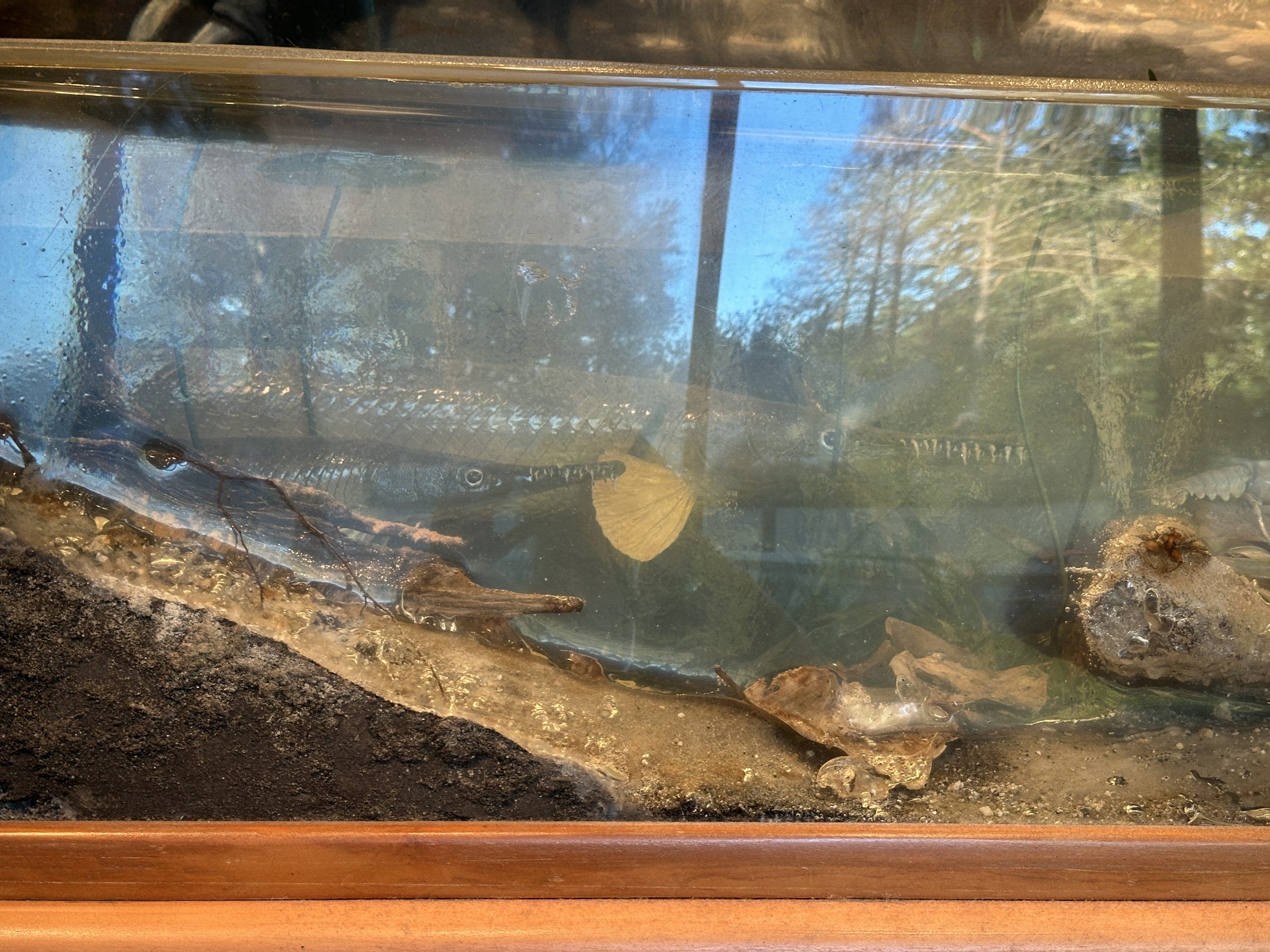
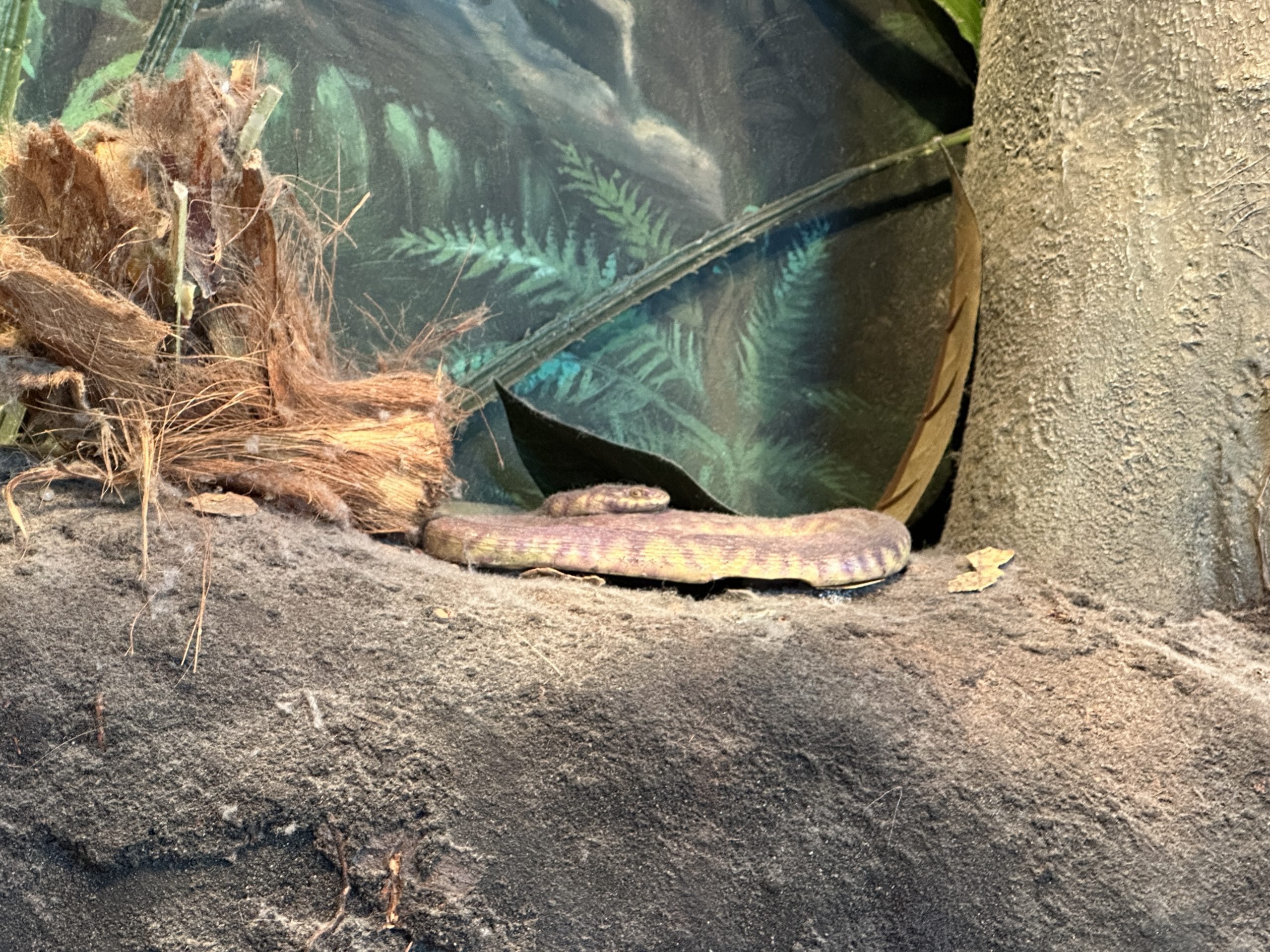
The species included:
- Florida Box Turtle (reptile)
- Centipede (chilopod)
- Presbyornis Pervetus (bird)
- Ghost Crab (crustacean)
- Pachyrachis (reptile)
- Alligator Gar (fish)
- Kamptobaatar (mammal)
- Giant Water Beetle (insect)
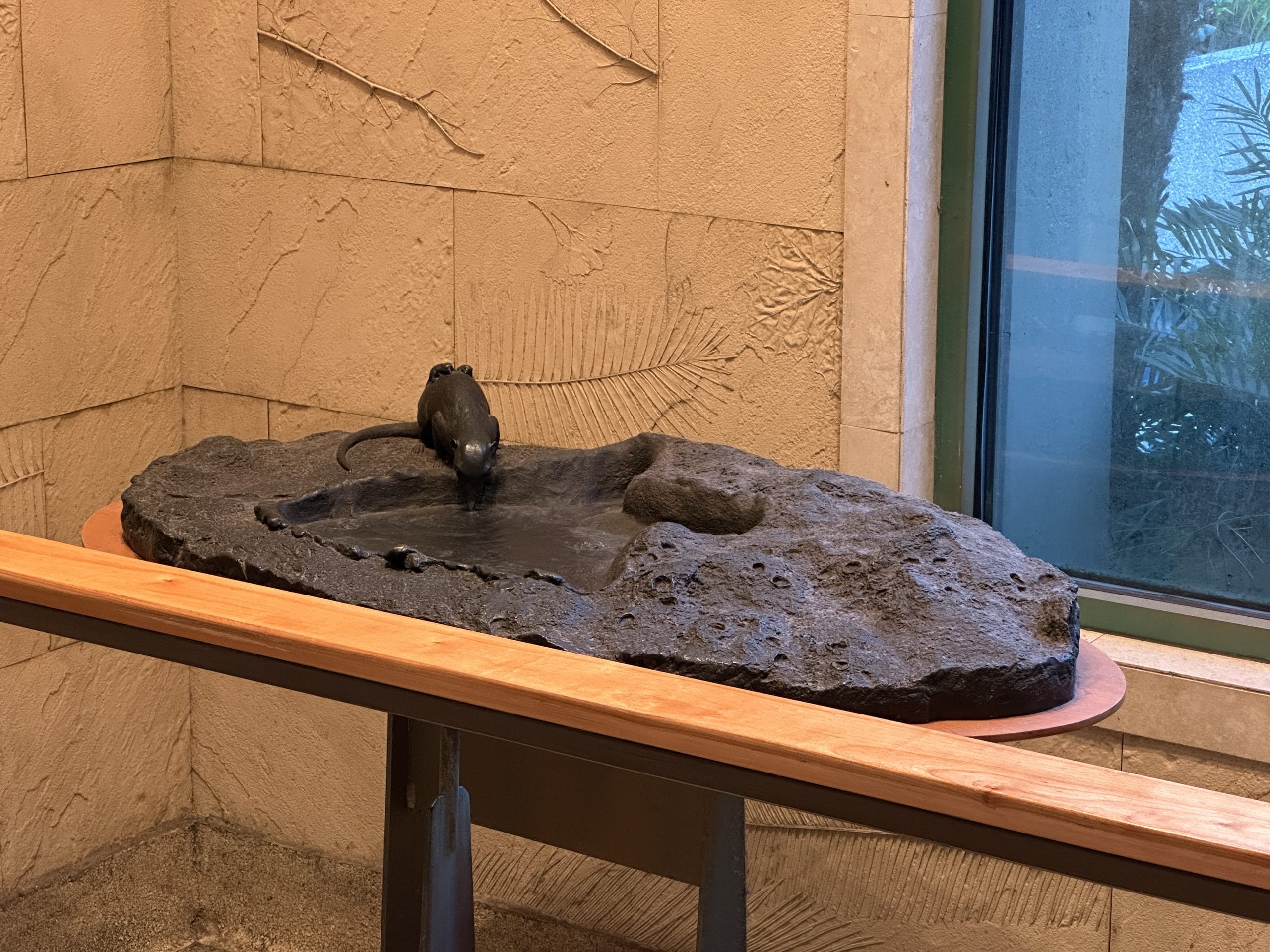
Near the windows at the beginning of the indoor queue was a cast of a pond with a rodent statue.
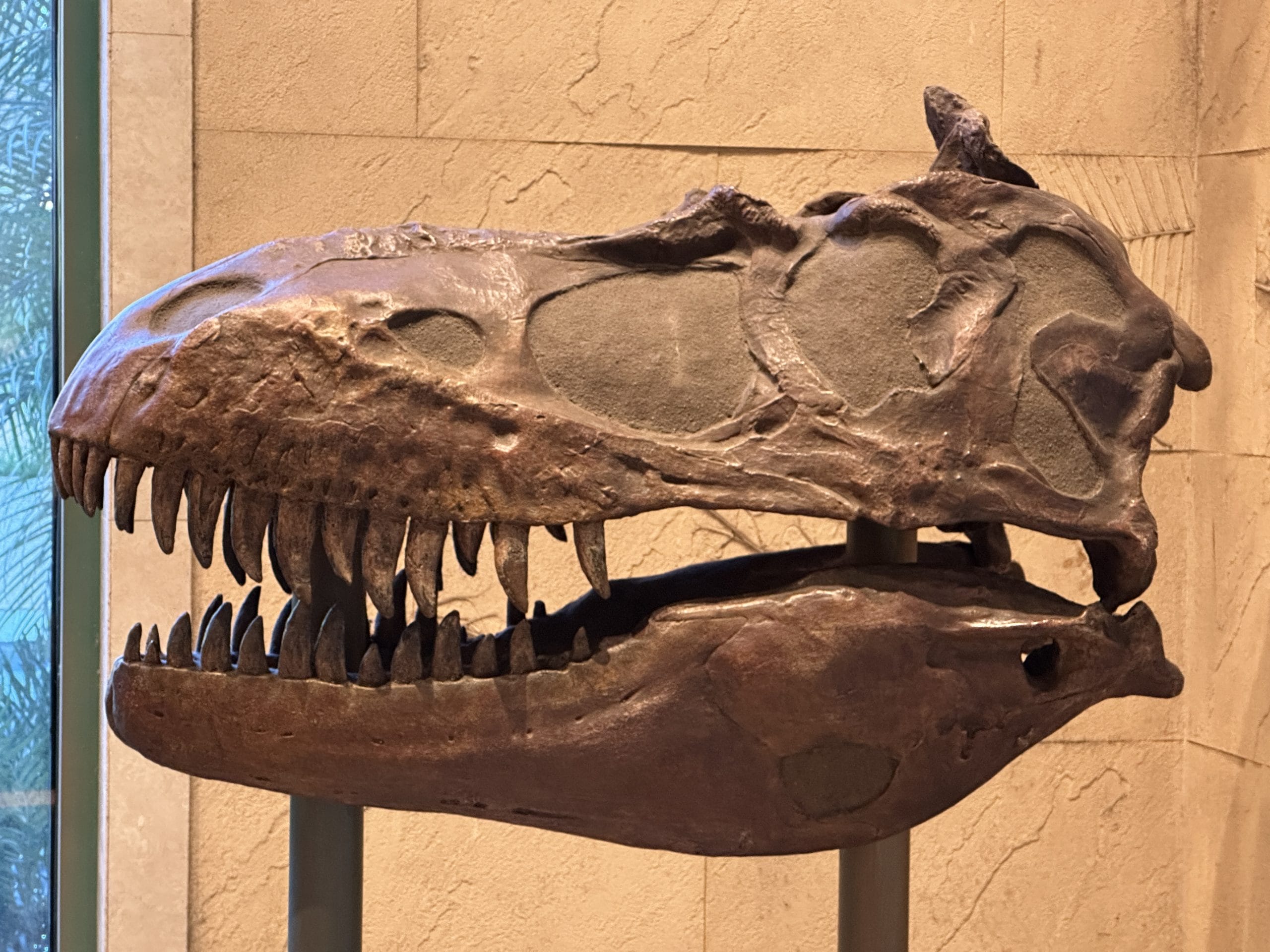
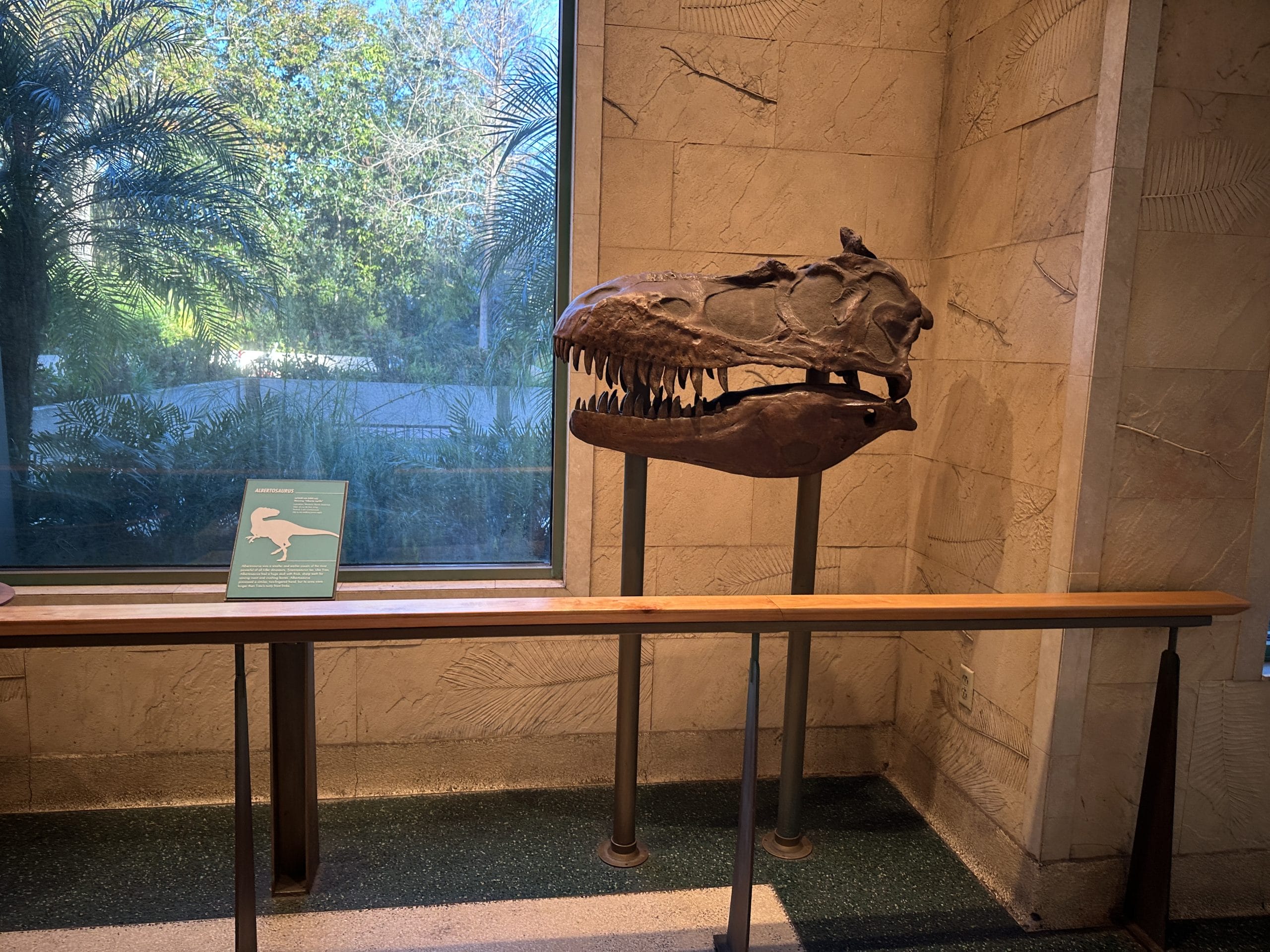
There were two large skulls in front of the windows. First was the head of an Albertosaurus, a species from Western North America in the Late Cretaceous period.
Albertosaurus was a smaller and earlier cousin of the most powerful of all killer dinosaurs, Tyrannosaurus rex. Like T-rex, Albertosaurus had a huge skull with thick, sharp teeth for sawing meat and crushing bones. Albertosaurus possessed a similar, two-fingered hand, but its arms were longer than T-rex’s runty front limbs.
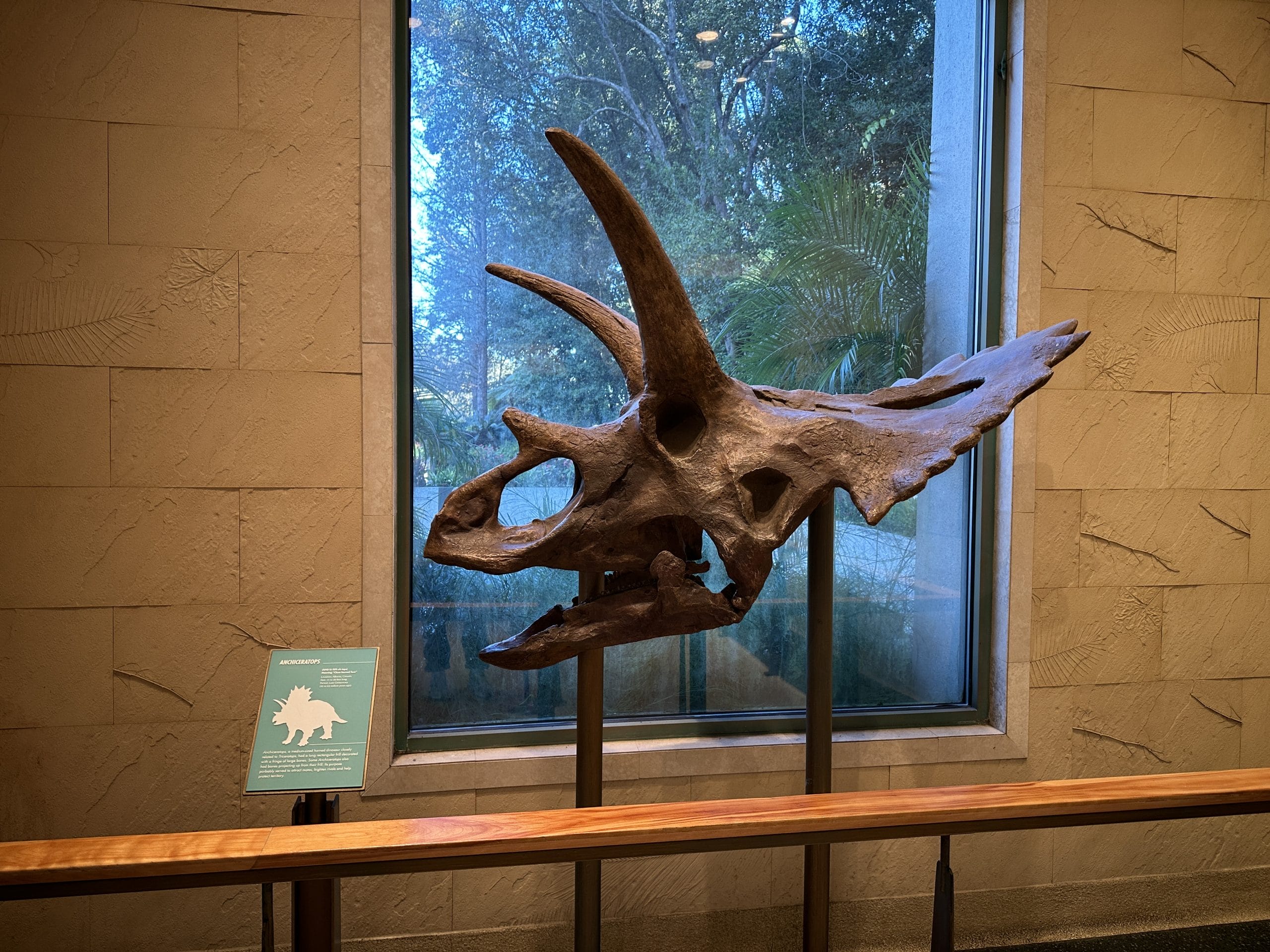
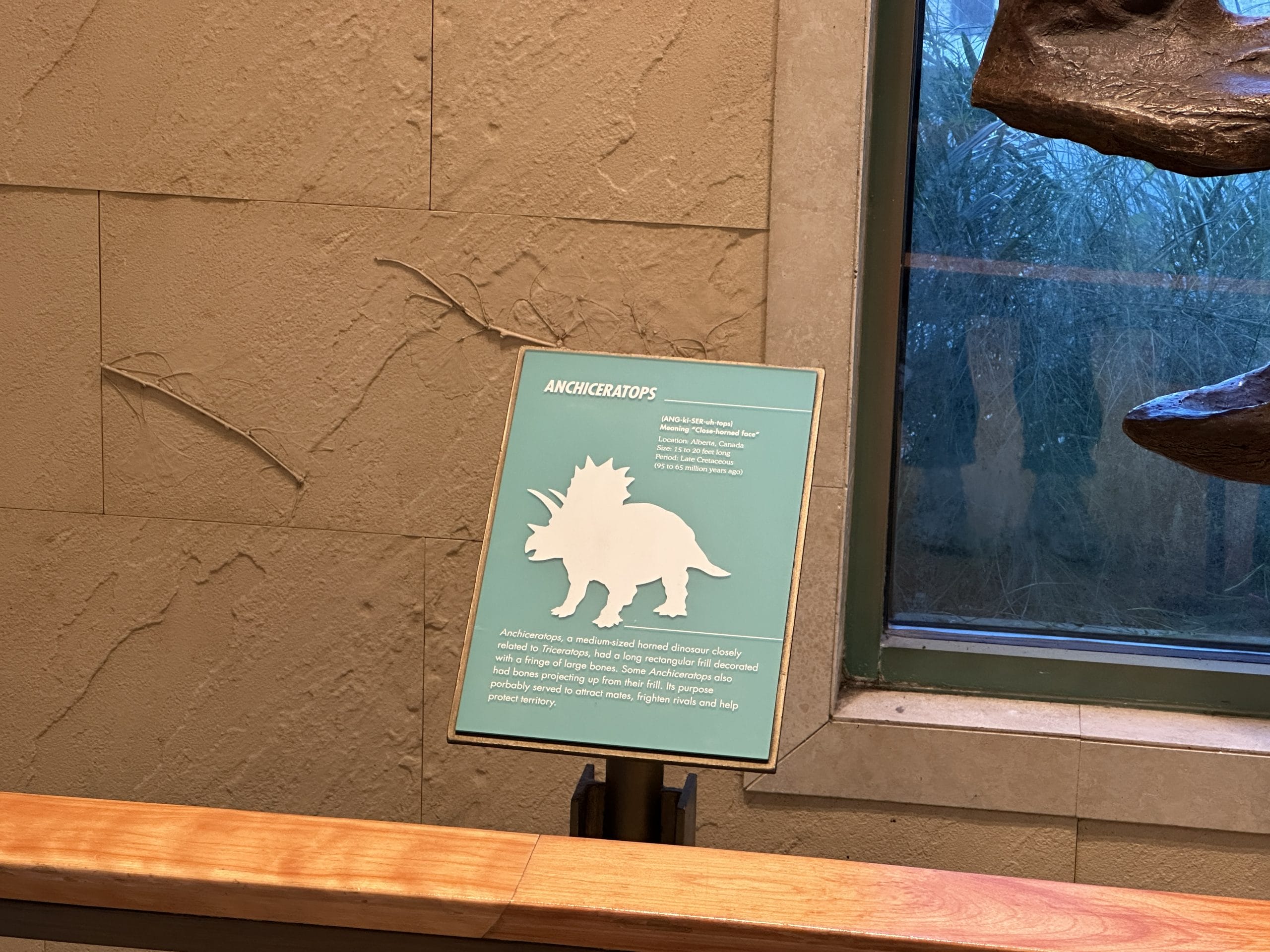
The second skull is from an Anchiceratops, which originated from Alberta, Canada, in the Late Cretaceous.
Anchiceratops, a medium-sized horned dinosaur closely related to Triceratops, had a long rectangular frill decorated with a fringe of large bones. Some Anchiceratops also had bones projecting up from their frill. Its purpose porbably [sic] served to attract mates, frighten rivals and help protect territory.
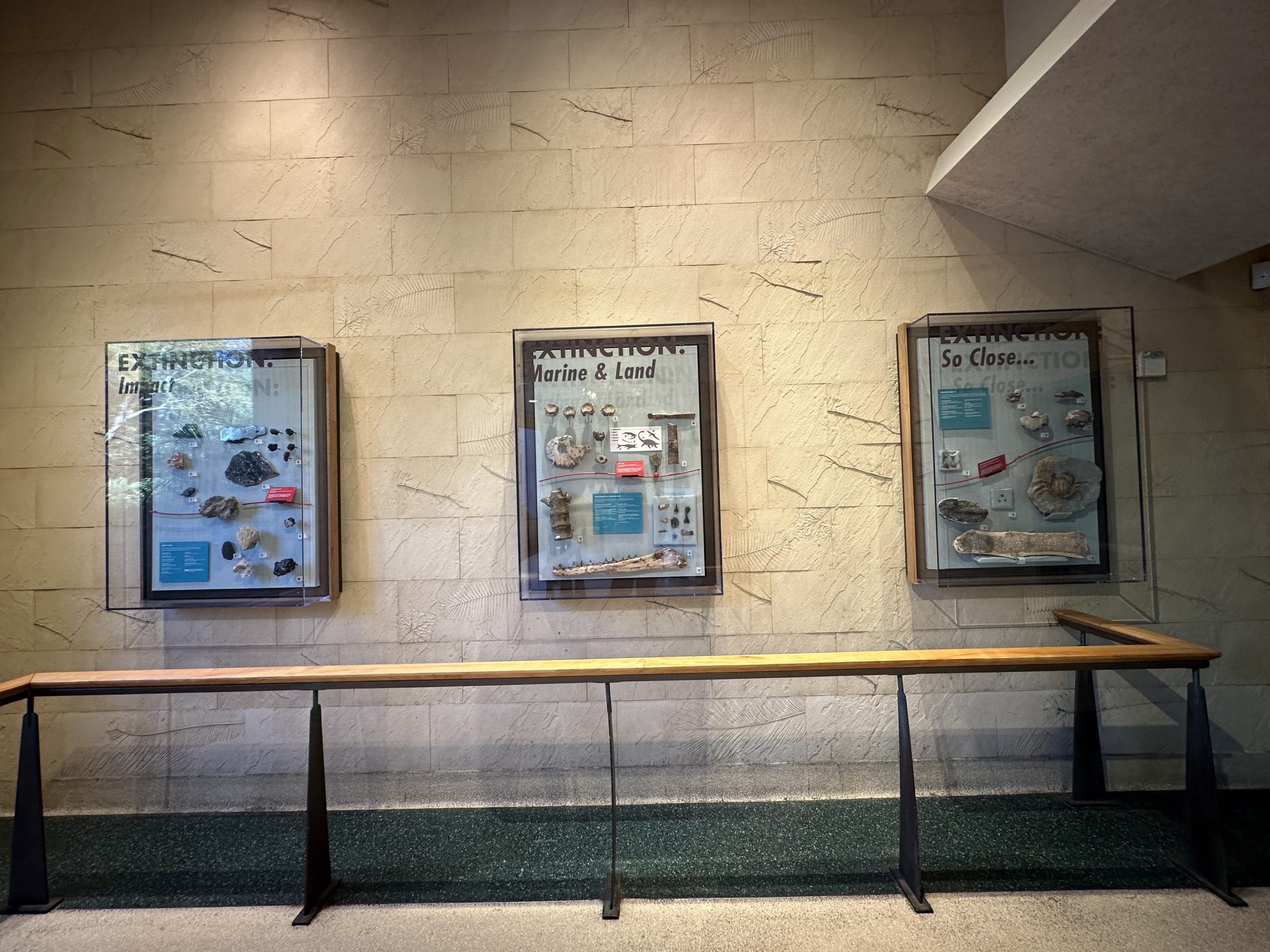
Three cases on the wall had artifacts related to mass extinction (as well as the continuing red string). These were split up into three sections: “Impact,” “Marine & Land,” and “So Close…”
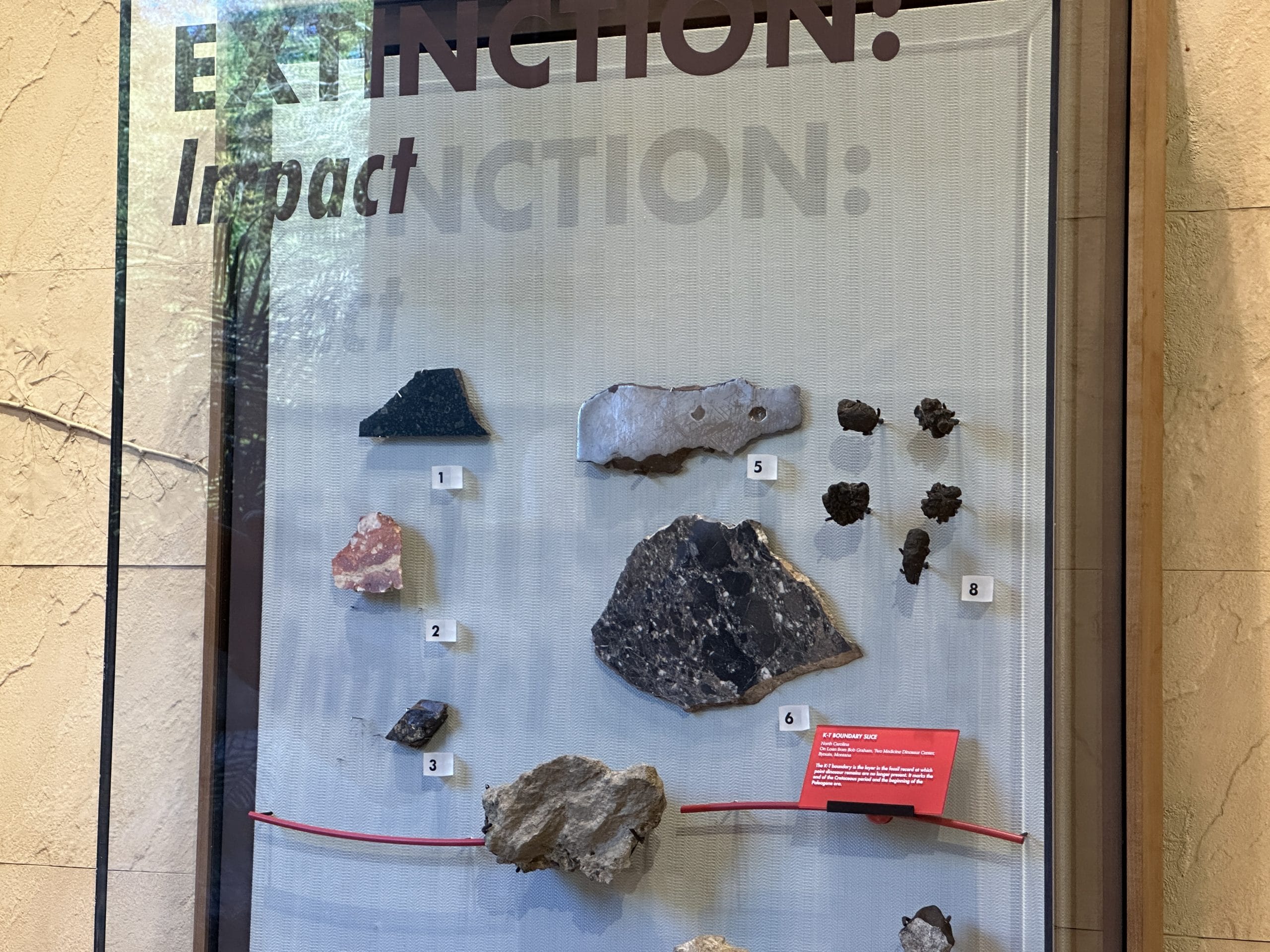
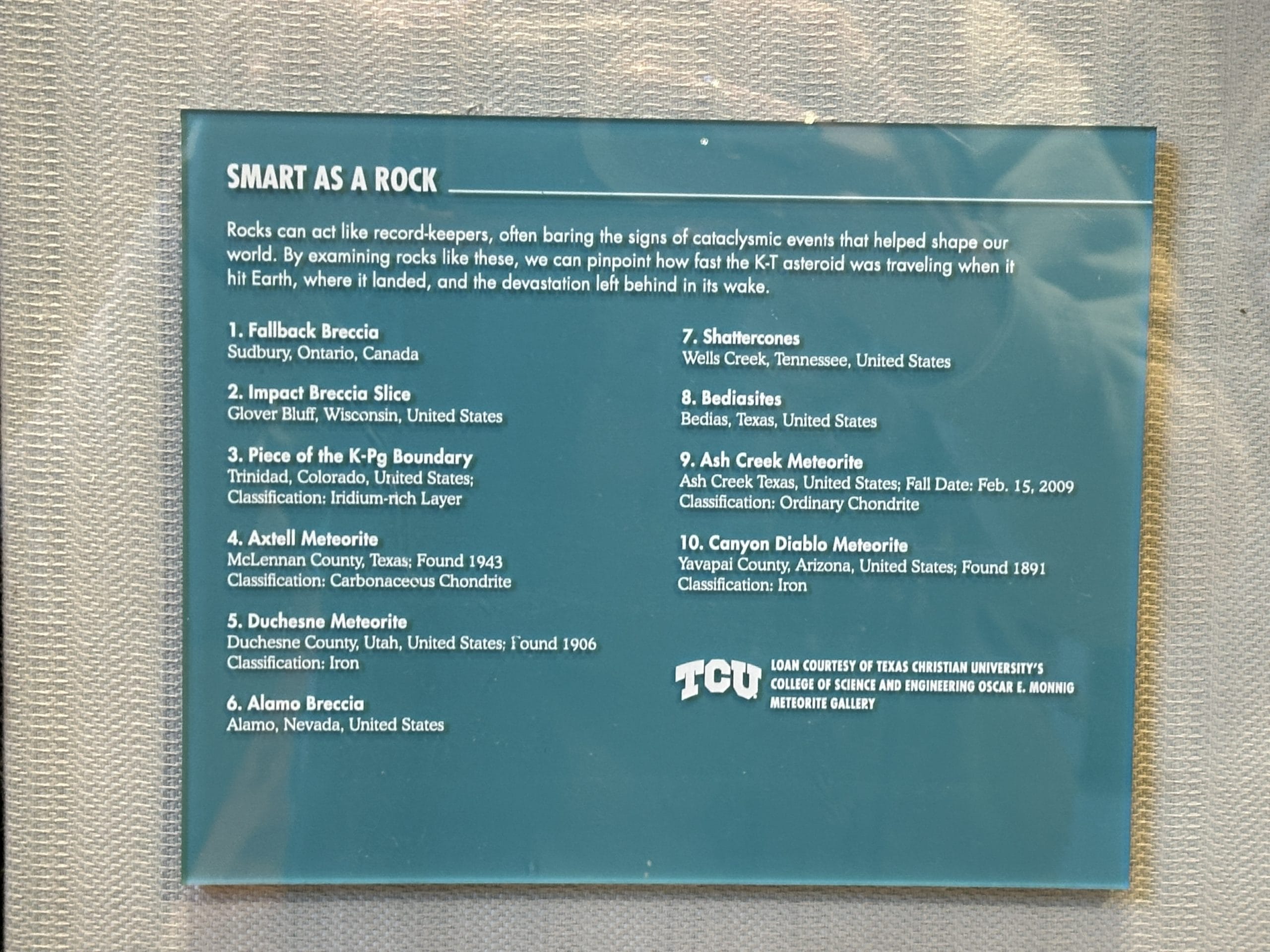
In the “Impact” case were rocks that can help scientists “pinpoint how fast the K-T asteroid was traveling when it hit Earth, where it landed, and the devastation left behind in its wake.”
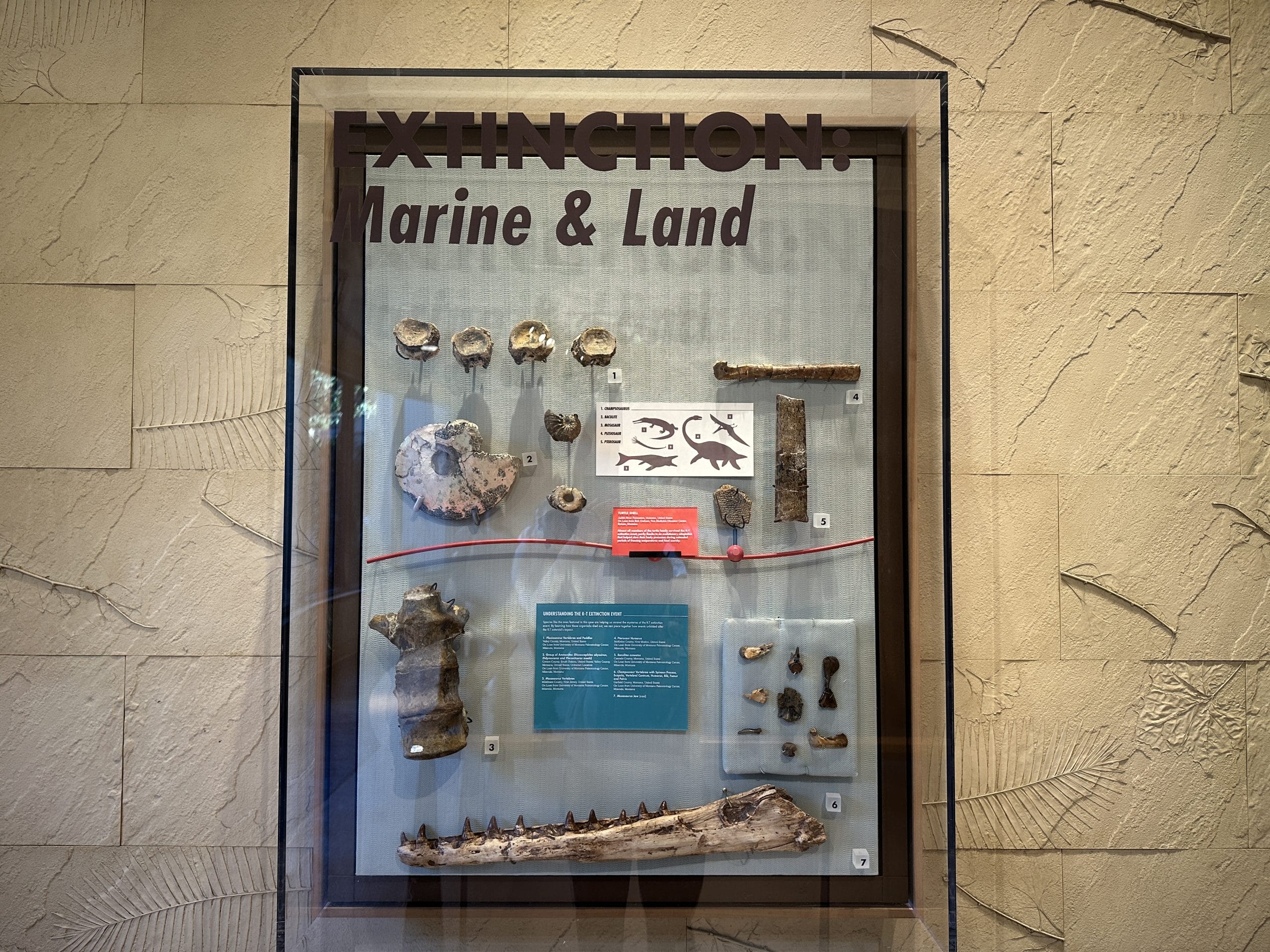
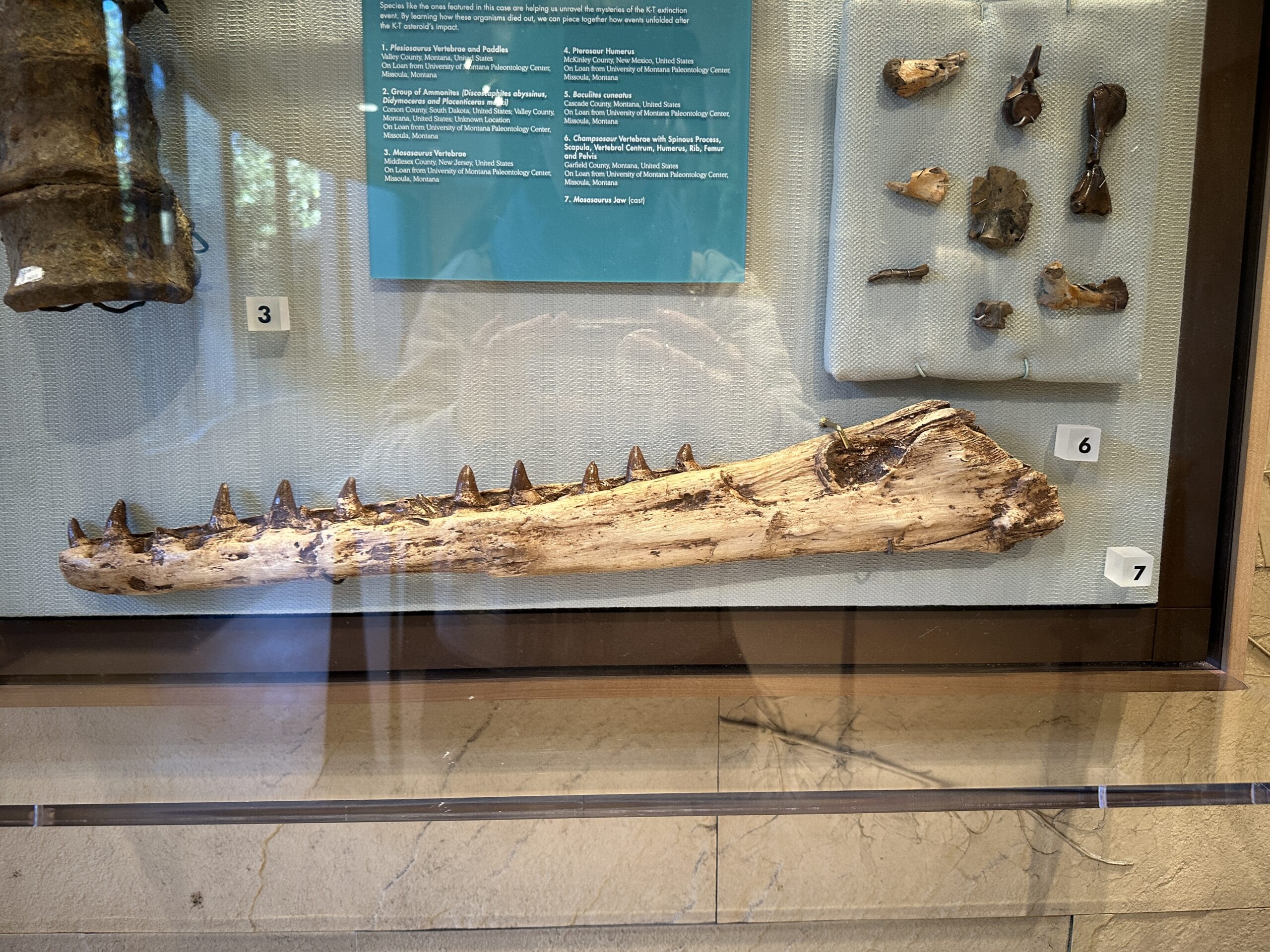
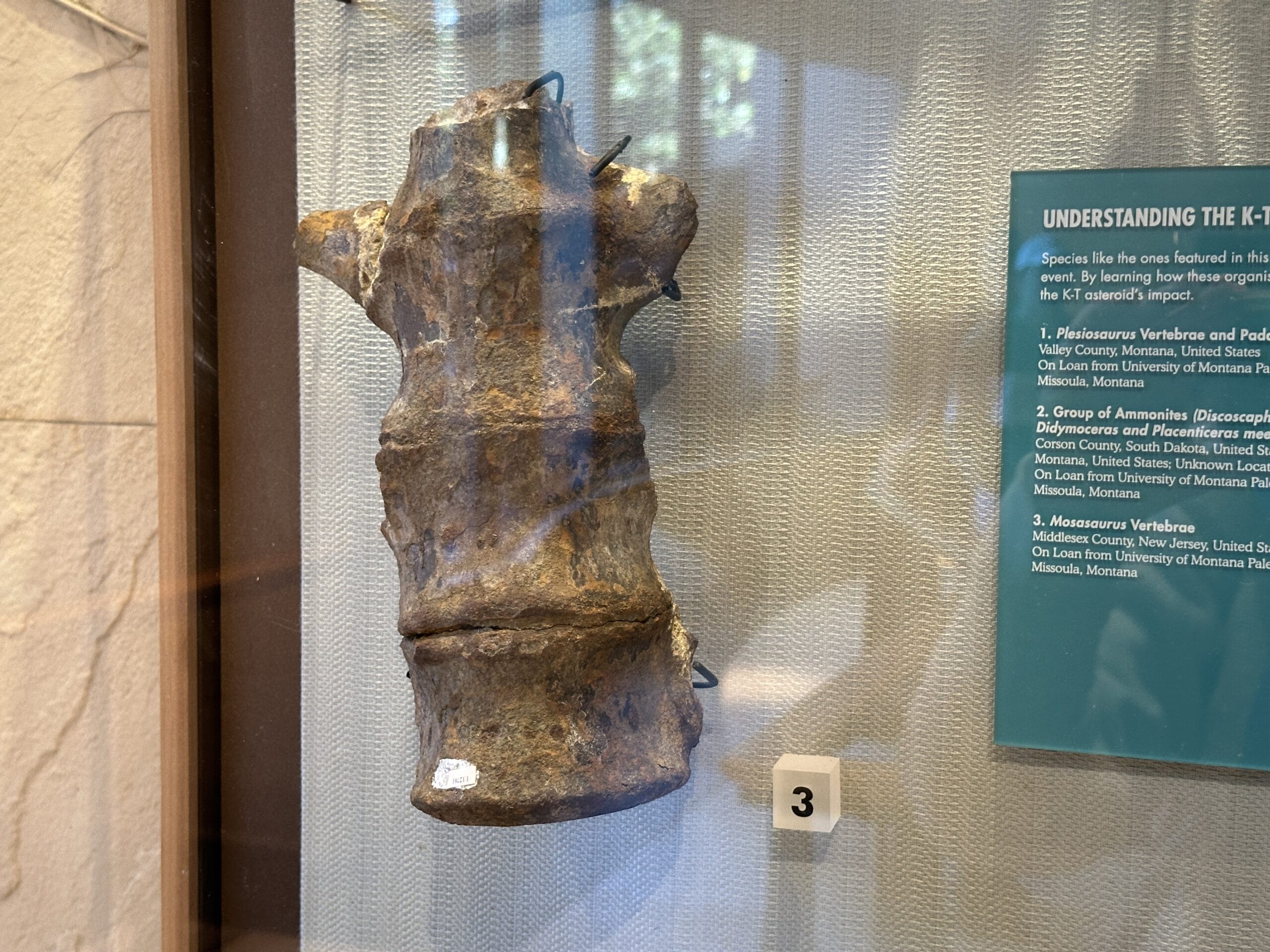
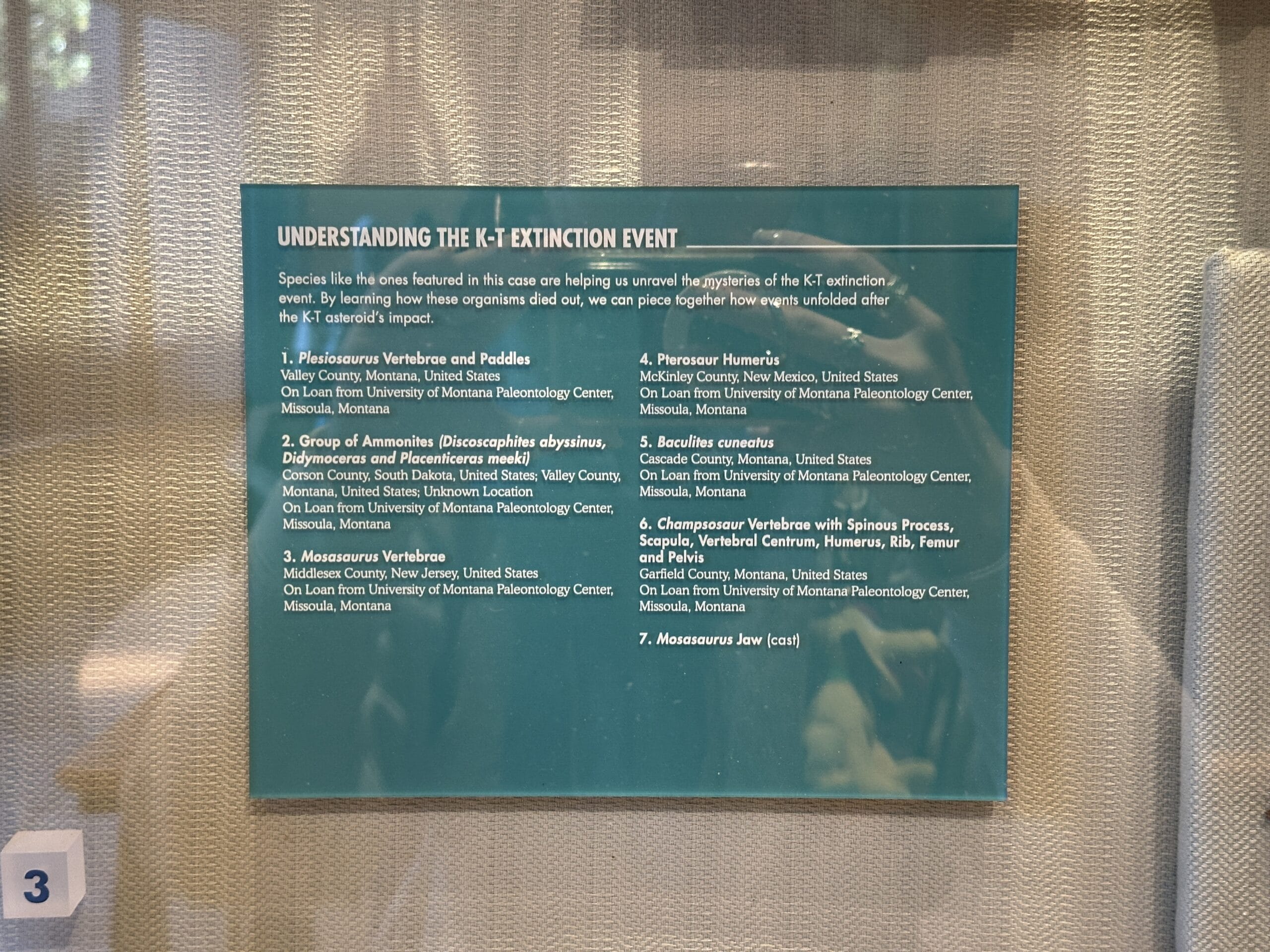
The “Marine & Land” case has fossils from various species that give more clues to the extinction event. These include a Plesiosaurus vertebrae and paddles, ammonites, Mosasaurus vertebrae, pterosaur humerus, Baculites cuneatus, and Champsosaur vertebrae.
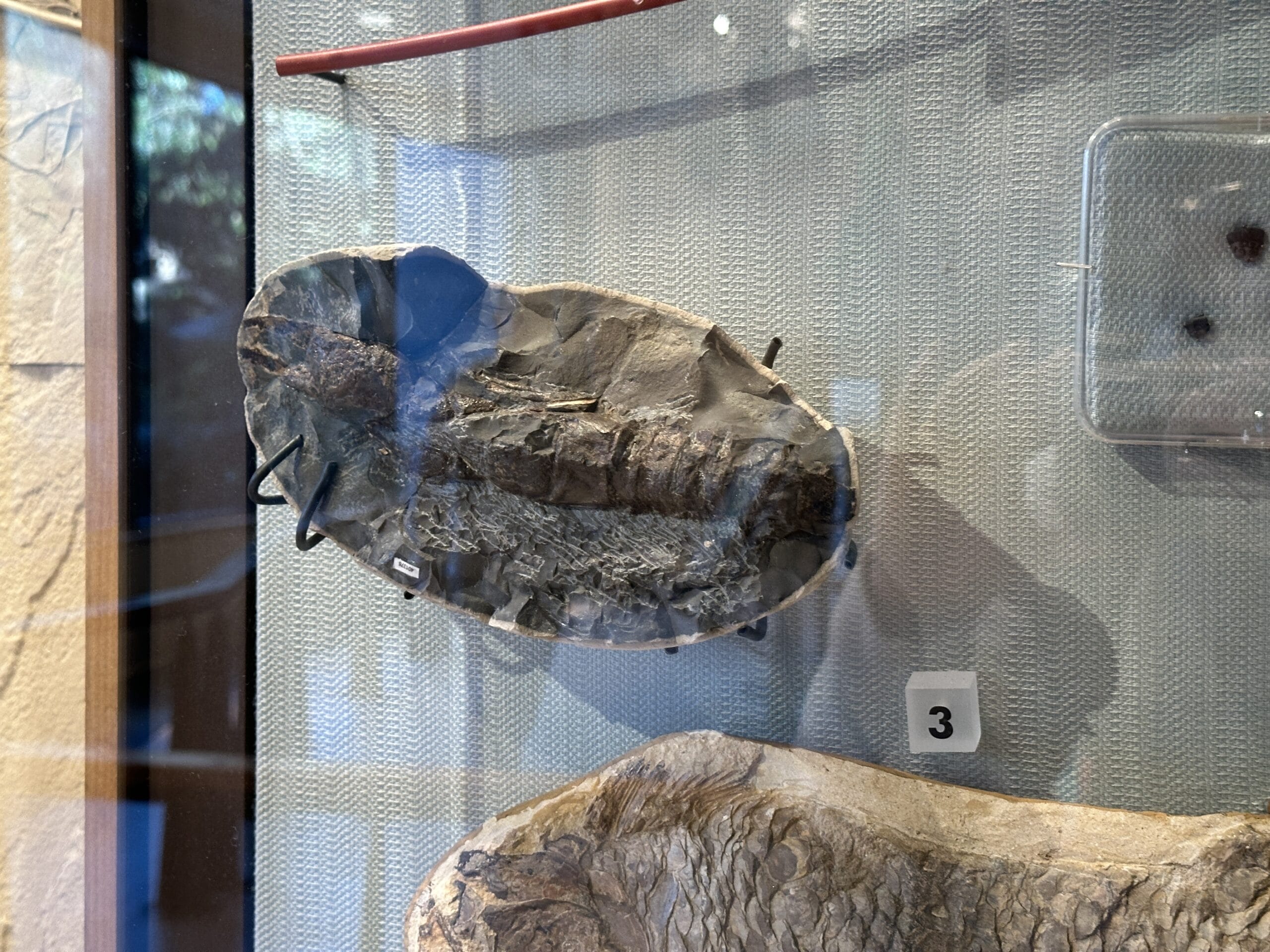
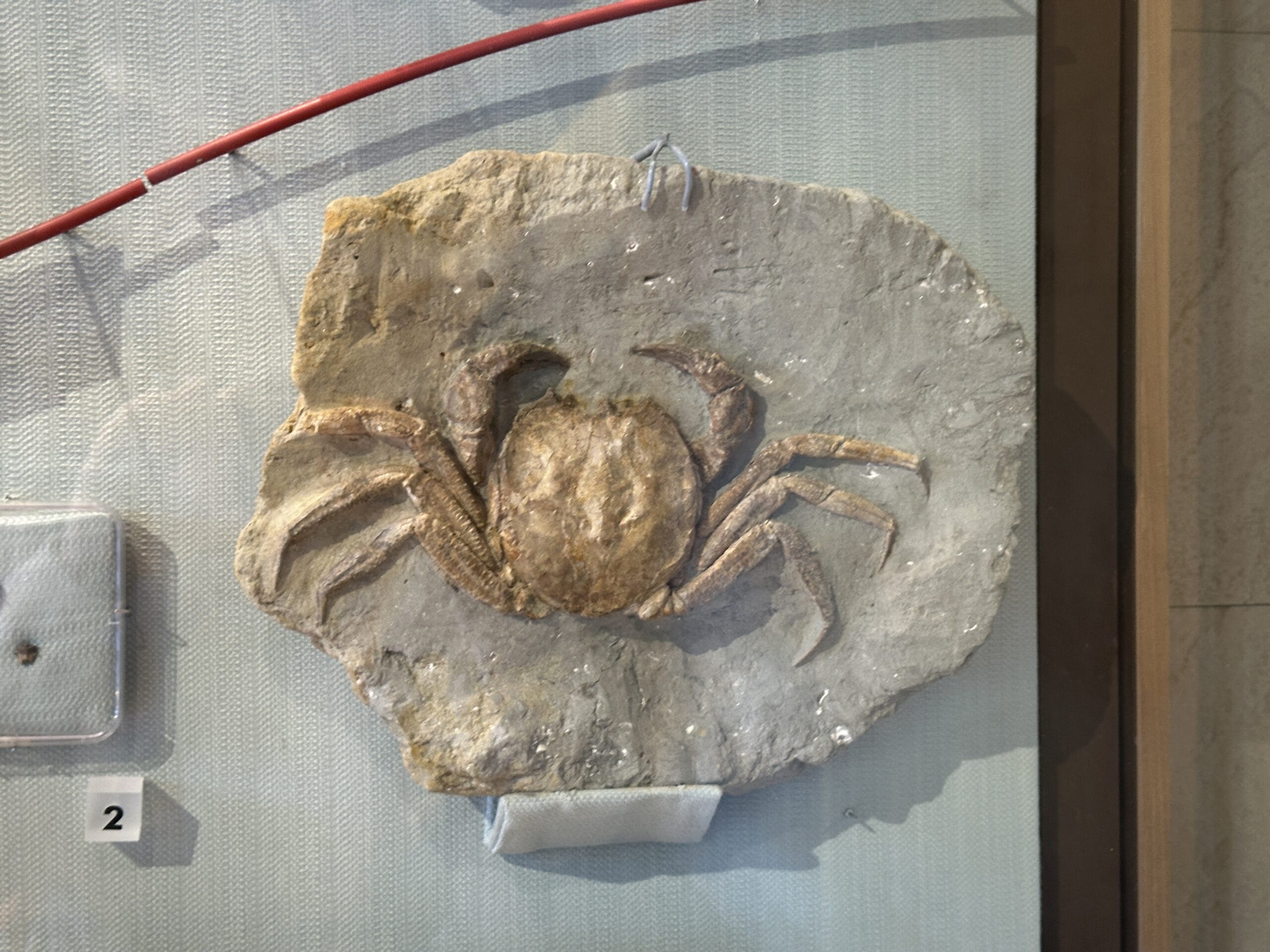
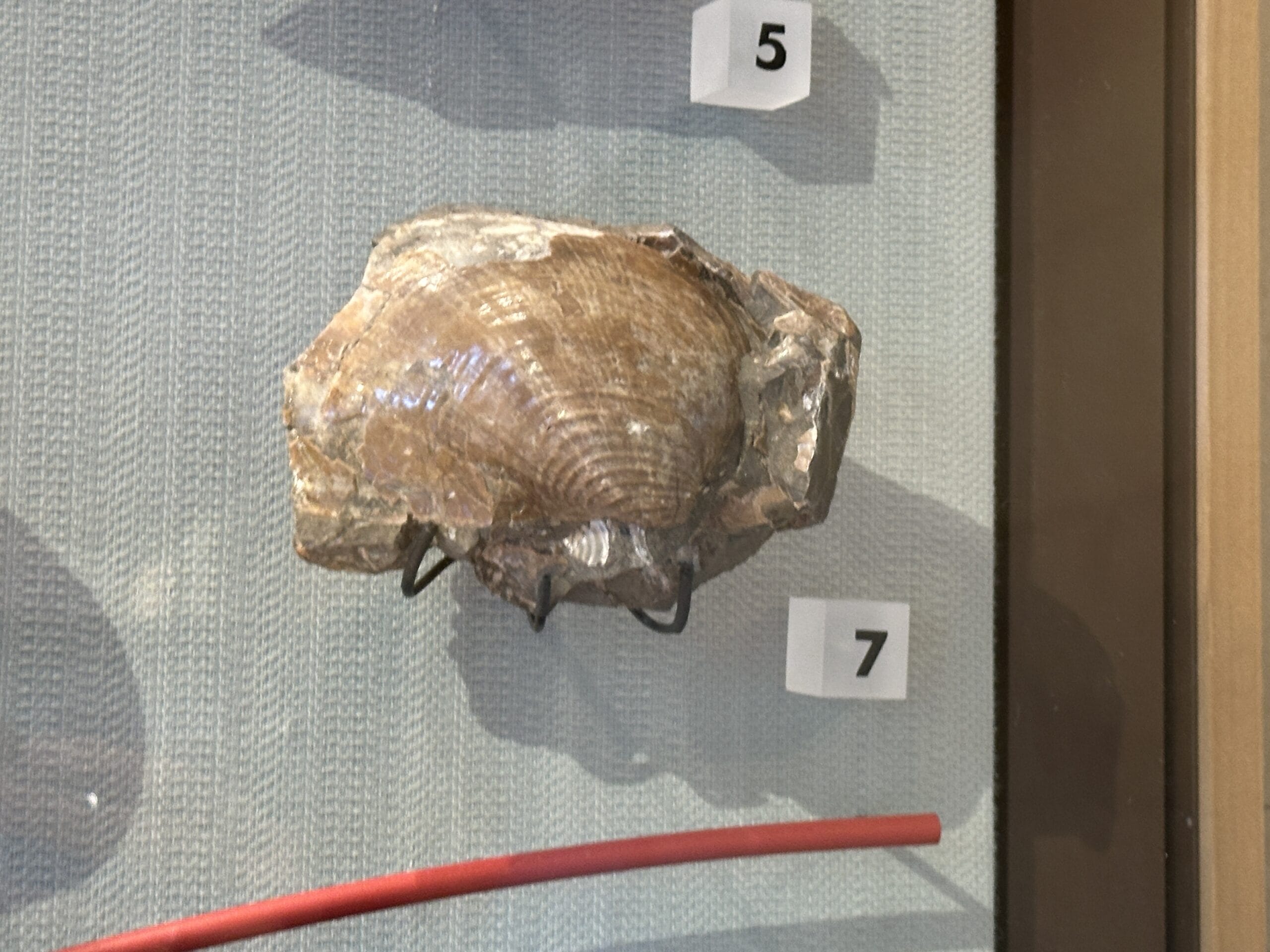
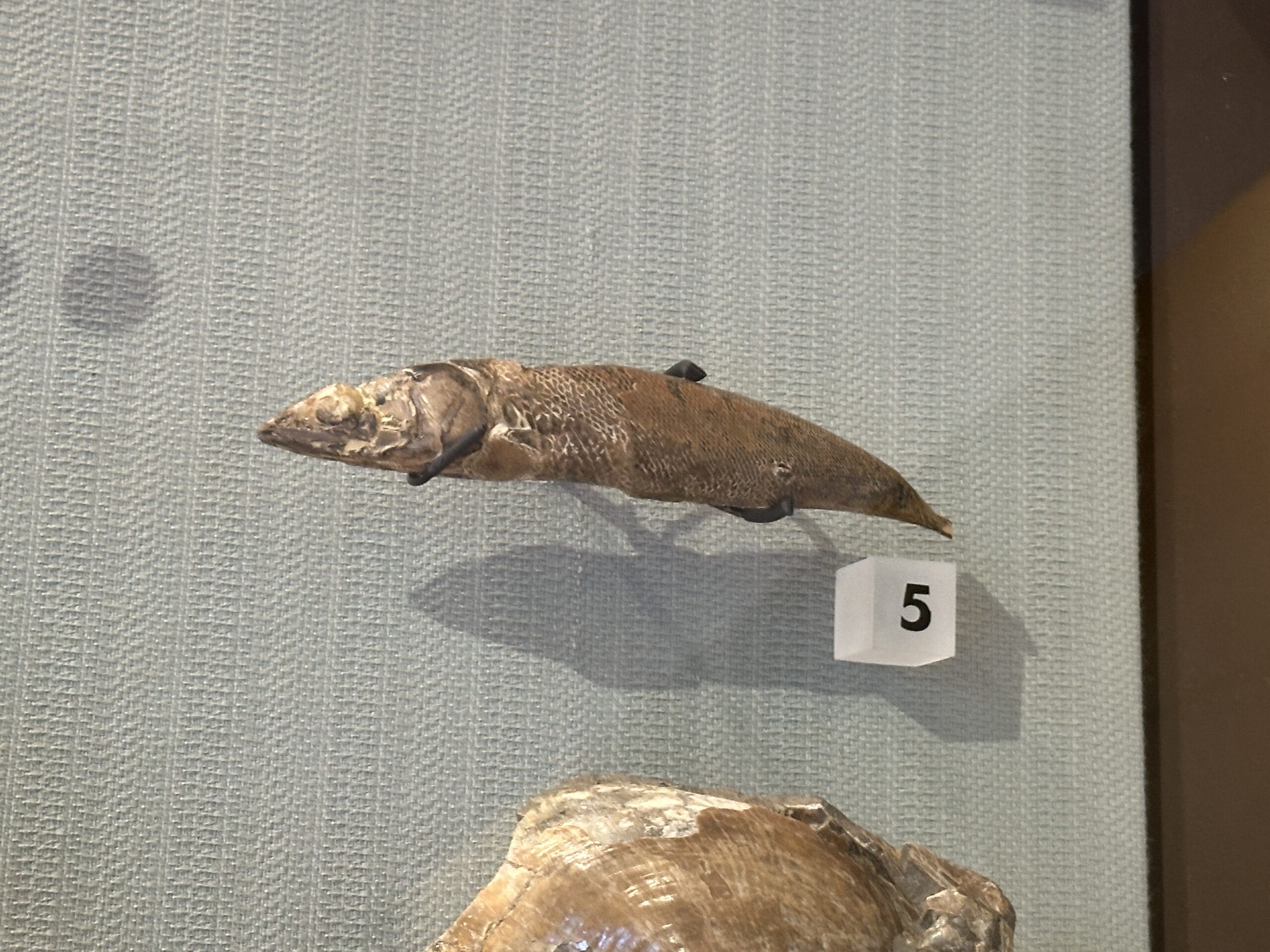
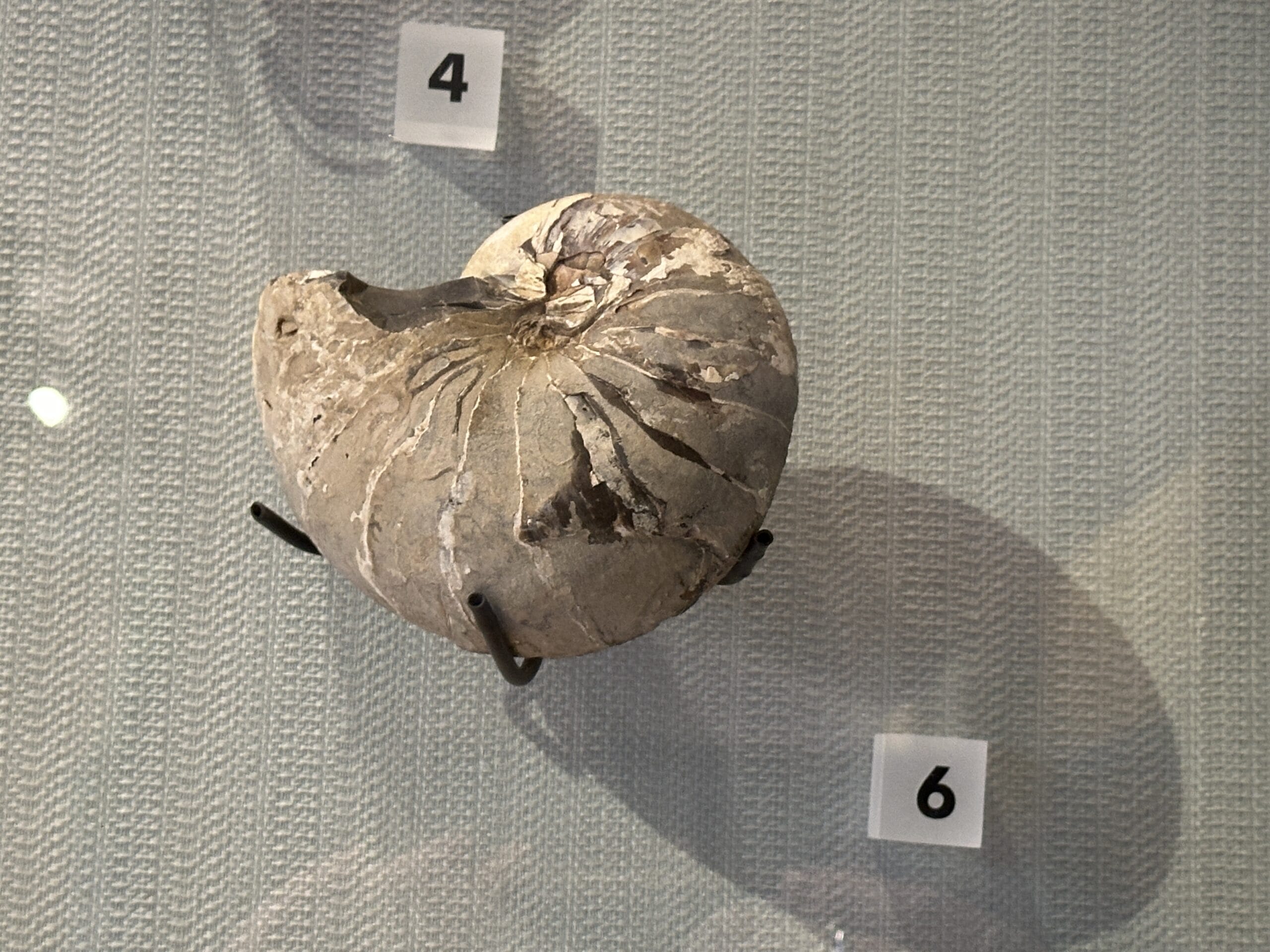
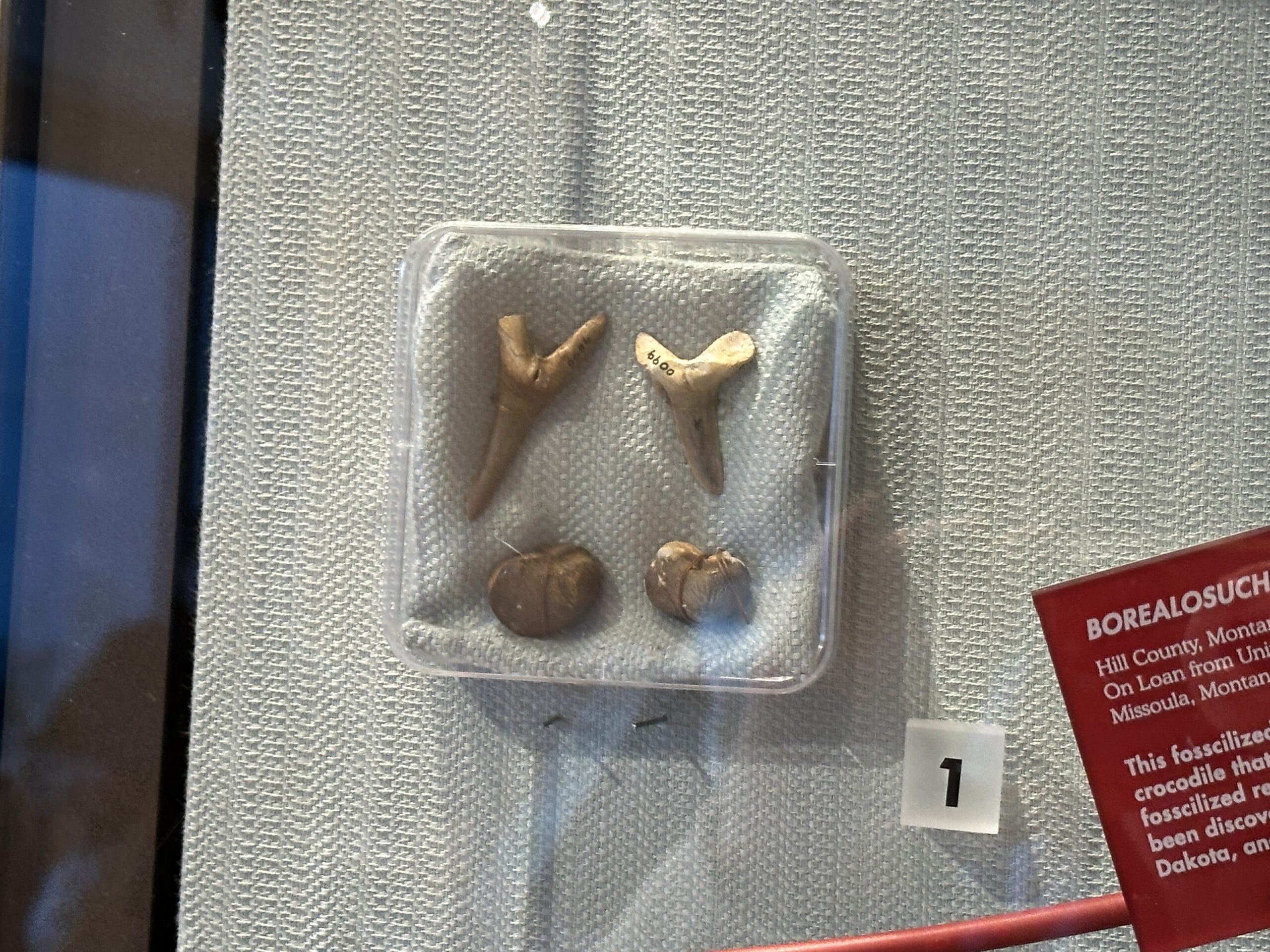
In the “So Close…” case are fossils from species that didn’t survive the extinction event but are similar to modern creatures. These include shark teeth, ray teeth, a lobster, a crab, and fish.
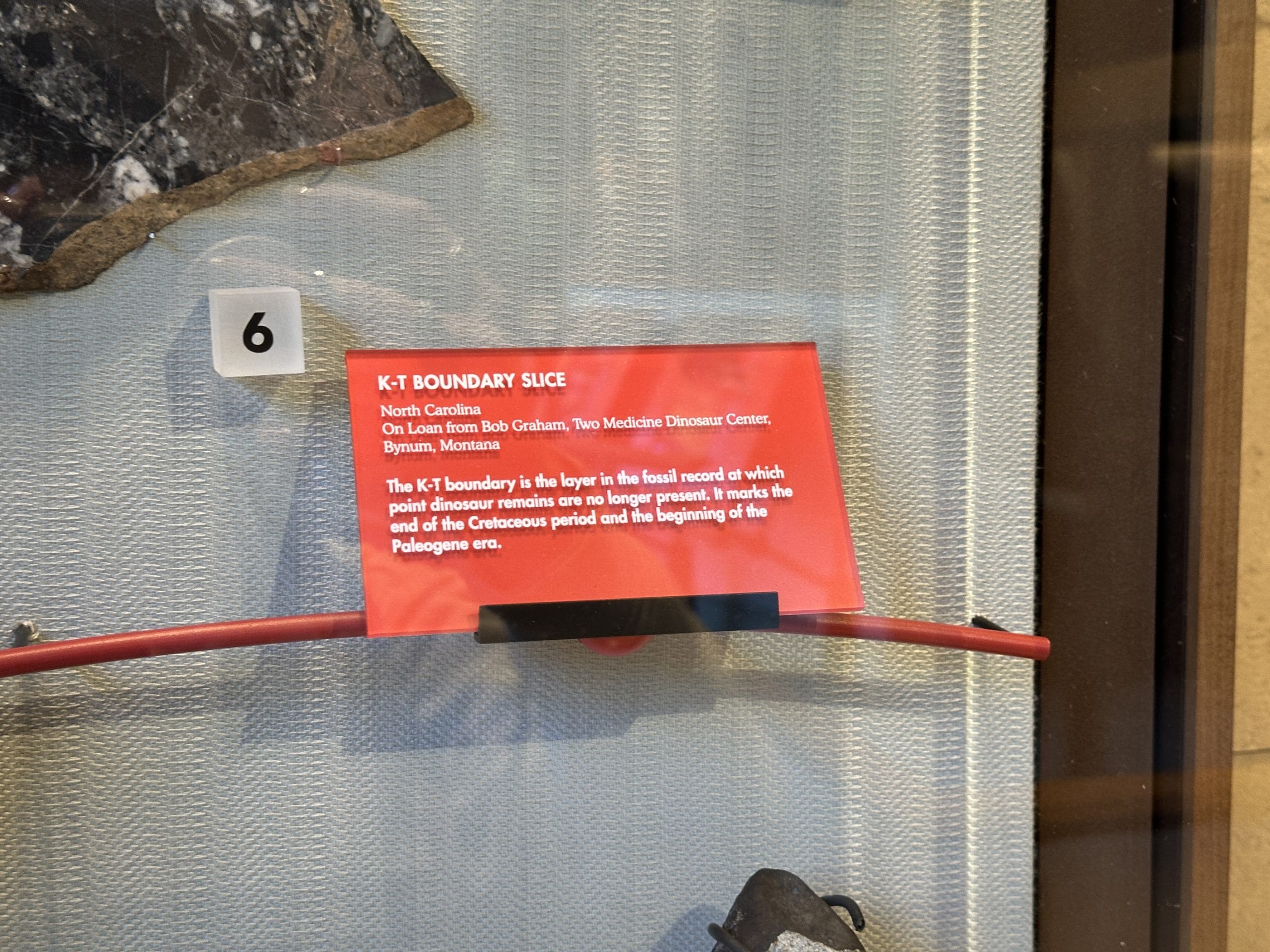
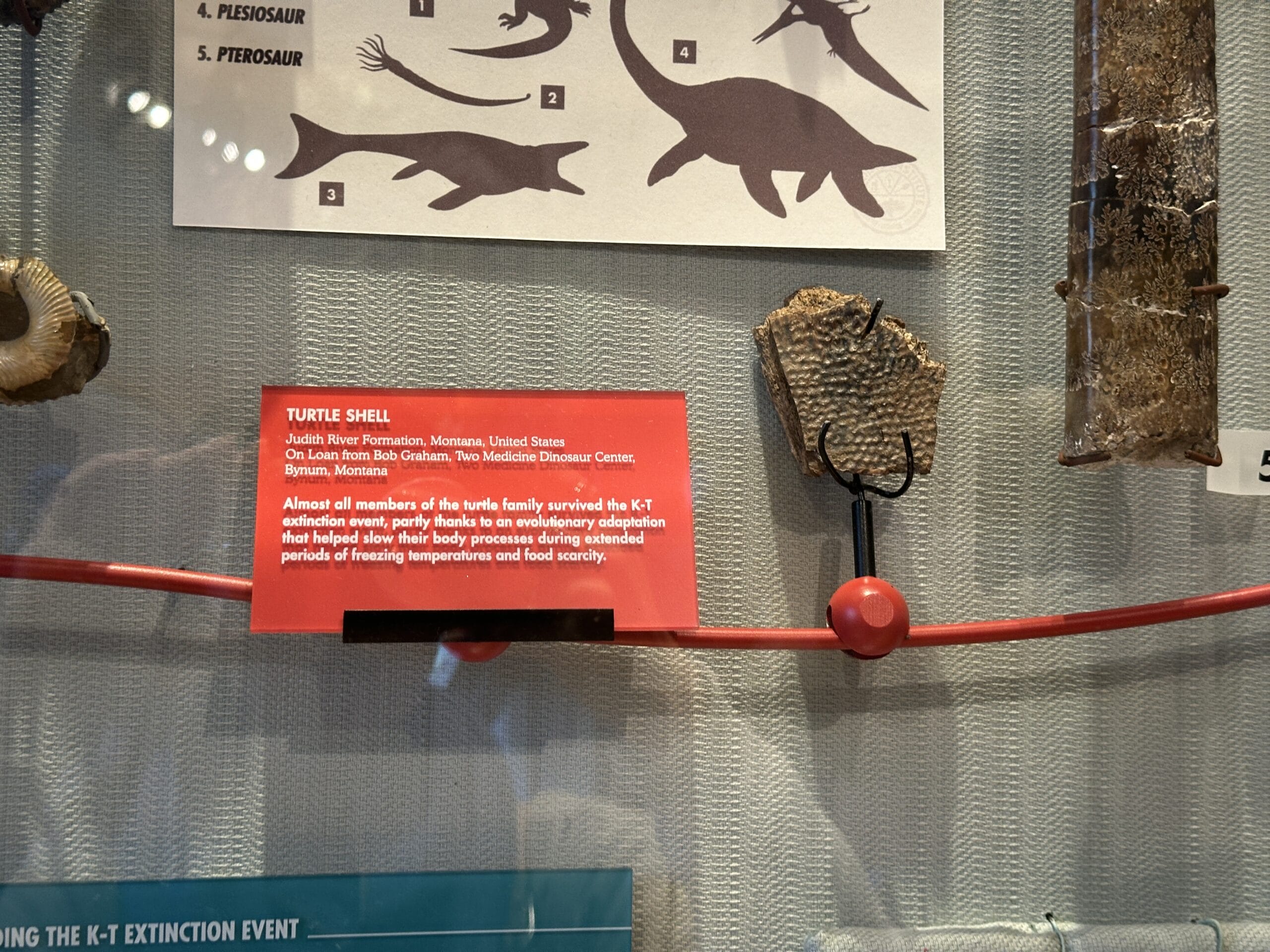
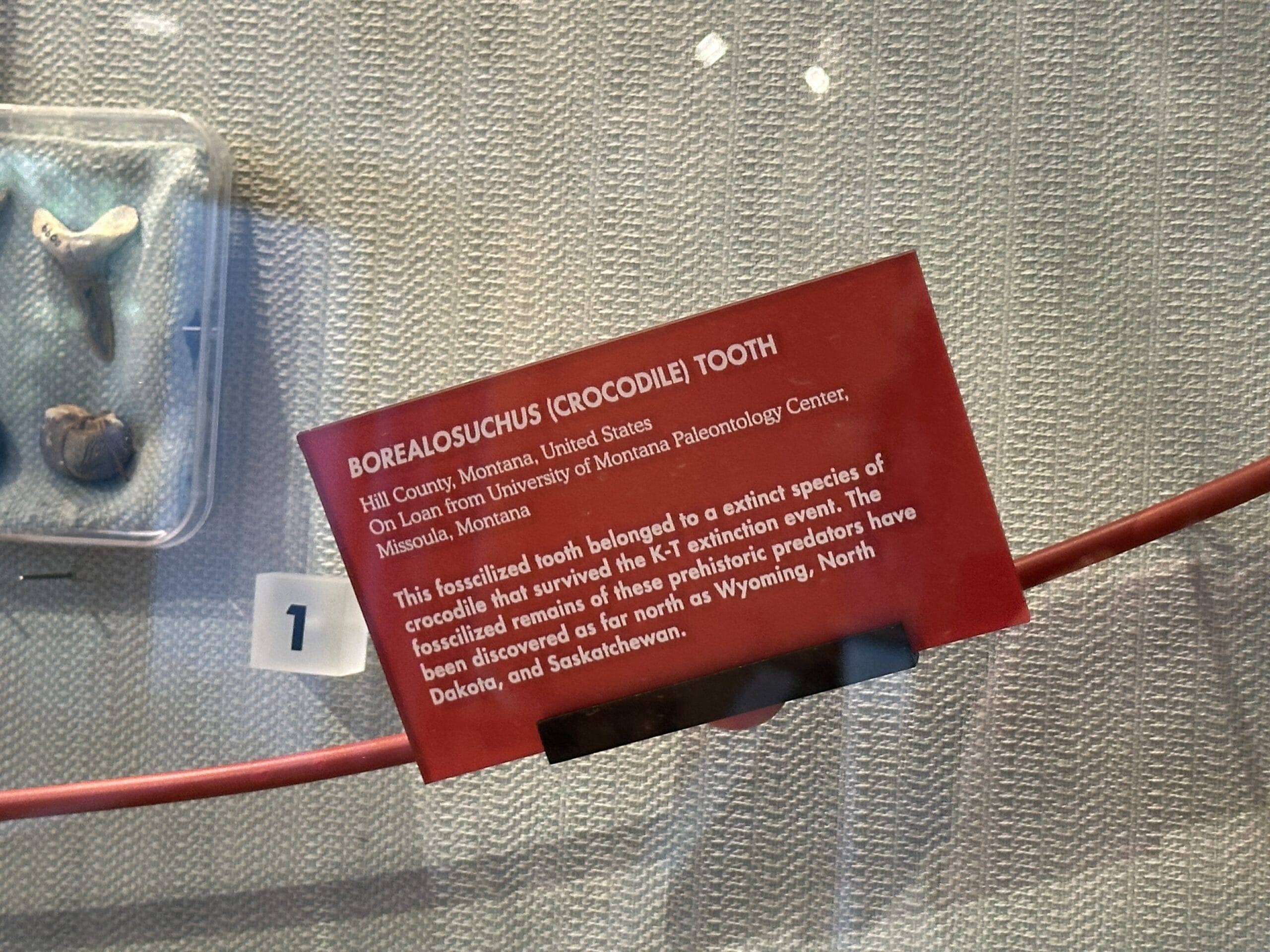
The red string through these three cases highlights a slice of the K-T boundary, a turtle shell, and a crocodile tooth.
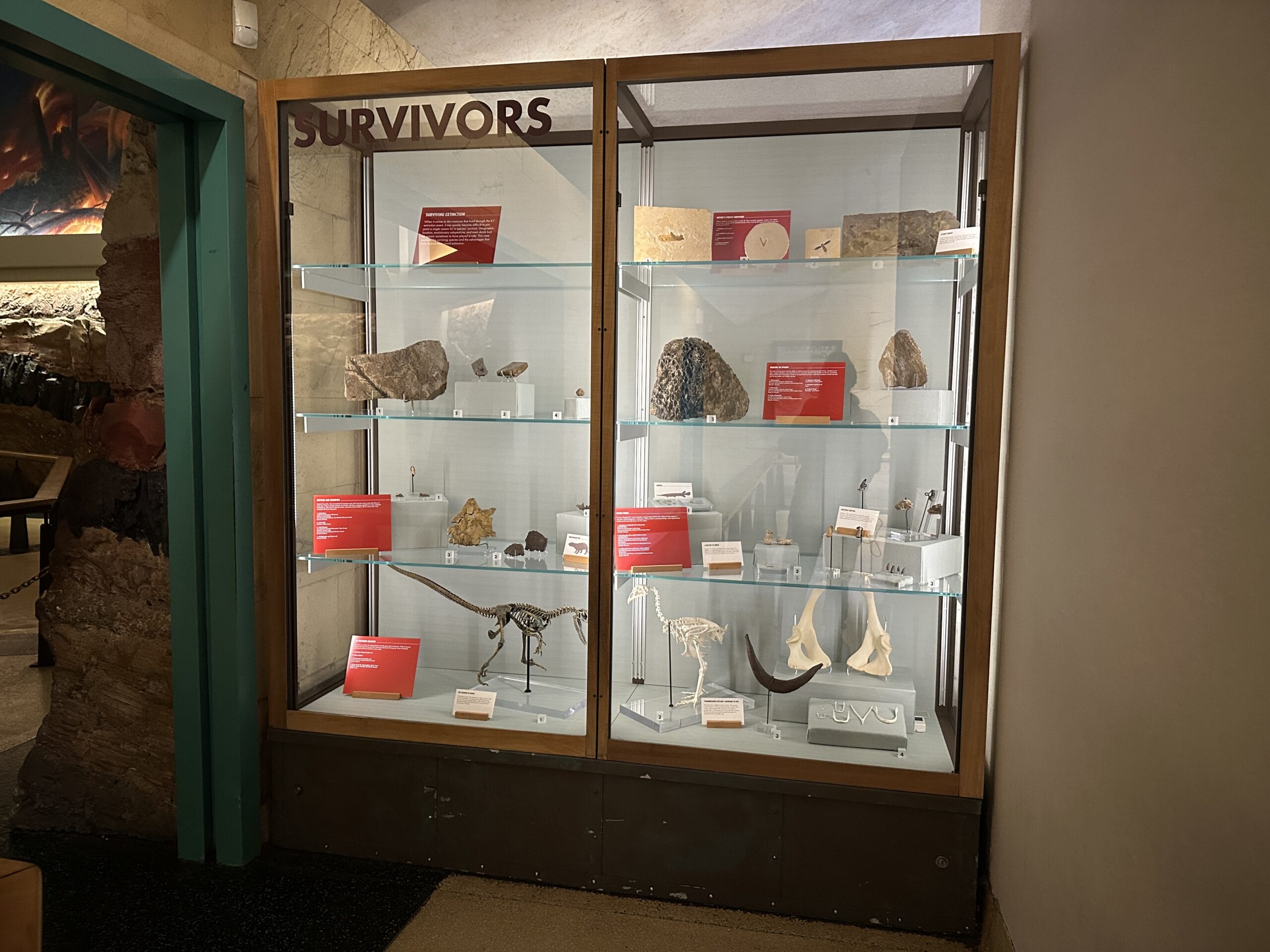
The final case before entering the rotunda was labeled “Survivors,” and featured those species that survived the mass extinction event, including bugs, reptiles, mammals, and birds. The cards were red because they were the continuation of that red string running through all the displays.
Surviving Extinction
When it comes to the creatures that lived through the K-T extinction event, it can quickly become difficult to pinpoint a single reason for a species’ survival. Geographic location, evolutionary adaptations, and even dumb luck all appear sometimes to have played a role. This case explores the surviving species and the advantages that likely helped them avoid extinction.
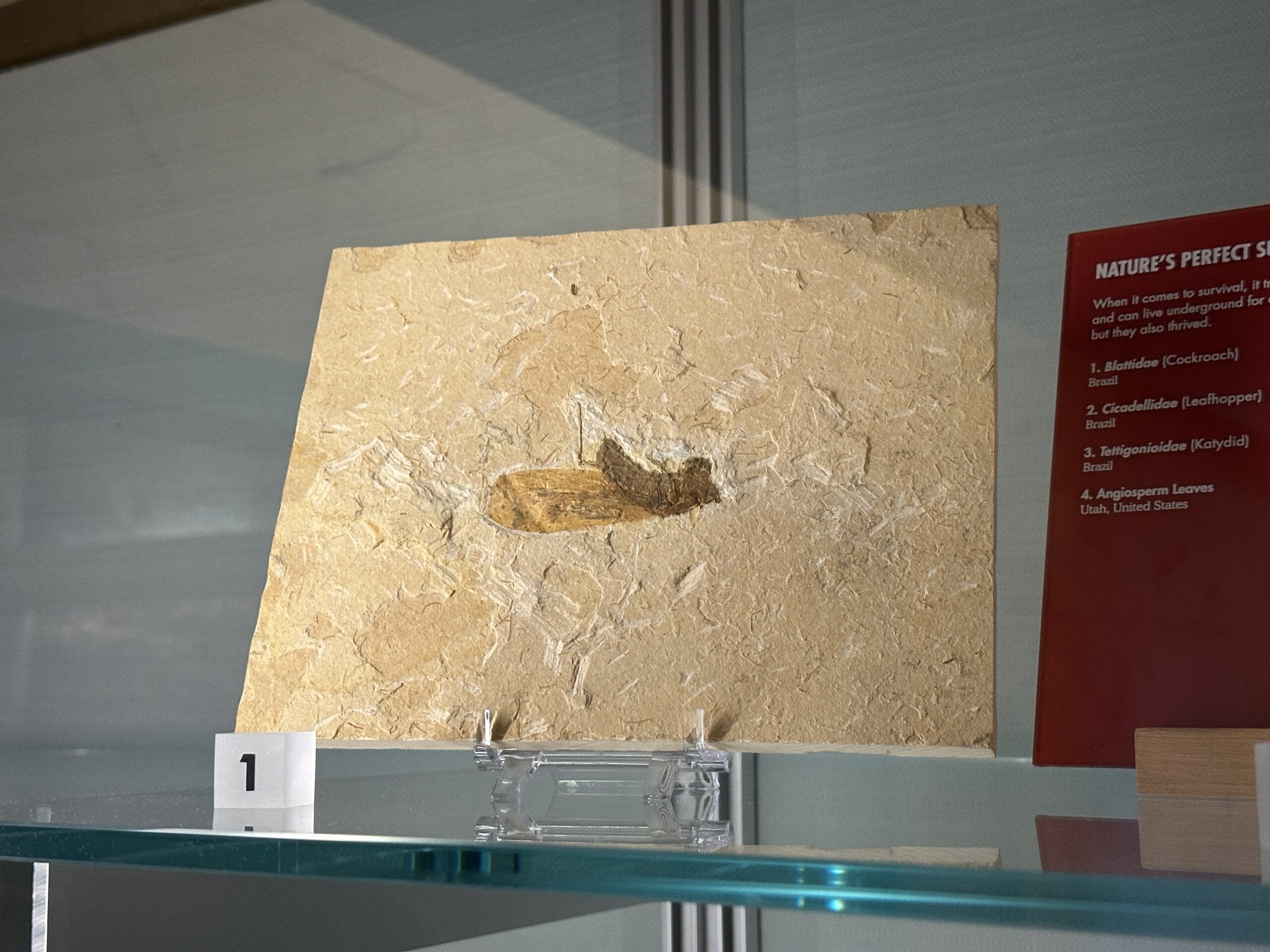
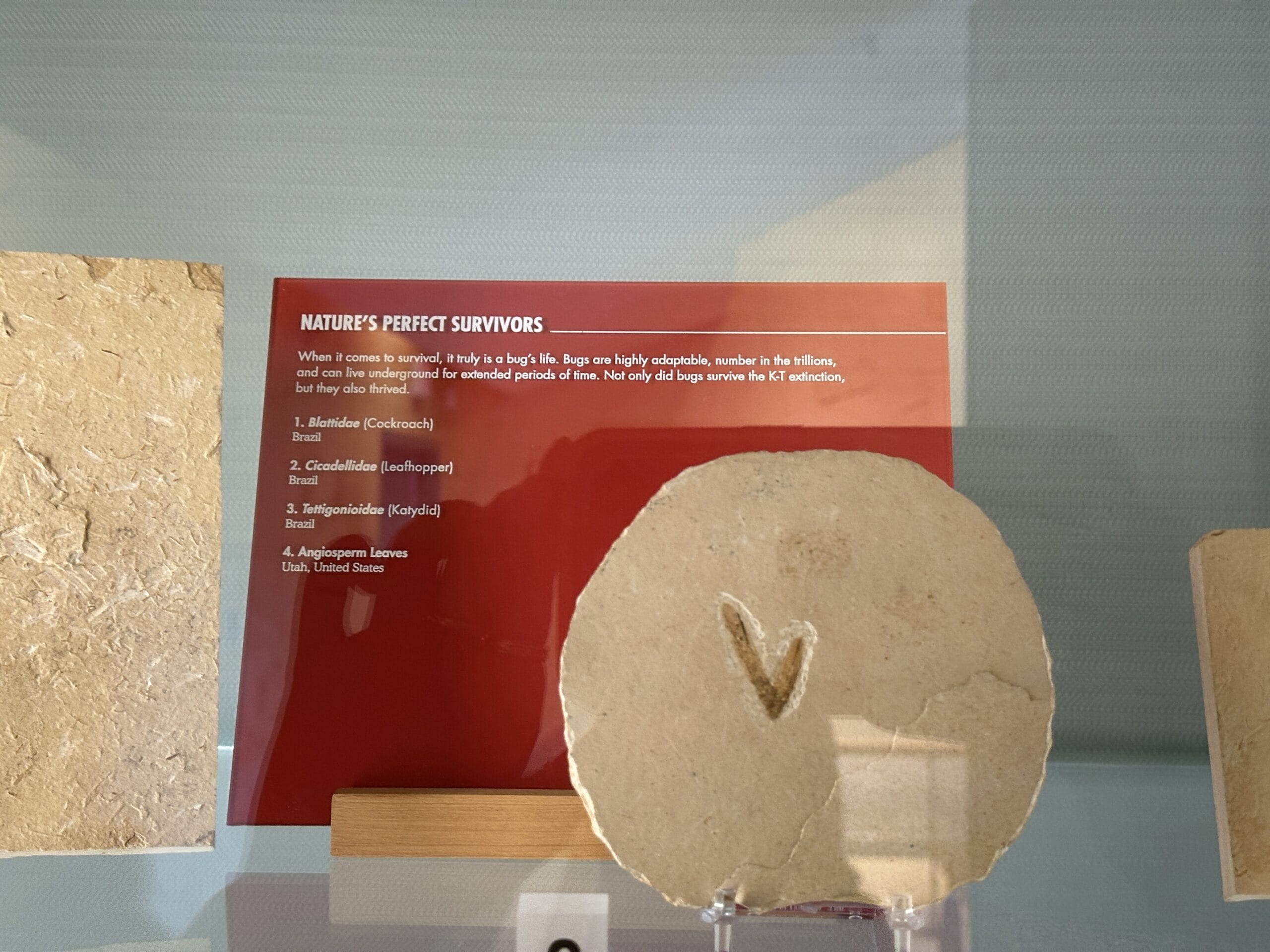
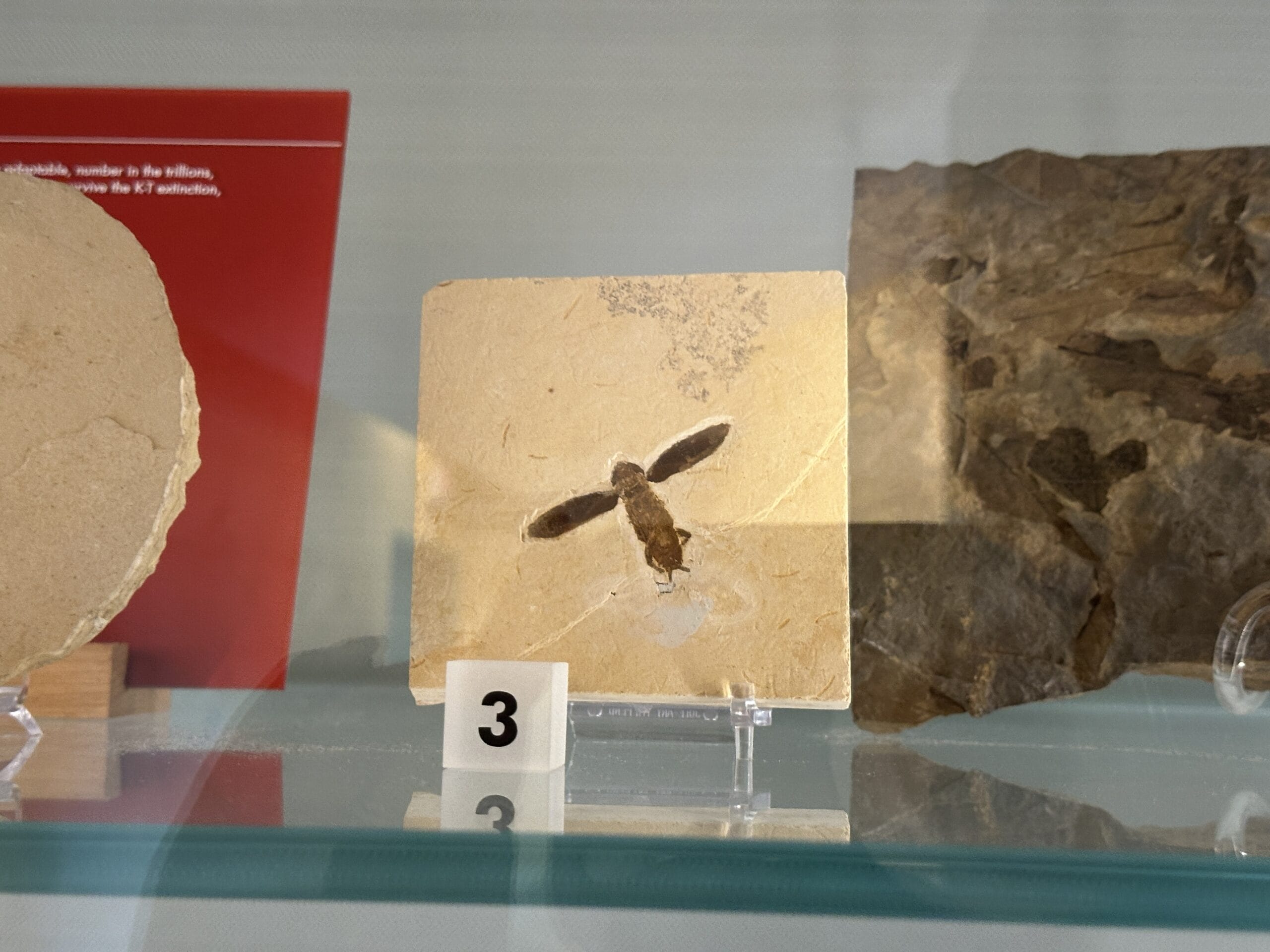
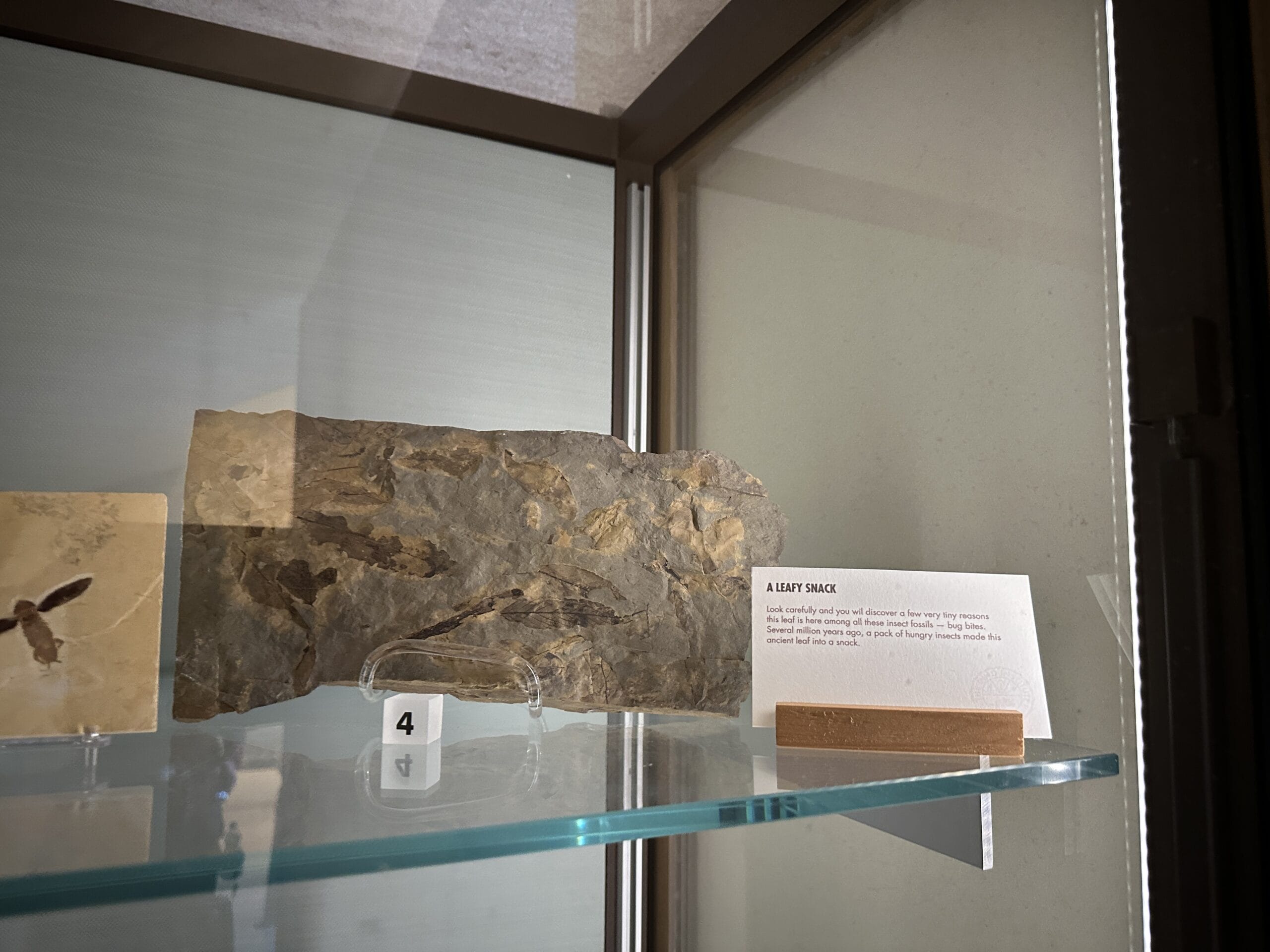
On this shelf were fossils of a cockroach, leafhopper, katydid, and angiosperm leaves with bug bites. Because “When it comes to survival, it truly is a bug’s life.”
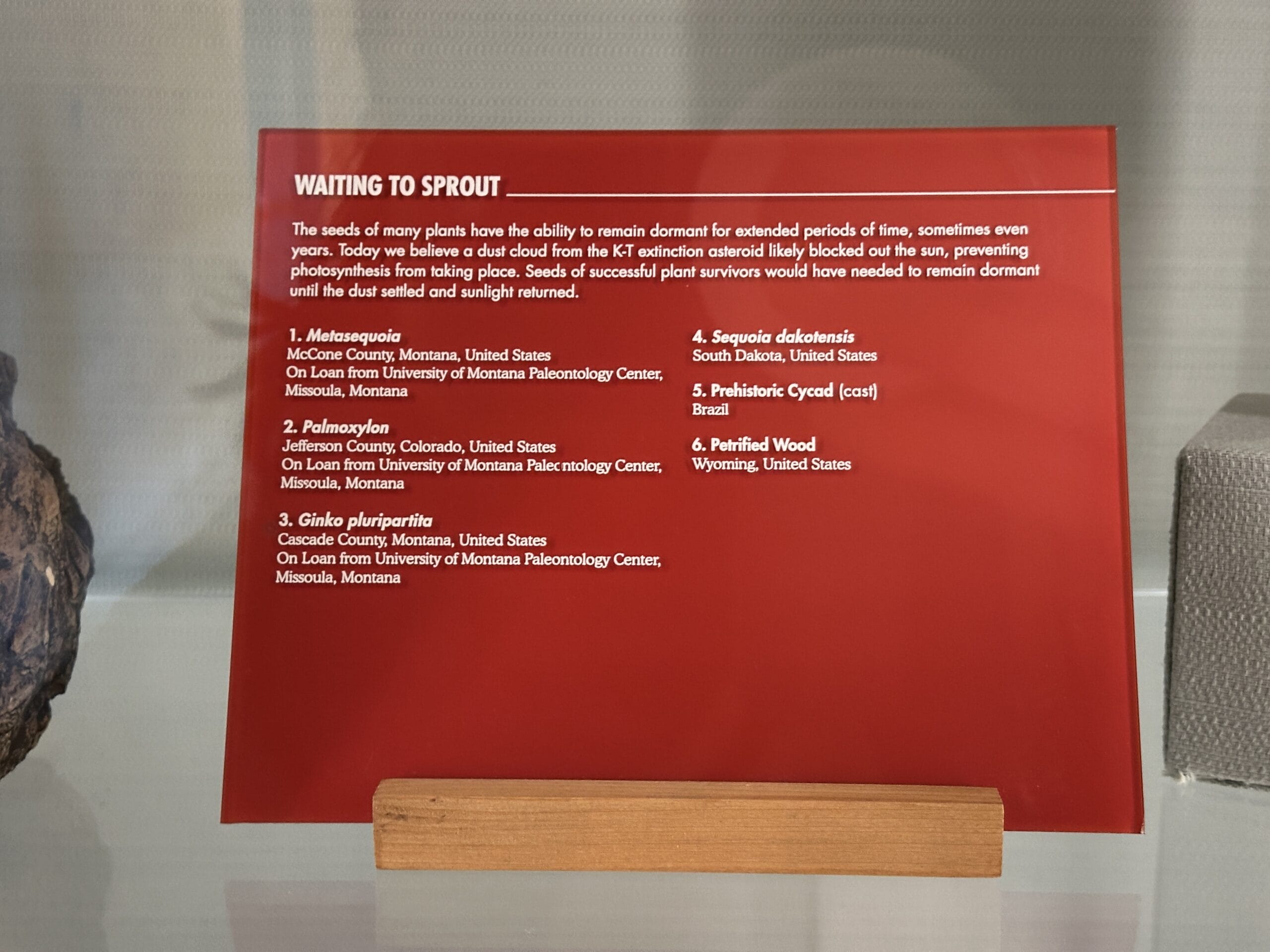
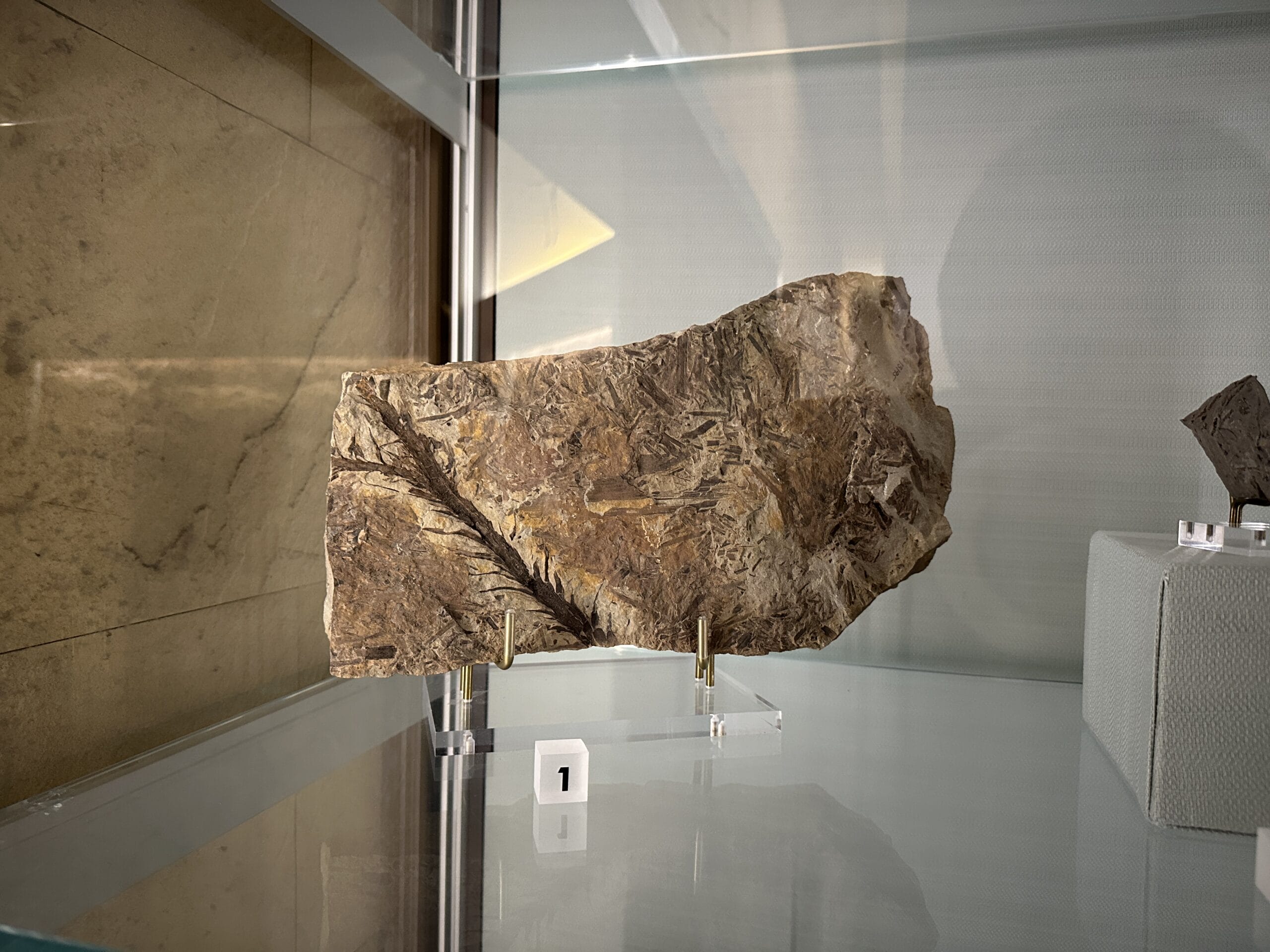
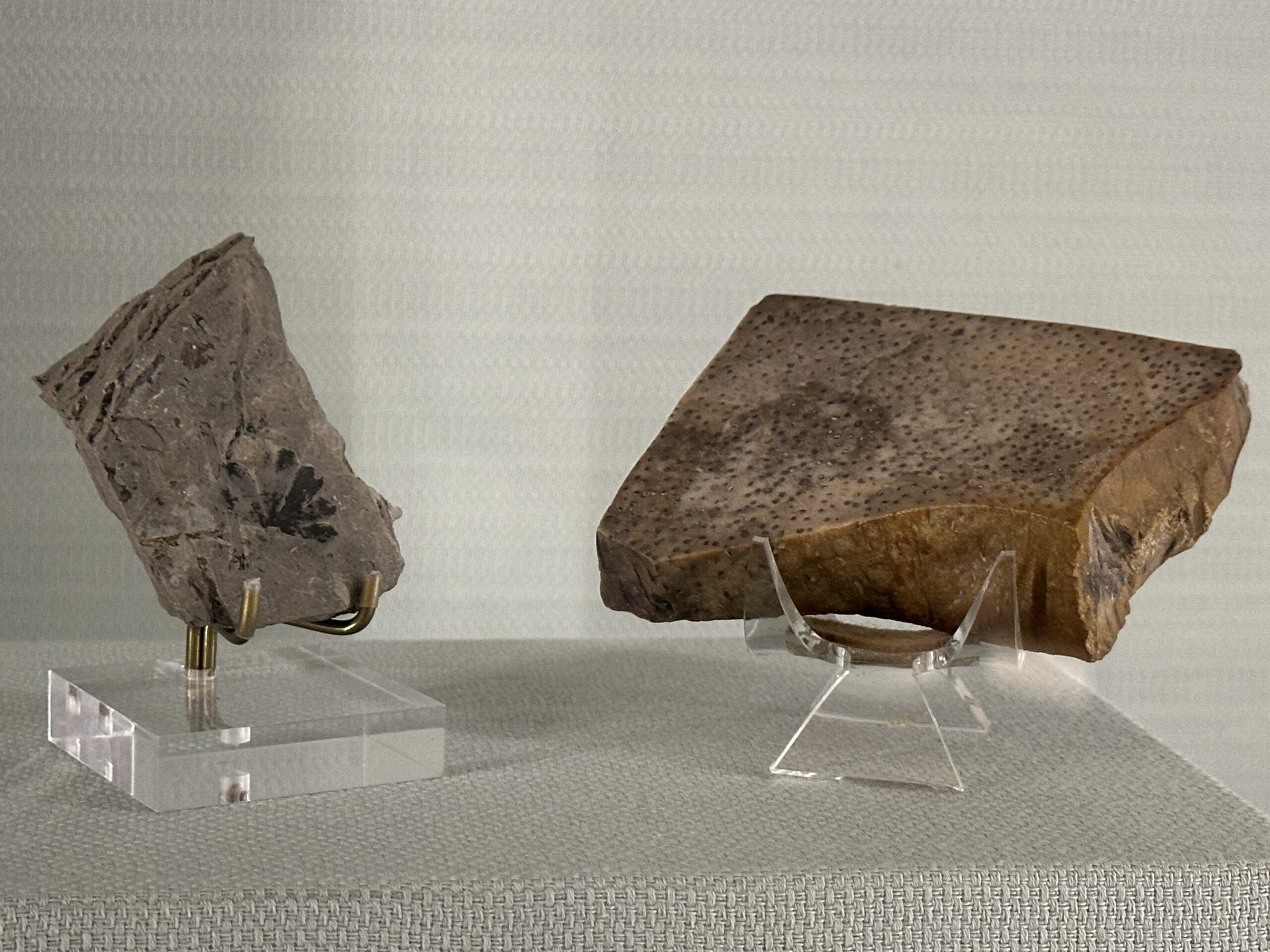
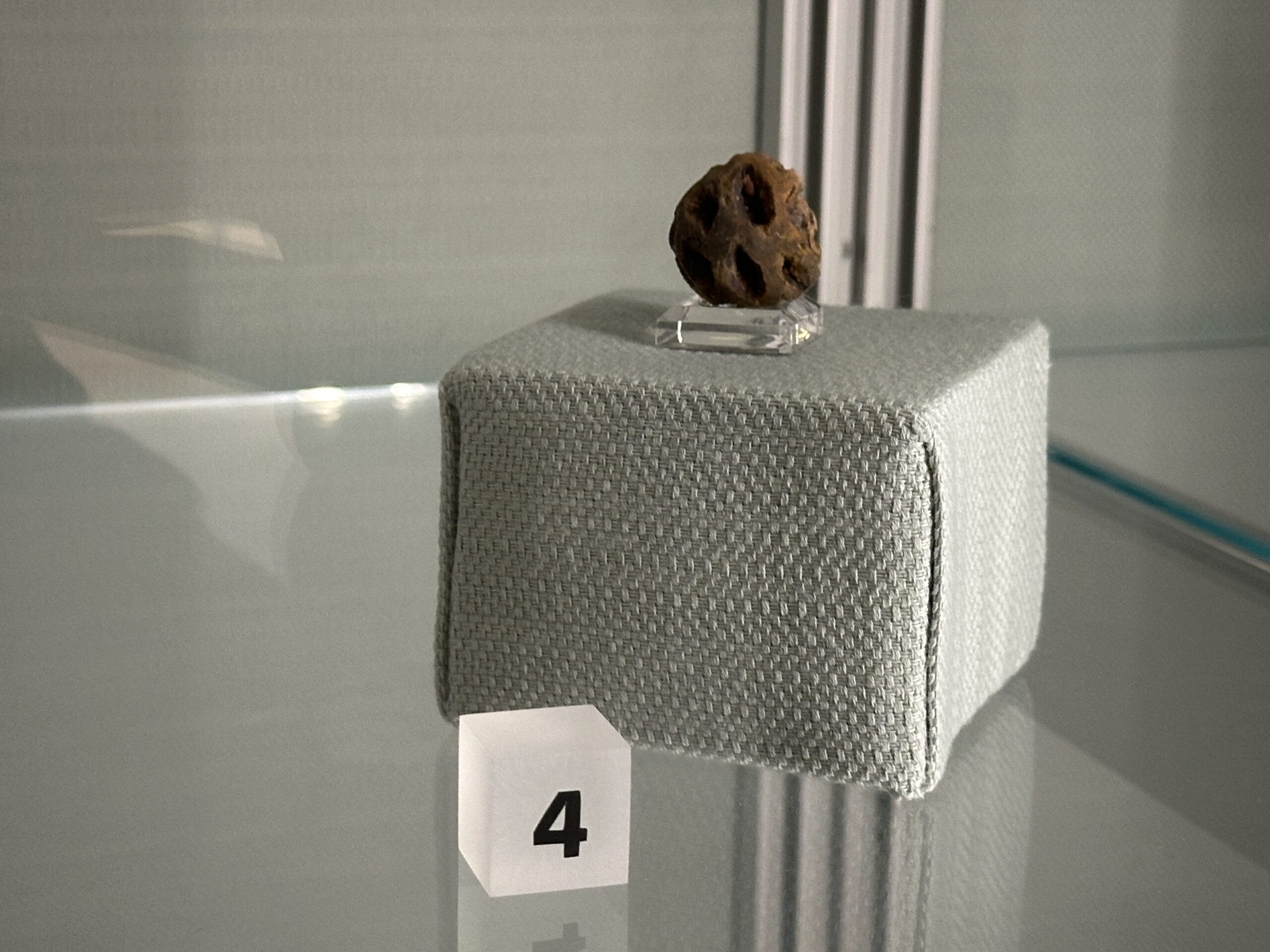
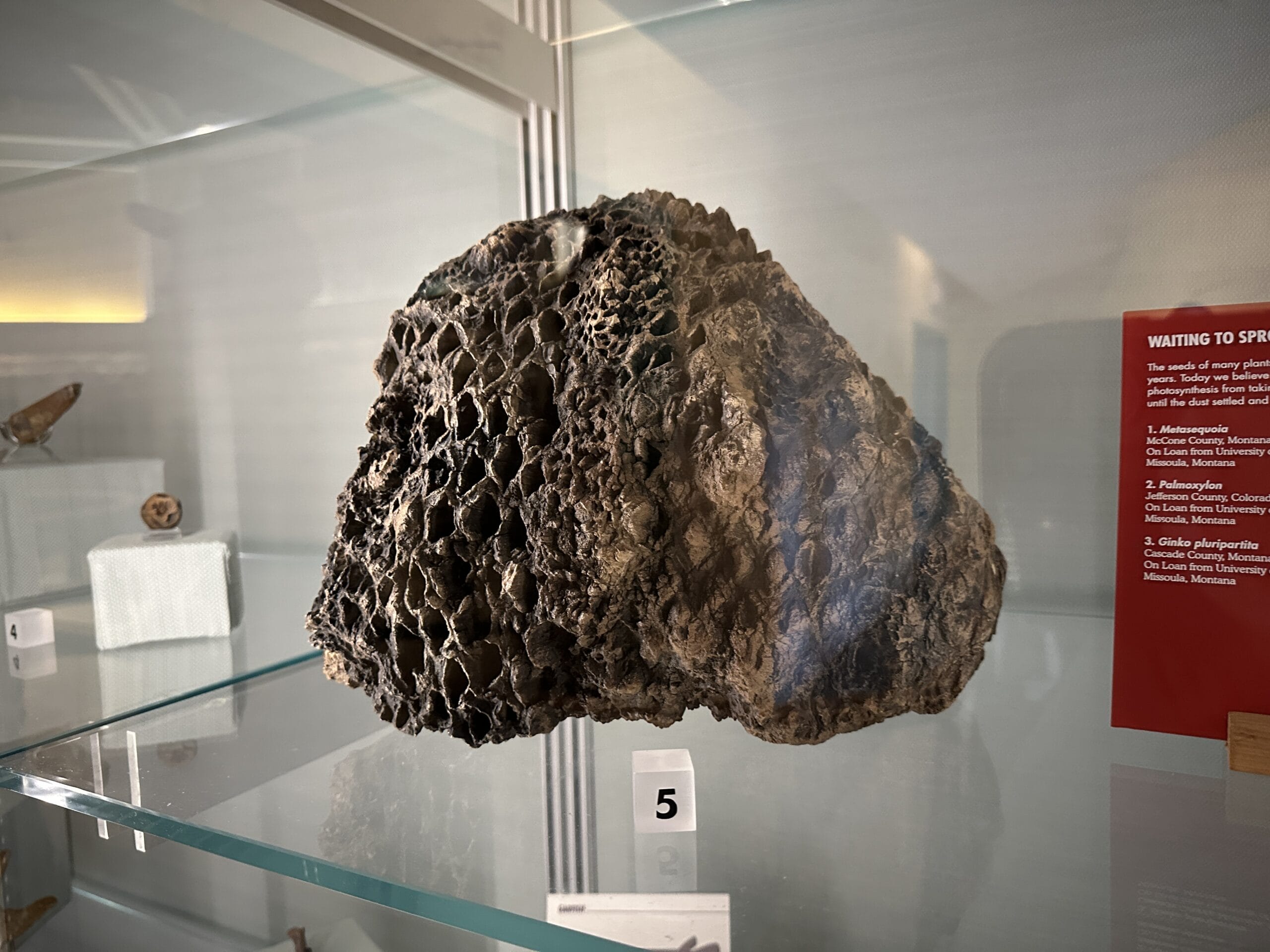
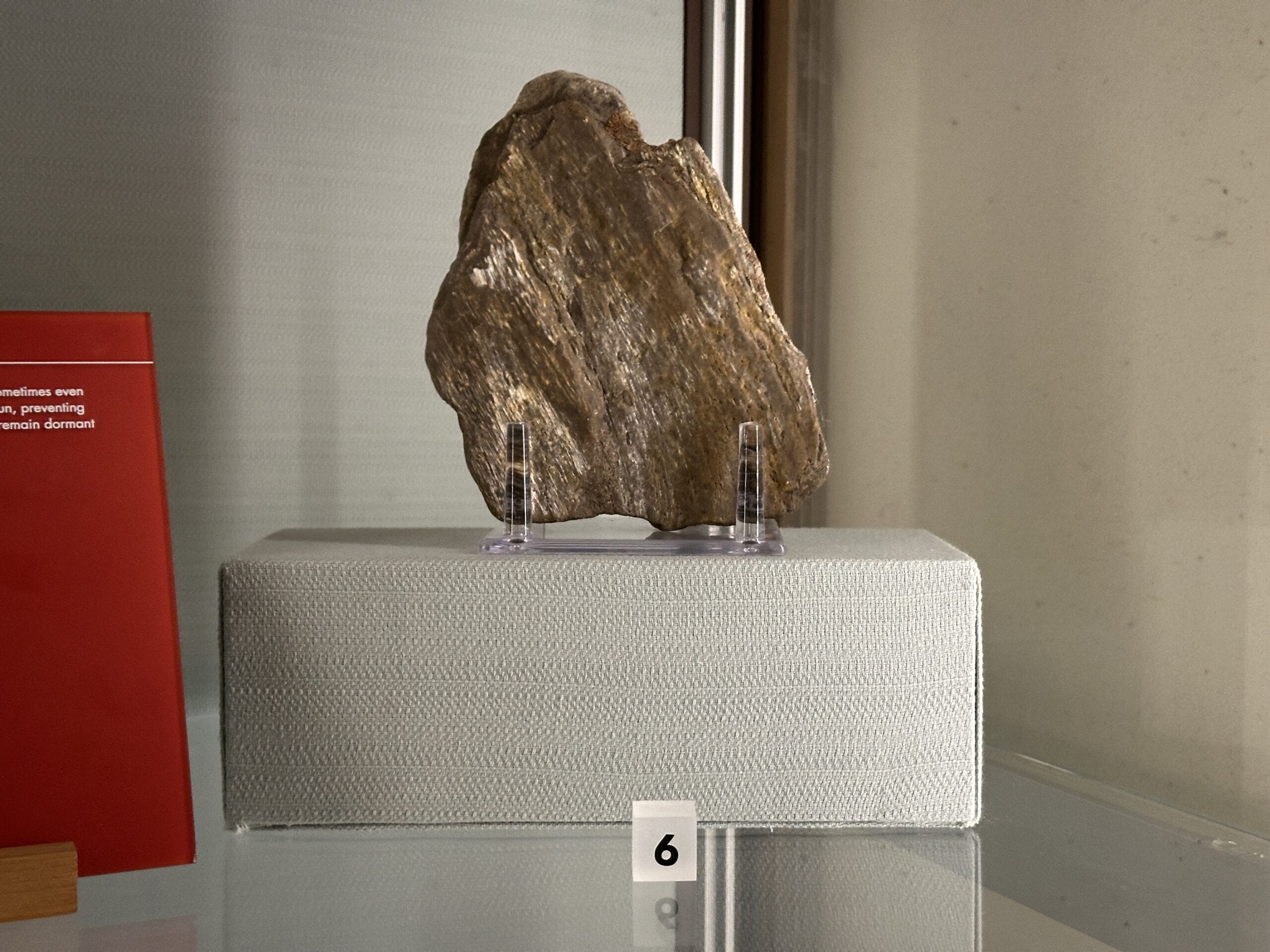
Waiting to Sprout
The seeds of many plants have the ability to remain dormant for extended periods of time, sometimes even years. Today we believe a dust cloud from the K-T extinction asteroid likely blocked out the sun, preventing photosynthesis from taking place. Seeds of successful plant survivors would have needed to remain dormant until the dust settled and sunlight returned.
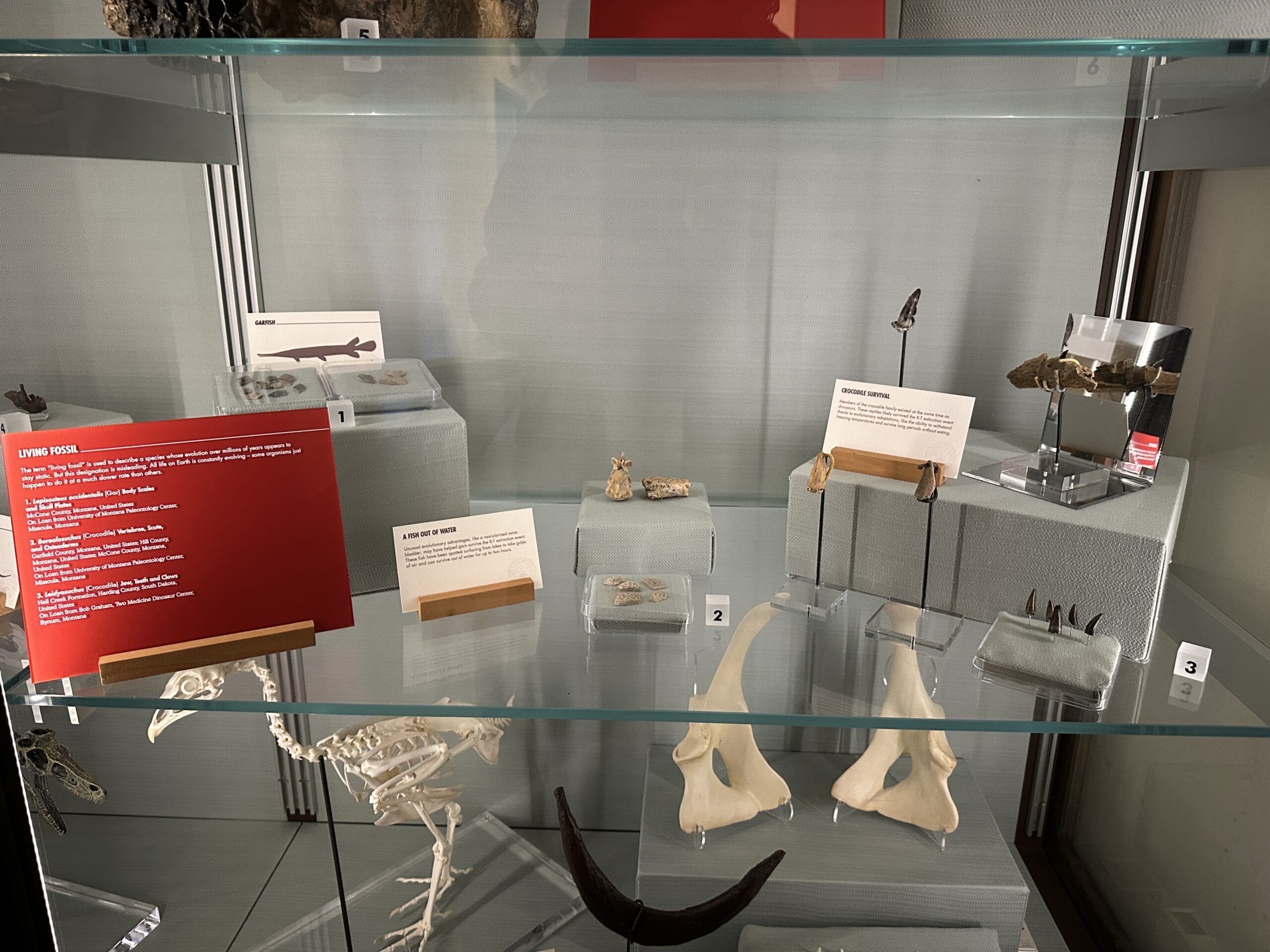
The term “living fossil” refers to species that appear not to have evolved significantly, but all life is constantly evolving. Examples on this shelf included gar and crocodiles.
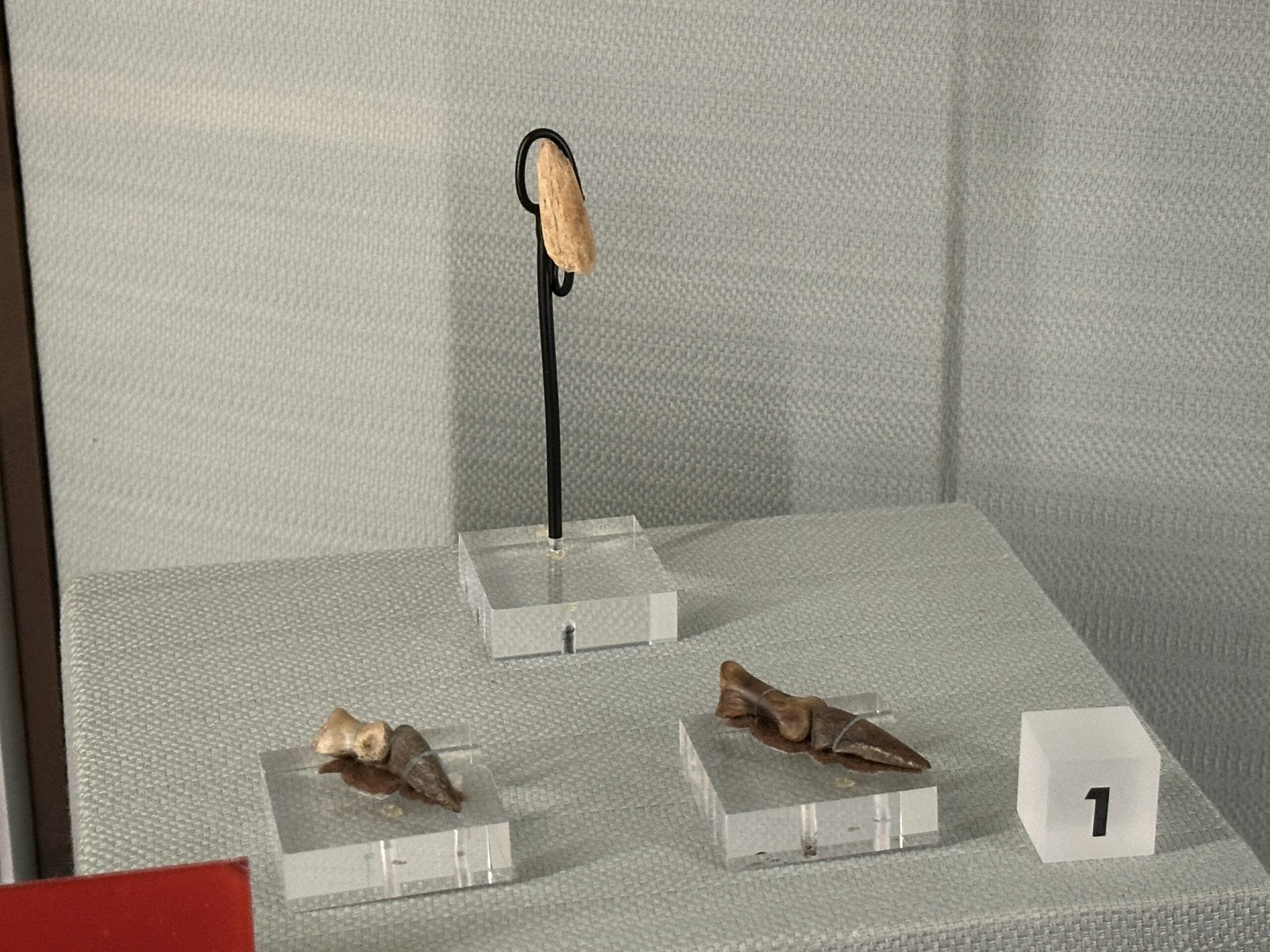
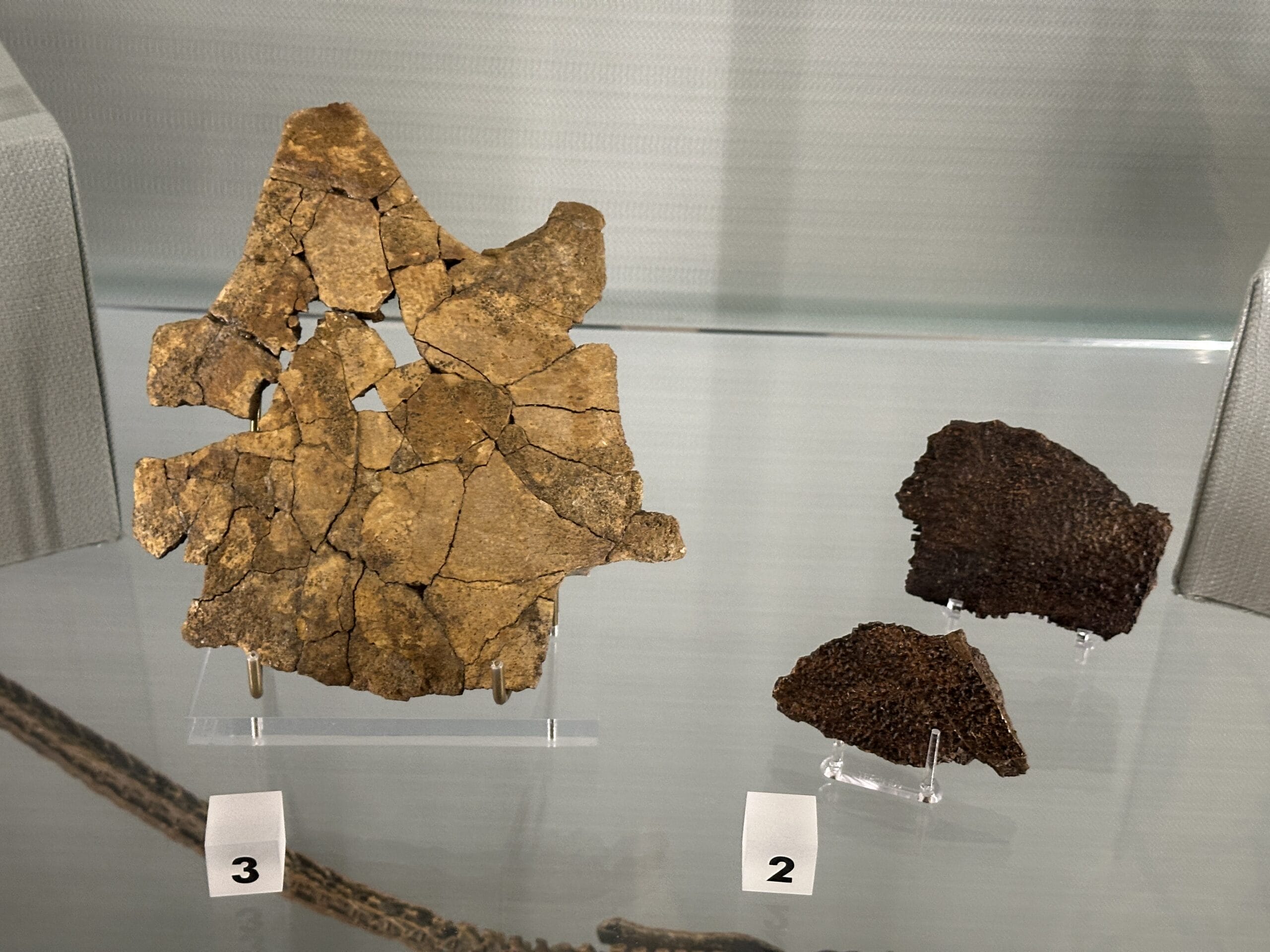
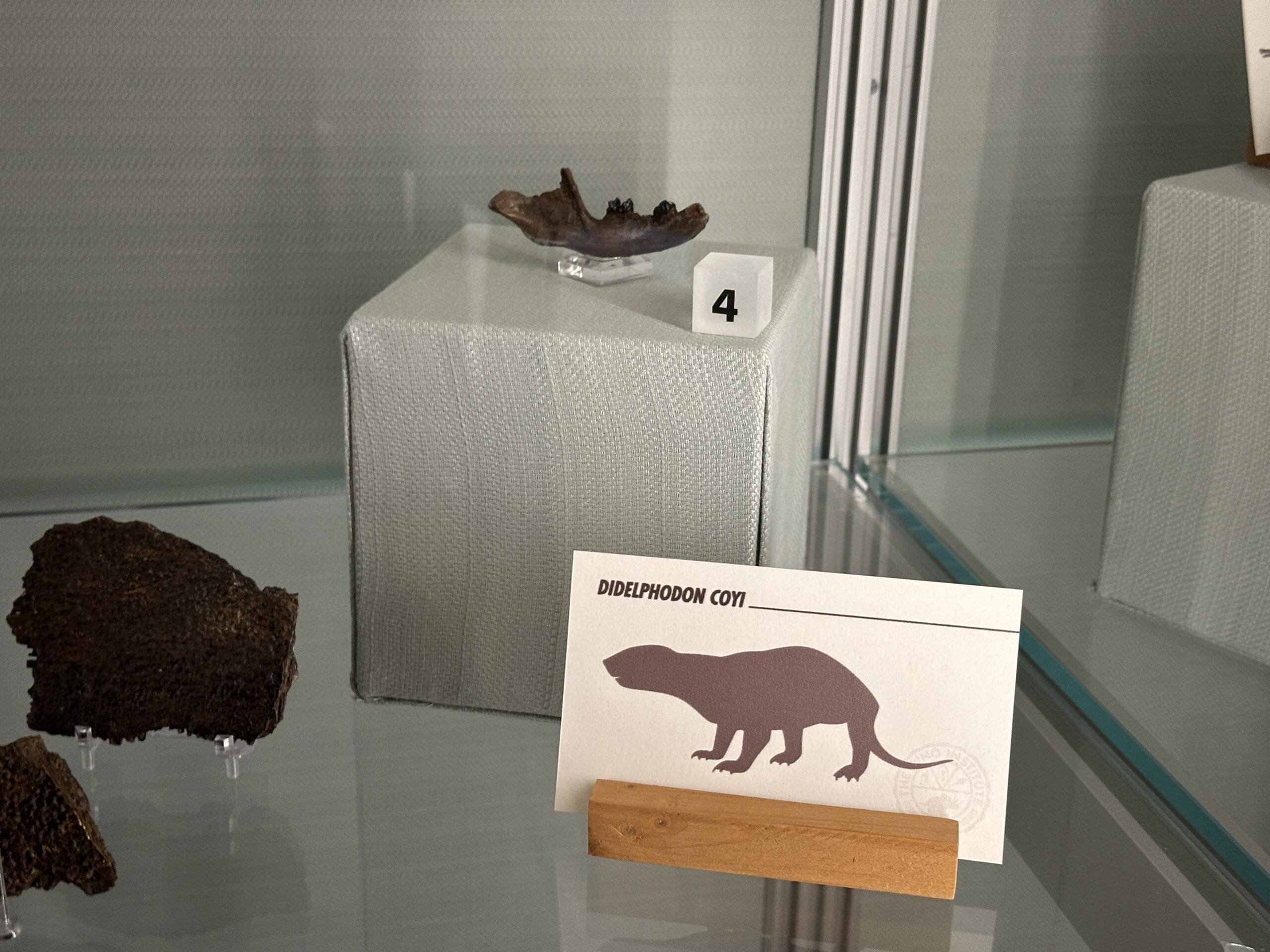
Turtle claws, a turtle shell, a turtle plastron, and a Didelphodon coyi fossil were on this shelf, representing the reptiles and mammals that survived extinction.
Reptiles and Mammals
Reptiles like turtles, who survived the K-T extinction event, look much the same as they did millions of years ago. Many surviving mammals, by contrast, only bear a passing resemblance to their prehistoric predecessors. After the K-T extinction event, mammals evolved rapidly to fill the vacant roles in the ecosystem left by the dinosaurs.
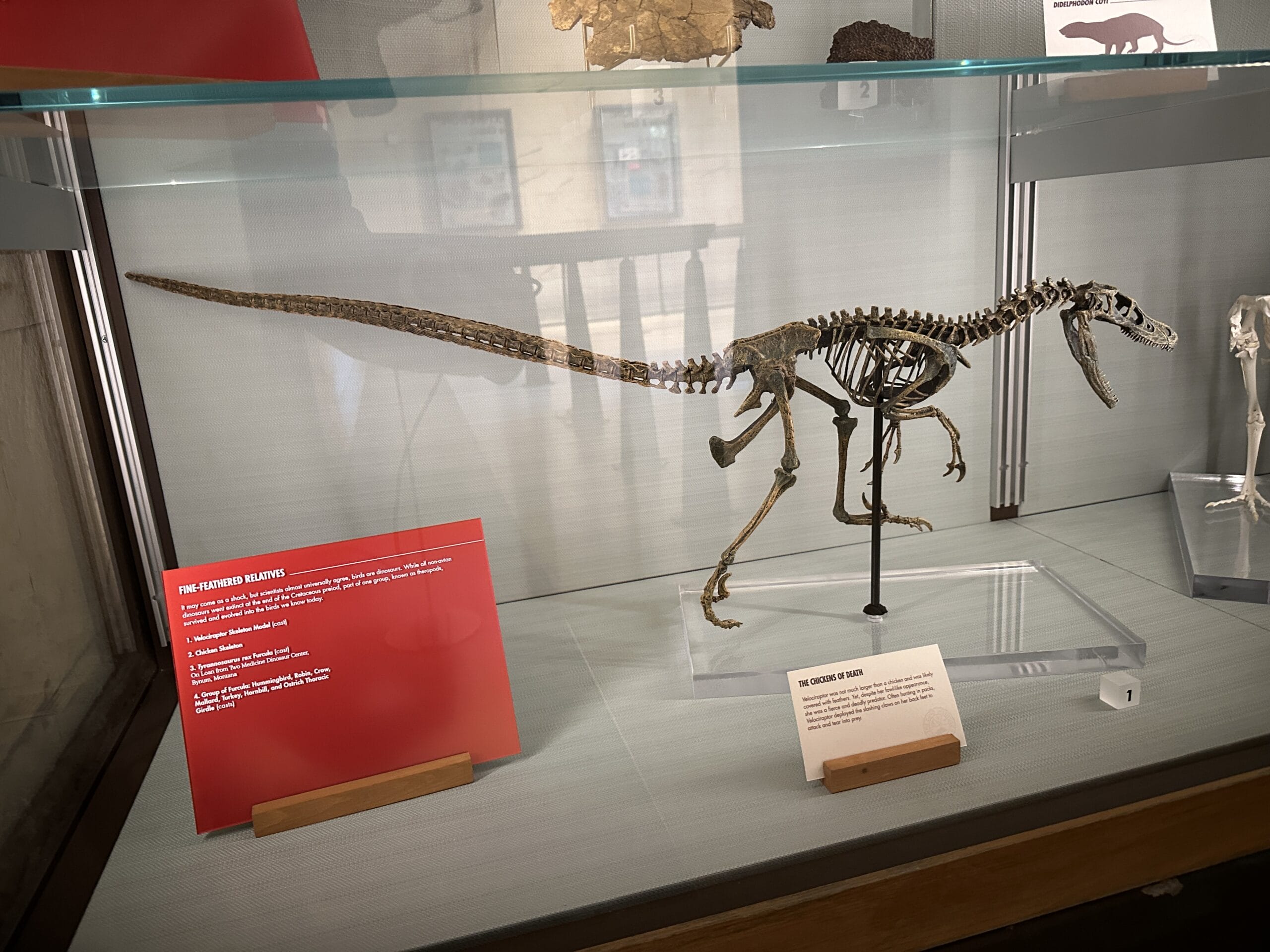
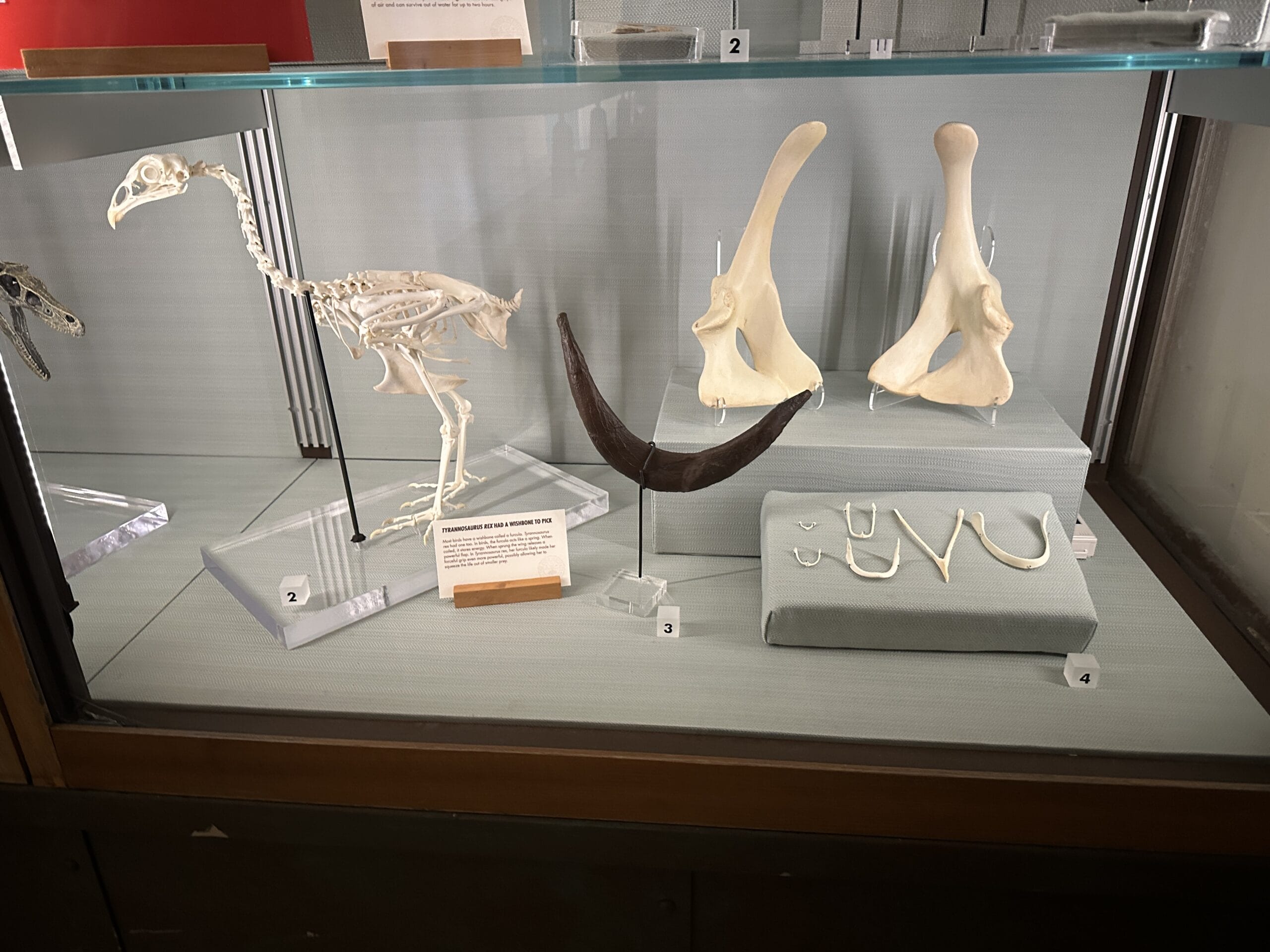
At the bottom of the case was a cast of a Velociraptor skeleton, a chicken skeleton, a cast of a T. rex furcula, and a group of furcula from various modern birds, highlighting the similarities between birds and dinosaurs. Because, as the plaque points out, birds are dinosaurs.
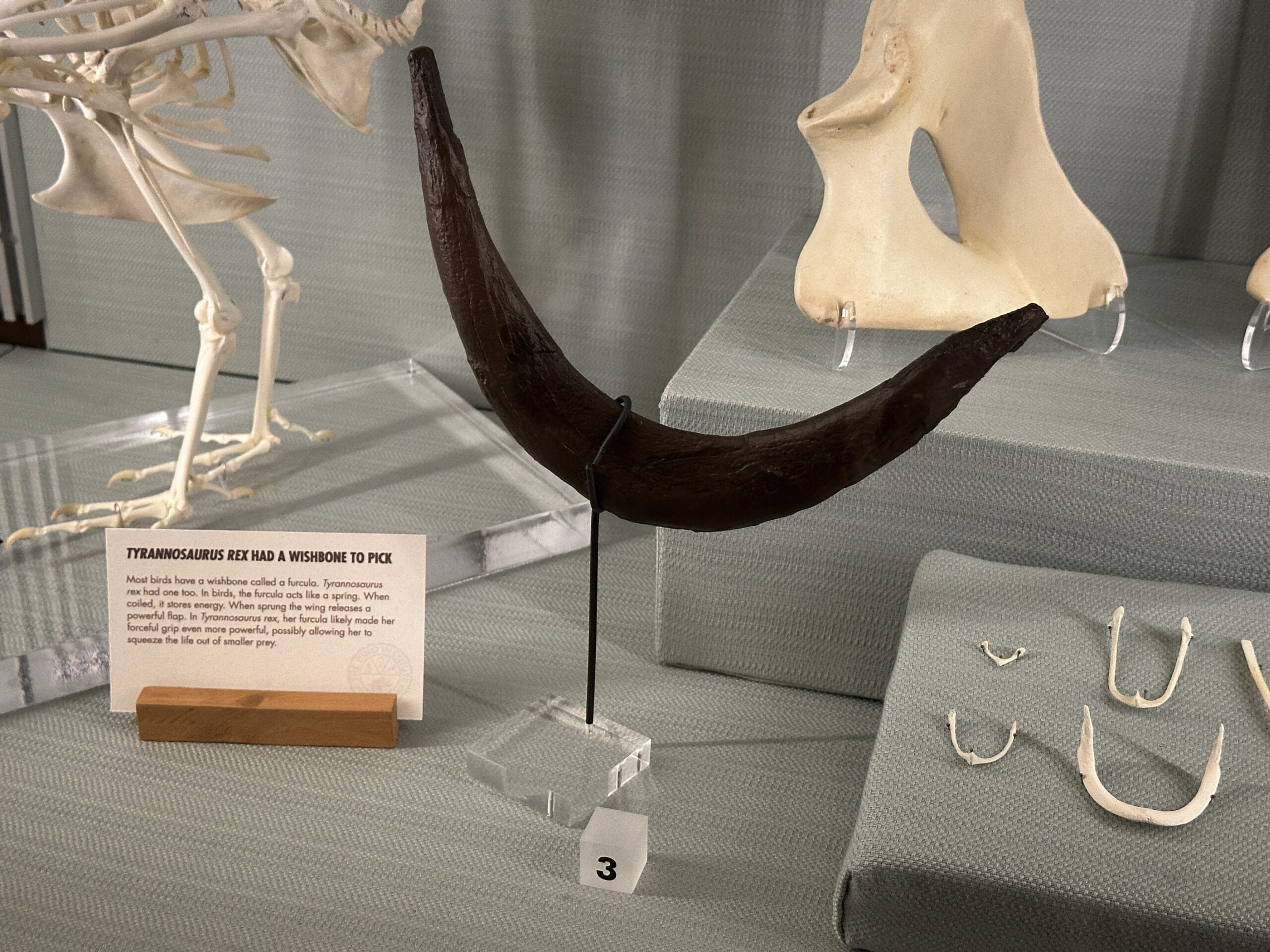
The furcula is a wishbone. In birds, it acts like a spring, storing energy when coiled and then releasing a powerful wing flap. The T. rex furcula likely would have made the dinosaur’s grip more powerful.
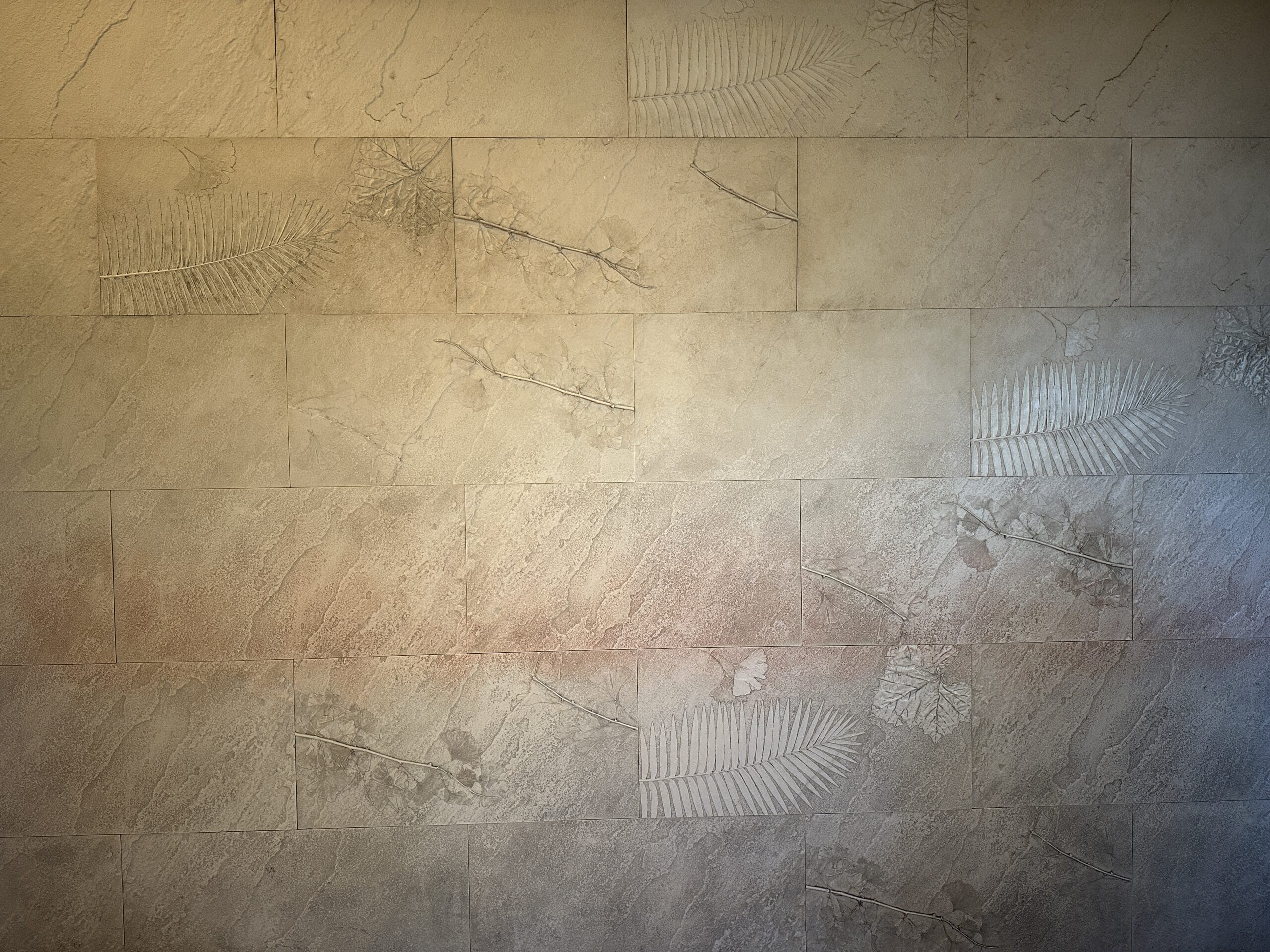
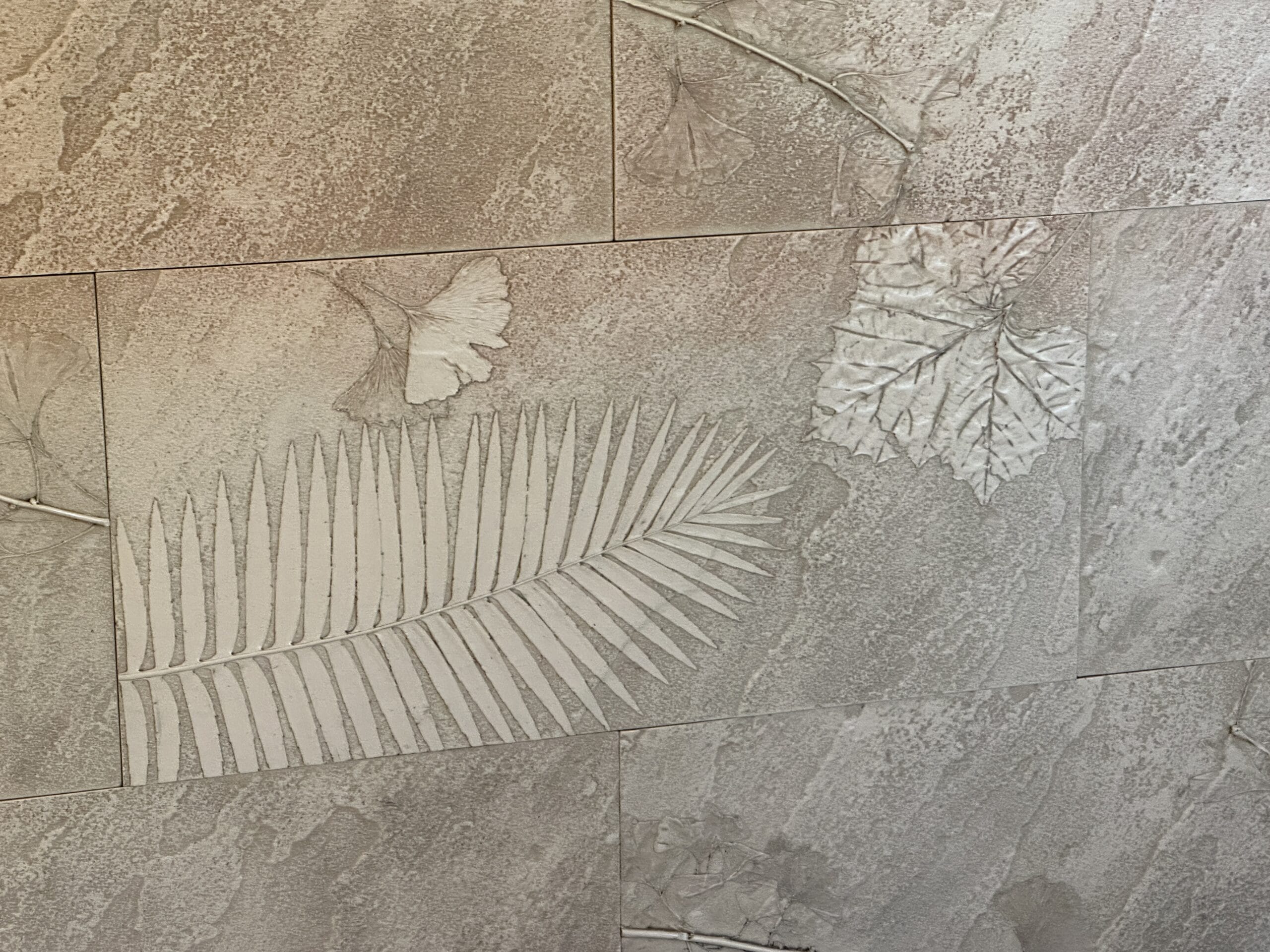
The rock walls of this hallway had embossed patterns of ferns and leaves.
Rotunda
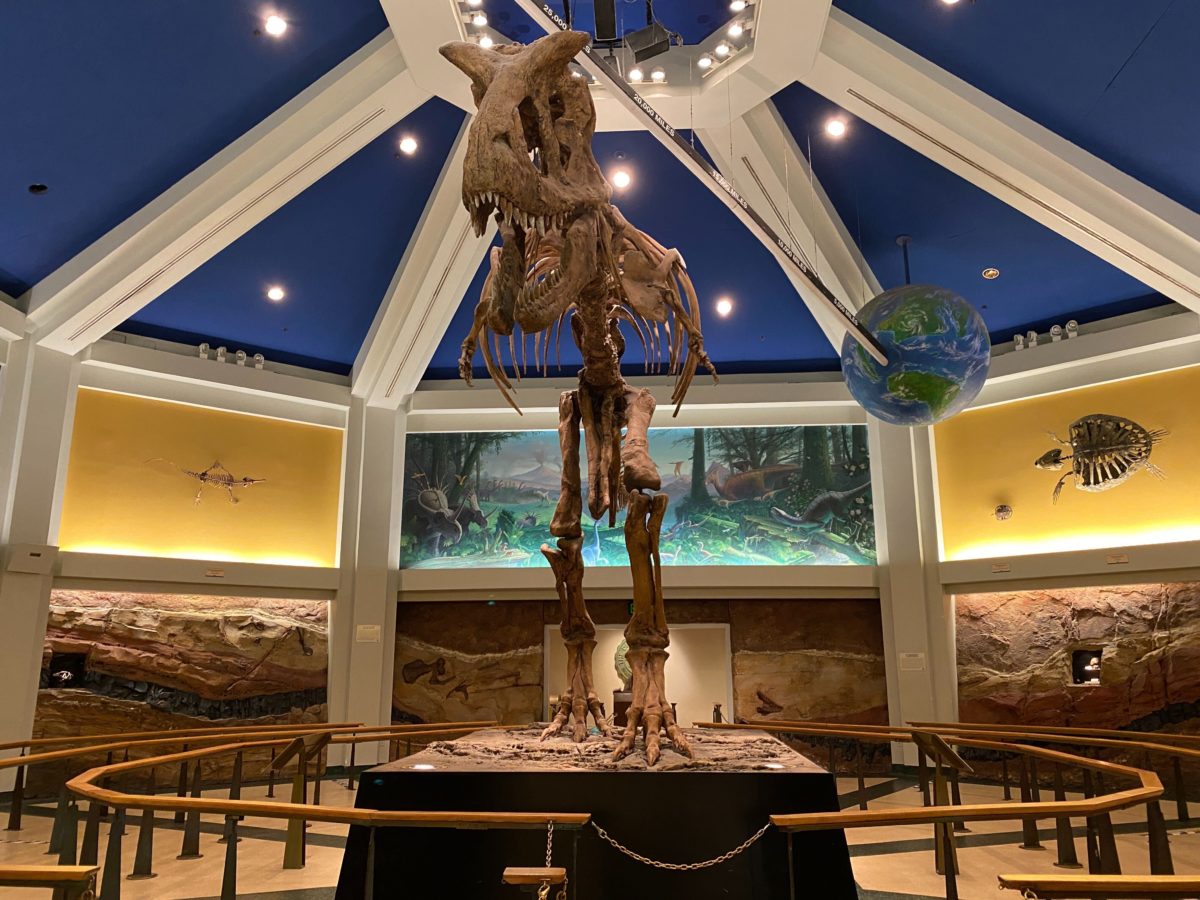
The majority of the queue wrapped around itself in a large, round room. In the center was, supposedly, the fossilized skeleton of a Carnotaurus.
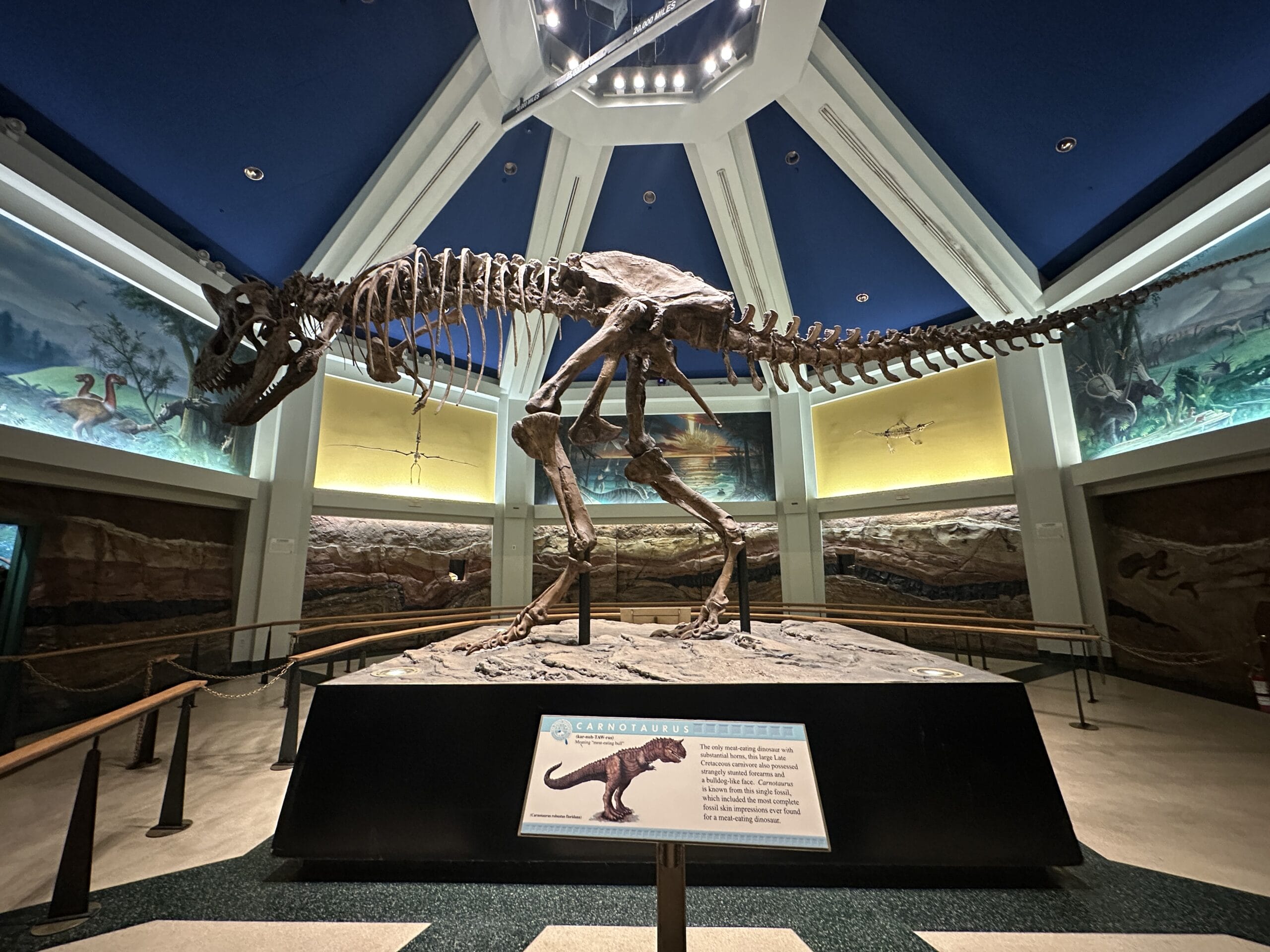
It was actually the body of a T. rex with a Carno skull since a complete Carnotaurus skeleton has never been discovered. In fact, only one Carnotaurus skeleton has ever been discovered.
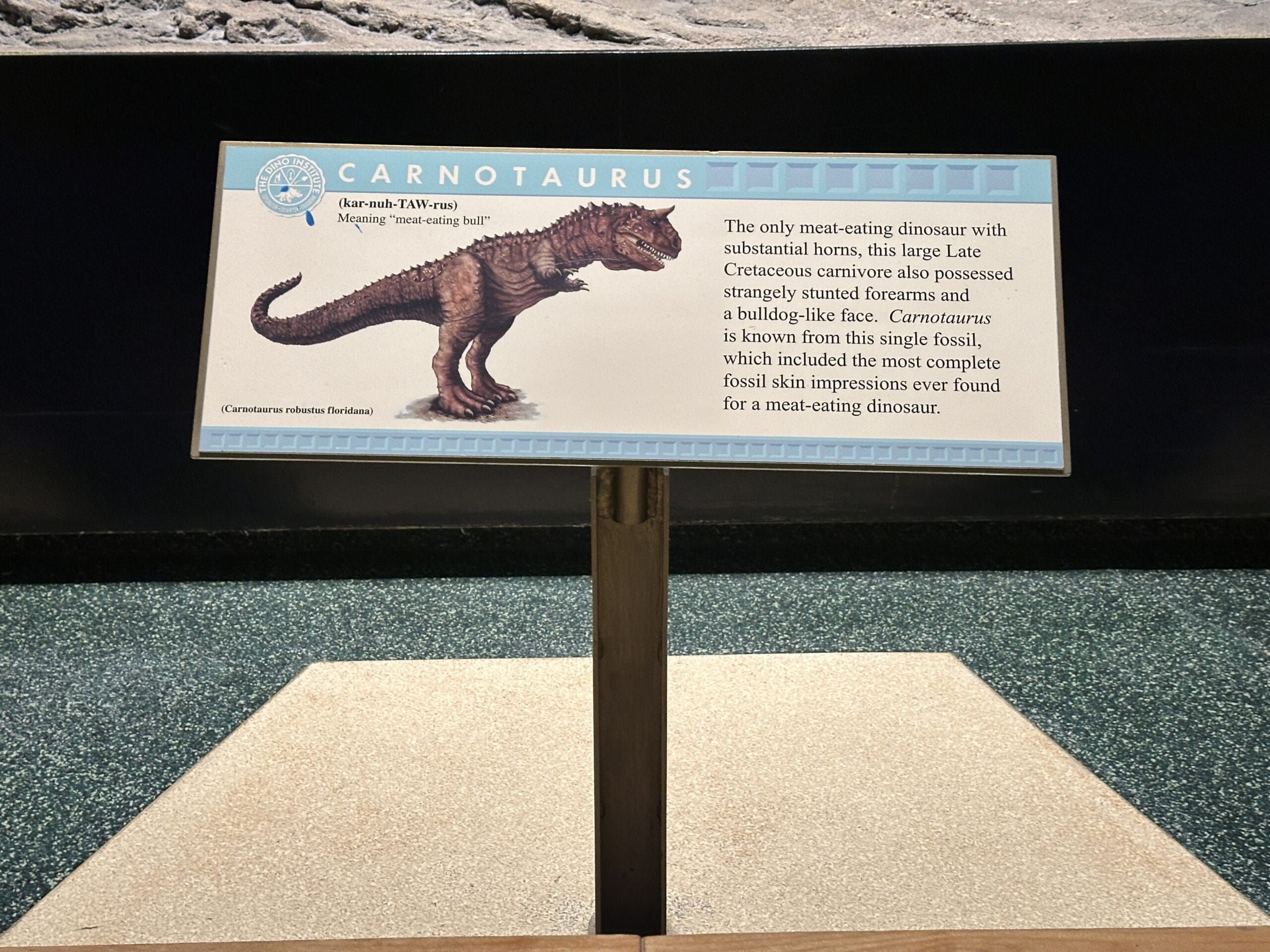
Carnotaurus
The only meat-eating dinosaur with substantial horns, this large Late Cretaceous carnivore also possessed strangely stunted forearms and a bulldog-like face. Carnotaurus is known from this single fossil, which included the most complete fossil skin impression ever found for a meat-eating dinosaur.
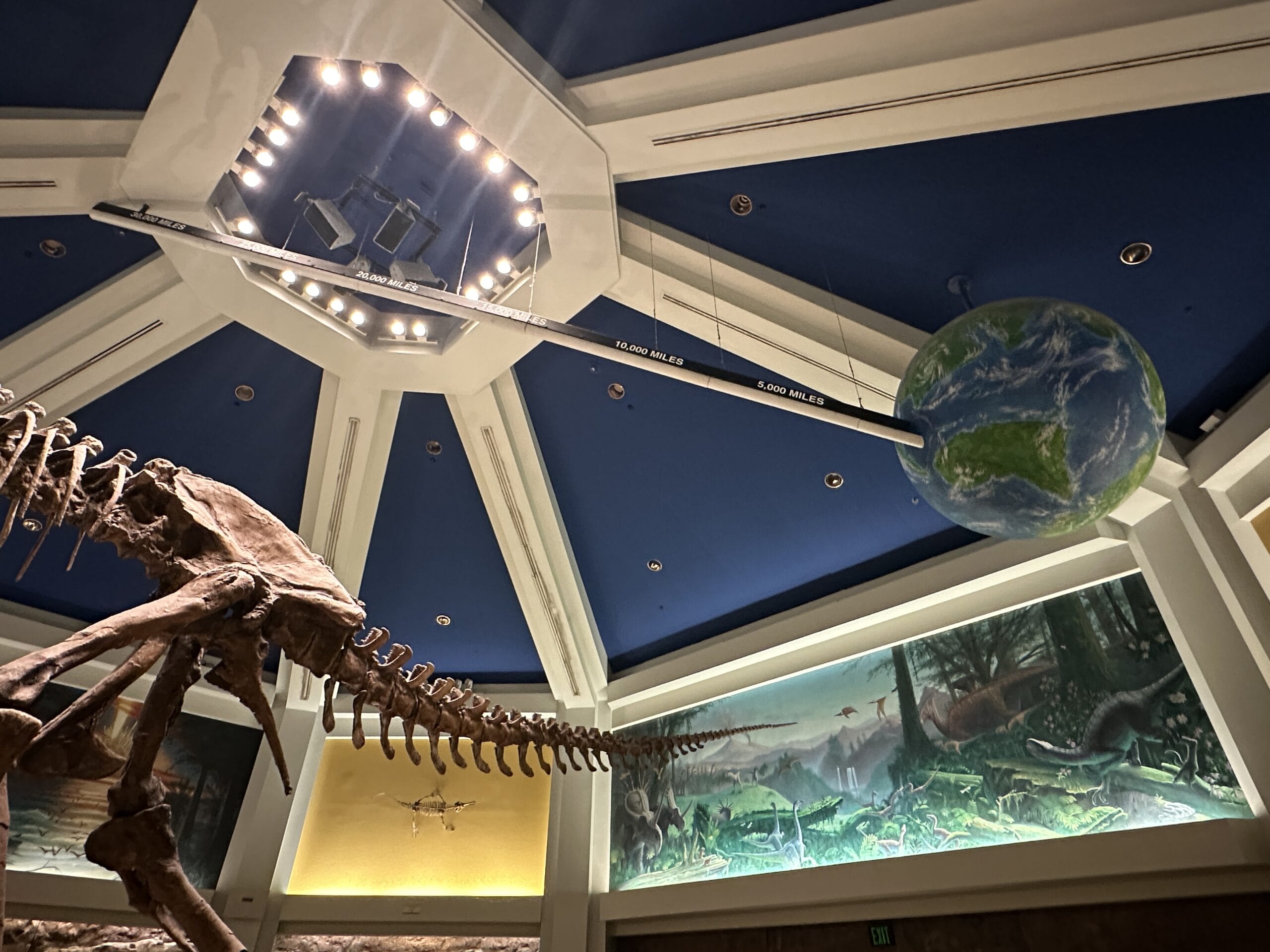
Hanging above the “Carnotaurus” was a globe depicting Earth 65 million years ago near the end of the Cretaceous period. A rod sticking out of the globe measured how far the asteroid that caused the mass extinction of dinosaurs had to travel — approximately 30,000 miles.
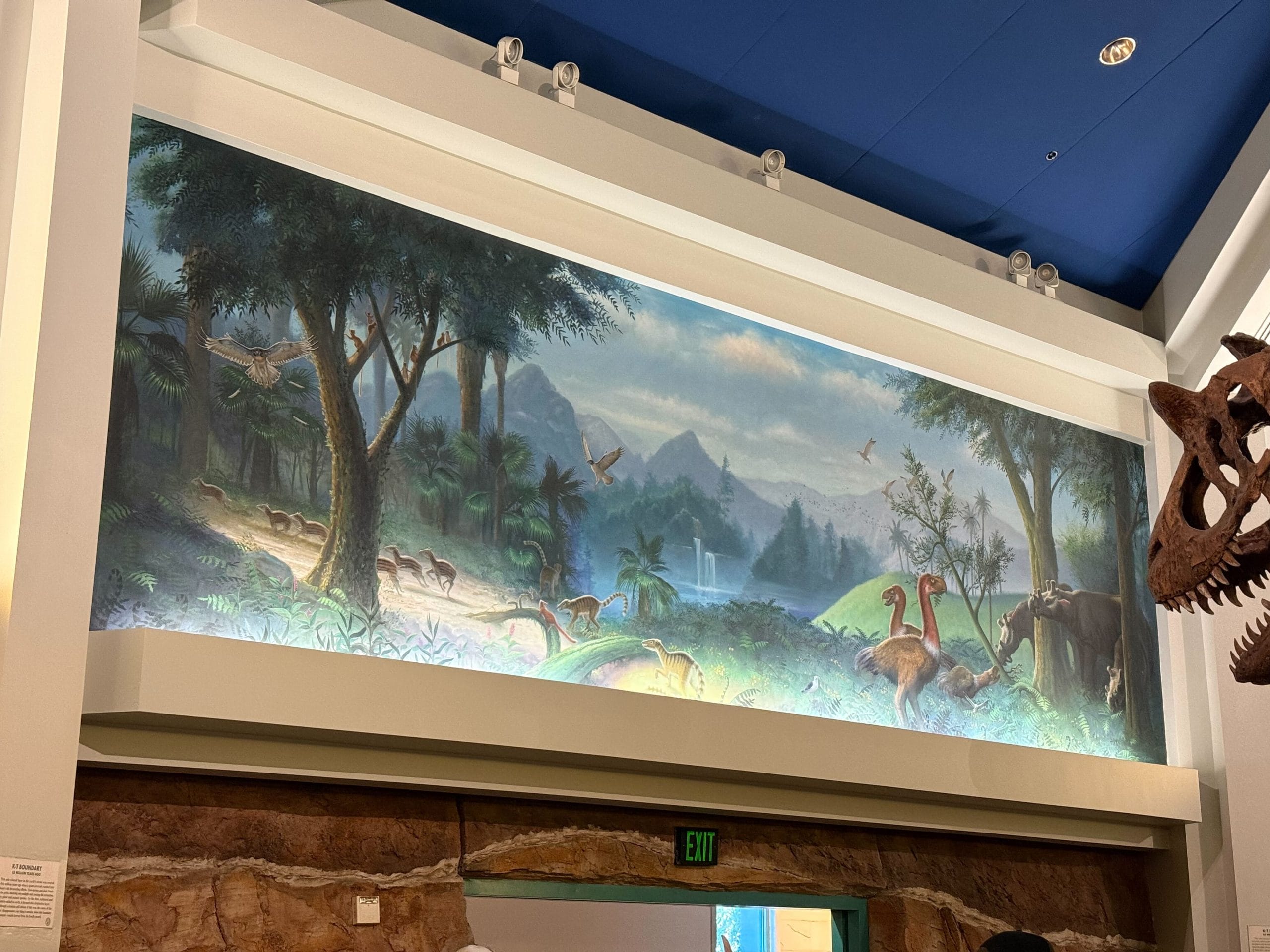
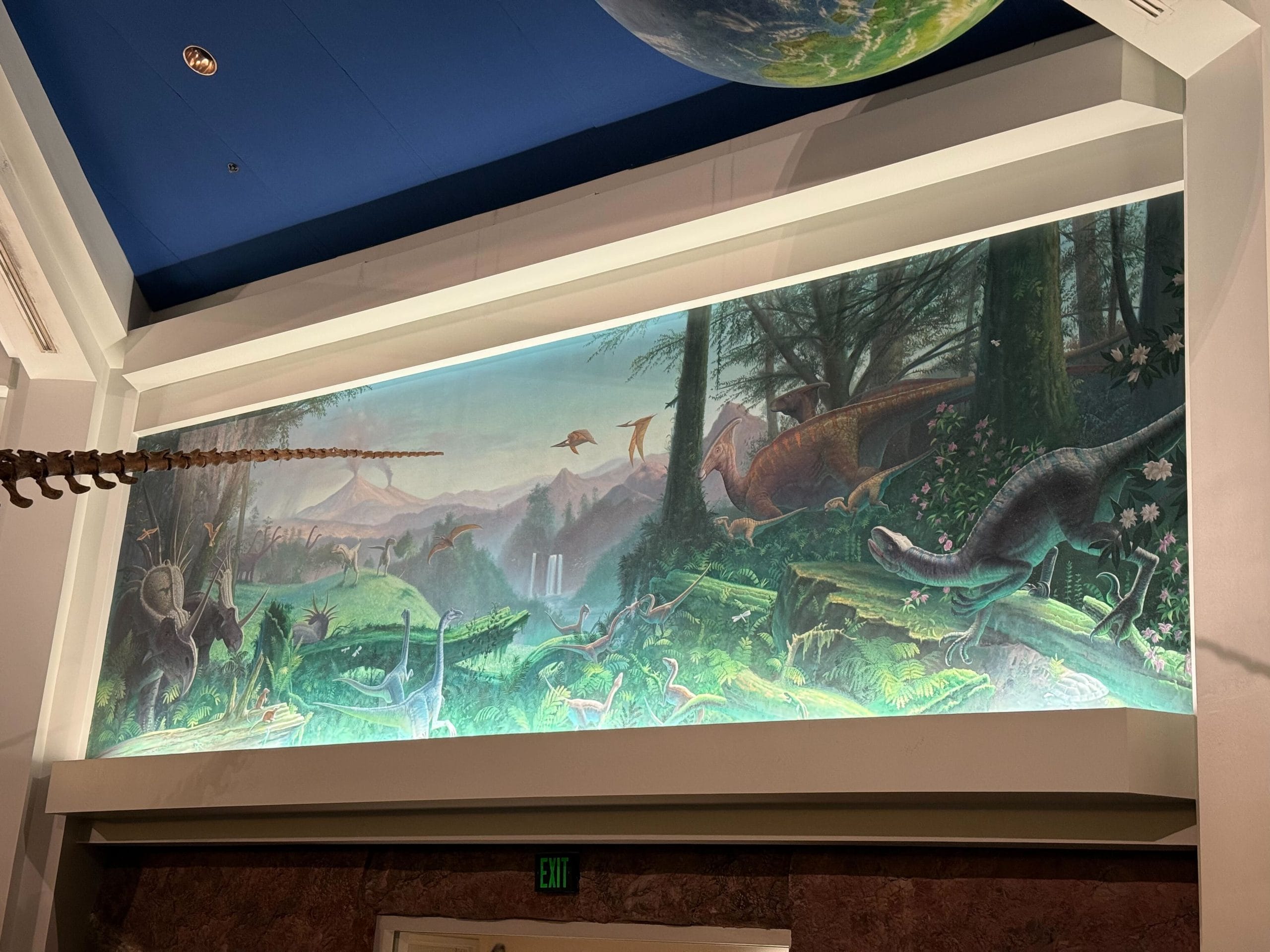
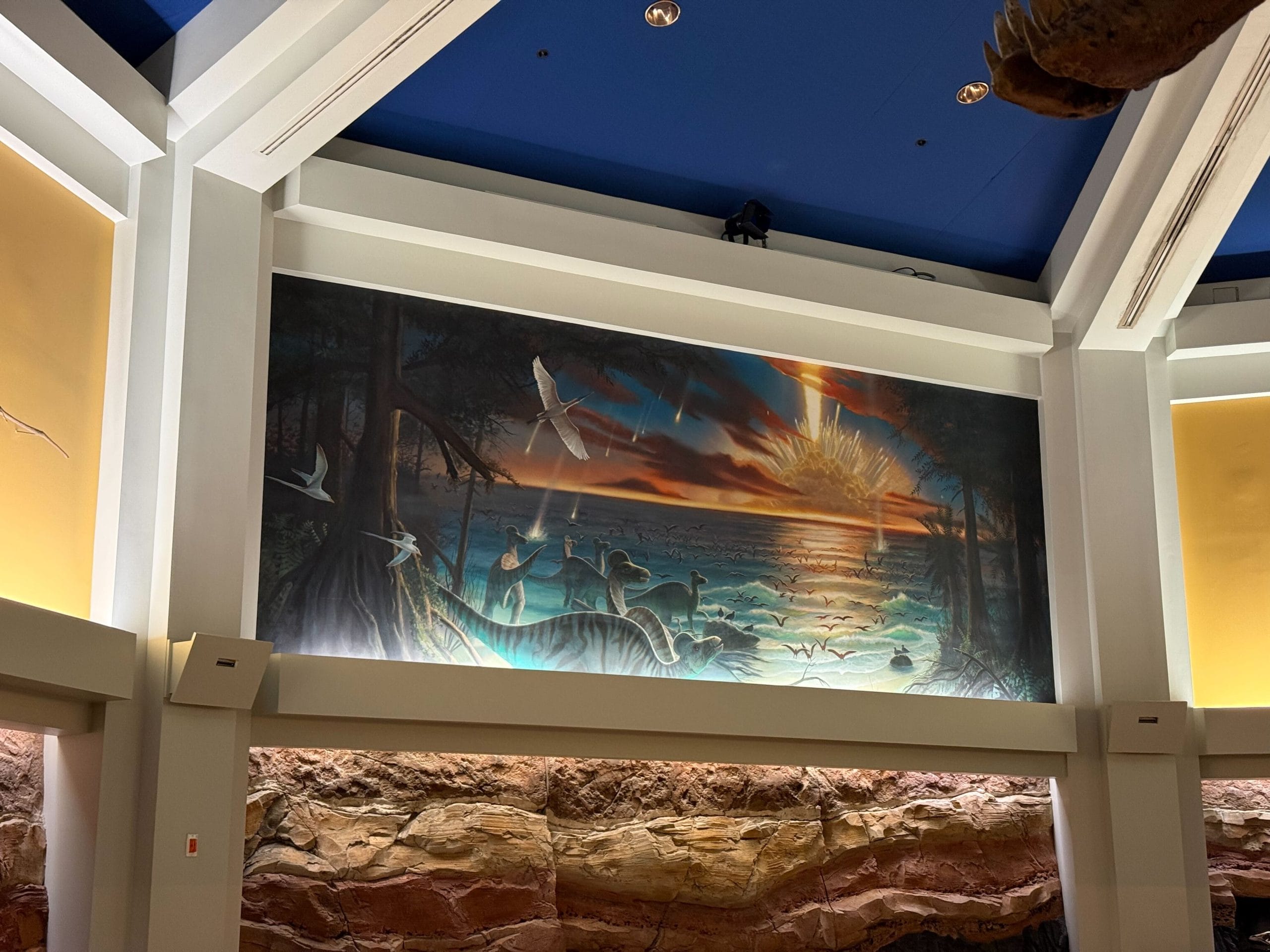
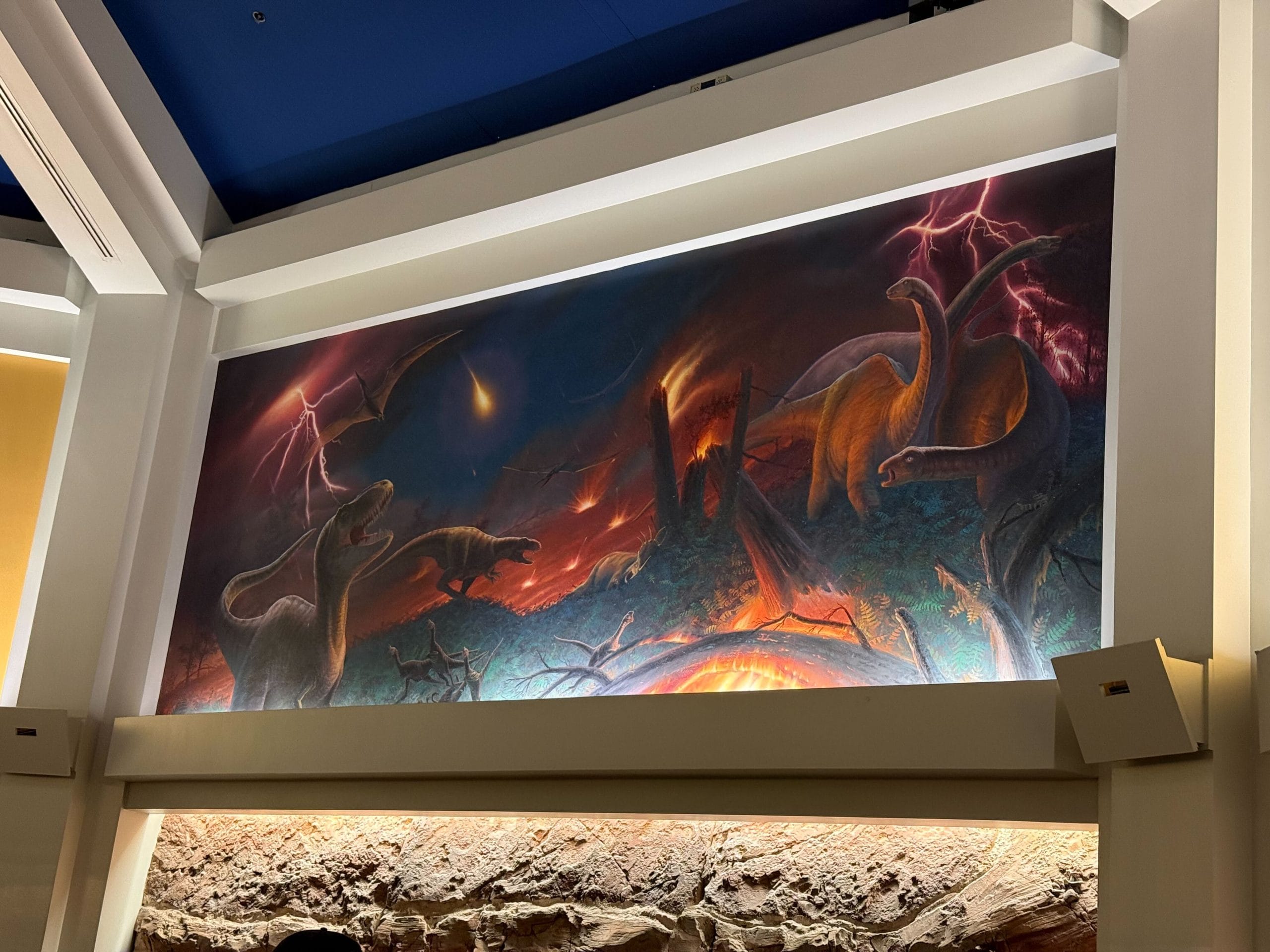
On the upper walls were four murals of dinosaurs, two representing the extinction event. Between the murals were more fossil displays.
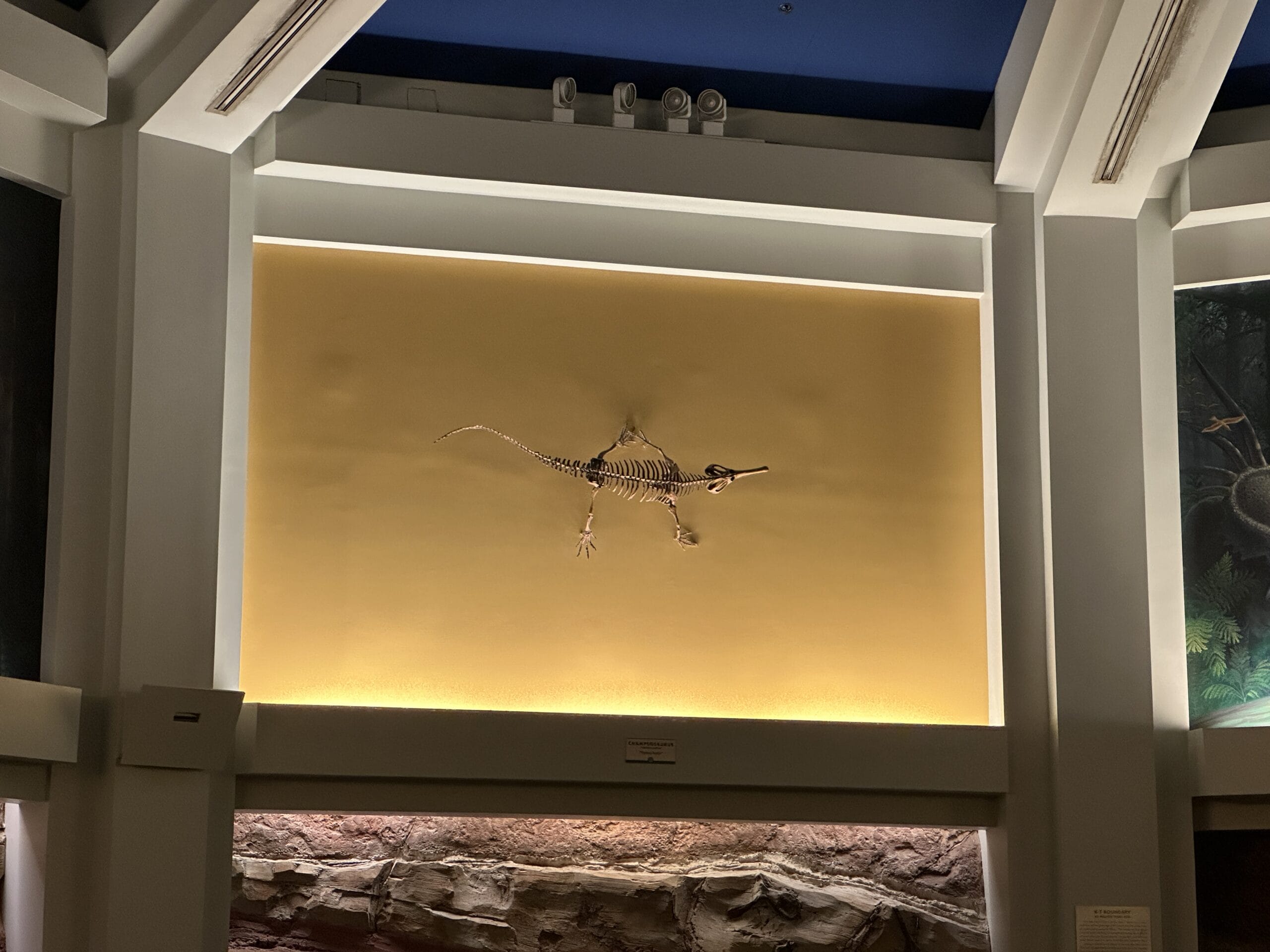
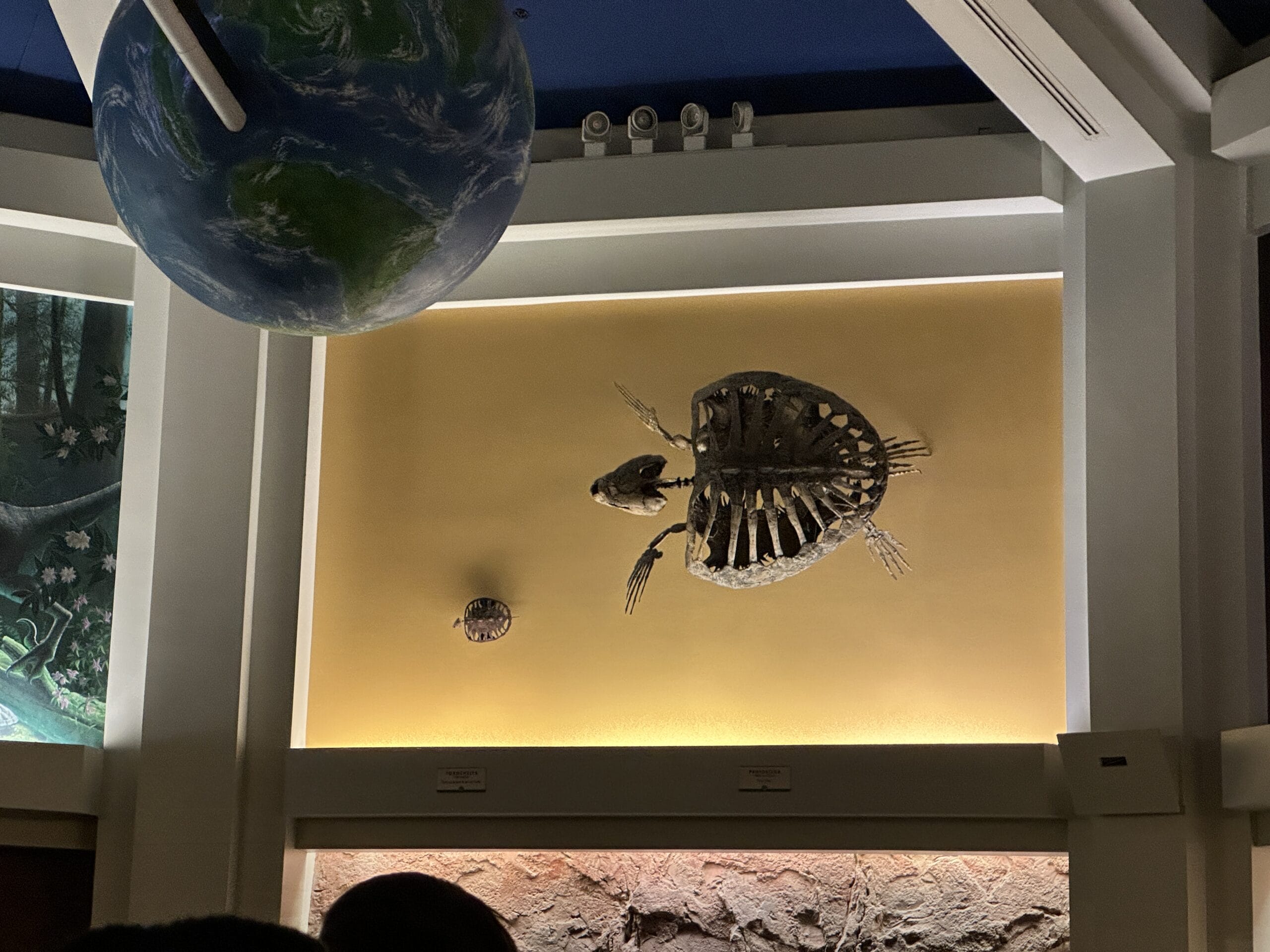
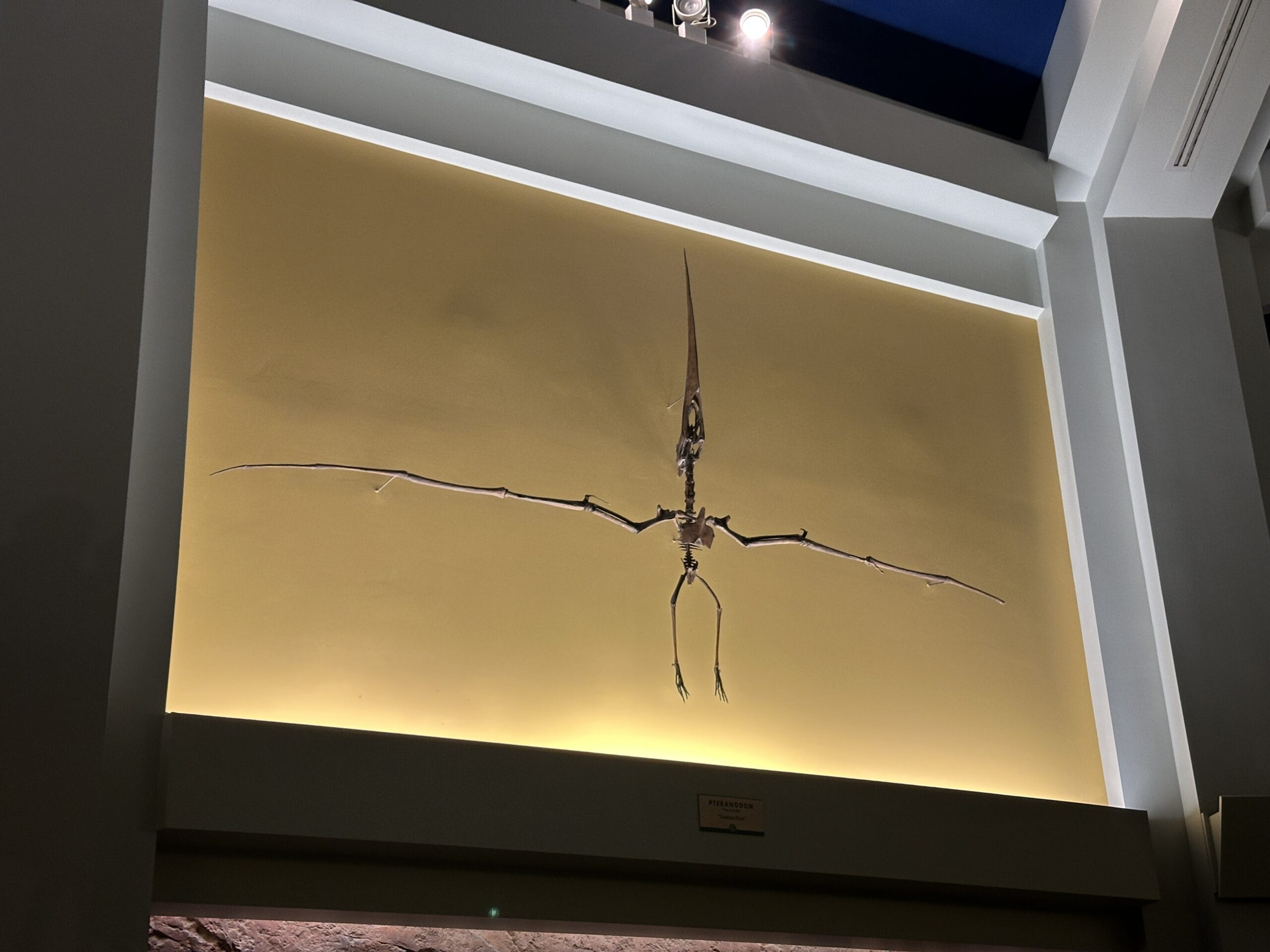
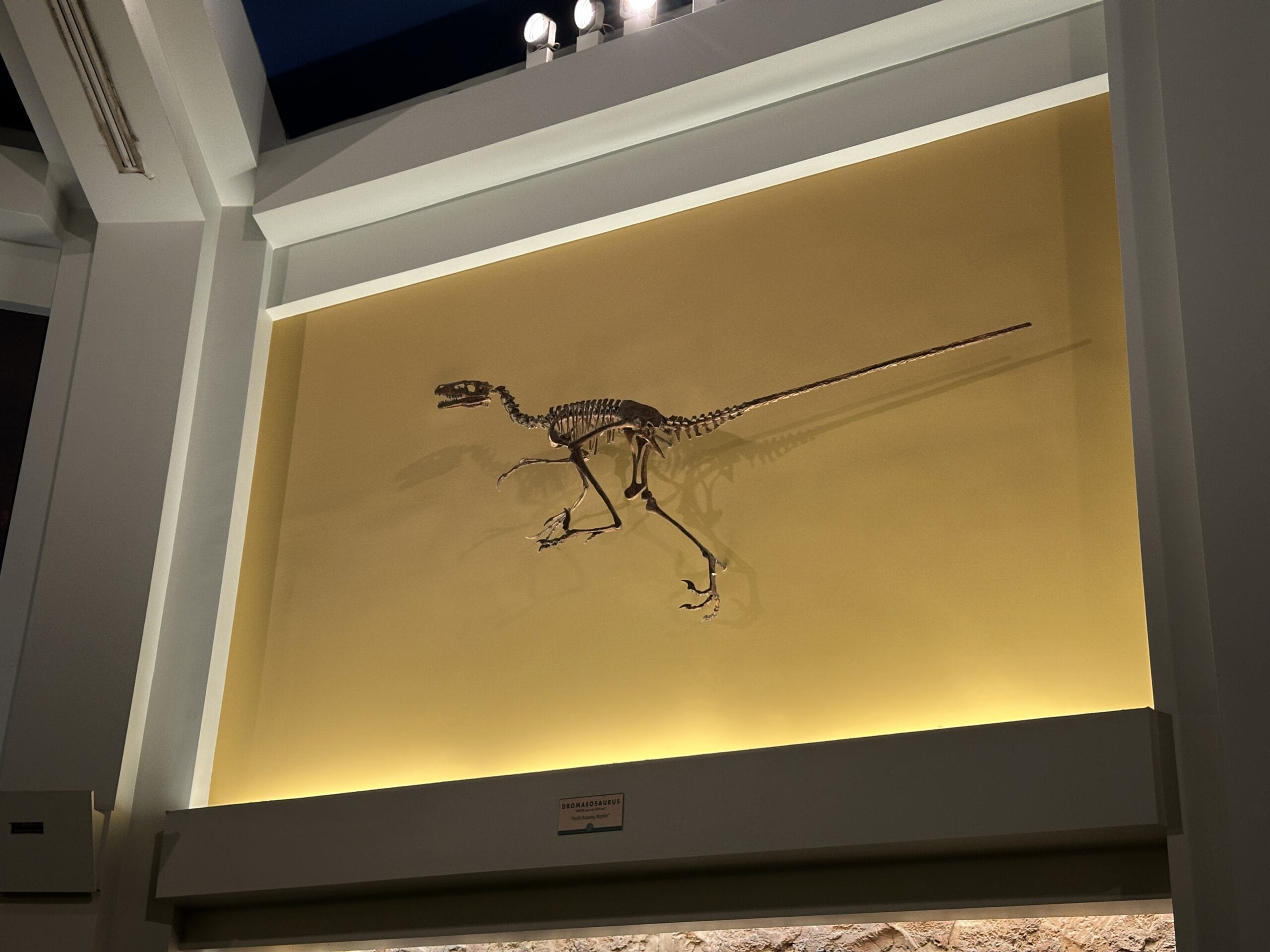
These fossils were Champsosaurus, Toxochelys and Protostega, Pteranodon, and Dromaeosaurus.
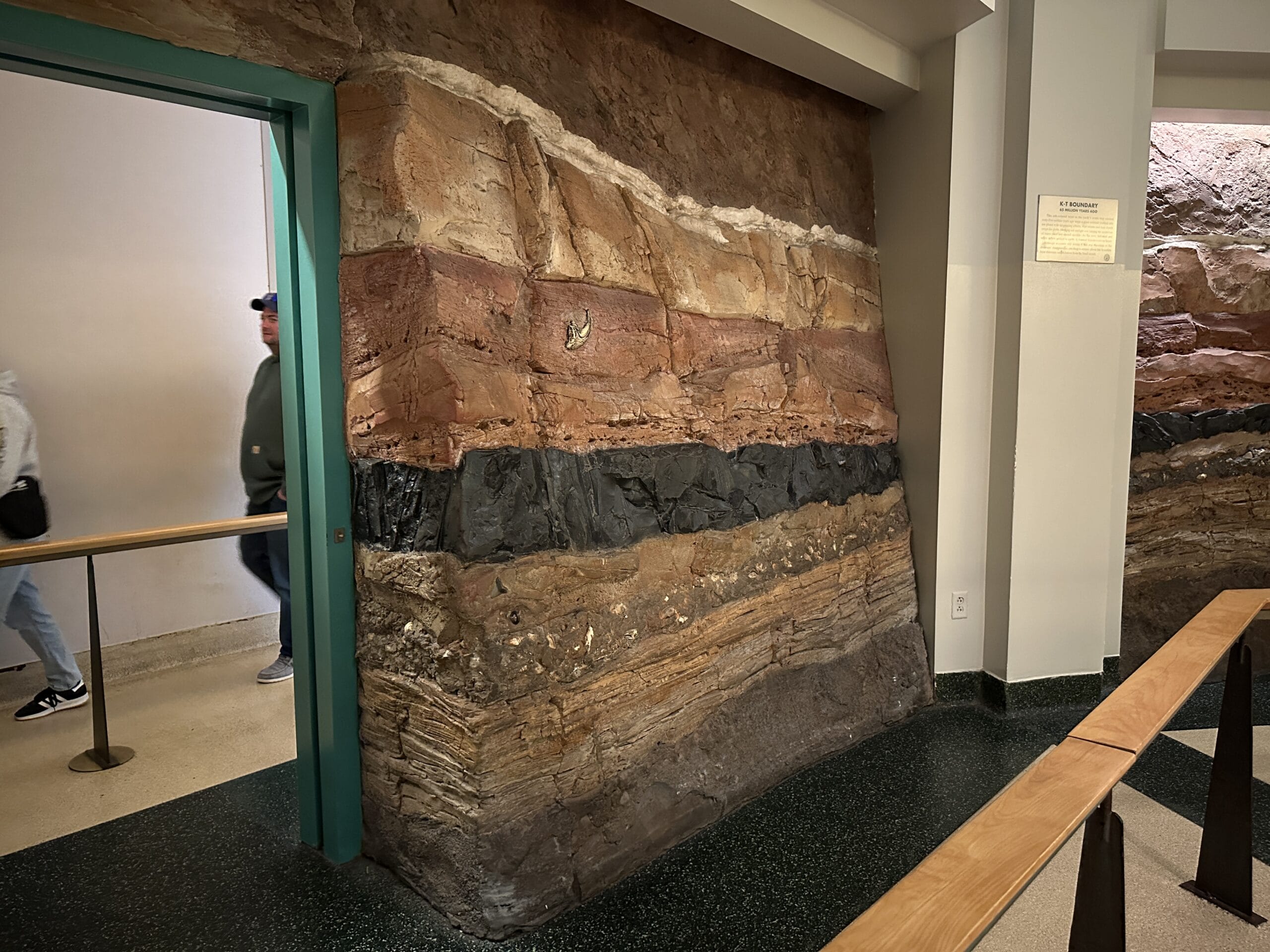
The lower walls were made of simulated sedimentary rock showing different periods of prehistory, embedded with fossils.
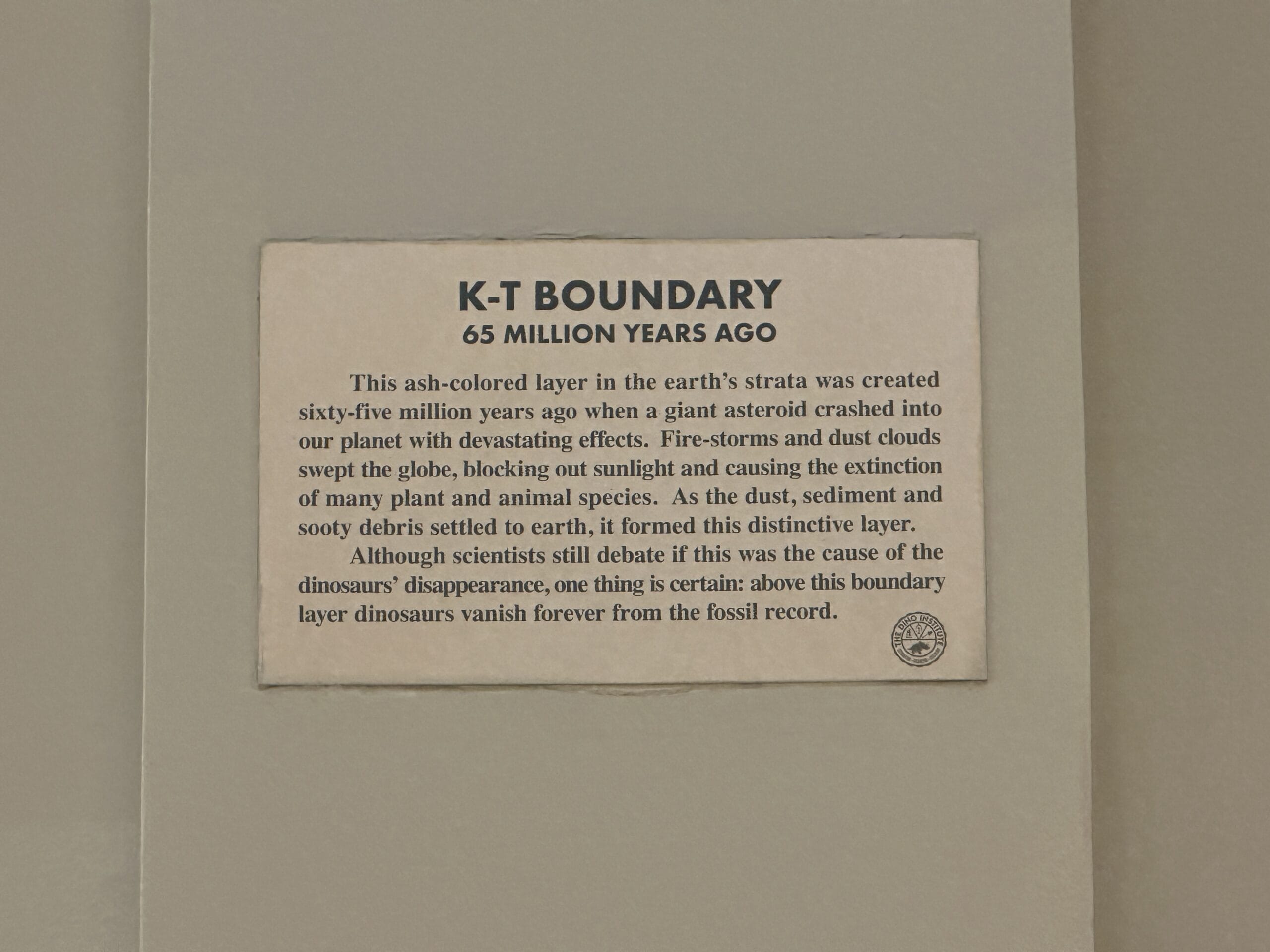
K-T Boundary
65 Million Years AgoThis ash-colored layer in the earth’s strata was created sixty-five million years ago when a giant asteroid crashed into our planet with devastating effects. Fire-storms and dust clouds swept the globe, blocking out sunlight and causing the extinction of many plants and animal species. As the dust, sediment and sooty debris settled to earth, it formed this distinctive layer.
Although scientists still debate if this was the cause of the dinosaurs’ disappearance, one thing is certain: above this boundary layer dinosaurs vanish forever from the fossil record.
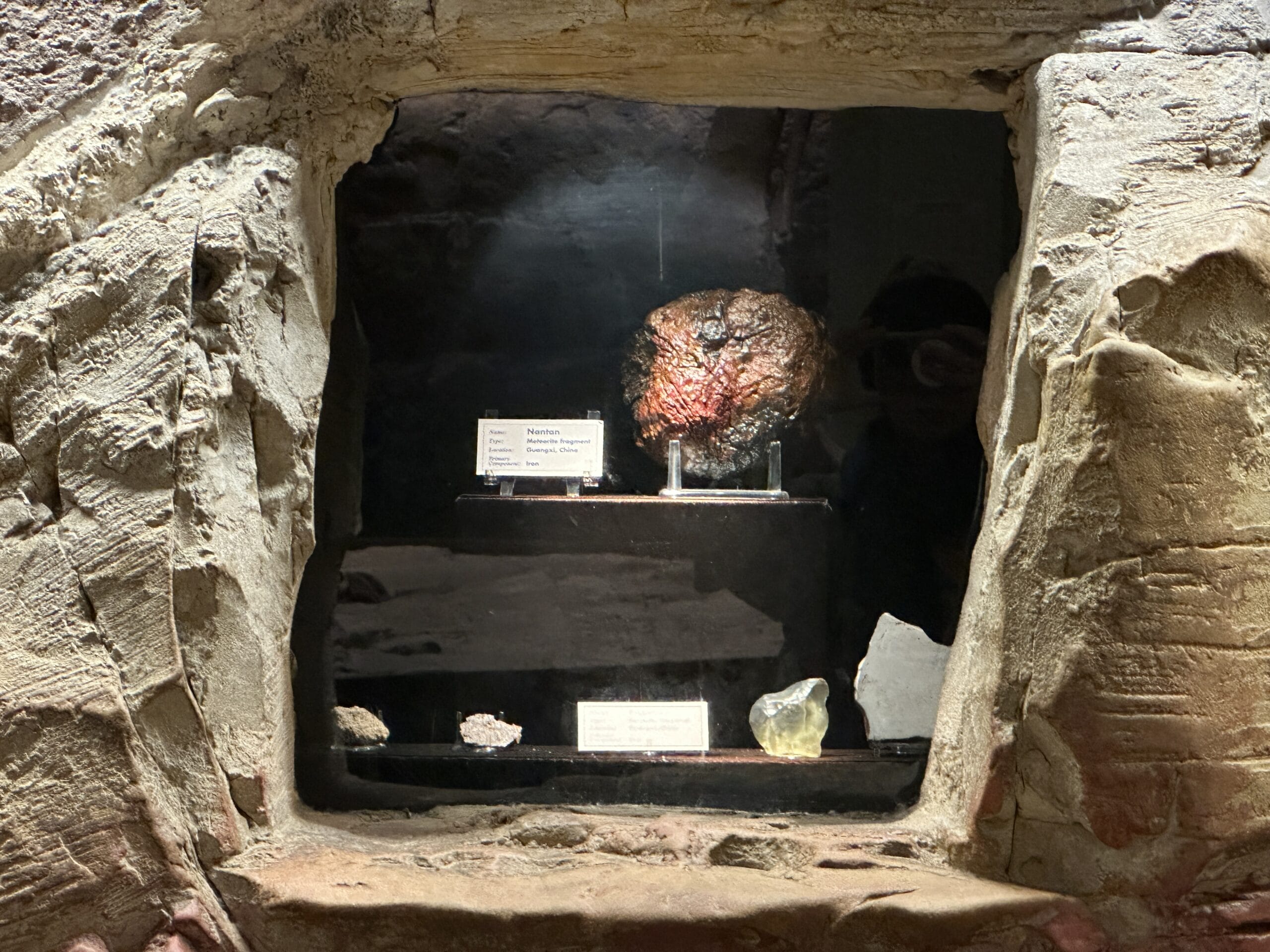
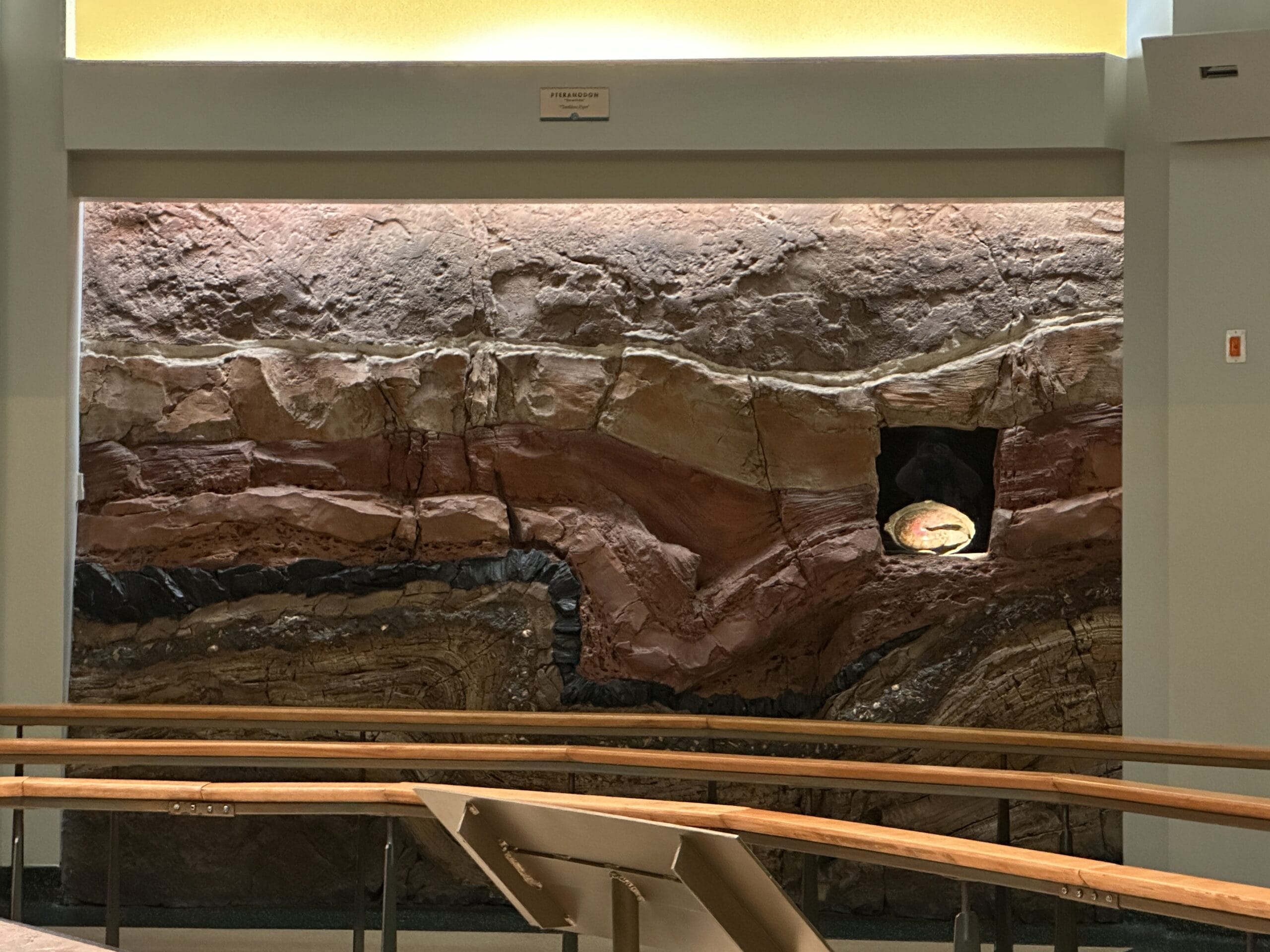
There were also cases in the rock walls. One held a meteorite fragment from China.
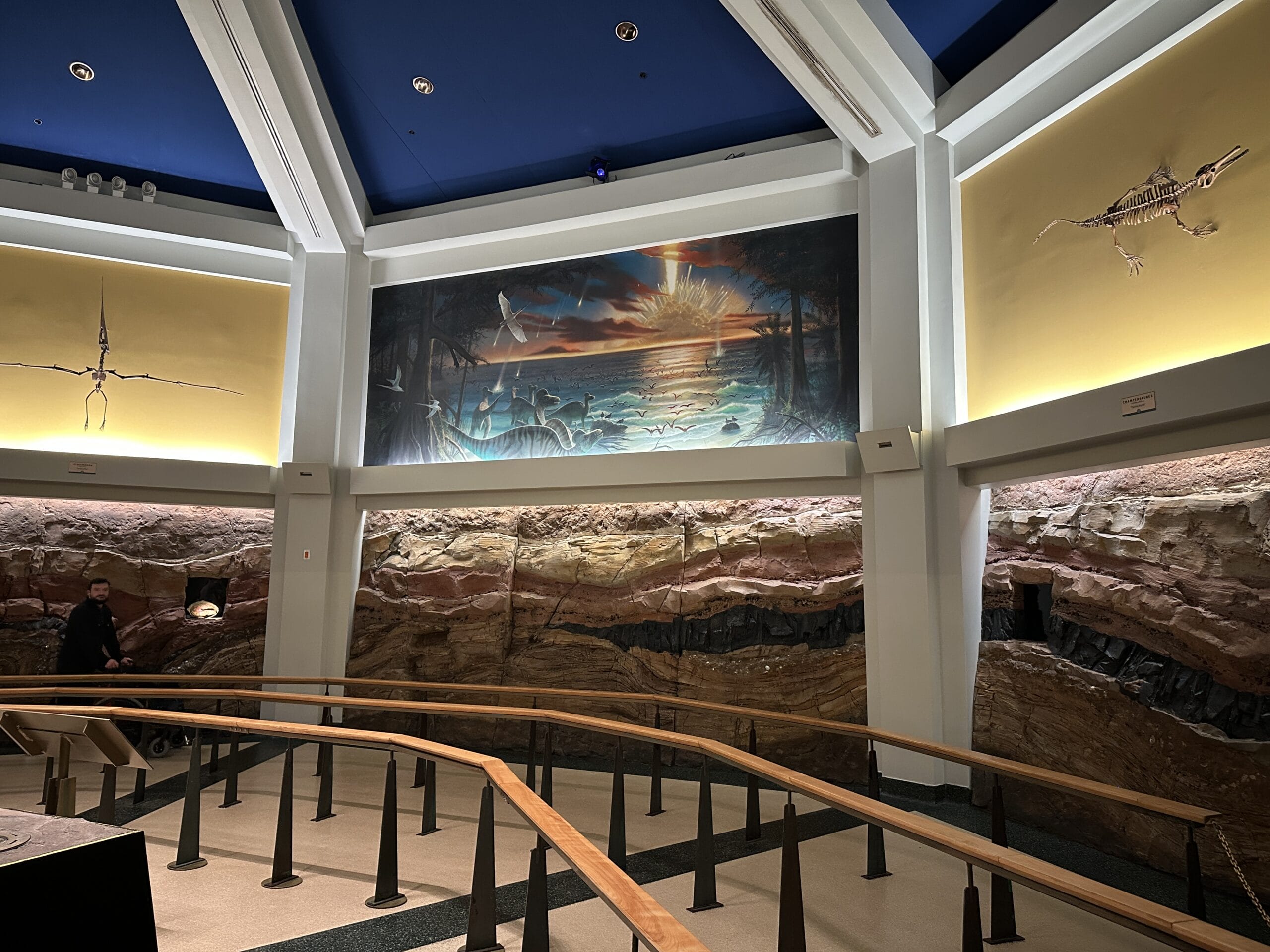
While waiting in the rotunda, guests would occasionally hear one of several presentations voiced by Bill Nye the Science Guy, who had made his Disney Parks debut on Ellen’s Energy Adventure just two years before the opening of Countdown to Extinction. As Nye discussed different dinosaur facts, lights highlighted the fossils, the globe, and the asteroid’s path.
Guests exited the rotunda, passing a Dino Institute seal on the wall, and were directed into one of two pre-show theaters.
DINOSAUR Pre-Show
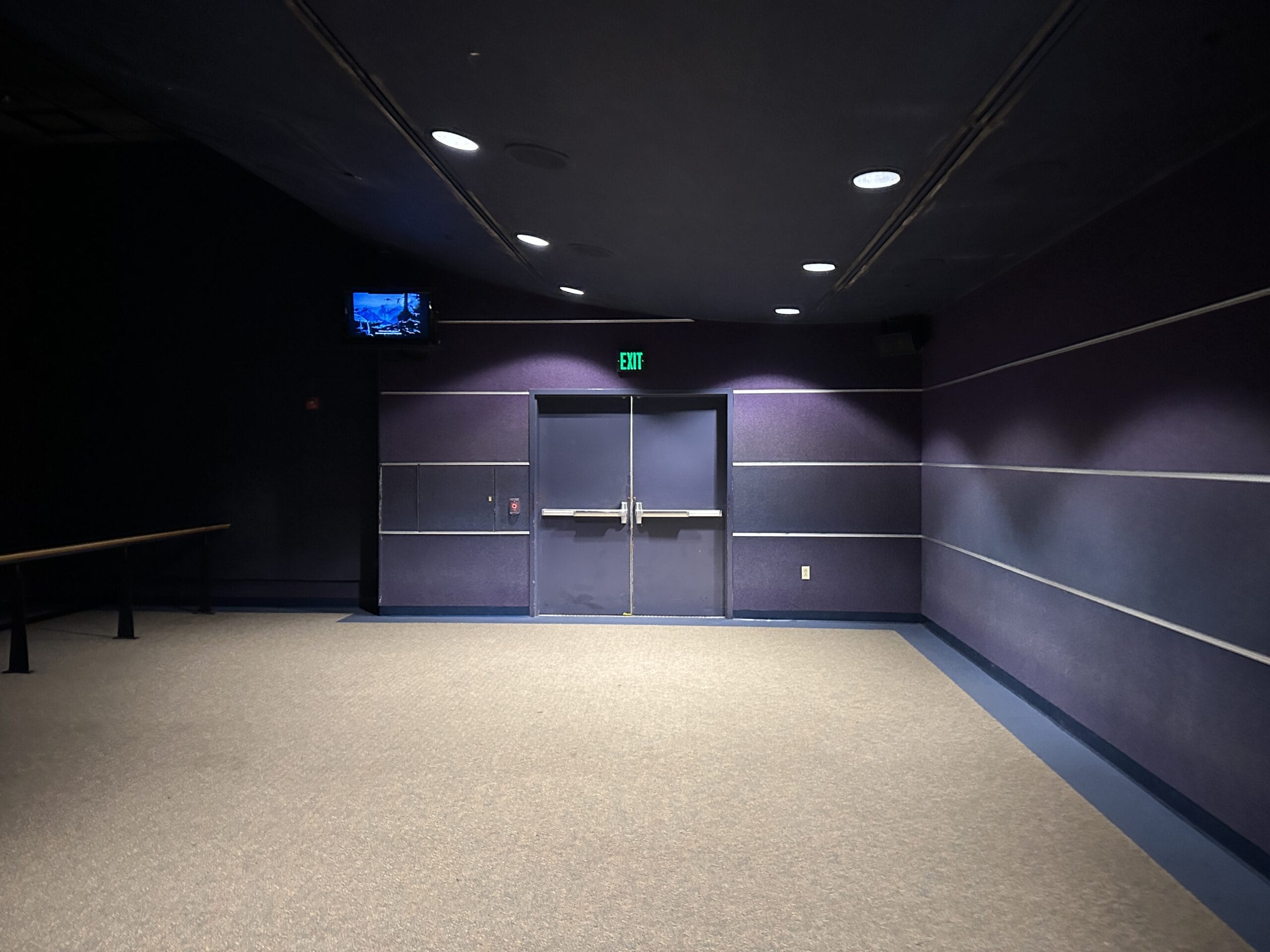
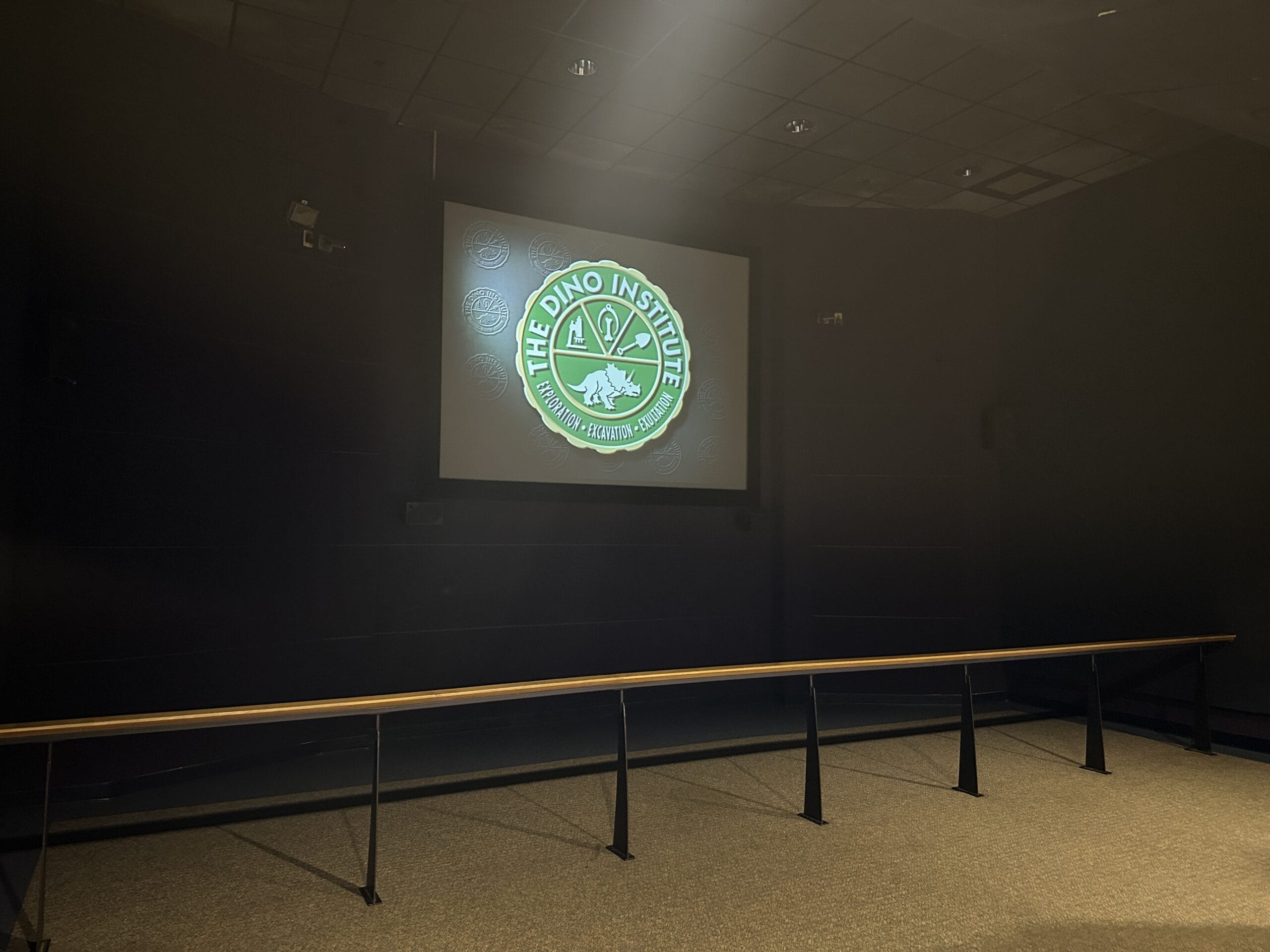
The rooms had dark walls, so there was nothing to distract guests from the pre-show. A large big screen behind a railing was on one wall of the room, but there were also small mounted TVs.
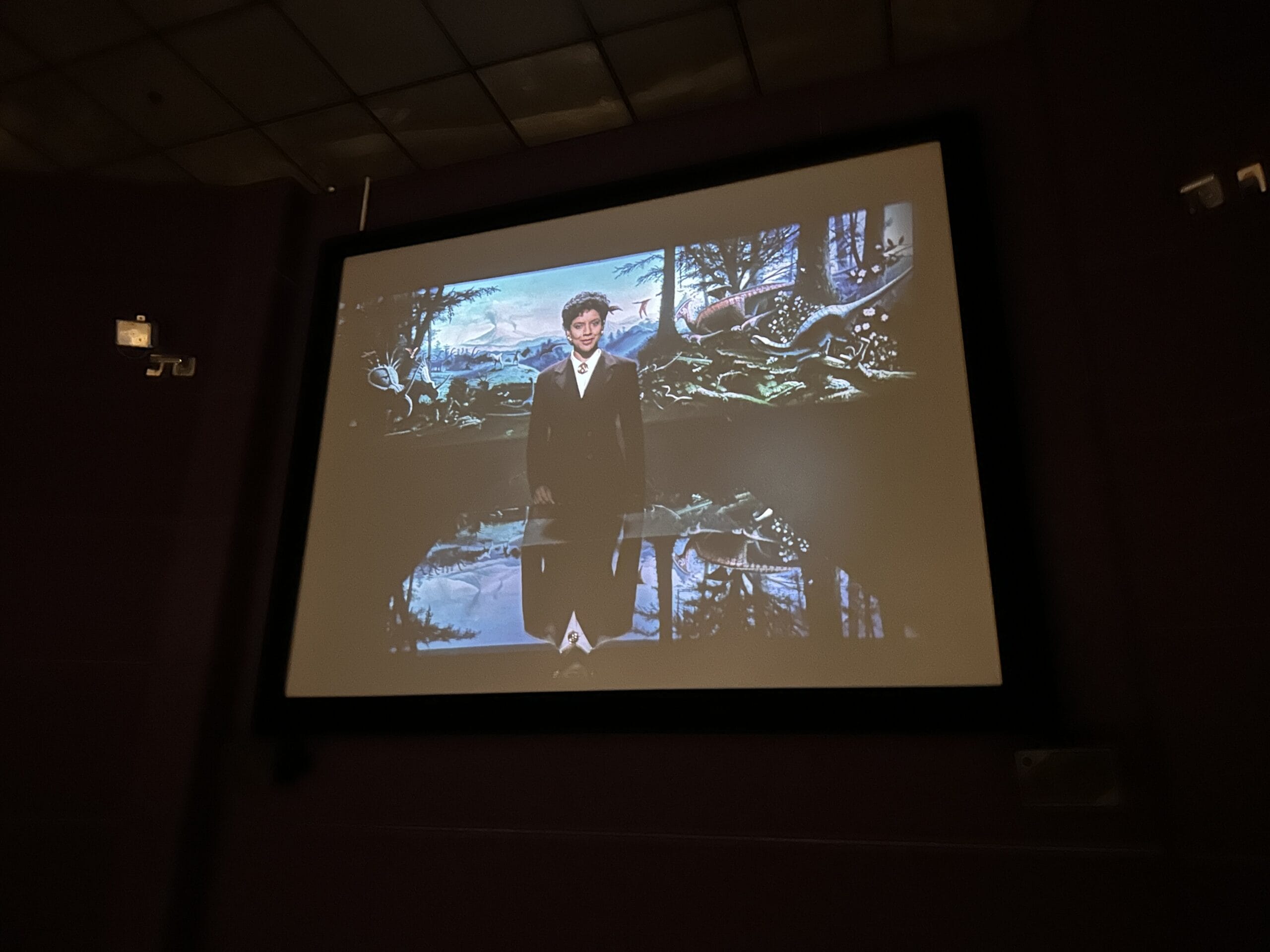
Guests were first introduced to Dr. Marsh (Phylicia Rashad).
I hope you enjoyed those quaint exhibits in the old wing. That’s how dinosaurs have been presented to the public since the study of fossils began over 150 years ago. Today, that bare-bones approach is about to become extinct.
Dr. Marsh explained that the Dino Institute has created the Time Rover, “an amazing vehicle that will literally transport you to the age of the dinosaur! How? That’s proprietary.” After her introduction, the pre-show switched to a “live” safety briefing with Dr. Seeker.

Dr. Seeker (Wallace Langham) welcomed guests with a dinosaur puppet, setting the tone for his “comprehensive” safety briefing.
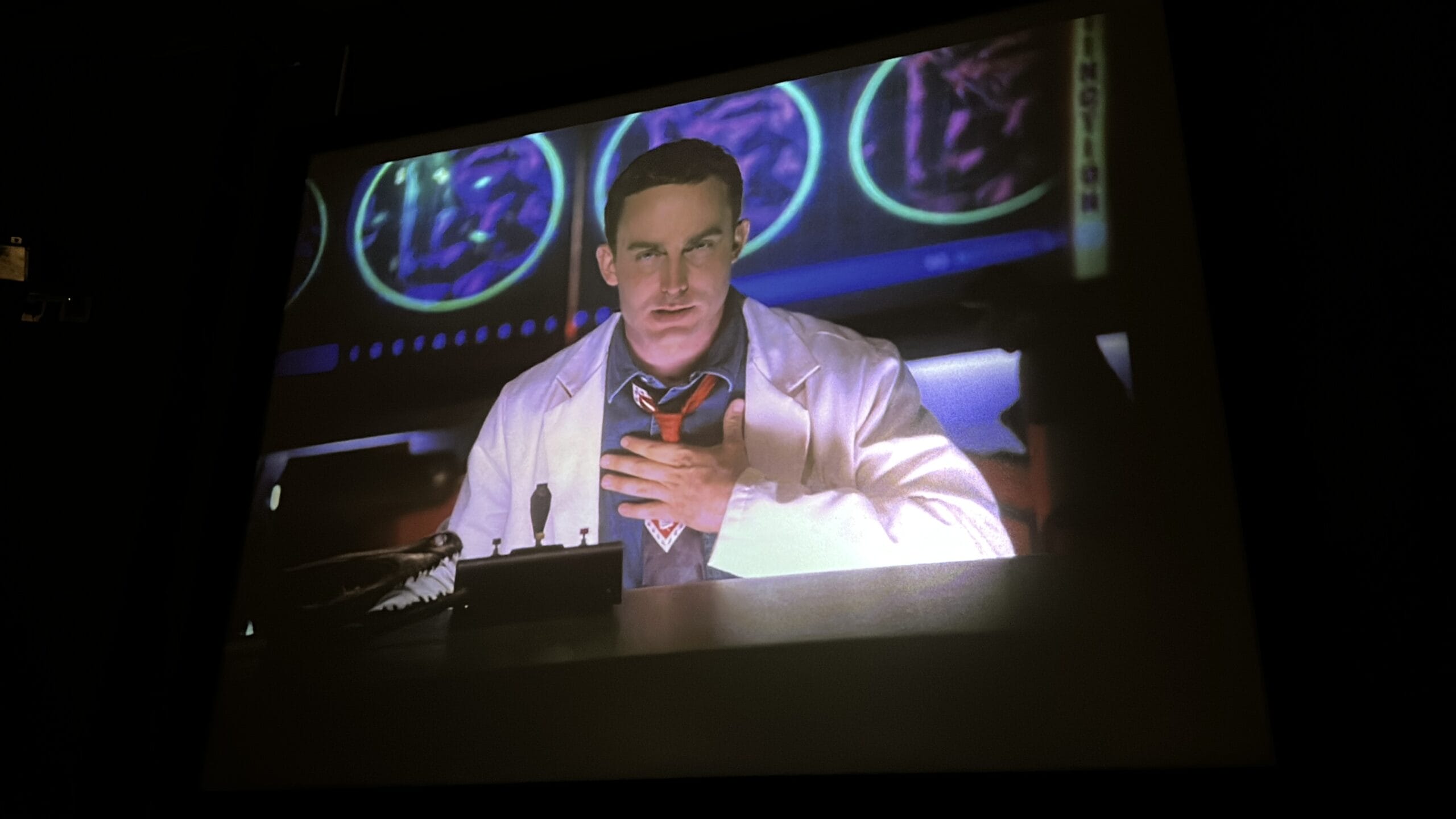
He introduced himself as the Time Rover controller and a “heck of a paleontologist.”
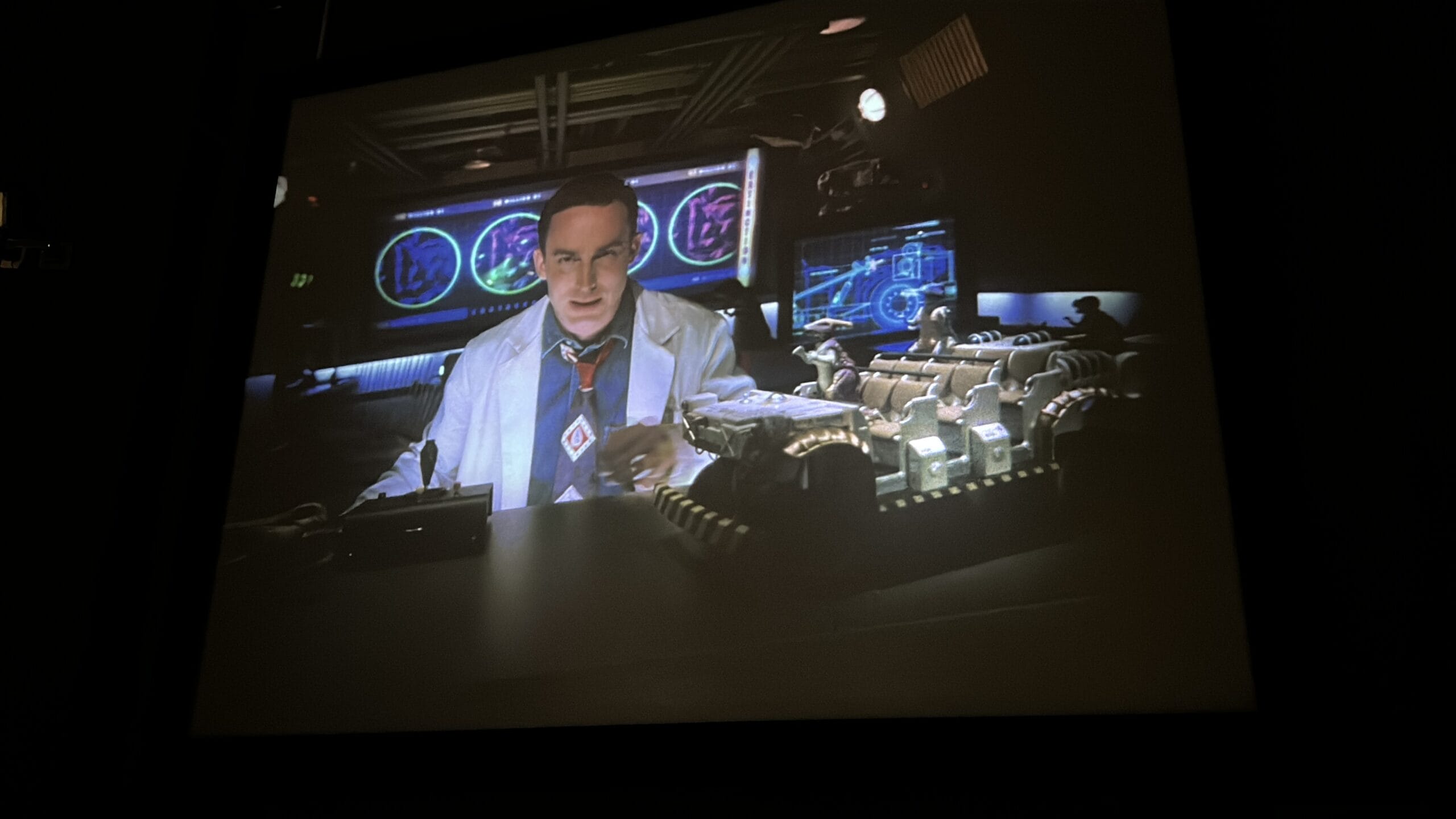
Seeker hoped to not only send guests to and from the Cretaceous period, but also have them pick up a live dinosaur. He showed footage of the Iguanodon (Aladar from Dinosaur), which he thinks is the “key to understanding these magnificent creatures.” Seeker tagged Aladar with a locator during an “unauthorized field trip”, implying he’s banned from time travel trips, and that’s why he can’t go get the dino himself.
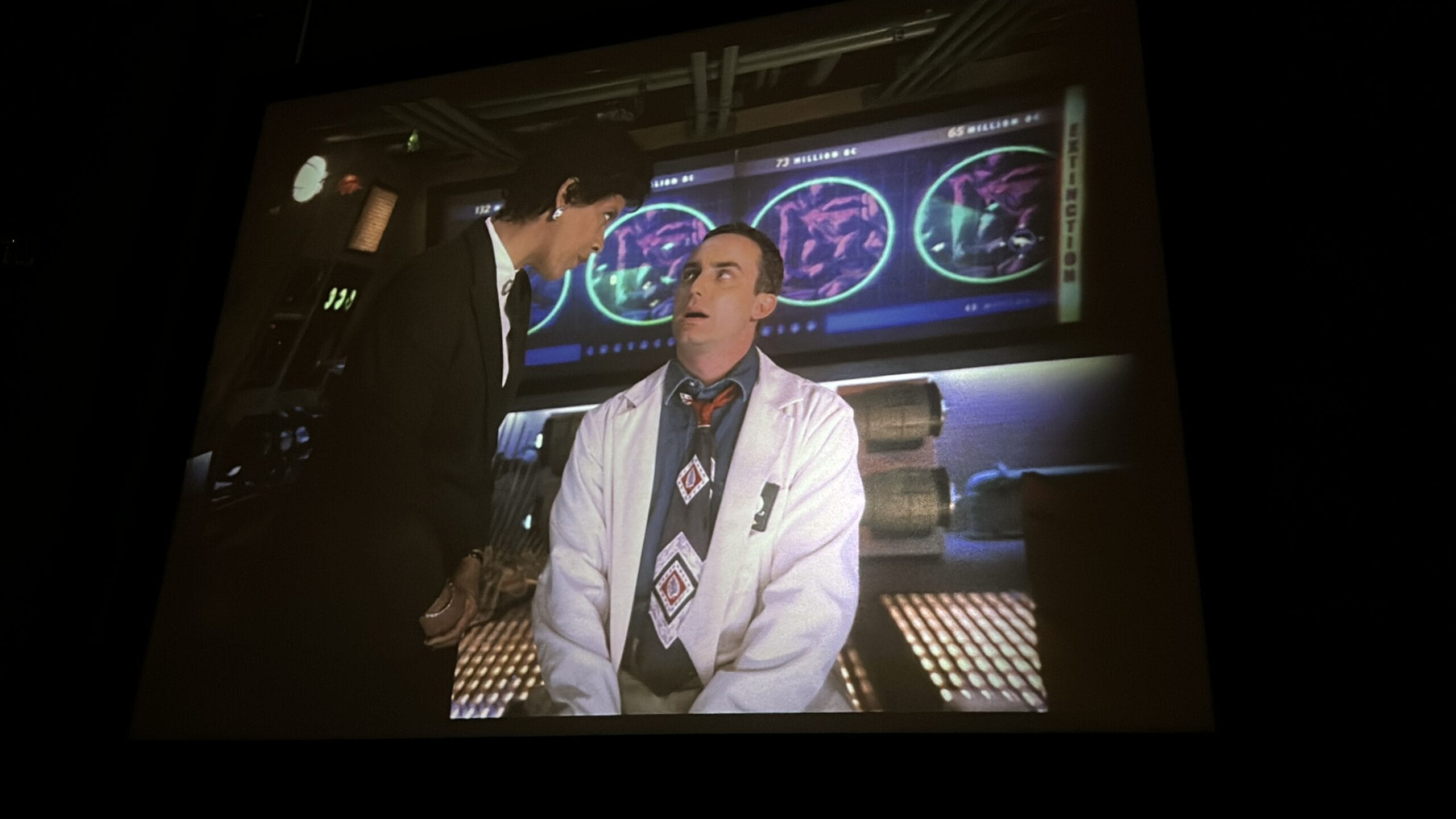
The Iguanodon is at the very end of the Cretaceous period, where Dr. Seeker intends to send guests. However, Dr. Marsh interrupts “just in time to correct a little misstatement.” She points out the timeframe Seeker has selected is close to the impact of the giant asteroid that wiped out the dinosaurs — too big a risk for guests.
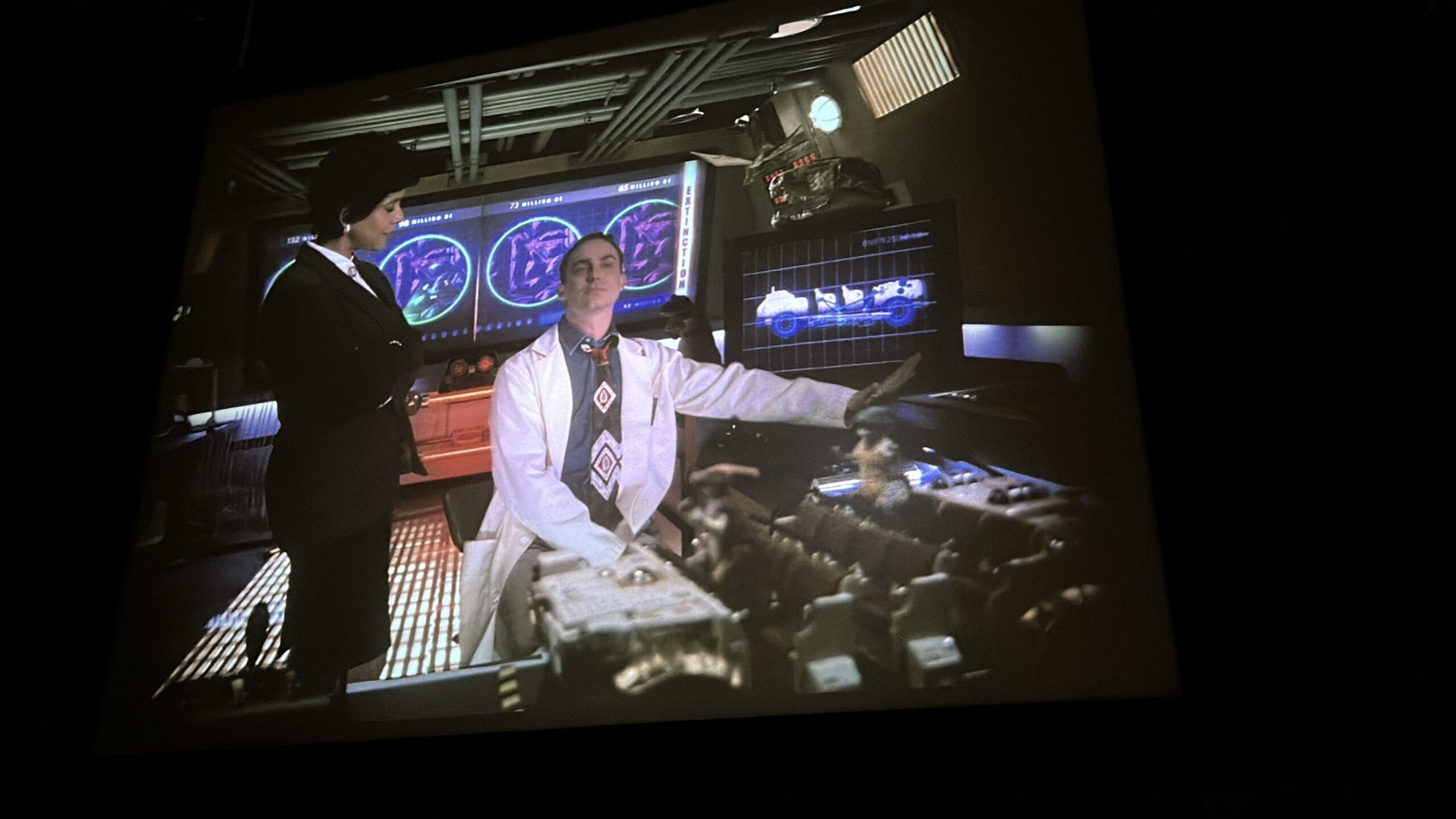
Dr. Marsh assured guests and Dr. Seeker that all Time Rovers are securely locked on coordinates for the early Cretaceous period. Dr. Seeker sarcastically agreed, inputting a code and getting an “Access Denied” screen.
Seeker continued his real safety briefing by talking about seatbelts: “Plug them in. Use them.” He told guests to keep their hands and arms inside the vehicle and said flash photography “alters the homing signal, and that’s not good.”
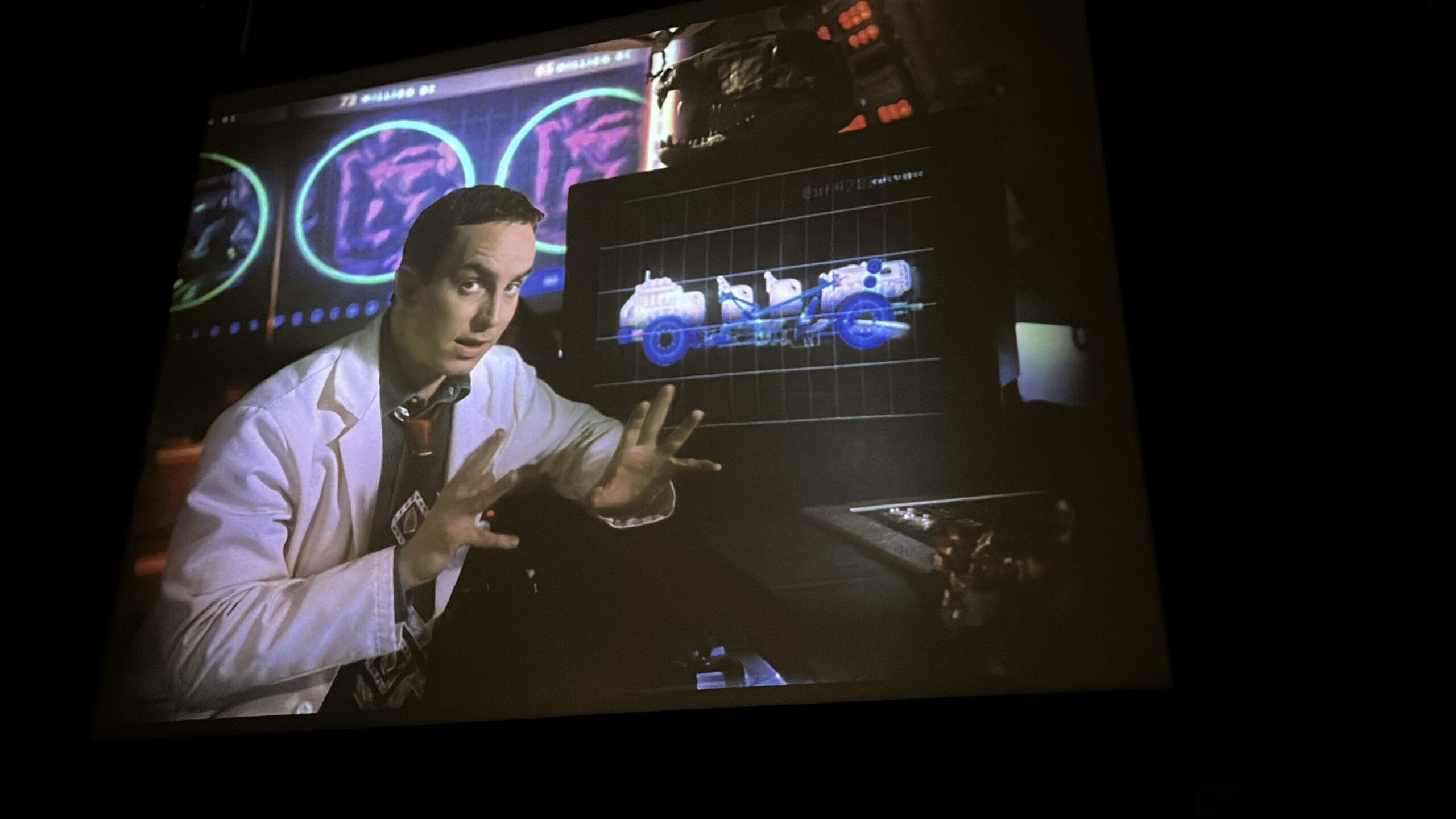
Once Dr. Marsh was out of sight, Seeker hacked the “securely locked” coordinates to re-route guests to the late Cretaceous. Guests will need to find the Iguanodon, and Seeker will enlarge the transport field to pick him up.
And don’t worry about that asteroid. You’ll be in and out of there before it even breaks the atmosphere. Trust me. What could go wrong?
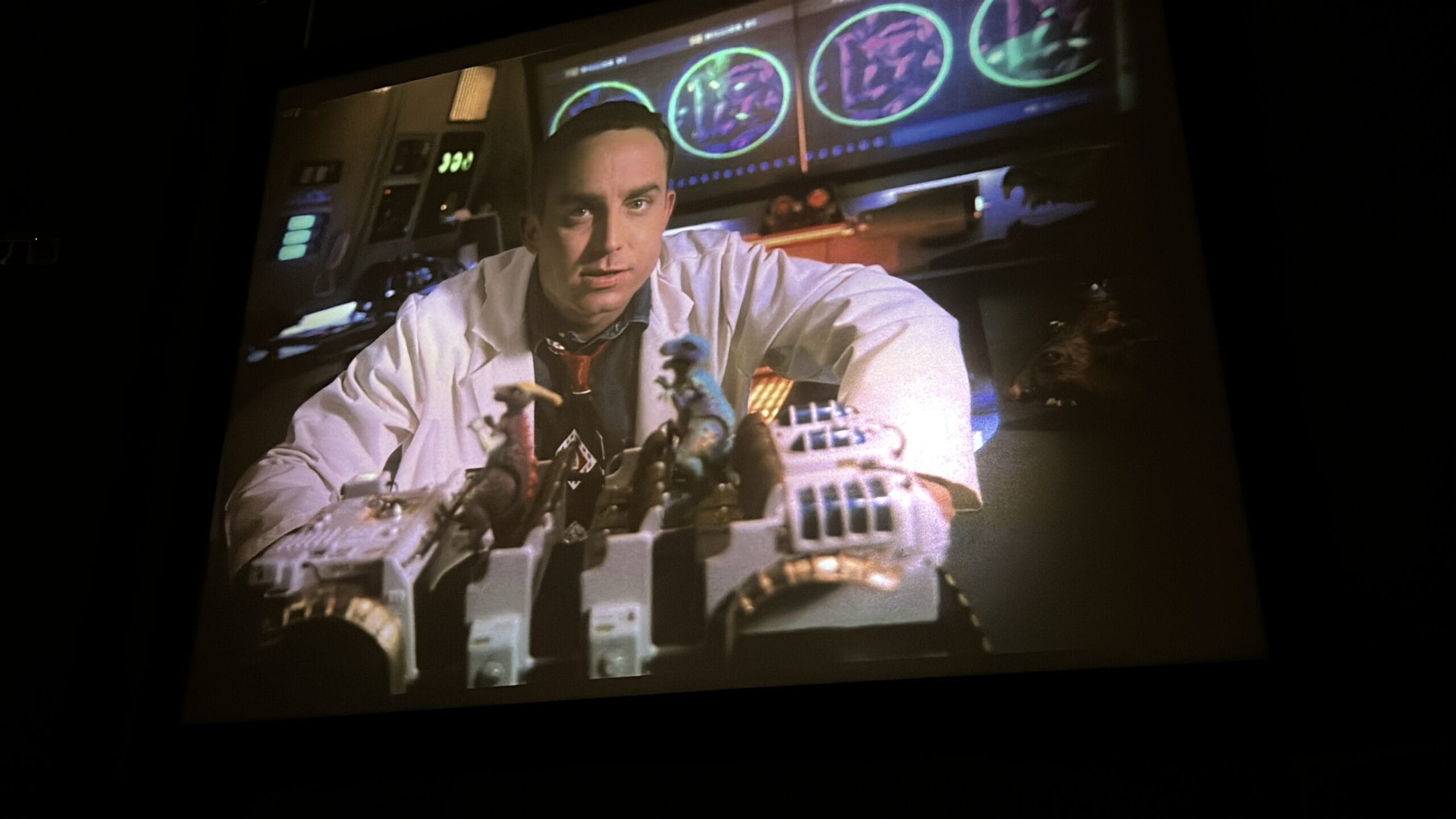
As guests exited the pre-show room, Dr. Seeker’s voice reminded them that only they are going on the special mission, so they shouldn’t tell anyone else.
DINOSAUR Loading Area
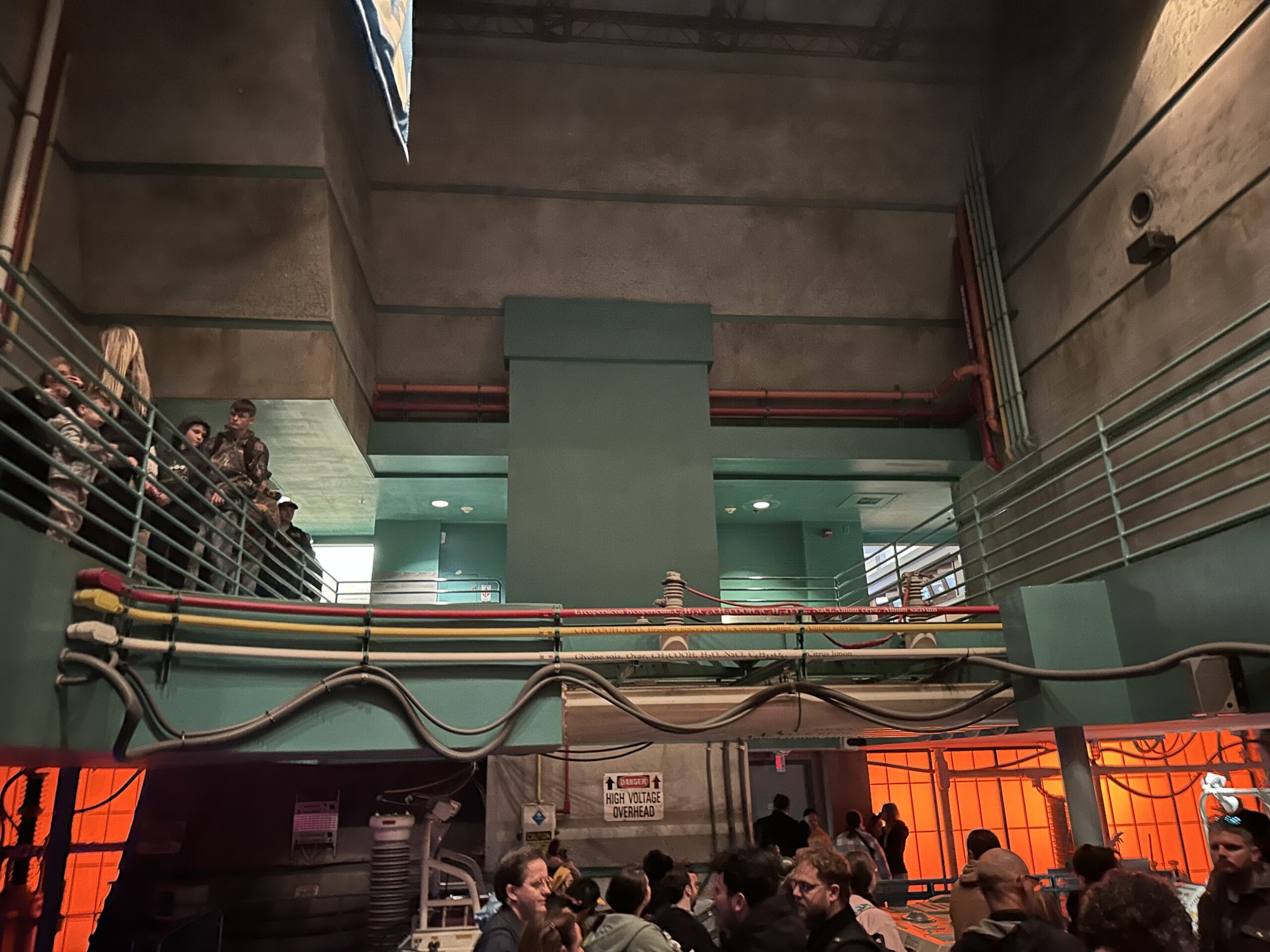
Guests headed down a short concrete hallway, following signs to the “underground research facility,” then entered a catwalk above the loading area.

Blue banners hung above the loading area spell out “The Future is in the Past.” The Dino Institute logo was on the center banner.
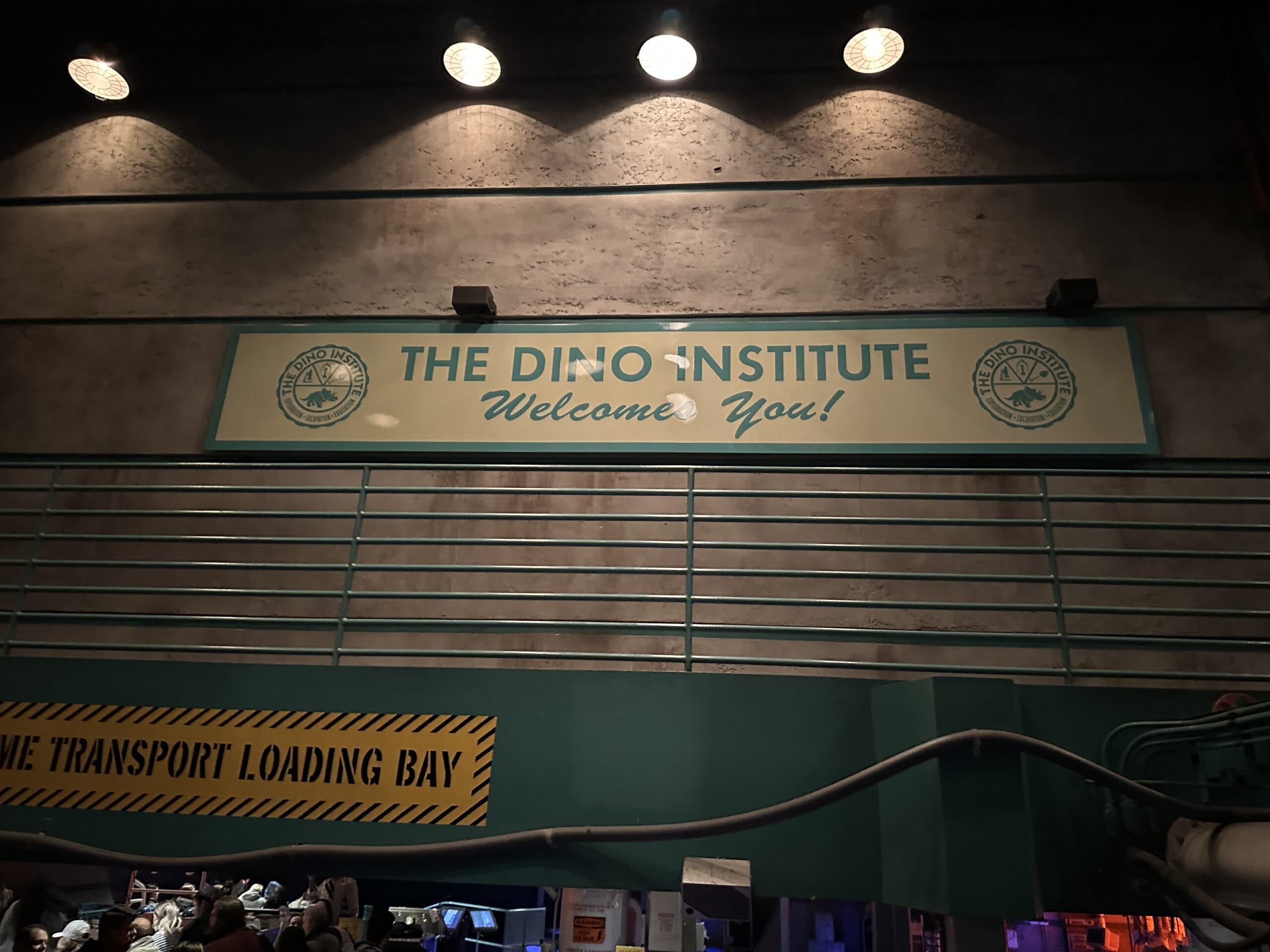
A big sign read “The Dino Institute Welcomes you!”
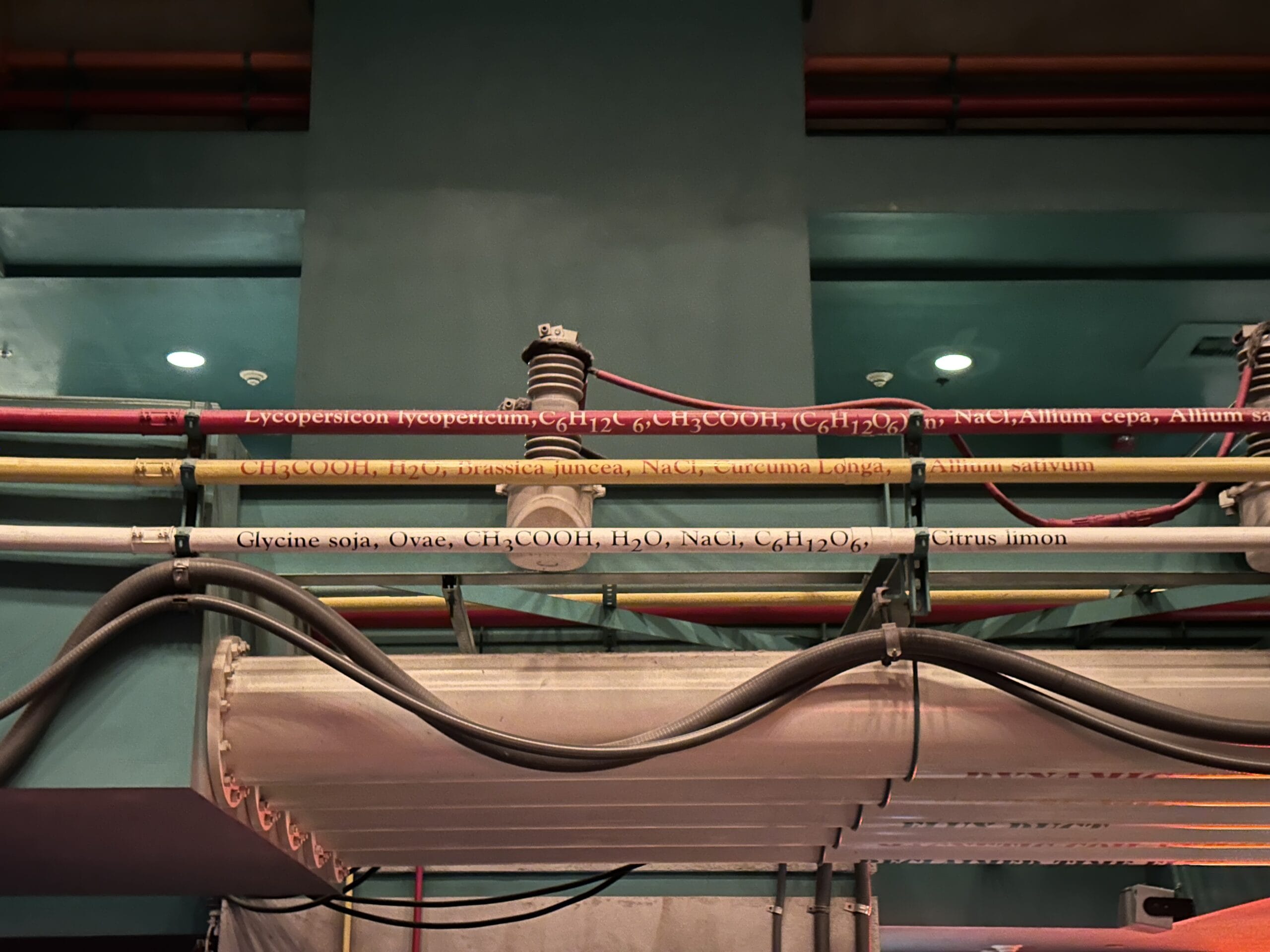
Among the pipes throughout this space was this trio of red, yellow, and white pipes. From way back when DINOSAUR was sponsored by McDonald’s, these featured the formulas for ketchup, mustard, and mayonnaise.
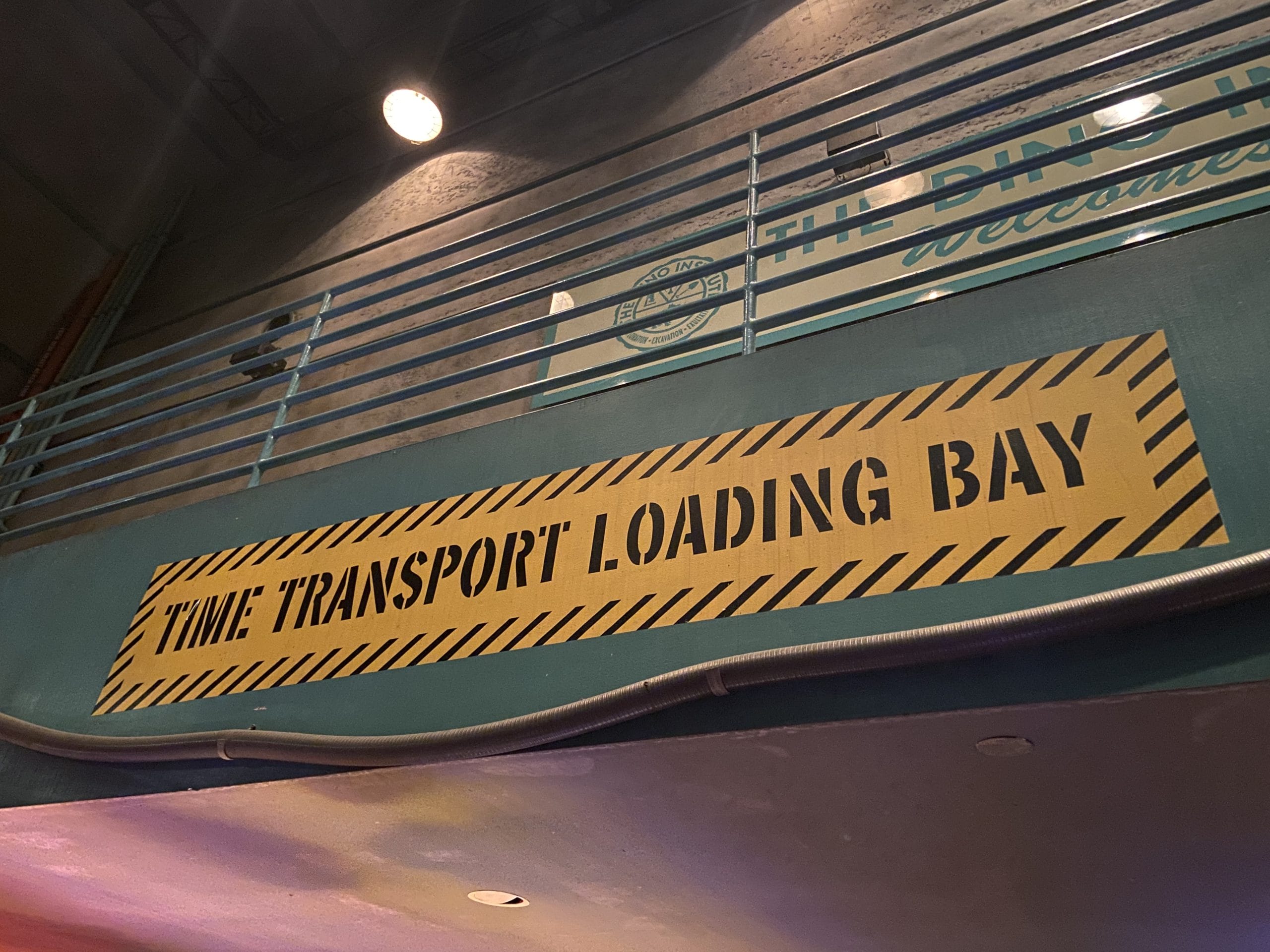
Guests walked downstairs under a “Time Transport Loading Bay” sign.
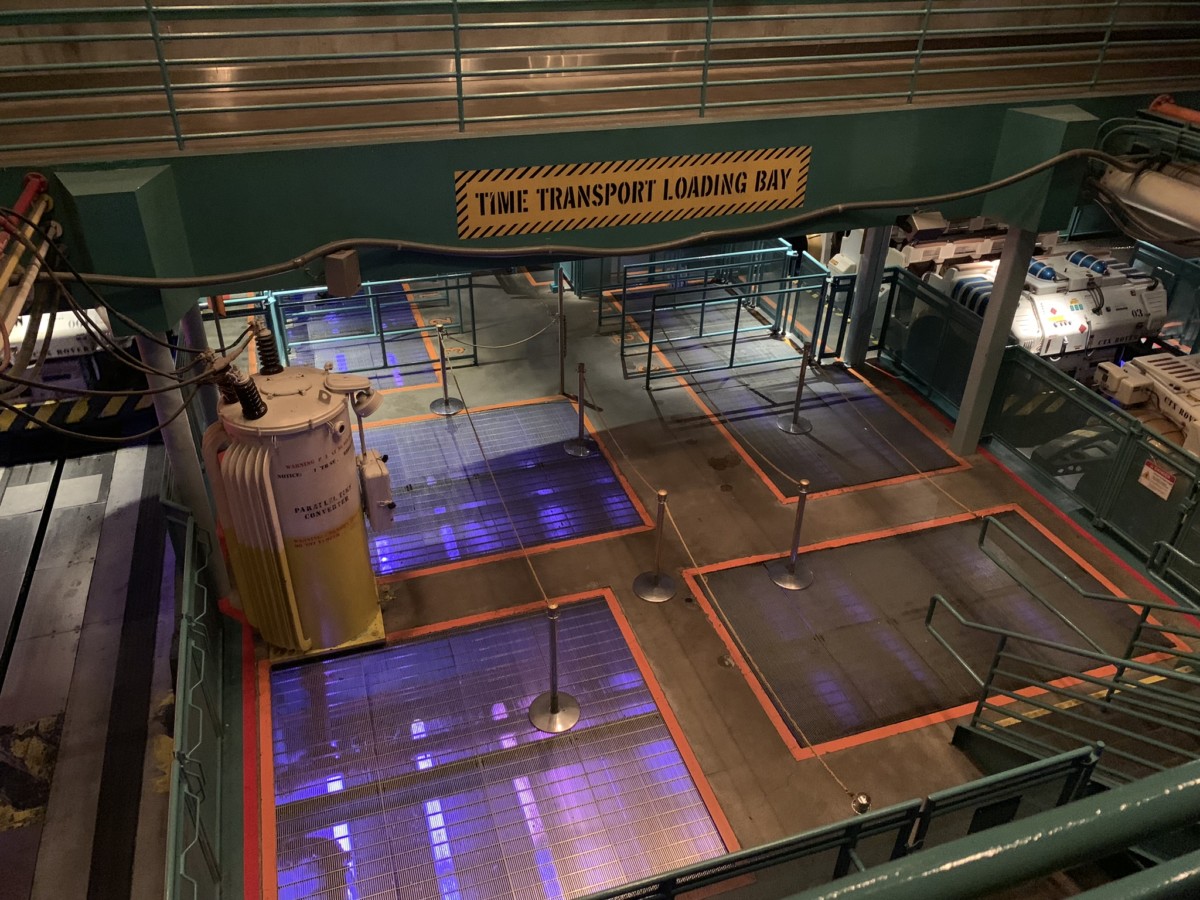
Cast members then split guests up to load at two stations, one on either side of the platform. The platform had grates with eerie lights glowing through them.
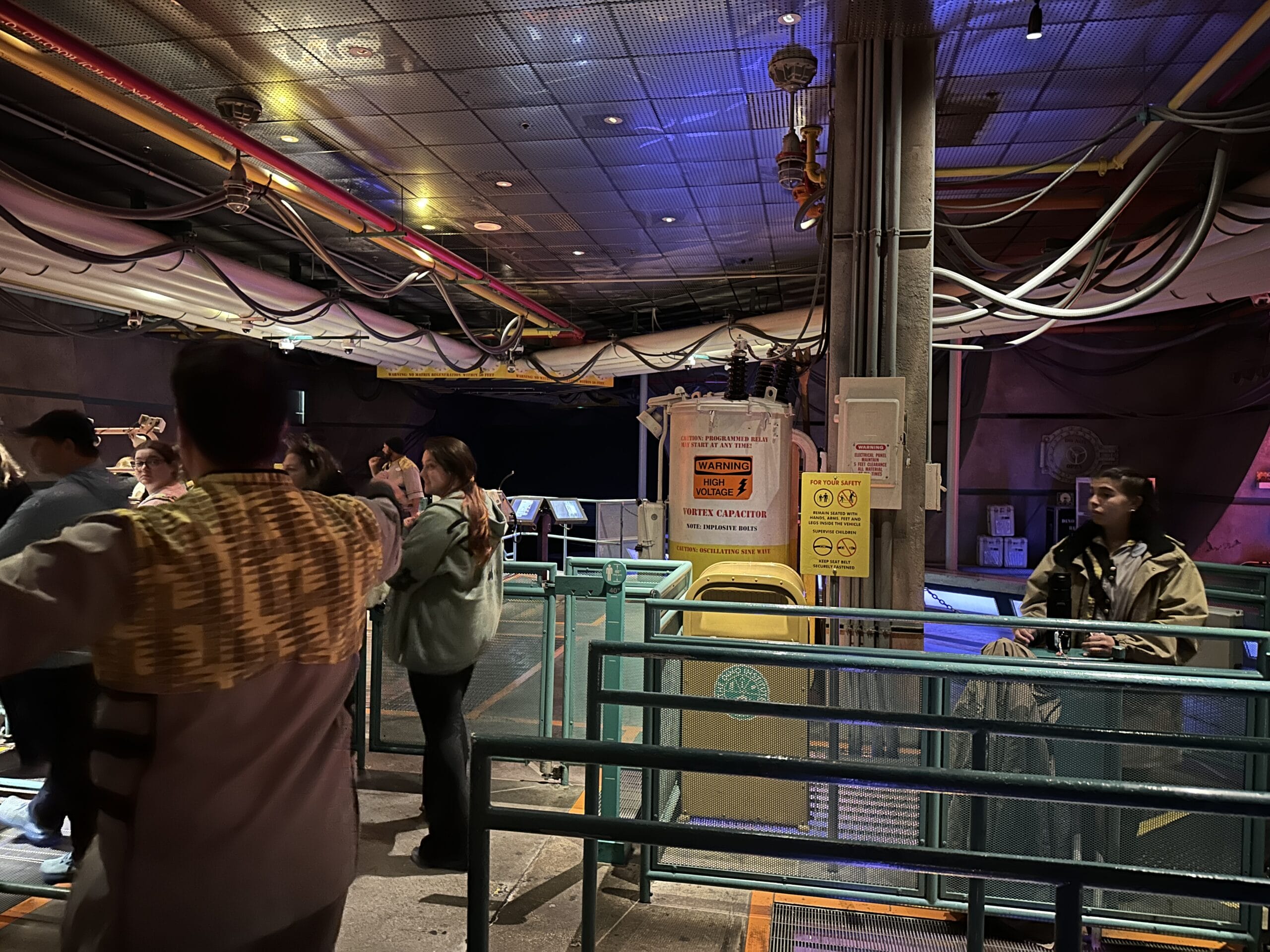
The load stations had green railings and gates. Throughout the DINOSAUR queue were beige trash cans with the institute logo on the sides.
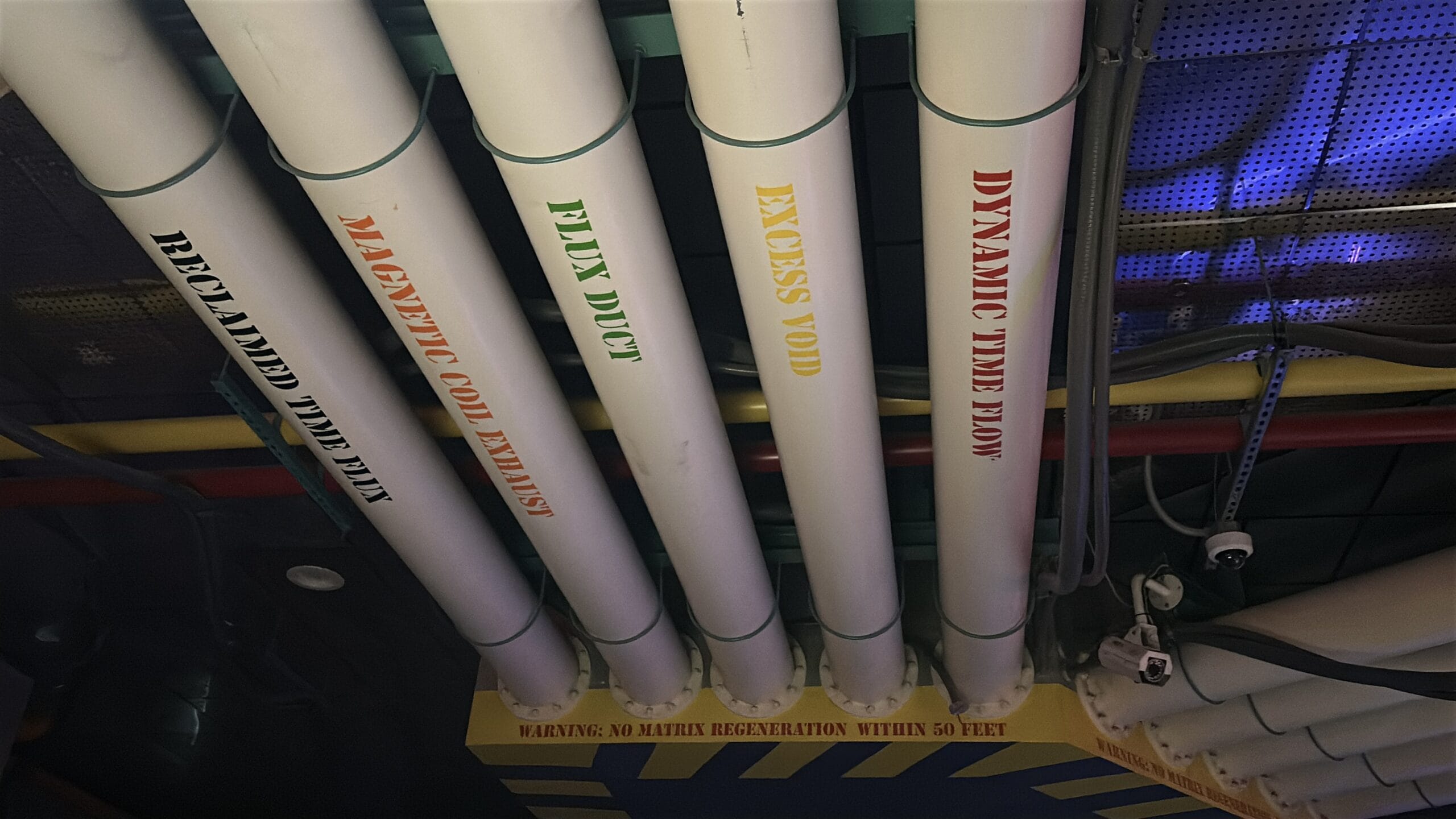
Another set of pipes across the ceiling was labeled:
- Dynamic Time Flow
- Excess Void
- Flux Duct
- Magnetic Coil Exhaust
- Reclaimed Time Flux
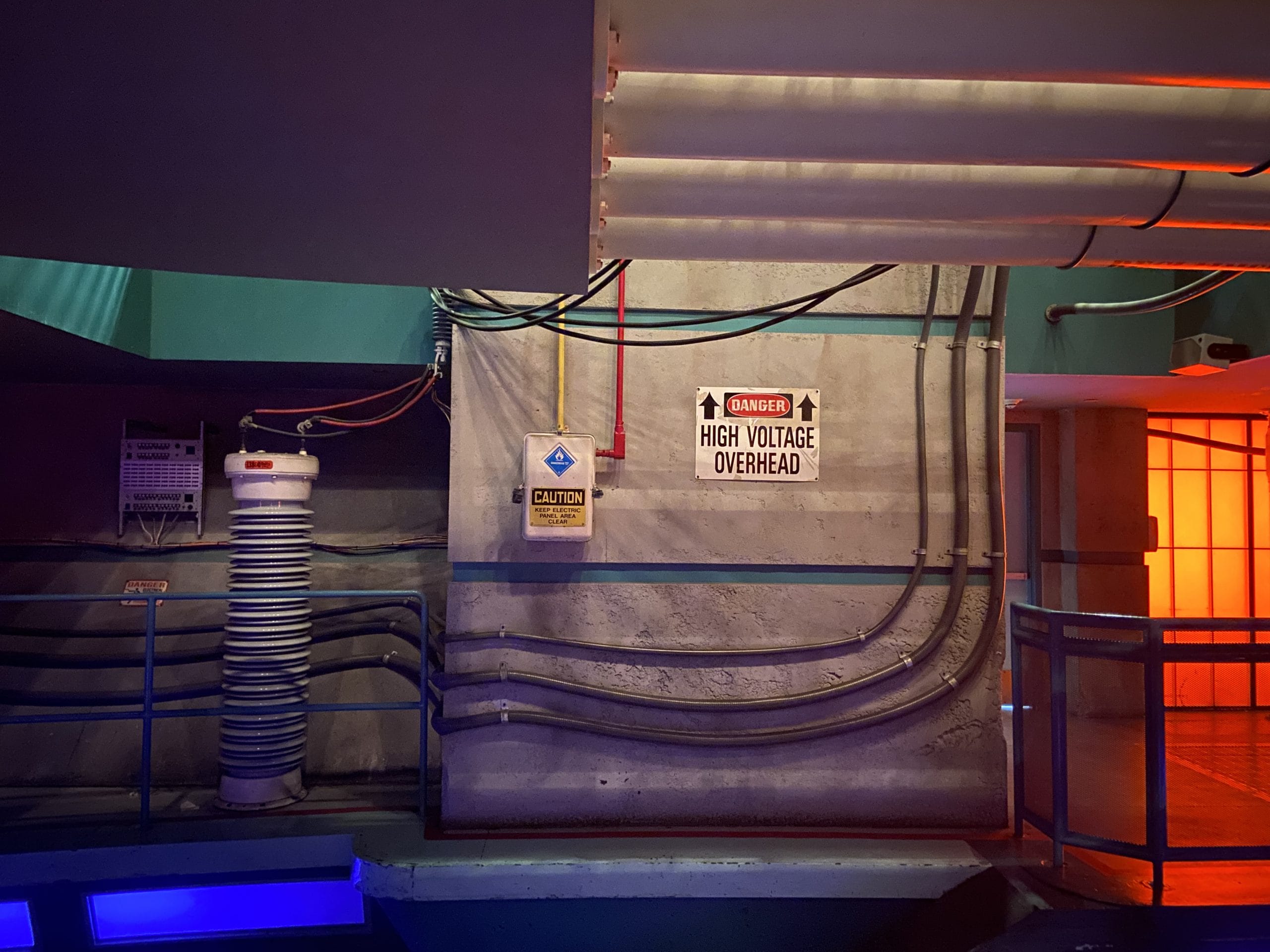
There was various machinery with “danger” and “caution” signs in the space.
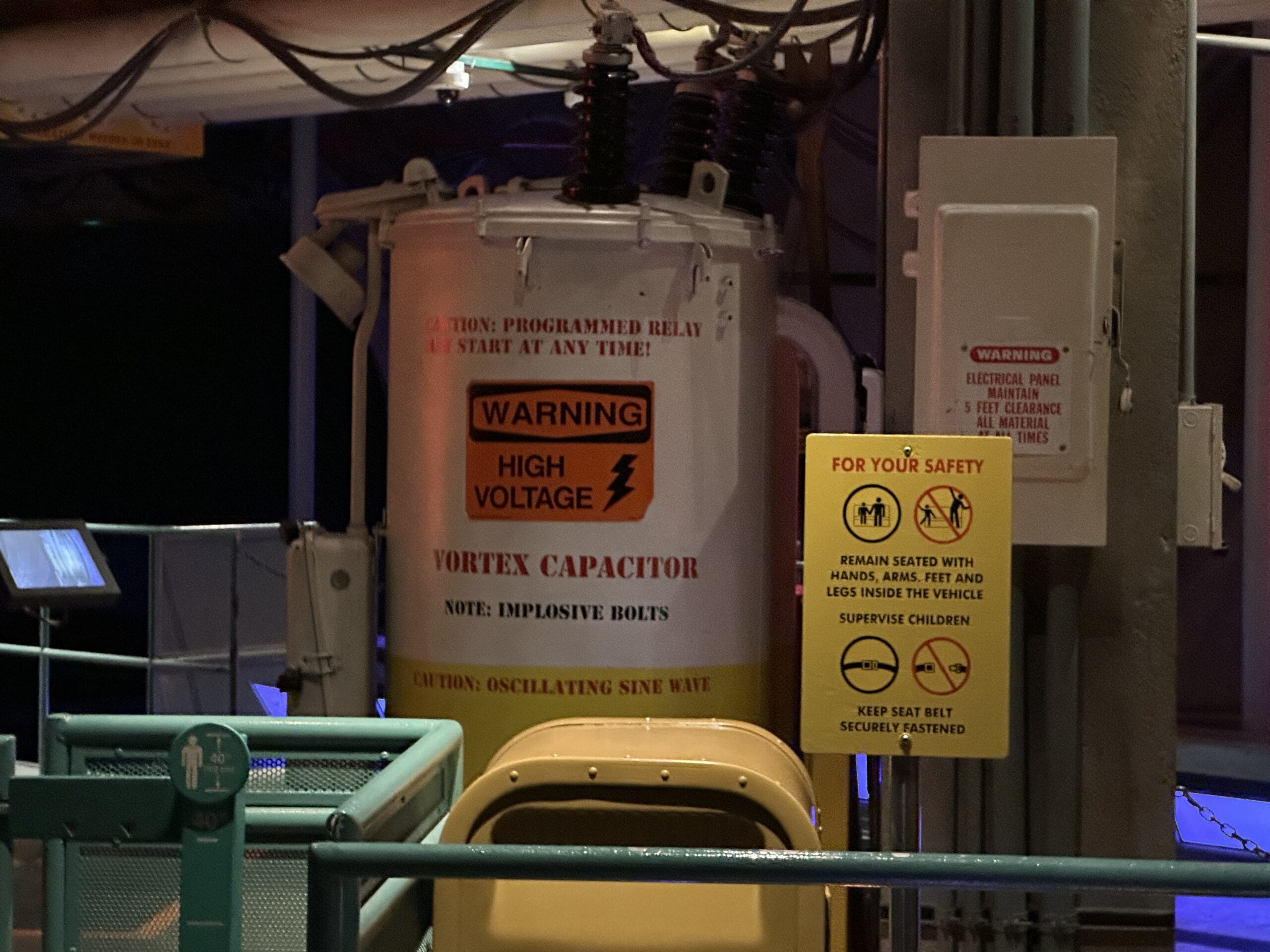
This high-voltage canister had something to do with a vortex capacitor.
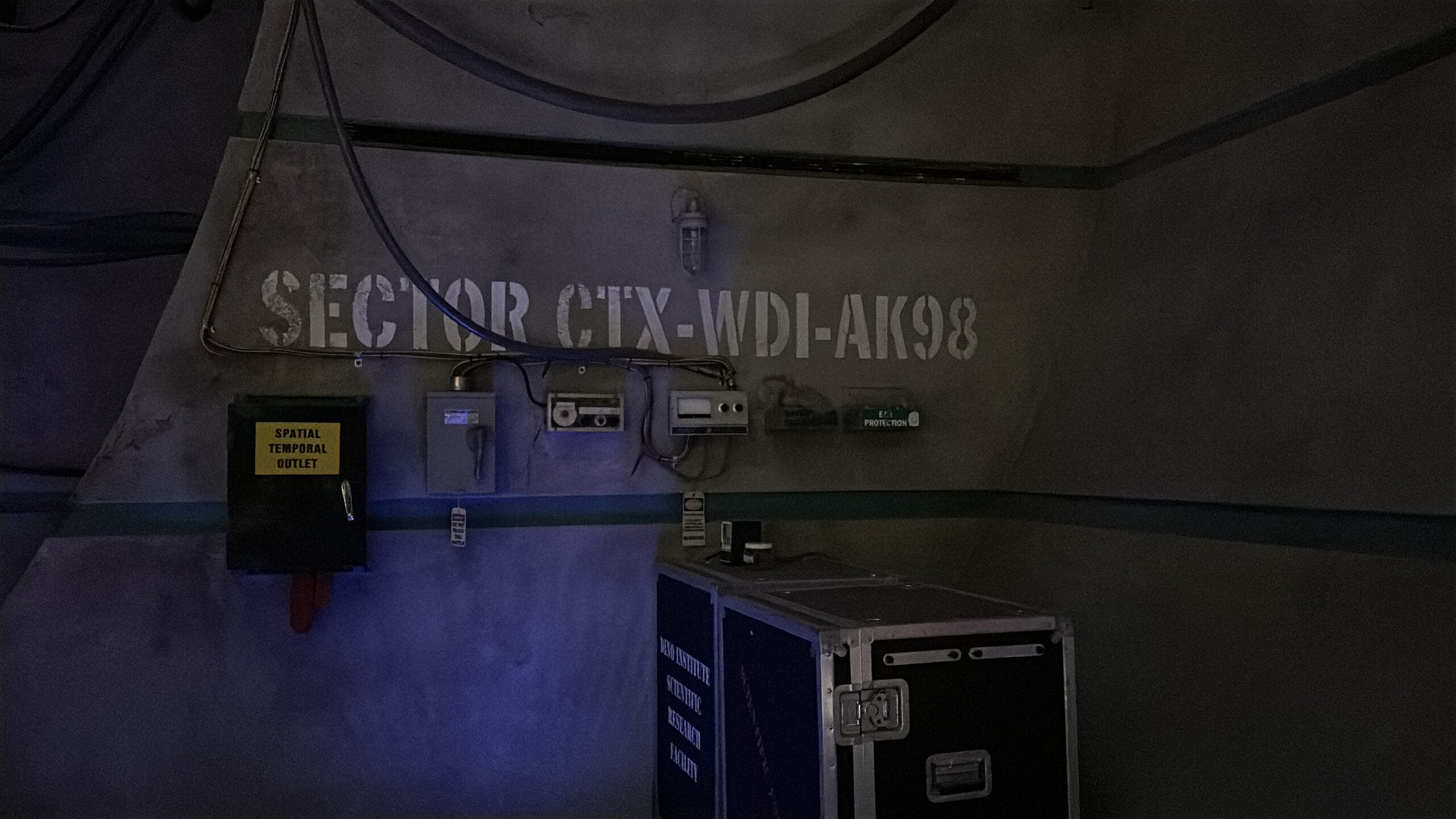
Spray-painted on one wall was “SECTOR CTX-WDI-AK98.” This stood for Countdown to Extinction, Walt Disney Imagineering, Animal Kingdom, 1998.
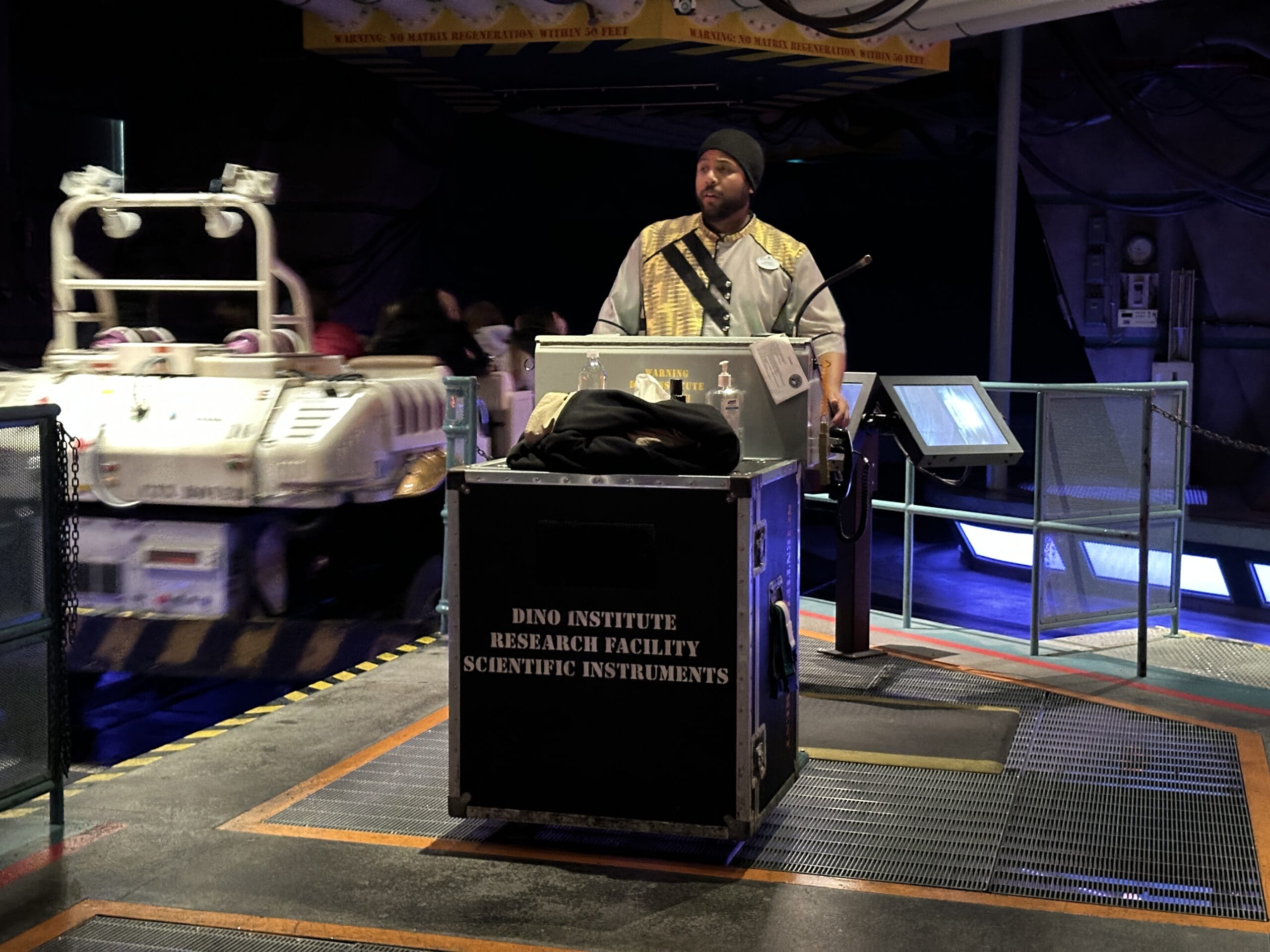
A cast member podium was a black case labeled “Dino Institute Research Facility Scientific Instruments.” The cast members at this station double-checked guest seatbelts.
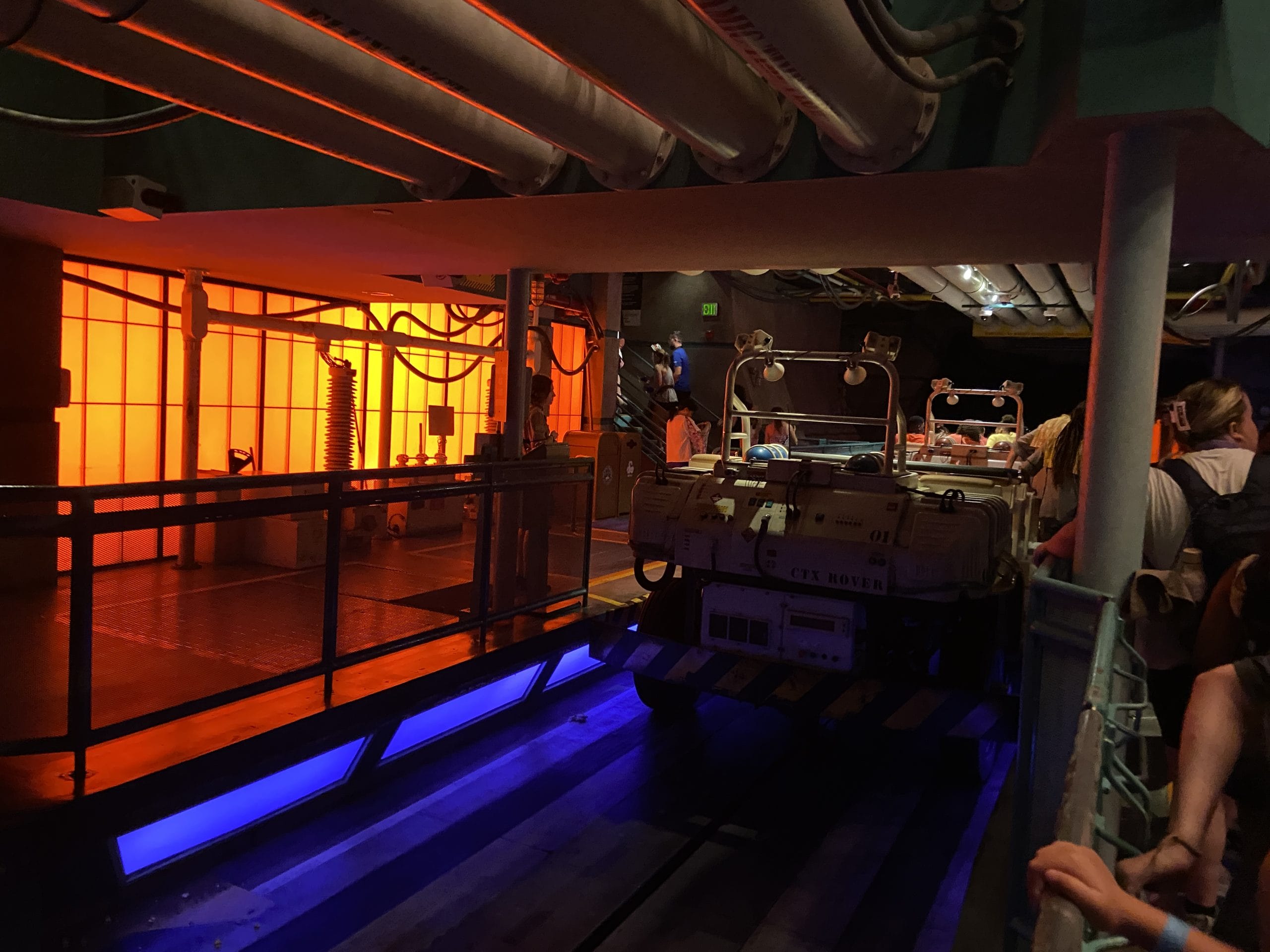
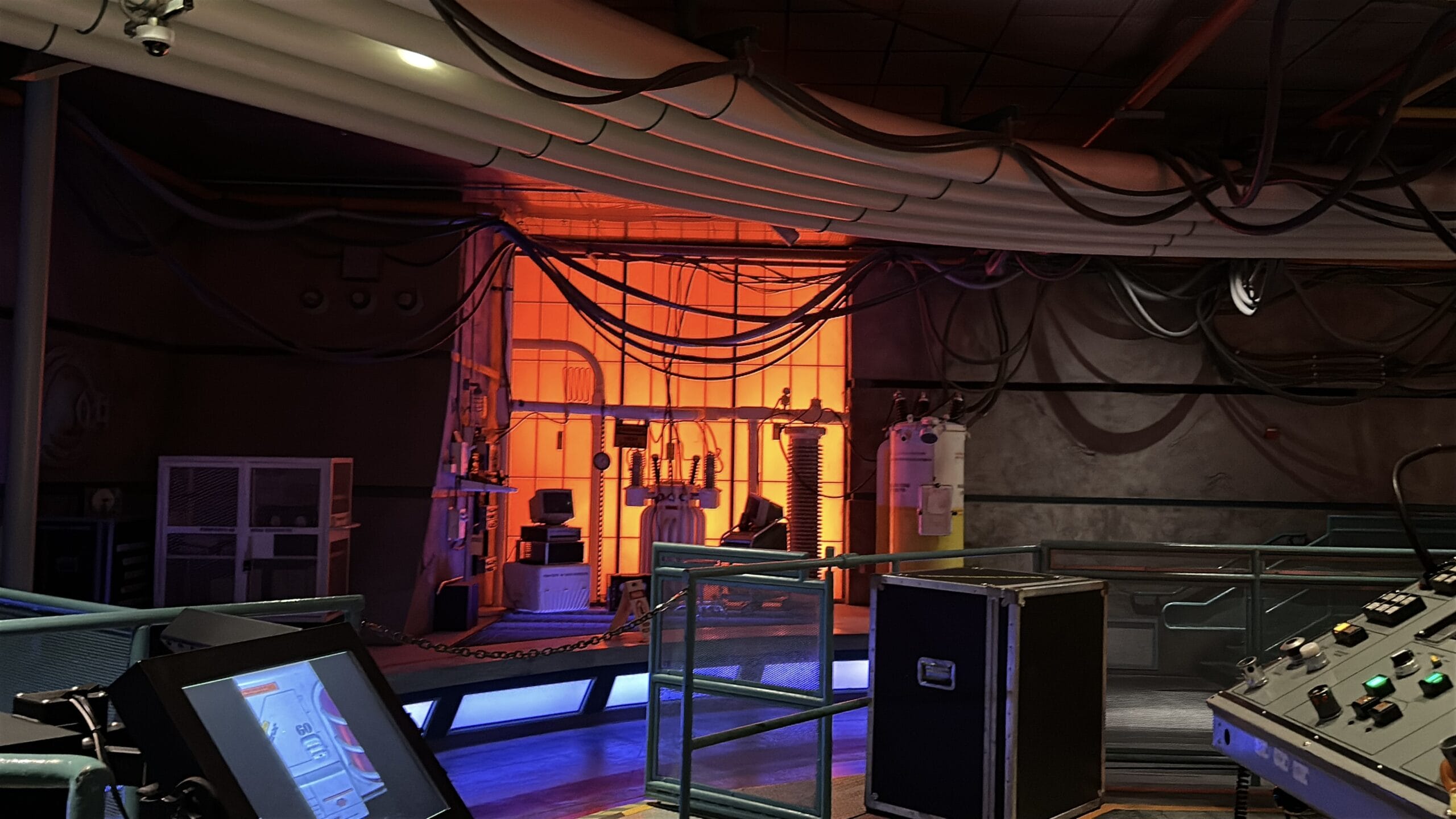
Walls at the exit platforms glowed with red-orange light. Near the floor of the ride track were contrasting blue lights.
DINOSAUR Ride Vehicles
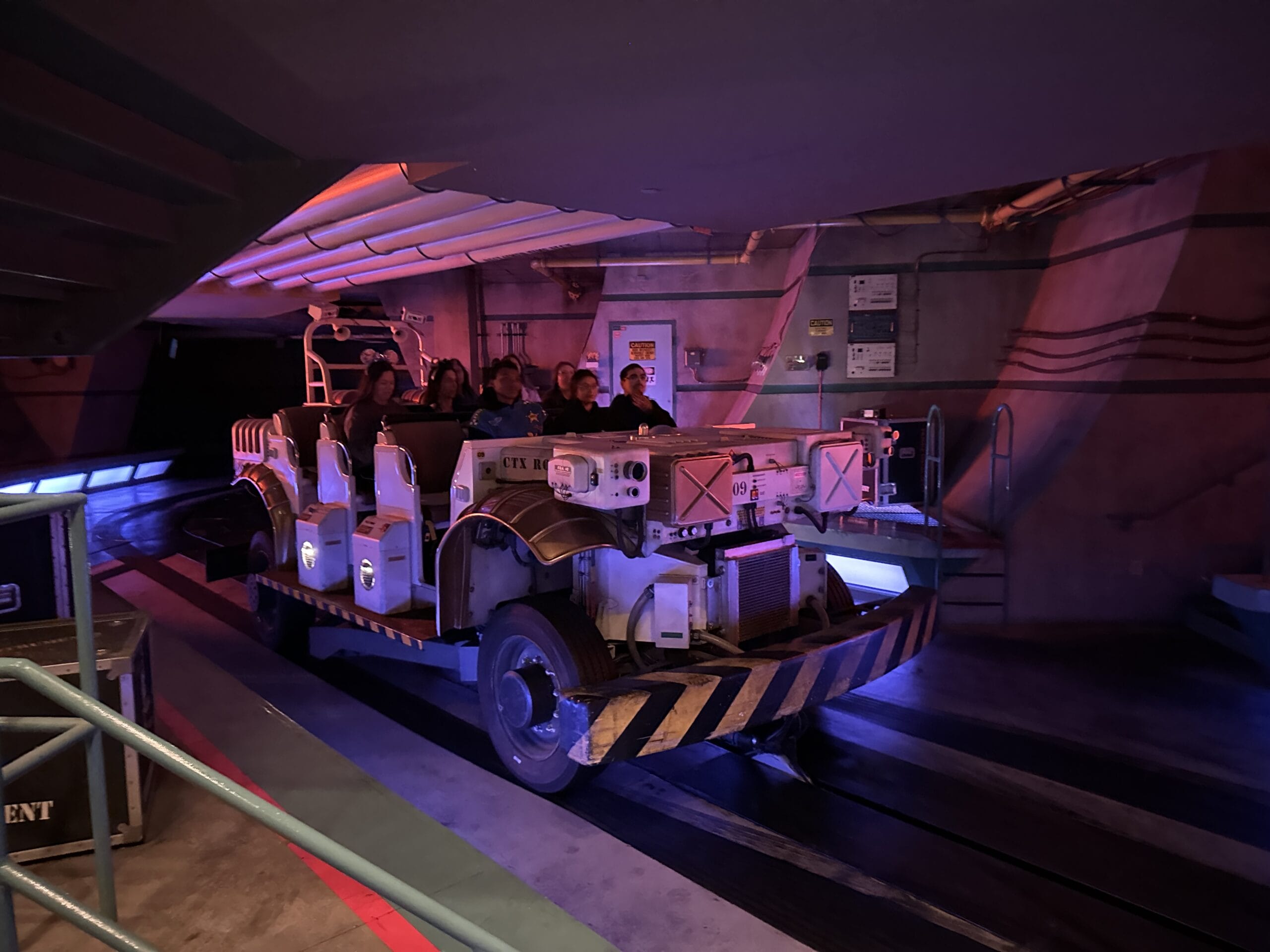
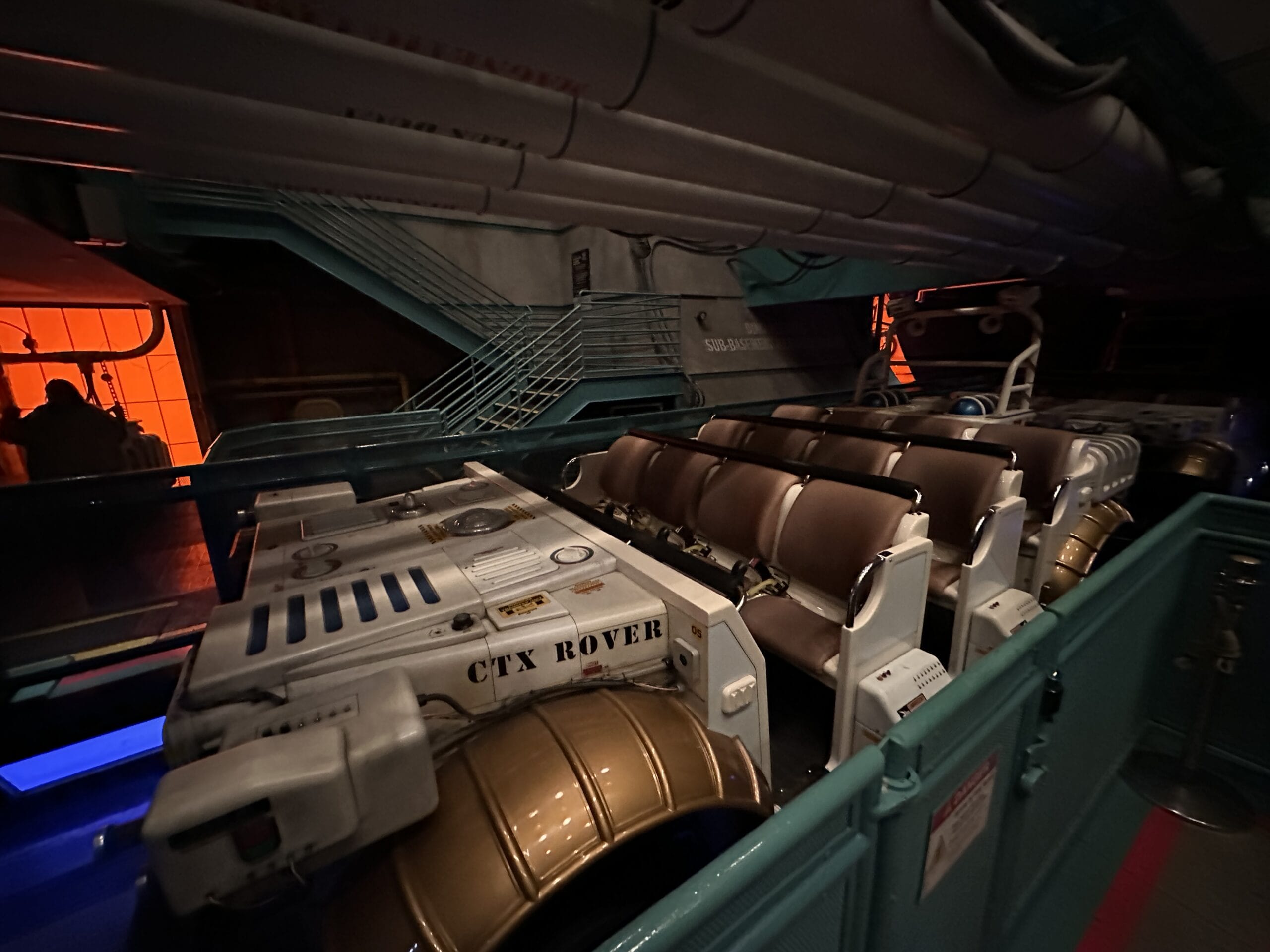
The CTX Time Rovers were beige trucks with various buttons, switches, labels, wires, and lights, making them look tricked out with time travel tech.
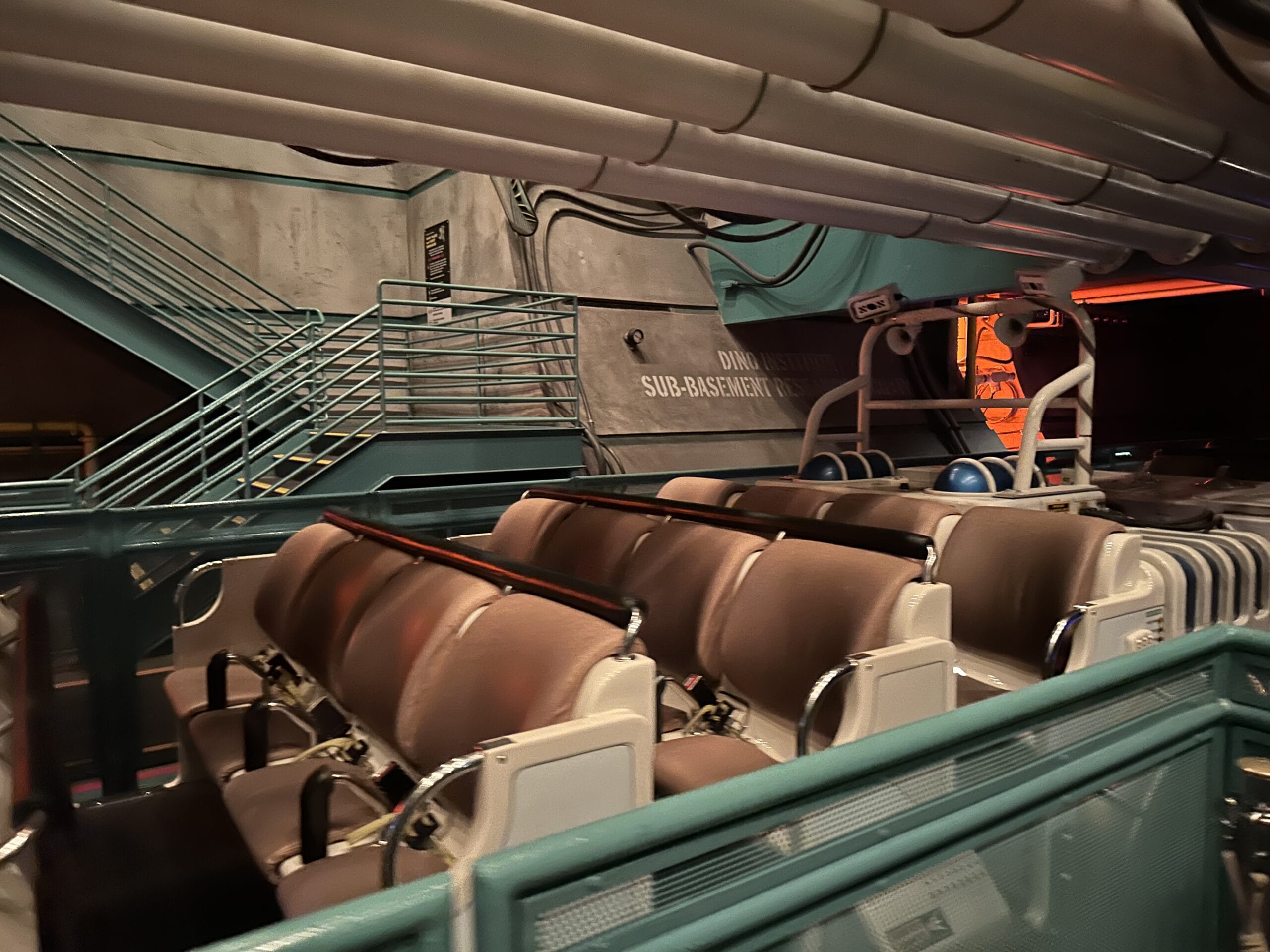
There were three rows of padded seats, each with a padded handrail in front of them and small handrails between the seats. Each row seated four guests. Guests put their bags in a pouch and buckled a seatbelt across their waist.
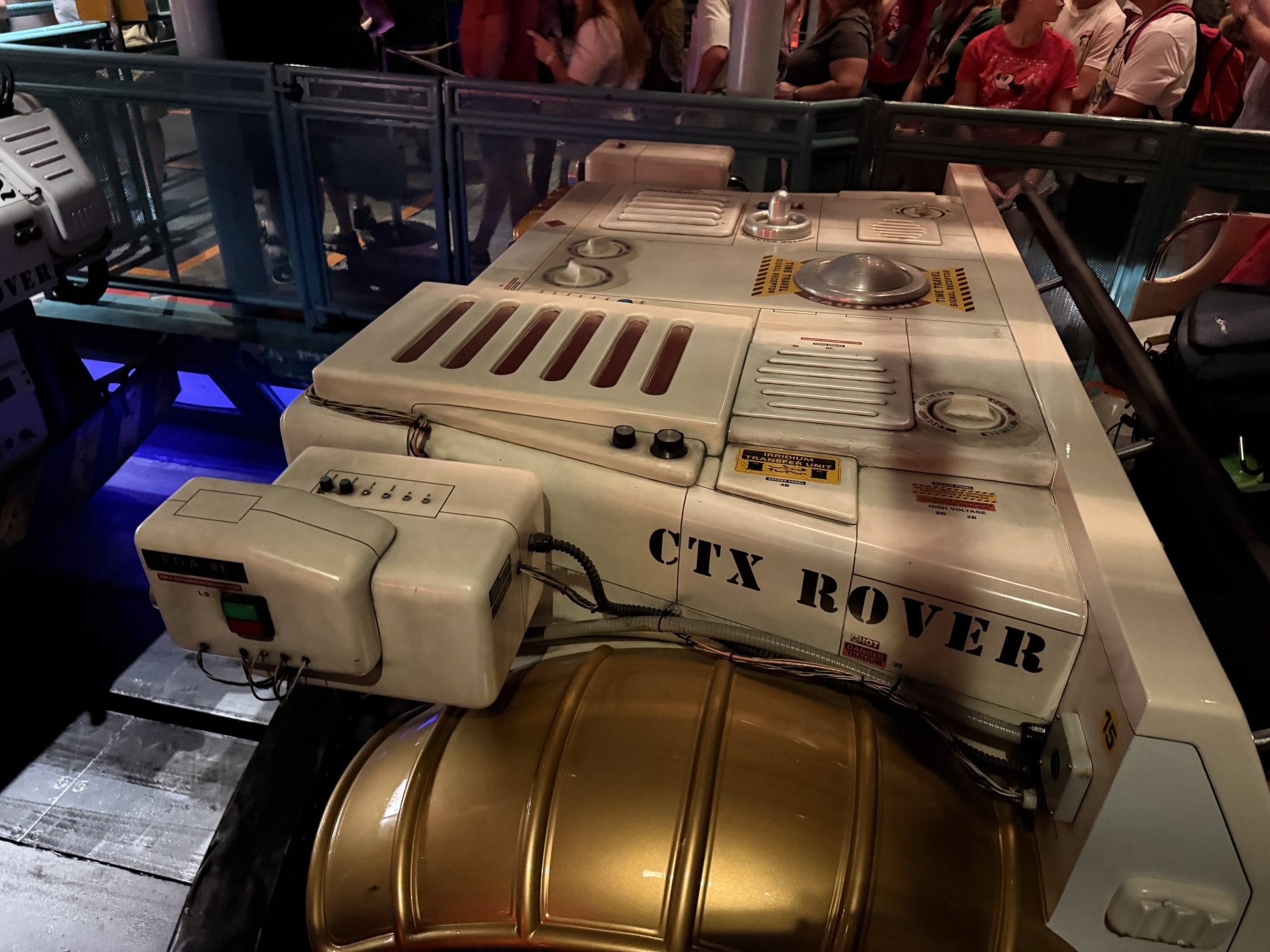
The rover wheels were covered by golden wheel wells. “CTX Rover” was on the front.
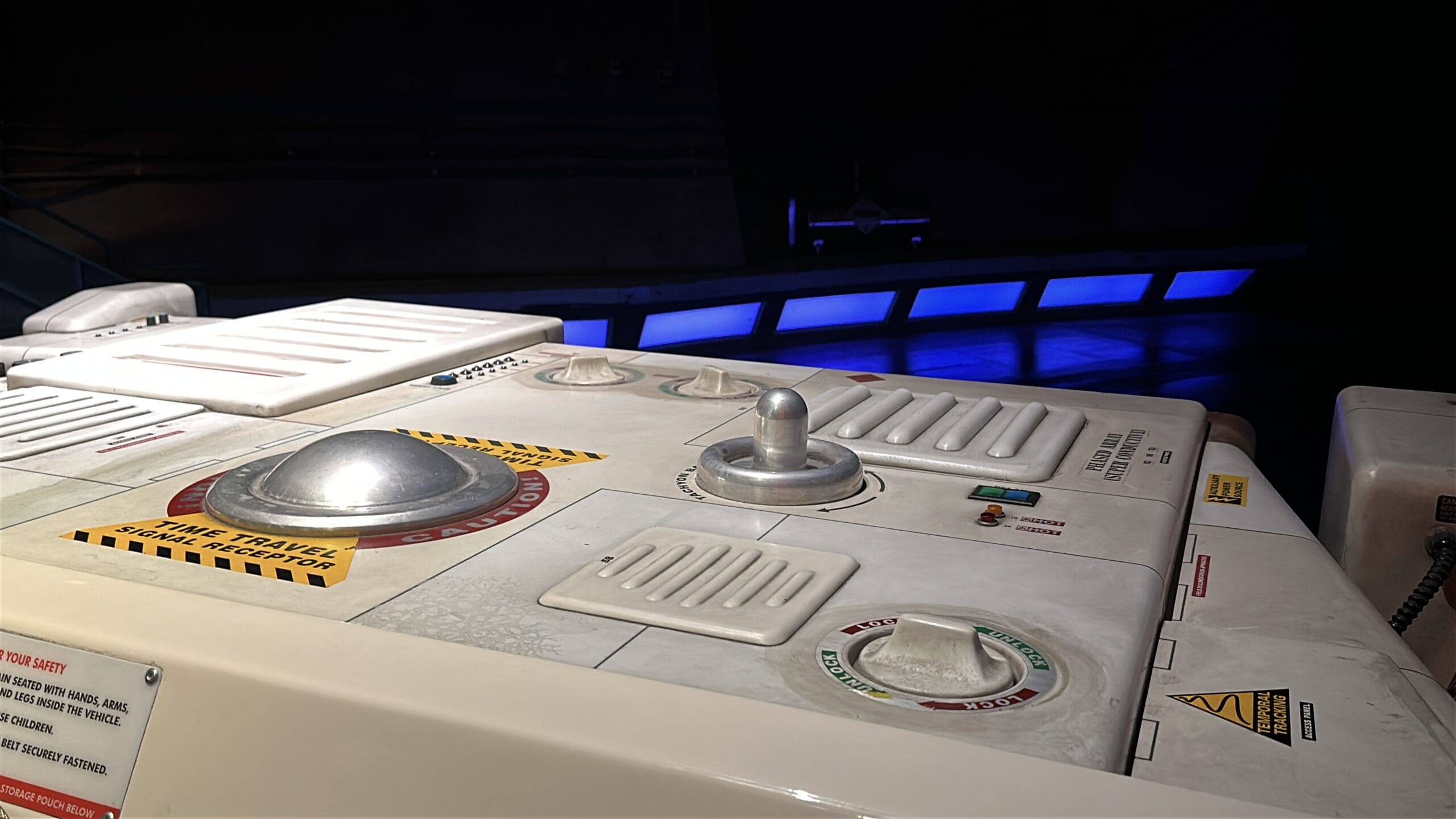
A big silver element on the hood was labeled “Time Travel Signal Reception.”
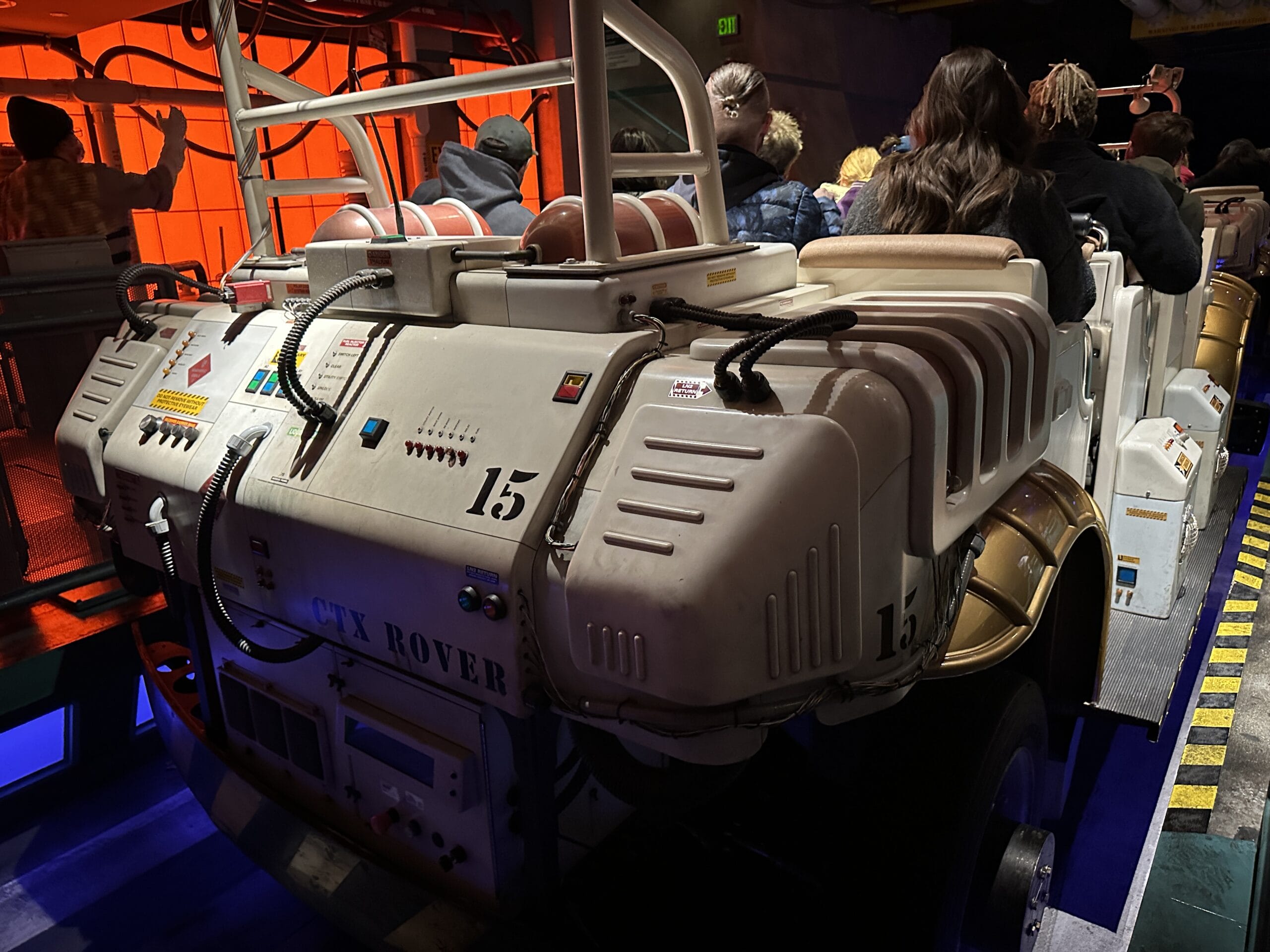
On the back were more buttons and labels, as well as each car’s number. There were 15 vehicles.
DINOSAUR Ride POV
After loading, guests heard Seeker’s voice: “Listen up! We’ve got to get in, grab the Iguanodon, and get out before the asteroid hits.” Seeker’s voice and the electronic voice of the rover’s computer continued to narrate. This narration was changed over the course of the ride’s 1998 previews before being solidified.
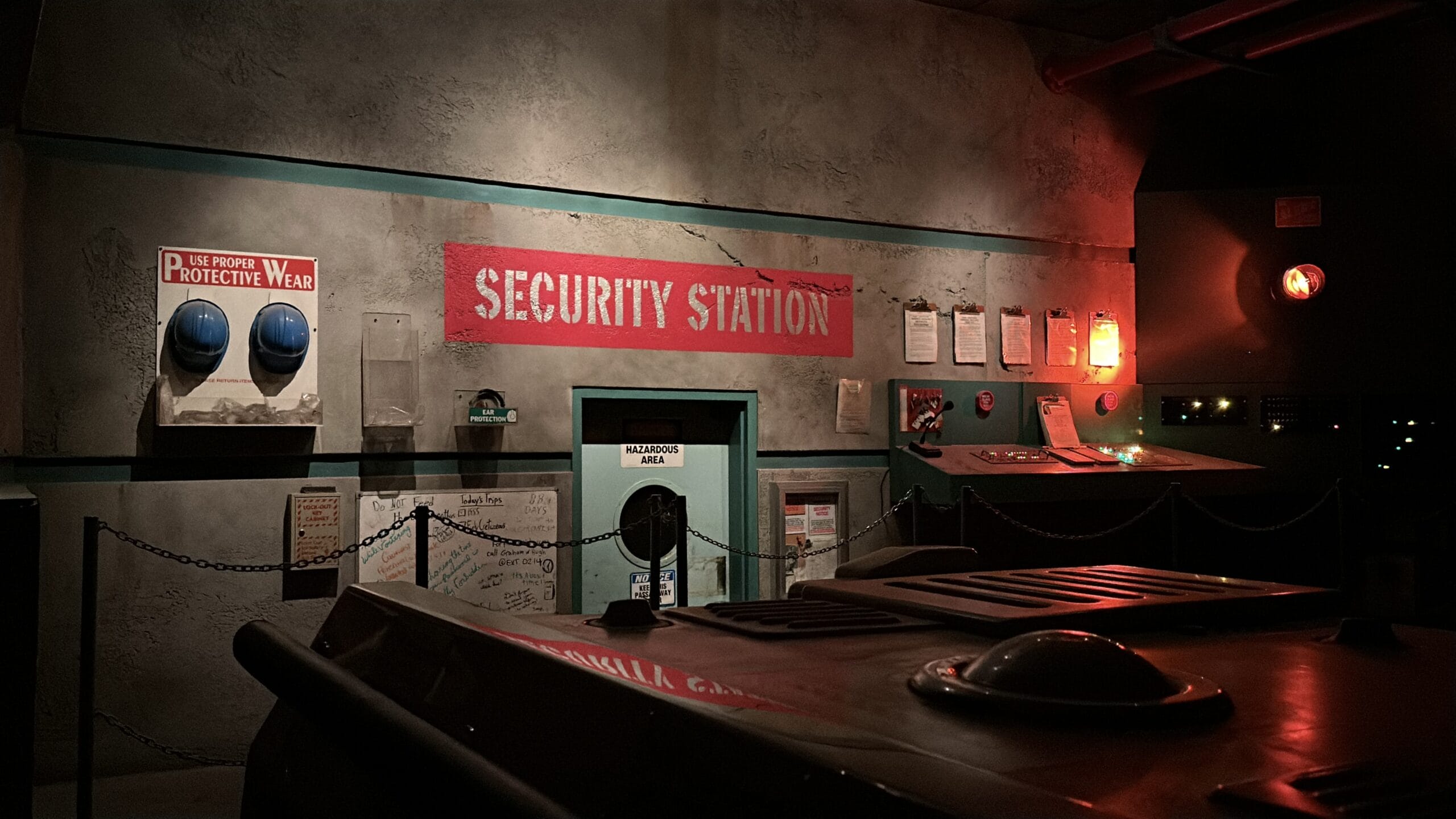
From the two load stations, cars moved one at a time through the attraction. Before traveling back in time, guests passed the Security Station. Here were hardhats, a control panel, a big red flashing light, and a whiteboard. Cast members wrote a countdown to the ride’s closure on the board.
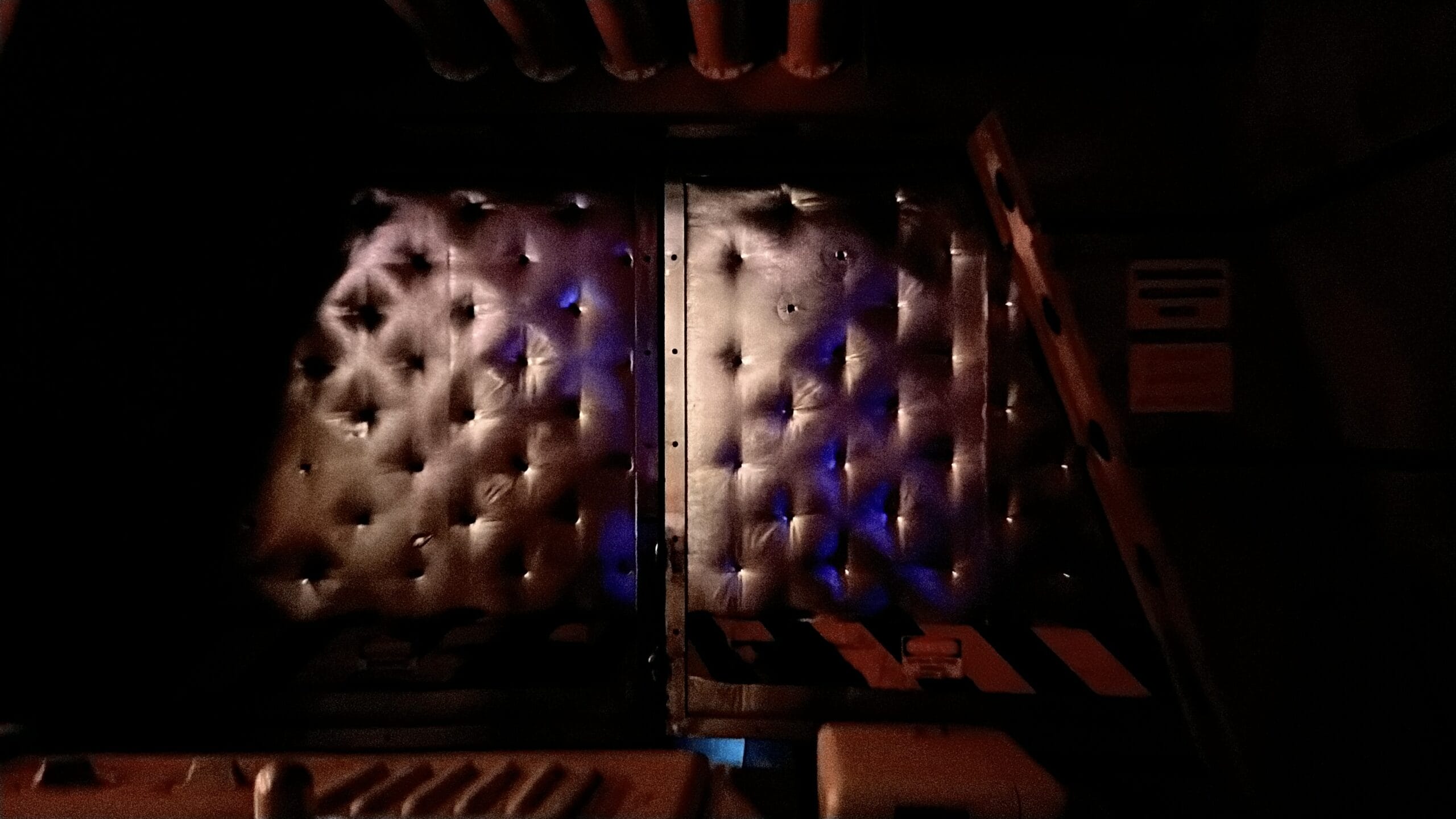
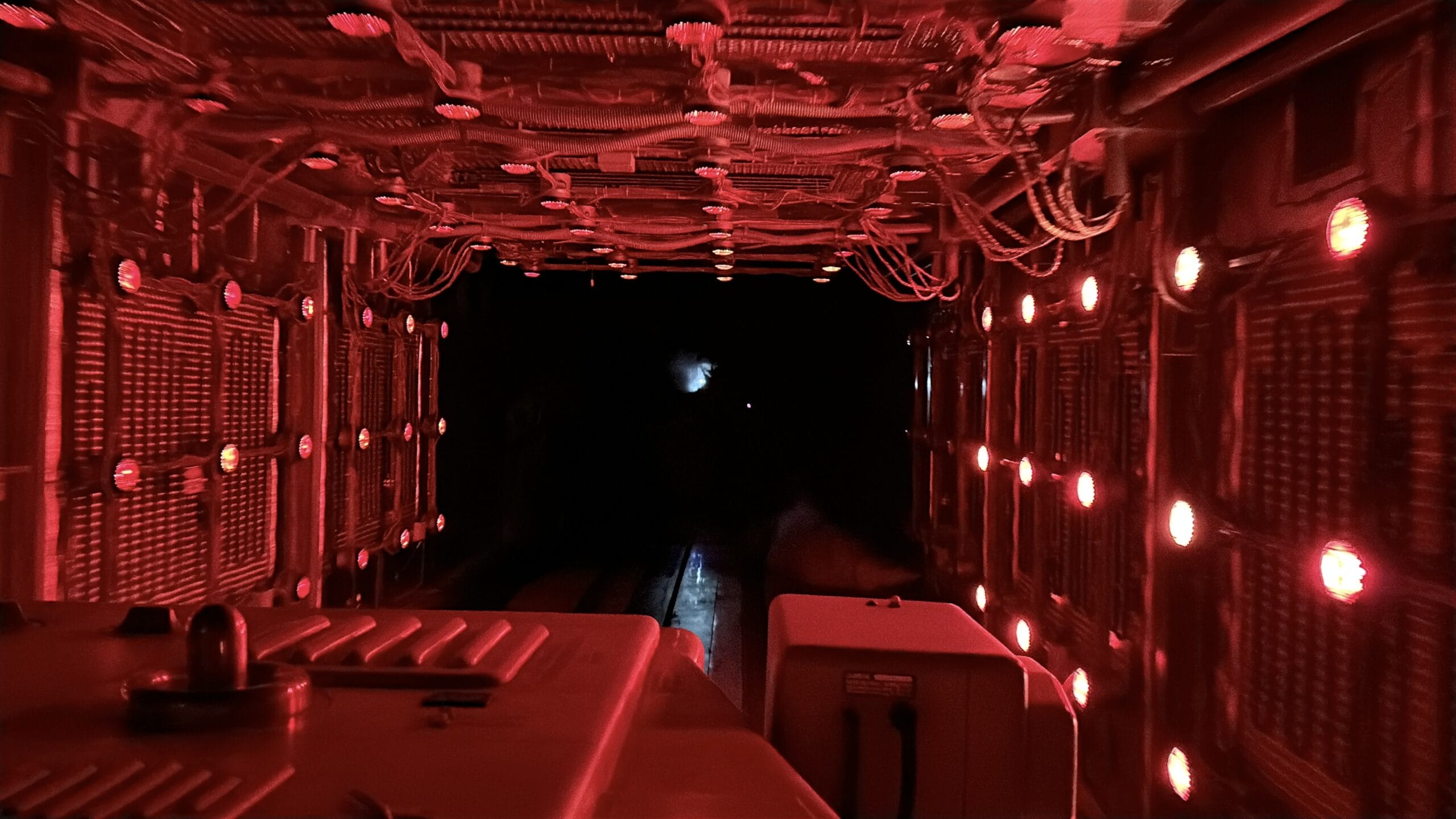
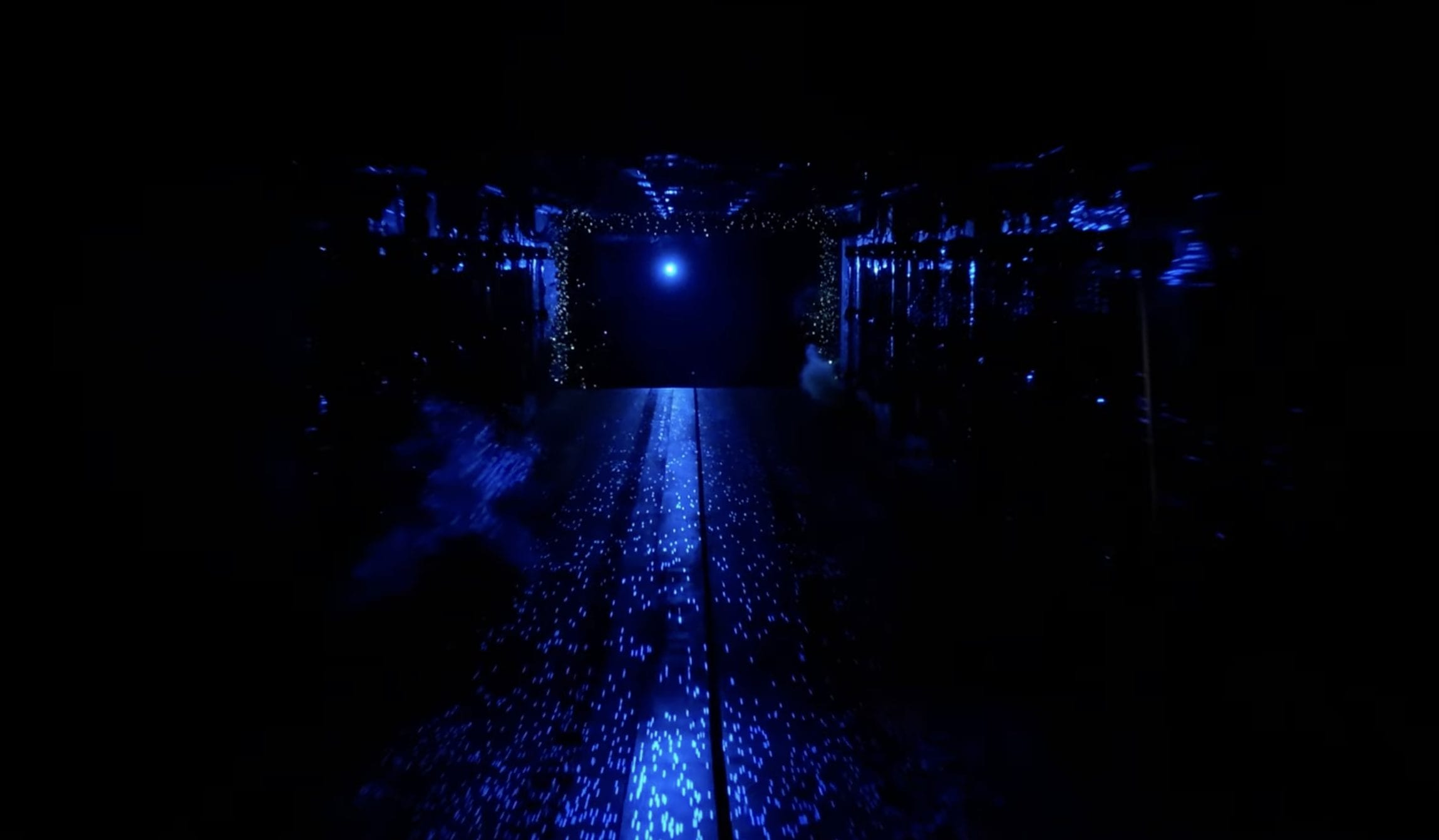
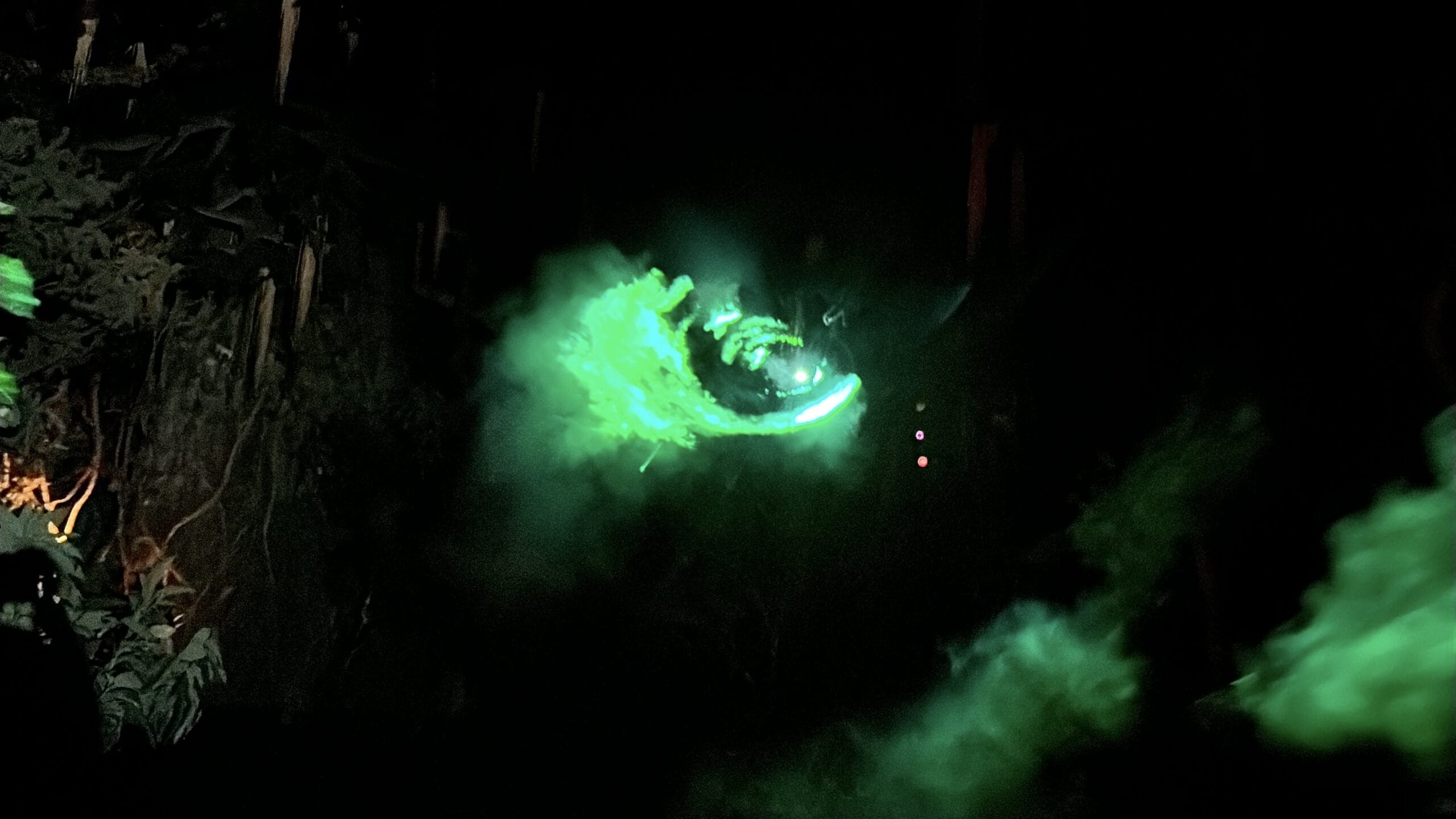
Doors opened, and vehicles entered a tunnel of red lights and fog. Disorienting flashing lights and a starry overlay helped smooth the transition into the jungles of the prehistoric era.
Now, let’s go get that dino.
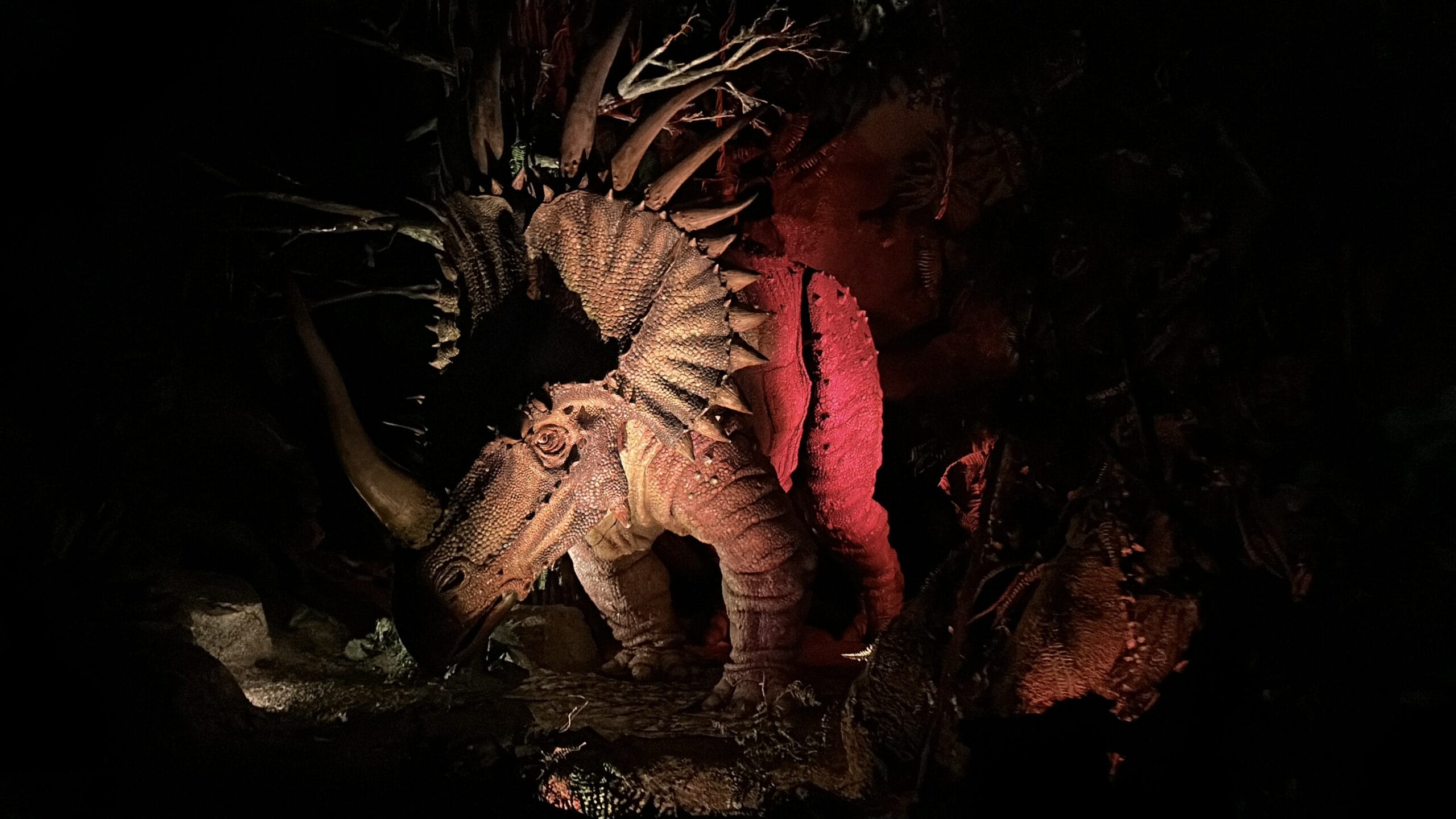
The computer identified dinosaurs throughout the ride, like the Styracosaurus, the first dino guests encountered. Immediately after meeting the Styraco, the computer warned of a meteor shower in range. “Just little ones,” Dr. Seeker said.
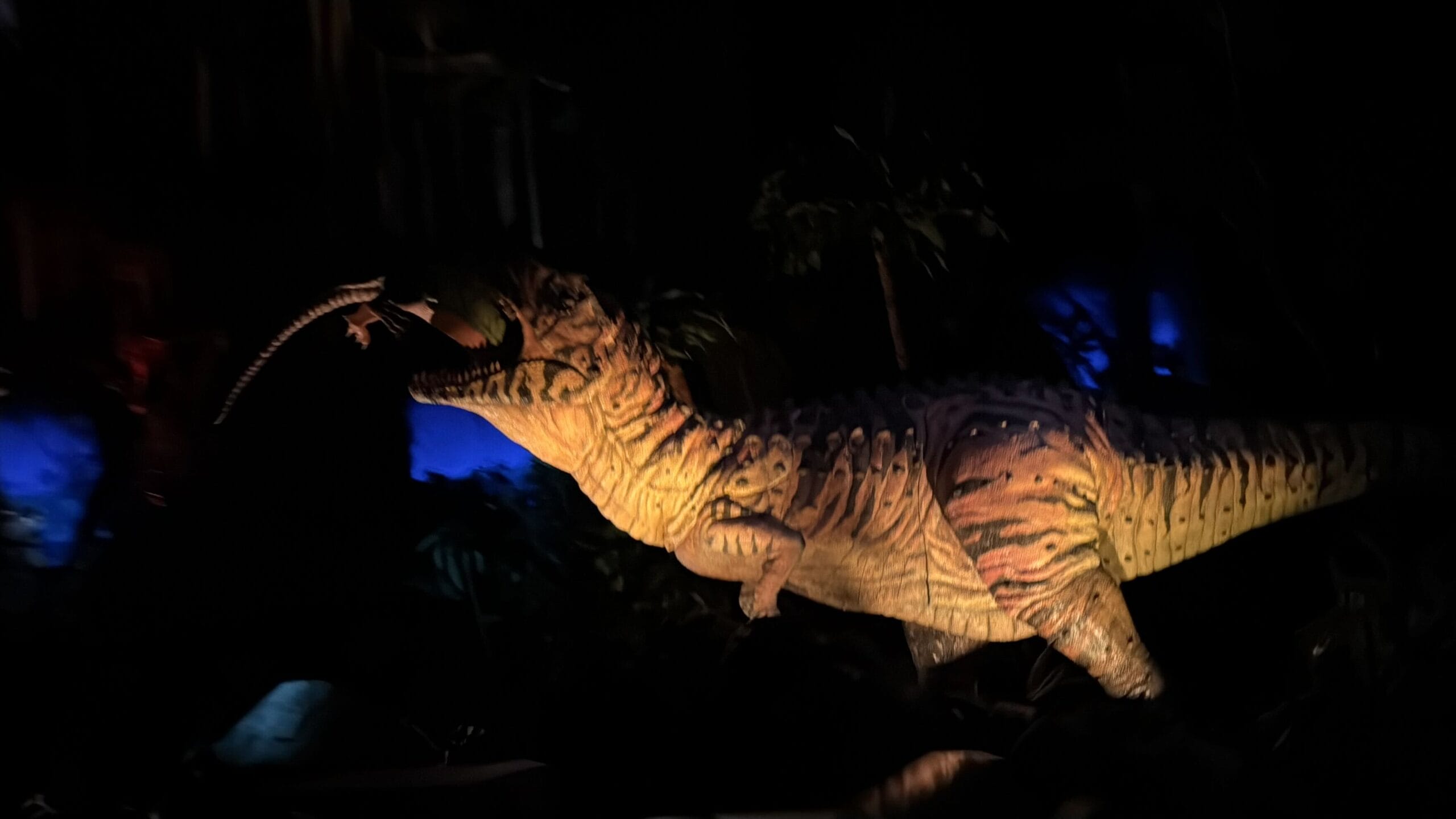
The next dinosaur was an Alioramus in the process of eating a Brachychampsa.
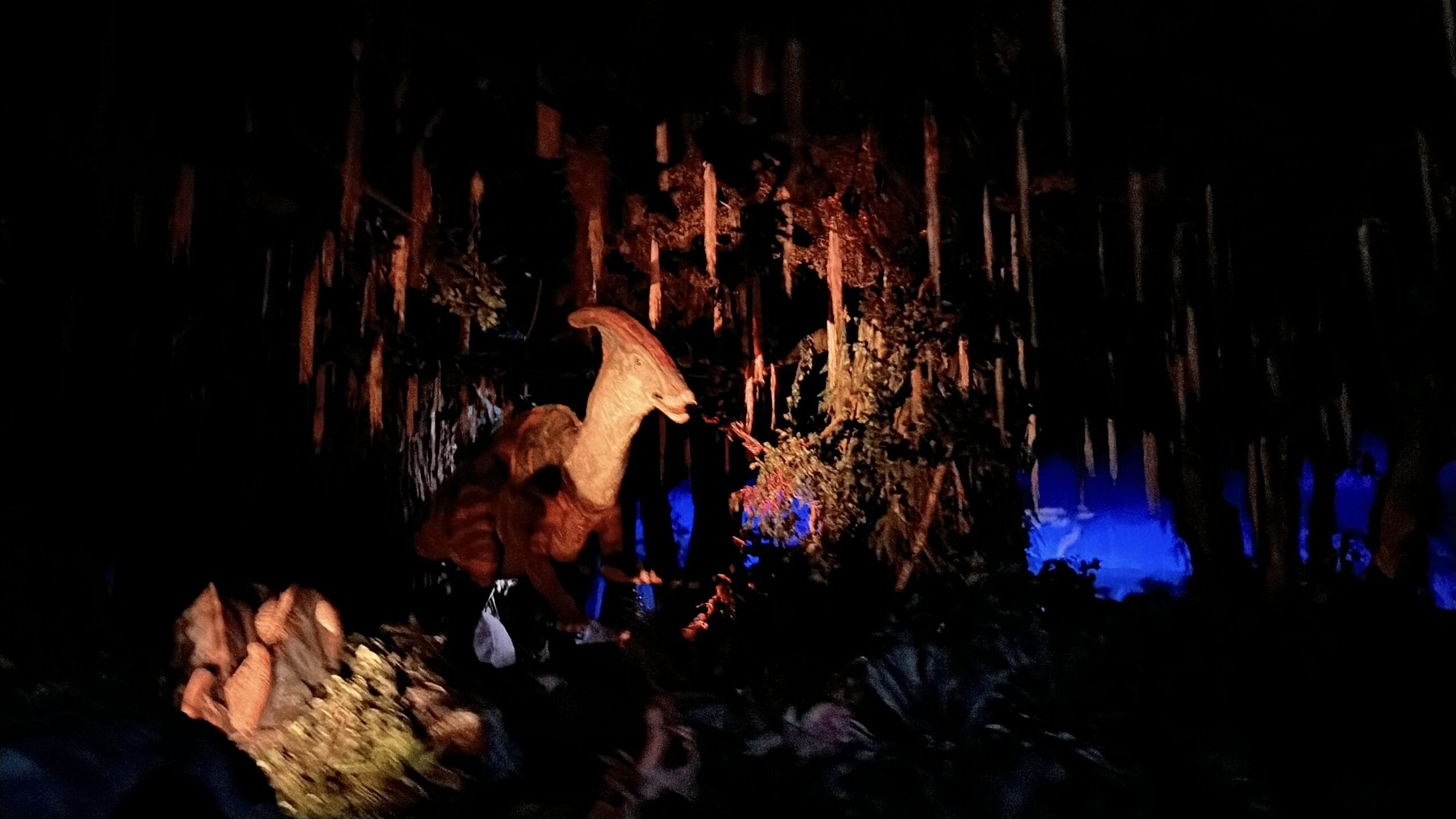
The computer identified a nearby Parasaurolophus as simply “hadrosaur.”
On the other side of the vehicle, a tiny Velociraptor was identified as “raptor.”
But it’s time to get serious. The rover jerked forward as Seeker locked the autopilot on the Iguanodon’s homing signal. Lightning cracked in the distance as Seeker tracked a big dino.
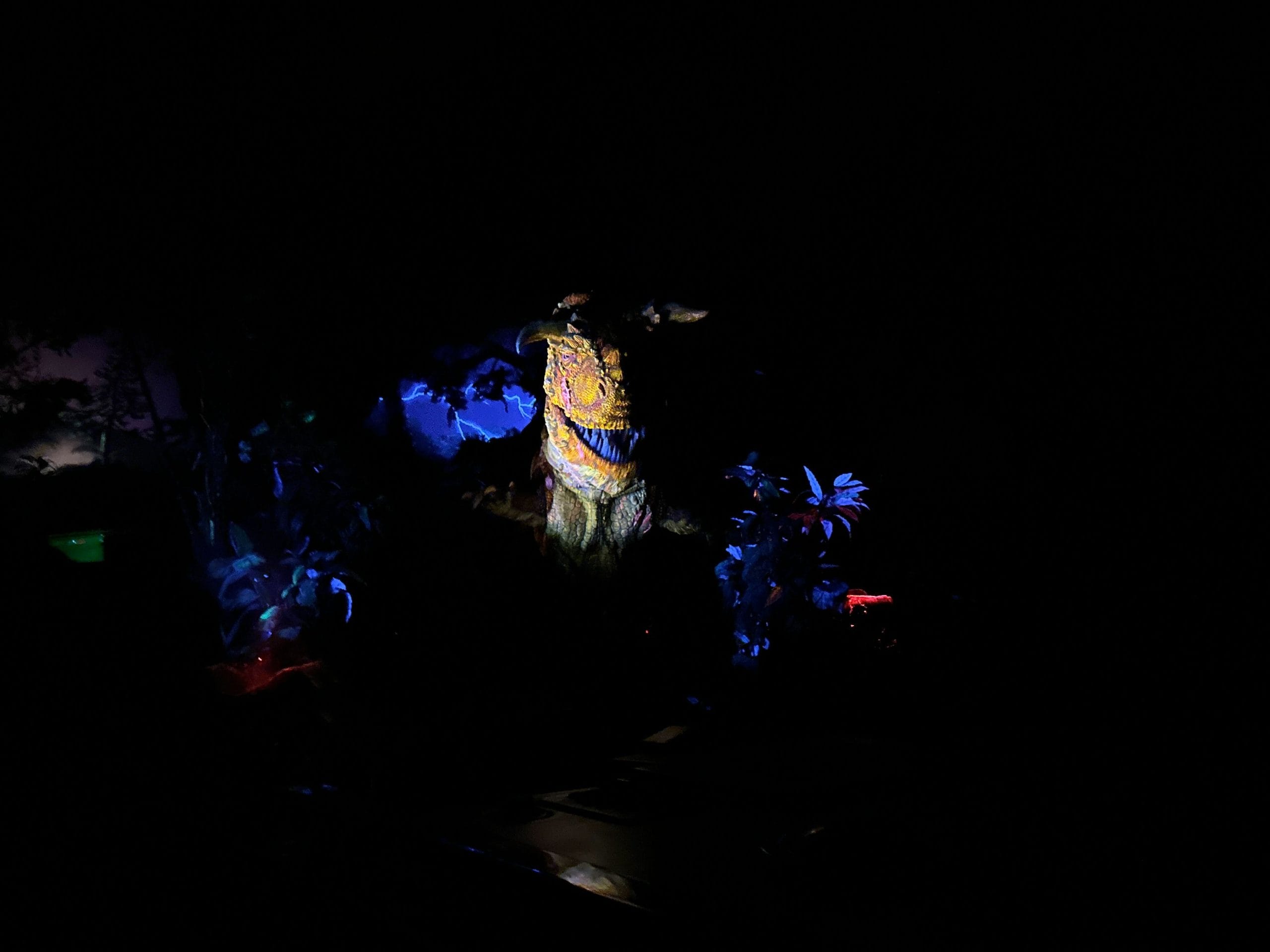
Guests then came to a stop in front of the Carnotaurus for the first time. “Definitely not our dino.” After the computer identified the carnivore, Seeker urged the rover forward.
The next big dino picked up on the scope was a long-necked Saltasaurus, called just “sauropod” by the computer. “Still not our dino, but at least this one’s a vegetarian.”
The rover passed a couple of unidentified Pterosaurs as the computer warned that the asteroid impact was in 90 seconds. It identified a “pterodactyl” (Cearadactylus) flying above. This figure once actually moved, but was stationary for several years.
A group of Compsognathus appeared to jump over the rover. These were also once physical figures but were replaced by projections circa 2016.

The rover lost traction as the Carnotaurus reappeared, moving towards the rover (although that movement was also often broken). Seeker switched to four-wheel drive and took evasive action as meteors started to fall out of the sky.
The vehicle came to a stop in front of the Carnotaurus again as the on-ride photo was taken. Seeker decided to abort the mission, and the car pulled away.
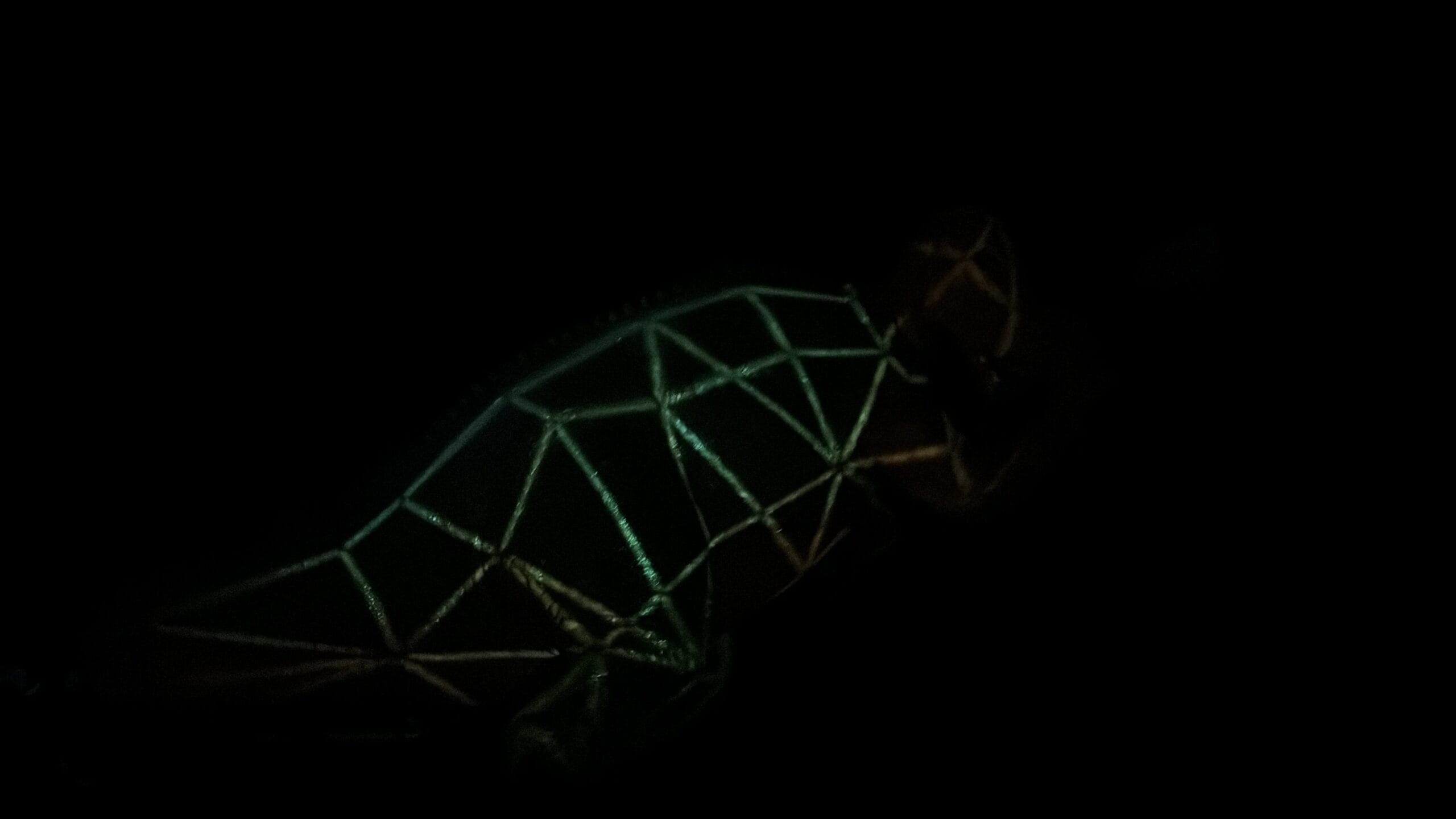
At that moment, the Iguanodon came into view, holding a fallen tree out of the way of the vehicle. The computer scanned it, and a digital net was projected on the dino. Seeker told guests to brace themselves as the asteroid made impact.
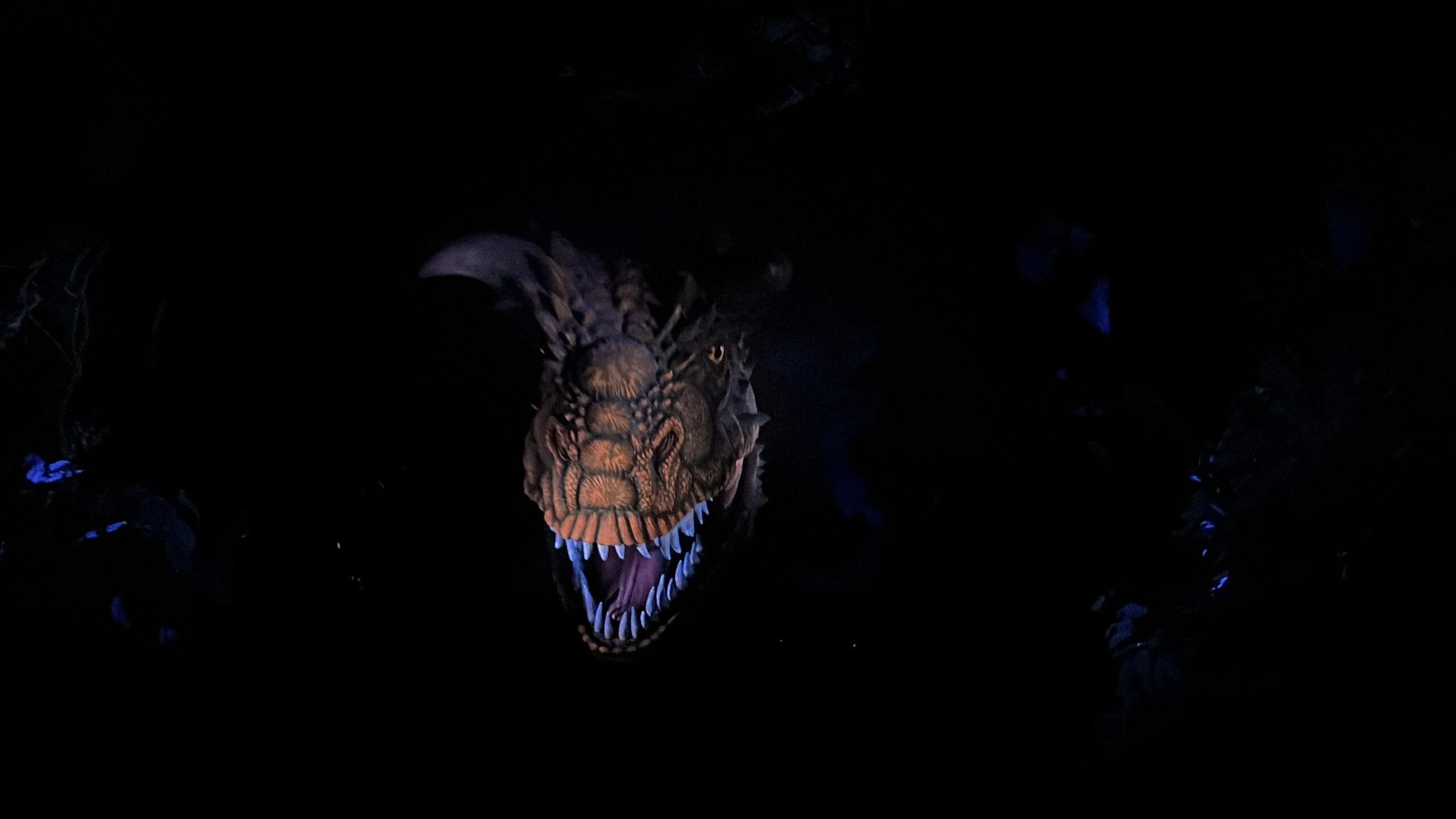
Above, the Carnotaurus lunged down toward the rover before it was transported at the last second.
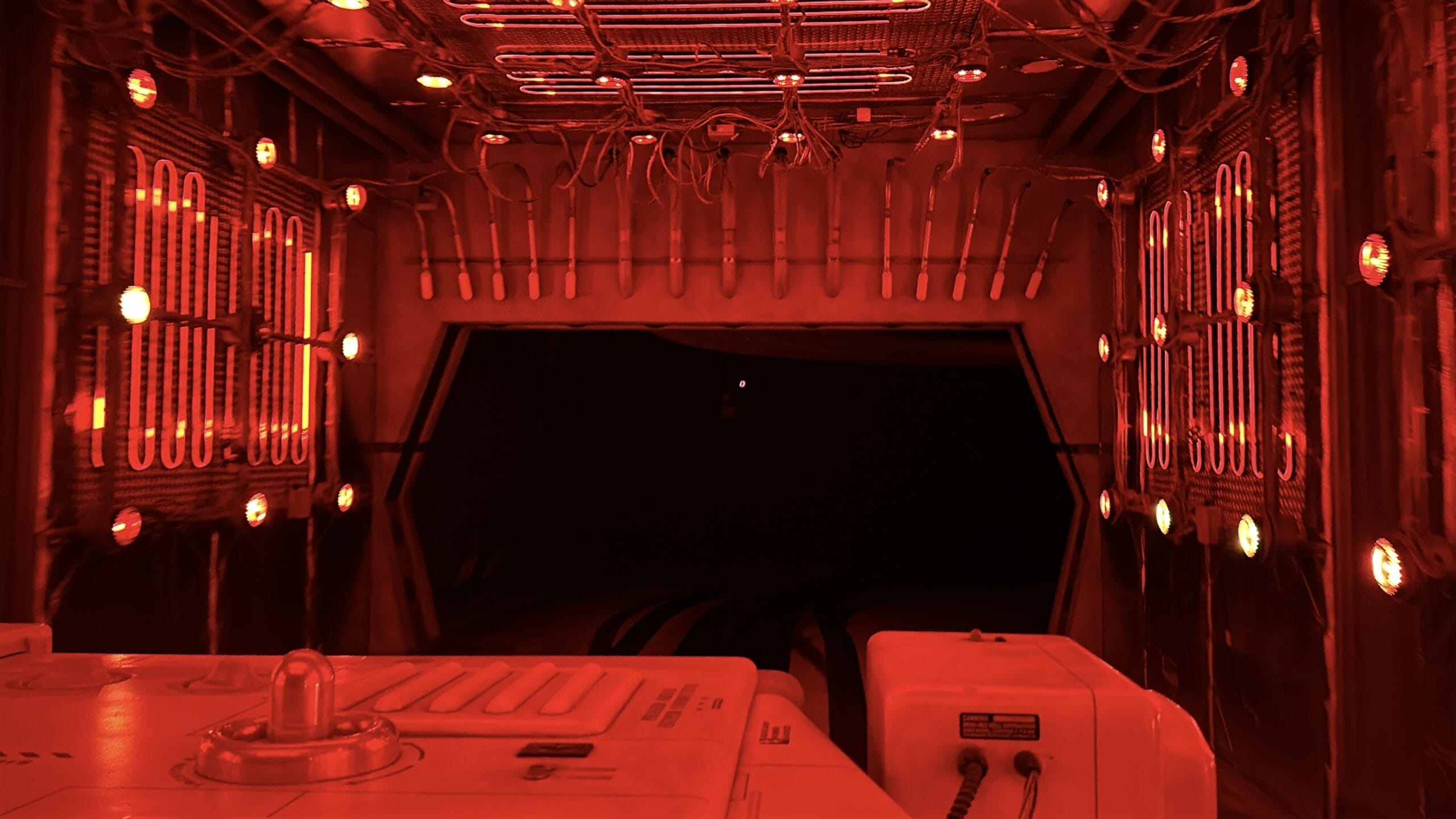
Guests got more flashing lights and lasers as they passed through another red tunnel.
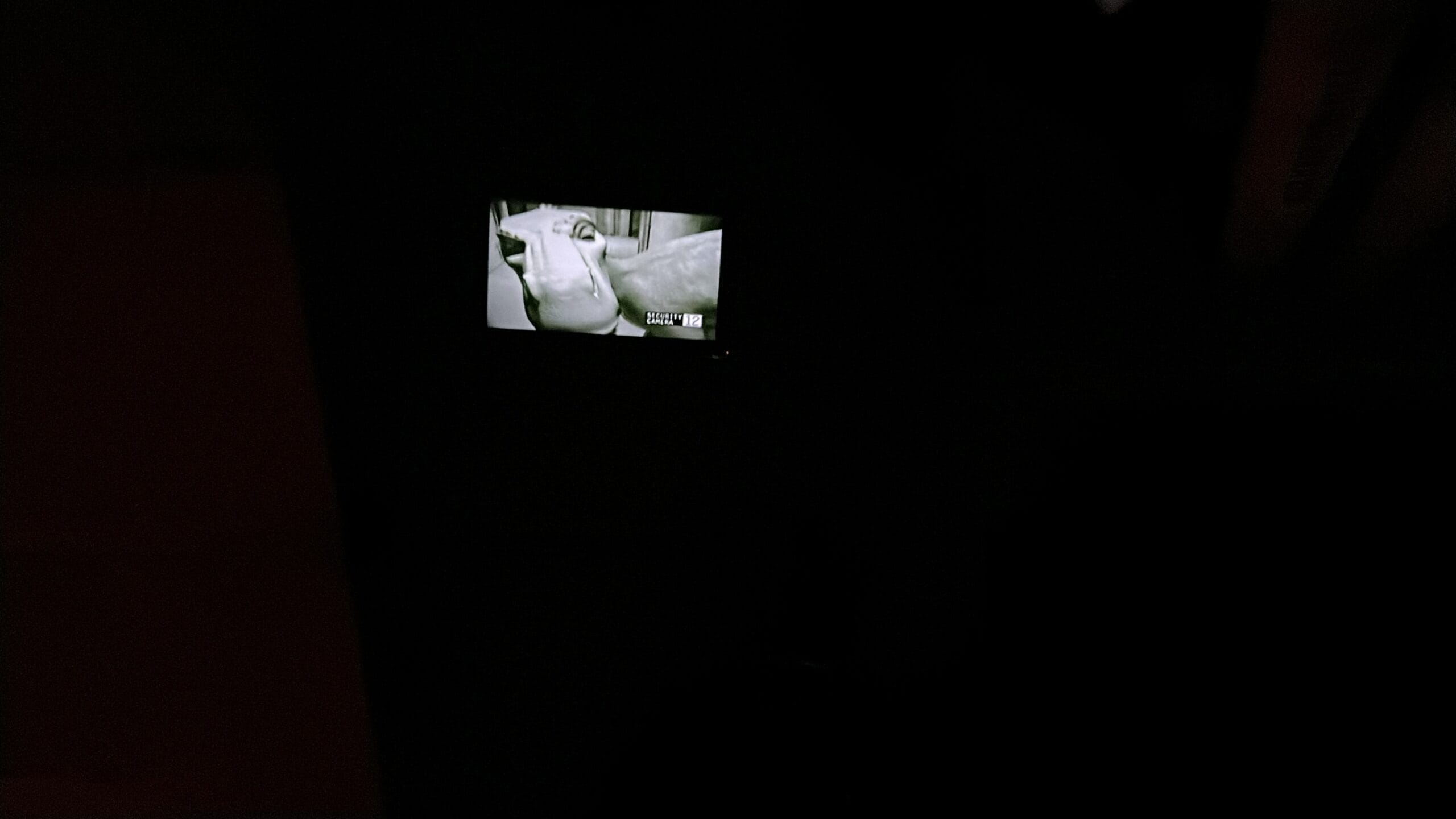
As the vehicle pulled back towards the station, Seeker excitedly told guests the Iguanodon made it back with them. A monitor hanging above showed the dino wandering the Institute, and Seeker said he better find him before security does.
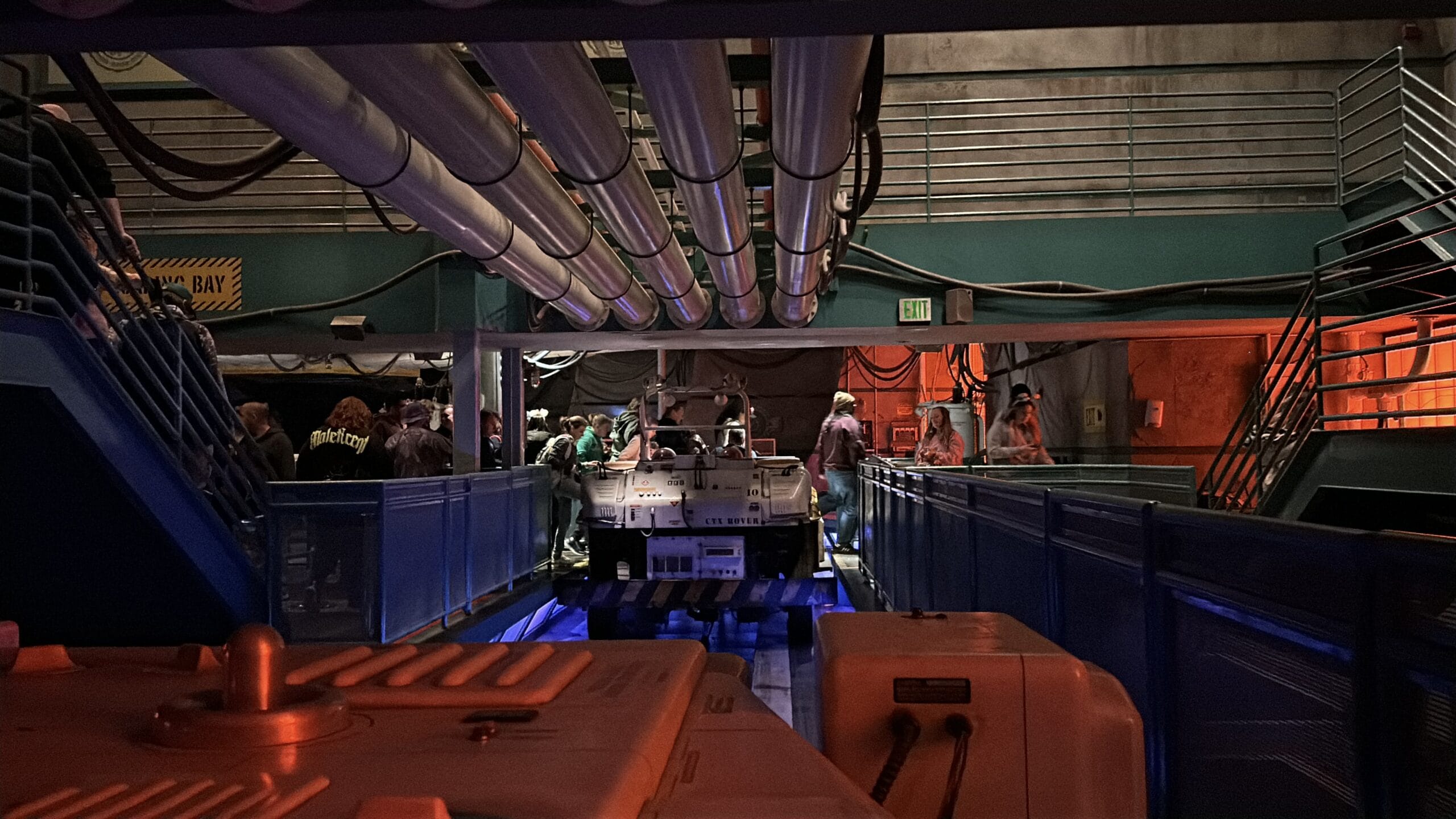
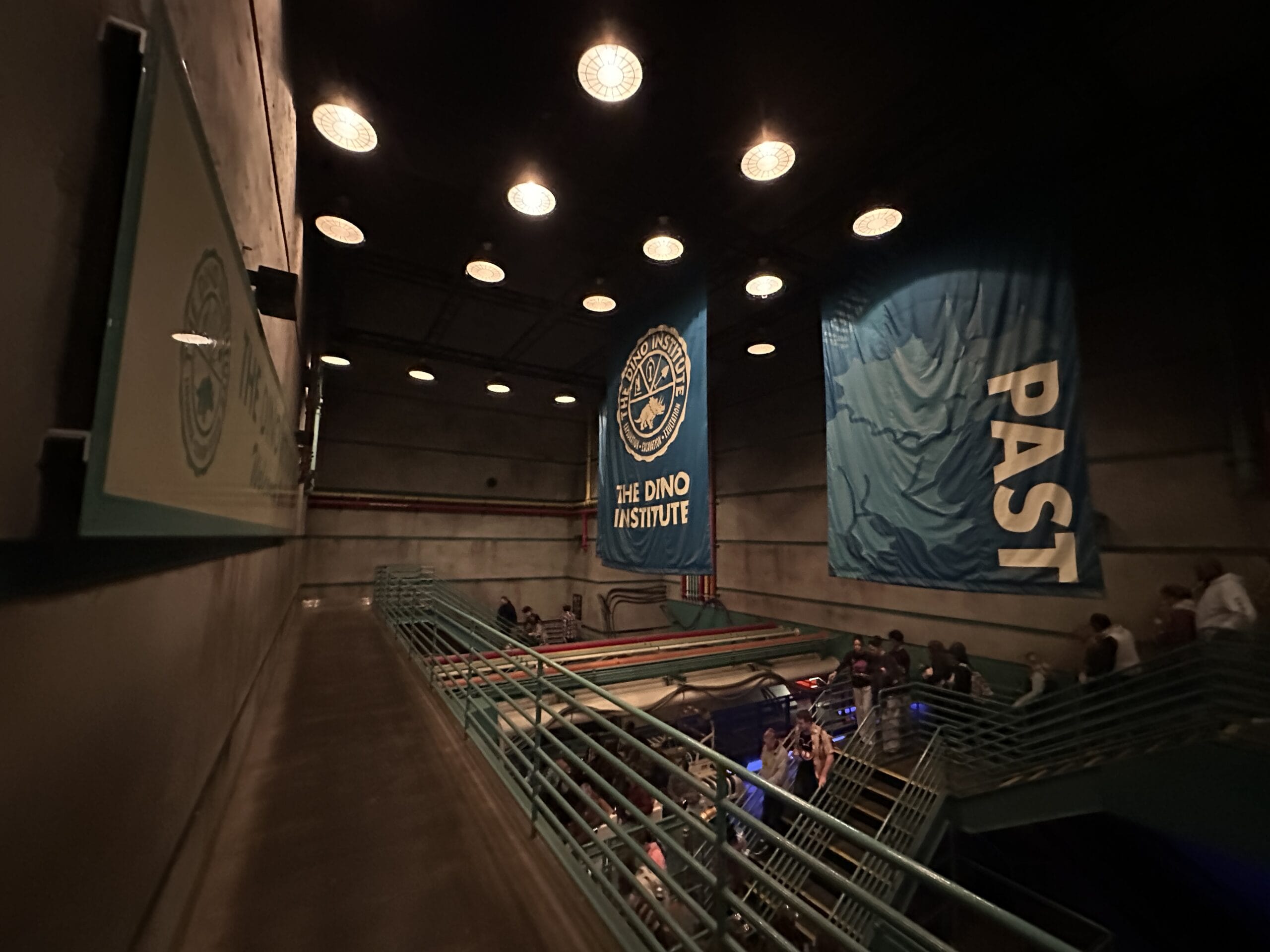
Guests disembarked where they loaded and went upstairs.
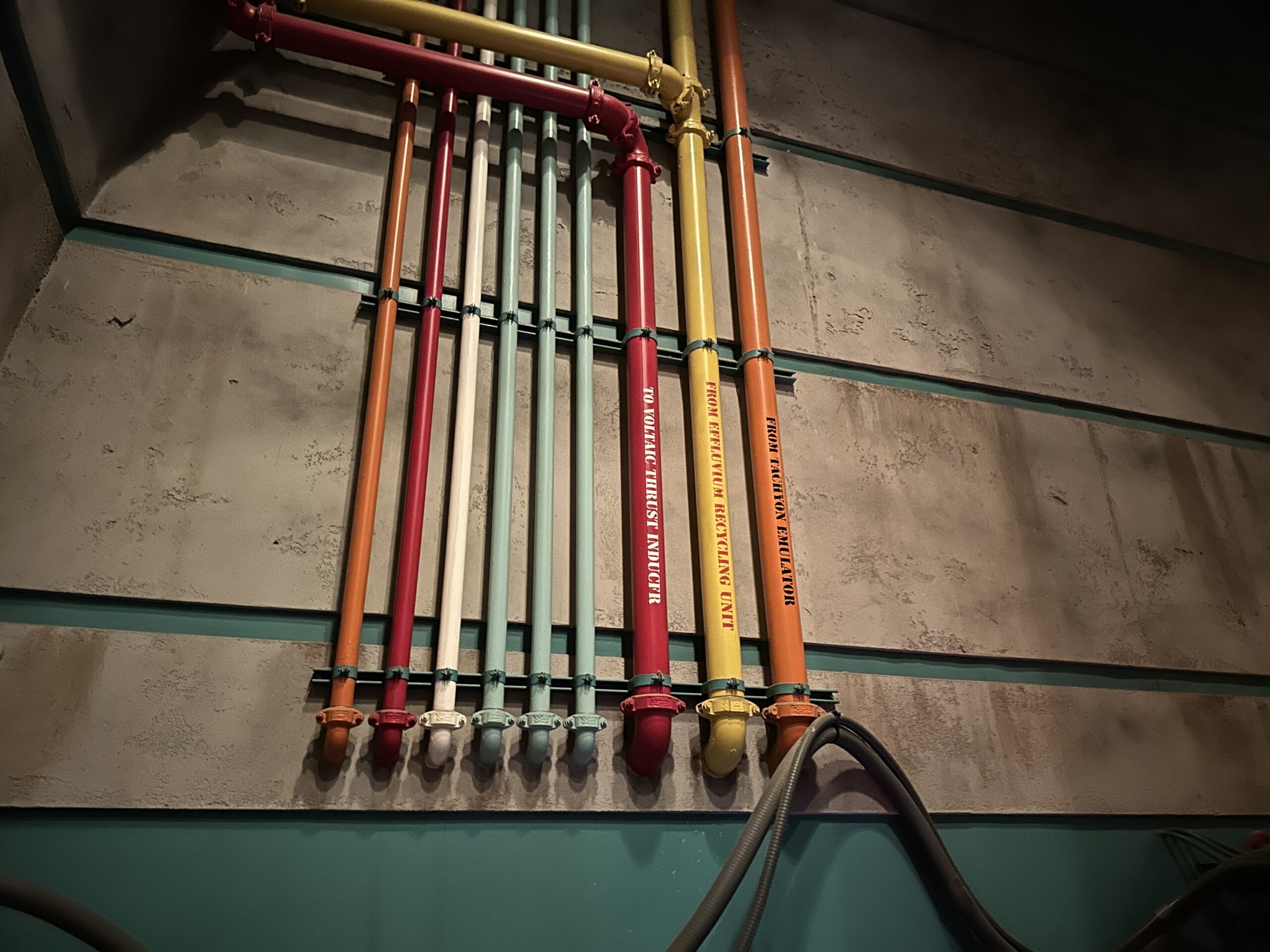
They passed by some more pipes. Red, yellow, and orange pipes were labeled:
- From Tachyon Emulator
- From Effluvium Recycling Unit
- To Voltaic Thrust Inducfr [sic]
Video
Watch our 4K multi-cam POV of DINOSAUR:
The Dino Institute Shop and Exit
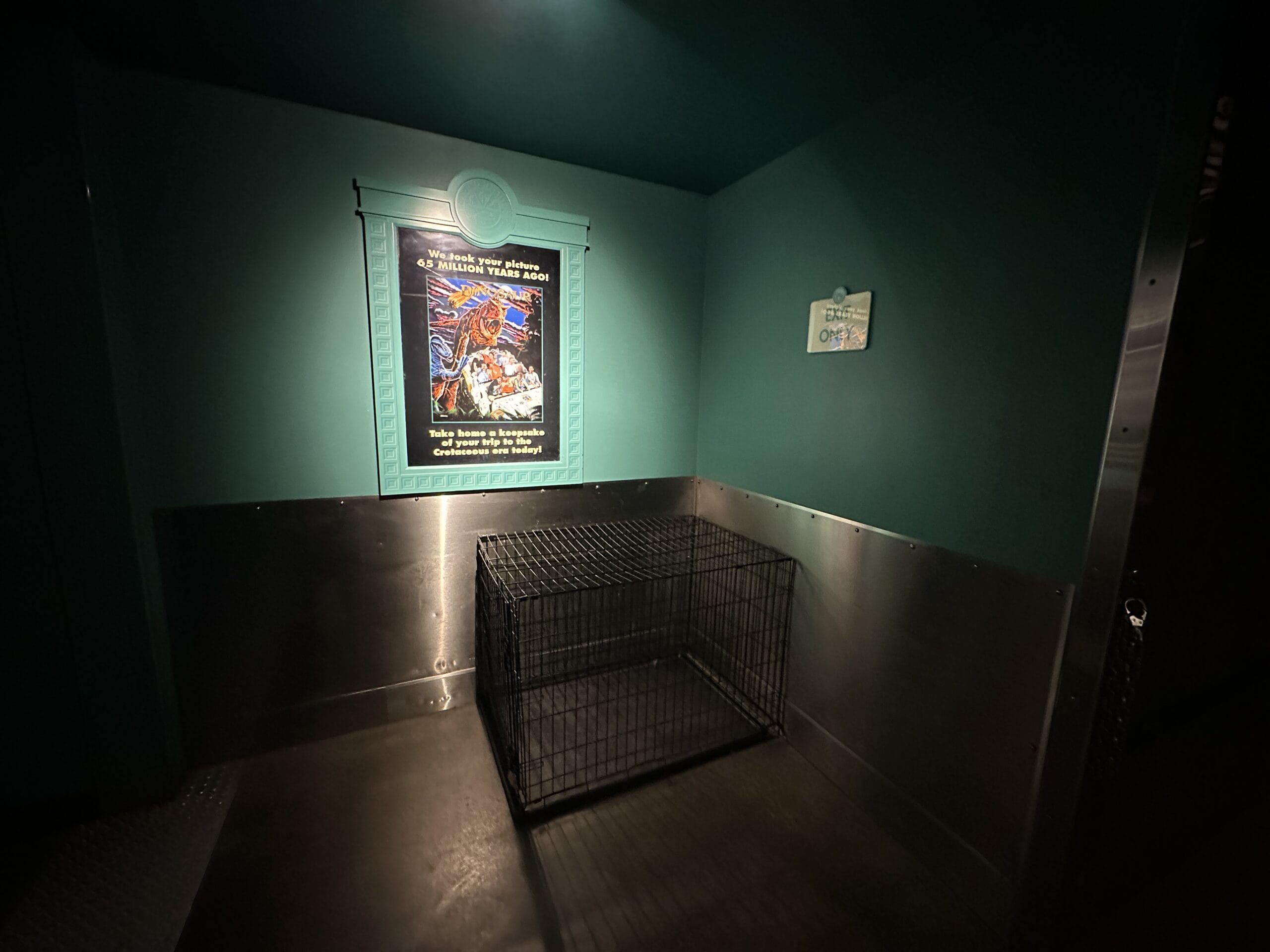
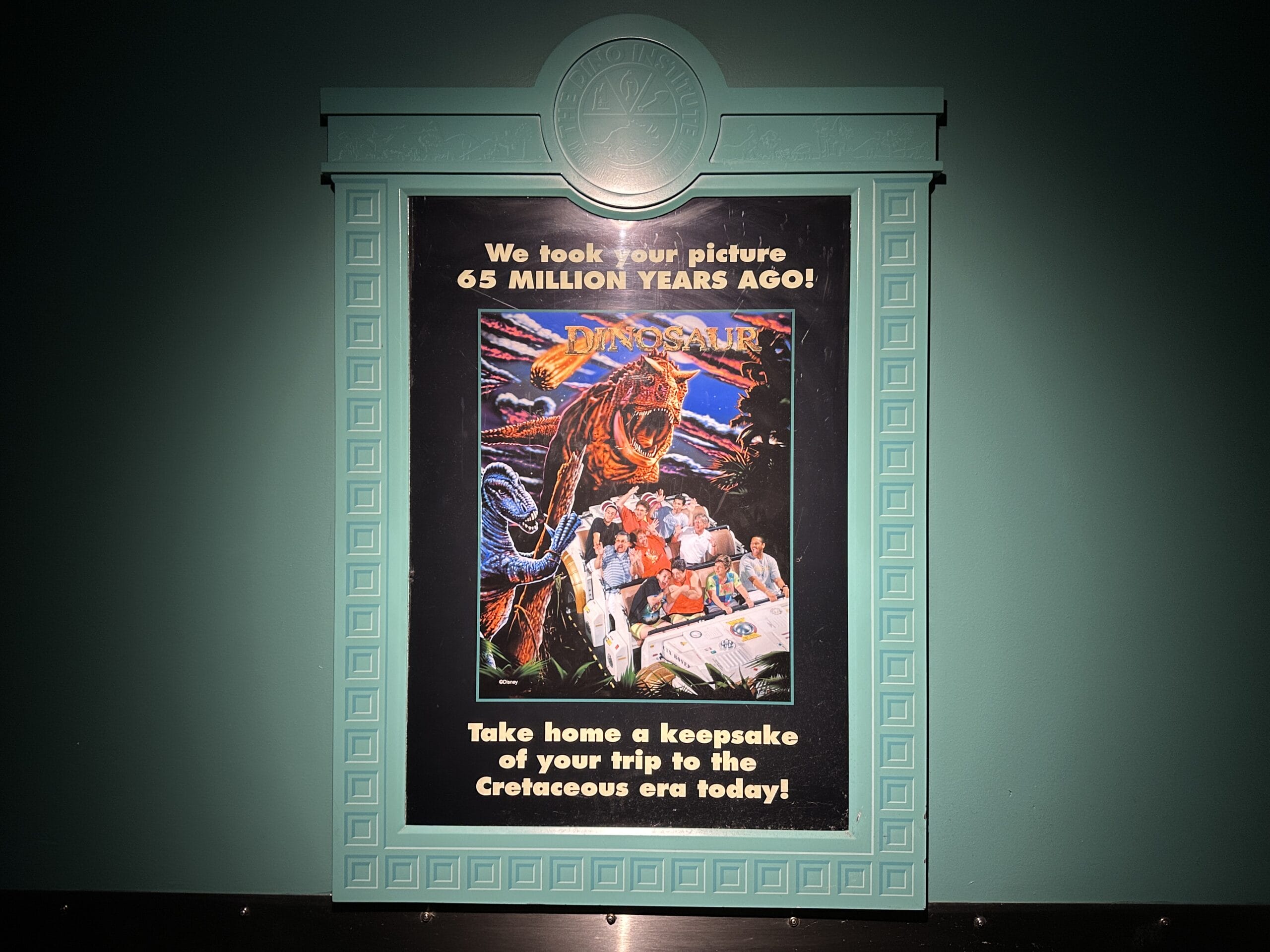
Before the shop was an advertisement for the on-ride photo. The kennel here was for service dogs, who could not ride with their handlers.
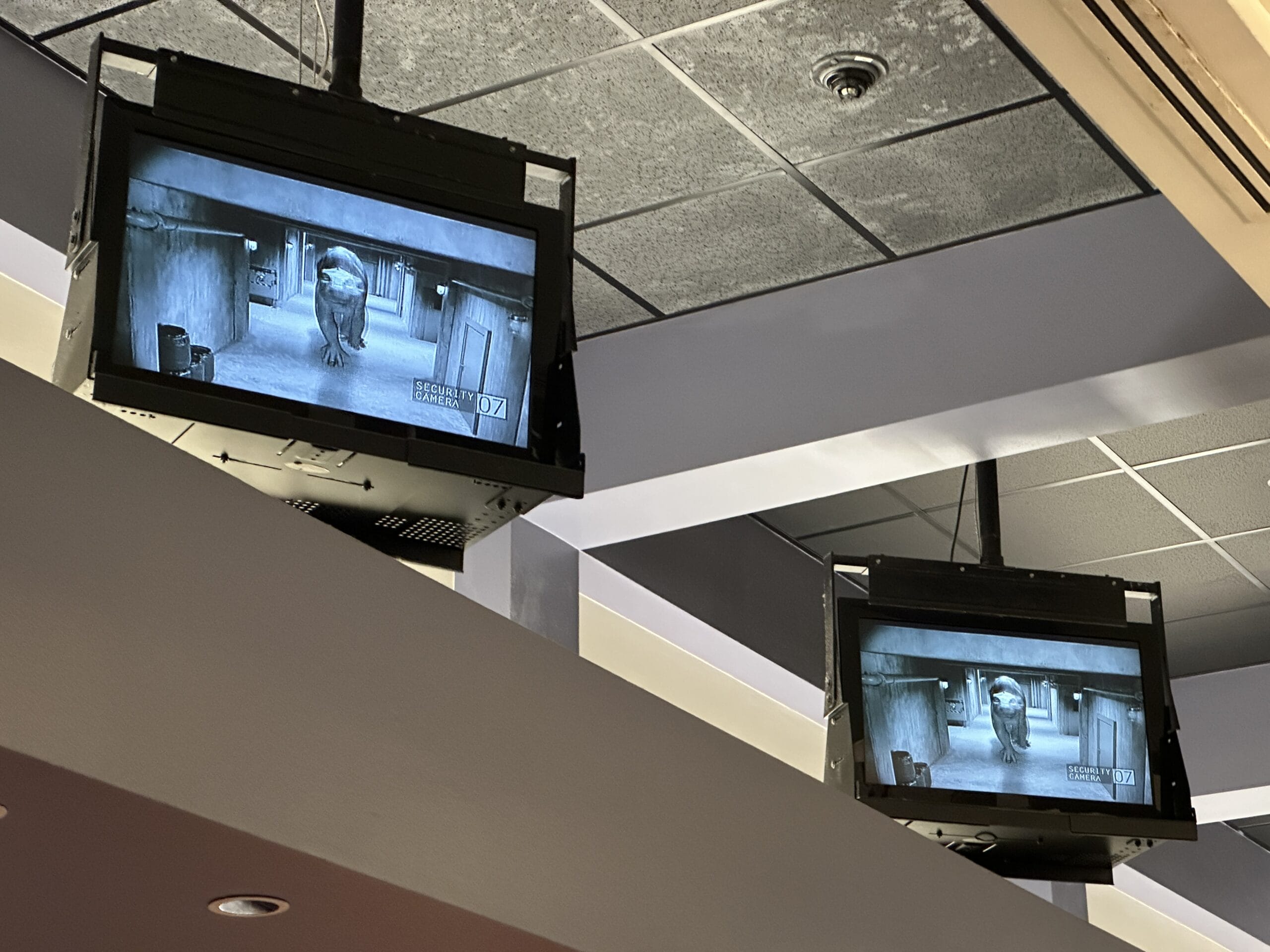
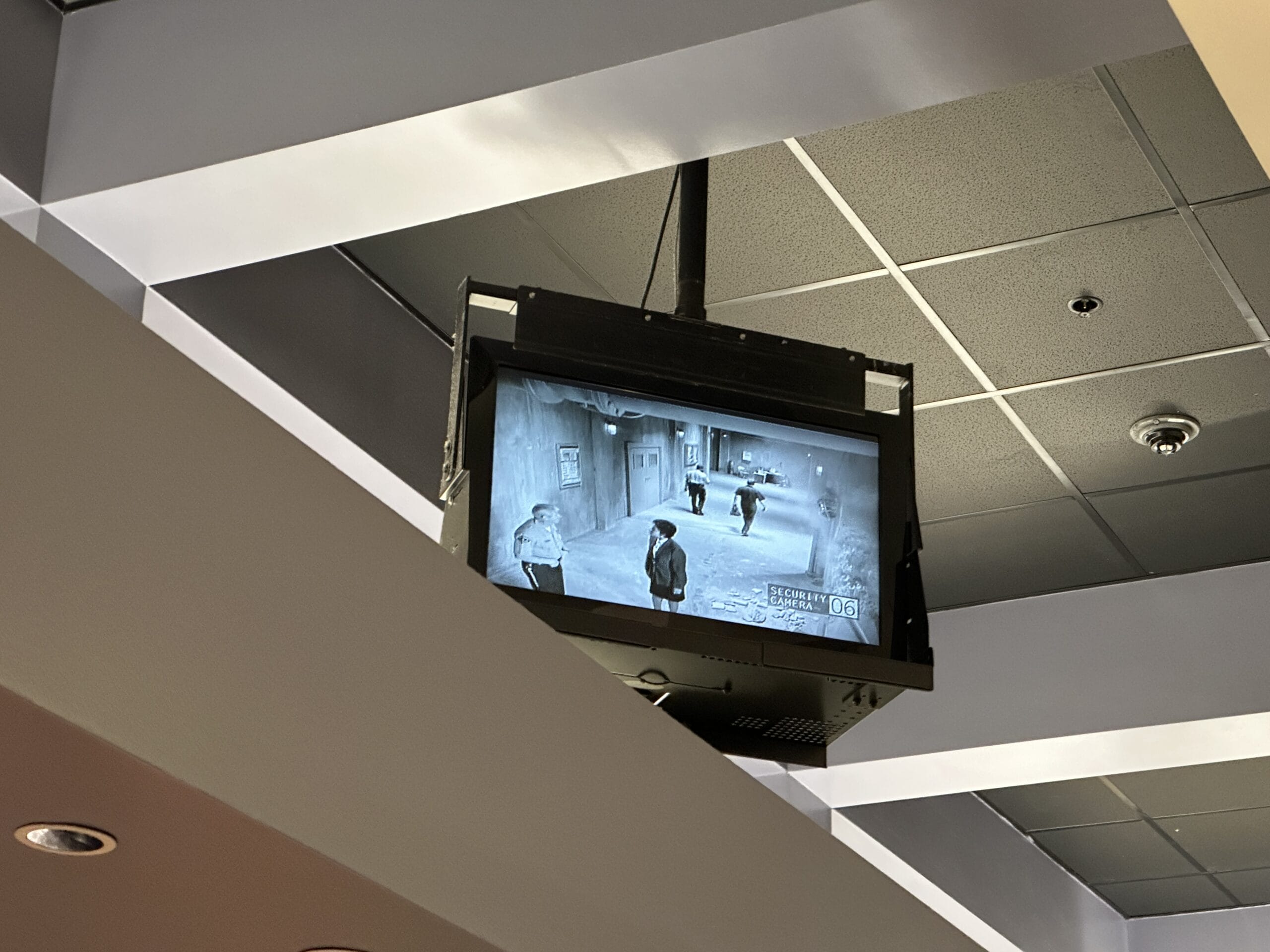
At the entrance to the shop were several video monitors showing the Iguanodon lost in the Institute as Dr. Seeker tried to find him and Dr. Marsh tried to figure out what was going on. Radio chatter discussed the loose dino.
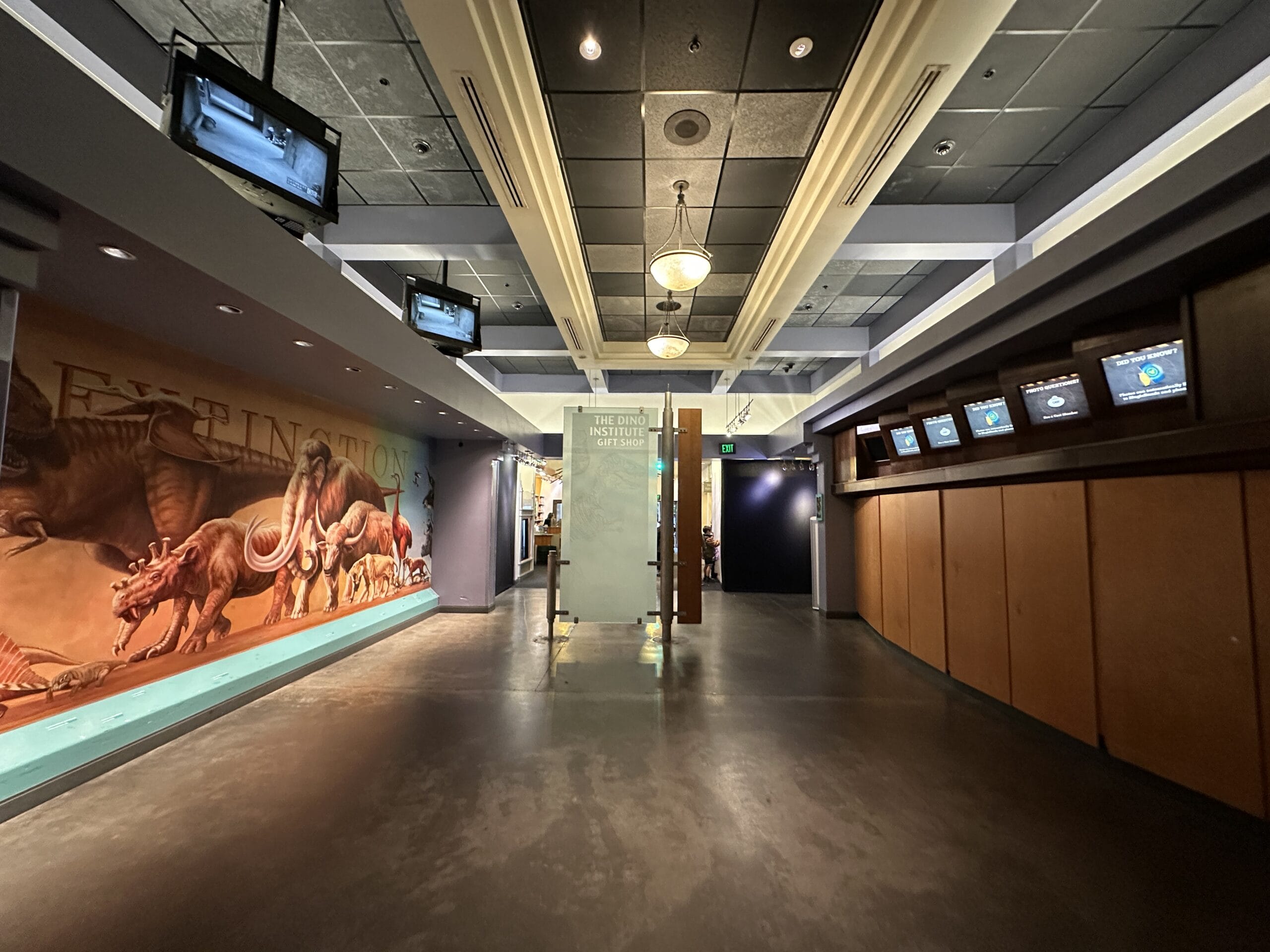
Previously, the monitors on the right displayed ride photos. In recent years, guests were encouraged to instead check their My Disney Experience app or visit the station inside the shop.
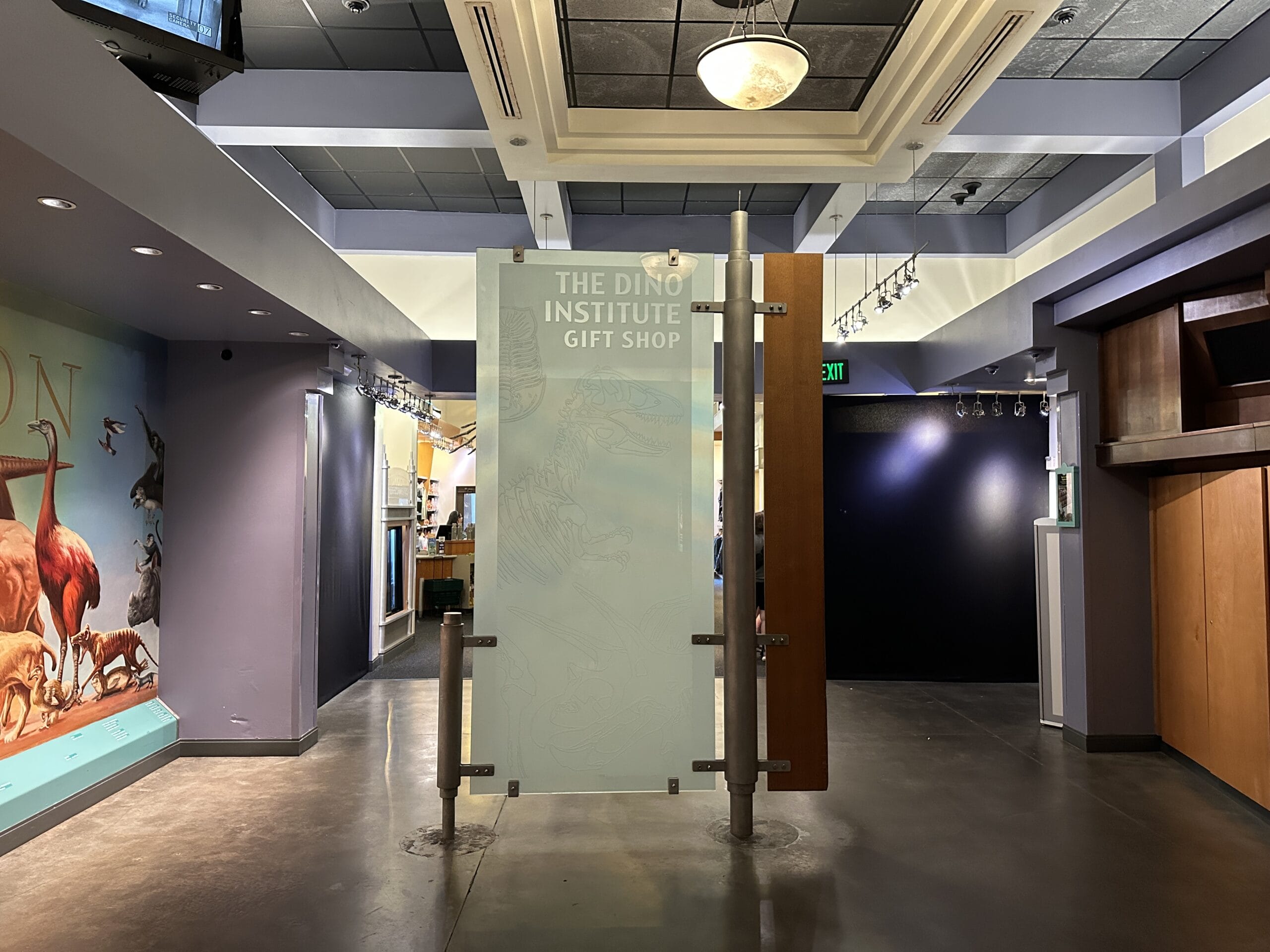
A panel in the center of this space had subtle dinosaur imagery with “The Dino Institute Gift Shop” text.
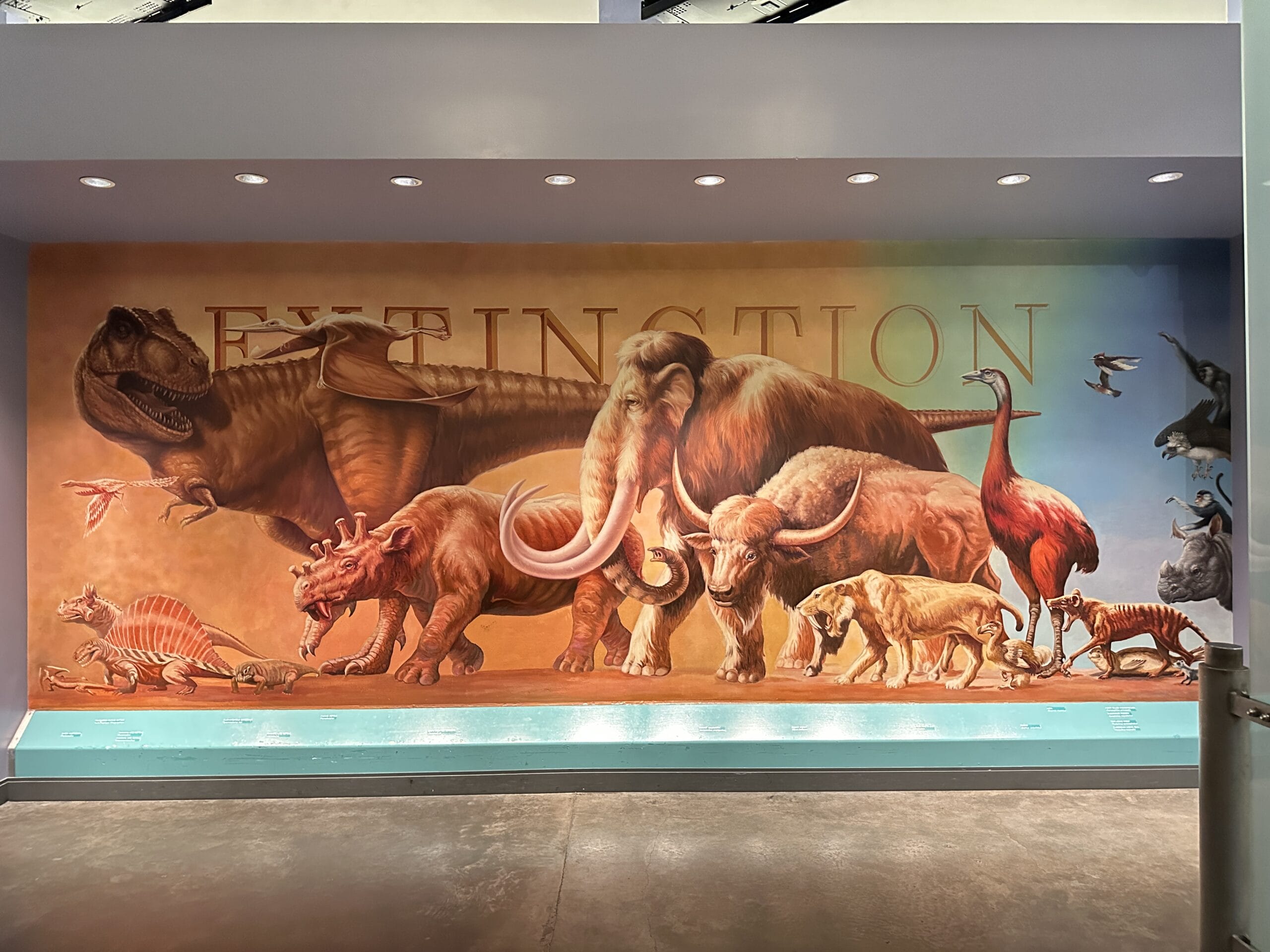
An “Extinction” mural on one wall showcased extinct species from the dinosaurs to more recent lost animals like the thylacine. Modern species on the brink of extinction peeked into the mural on the far right.
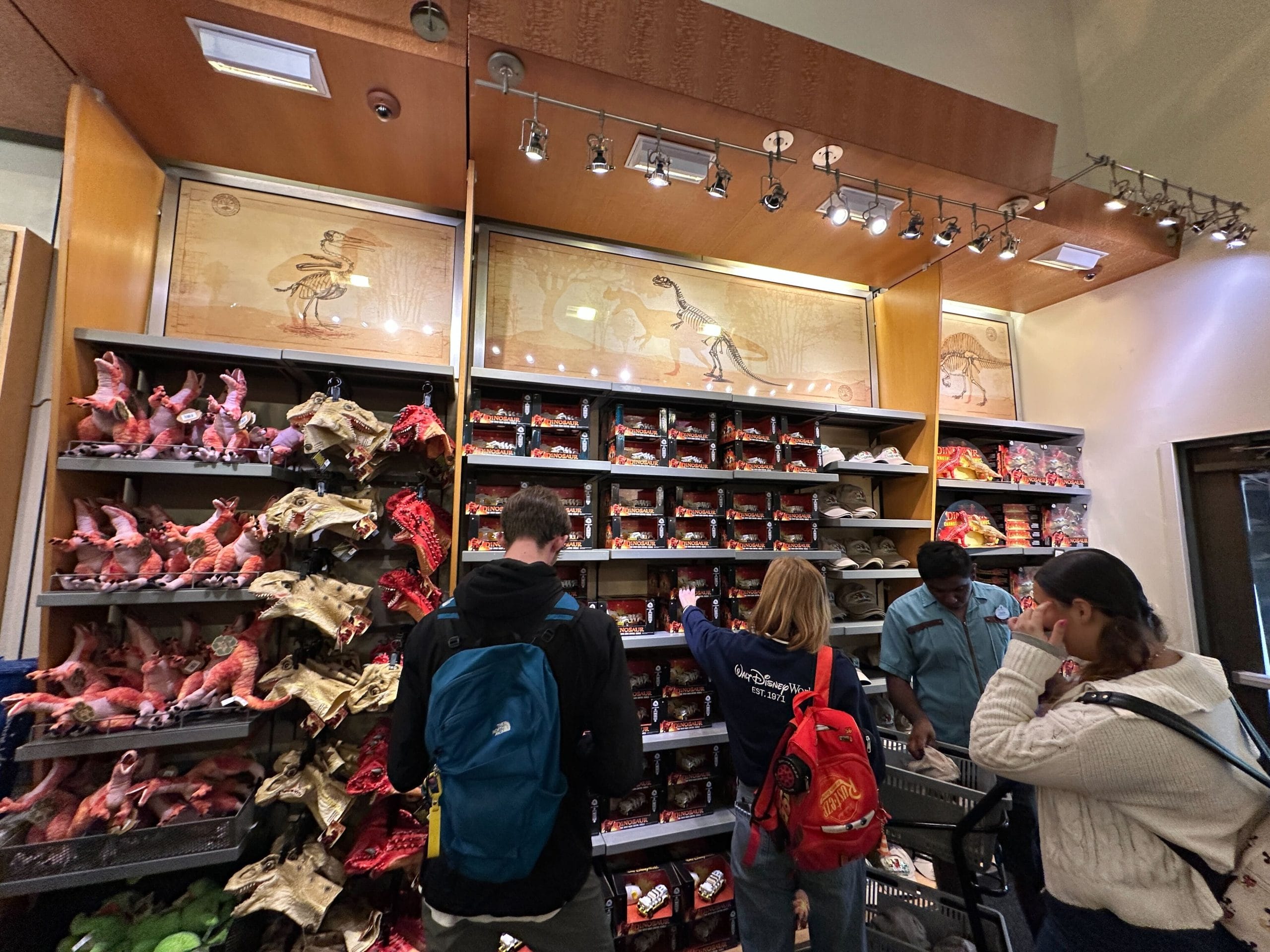
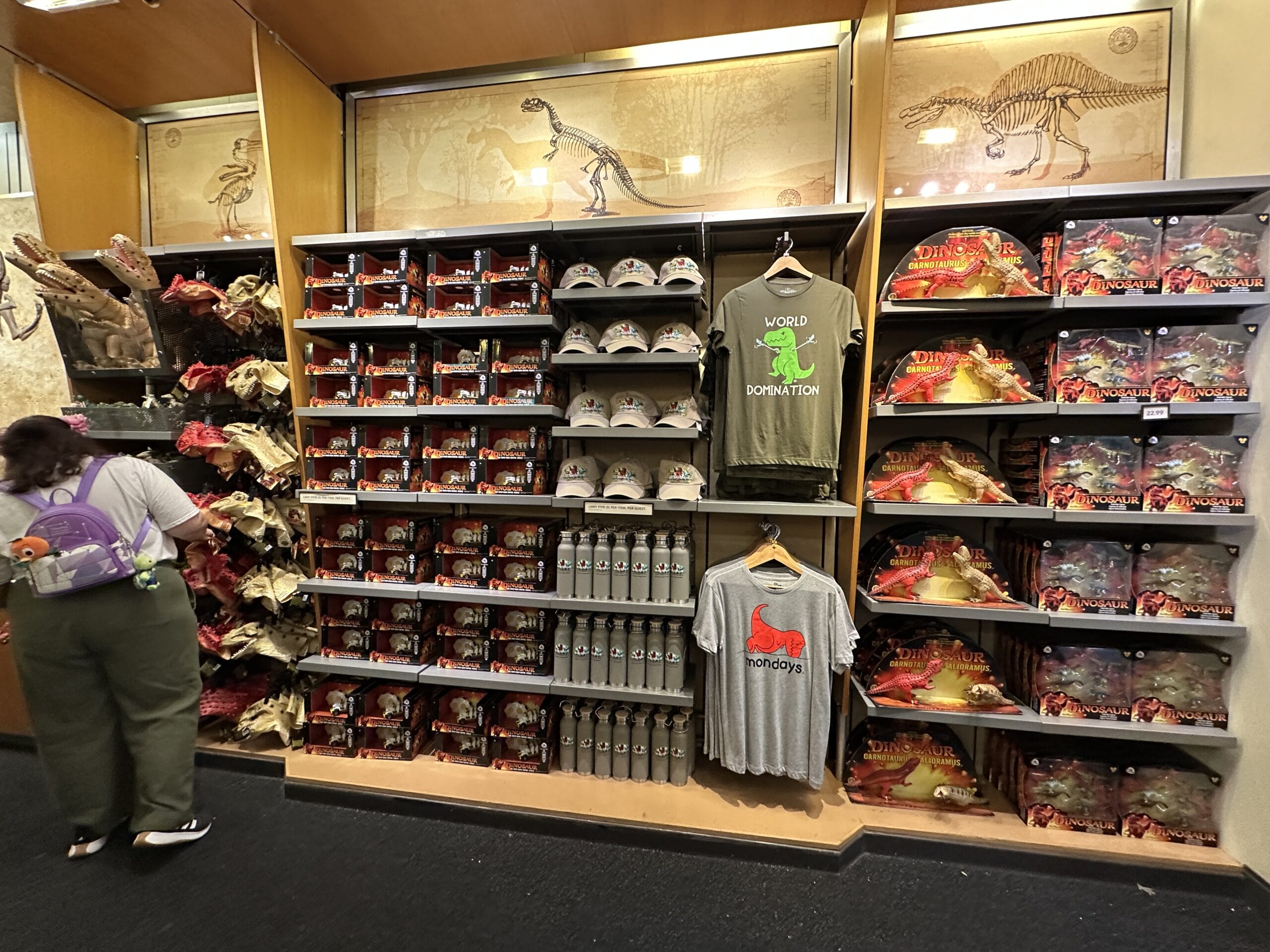
In the shop were dinosaur goodies for sale, displayed under dinosaur artwork. The art featured dinosaur skeletons set against their living silhouettes.
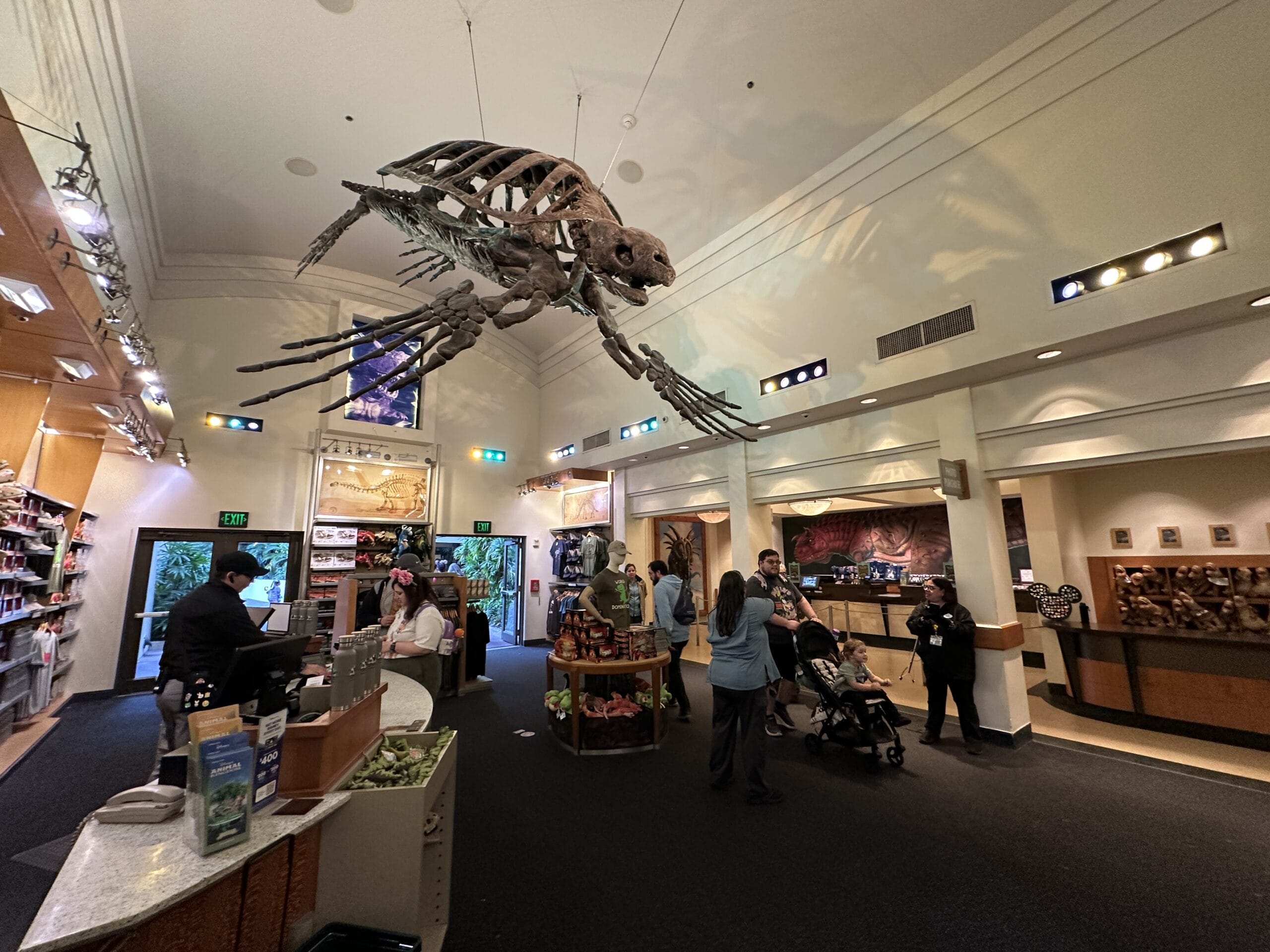
Hanging from the ceiling was the skeleton of a turtle species from the Late Cretaceous.
The Carnotaurus was pictured in an illuminated panel above the exit doors. A mural of the Carno was also on the wall behind the PhotoPass station, where guests could link or purchase their on-ride photo.
To the left of the PhotoPass counter was a Styracosaurus mural.


The on-ride photo frame was updated a few months before the ride closed. Above are the old and recent photos.
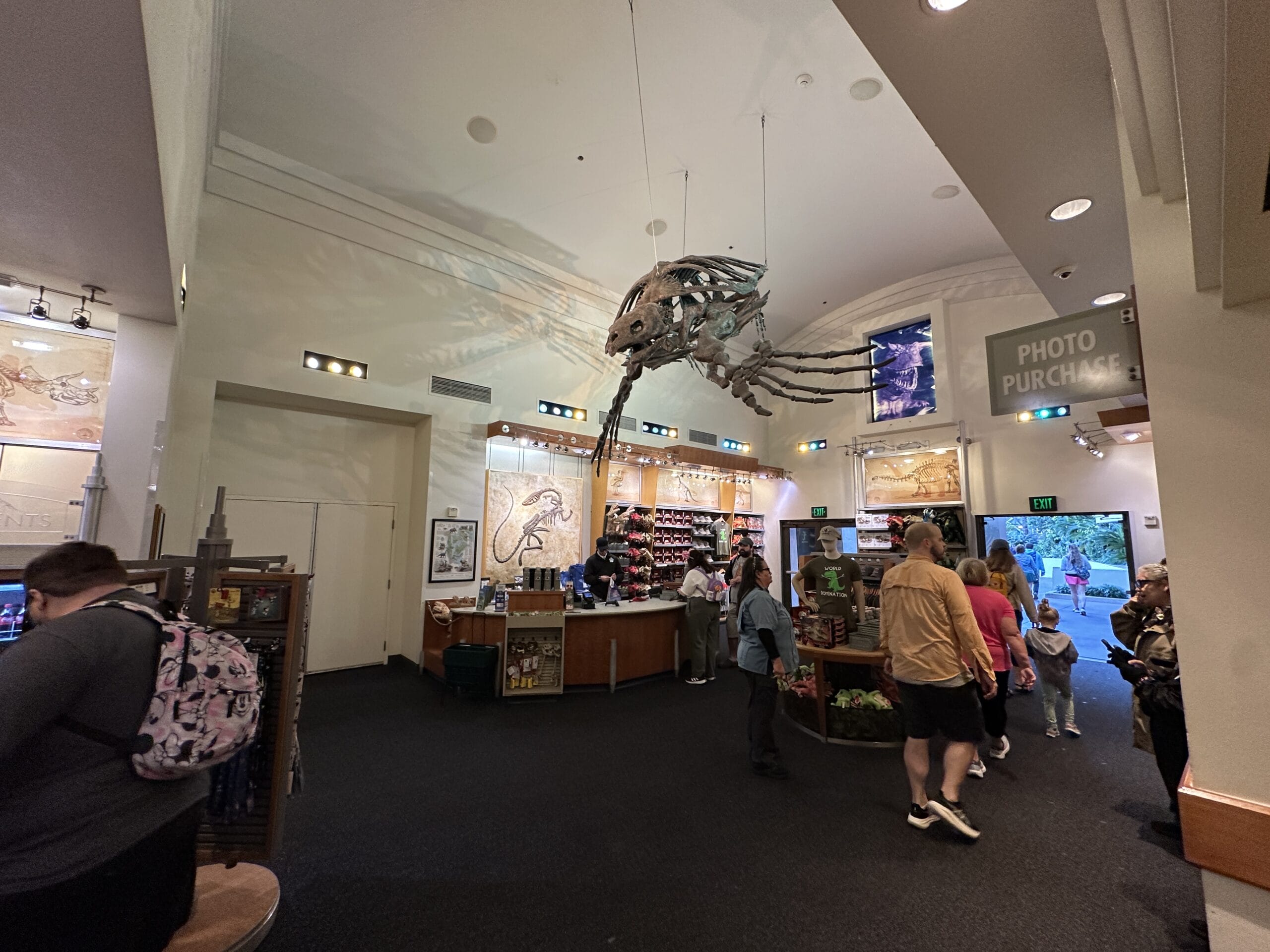
Behind the check-out counter was a relief sculpture of a fossil in dirt and an informational poster.
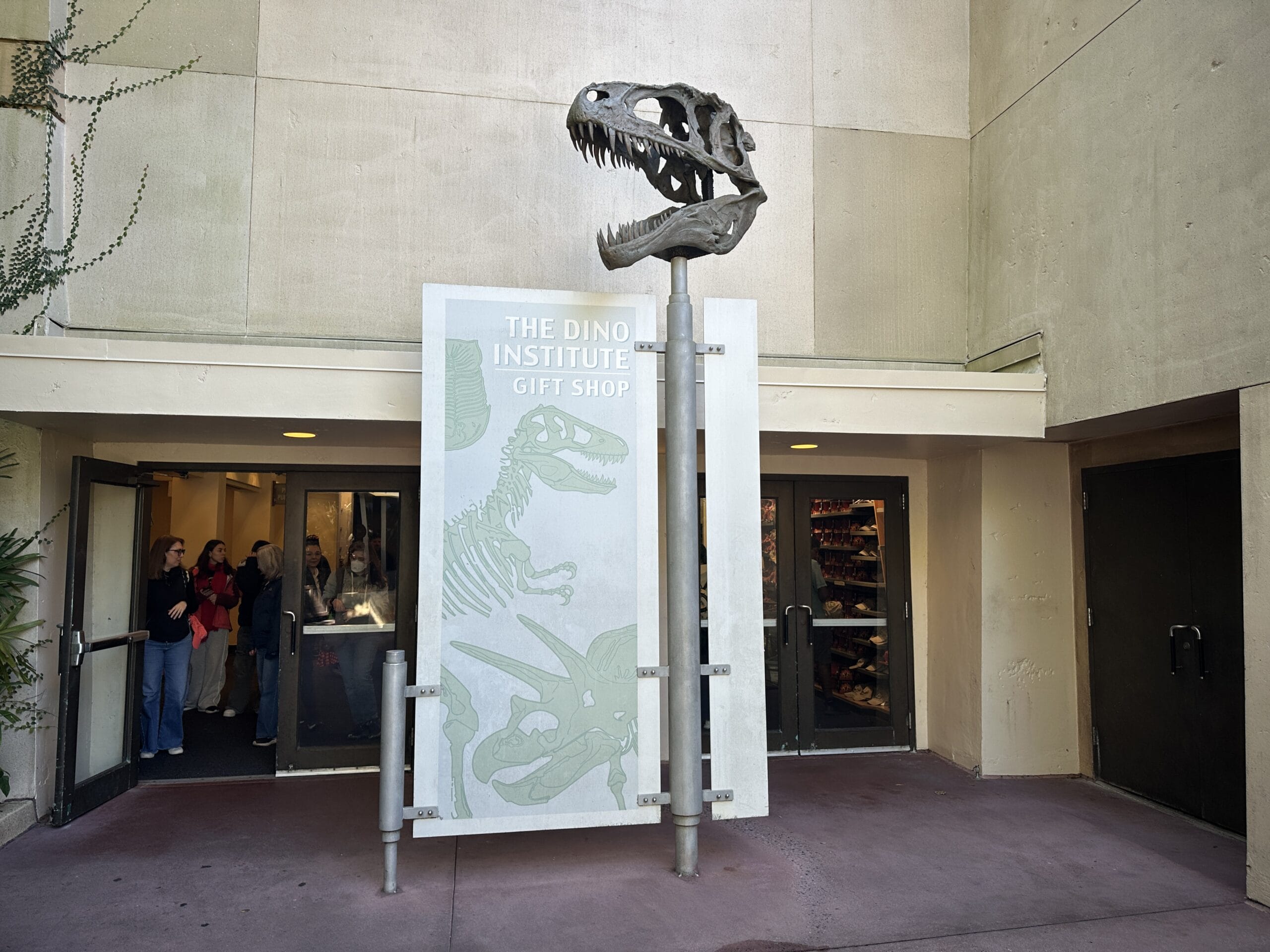
The shop’s exterior had a banner of dinosaur skeletons and a T. rex skull atop a pole.
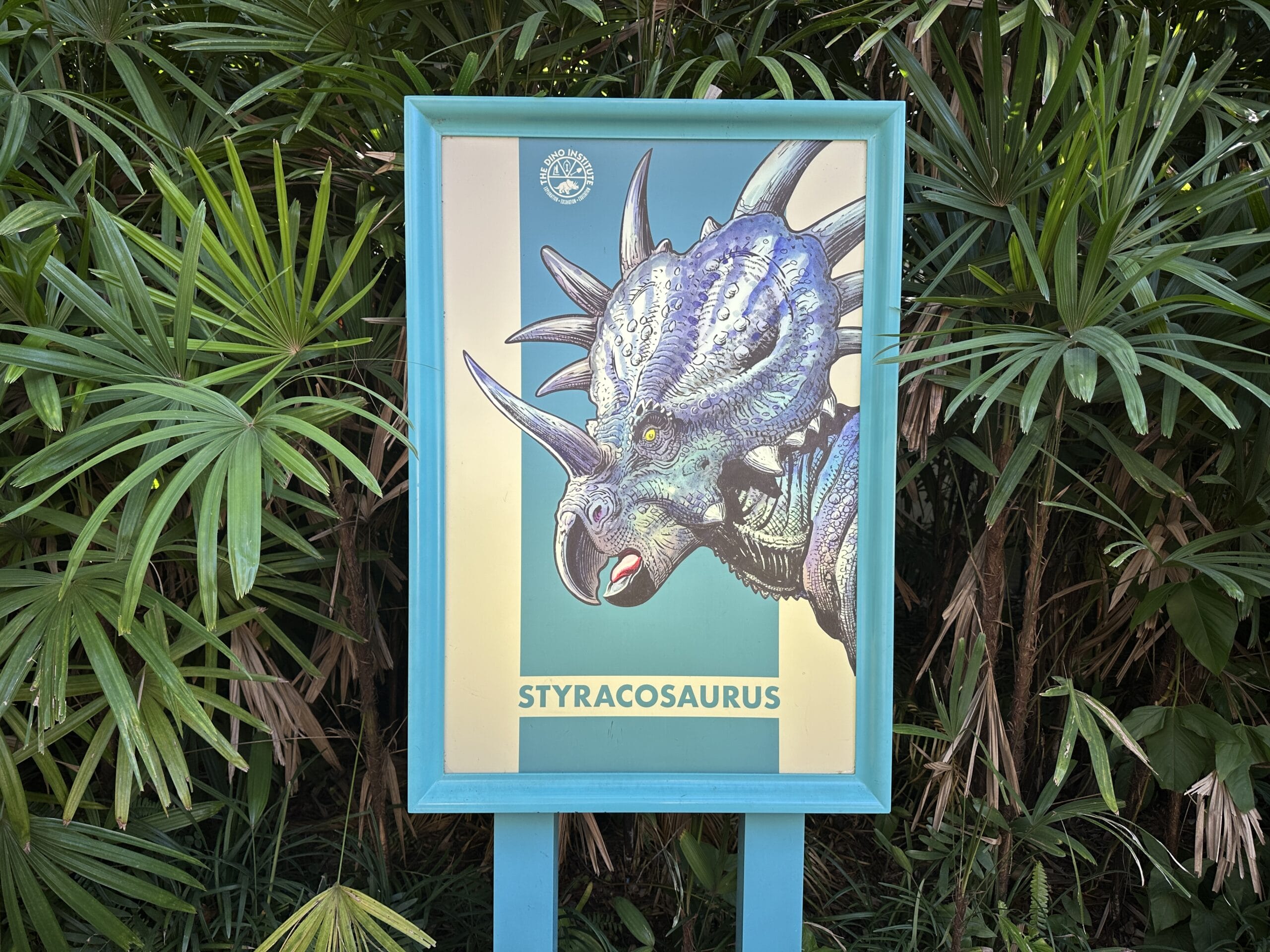
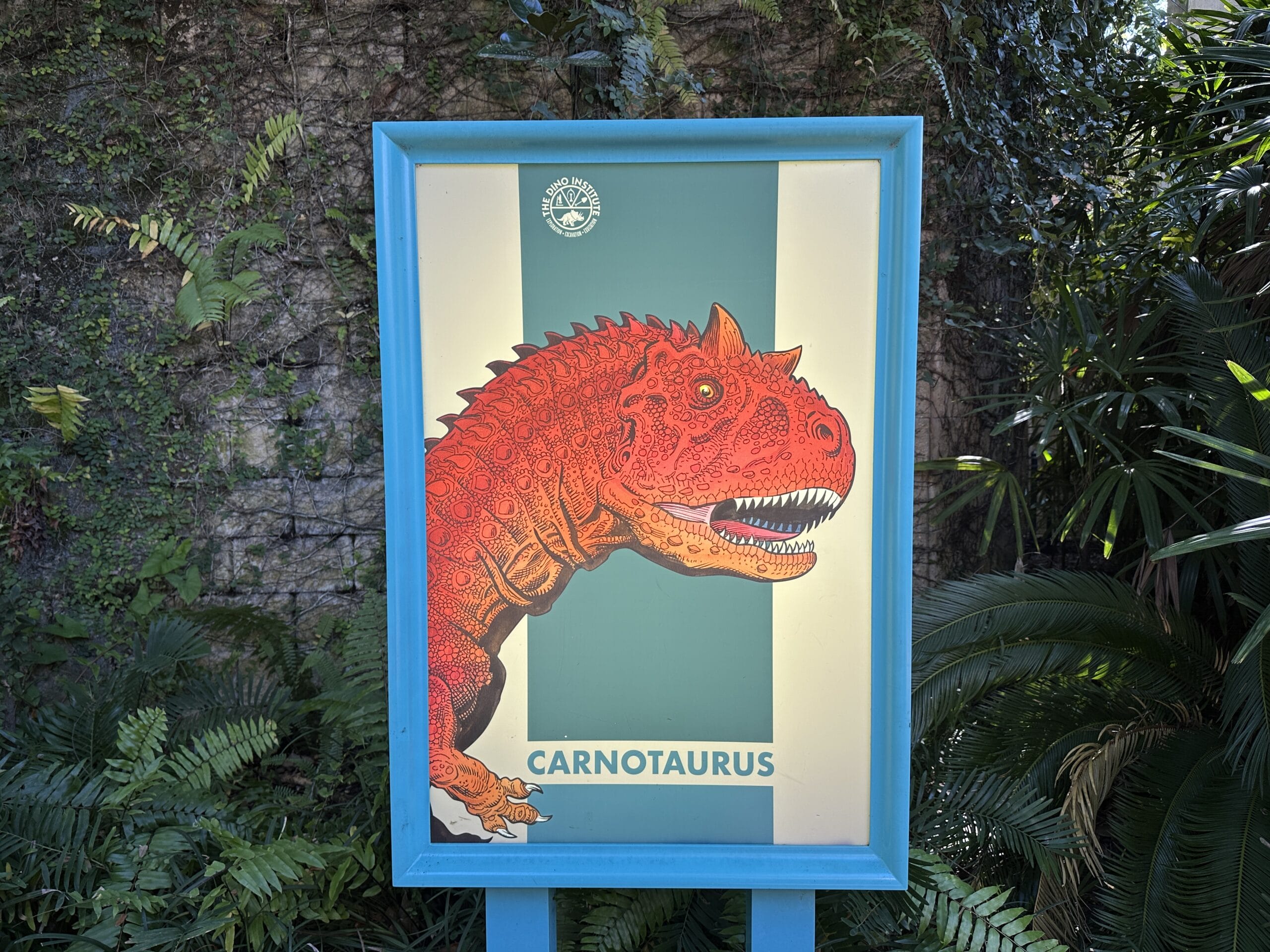
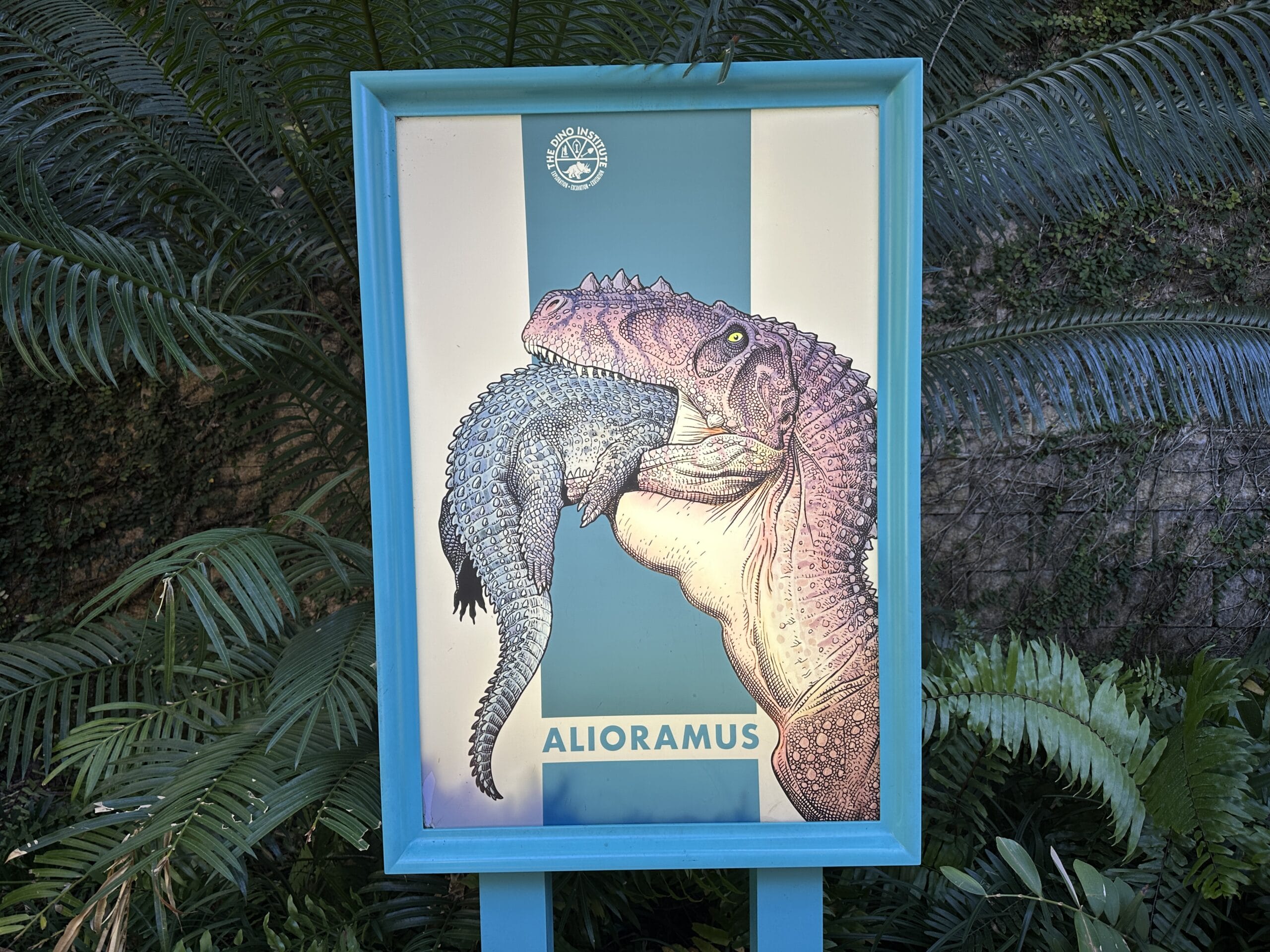
Outside the shop was a trio of posters featuring some of the dinosaurs guests encountered on the ride: Styracosaurus, Carnotaurus, and Alioramus (with the Brachychampsa in its mouth).
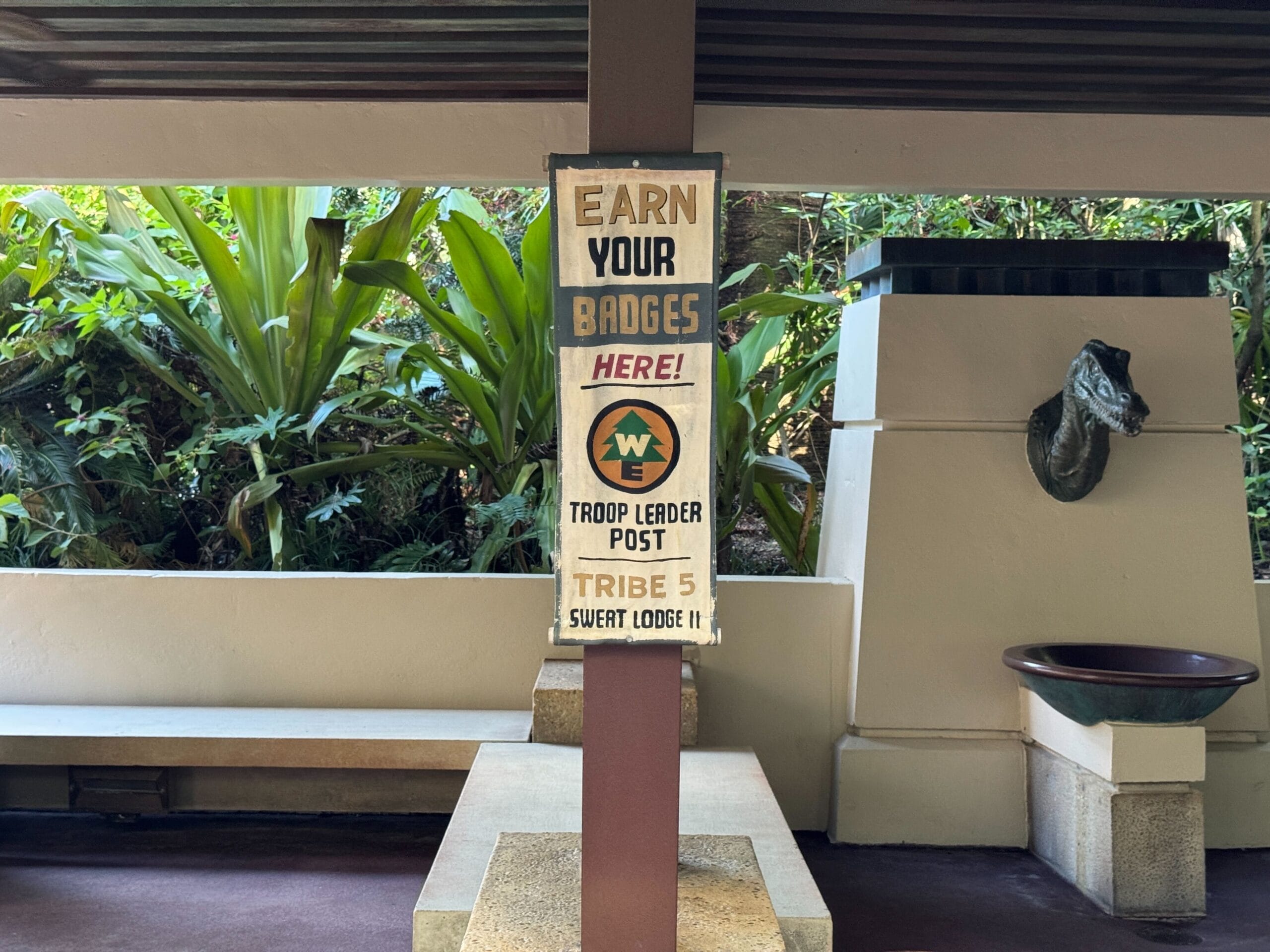
A structure across from the posters had built-in benches and a raptor fountain, although the fountain had not worked in a long time.
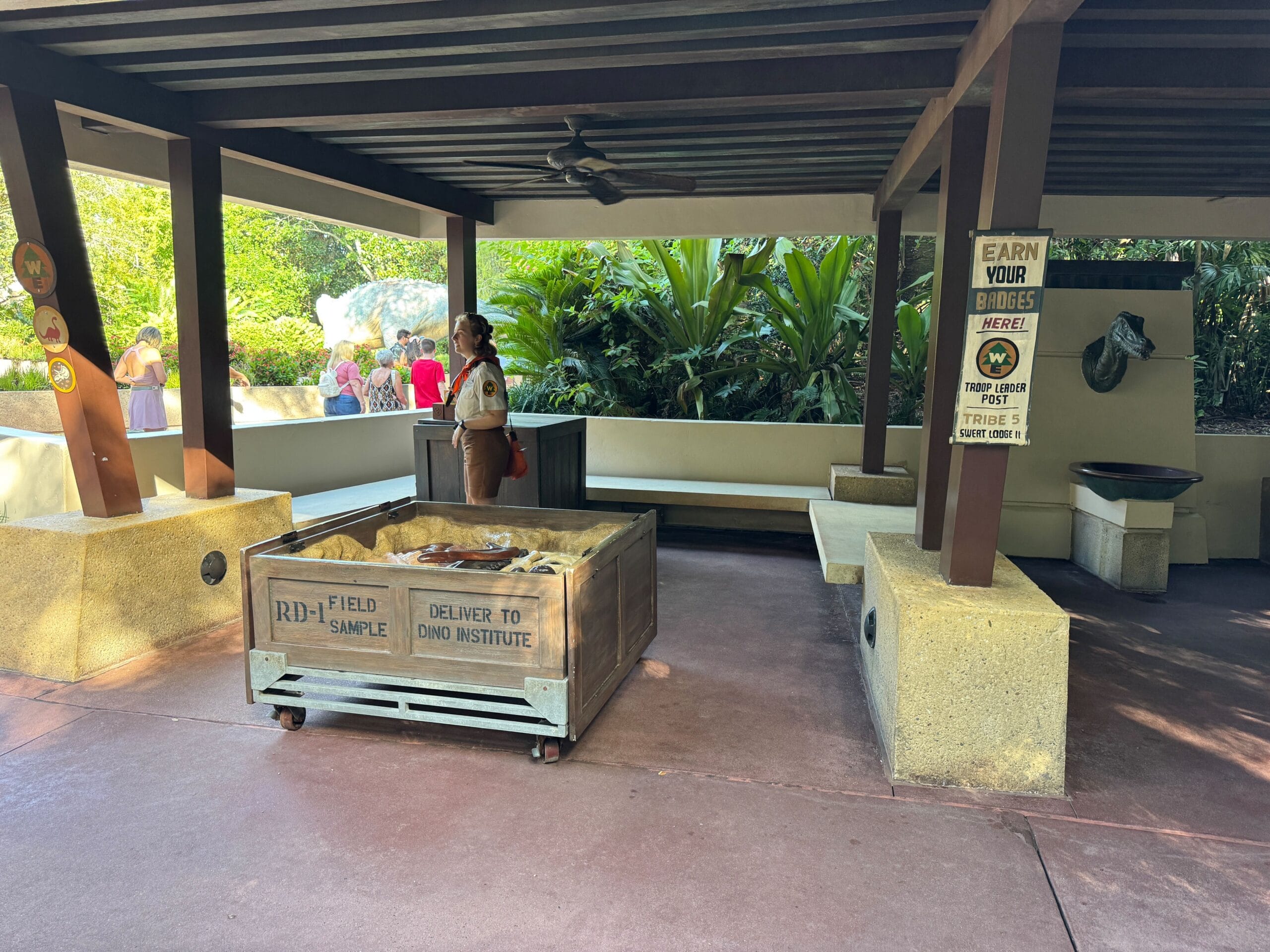
The DinoLand Wilderness Explorers station was relocated to this space after The Boneyard closed.
Will you miss DINOSAUR and DinoLand? Let us know your thoughts on social media.
For the latest Disney Parks news and info, follow WDW News Today on Twitter, Facebook, and Instagram.