
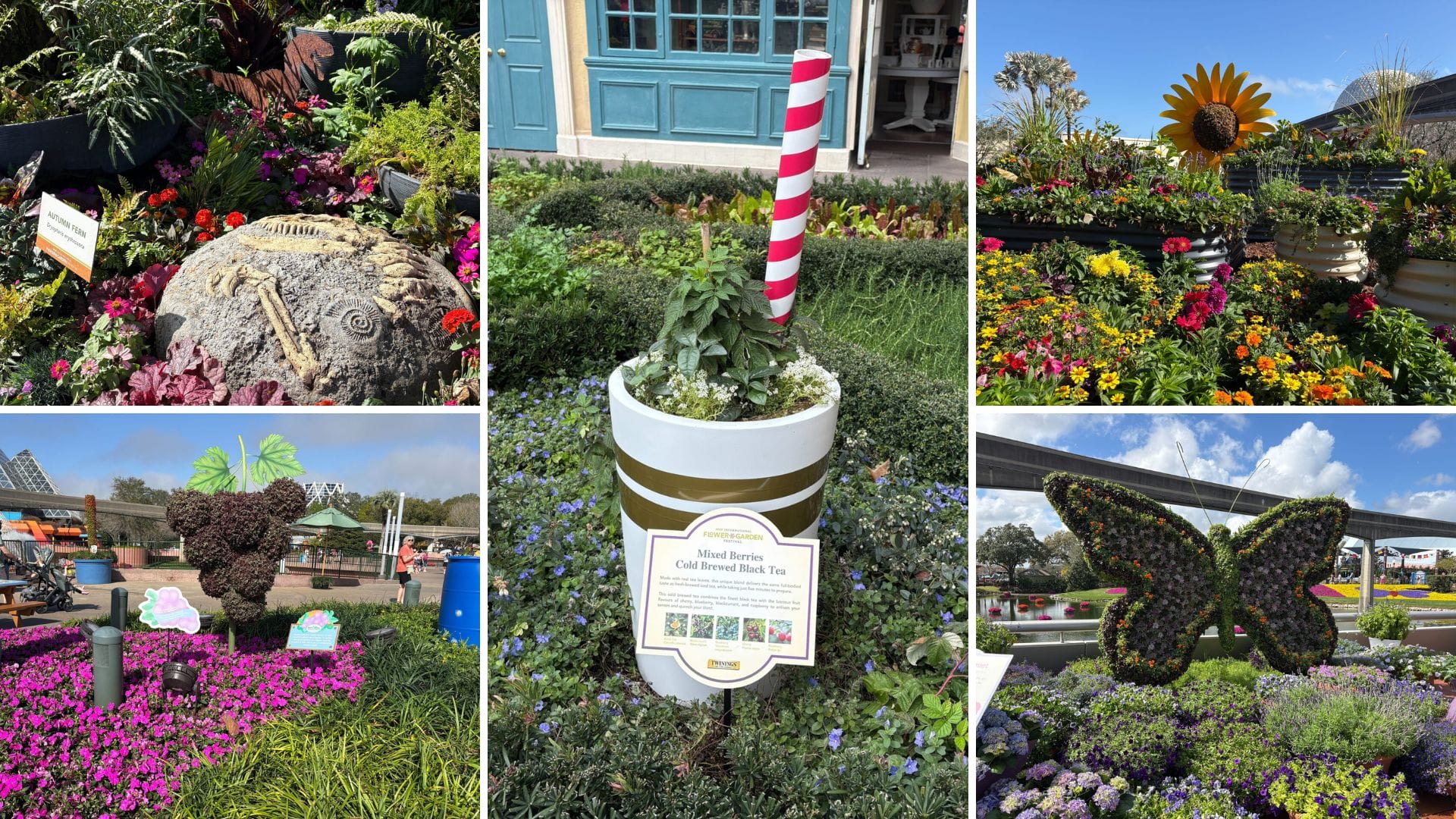
It wouldn’t be the EPCOT International Flower & Garden Festival without gardens! Visit various Garden Destinations throughout the park to learn more about plants and gardening.
New gardens this year are the Hoppers-inspired Wildlife Crossing Garden, the Pluto’s Pet Garden, the Trendy Tropicals Garden, and the Rain or Shine Fruit Stand.
World Celebration
Butterfly Landing Presented by AdventHealth – Near the Imagination! Pavilion
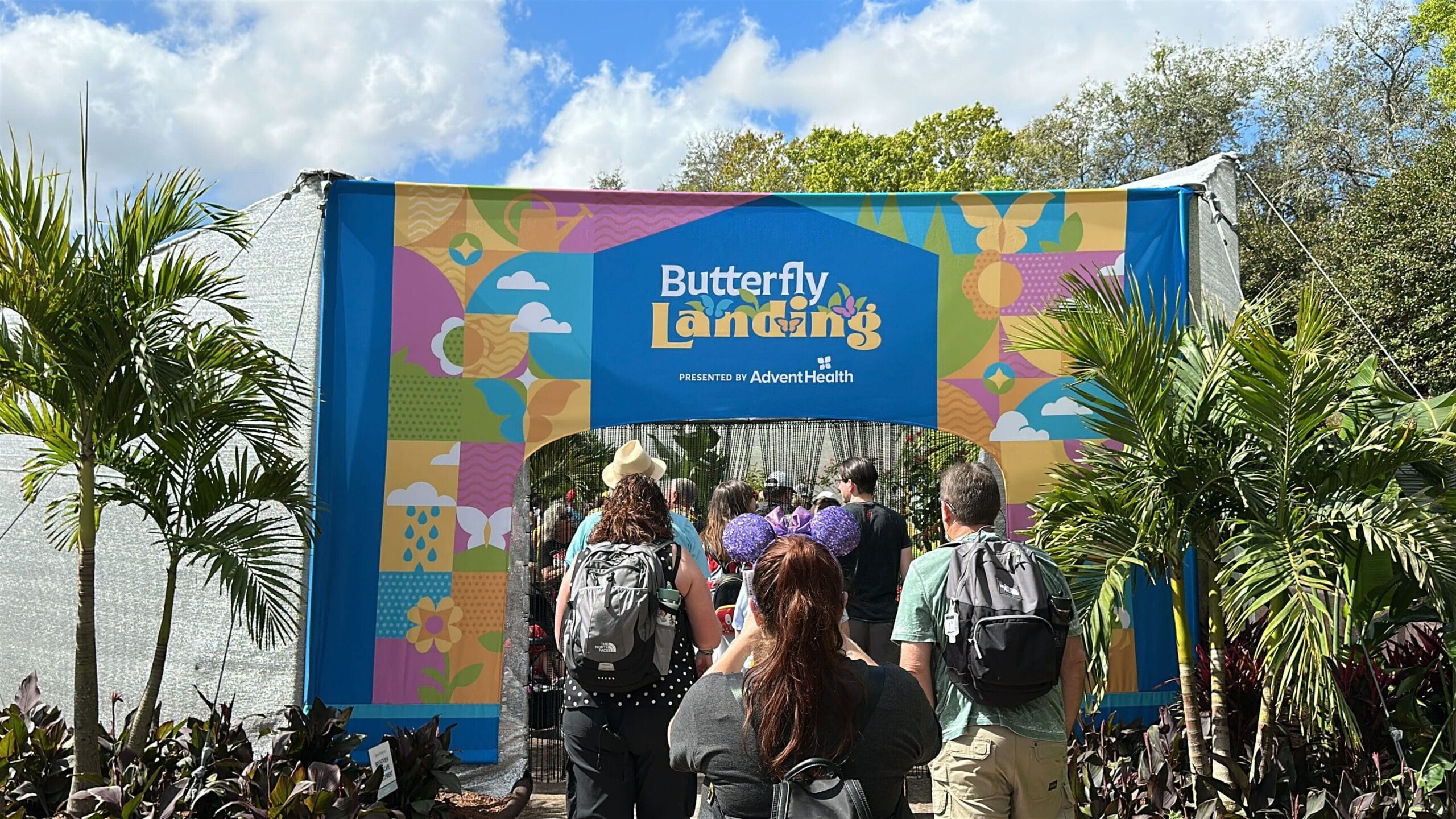
Butterfly Landing is a walkthrough exhibit. Guests enter a tent that houses several species of living butterflies. This is between the Imagination! pavilion and The Land.
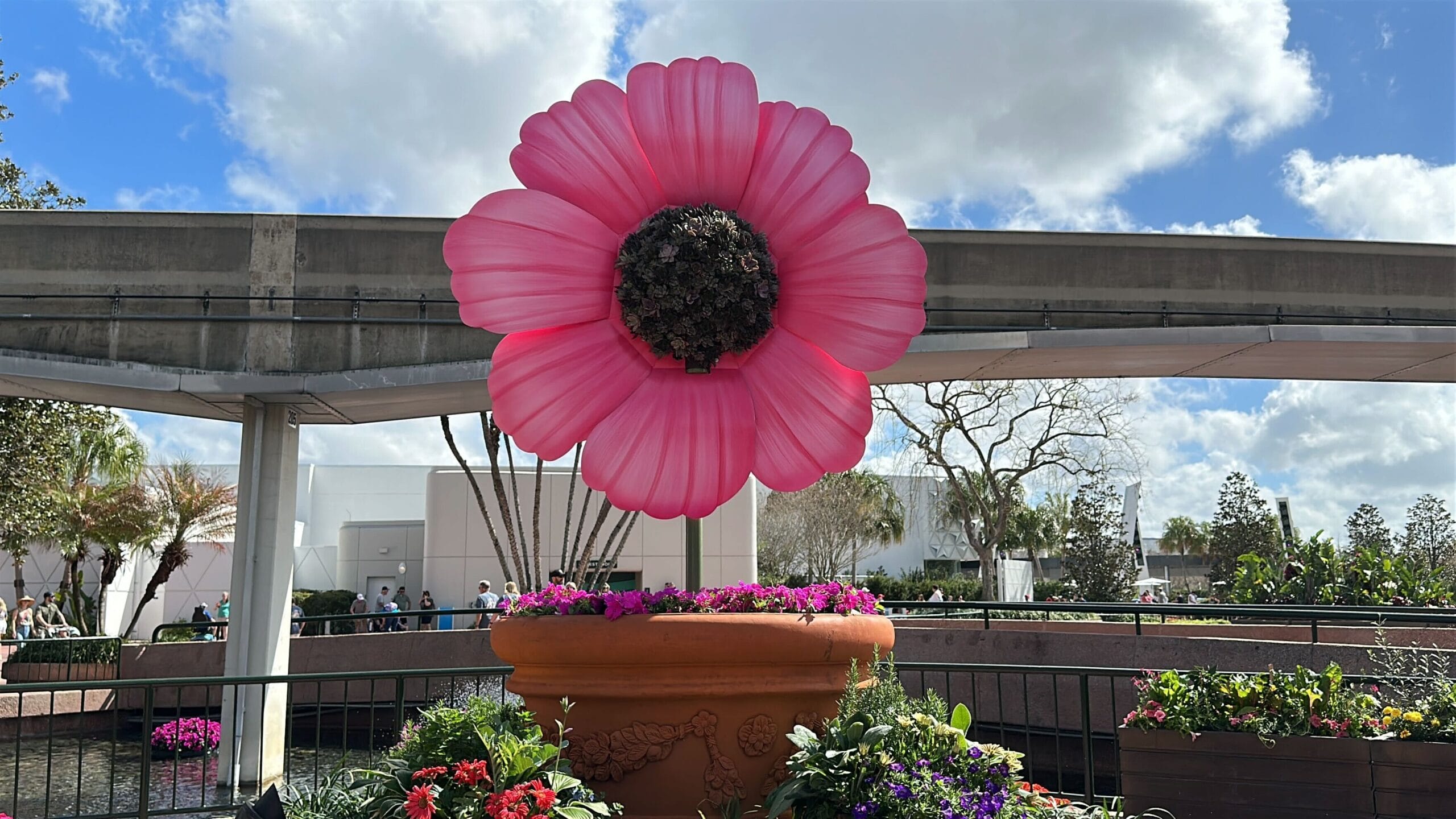
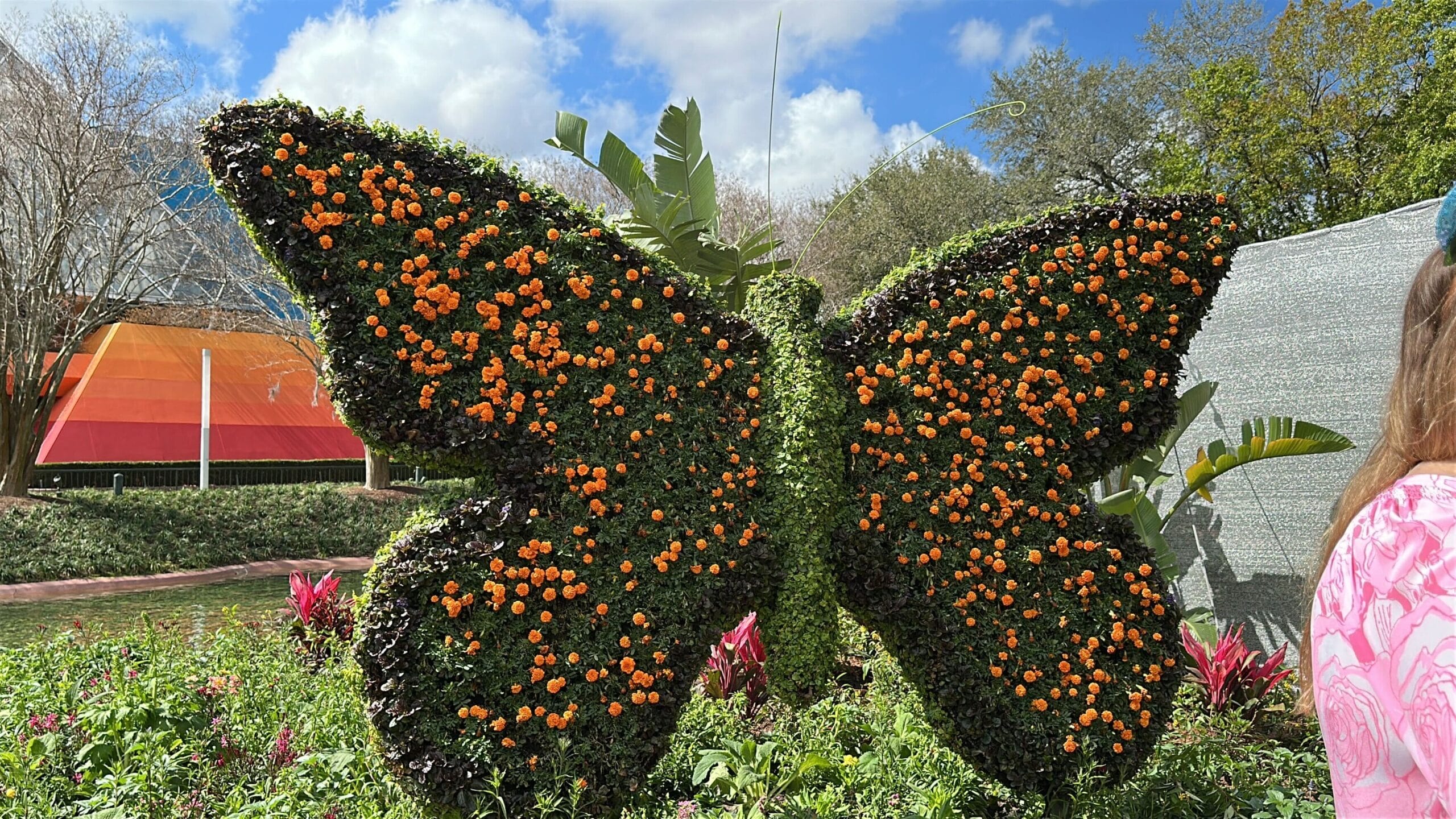
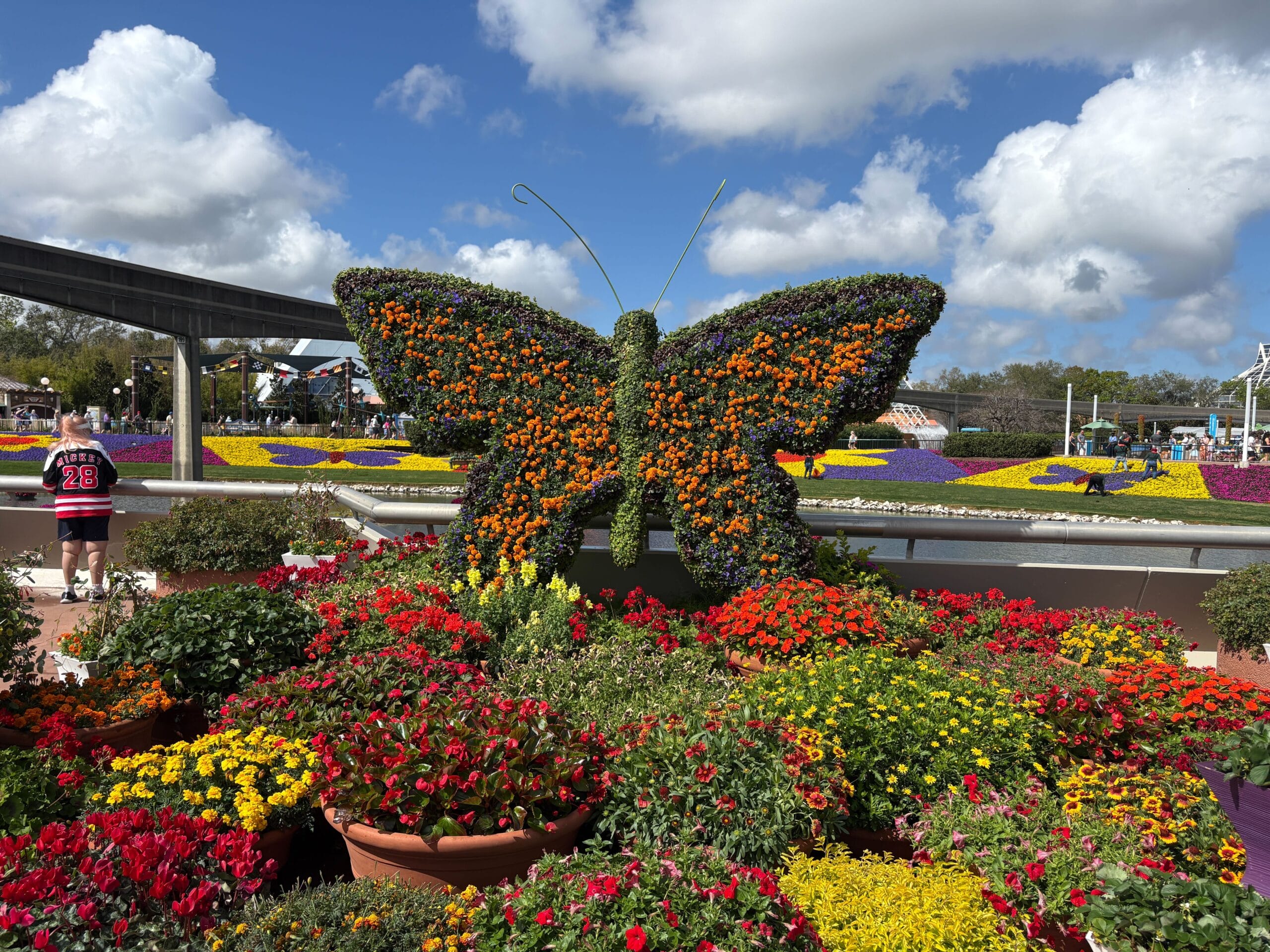
Outside is a butterfly topiary, giant potted flower topiary, and signs.
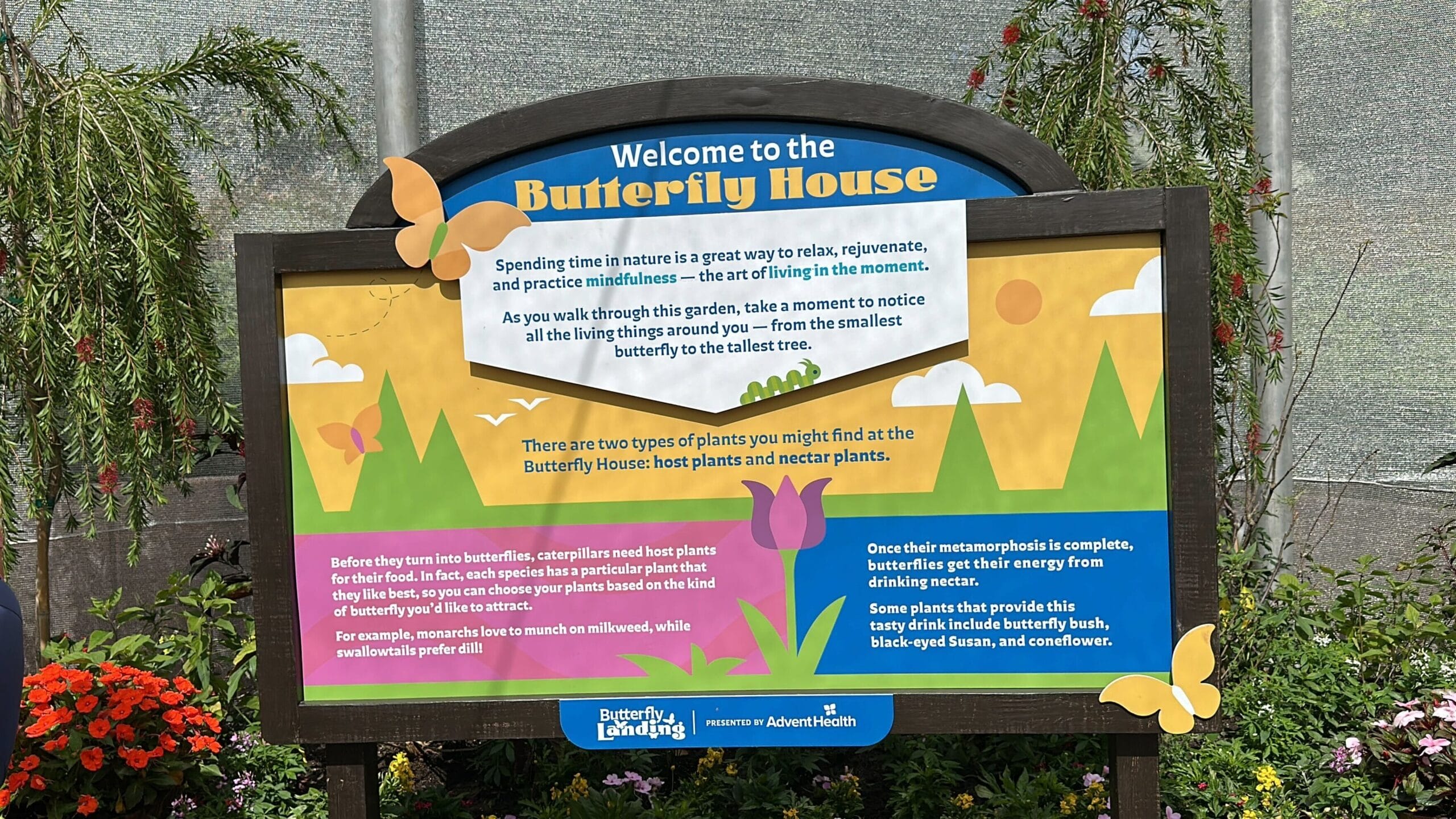
Most of the flowers inside are host plants, which act as food for caterpillars, or nectar flowers, which feed fully-grown butterflies.
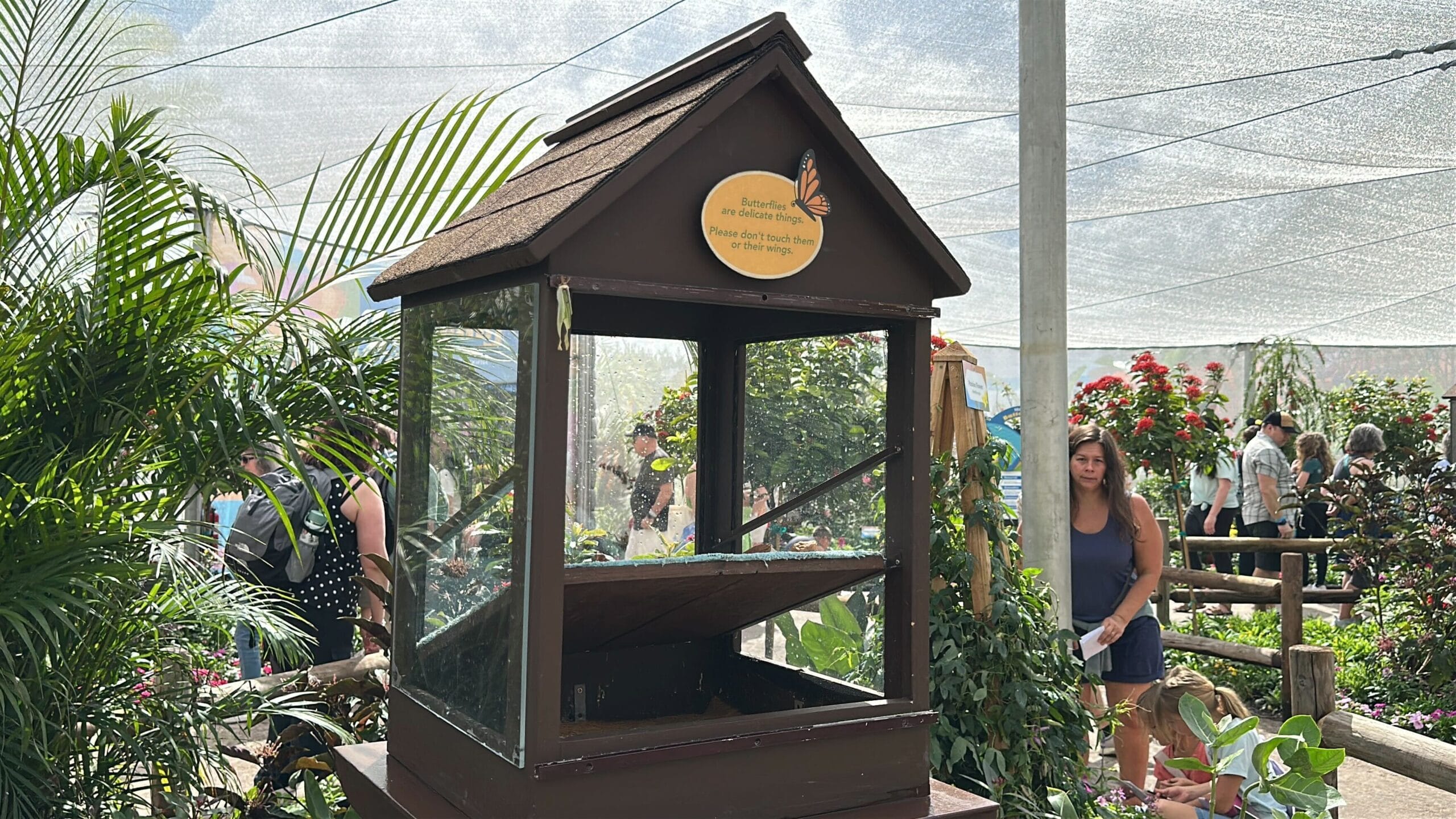
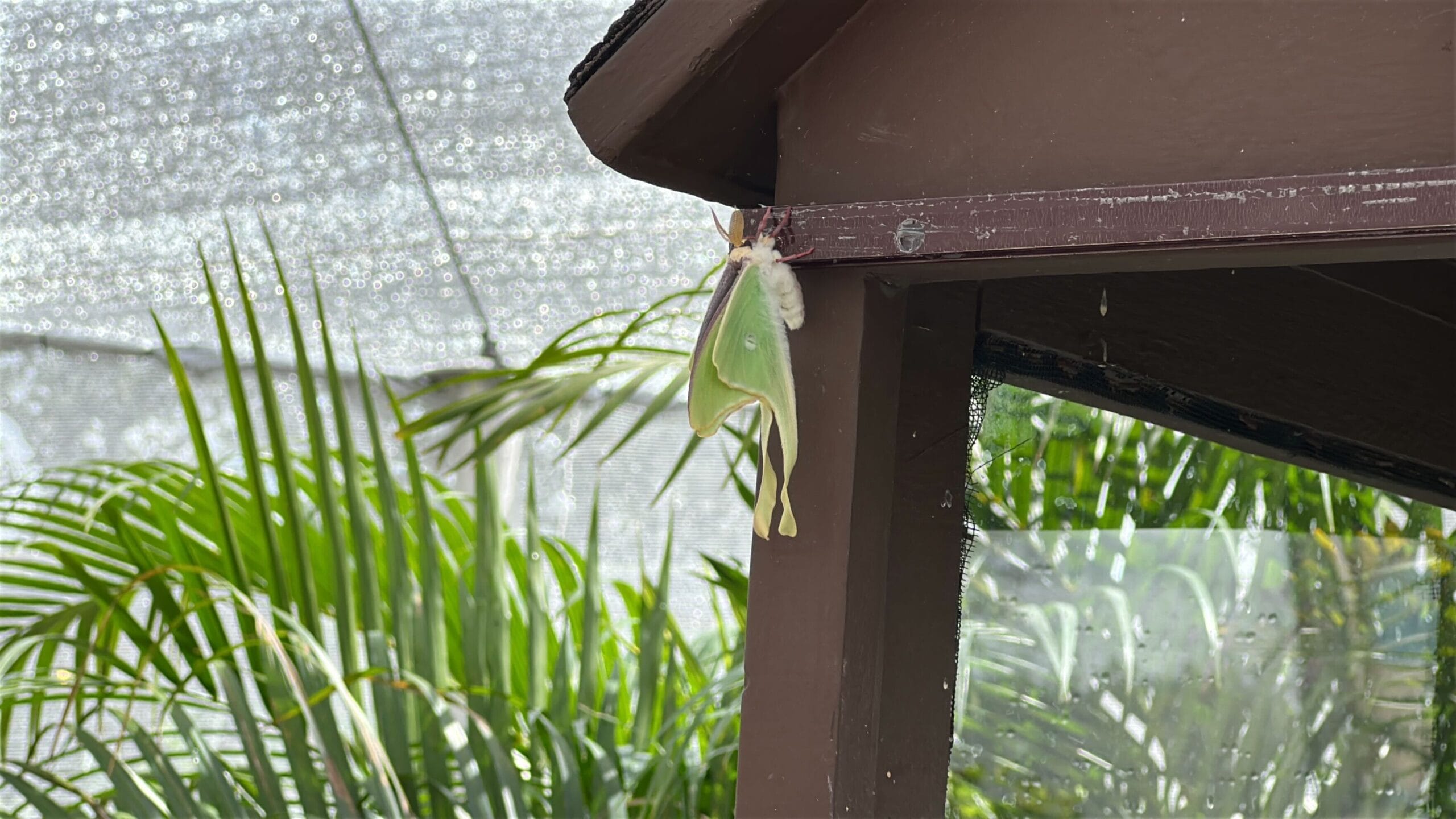
Guests are allowed to look at the caterpillars and butterflies but should not touch them.
The Honey Bee-stro Garden Hosted by The National Honey Board – Walkway between Imagination! Pavilion and World Showcase
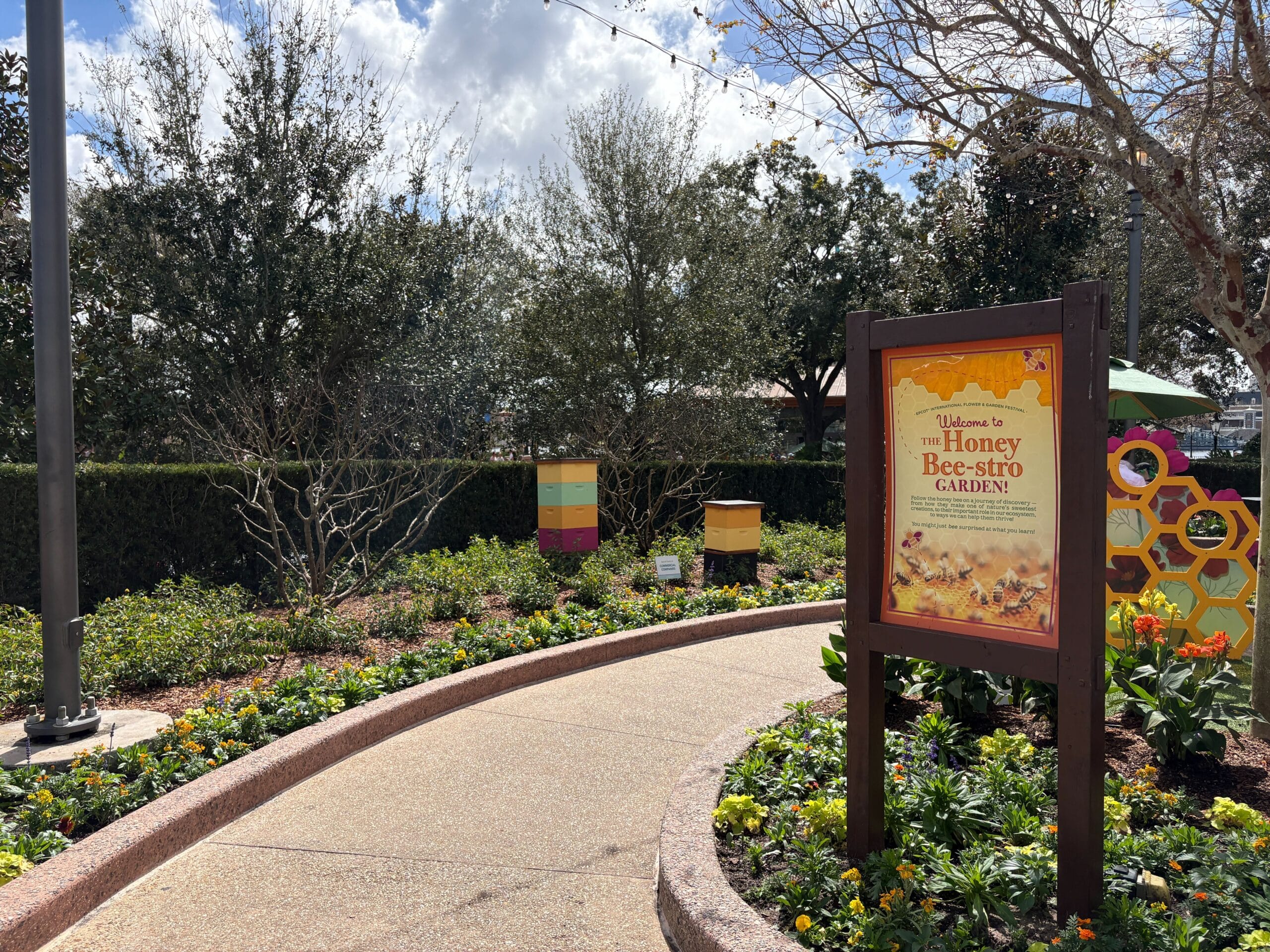
The Honey Bee-stro Garden accompanies The Honey Bee-stro Outdoor Kitchen. After purchasing their honey Chicken and Waffles or Honeycomb Bowl, guests can dine among flowers perfect for bees.
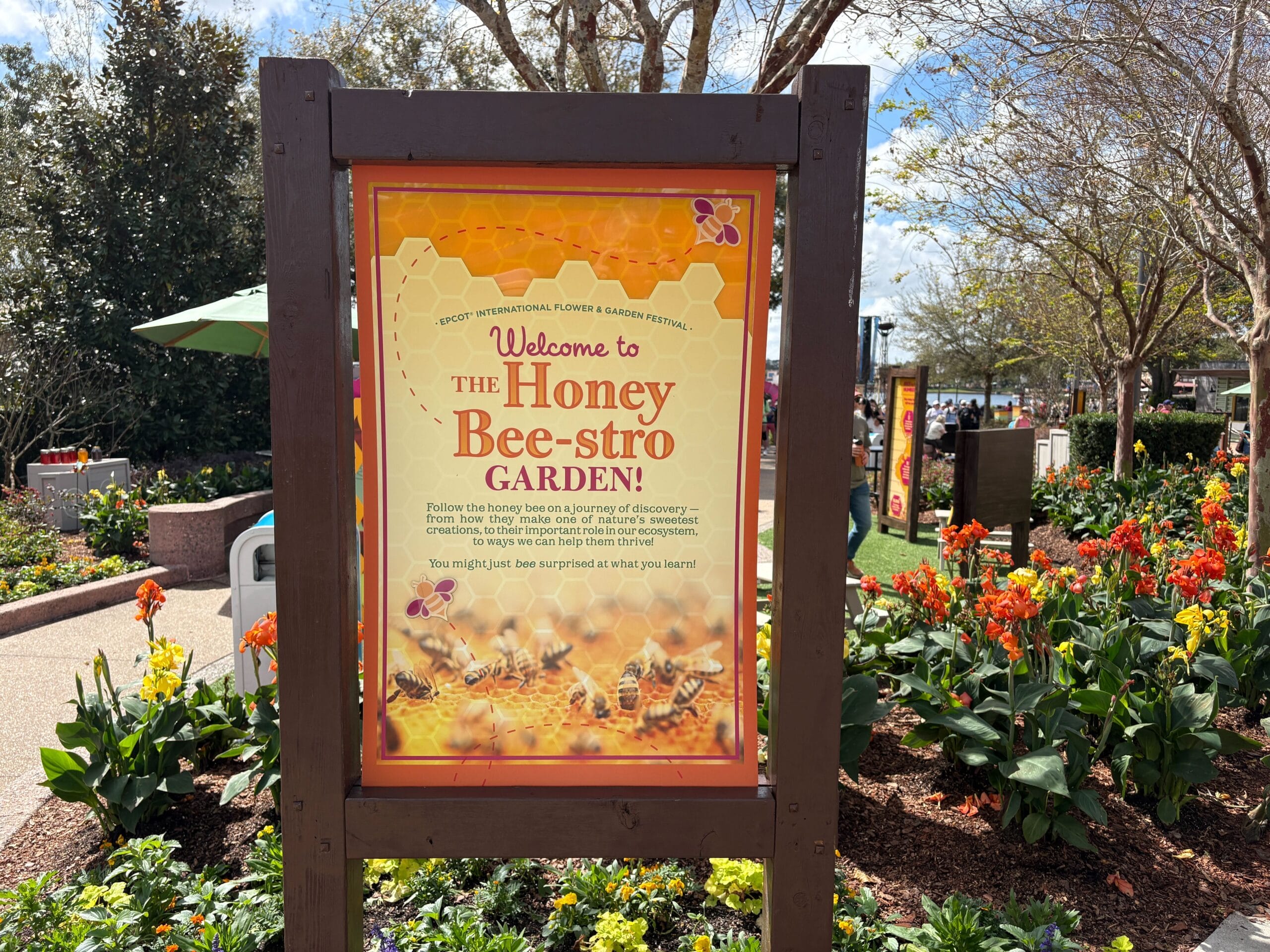
Welcome to The Honey Bee-stro Garden!
Follow the honey bee on a journey of discovery — from how they make one of their nature’s sweetest creations, to their important role in our ecosystem, to ways we can help them thrive!
You might just bee surprised at what you learn!
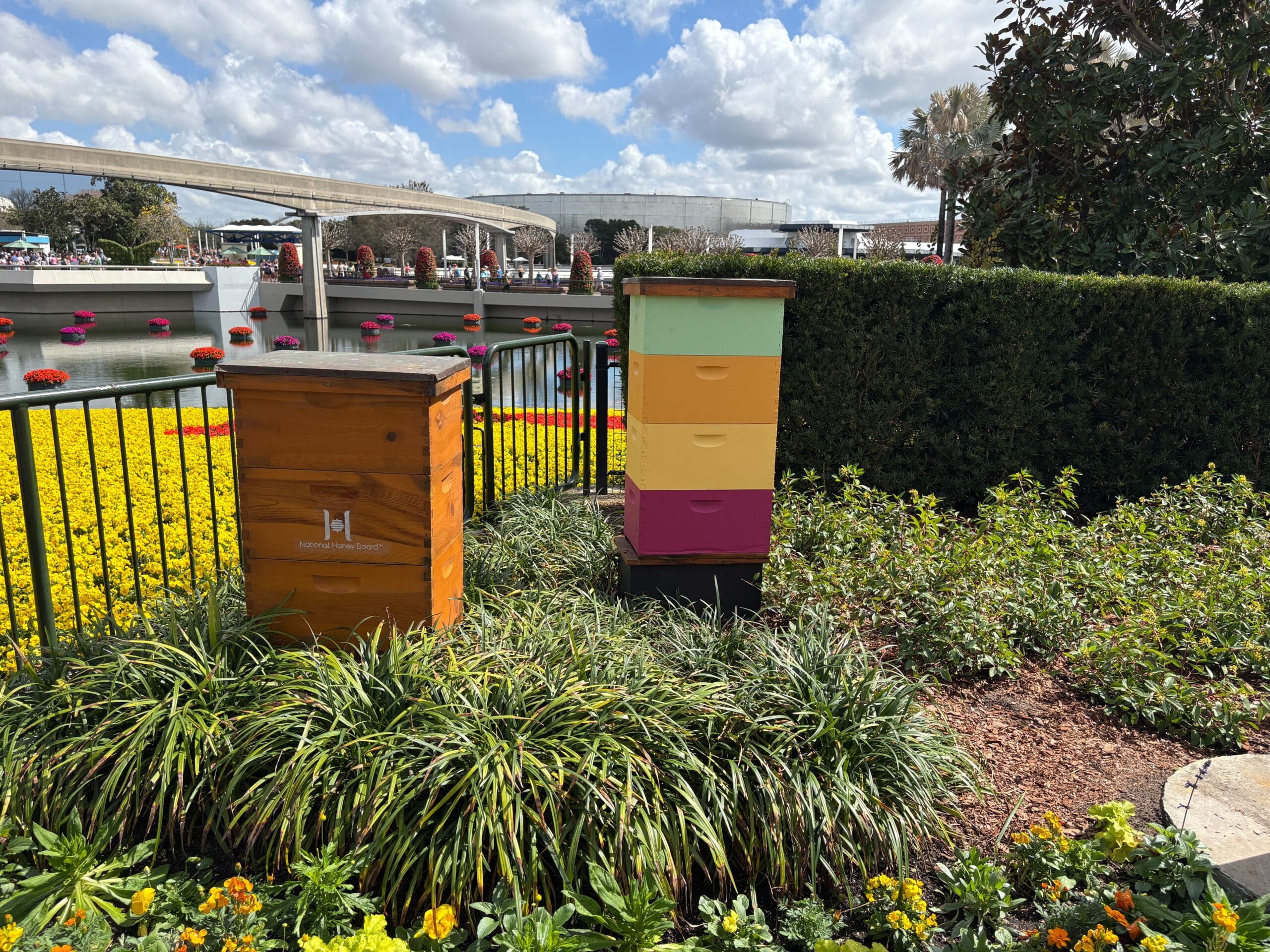
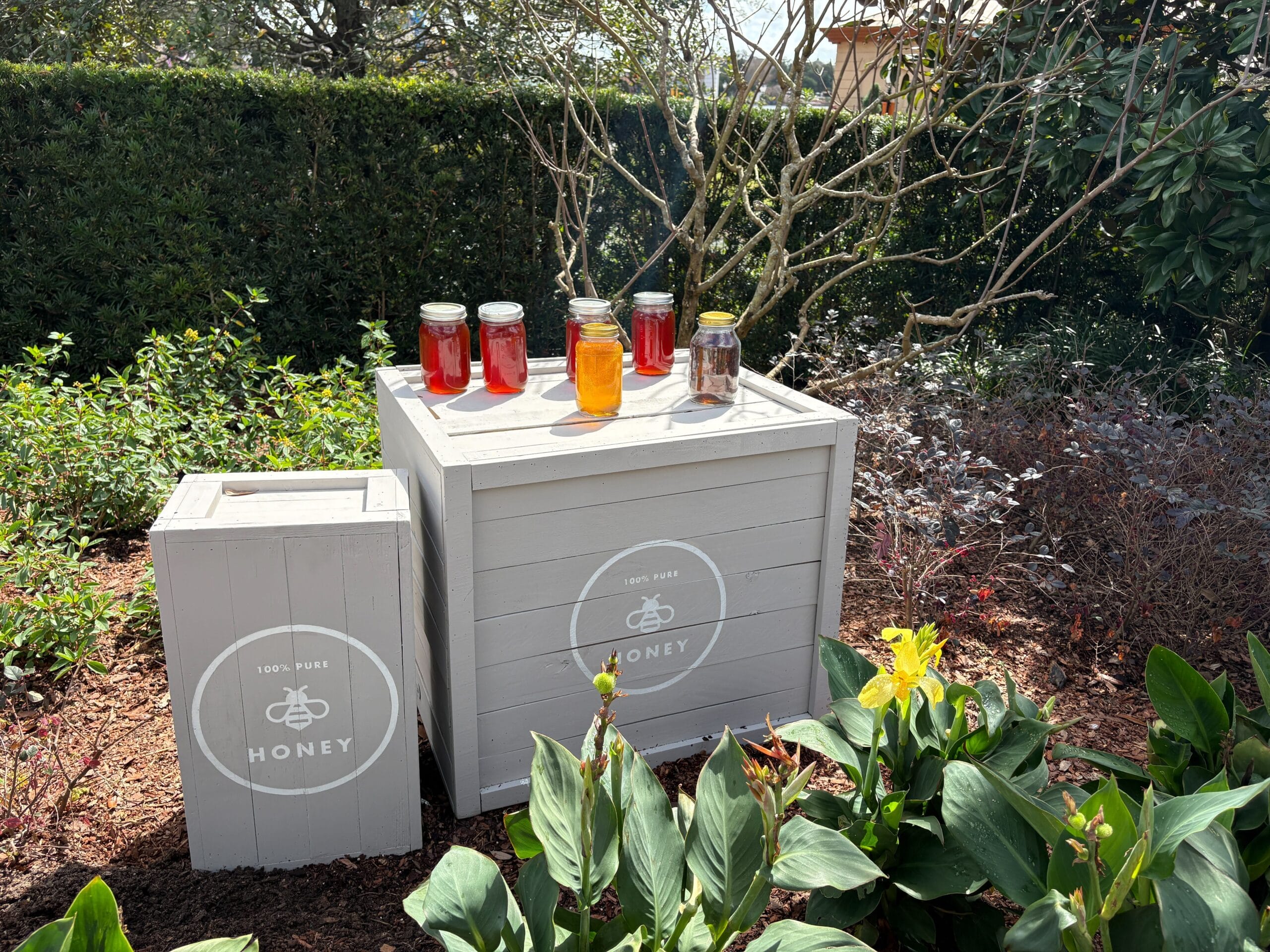
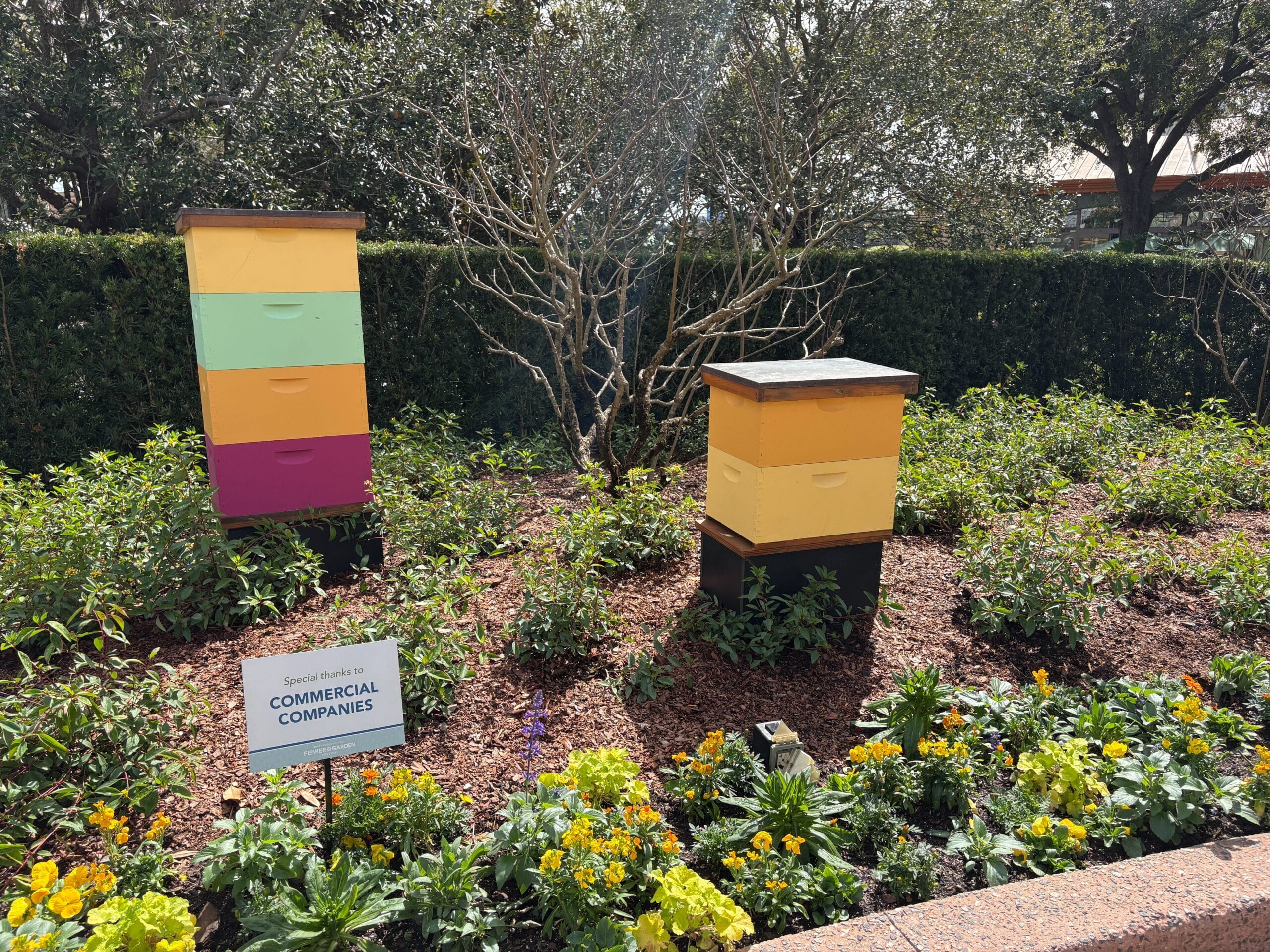
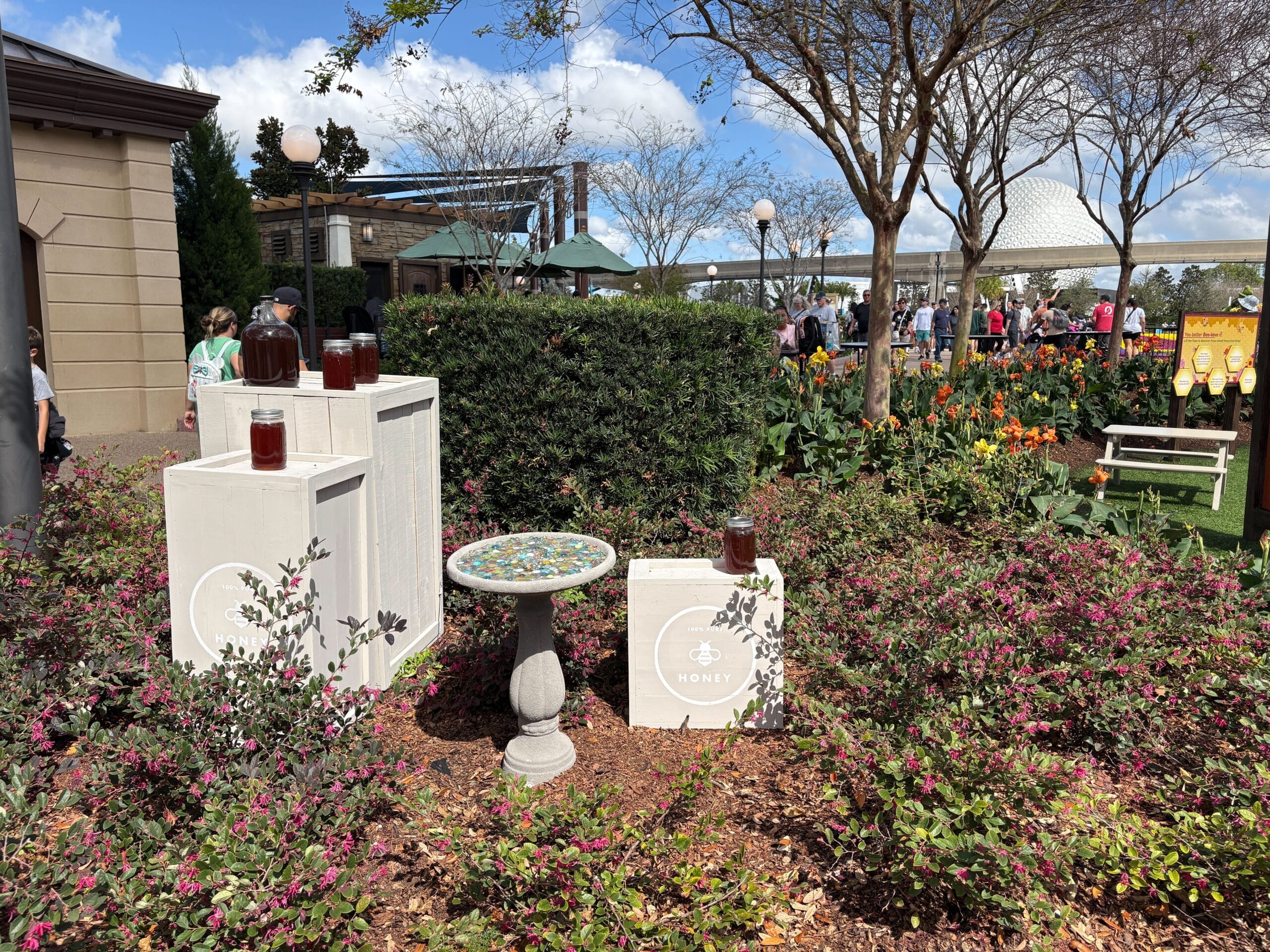
There are some beehive boxes and honey jars throughout the space. Flowers include coral bells.
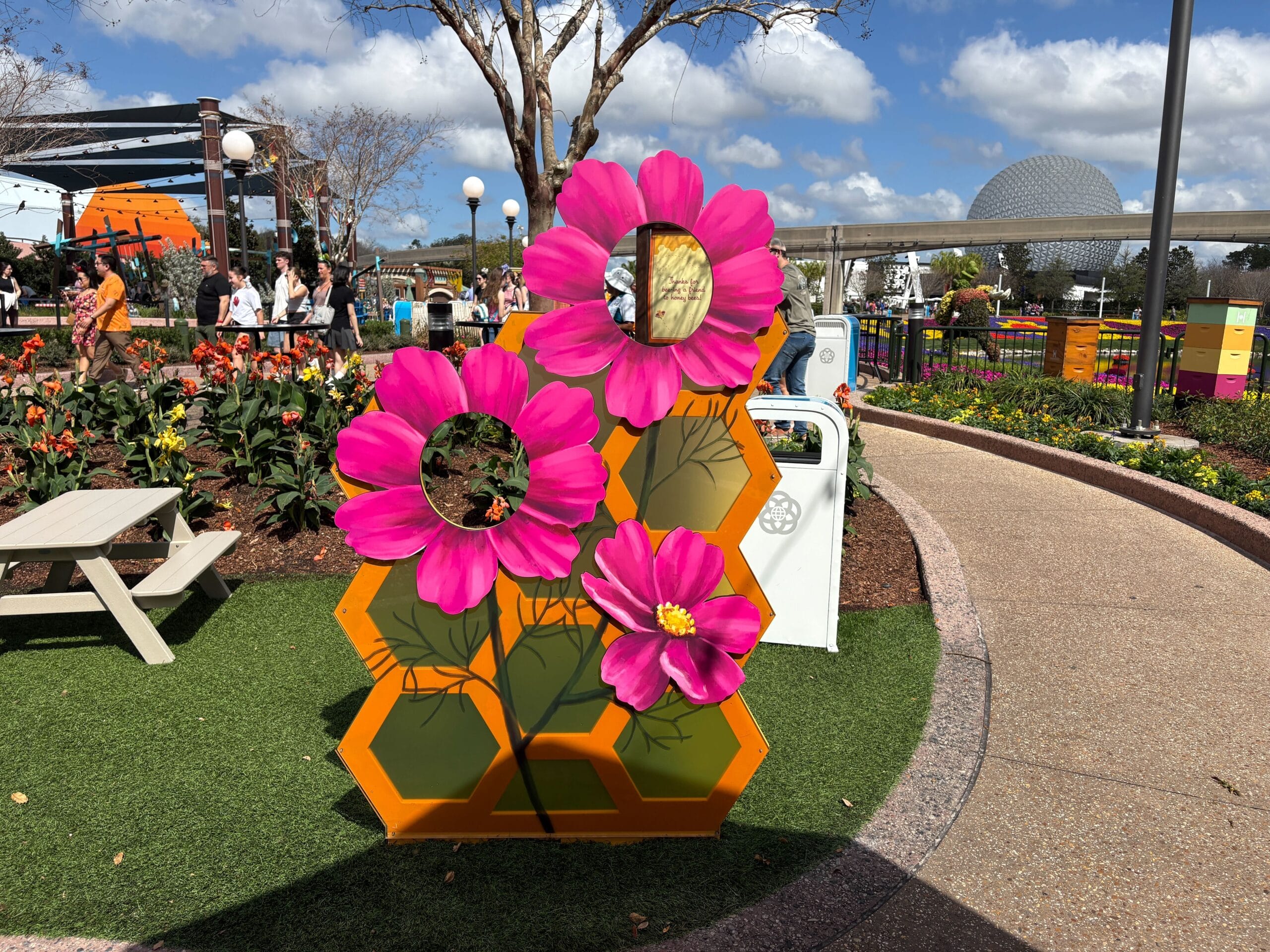
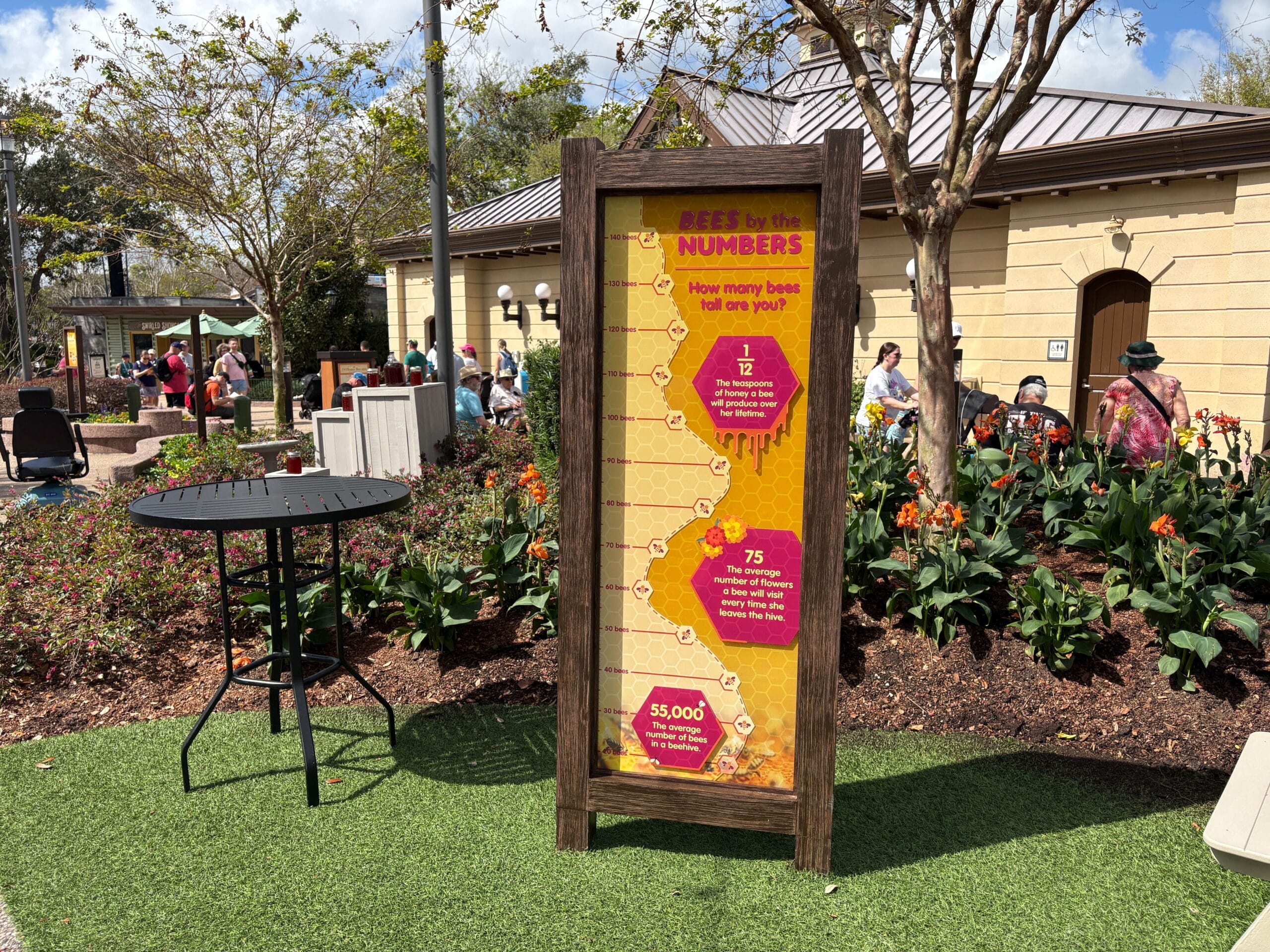
Guests can turn themselves into flowers at a photo op or see how many bees tall they are.
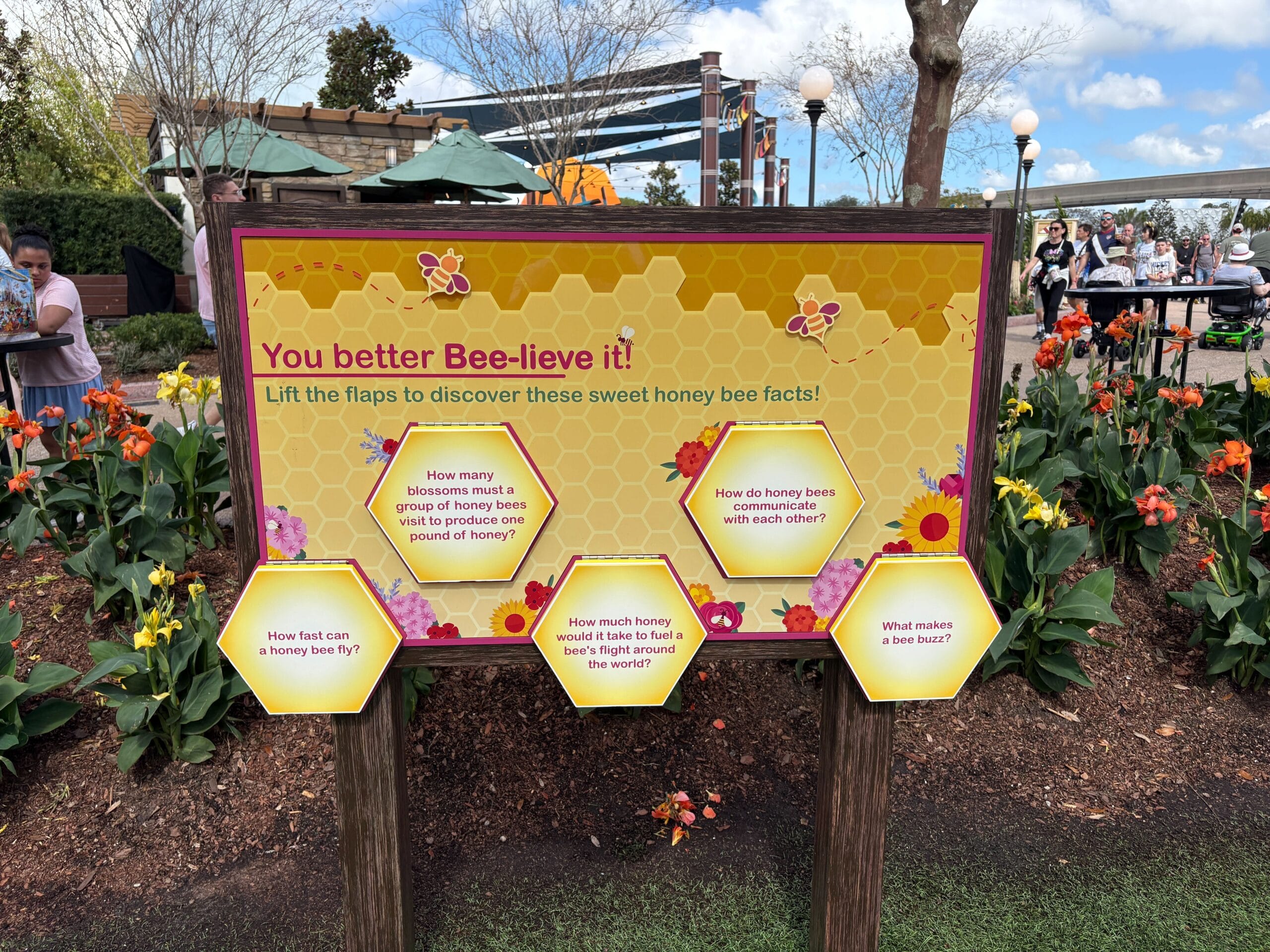
This board features honeycomb flaps with bee facts.
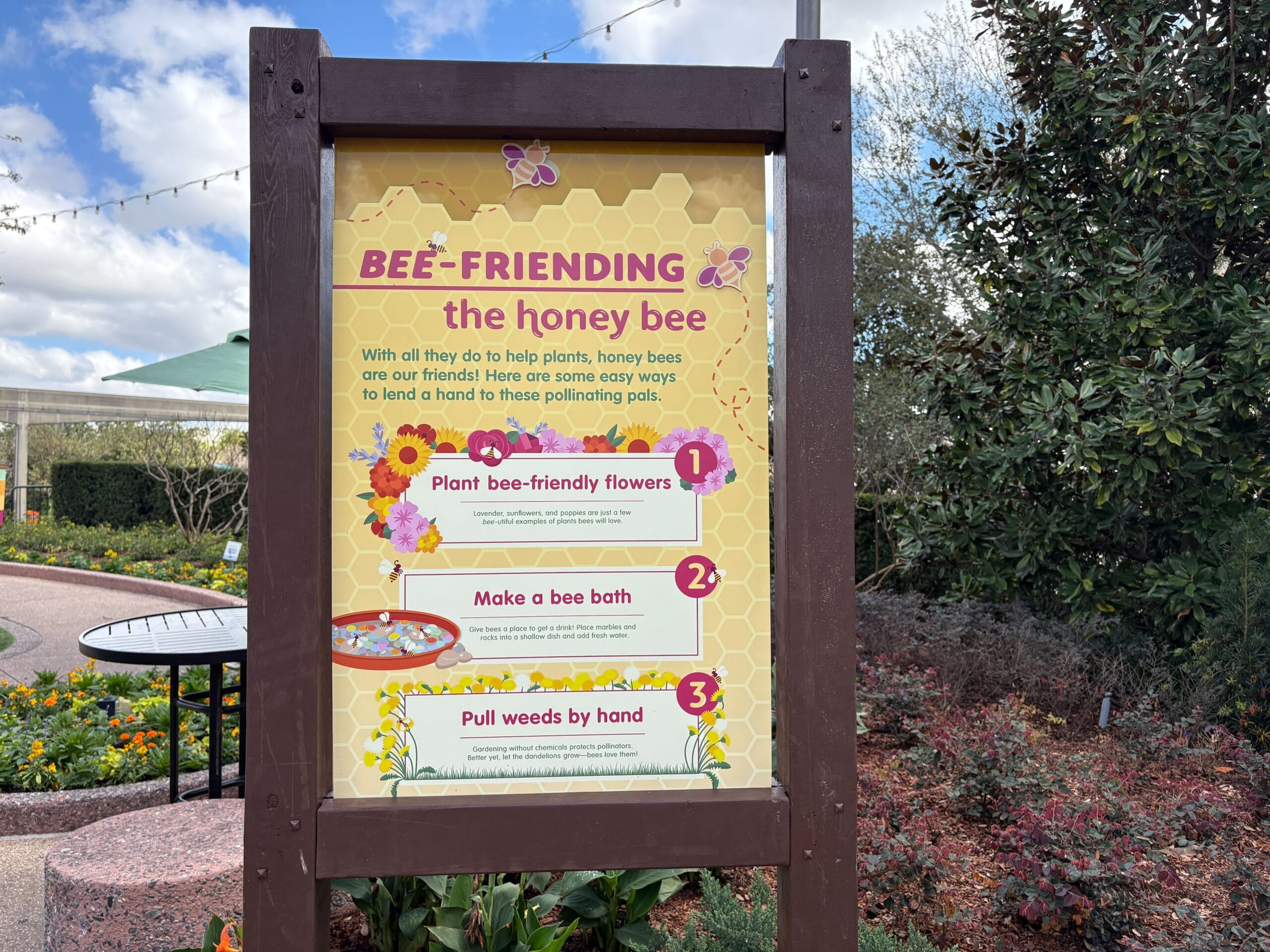
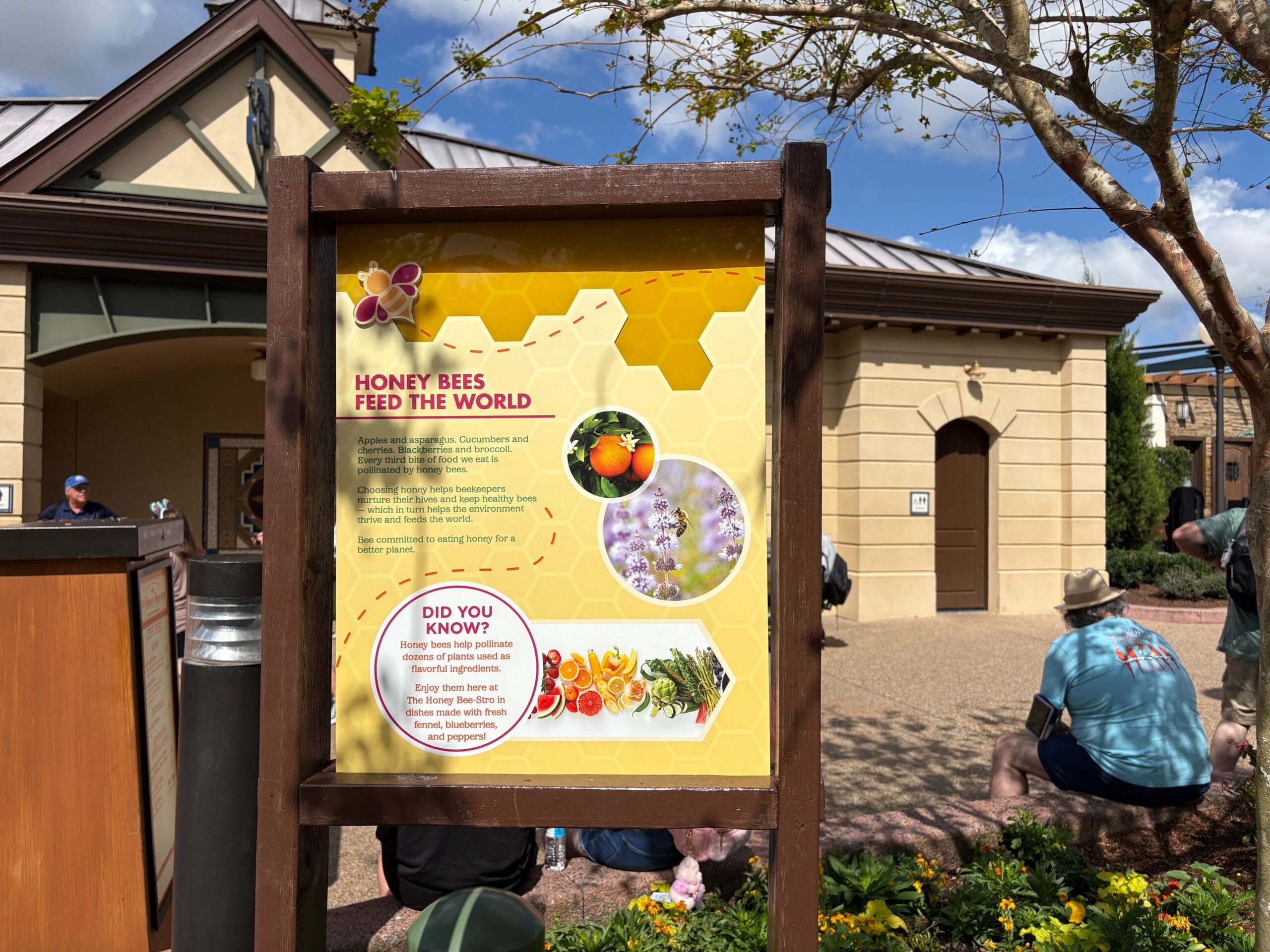
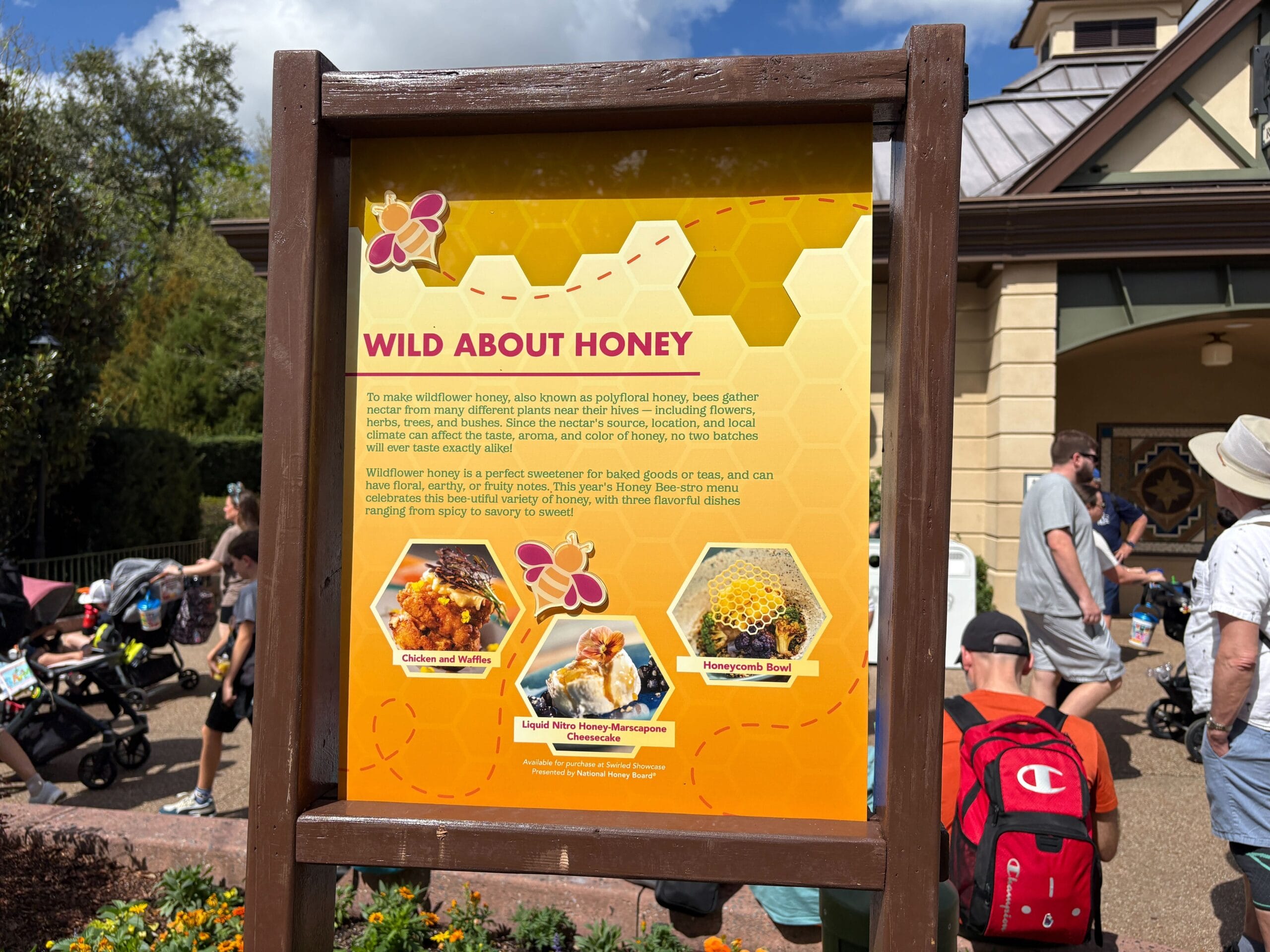
Signs list information about bees and bee-friendly flowers.
*NEW* Rain or Shine Fruit Stand Presented by Outshine – Near CommuniCore Plaza
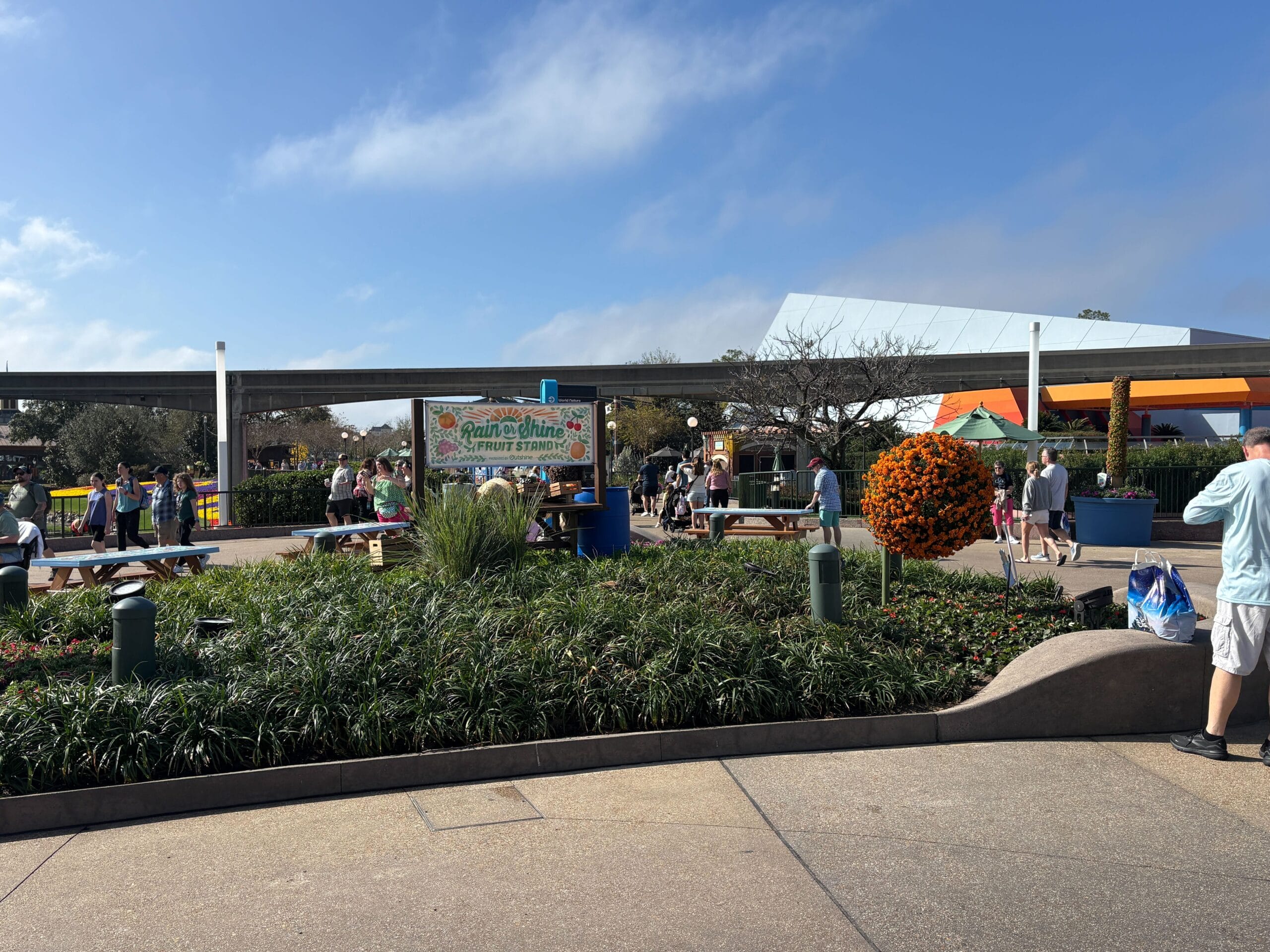
Rain or Shine Fruit Stand is a garden of fruit-inspired topiaries. It takes up a flowerbed near CommuniCore.
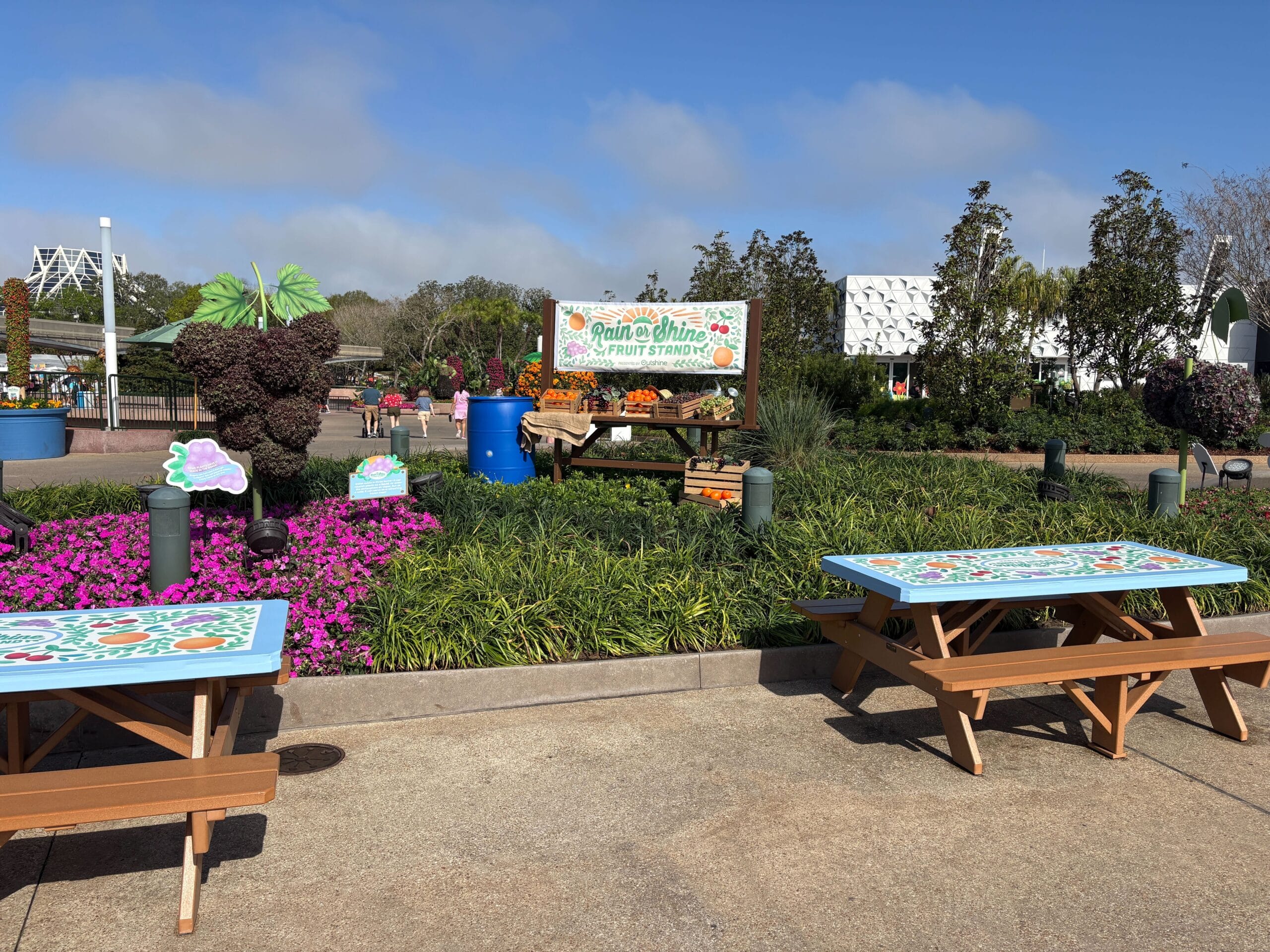
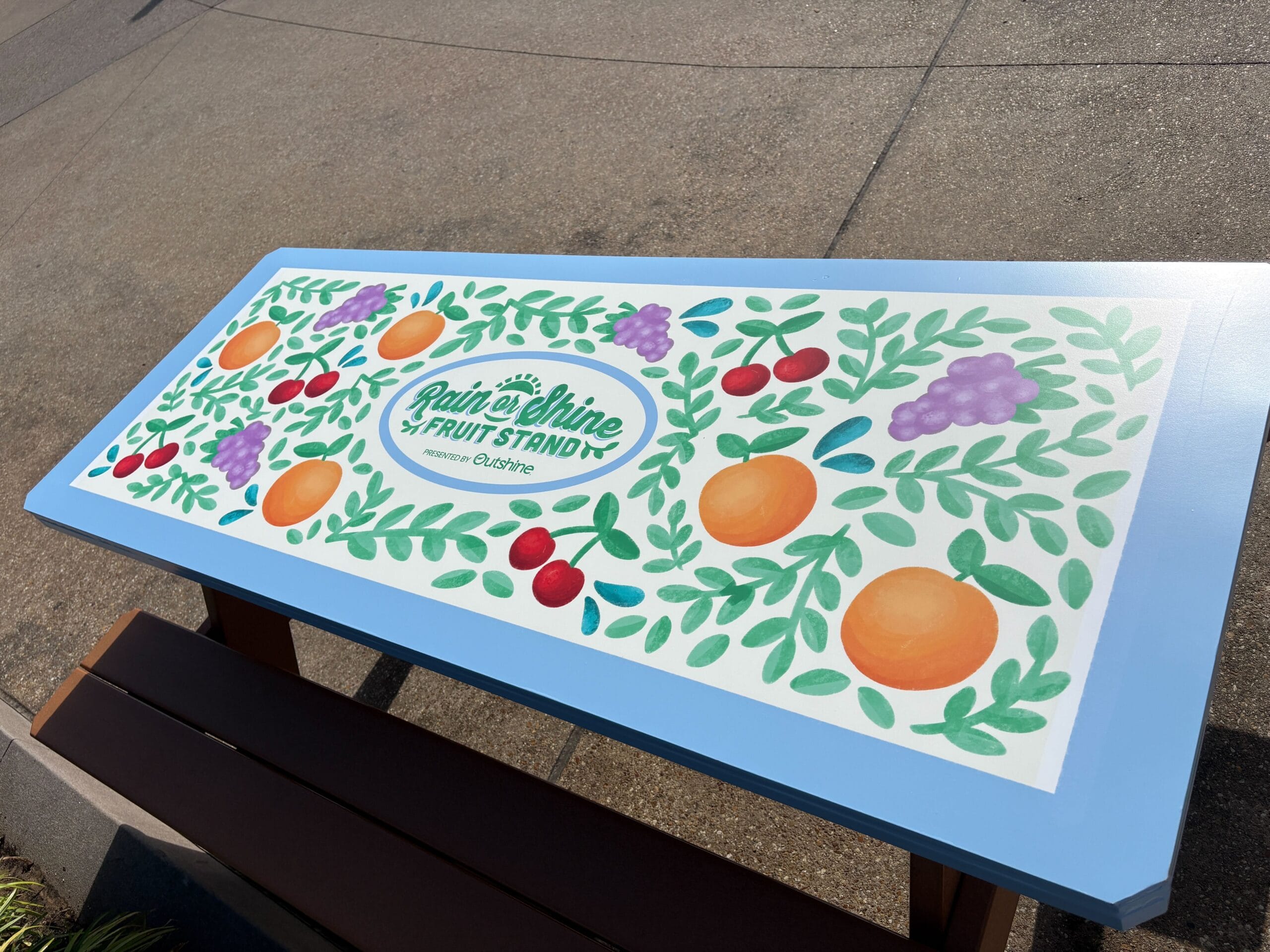
There are picnic tables around the flowerbed with fruit-covered decals on top.
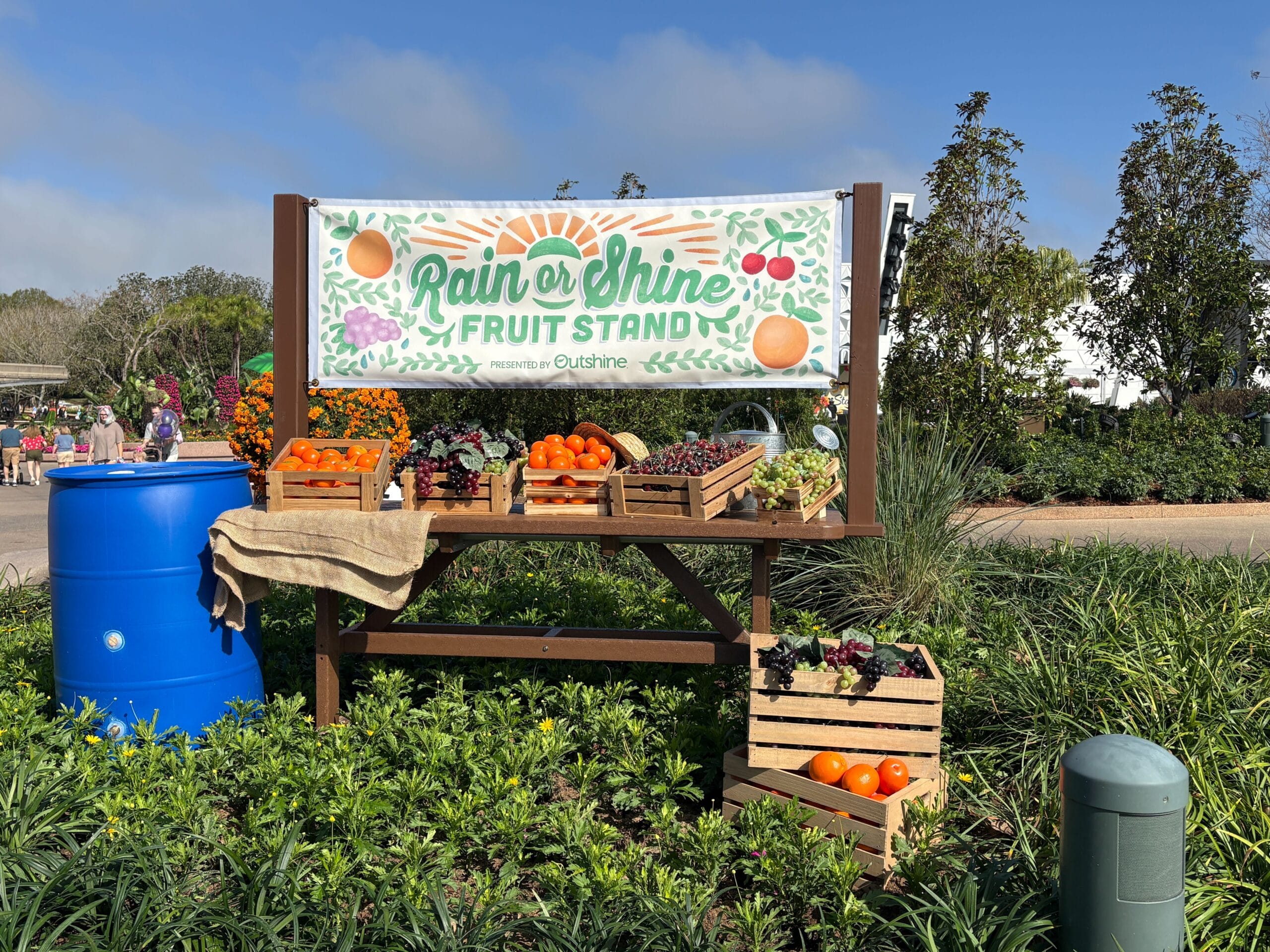
A stand in the center has crates of (fake) fruit and a Rain or Shine Fruit Stand banner.
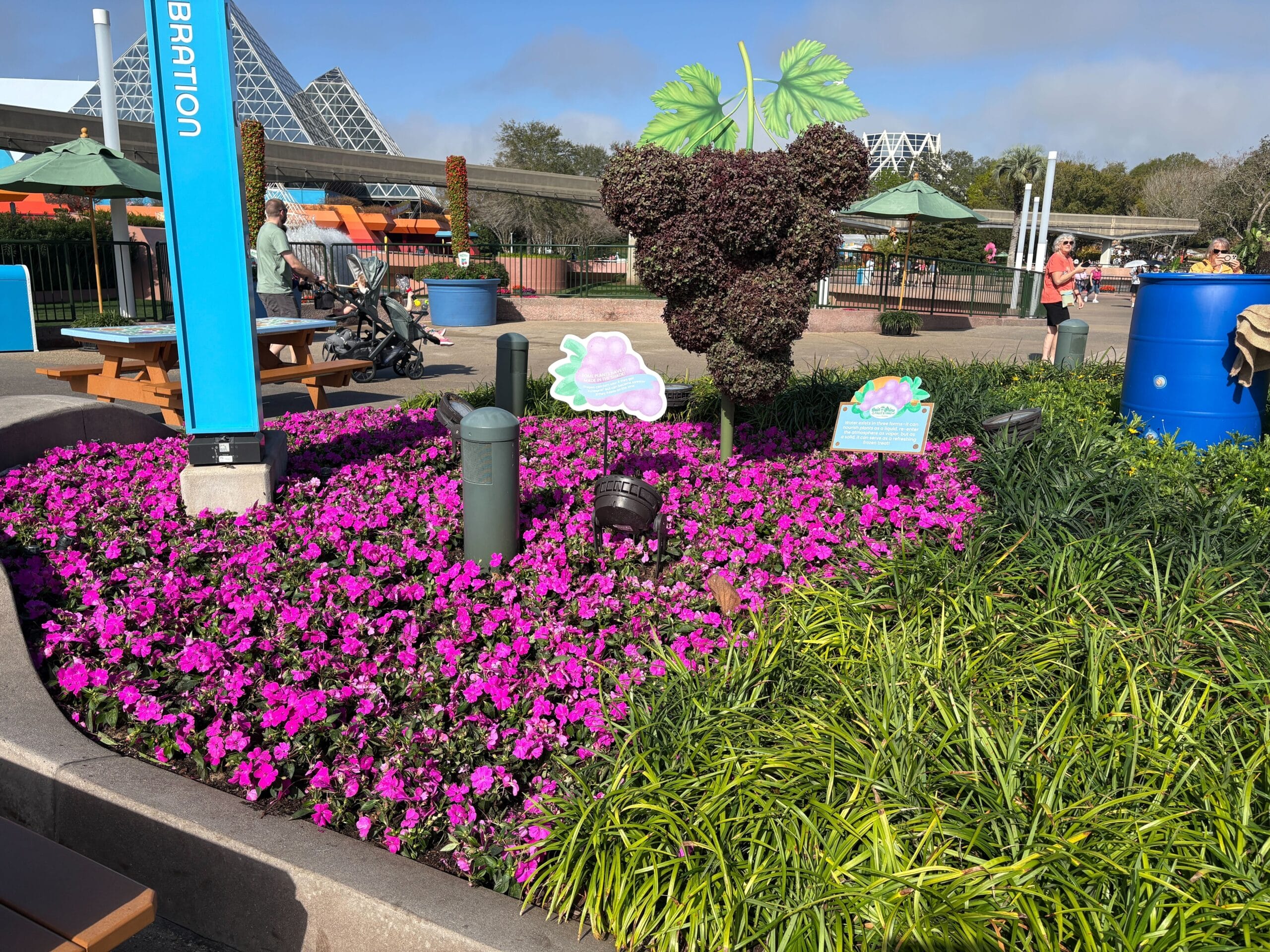
This topiary among purple flowers resembles a bunch of grapes.
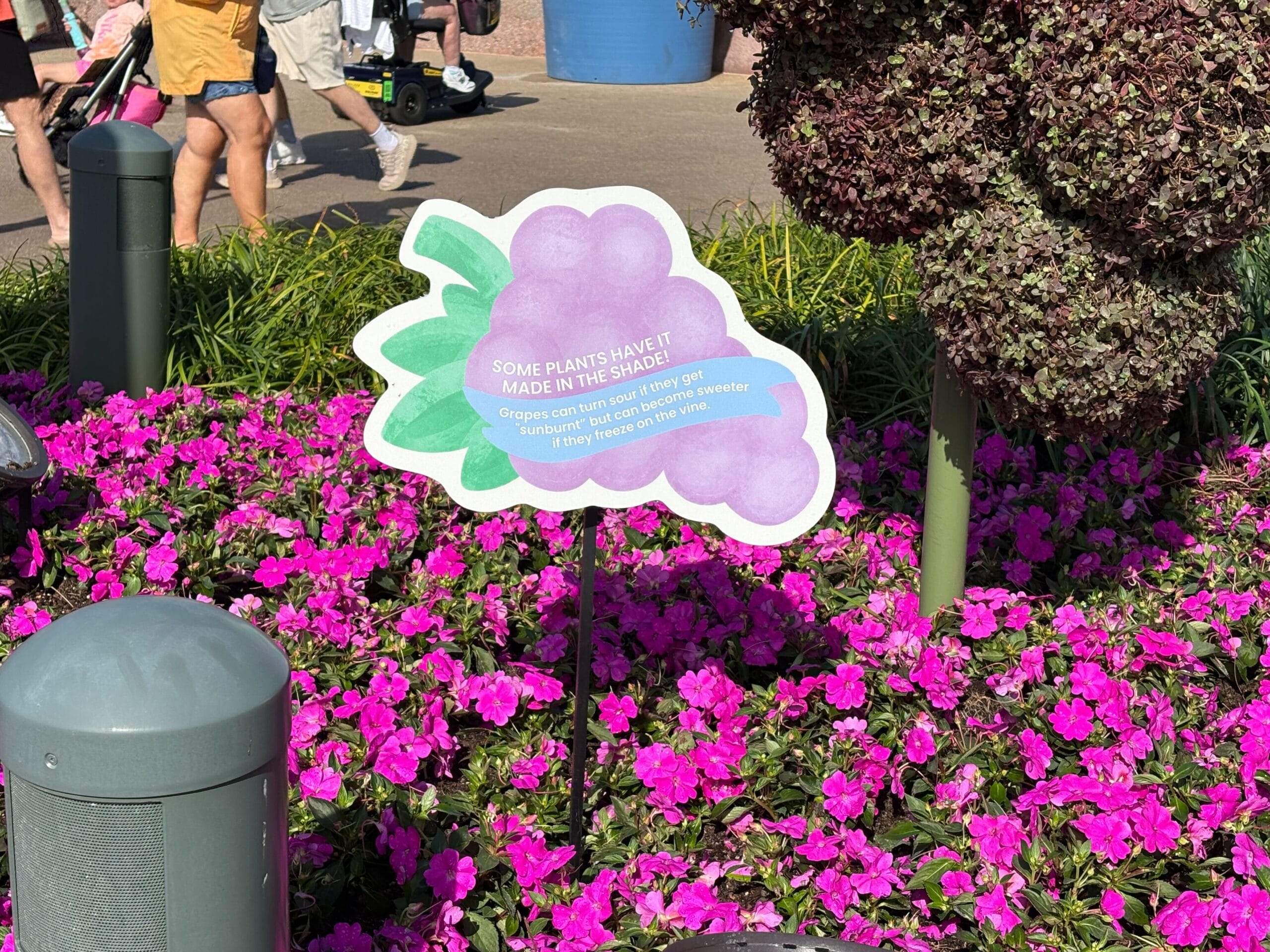
Some plants have it made in the shade!
Grapes can turn sour if they get “sunburnt” but can become sweeter if they freeze on the vine.
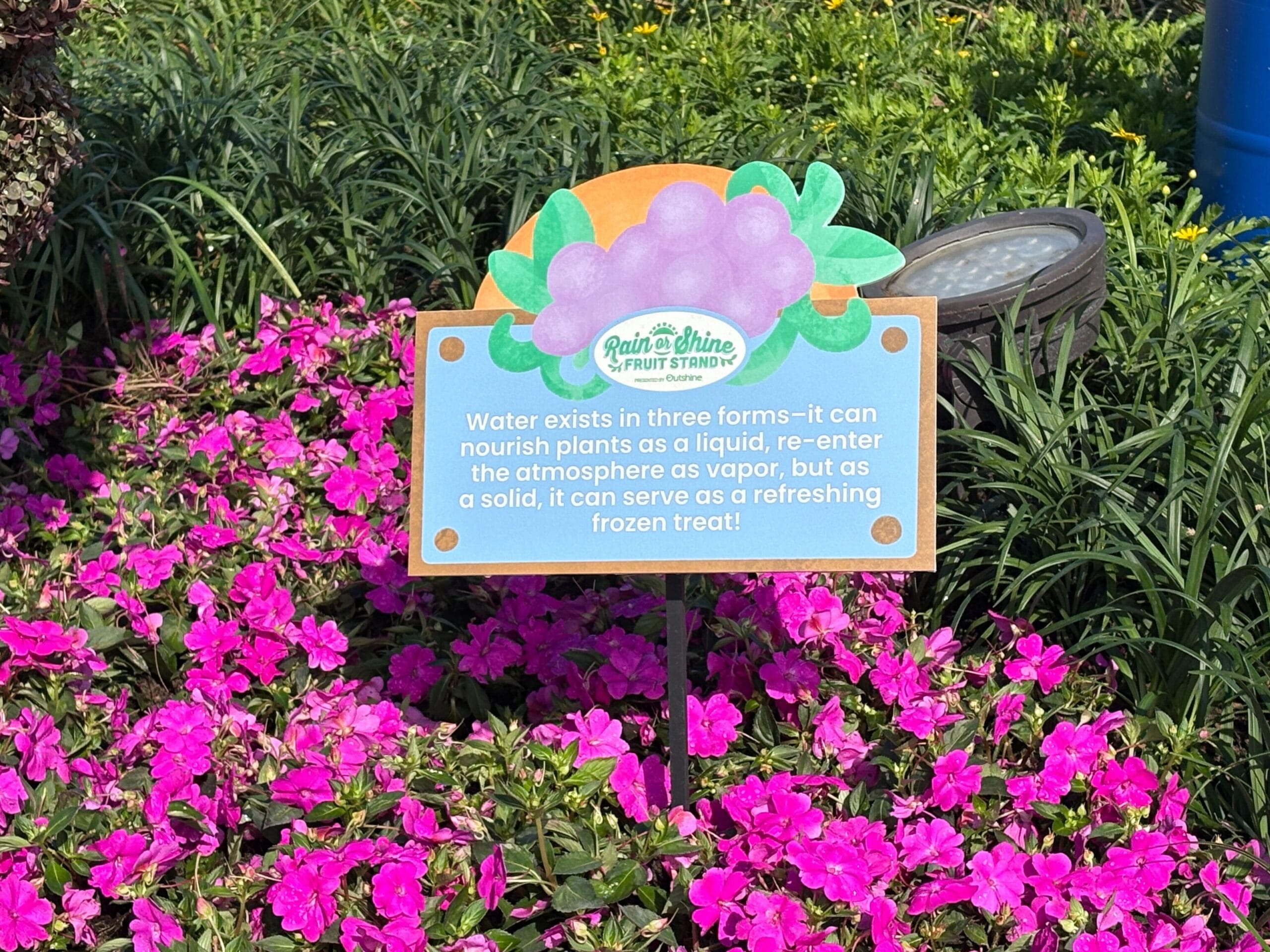
Water exists in three forms — it can nourish plants as a liquid, re-enter the atmosphere as vapor, but as a solid, it can serve as a refreshing frozen treat!
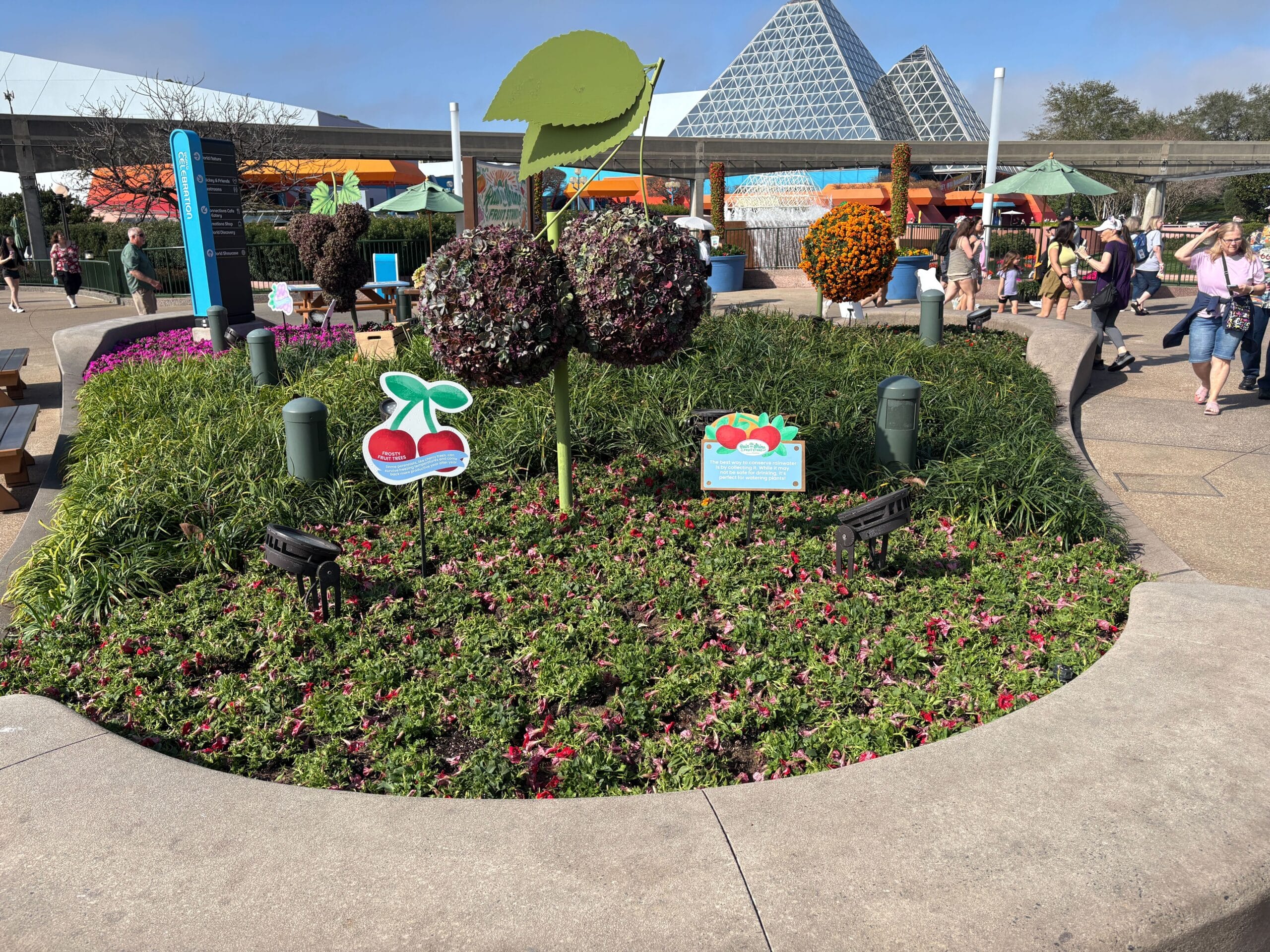
At one end of the flowerbed is an oversized pair of cherries.
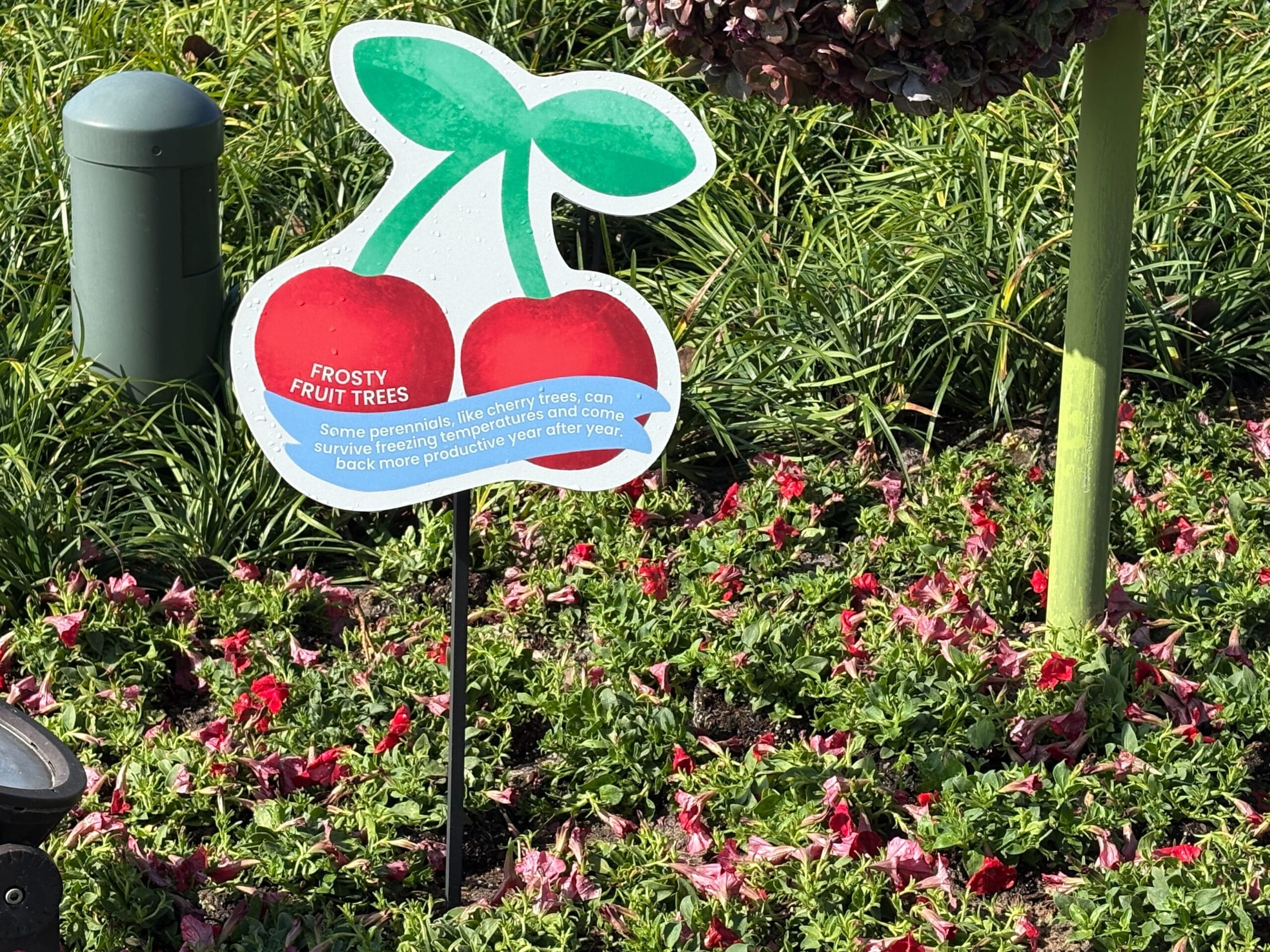
Frosty Fruit Trees
Some perennials, like cherry trees, can survive freezing temperatures and come back more productive year after year.
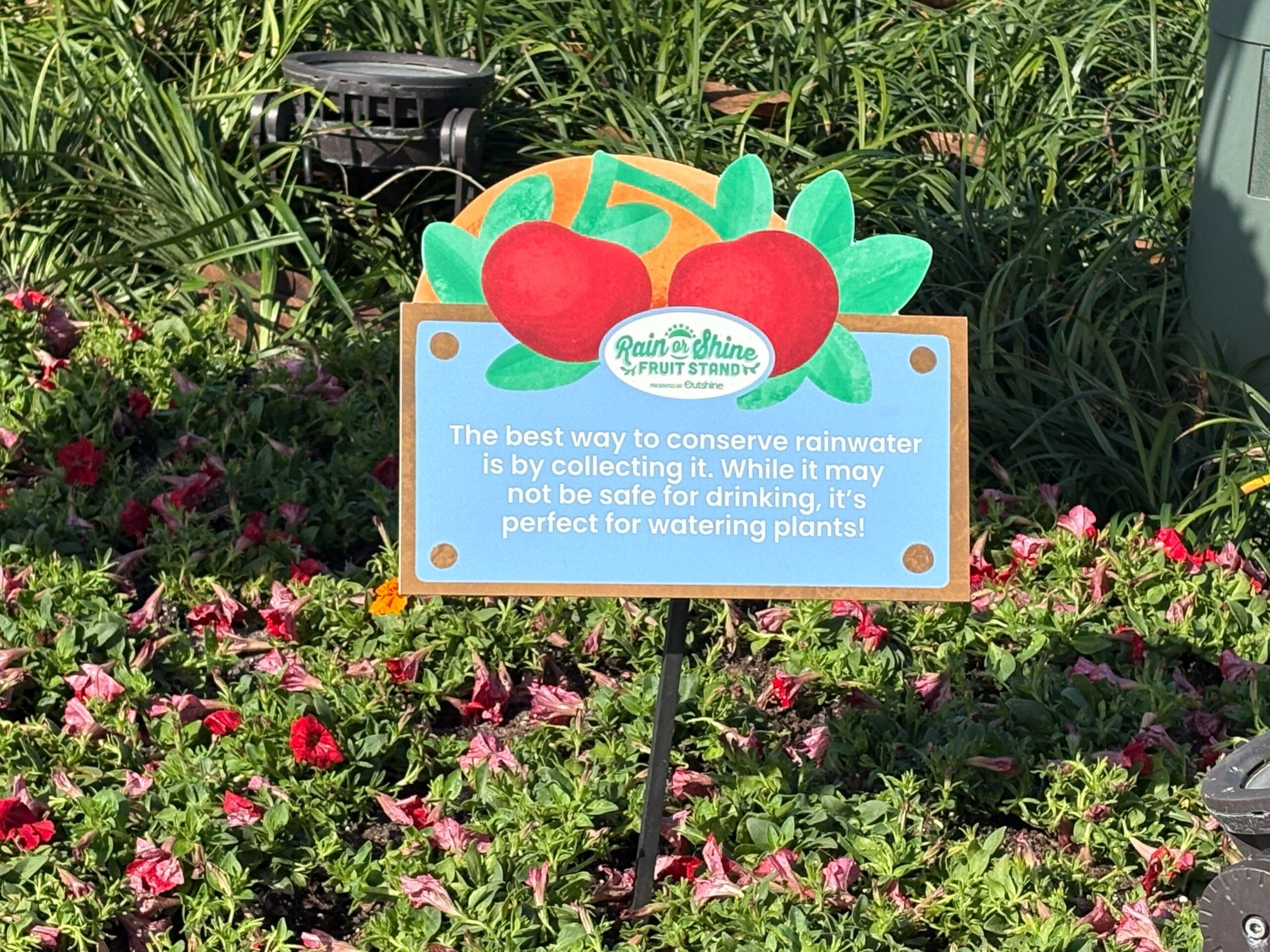
The best way to conserve rainwater is by collecting it. While it may not be safe for drinking, it’s perfect for watering plants!
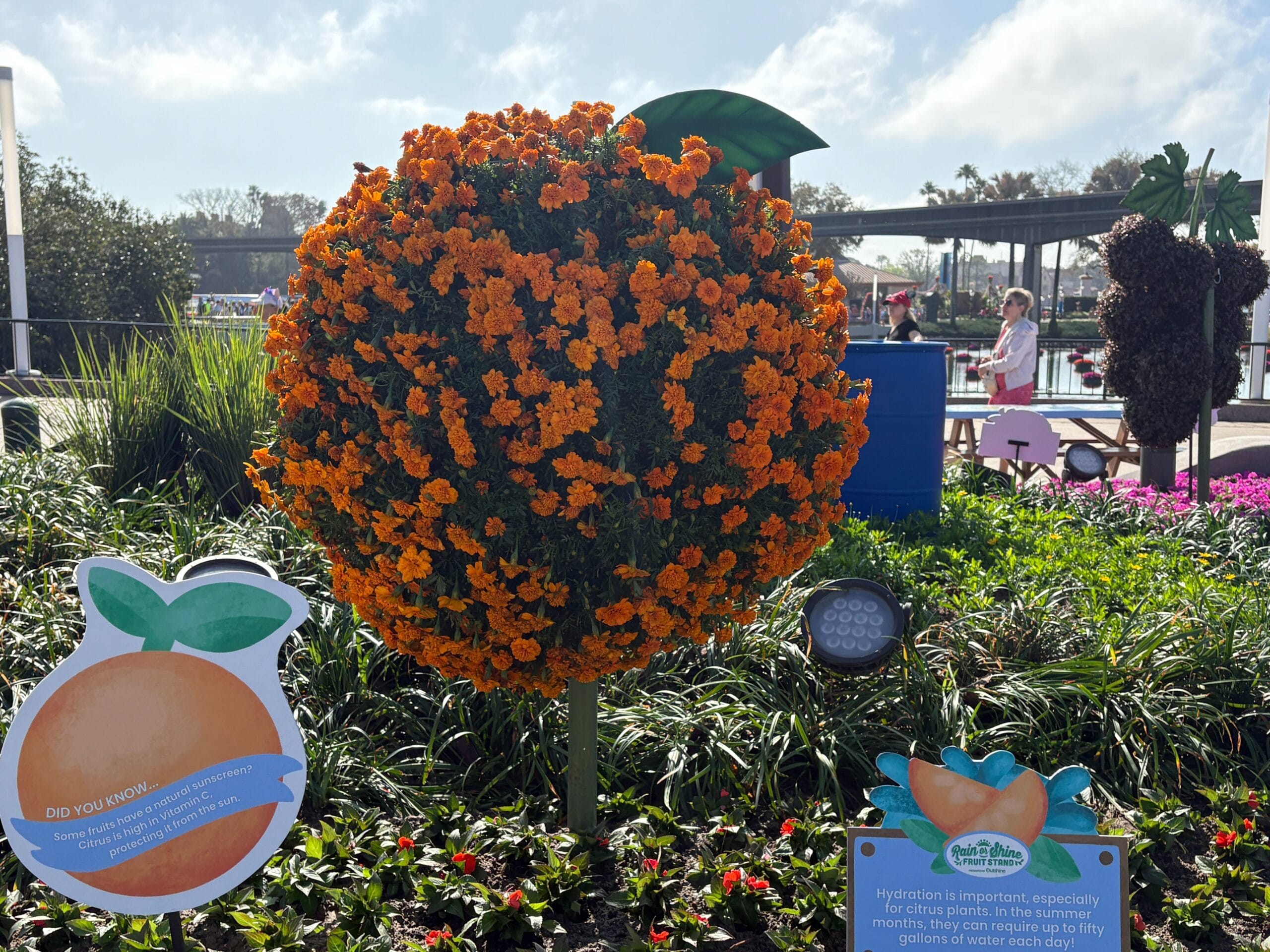
An orange topiary represents an orange fruit.
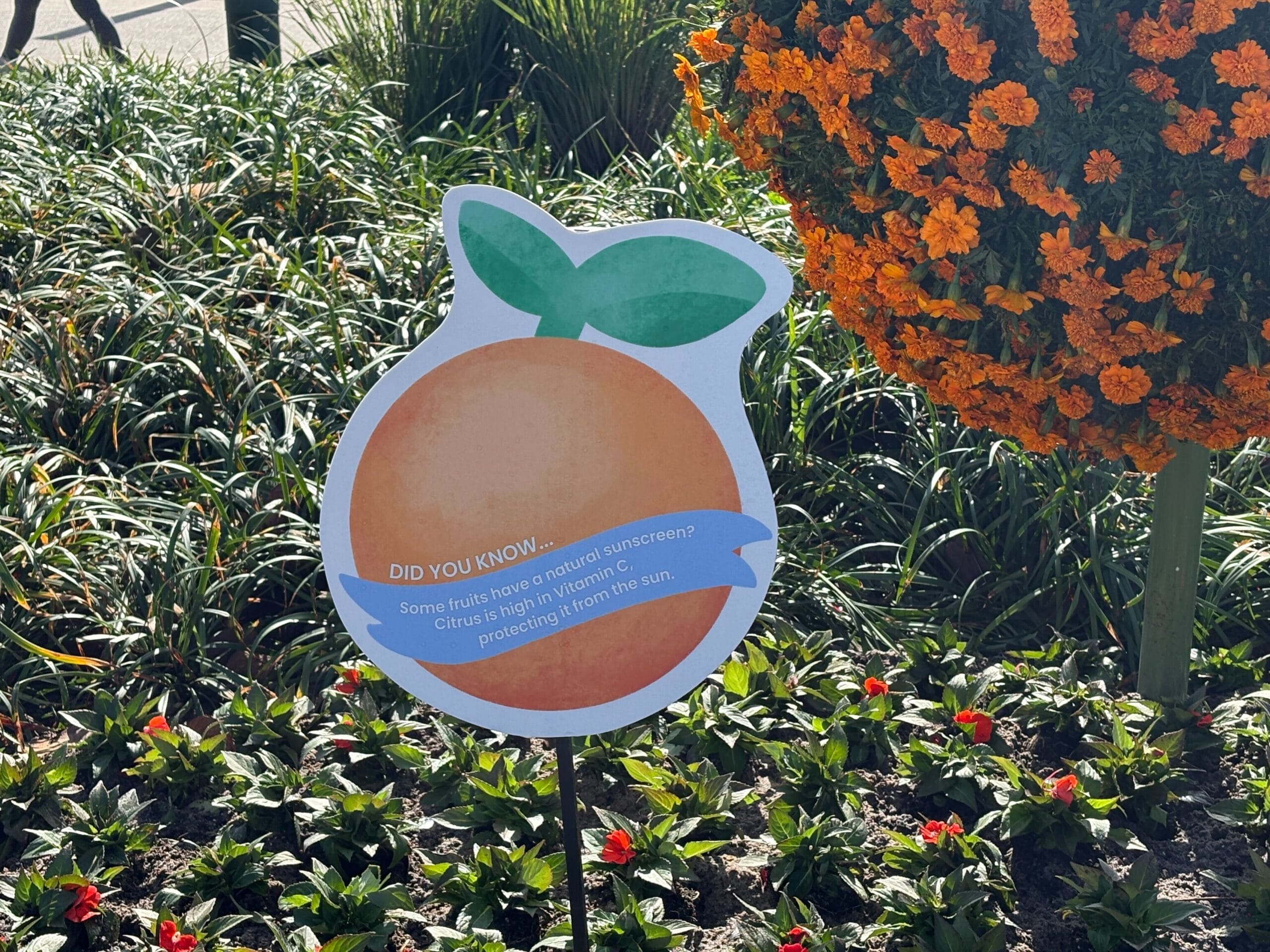
Did You Know…
Some fruits have a natural sunscreen? Citrus is high in Vitamin C, protecting it from the sun.
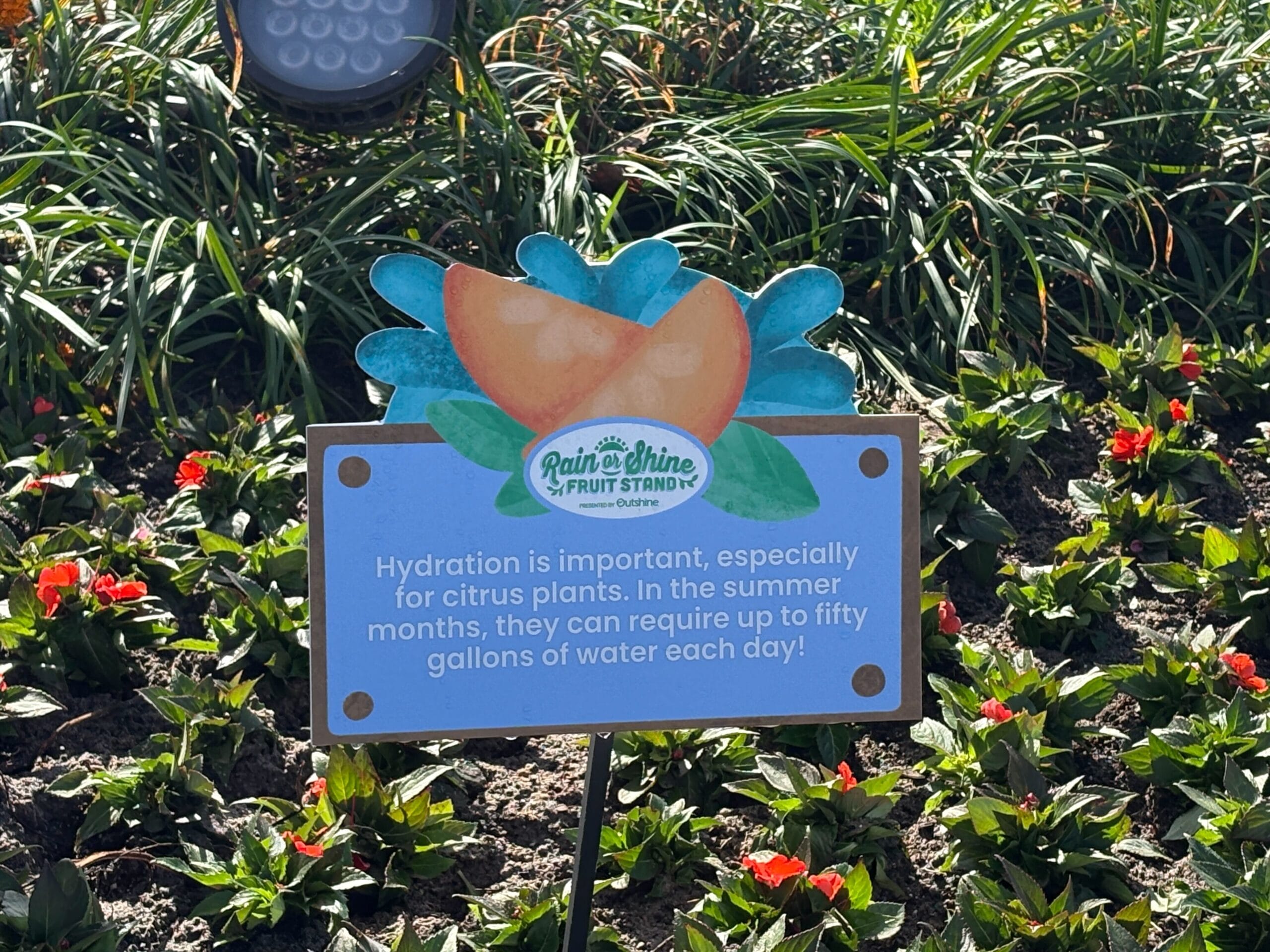
Hydration is important, especially for citrus plants. In the summer months, they can require up to fifty gallons of water each day!
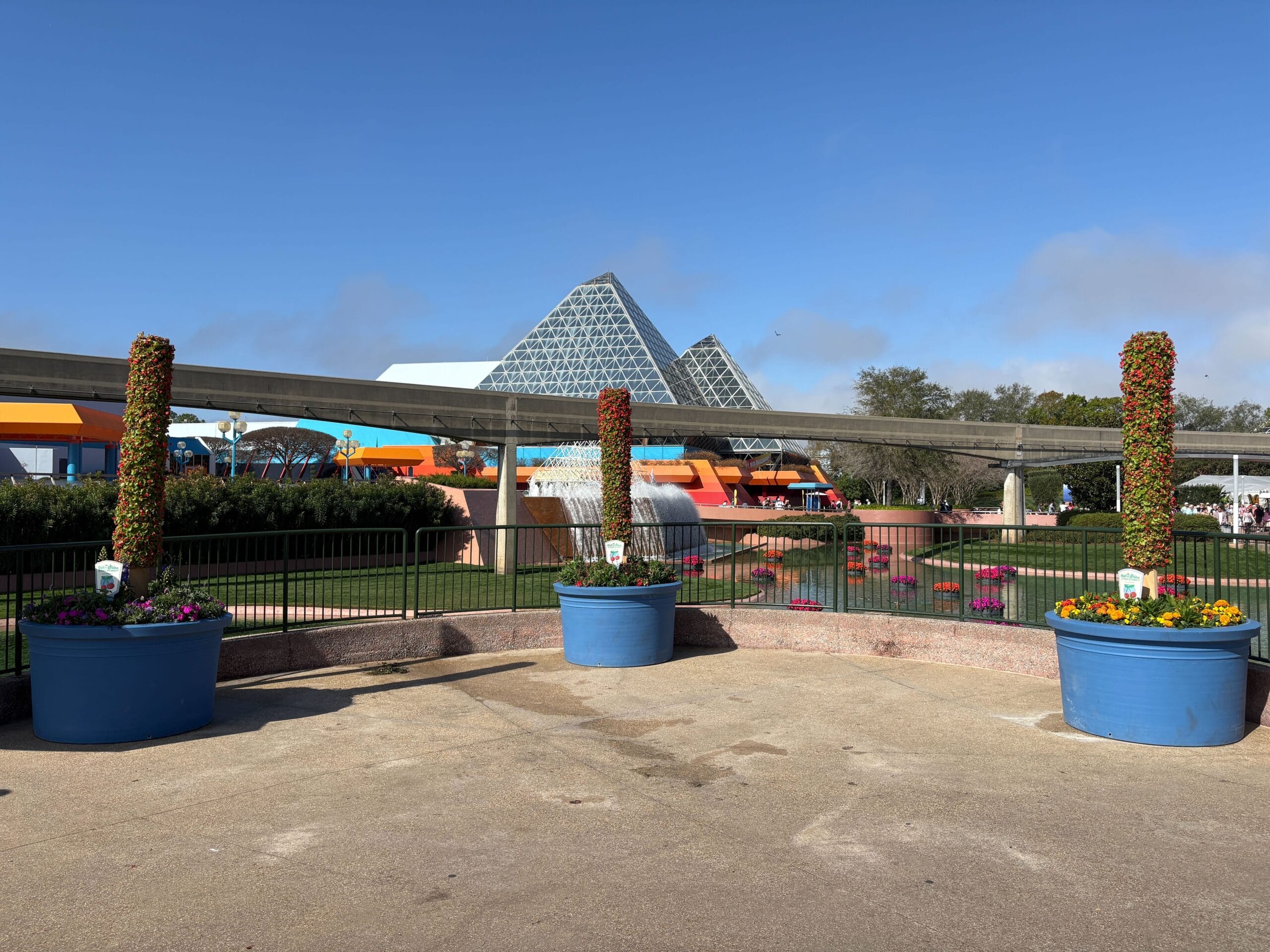
The garden continues with a trio of tall flower towers in pots nearby.
*NEW* Wildlife Crossing Garden – Near CommuniCore Hall
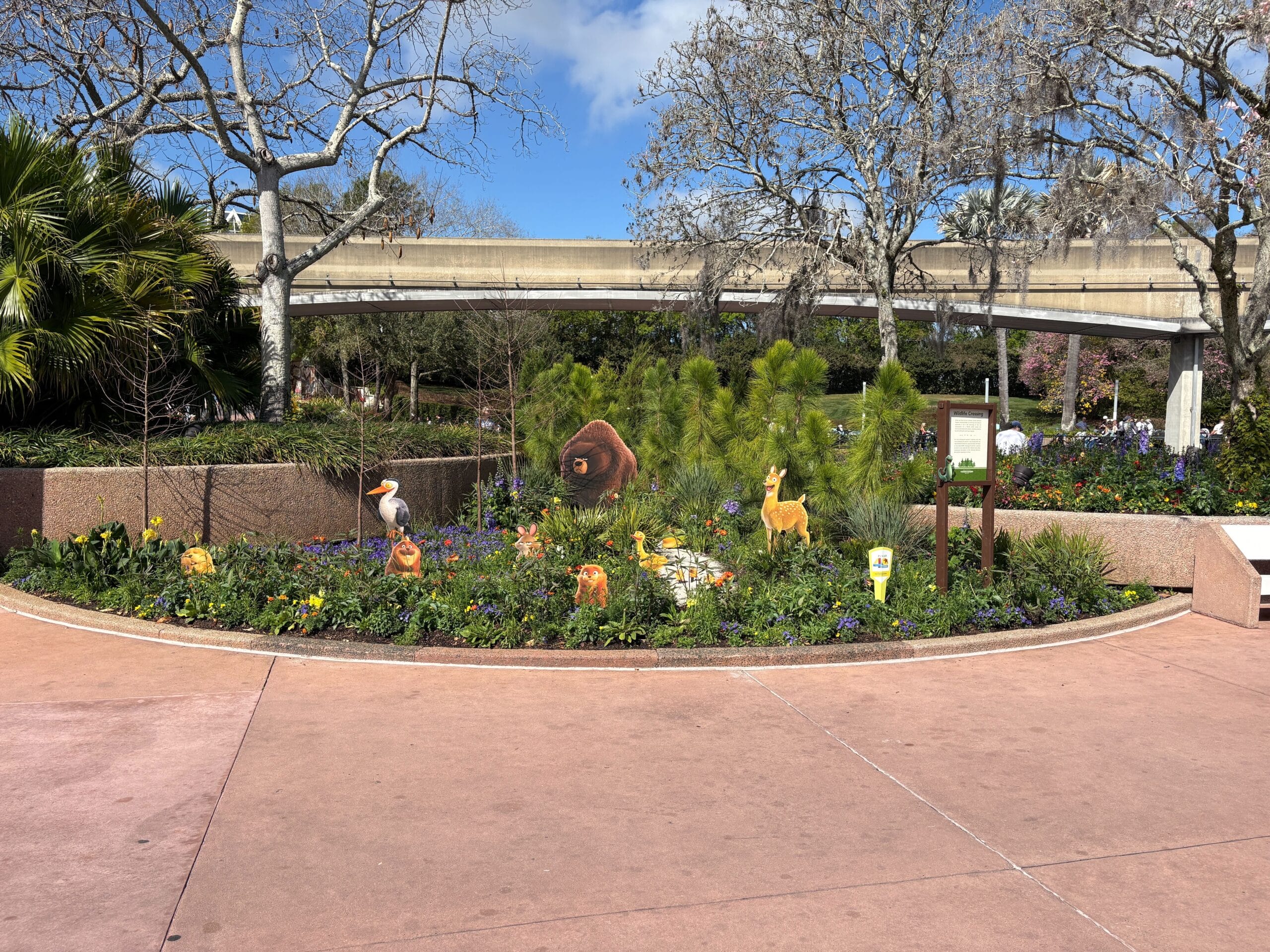
The Wildlife Crossing Garden is inspired by Pixar’s new film Hoppers. It features flats of the animal characters.
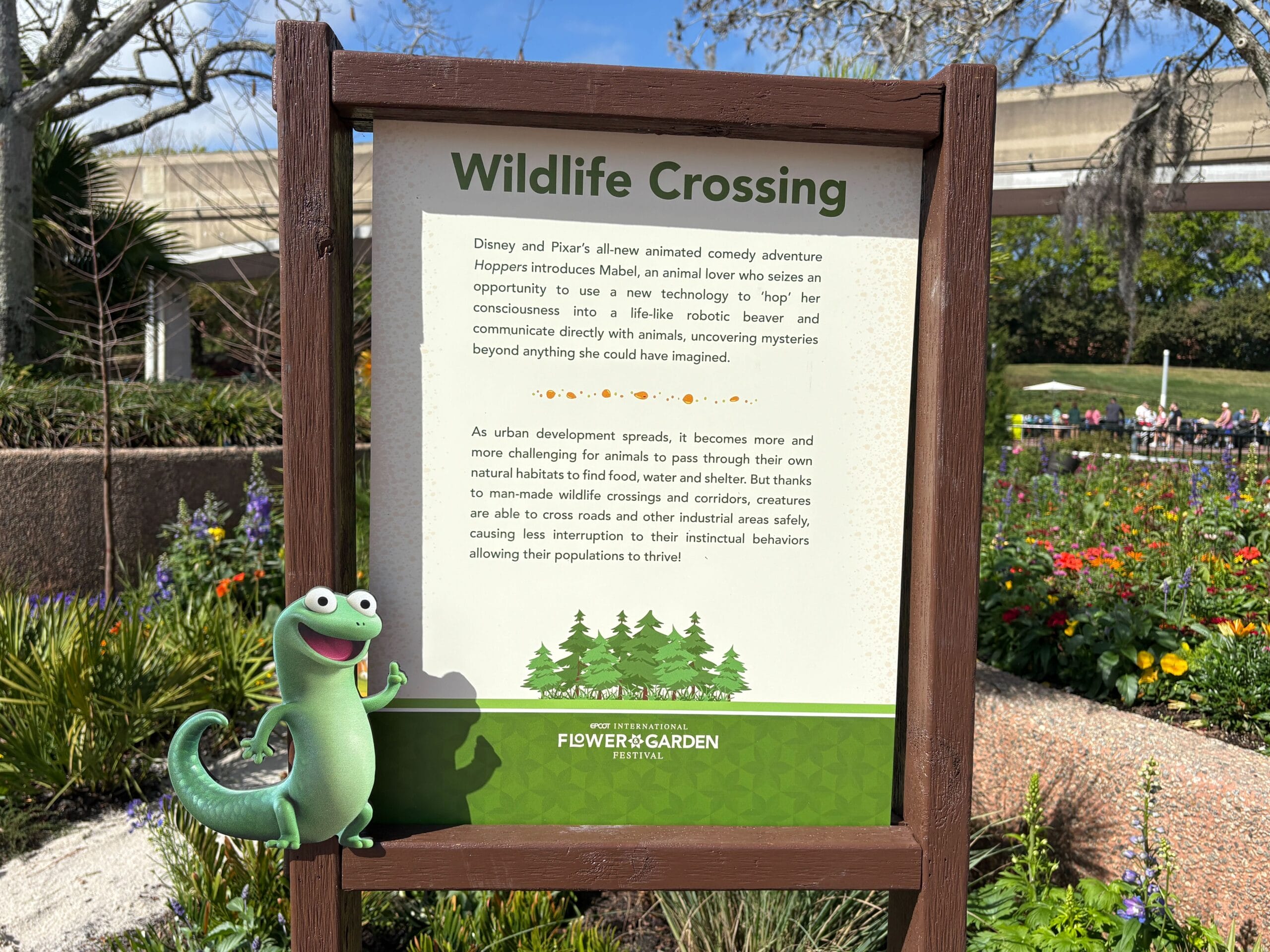
Wildlife Crossing
Disney and Pixar’s all-new animated comedy adventure Hoppers introduces Mabel, an animal lover who seizes an opportunity to use a new technology to ‘hop’ her consciousness into a life-like robotic beaver and communicate directly with animals, uncovering mysteries beyond anything she could have imagined.
As urban development spreads, it becomes more and more challenging for animals to pass through their own natural habitats to find food, water and shelter. But thanks to man-made wildlife crossings and corridors, creatures are able to cross roads and other industrial areas safely, causing less interruption to their instinctual behaviors allowing their populations to thrive!
A stake in the garden features a logo for the 40th anniversary of Pixar.
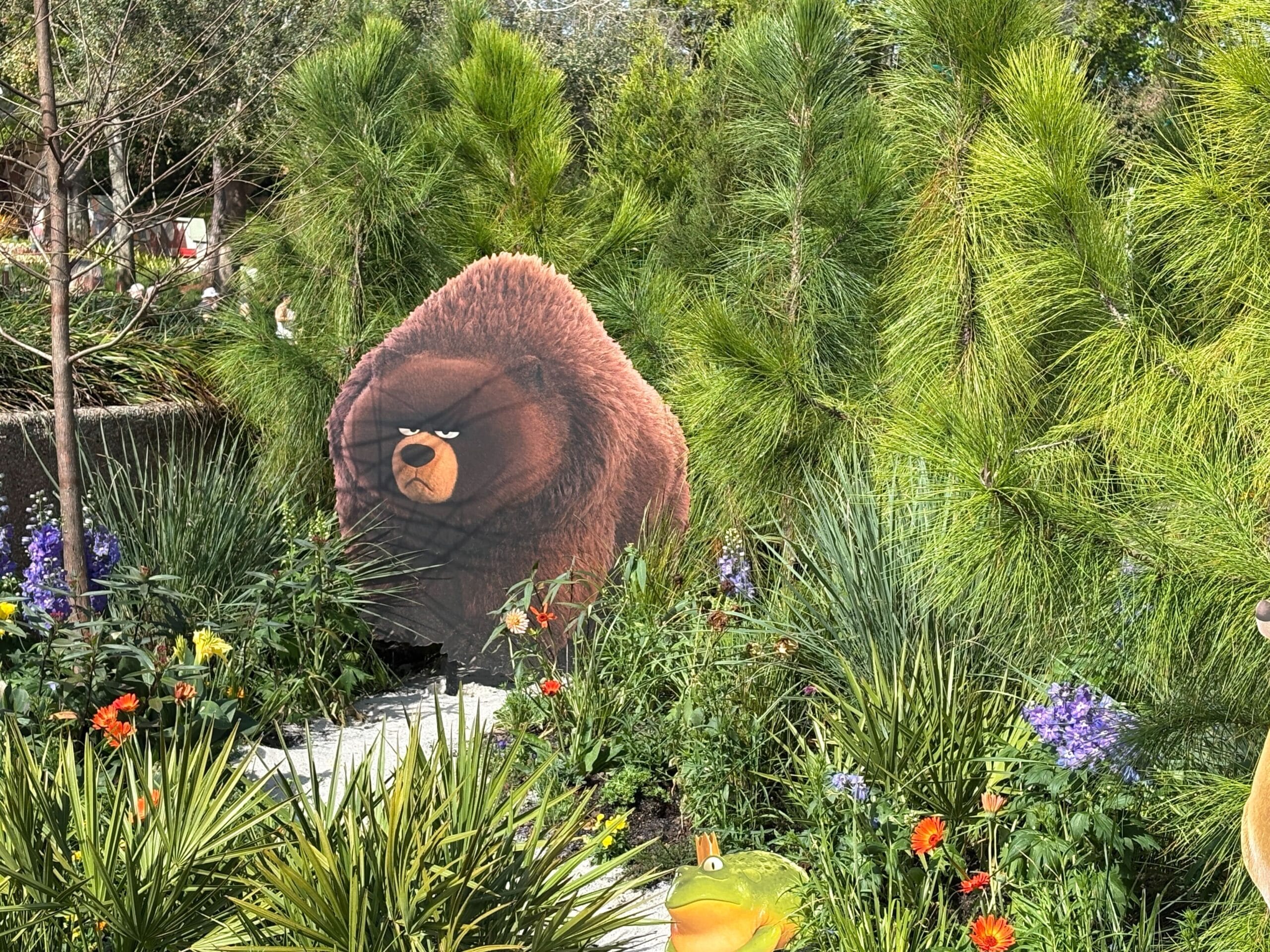
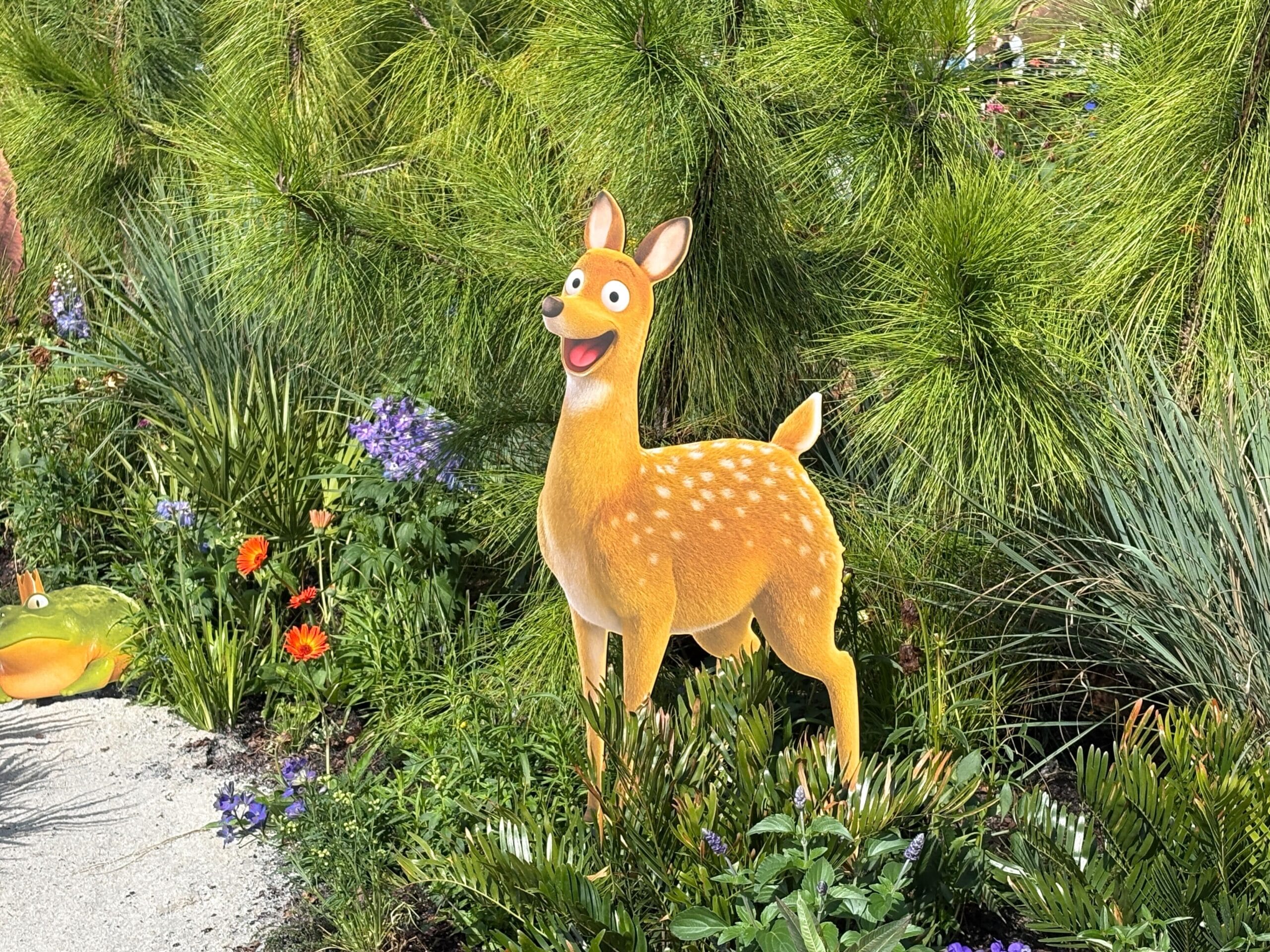
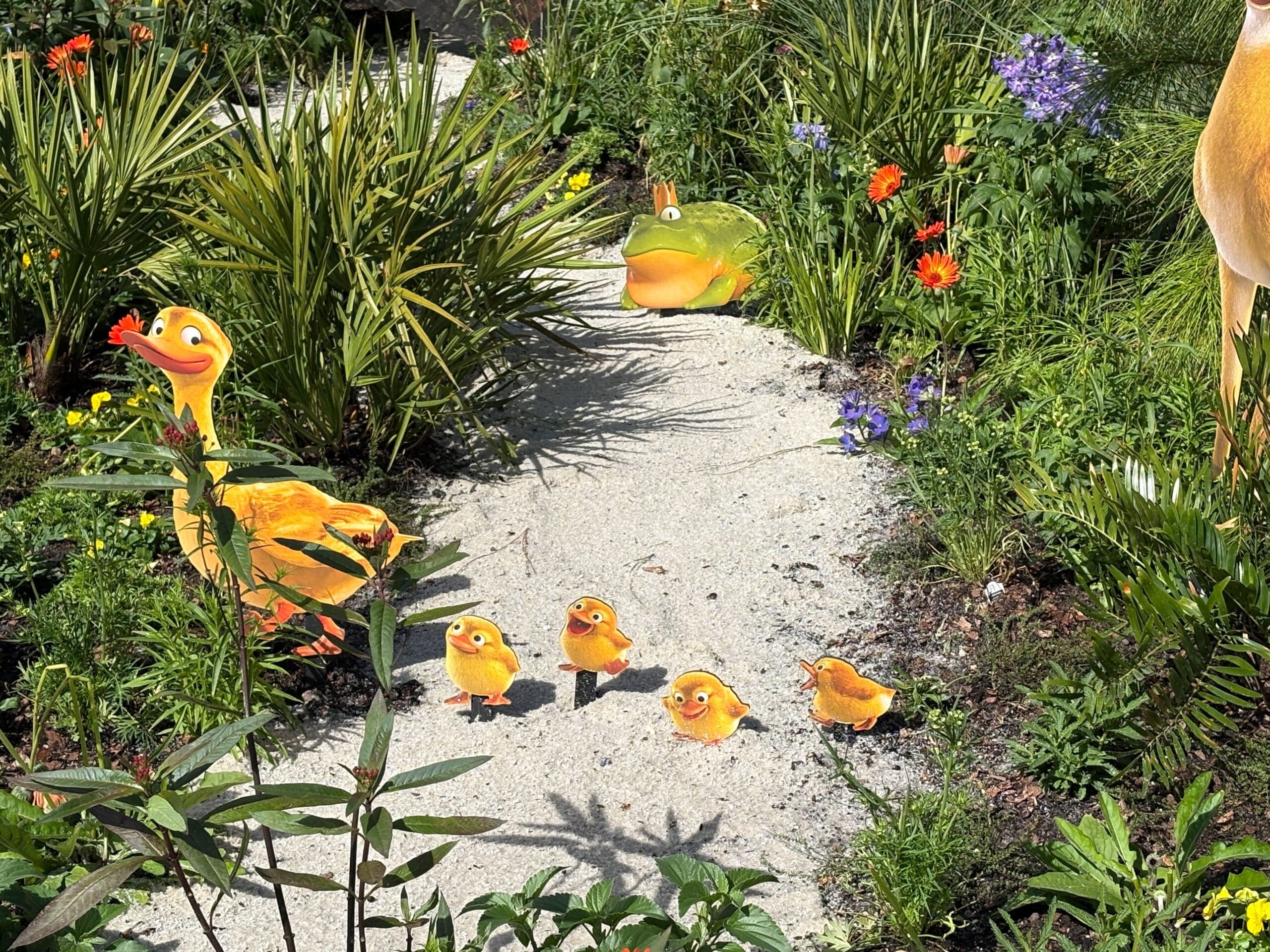
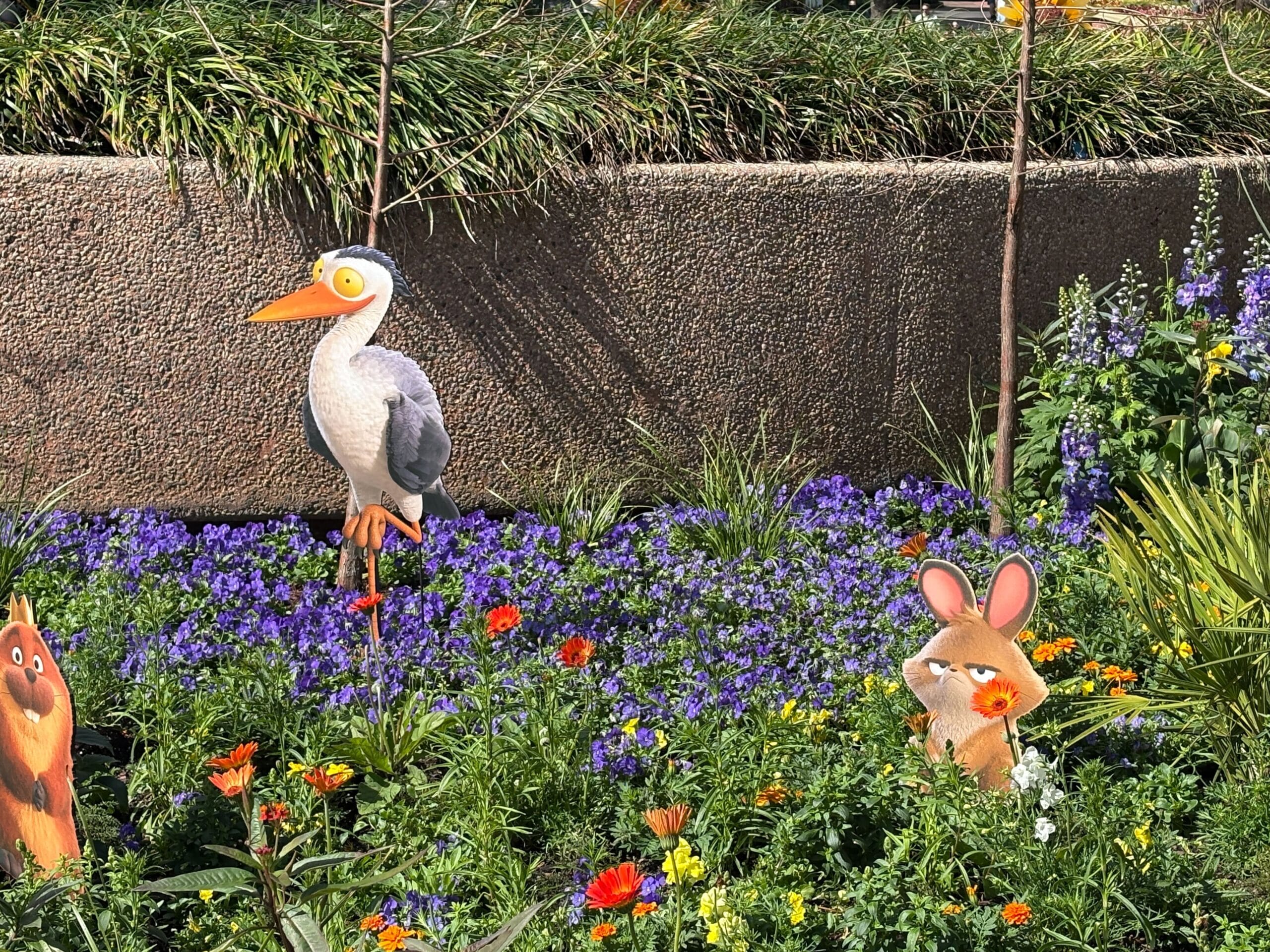
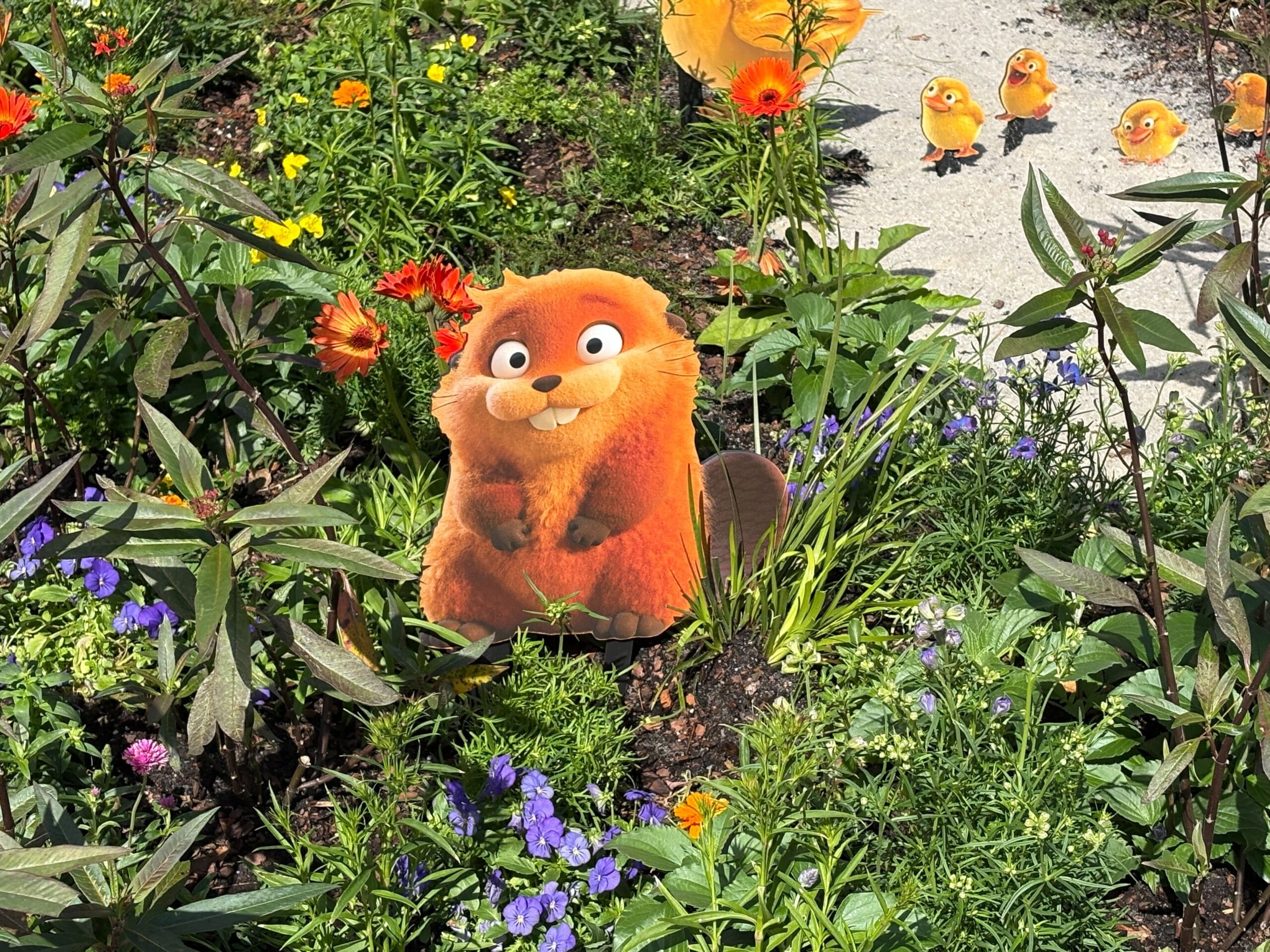
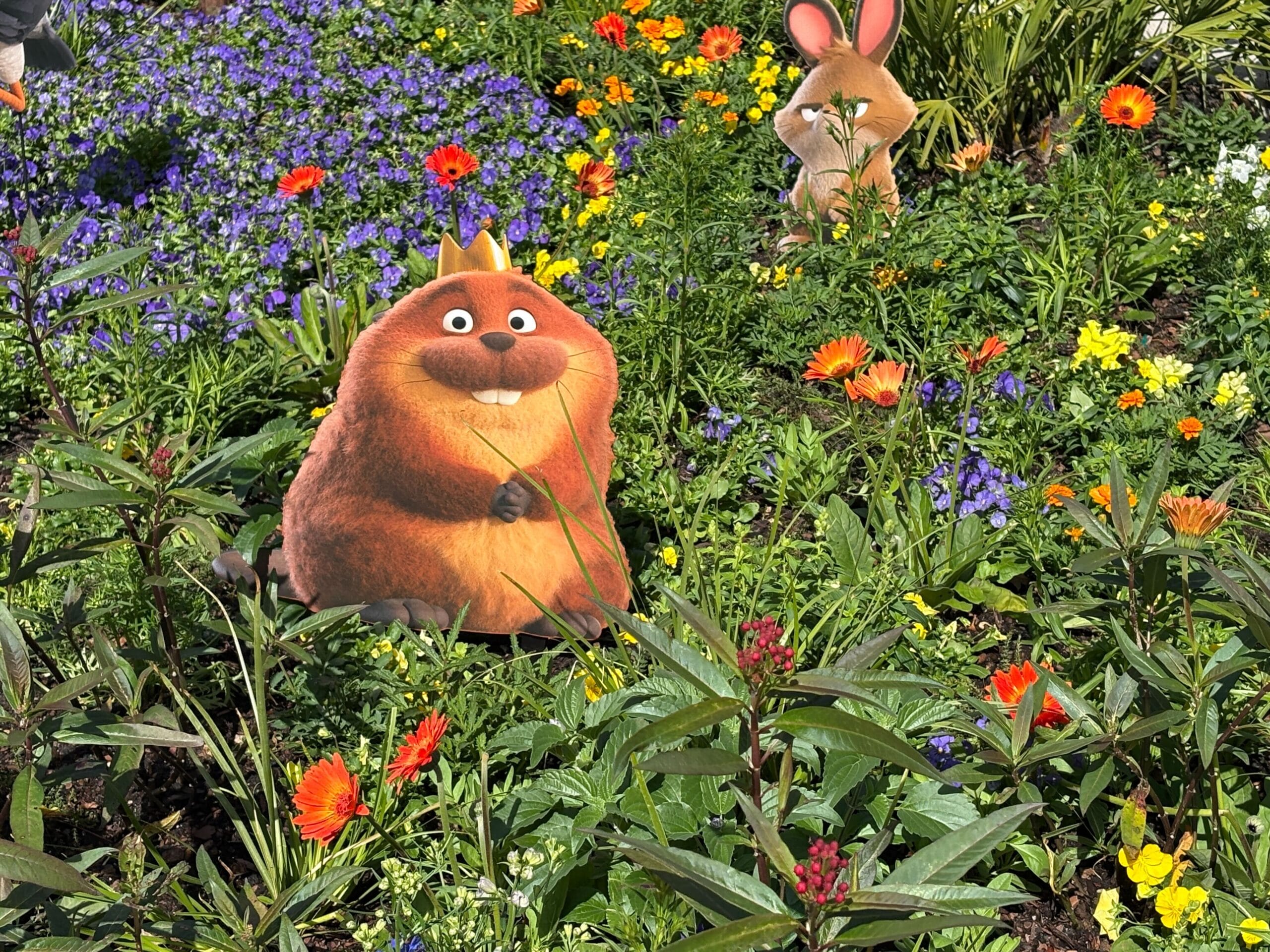
The plants are arranged to represent a safe wildlife crossing area.
Connections Conservatory Garden
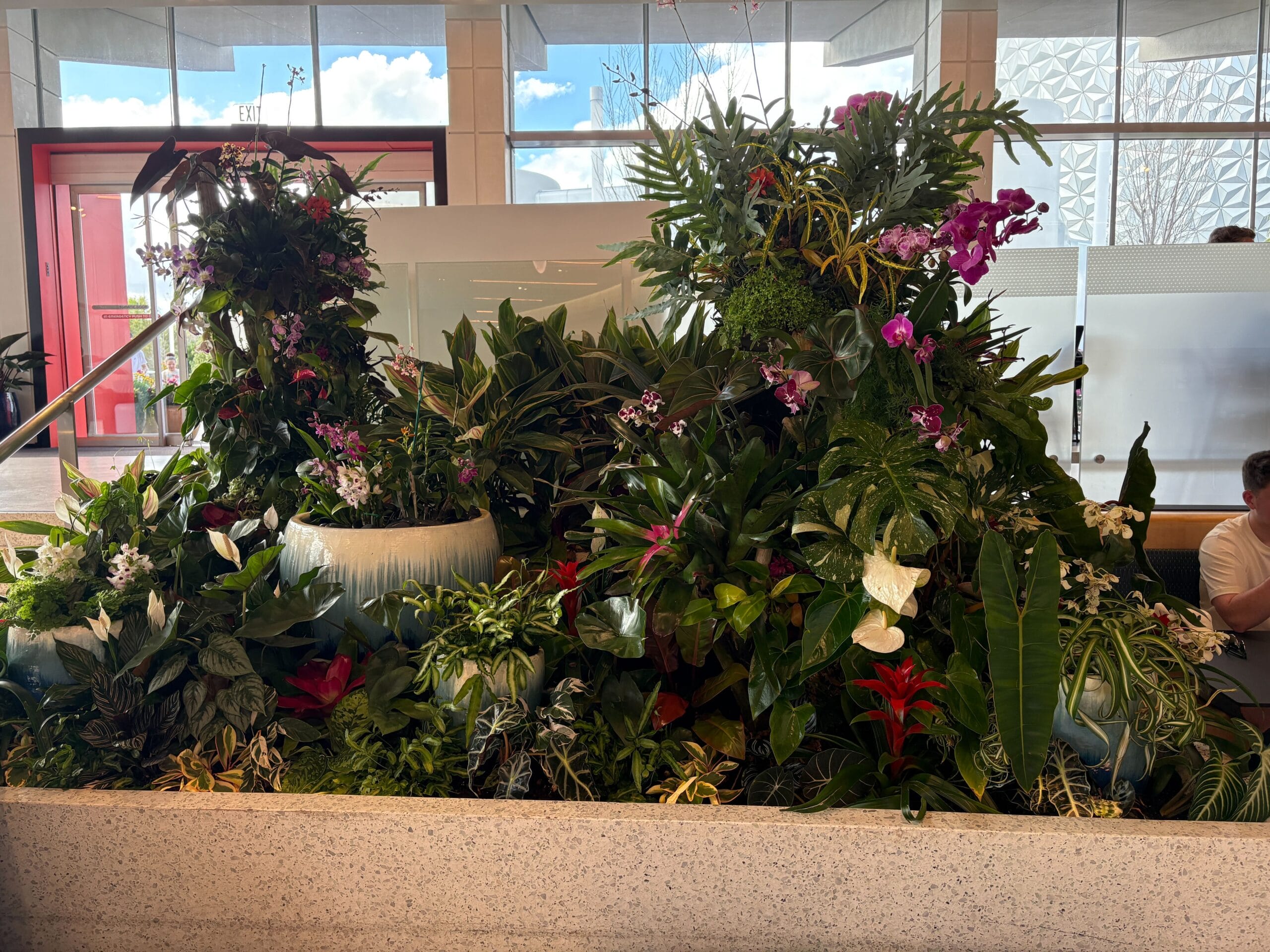
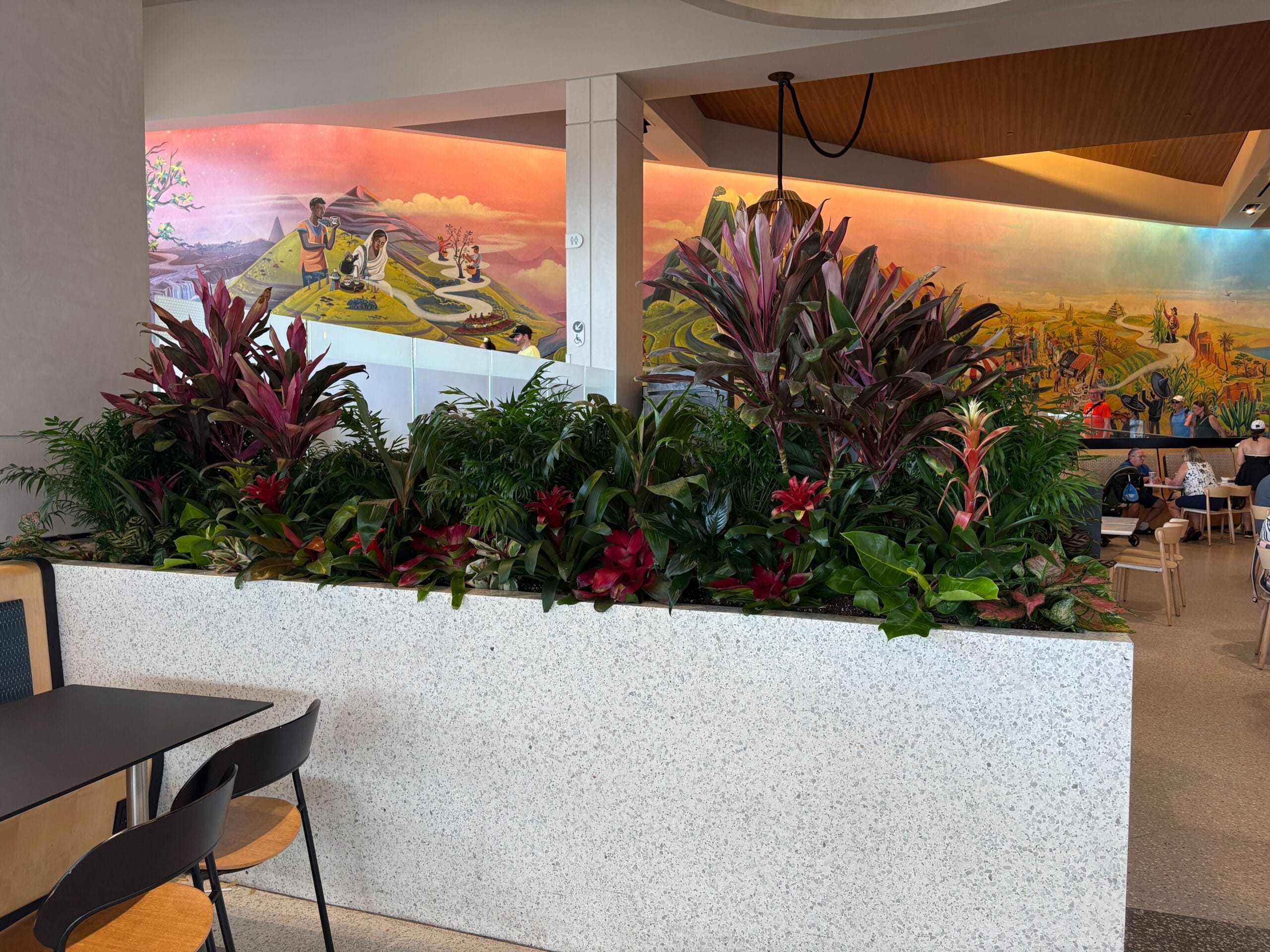
This “garden” is the flowerbeds inside Connections Café.
Festival Blooms – Lagoon
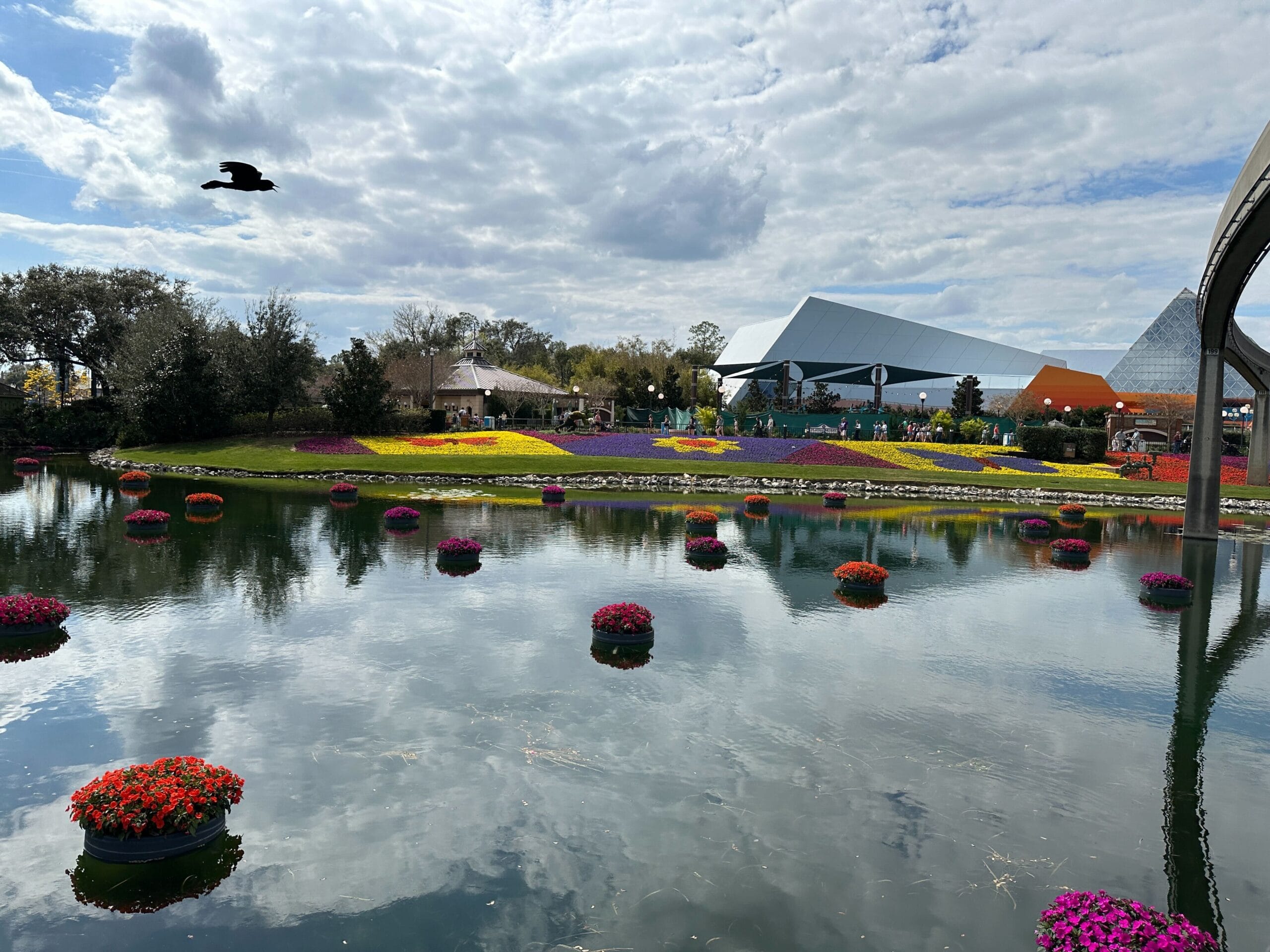
The Festival Blooms “garden” is a series of colorful flowerbeds along the edge of the World Showcase Lagoon. These create images of butterflies and flowers.
Floating Gardens – Lagoon
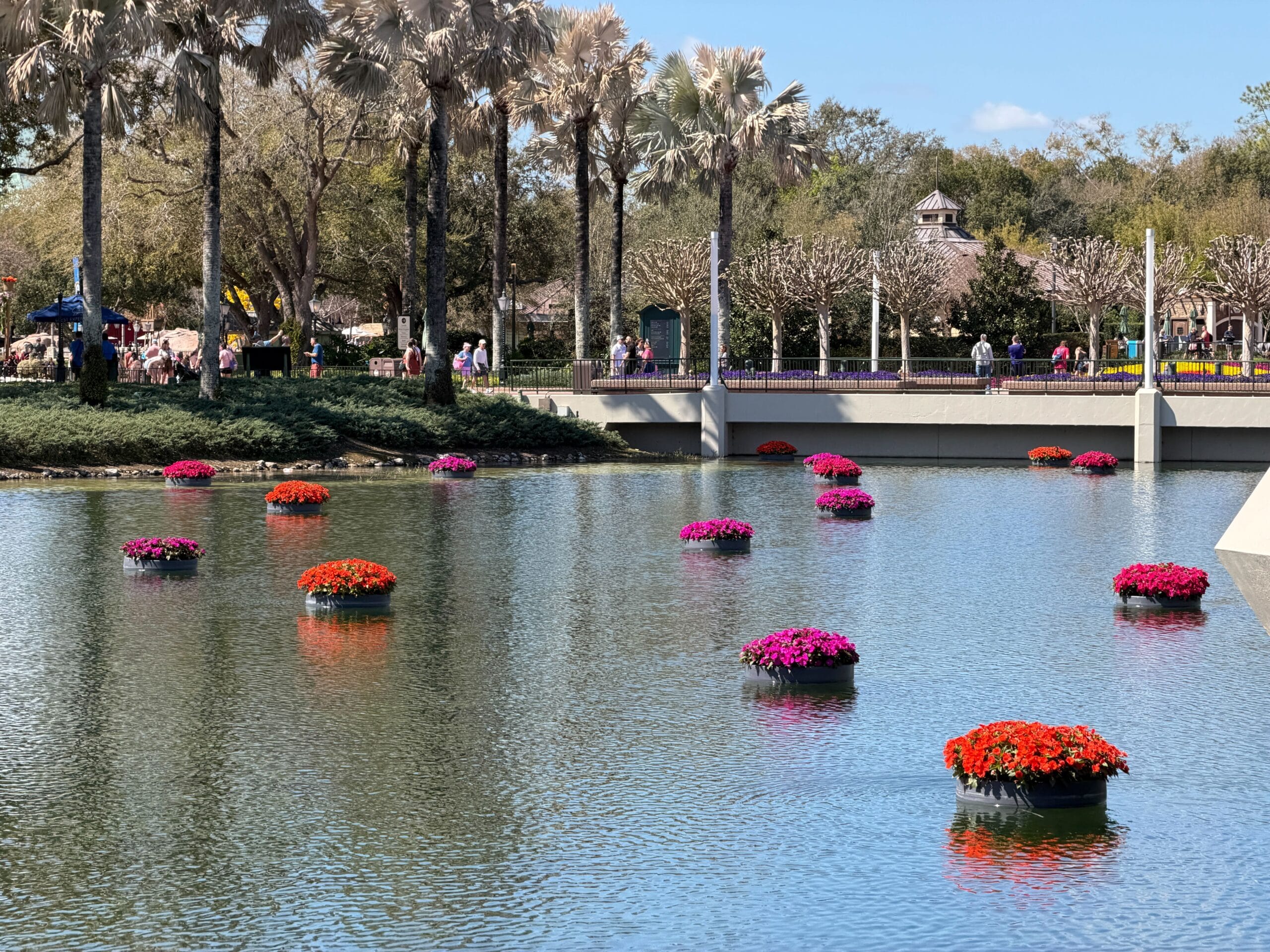
This garden consists of “floating” flower pots (they are actually secured to the bottom of the lagoon).
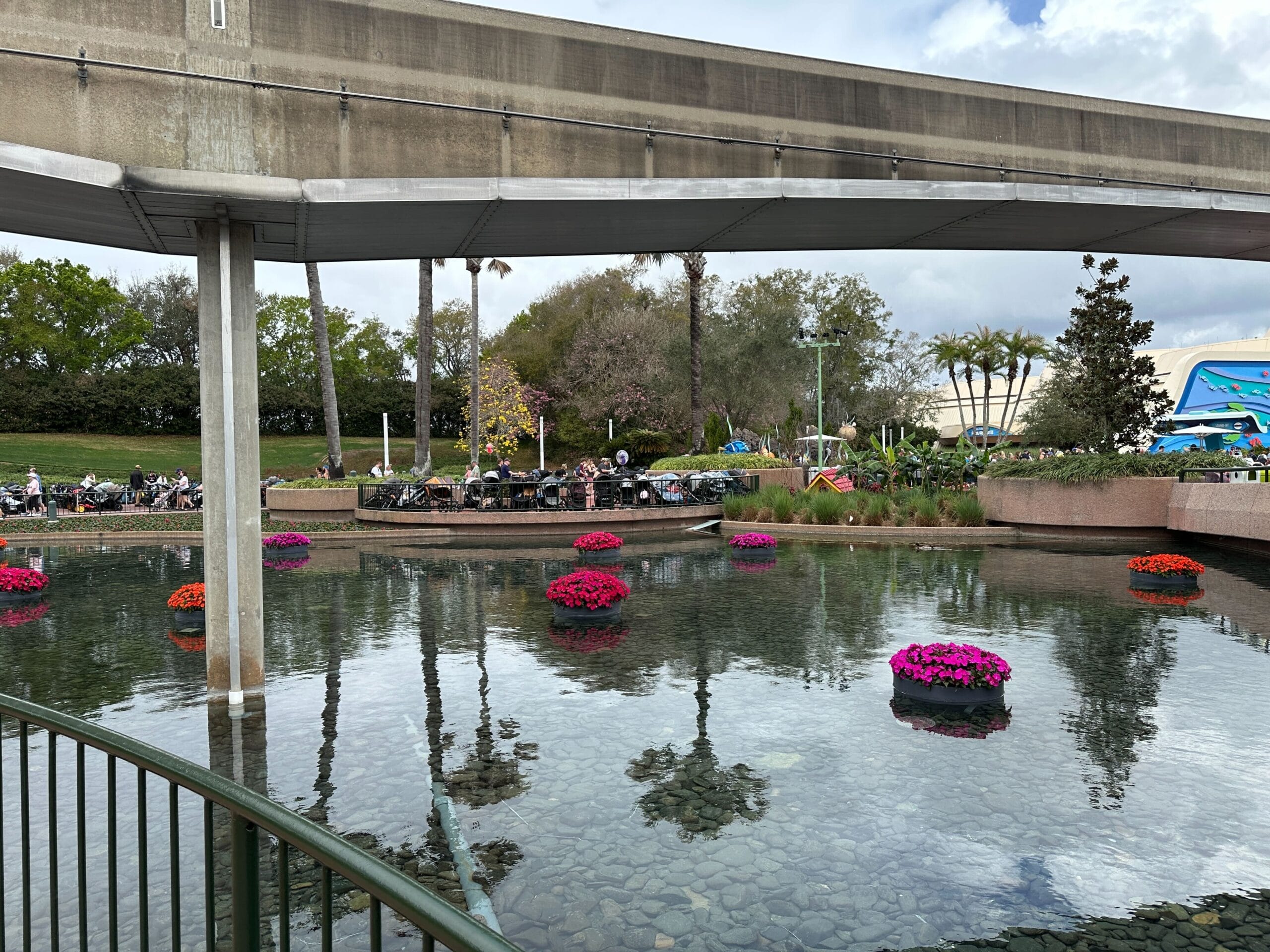
These colorful flowers are in the water around the World Showcase bridge and in World Nature.
World Discovery
Camp Get Out ‘N’ Play Garden Presented by OFF! Repellents – Near Creations Shop
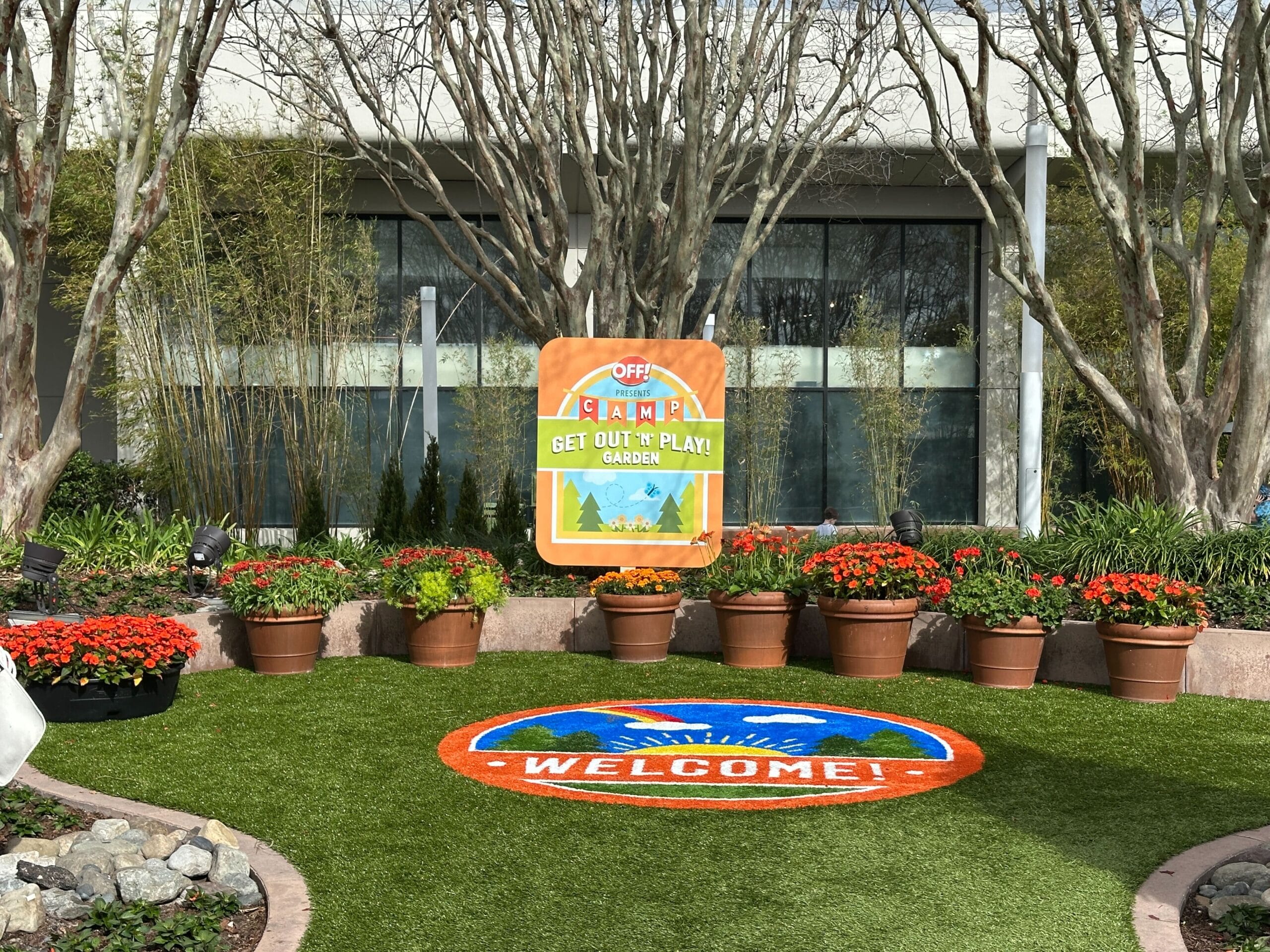
The World Discovery playground gets turned into the Camp Get Out ‘N’ Play Garden for the Flower & Garden Festival.
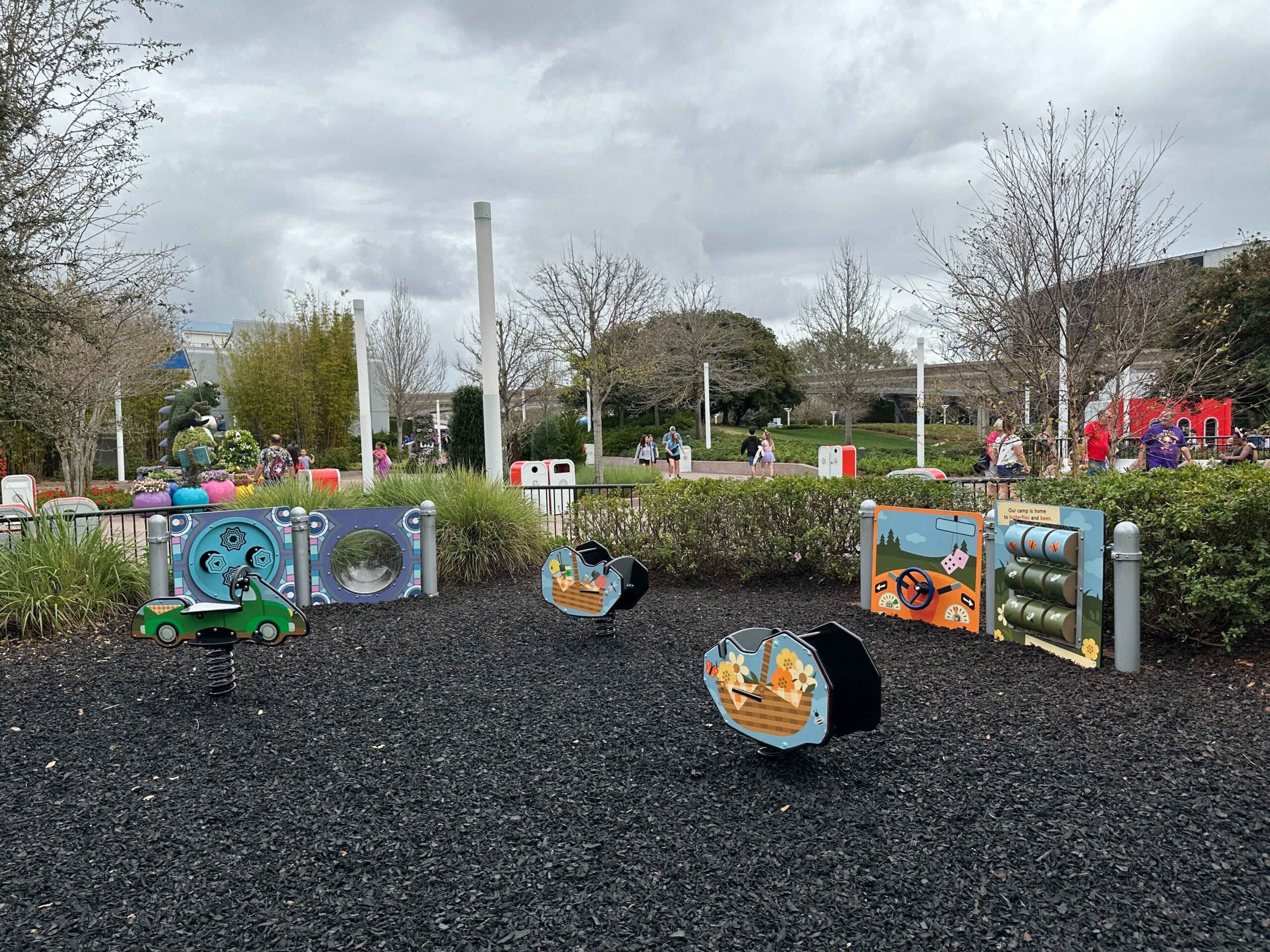
Decals cover the WALL-E theming, turning the playground into a campsite with flower baskets and cars.
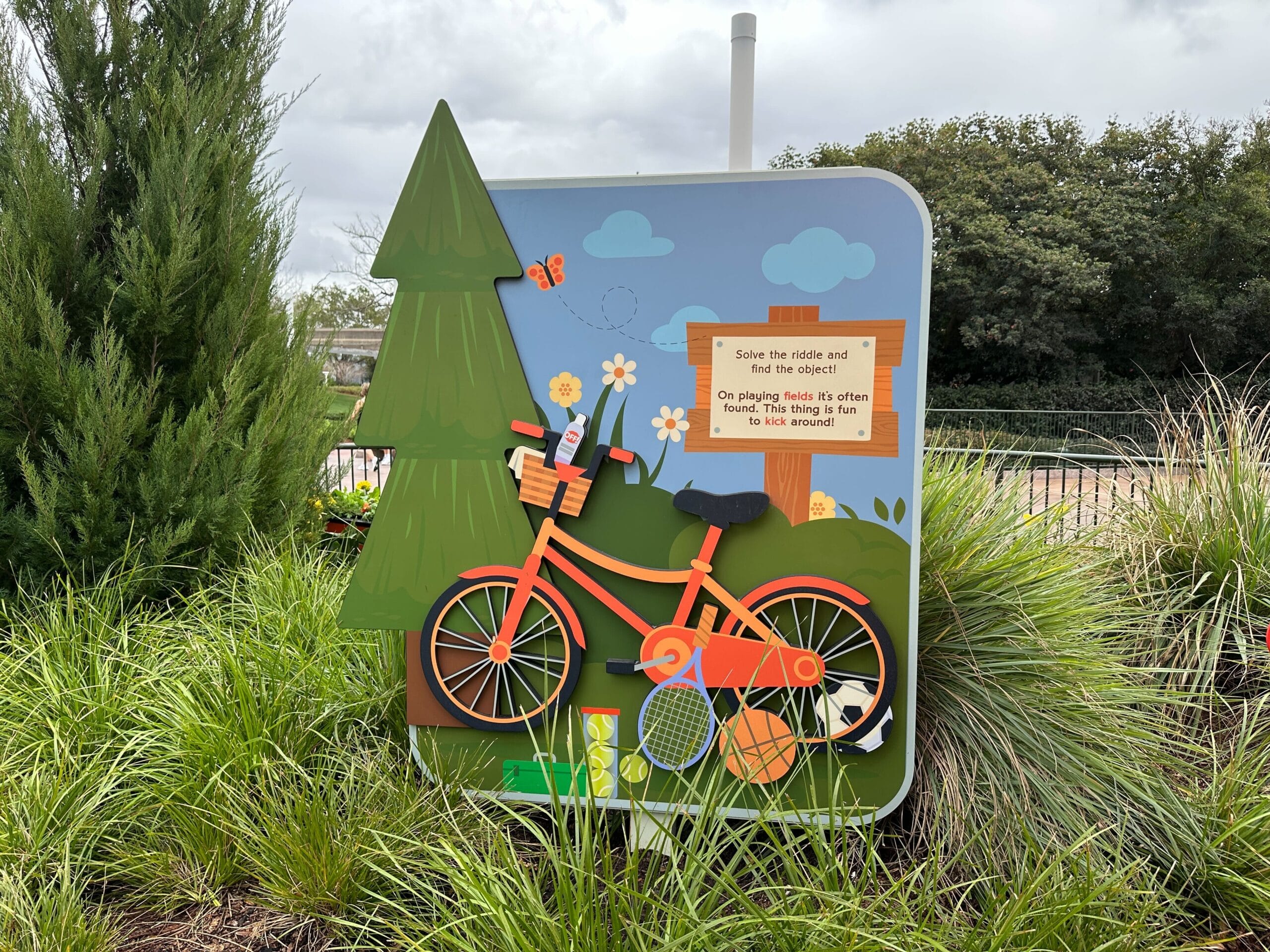
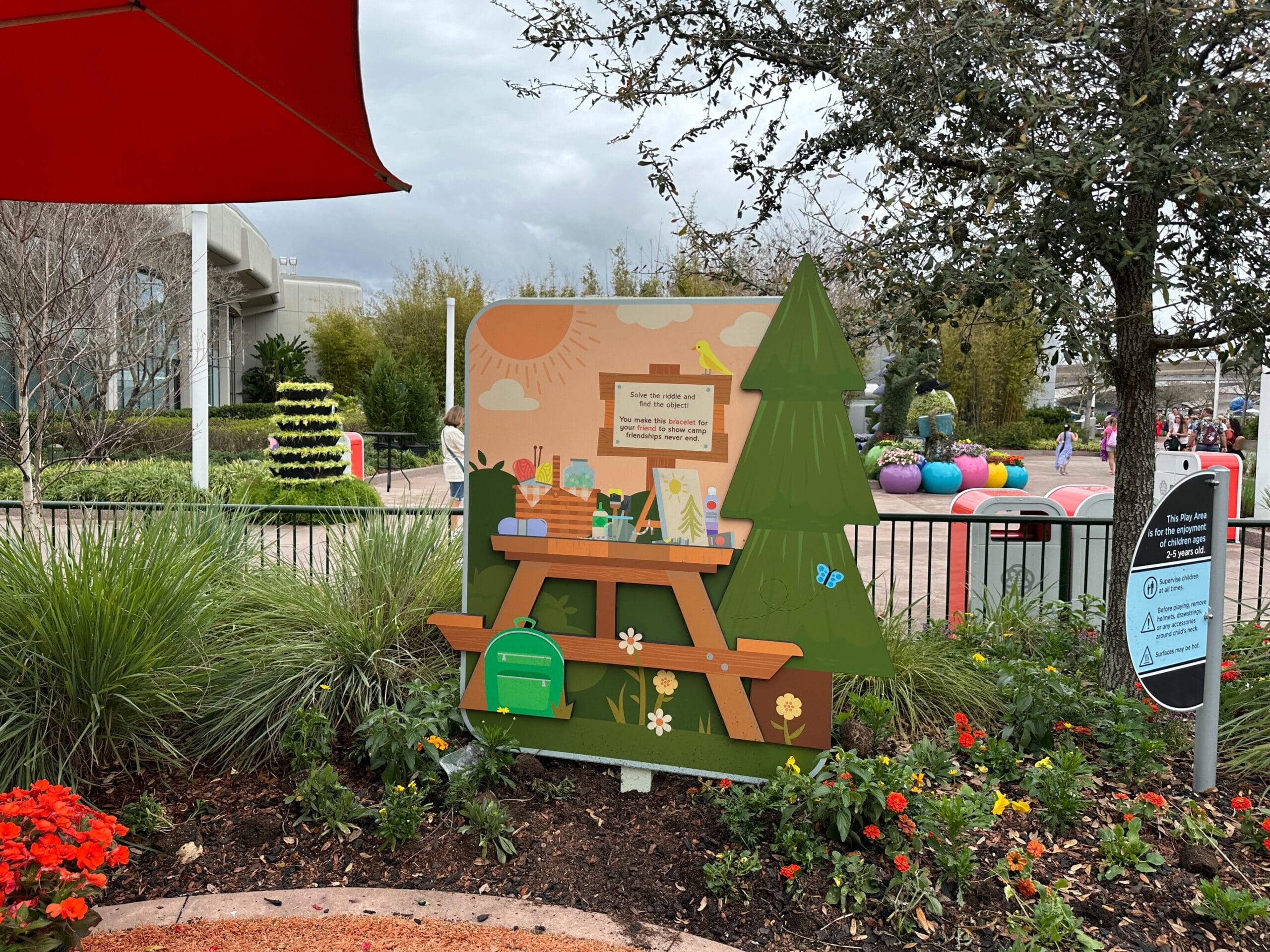
There are signs with search and find activities.
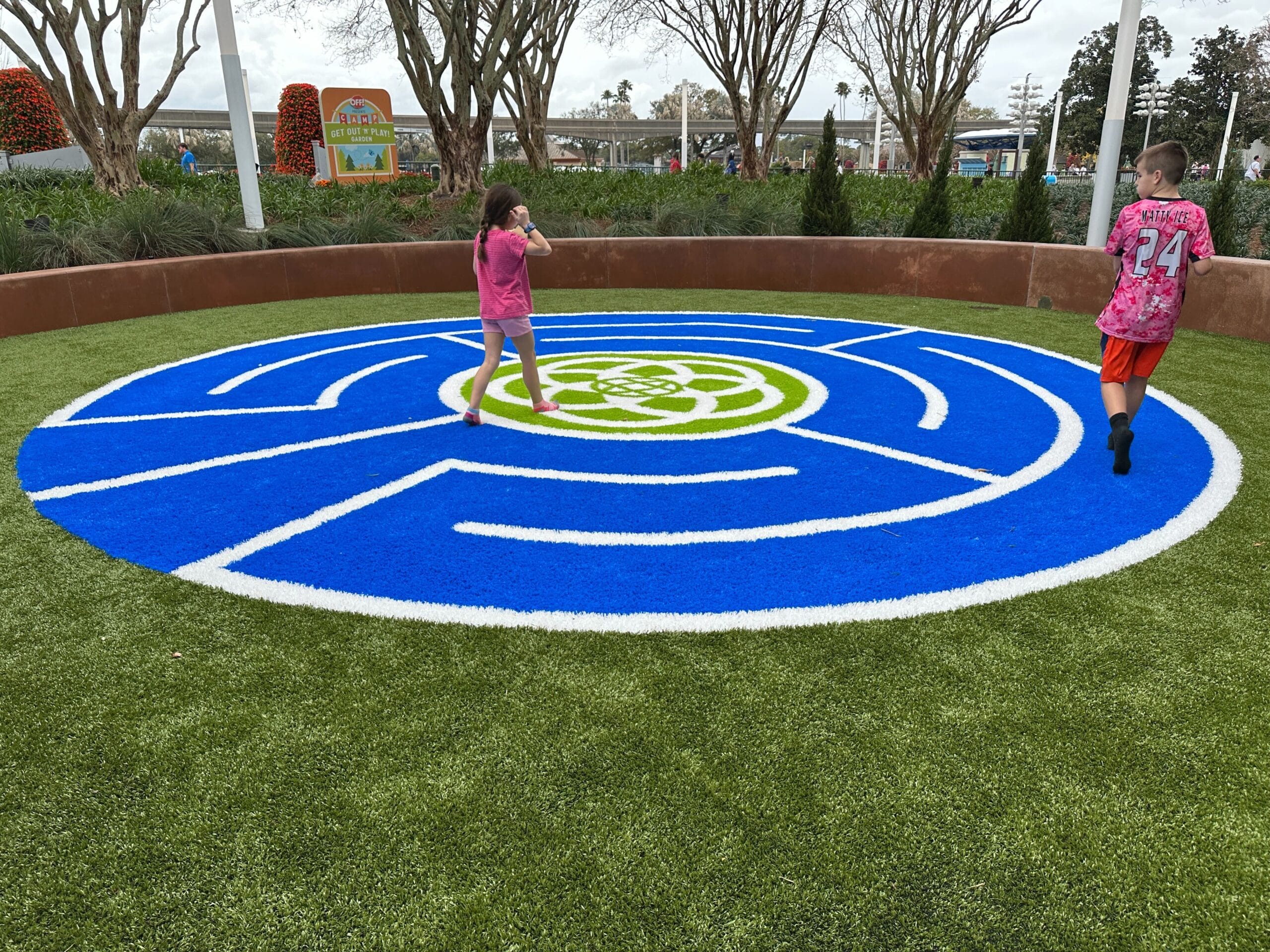
A lawn is decorated with an EPCOT logo maze.
World Nature
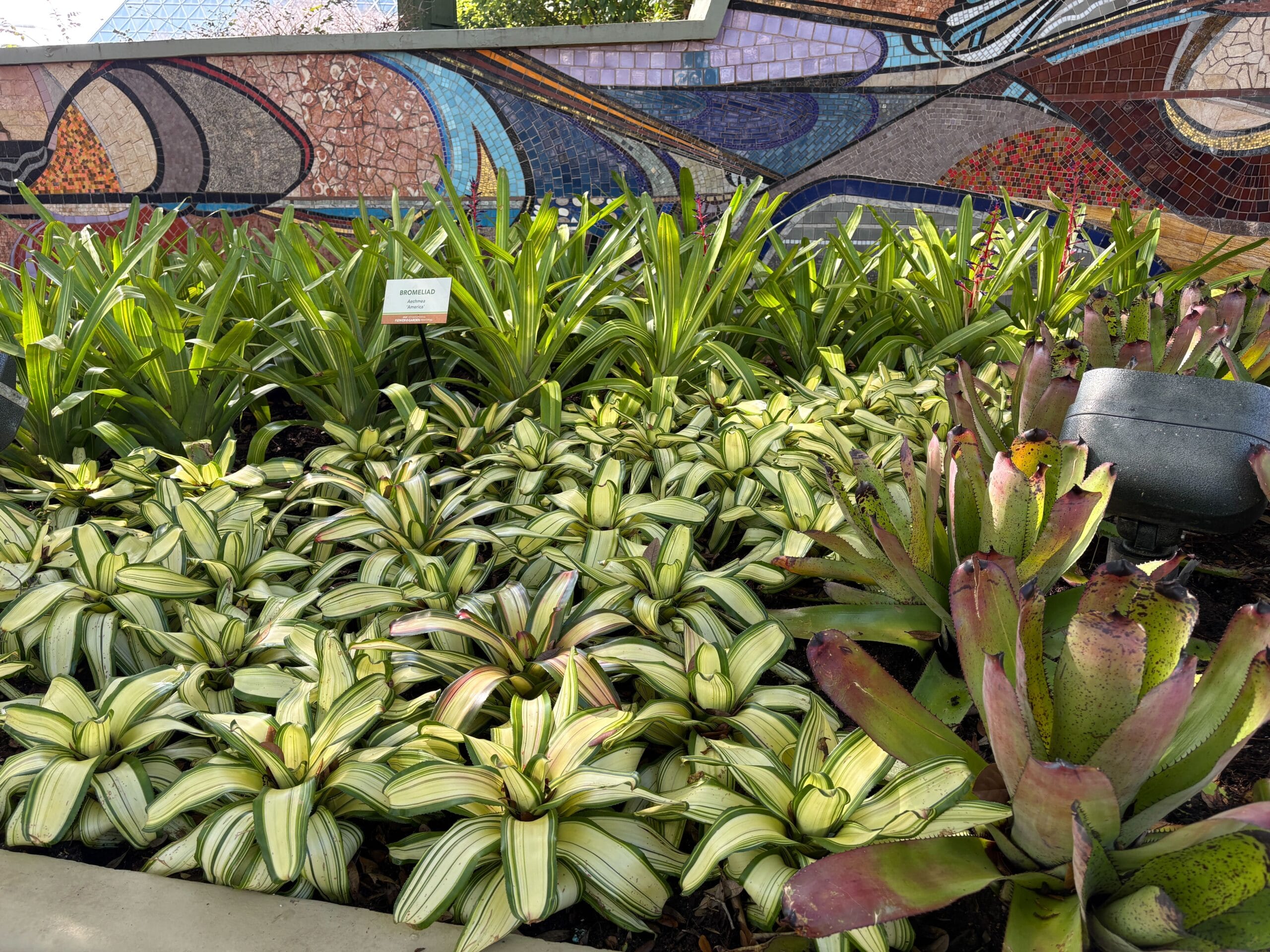
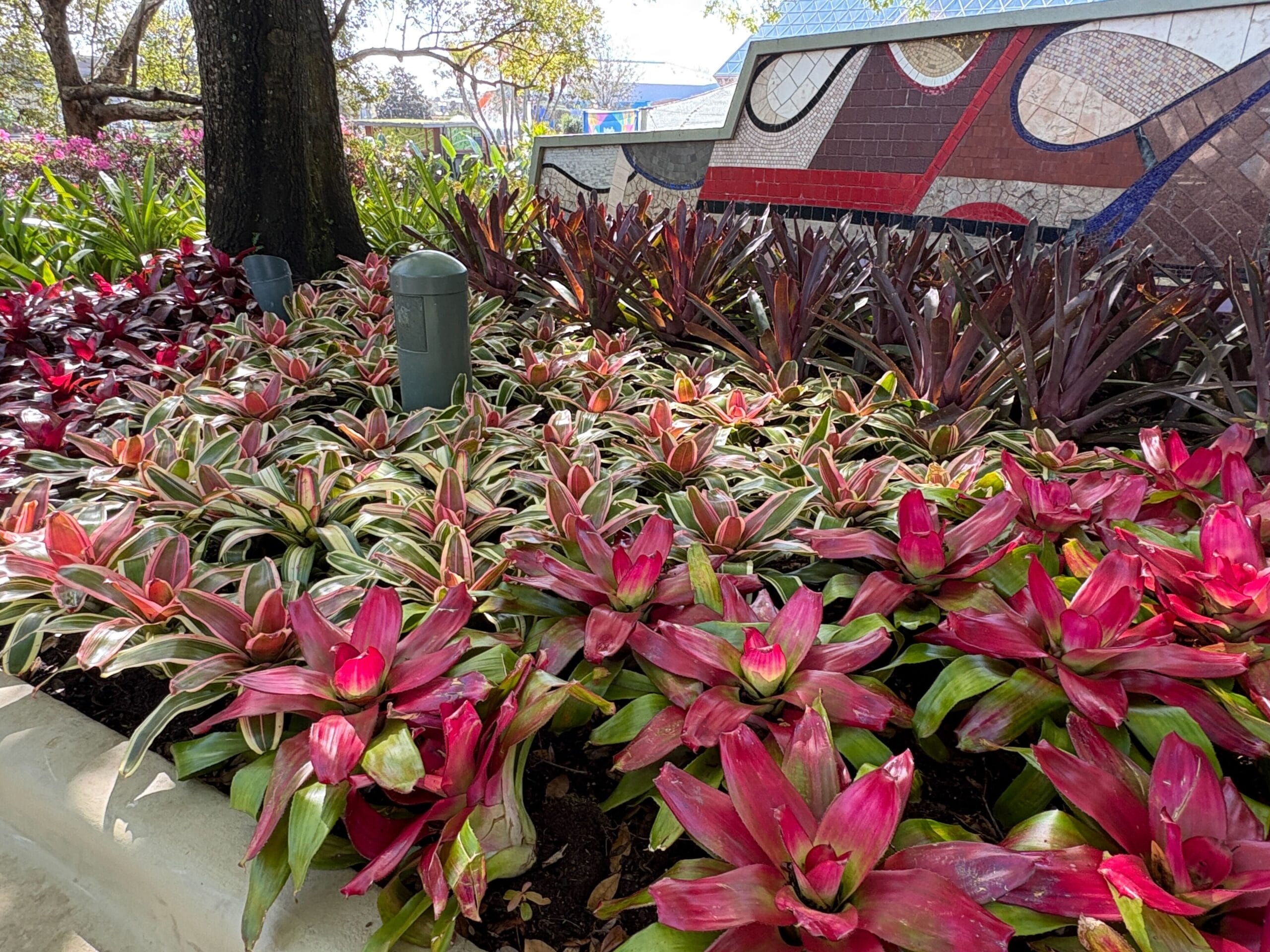
Bold Bromeliads – Outside The Land Pavilion
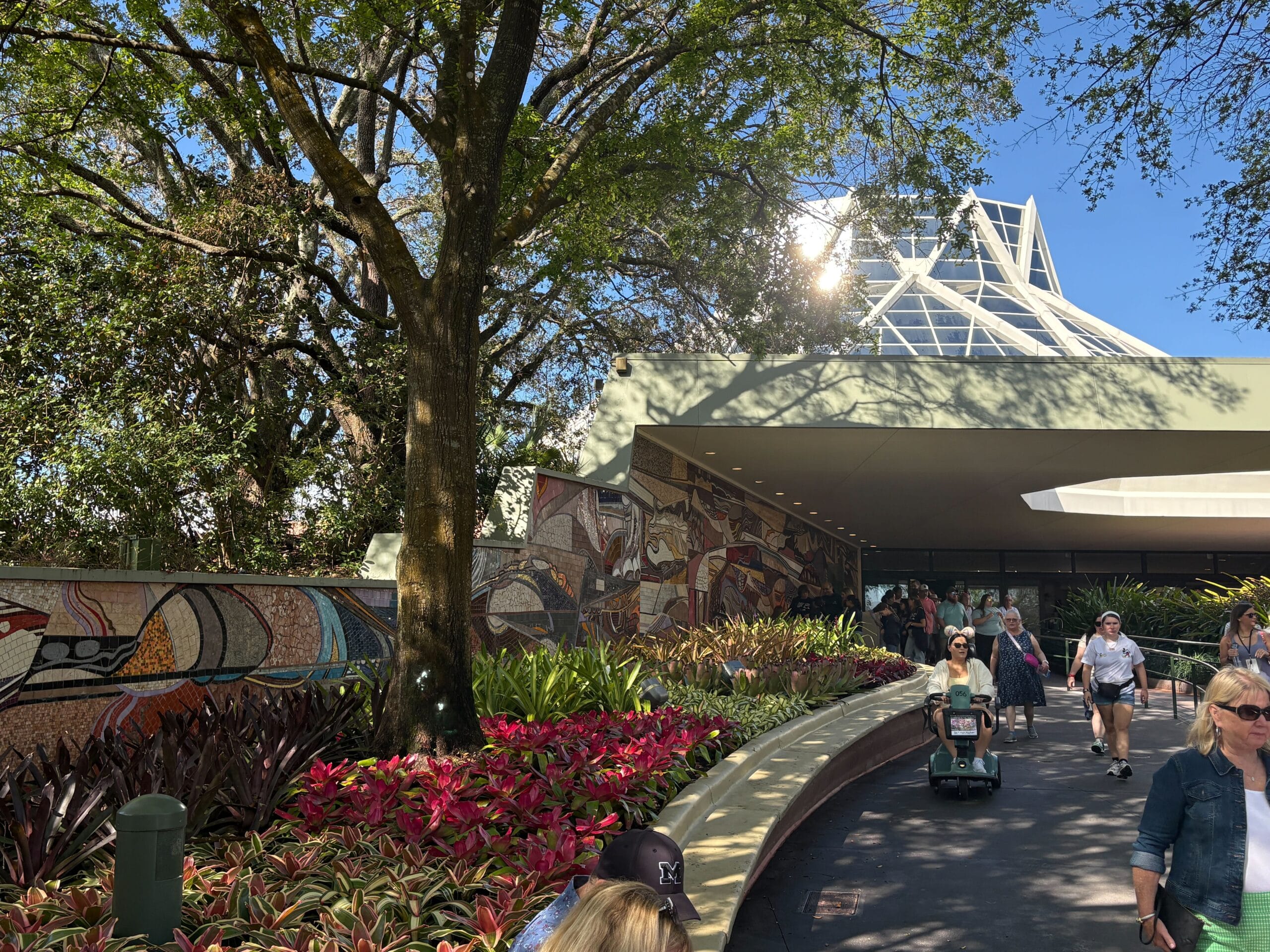
The Bold Bromeliads garden is in the flowerbeds outside The Land pavilion.
Community Garden – Near The Land Pavilion
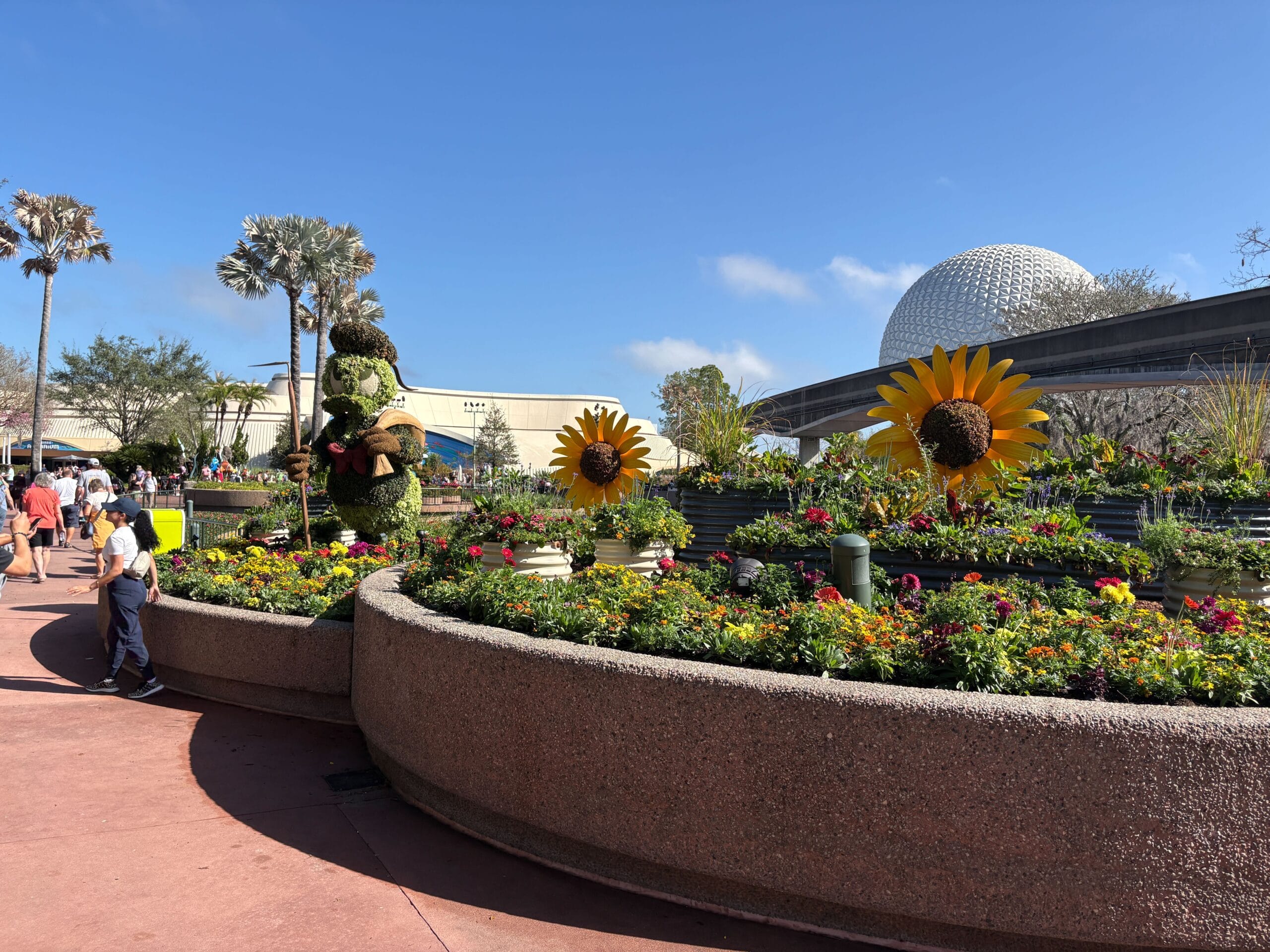
The Community Garden moved from World Discovery to World Nature this year. It includes the Donald Duck, Huey, Dewey, and Louie topiaries.
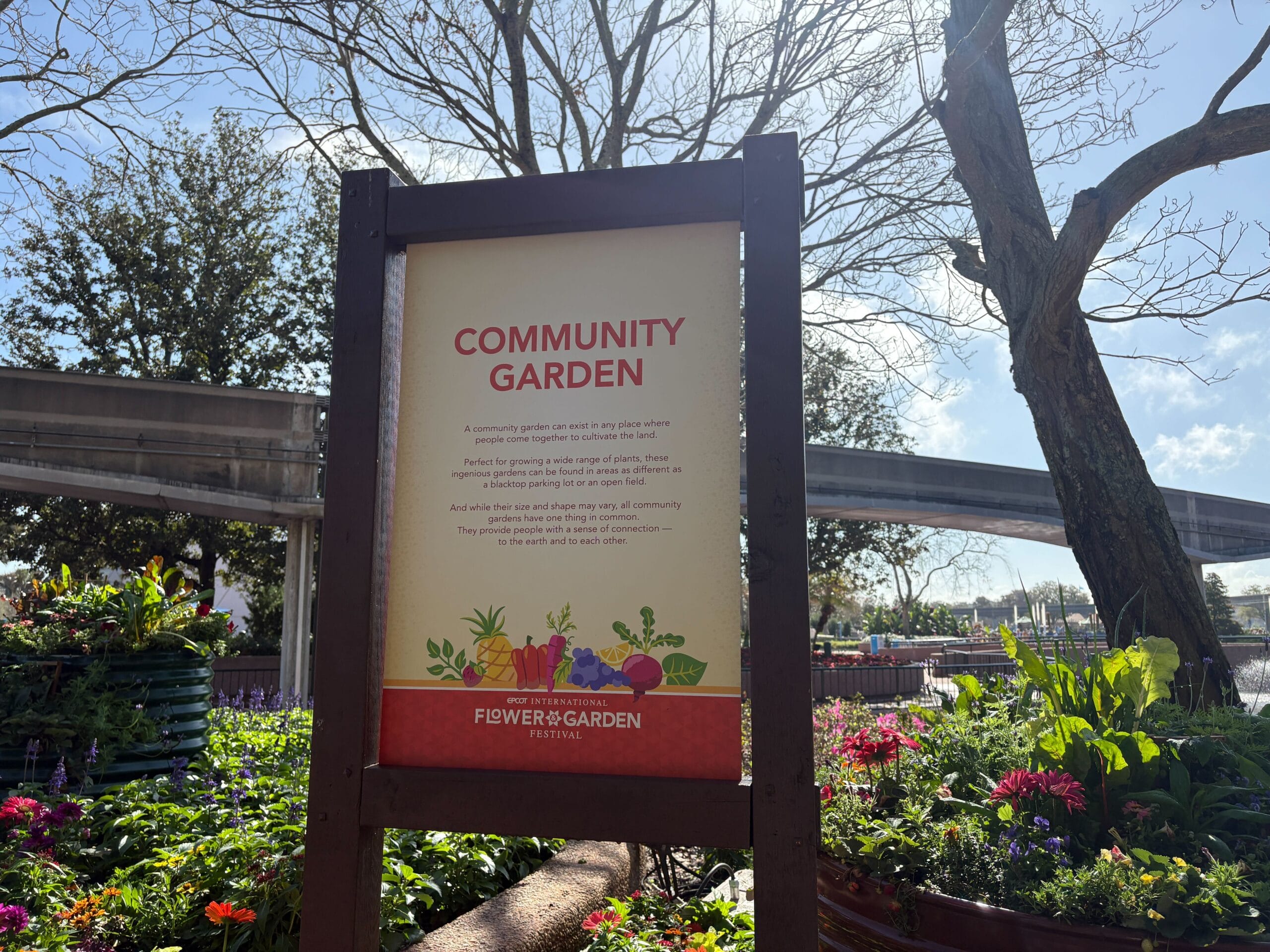
Community Garden
A community garden can exist in any place where people come together to cultivate the land.
Perfect for growing a wide range of plants, these ingenious gardens can be found in areas as different as a blacktop parking lot or an open field.
And while their size and shape may vary, all community gardens have one thing in common. They provide people with a sense of connection — to the earth and to each other.
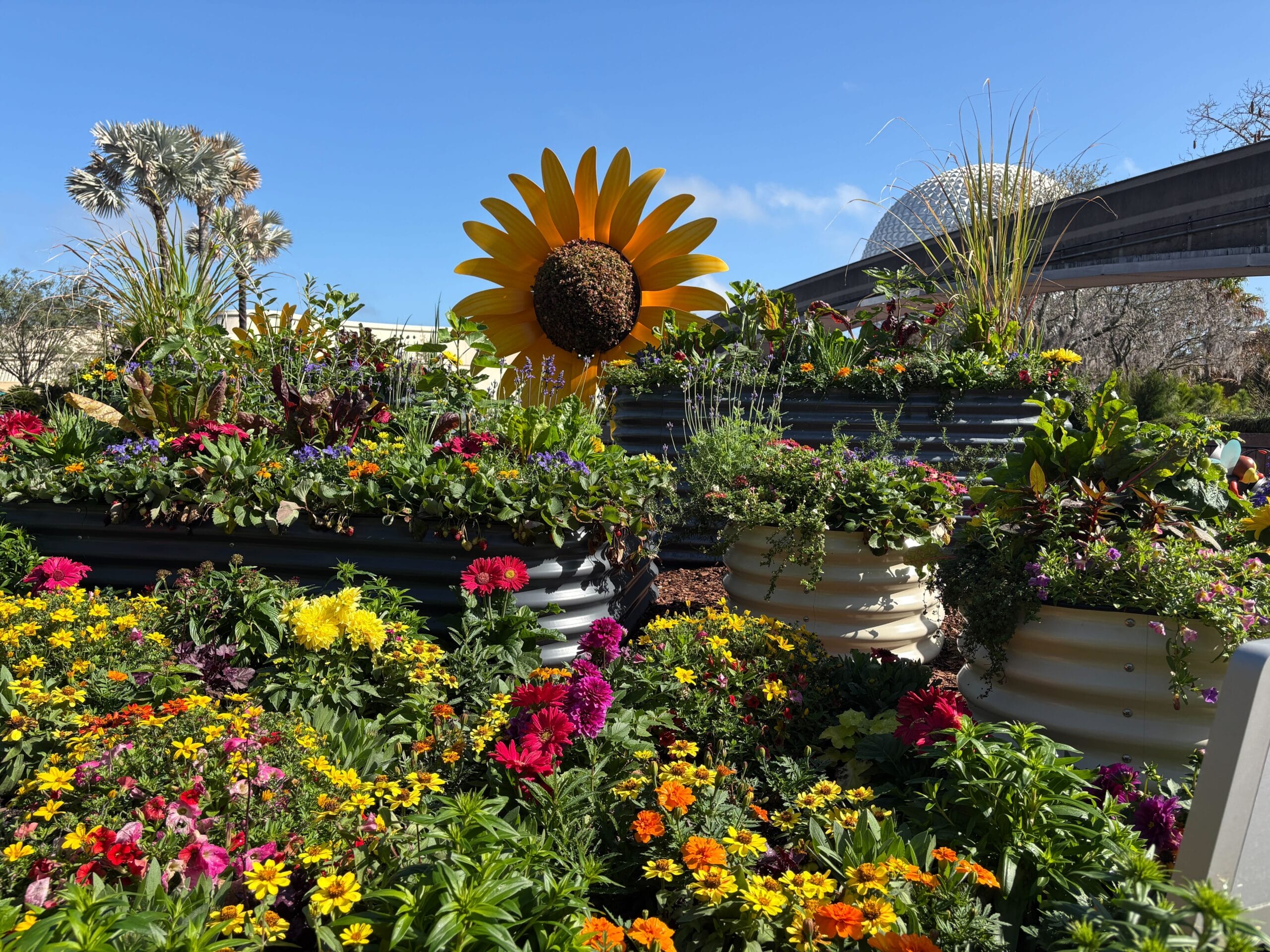
The garden consists of large metal planters full of a variety of plants. There are topiary sunflowers.
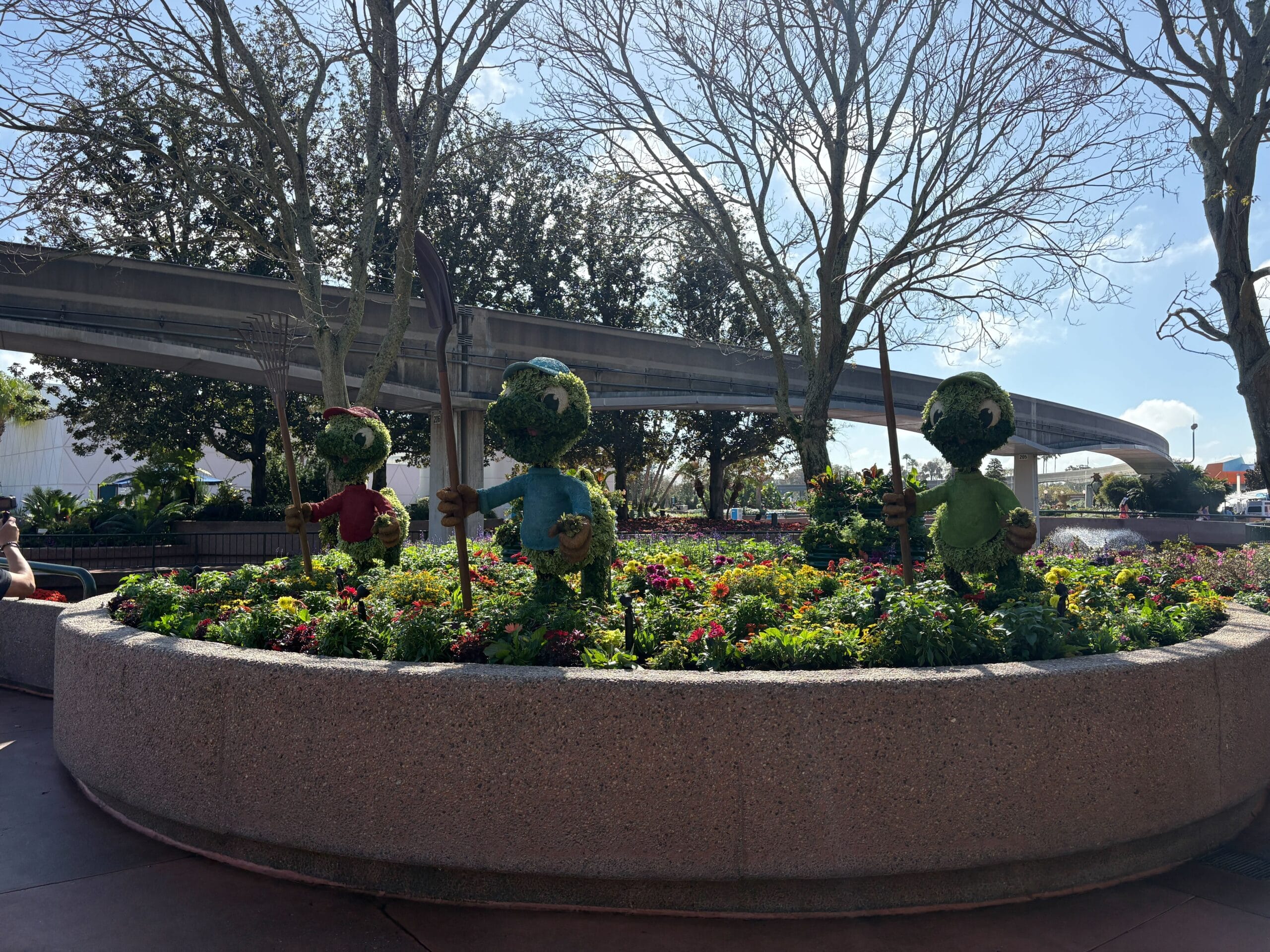
Donald and his nephews carry gardening equipment, ready to tend to the Community Garden.
Prehistoric Plants – Near The Land Pavilion
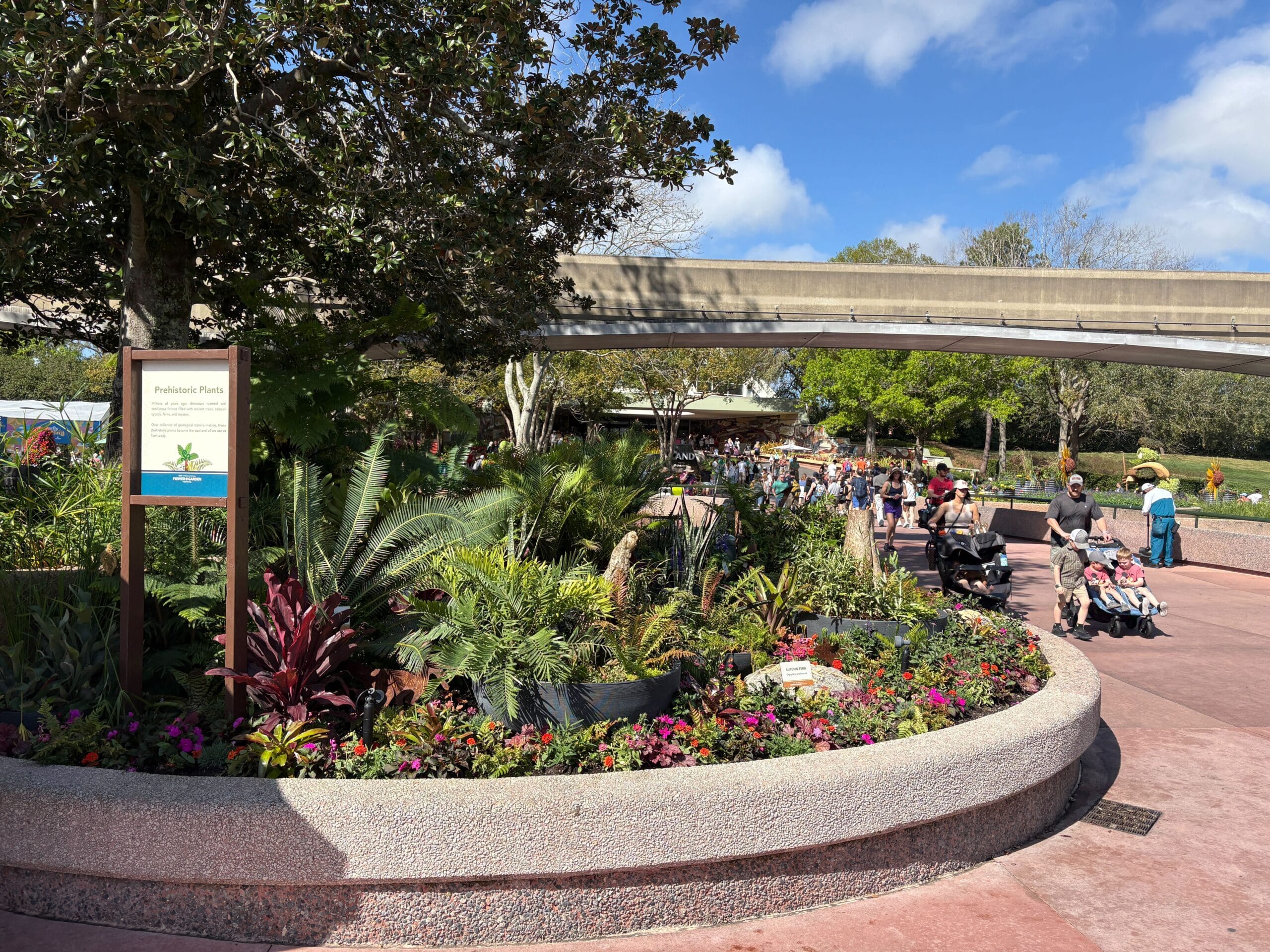
At this garden, guests can learn about plants that have existed since the age of the dinosaurs.
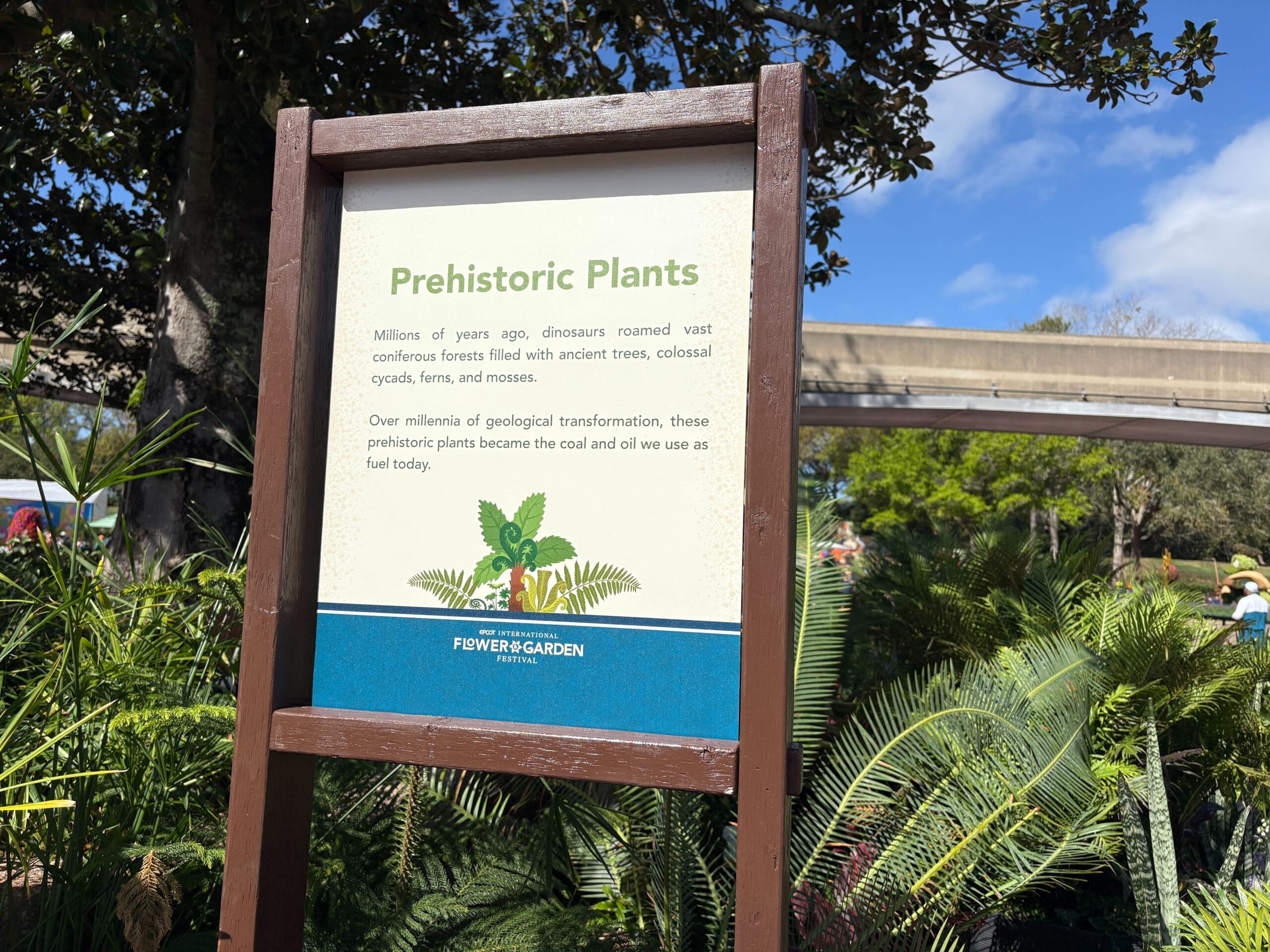
Prehistoric Plants
Millions of years ago, dinosaurs roamed vast coniferous forests filled with ancient trees, colossal cycads, ferns, and mosses.
Over millennia of geological transformation, these prehistoric plants became the coal and oil we use as fuel today.
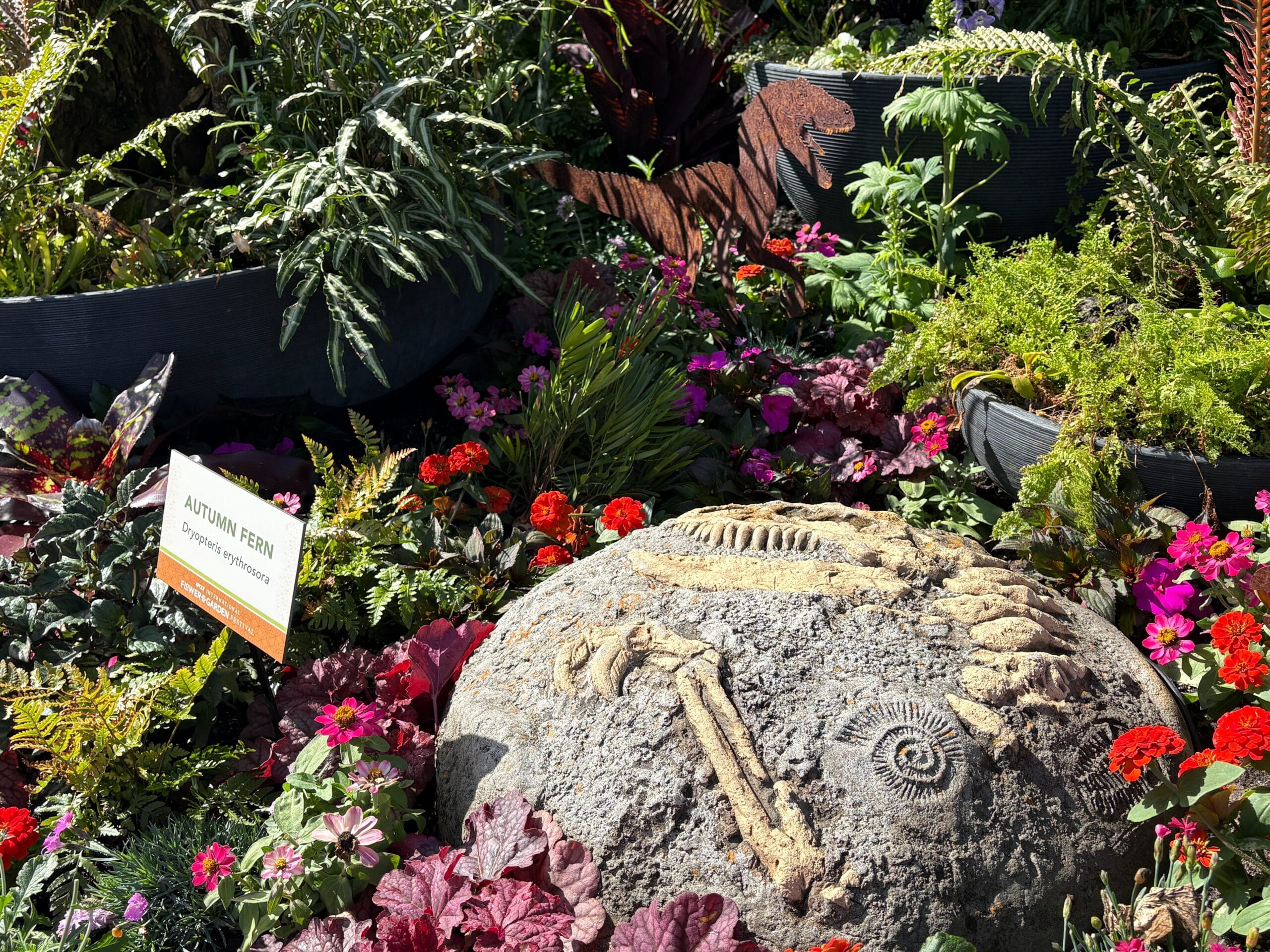
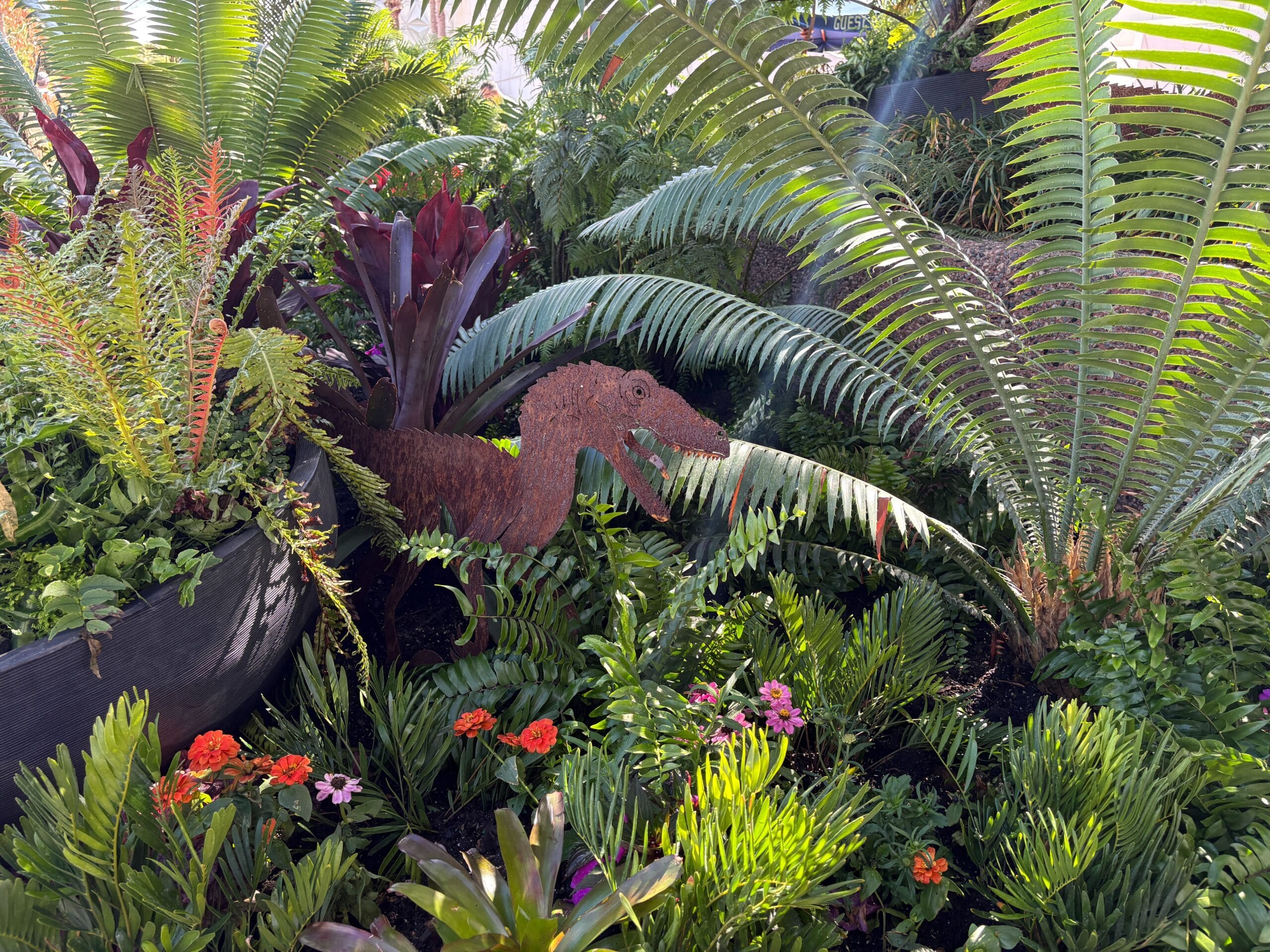
In addition to ancient plants, the garden is full of steel dinosaur flats and rocks embedded with fossils.
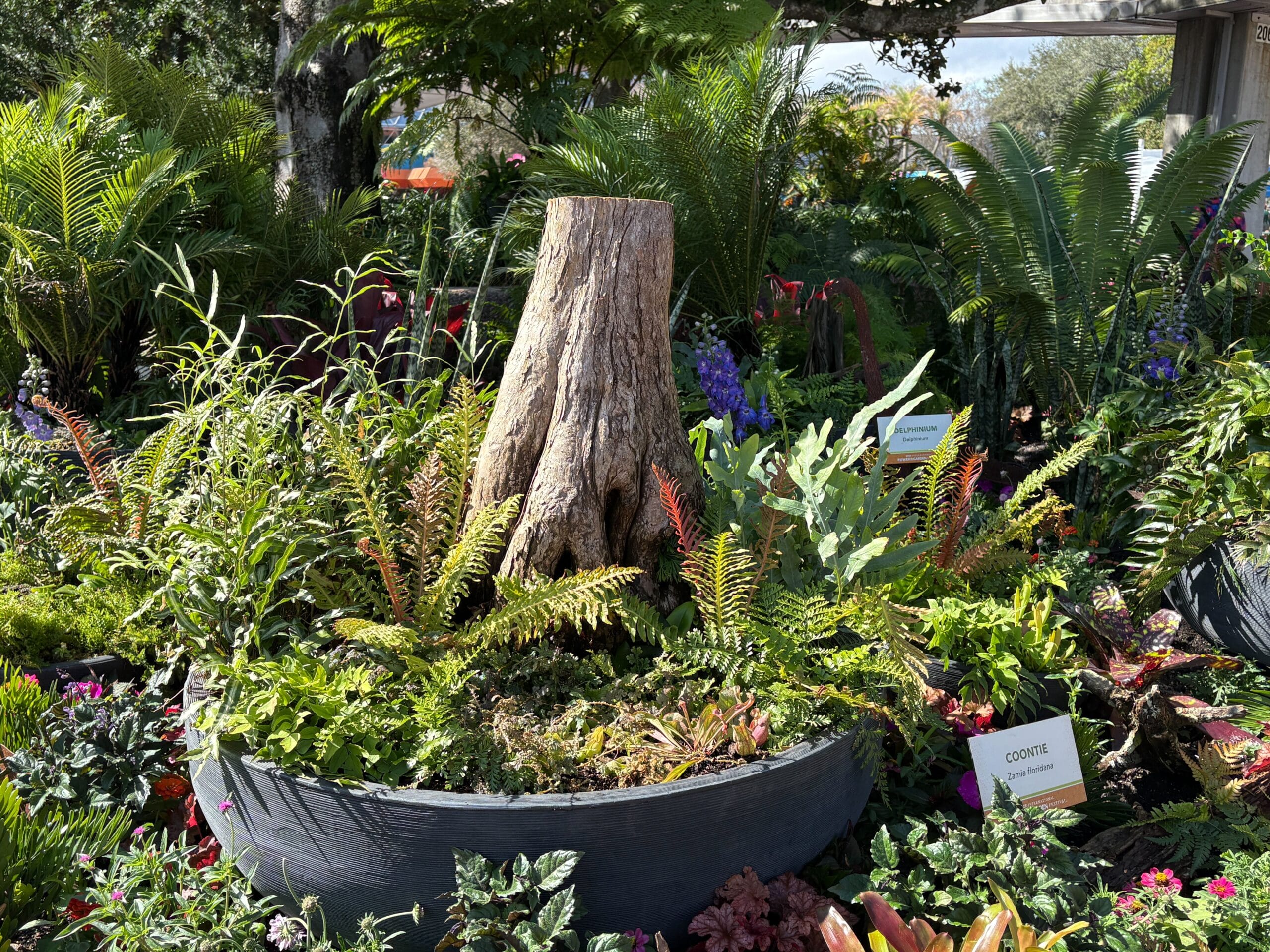
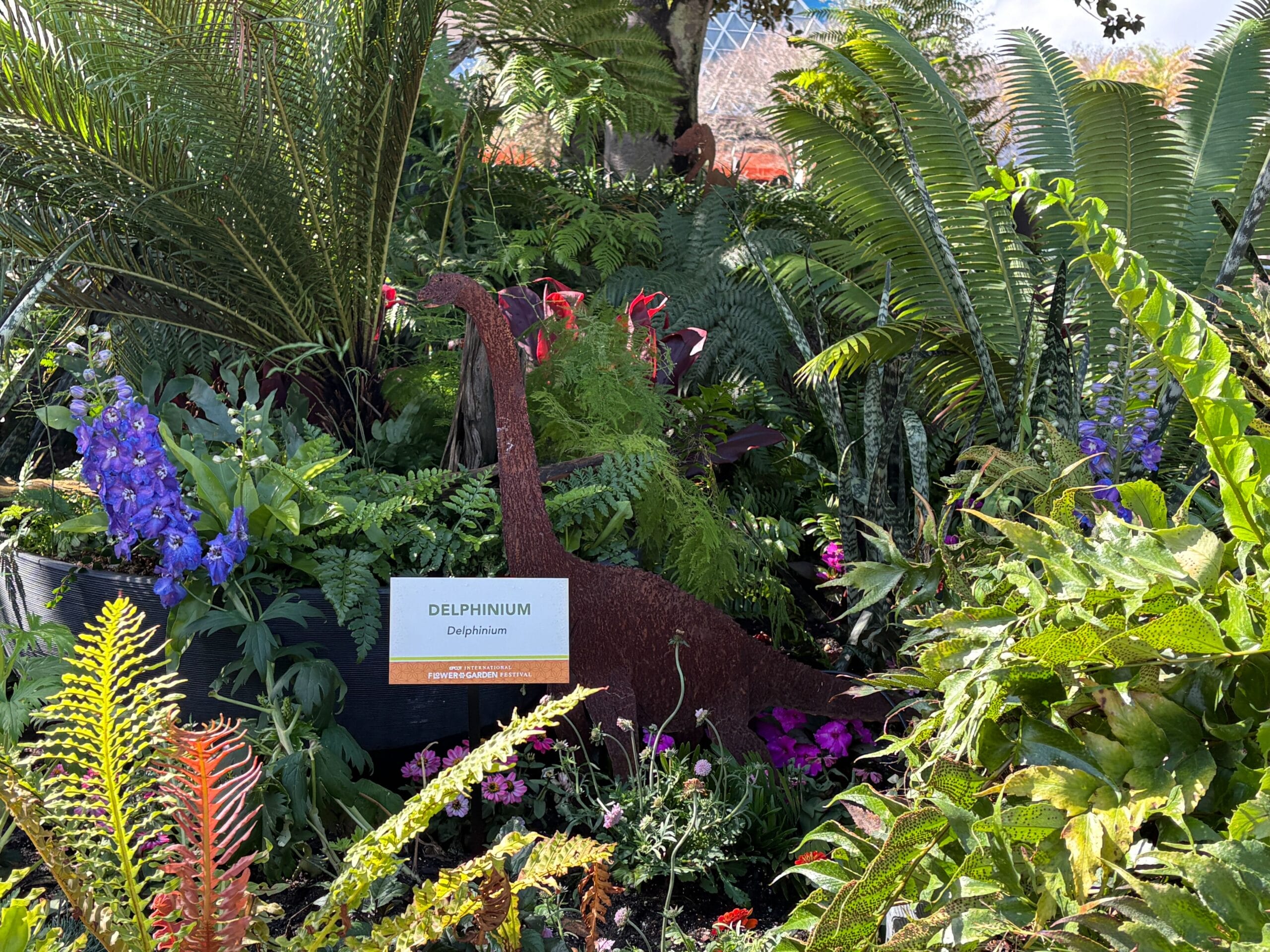
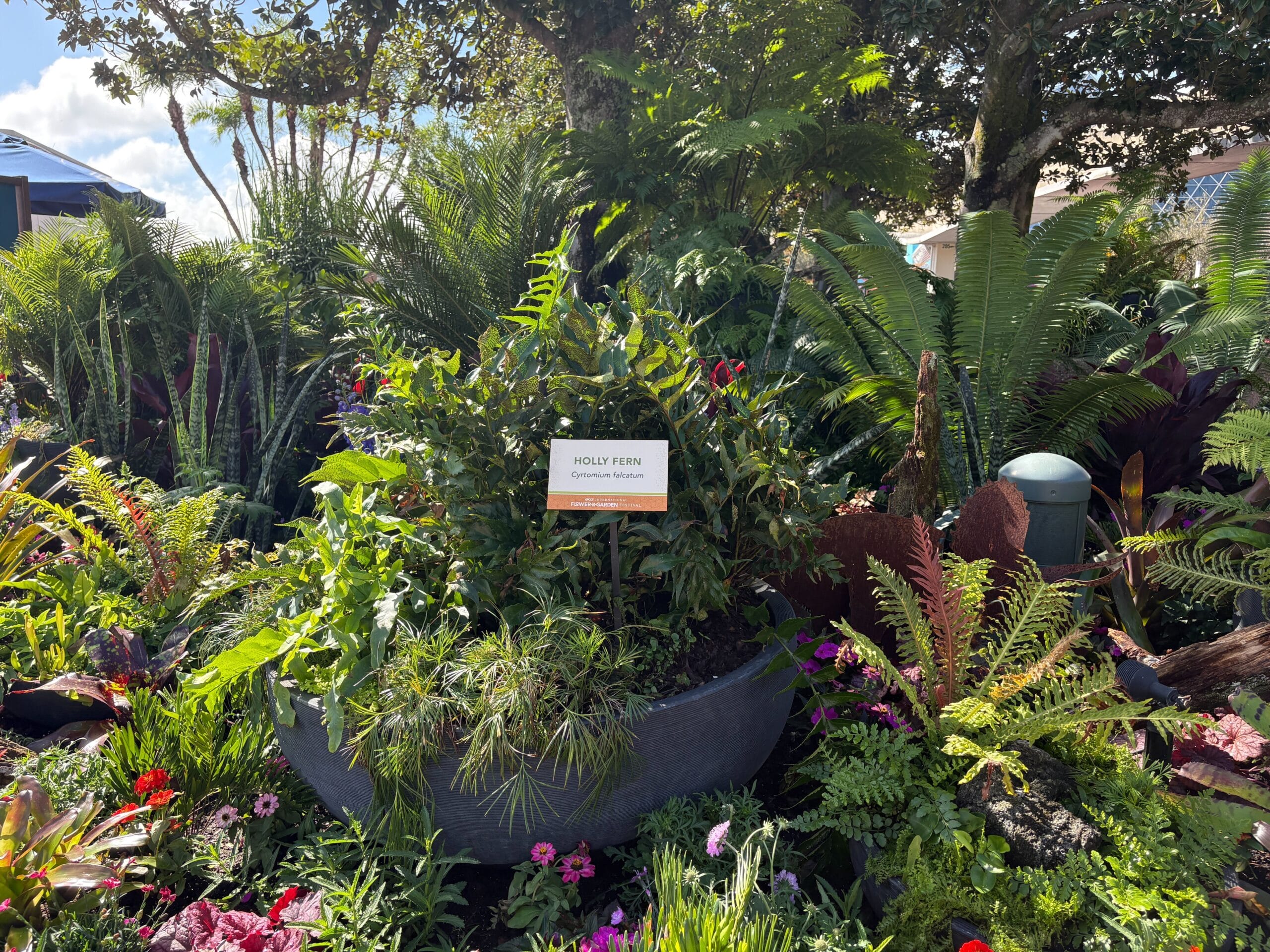
Plants include Coontie, Delphinium, Holly Fern, and Venus Fly Trap.
*NEW* Pluto’s Pet Garden – Near The Seas with Nemo & Friends
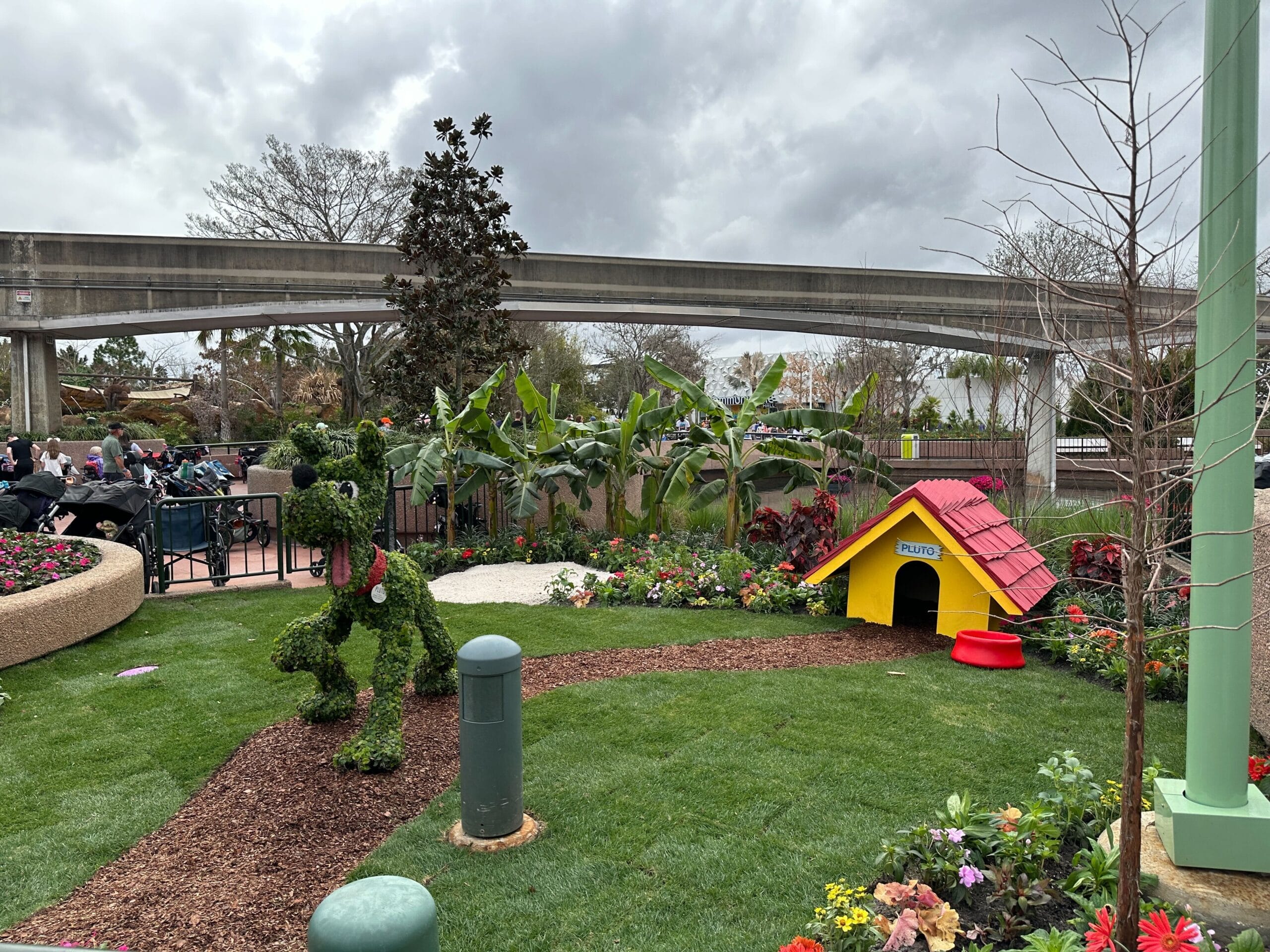
Celebrate pet-friendly gardening with this space featuring a Pluto topiary. He’s on a lawn in front of his doghouse and dog bowl.
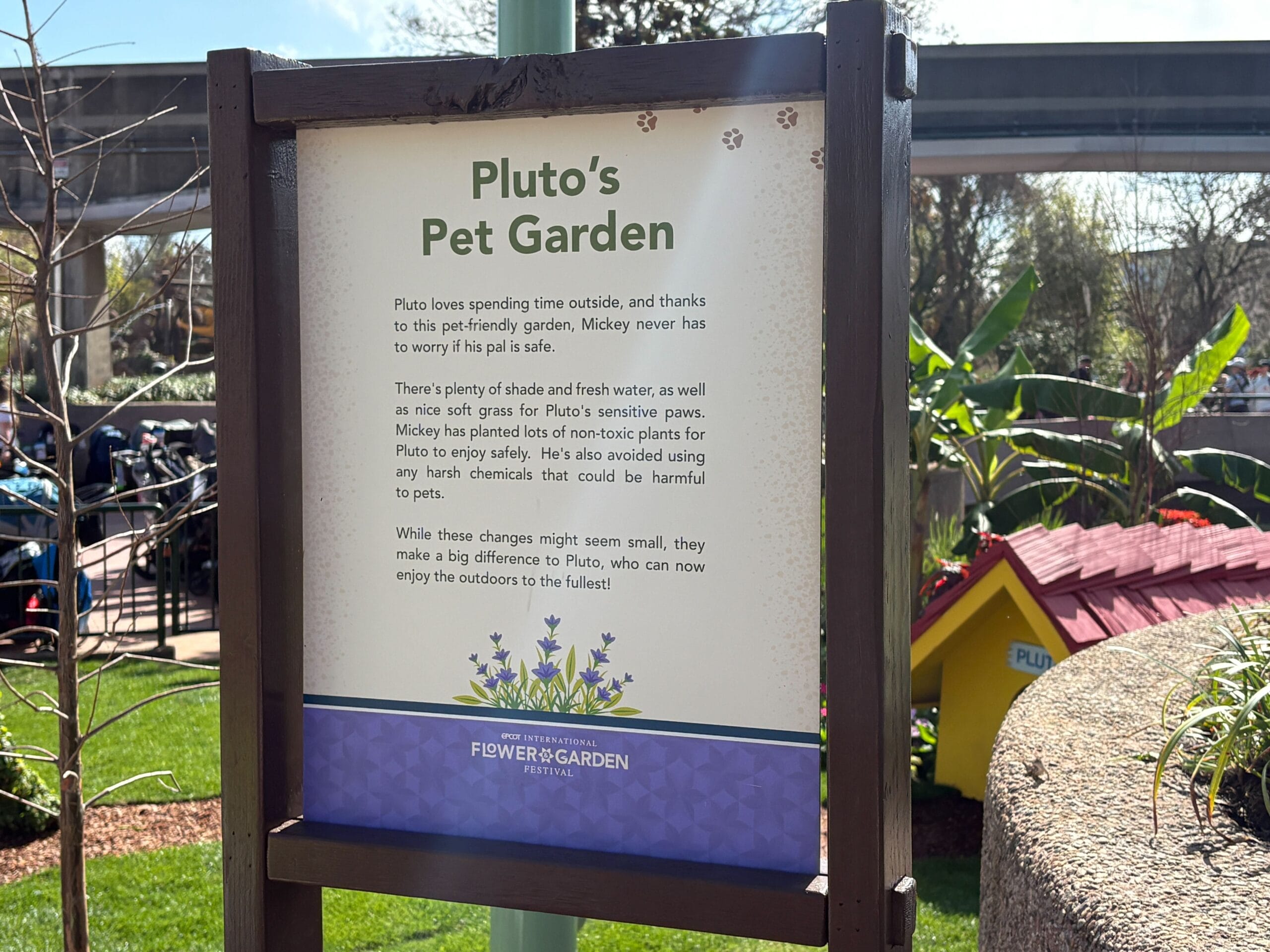
Pluto’s Pet Garden
Pluto loves spending time outside, and thanks to this pet-friendly garden, Mickey never has to worry if his pal is safe.
There’s plenty of shade and fresh water, as well as nice soft grass for Pluto’s sensitive paws. Mickey has planted lots of non-toxic plants for Pluto enjoy safely. He’s also avoided using any harsh chemicals that could be harmful to pets.
While these changes might seem small, they make a big difference to Pluto, who can now enjoy the outdoors to the fullest!
World Showcase
Blossoms of Fragrance Presented by Scentsy – Bridge to World Showcase
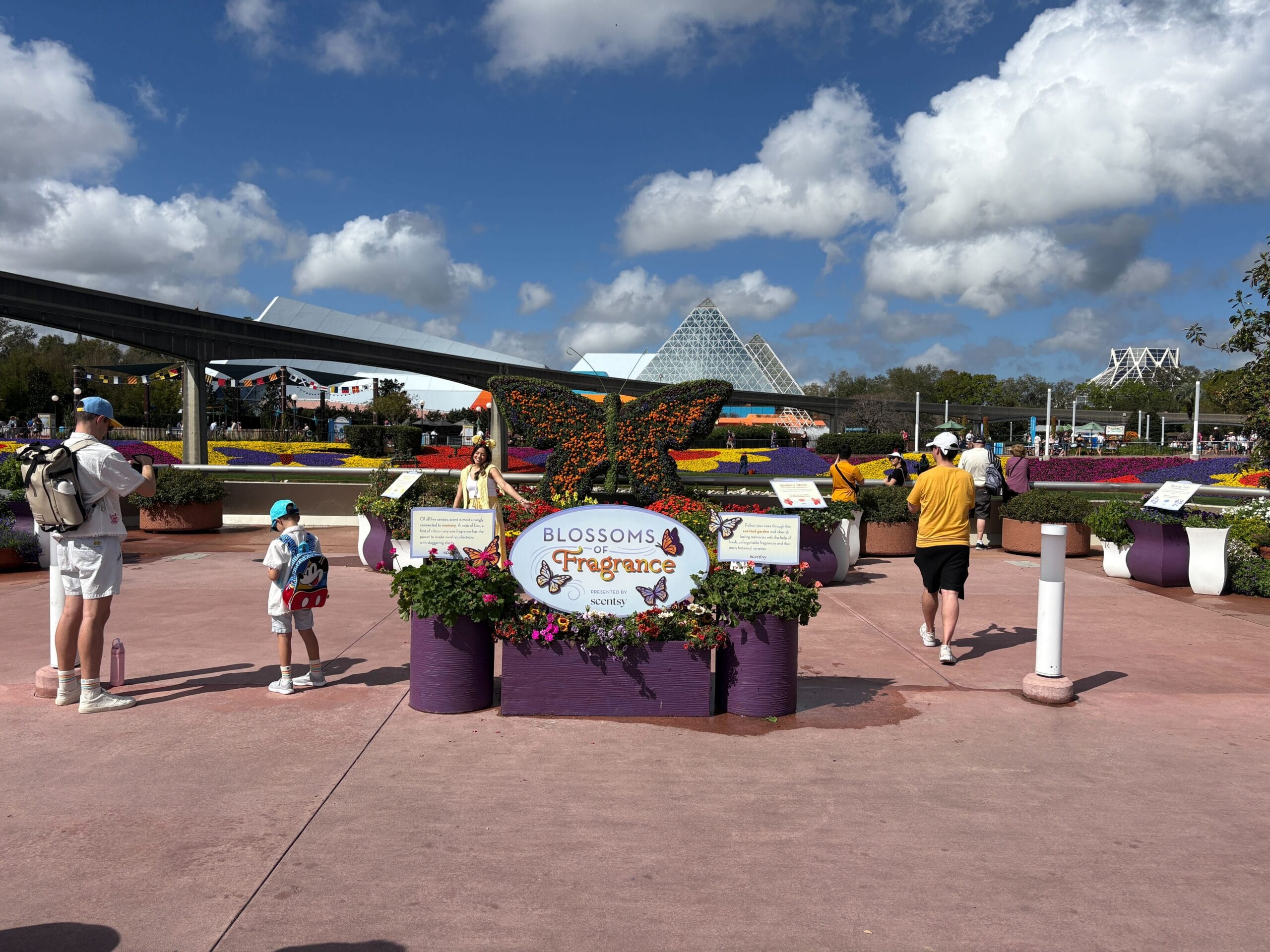
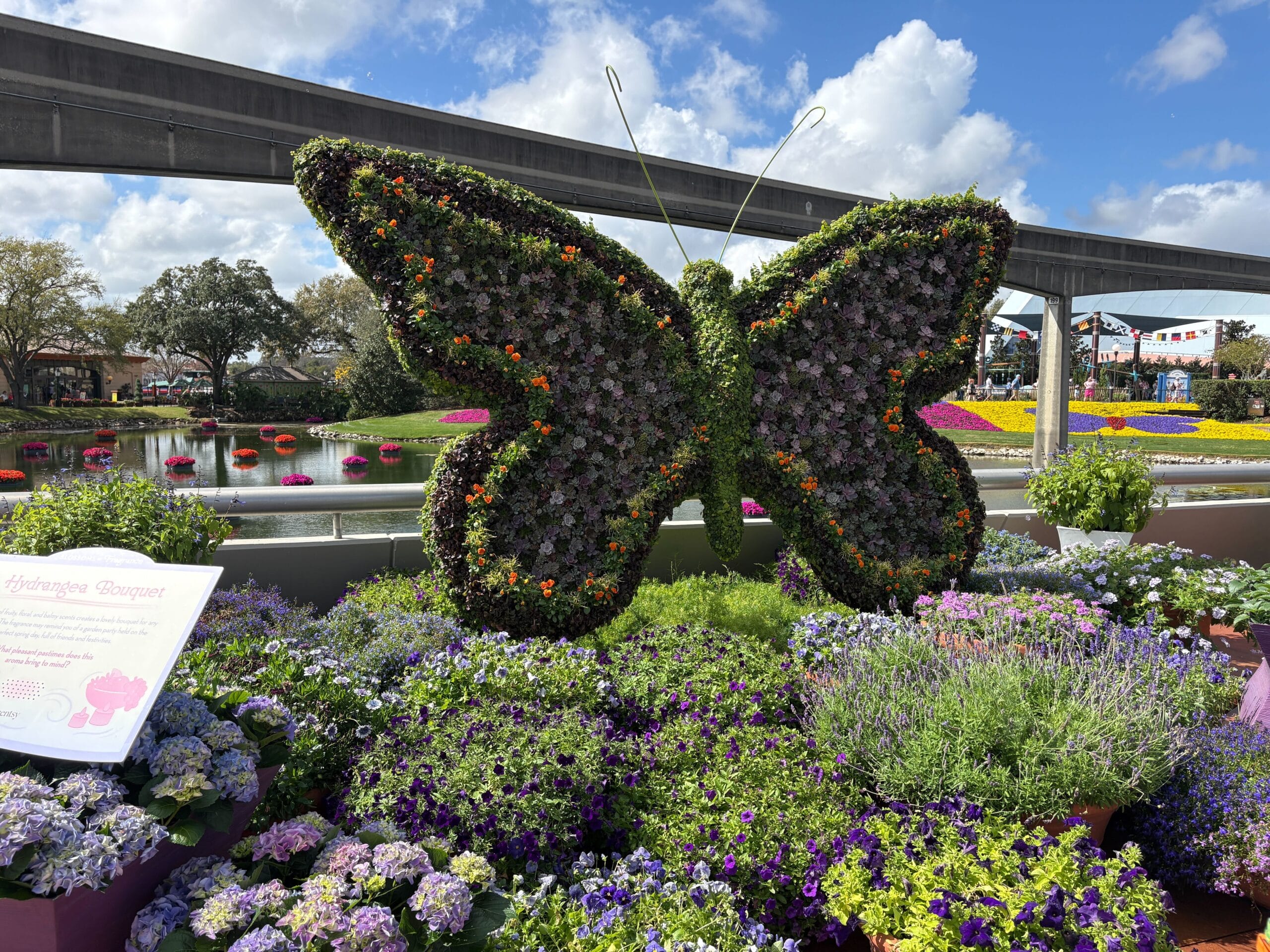
Blossoms of Fragrance presented by Scentsy has giant butterfly topiaries and signs with built-in scents for guests to enjoy.
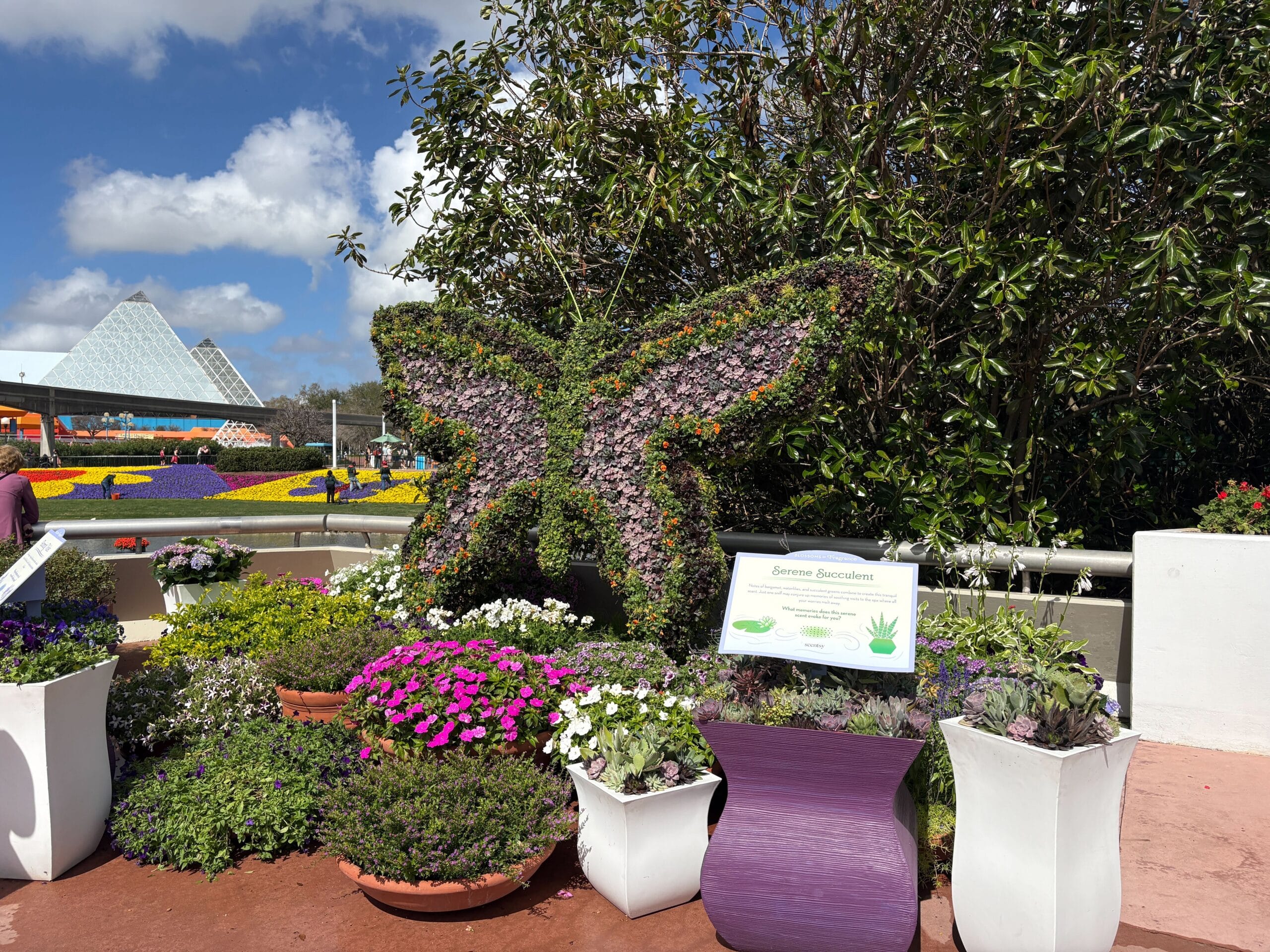
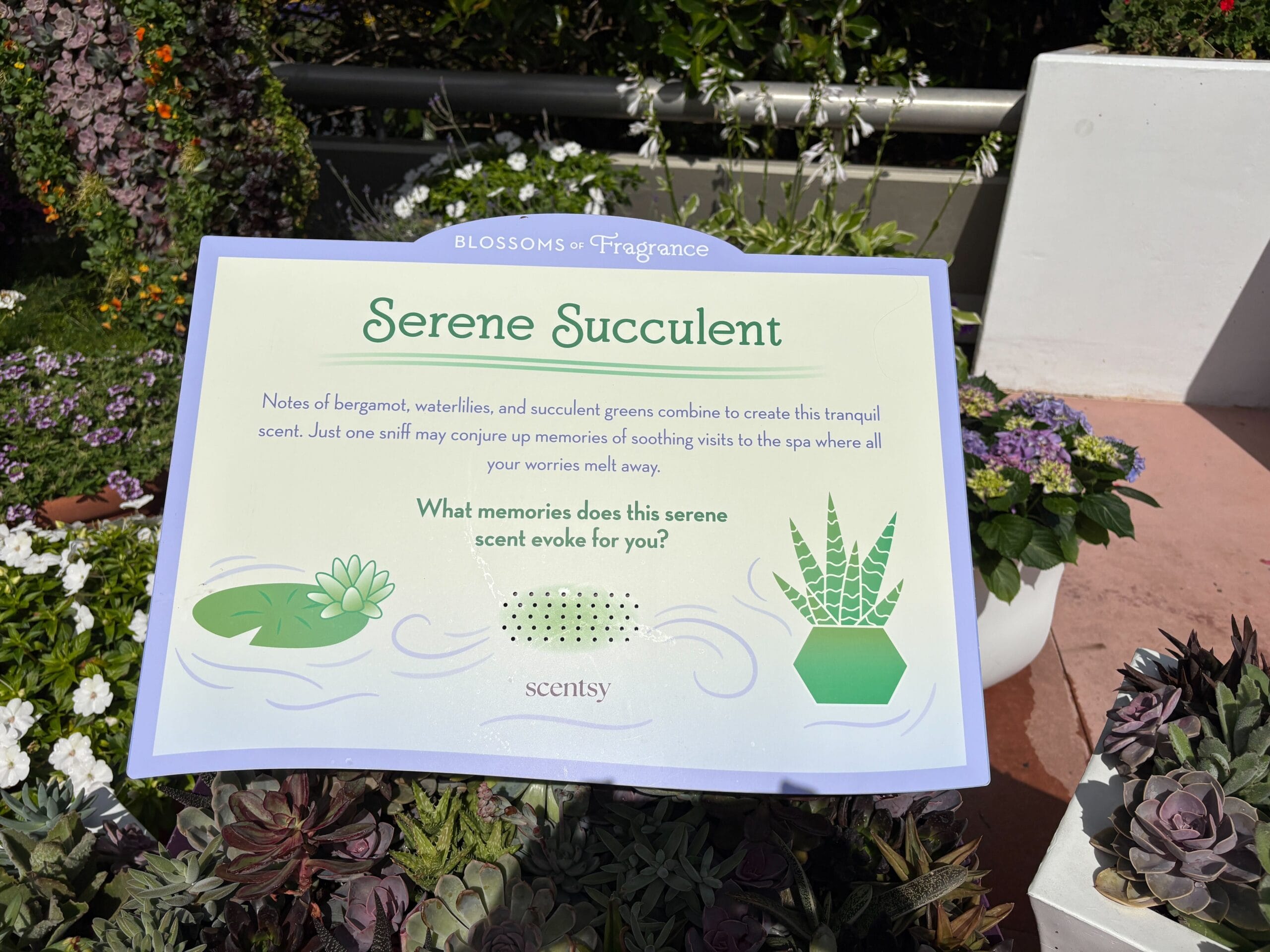
Serene Succulent
Notes of bergamot, waterlilies, and succulent greens combine to create this tranquil scent. Just one sniff may conjure up memories of soothing visits to the spa where all your worries melt away.
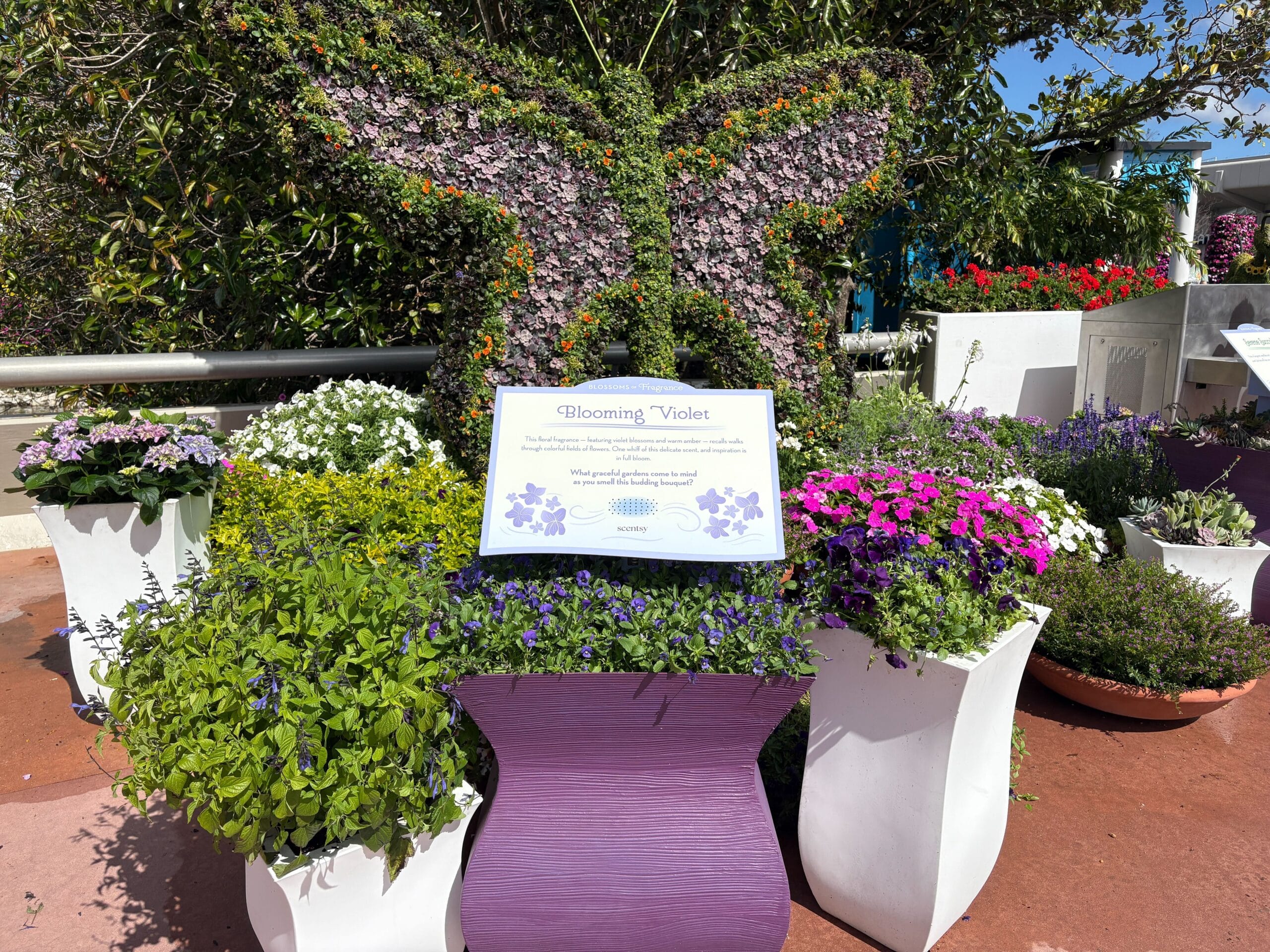
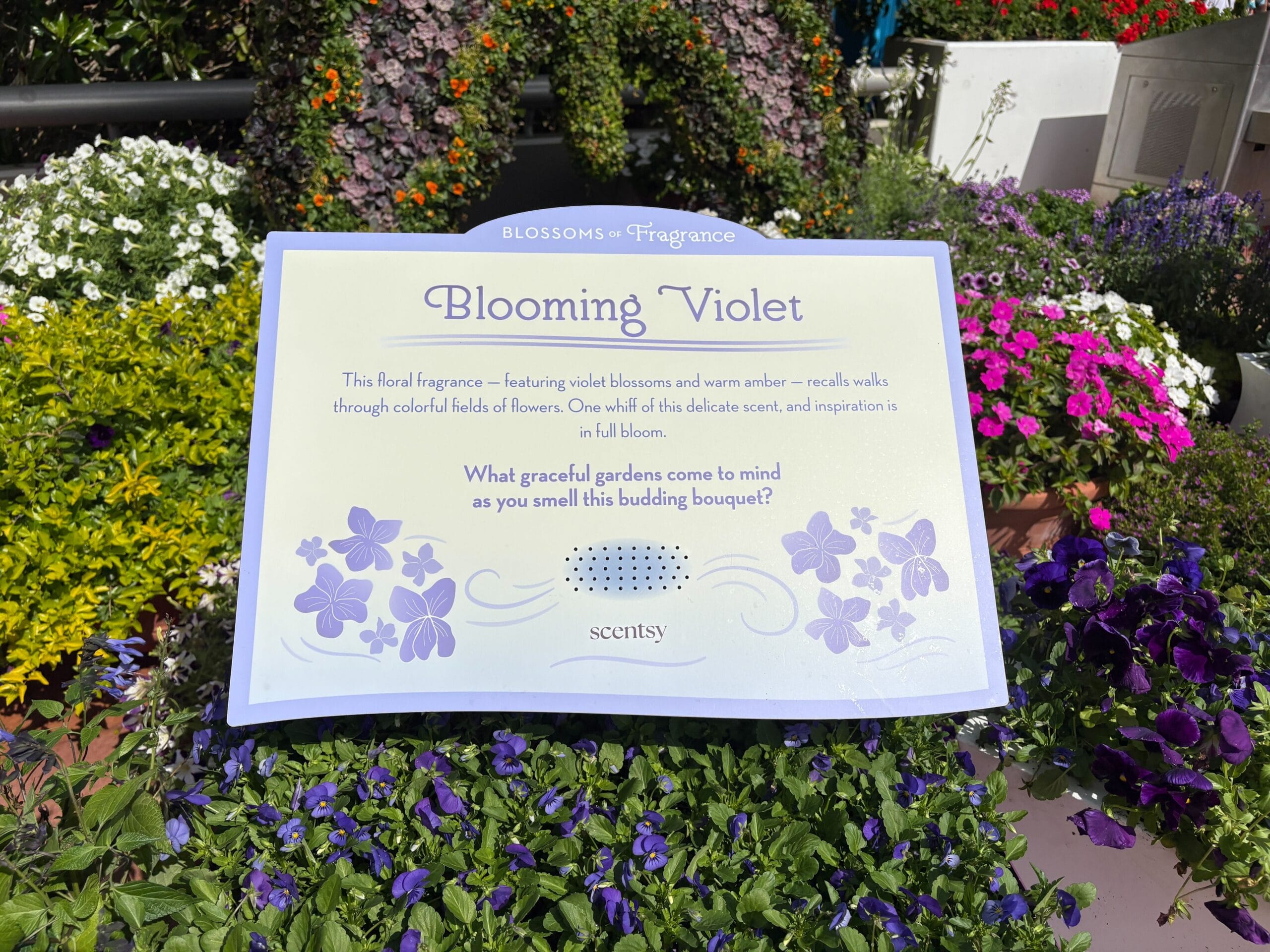
Blooming Violet
This floral fragrance — featuring violet blossoms and warm amber — recalls walks through colorful fields of flowers. One whiff of this delicate scent, and inspiration is in full bloom.
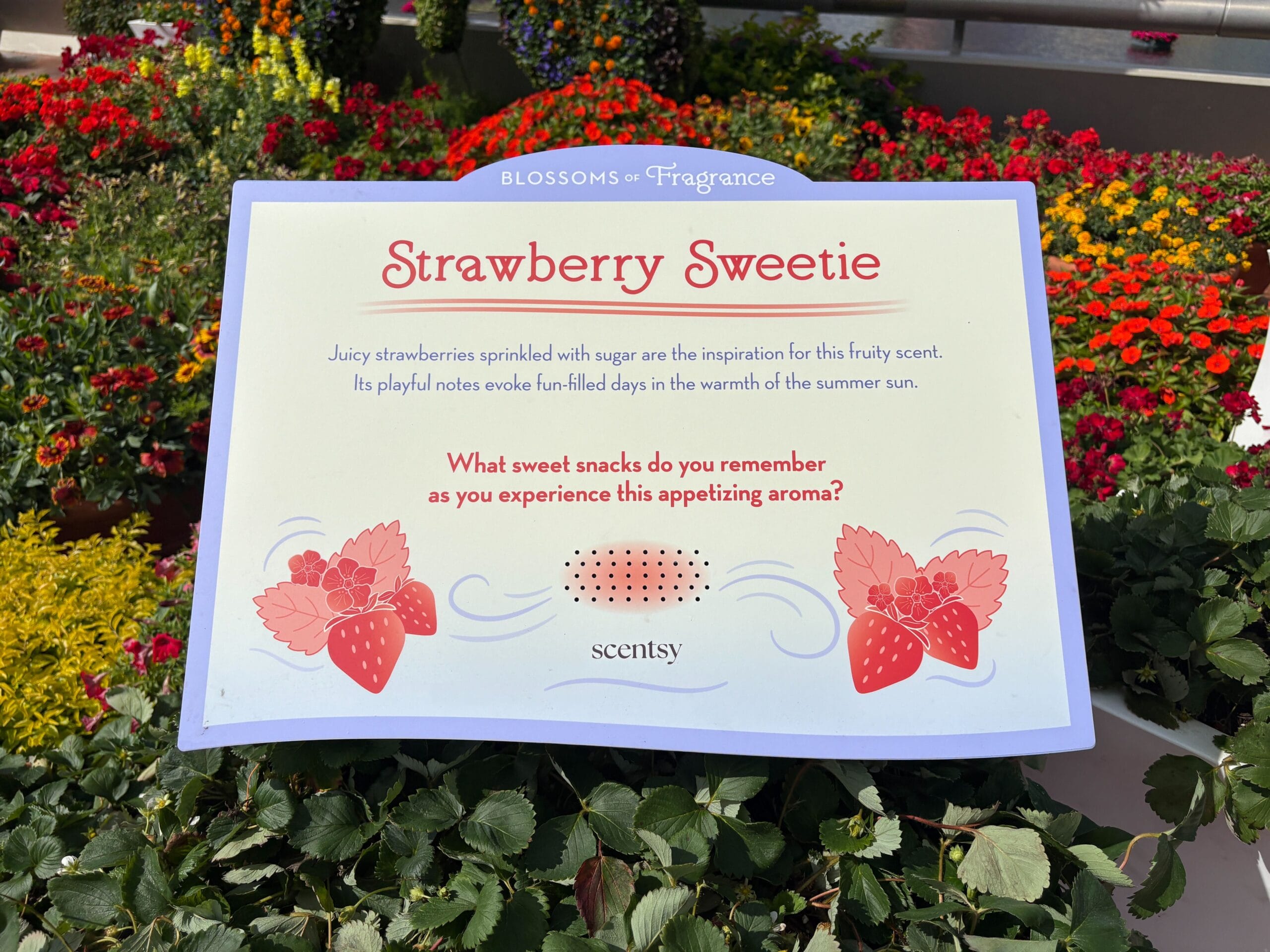
Strawberry Sweetie
Juicy strawberries sprinkled with sugar are the inspiration for this fruity scent. Its playful notes evoke fun-filled days in the warmth of the summer sun.
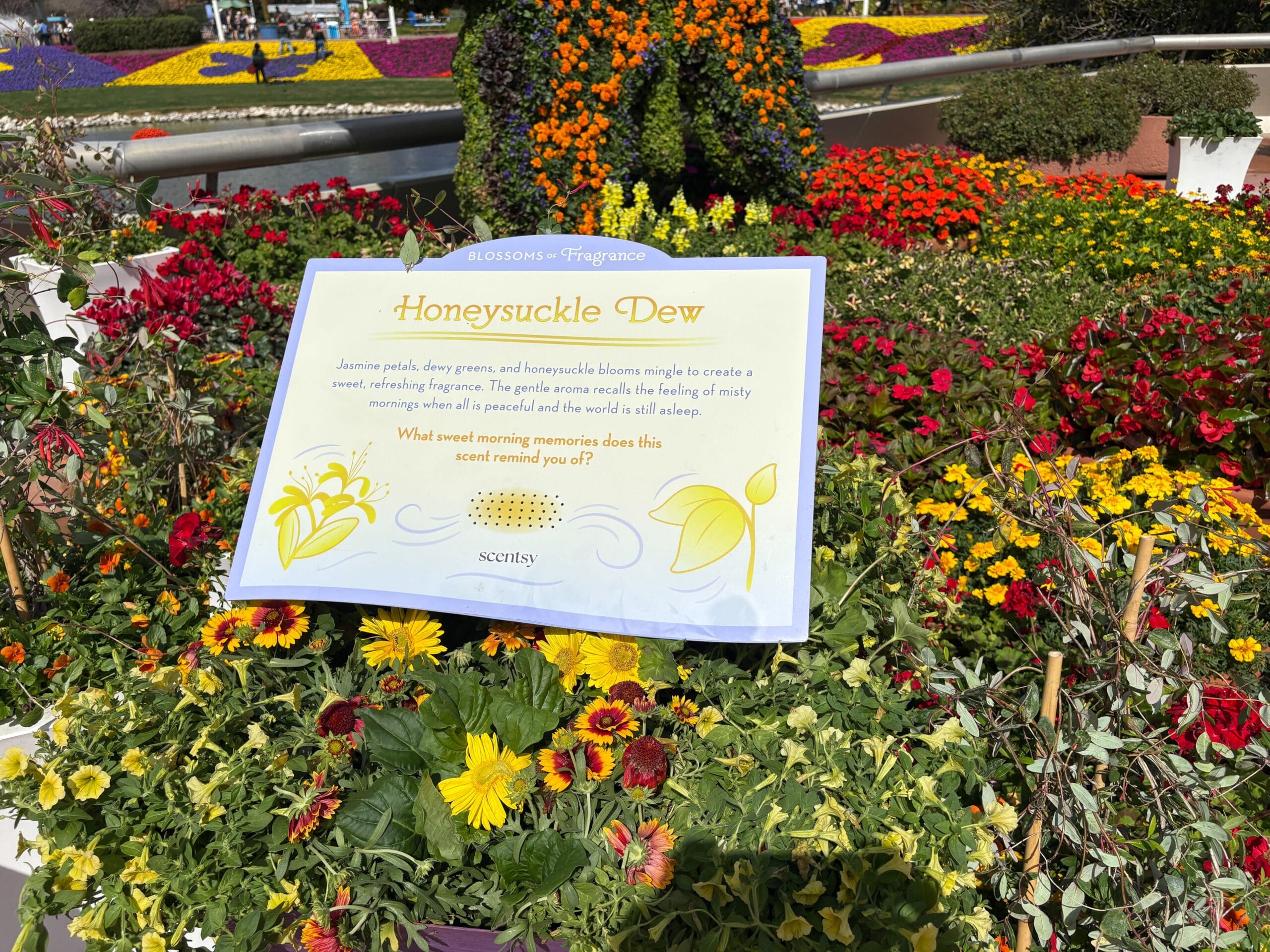
Honeysuckle Dew
Jasmine petals, dewy greens, and honeysuckle blooms mingle to create a sweet, refreshing fragrance. The gentle aroma recalls the feeling of misty mornings when all is peaceful and the world is still asleep.
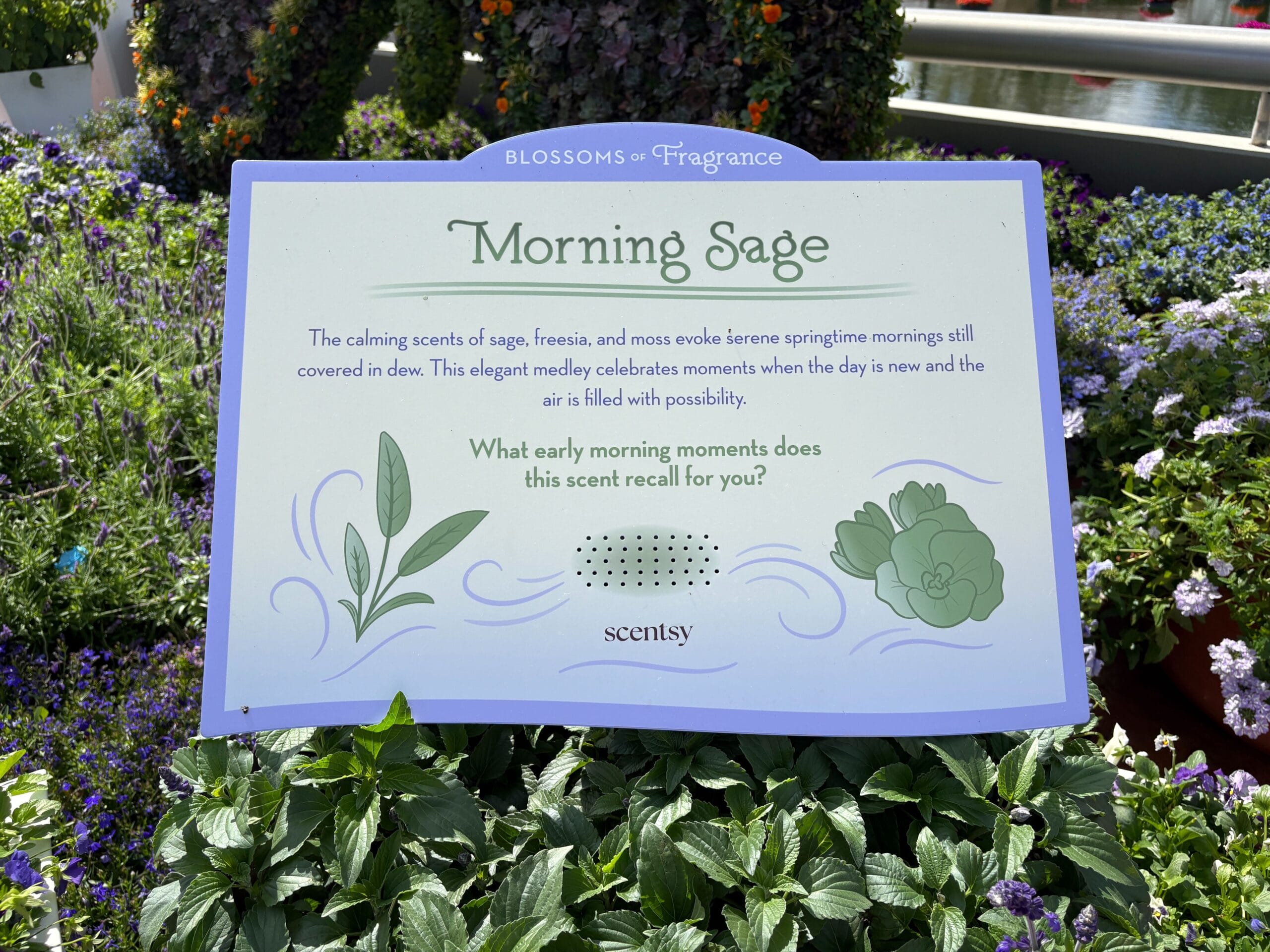
Morning Sage
The calming scents of sage, freesia, and moss evoke serene springtime mornings still covered in dew. This elegant medley celebrates moments when the day is new and the air is filled with possibility.
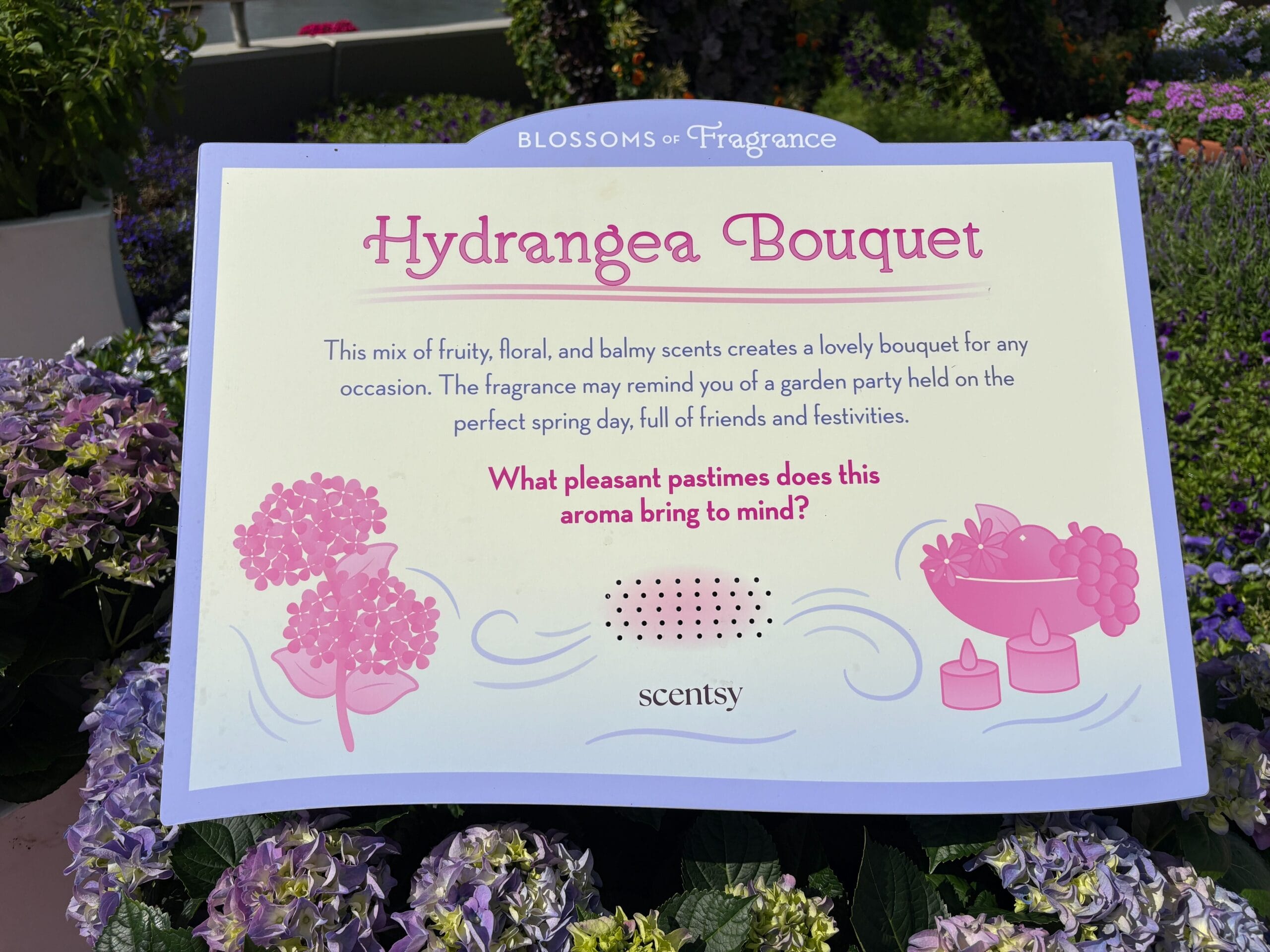
Hydrangea Bouquet
This mix of fruity, floral, and balmy scents creates a lovely bouquet for any occasion. The fragrance may remind you of a garden party held on the perfect spring day, full of friends and festivities.
English Tea Garden Presented by Twinings – UK Pavilion
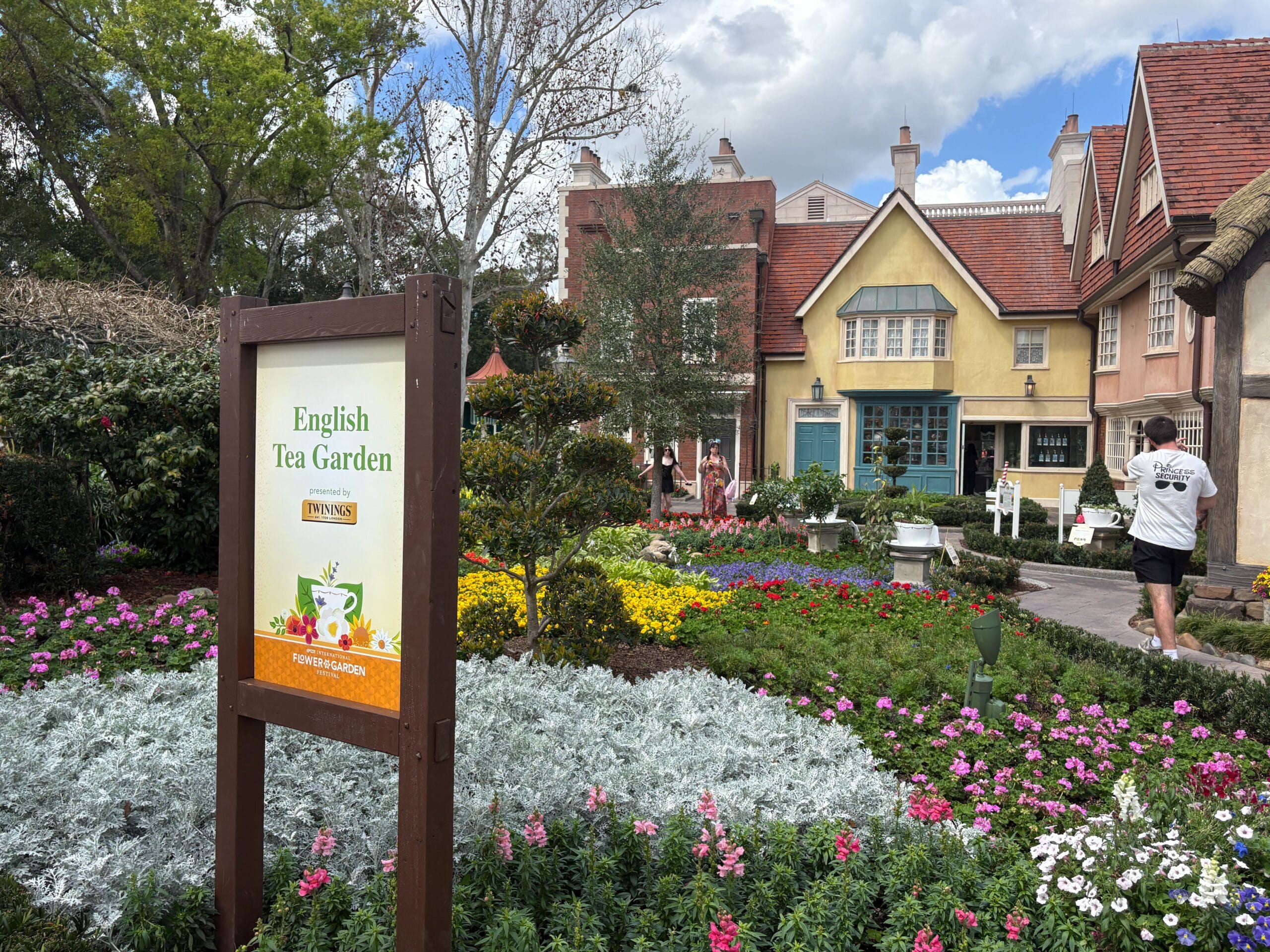
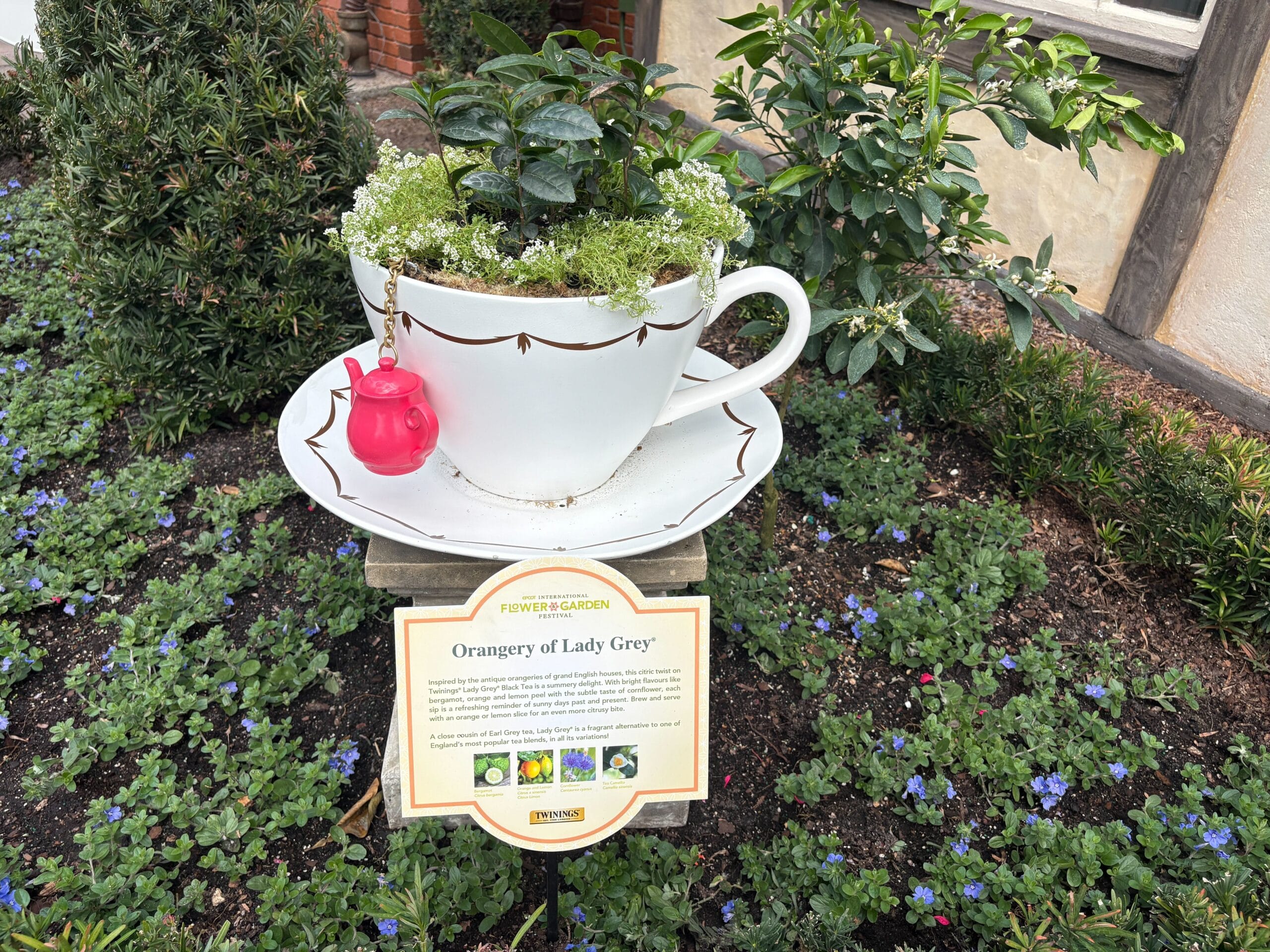
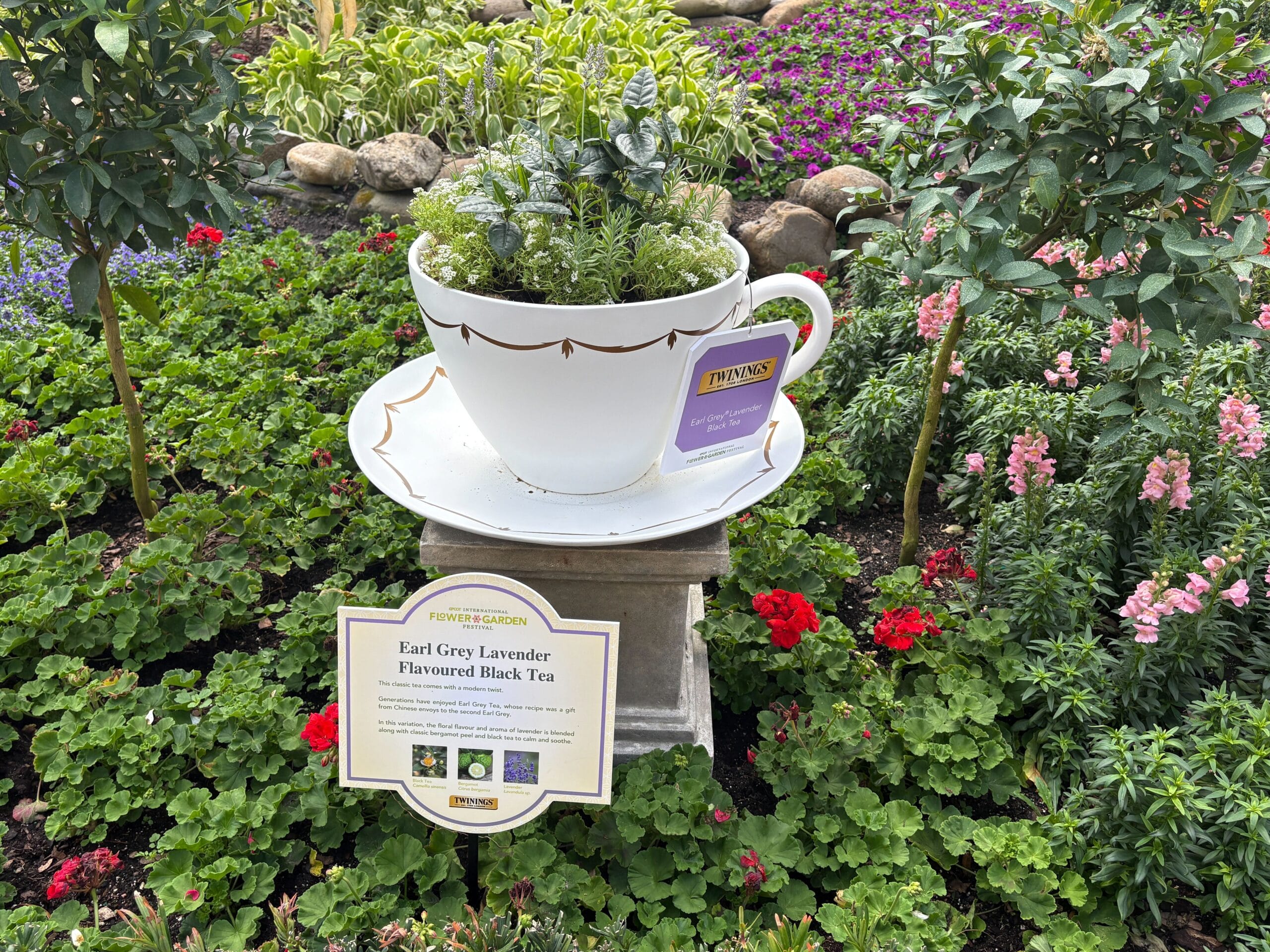
Next to the Tea Caddy are flowerbeds inspired by different tea blends.
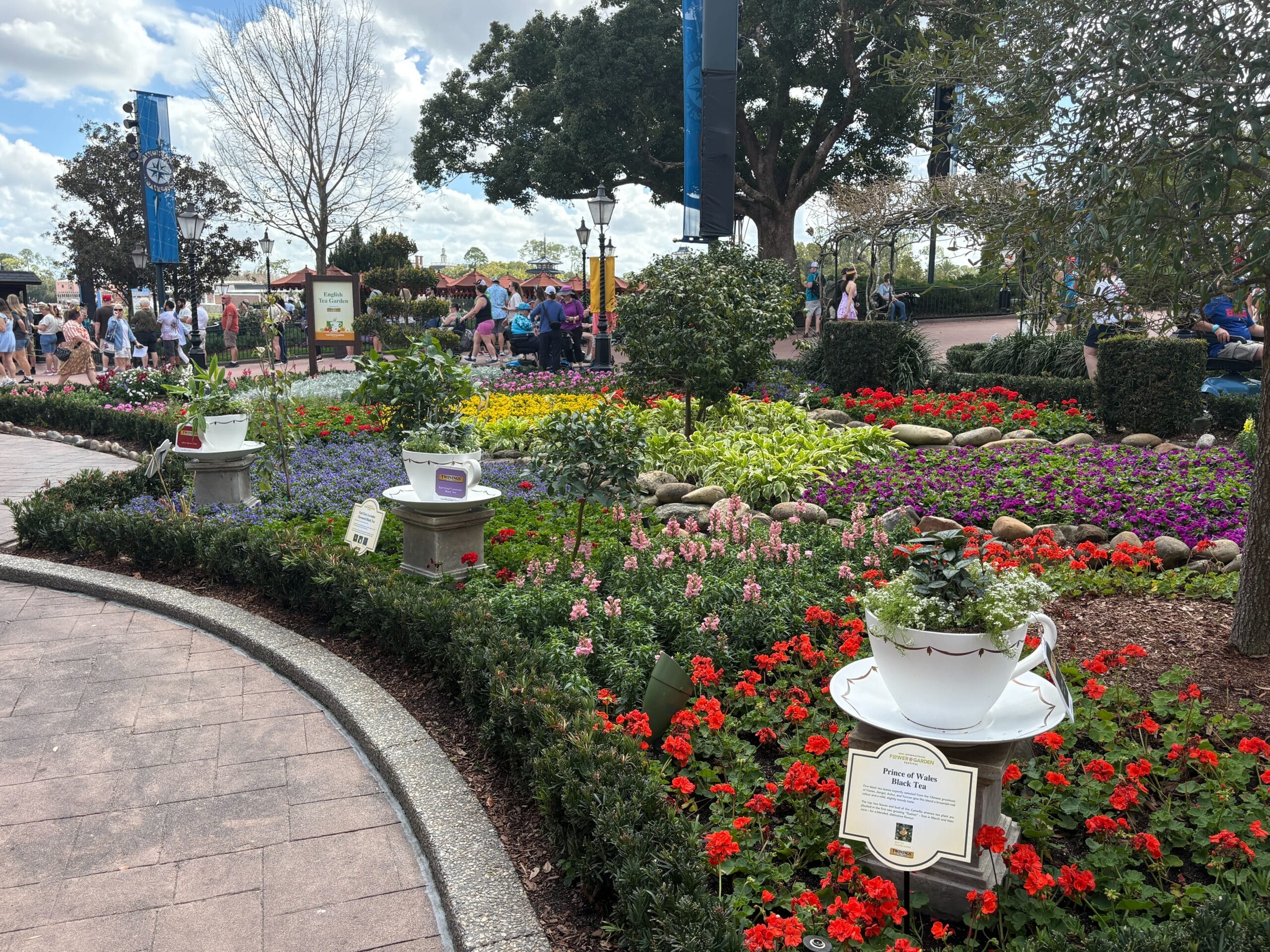
Flowerpots shaped like tea cups are overflowing with a variety of plants. Each has a placard describing the flavors.
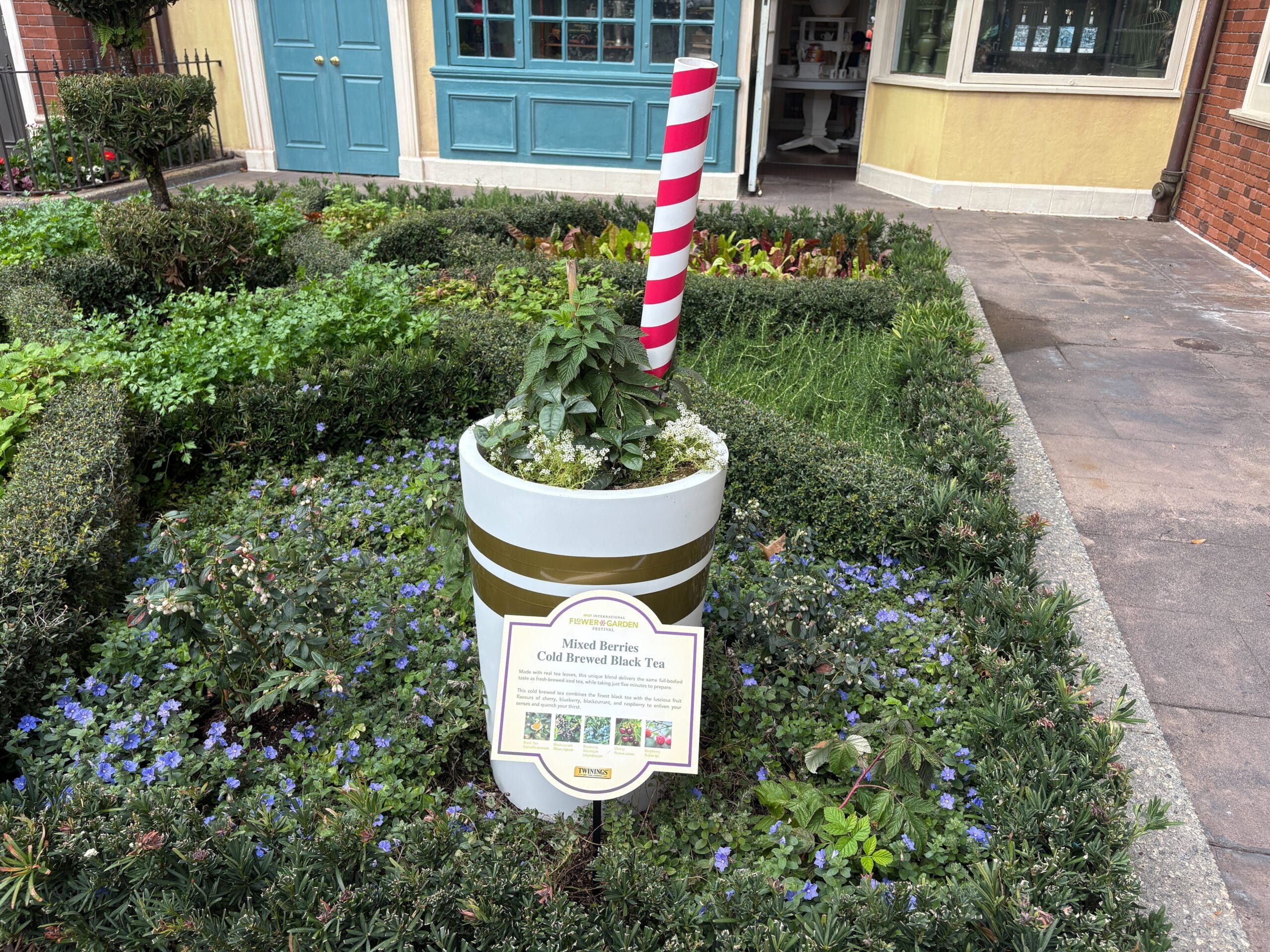
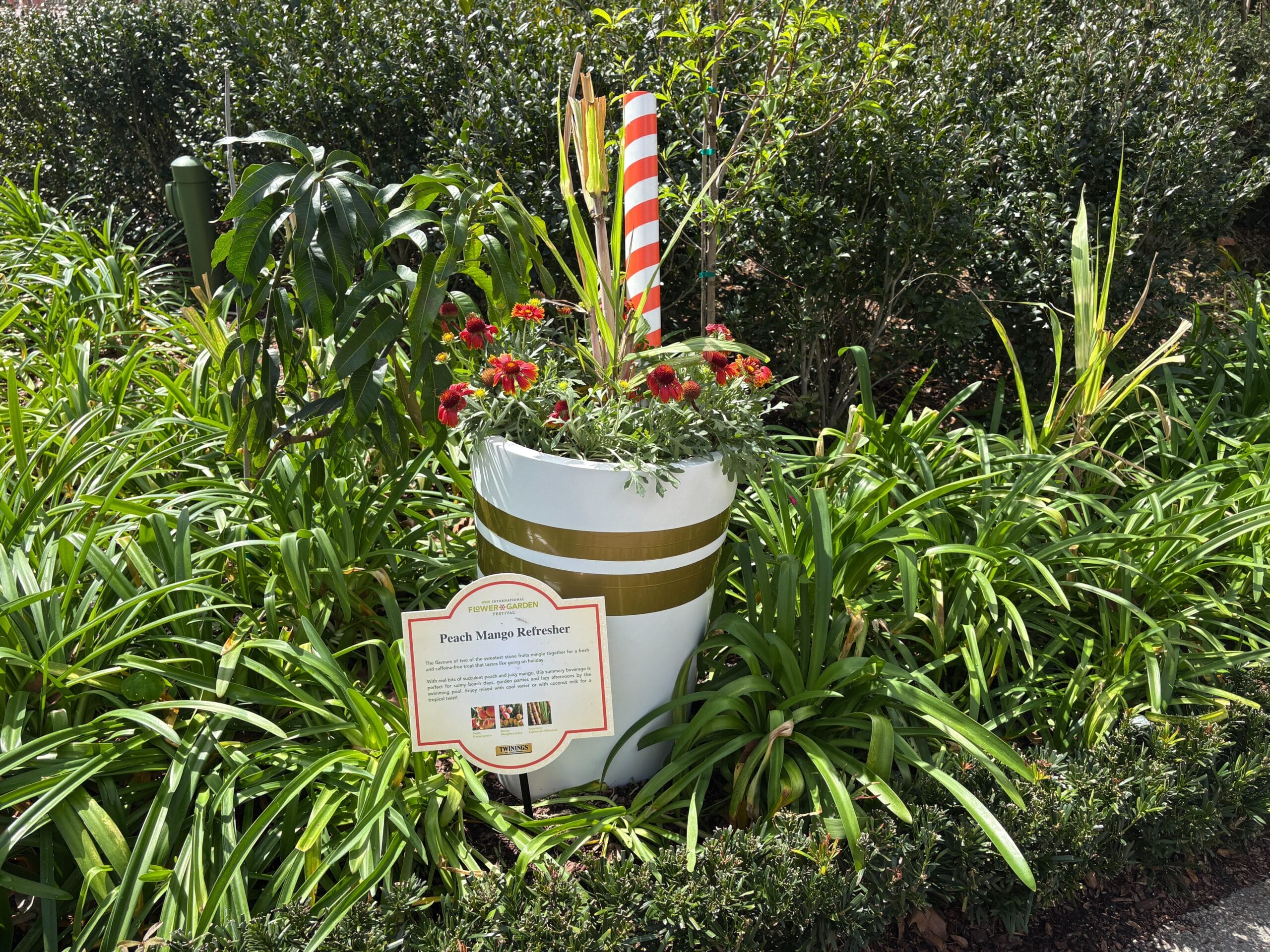
Disney has added cold brews to this year’s presentation. Instead of a tea cup, these are tall planters with striped straws.
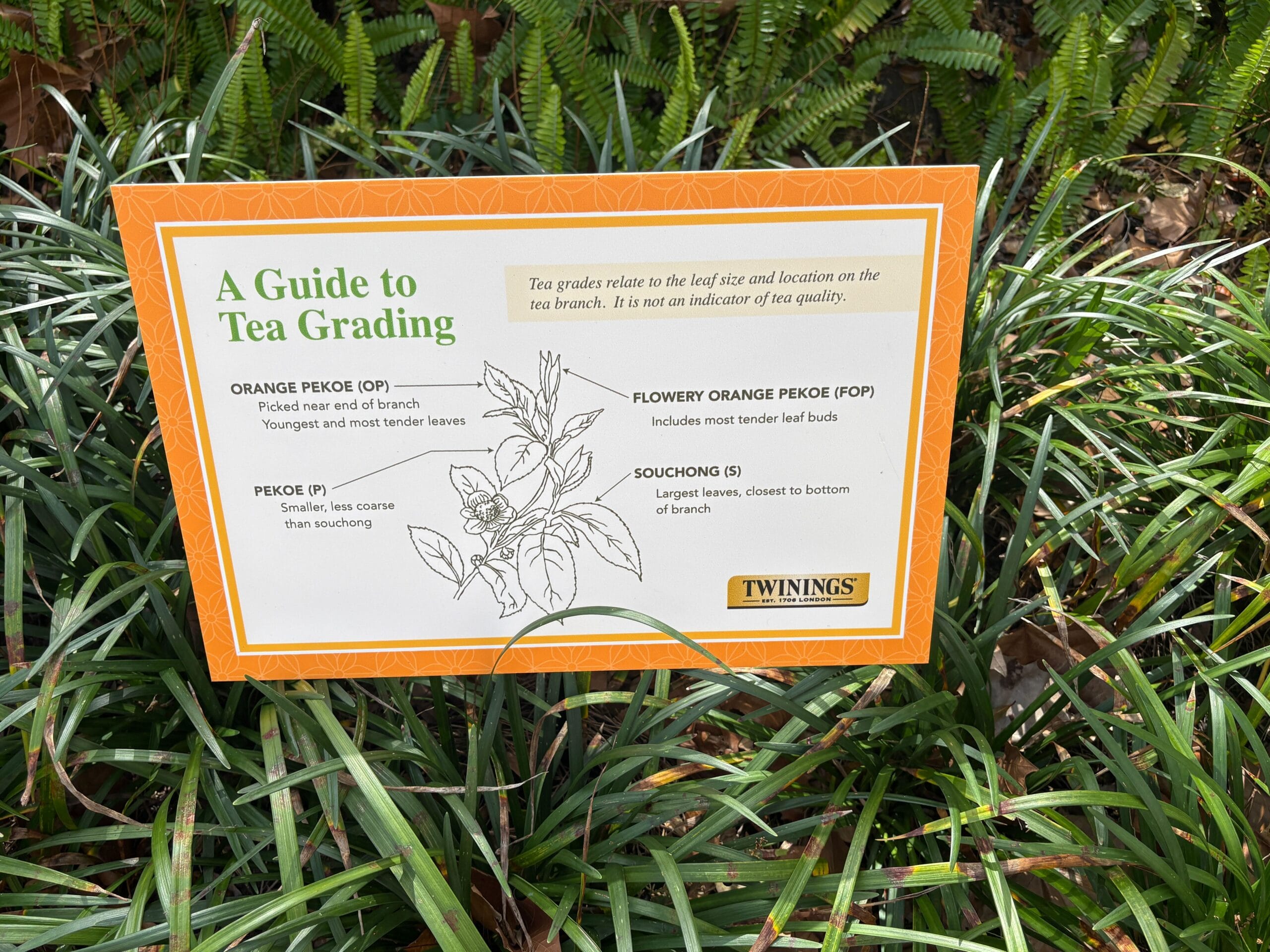
Signs describe tea production and tea grading.
Topiary Heritage Garden – UK Pavilion
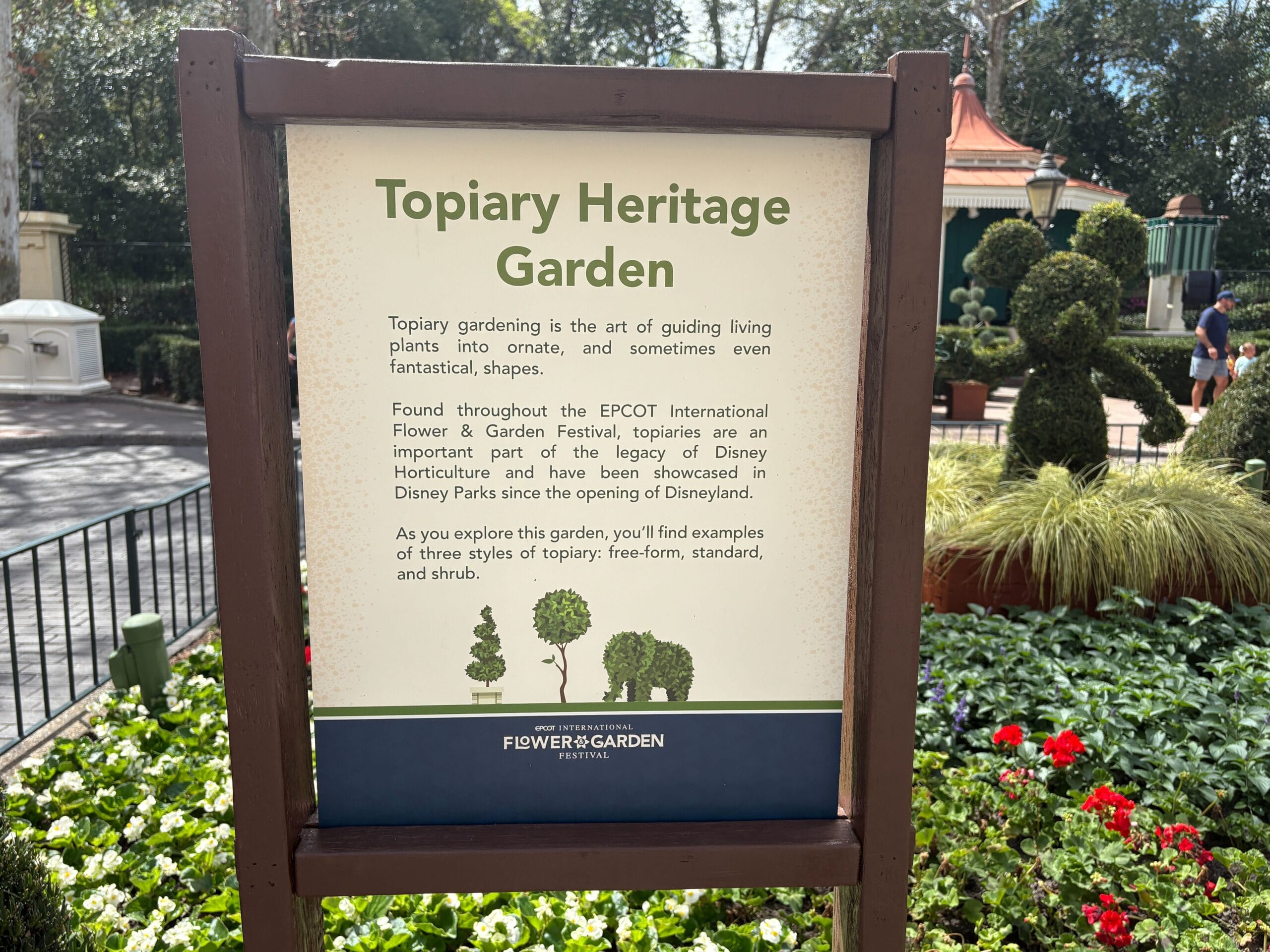
In the back of the pavilion is the Topiary Heritage Garden.
Topiary Heritage Garden
Topiary gardening is the art of guiding living plants into ornate, and sometimes even fantastical, shapes.
Found throughout the EPCOT International Flower & Garden Festival, topiaries are an important part of the legacy of Disney Horticulture and have been showcased in Disney Parks since the opening of Disneyland.
As you explore this garden, you’ll find examples of three styles of topiary: free-form, standard, and shrub.
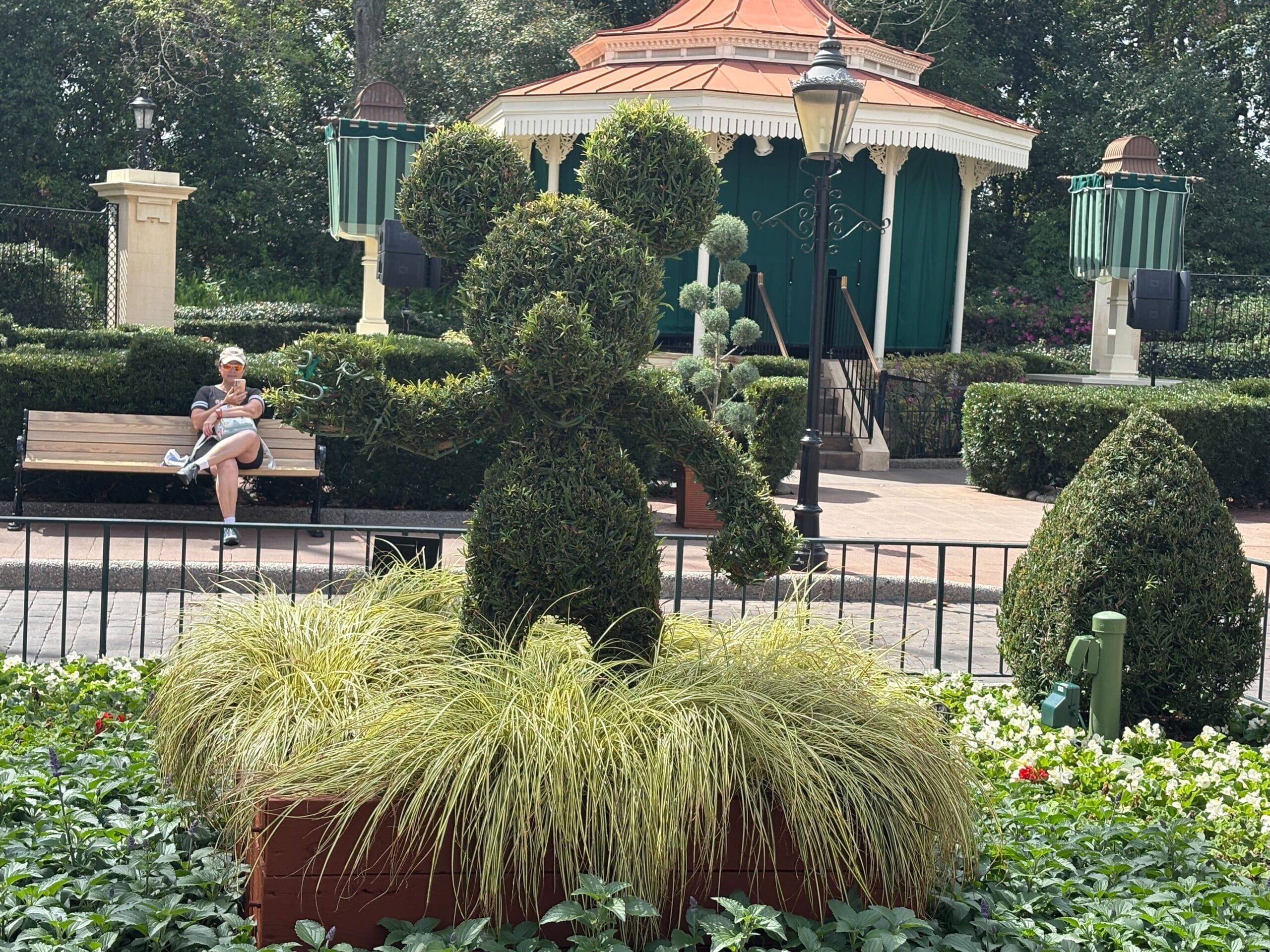
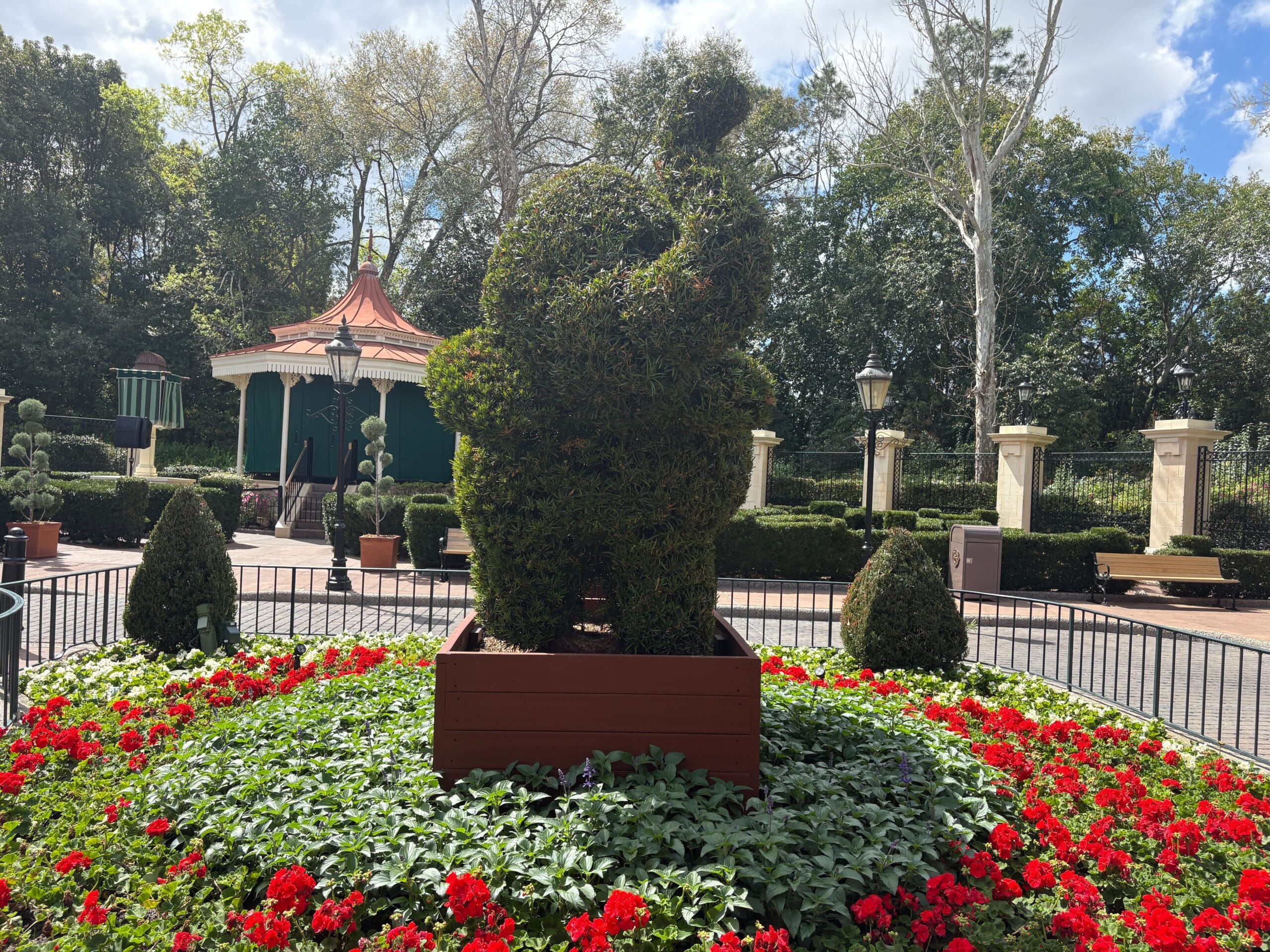
There are simple Mickey Mouse and elephant topiaries in the flowerbeds. The elephant represents a shrub topiary. A single shrub topiary can take up to ten years to produce.
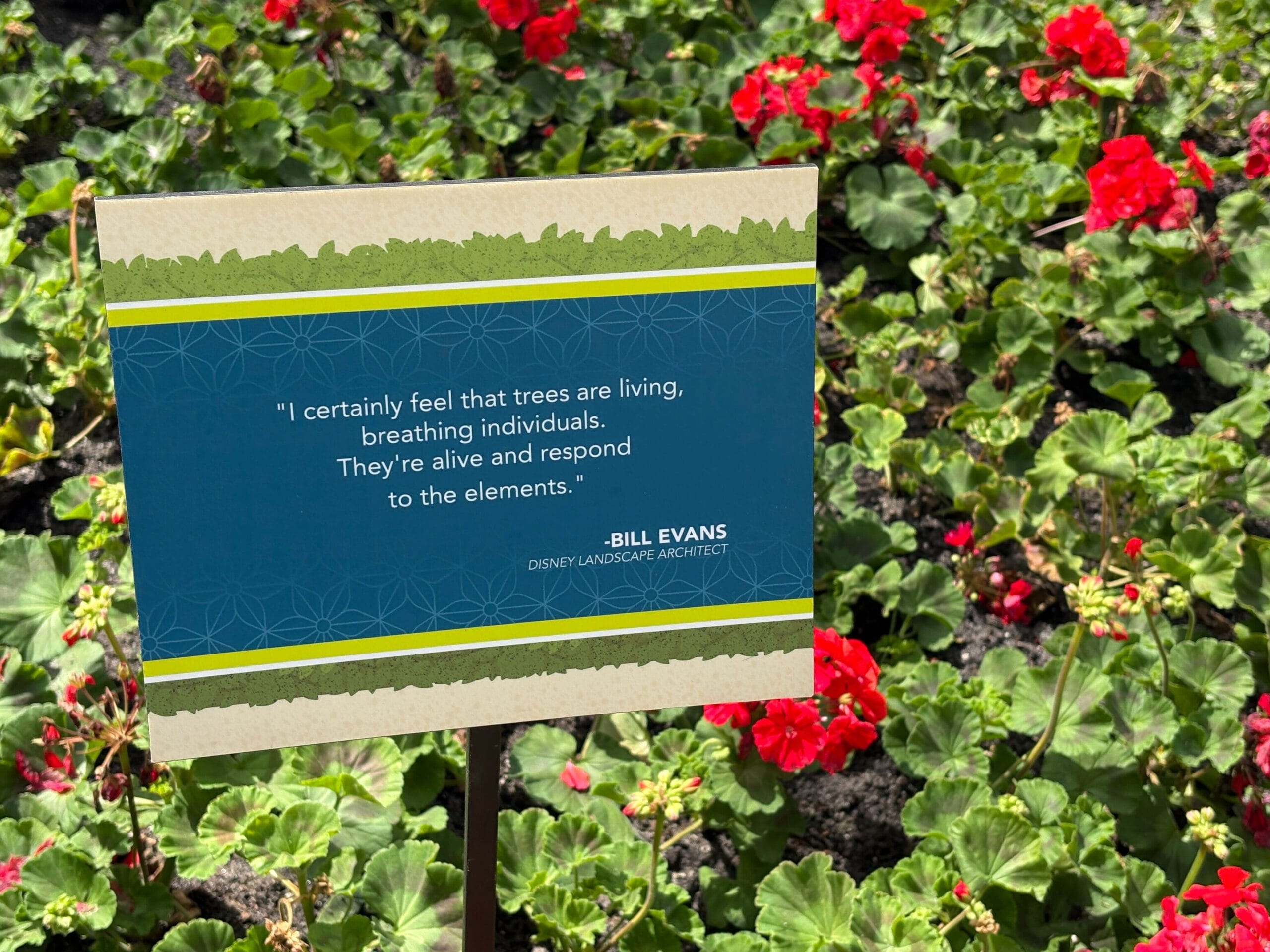
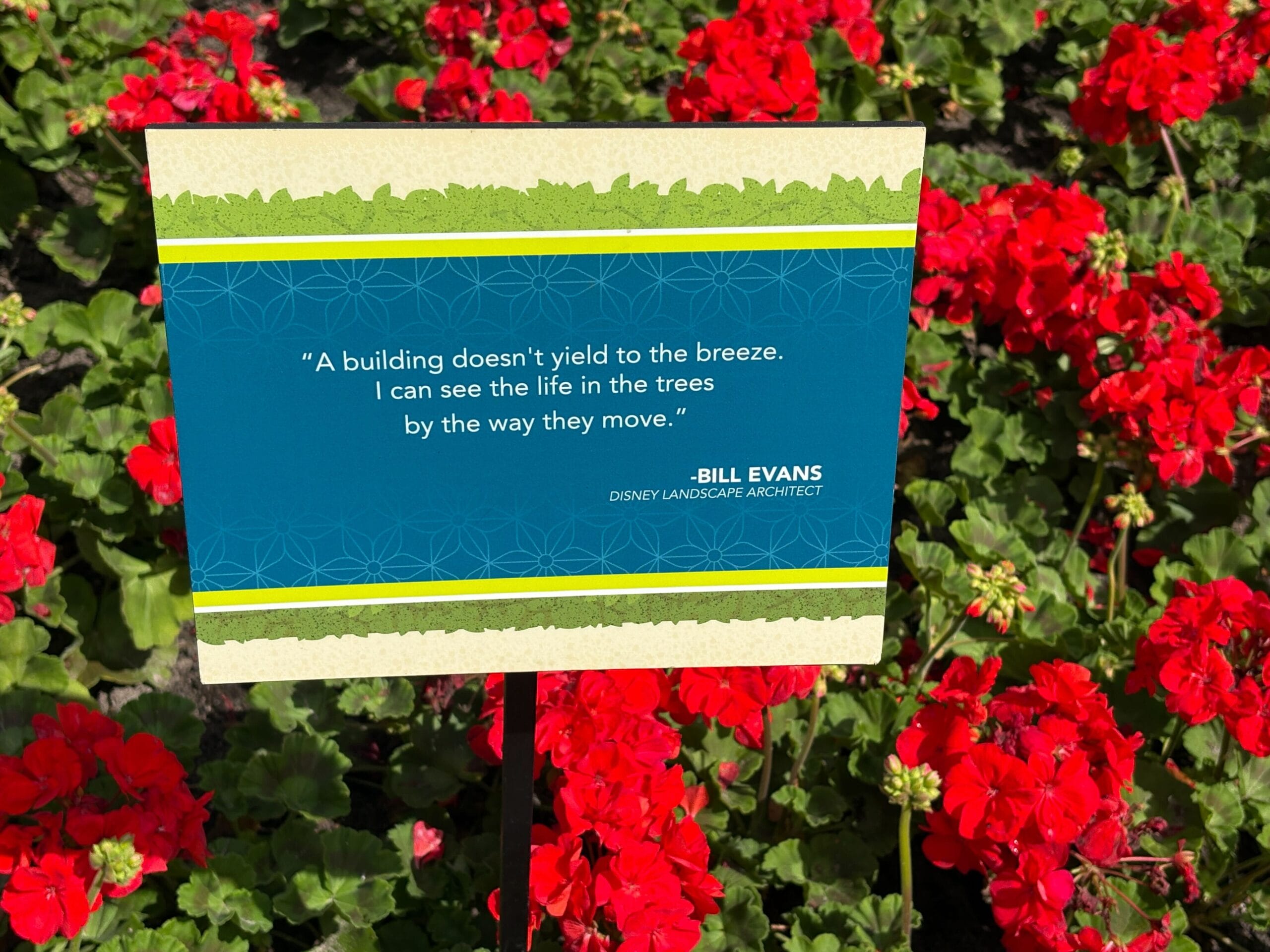
There are placards with quotes by Bill Evans, Disney Landscape Architect.
Bouquet Garden – France Pavilion
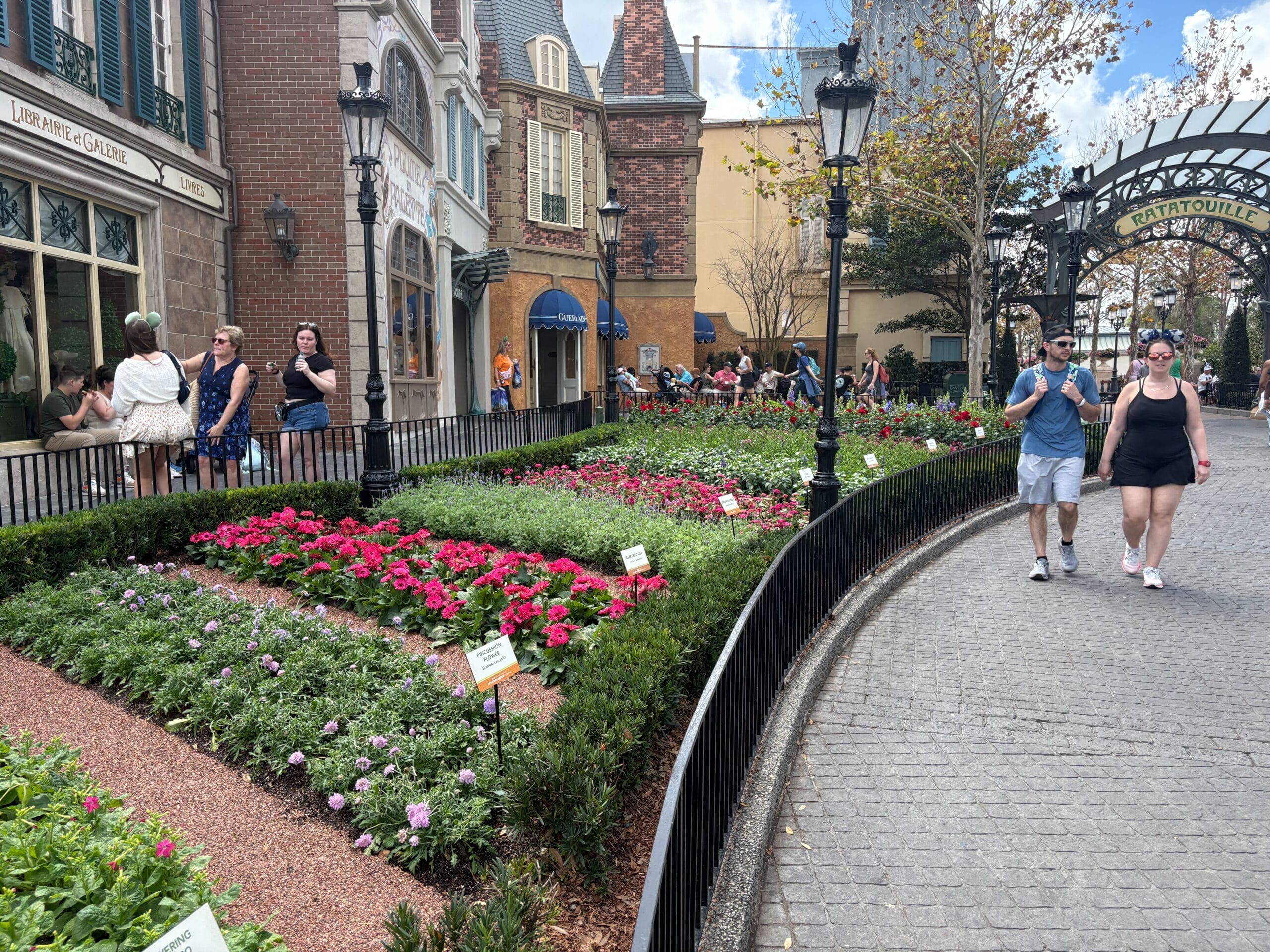
The Bouquet Garden is near the Ratatouille archway at the back of the France pavilion.
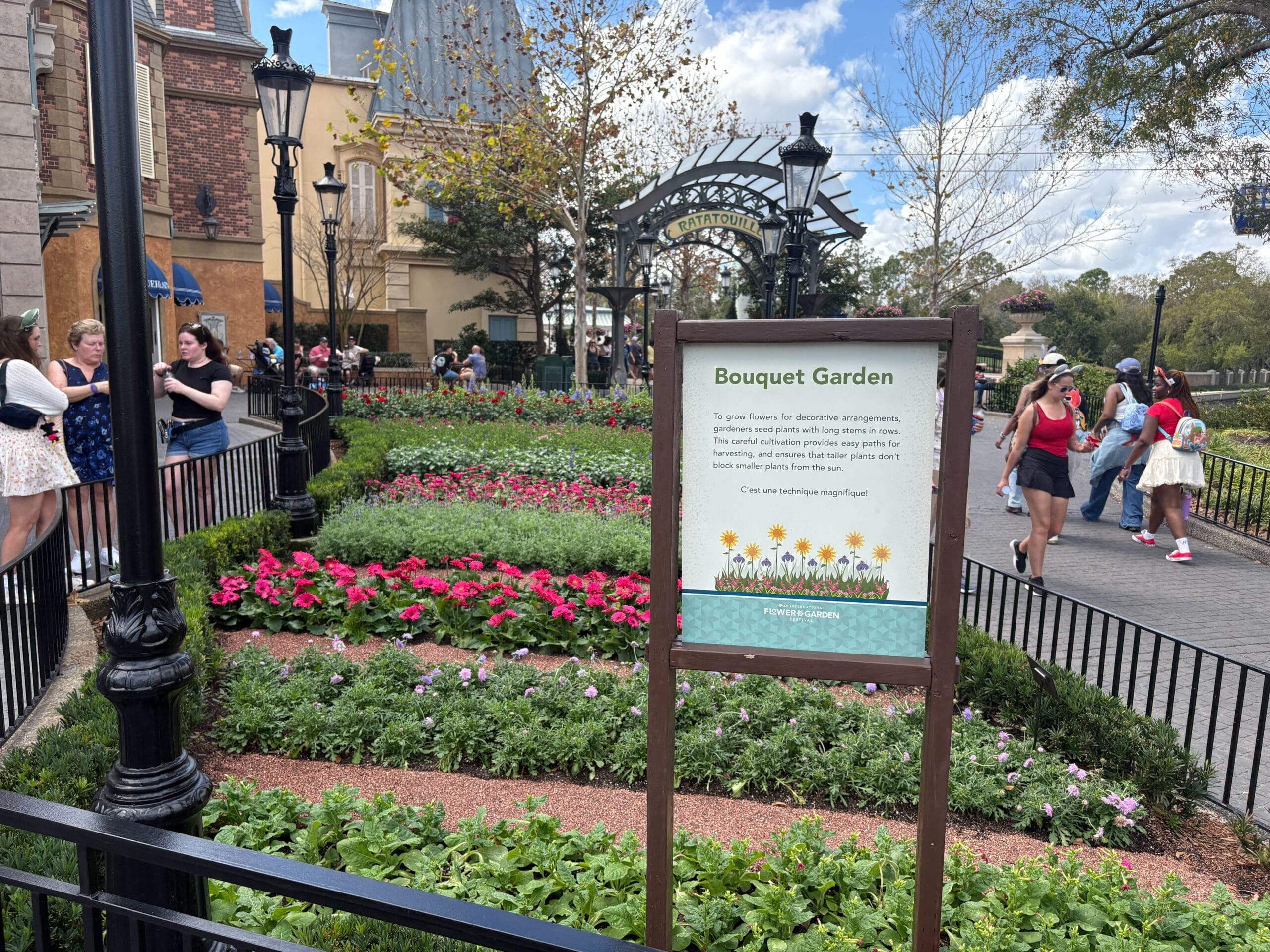
Bouquet Garden
To grow flowers for decorative arrangements, gardeners seed plants with long stems in rows. This careful cultivation provides easy paths for harvesting, and ensures that taller plants don’t block smaller plants from the sun.
C’est une technique magnifique!
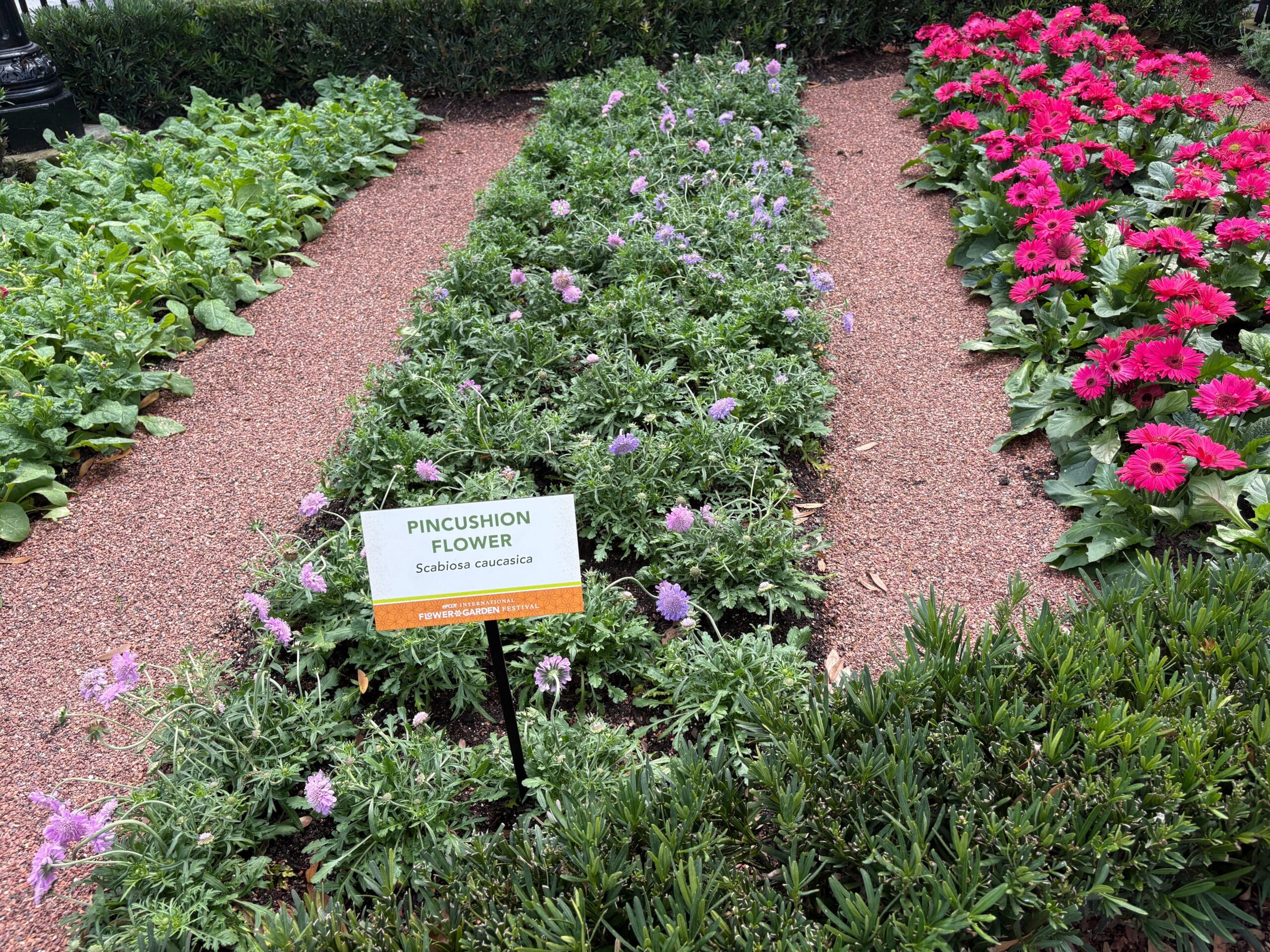
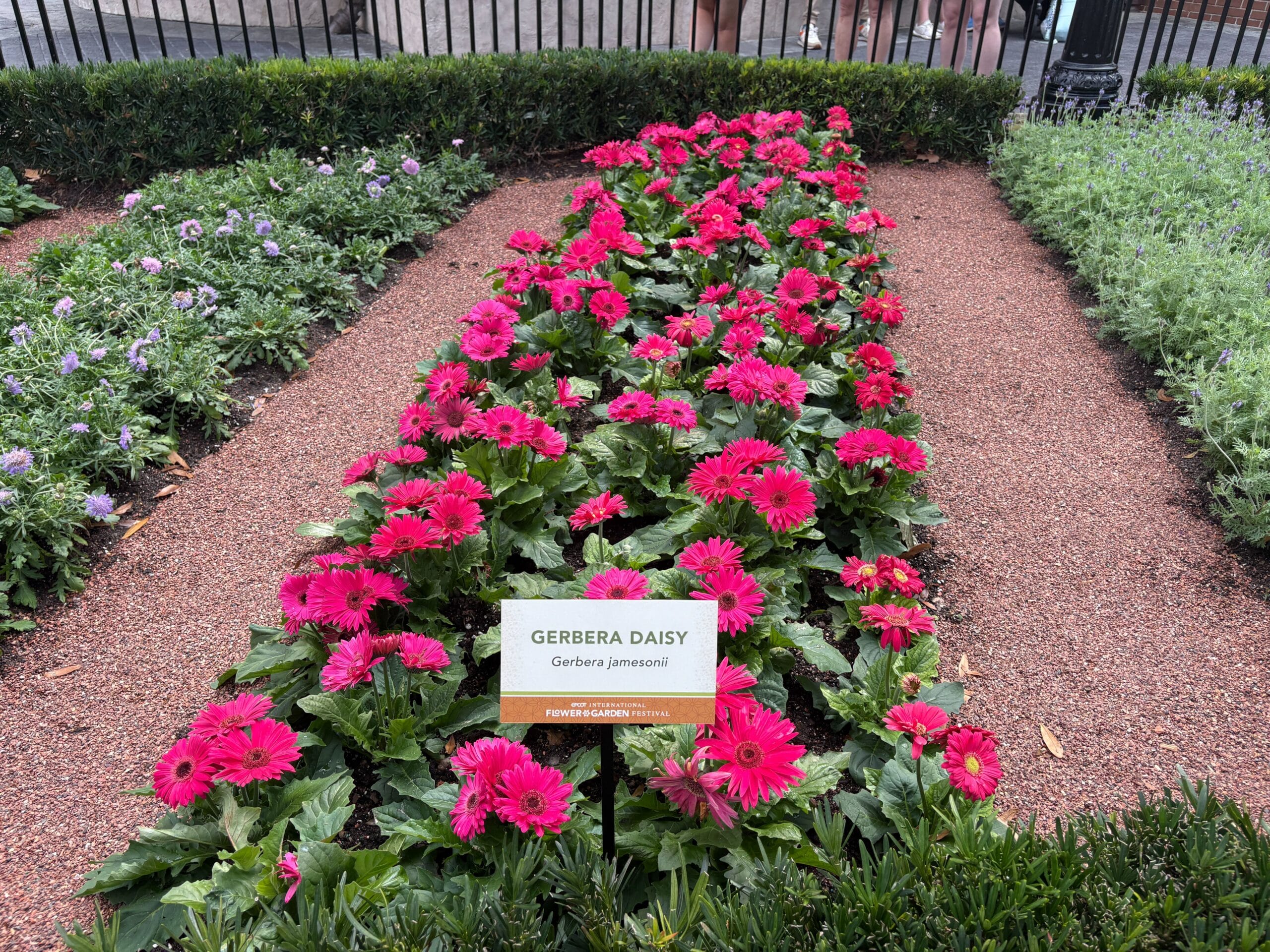
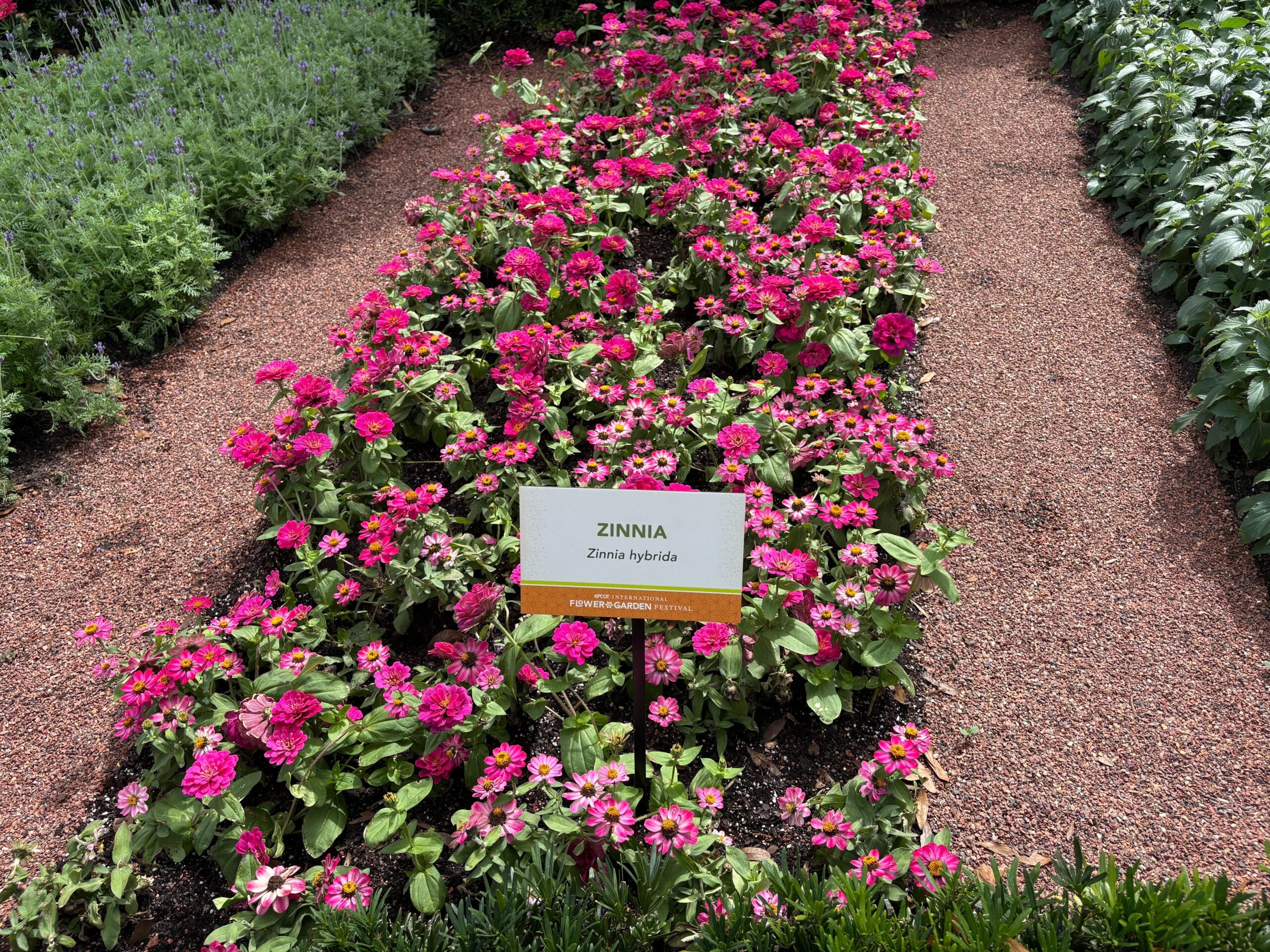
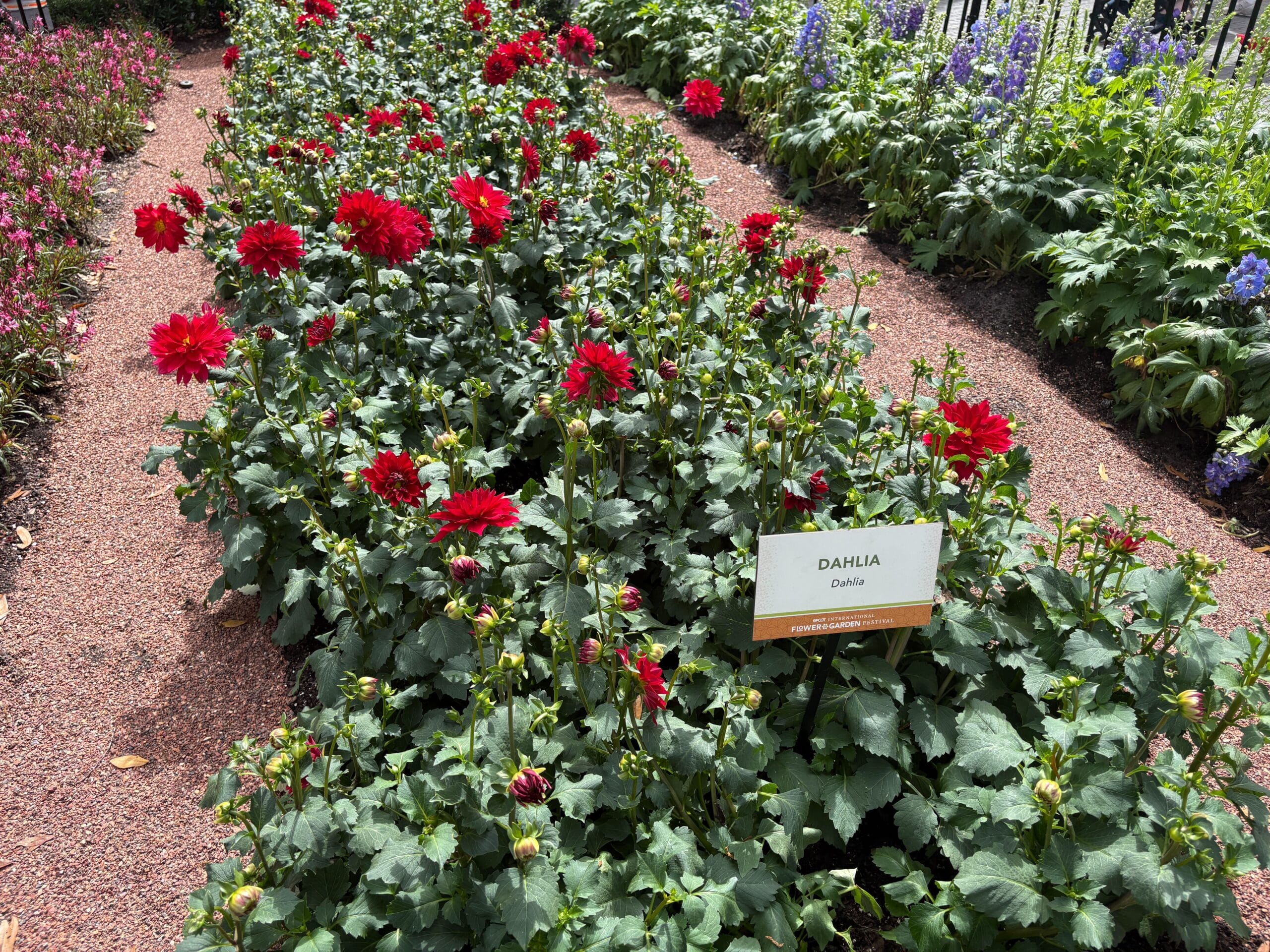
The flowers include Lavender, Zinnia, Dahlia, Delphinium, and more.
*NEW* Trendy Tropicals Garden – Between Morocco and France Pavilions
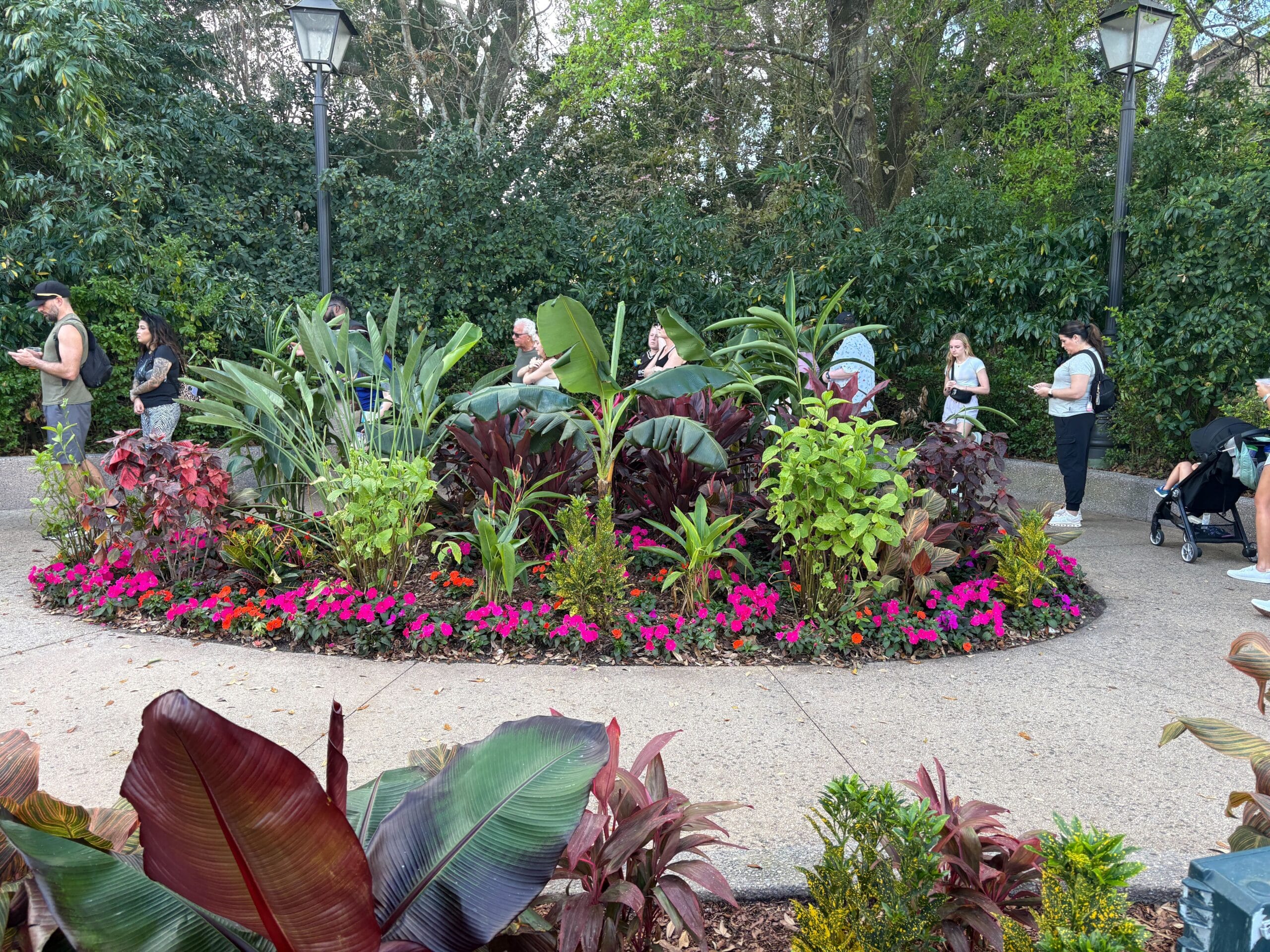
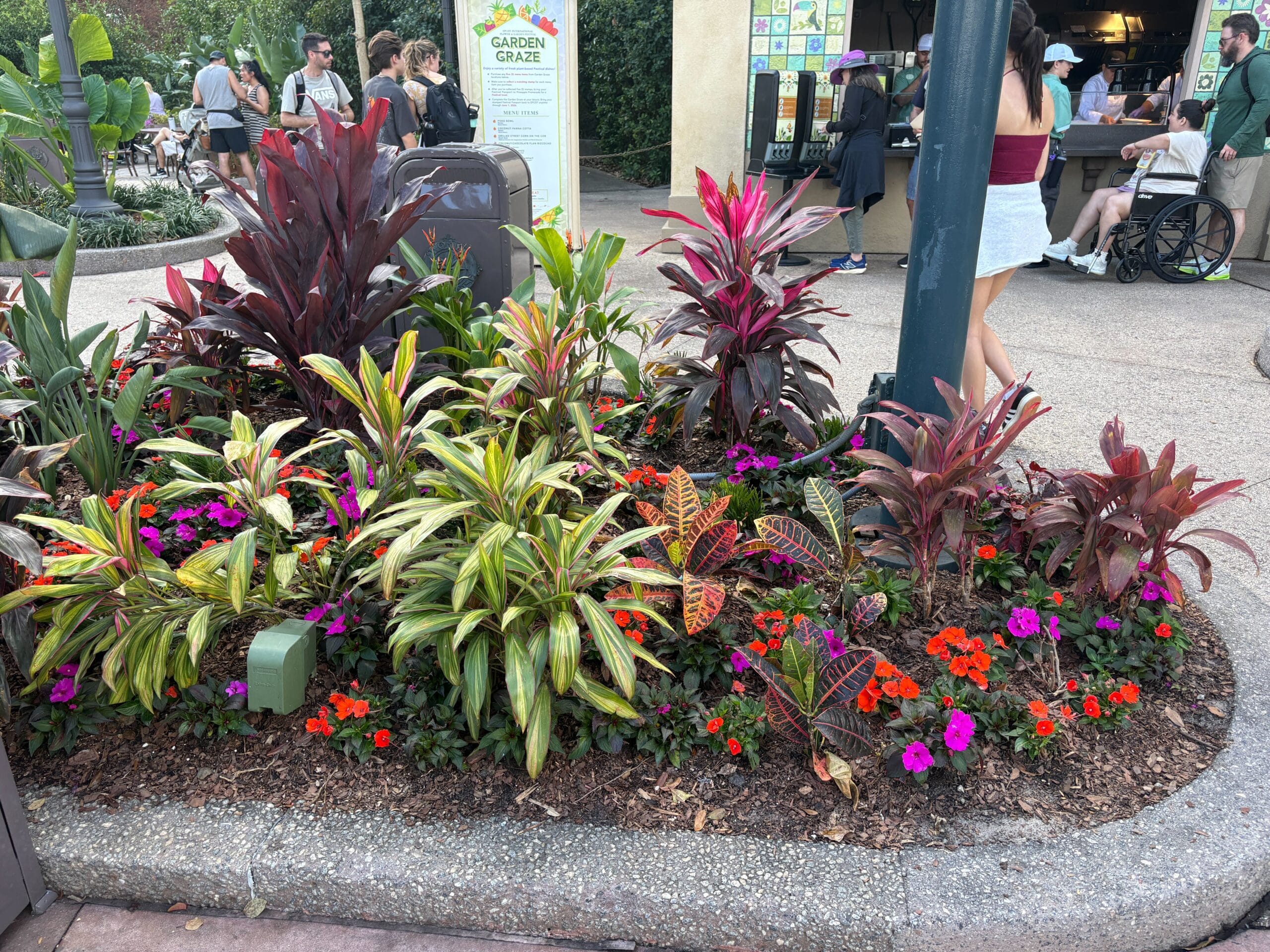
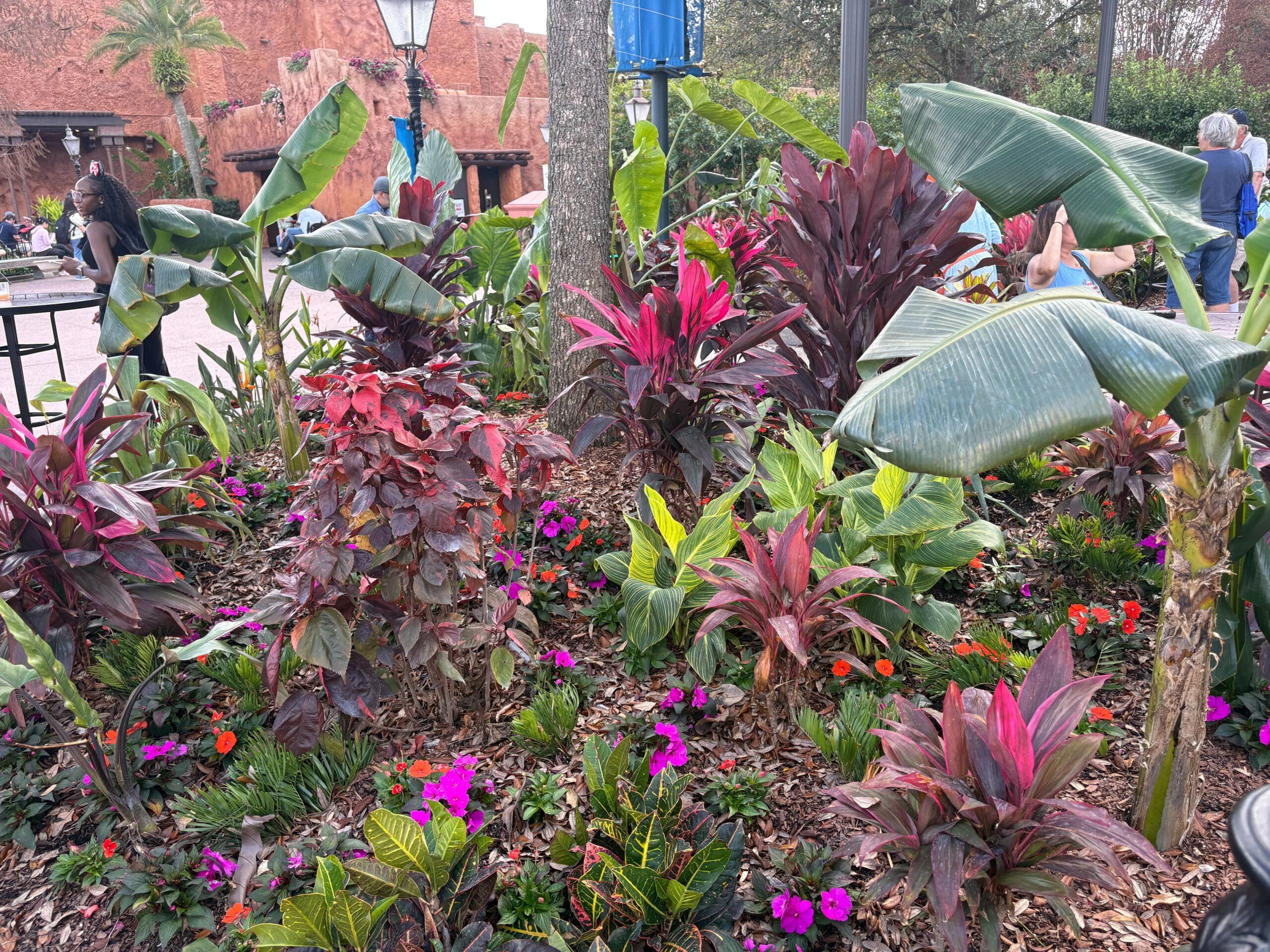
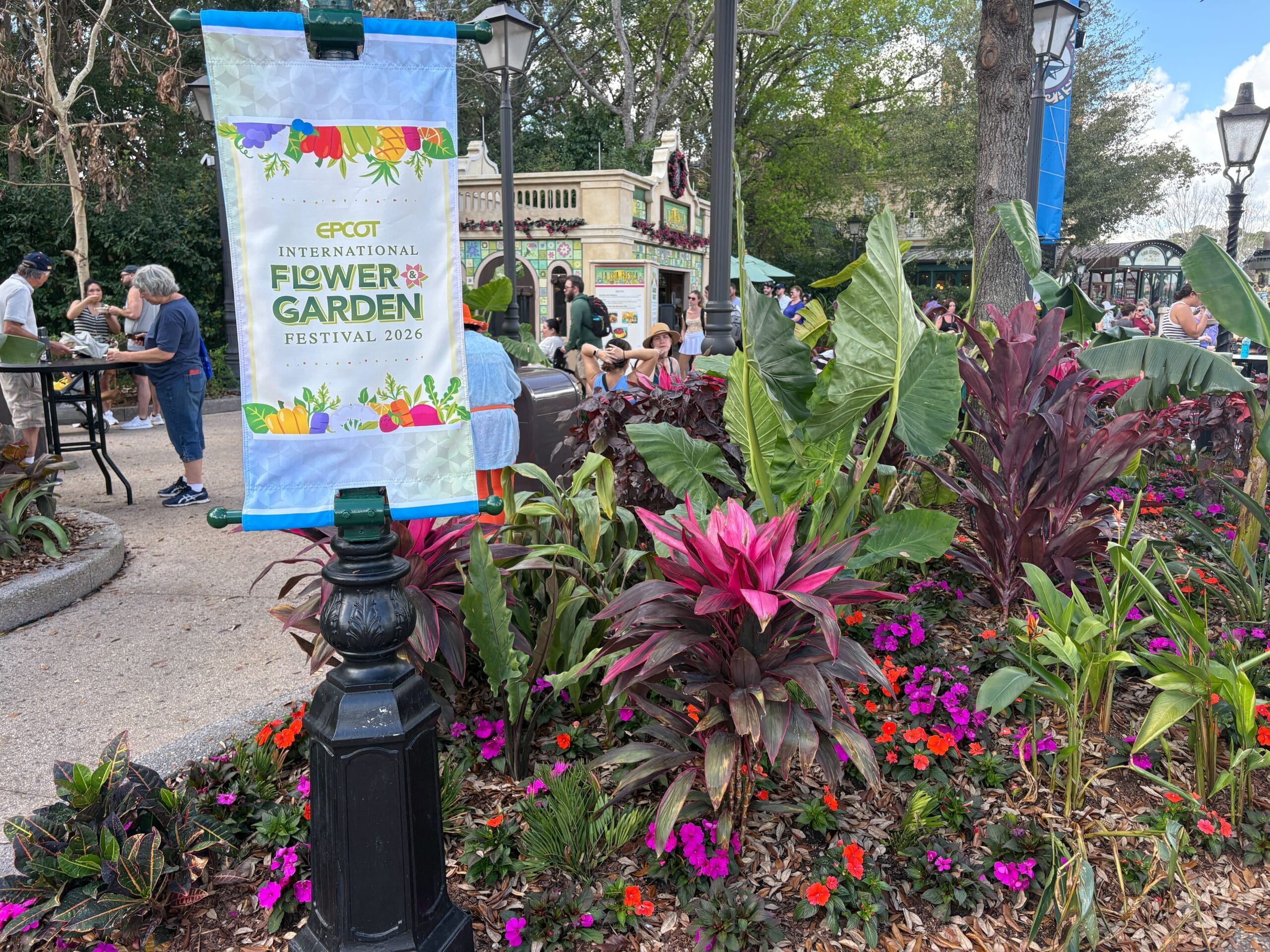
We saw no signage for the new Trendy Tropicals Garden but assume it’s these tropical plants around the La Isla Fresca booth.
Spice Garden – Morocco Pavilion
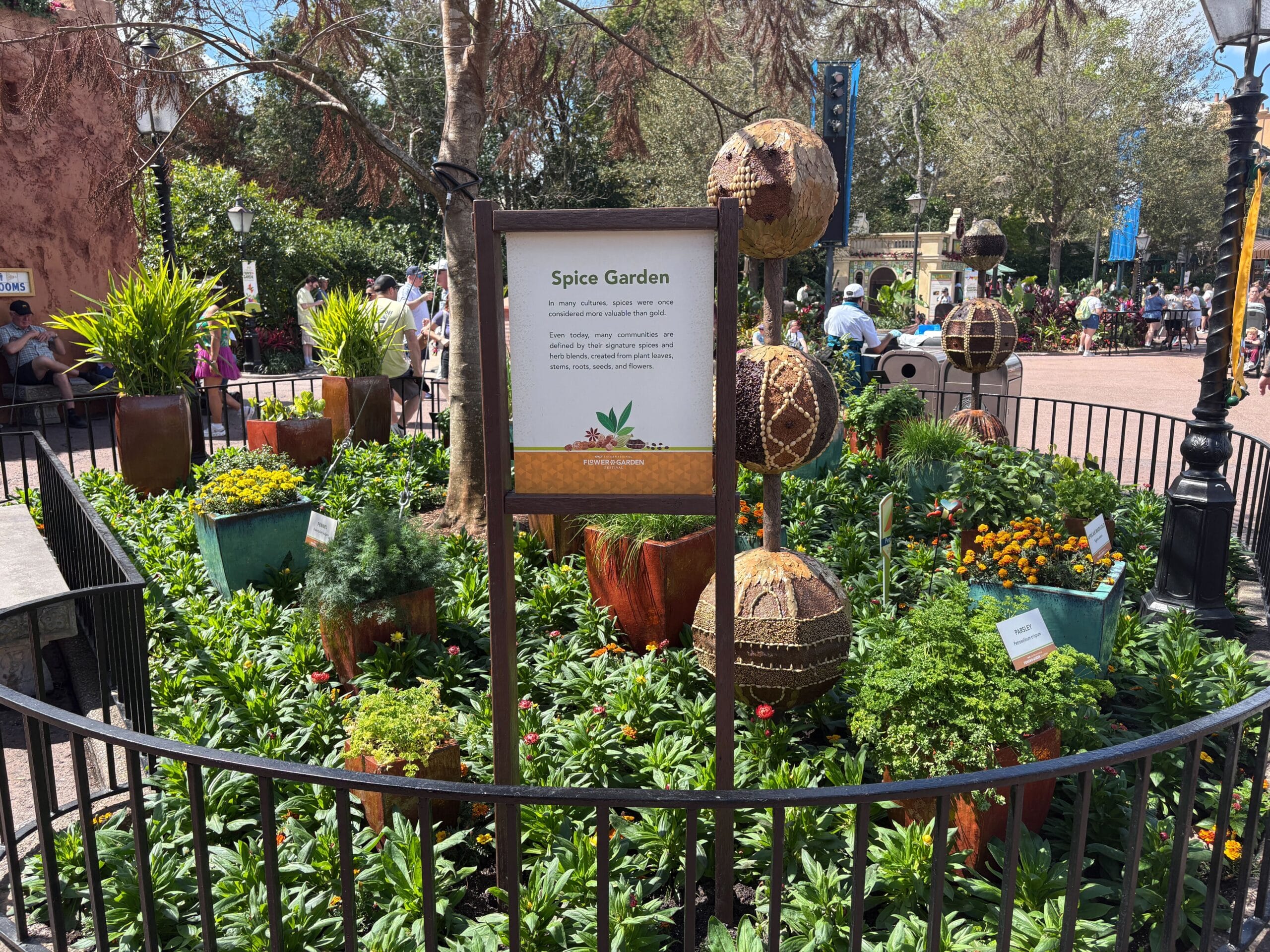
The Spice Garden takes up a flowerbed outside the Morocco pavilion restrooms.
Spice Garden
In many cultures, spices were once considered more valuable than gold.
Even today, many communities are defined by their signature spices and herb blends, created from plant leaves, stems, roots, seeds, and flowers.
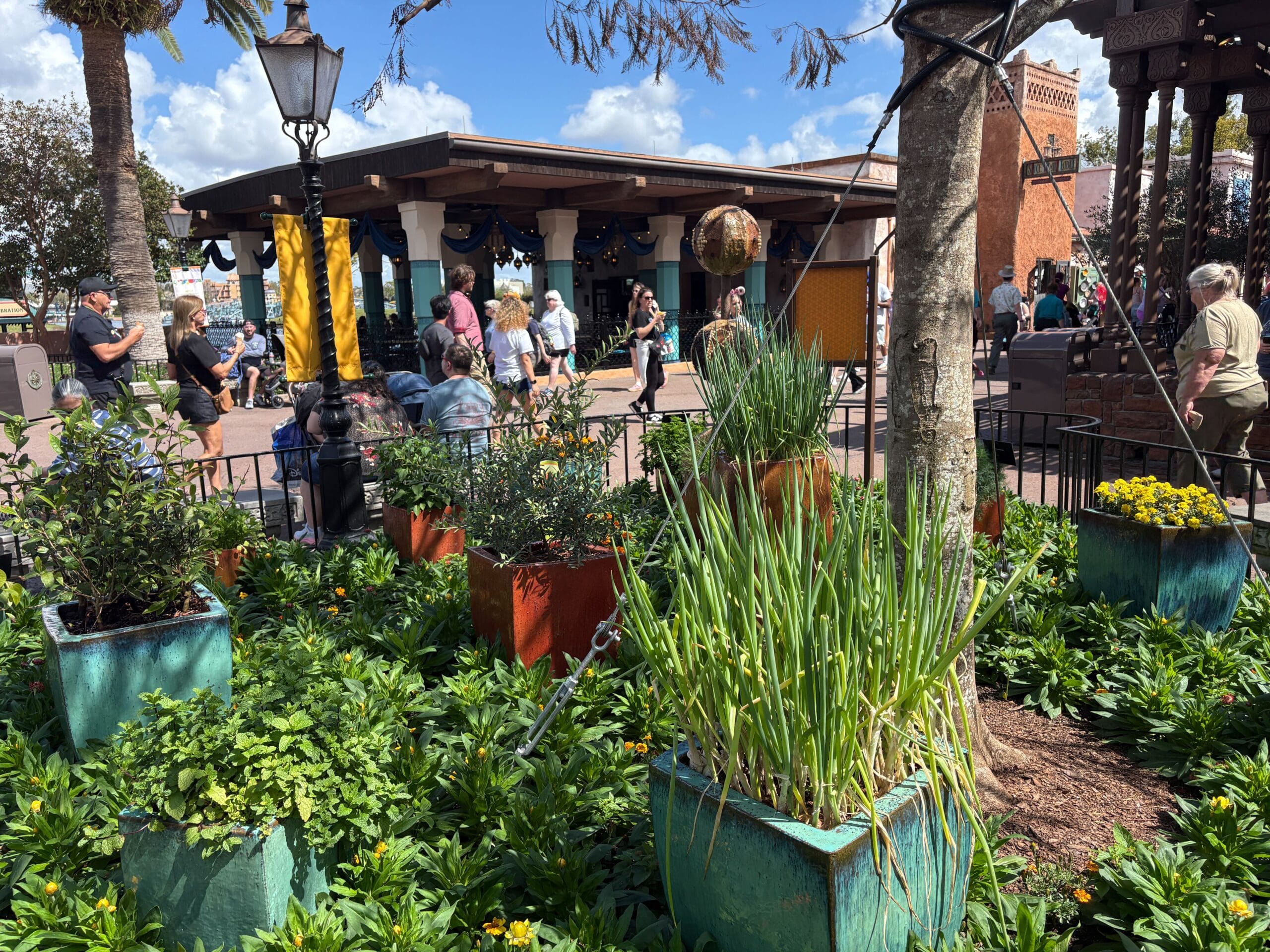
Blue and brown pots are full of spice plants. These include parsley, mint, and black pepper. In the center is a Flame Tree, native to Australia.
Kokedama Garden – Japan Pavilion
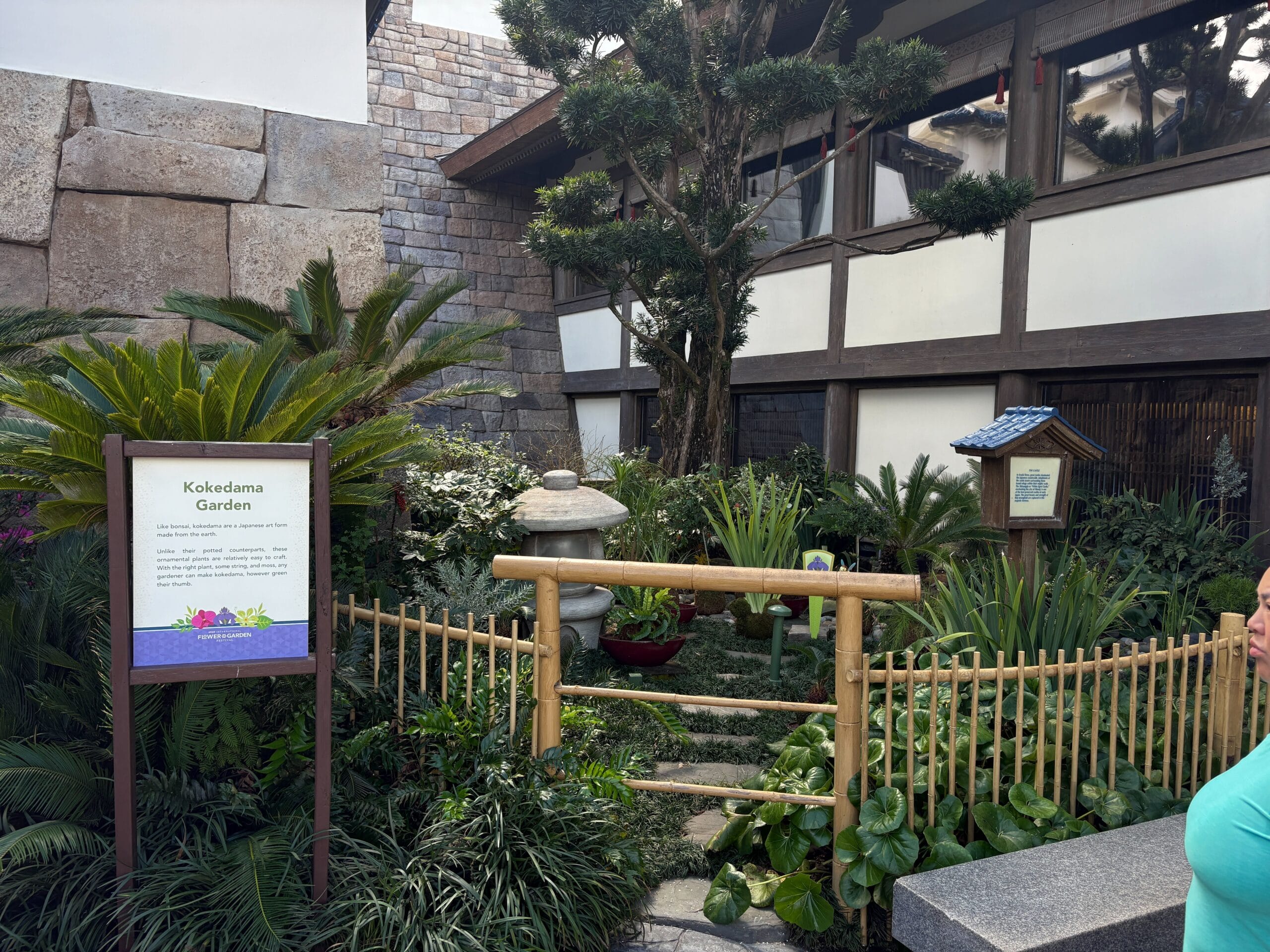
The Kokedama Garden is near the back of the Japan pavilion, behind a bamboo fence.
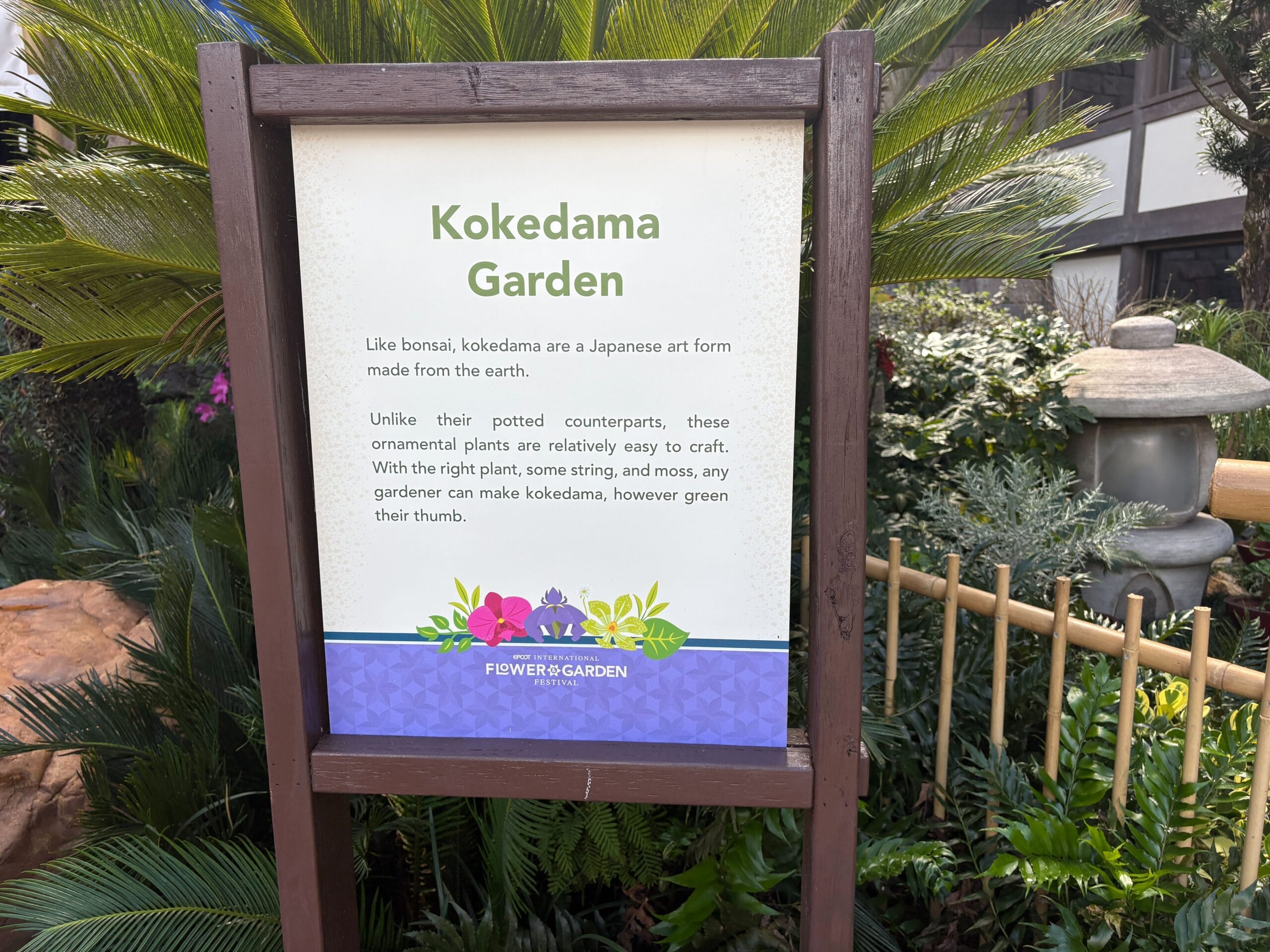
Kokedama Garden
Like bonsai, kokedama are a Japanese art form made from the earth.
Unlike their potted counterparts, these ornamental plants are relatively easy to craft. With the right plant, some string, and moss, any gardener can make kokedama, however green their thumb.
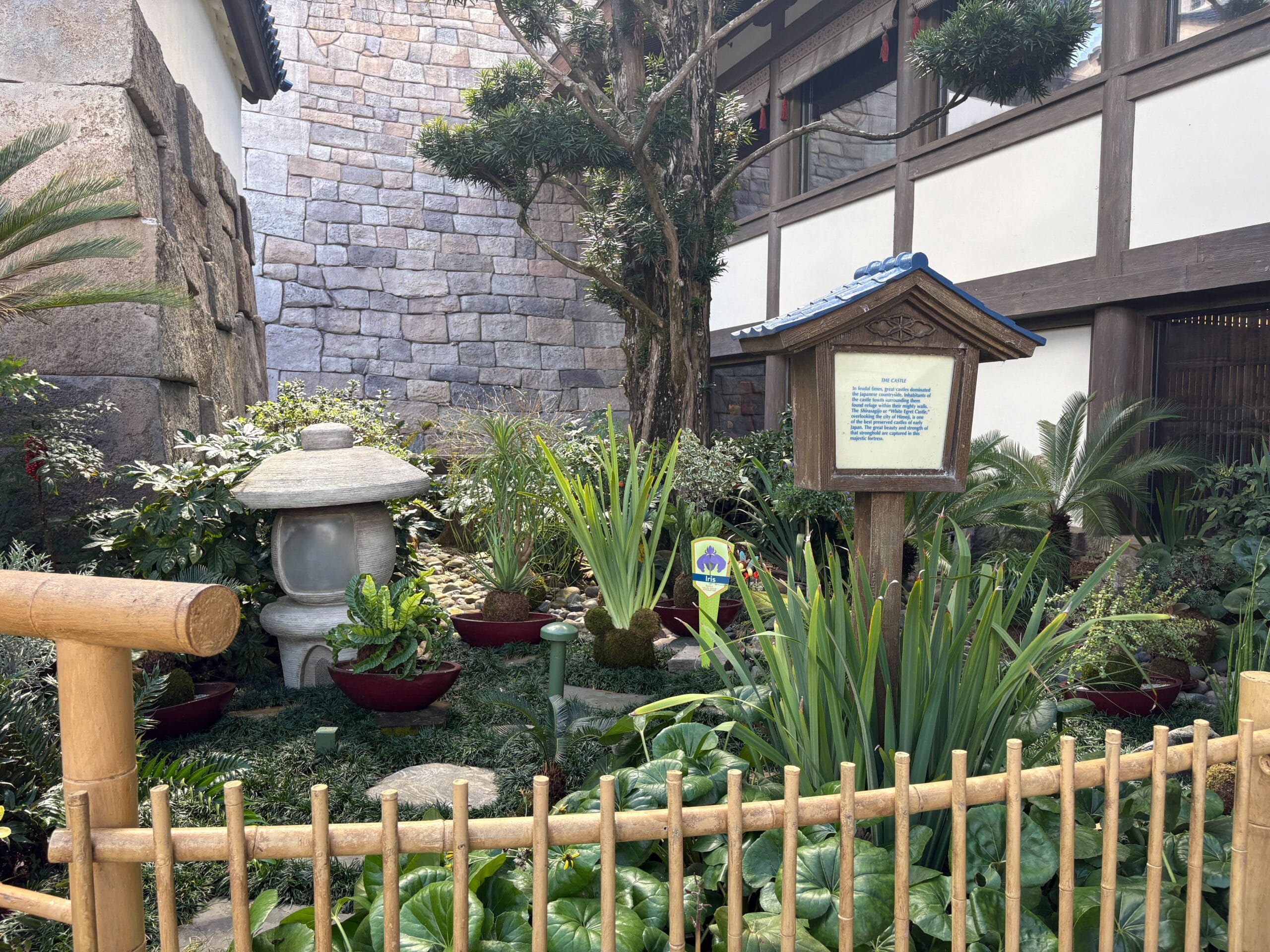
The plants include one shaped like Mickey Mouse.
Shishi-odoshi – Japan Pavilion
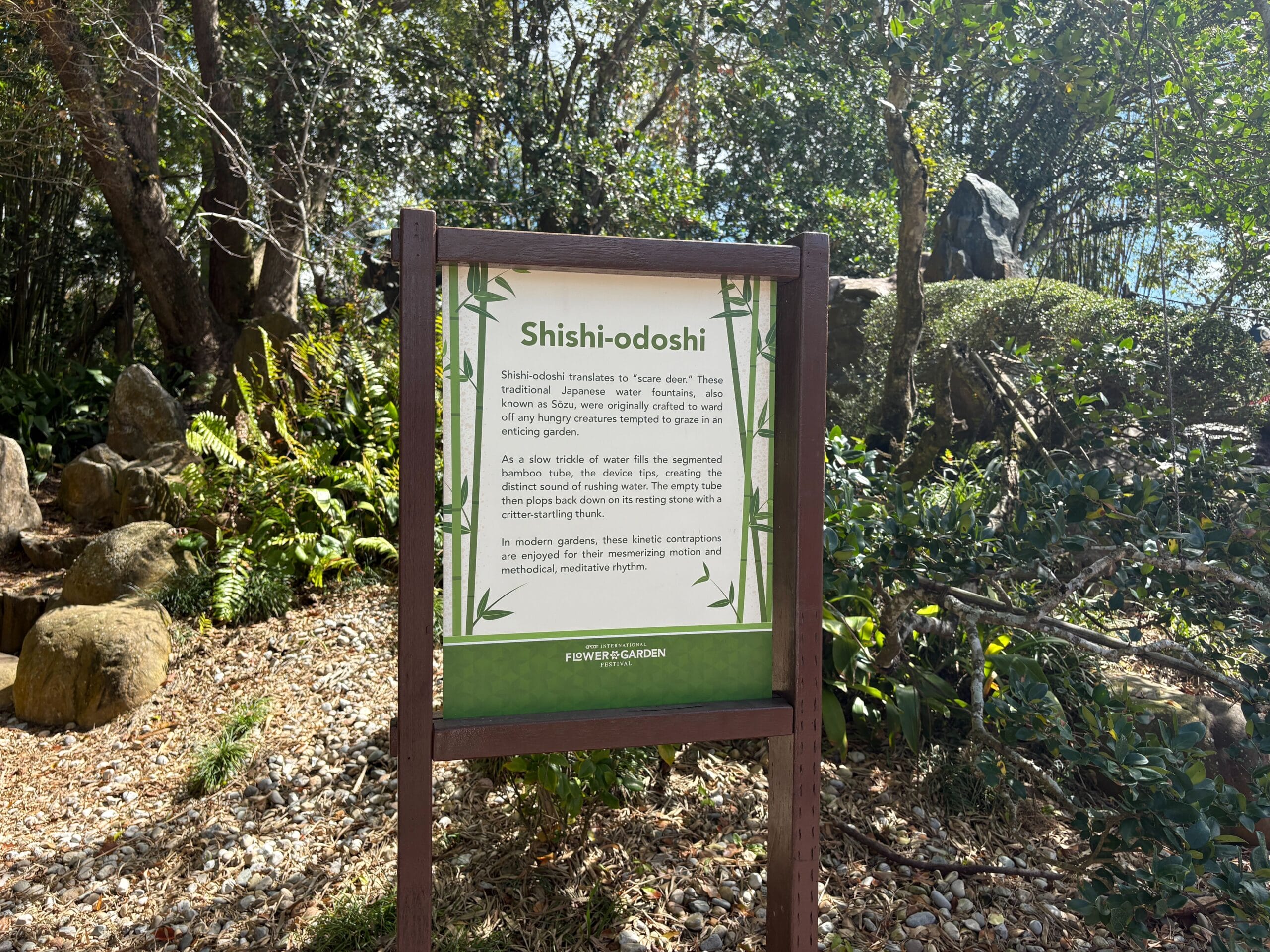
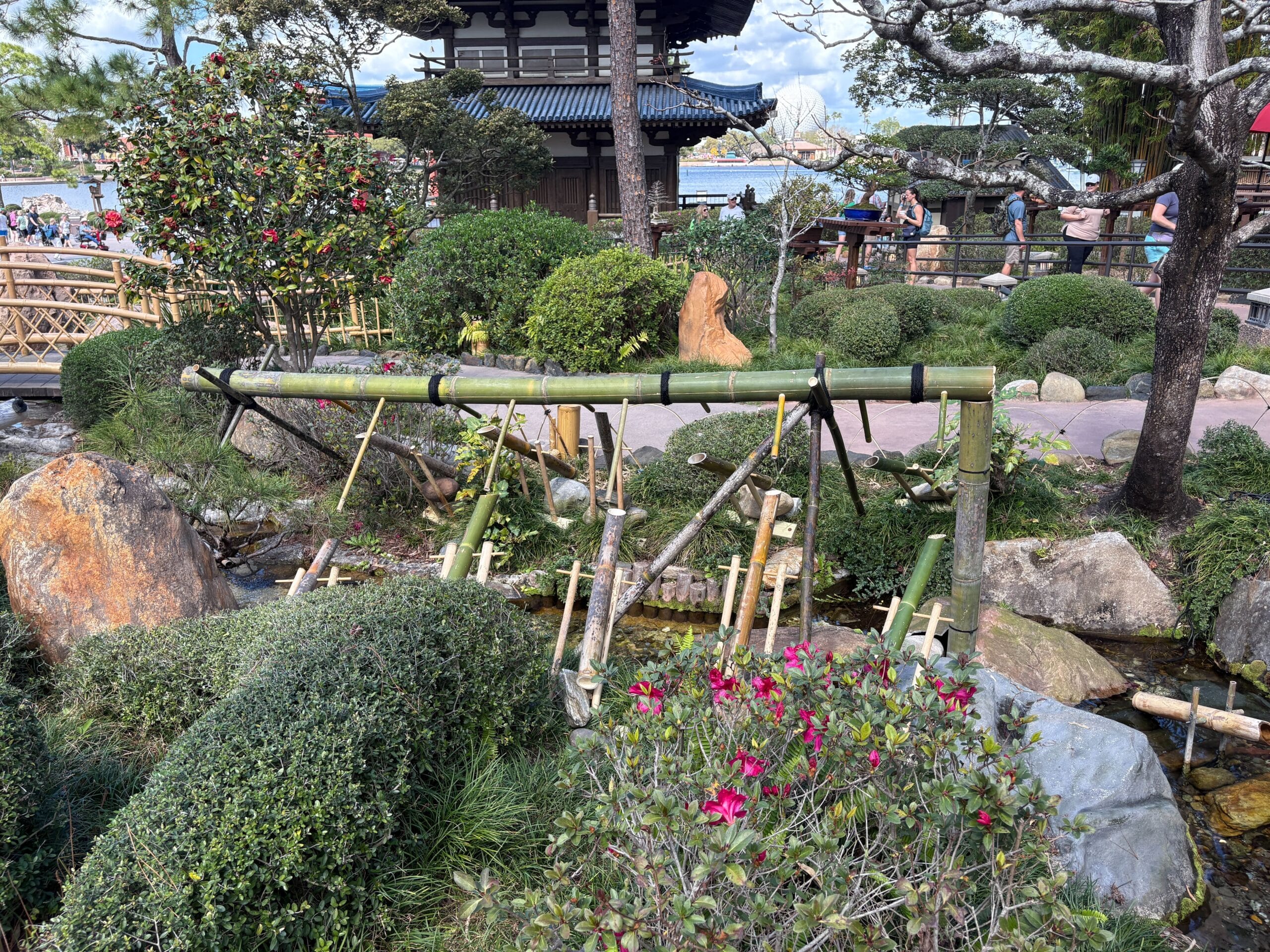
Shishi-odoshi
Shishi-odoshi translates to “scare deer.” These traditional Japanese water fountains, also known as Sōzu, were originally crafted to ward off any hungry creatures tempted to graze in an enticing garden.
As a slow trickle of water fills the segmented bamboo tube, the device tips, creating the distinct sound of rushing water. The empty tube then plops back down on its resting stone with a critter-startling thunk.
In modern gardens, these kinetic contraptions are enjoyed for their mesmerizing motion and methodical, meditative rhythm.
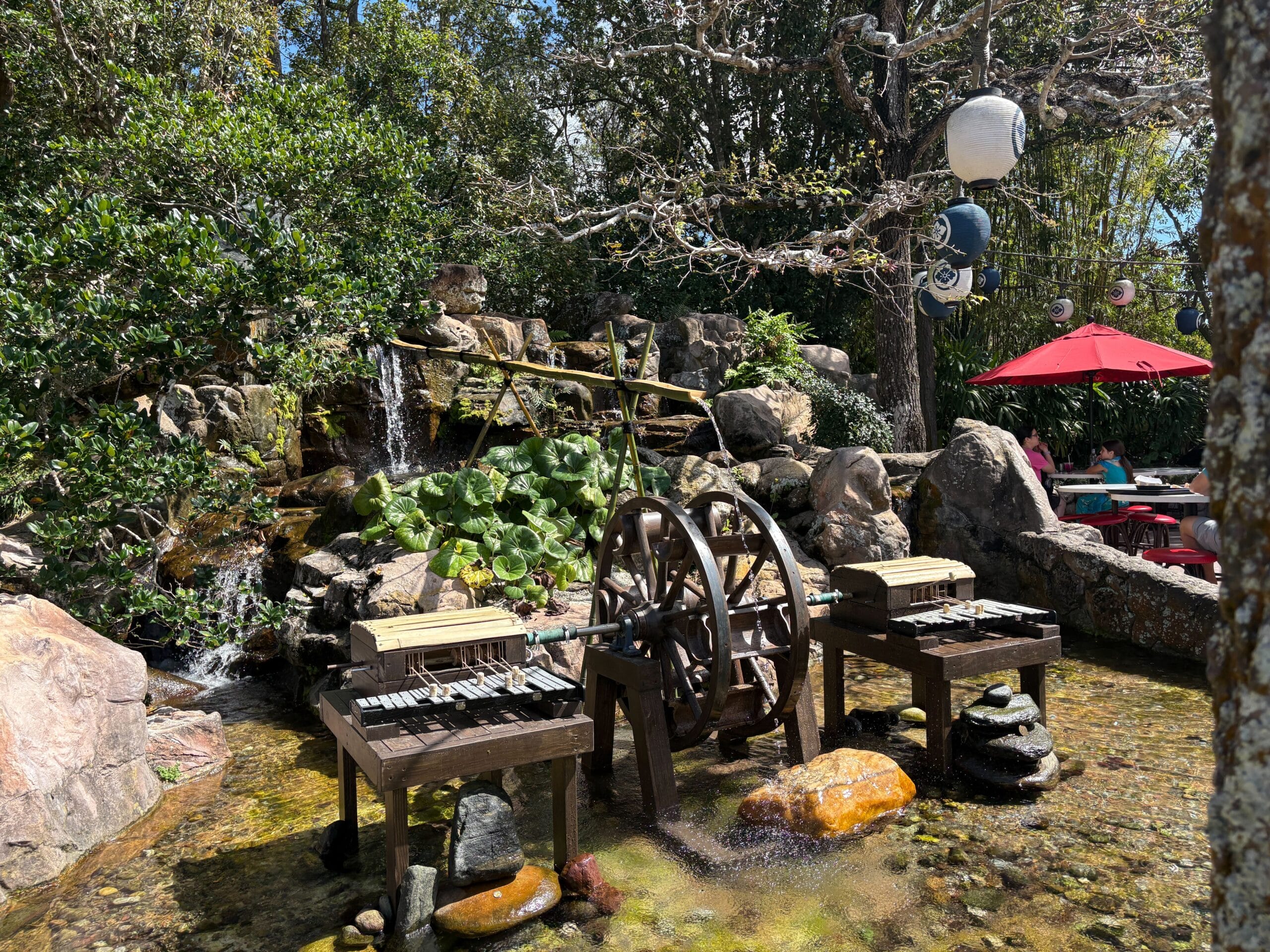
There are various sized Shishi-odoshi contraptions in the water around Katsura Grill.
Bonsai Collection – Japan Pavilion
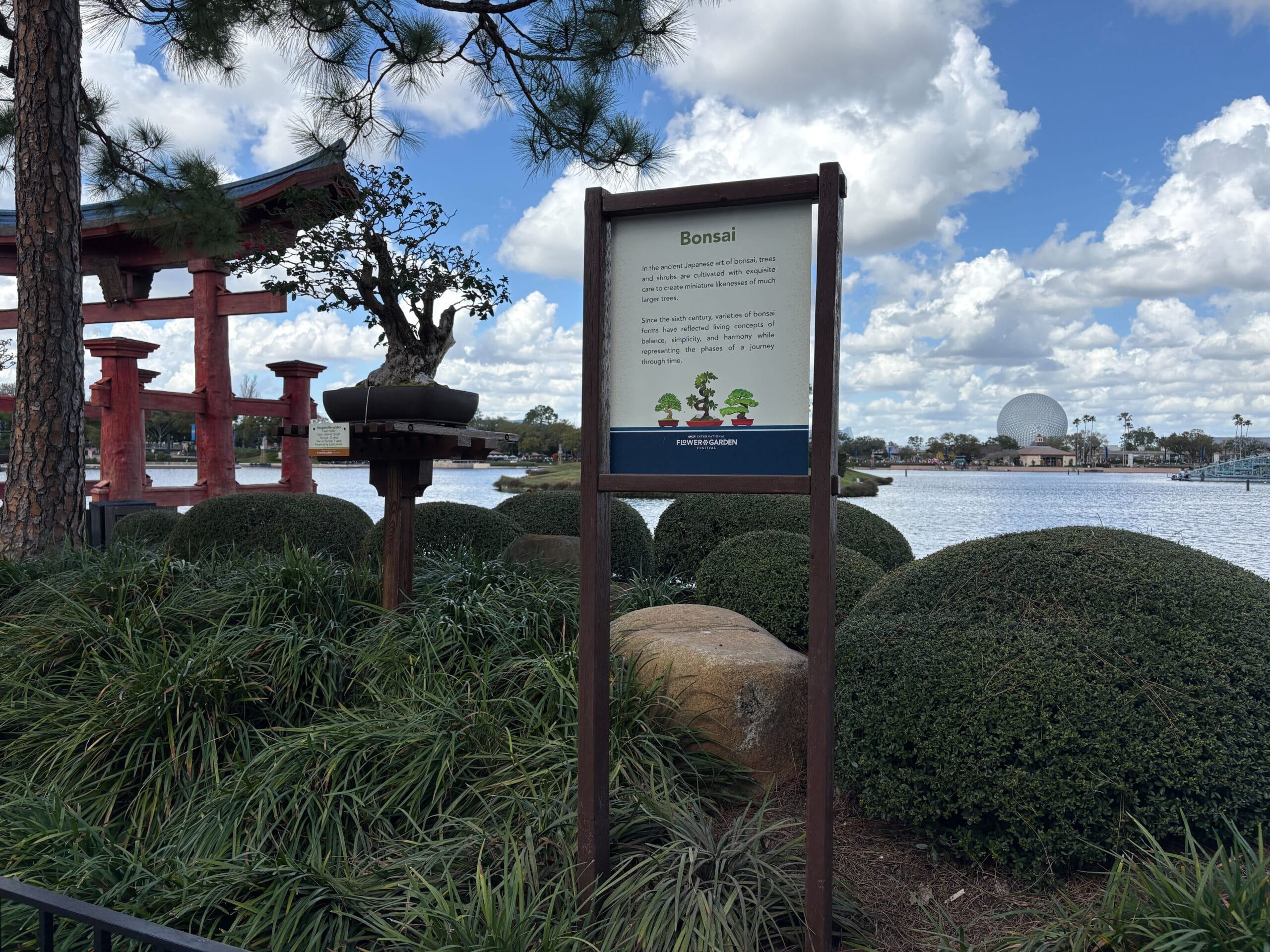
Bonsai
In the ancient Japanese art of bonsai, trees and shrubs are cultivated with exquisite care to create miniature likenesses of much larger trees.
Since the sixth century, varieties of bonsai forms have reflected living concepts of balance, simplicity, and harmony while representing the phases of a journey through time.
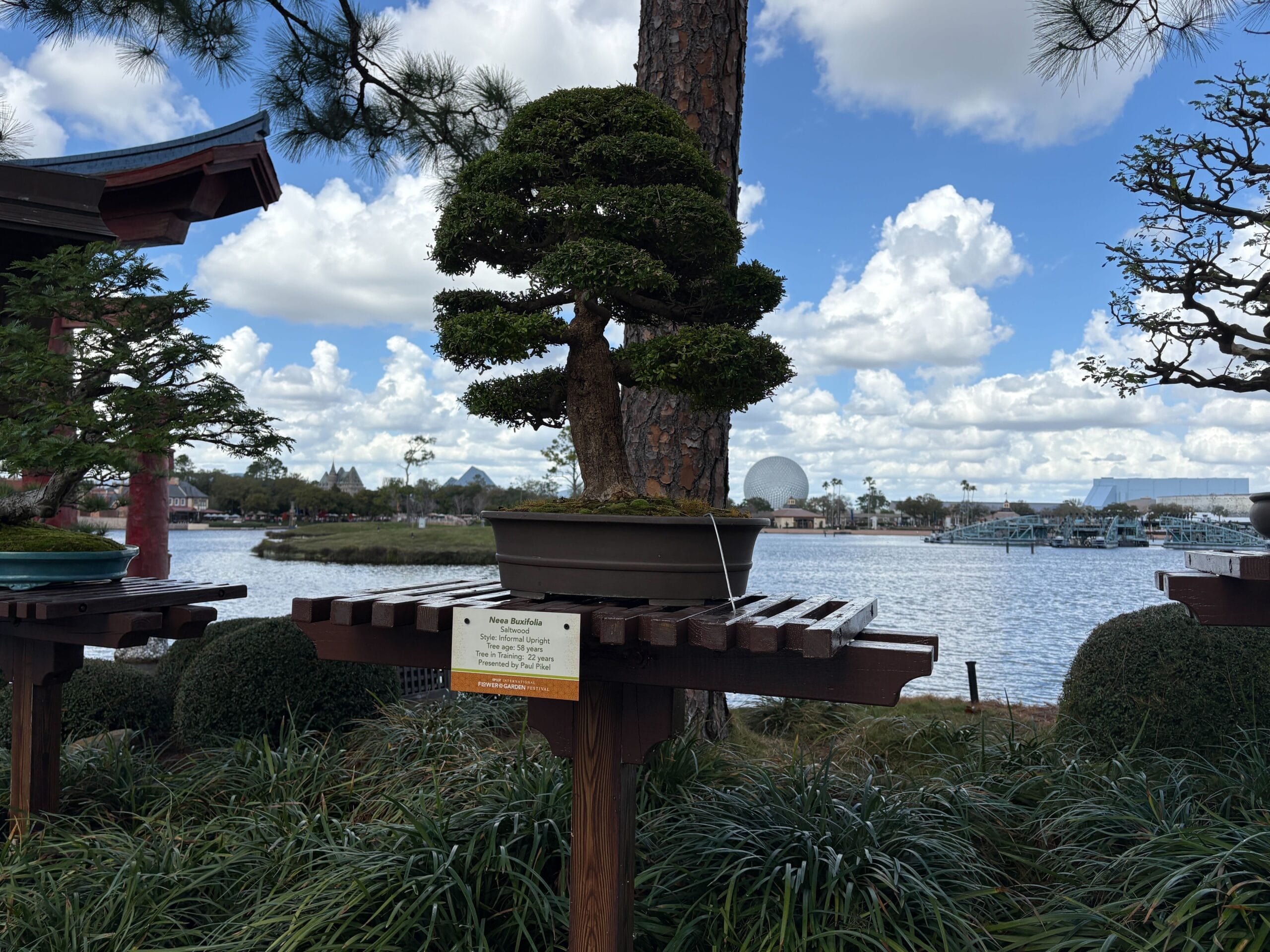
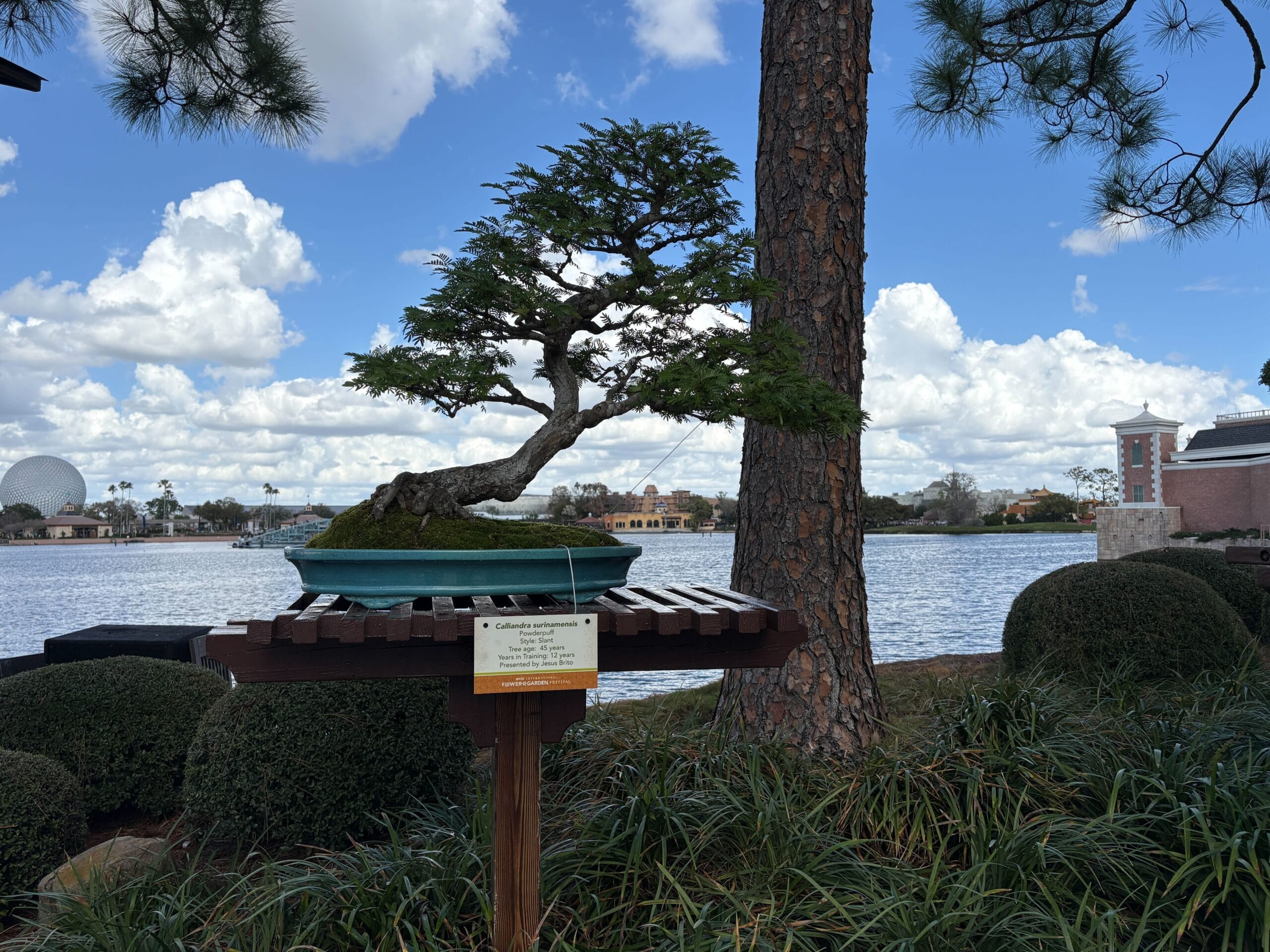
A row of bonsai trees are presented on stands along the edge of the lagoon.
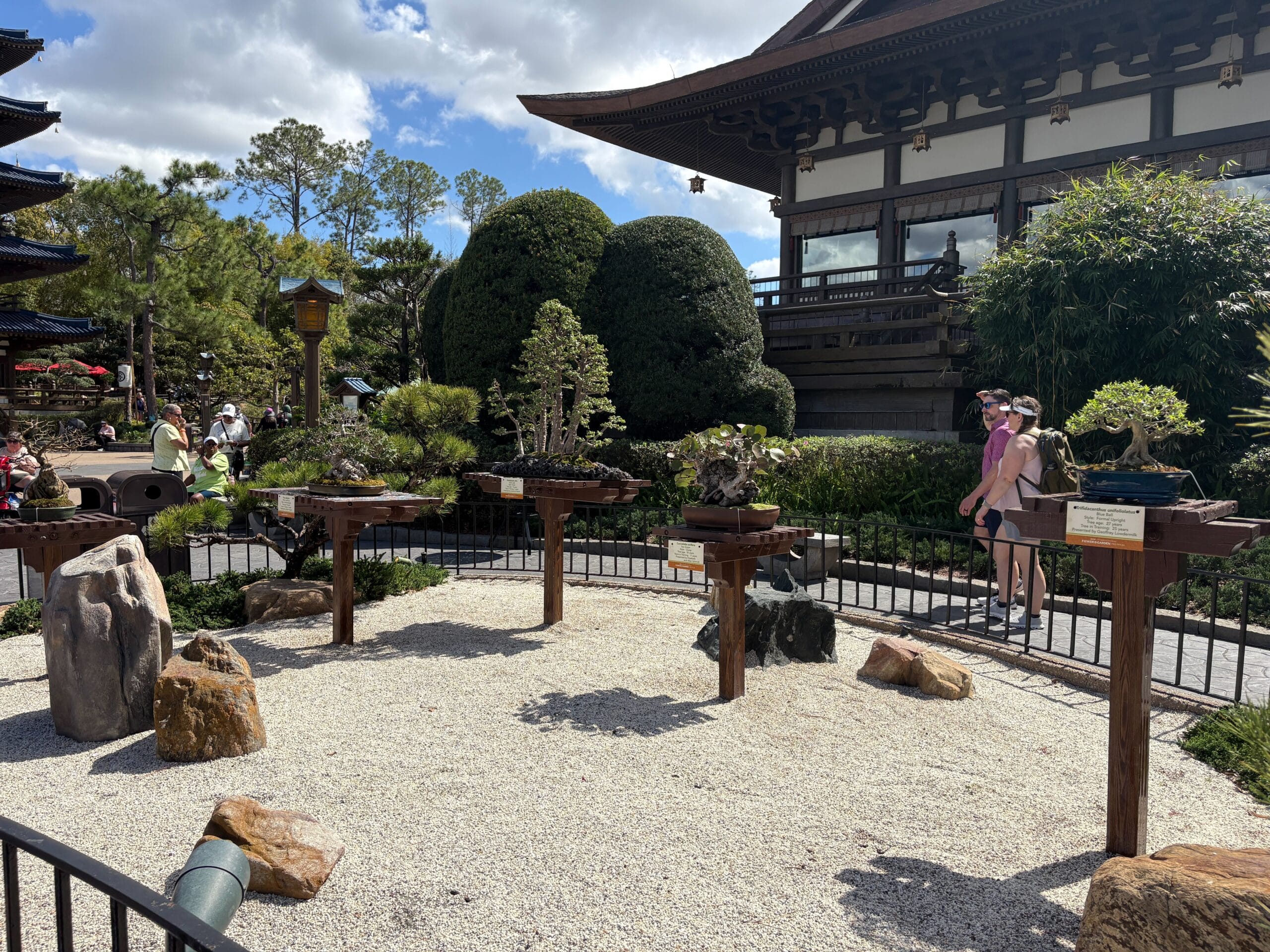
More bonsai trees are in the sand garden nearby.
Garden Italiano – Italy Pavilion
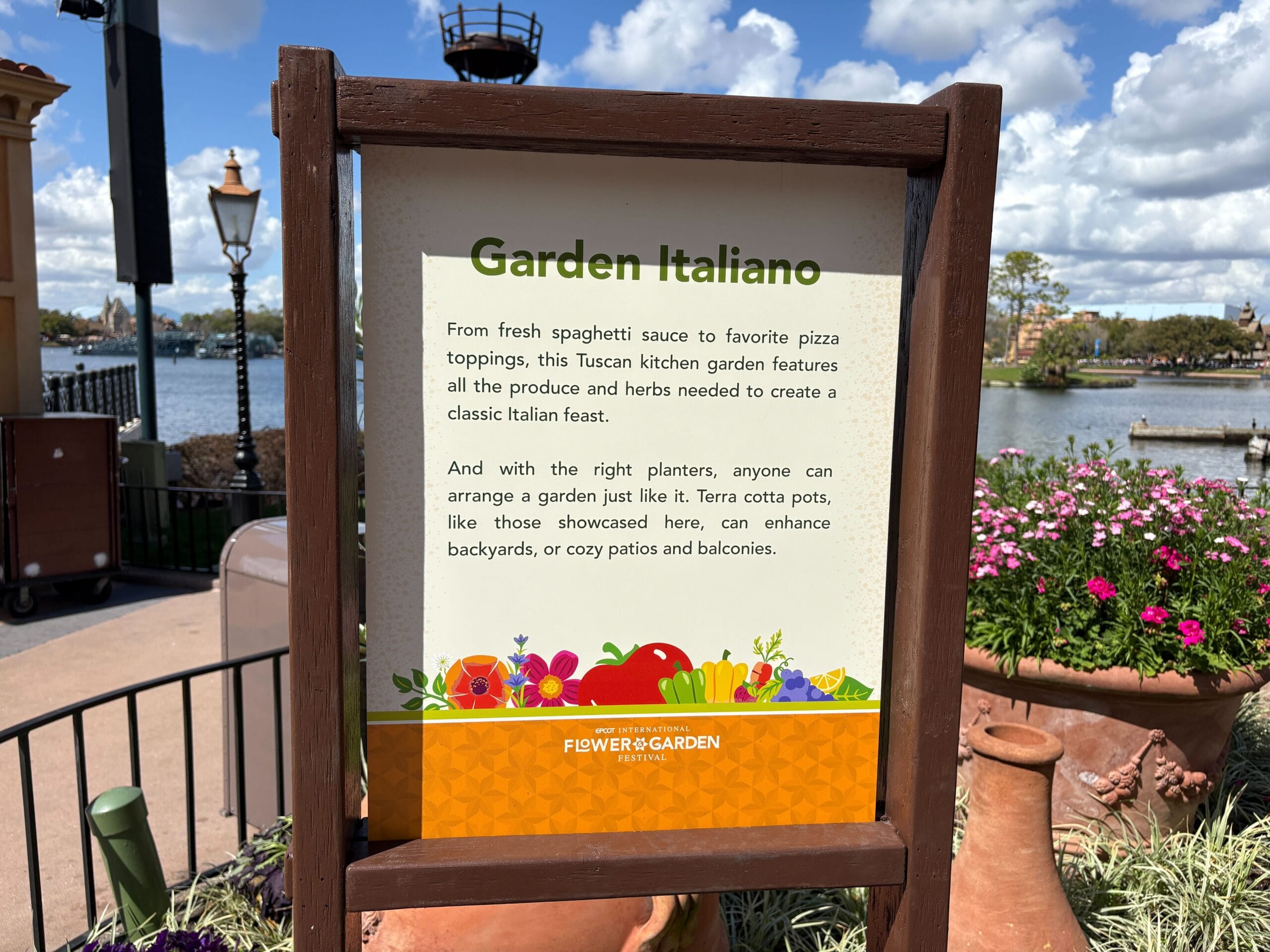
Garden Italiano
From fresh spaghetti sauce to favorite pizza toppings, this Tuscan kitchen garden features all the produce and herbs needed to create a classic Italian feast.
And with the right planters, anyone can arrange a garden just like it. Terra cotta pots, like those showcased here, can enhance backyards, or cozy patios and balconies.
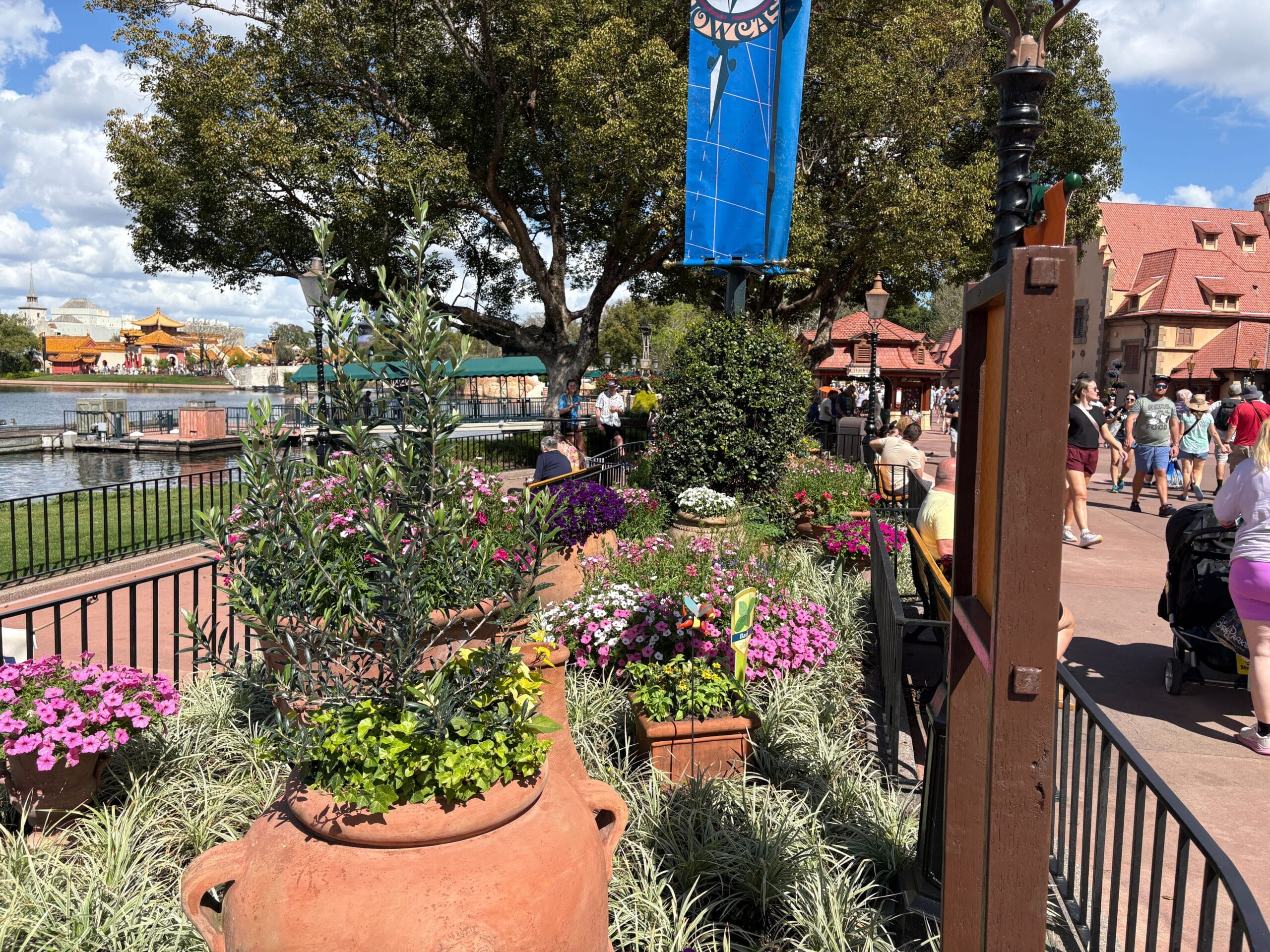
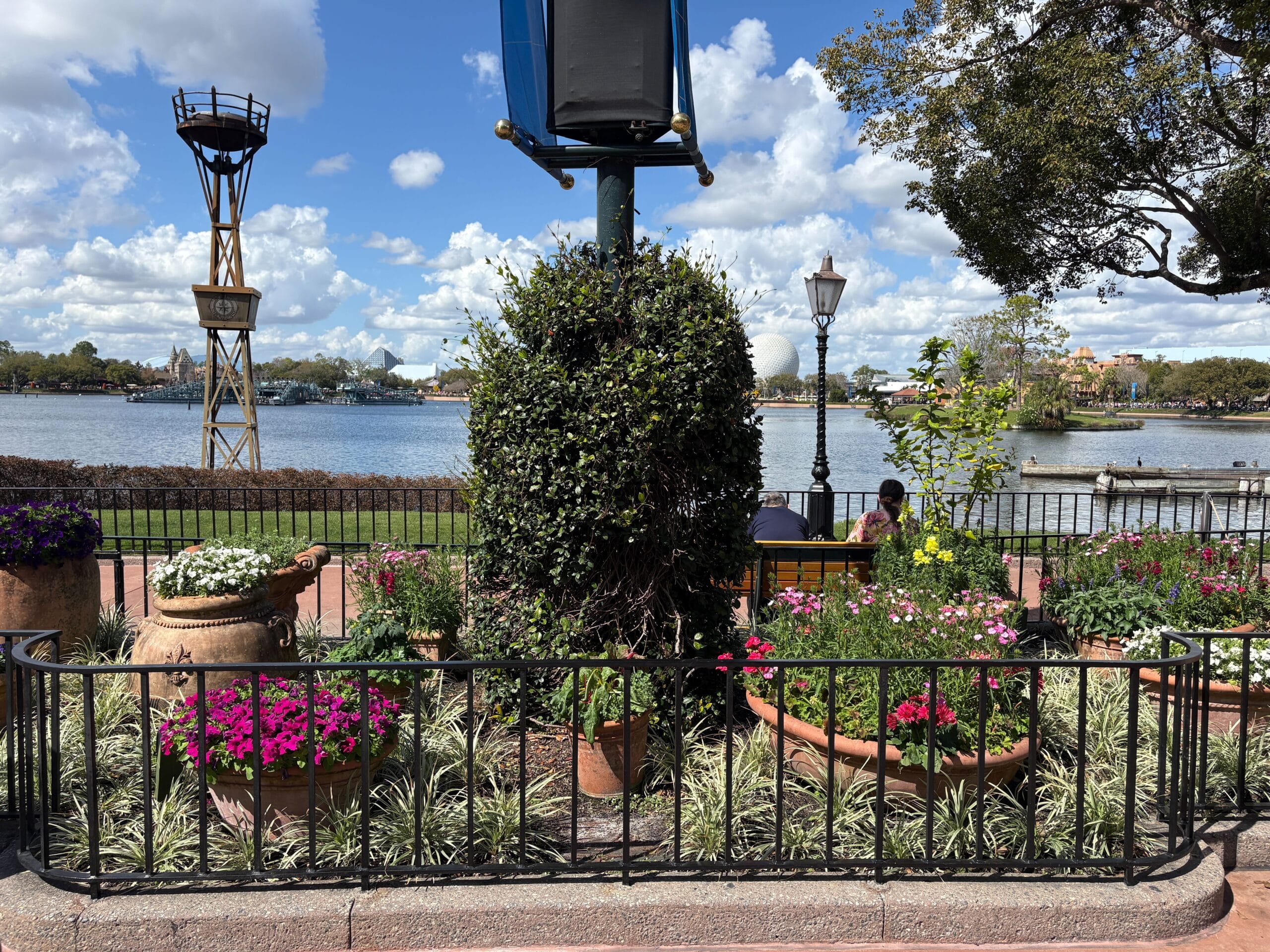
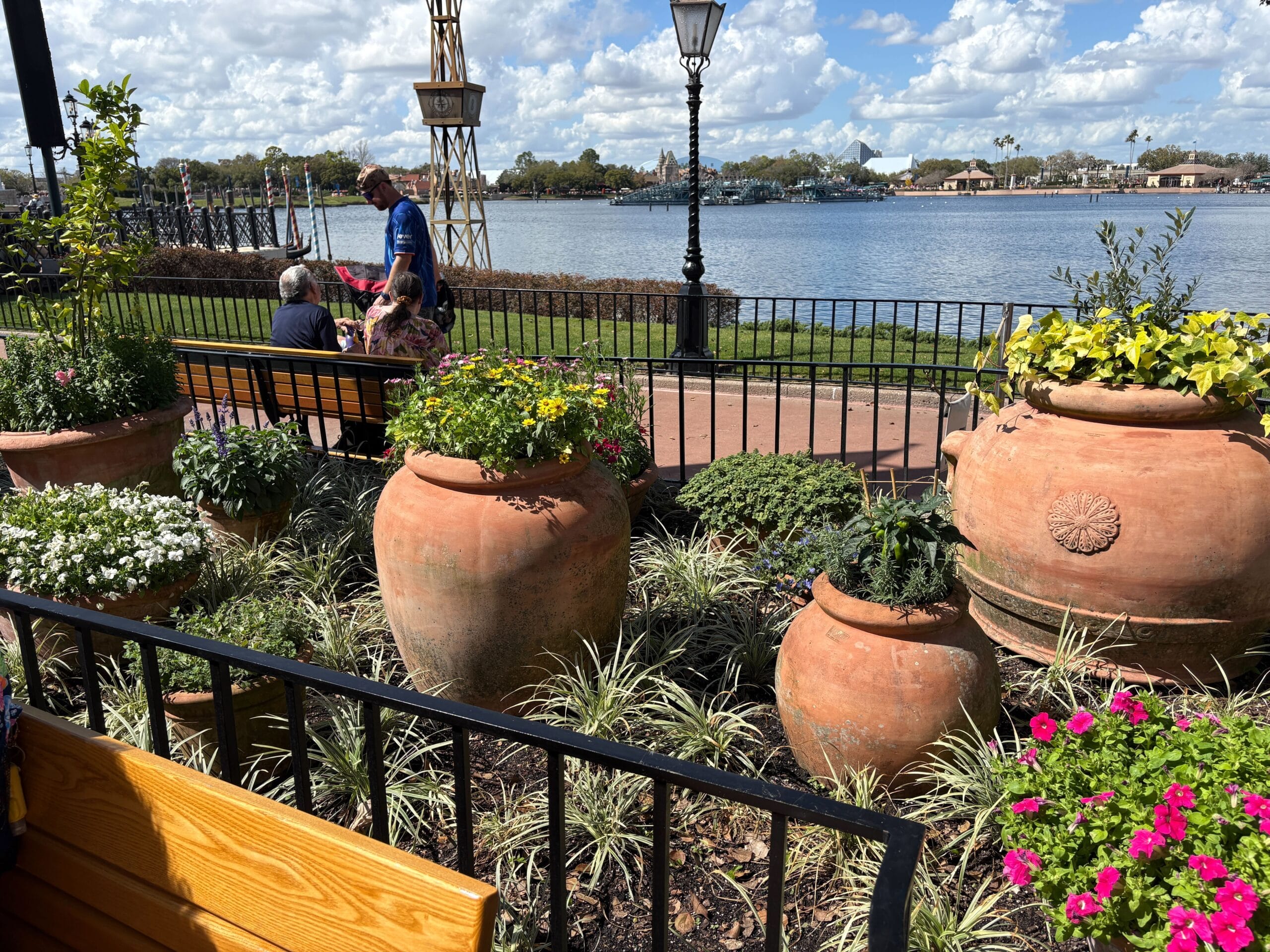
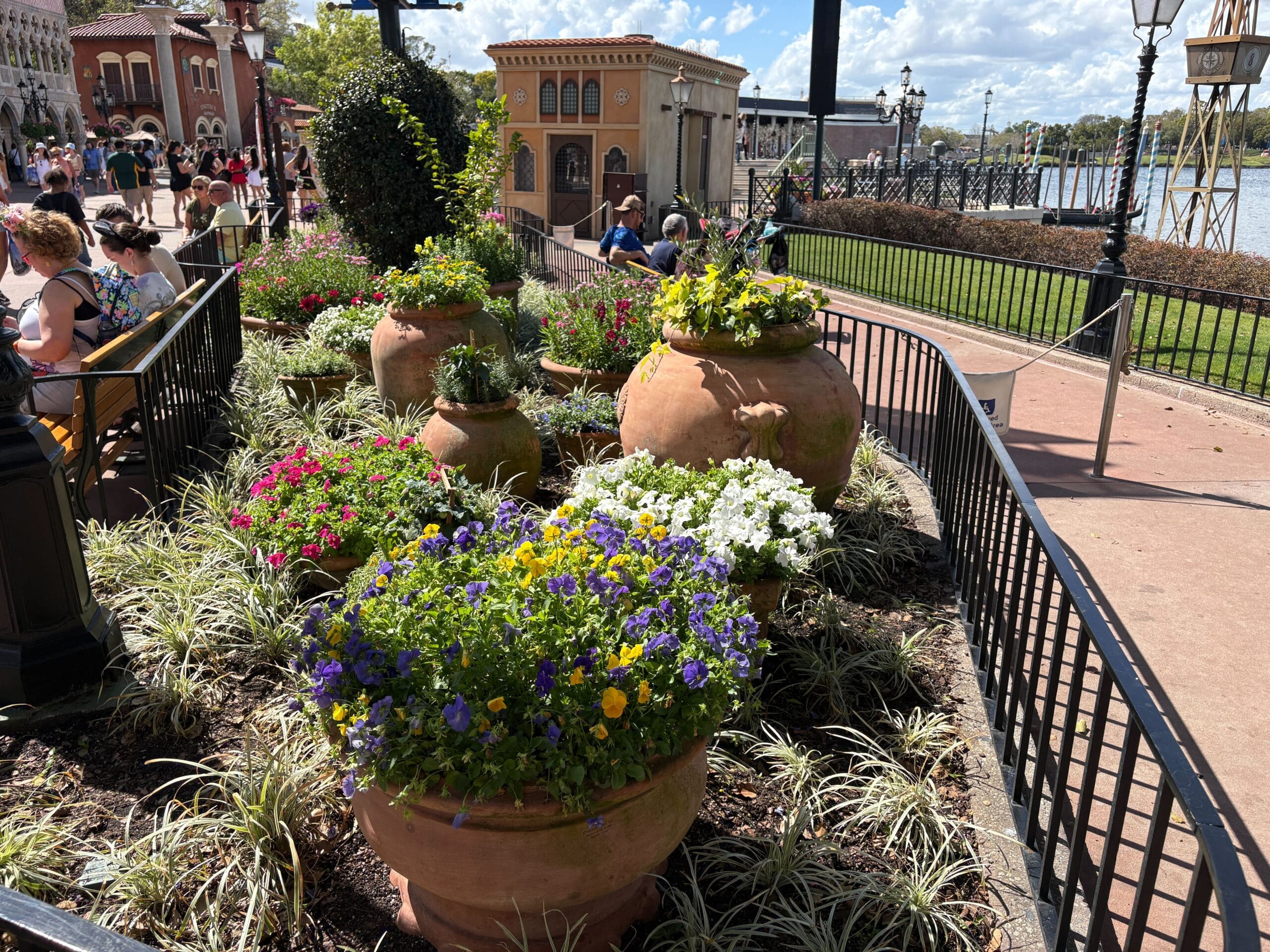
Terra cotta pots of plants are in this long flowerbed near the World Showcase lagoon.
China Penjing Garden – China Pavilion
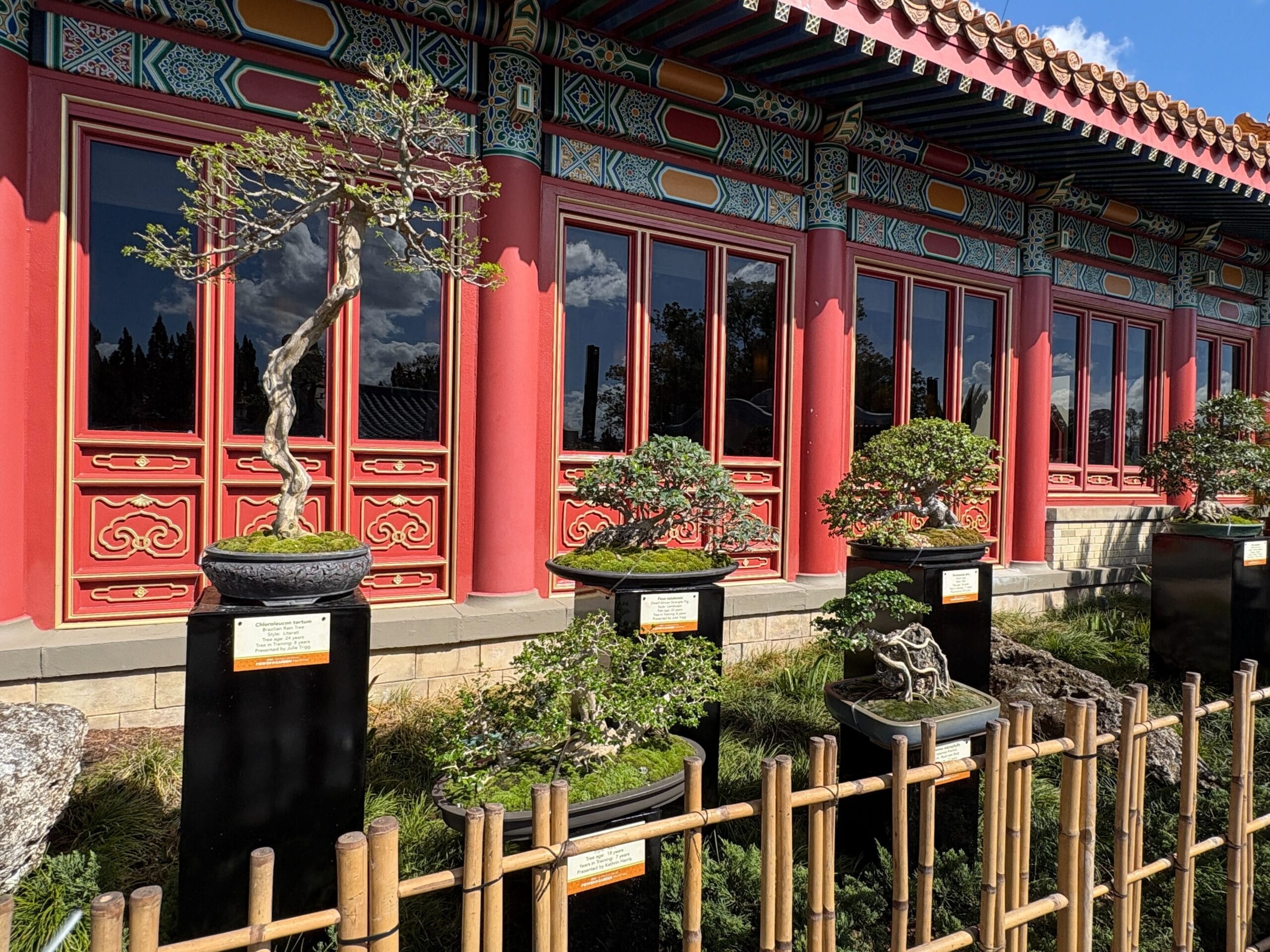
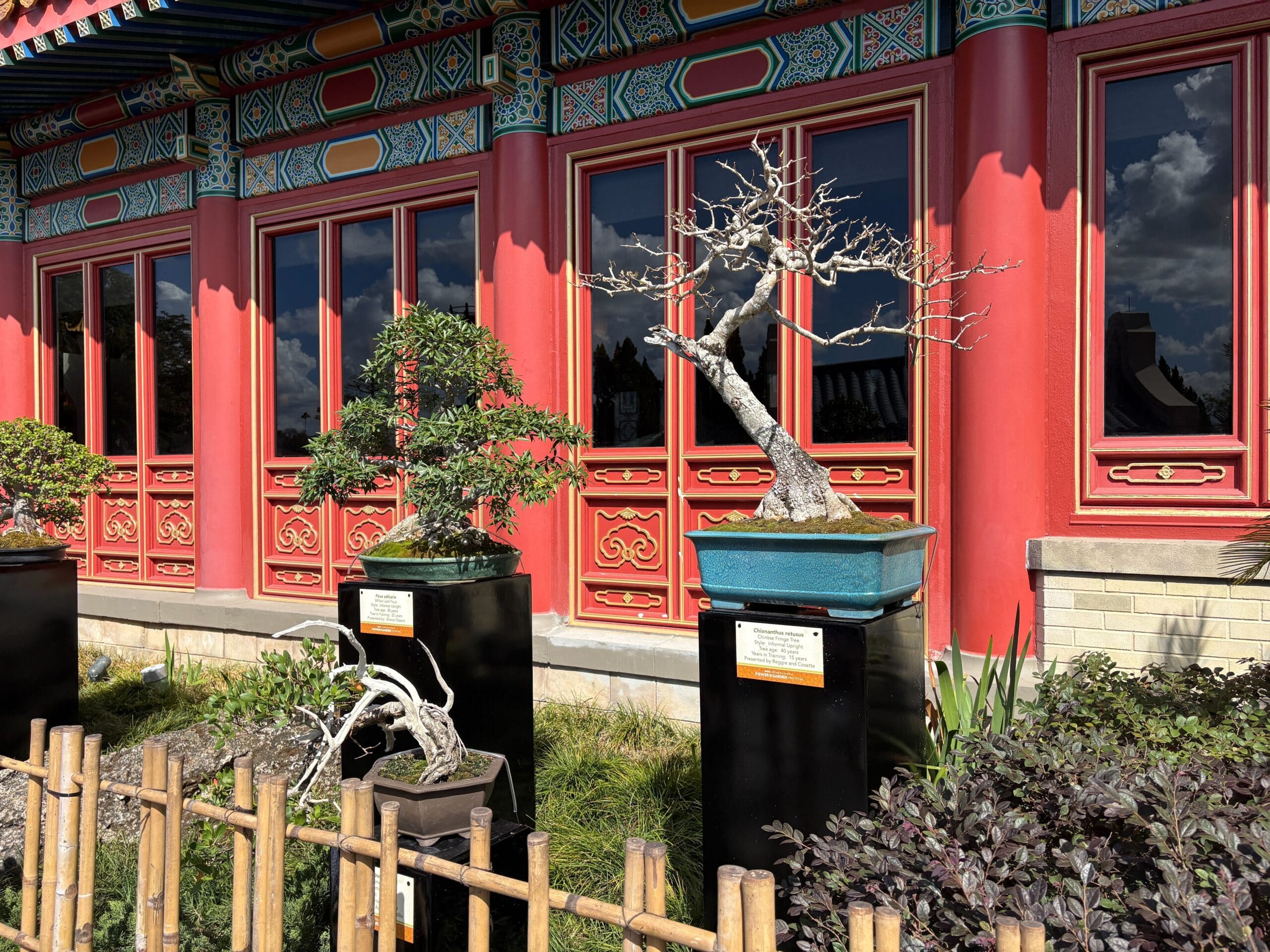
A variety of penjing landscapes are on display atop podiums in this outside Nine Dragons Restaurant.
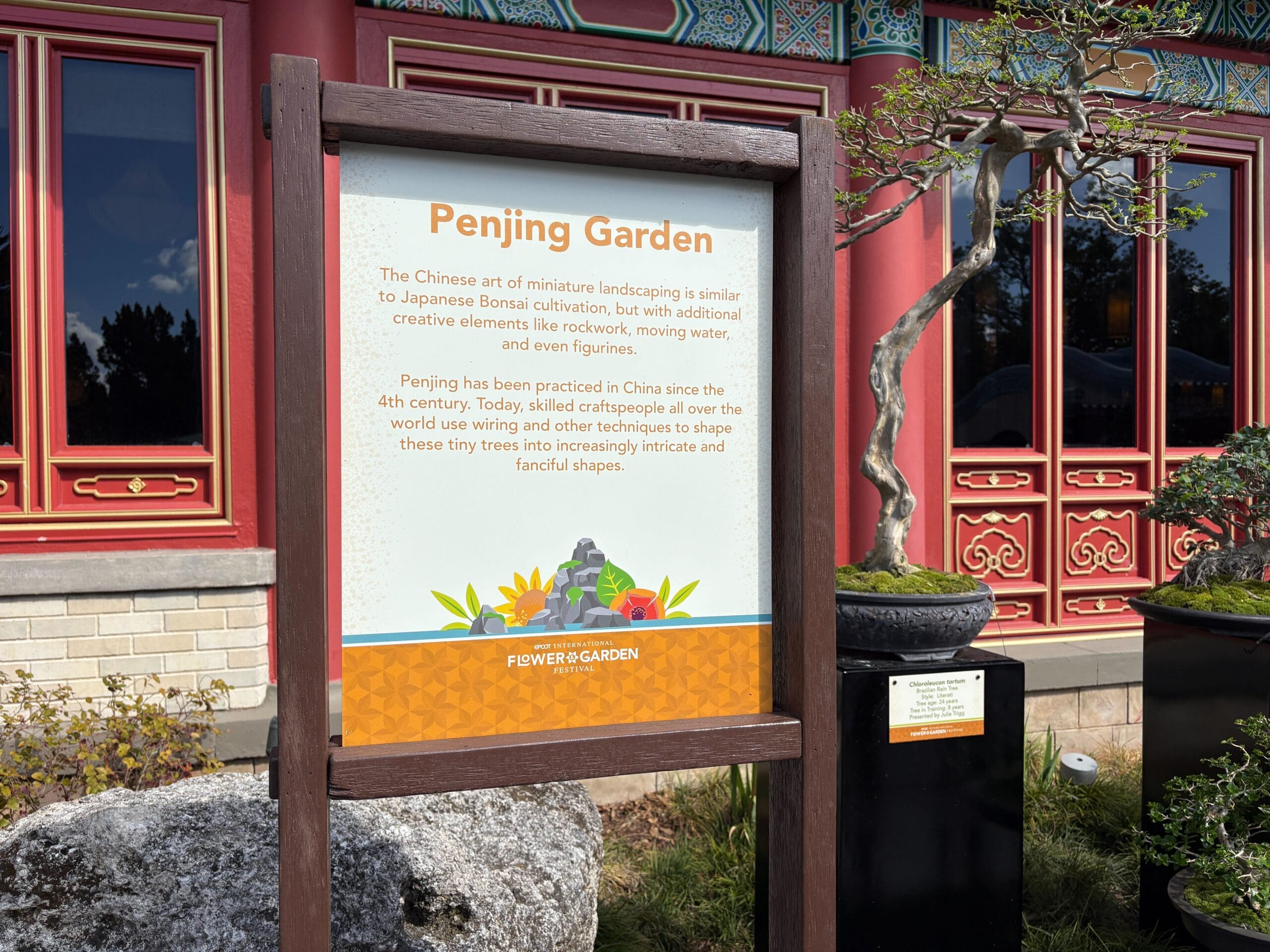
Penjing Garden
The Chinese art of miniature landscaping is similar to Japanese Bonsai cultivation, but with additional creative elements like rockwork, moving water, and even figurines.
Penjing has been practiced in China since the 4th century. Today, skilled craftspeople all over the world use wiring and other techniques to shape these tiny trees into increasingly intricate and fanciful shapes.
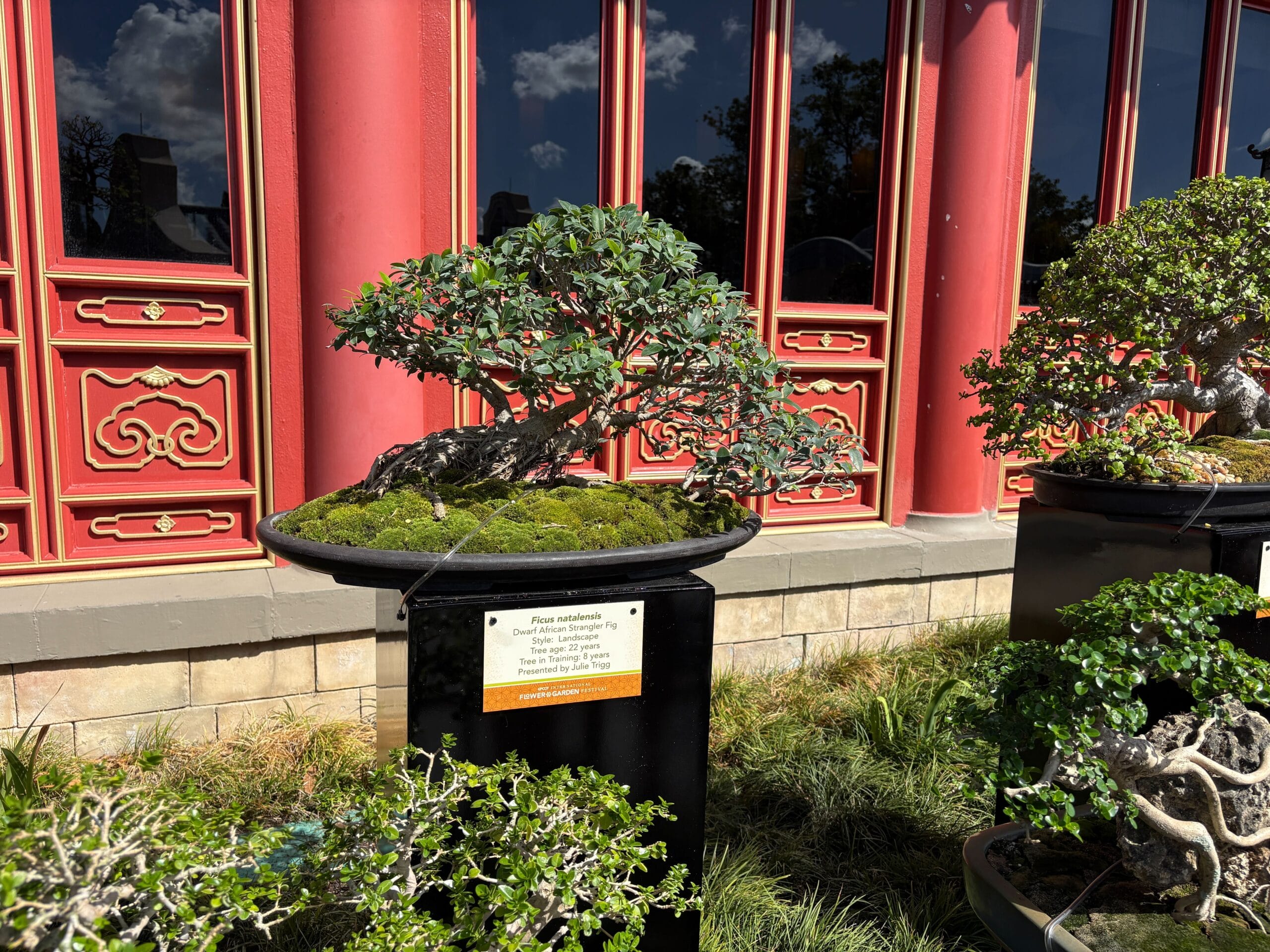
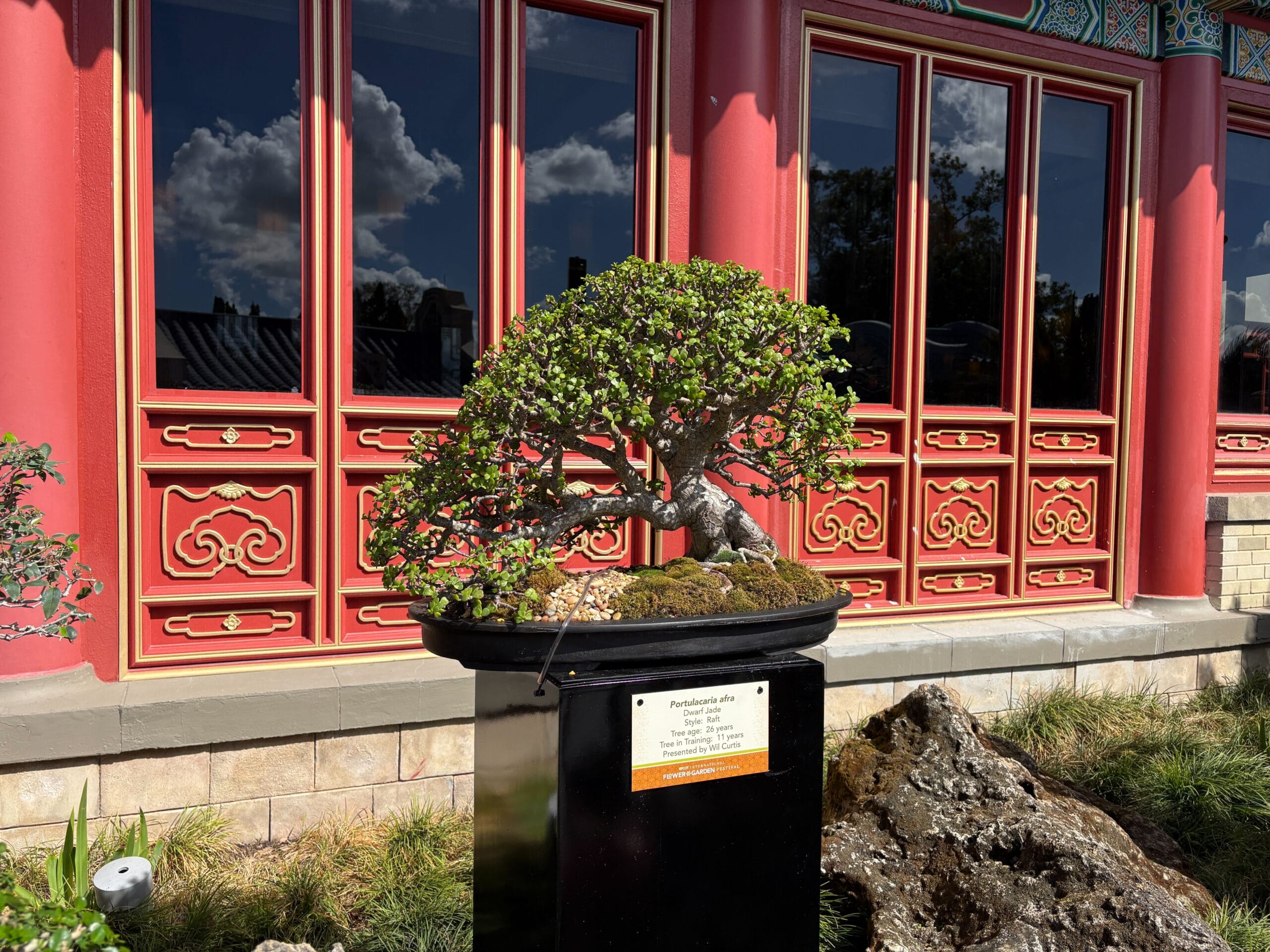
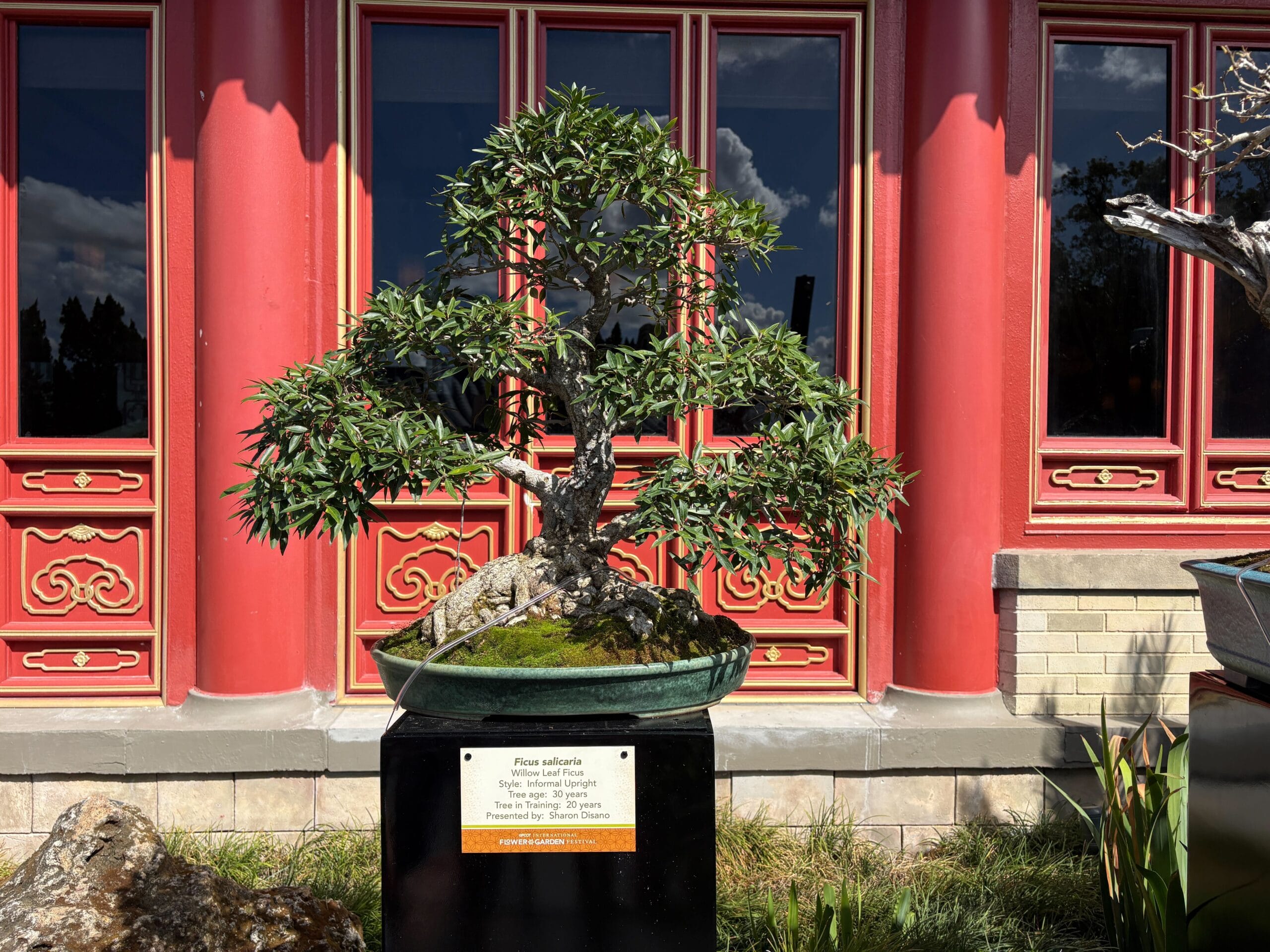
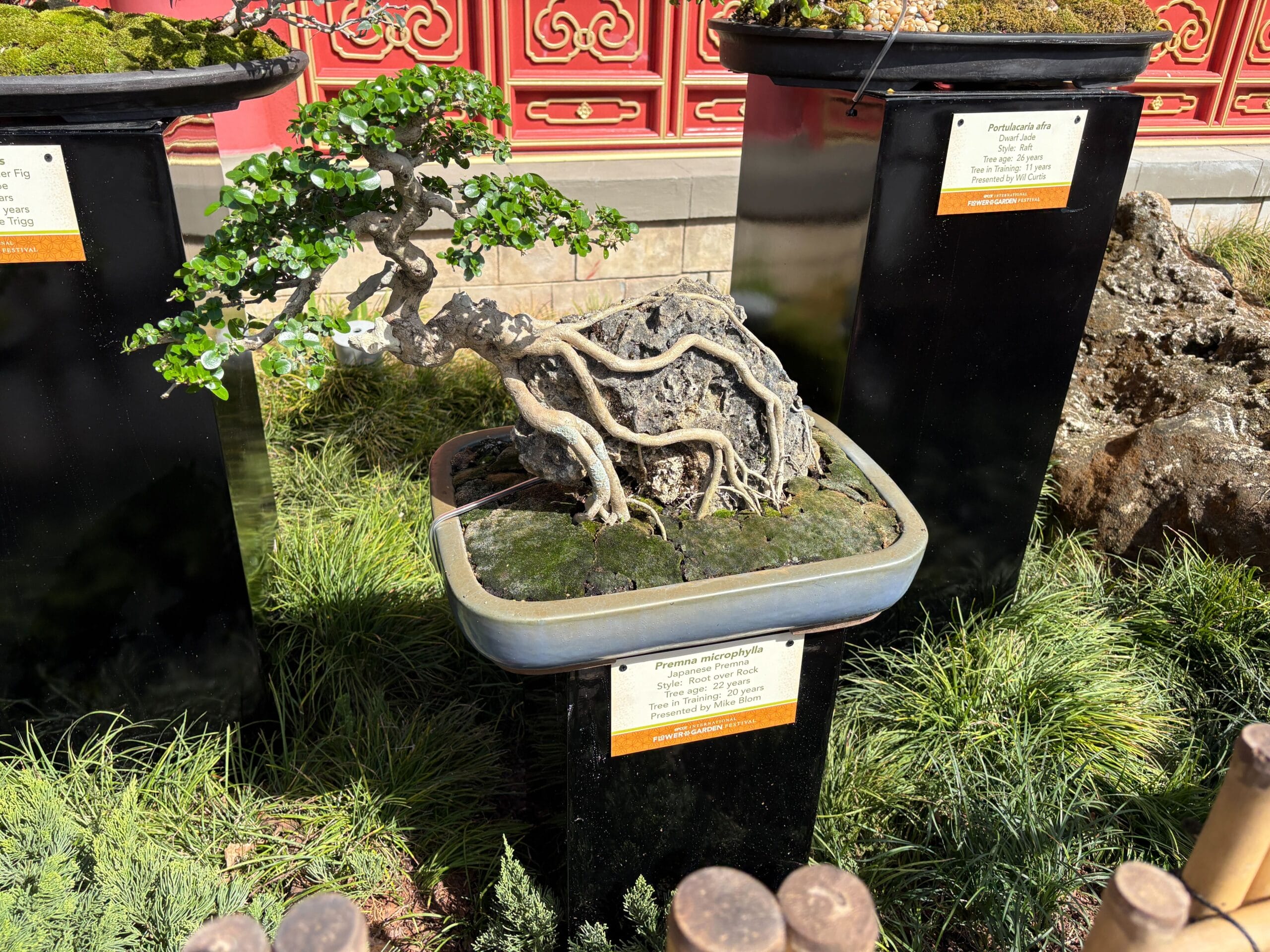
Signs beneath each display indicates the plants involved, style, tree age, and artist.
Bamboo Garden – China Pavilion
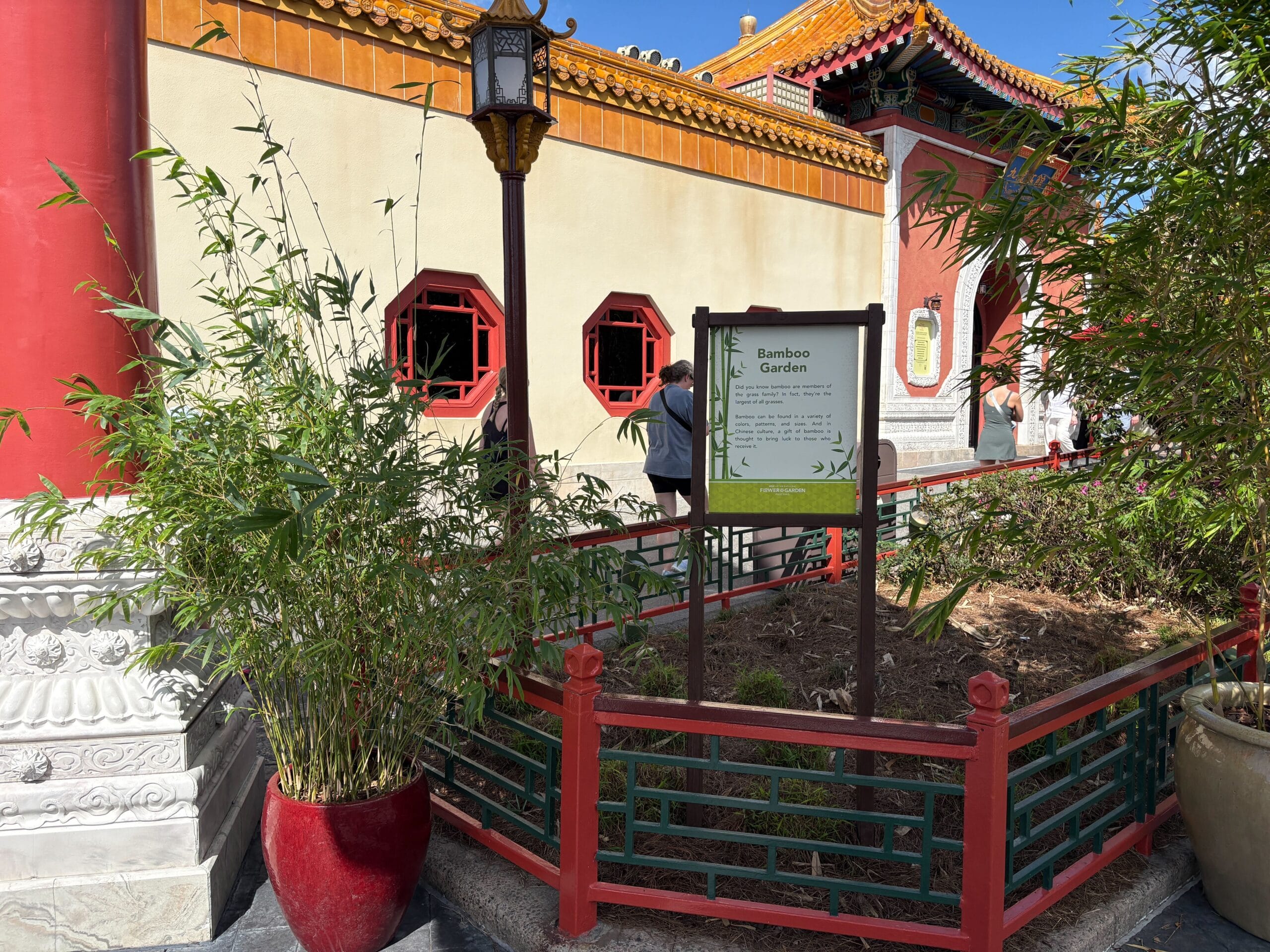
The bamboo garden hasn’t grown in yet but there is a sign in place. It’s located outside Nine Dragons Restaurant.
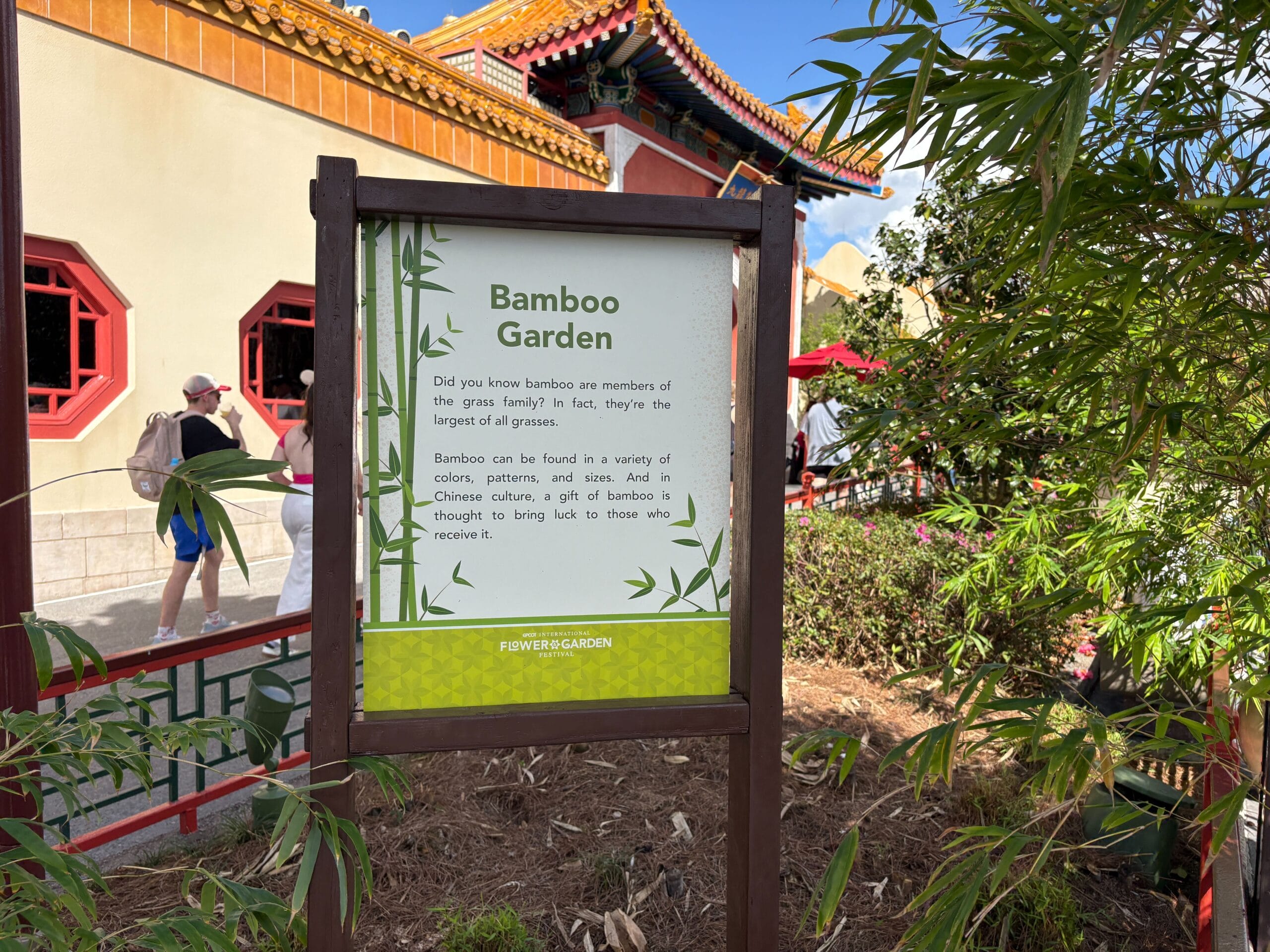
Bamboo Garden
Did you know bamboo are members of the grass grass family? In fact, they’re the largest of all grasses.
Bamboo can be found in a variety of colors, patterns, and sizes. And in Chinese culture, a gift of bamboo is thought to bring luck to those who receive it.
Tropical Rainforest Garden – Mexico Pavilion
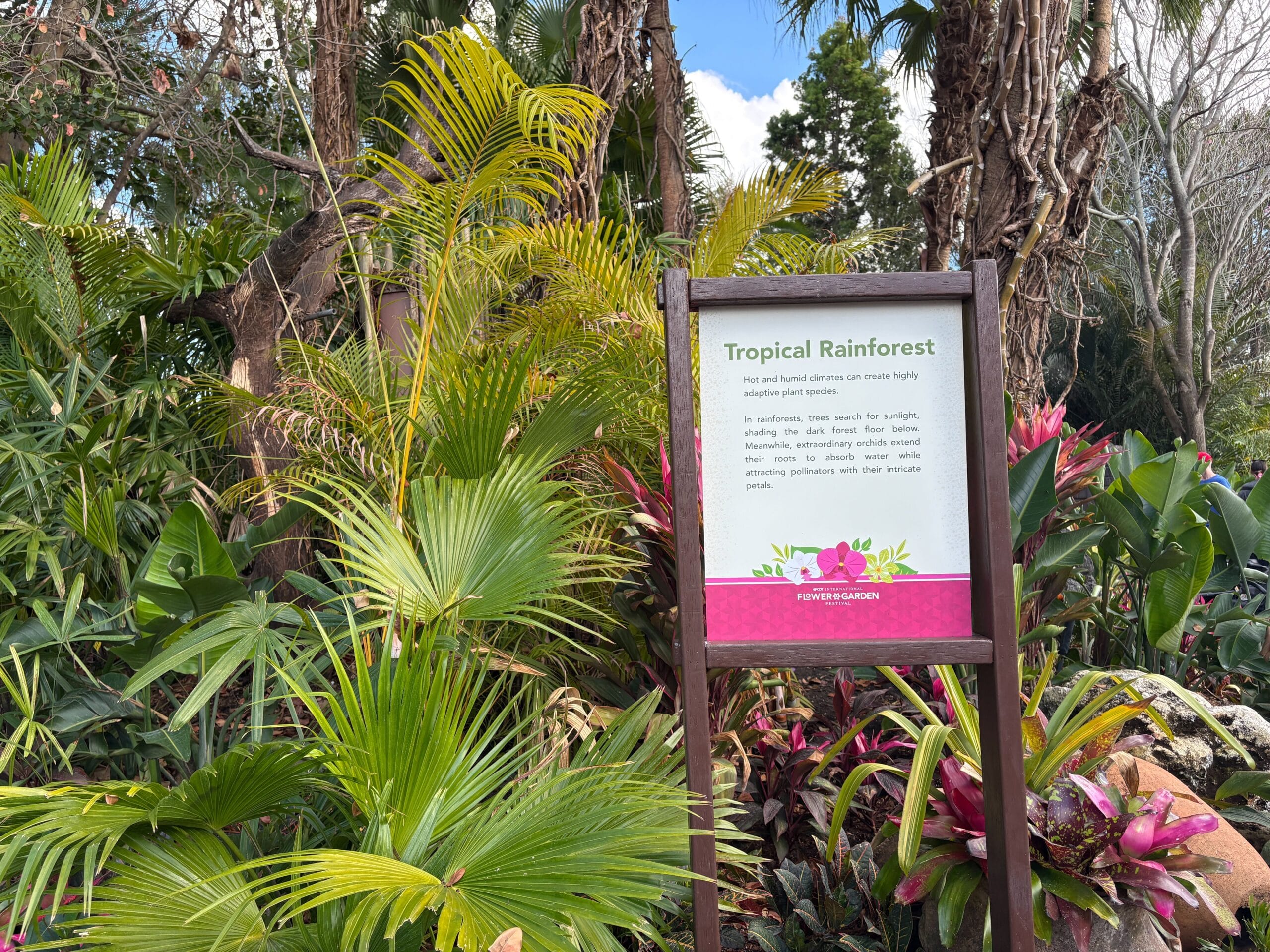
Tropical Rainforest
Hot and humid climates can create highly adaptive plant species.
In rainforests, trees search for sunlight, shading the dark forest floor below. Meanwhile, extraordinary orchids extend their roots to absorb water while attracting pollinators with their intricate petals.
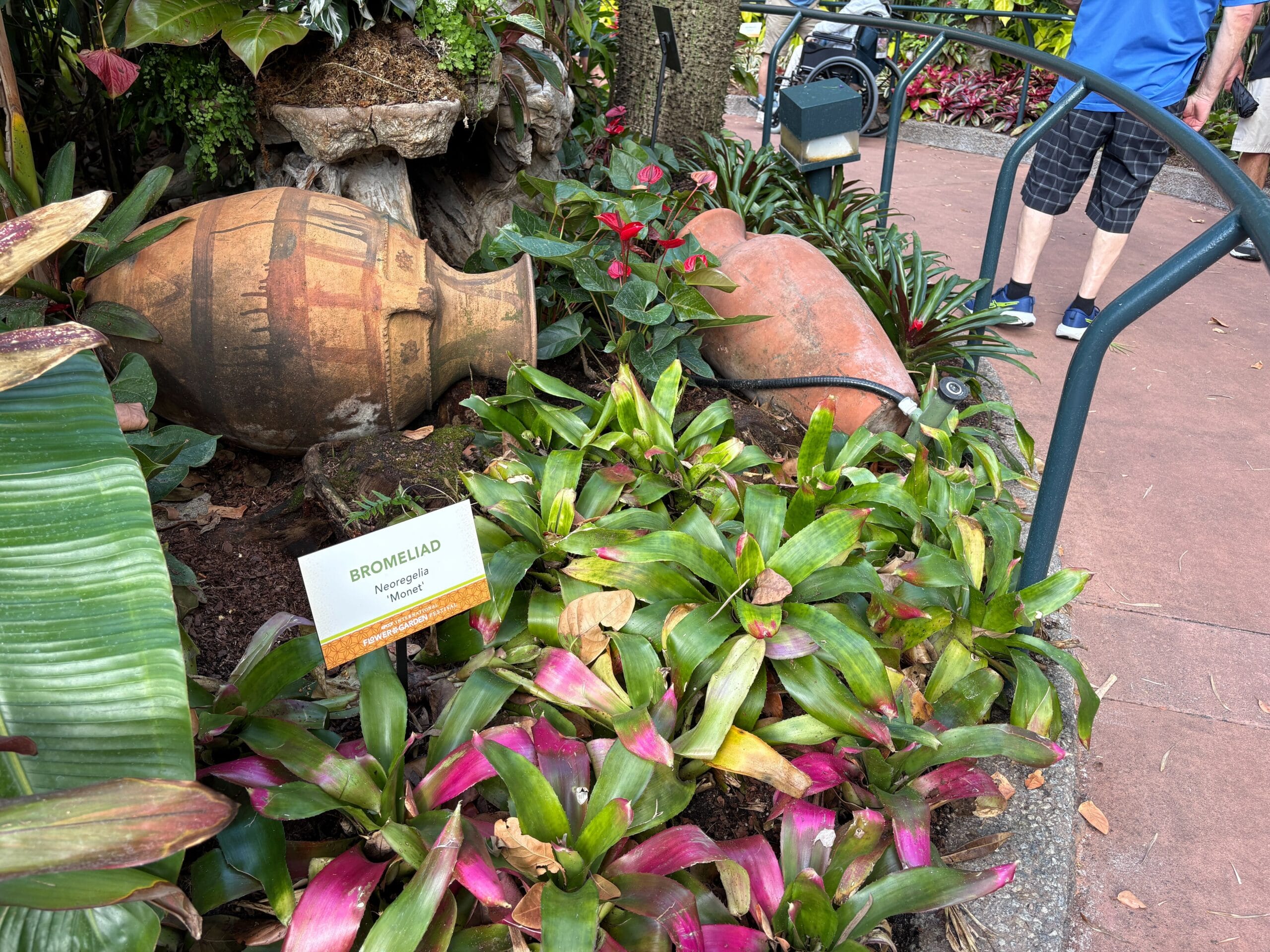
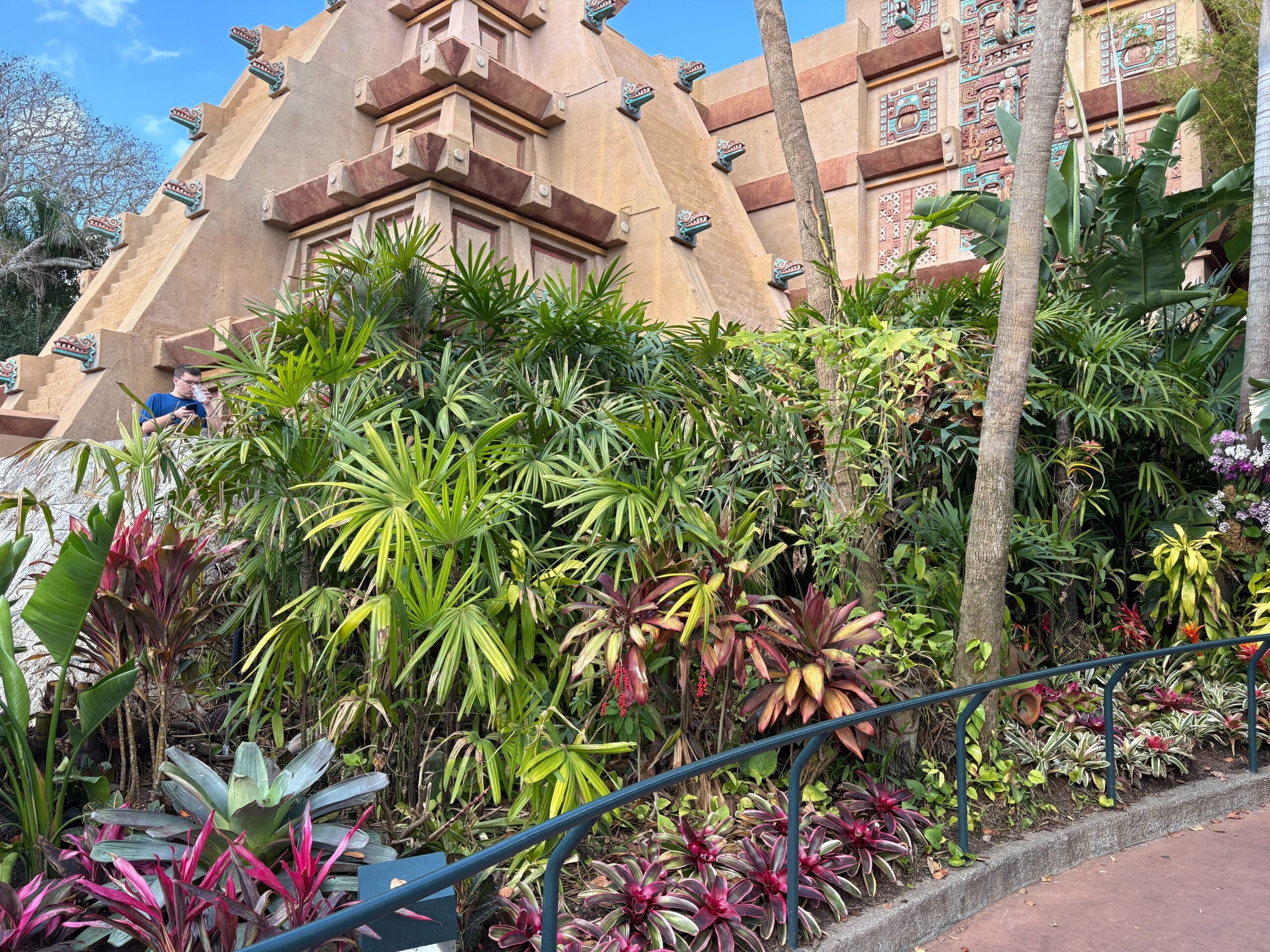
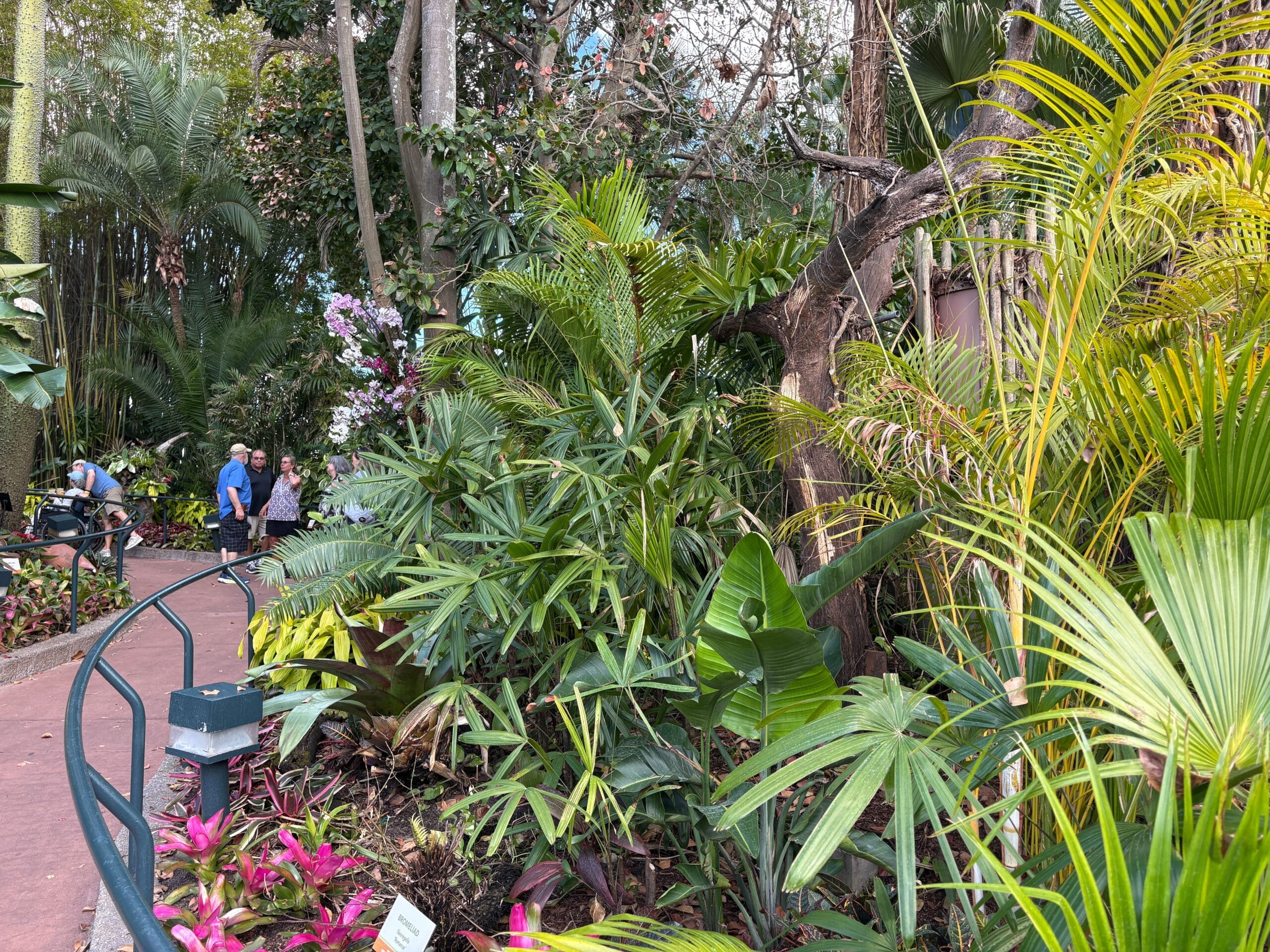
The Tropical Rainforest Garden is on the south side of the Mexico pavilion, around the ramps leading up to the temple.
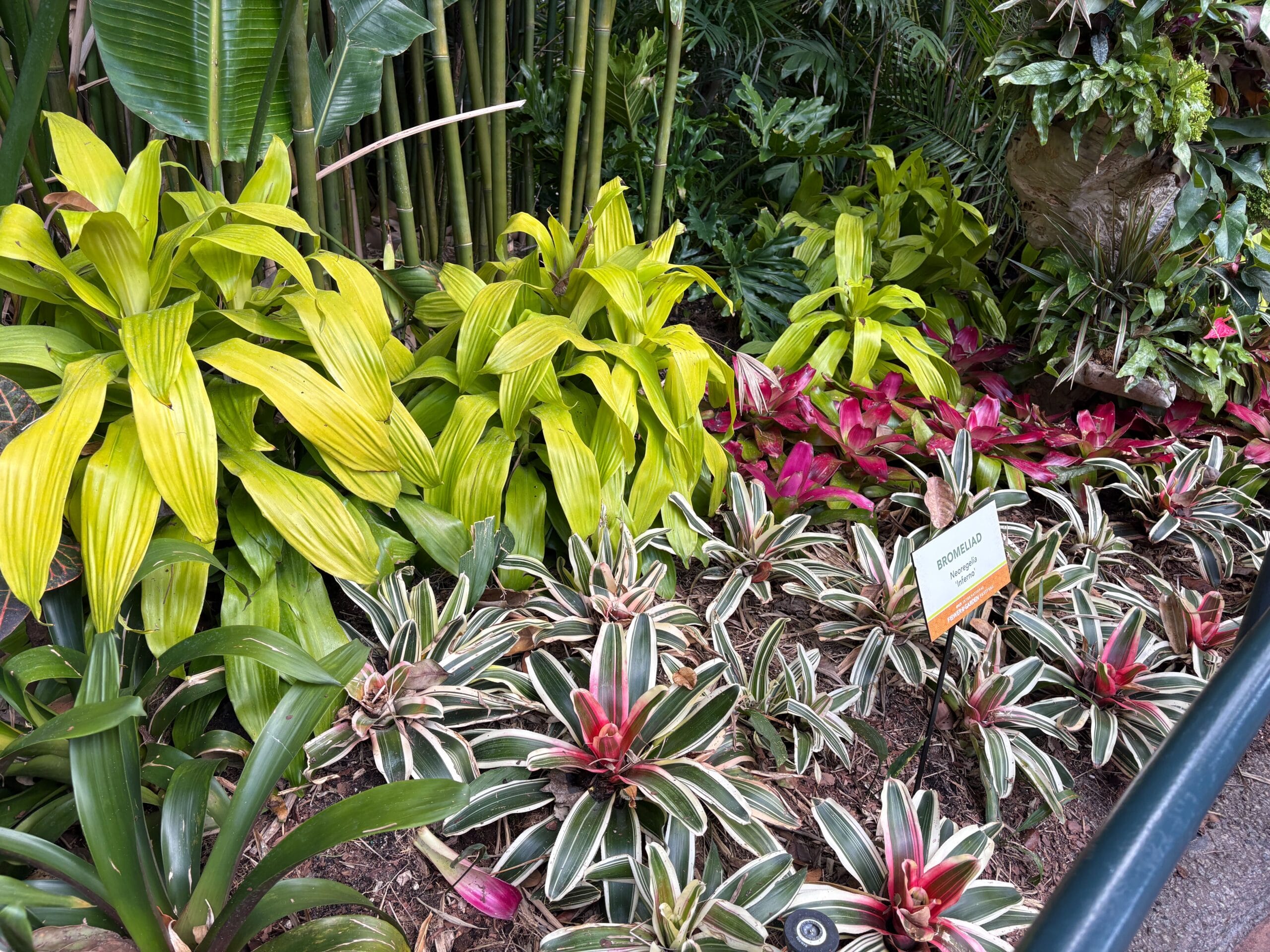
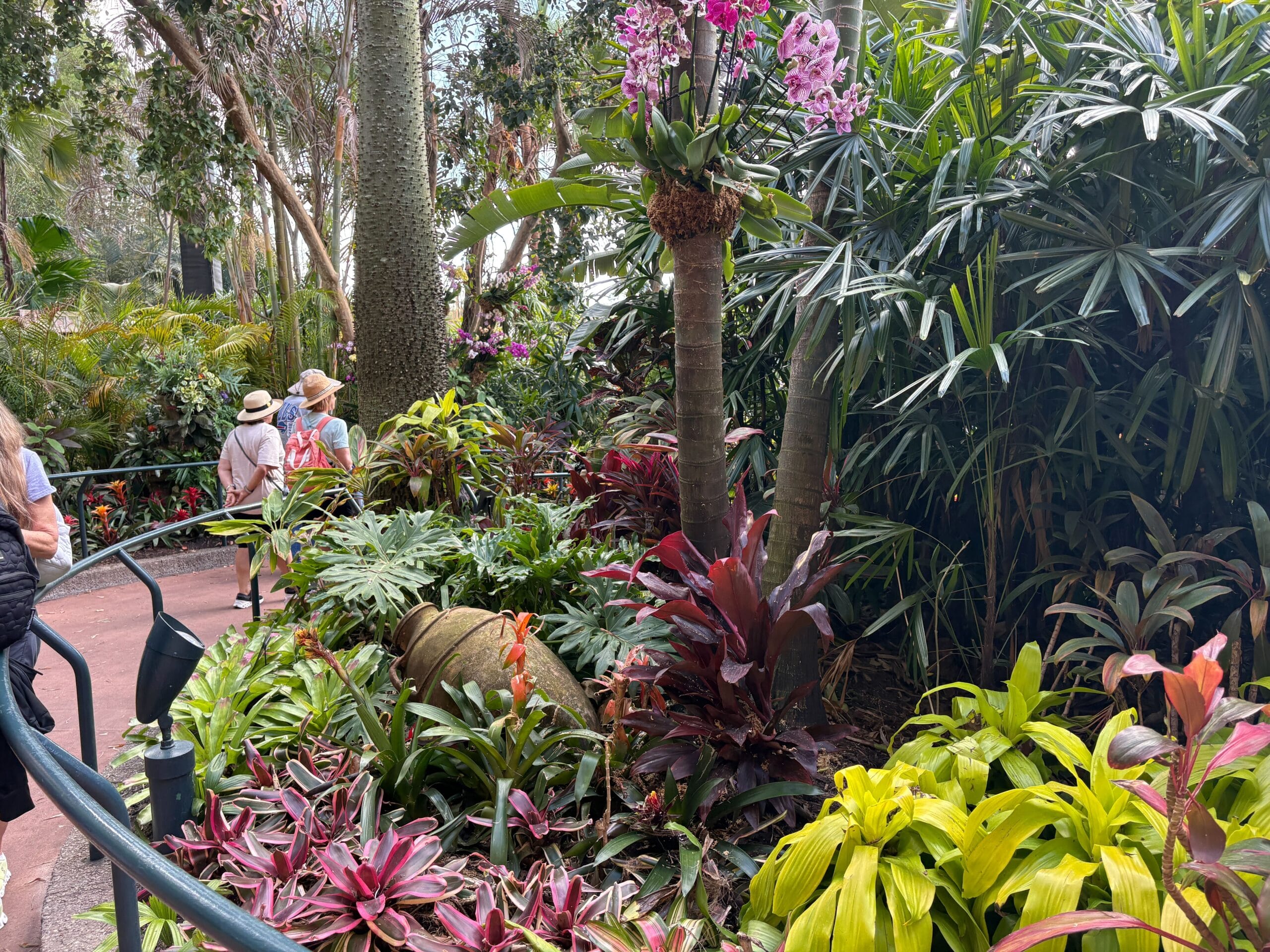
It features bromeliads and details about the rainforest layers.
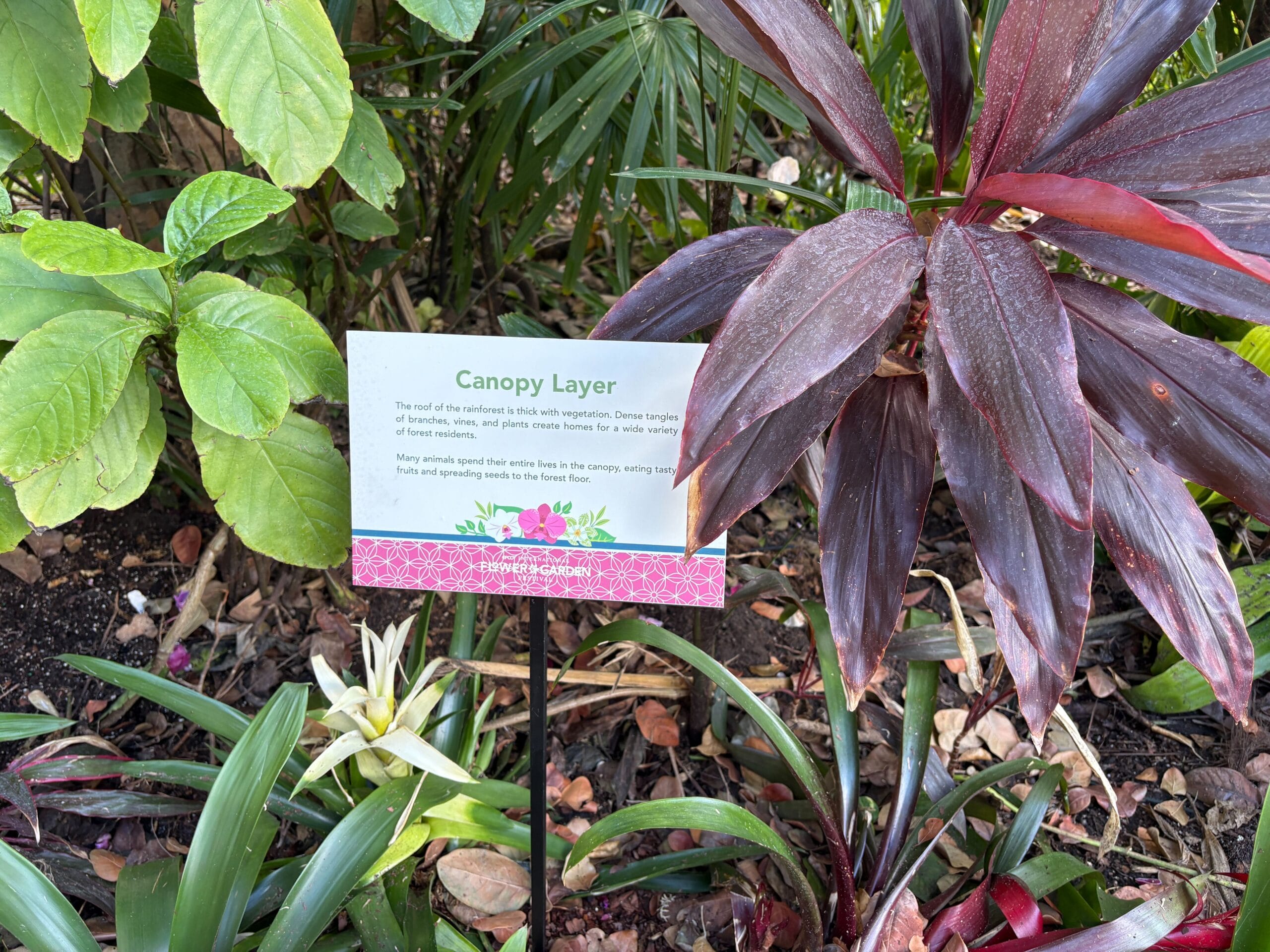
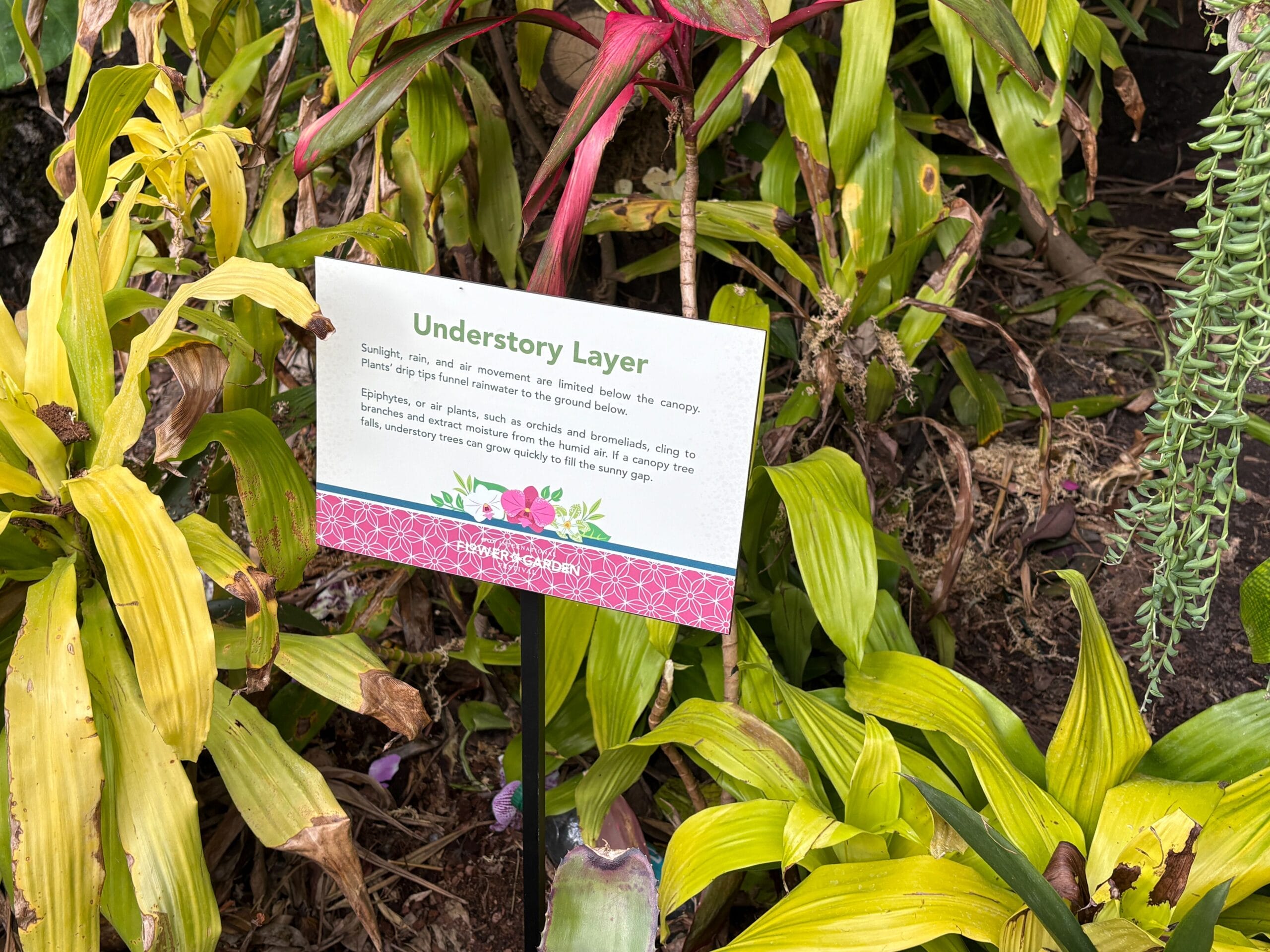
The canopy layer is the roof of the rainforest with dense vines and plants creating homes for a variety of animals. The understory layer is below the canopy, where sunlight, rain, and air movement are limited.
Extraordinary Orchids – Mexico Pavilion
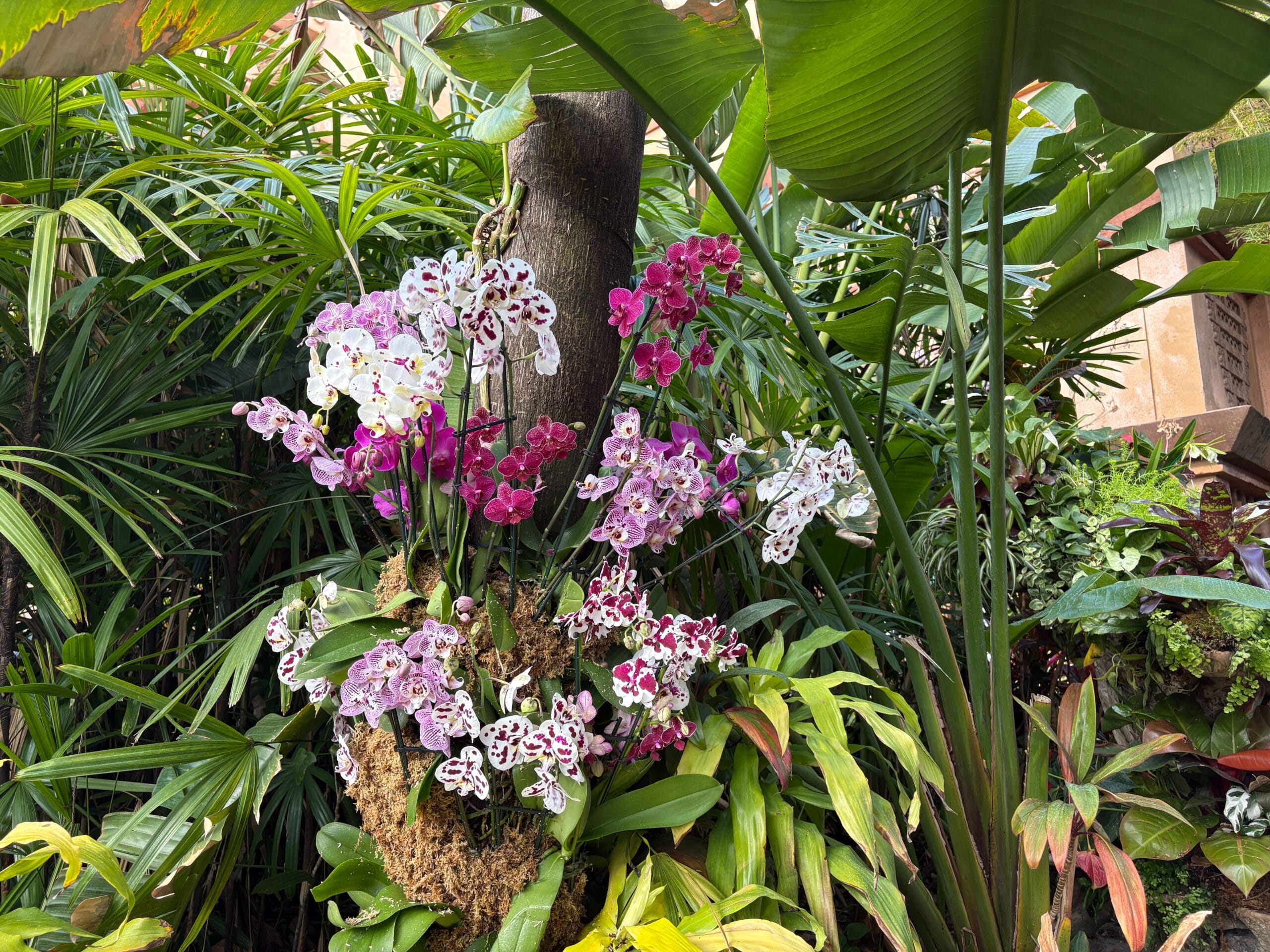
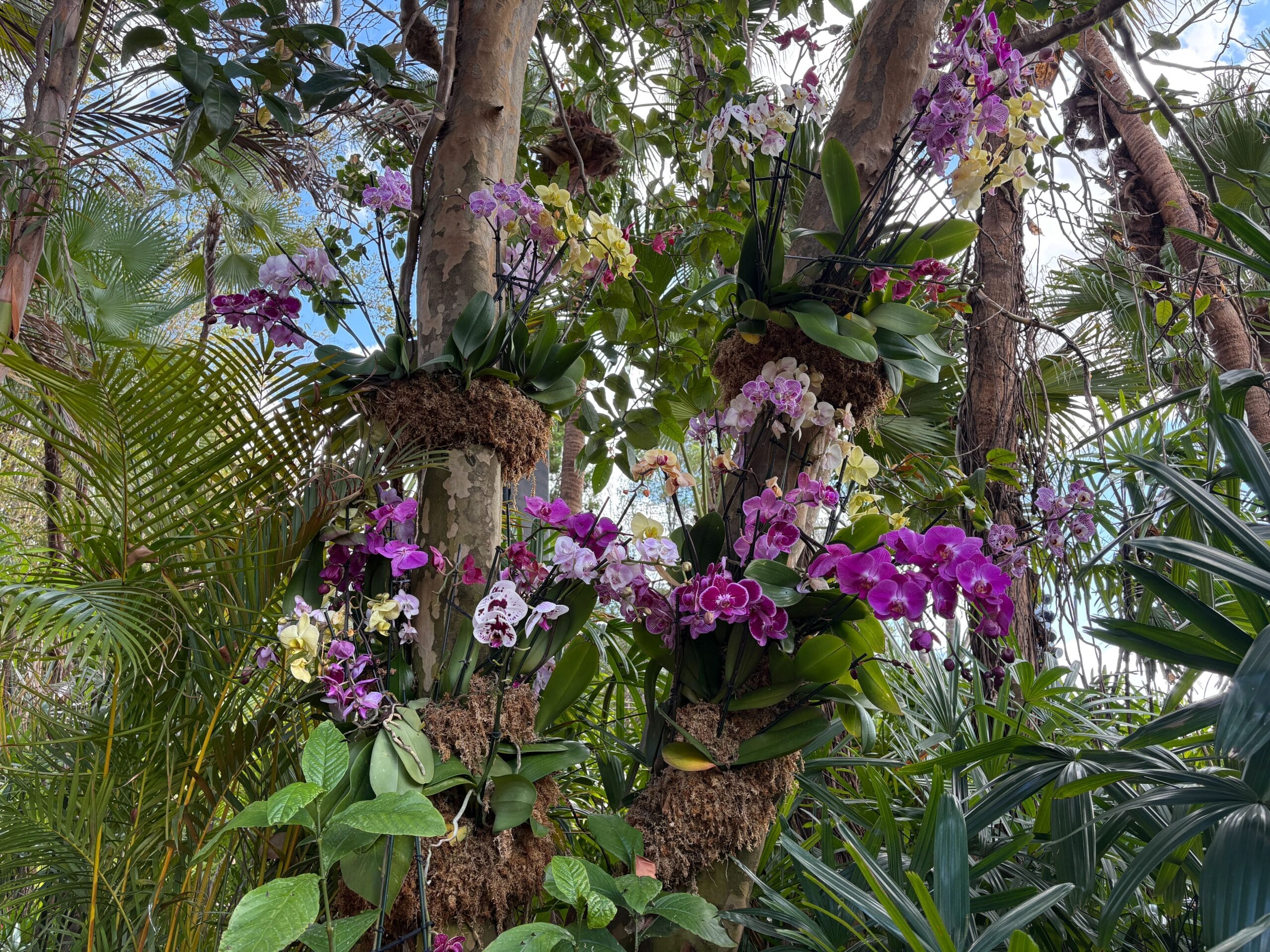
The Extraordinary Orchids garden is part of the Tropical Rainforest Garden.
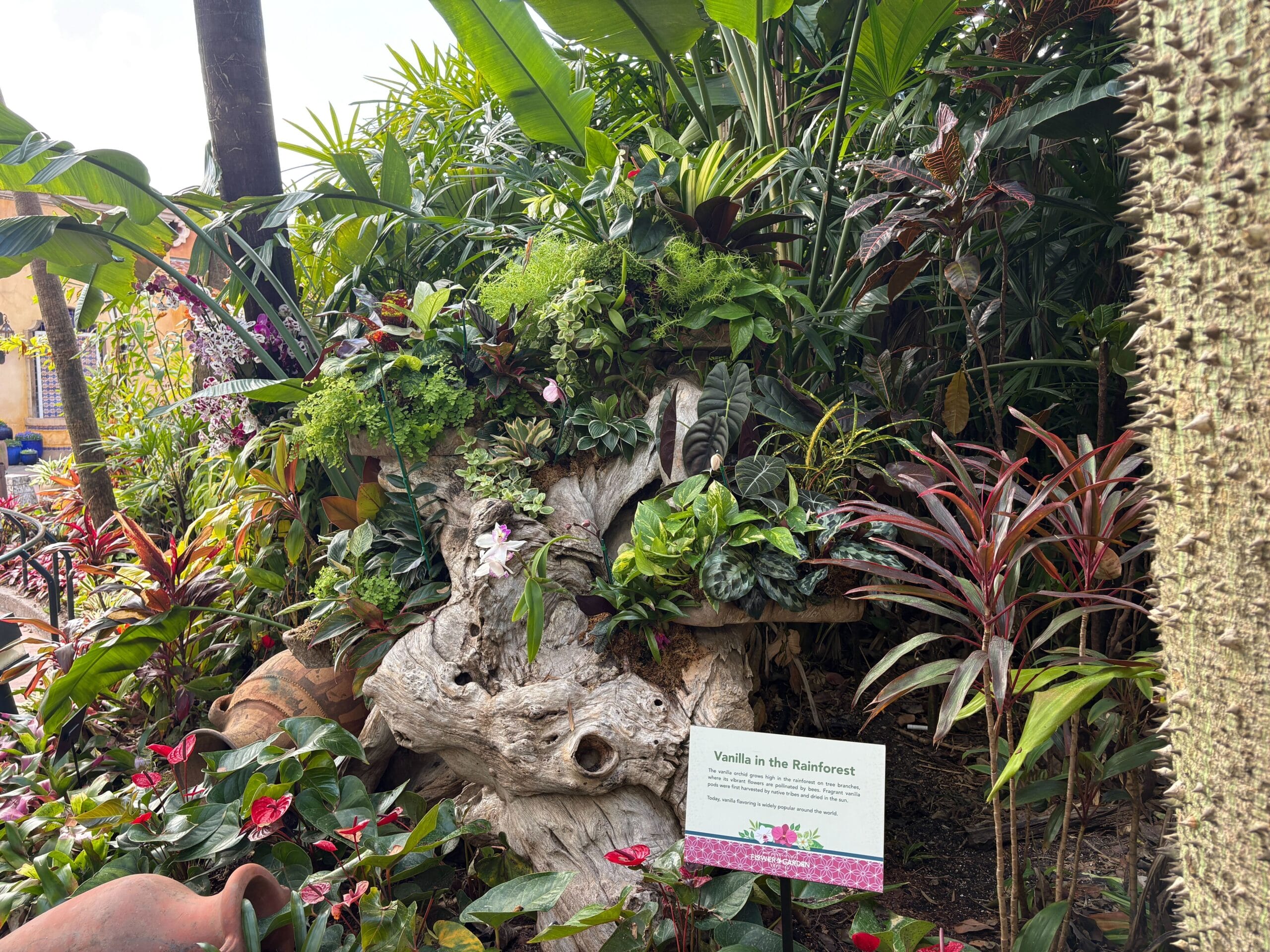
A sign explains how vanilla orchids grow high in the rainforest.
Desert Garden – Mexico Pavilion
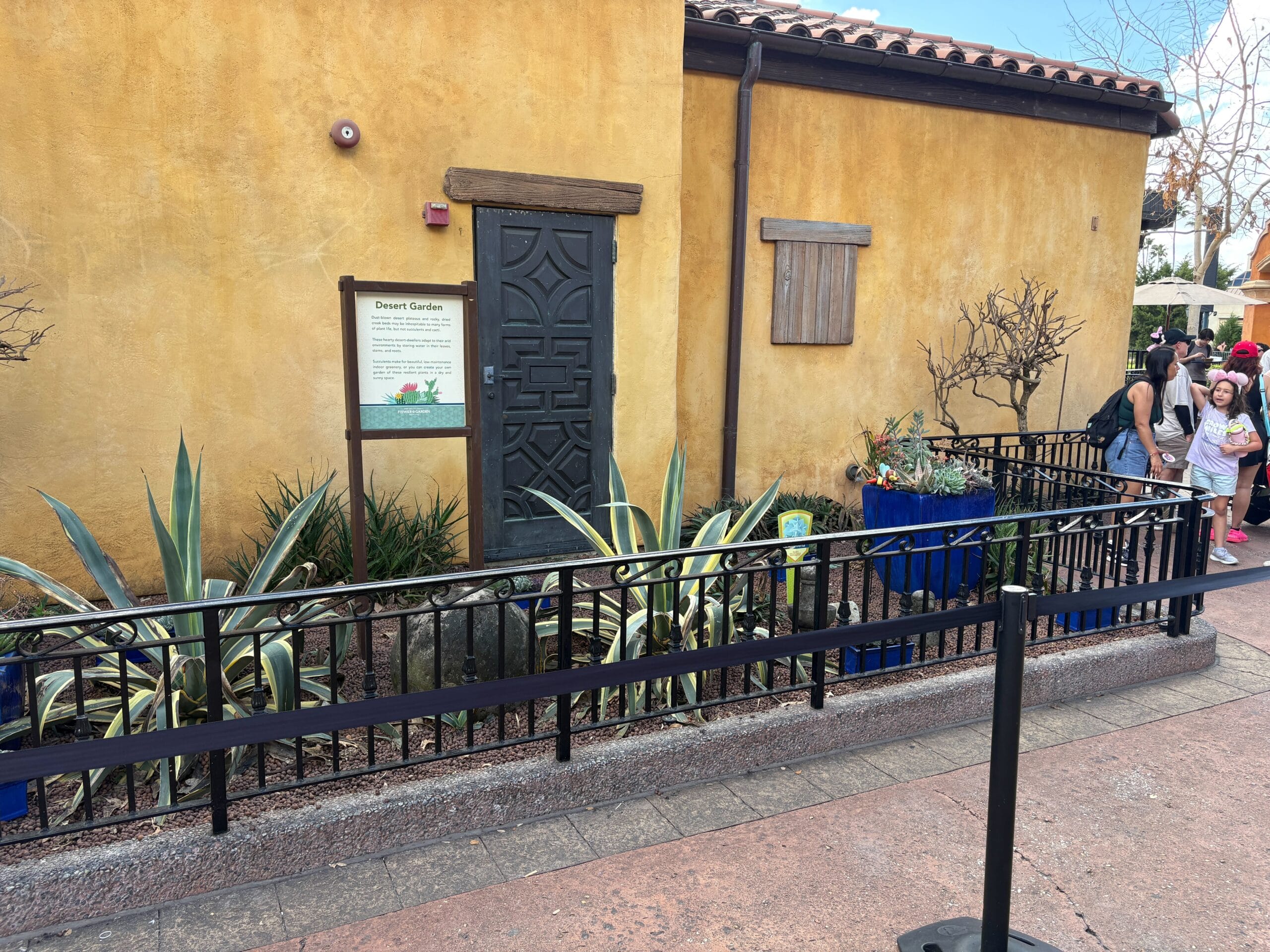
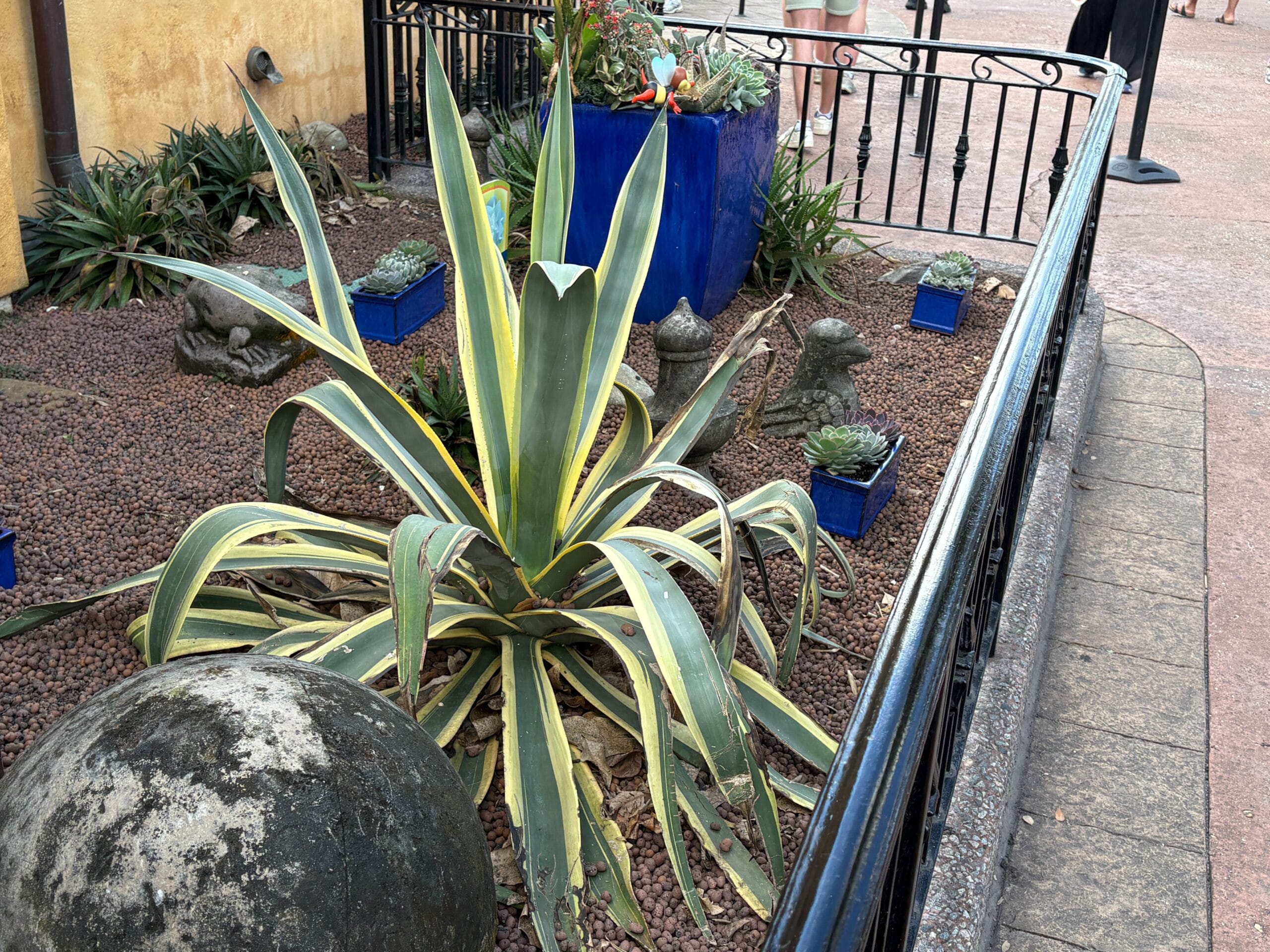
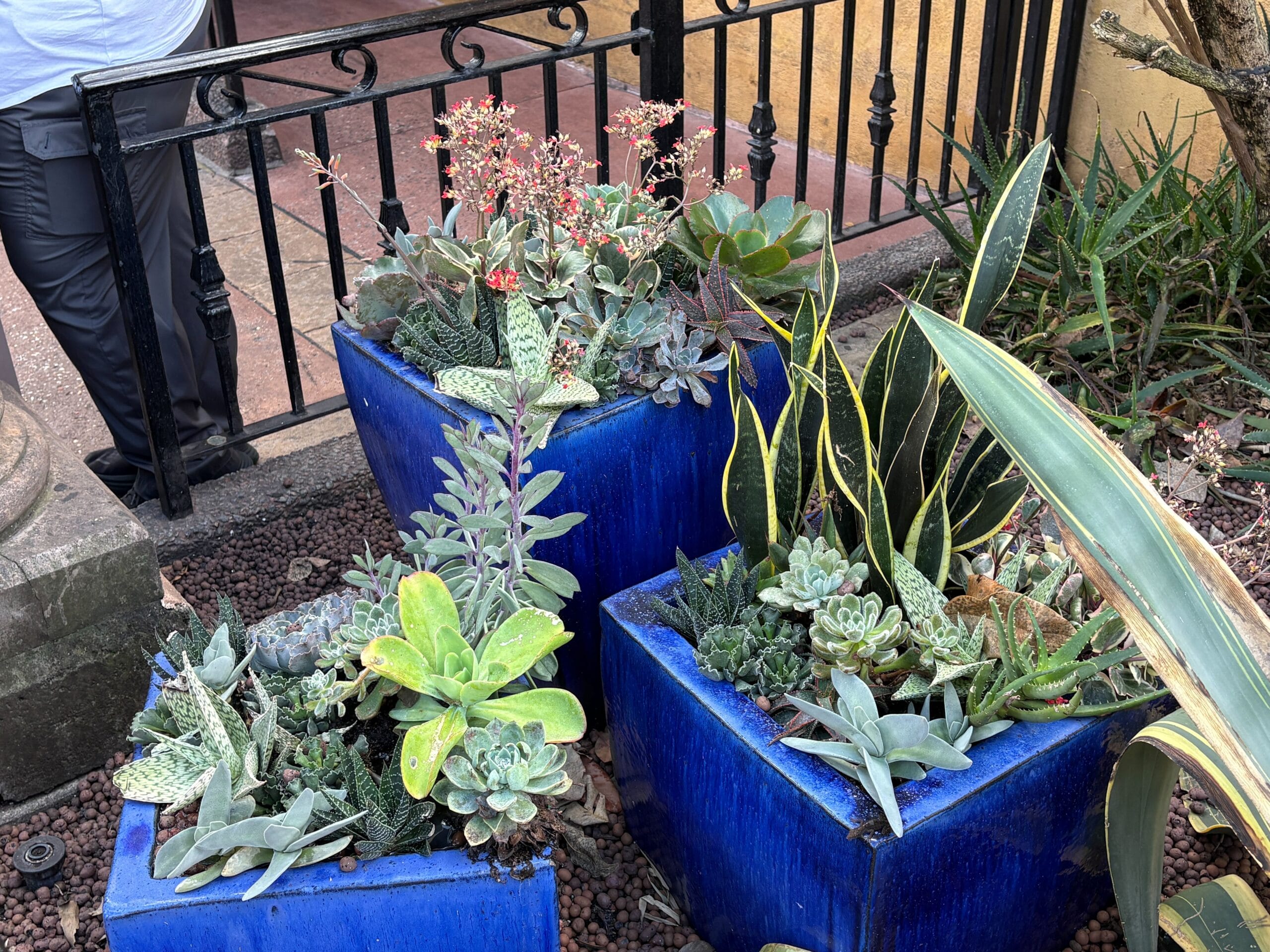
Find the desert garden outside La Cantina de San Angel. It consists of a variety of cacti and succulents.
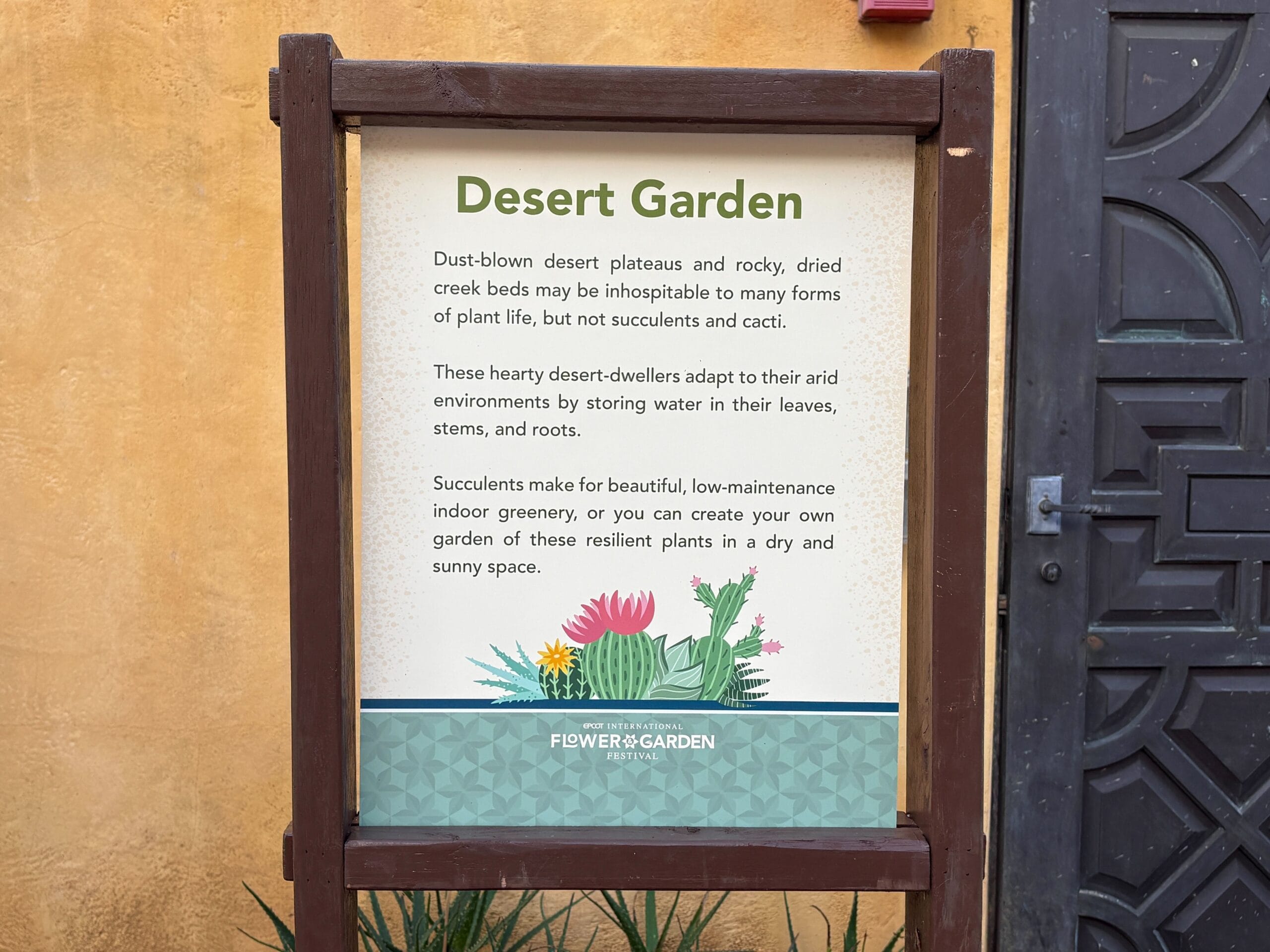
Desert Garden
Dust-blown desert plateaus and rocky, dried creek beds may be inhospitable to many forms of plant life, but not succulents and cacti.
These hearty desert-dwellers adapt to their arid environments by storing water in their leaves, stems, and roots.
Succulents make for beautiful, low-maintenance indoor greenery, or you can create your own garden of these resilient plants in a dry and sunny space.
For the latest Disney Parks news and info, follow WDW News Today on Twitter, Facebook, and Instagram.