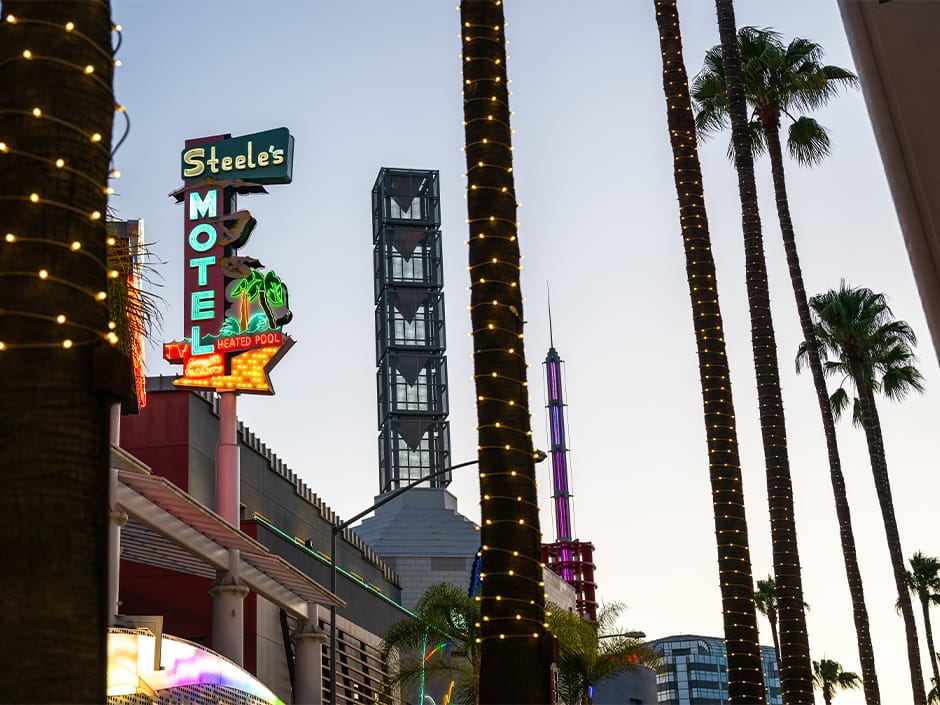
Universal Hollywood has shared a deep-dive look at much of the theming and neon signage that adorns its CityWalk entertainment district.
Universal Studios Hollywood Neon
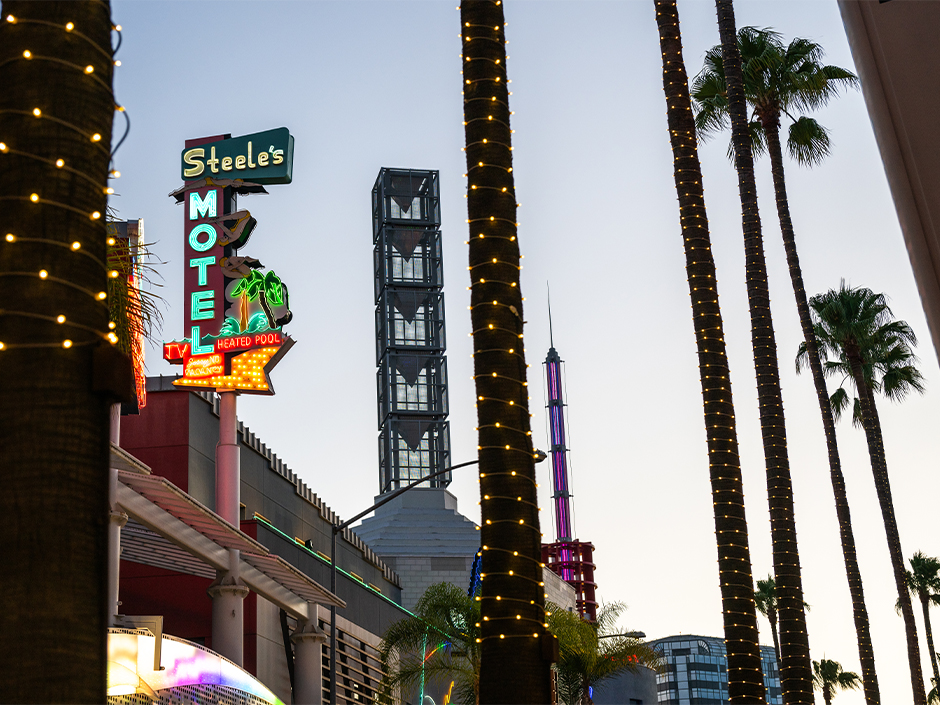
In a post on the Discover Universal blog, the California park highlighted the wide array of era-accurate neon signage at Universal CityWalk Hollywood.
The neon collection draws heavily from Los Angeles’ broader visual heritage, with a range of fixtures including actual restored and preserved signage that once appeared on theaters, businesses, and streets across the region.
As the Discover Universal post details, all but one piece of neon originates from Southern California, staying true to the local style and history of Hollywood culture. Some signs in CityWalk date back as early as 1923.
A Living Museum of Neon
Universal CityWalk Hollywood, which opened in 1994, was conceived as more than a traditional retail and dining corridor. Designed in collaboration with architect Jon Jerde, the district reflects an effort to create an immersive entertainment environment rather than a typical collection of storefronts.
Its design draws on the cultural identity of the surrounding Los Angeles area, layering signage, landscaping, and graphics to produce a cohesive and visually engaging experience. The featured neon signage is a key element of this immersive Hollywood experience, which adds depth and character while reinforcing the district’s distinctive atmosphere.
Originally, CityWalk included a dedicated exhibit space for the Museum of Neon Art, but size constraints for that space led to a creative solution: utilize the entirety of CityWalk as an open-air gallery.
This shift enabled the installation of 20 historic signs throughout the district, transforming them into preserved public artworks. Most of these pieces originate from Southern California and span several decades, from the early 1920s through the 1980s, effectively serving as a tribute to the region’s commercial and cultural history.
Melrose Theater Ladies
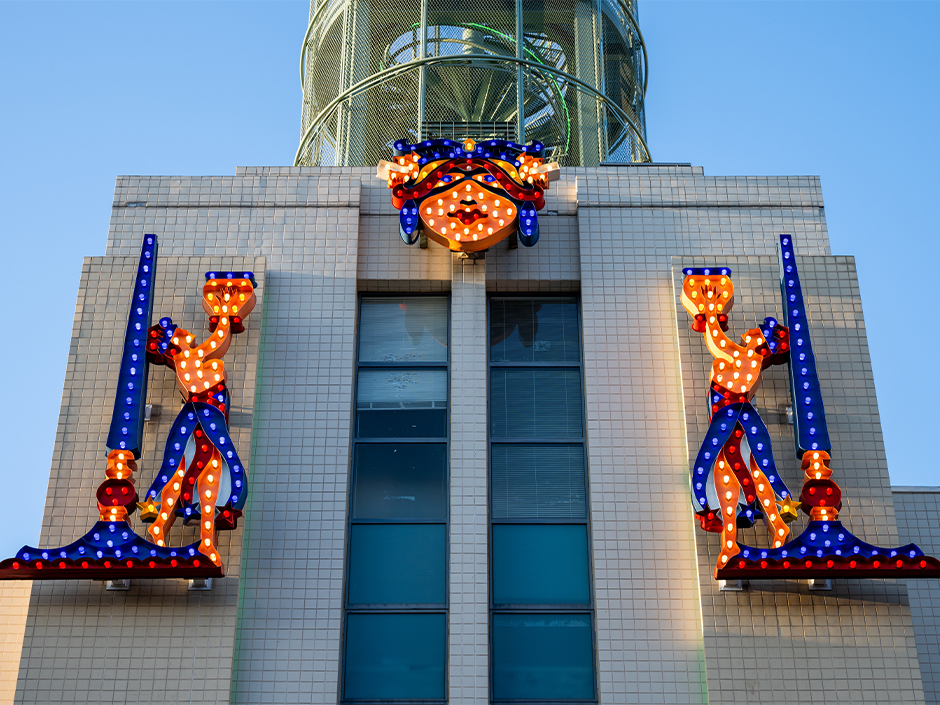
The Melrose Theatre Ladies sign shown above dates to 1923, before the advent of neon tech. Instead, this design uses incandescent lighting, making it the only non-neon piece in the collection. For five decades, the “neon” ladies stood on guard over the historic Melrose Theatre.
Richfield Eagle
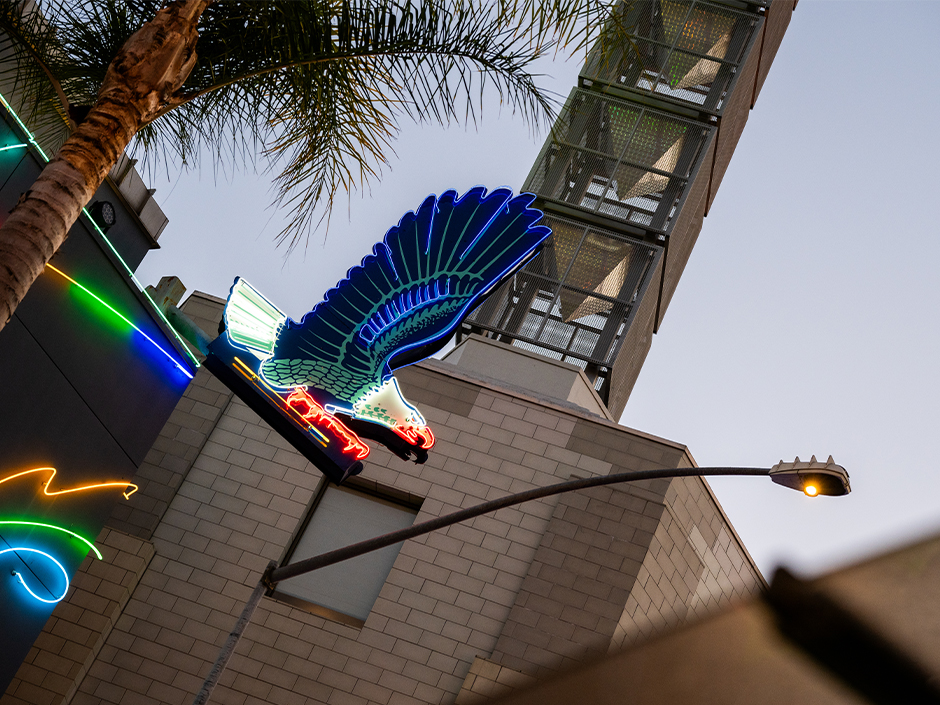
Other highlights include the Richfield eagle, once a widely recognized symbol atop mid-century gas stations. The construction of these eagle signs varied from location to location, with this particular example being made of porcelain enamel.
Wendy’s Western Woundup
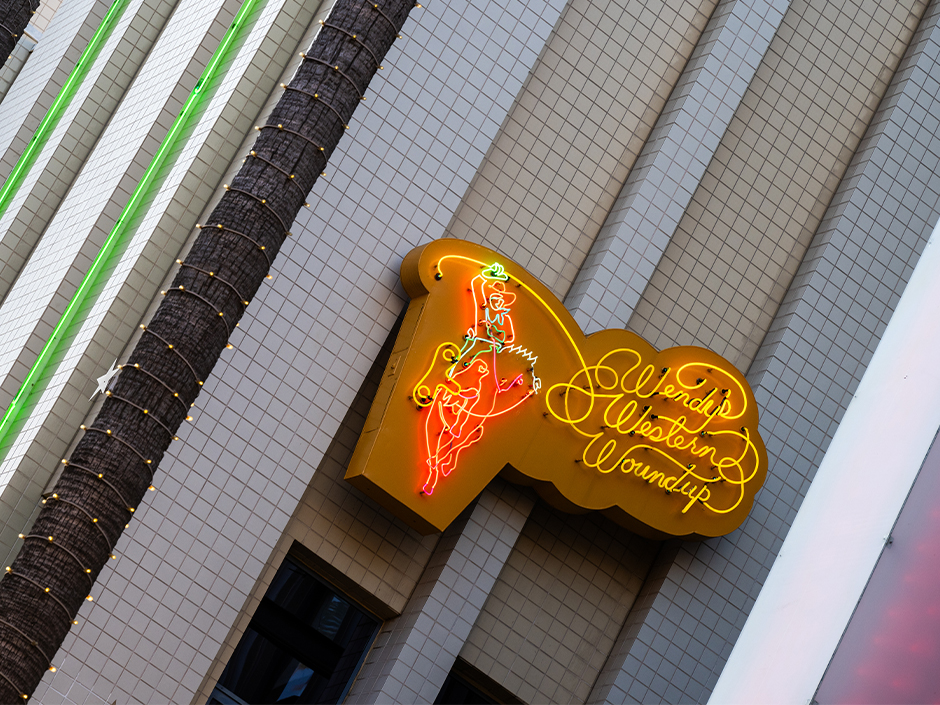
The Wendy’s Western Woundup sign, tied to a Sunset Boulevard boutique with connections to film poster design. This sign originates from a Sunset Boulevard boutique called Wendy’s Western Woundup, where it was gifted to the store owner by a movie poster designer.
The Condes’ Restaurant
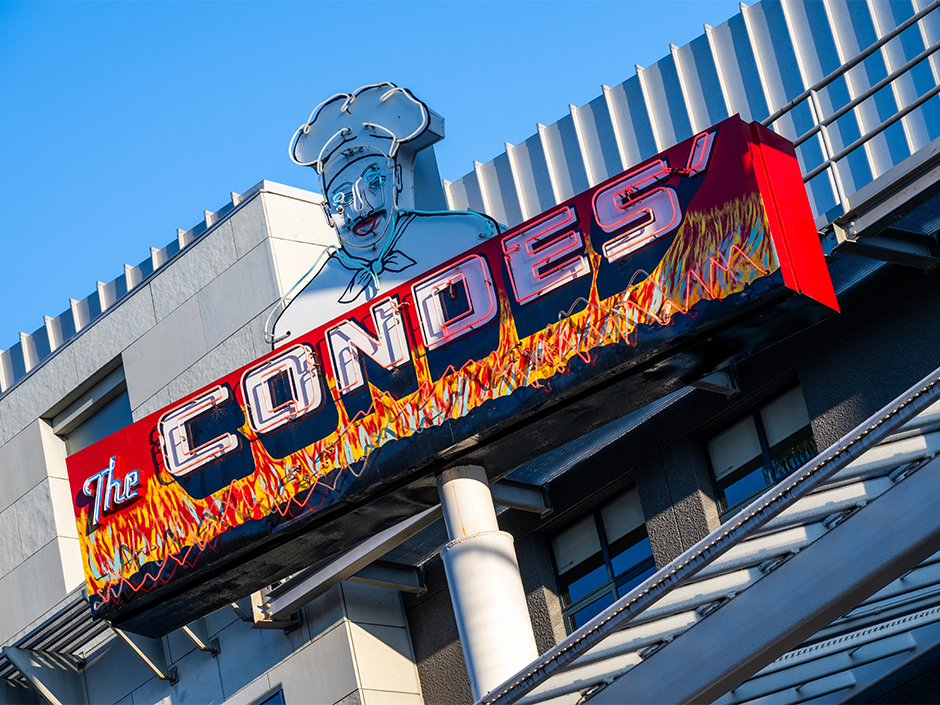
The Condes’ Restaurant sign features a large animated chef figure. The brother-duo of restaurant owners/managers periodically repainted the sign so the chef would more closely resemble the brother who was running the kitchen at that time.
Steele’s Motel
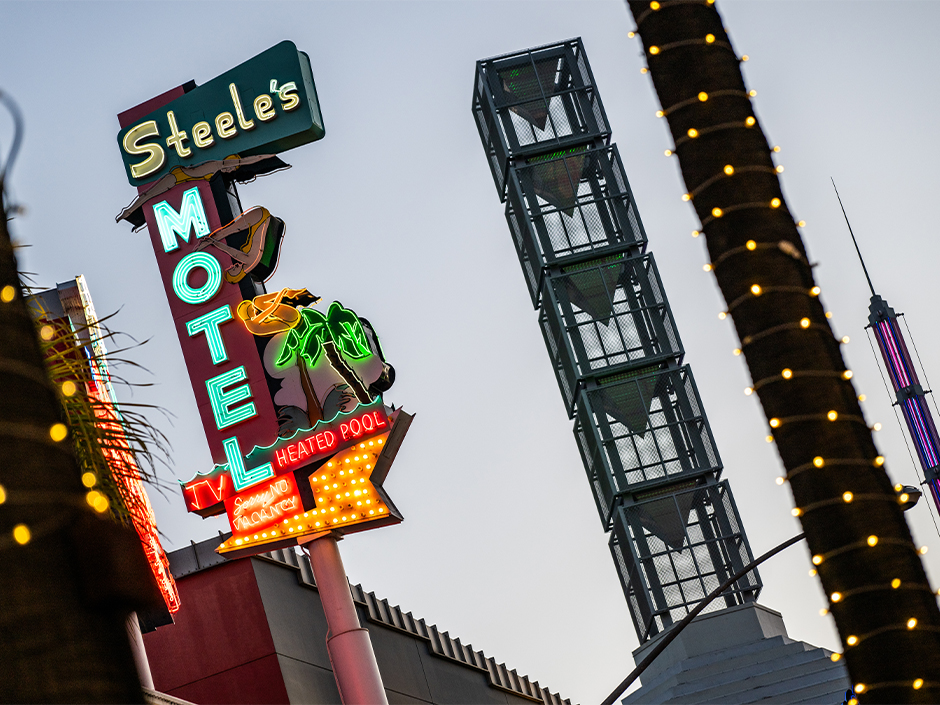
Finally, the Steele’s Motel marquee, which incorporates animated elements and references a historic local motel named for the cowboy movie star Bob Steele.
Today, the neon collection is positioned as a defining feature of the CityWalk experience. Maintained by dedicated teams and integrated throughout the property, the signs function both as aesthetic focal points and as cultural artifacts. Visitors are encouraged to explore the district not only for its entertainment offerings—such as retail, dining, and cinema—but also as a curated environment that celebrates the visual and historical legacy of Southern California.
Explore the Sights and Sounds of CityWalk Hollywood

In addition to its visual identity, CityWalk offers a mix of entertainment, dining, and retail experiences. Its anchor attraction is the Universal Cinema, featuring premium large-format screens, including IMAX.
The district also includes a variety of restaurants, shops, and themed venues designed to appeal to both tourists and local visitors, with offerings tied to film, television, and broader pop culture.
Overall, Universal CityWalk Hollywood operates as both a gateway to Universal-themed entertainment and an entertainment destination in itself, combining commerce and curated design into a single dynamic experience. Its integration of historic neon art and new media design elements reinforces its integral role in the Universal Studios Hollywood resort experience.
Do you have a favorite sign from this CityWalk Collection? Share your top picks with us on social media.
For more Universal Studios news from around the world, follow Universal Parks News Today on Twitter, Facebook, and Instagram. For Disney Parks news, visit WDWNT.