
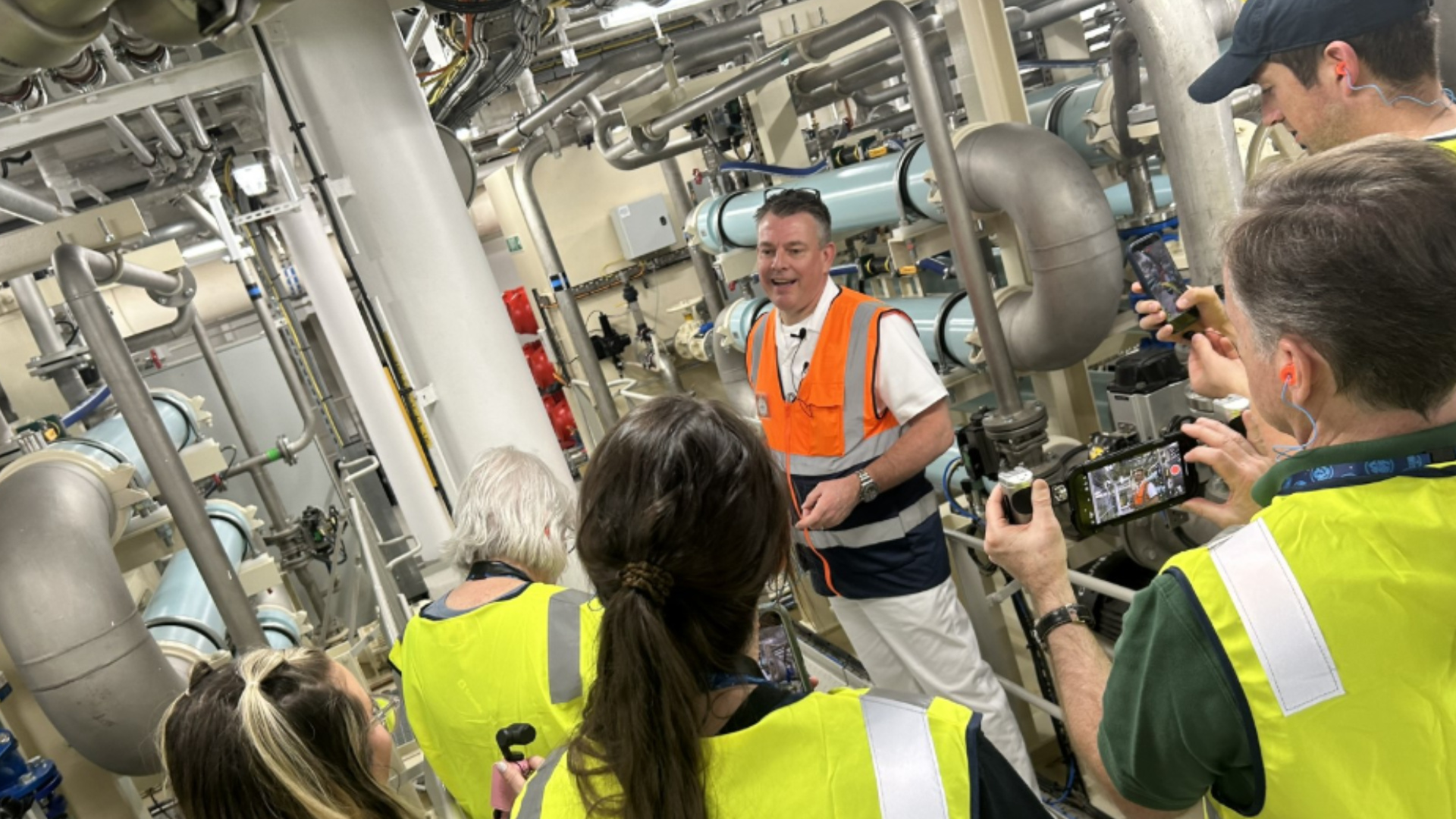
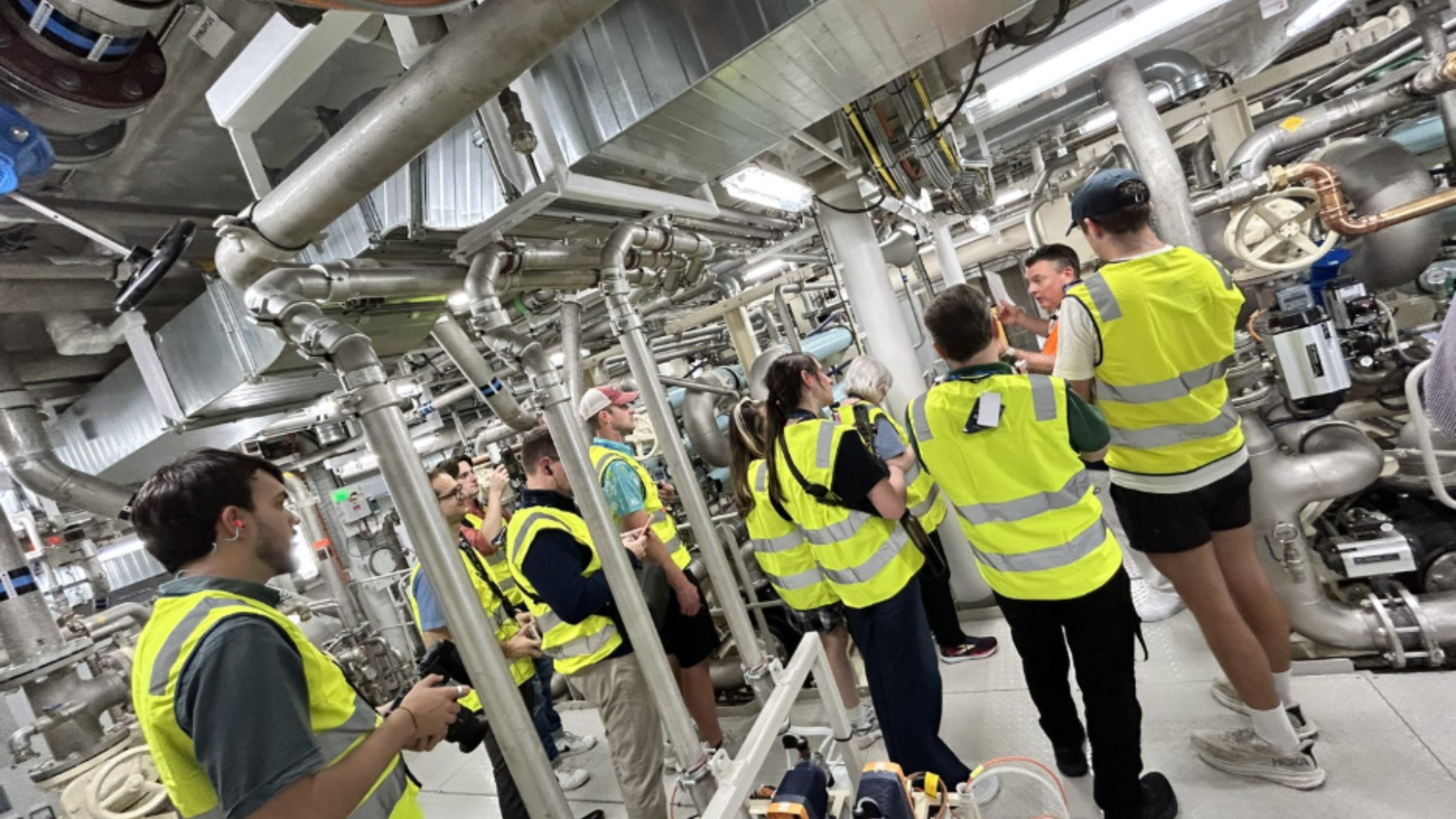
Johan Blokstra, Chief Engineer of the Disney Destiny gave the first-ever tour of the inner workings of a Disney Cruise Line ship. Take a look at how the entire Disney Cruise Line Wish class of ships work and how they work again to conserve every resource possible.
Deck 1 branches off into specialized operational rooms and allows crew members to quickly get to guest areas of the ship.
Engine Control Room
A place Johan calls “The heart of the ship,” the Engine Control Room is where every system on the Disney Destiny is monitored, optimized, and managed. Pictures are not allowed in this area of the ship.
According to Disney, “the Engine Control Room was larger than the chess room on the Millennium Falcon, but smaller than the Xandarian teleport room where the Cosmic Generator goes missing.”
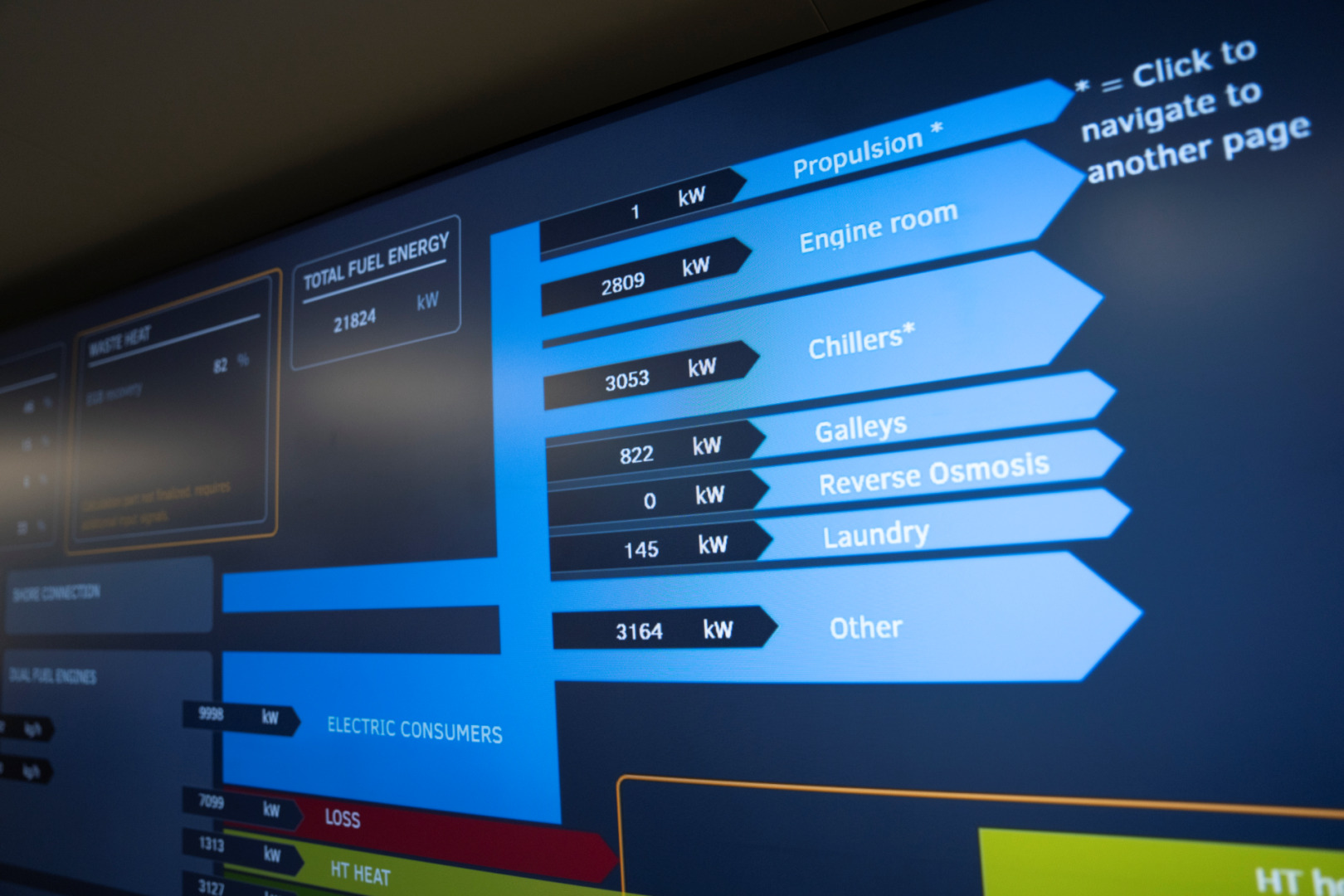
A main console stretched across the middle of the room where crew members sat in chairs, able to roll within reach of phones, screens, and keyboards. A web-like graph shows how Disney controls their power plant, how they control their LNG [liquefied natural gas] plant … air conditioning, everything that’s going on in the ship is being controlled from here.
Disney Cruise Line is focused on working to reduce emissions on the entire fleet of ships. The ABB Ability OCTOPUS system is a high-tech energy efficiency coach for the ship. The system cuts down on fuel usage and emissions by giving the crew instant, easy-to-understand guidance on the most efficient way to run every part of the ship, from LED lighting to fan and pump speeds.
By continually striving to run in the most efficient way, Wish Class ships emit 20 percent less greenhouse gases than a similar-sized vessel without these innovations. Even the shape of the ship helps save fuel. The hydrodynamic hull and an optimized propulsion system save nearly 1,800 tons of fuel per ship annually. The energy-efficient HVAC systems aboard save nearly 700 tons of fuel per ship each year.
Johan said that the system constantly monitors the vessel’s condition to ensure maximum reliability and efficiency. “There’s a lot of heat. The engines generate a lot of heat, so we also have [heat] losses. We use those losses as much as we can to recover that heat in our power generation.” All the operational data is securely shared with specialists ashore, who use it to analyze and improve the performance of every ship in the fleet. With these systems, Disney Cruise Line can make smarter decisions on energy efficiency.
Recycling Room
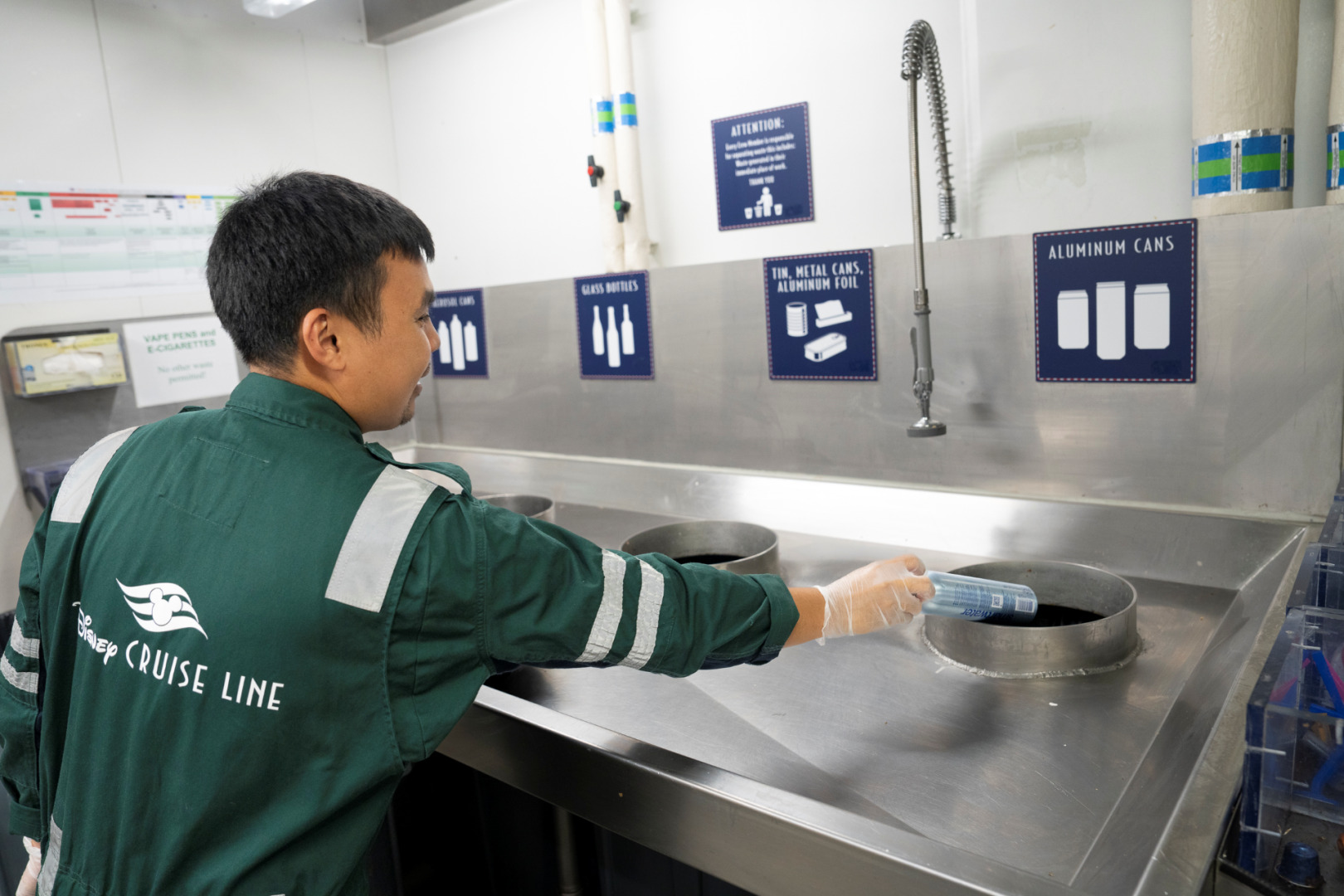
Everything that you throw away on a Disney ship ends up in the Recycling Room. Here, teams sort waste to process recyclable materials like glass, paper, cardboard, metal, and plastic. Big can crushers and cardboard balers prepare materials for recycling instead of ending up in a landfill. On each ship across the Disney fleet, up to 400 tons of materials are recycled annually.
Disney Cruise Line has eliminated nearly all single-use plastics from its ships and island destinations in The Bahamas, with the goal of sending zero waste to landfills.
Engines
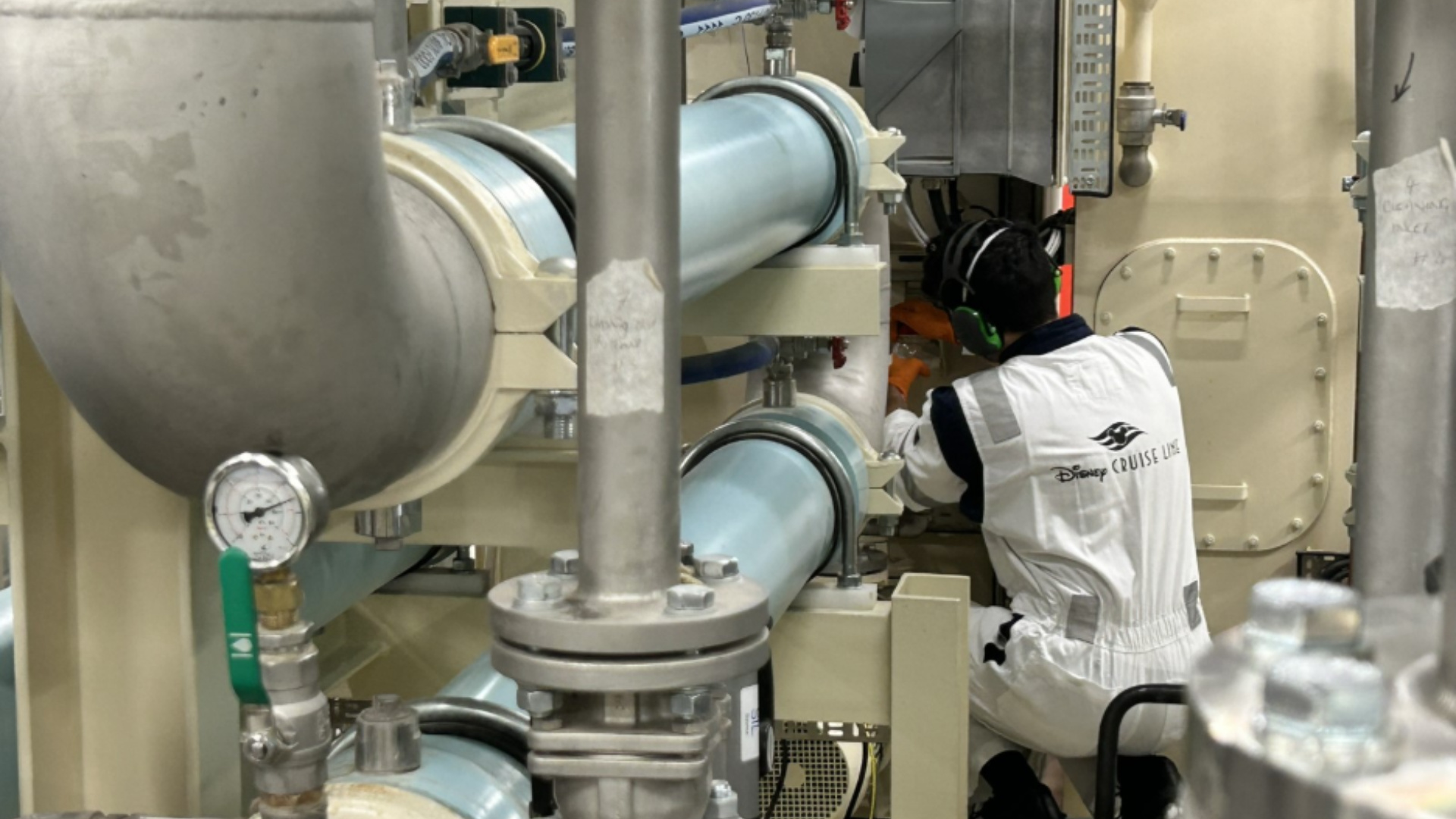
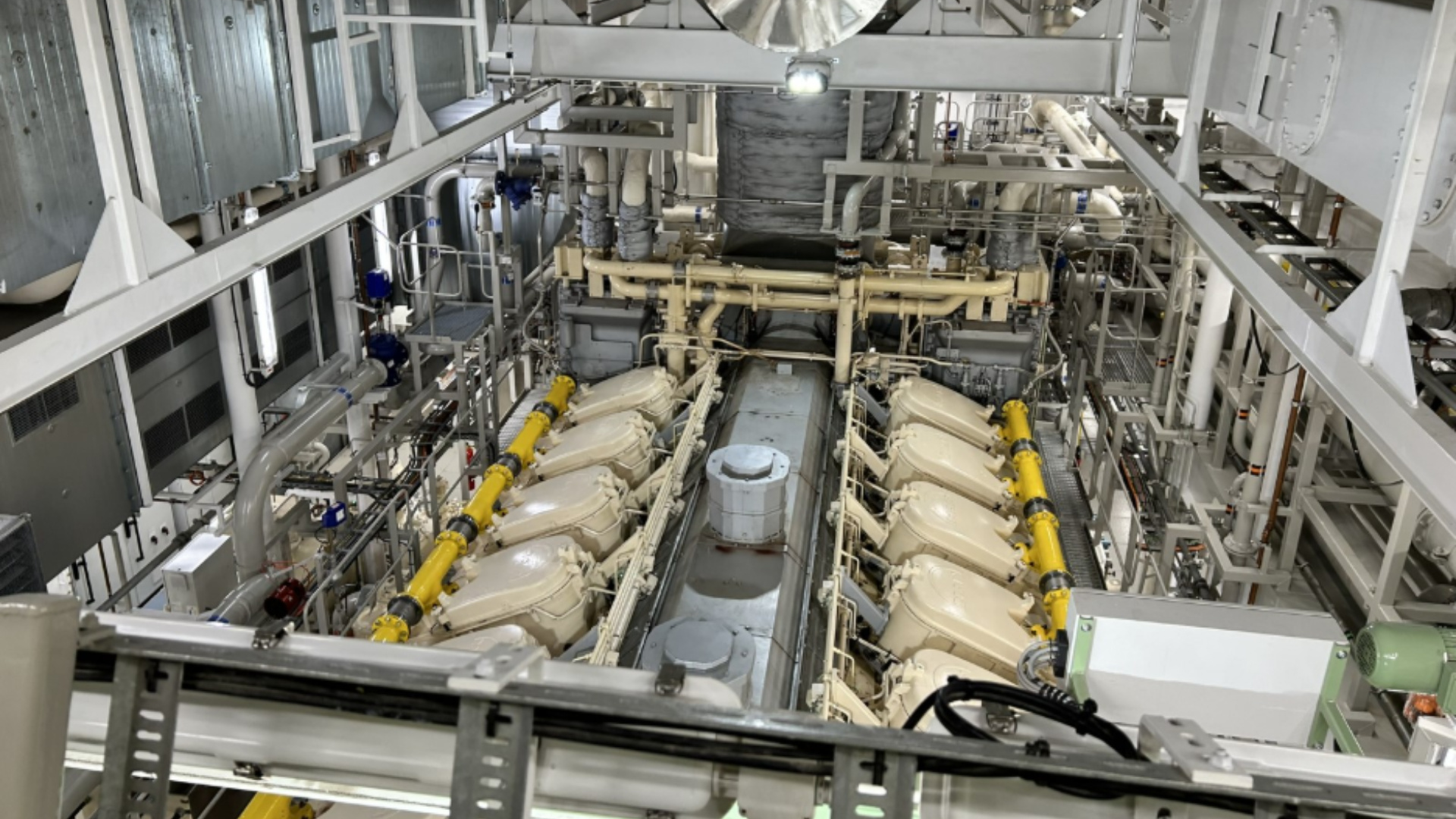
The Disney Destiny has five huge engines. However, the engines don’t run all the time; they are carefully managed to meet the needs of the ship.
Disney Cruise Line has invested in using new fuels across the fleet, including liquefied natural gas (LNG) onboard the Disney Destiny.
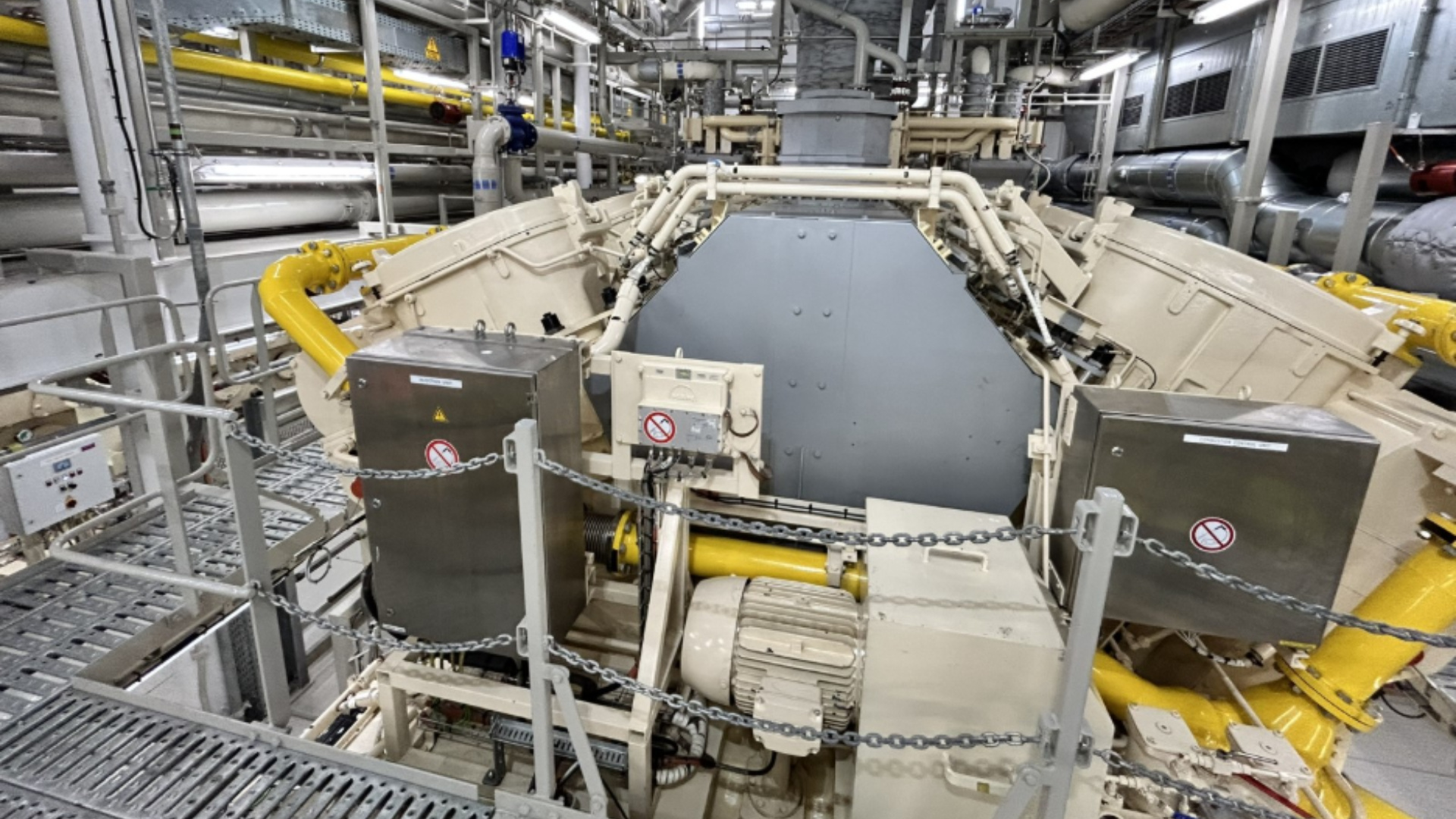
Johan explained that the LNG fuel is stored in a few huge tanks (each three decks tall) at a cryogenic temperature of 250 degrees Fahrenheit below zero. The fuel expands over 600 times as it warms into a gas, so it is stored at this cold temperature to be able to store the fuel in a smaller space (like, inside a ship).
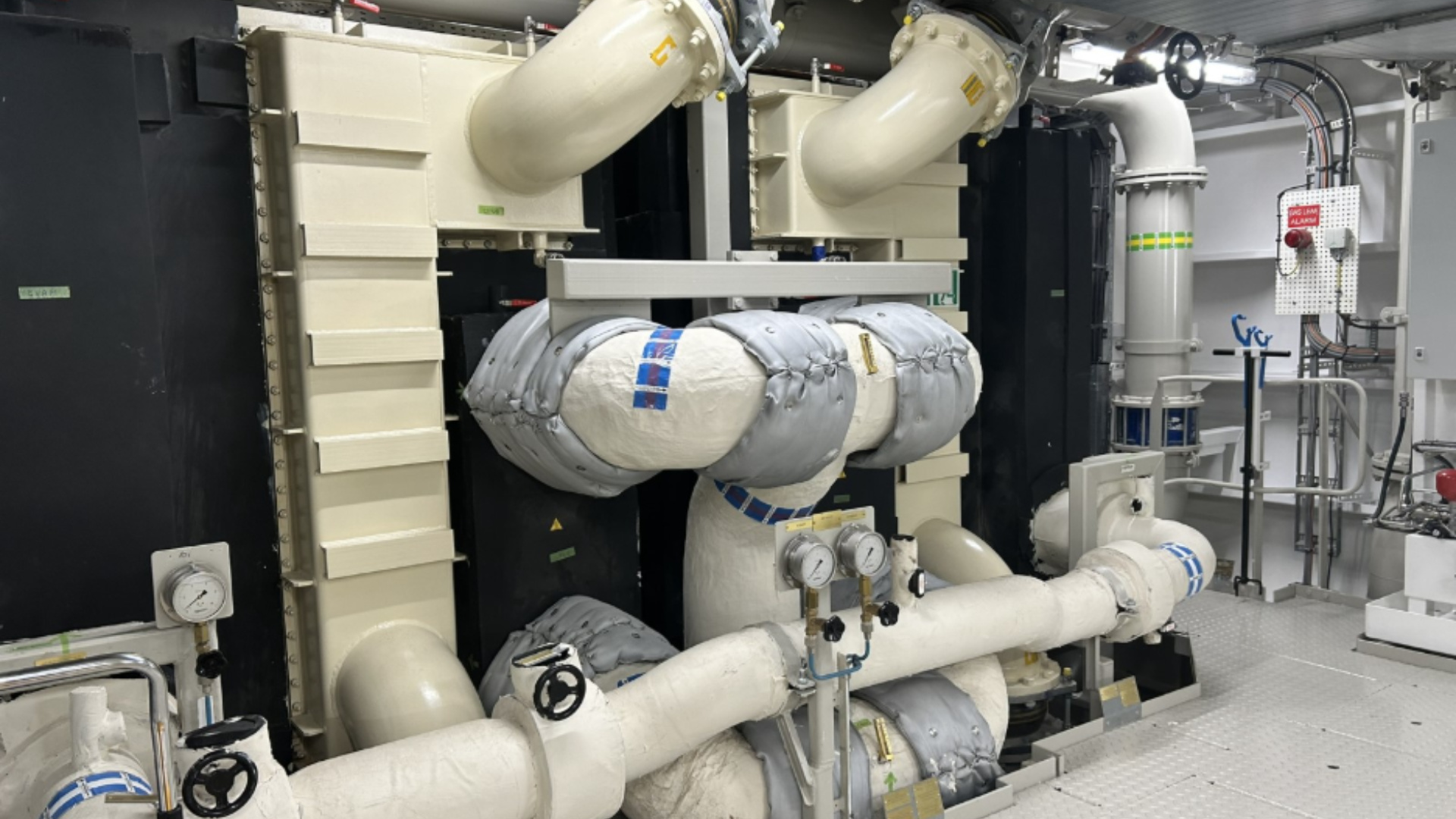
Another engine converts heat into air conditioning. Part of it goes through the machine and there is a chemical reaction happening inside. Hot water is turned into cold water, which then goes back into the air conditioning system for the ship.
Johan explained that the Cold Recovery Unit uses gas from the engines to help chill the water. “That again helps us with the generation of the air conditioning upstairs. We use the energy to help us keep the ship cold as well,” Johan clearly loves this science, adding, “Pretty neat!”
The naturally occurring condensation produced by the air conditioning system is turned into fresh water for onboard laundry facilities, which saves each ship approximately 10 million gallons of water annually.
Conserving Water and Protecting Oceans
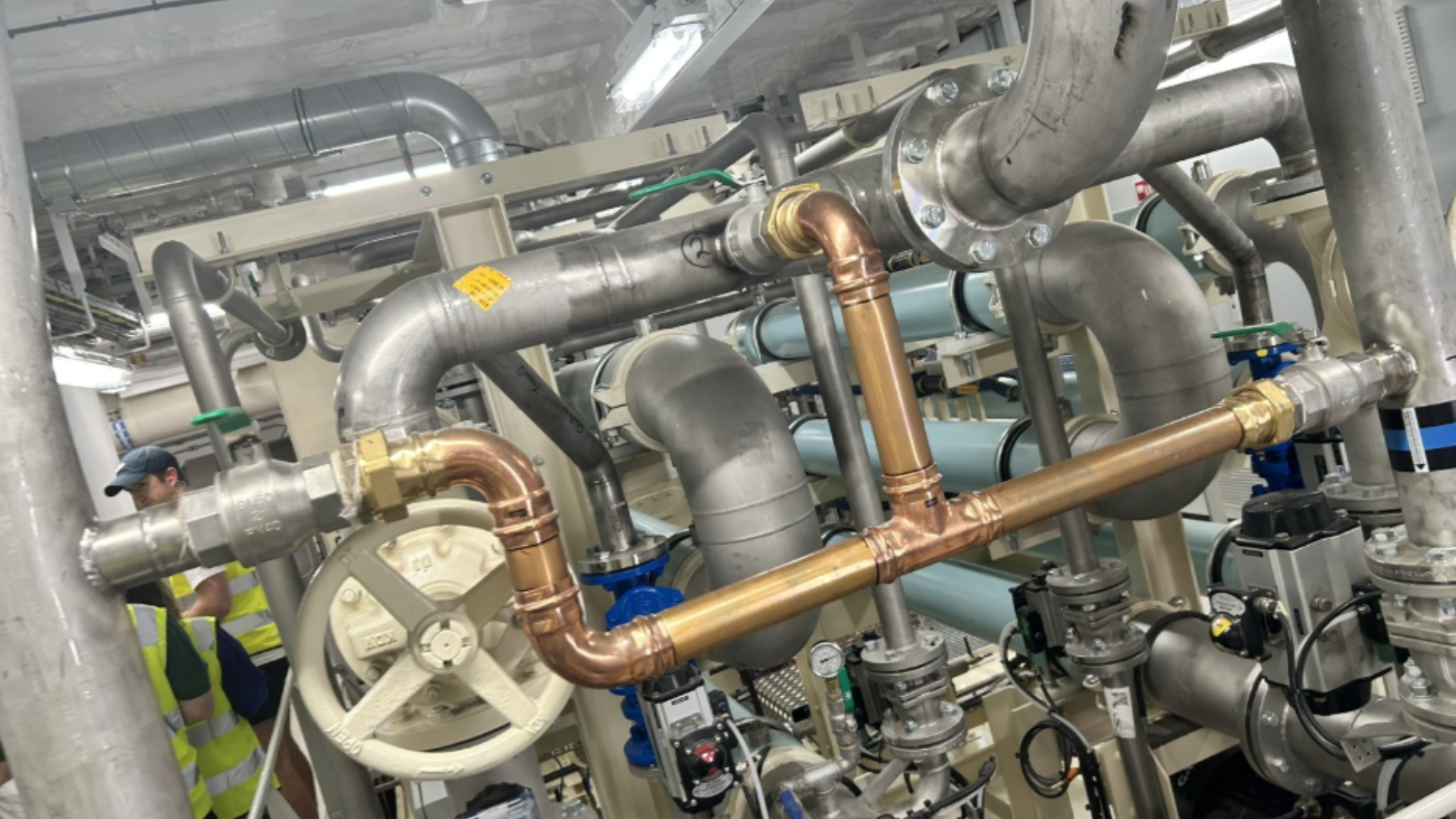
Up to 99% of the freshwater onboard a Wish class ship is produced onboard using energy-efficient reverse osmosis systems. To translate; the ship turns seawater into freshwater.
Water that goes down drains (including showers and toilets) is processed via the Advanced Wastewater Treatment system to be safe for marine life and can be released off the ship. Johan explained that the process is similar to a household septic tank, where oxygen and bacteria go to work to help clear the water to levels far exceeding international standards.
Things are moving. Things are evolving. At the moment, this is the best way forward, but in a couple years’ time you’ll see changes.
See more of the tour below:
Did you learn anything fascinating from this tour? Let us know on social media.
For the latest Disney Parks news and info, follow WDW News Today on Twitter, Facebook, and Instagram.
Source: Disney Parks Blog