Walt Disney’s Carousel of Progress at Magic Kingdom is closing today, July 5, to be completely reimagined. Take a last look at the classic Disney attraction before it changes.
Last Look at Carousel of Progress
Carousel of Progress History

Carousel of Progress debuted at the 1964-1965 New York World’s Fair as part of Progressland, one of three Disney attractions at the General Electric (GE) Pavilion, along with Great Moments With Mr. Lincoln, “it’s a small world,” and Ford Magic Skyway. Imagineers led by Bob Gurr and Roger E. Broggie developed the rotating “carousel” theater that takes guests through different scenes. The Sherman brothers composed the ride’s theme song, “There’s a Great Big Beautiful Tomorrow.” Rex Allen voiced the Father.
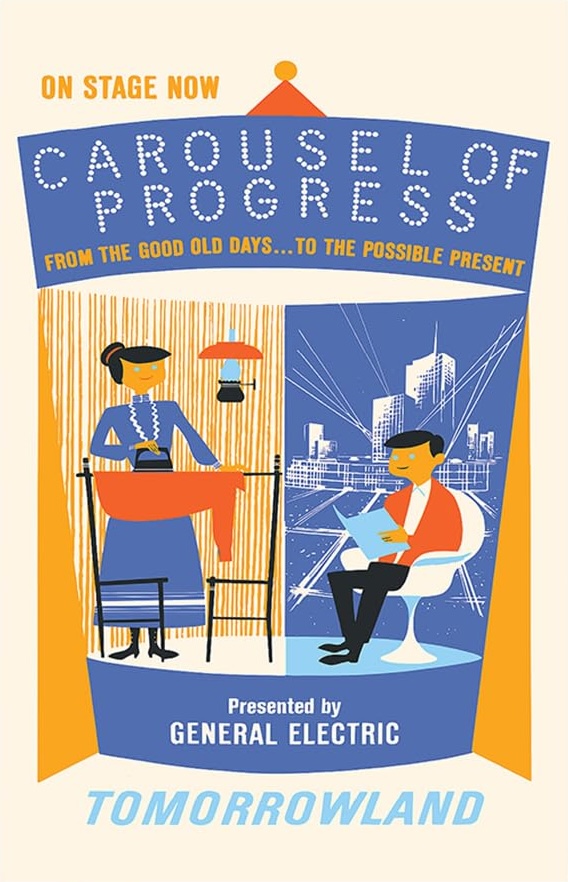
Due to the ride’s popularity at the fair, Disney’s first-ever wait time sign was installed to tell guests how long the line might be. After the carousel, guests could go to the second floor of the pavilion to see the General Electric “Skydome Spectacular,” a projection show that demonstrated how GE harnessed electricity, followed by a demonstration of thermonuclear fusion.
After the fair, Carousel of Progress moved to Tomorrowland in Disneyland, where it operated from 1967 to 1973. GE continued to sponsor the attraction, which saw only a few changes from its fair version. The building’s second level displayed the model of Progress City, Disney’s original concept for EPCOT.
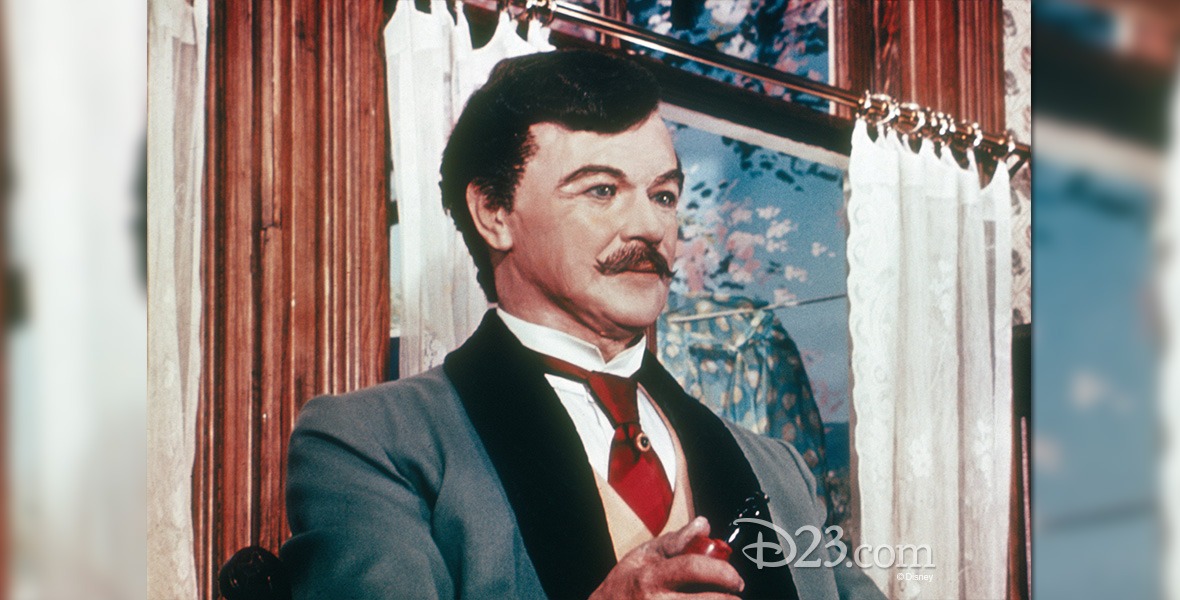
The show then moved to Magic Kingdom, where it has run since 1975. As such, it is the longest-running stage show in the history of American theater and one of the oldest attractions at Walt Disney World (it’s beat by Prince Charming Regal Carrousel, which was originally built in 1918).
More changes were made to the show with the Florida move. The theater now rotated counterclockwise instead of clockwise. A new cast of voice actors, including Andrew Duggan as the Father, was brought in and new Audio-Animatronics were crafted.

The scenes saw minor updates and the finale was changed to New Year’s Eve in the Home of the 1970s. Most famously, the Sherman brothers wrote a new song, “The Best Time Of Your Life,” per GE’s direction.

Because the Florida pavilion is one story, just a small section of the expansive Progress City model was moved to a window display on the Tomorrowland Transit Authority PeopleMover.
In 1981, the ride closed briefly for the finale to be changed to New Year’s Eve in the Home of the 1980s.
GE’s contract ended in 1985 and the ride closed so GE references could be removed, although some logos still remain on appliances.

In 1993, the ride closed again. Another new cast was brought in, featuring Jean Shepherd as the Father (John) and narrator. Rex Allen returned to voice the Grandfather in Act 4 and narrate the pre-show. “There’s a Great Big Beautiful Tomorrow” returned and the finale became “The Future that Never Was.” It reopened in 1994 as part of the New Tomorrowland overhaul of the land.
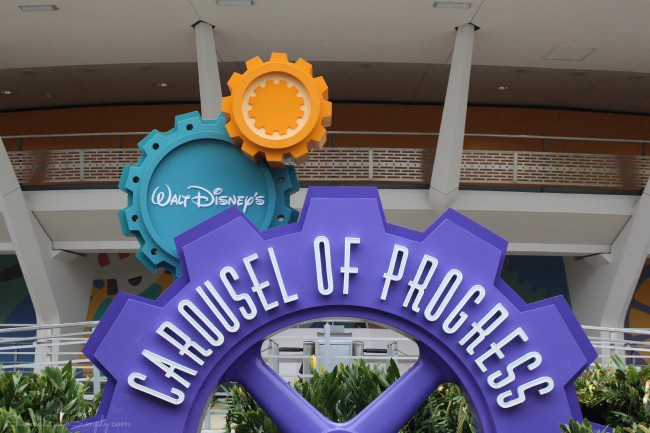

The 1994 overhaul also included gears and cogs theming. This was replaced by sleeker designs in 2016. In 2021, the original 1975 turnstiles were removed. In 2024, the seating was updated.
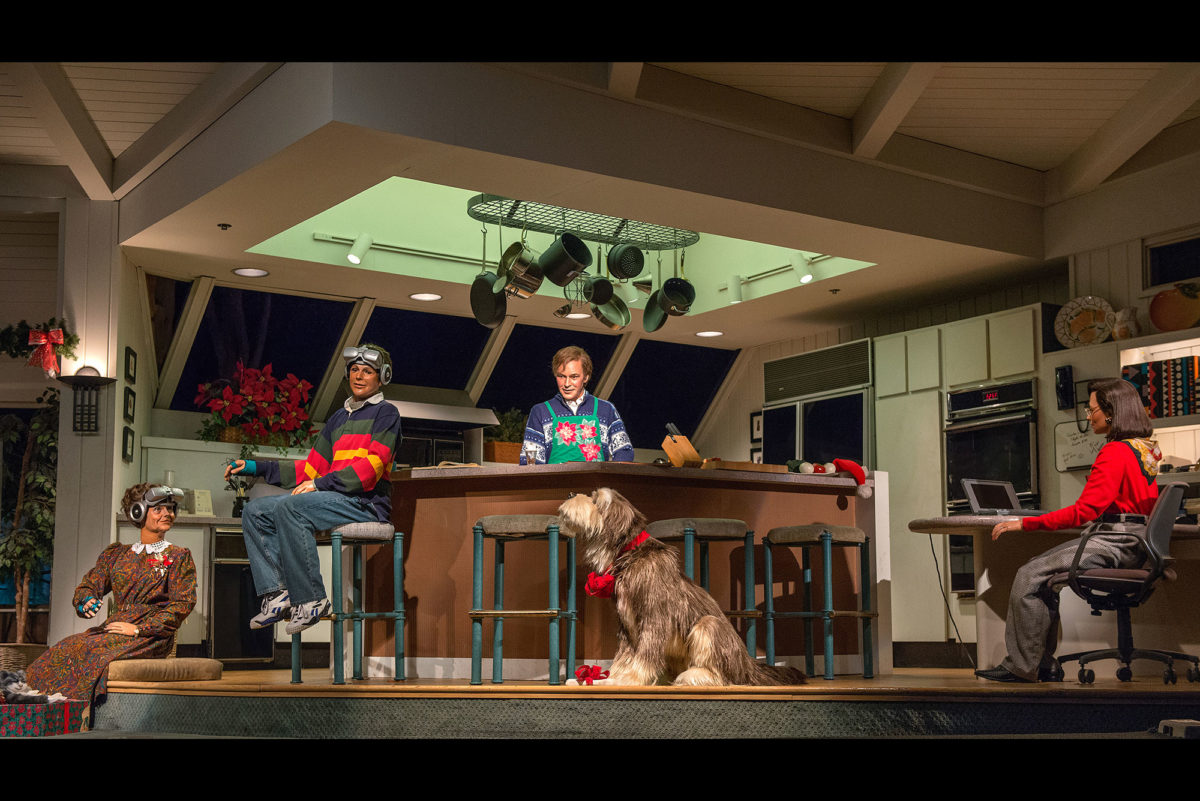
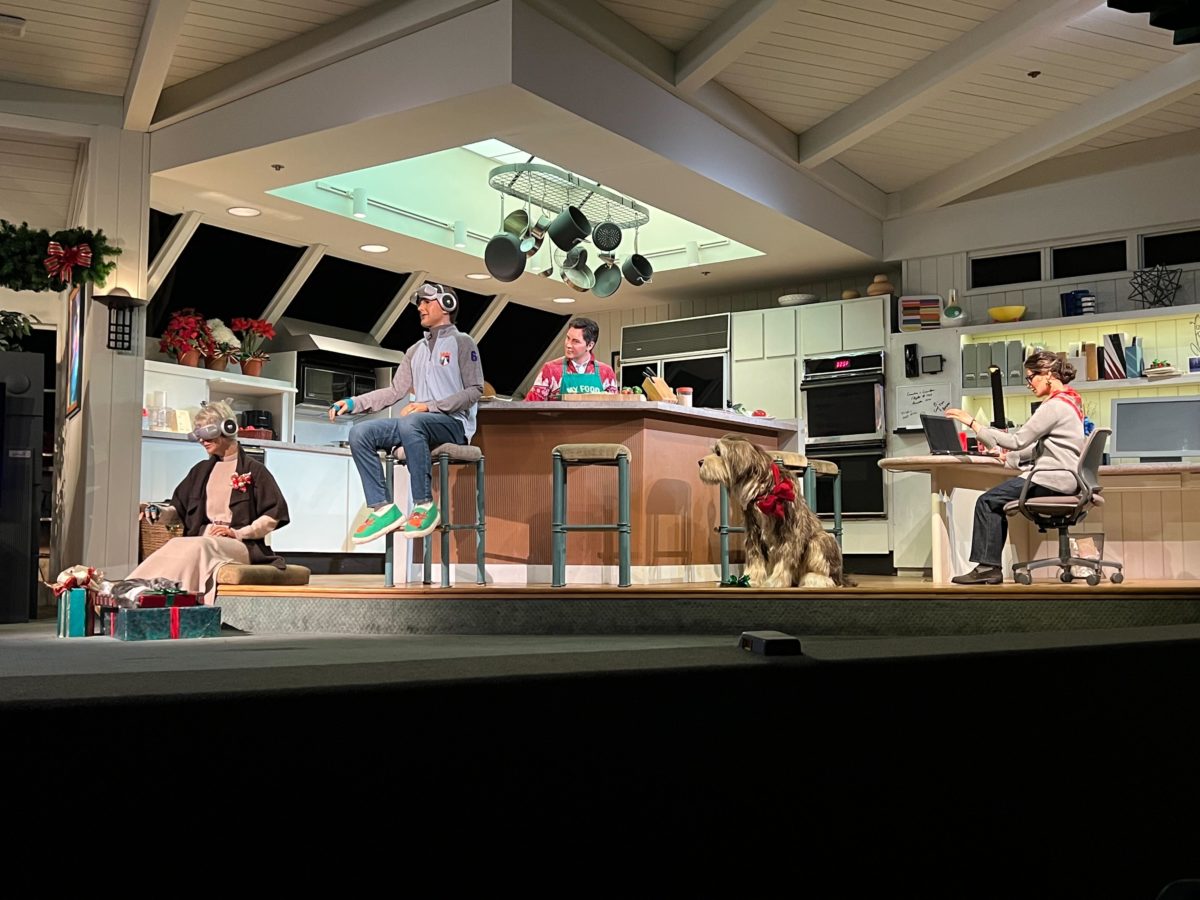
The last major change to the ride came in 2022, when the Audio-Animatronics and props in the finale were refreshed. The scene now featured references to Progress City, Mineral King Ski Resort, and Food Rocks on character clothing.
This is the 1994-2026 cast:
- John, the Father: Jean Shepherd
- John’s Singing Voice: Jess Harnell
- Sarah, the Mother: B.J. Ward
- Patricia, the Daughter: Debi Derryberry
- James, the Son (young): Peter Nelson
- James, the Son (teenager): Paul Osterhout
- Grandfather: Rex Allen
- Grandmother: Mary Cervantes
- Grandmother (Act 4): Janet Waldo
- Uncle Orville/Parrot: Mel Blanc
- Radio Personality: Noel Blanc
- Talking Machine Singer: Larry Cedar
- Unload Female Vocalist: Gloria Kaye
- Unload Male Vocalist: Joe Pizzulo
At D23: The Ultimate Disney Fan Event 2025, Disney announced the ride would get a Walt Disney animatronic similar to the one that debuted at Disneyland a few weeks earlier. In May 2026, Disney announced the ride’s complete overhaul.
Exterior and Pre-Show
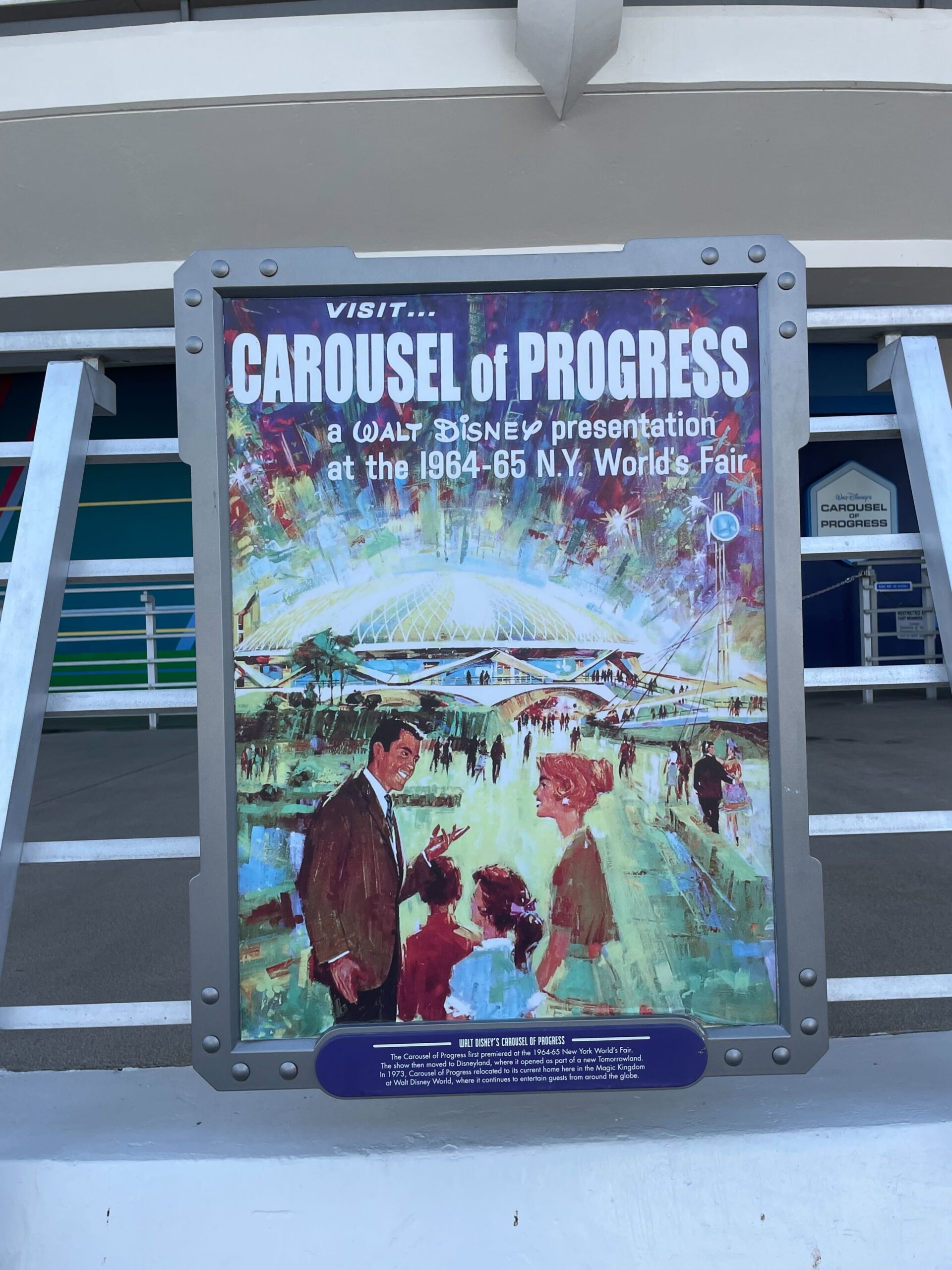
On a railing in front of the theater is a poster featuring World’s Fair concept art.
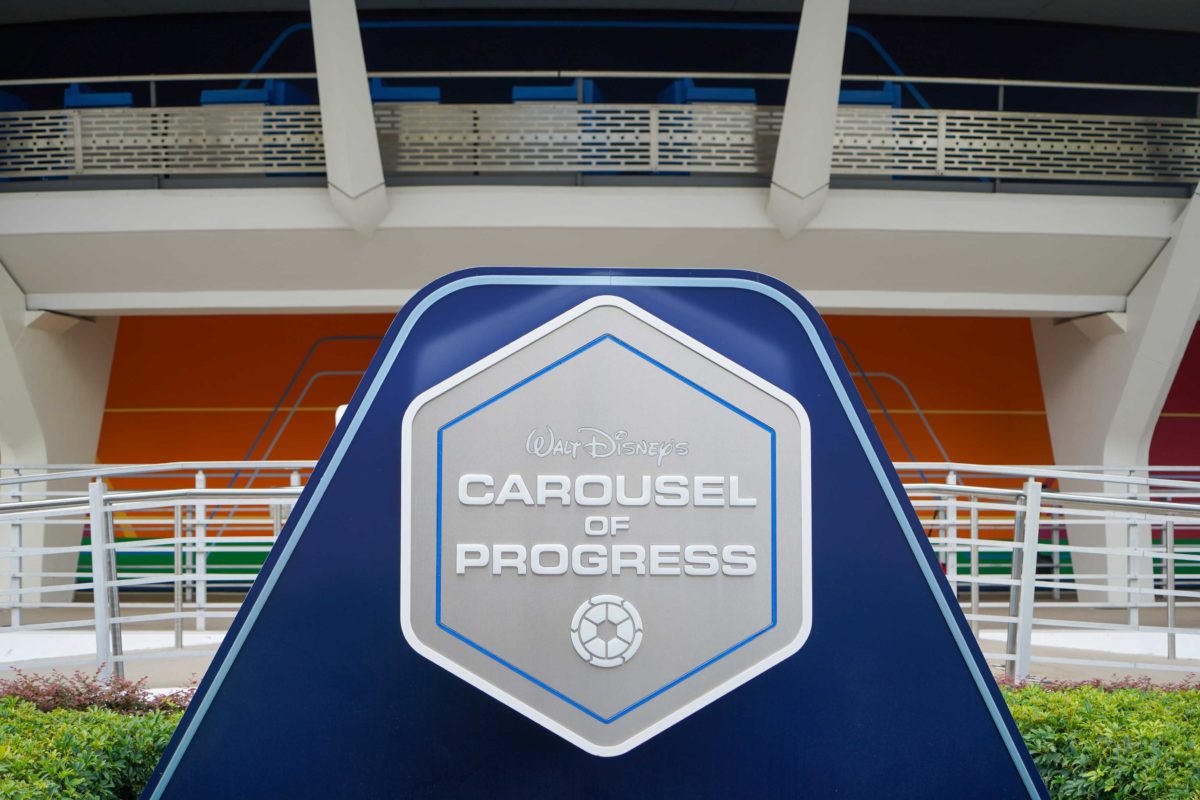
The current Carousel of Progress sign is a platinum hexagon on a blue base in a flowerbed outside the theater.
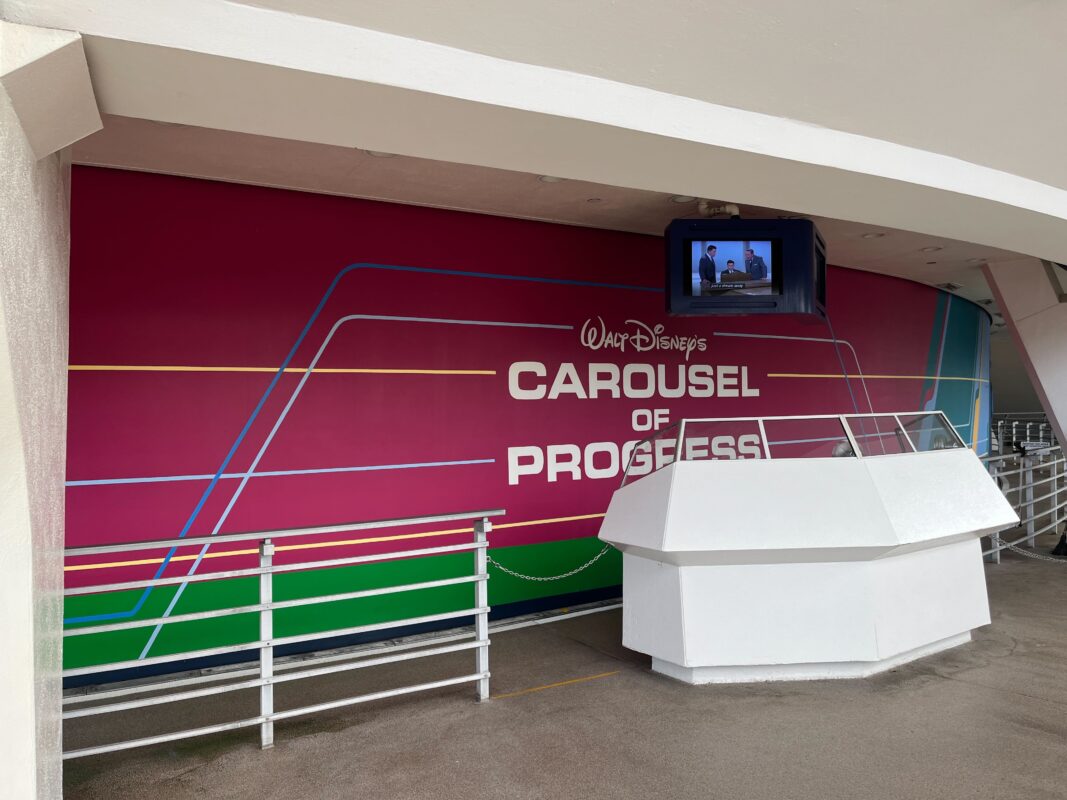
Guests head up ramps to a flat waiting area outside the rotating theater. Guests with wheelchairs and scooters were directed to the right, while everyone else went to the left.
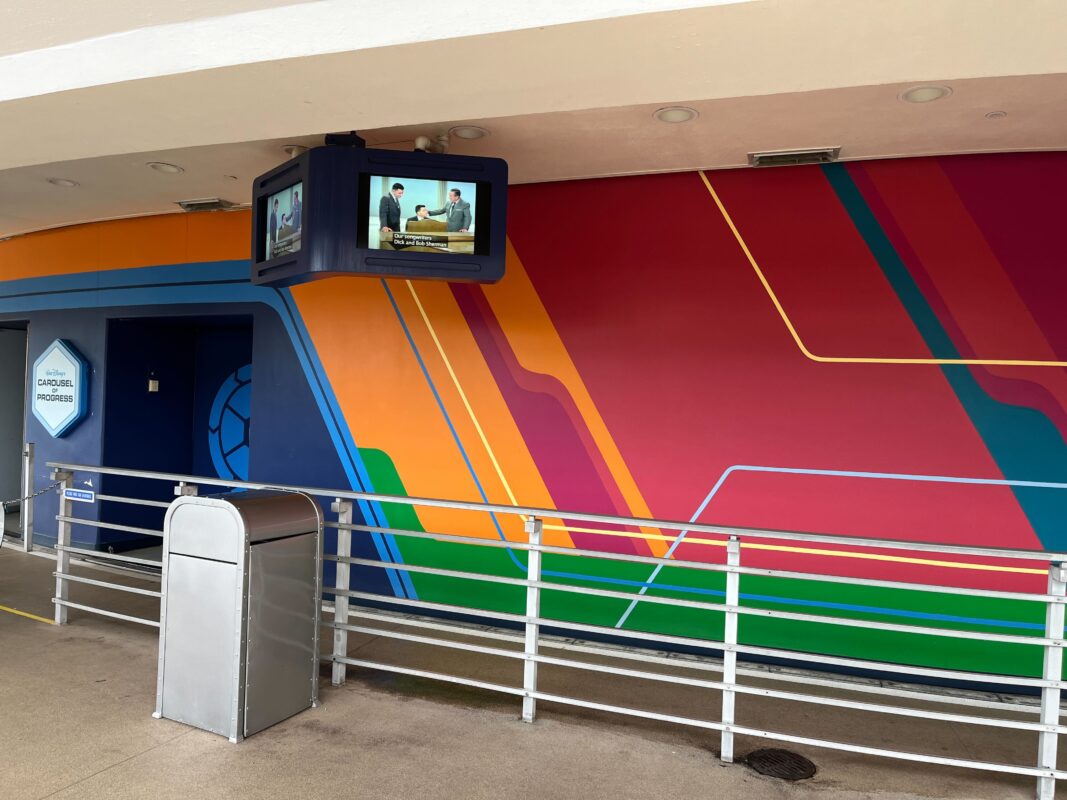
The theater has colorful designs featuring futuristic lines. Guests can watch it rotate from the outside as they wait under the PeopleMover track. More hexagonal Carousel of Progress signs are next to the enter/exit doors.
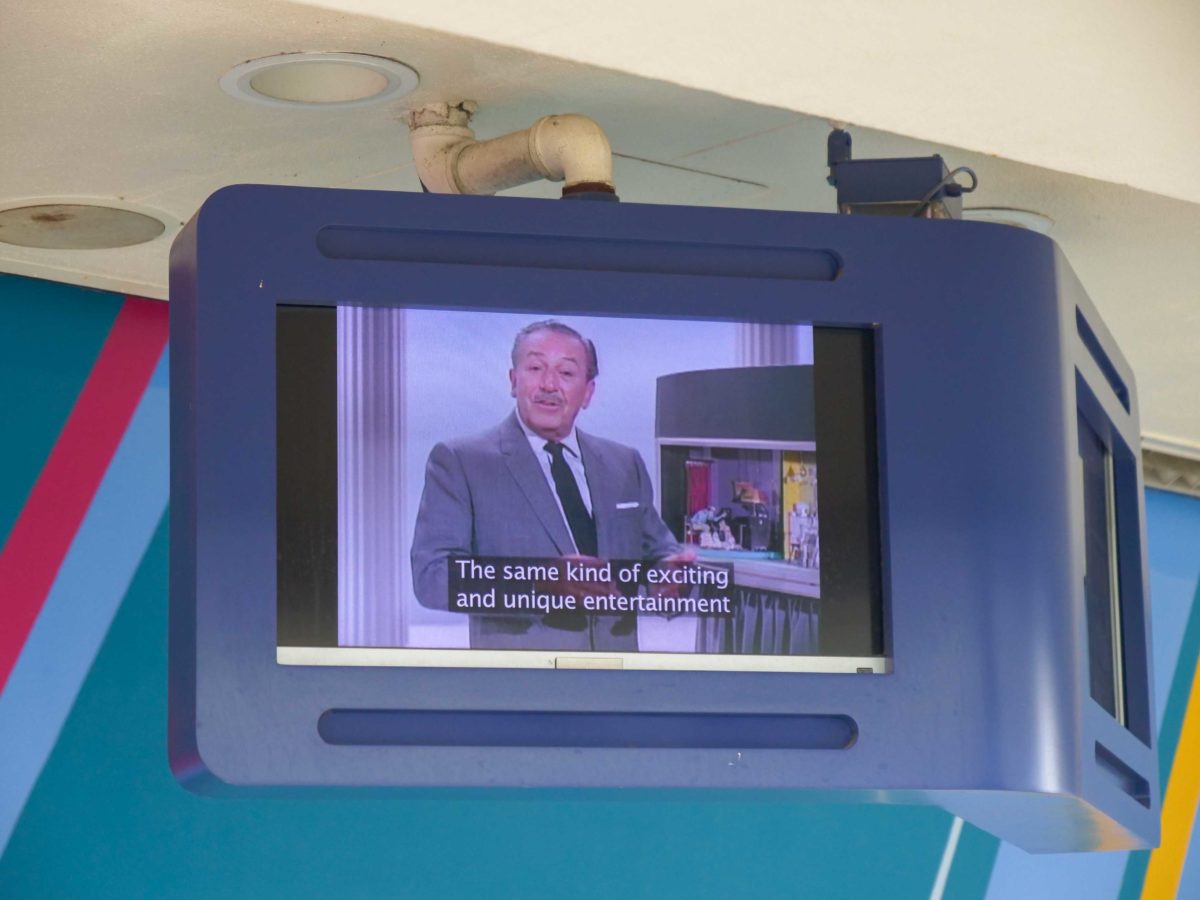
Mounted TVs display a brief pre-show featuring archive footage, including clips from the 1964 special, “Disneyland Goes to the World’s Fair.” In one section, the Sherman brothers are seen playing “There’s a Great Big Beautiful Tomorrow” for Walt Disney before showing off a model of the carousel theater.
Footage of the ride at the fair and the parks over the years is then shown in montage as Rex Allen talks about its history. “While the show has changed,” Allen explains, “its spirit of progress is a living tribute to the man who first created it: Walt Disney.”
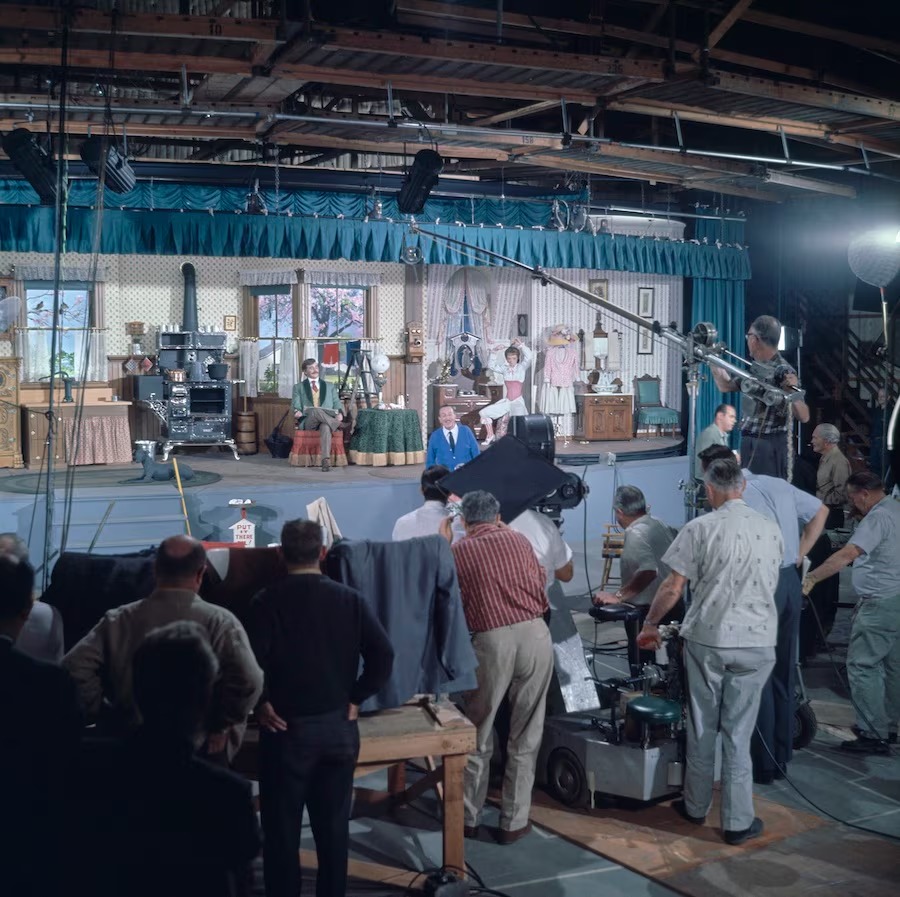
The pre-show takes a closer look at the show’s model and scenes as Allen talks about its innovative technology, including 32 animatronics. More archive footage shows Walt at a technical rehearsal for Carousel of Progress.
Introduction
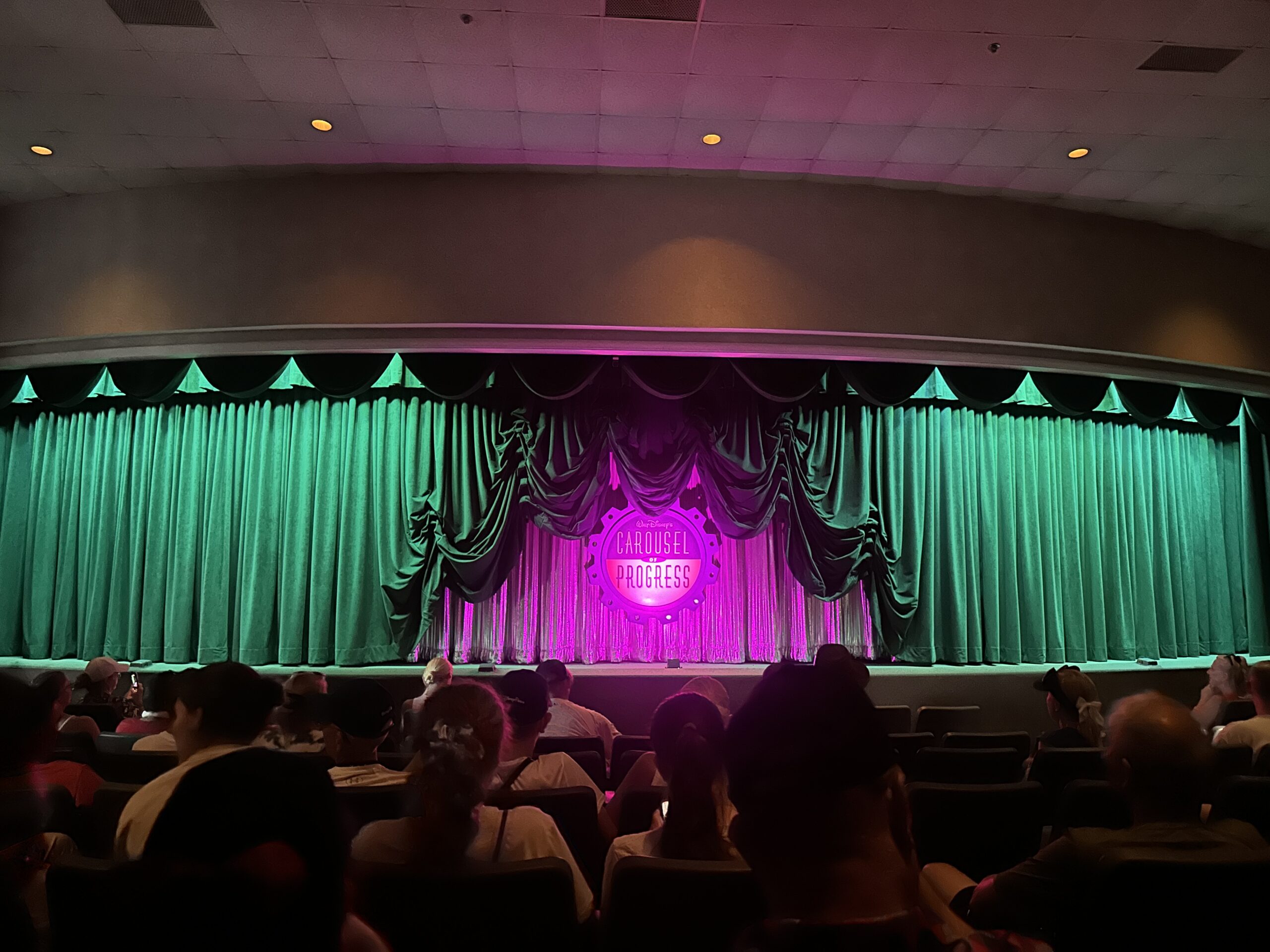
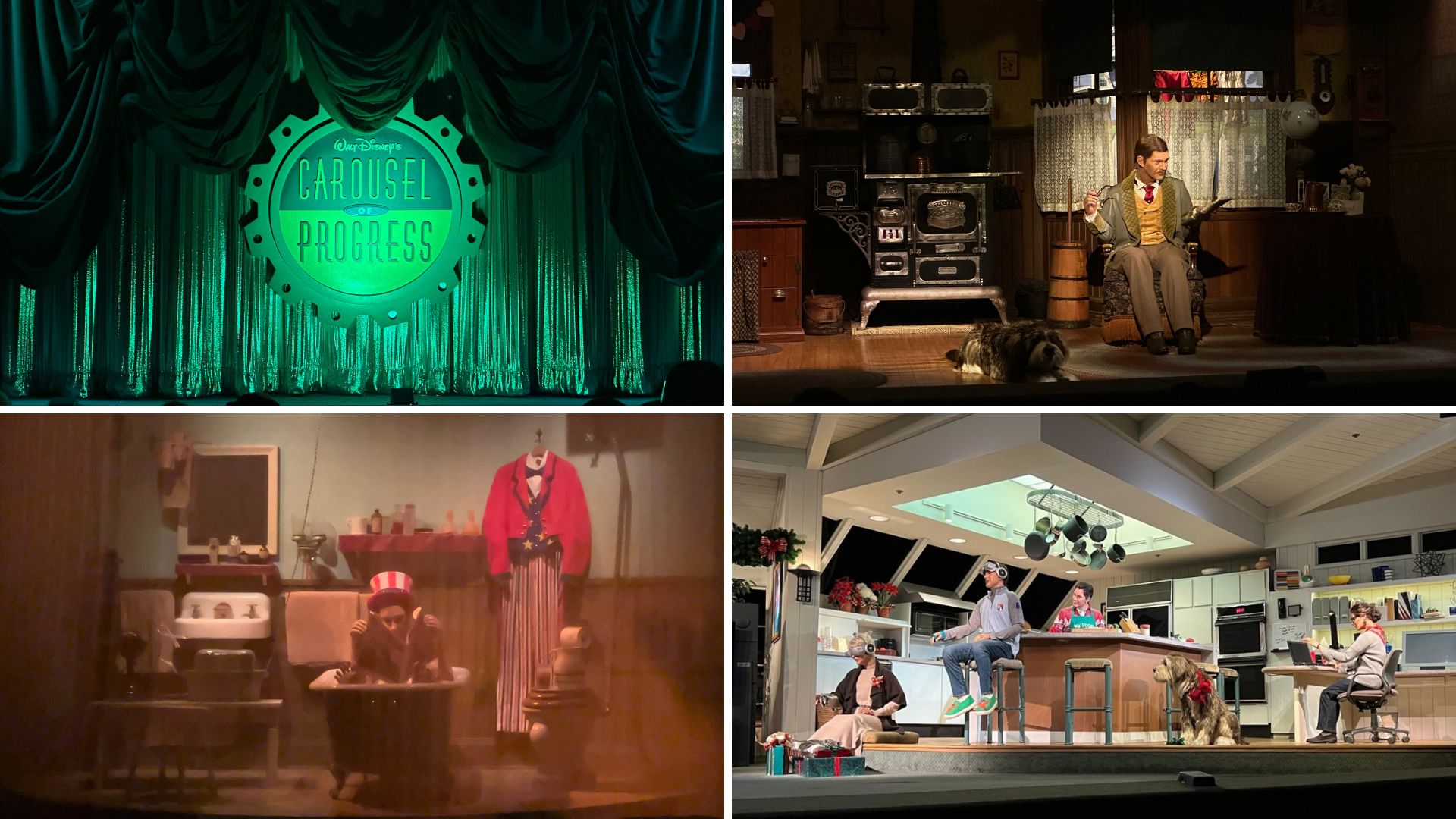
Guests enter a small theater with rows of seats. The stage at the front of the room has dark curtains drawn back to reveal a gear-shaped Carousel of Progress sign. Lights on the sign pulse through different colors as guests get comfortable and narration begins.
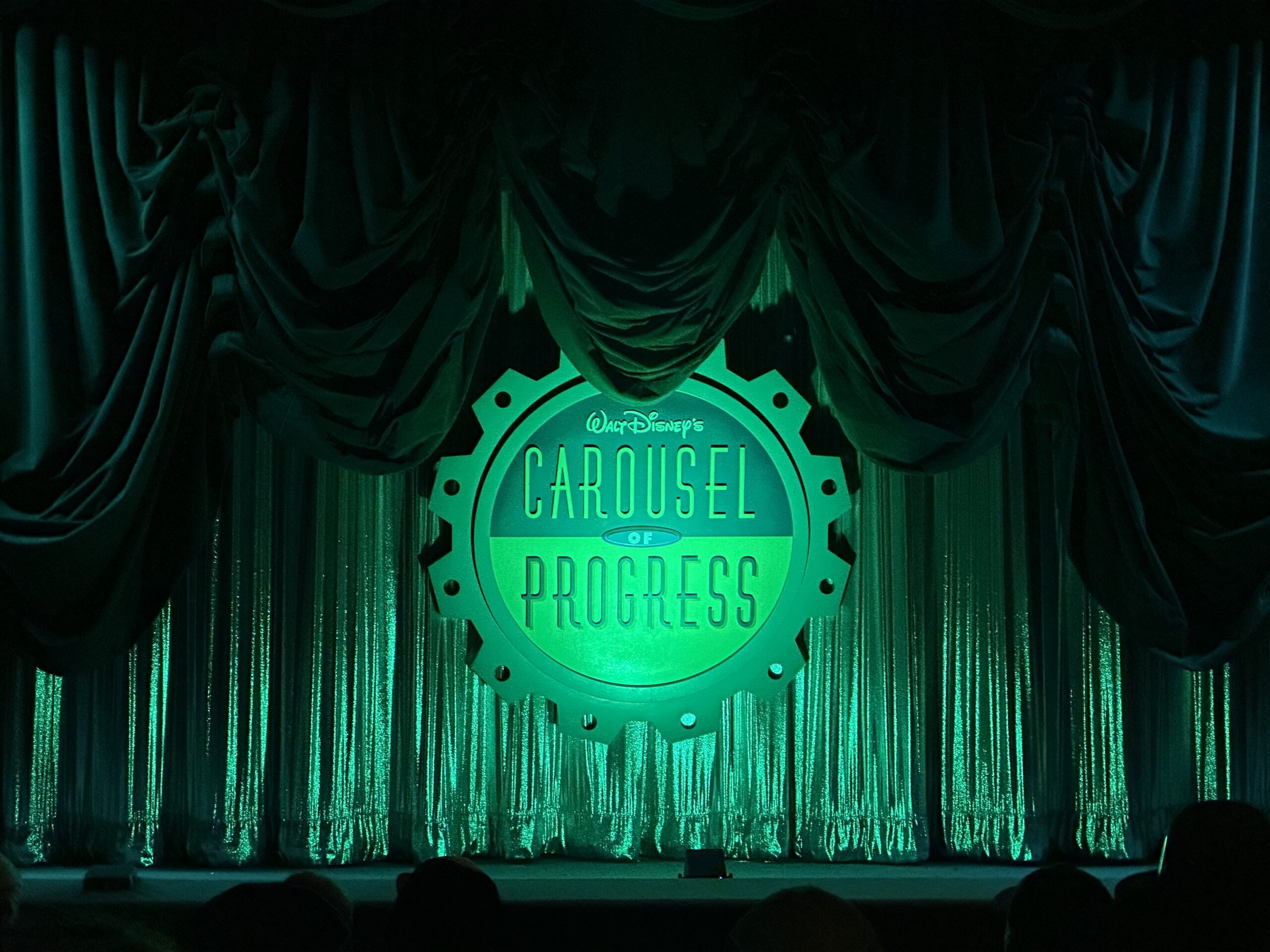
After sitting, guests are welcomed by Shepherd’s voice. He gives a quick summary of the ride’s history and Walt’s relationship to it.
You know, Walt loved the idea of progress, and he loved the American family. And he himself was probably as American as anyone could possibly be. He thought it would be fun to watch the American family go through the 20th century, experiencing all new wonders as they came. And he put them together in a show called Carousel of Progress, which we are now about to see. Although our Carousel family has experienced a few changes over the years, our show still revolves around the same theme—and that’s progress. May the century begin.
Then the theater starts turning and guests hear “There’s a Great Big Beautiful Tomorrow.”
Act 1 – Turn of the Century (1900s)
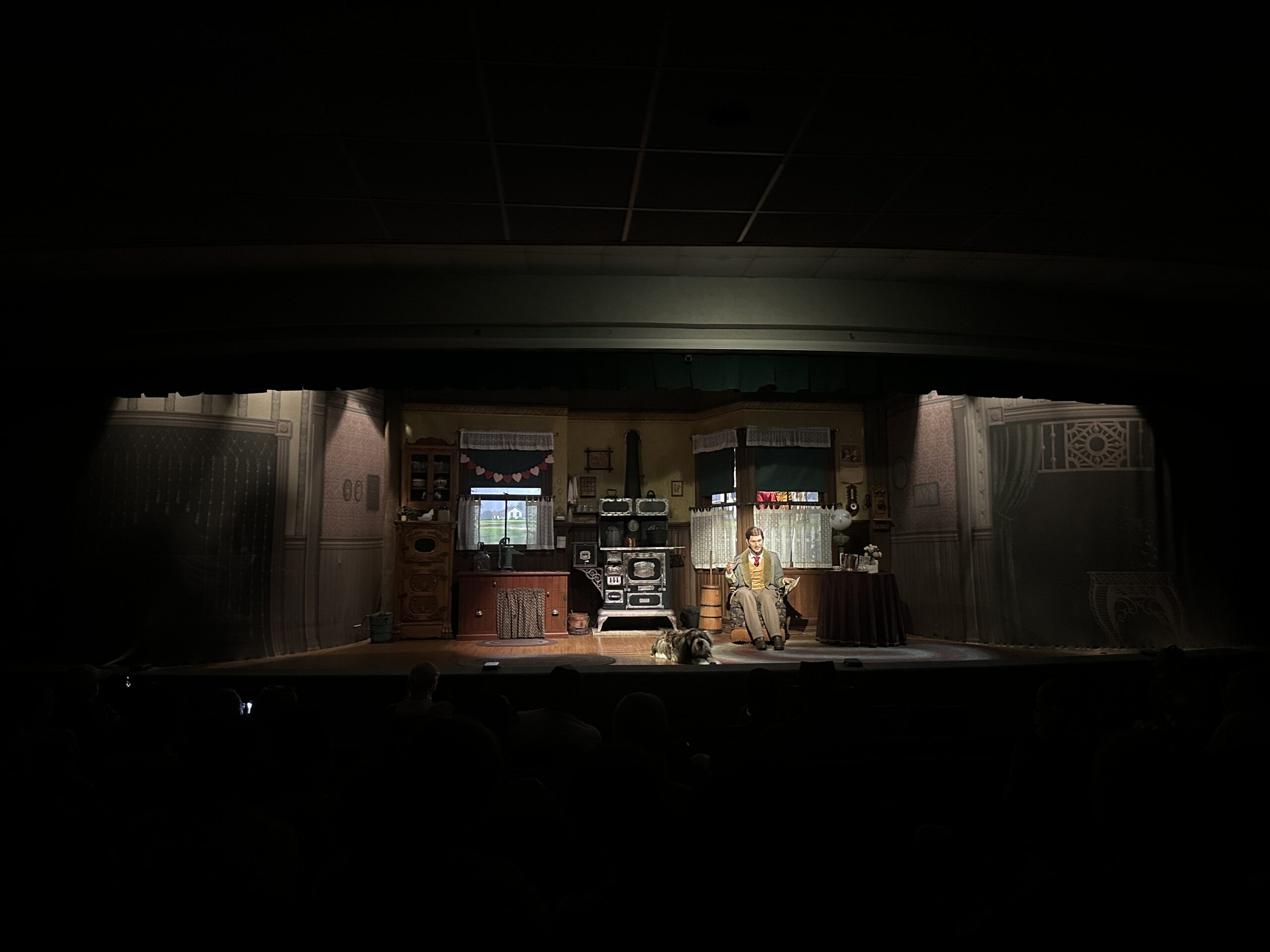
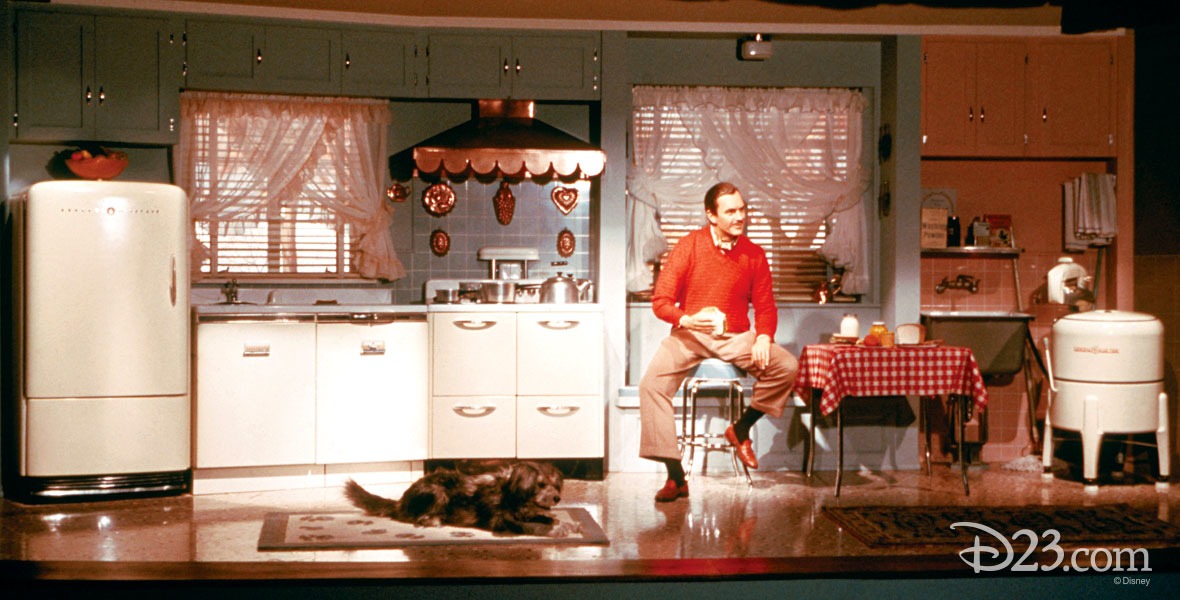
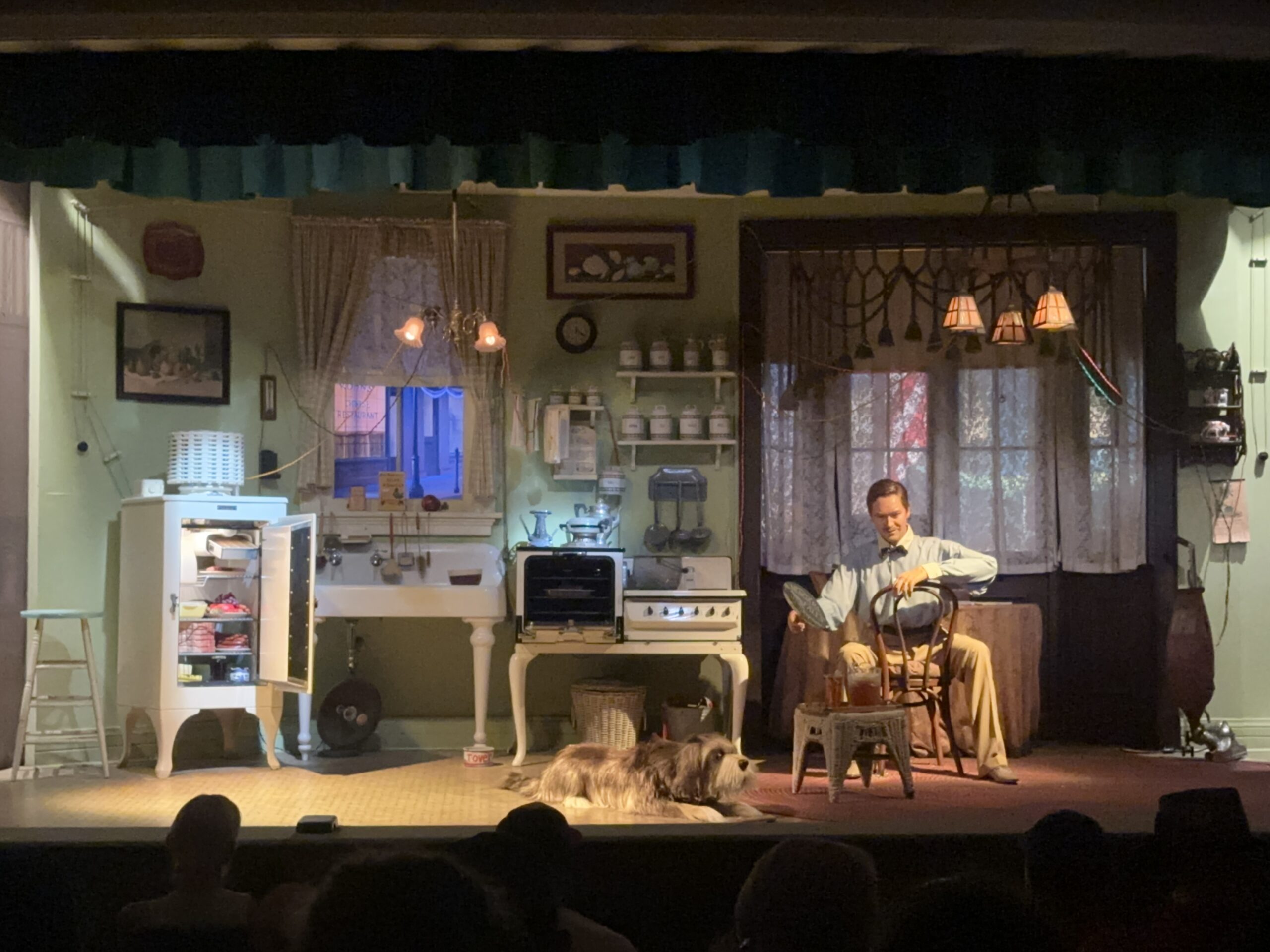
As the first scene comes into view, guests hear the Father’s voice join the chorus. The Father a.k.a. John is seated alongside his dog, Rover, in a turn-of-the-century kitchen. Guests can see and hear a bird outside the window and John says the robins are getting ready for Valentine’s Day.
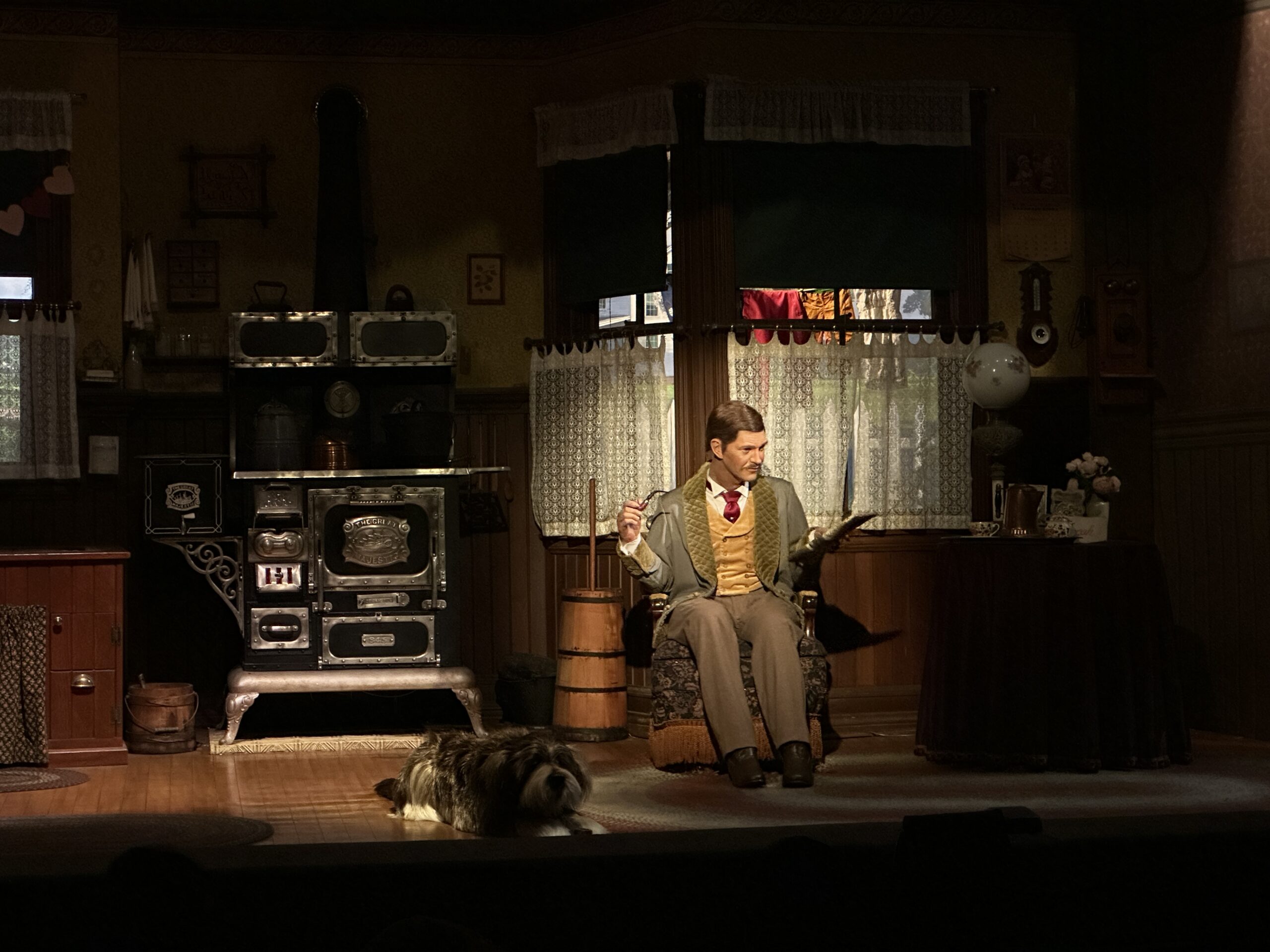
“What year is it? Oh, right around the turn of the century. And believe me, things couldn’t be any better than they are today,” John goes on. He lists some technological advancements: buildings twenty stories tall, moving pictures, 8,000 automobiles in the country, and travel by train from New York to California in less than seven days.
“And I even hear tell about two brothers from North Carolina who are working on some kind of flying contraption,” John says with a laugh. “It’ll never work.”
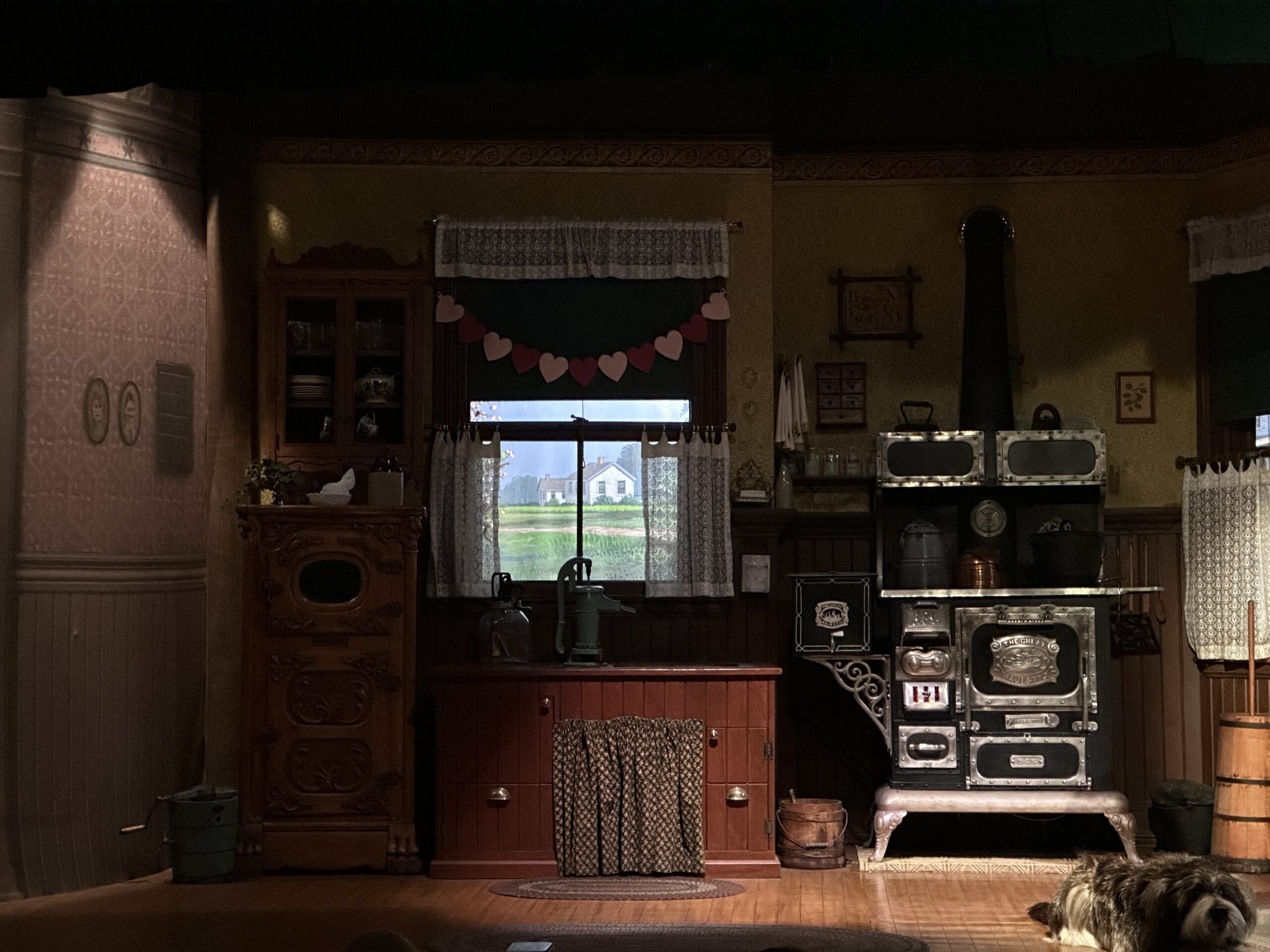
In their home are gas lamps, a telephone, cast-iron stoves, a reservoir that keeps water hot, a new icebox, and a pump right in the kitchen. These are spotlighted and move as John mentions them.
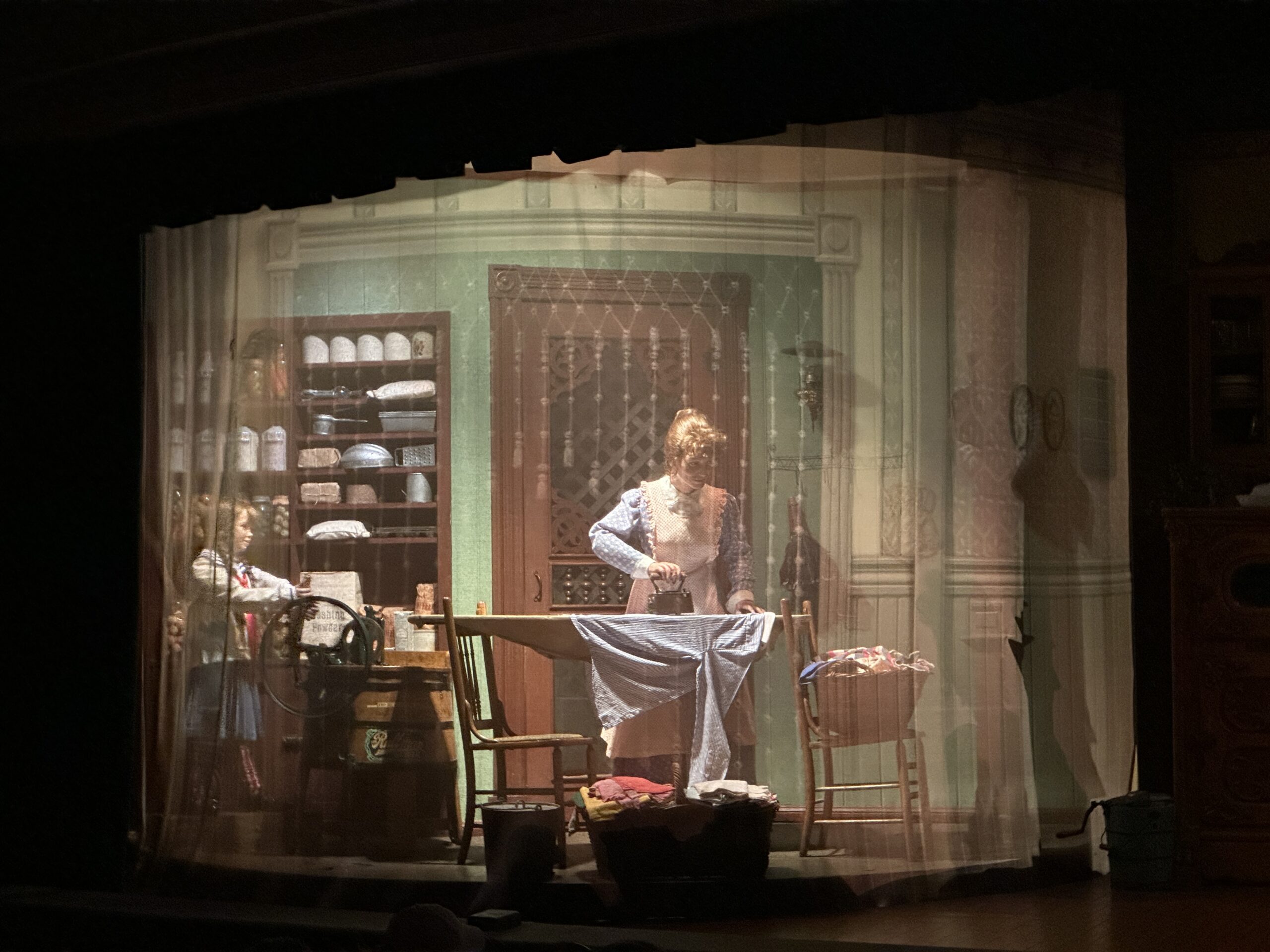
On the left, the first of the rotating scenes appears. It’s Mother (Sarah) ironing alongside an unnamed little girl. Mother and Father talk about Thomas Edison working on electric lights and how it only takes five hours to do the wash instead of two days.
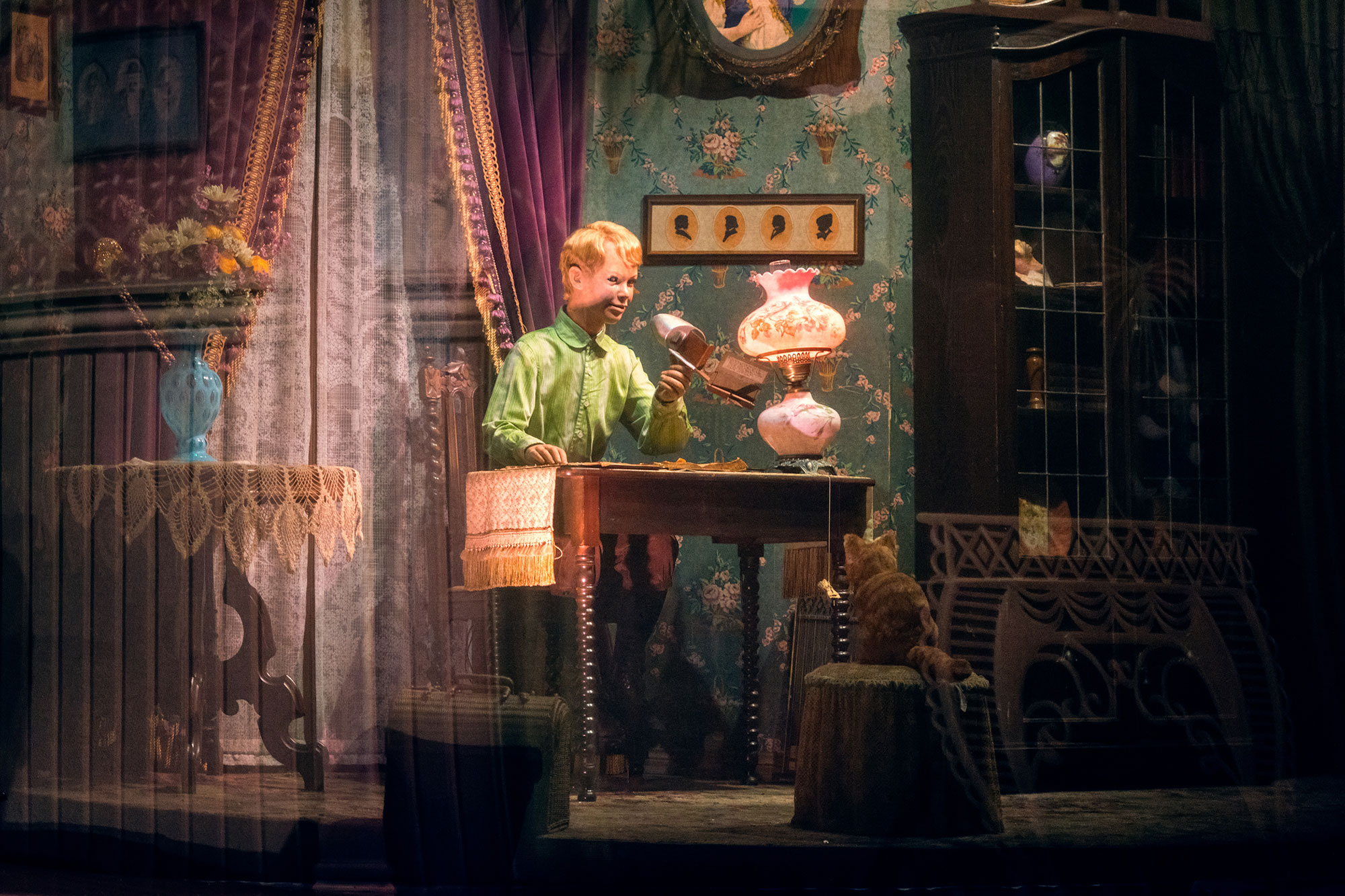
On the other side of the stage appears young James, who is looking through his dad’s stereoscope at “Little Egypt doing the hoochie-koochie” at the World’s Fair in St. Louis.
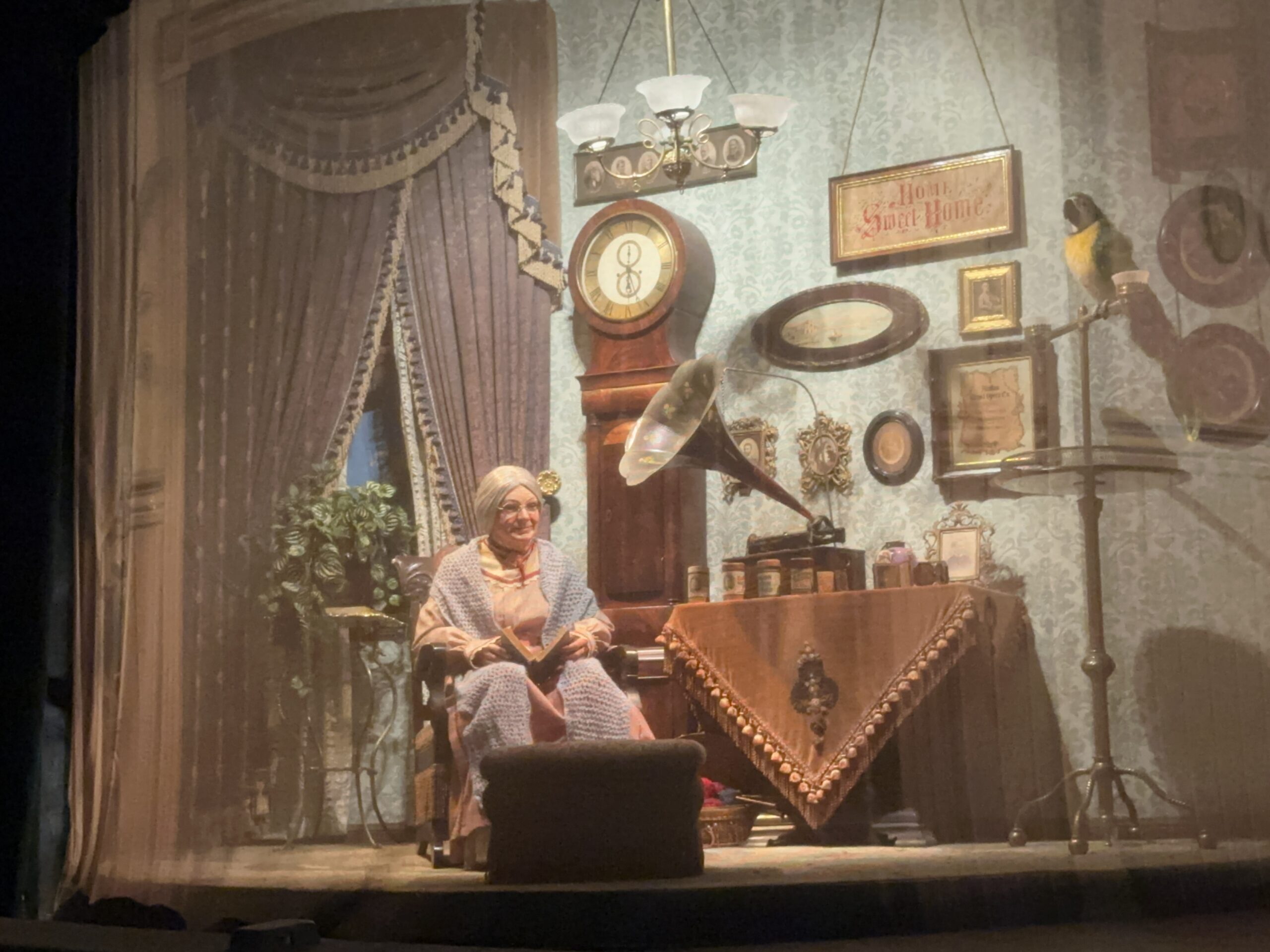
Back on the left, the scene has rotated and now Grandma appears listening to the radio with her parrot. The theme song plays on the radio and the parrot complains about Grandma listening to it all day.
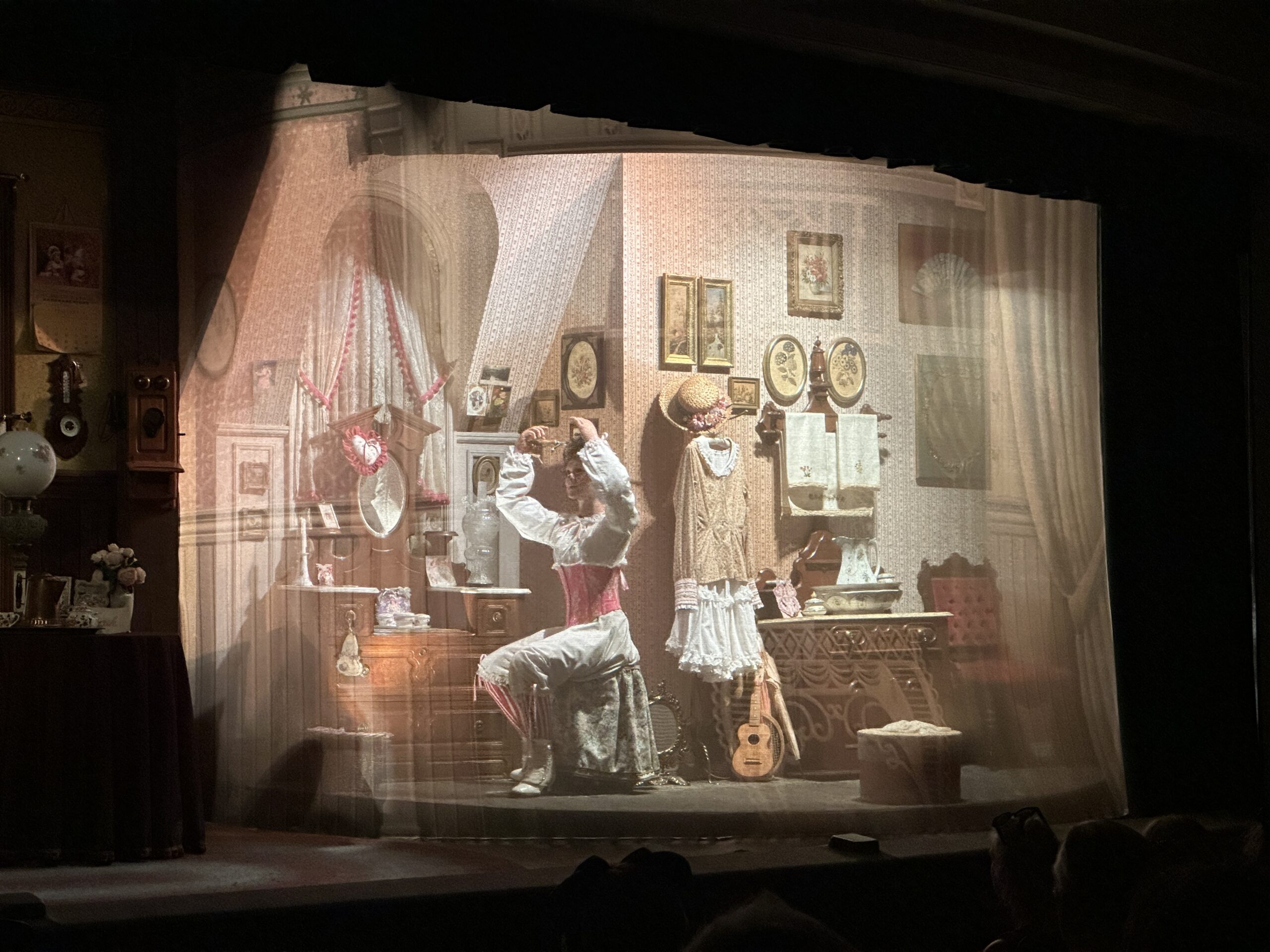
Patricia appears on the right, getting ready for the Valentine’s Day dance.
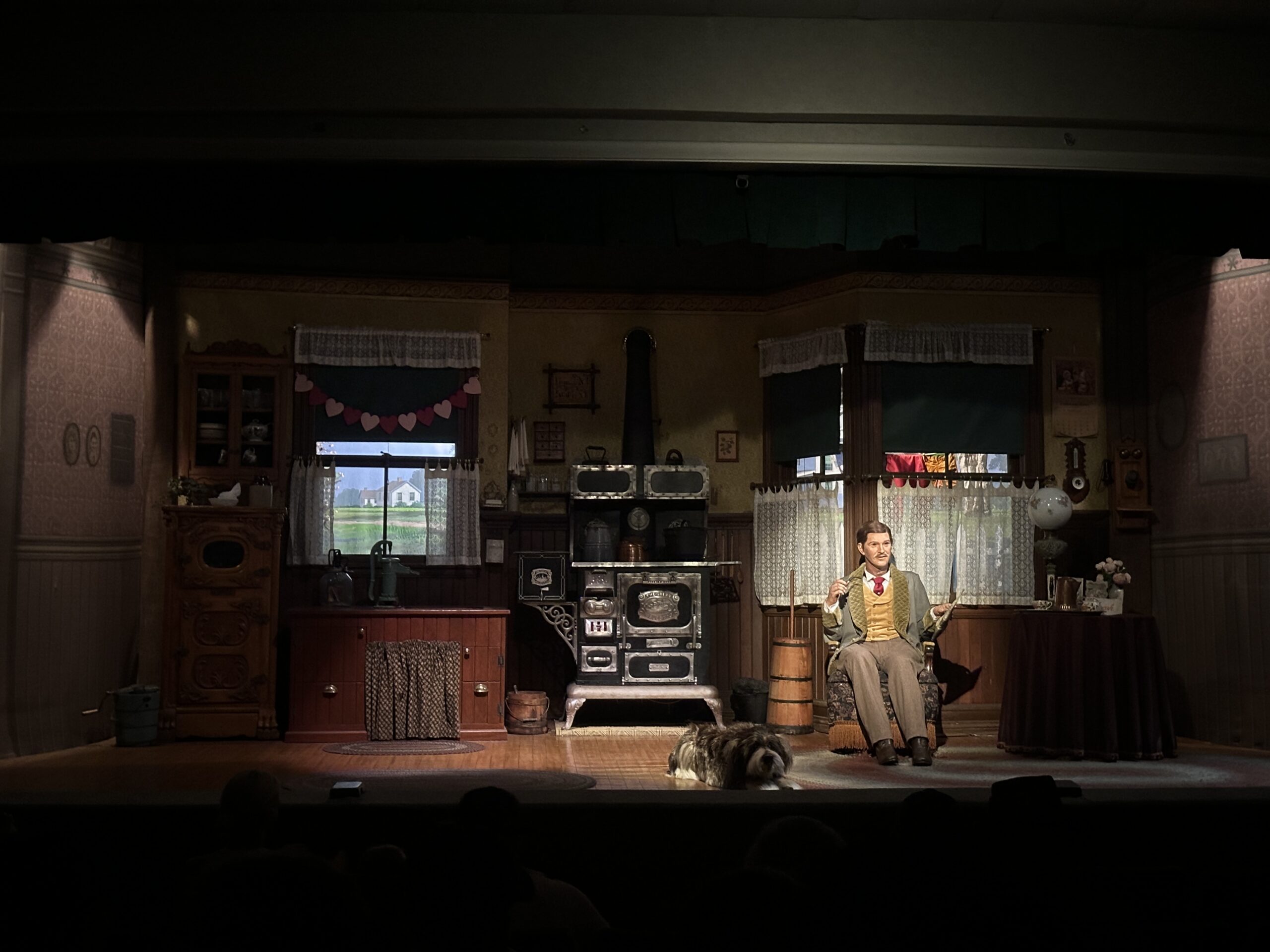
The scene comes to an end with John deciding to get a sarsaparilla root beer down at the soda fountain. He sings “There’s a Great Big Beautiful Tomorrow” as the theater rotates again.
Act 2 – 1920s
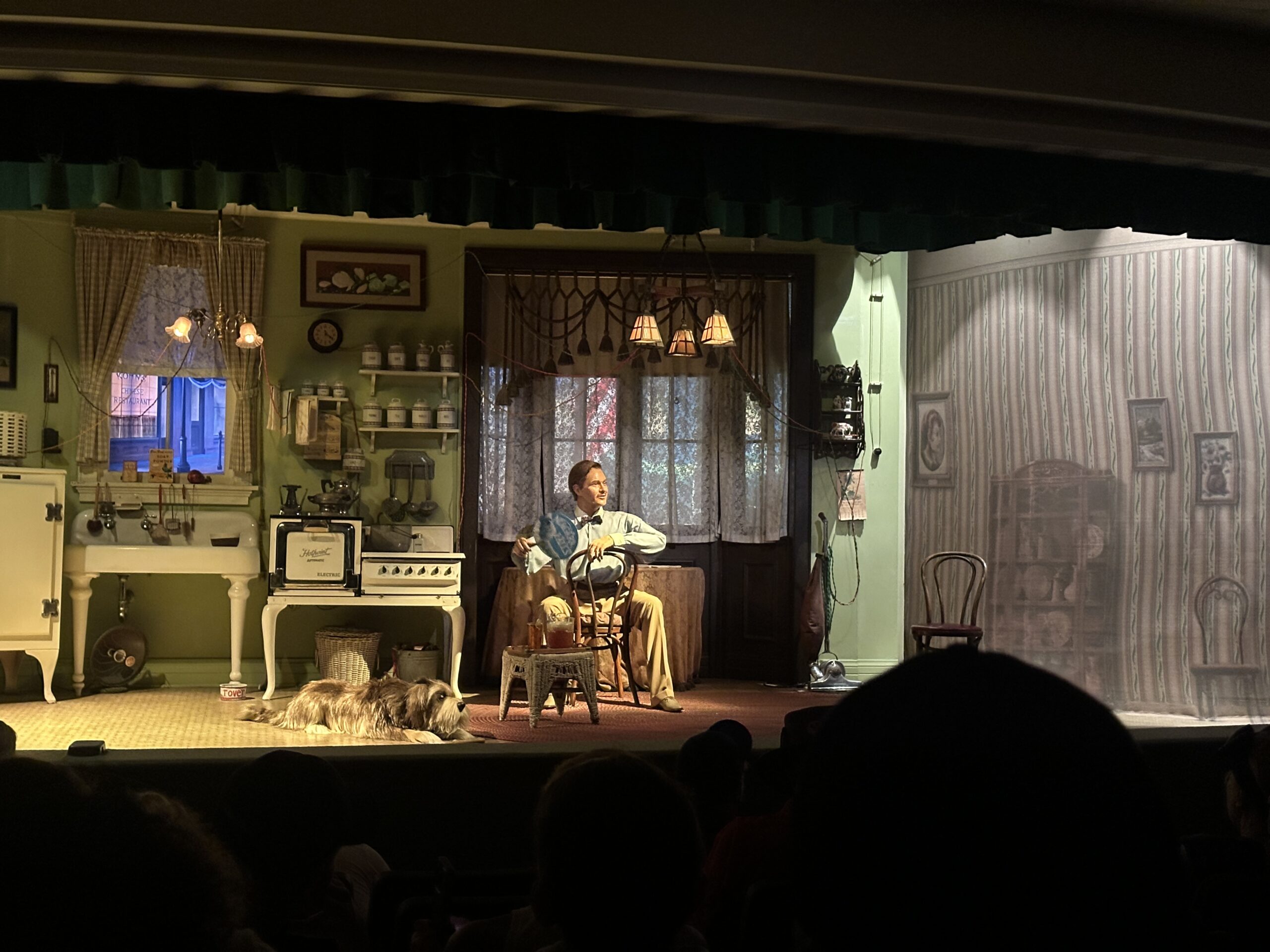
“Hottest Fourth of July we’ve had in years,” John declares as guests arrive in the ’20s. He says Charles Lindbergh is about to fly a single-winged airplane across the Atlantic — “He’s never gonna make it.”
Sports stadiums are popping up all over, jazz music is the cat’s meow, and a new movie is coming out starring Al Jolson talking.
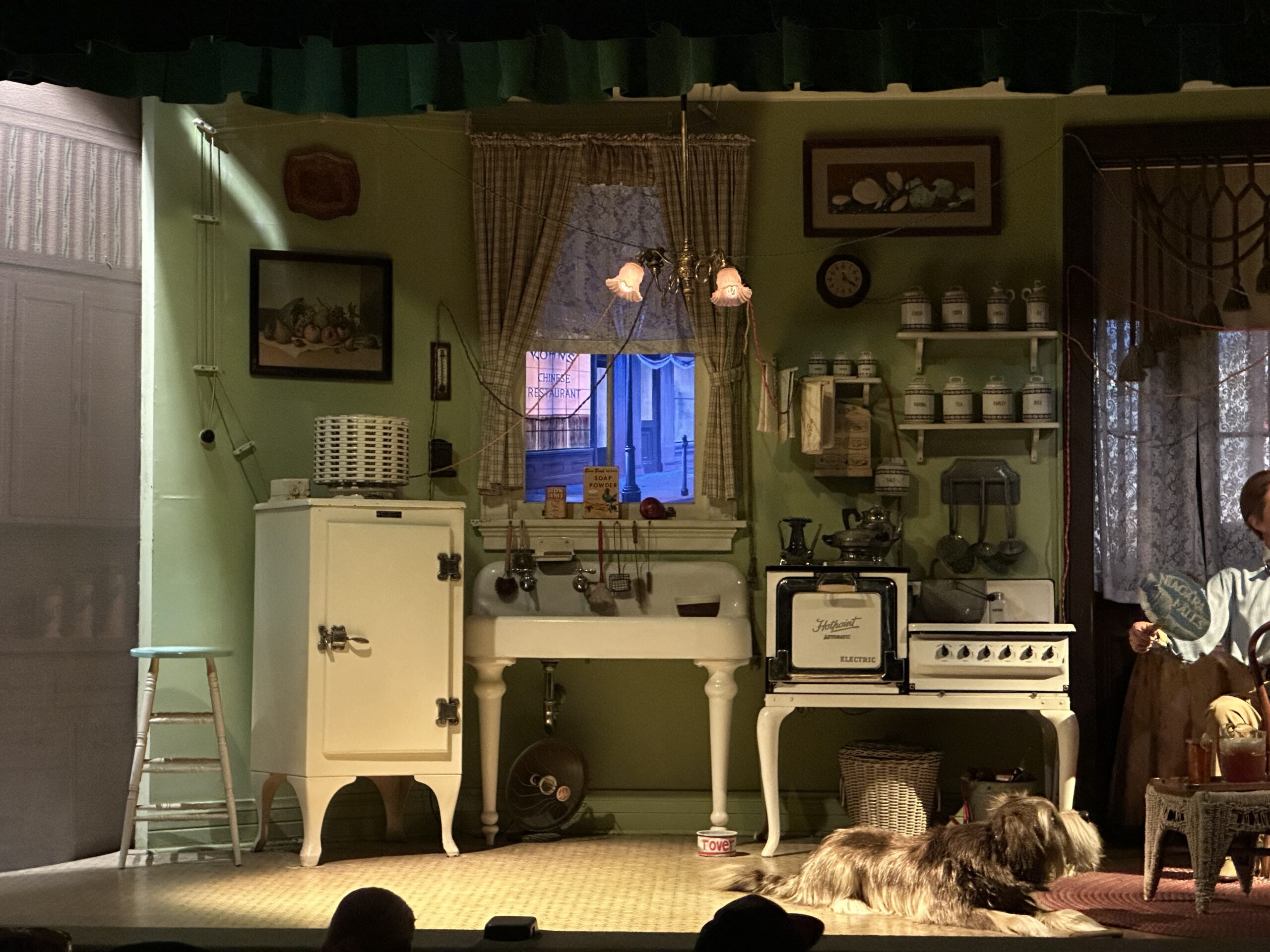
The kitchen is full of new gadgets, with wires criss-crossing the ceiling. “Mr. Edison sure added life to our home,” John says as the appliances come to life.
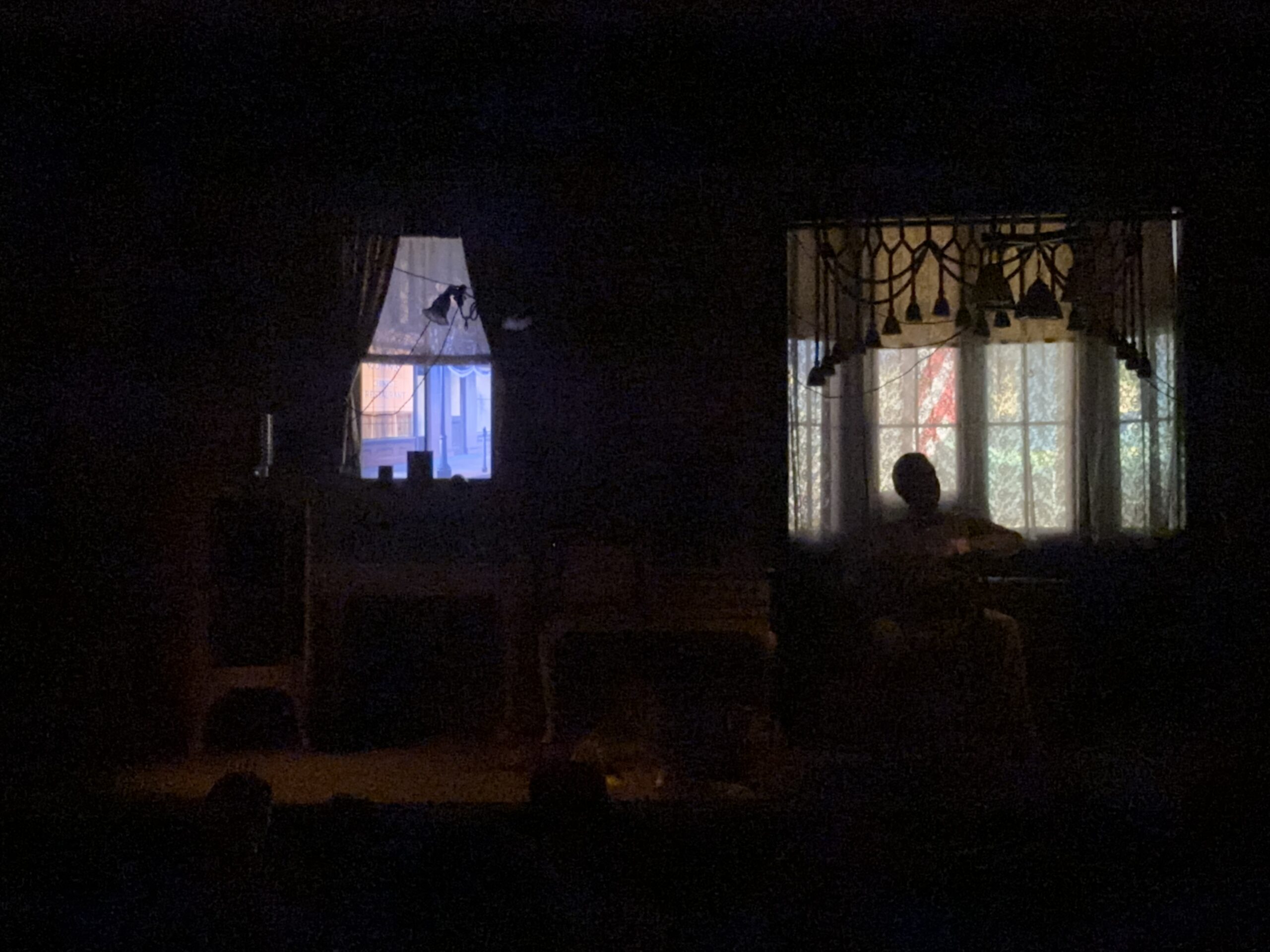
Unfortunately, all the electronics blow a fuse. The lights in the house go dark, followed by those in the whole neighborhood. John tells his son, Jimmy, to change the fuse and guests hear the kid complain as he does so.
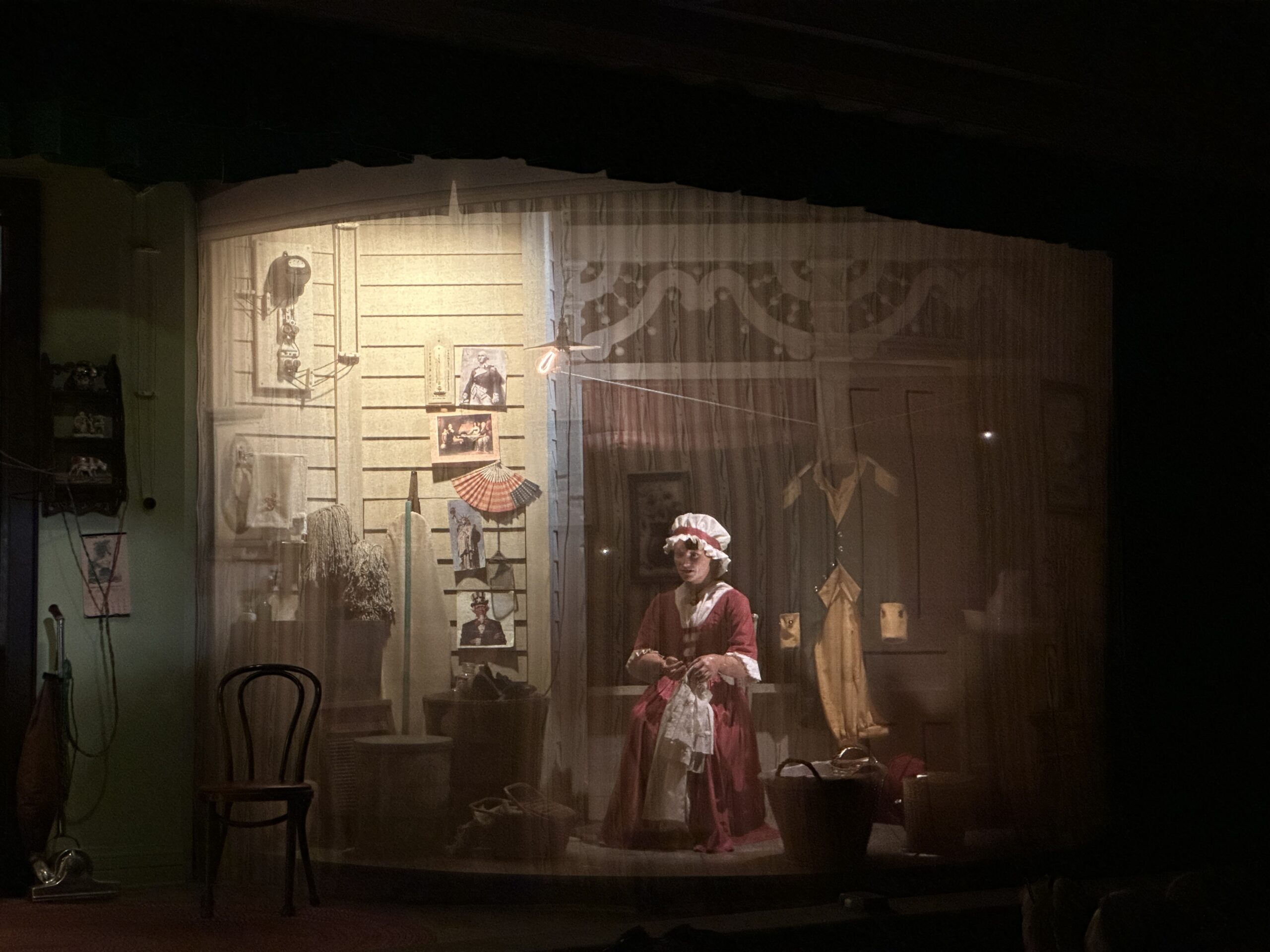
When the lights come back on, Sarah is visible on the porch sewing under electric lights. She’s finishing John’s George Washington costume for the Fourth of July parade, while she’s dressed as Martha Washington.
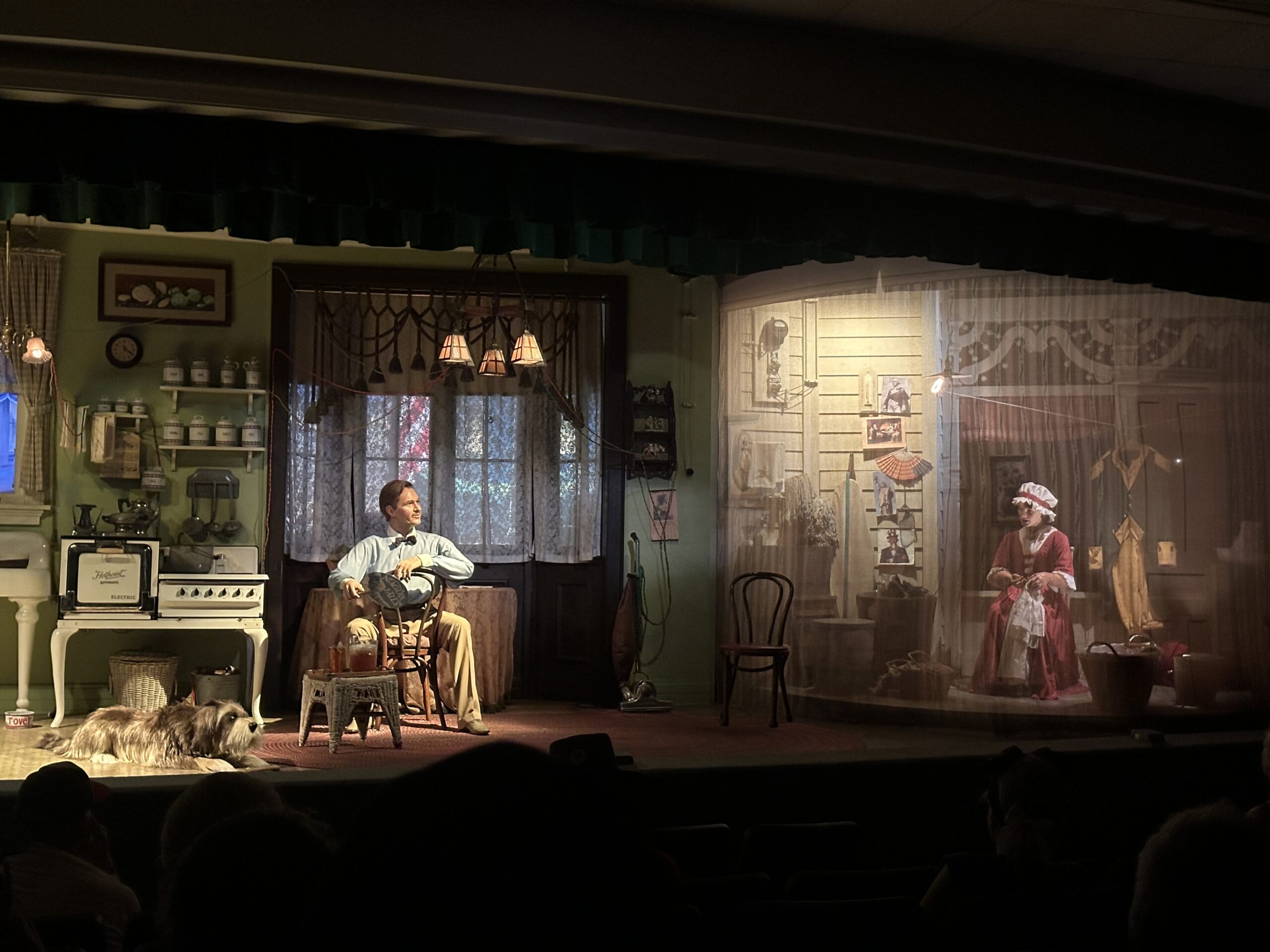
John makes jokes as Sarah and Rover interrupt him.
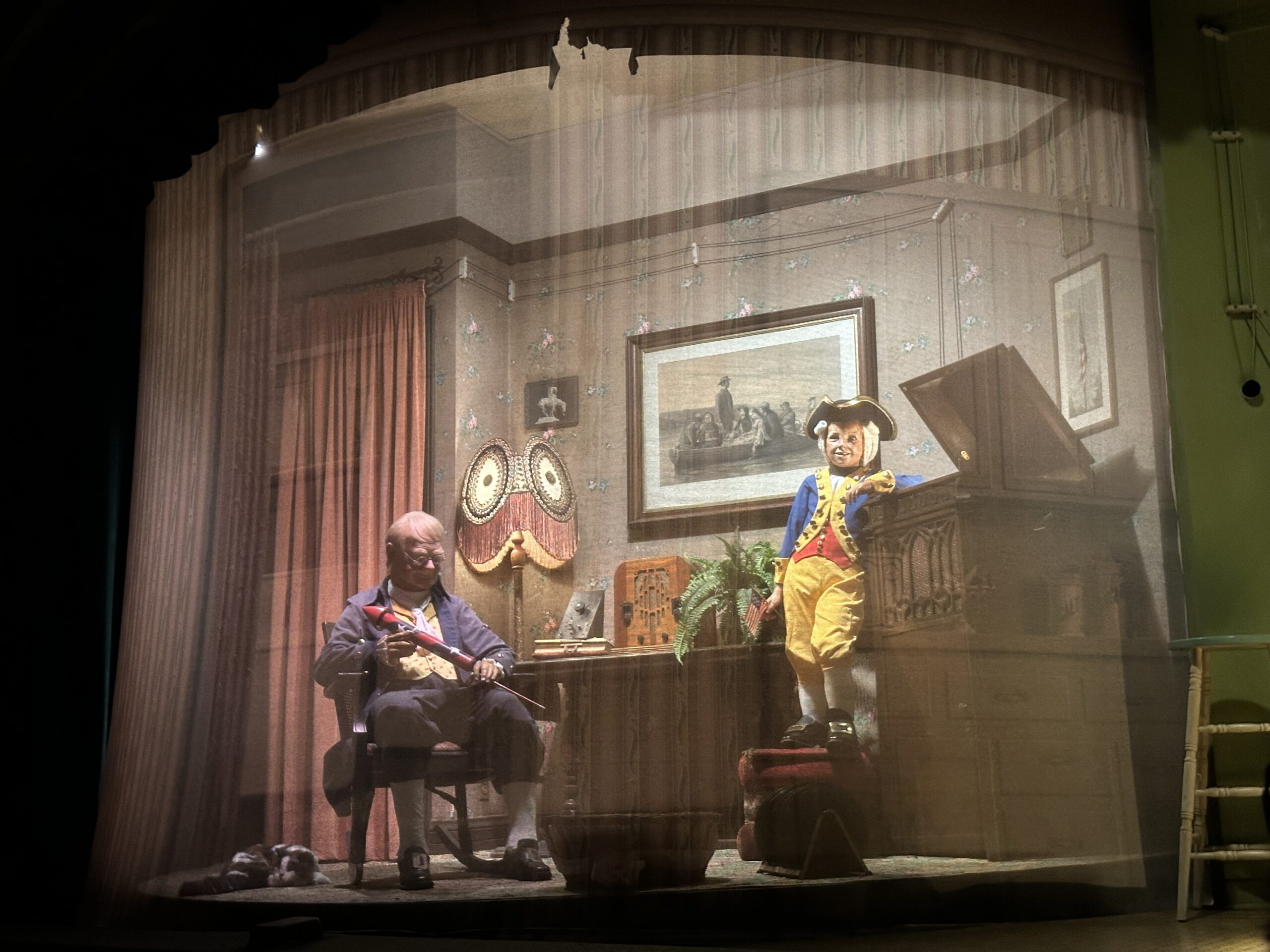
Across the stage, Jimmy is revealed alongside Grandpa with the Crosley radio set (which delivers news and entertainment from all over the country!). Jimmy has chosen the music for the evening: “Stars and Stripes Forever.”
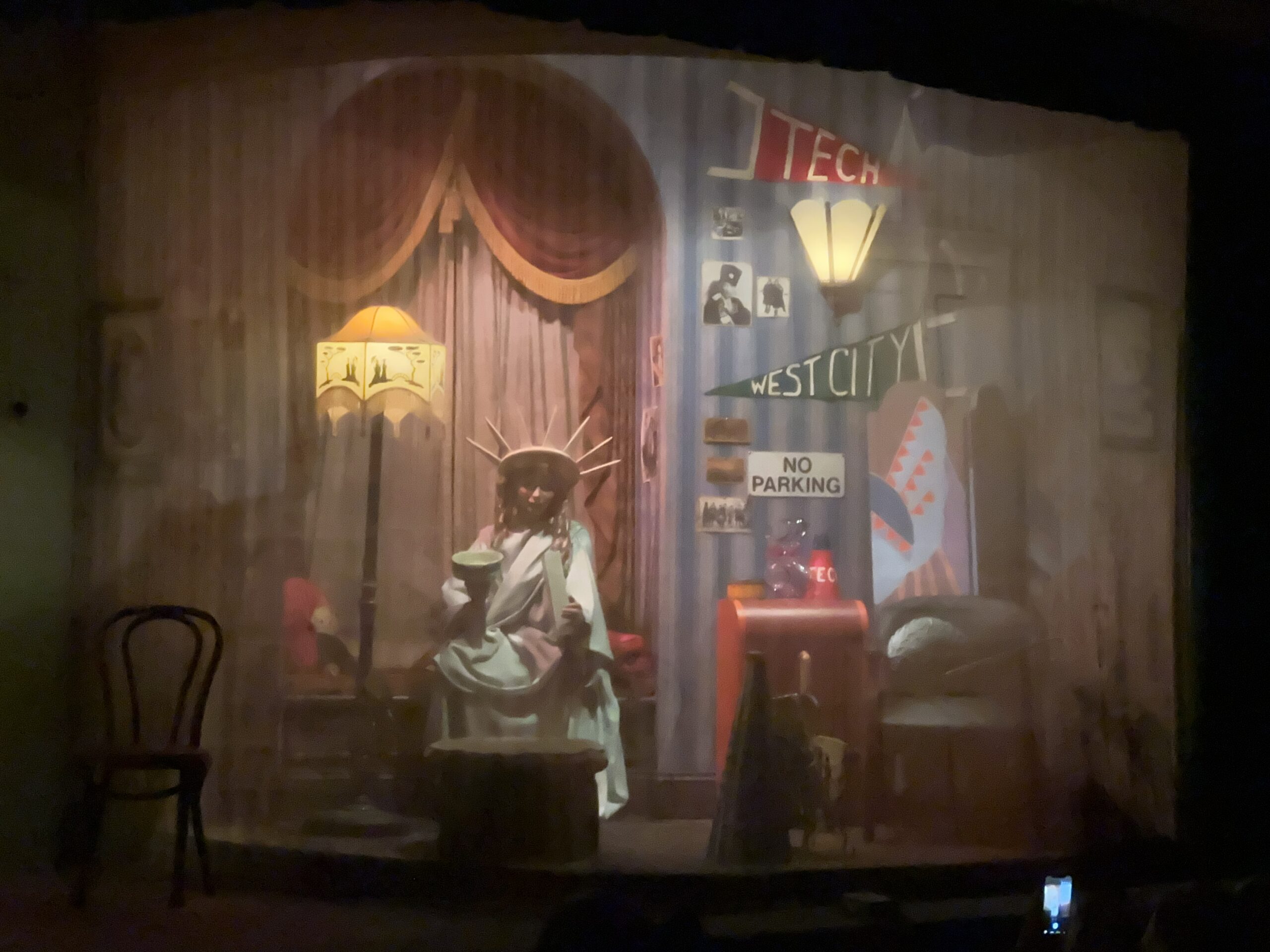
John then calls for Patricia, who is dressed as Lady Liberty in her bedroom. She balks at the idea of going to the celebration because she doesn’t want her new boyfriend Theodore seeing her in the costume.
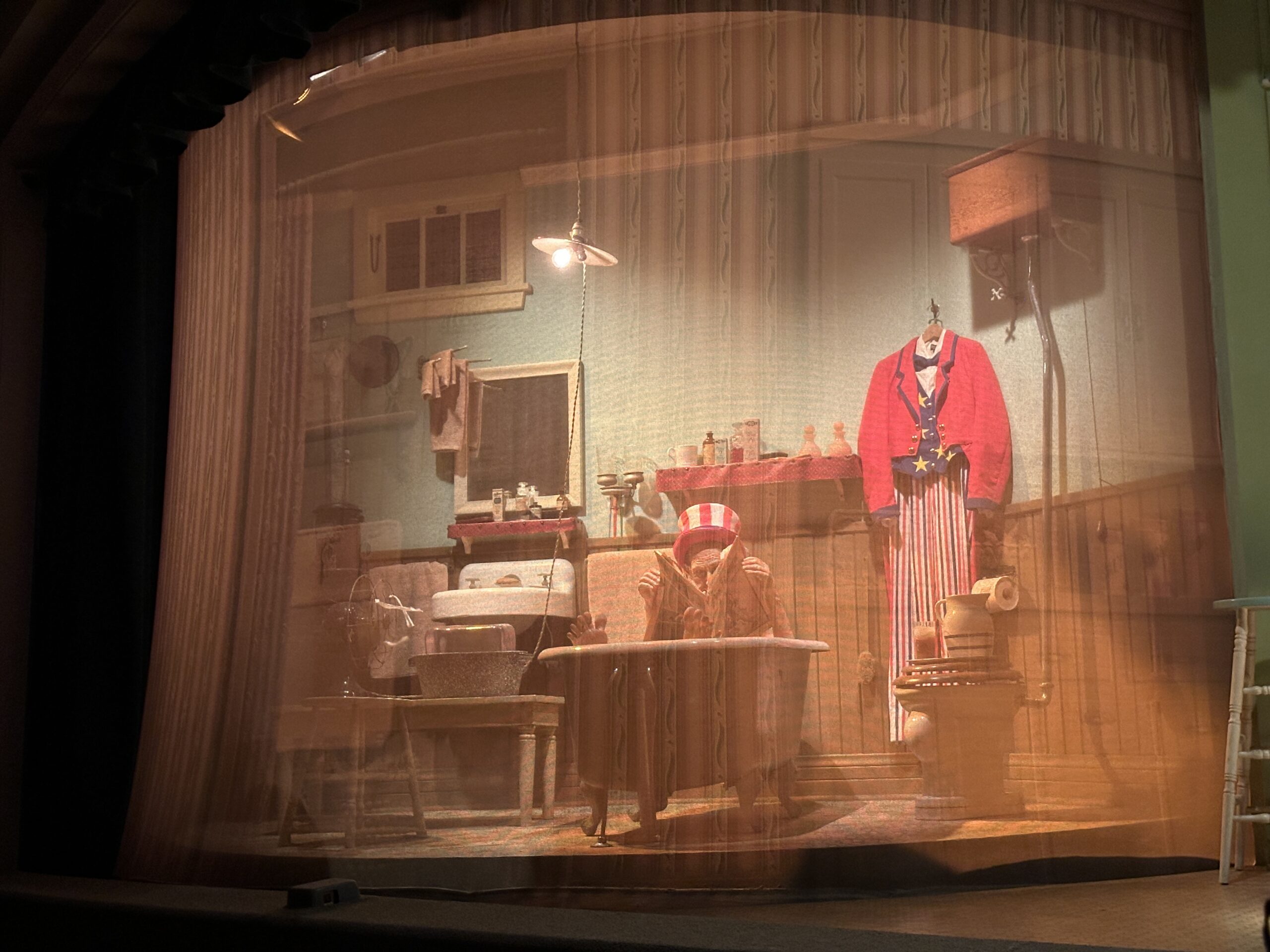
John praises their new indoor plumbing and mentions “perennial house guest, old Uncle Orville.” He’s revealed on the left, lounging in a bathtub with an Uncle Sam hat on and the rest of his costume hanging behind him. He’s created an “air cooling” contraption — a fan blowing across a block of ice.
As the lights go out, Orville famously shouts, “No privacy at all around this place!”
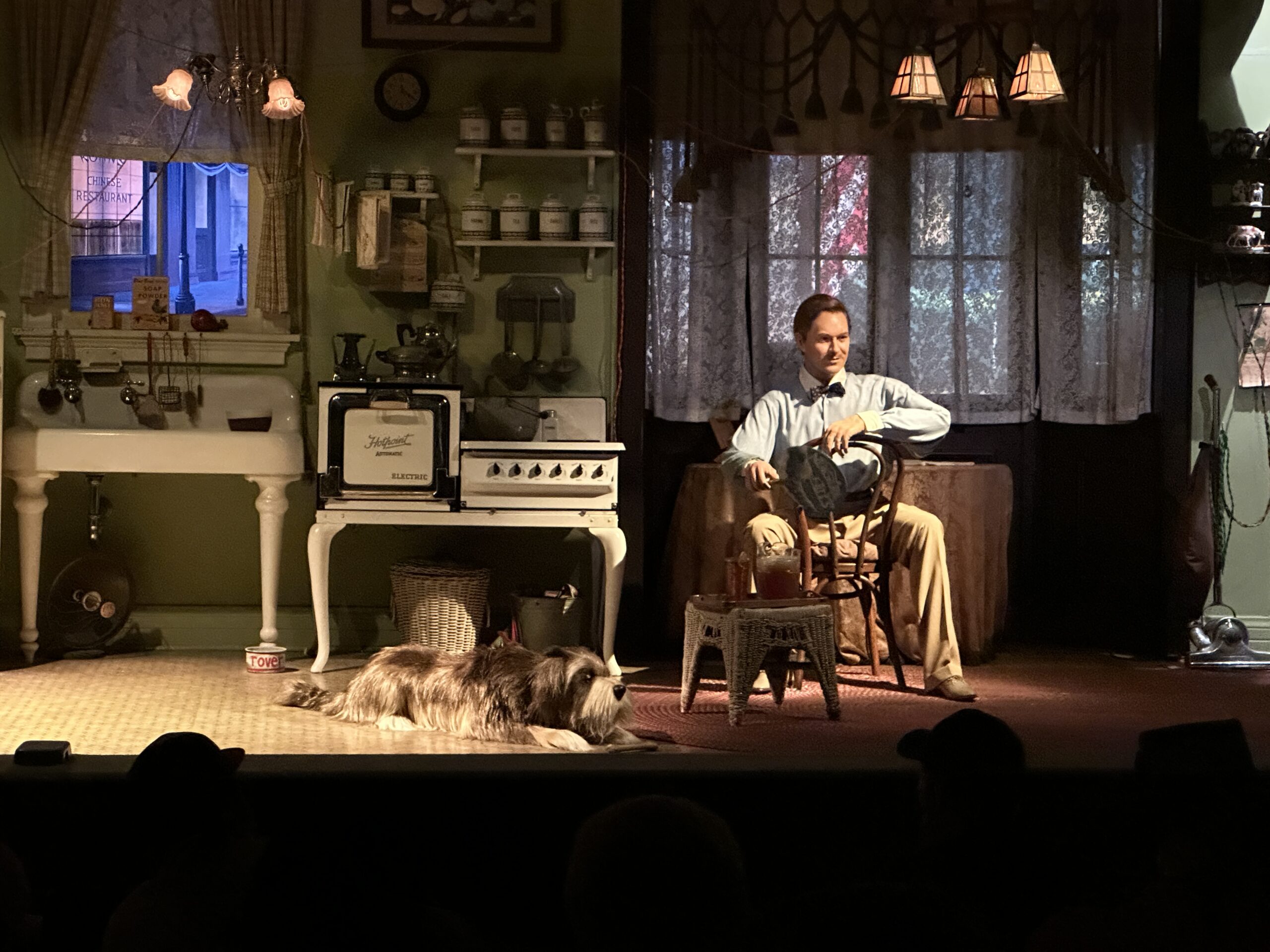
As Sarah calls for John to get changed into his costume, he says things “just can’t get any better!” Then he launches into another performance of “There’s a Great Big Beautiful Tomorrow.”
Act 3 – 1940s
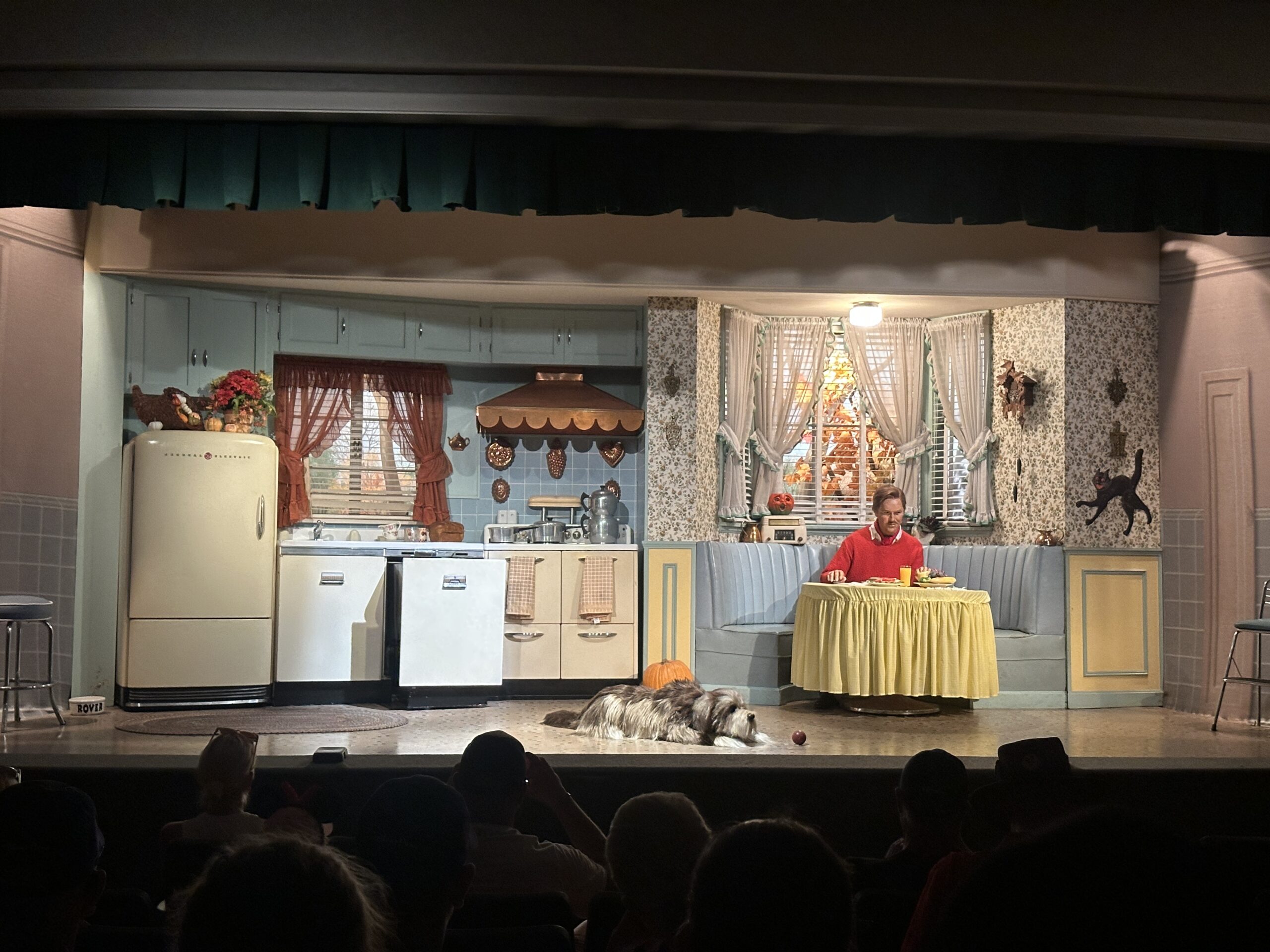
Guests arrive in the fabulous ’40s, where the family is getting ready for Halloween. Retro decorations are all over the kitchen, which now has a large refrigerator and automatic dishwasher.
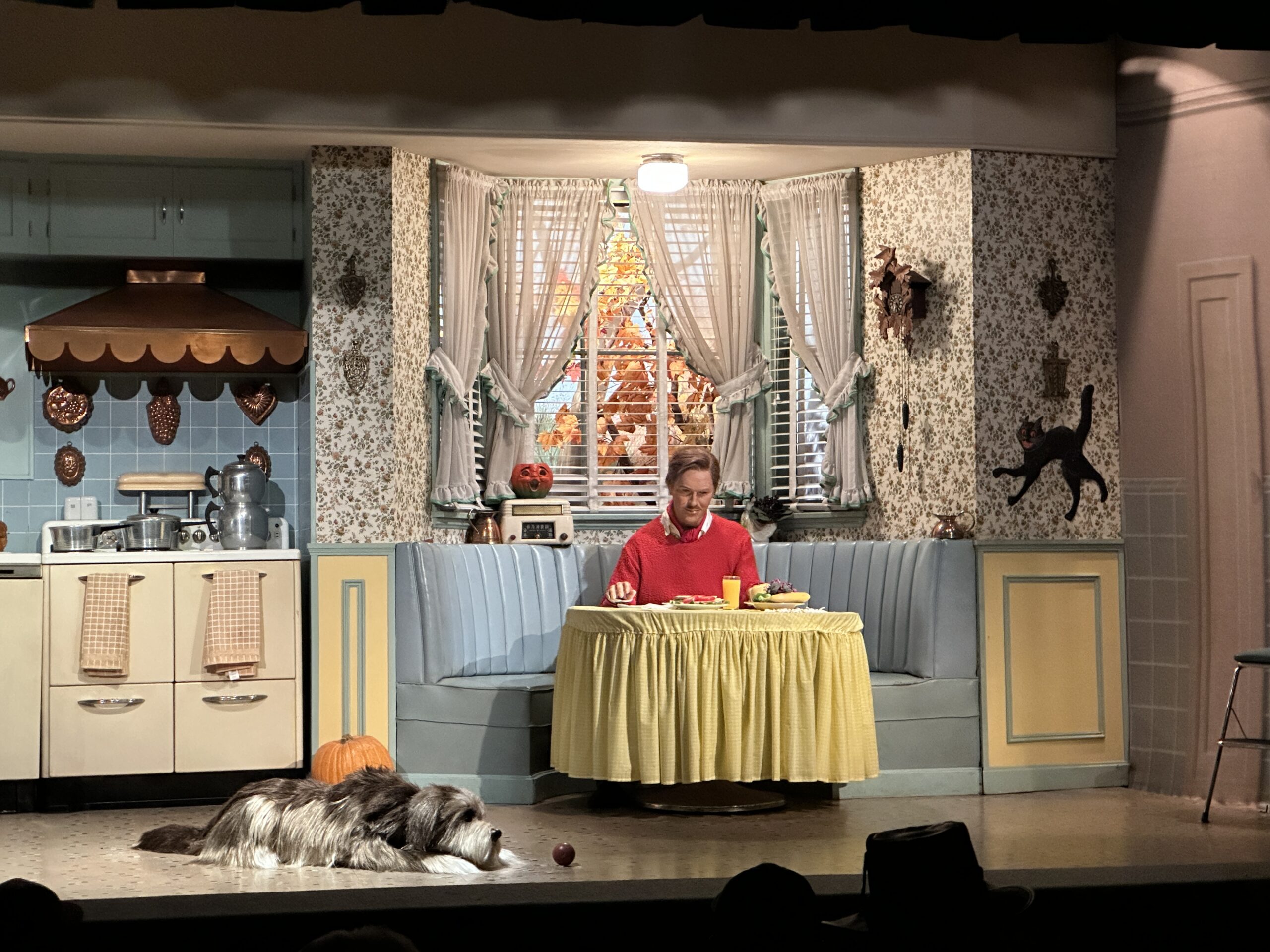
John talks about the “rat race” and “commuting” before Grandma chimes in from offstage: “That’s what they call progress, dear.”
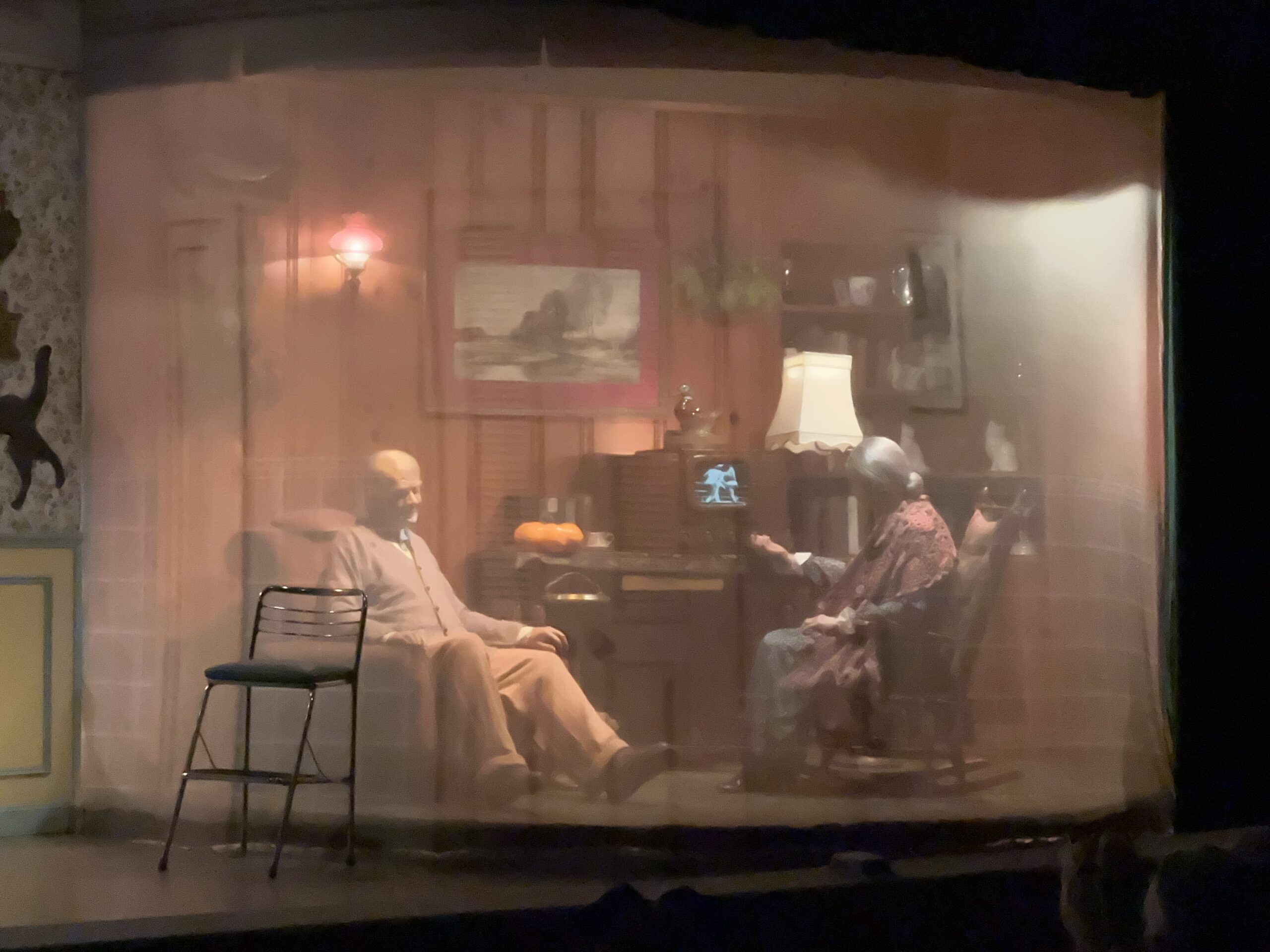
She’s revealed in a scene with Grandpa watching TV. As Grandpa snores, she switches the channel to a boxing match.
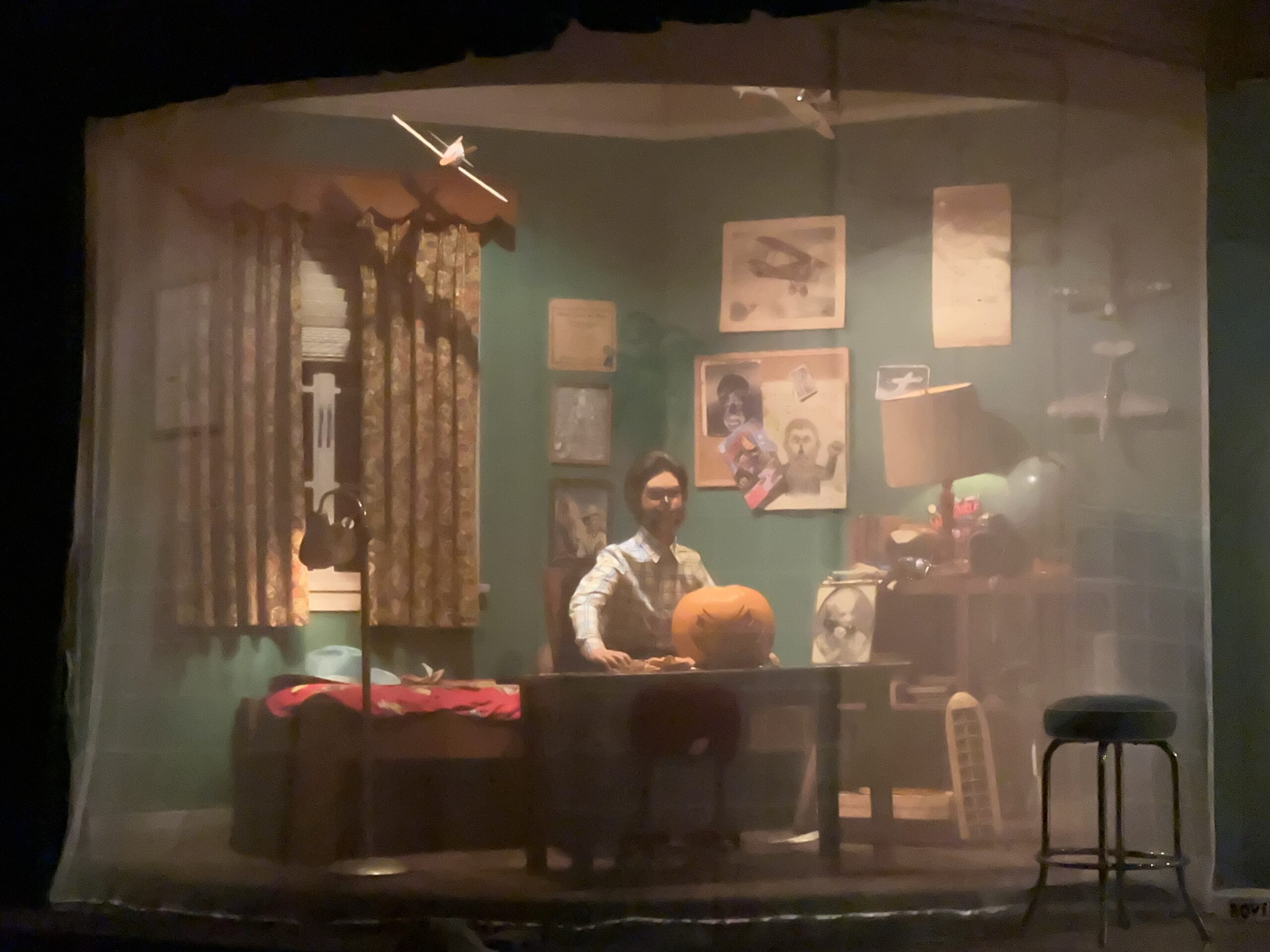
On the left, Jimmy appears wearing a werewolf costume and carving a pumpkin. He says he modeled the scary jack-o’-lantern after his “beautiful sister Patty.”
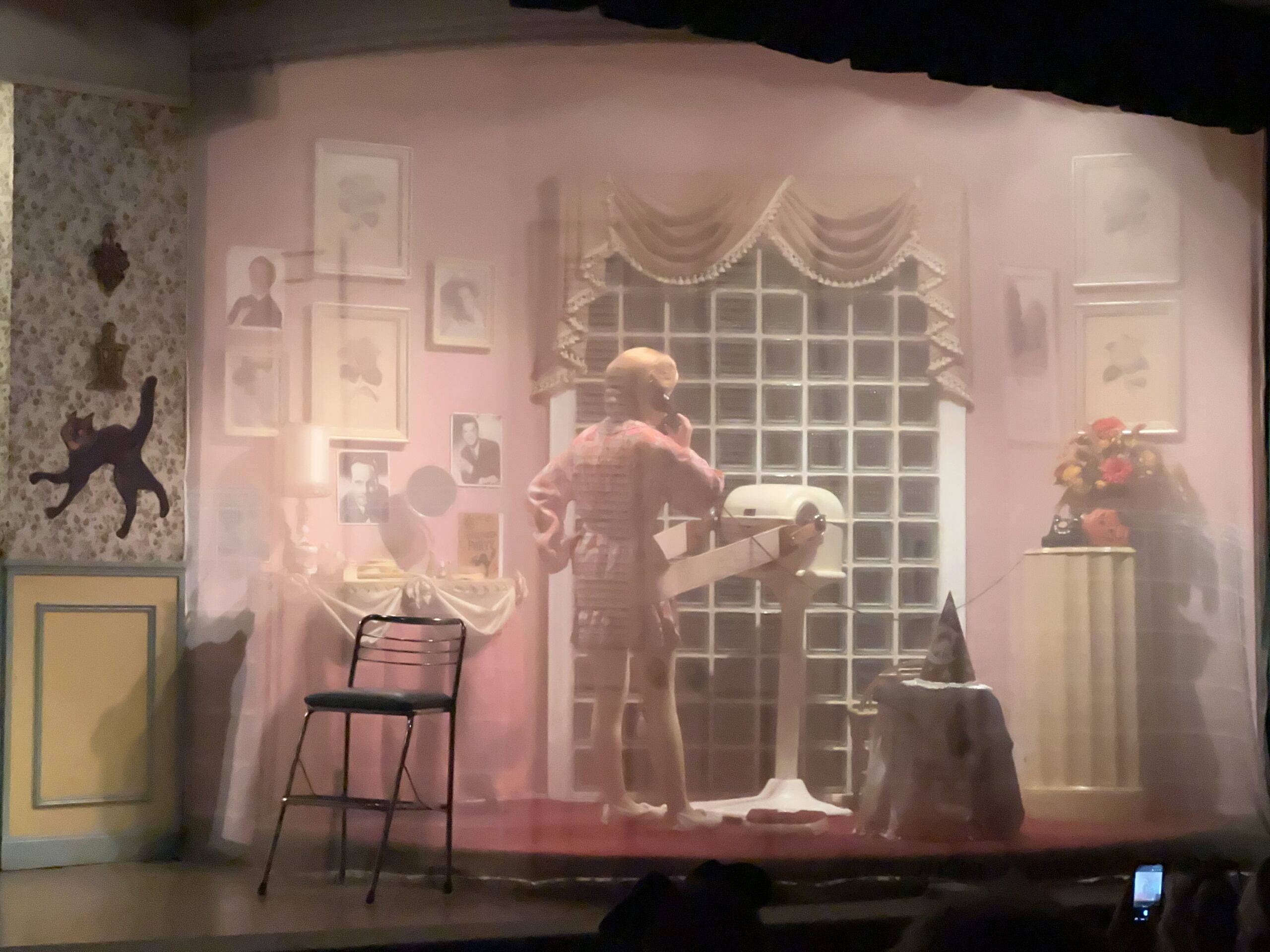
Speaking of, Patty is using an old vibrating exercising machine from the ’20s that she found in the attic. “Didn’t work then, doesn’t work now,” John says at it appears on the right. Patty chats on the phone with her friend Babs about college and their Halloween party dates, Wilfred and Howard.
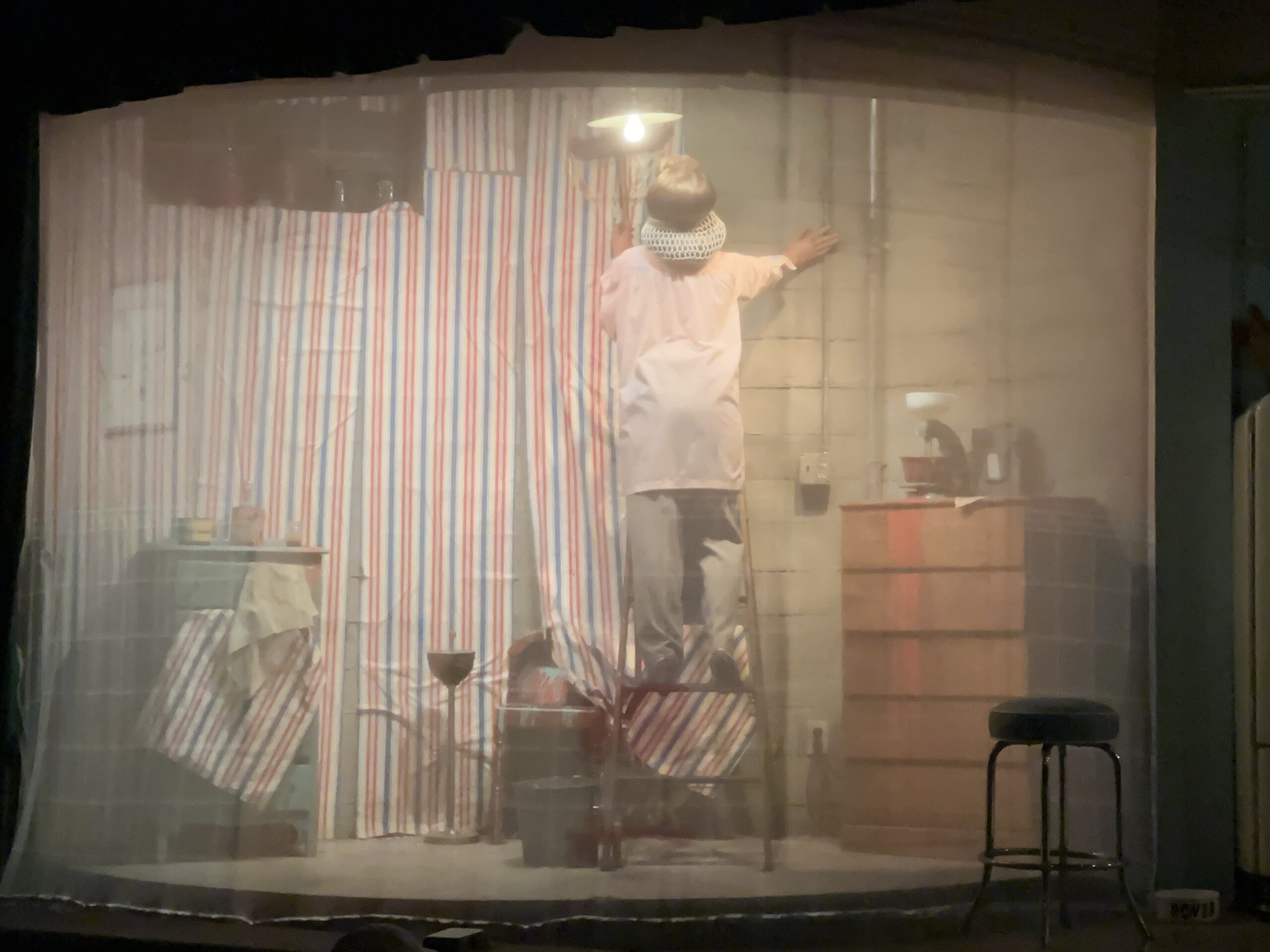
John carries on talking about the latest do-it-yourself craze. Sarah is remodeling the basement to be a “rumpus room.” John created an automatic paint stirring machine out of a food mixer, which splashes paint across Sarah’s “rump—er, rumpus…room.”
John finishes the scene by cheering up Sarah with the theme song.
Act 4 – 21st Century
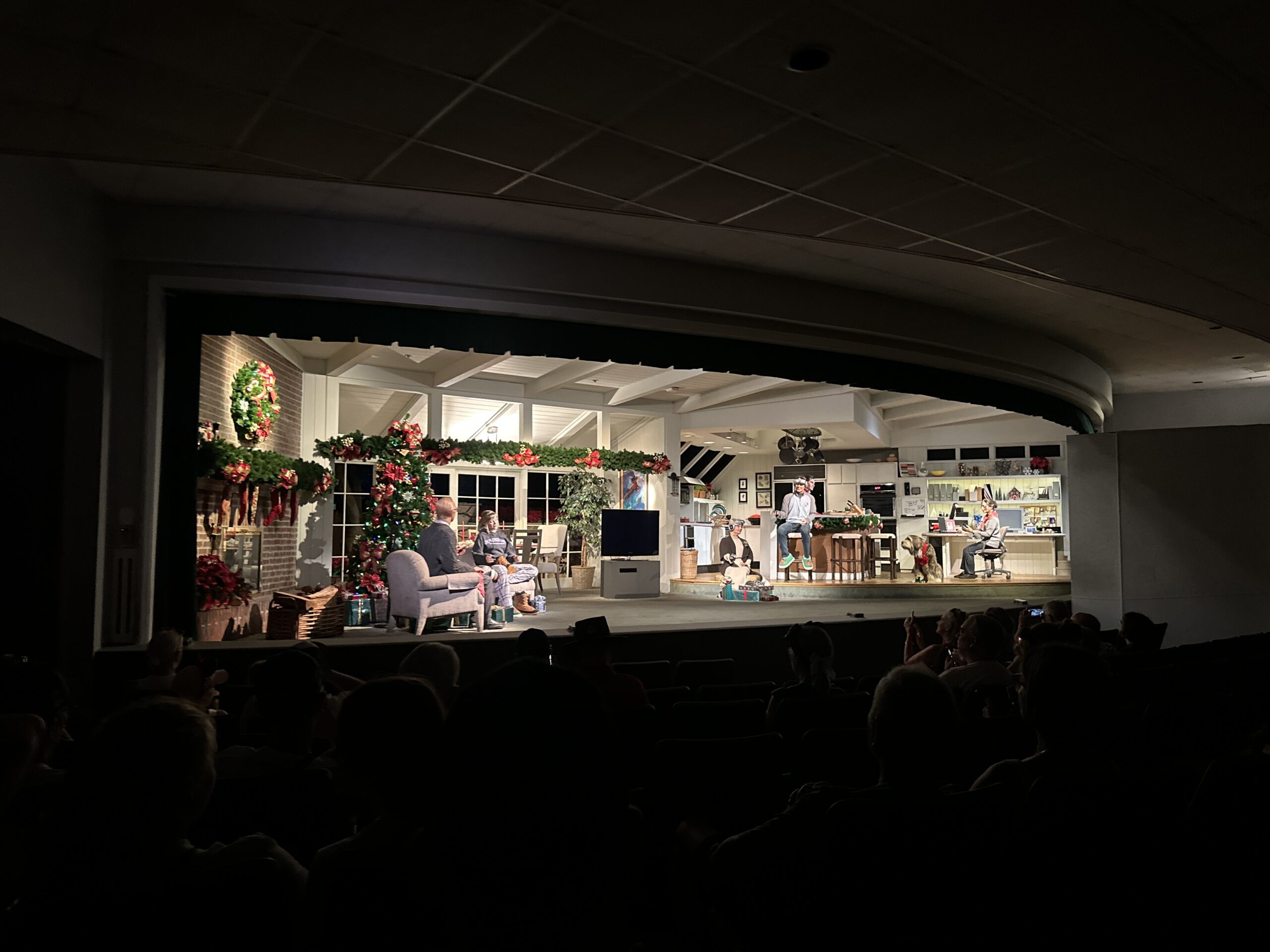
Instead of small rotating scenes on the sides, the finale scene is one big diorama featuring all the characters, even a cat napping among gifts. Hidden Mickeys in this scene include Sorcerer’s Apprentice-inspired artwork on the back wall and a Mickey nutcracker on the mantle.
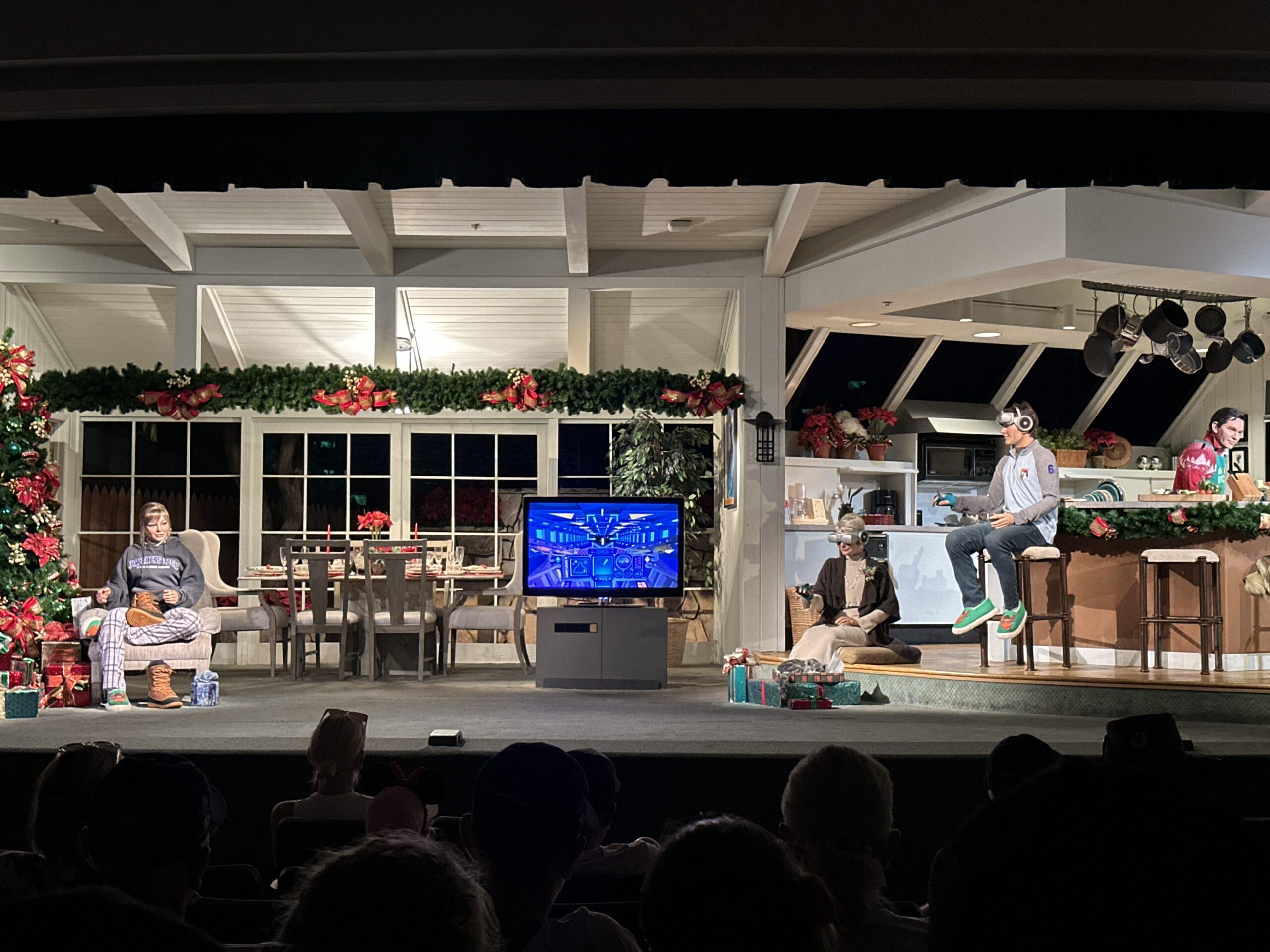
It’s now Christmas in the 21st century. John is cooking a turkey, Jimmy and Grandma are playing a new VR video game, and Sarah is programming the house’s new voice activation system.
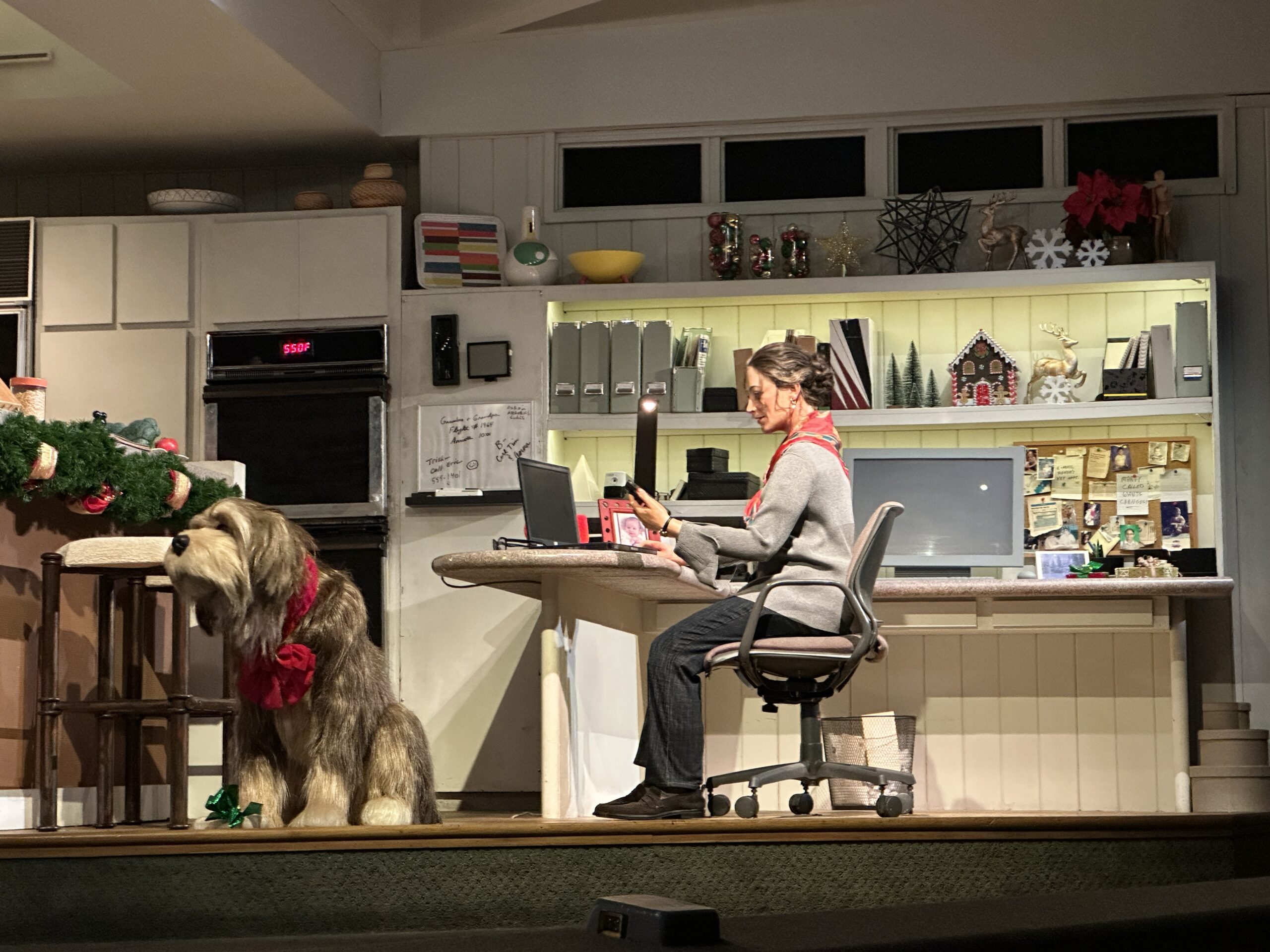
When the system is set up, John directs the oven to increase temperature to 375 and it responds.
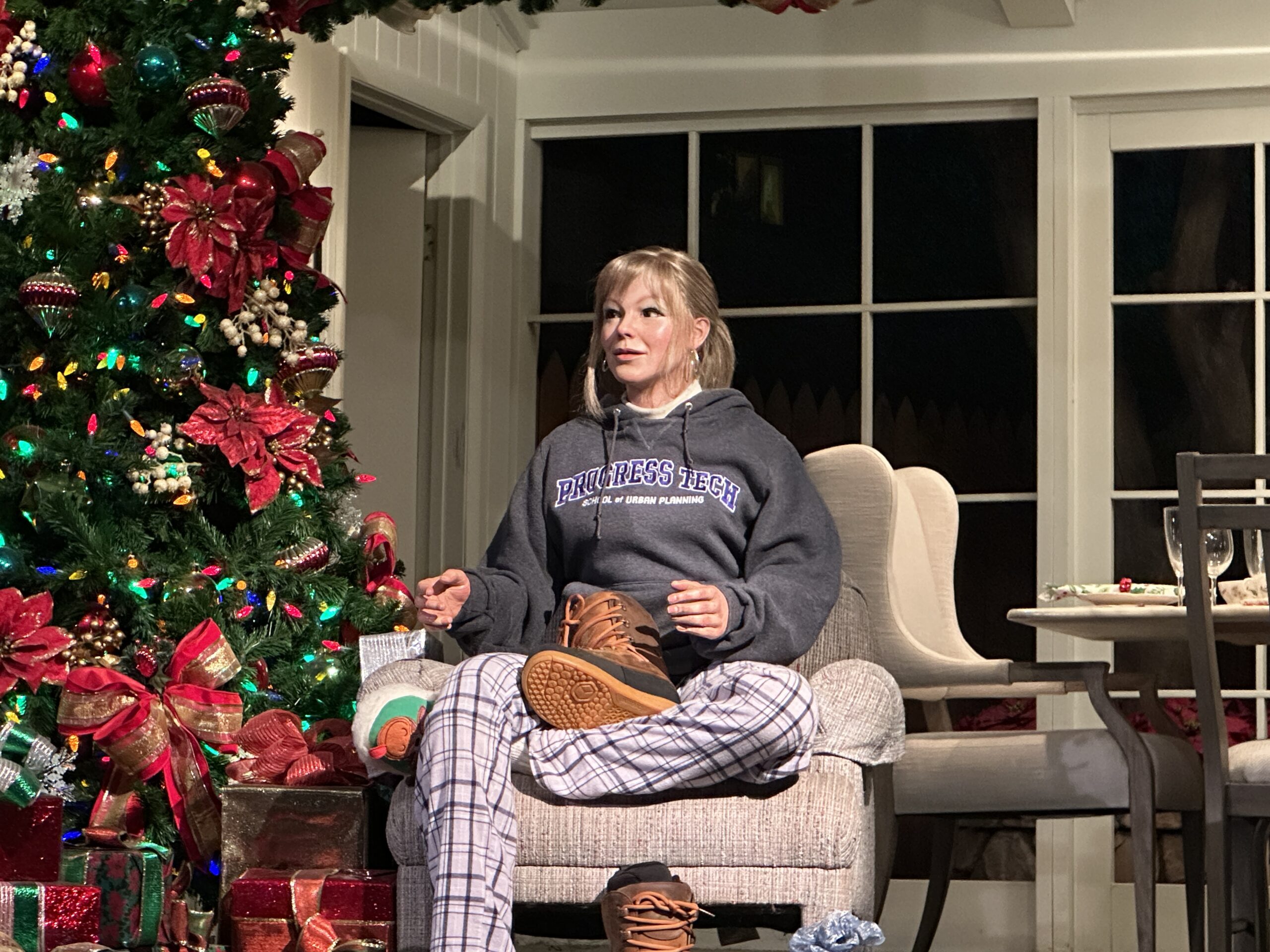
As Grandma takes the wheel of the video game, the family continues chatting about the past and future. Patricia (now “Trish”) reminisces about her dad burning last year’s turkey, leading to a frozen pizza dinner. Grandpa says he can’t believe all the new gadgets they have nowadays and Trish points out he didn’t even have a car phone way back when.
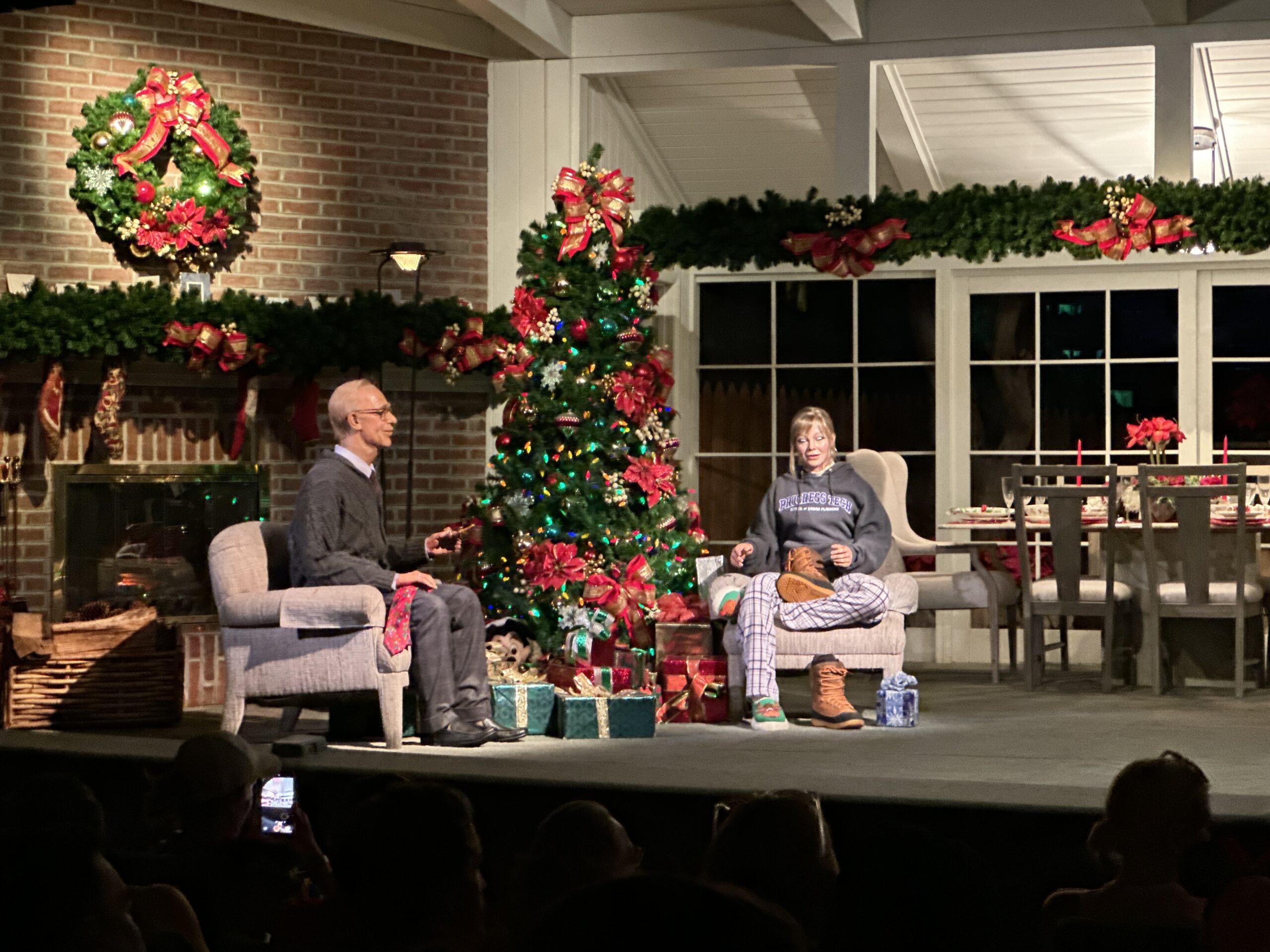
“For a while we didn’t even have a house phone,” Grandpa continues. “Not to mention laser discs and hi-def TV. Everything is automated these days, including…” A flush is heard offstage and Orville yells, “No privacy at all around this place!”
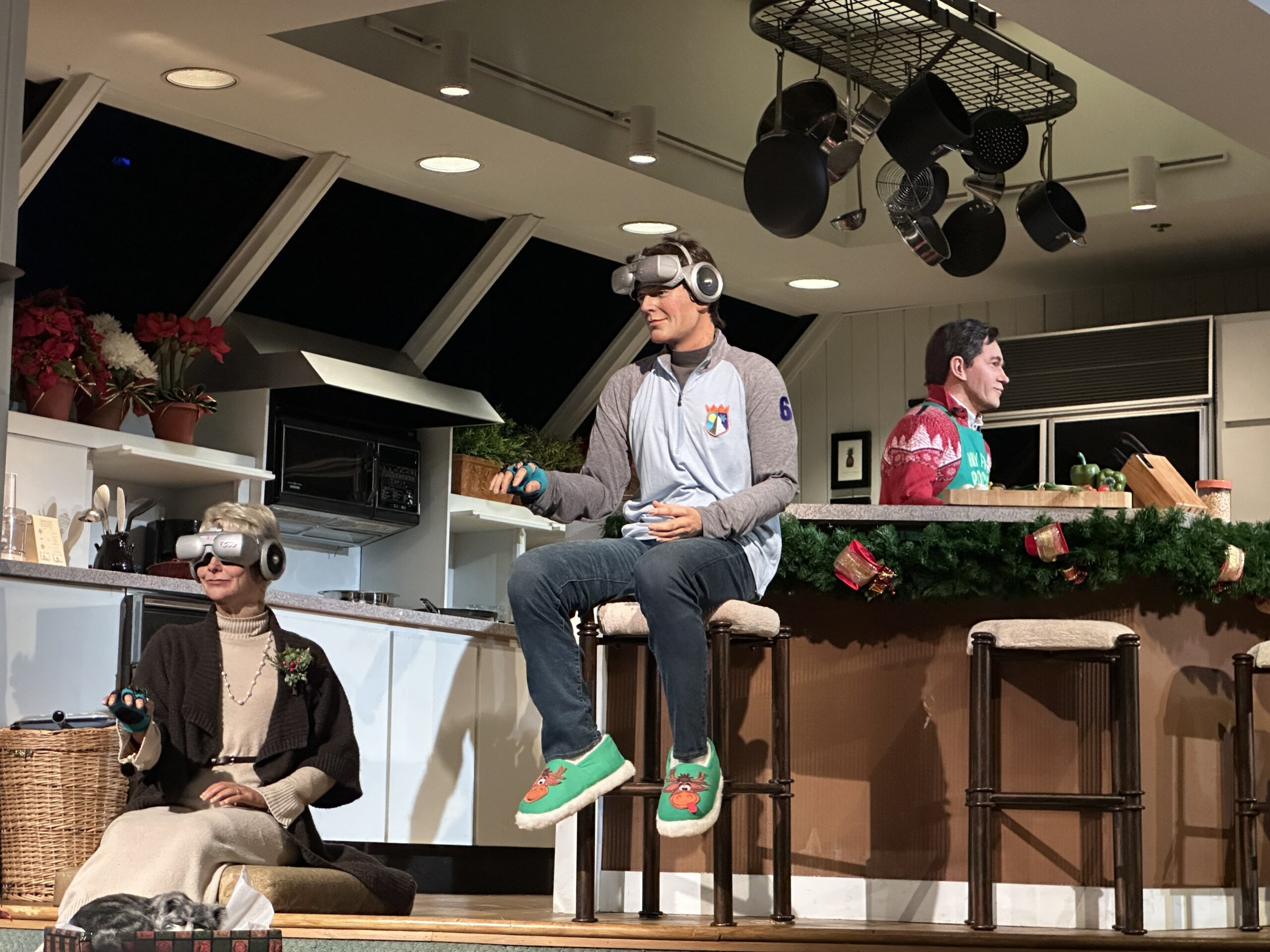
As they talk, Jimmy keeps telling his dad about Grandma’s incredible game score. First 550 points, and then 975! Unfortunately, John doesn’t realize until too late that each time he says a number, the oven temperature goes up.
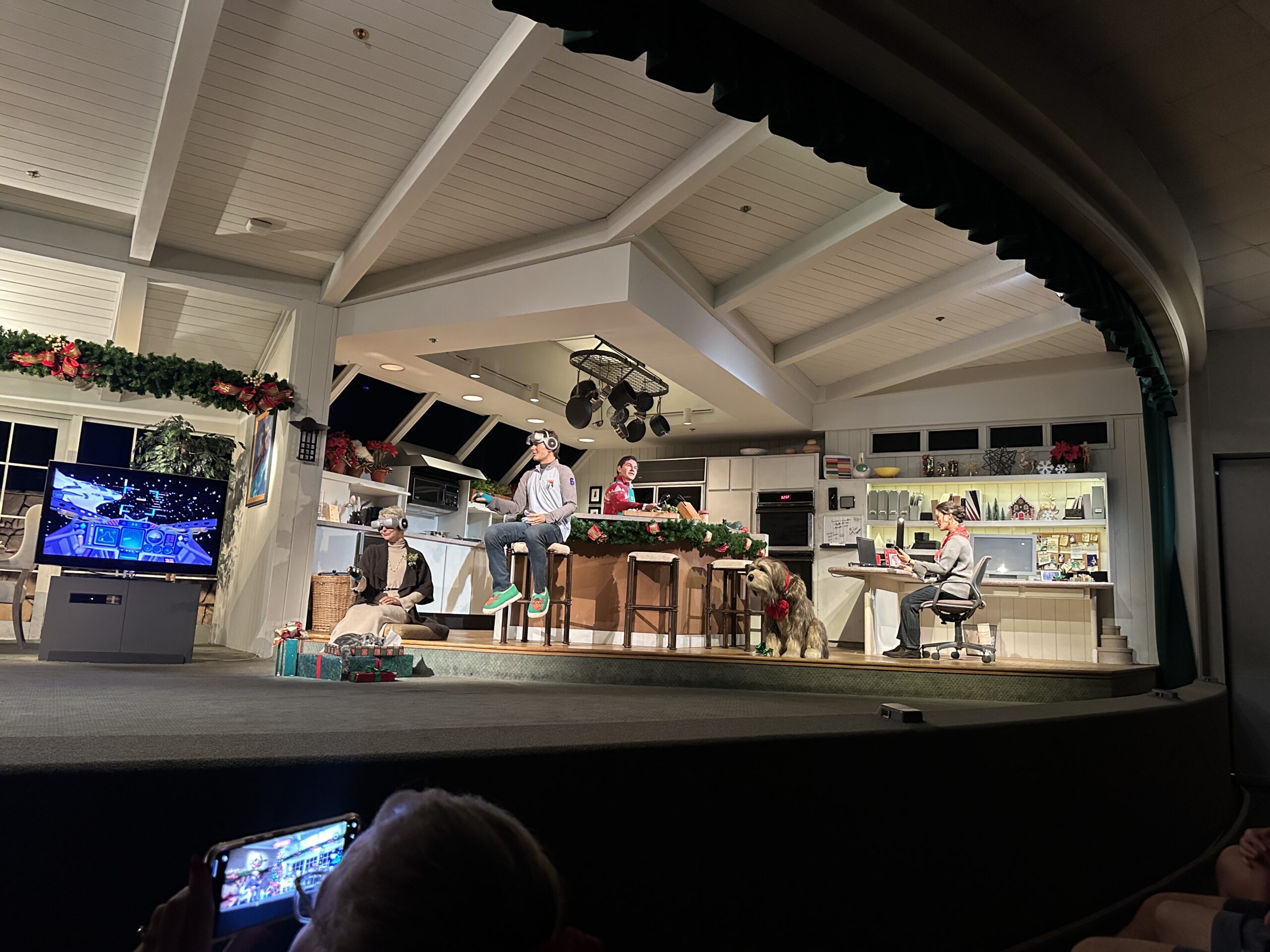
The turkey goes up in smoke and Grandma wins the game. “What will they think up next?” she asks.
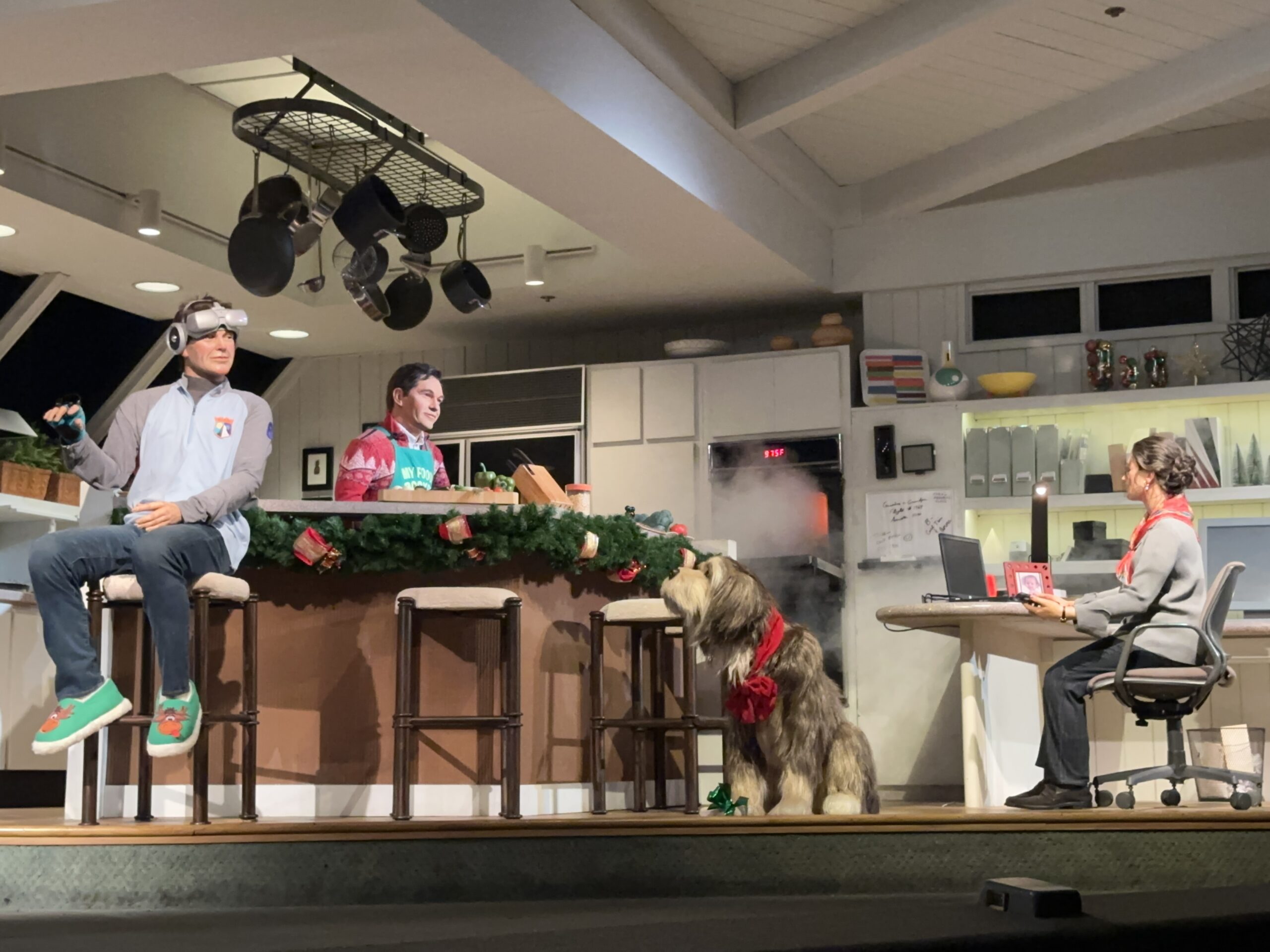
“Who knows?” says Trish. “We’ve got a whole new century waiting for us out there.”
“Yeah, and maybe sometime in the new century, your father will learn how to talk to our oven,” says Sarah.
“Well, maybe by then ovens will read our minds,” John says.
They all laugh about the burnt turkey before Jimmy ends the scene with, “Don’t worry, Dad. Someday, everything’s going to be so automated, you won’t ever have to cook another Christmas turkey again.”
The theater rotates a final time as the entire family sings. Guests enter the unloading room with the Carousel of Progress sign again, where they hear Shepherd’s voice thank them. “There’s a Great Big Beautiful Tomorrow” continues as guests exit.
Carousel of Progress Reimagining
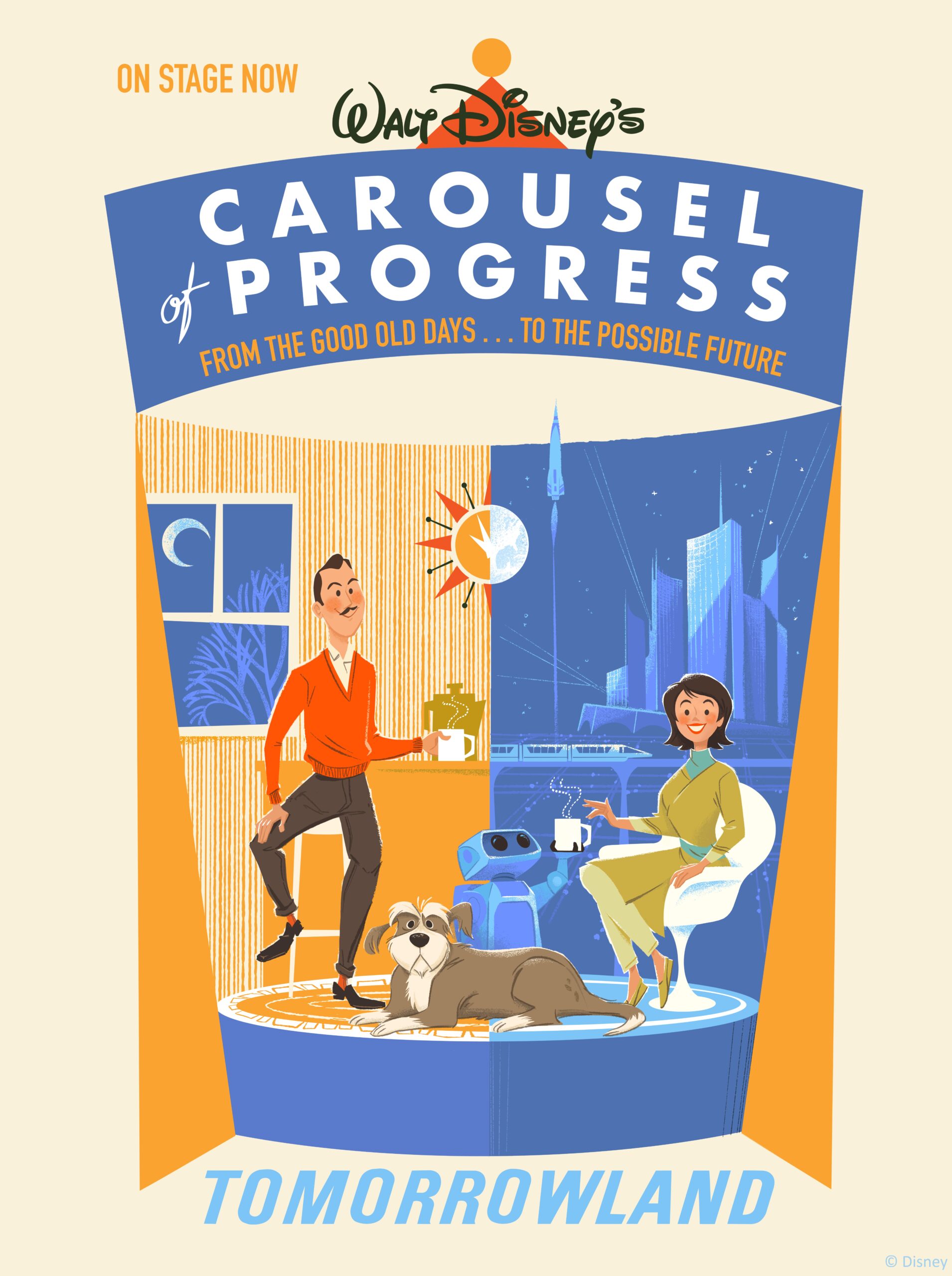
July 5, 2026 is the final day of operation for this version of the Carousel of Progress. Disney expects the reimagining to be completed in 2027. The new poster, inspired by the original New York World’s Fair poster, features John, Sarah, and Rover the dog with a new robot assistant character.
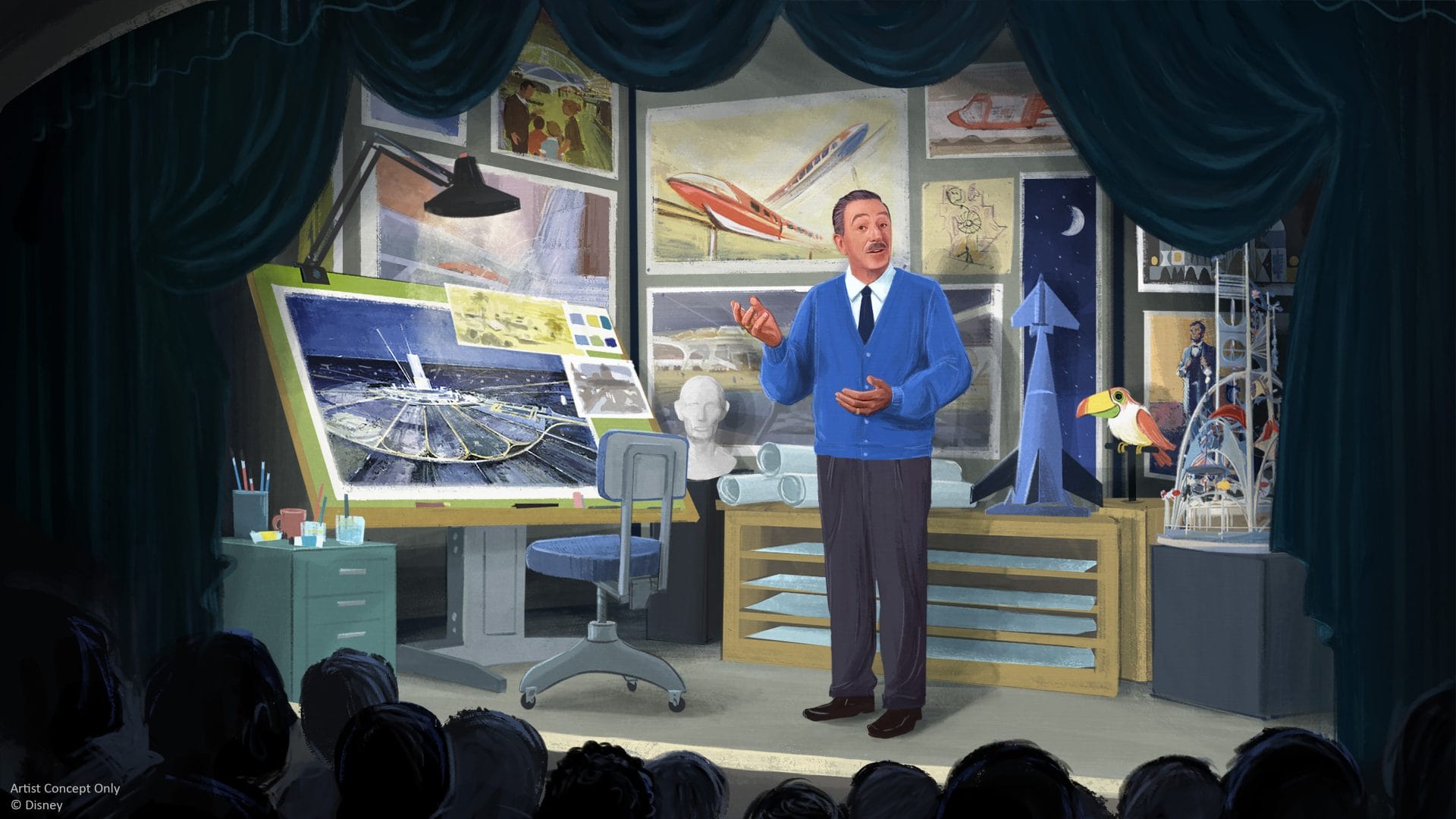
The attraction’s timeline will shift forward, now beginning with Walt introducing the attraction in a scene inspired by the 1964 special “Disneyland Goes to the World’s Fair.”
Imagineers state their main goals for this update are to keep the attraction relatable for today’s audiences by featuring eras in which guests have personal connections.
Act 1 – The 1960s
In the summer of 1969, our Carousel family, along with millions around the world, gathered around the television to witness one of humanity’s greatest achievements: the historic moon landing. Filled with awe, the moment captures the spirit of innovation and possibility that has always been — and always will be — at the heart of Carousel of Progress.
Act 2 – The 1980s
It’s the ‘80s, where everything bigger is better, and things keep on getting bigger! We pick up with the family on Halloween Night of 1985, and for the first time ever, Sarah (mother) is taking center stage. She’ll share how all the new appliances and gadgets are making life easier for the whole family, including a house phone with a nice, long cord.
We’ll find John on the porch handing out candy to trick-or-treaters, and poor Uncle Orville can be found in the bathroom with “no privacy at all around this place!” He’ll be able to gain that privacy with the use of The Clapper to turn off the lights.
Act 3 – The New Millennium
With the ‘90s drawing to a close, our Carousel family is preparing to ring in the new millennium on New Year’s Eve 1999. Amid the excitement of the countdown to 2000, a new thing called the Internet is bringing John, Sarah, Jimmy, and Patty – and the world – closer together than ever before.
Like in most families, not everyone is making it to midnight. Grandpa has already nodded off before the big countdown, while Grandma sneaks the TV over to wrestling when no one’s looking. Seeing as this is 1999 and ESPN now has a deal with WWE, could we be seeing a bit of professional wrestling’s “Attitude Era” on the TV in this classic attraction?
The scene will also feature a multitude of single-use appliances, which were all the rave at the time.
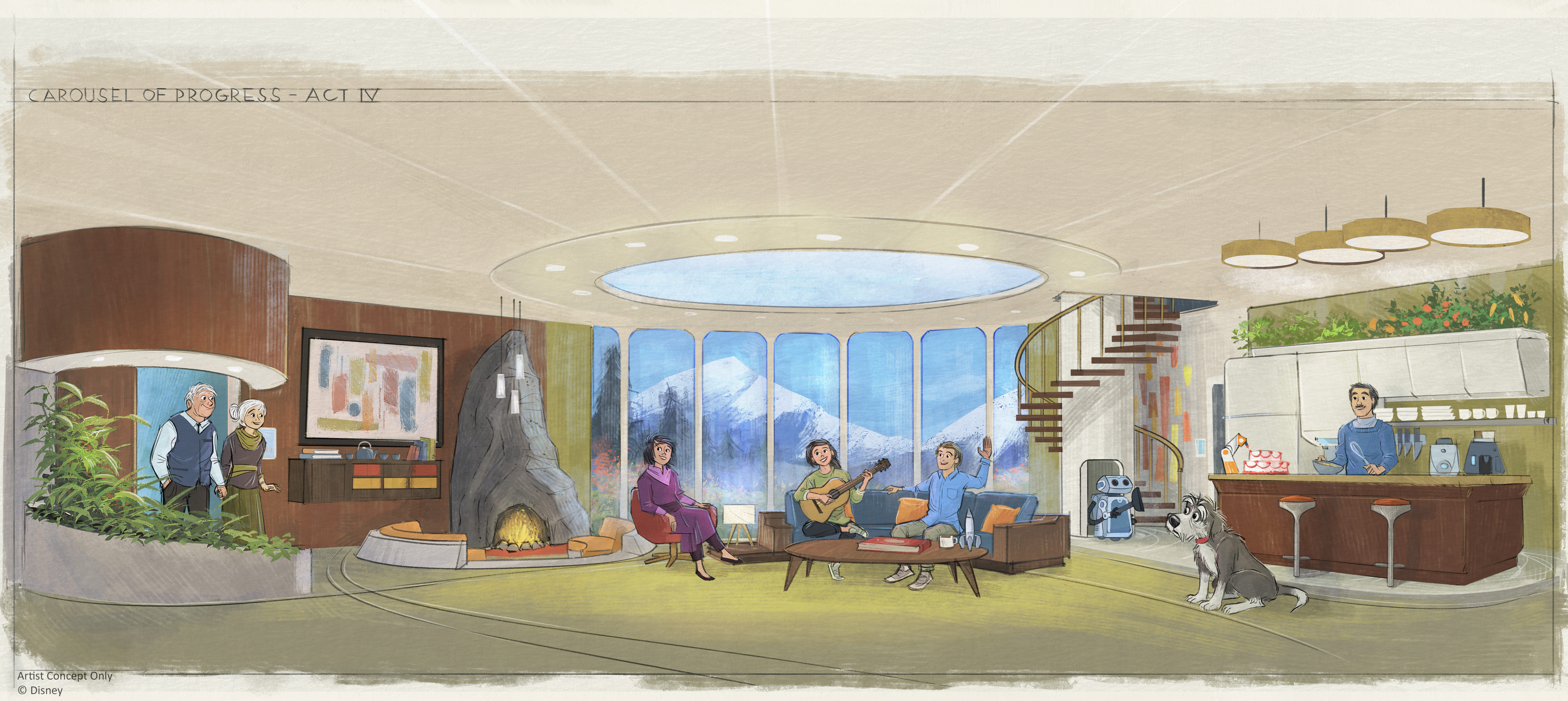
Act 4 – The Possible Future
As we reach the end of our show, we see the family one last time in the distant future, in a home off-planet. From a helpful robot assisting with everyday tasks to space travel, the scene imagines a future where extraordinary innovation has become part of life and proves that a beautiful tomorrow is just a dream away.
To help bring this new finale to life, Imagineers looked back at original concept sketches by Disney Legend John Hench, drawing inspiration from his imaginative vision of the future.
The scene also pays homage to past Carousel shows, including having the daughter playing the guitar in the middle of the living room.
Will you miss the old version of Carousel of Progress or are you excited for the reimagining? Let us know on social media.
For the latest Disney Parks news and info, follow WDW News Today on Twitter, Facebook, and Instagram.