After reminiscing about DinoLand U.S.A. on the day of its closure, former Imagineer Joe Rohde shared more memories and facts about the land. Rohde, a Disney Legend, was previously vice president of Walt Disney Imagineering and led the creation of Disney’s Animal Kingdom, including DinoLand.
Joe Rohde DinoLand Memories
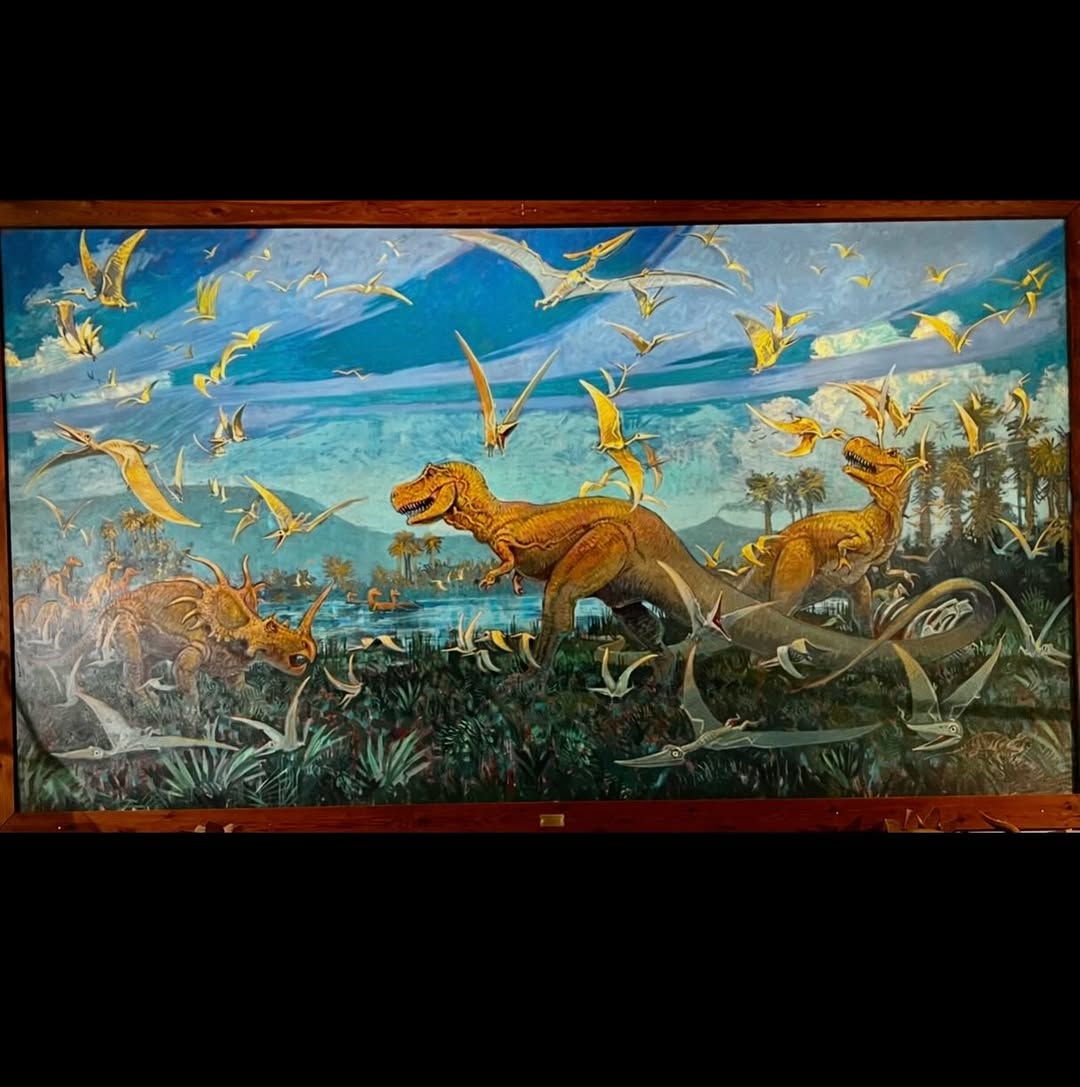
Across multiple posts on his Instagram, Rohde shared photos and stories, beginning with the Restaurantosaurus mural.
The giant painting in Restaurantosaurus was painted by me. Basically, we were running out of money to buy props, and my time was already paid for, so I got a space in the sculpture shop at Imagineering and I just painted it.
It is an homage to the famous early 20th c Paleo-artist, Charles Knight. That’s is why the anatomy and styling is not quite accurate… cuz it’s supposed to be an old painting, like from the 1940s. Knight’s original painting depicts a battle between a Tyrannosaurus and a Triceratops. My favorite dinosaur is Styracosaurus, and so, since Styracosaurus existed somewhat earlier, this must be a battle between a Gorgosaurus and Styracosaurus. Just for you paleontology folks who would want to know that we thought of that.
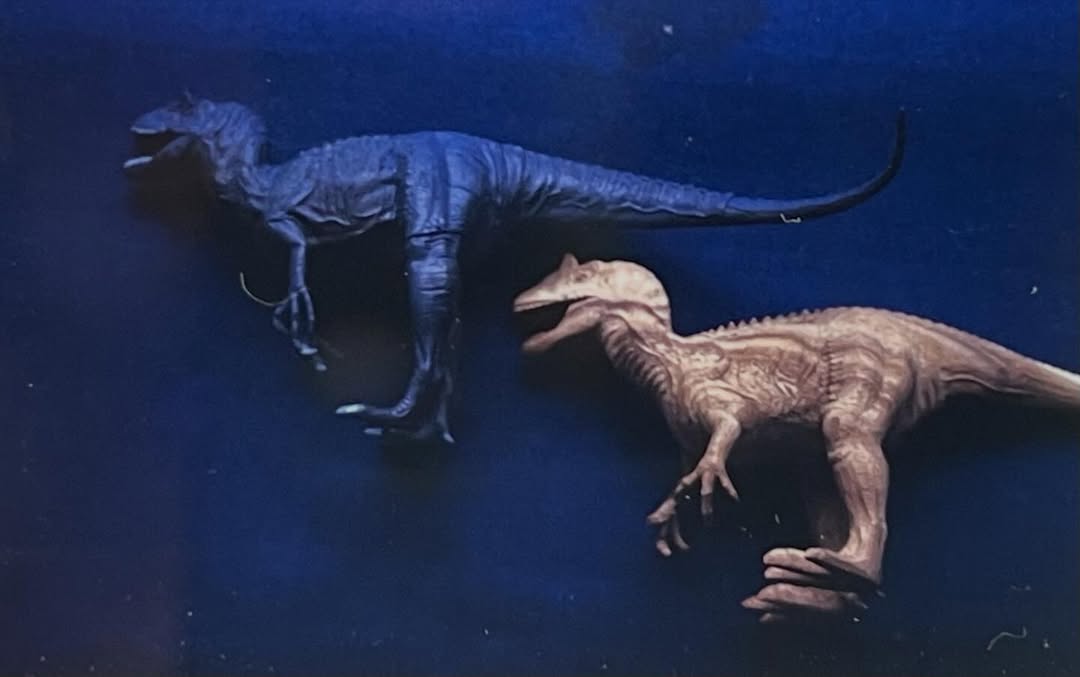
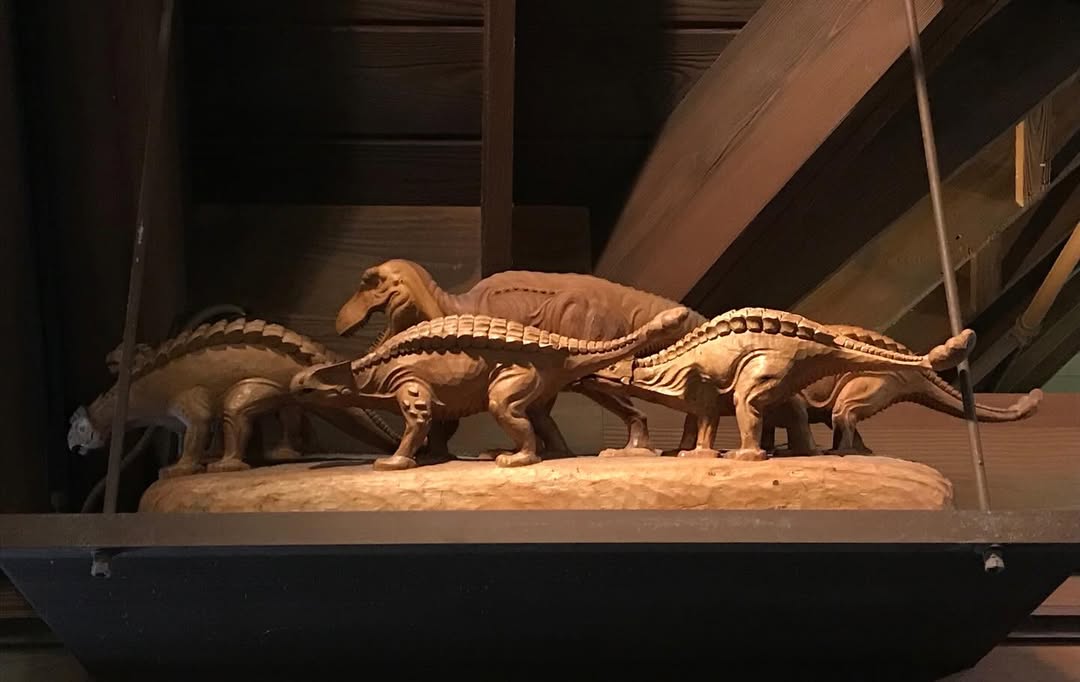
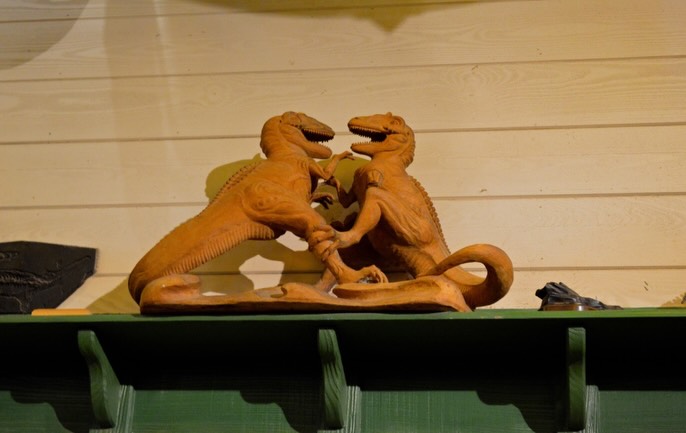
Rohde then shared how he found Balinese carver Wayan Mustika to create some of the dinosaur figures throughout Restaurantosaurus.
We were in Bali looking for woodcarvers to support architectural detail for DAK. This was really early, like 95? In the marketplaces we’d see these carved dinosaurs that were pretty good! Others were really terrible, but these were really nice, except that they were outdated scientifically. And we asked who’s making these? Everyone directed us up to the village of Pakudui to the house of Wayan Mustika, a master carver who personally loved dinosaurs and had been carving them for years, when he wasn’t carving sacred paraphernalia for local temples.
I already had with me a very expensive large scale Japanese dinosaur model, because I was gonna try to find someone to carve dinos for Restaurantosaurus. (They weren’t gonna copy the models … that was just a test.) Anyway, I left the model with Mustika and a few days later he had this great sample.
So after that, I would send him shaded sketches of the scenarios we wanted to see carved. Like the Tyrannosaurus chasing a herd of ankylosaurus and the battle between the two Allosaurs. Everything looked great. And Mustika went on to become one of the main sources for woodcarving in the whole park.
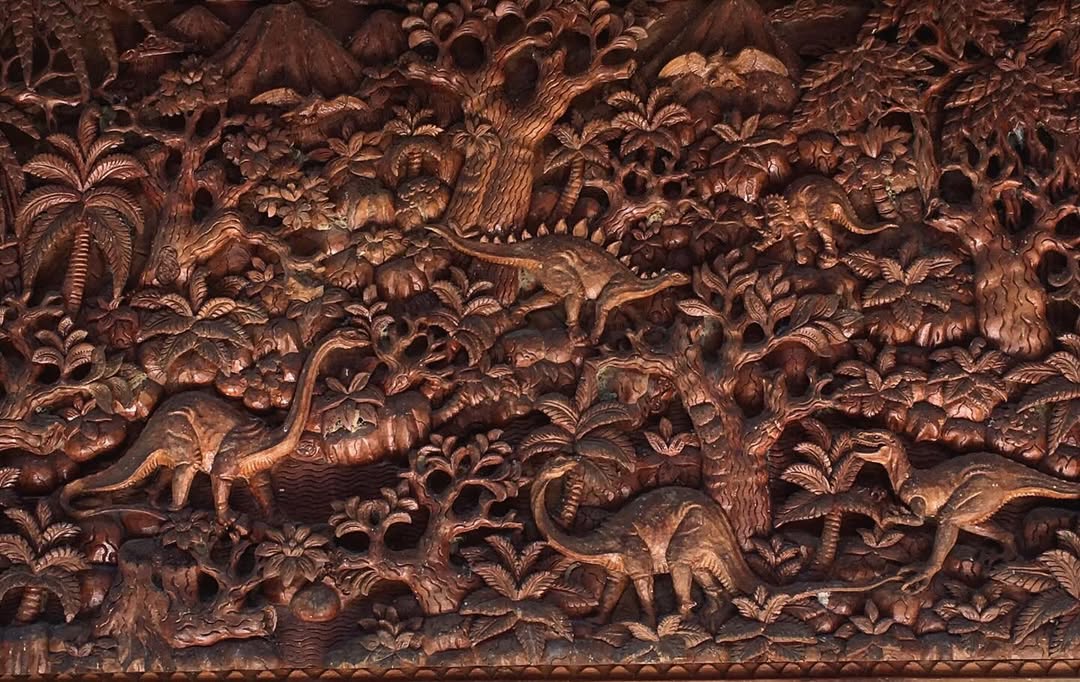
Rohde added that this started a tradition for the Mustikas. “Each time Mustika did a project for us, he would carve a special window for their house to commemorate the project,” he wrote. Above is Mustika’s dinosaur window carving.
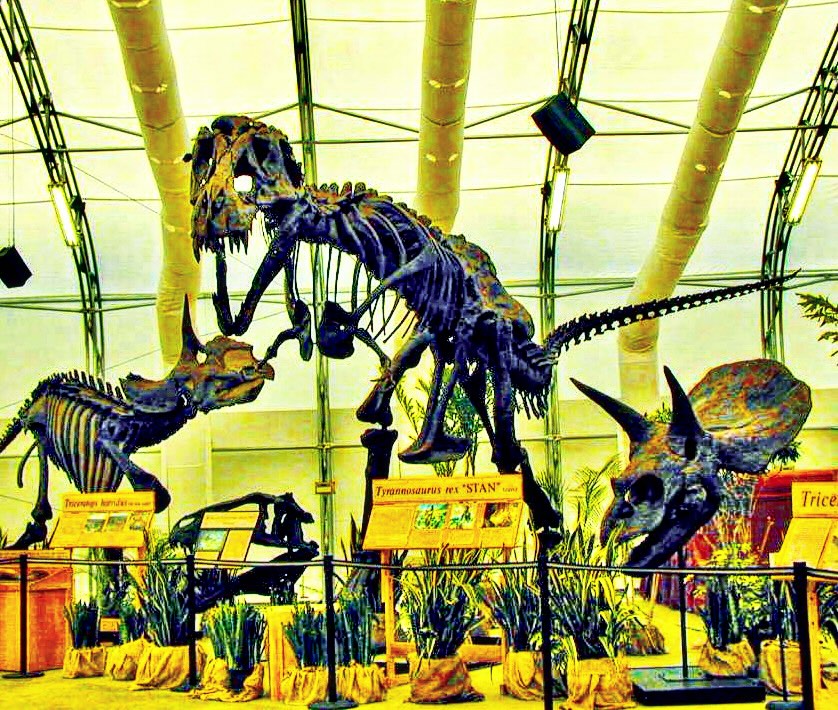
Few Disney guests got to experience the short-lived Dinosaur Jubilee, which was essentially a temporary exhibit before more permanent attractions could be added to Disney’s Animal Kingdom. The Jubilee was ultimately replaced by Chester & Hester’s Dino-Rama. Rohde wrote about how the exhibit came to be with the park’s significant budget restraints.
You can’t underestimate how tight the budget was for this park. This is one of the reasons we had to be so clever with our storytelling/design concepts. We couldn’t solve our problems with a giant atomic money bomb. The Disney’s Animal Kingdom concept was ambitious to begin with, and it was foolish to make it more ambitious by making it less affordable.
Size matters. You can’t charge more just because your park is big. The economics of parks don’t work that way. So big hurts. The job site was over 500 acres, and the Safari alone was over 100 acres, plus we had to pay for the connecting road infrastructure to get there. The publicly acknowledged price range for the opening day of this park is easily found online. You’ll notice that this number is not significantly higher or lower than the number to build other parks of the same era. However, those other parks were more like 100 acres, and in some cases, even 50 acres. So, you do the math on the comparable cost per square foot.
That’s why one of the attractions that opened the park was a tent full of reconstructed Dino fossils bought from suppliers who serve the museum world. Cheap. But also interesting and very real…which is on brand for Disney’s Animal Kingdom. Together with the real lab facility, where we helped prepare the skeleton of Sue the Tyrannosaurus together with the Field Museum, this was, at the time, actually one of the more extensive and impressive paleontological public exhibits in the Southeast USA. The tent came down to make way for Chester and Hester’s Dino-Rama, which is another story altogether. Although the underlying theme of economics was the same.
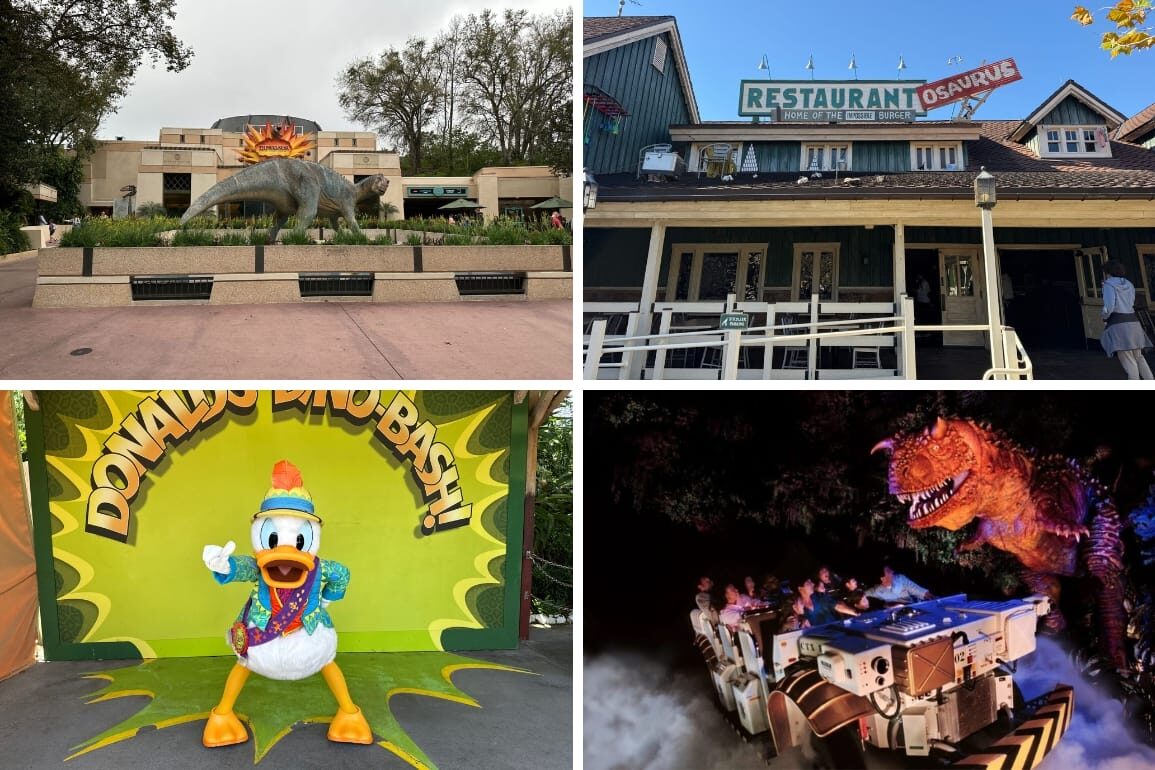
Check out our complete history of DINOSAUR a.k.a. Countdown to Extinction, plus our last looks at each part of the original land: DINOSAUR, Restaurantosaurus, Donald’s Dino-Bash, Chester & Hester’s Dino-Rama, Chester & Hester’s Dinosaur Treasures, and The Boneyard.
For the latest Disney Parks news and info, follow WDW News Today on Twitter, Facebook, and Instagram.