Rafiki’s Planet Watch at Disney’s Animal Kingdom is temporarily closed to prepare for the arrival of Bluey and Bingo. The characters from the hit Australian children’s show Bluey will meet, dance, and play in Conservation Station while Australian animals will appear at Affection Section.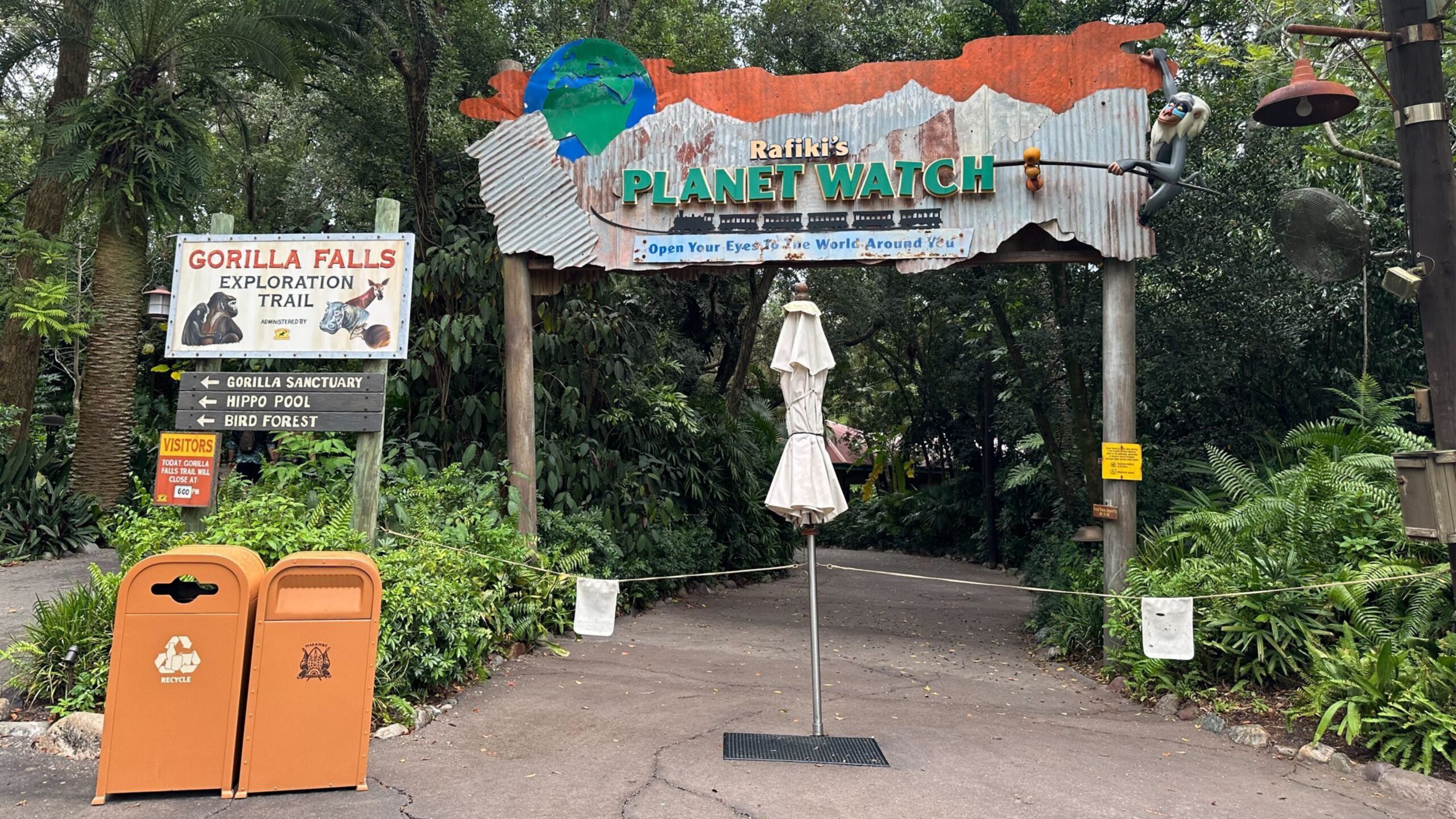
February 22 was the last day to visit Rafiki’s Planet Watch before the changeover. It will reopen summer 2026. Disney hasn’t announced exactly what will change, so here’s a last look at the current iteration of Rafiki’s Planet Watch.
Rafiki’s Planet Watch Last Look
Wildlife Express Train
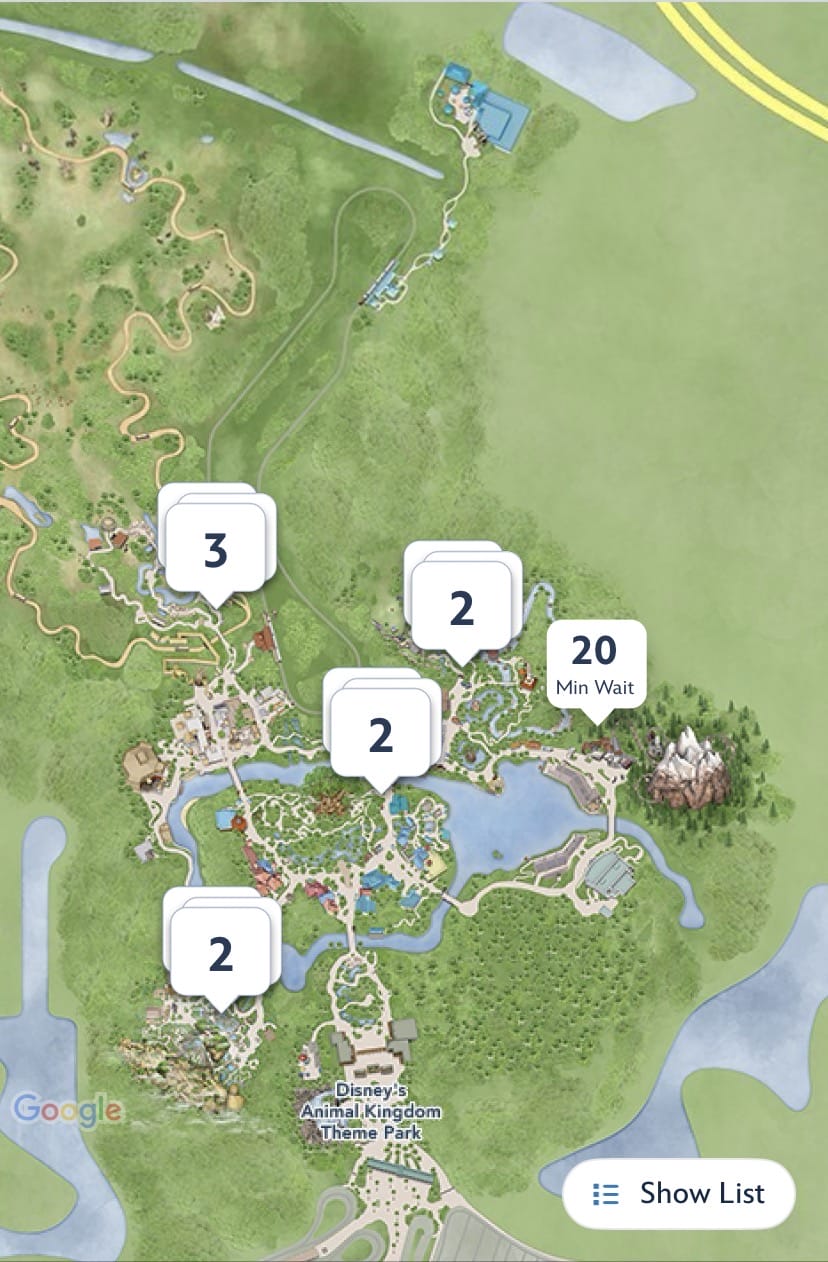
To reach Rafiki’s Planet Watch, guests must take the Wildlife Express Train. On the map above, Rafiki’s is the group of blue buildings near the top, showing just how far away from the rest of the park the mini land is.
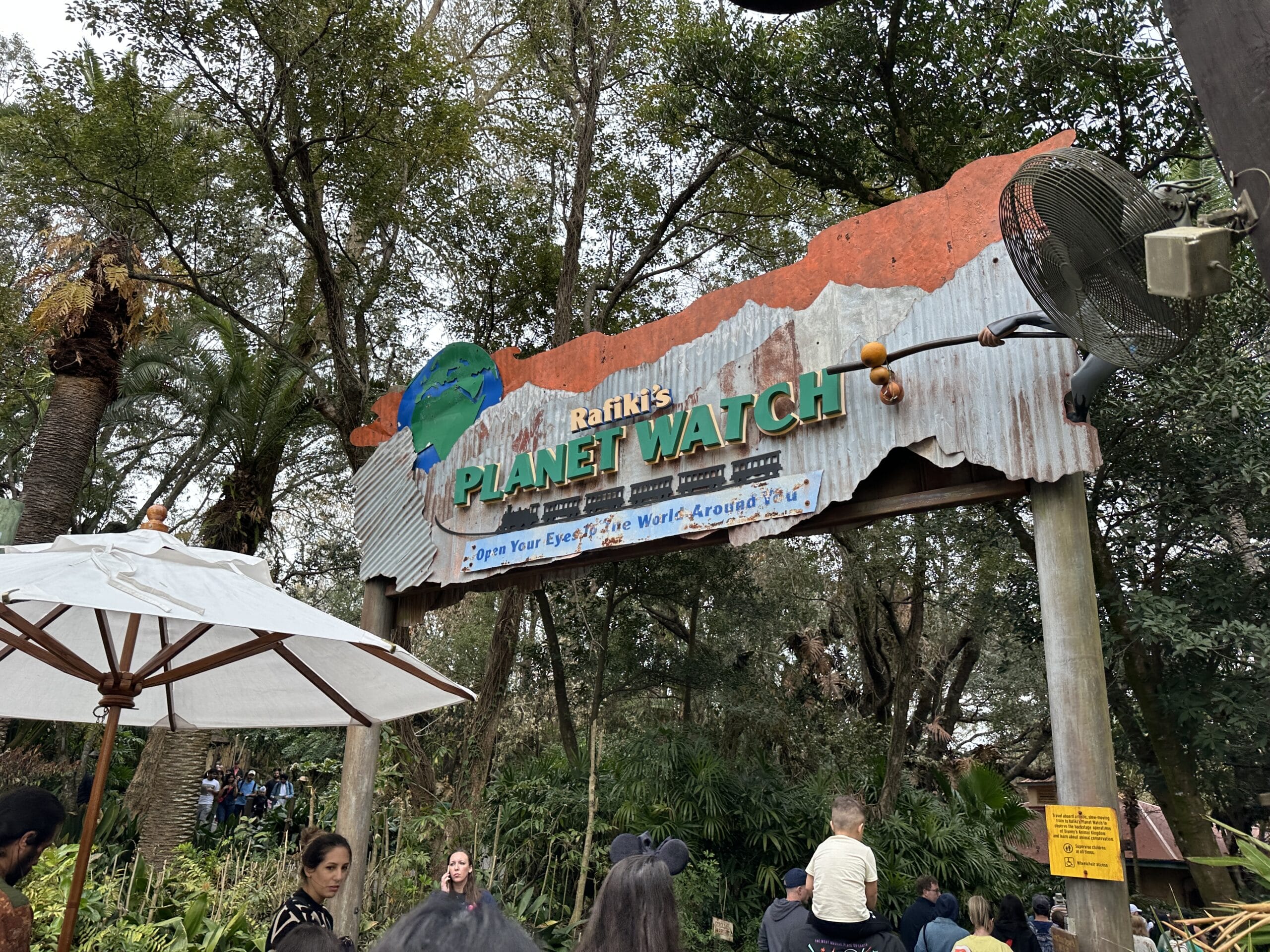
The entrance to Harambe Station in the park’s Africa section features a sign made of reused materials and a statue of Rafiki. “Open your eyes to the world around you,” reads the sign.
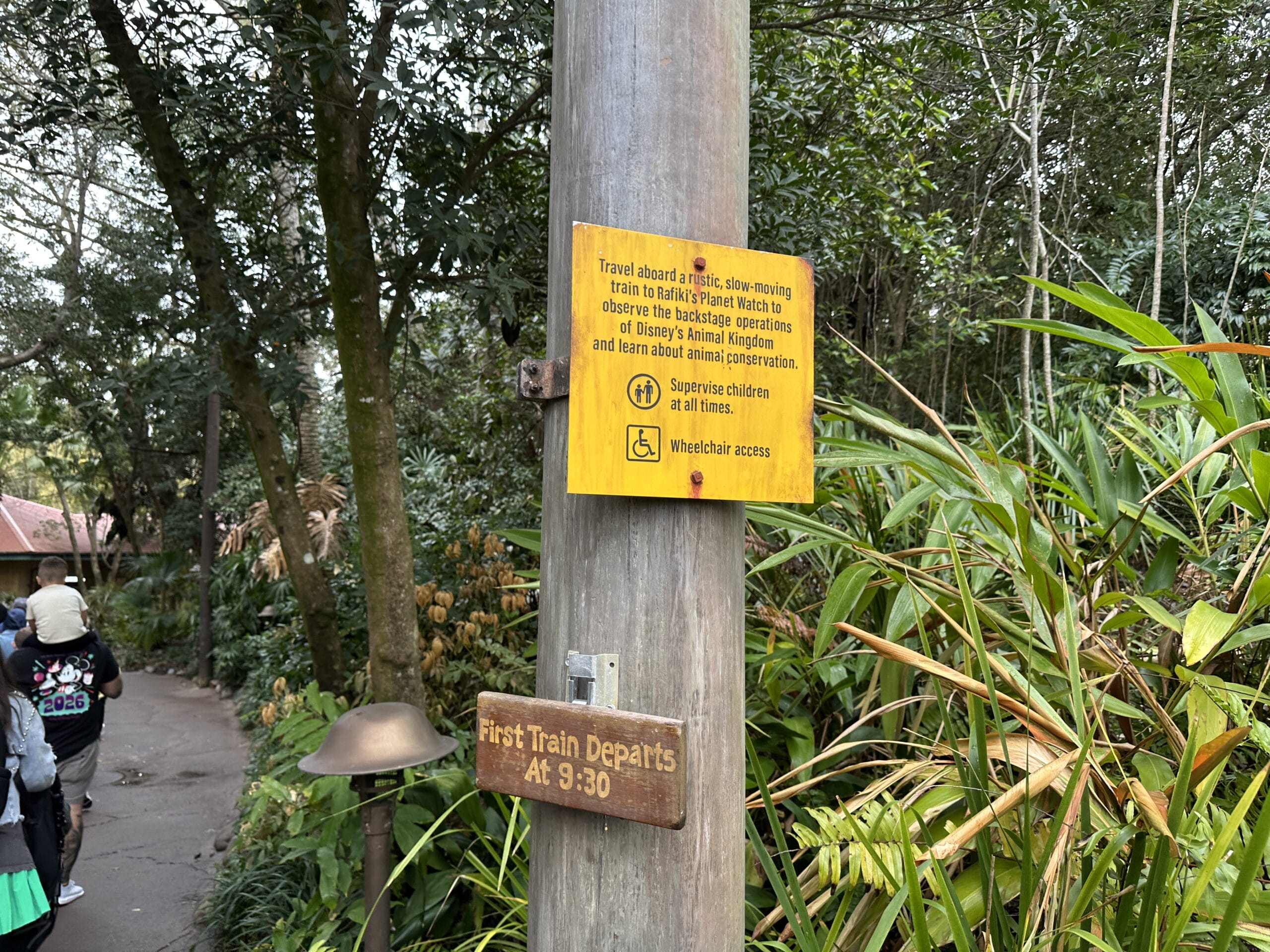
The first train departs at 9:30 a.m. It takes its last journey at 4:30 p.m. before Rafiki’s Planet Watch closes at 5 p.m.
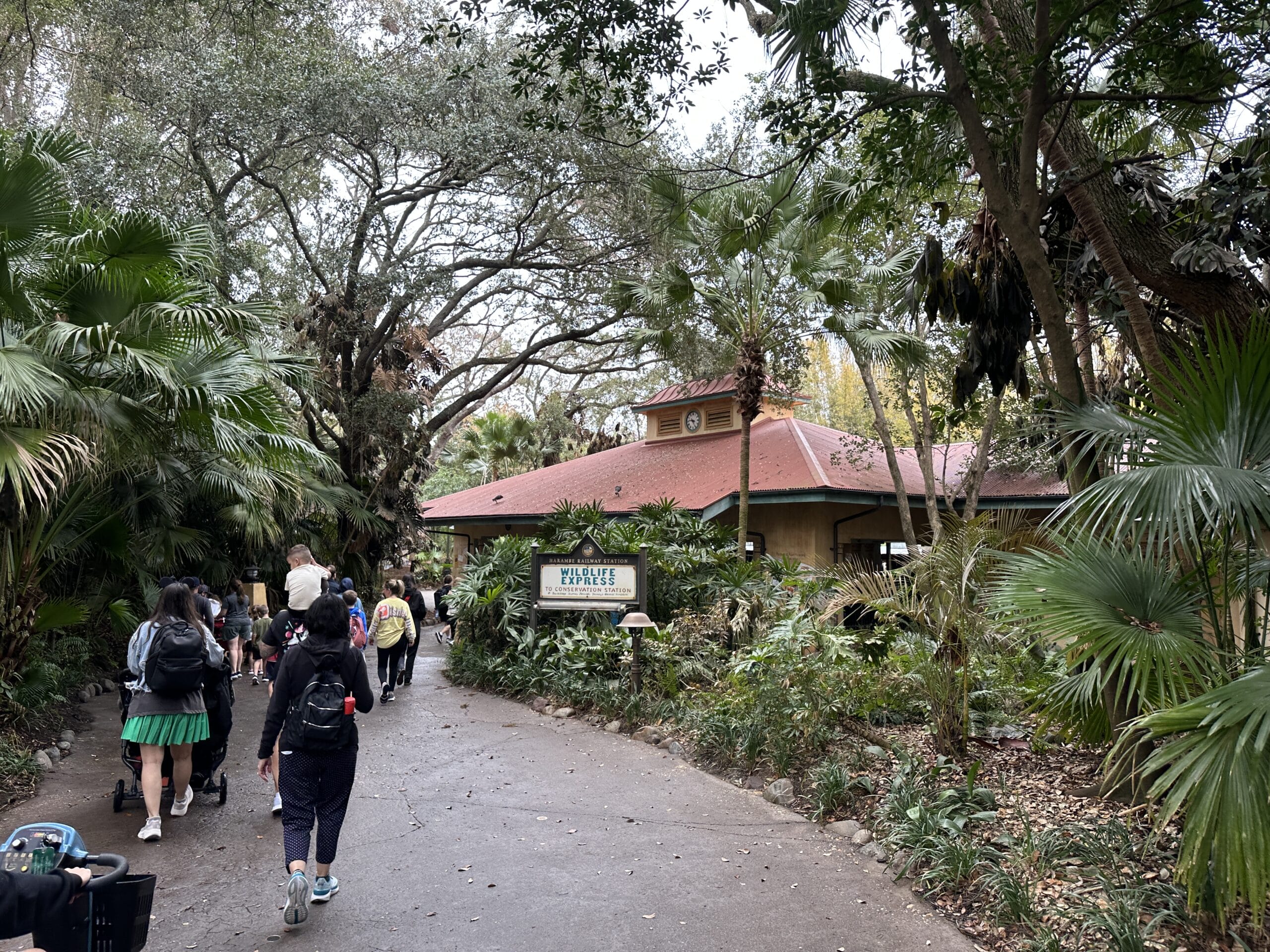
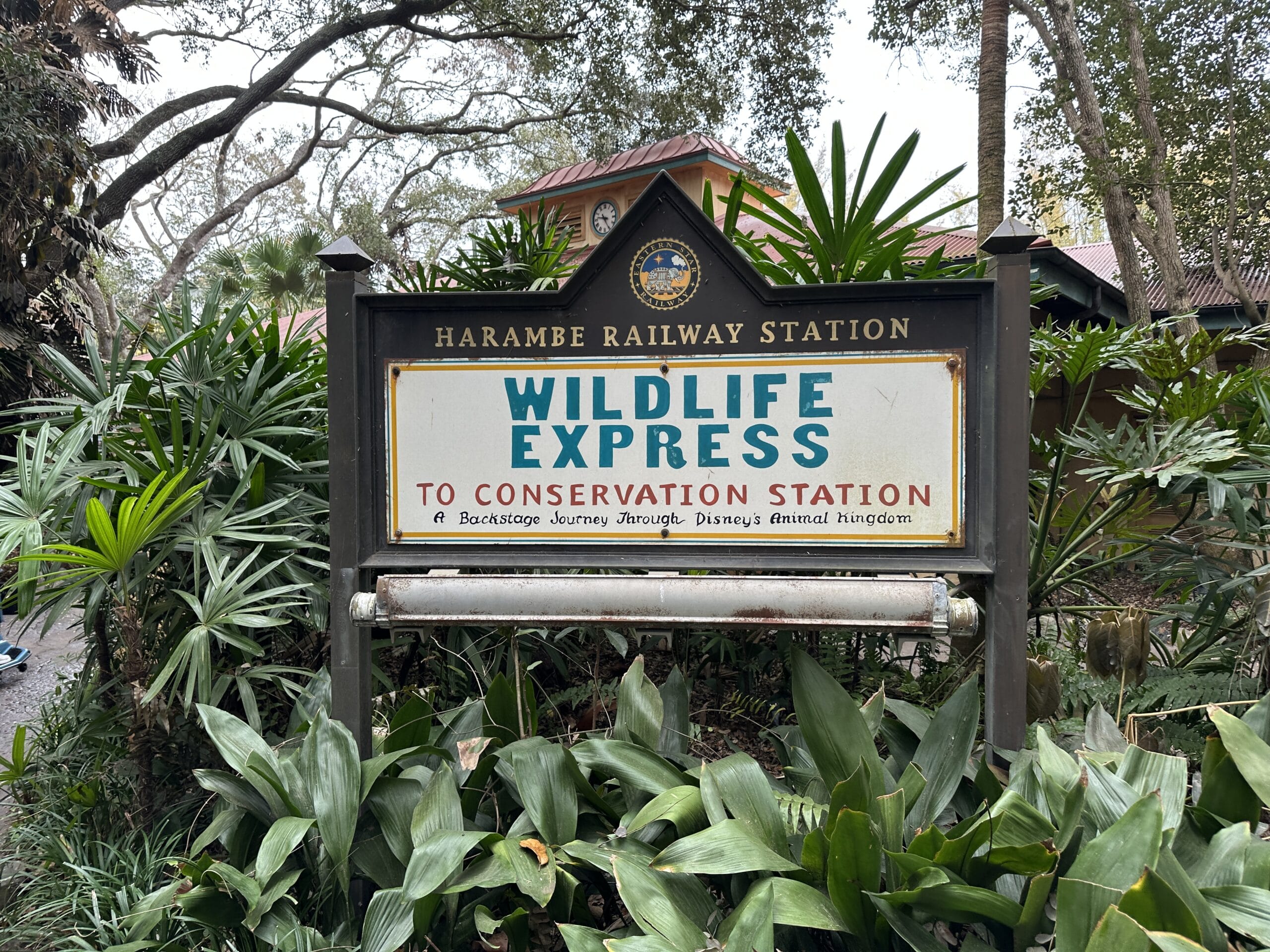
Guests travel down a short path to the station, passing a Wildlife Express sign. As the sign states, the train takes guests on a “backstage journey through Disney’s Animal Kingdom.”
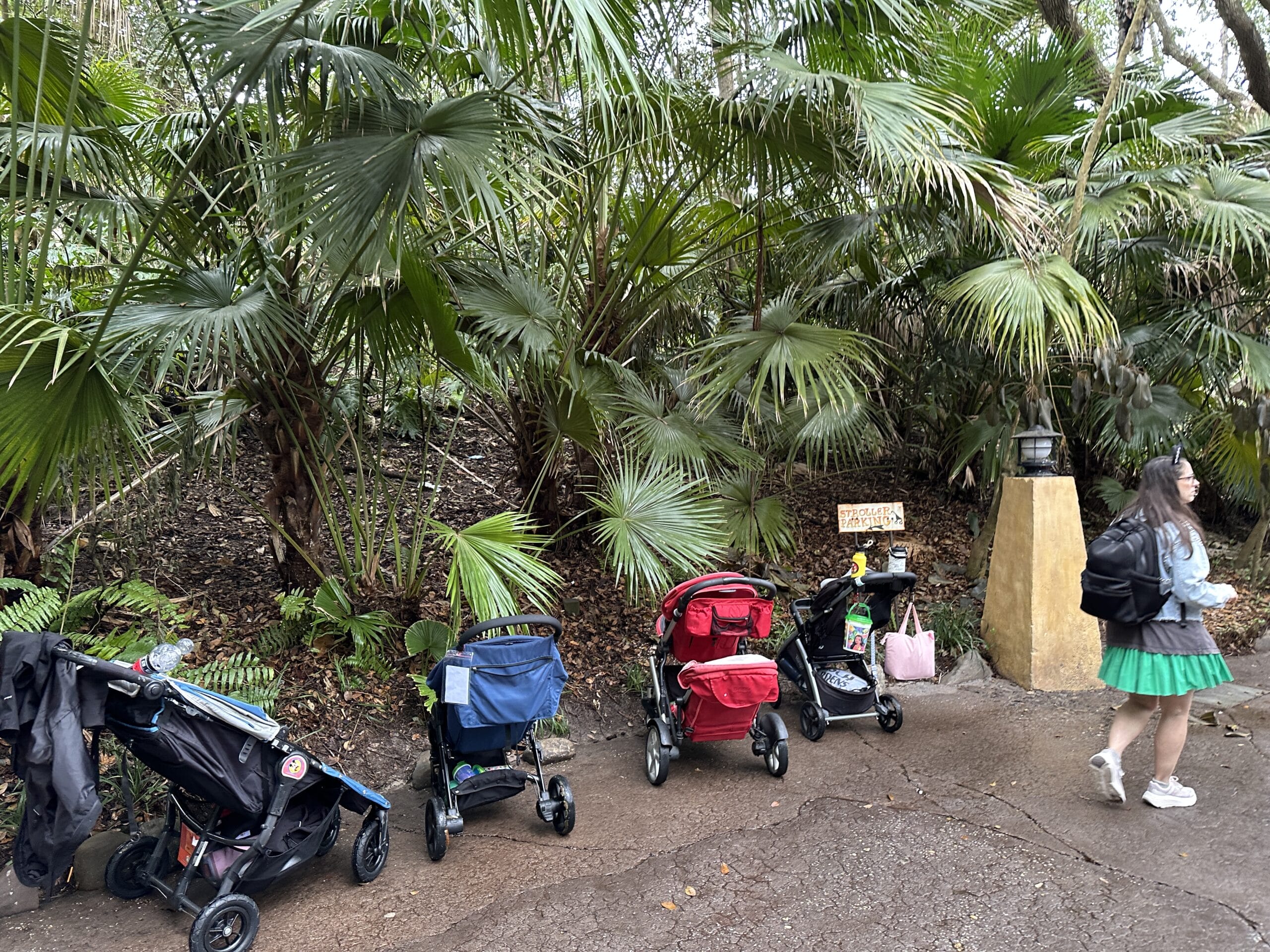
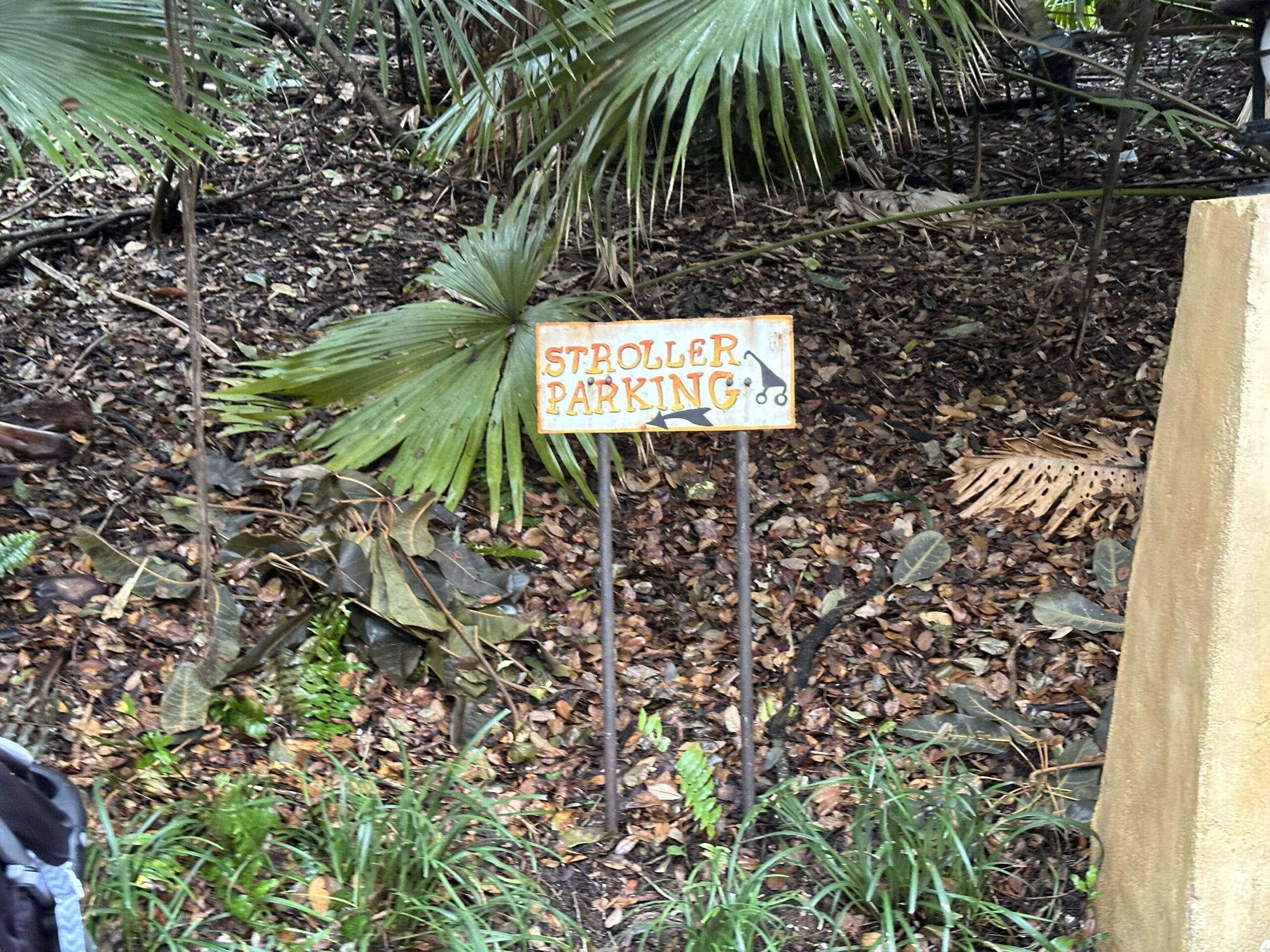
There is stroller parking before the station.
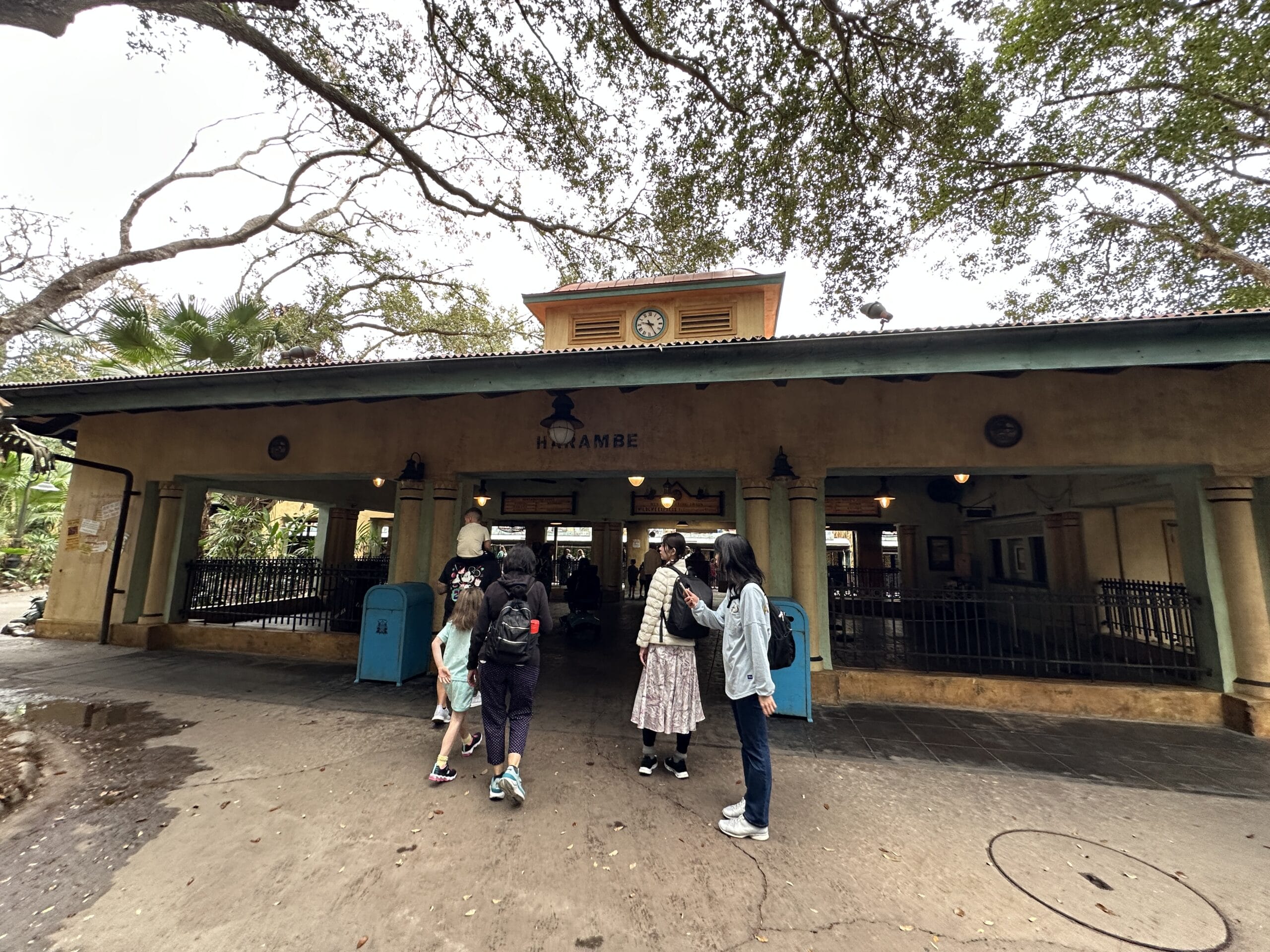
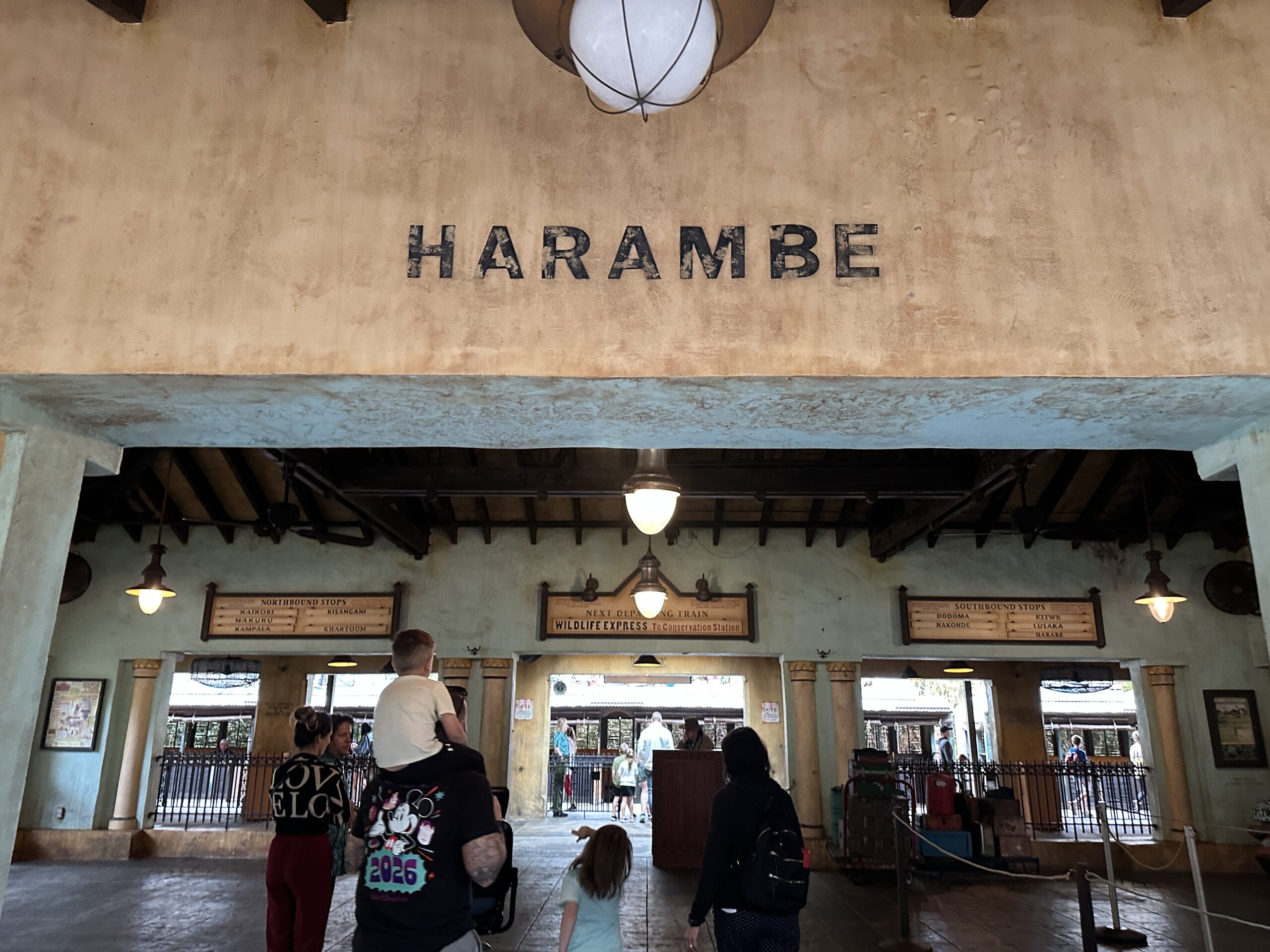
The station is a small building with faux weathered materials and open walls. When it wasn’t busy, guests could walk directly through onto the station platform.
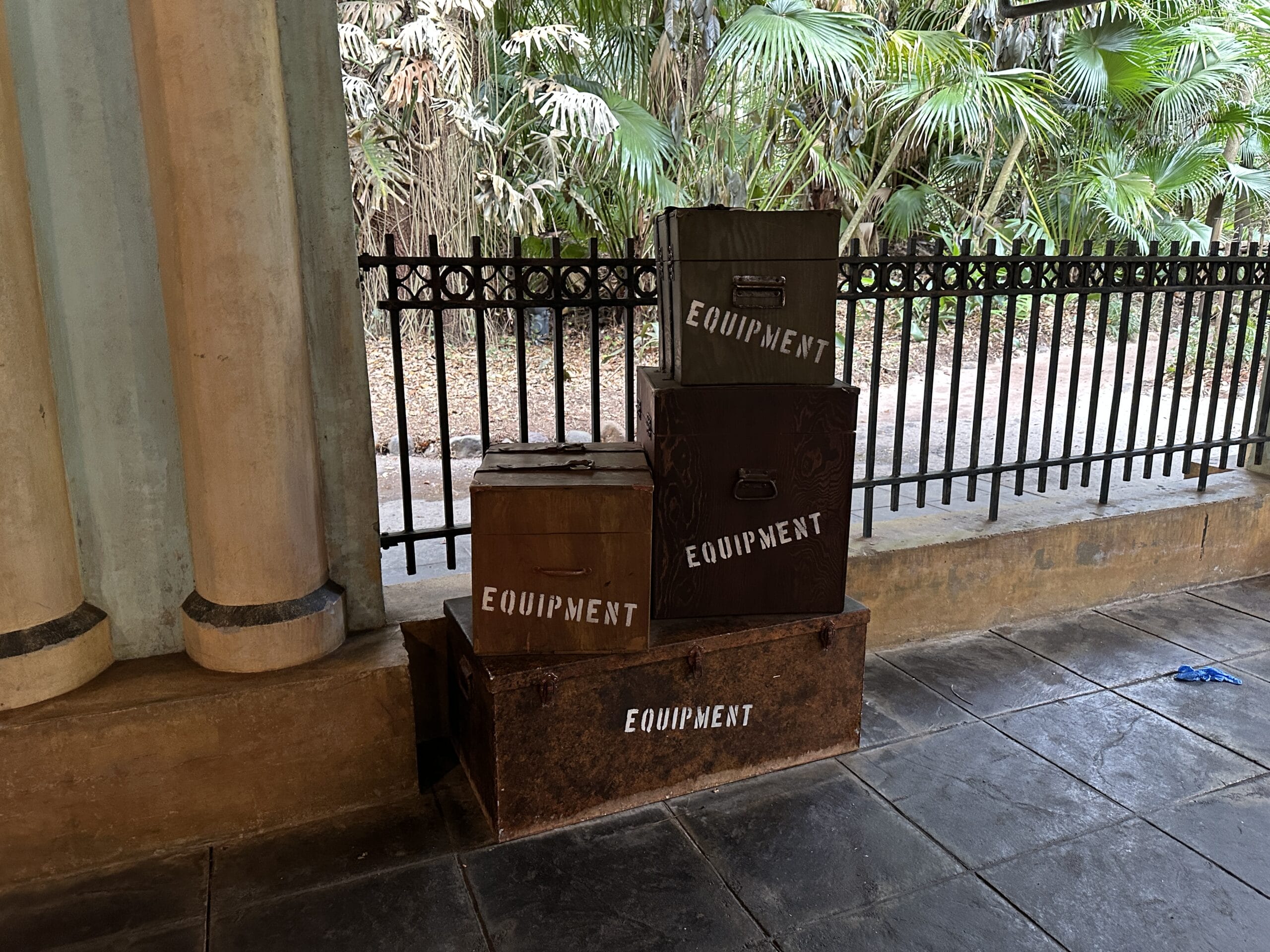
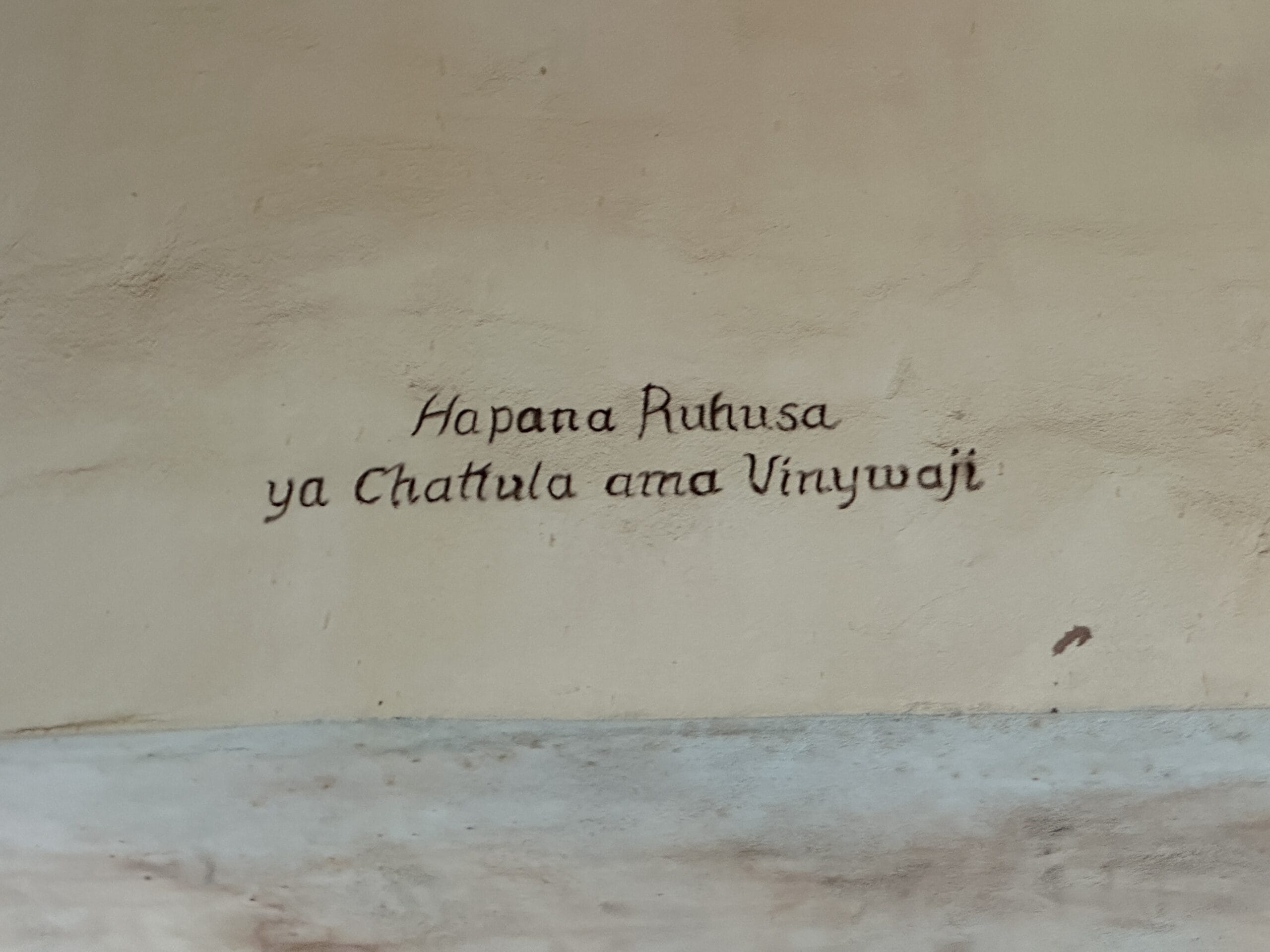
Equipment boxes and quotes line the platform and walls.
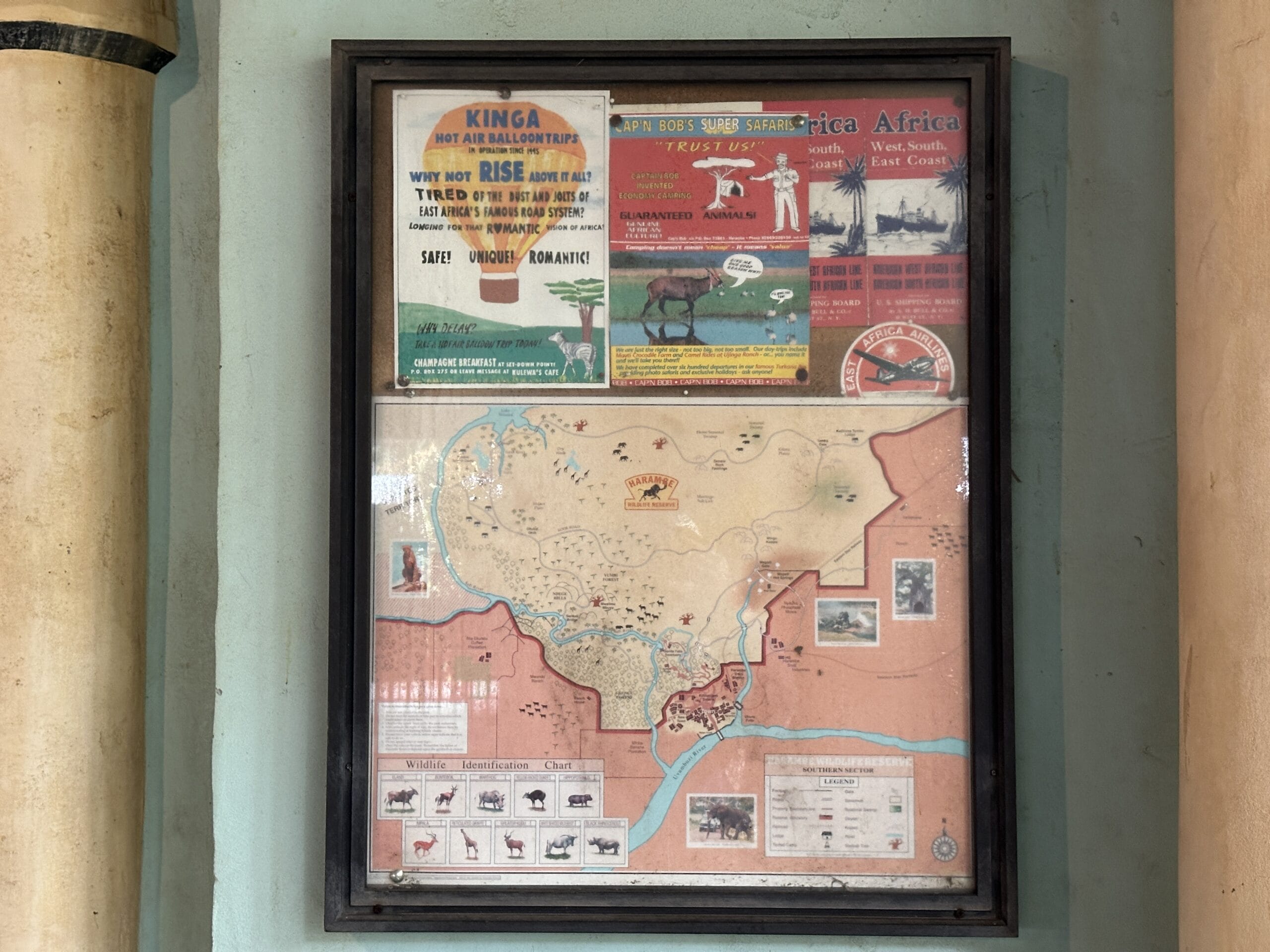
Ads for hot air balloon rides, animal spotting trips, and maps are on display in a frame on one wall.
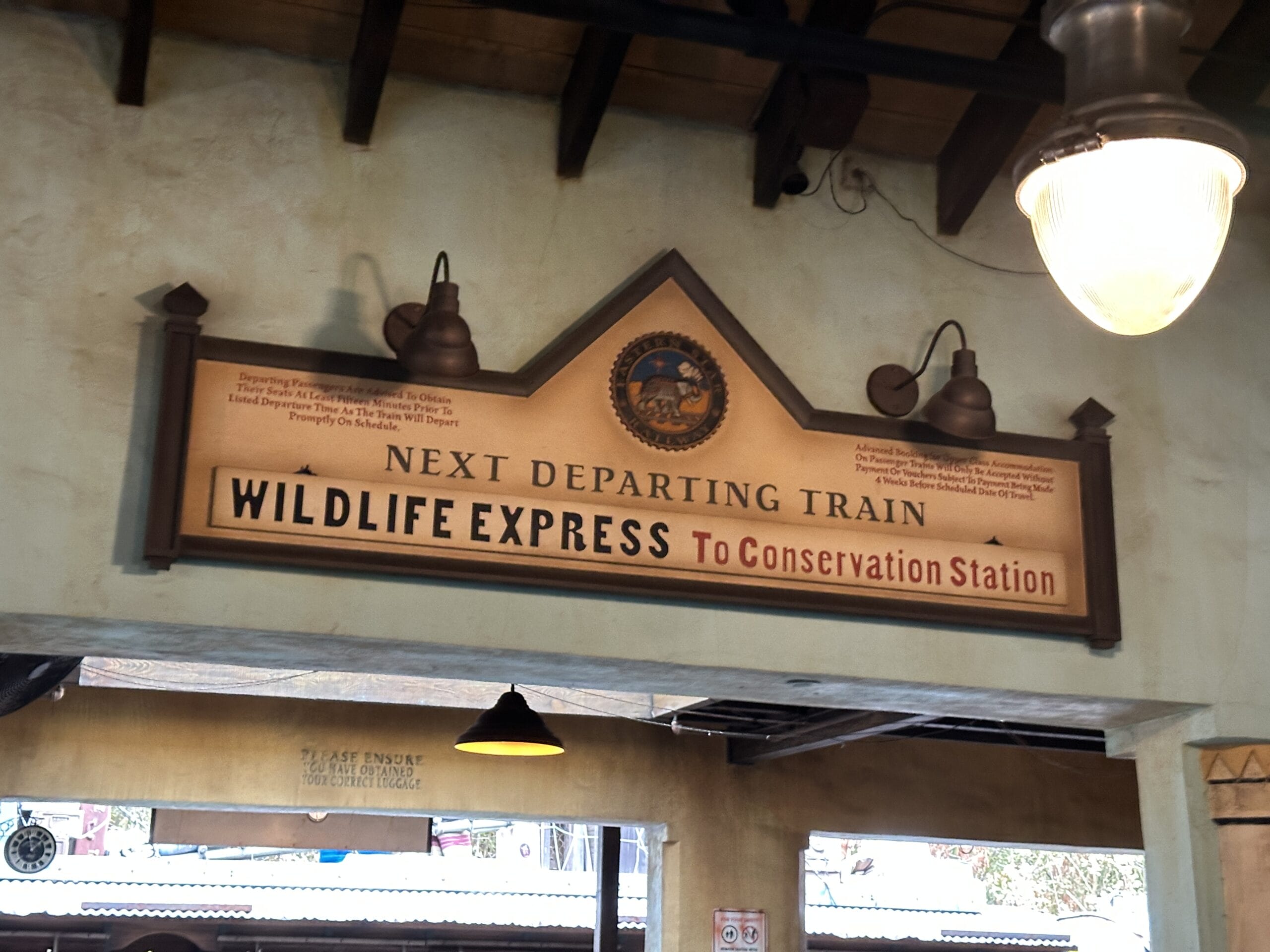
Travel signs advertising the “Next Departing Train” add to the rustic vibe. Trains departing the station always travel to the Conservation Station.
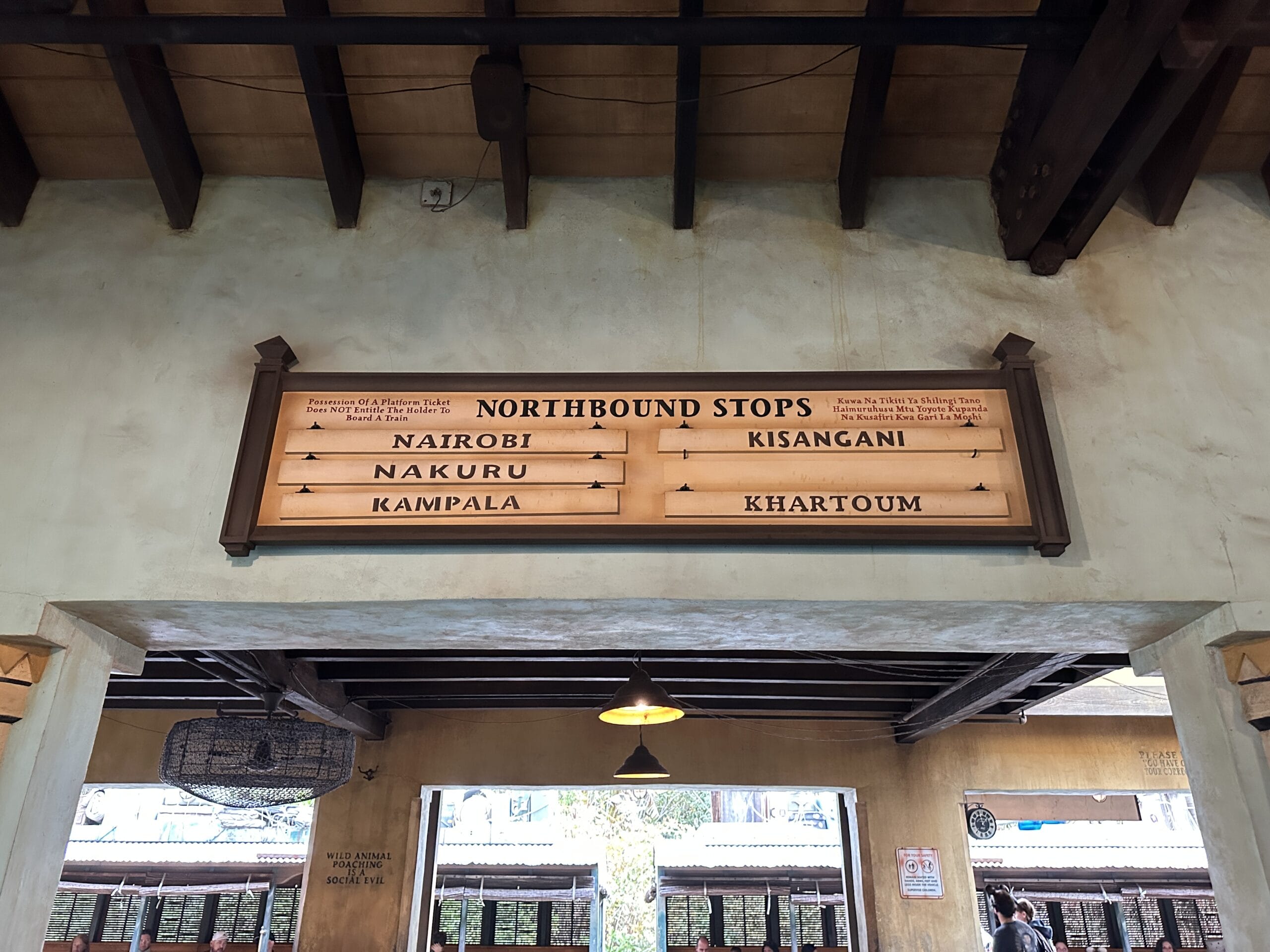
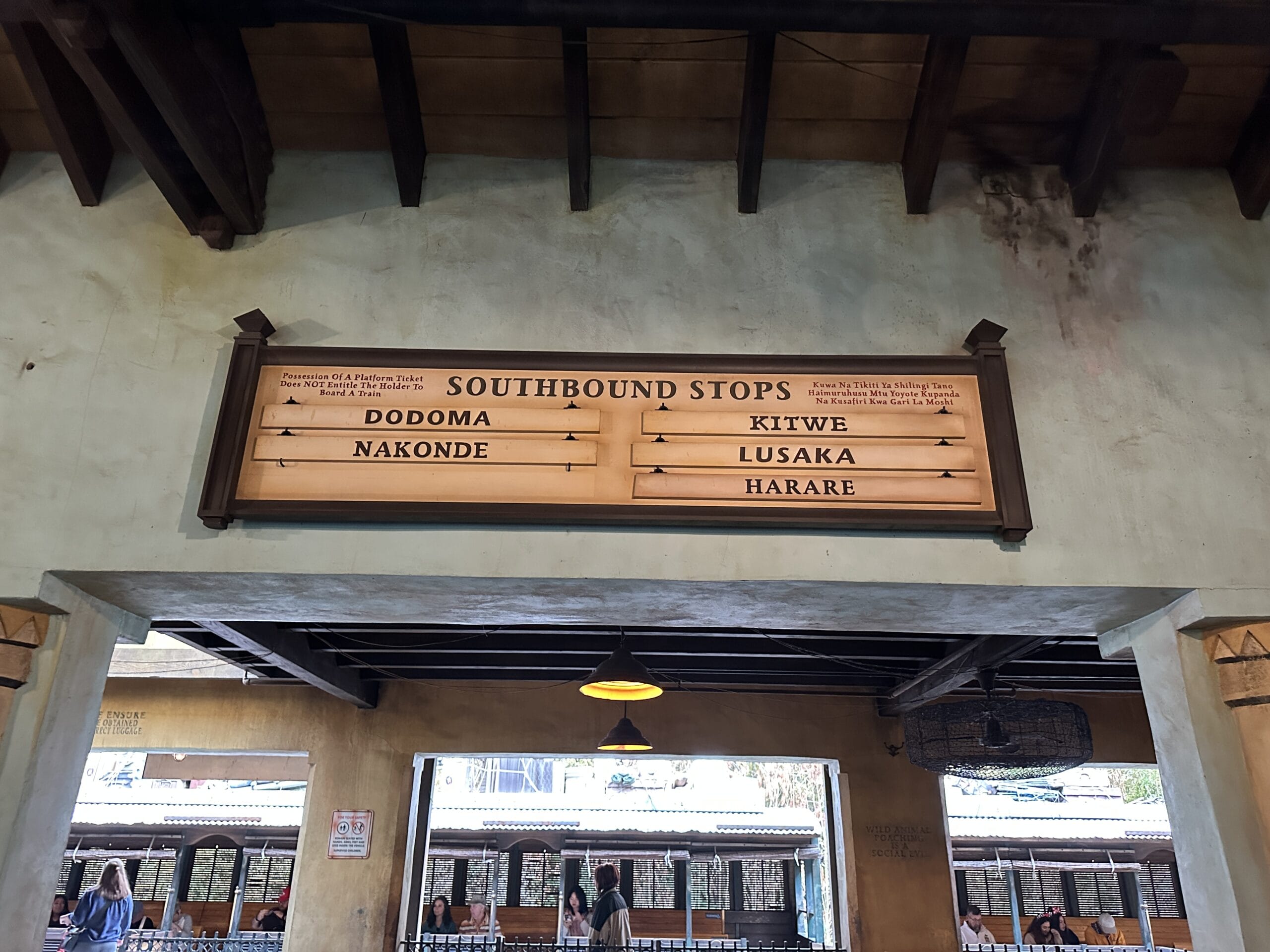
Other signs display “stops” along the train’s path.
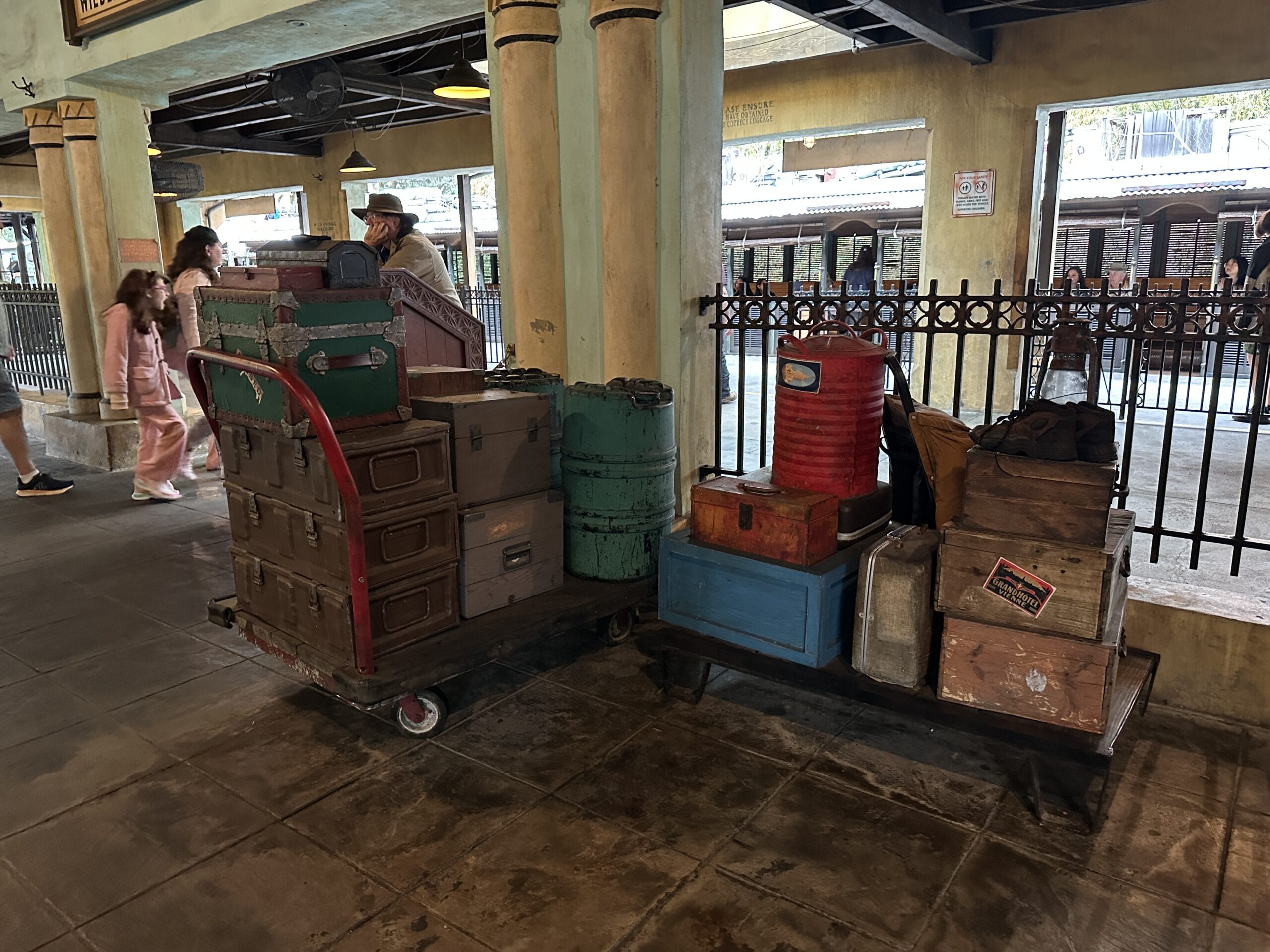
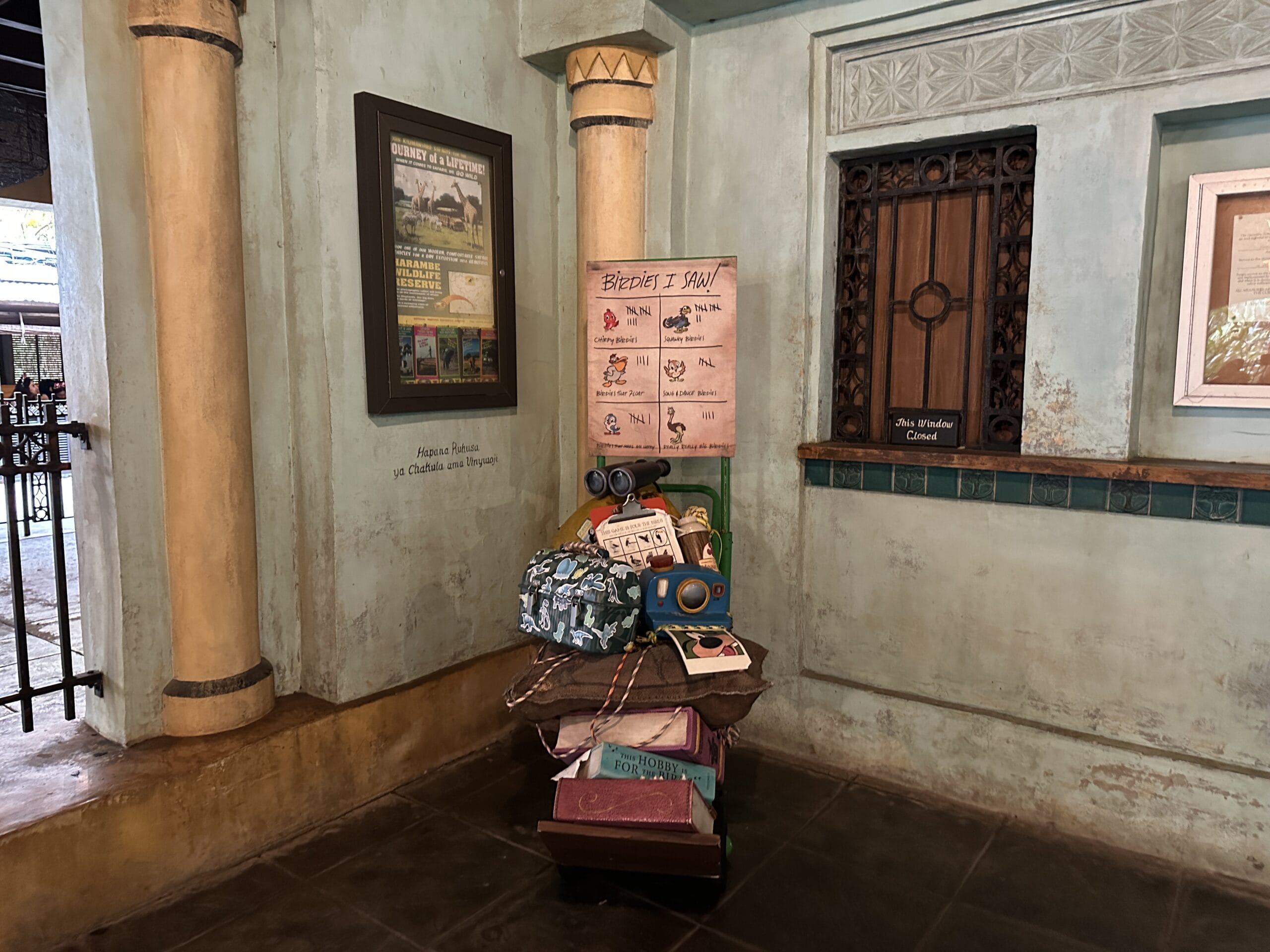
Luggage is stacked in several locations in the station. Goofy has been meeting inside the station for a few weeks near the luggage to the right, wearing his old Camp Minnie-Mickey costume. He posed with a set of travel gear, including a dinosaur-covered lunch box.
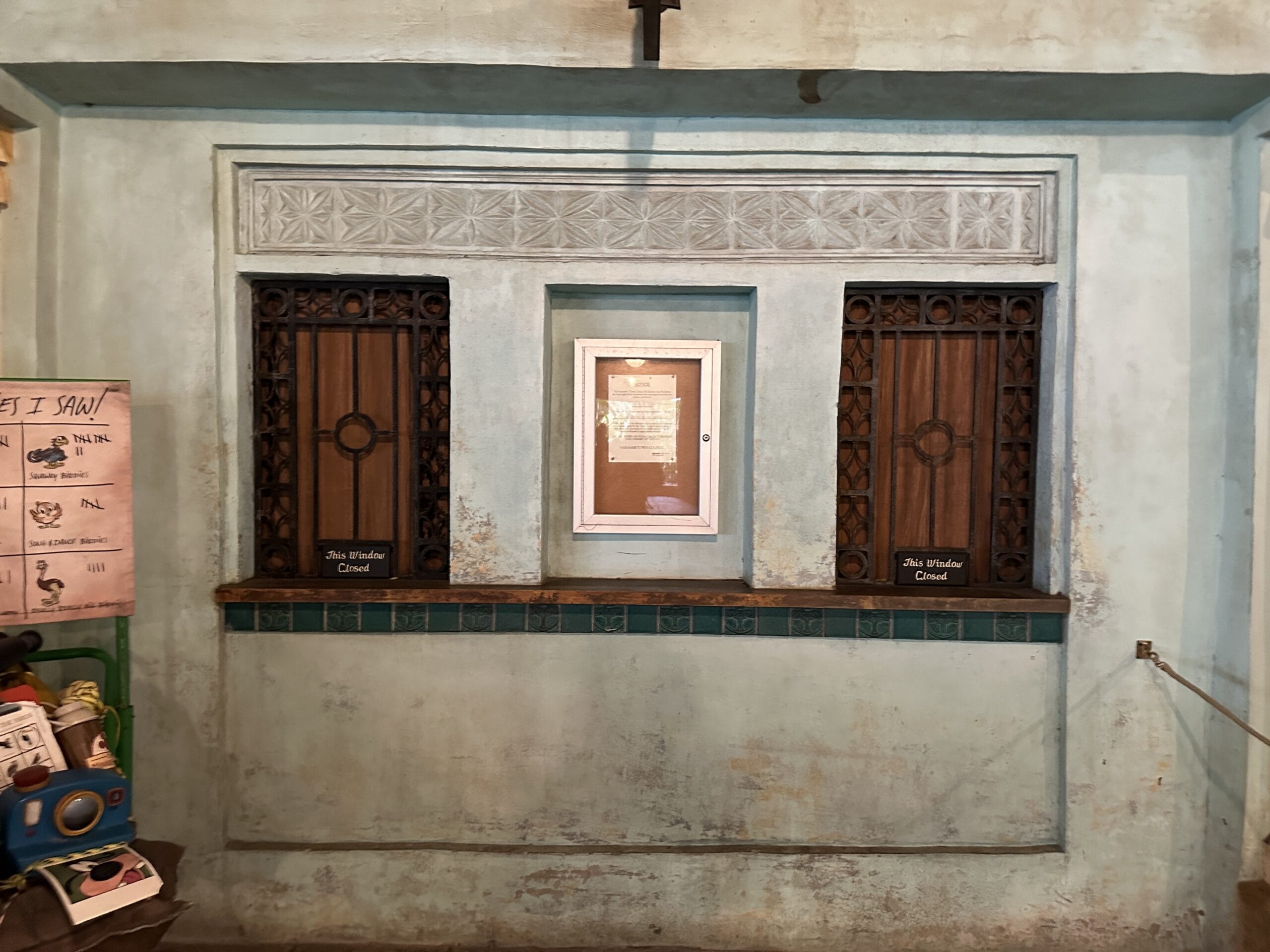
A pair of faux ticket windows have “This Window Closed” signs.
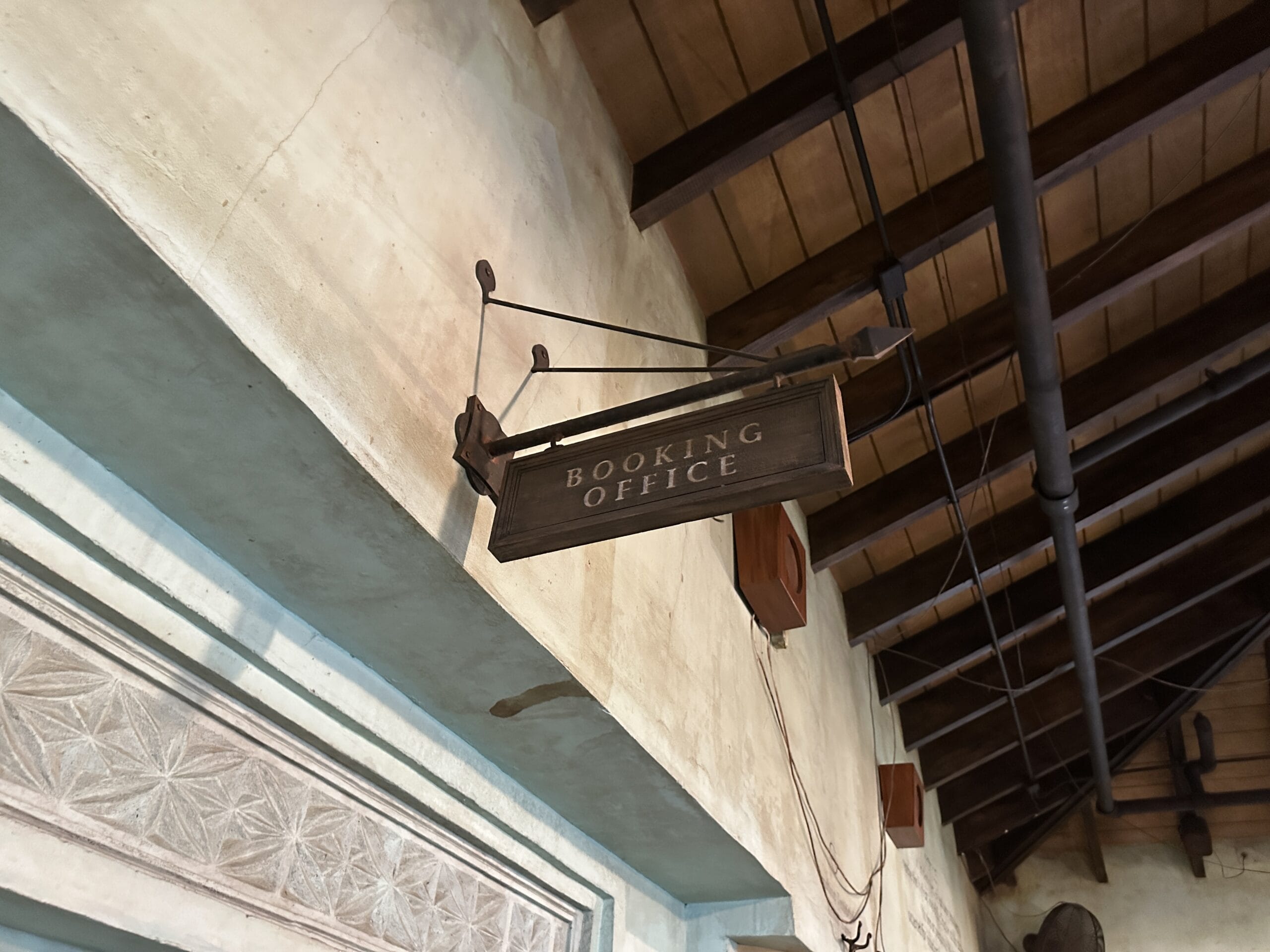
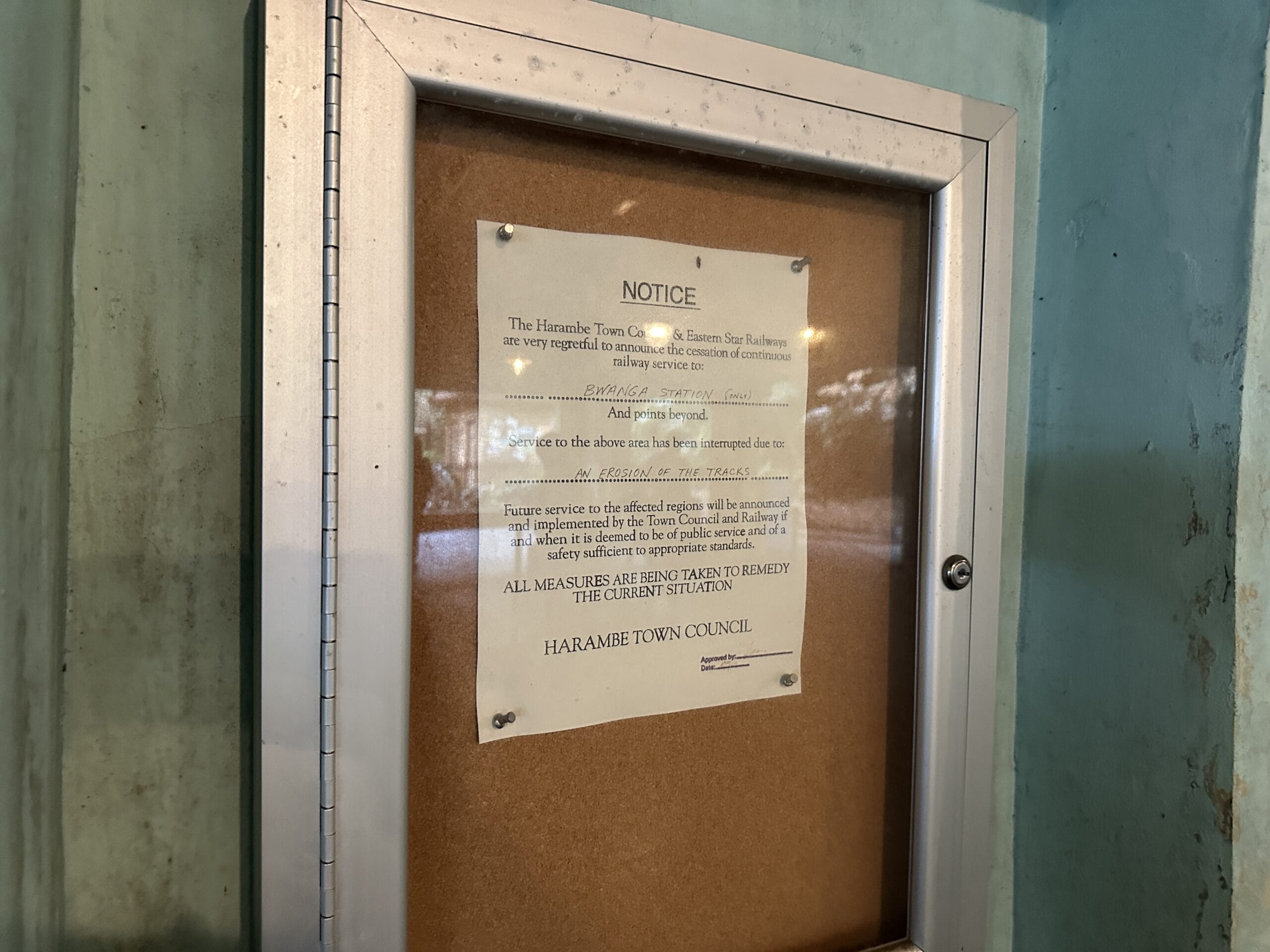
Above the window, a “Booking Office” sign hangs. A notice between the windows announces the closure of one station.
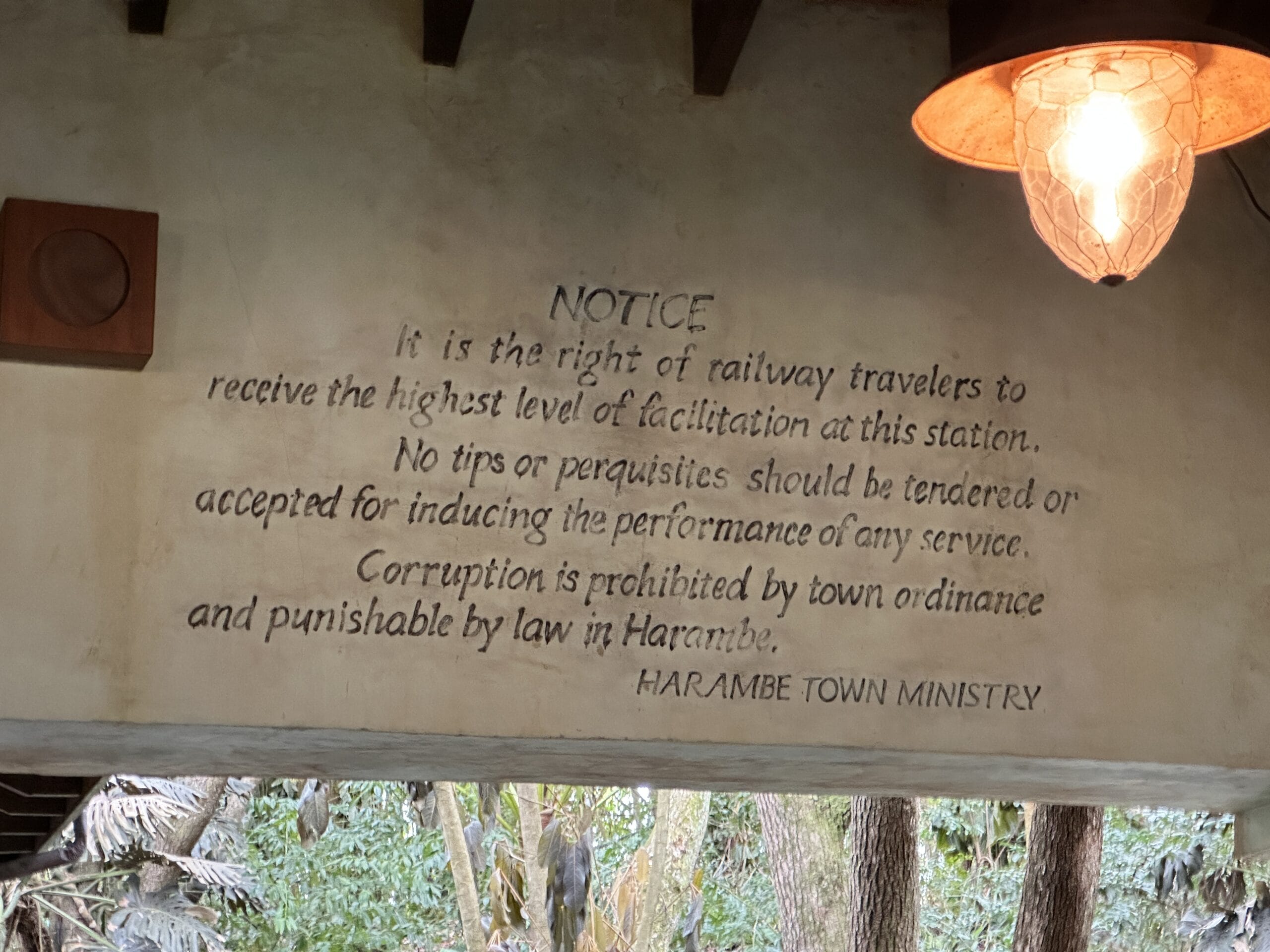
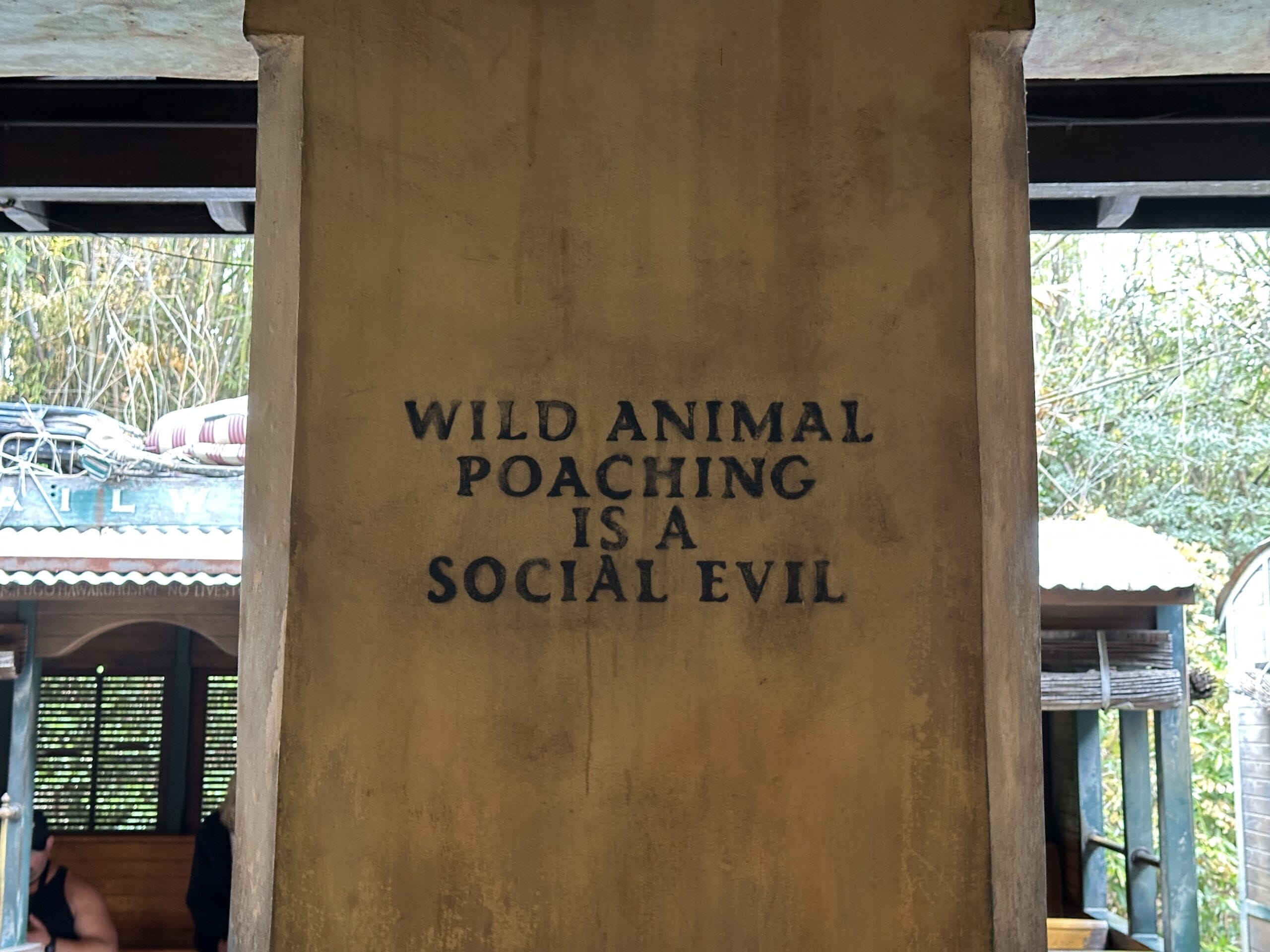
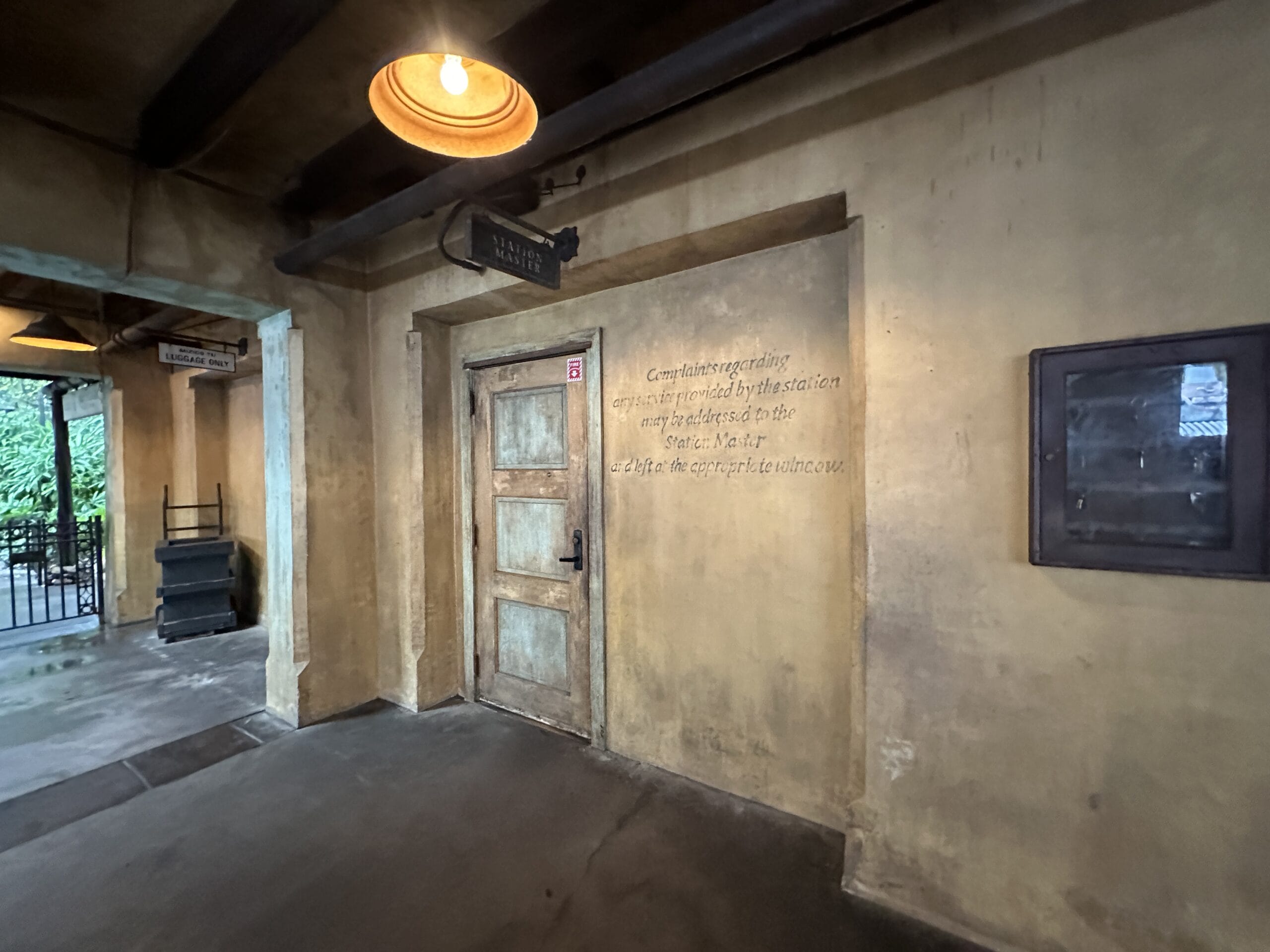
Several walls have quotes. One reads”Wild Animal Poaching is a Social Evil.”
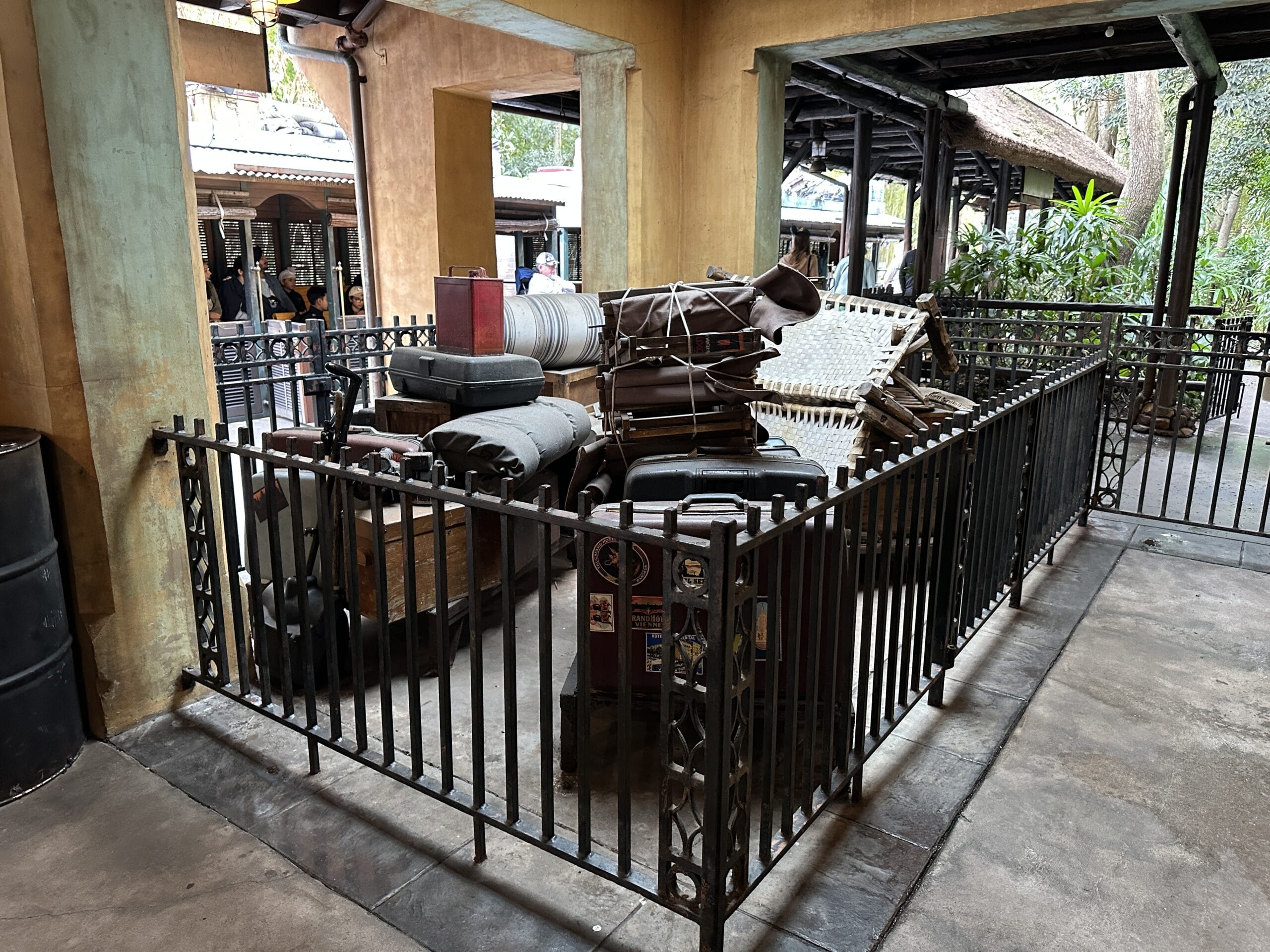
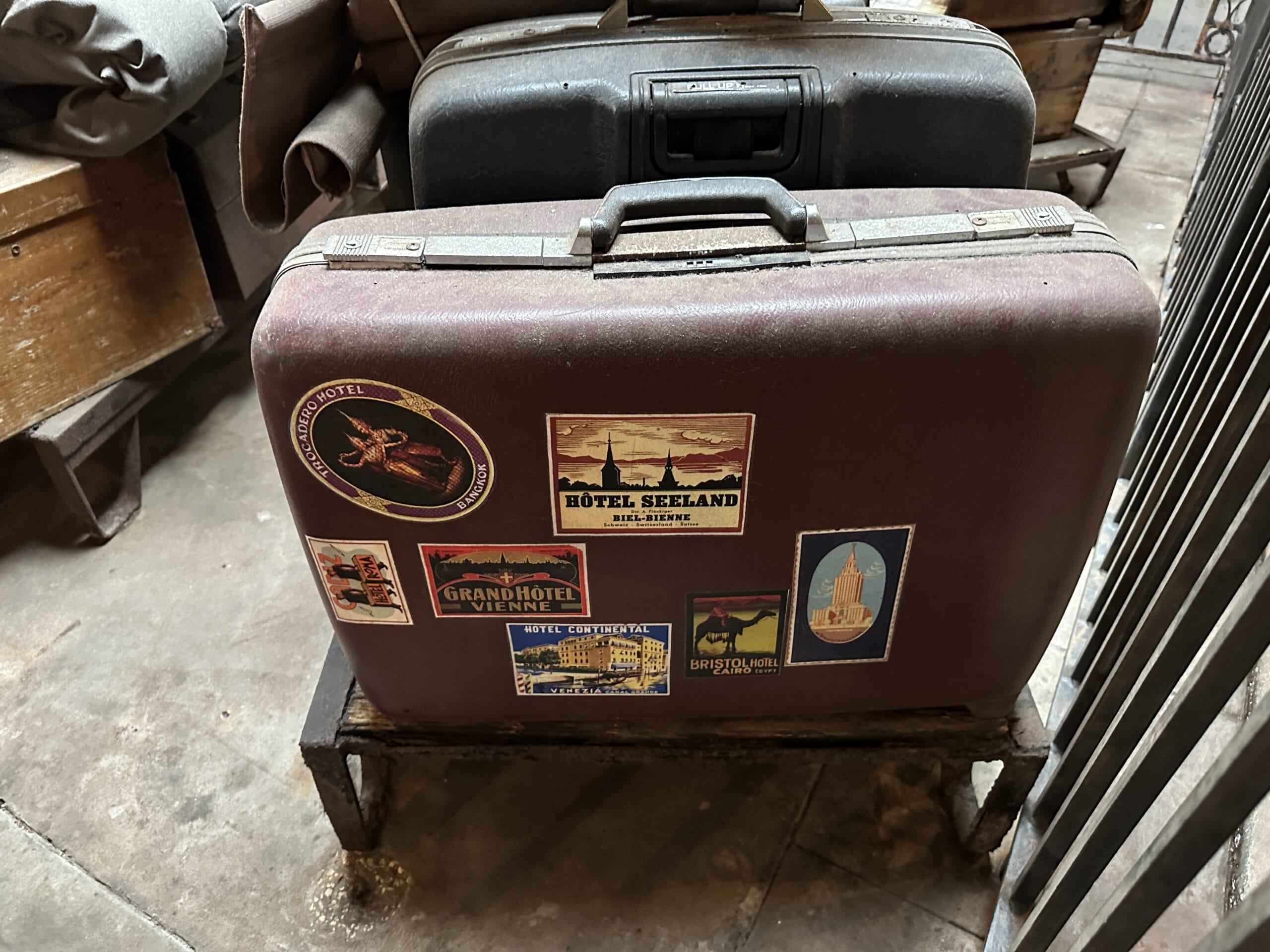
More luggage props are behind railings, ready to be loaded onto the train or picked up by their owners. They’re decorated with travel stickers from around the world.
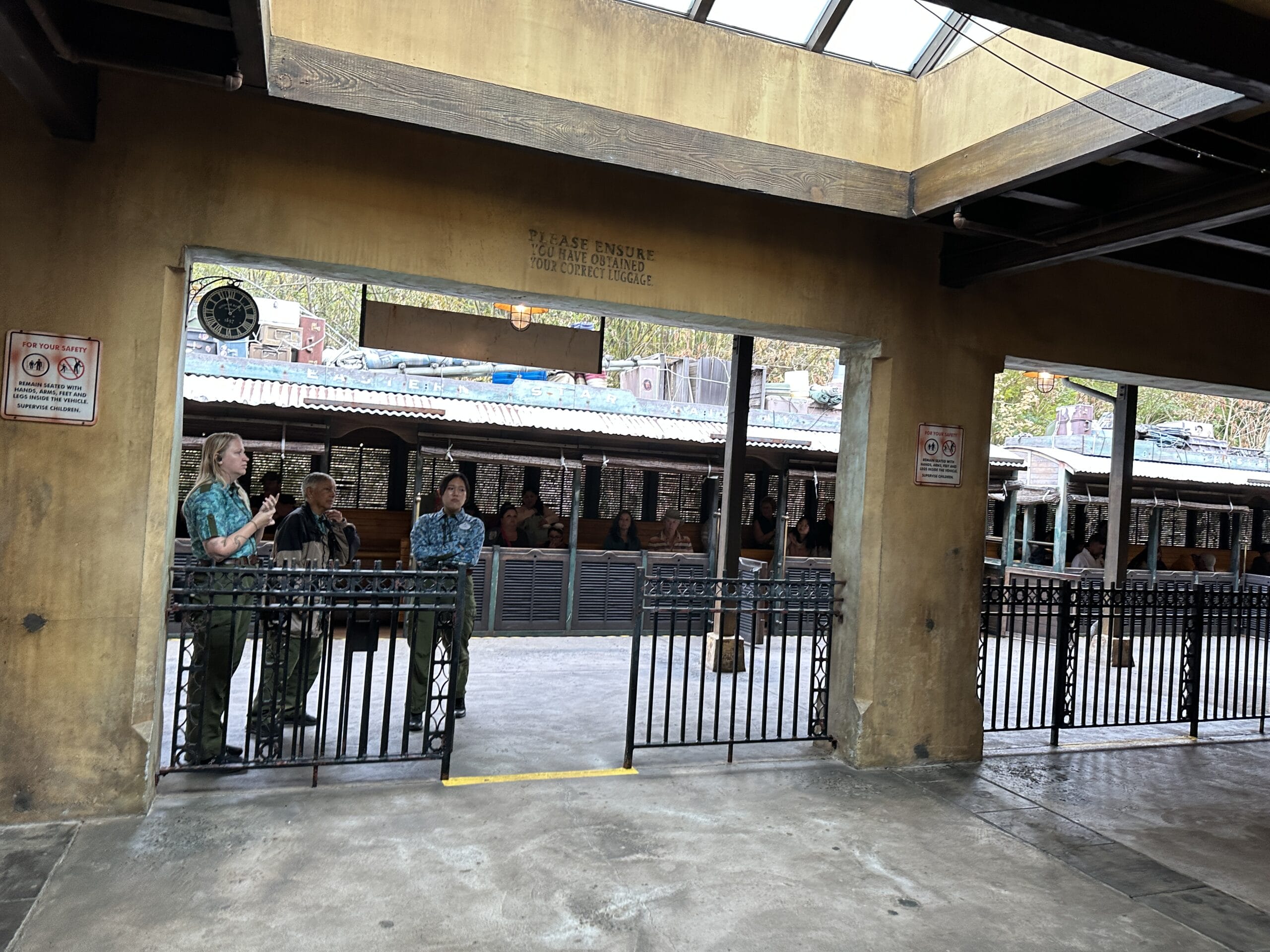
Cast Members welcome guests aboard the train through gates in the railing.
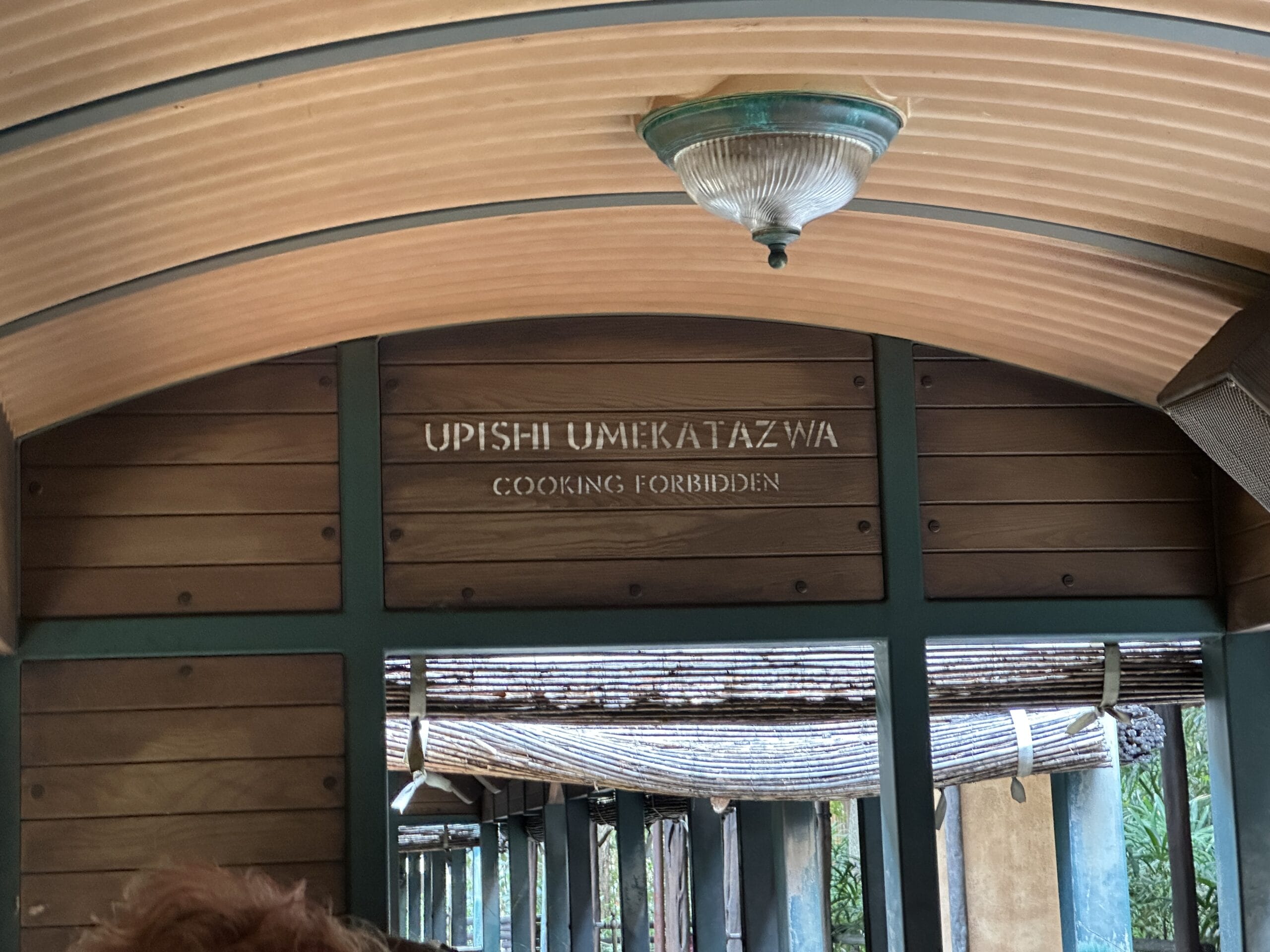
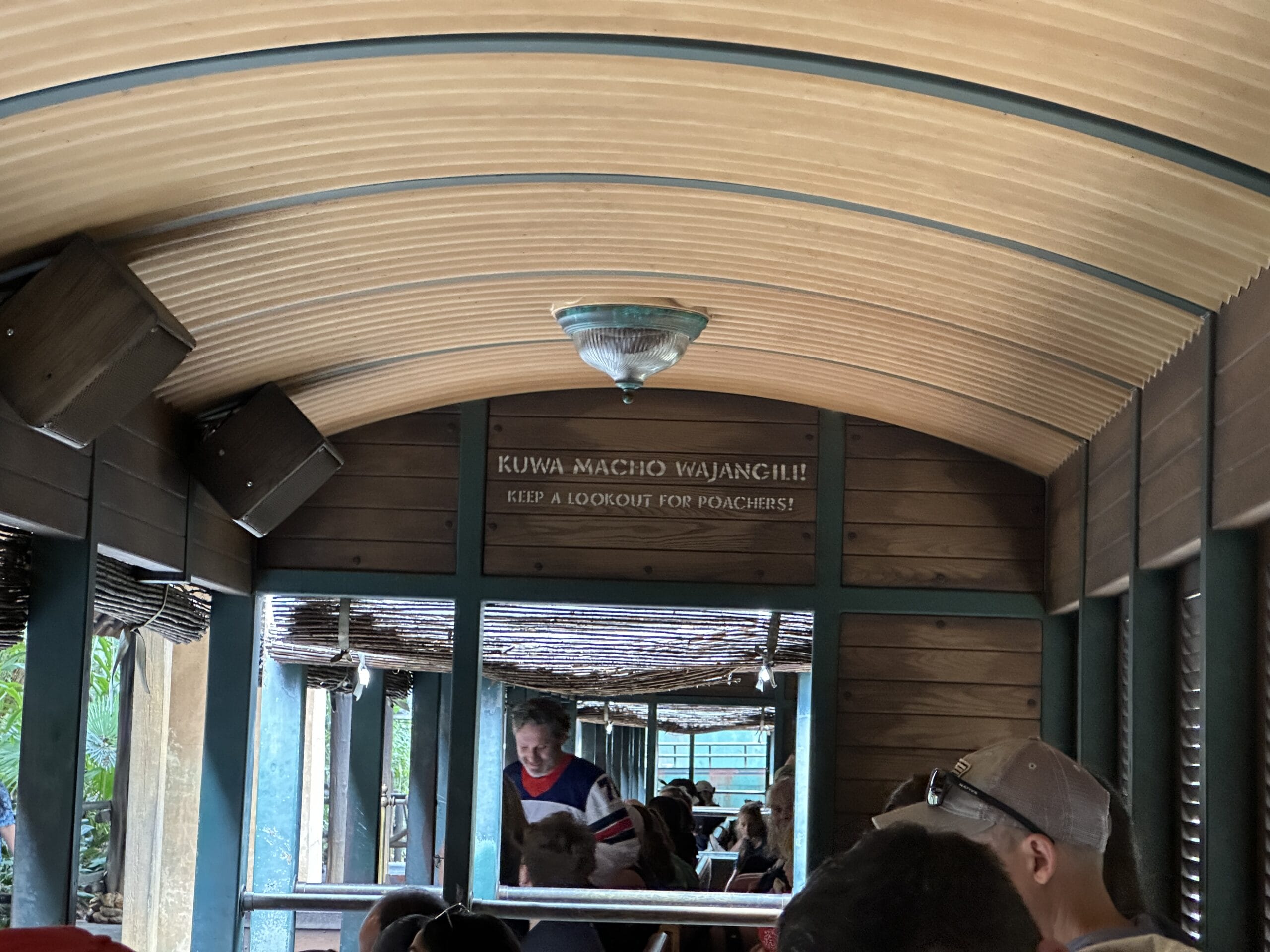
Once aboard the train, guests sit facing forward on bench-like seating. Warnings like “Cooking Forbidden” and “Keep a Lookout for Poachers” are printed on the overhead.
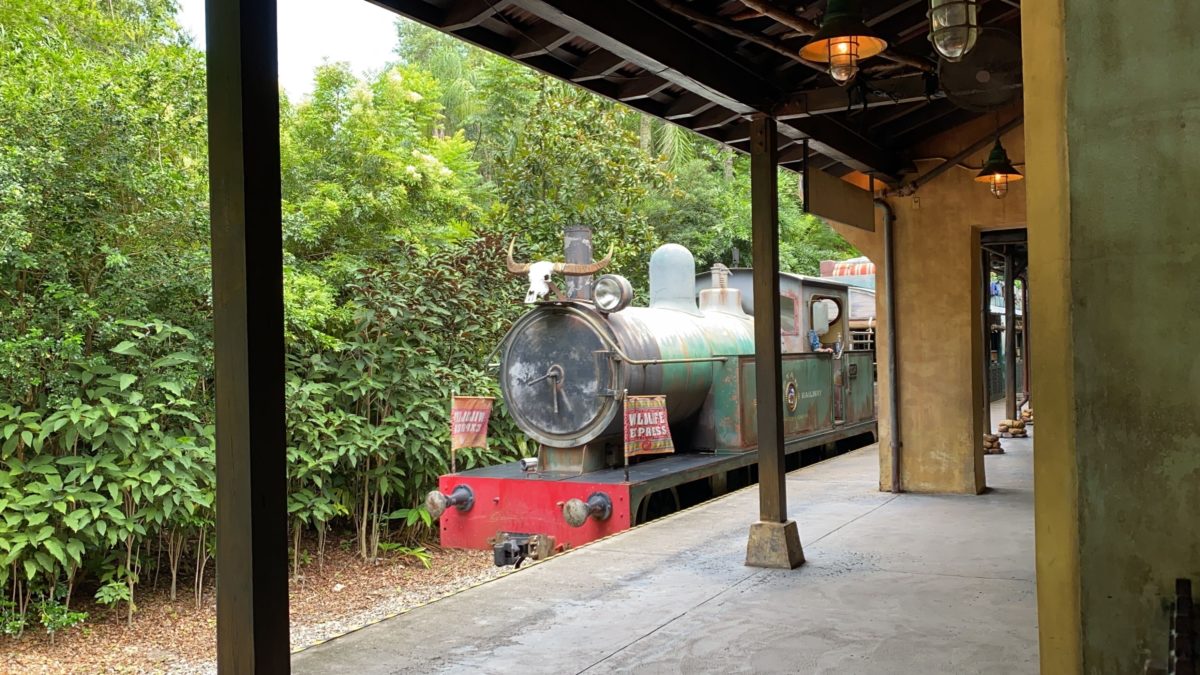
Disney describes the train as “rustic” and “slow-moving”. The trip is 7 minutes and 1.2 miles.
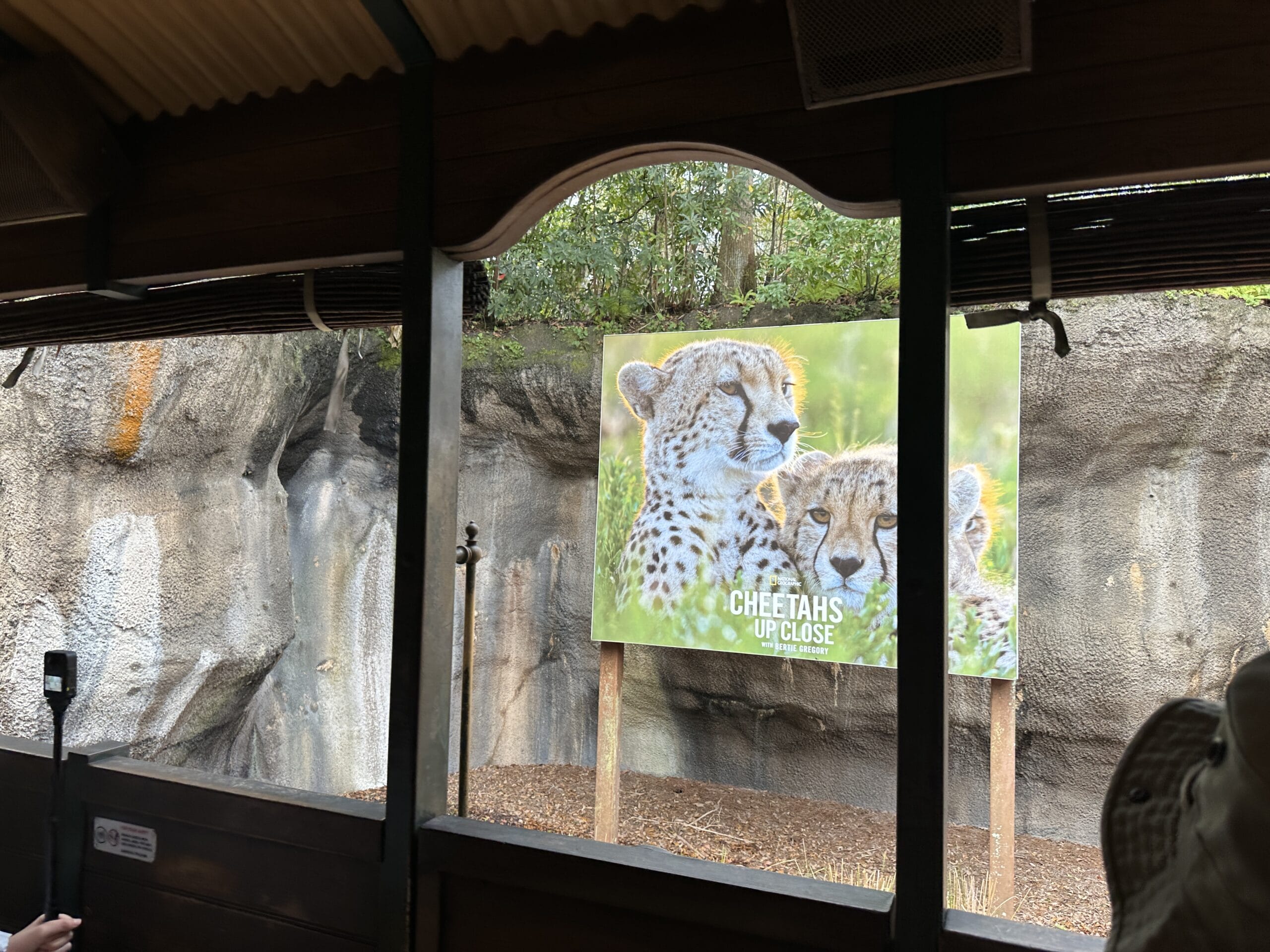
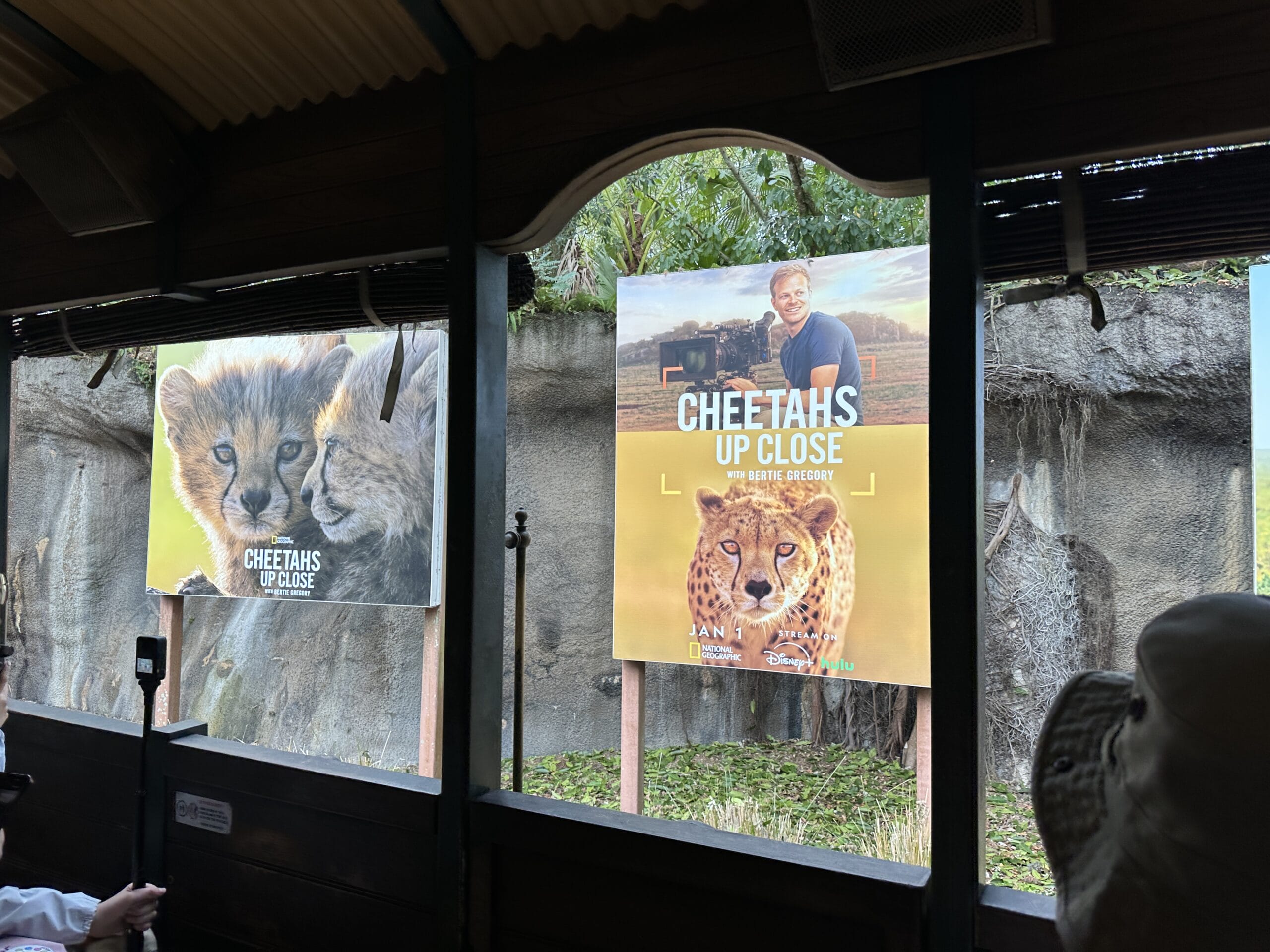
Billboards at the start of the journey advertise National Geographic specials and documentaries.
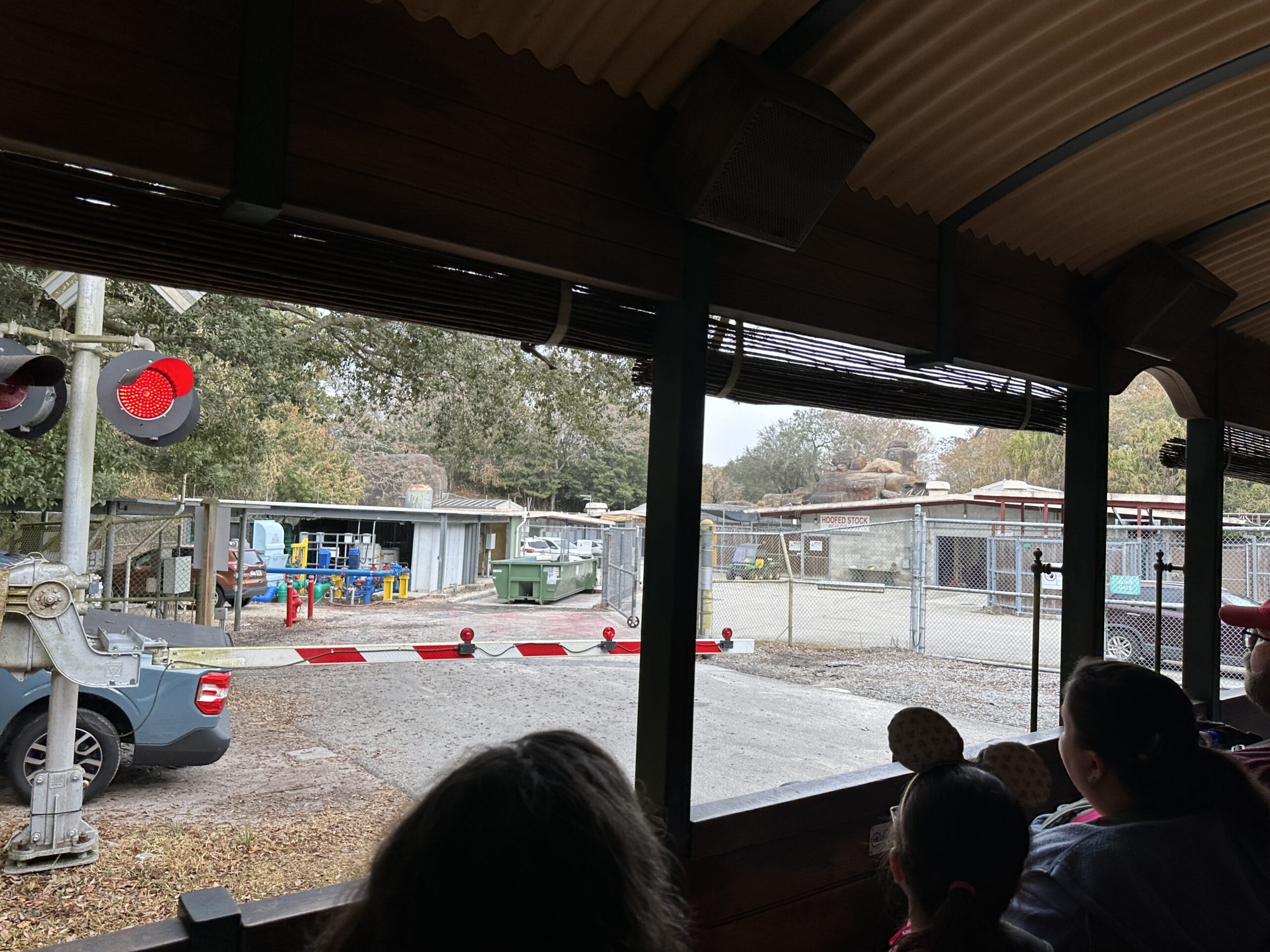
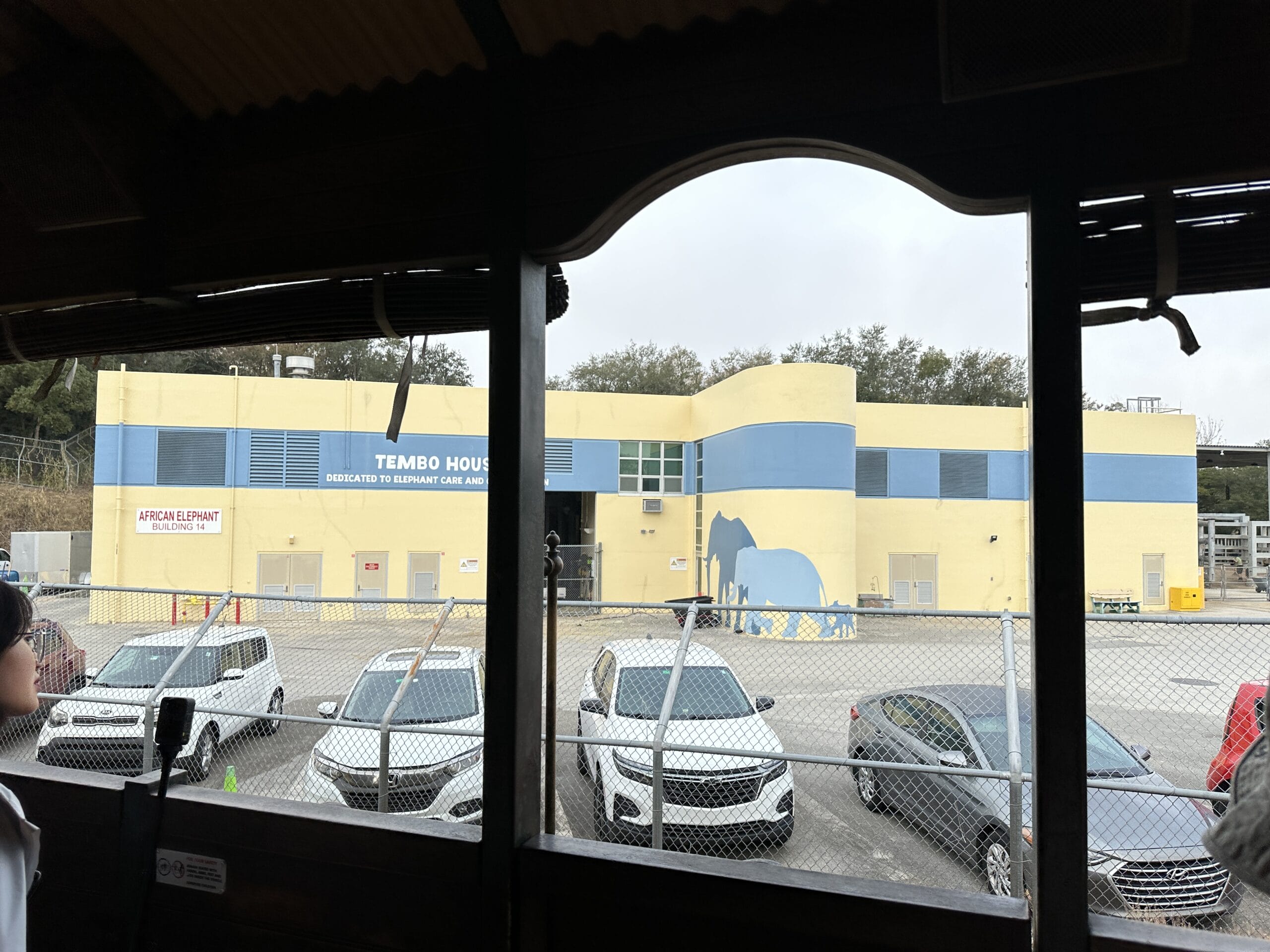
Guests pass some backstage animal care facilities and enclosures. They can catch some glimpses of Kilimanjaro Safaris. One facility is Tembo House, dedicated to elephant care. Guests can sometimes see the elephants and other animals when they’re backstage.
Entrance and Pollination Garden
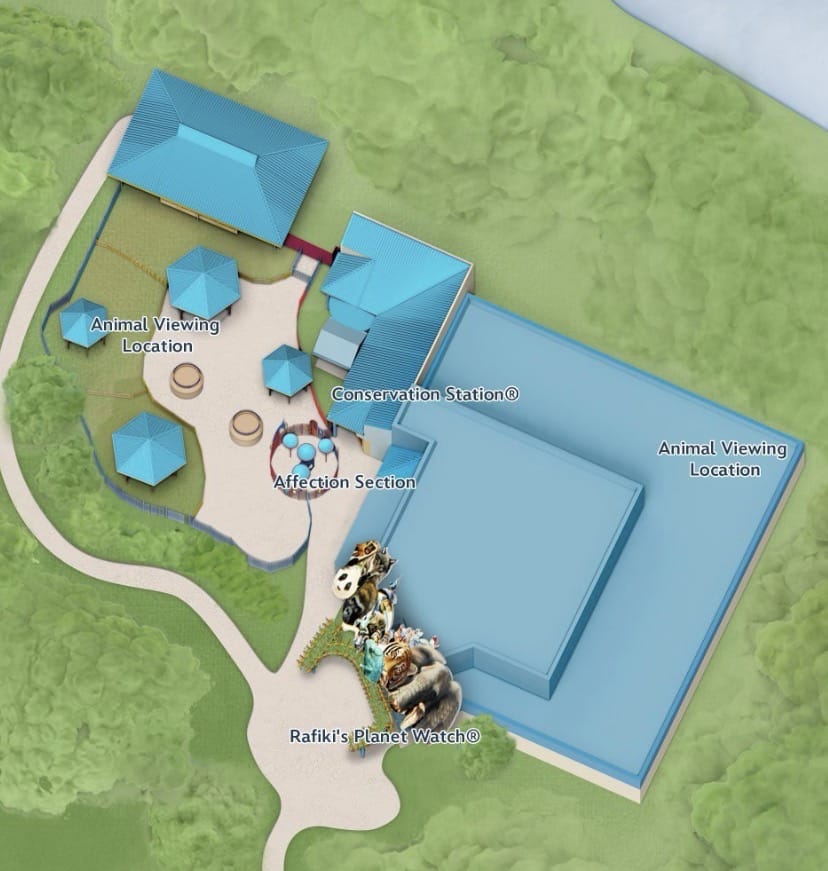
Rafiki’s Planet Watch consists of Affection Section and Conservation Station, which houses the Animation Experience, animal viewing, and the Veterinary Treatment Room. Even after their 1.2-mile train ride, guests must take a winding walk through the trees to reach Conservation Station.
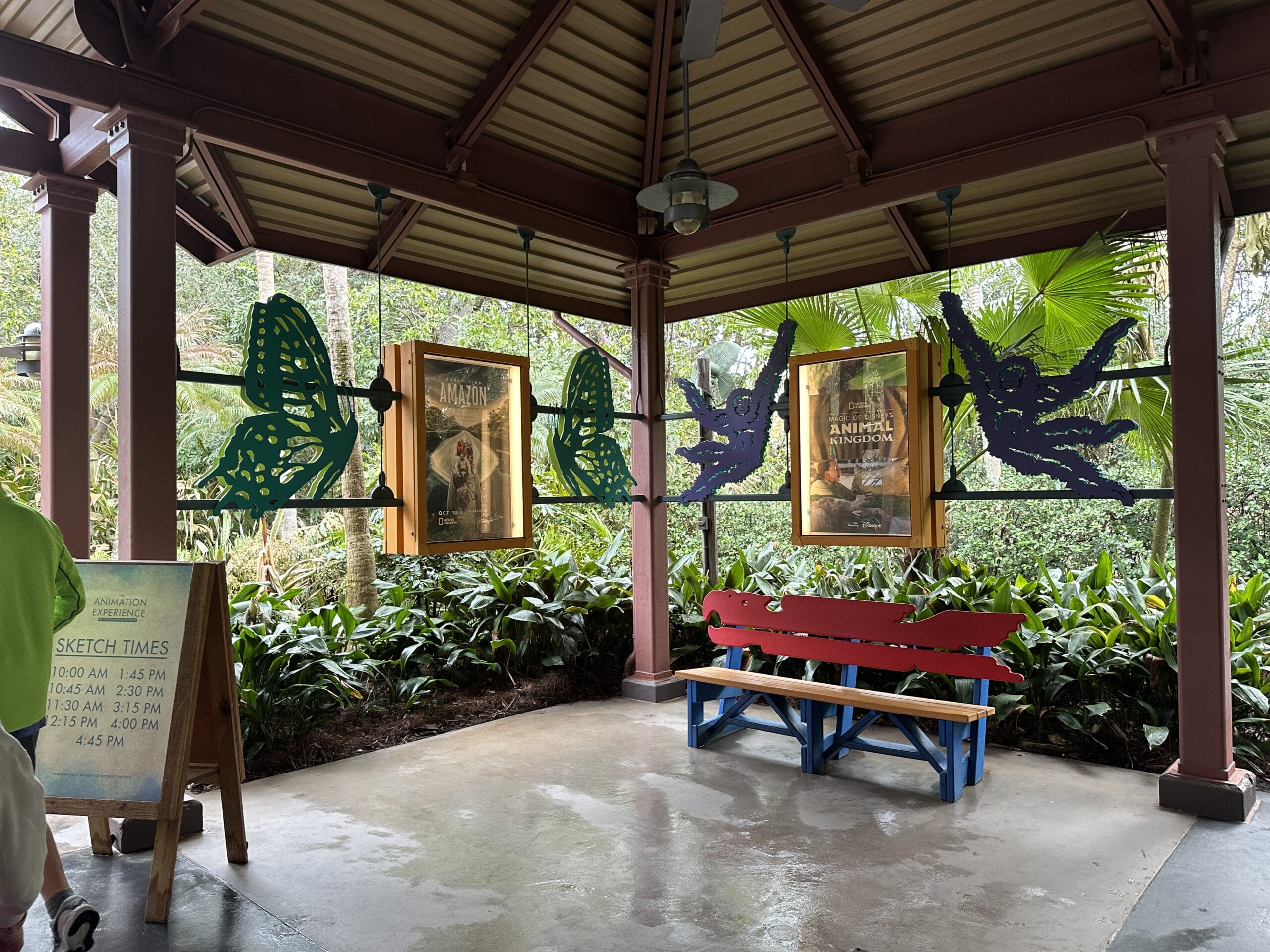
Guests exit the train at a covered station lined with National Geographic posters and animal decorations. There was an A-frame sign here listing sketch times for The Animation Experience.
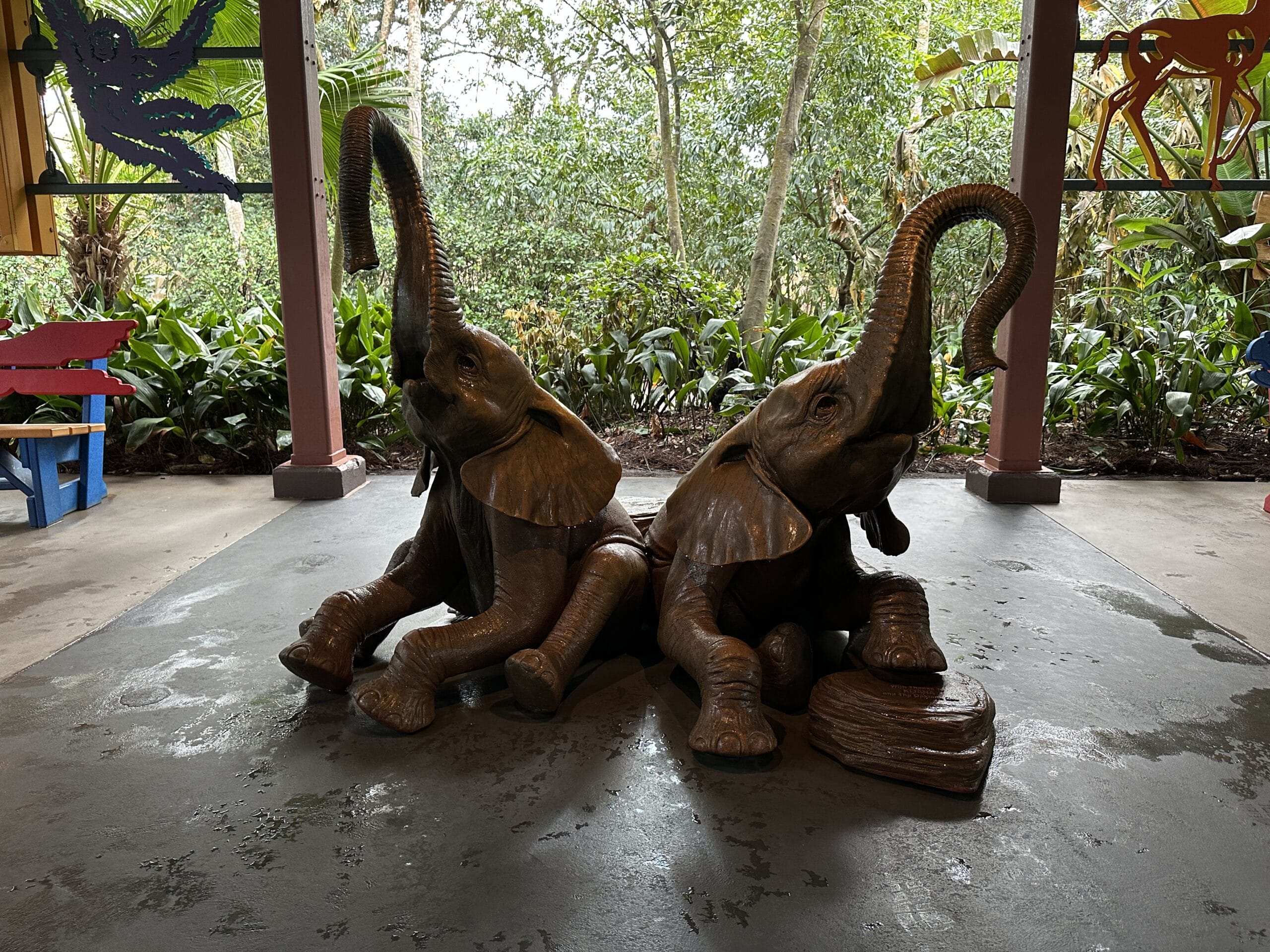
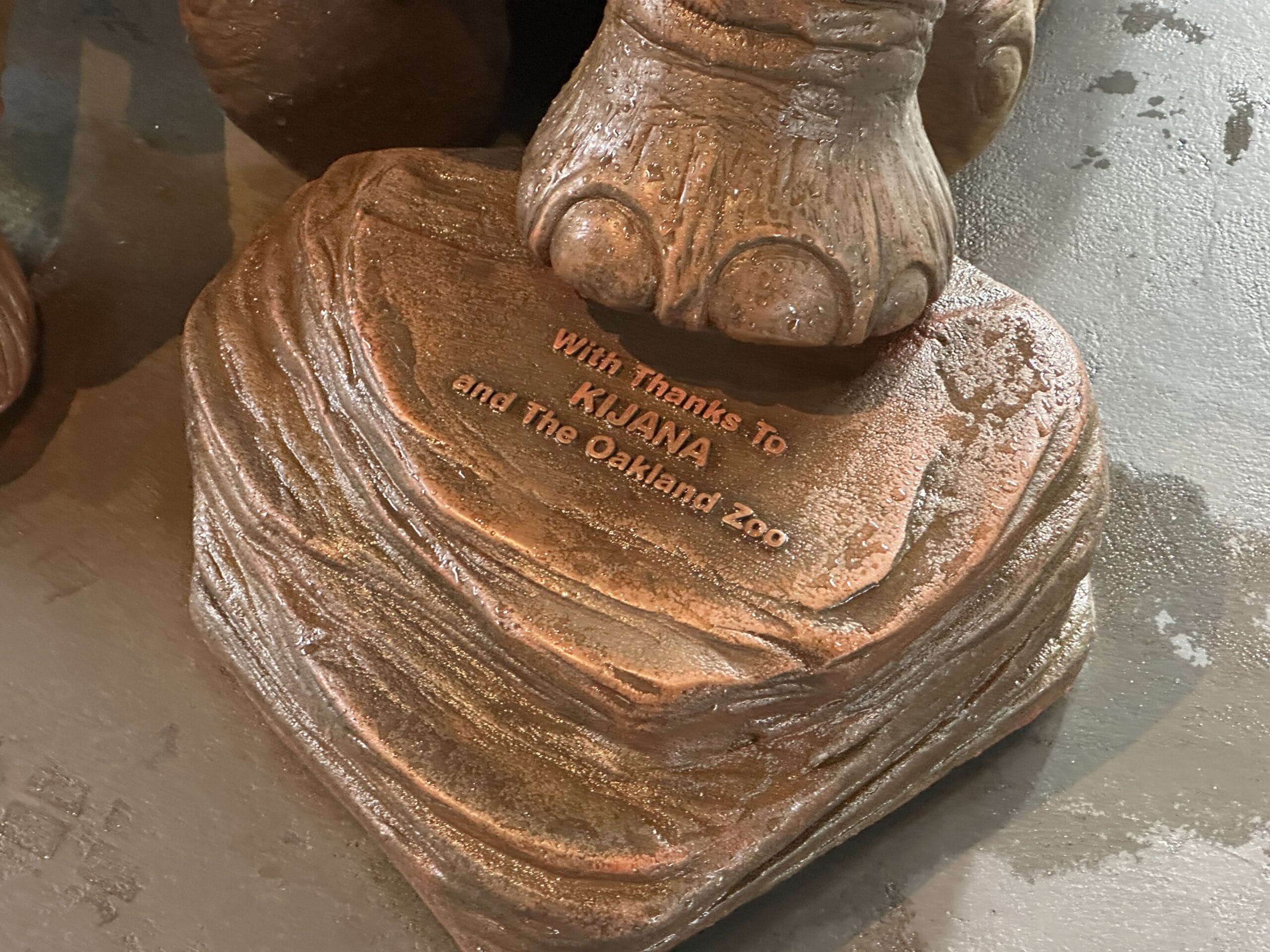
Greeting guests is a statue of two elephants, one of which is modeled after Kijana, an elephant calf that was born at the Oakland Zoo in 1995. He was a popular and symbolic figure at the zoo until his untimely death at only 11-months old.
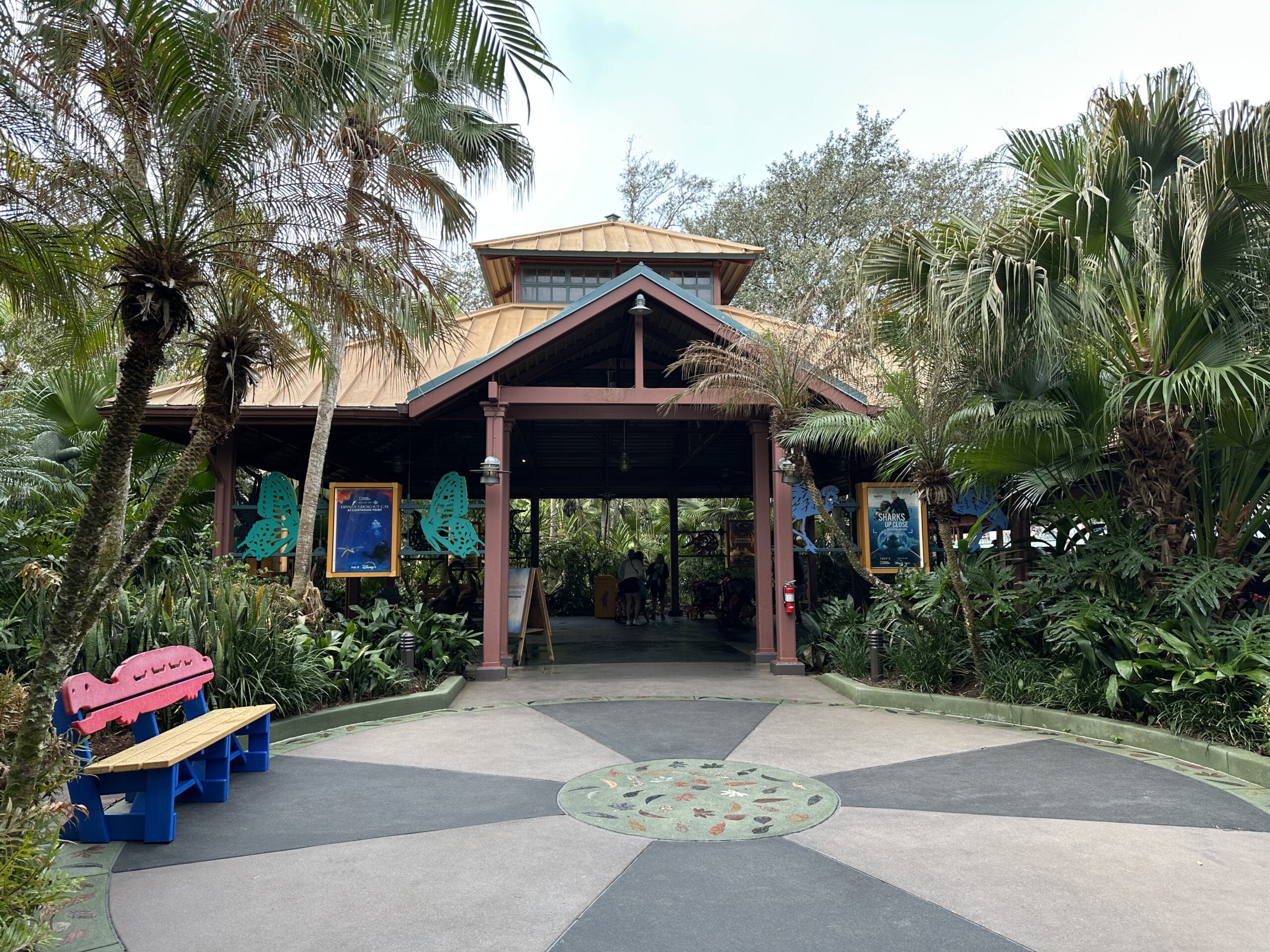
The pathway is shaded under trees and foliage. It opens up just outside of the station to a circular area before narrowing back to two walkways.
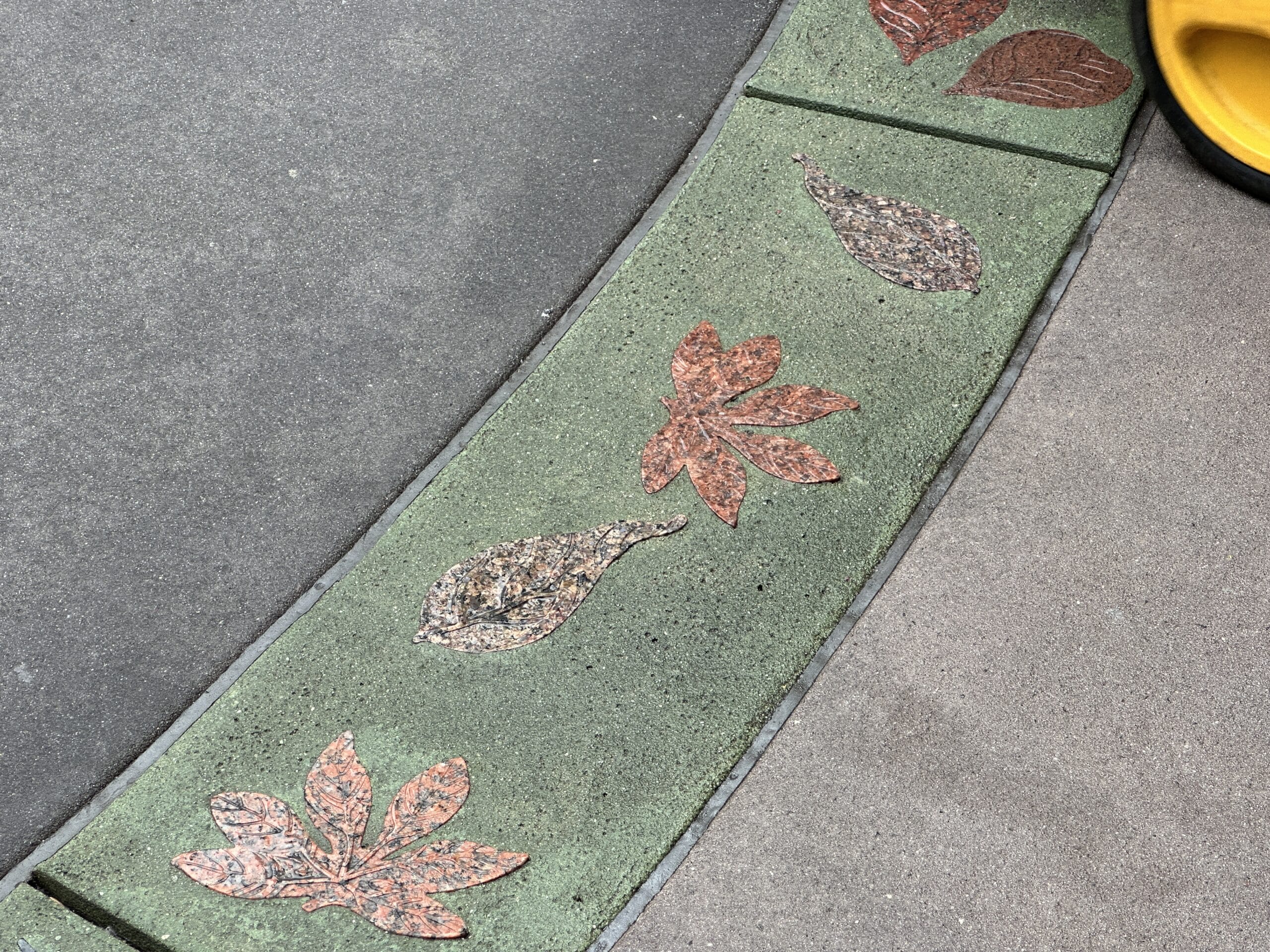
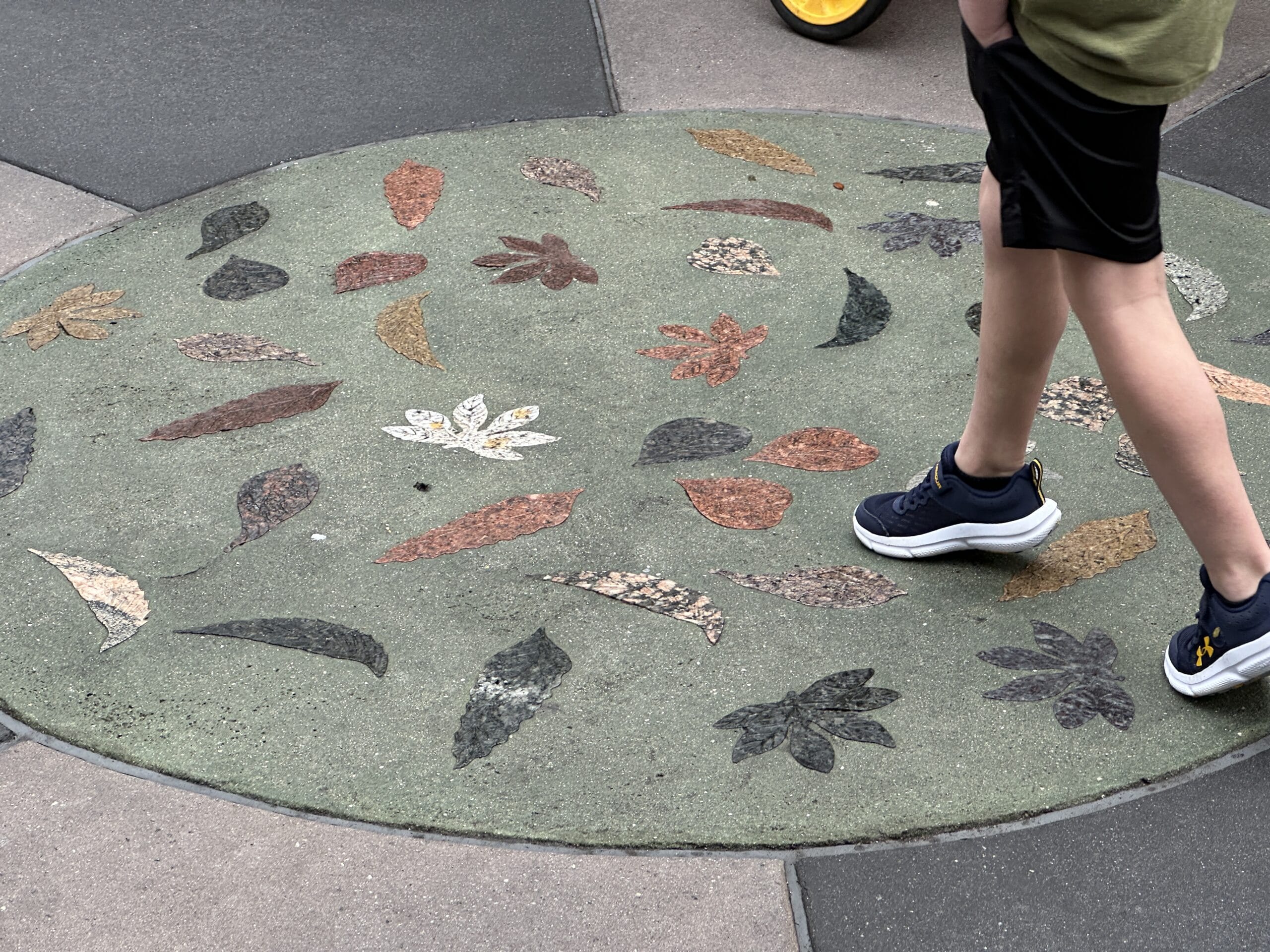
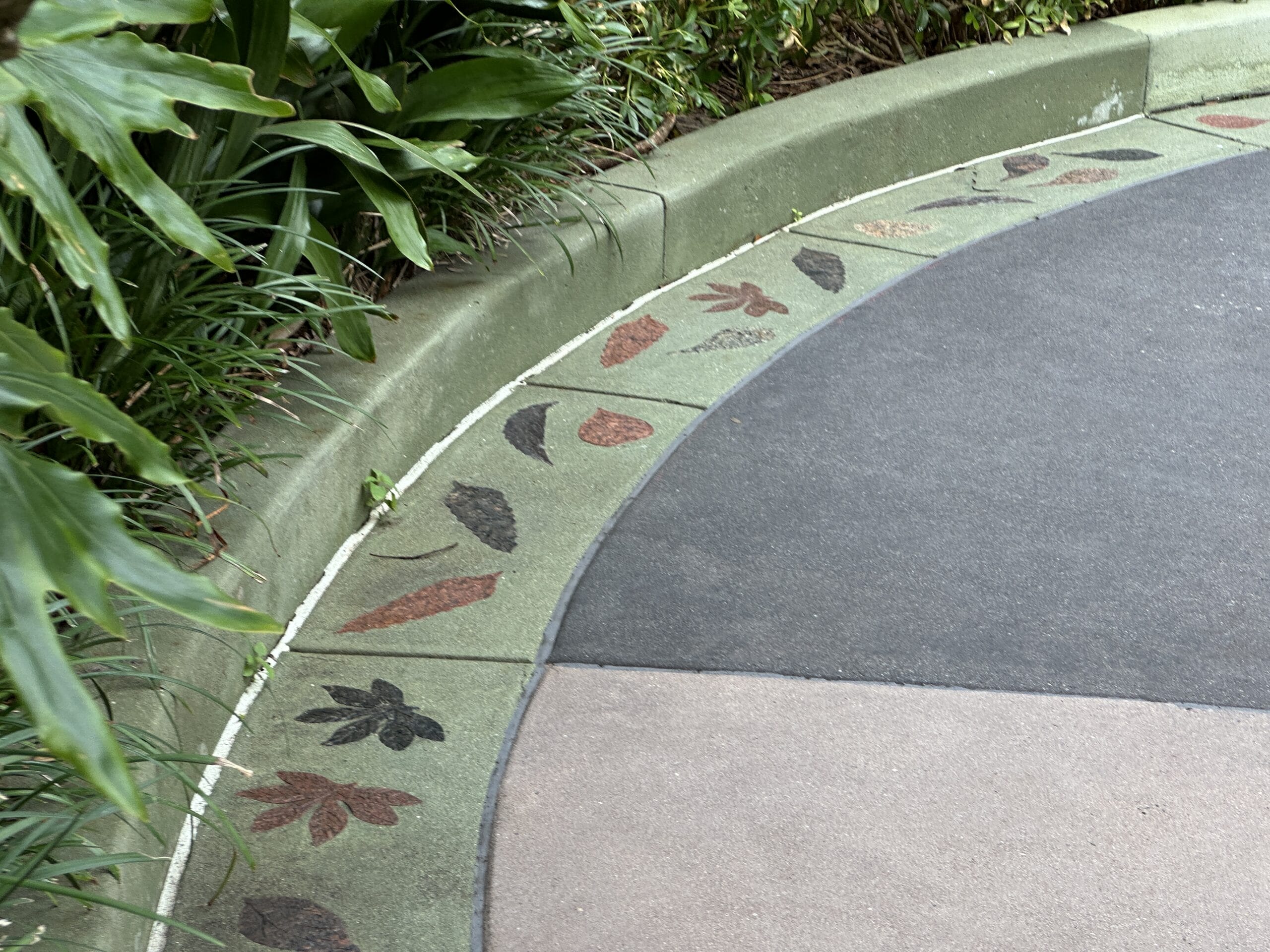
The exterior and middle medallion of the circle are green and adorned with leaf motifs.
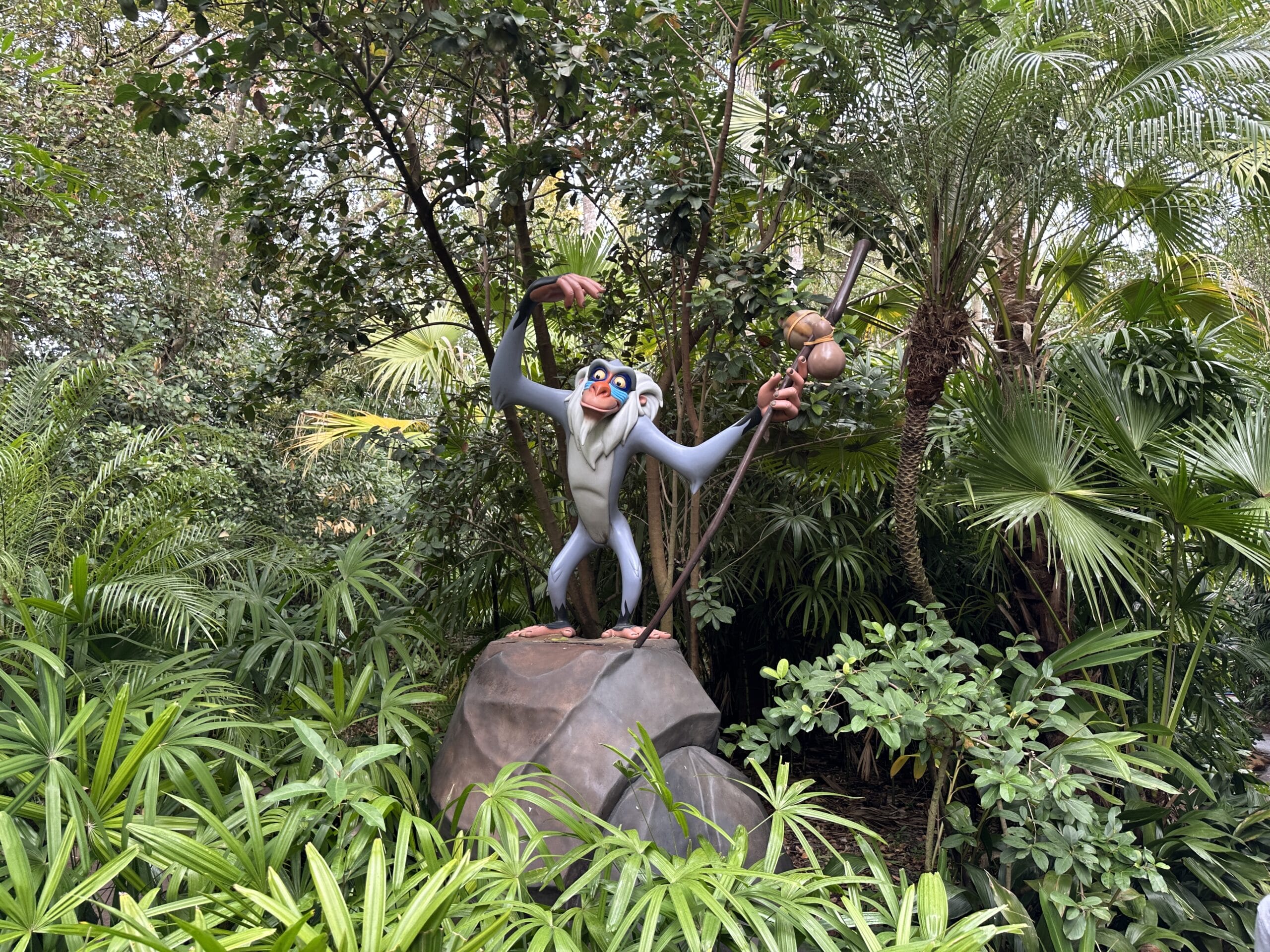
At the start of the path is a statue of Rafiki, appearing to gesture in greeting to guests.
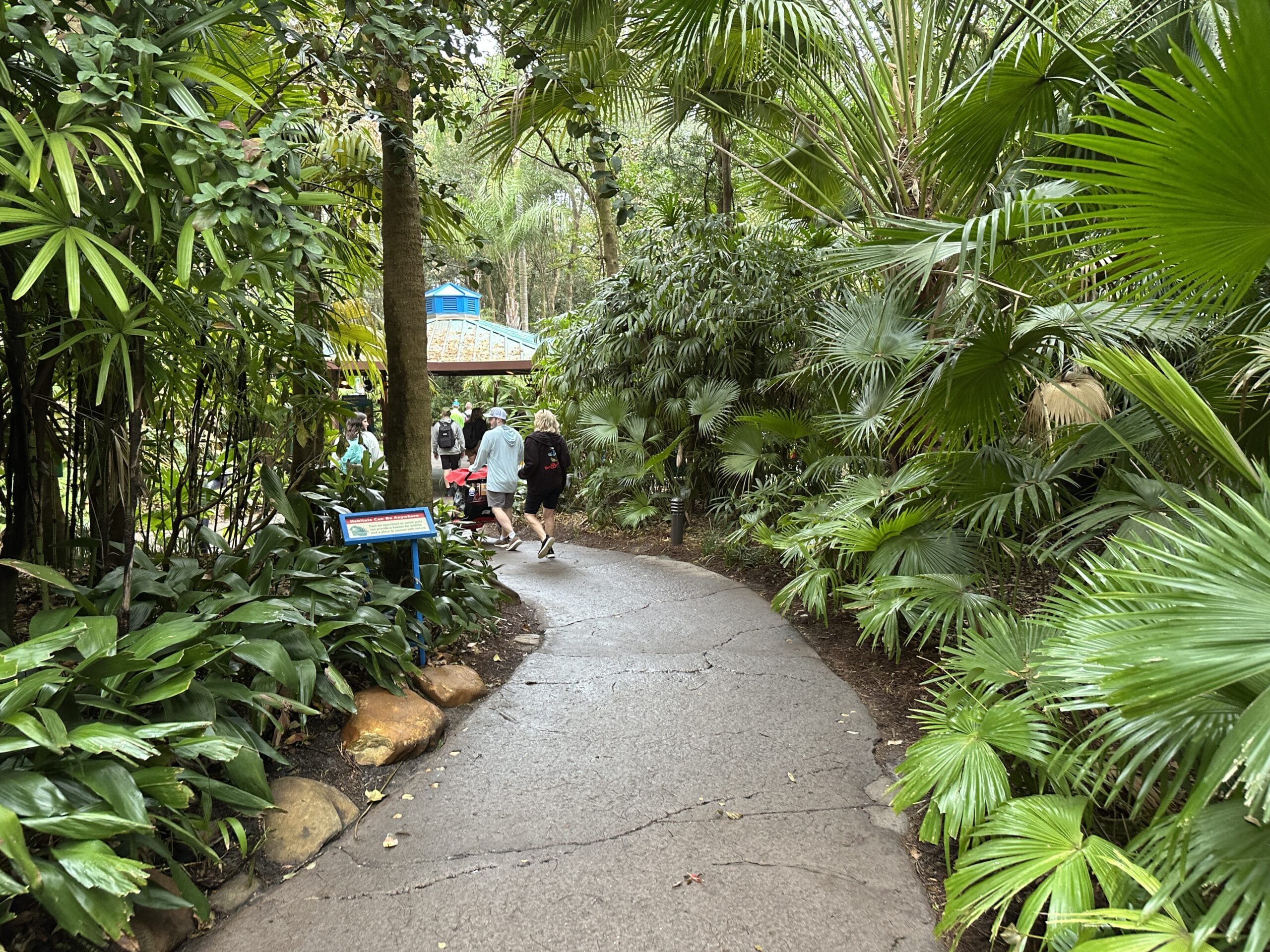
The path is lined with informational signs that alert guests to things they can do to help the environment and experience the world around them.
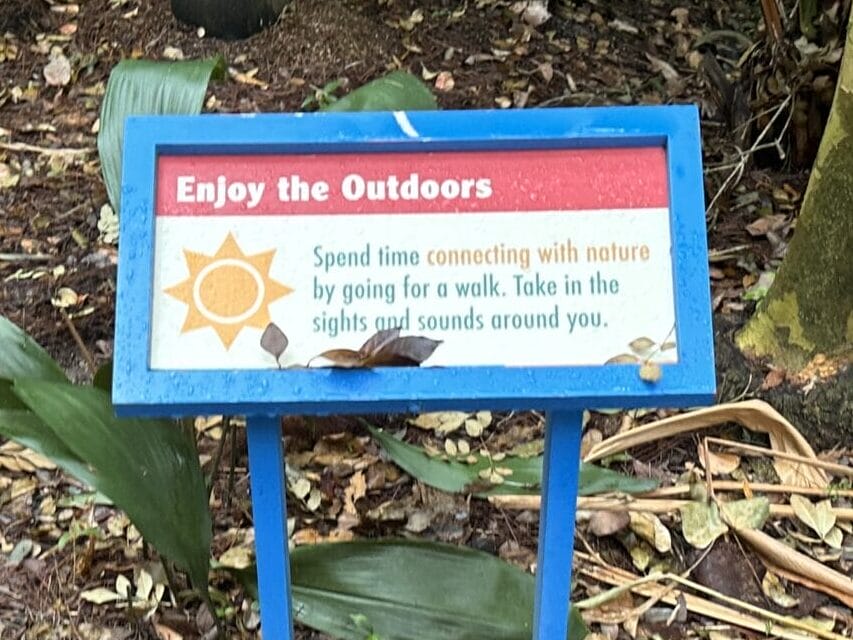
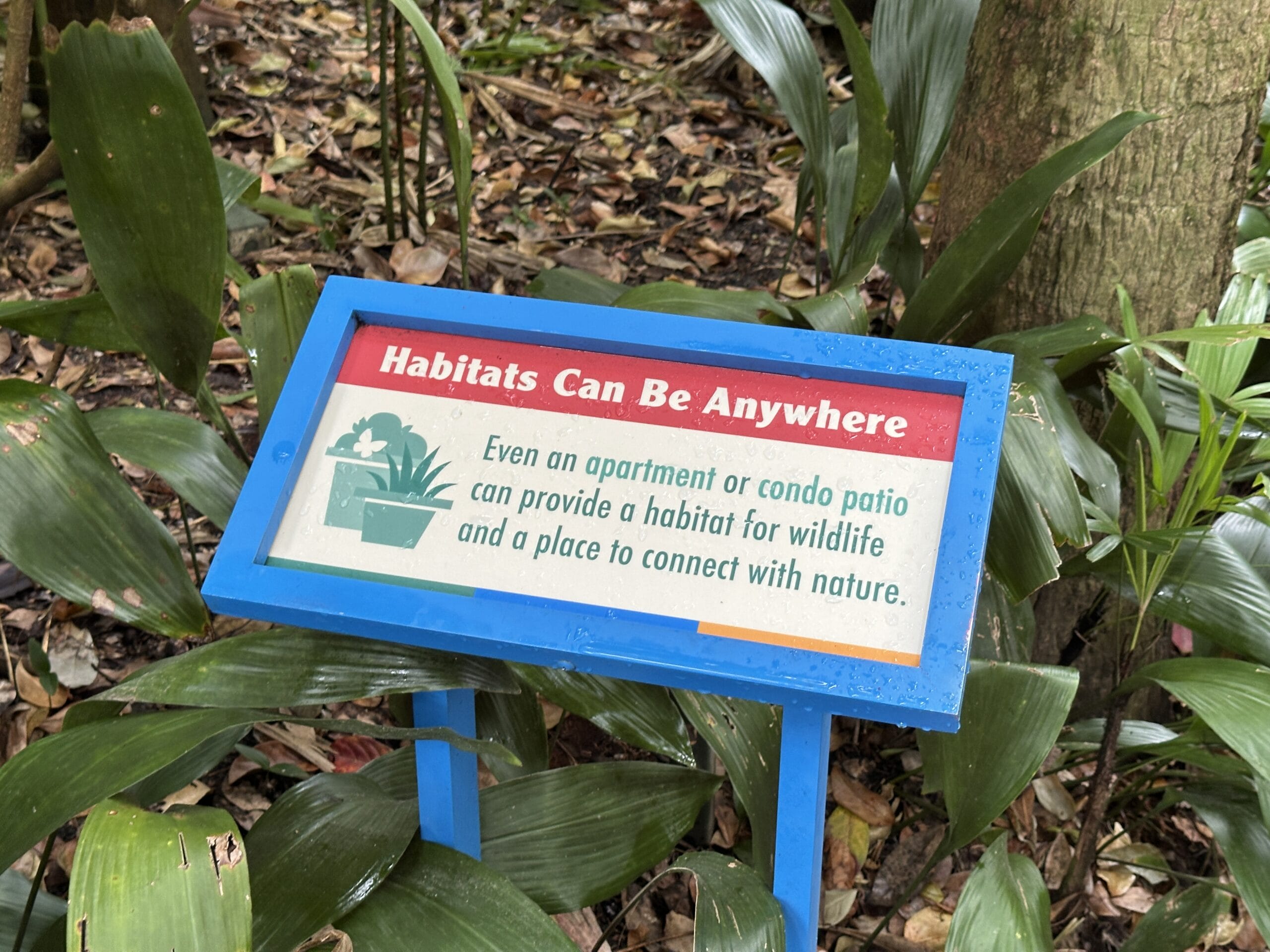
The first signs urge guests to enjoy the outdoors and teaches that habitats for wildlife can be anywhere.
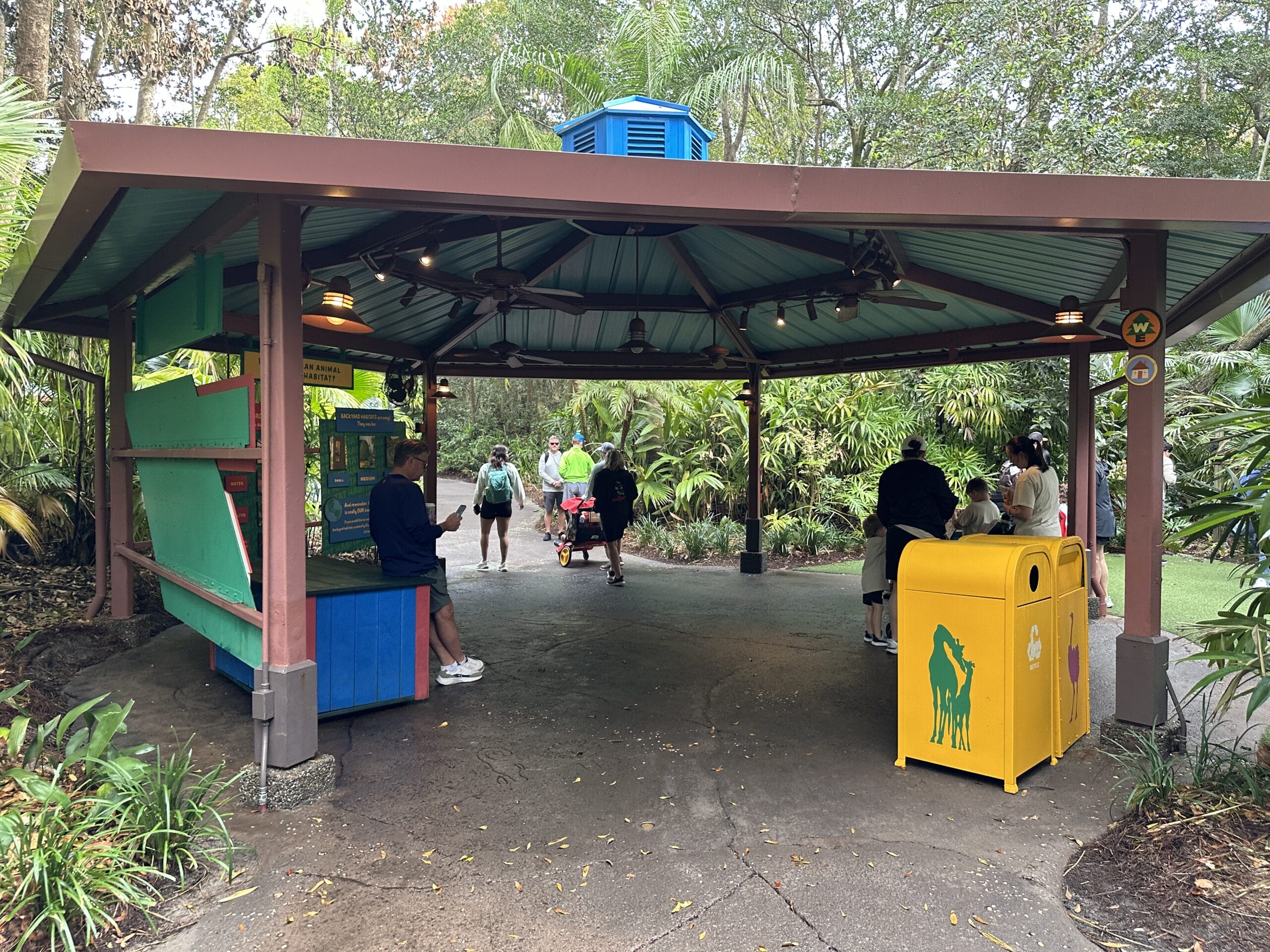
There are two pavilions along the walkway, the first housing a Wilderness Explorers station (we have more about Wilderness Explorers below).
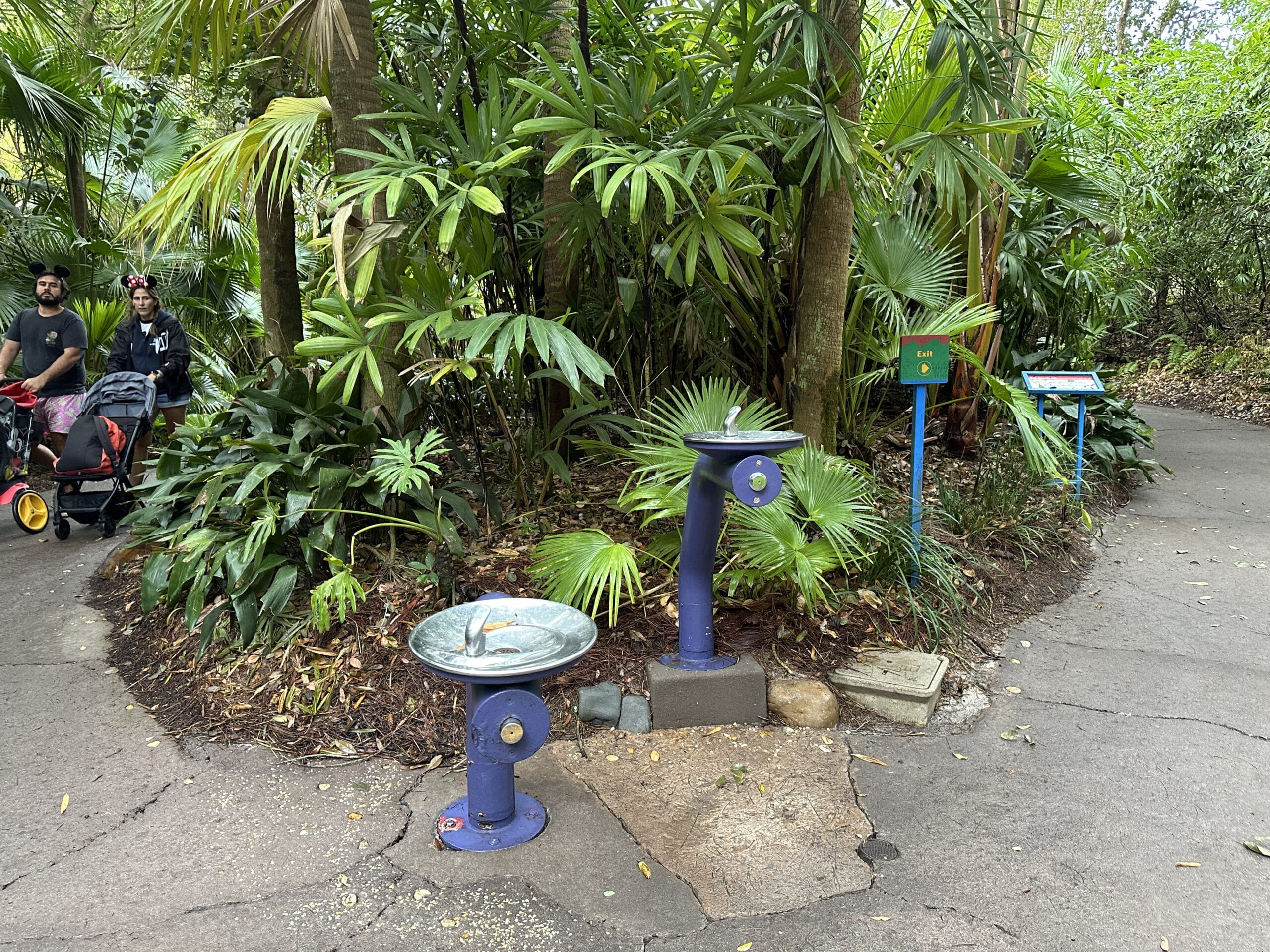
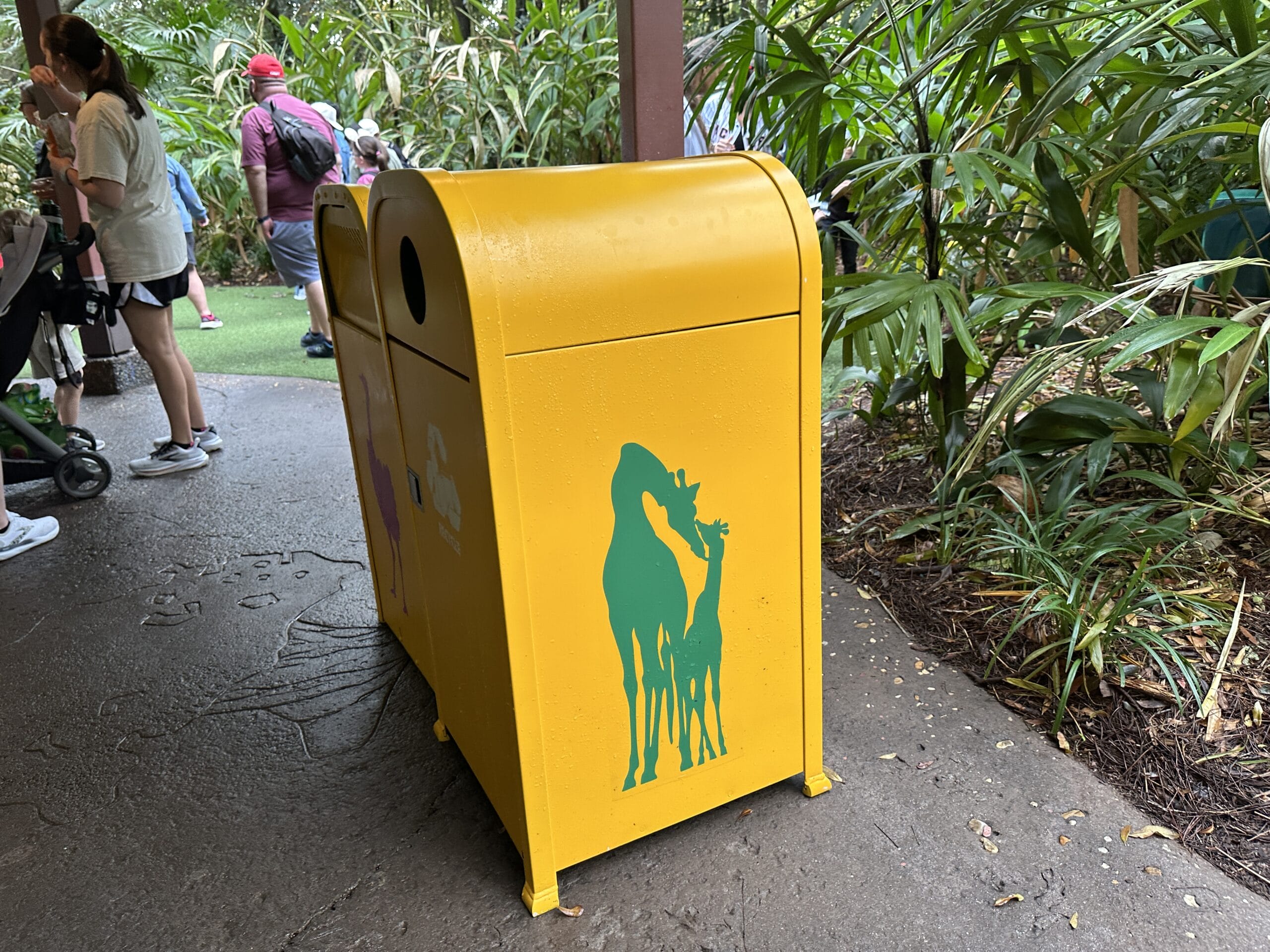
Along the walkway are benches and water fountains for guests needing a break. Yellow garbage cans have animal images like the silhouettes of two giraffes.
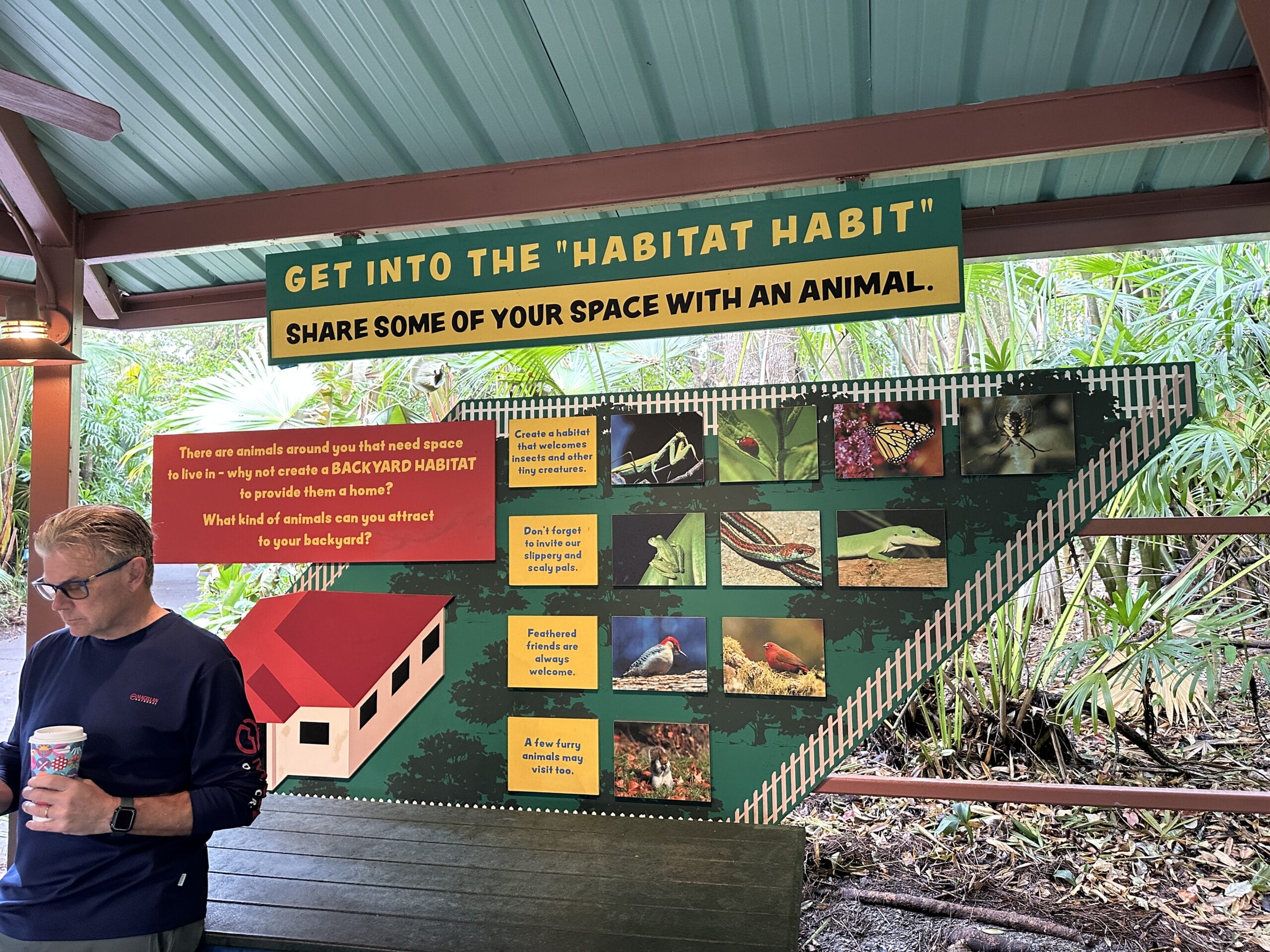
Underneath the pavilion, infographics teach about sharing space with the wildlife around us by getting into the “Habitat Habit.”
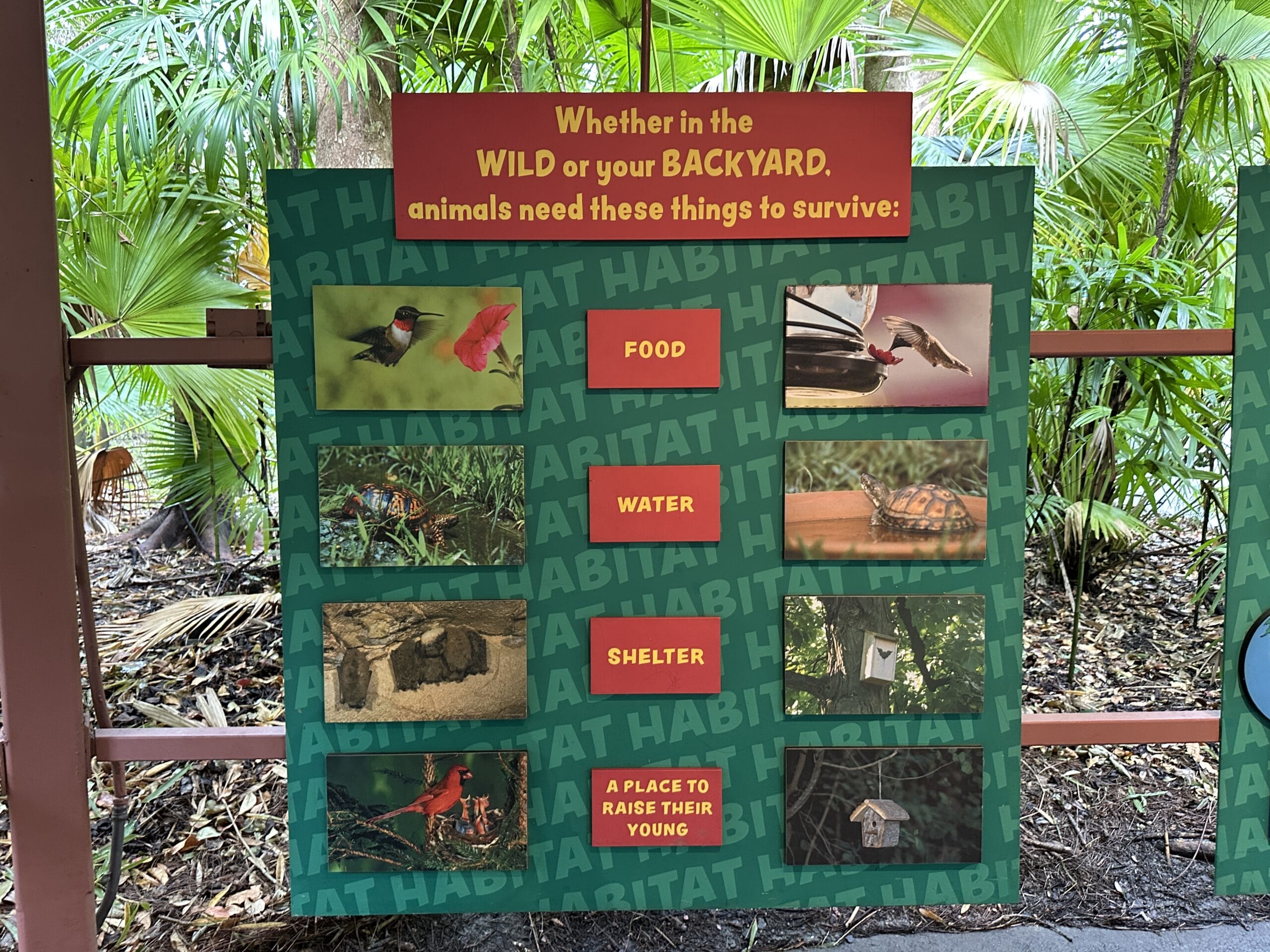
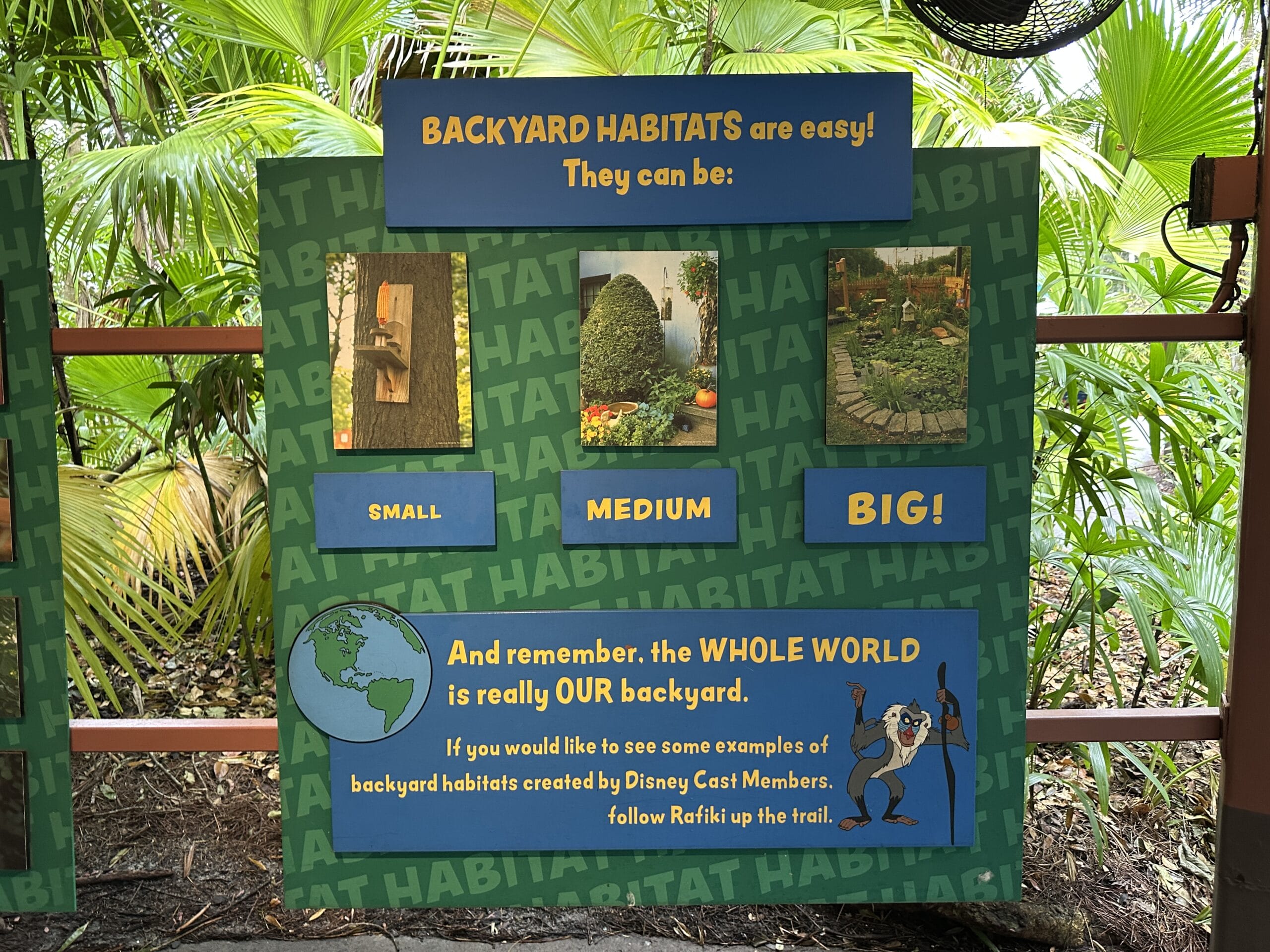
Additional signs list ways to create habitats in your own backyard.
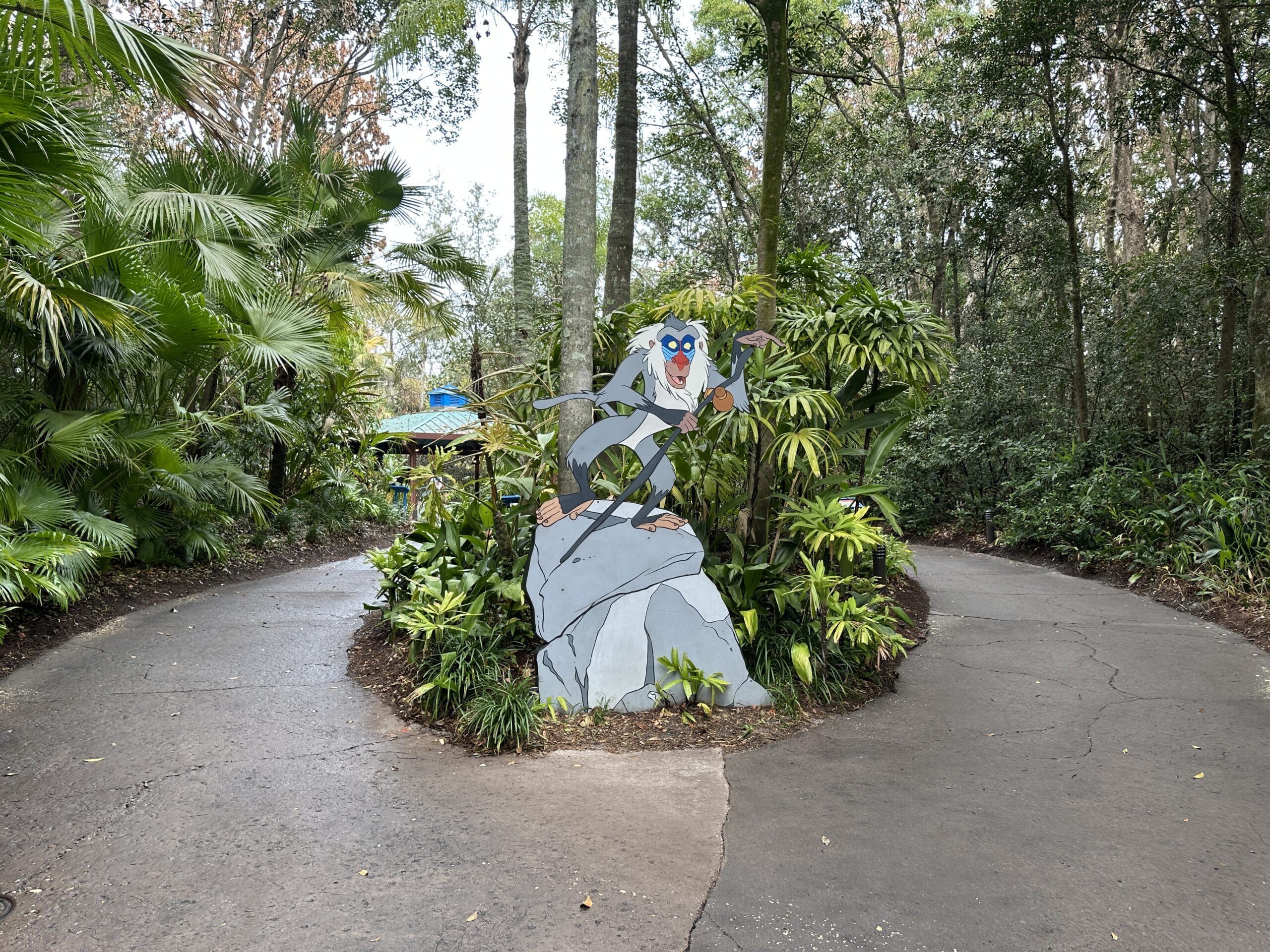
After the first pavilion, a Rafiki flat points guests to the right of the split path. The left is typically used for exiting guests.
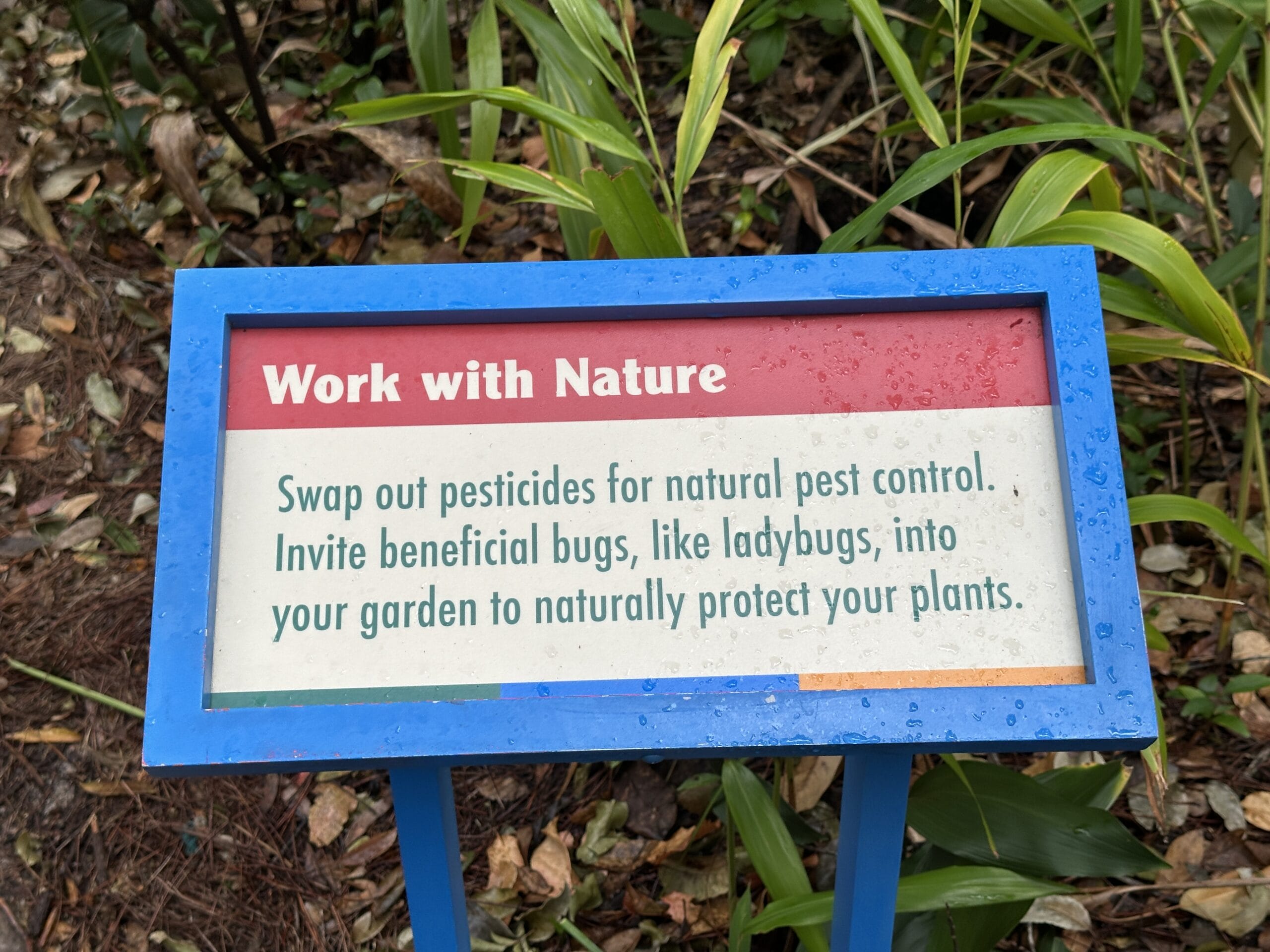
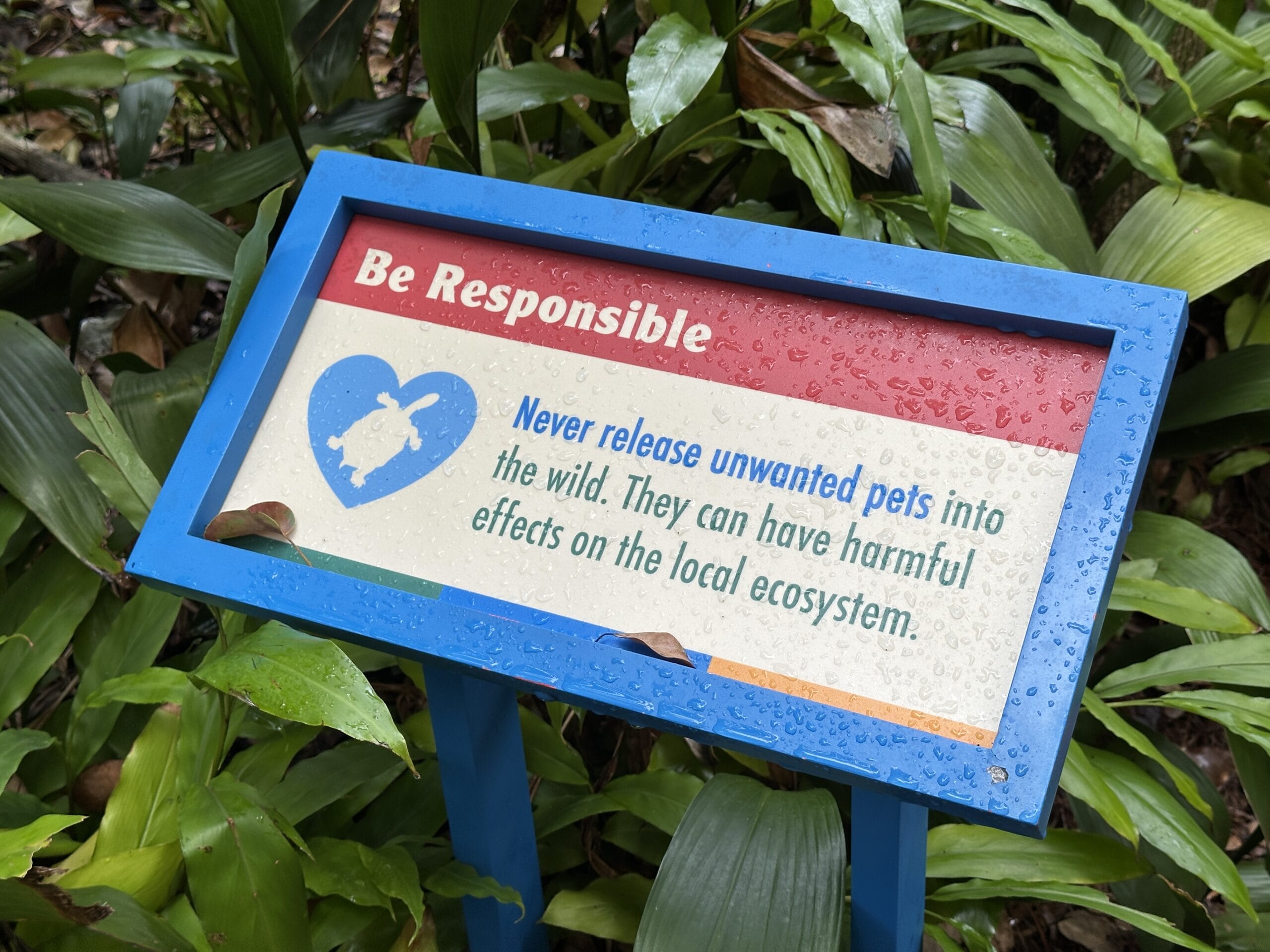
The next two signs ask guests to work with nature and to be responsible with their own pets.
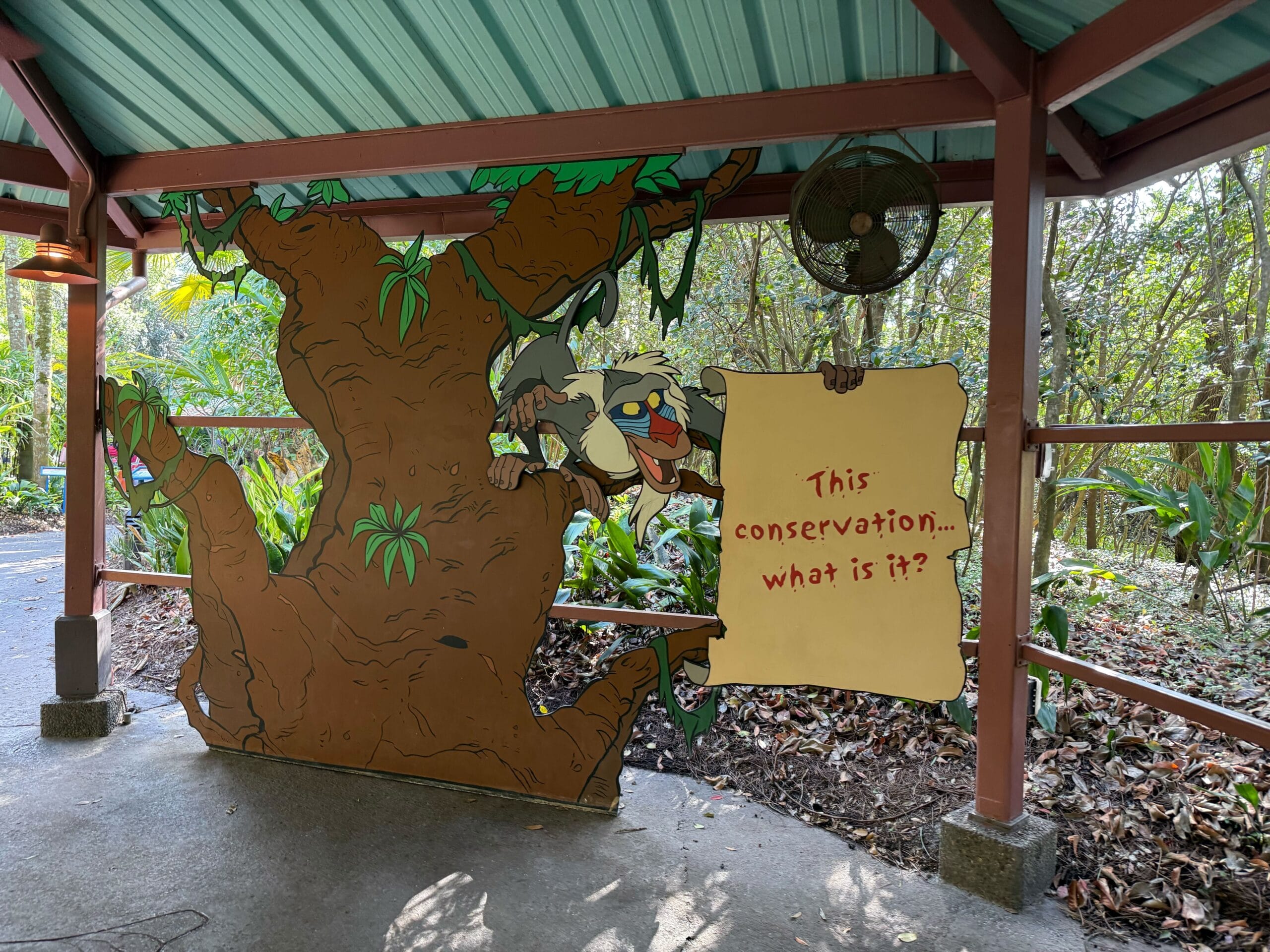
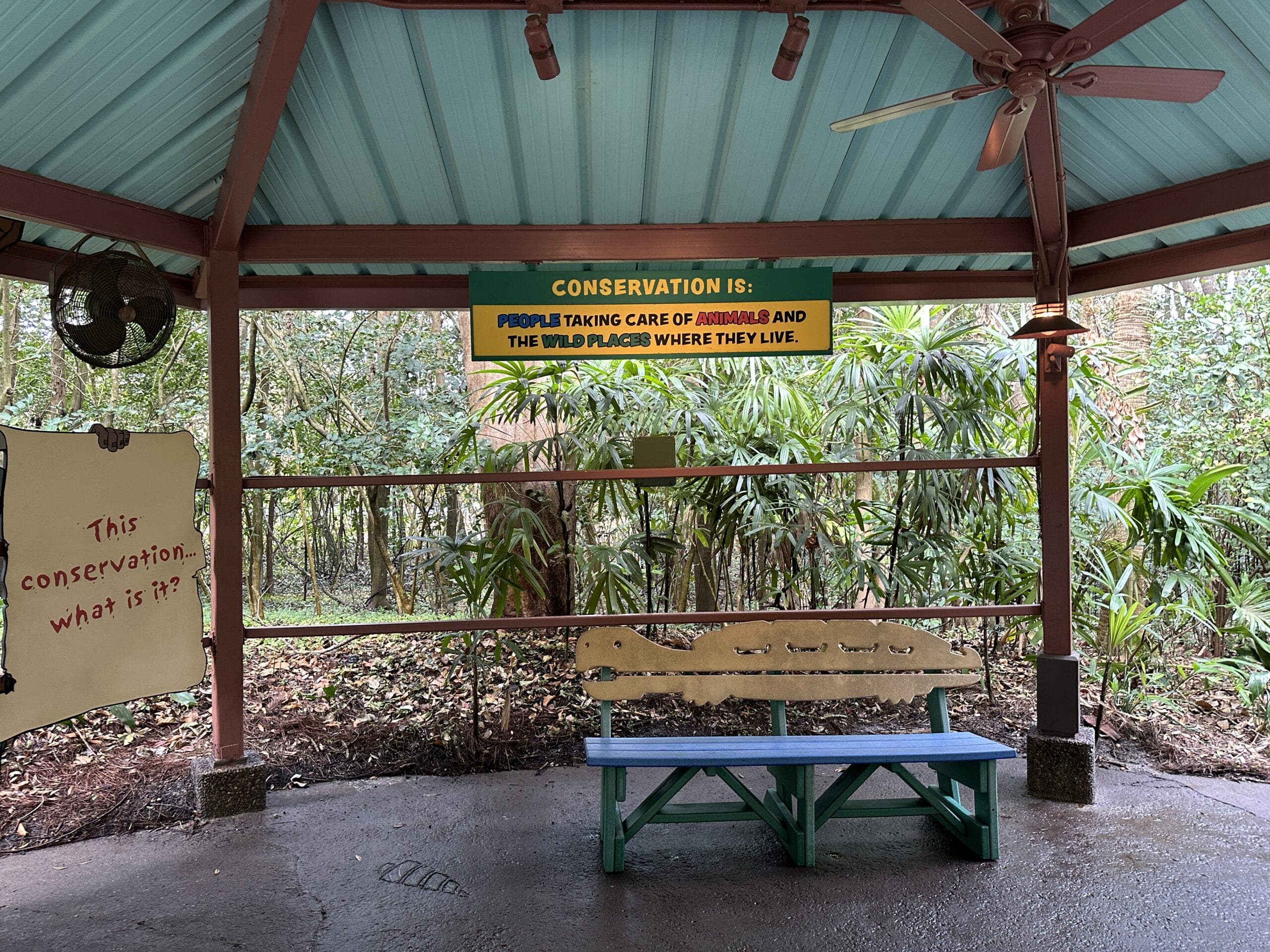
The second shaded pavilion discusses conservation with Rafiki on a Baobab tree. The sign above the bench defines conservation as “people taking care of animals and the wild places they live.”
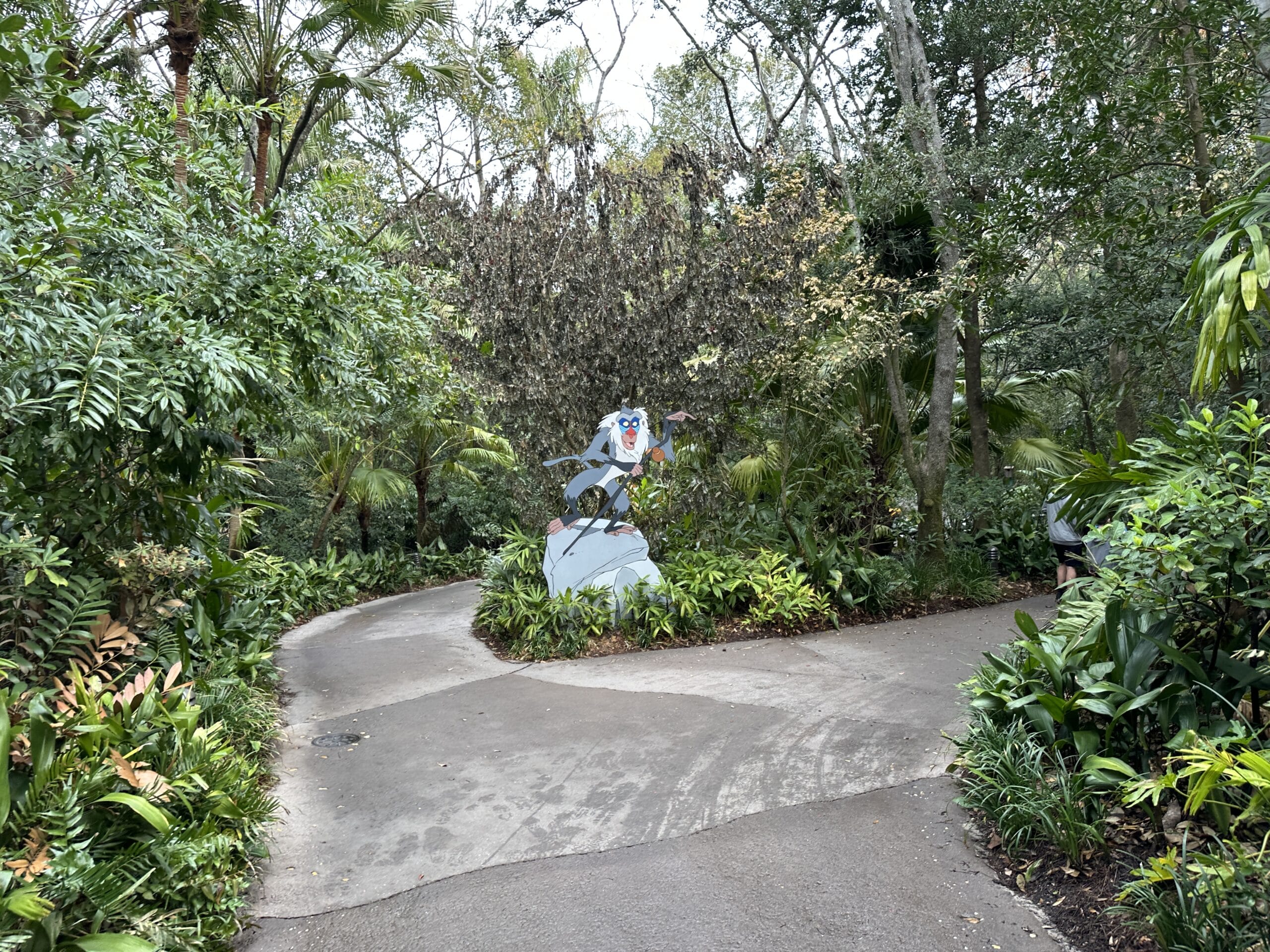
Nearing the end of the lengthy path, Rafiki points to the right once again.
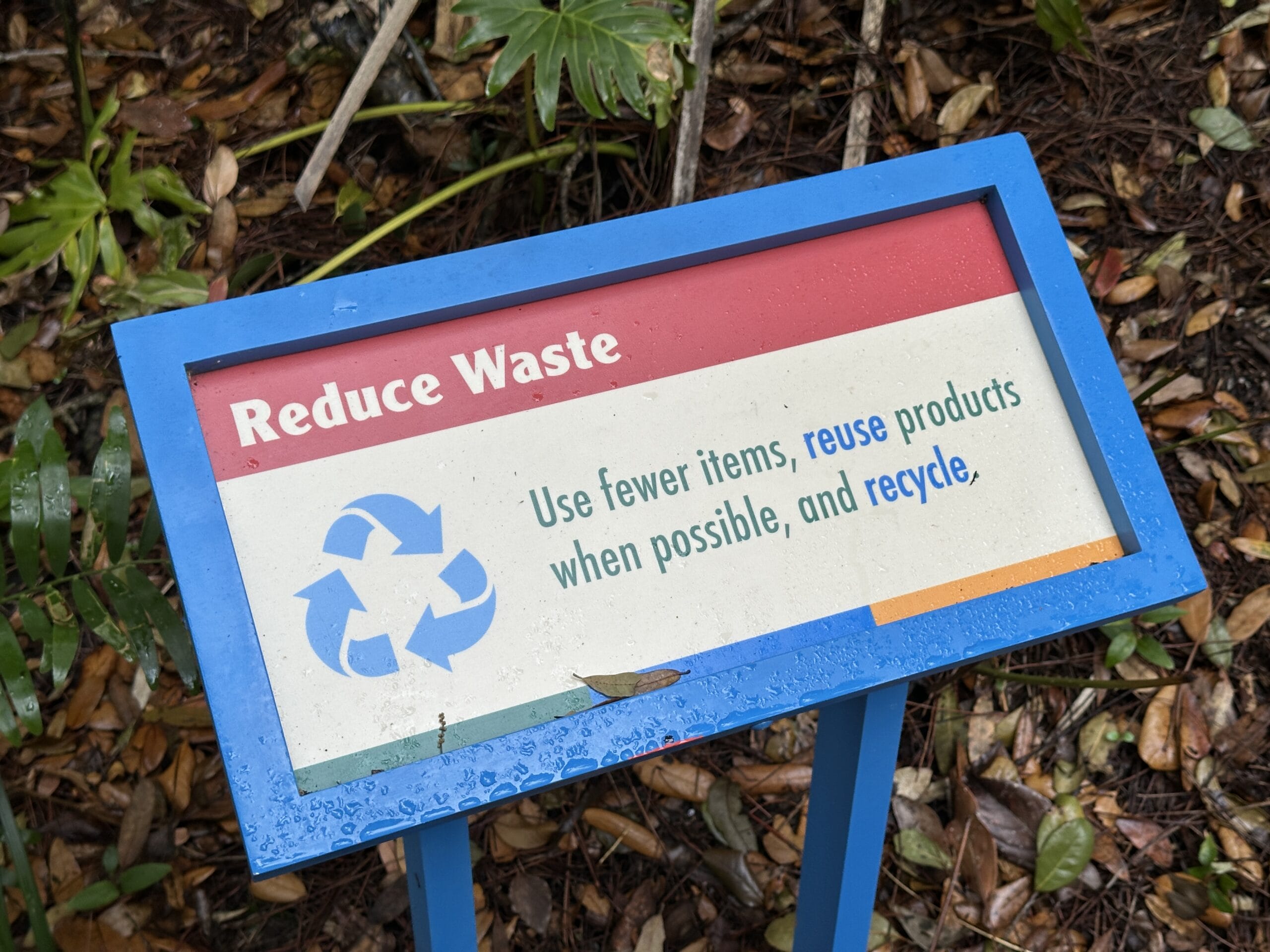
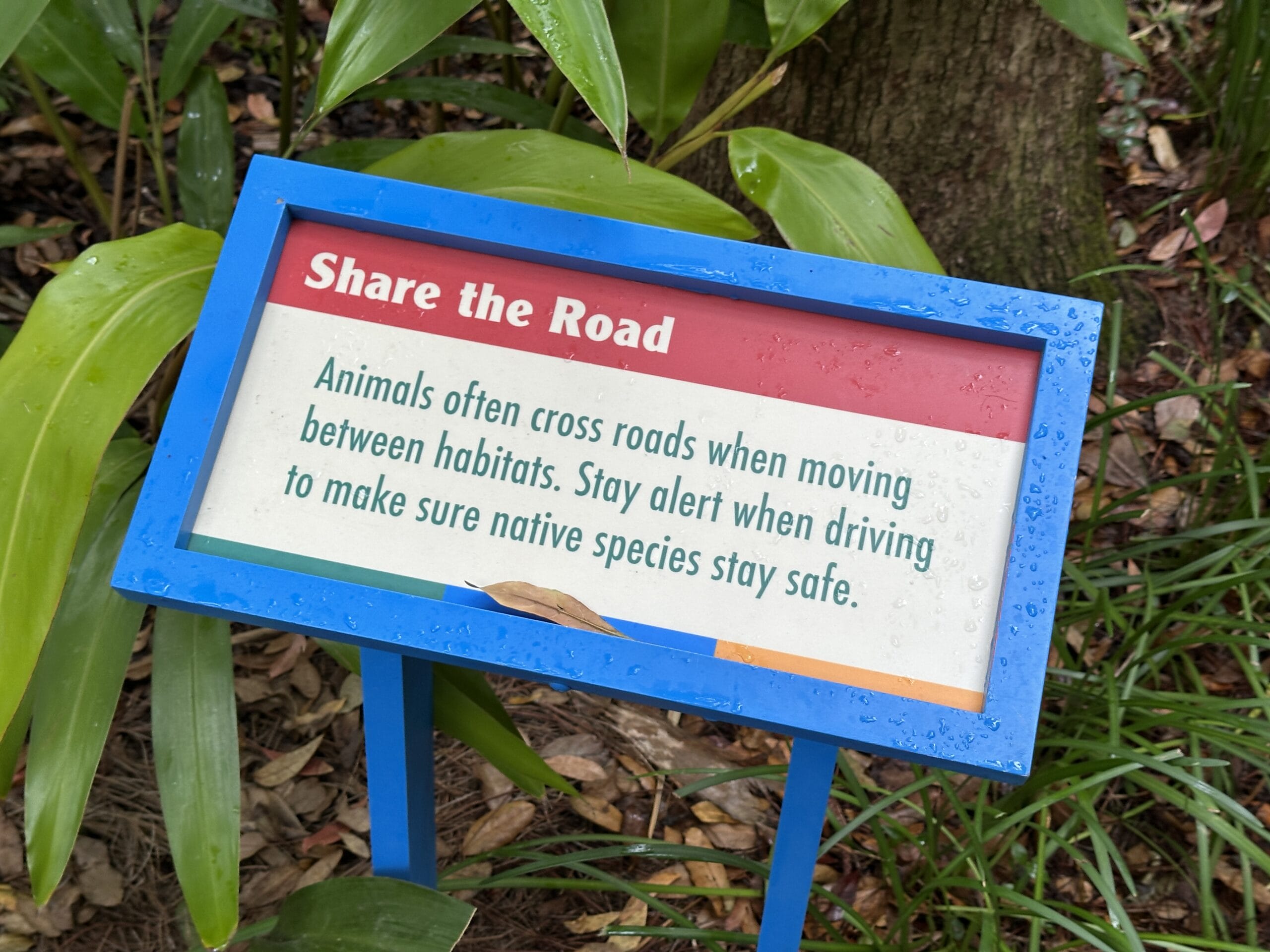
Being mindful to reduce waste and share the road with wild animals are the next two reminders for guests.
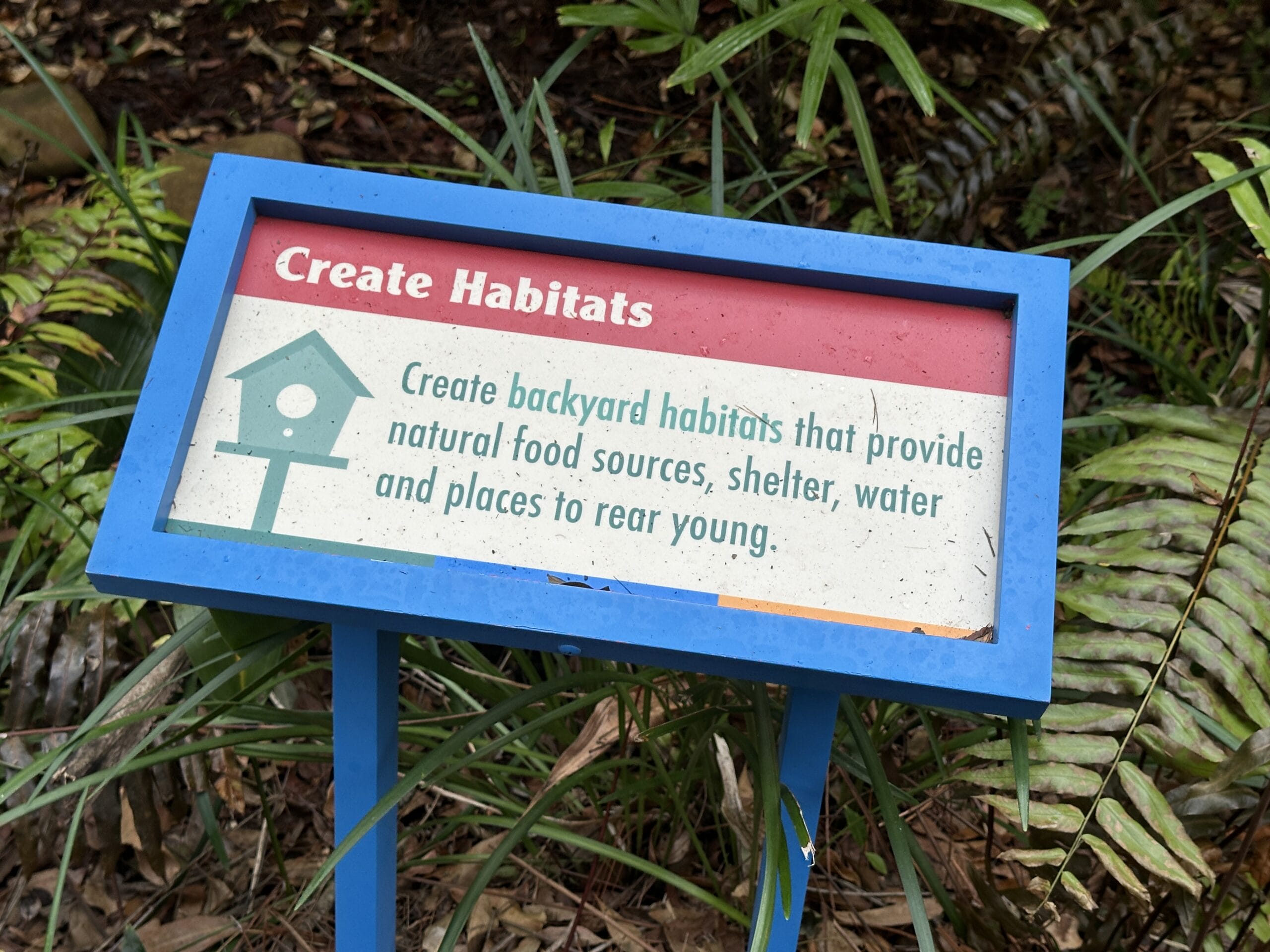
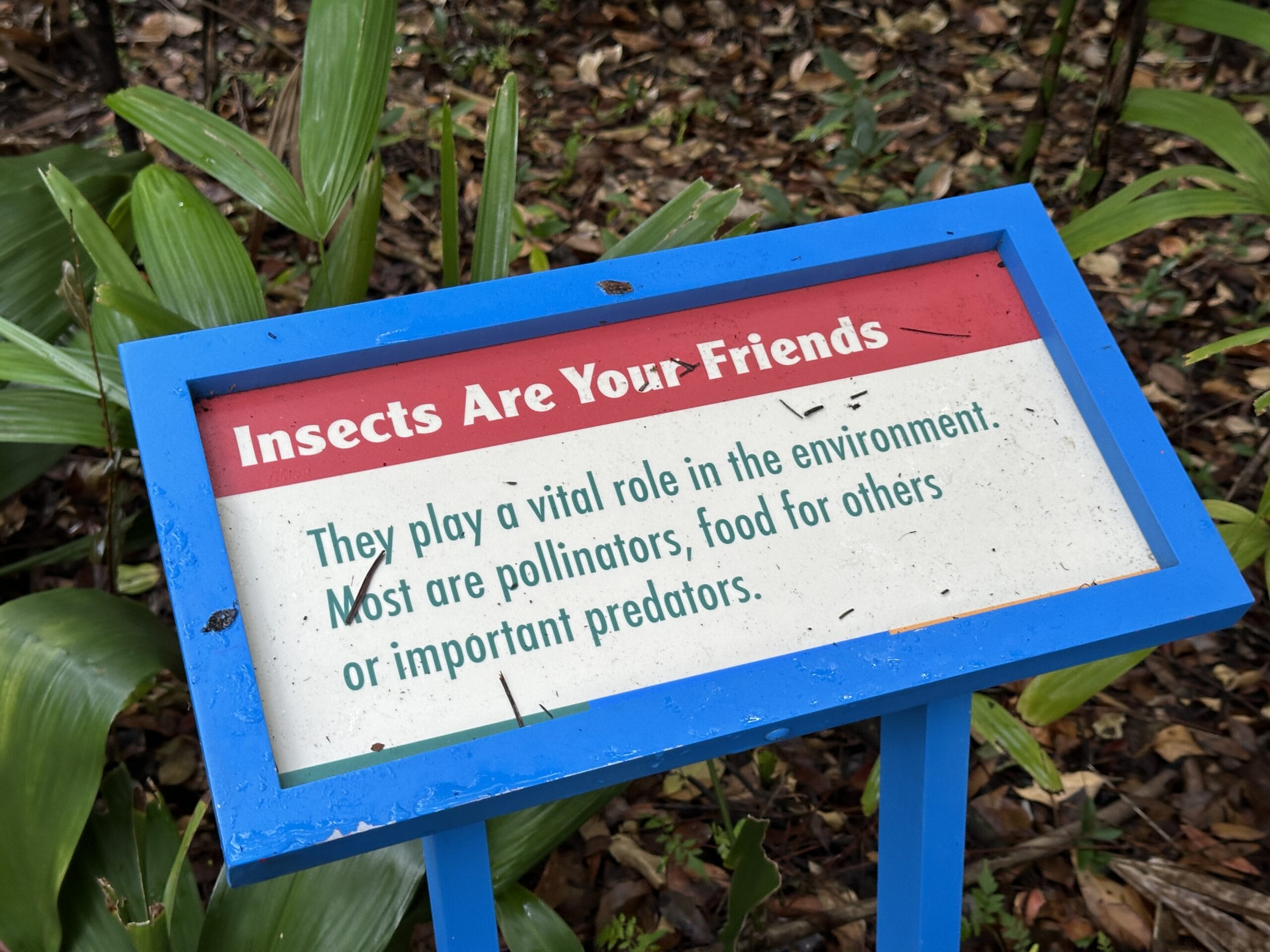
The next signs ask guests to create habitats and reminds us that insects are our friends.
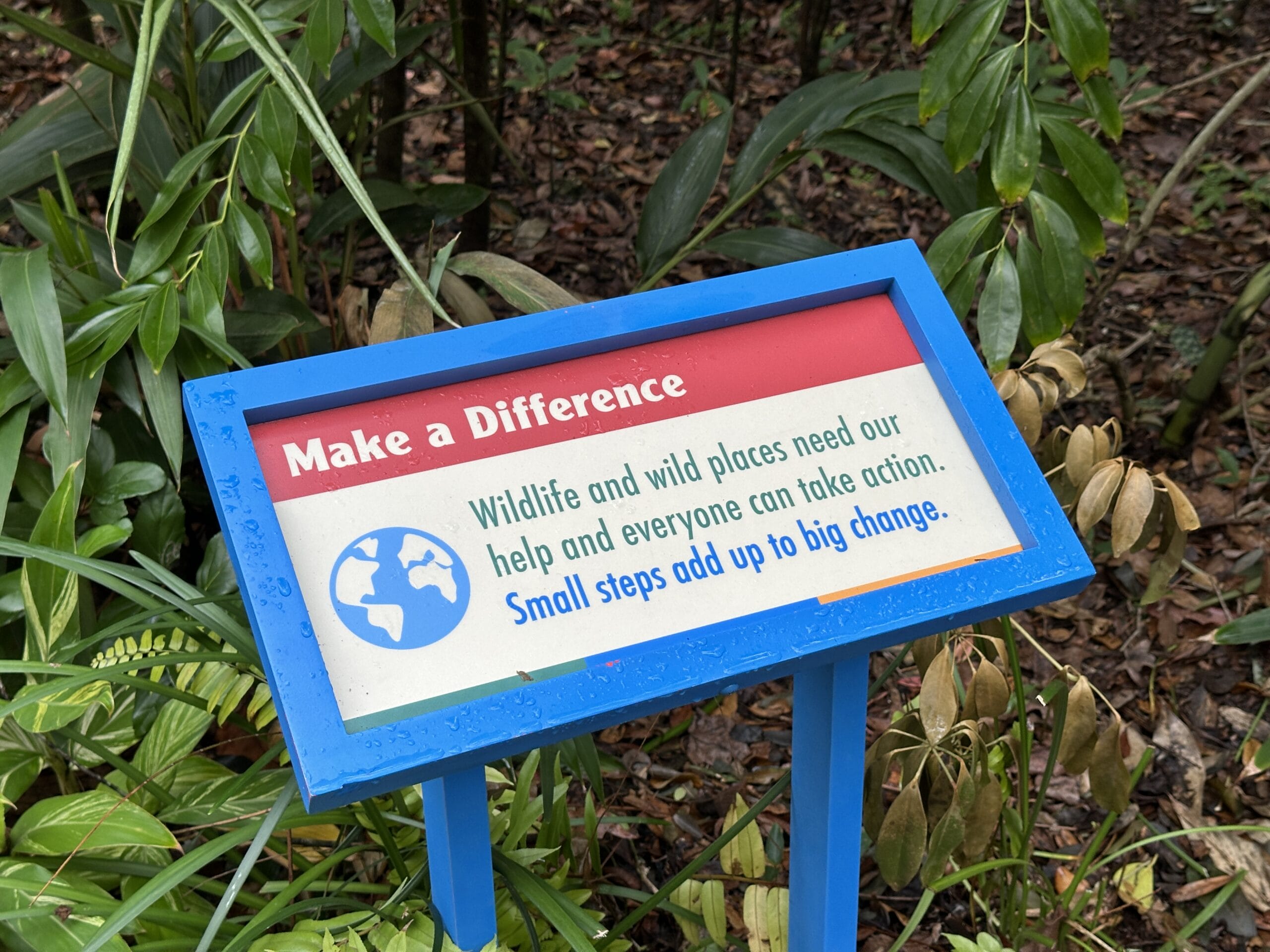
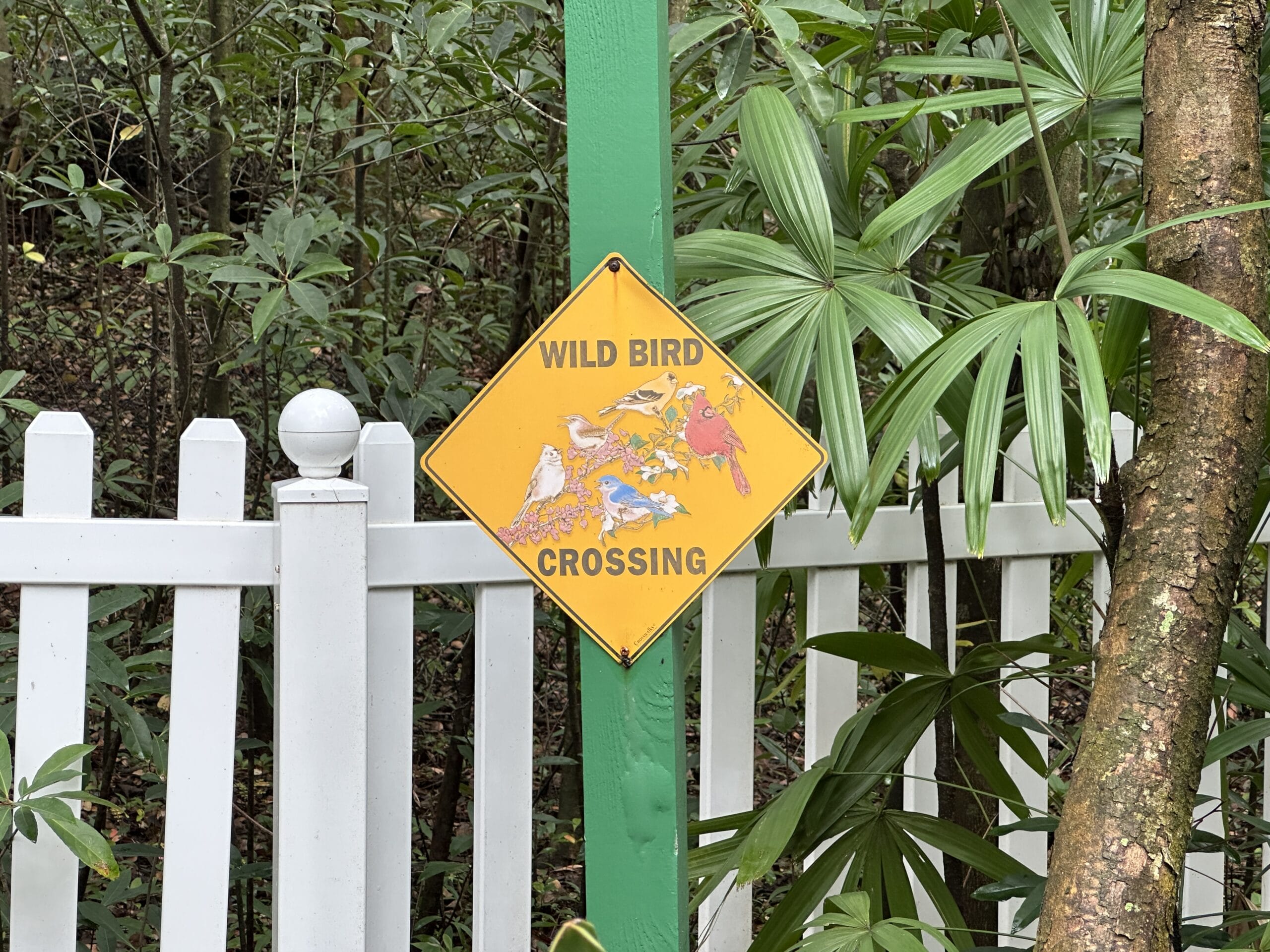
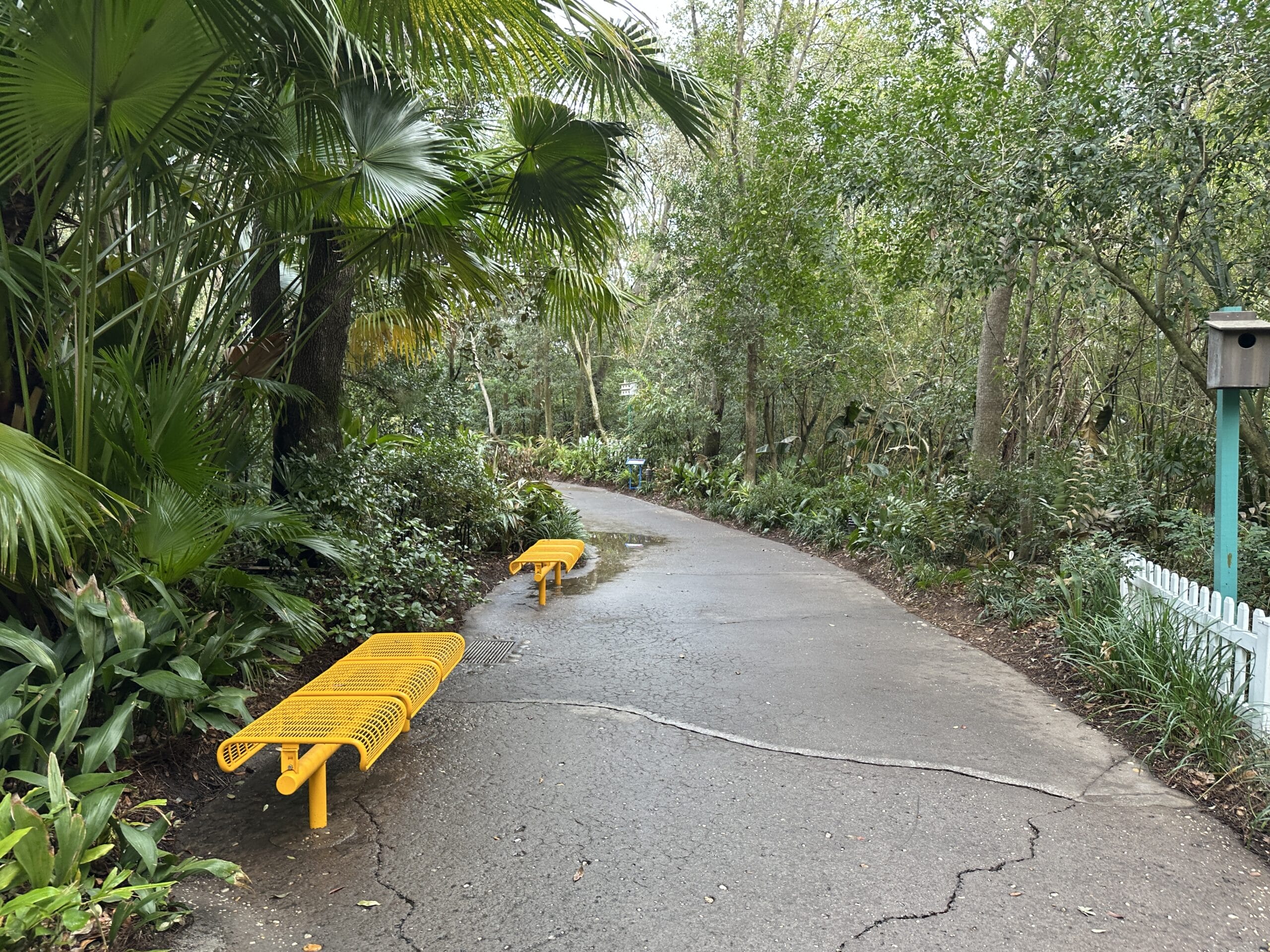
The last on the path to the Conservation Station asks guest to make a difference. A weathered “Wild Bird Crossing” sign and yellow benches round out the path.
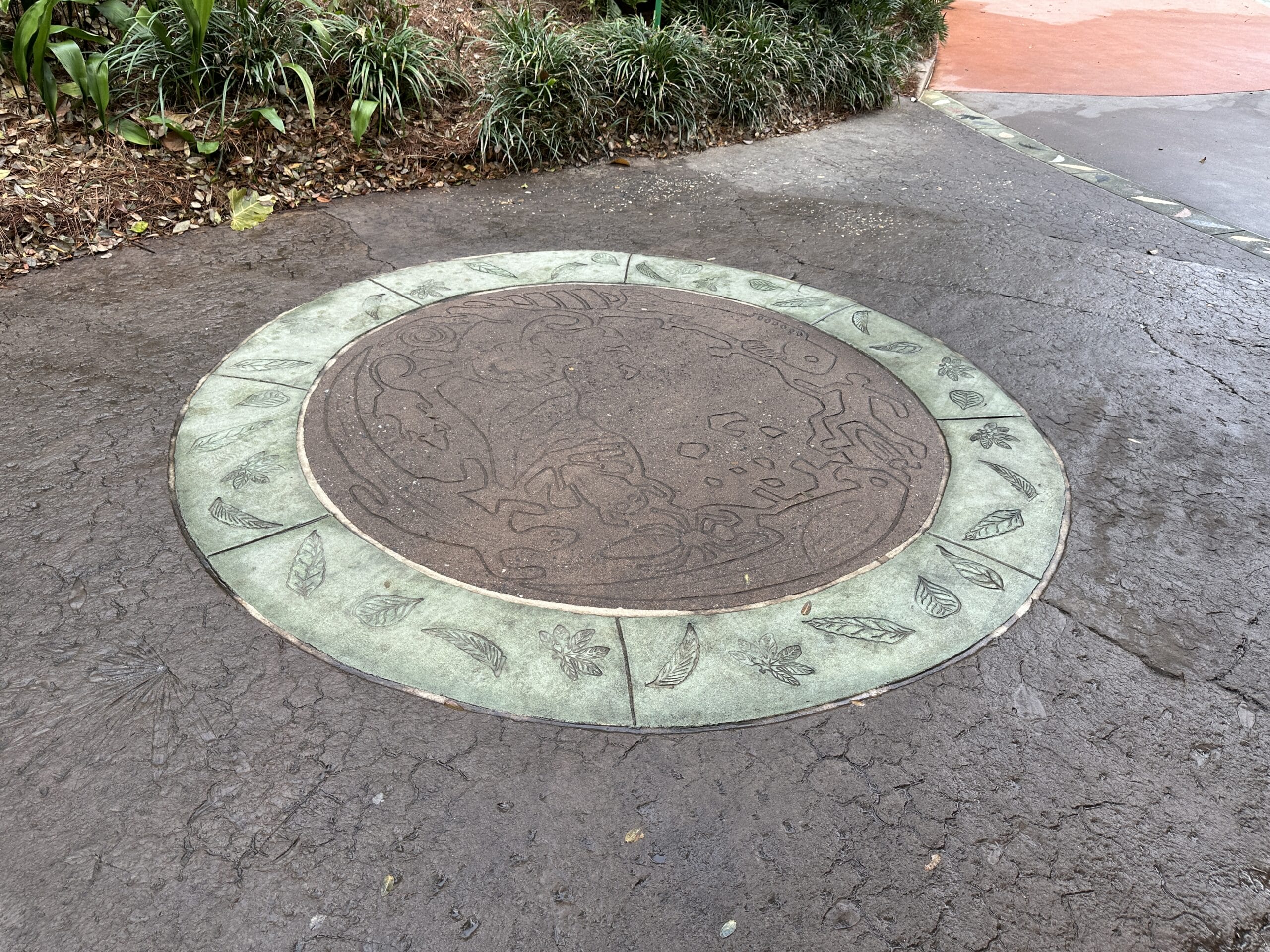
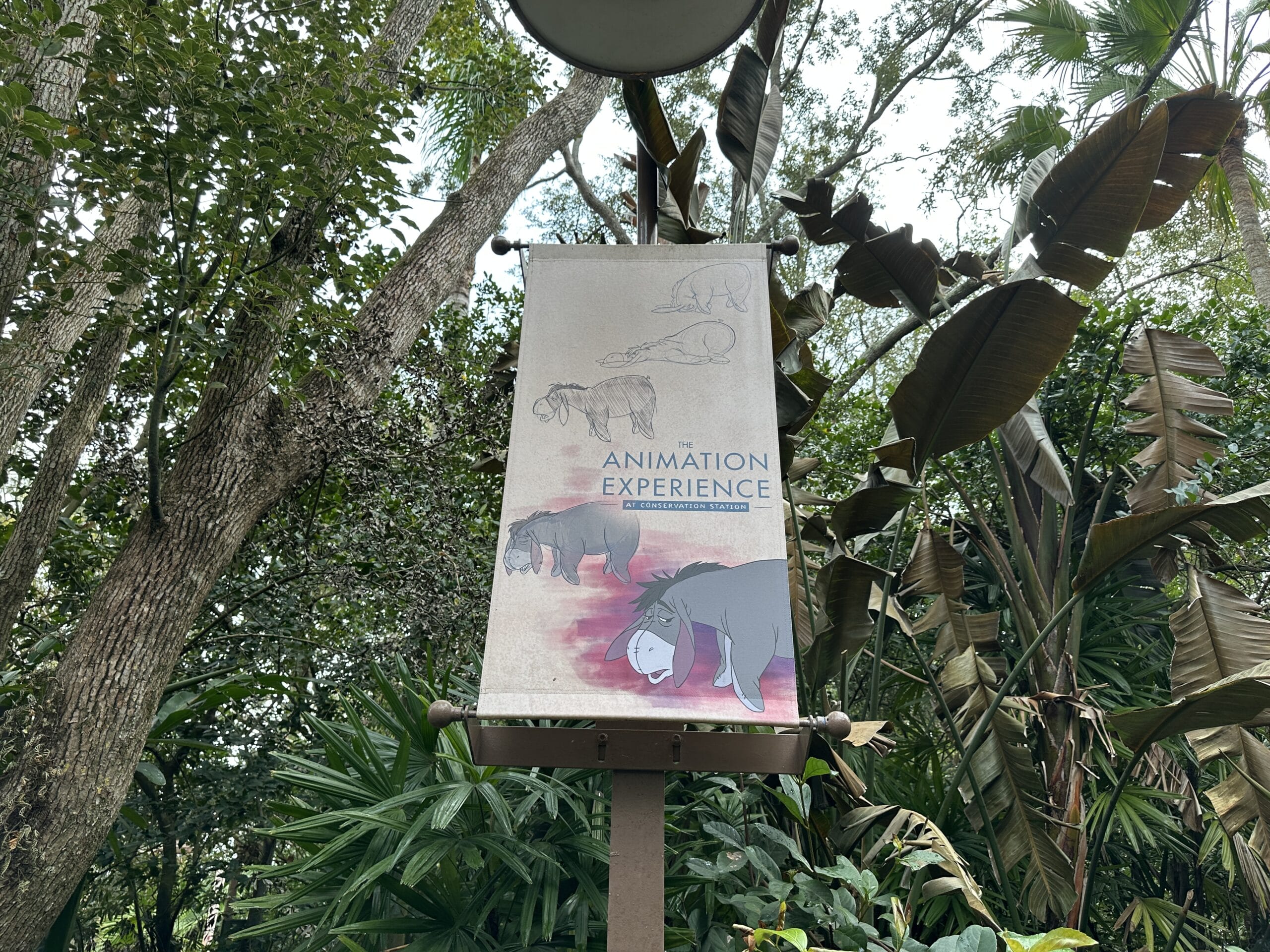
Just as the path opens up into the courtyard, a small circular design in the concrete is made up of outlines representing the different animals guests may learn about during their time in the Conservation Station. A banner for the Animation Experience also hangs from lamp posts.
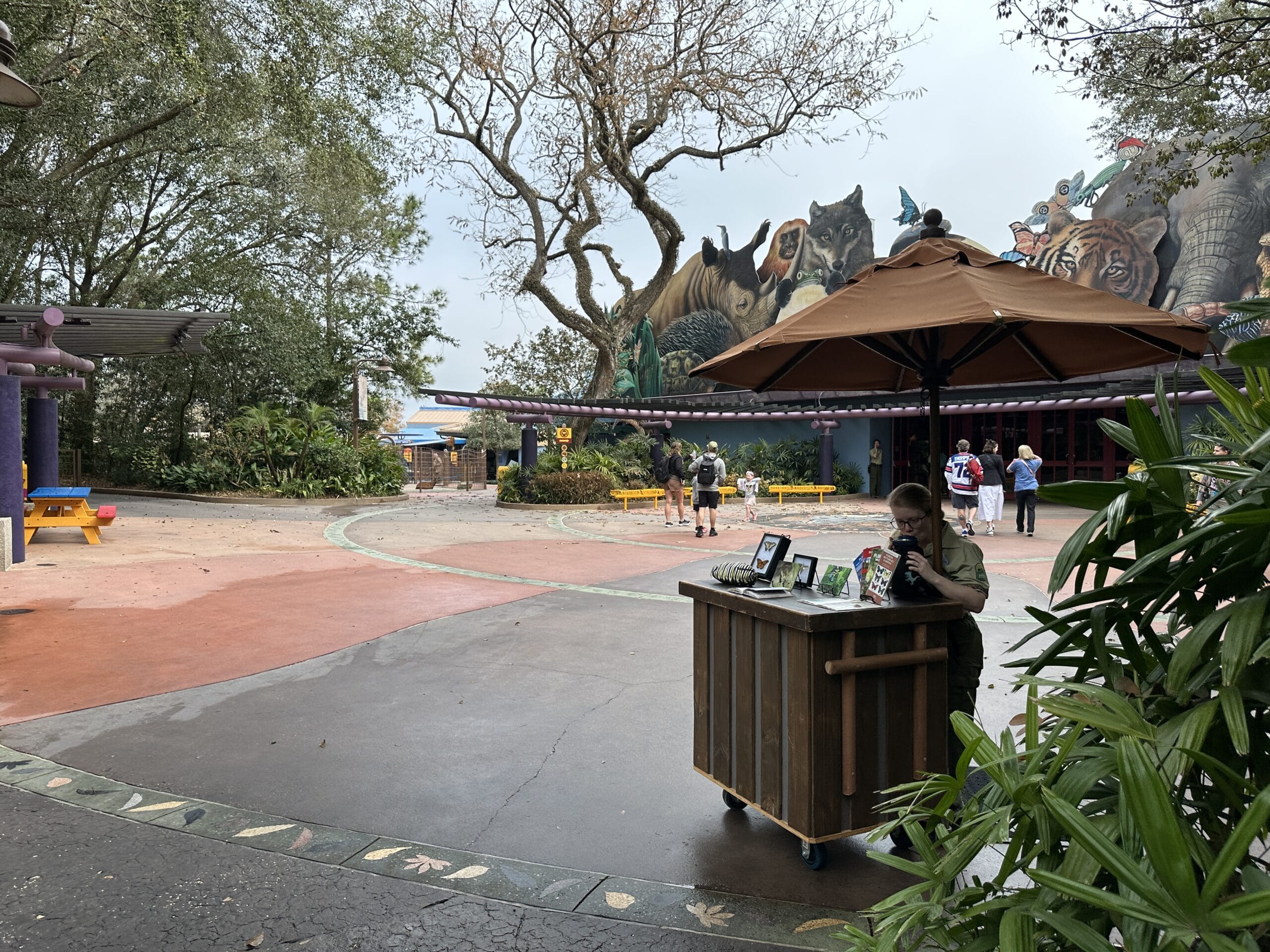
At the end of the walk is a large courtyard. Directly ahead is Conservation Station. A path to the left leads to Affection Section.
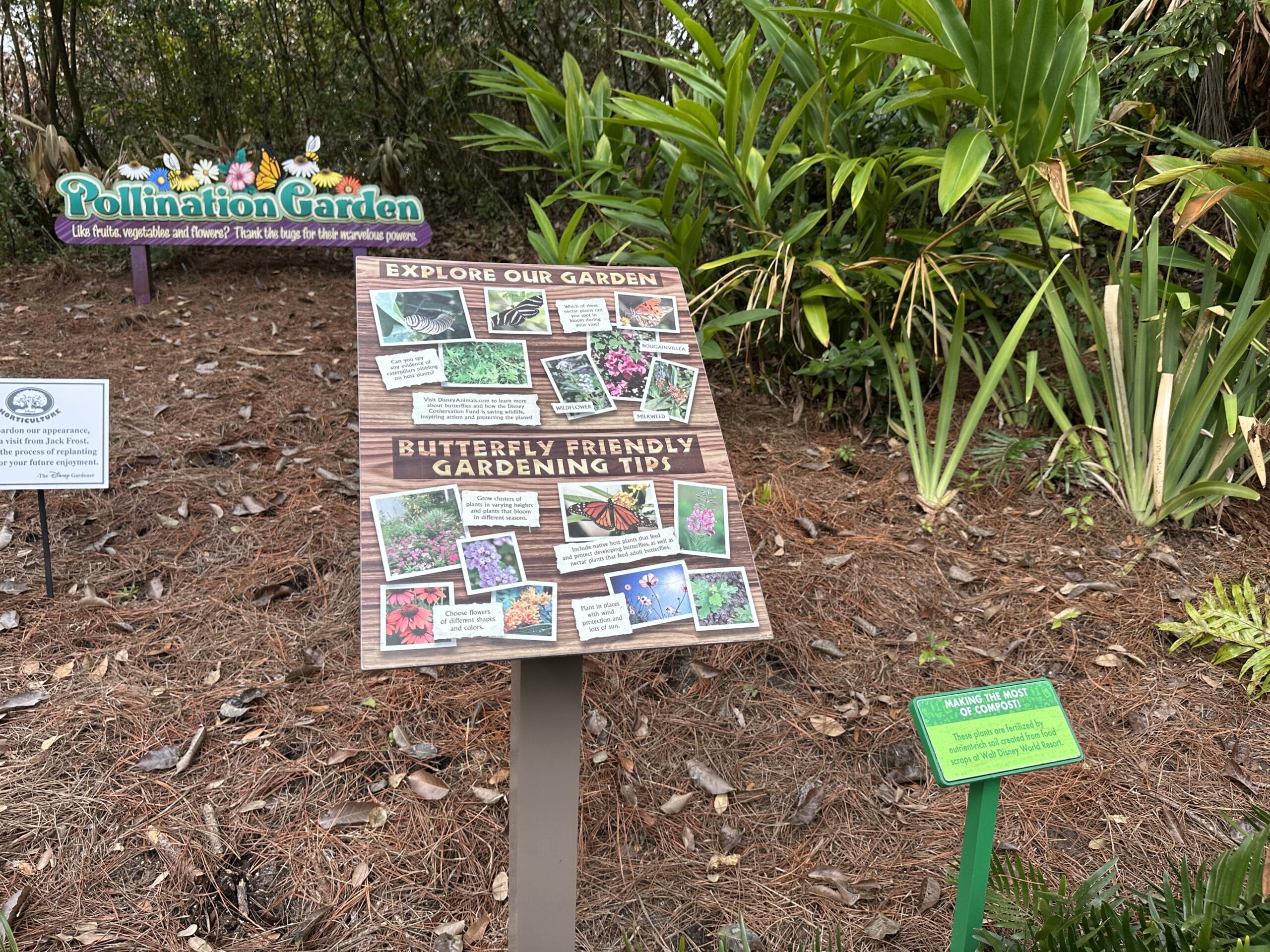
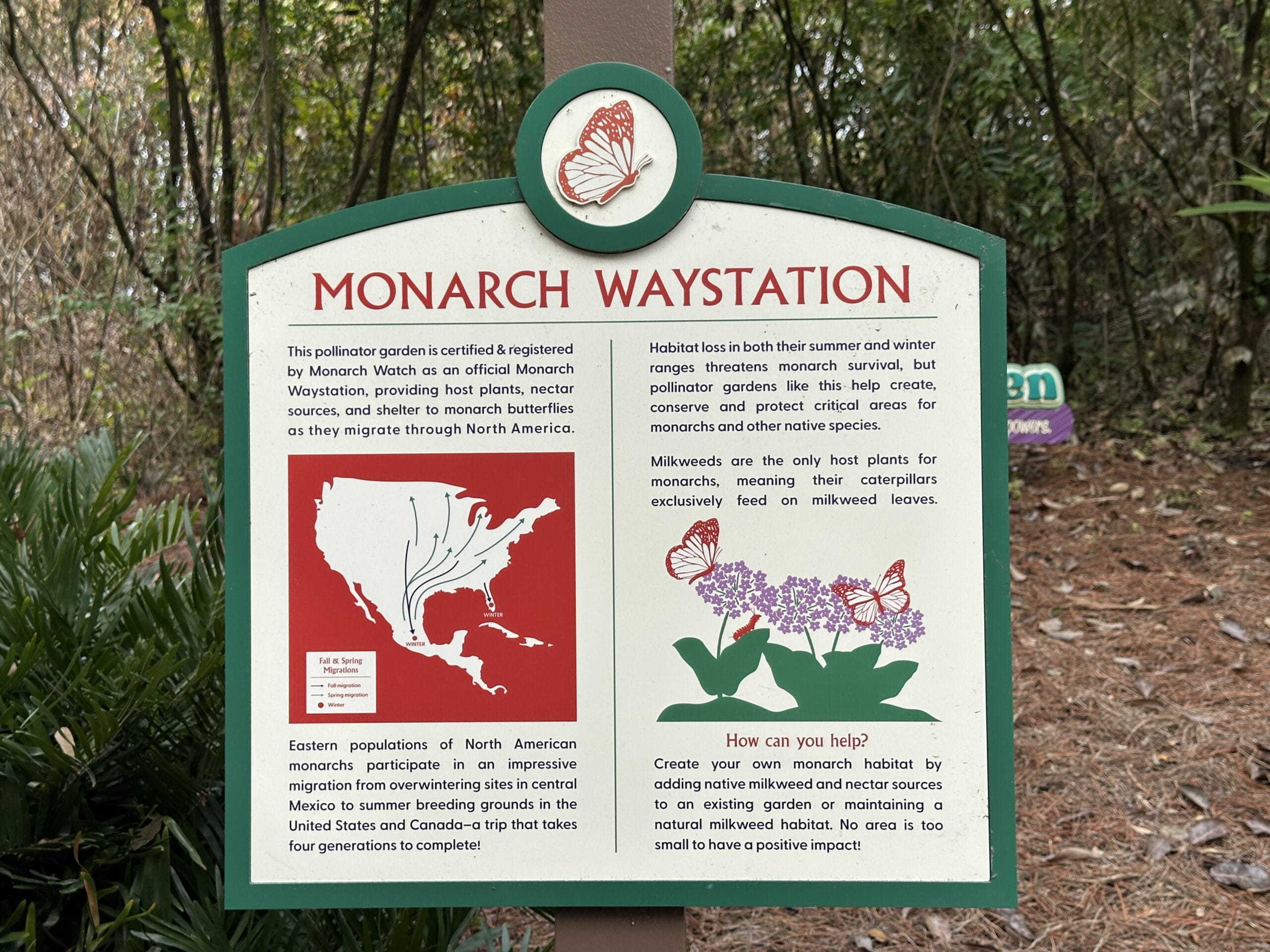
Right at the corner is a pollinator garden with information about butterflies. Signs teach the importance of pollination and how we can create our own butterfly habitats. There is usually a cast member stationed at a kiosk nearby to tell guests about butterflies.
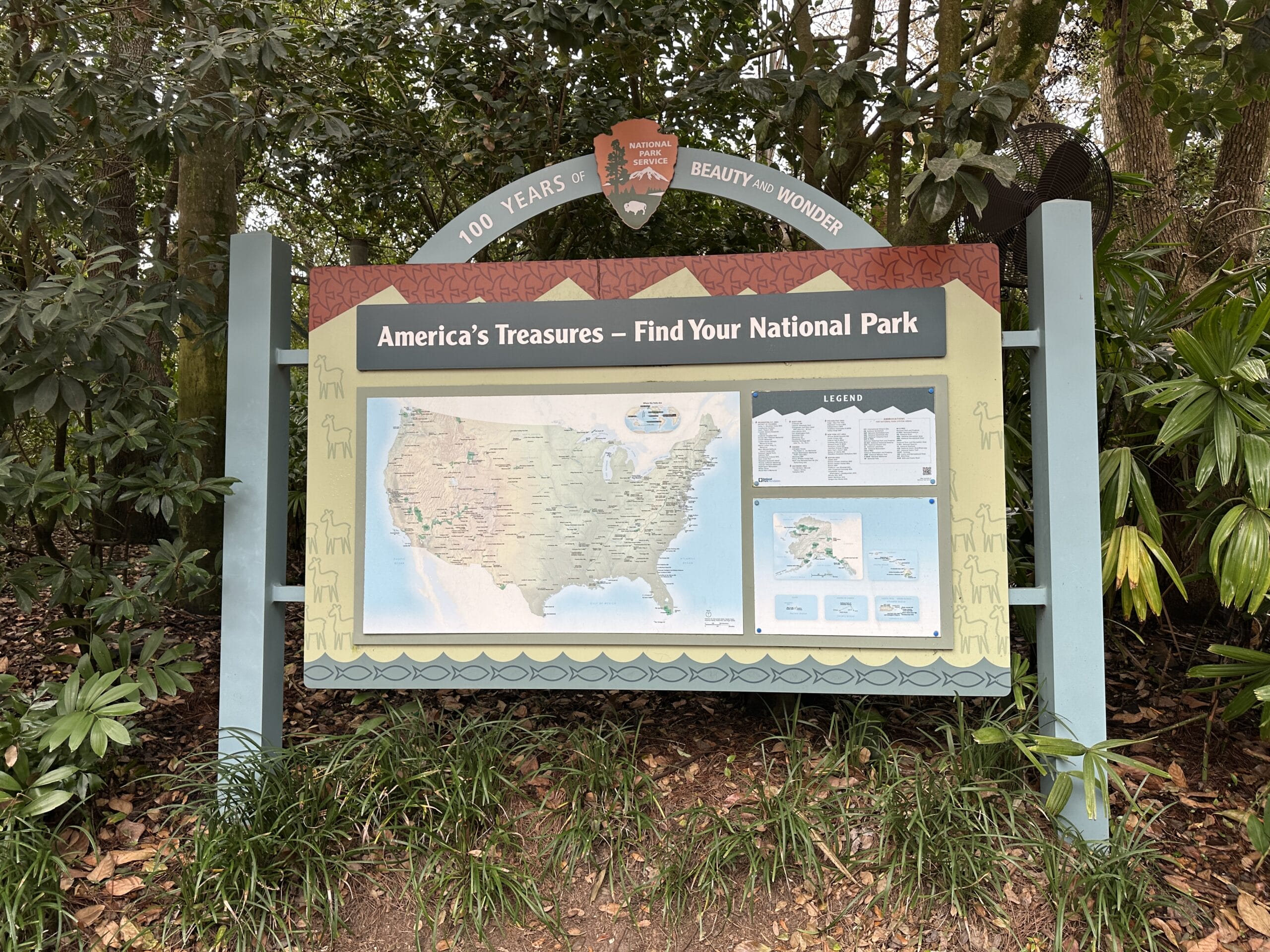
Added in 2016, this map of U.S. national parks was erected so guests can find their closest park.
Conservation Station
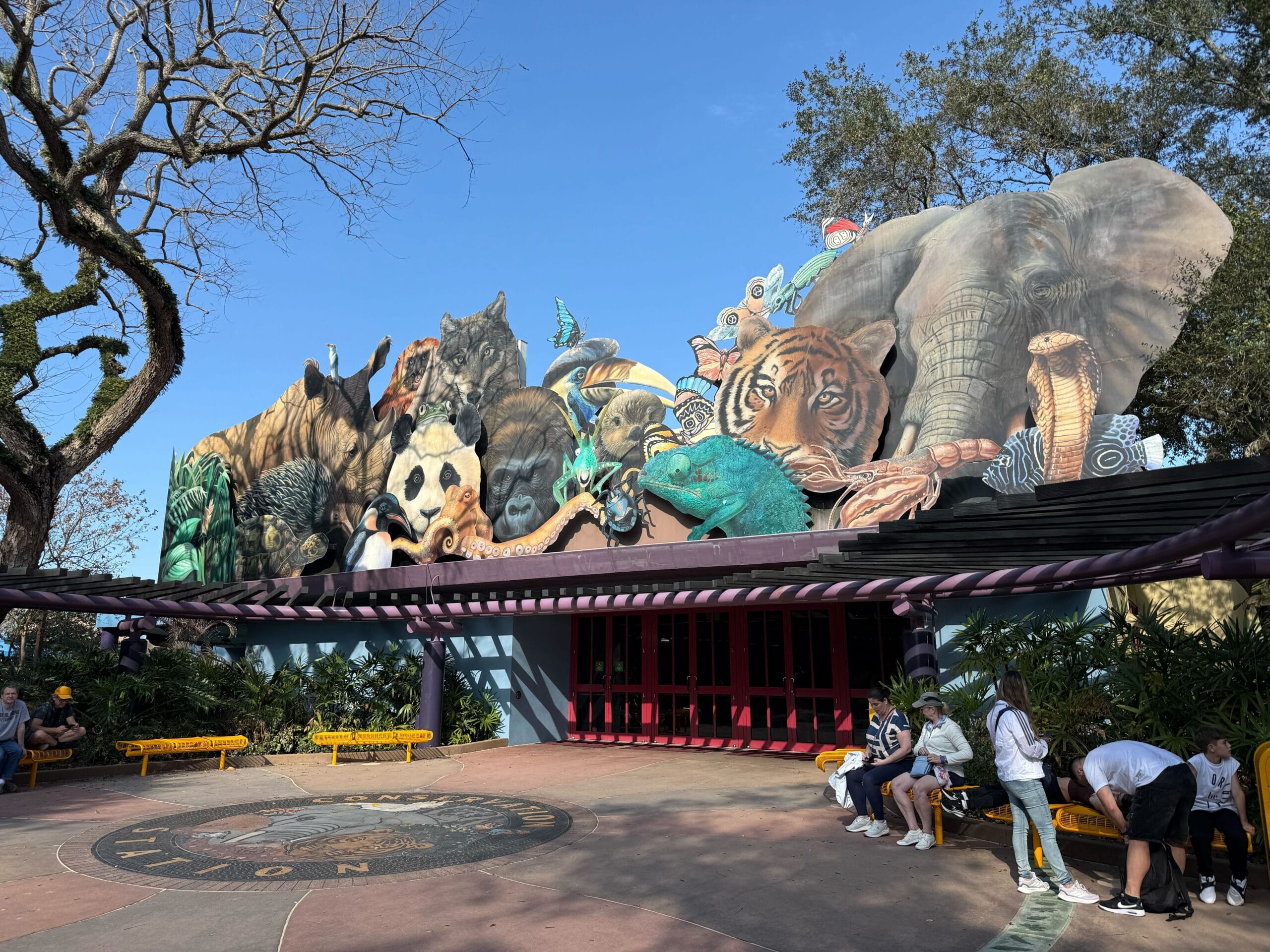
Above the Conservation Station entrance are large flats of animals like a tiger, panda, gorilla, elephant, wolf, snake, fish, and more.
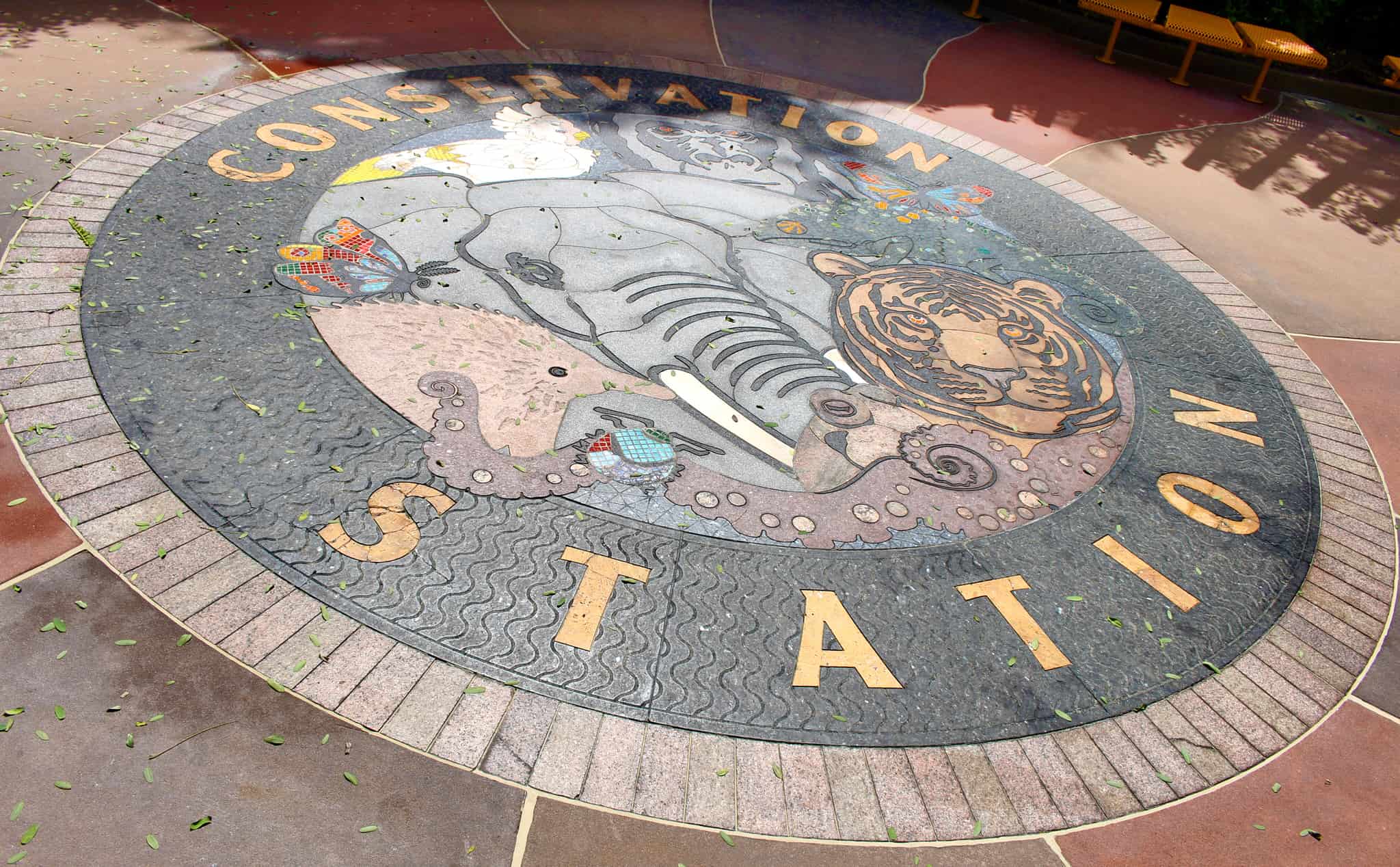
On the ground in front is a circular mosaic depicting some of the same animals.
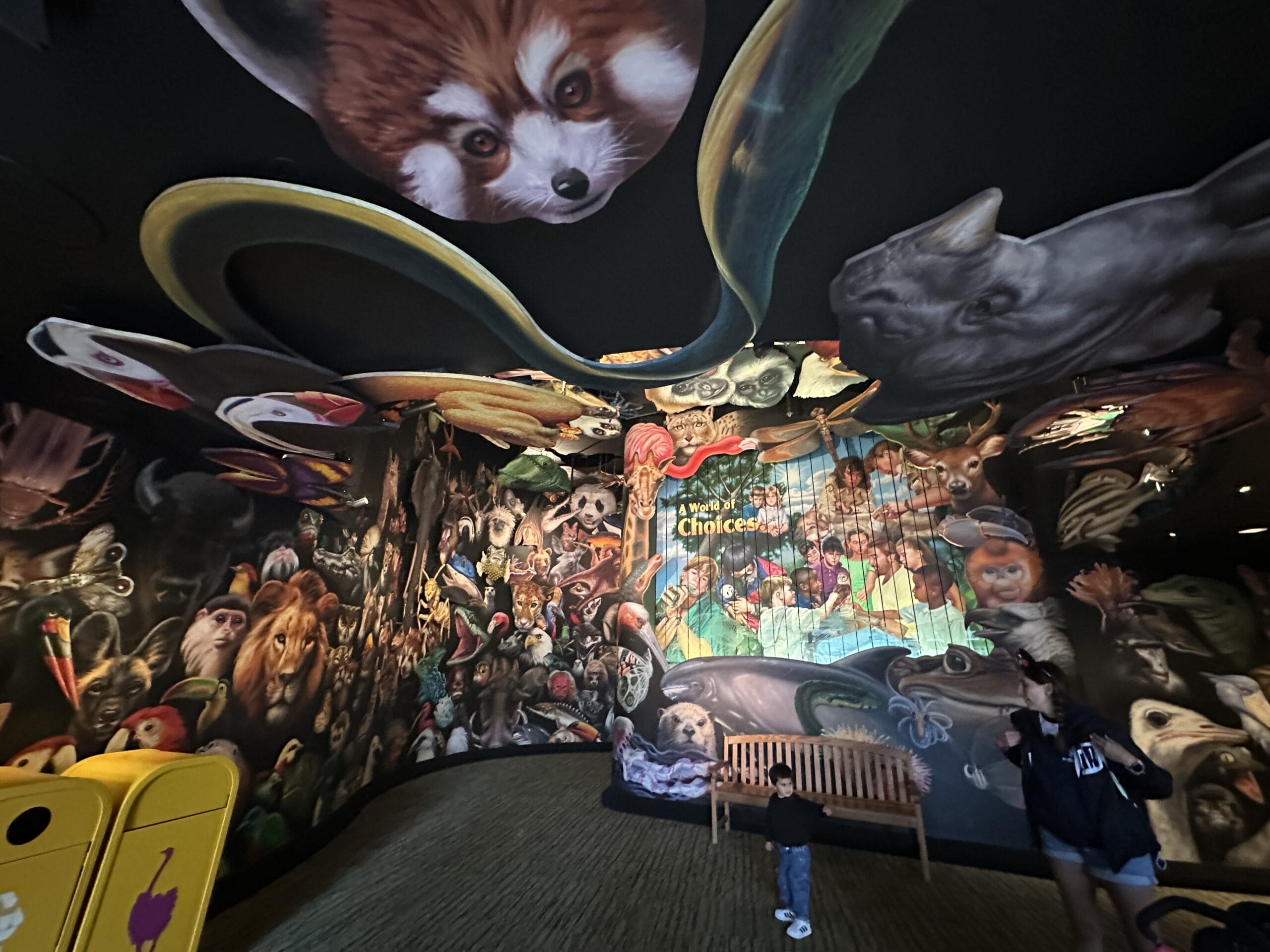
Through the front doors, guests find themselves surrounded by dark walls covered in animal portraits. Straight ahead is a moving mural — or at least, it used to move. It’s been stuck for a while on an image of children with animals and the text, “A world of choices…” It used to cycle through more images about conservation.
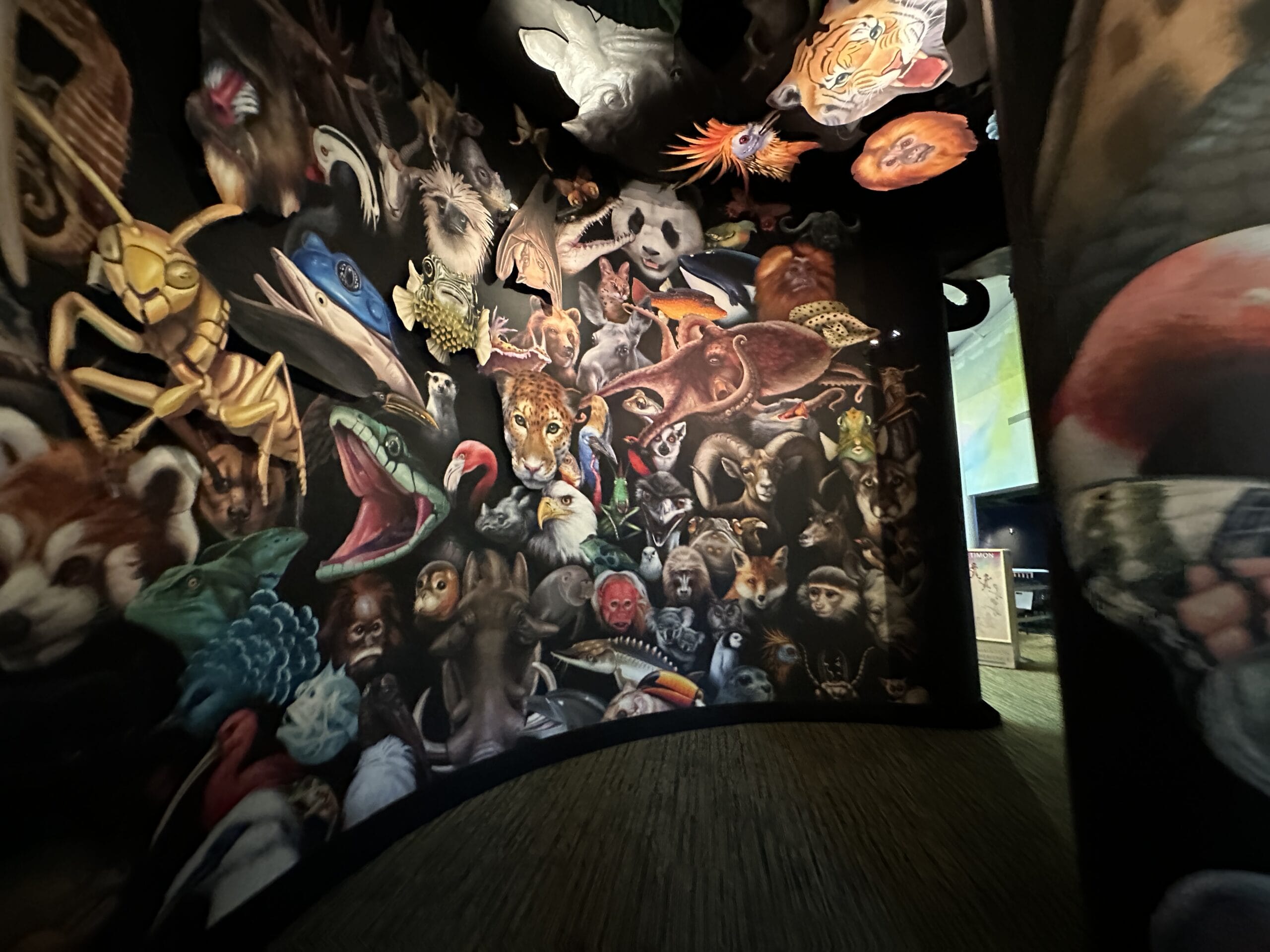
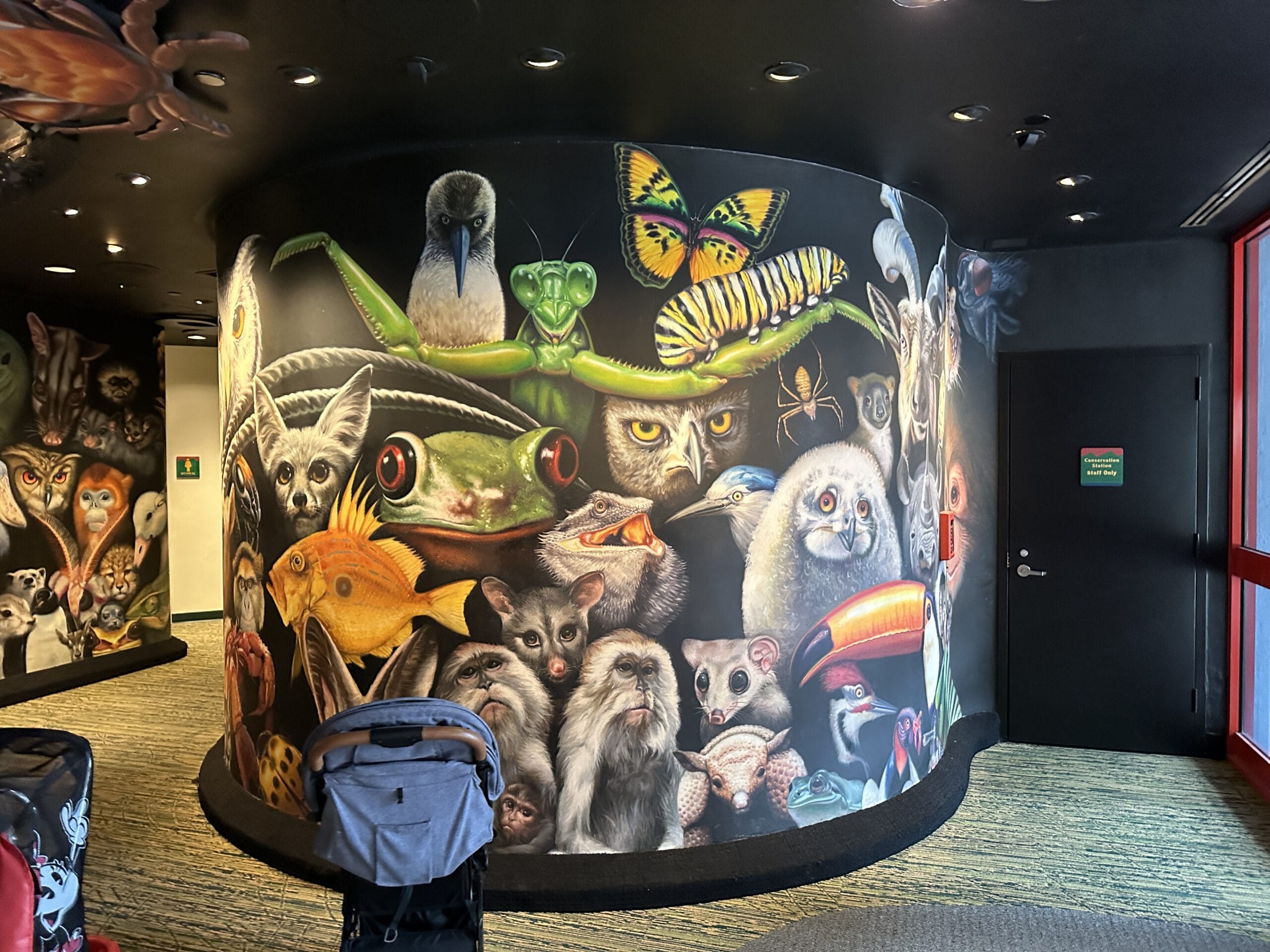
The animals on the walls include insects, lizards, snakes, big cats, birds, apes, and many more. This area is said to have the most hidden Mickeys anywhere. Can you spot any?
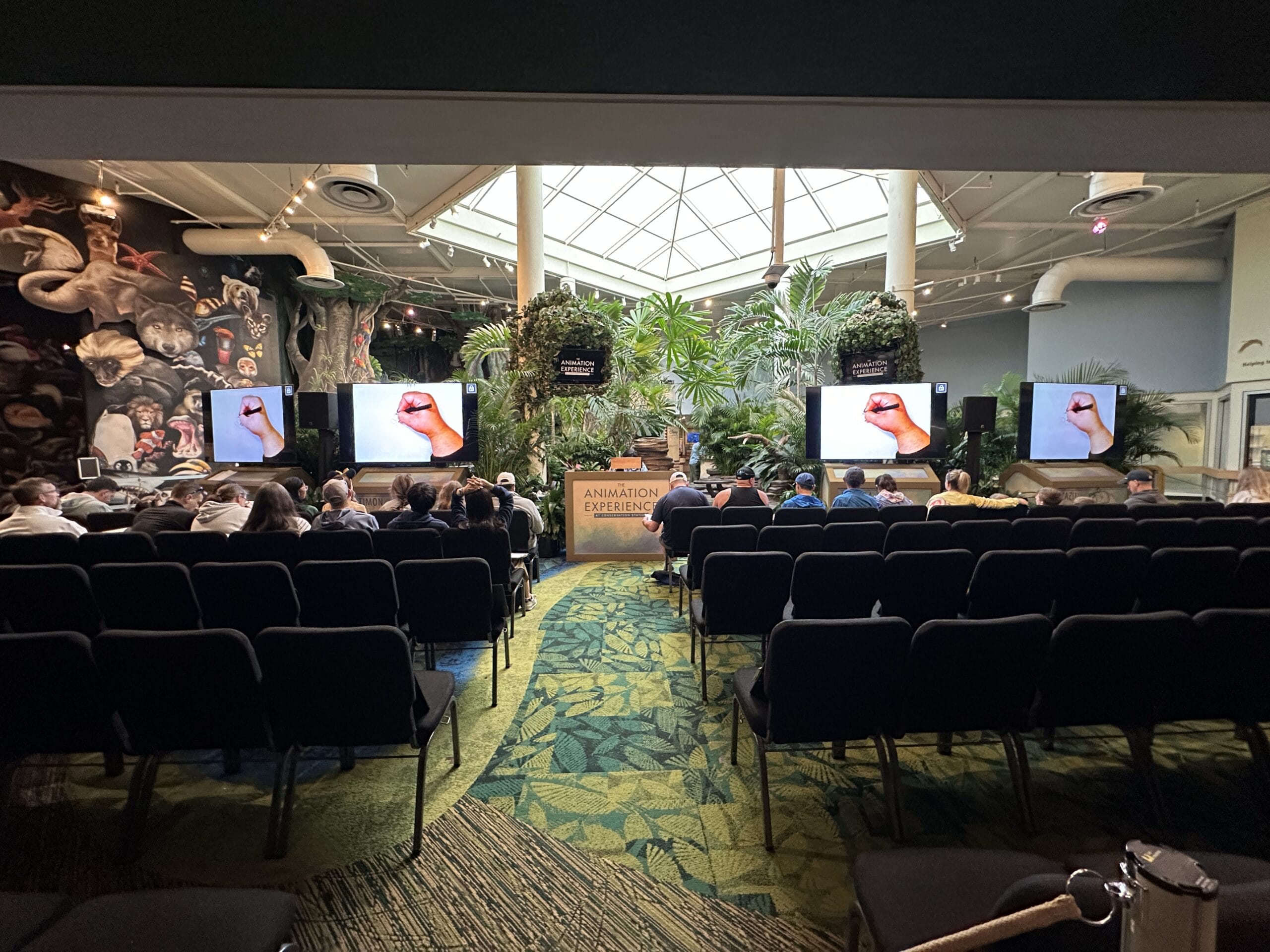
Down a hallway is the Animation Experience and the rest of the Conservation Station with leafy carpeting. We’ll circle back to the Animation Experience.
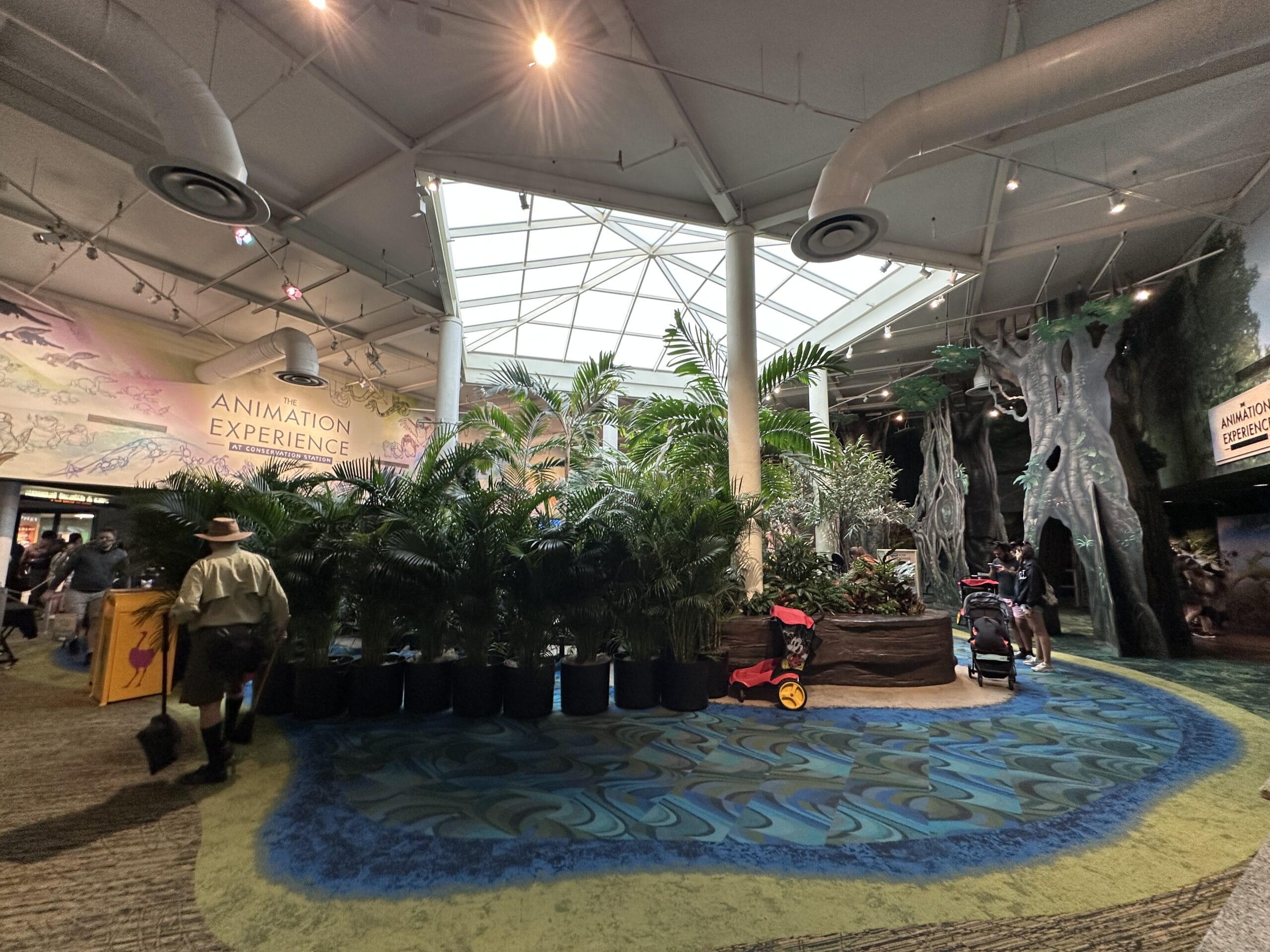
In the center of the space is foliage and a pond under a skylight. The carpeting also transitions to look like a body of water. Planters blocked The Animation Experience from the rest of Conservation Station.
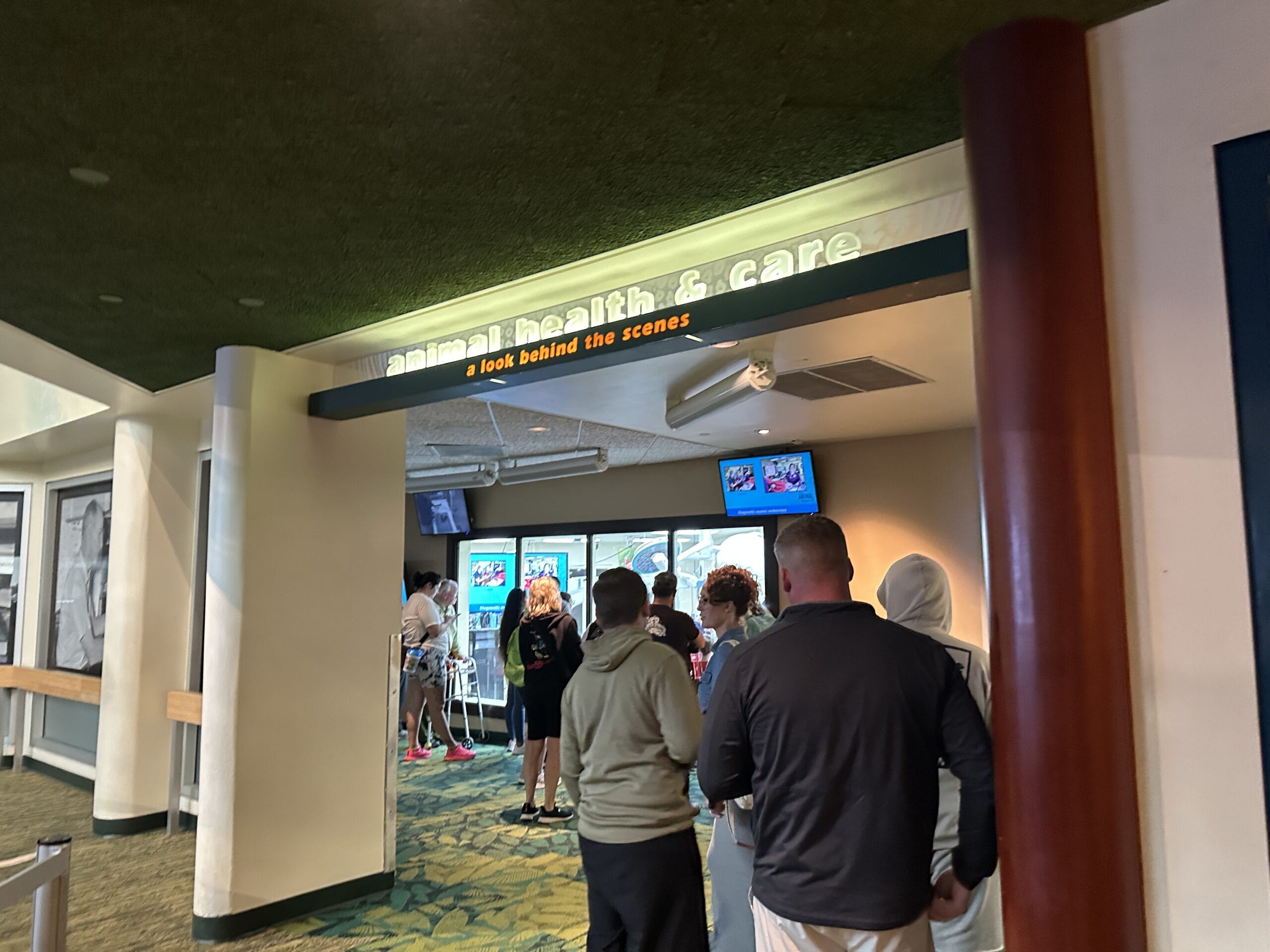
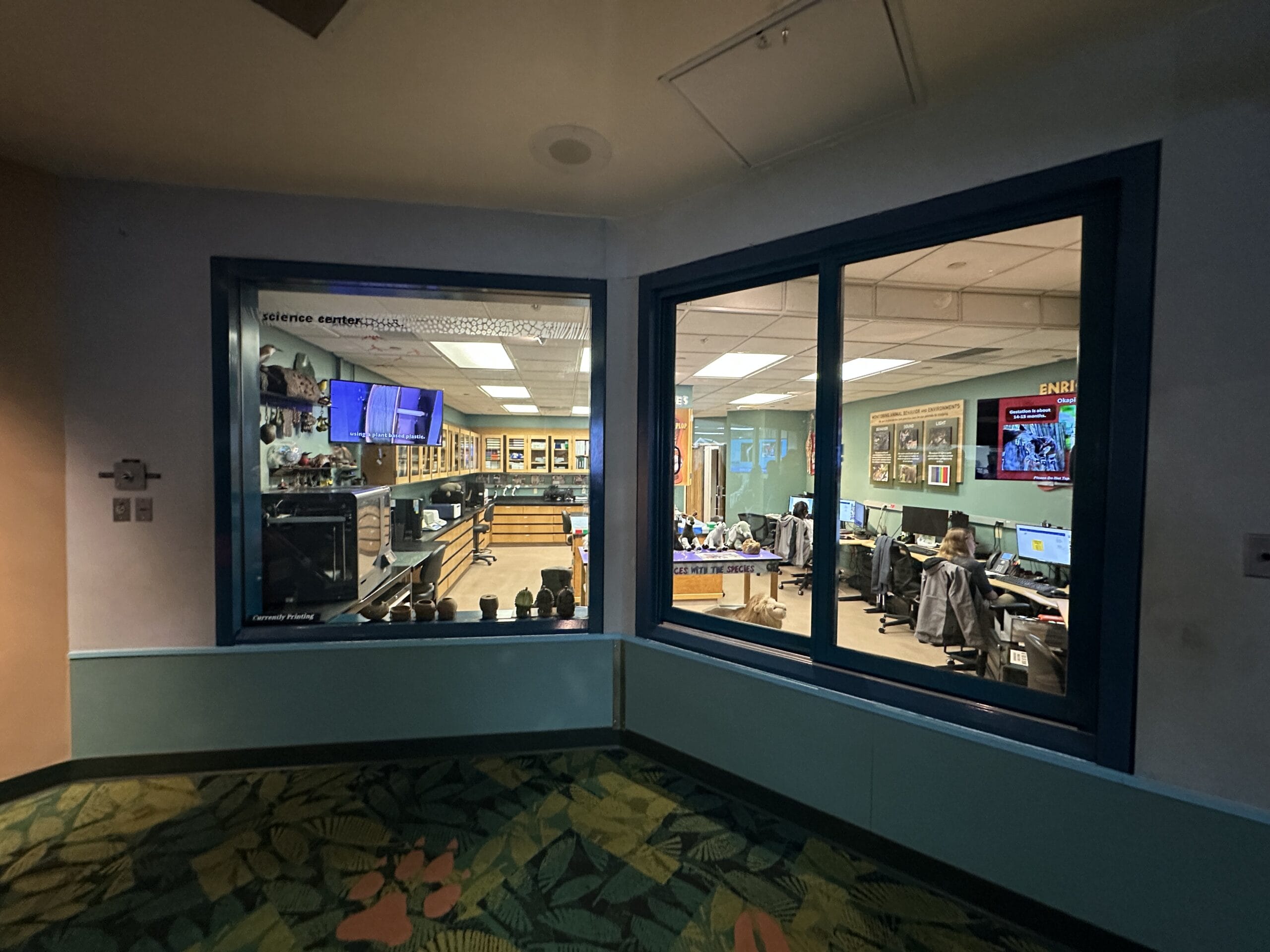
The carpeting has a leafy pattern. Head to the right for a behind-the-scenes look at Animal Health & Care. In this hall, guests can look through windows at various facilities and animals. First up is a research lab with computers.
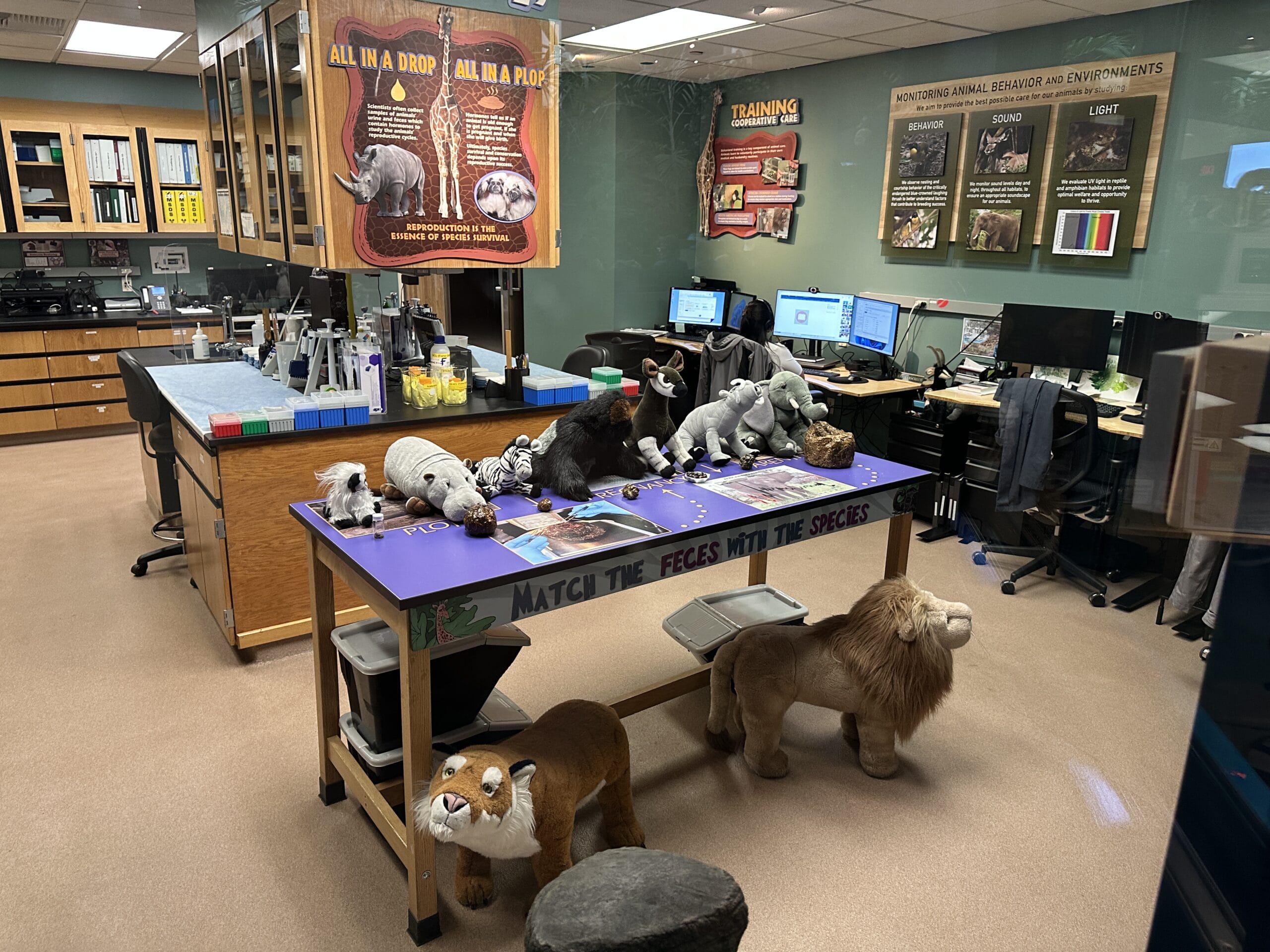
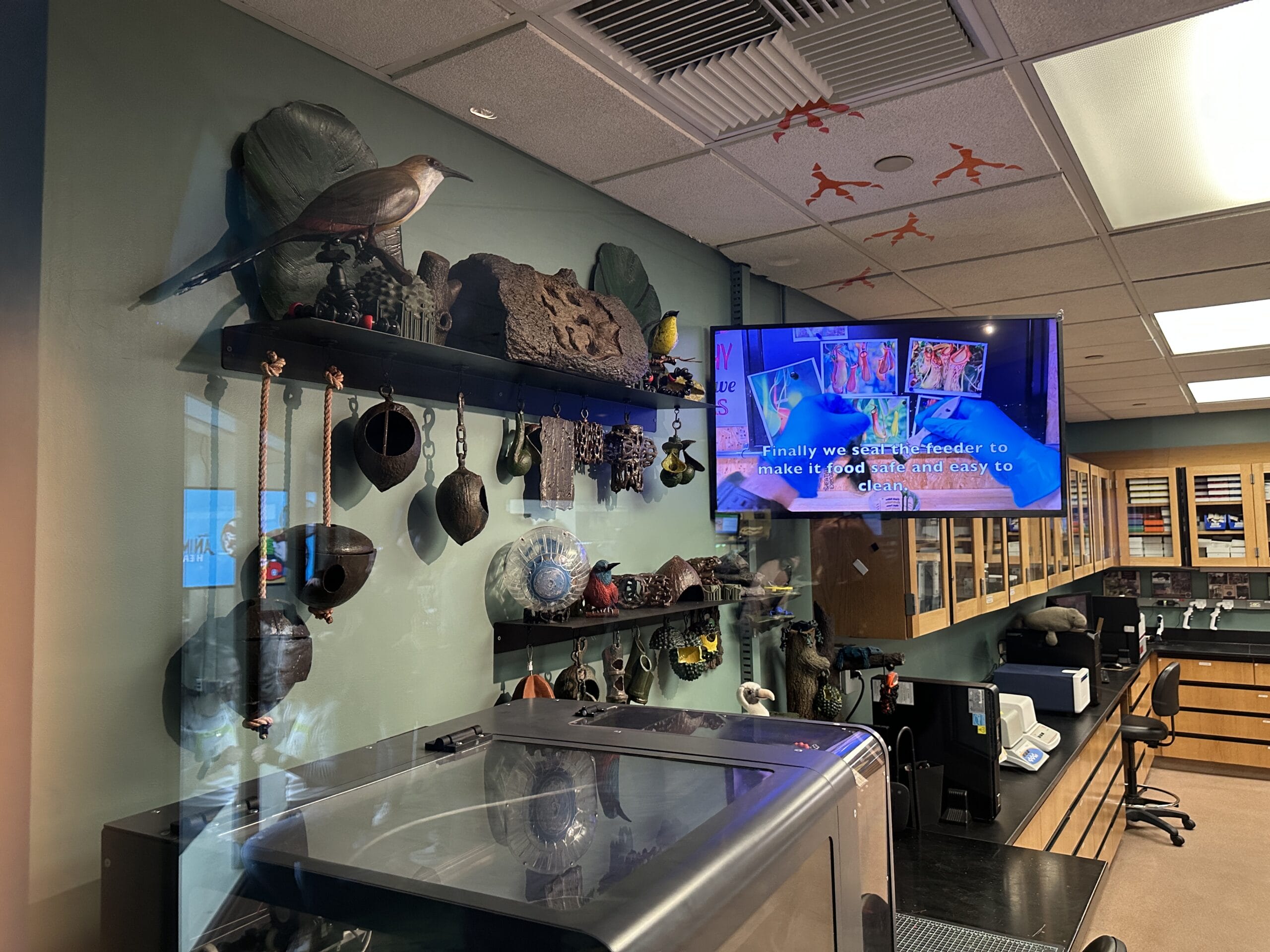
In here, guests can sometimes see researchers. A screen facing the windows displays various information about veterinary procedures at Disney’s Animal Kingdom. There are informational signs and figures for guests to look at.
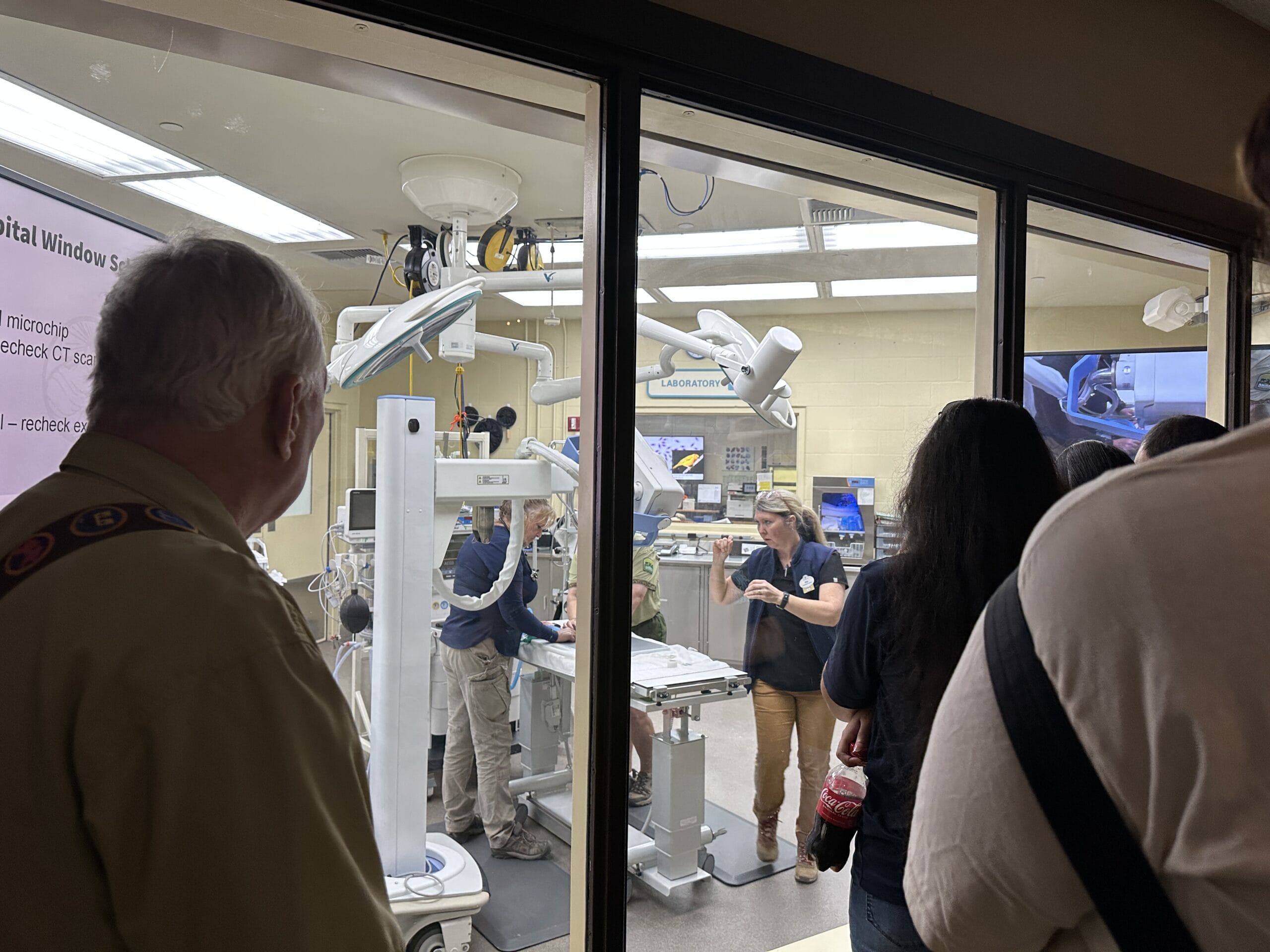
At the Veterinary Treatment Room, guests can sometimes watch procedures and check-ups. Times are displayed on a screen. But even when nothing is going on, guests can look at the veterinary equipment inside.
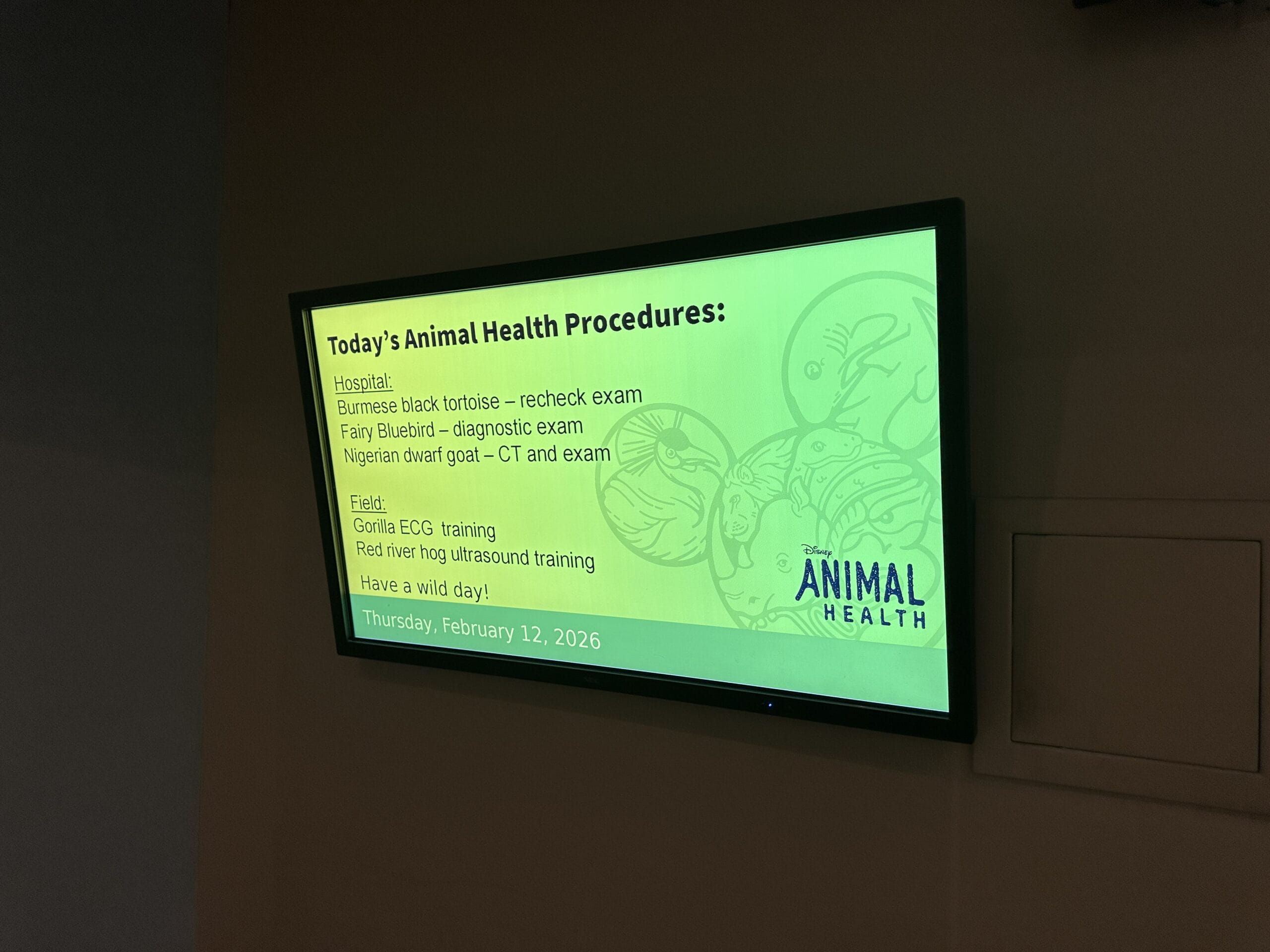
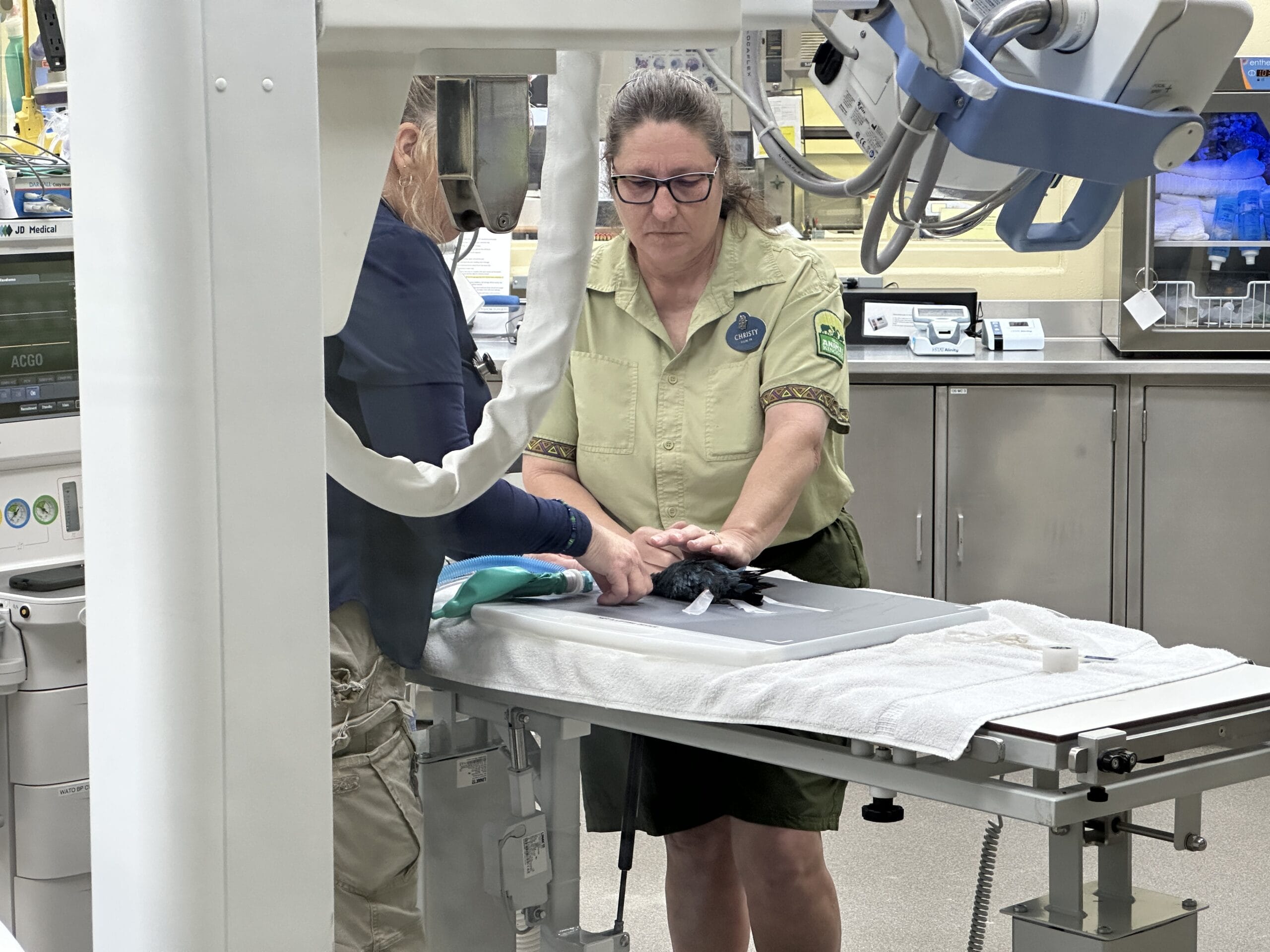
On this particular day, some minor recheck, diagnostic, and CT exams were on view for guests. We saw a fairy bluebird getting a diagnostic exam.
Disney said the Veterinary Treatment Room and other “favorites” of Conservation Station will remain following the Bluey refurbishment.
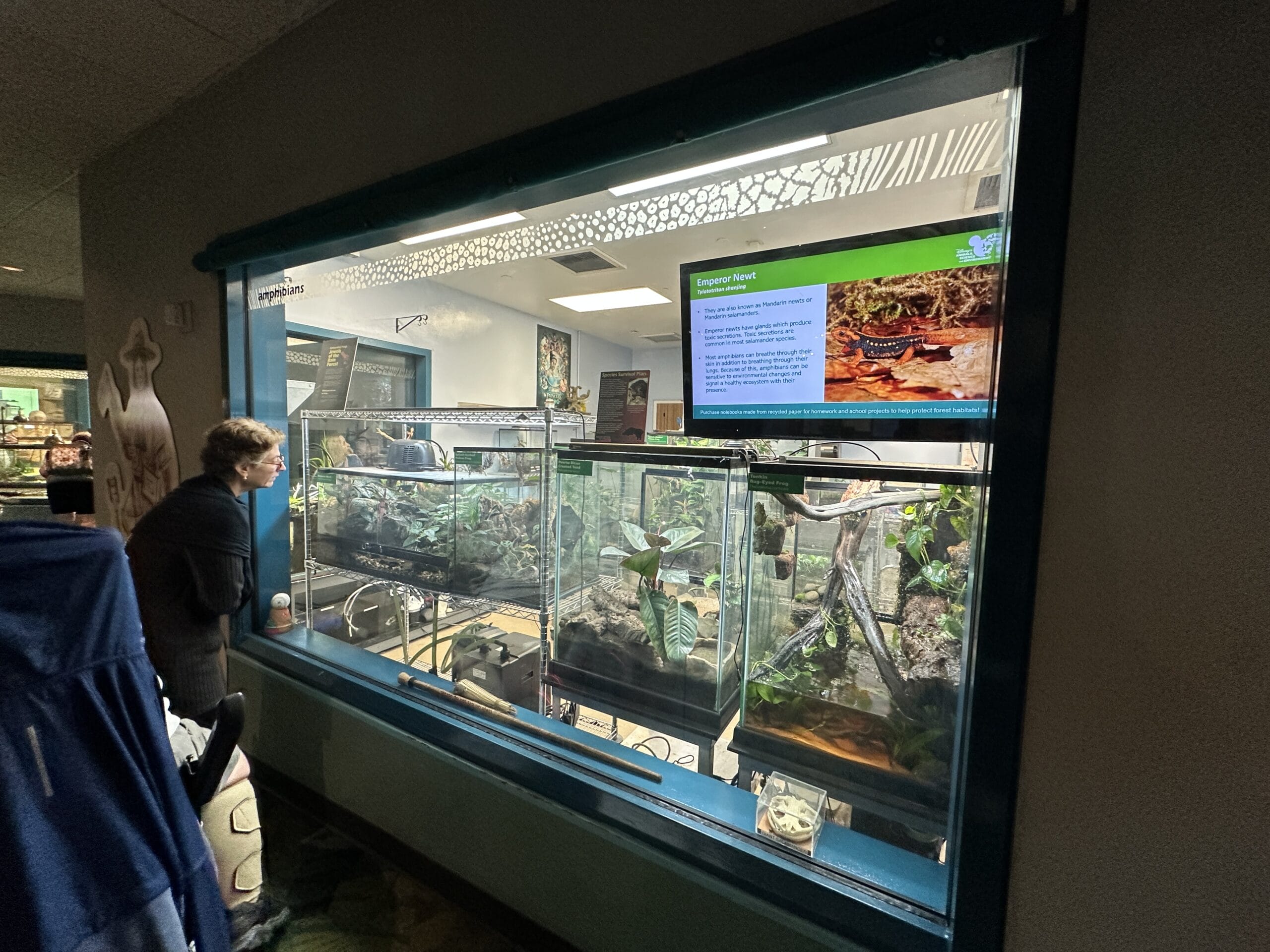
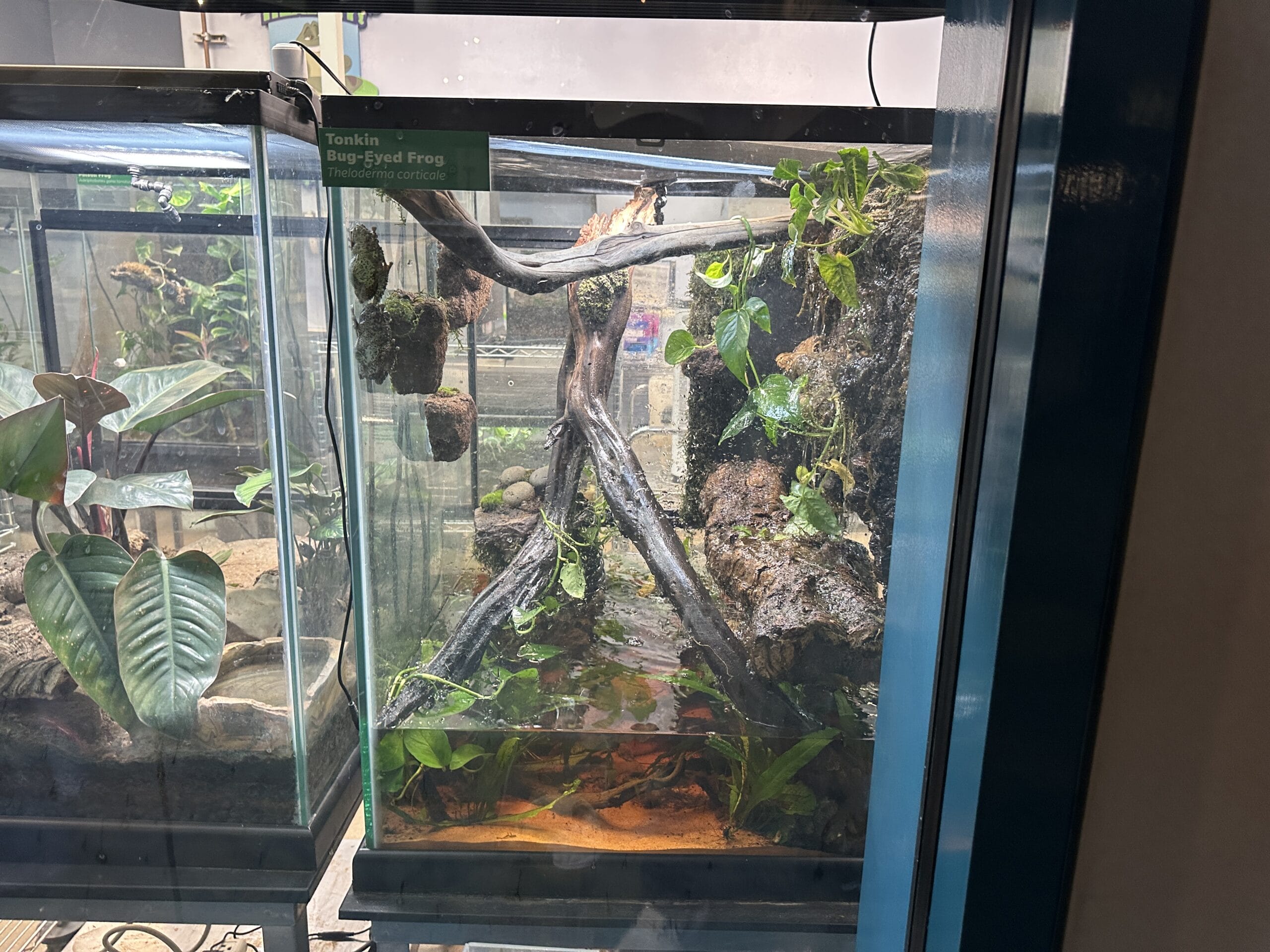
The bulk of windows look in on rooms holding small animals like amphibians, reptiles, and invertebrates in their individual enclosures.
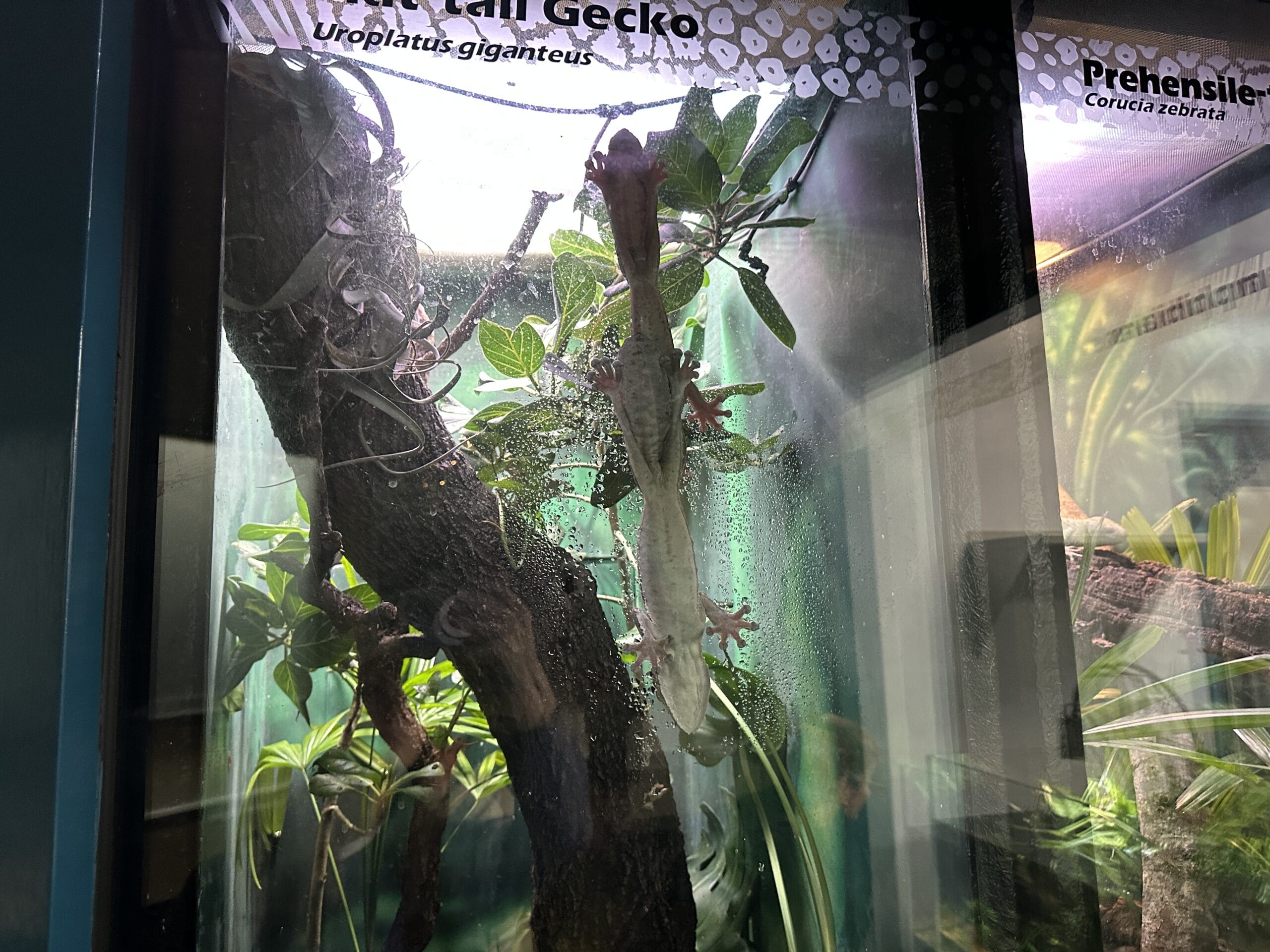
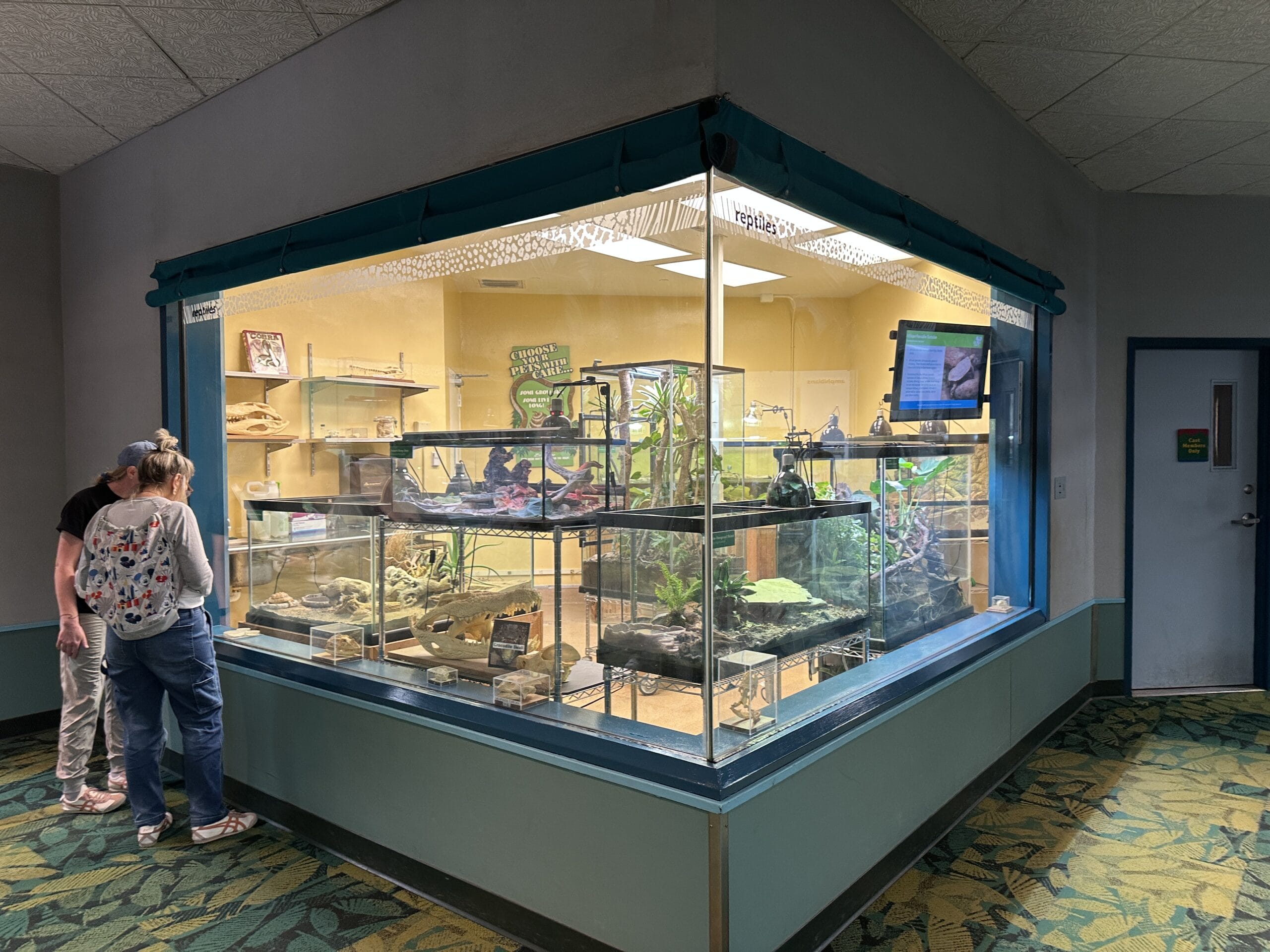
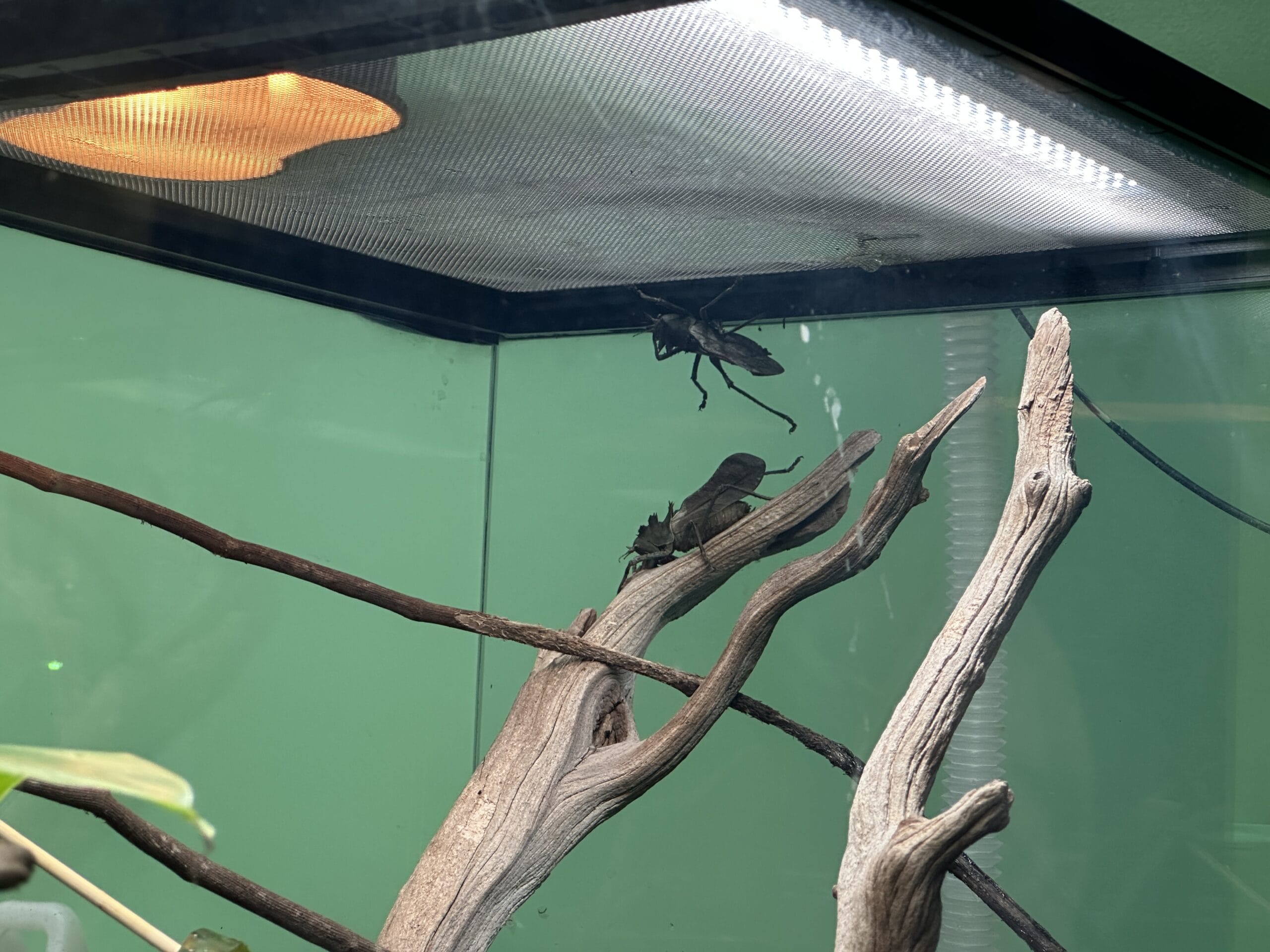
Each glass case is labeled and screens above show information about some of the species.
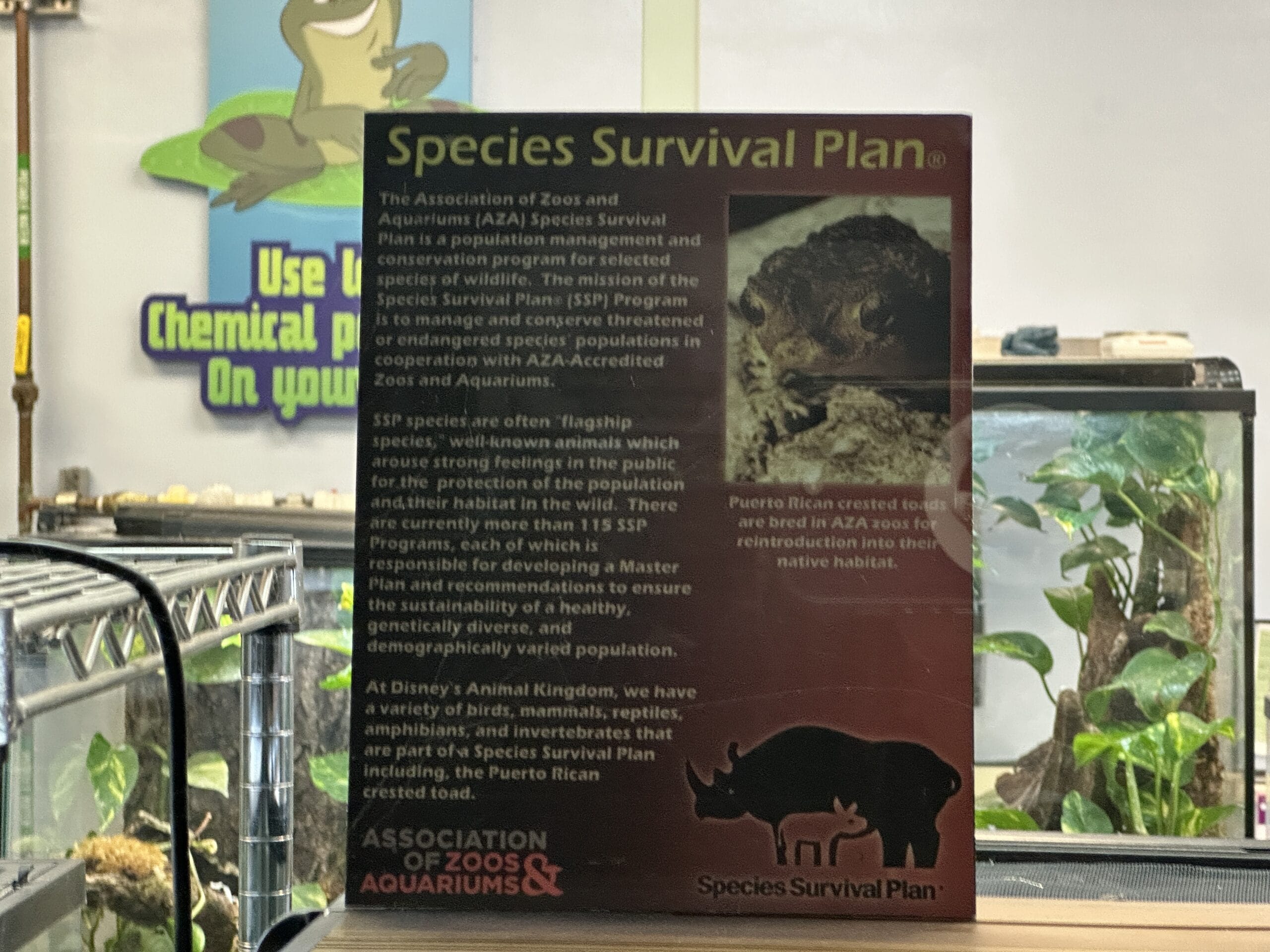
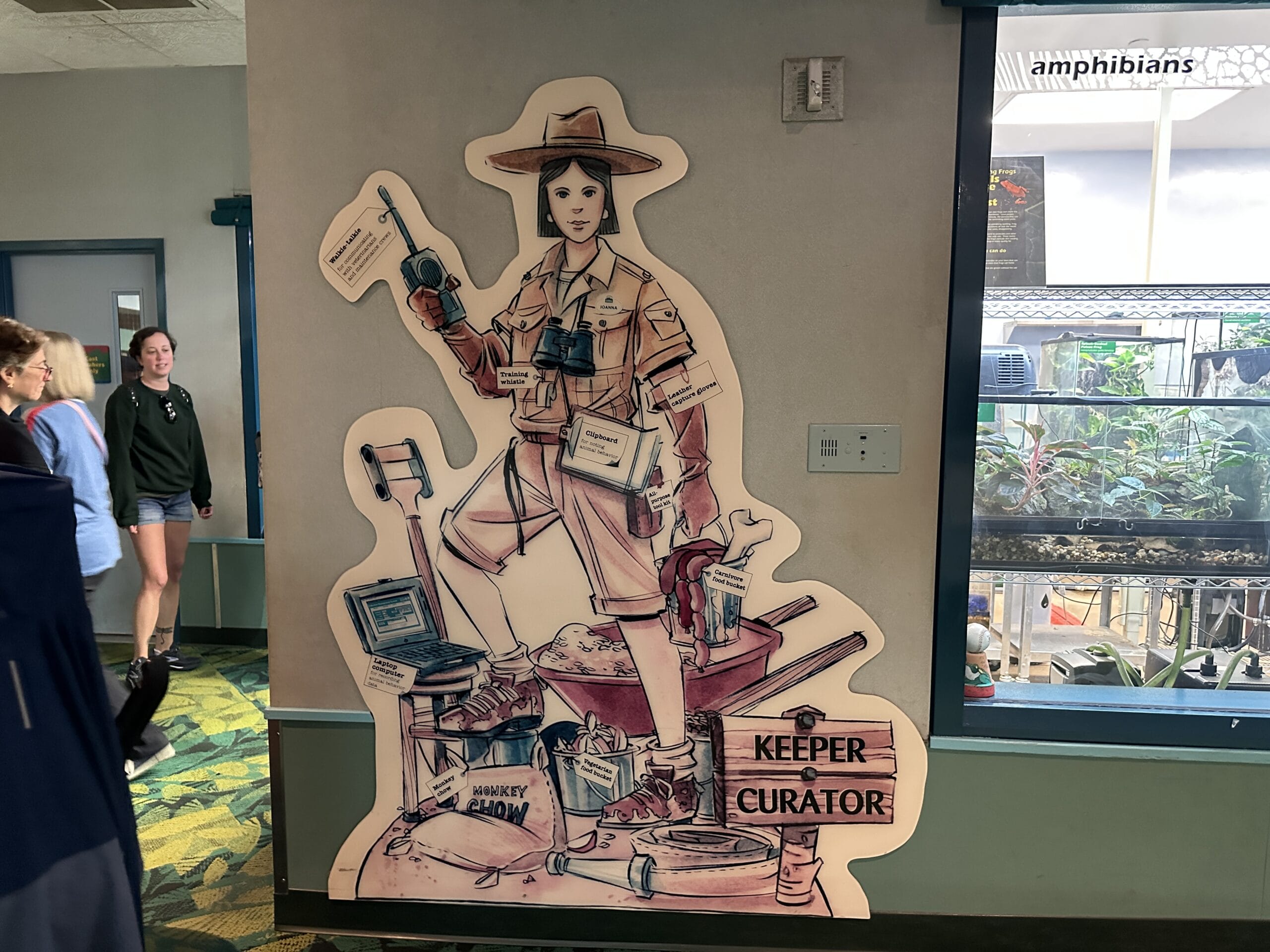
Cast members and infographics are also on hand to tell guests about the animals and help with Wilderness Explorers quests.
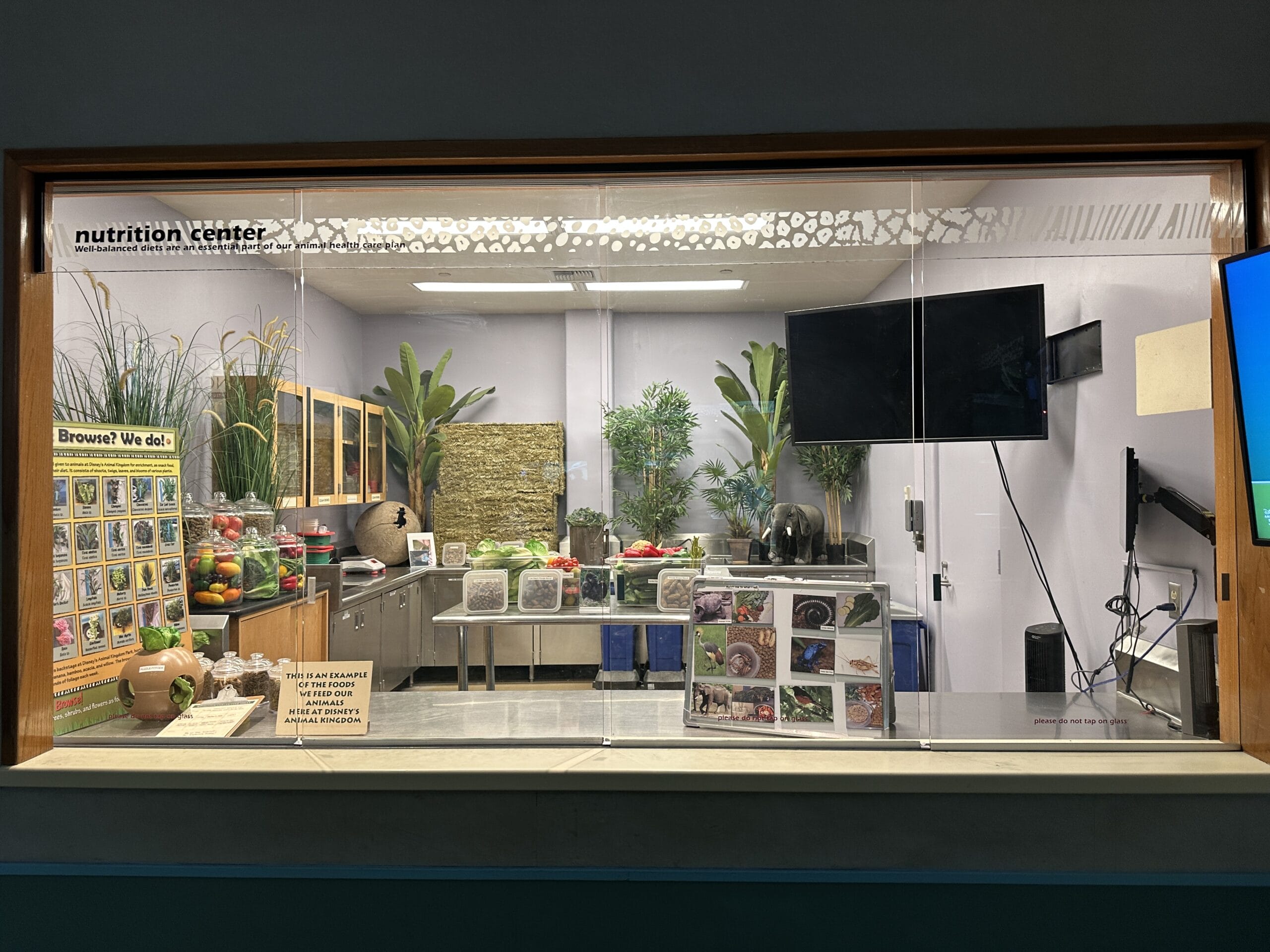
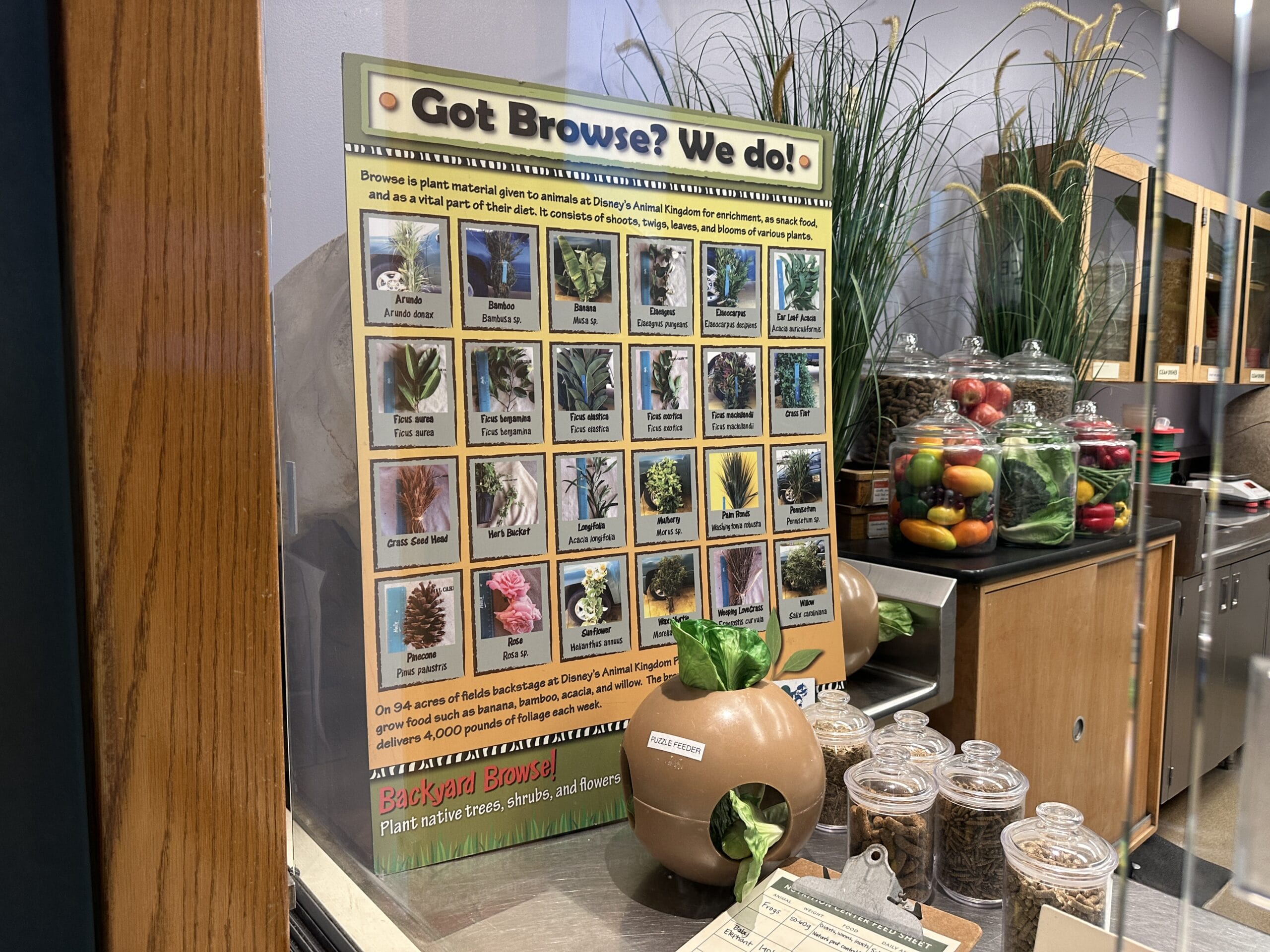
At the end of the row of windows is the Nutrition Center. Here, experts prepare meals for the animal residents.
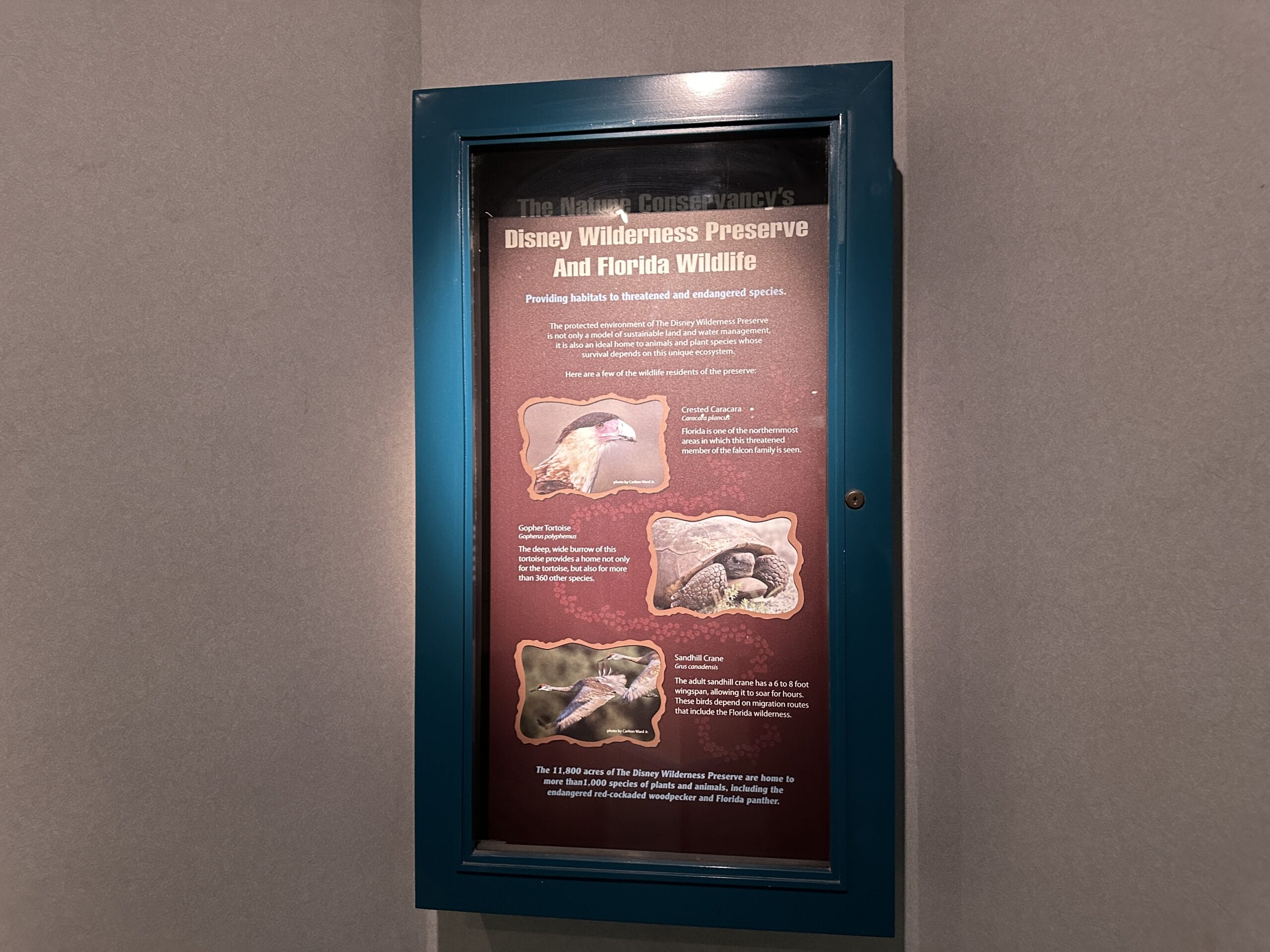
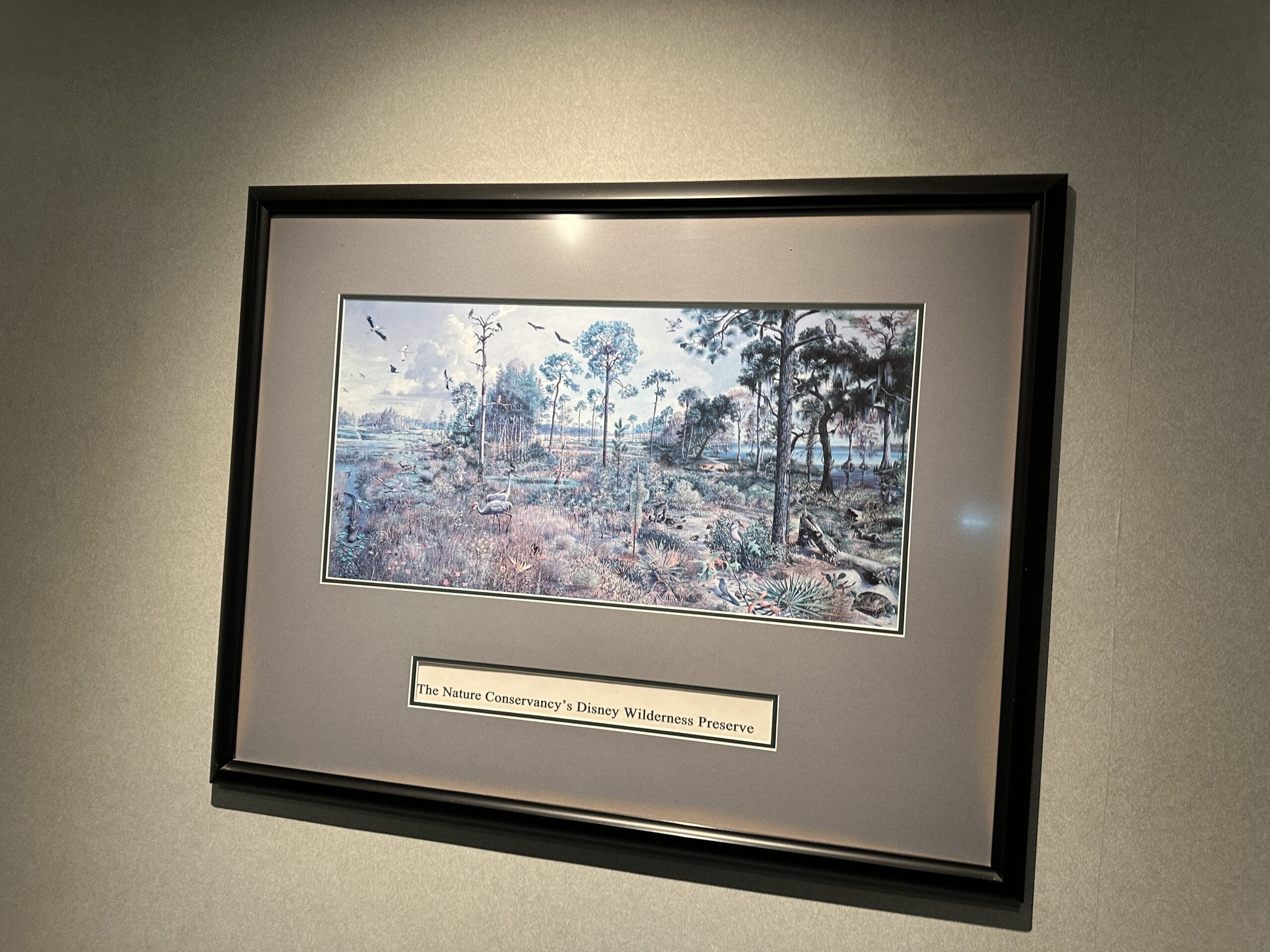
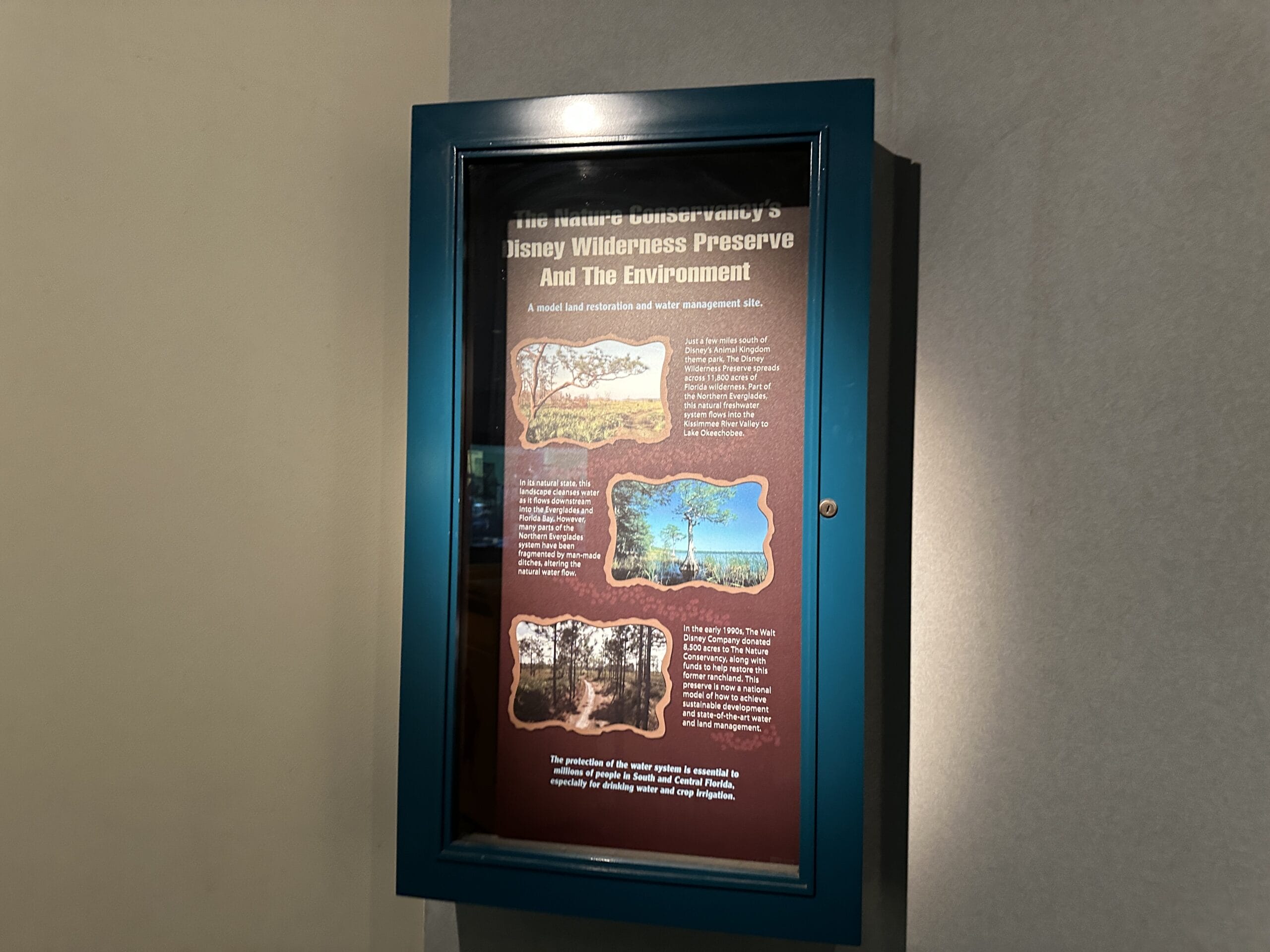
On a ramp in the corner is information about The Nature Conservancy’s Disney Wilderness Preserve on a pair of infographics, along with artwork. The preserve in Kissimmee, Florida is not associated with Disney but the company provided funds for its restoration and wildlife monitoring, and continues to partner on projects.
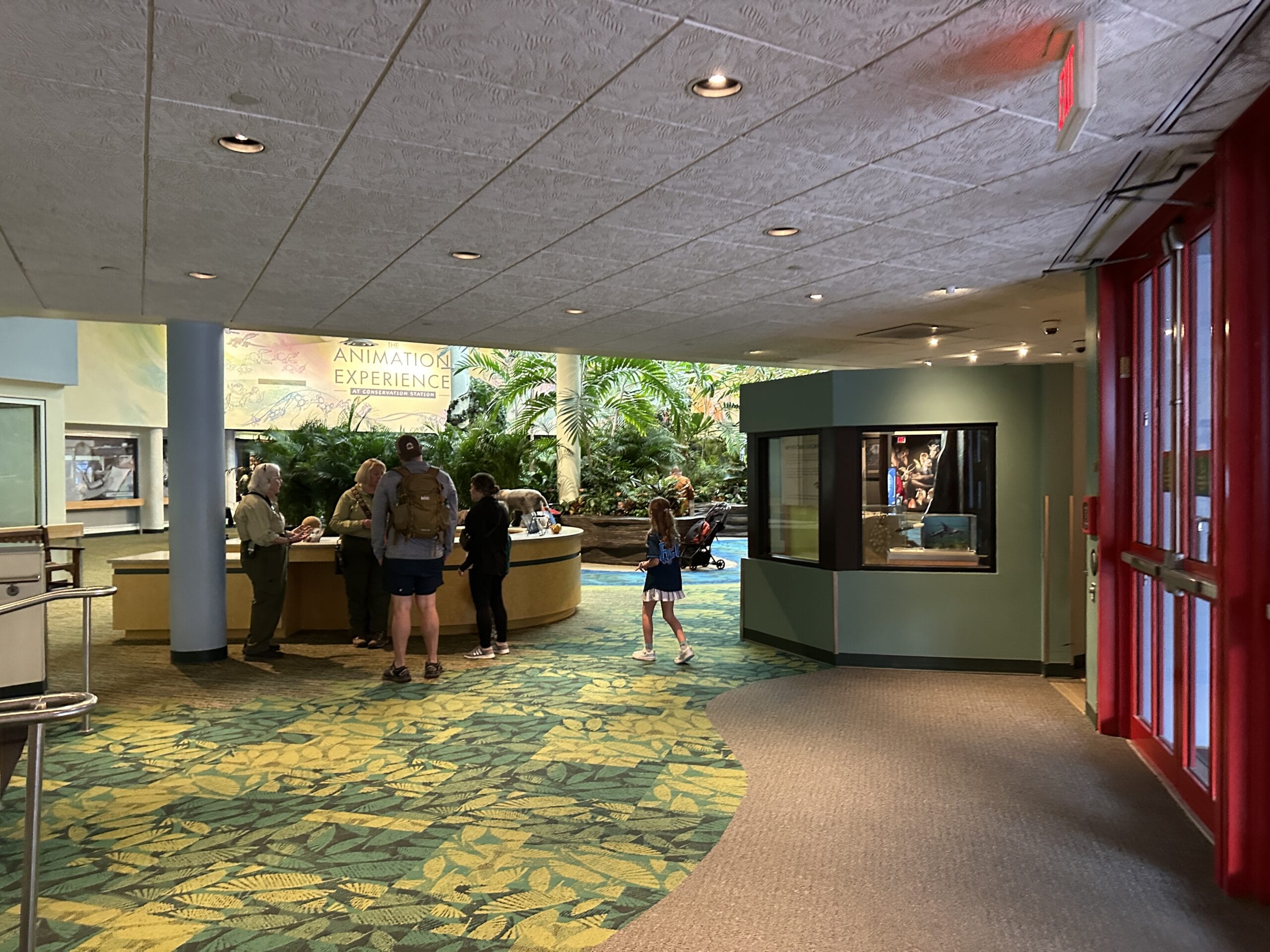
The next section, by another set of exit doors, is the Science Center. There’s a desk where cast members can help guests.
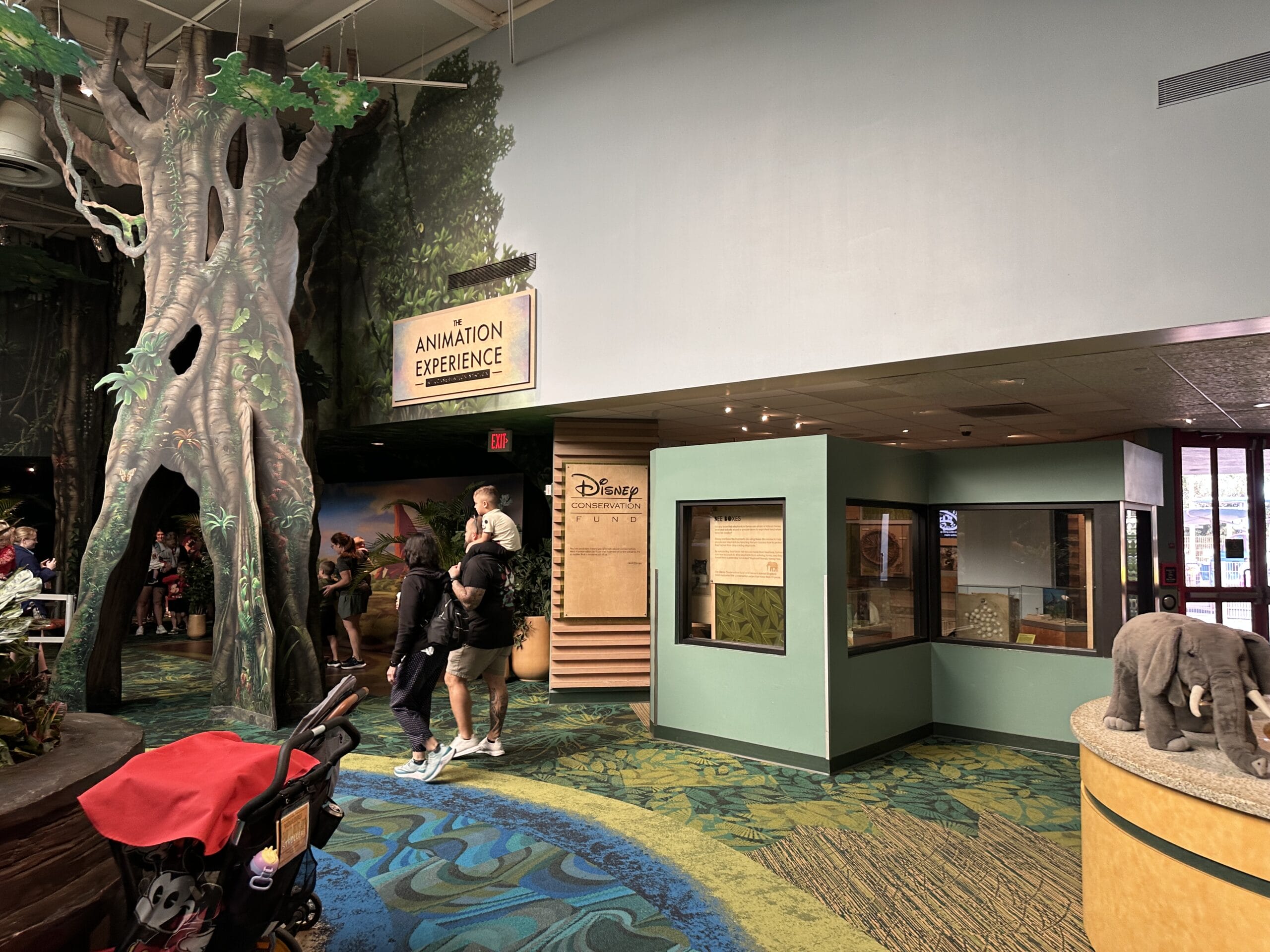
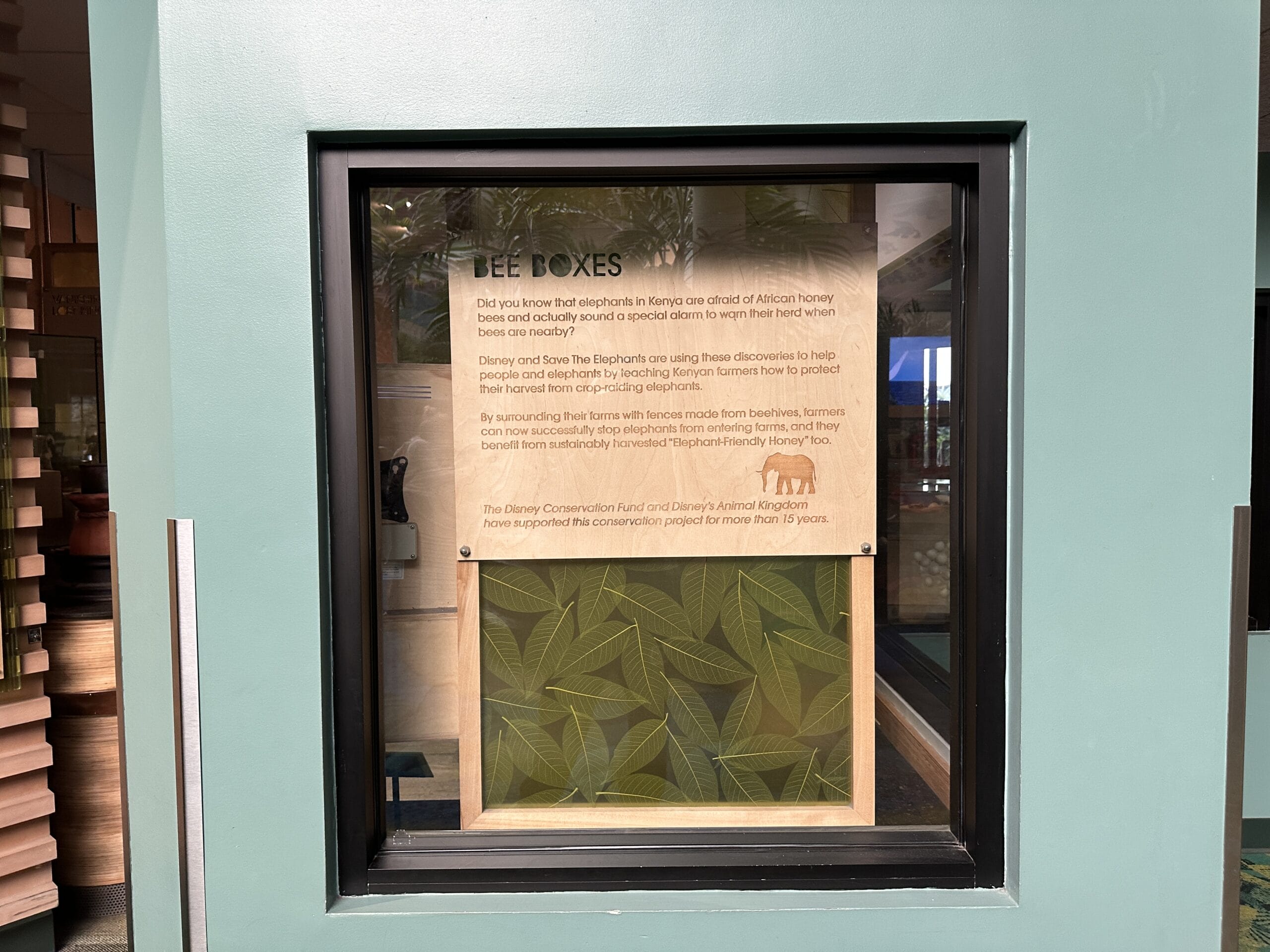
These displays teach about protecting the environment and how scientists use research to help protect wildlife. At the entrance of the exhibit is an explanation of how bee boxes were used to scare elephants away from Kenyan farms, keeping the elephants and farmers safer.
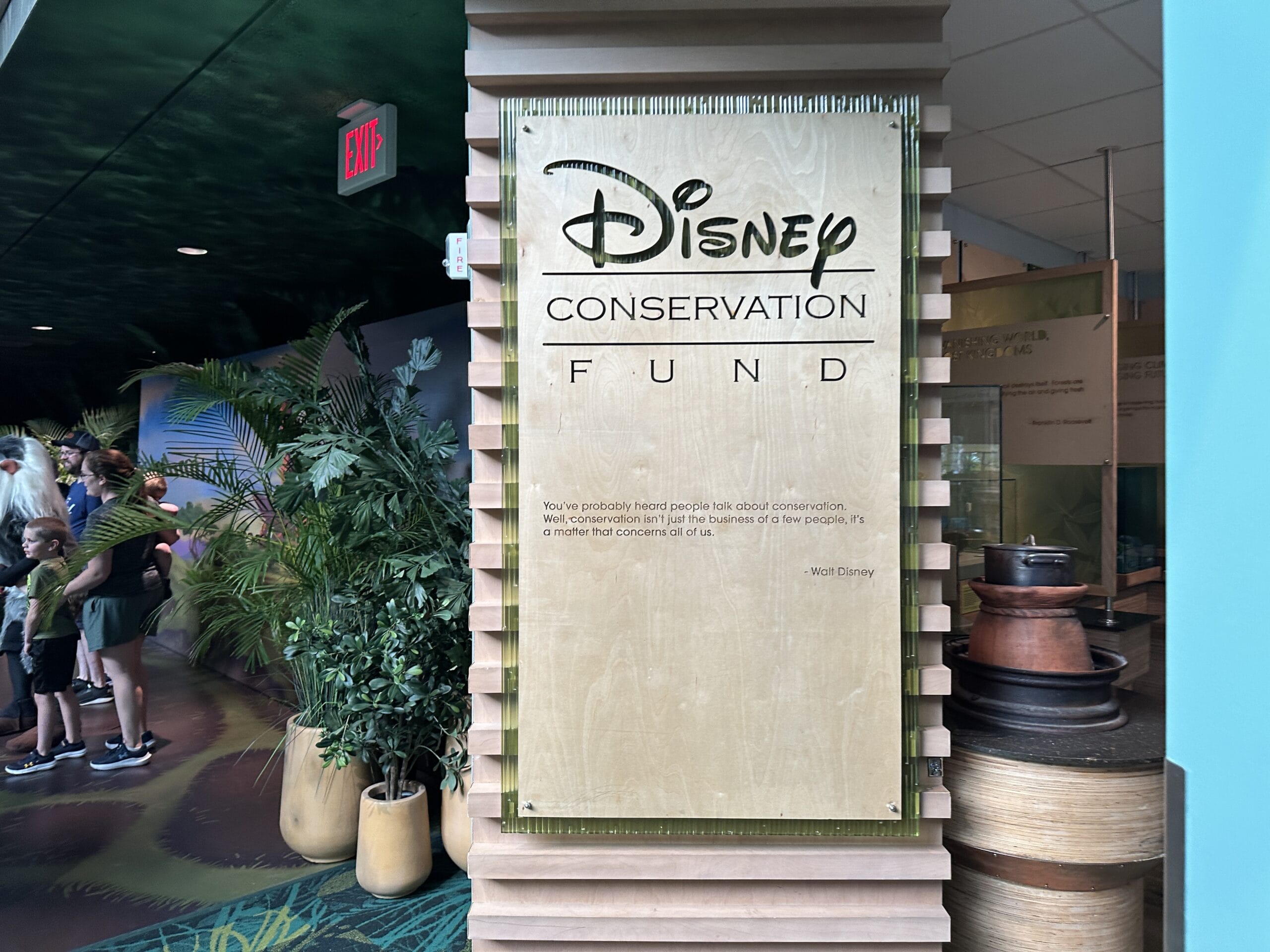
A large Disney Conservation Fund sign has a quote from Walt Disney: “You’ve probably heard people talk about conservation. Well, conservation isn’t just the business of a few people, it’s a matter that concerns all of us.”
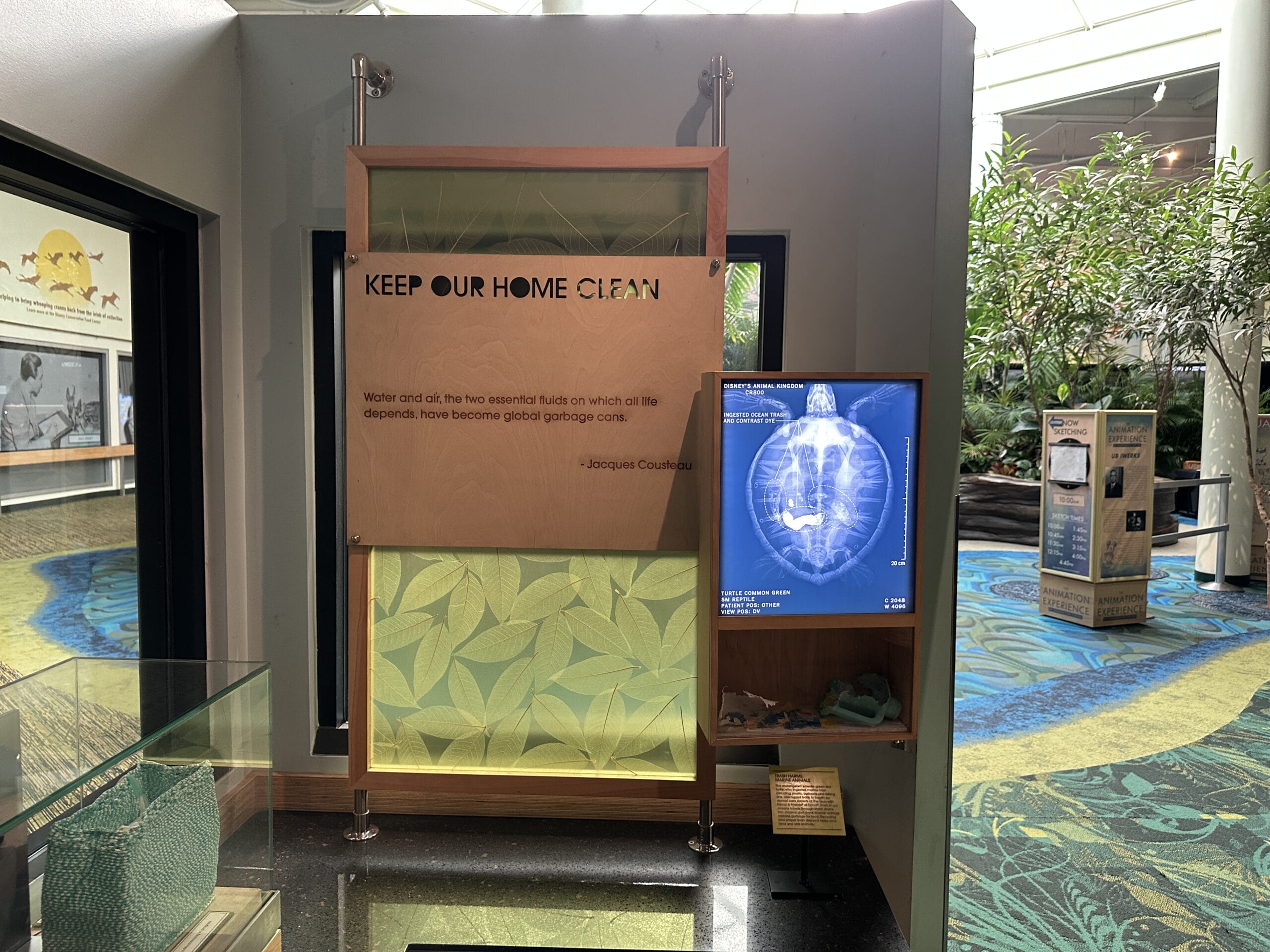
One display inside warns how trash can impact wildlife, using a sea turtle who accidentally ingested a plastic bag as an example. He was able to be nursed back to health by the team at The Seas in EPCOT.
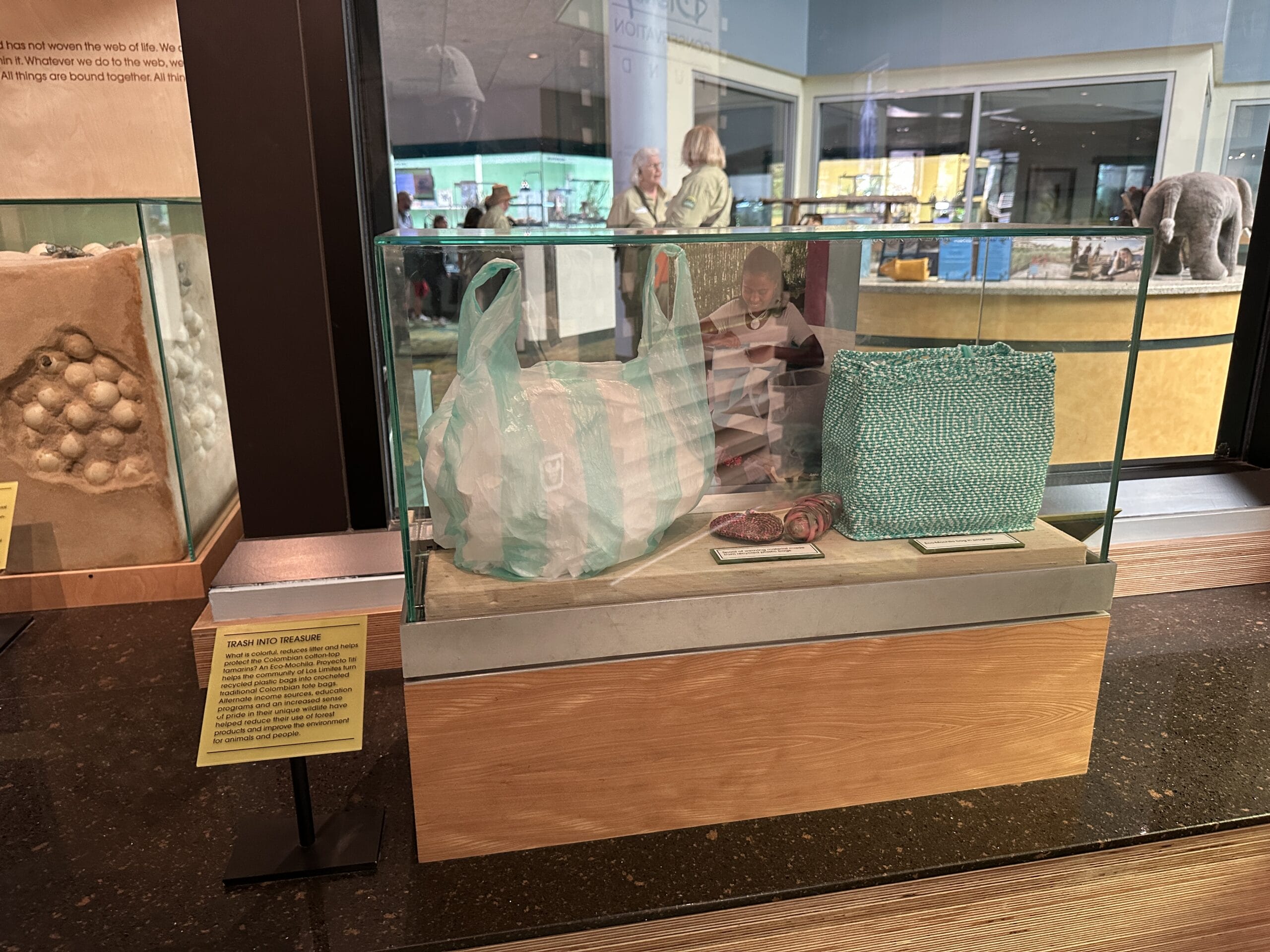
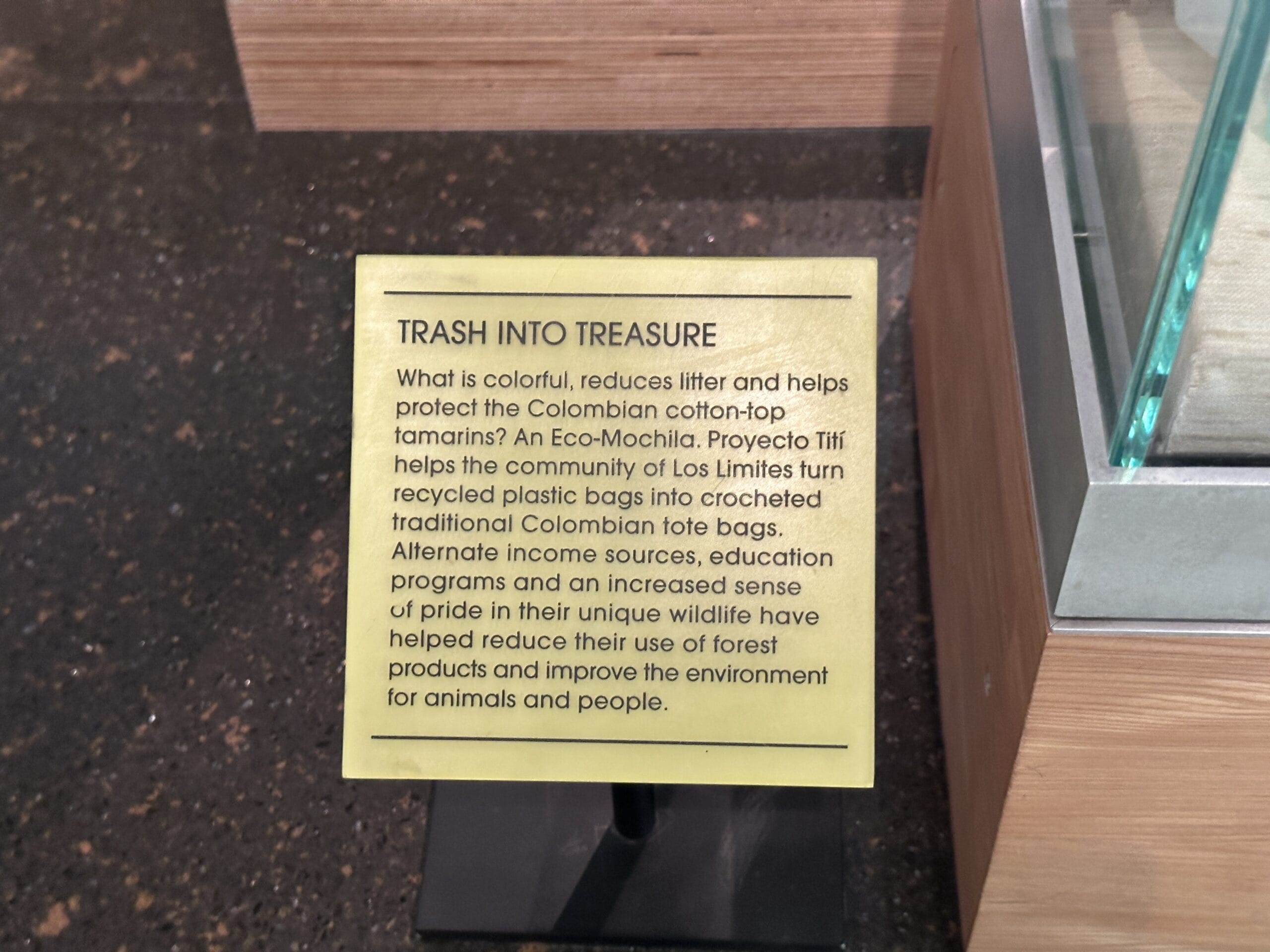
Instead of disposing of plastic waste in ways that can cause harm to marine life, this display suggests that the waste can be used in crafts and projects. One example is the traditional Colombian tote bags created by one community in Los Limites.
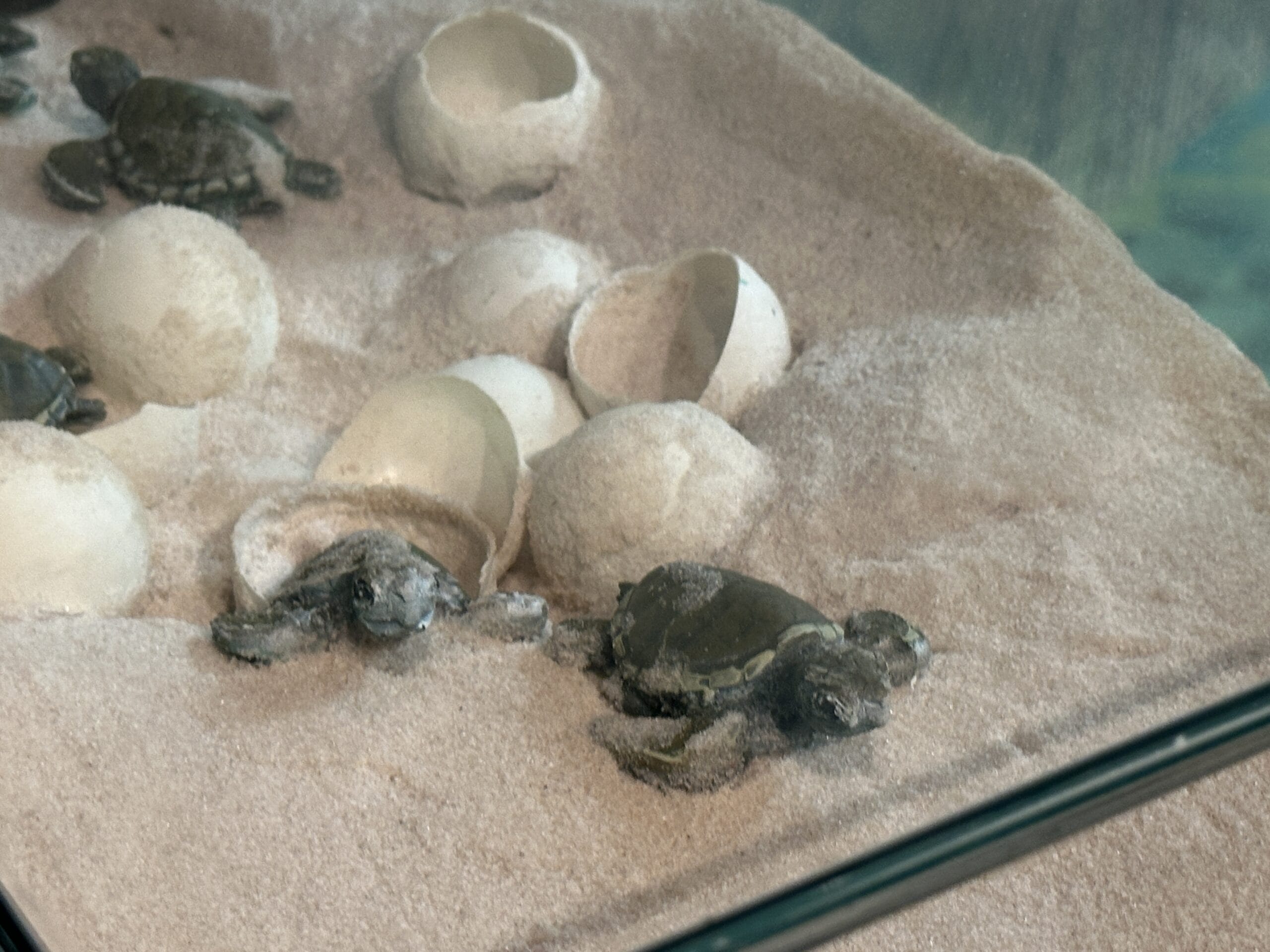
Another helpful tip is to avoid using harsh artificial lighting around sea turtle nests that may be on beaches. (These aren’t real sea turtle hatchlings, just figures in a case.)
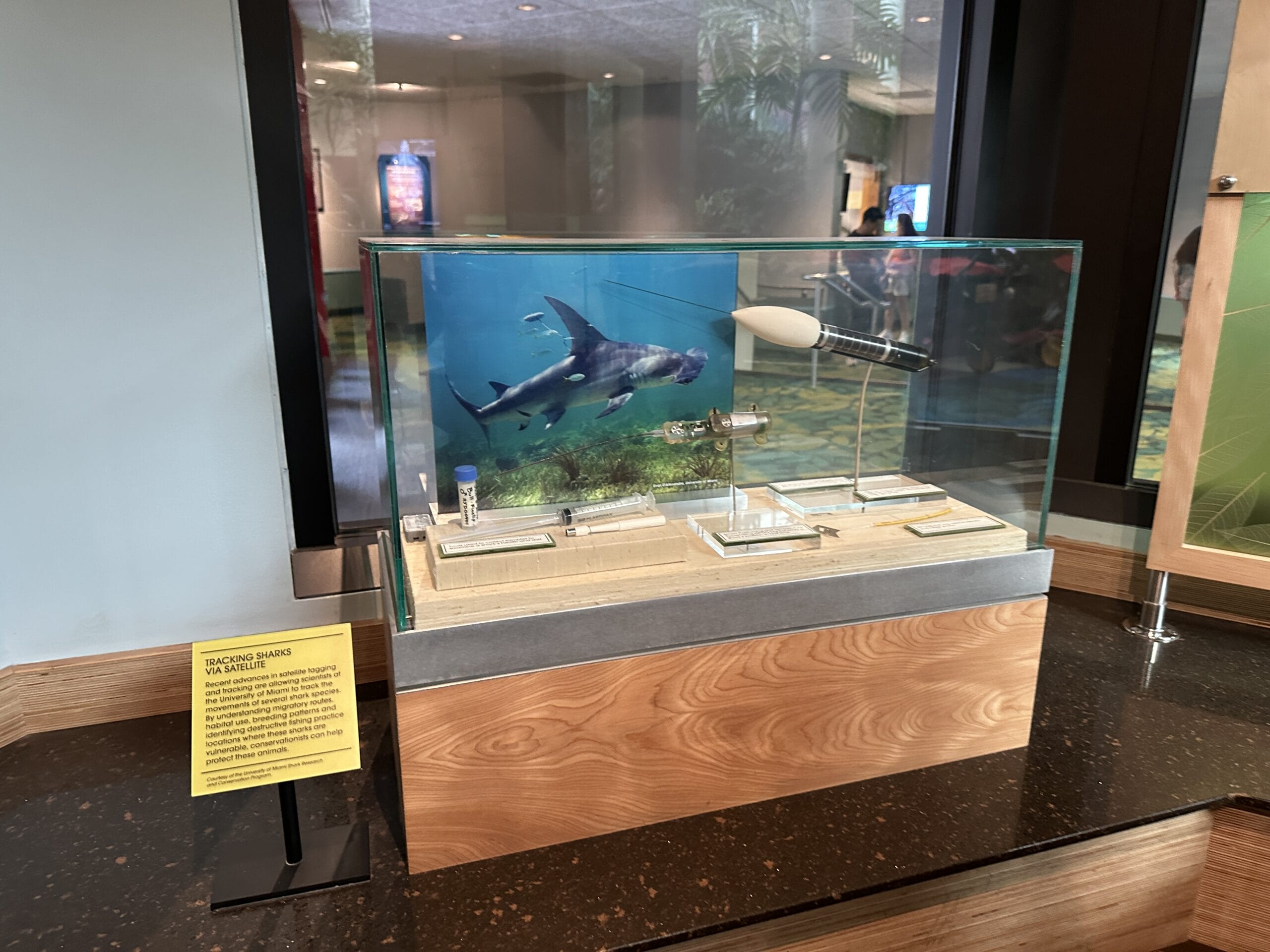
By tracking sharks, scientists at The University of Miami are able to research migratory routes, habitat use, breeding patterns, and more, which then helps them develop conservation practices.
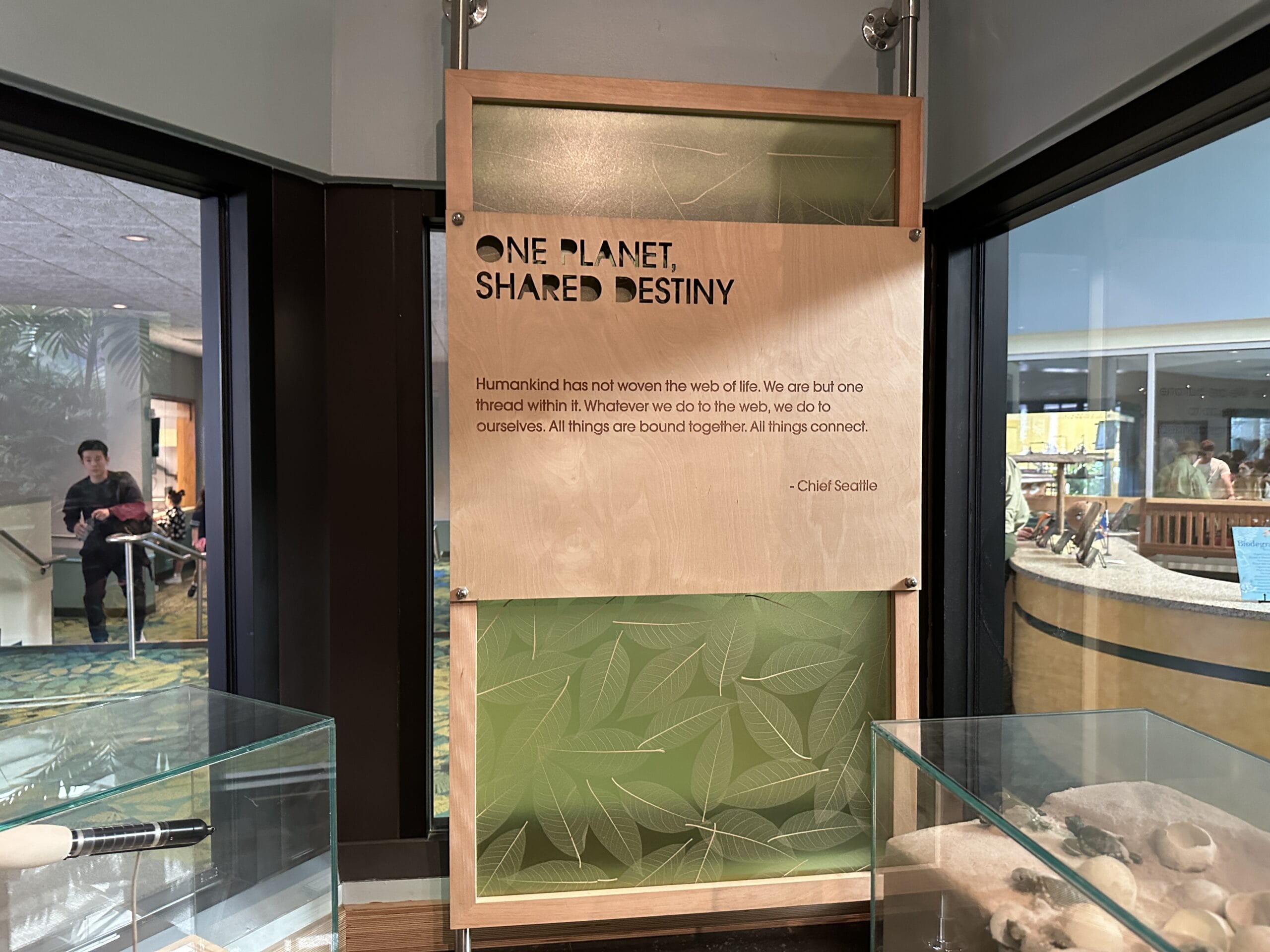
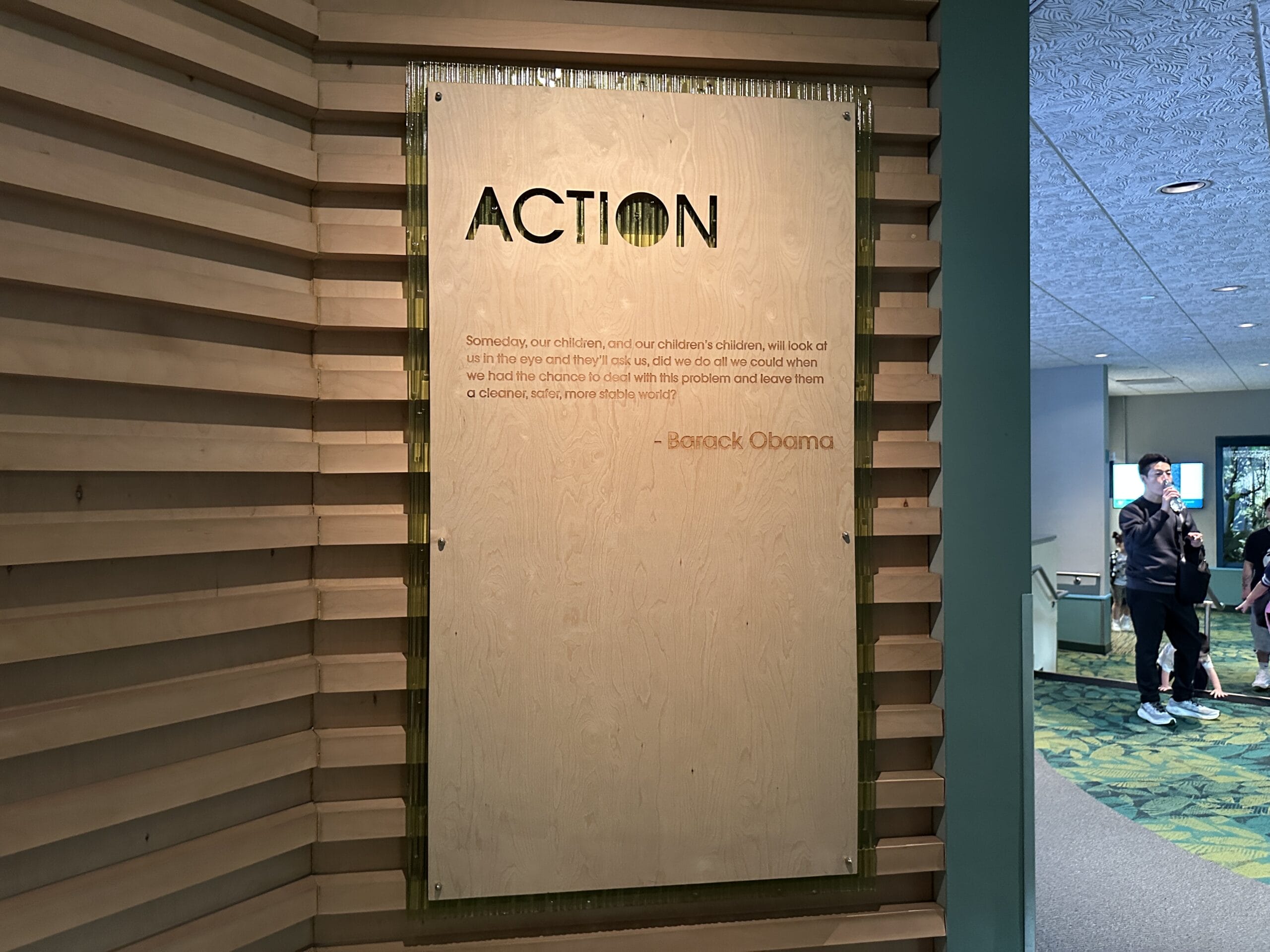
The next signs urge guests to share and take care of the planet to provide a safe place for future inhabitants.
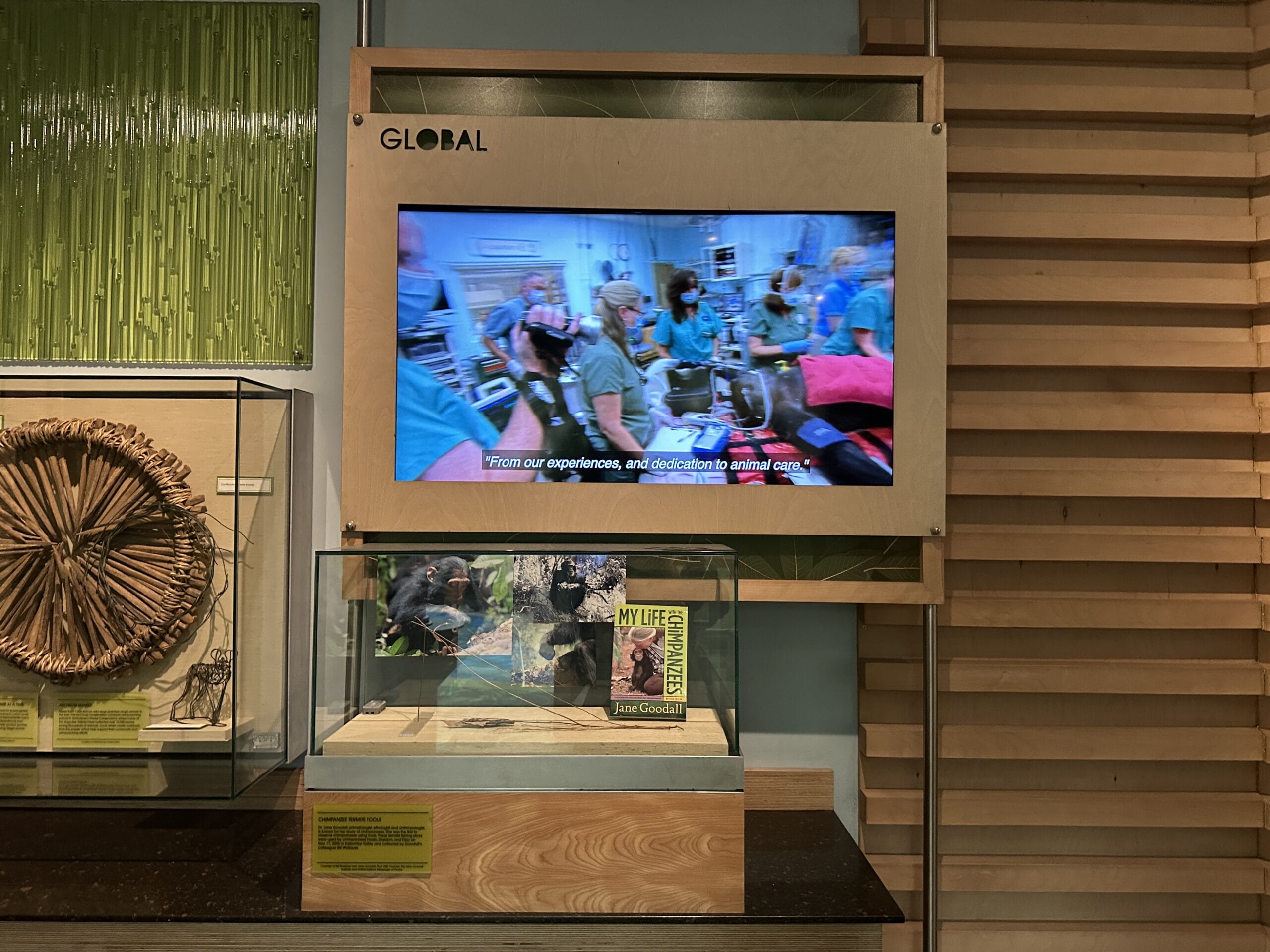
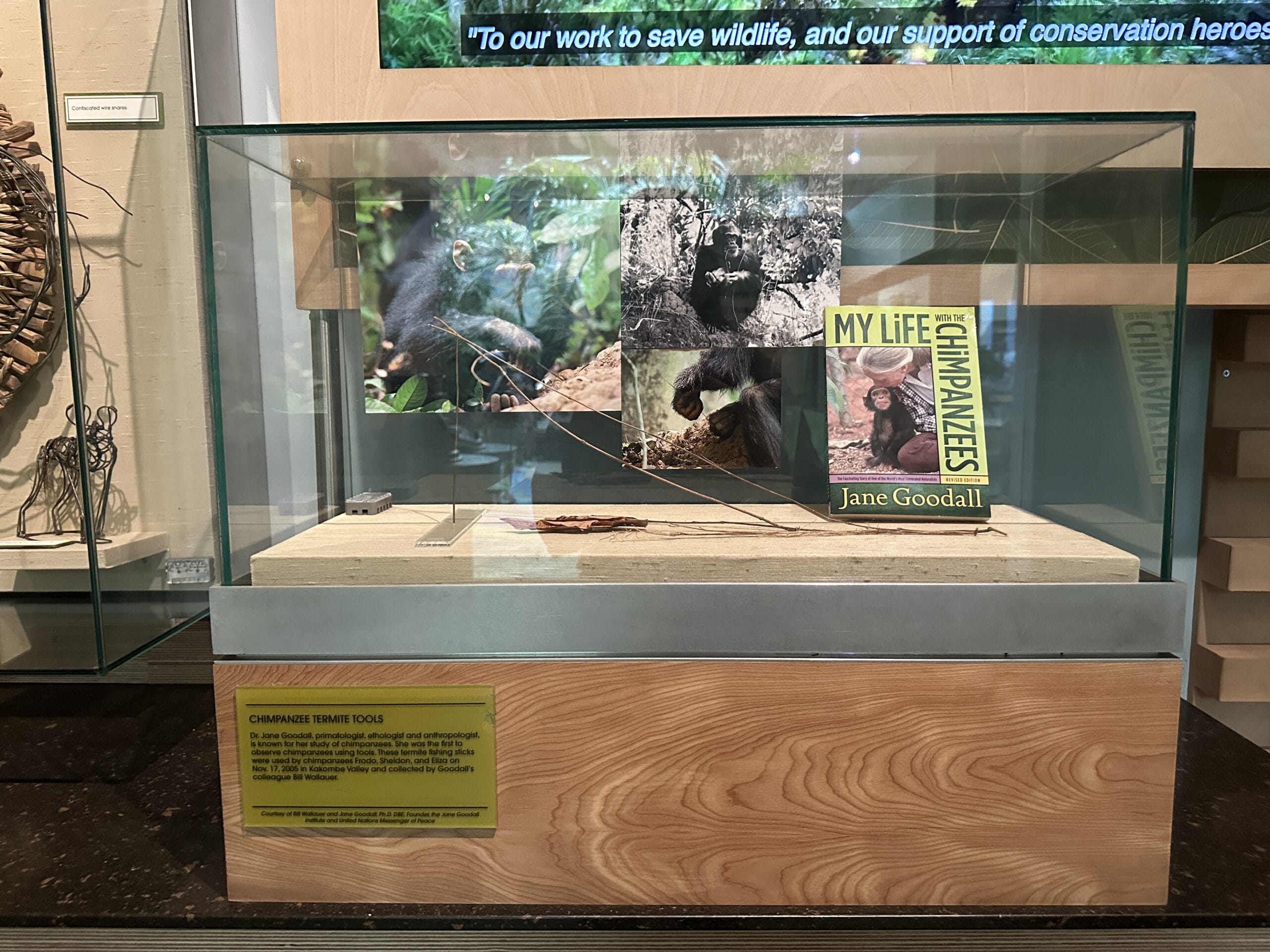
The next display is not necessarily about conservation but how amazing animals can be. Dr. Jane Goodall discovered in 2005 that one breed of chimpanzee had learned how to use “tools” in the wild.
Goodall is also honored at the Tree of Life in Disney’s Animal Kingdom. The famous scientist passed away at age 91 last year.
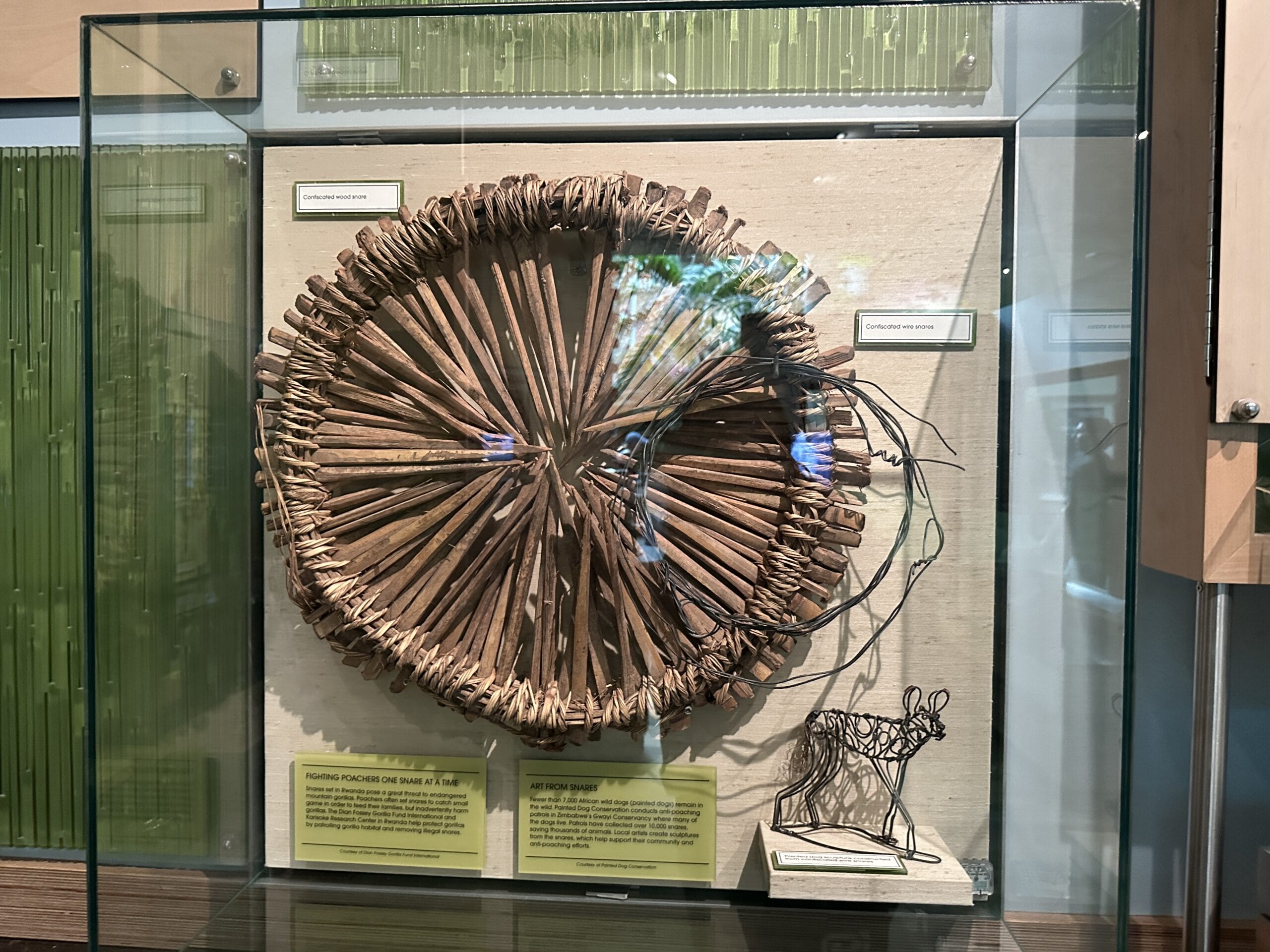
As an example of how trash can be used in art is this display made from snares used by poachers. The wood and wire snares were confiscated and turned into something new.
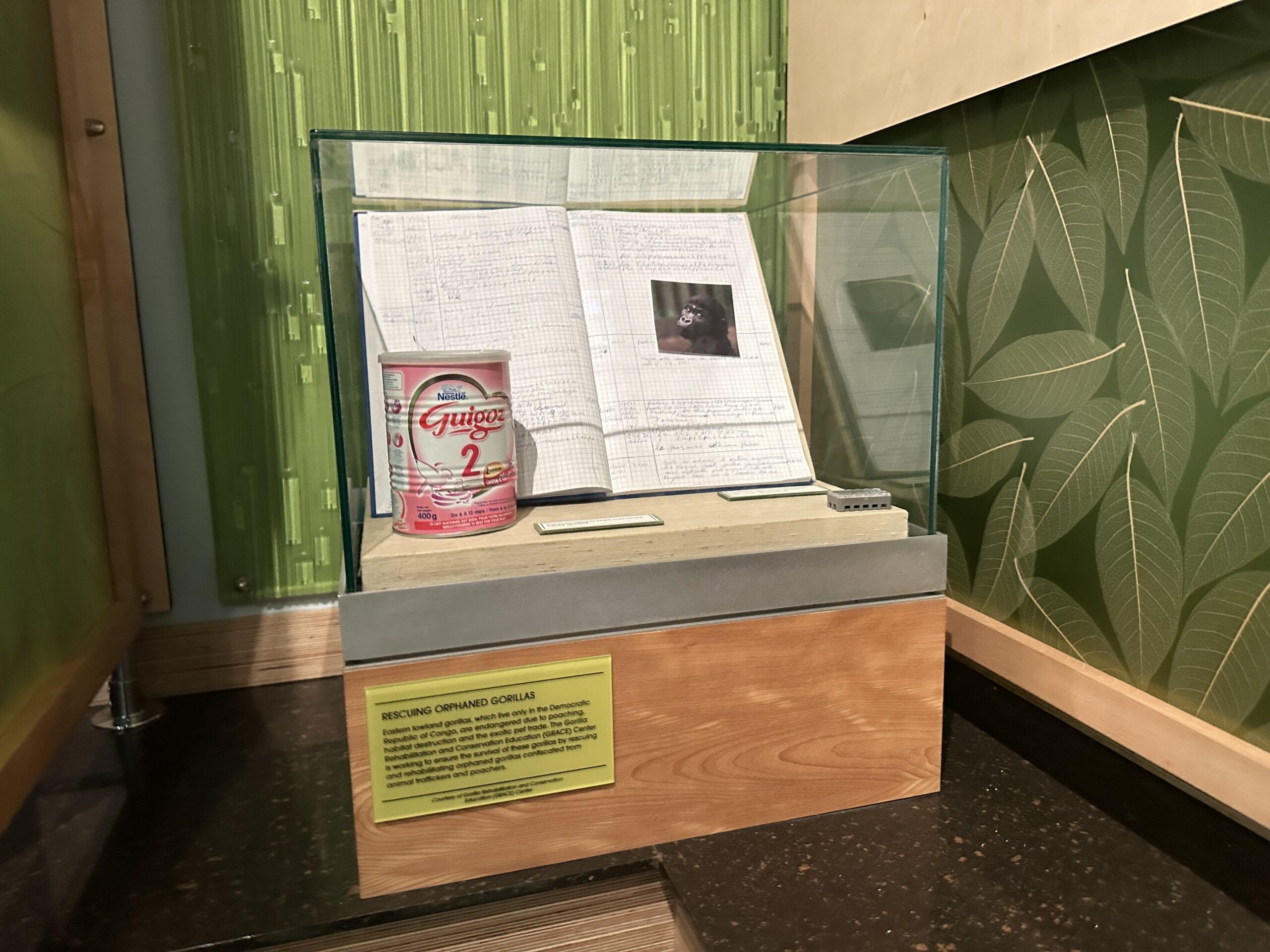
The next display informs guests on the ongoing effort to rehabilitate orphaned gorillas in order to slow the endangerment of the species.
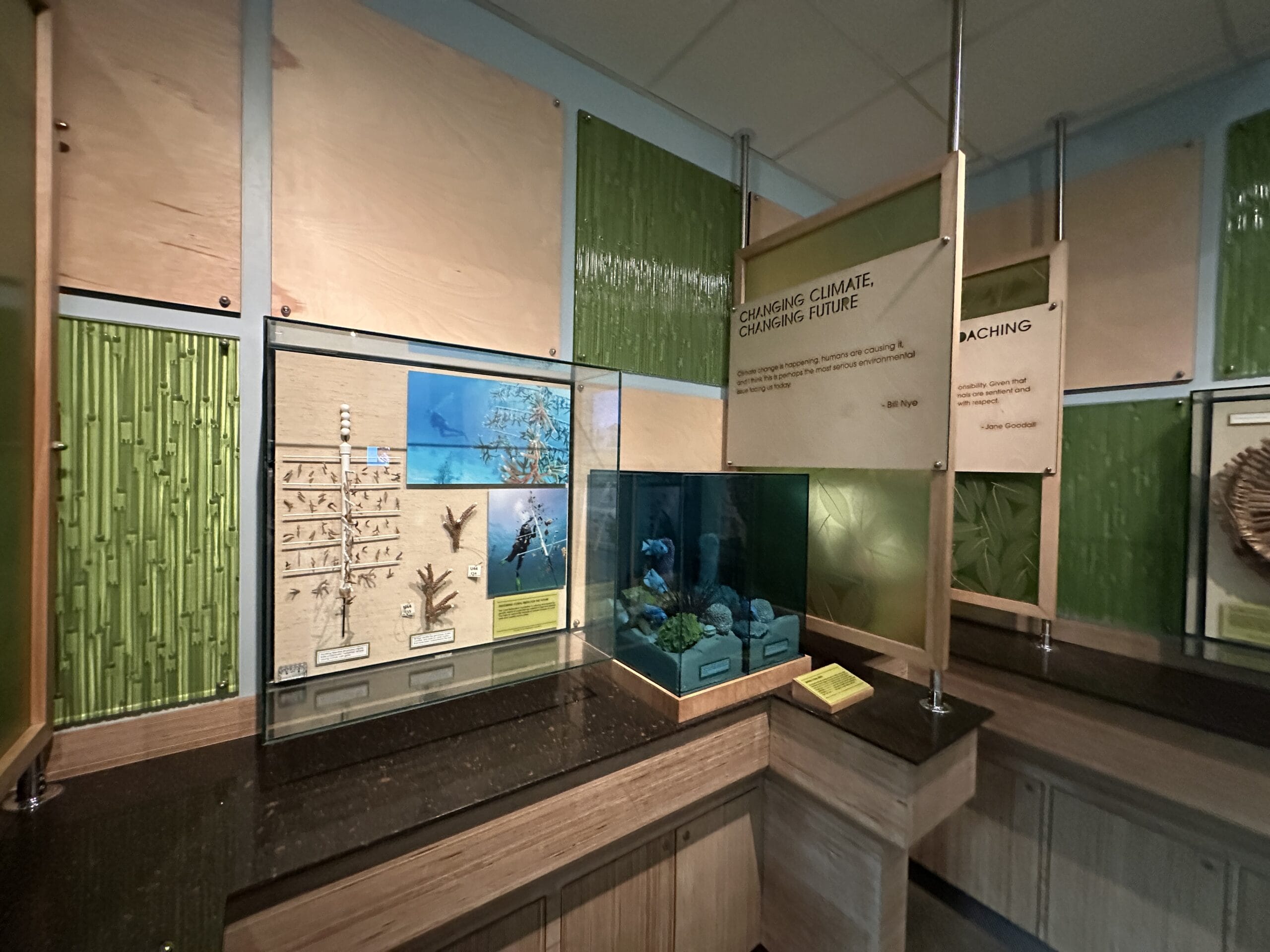
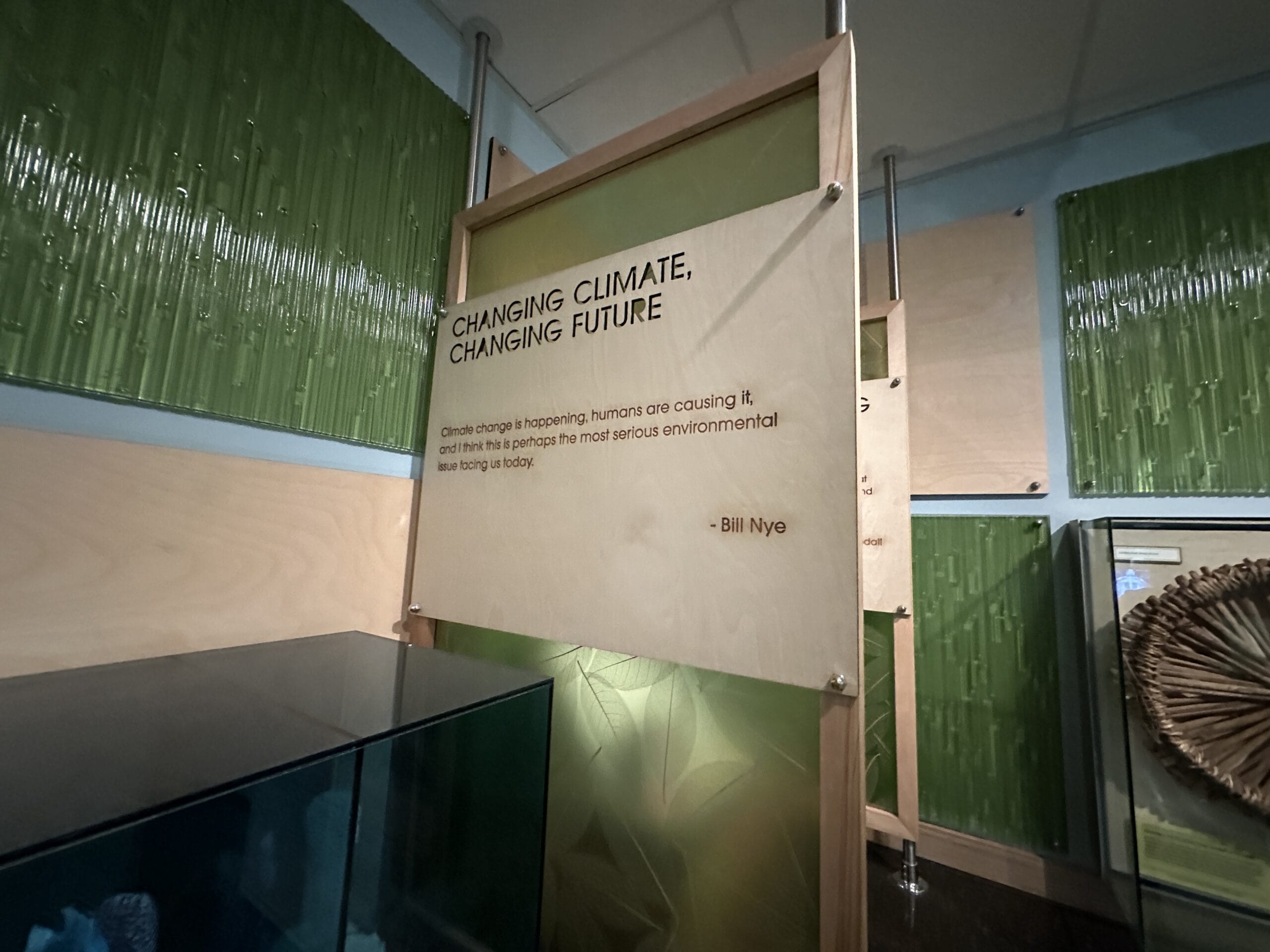
Other displays discuss climate change and the effect it can have on the environment.
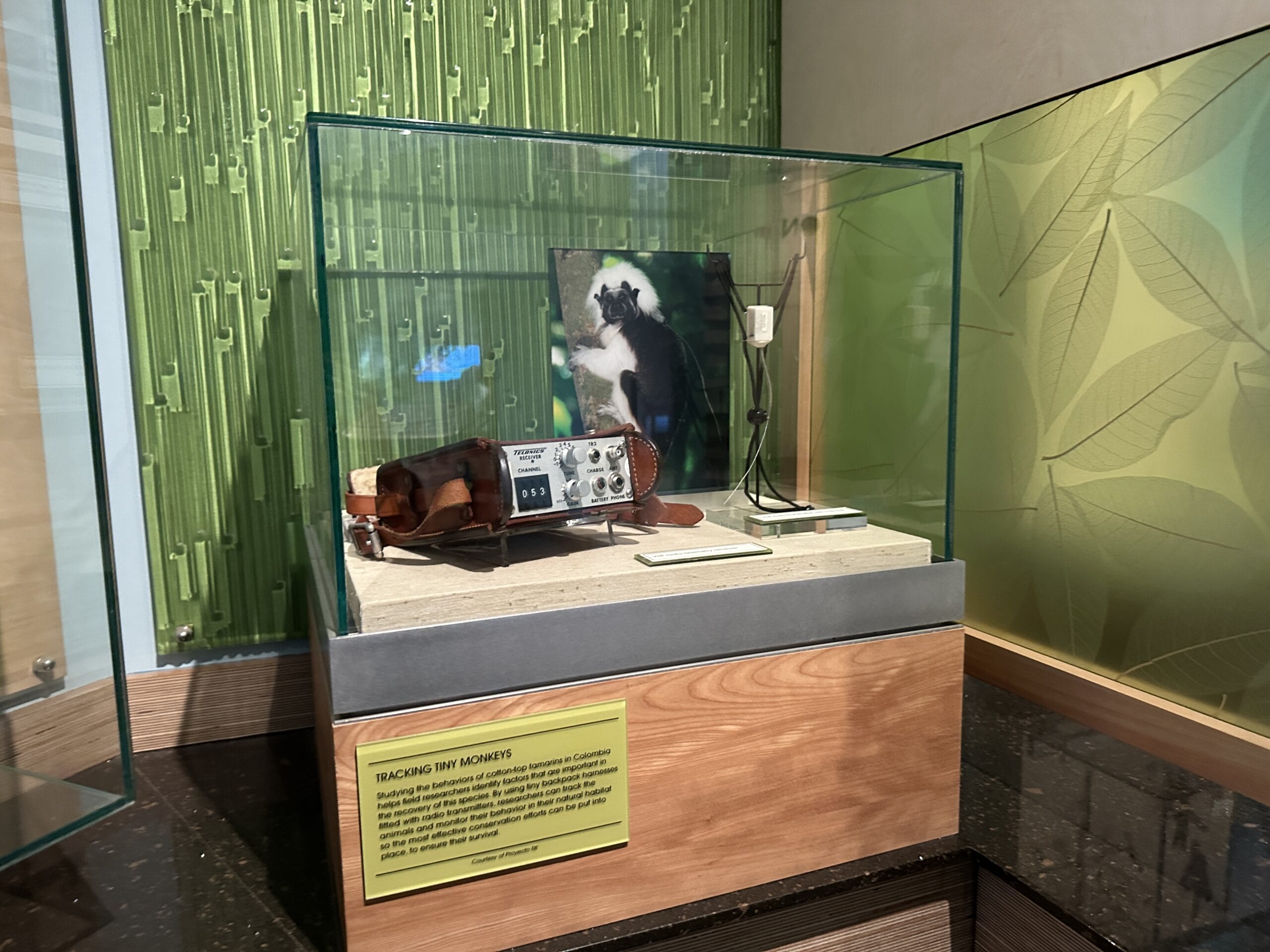
Cotton-top tamarins are tracked for conservation with tiny backpack transmitters.
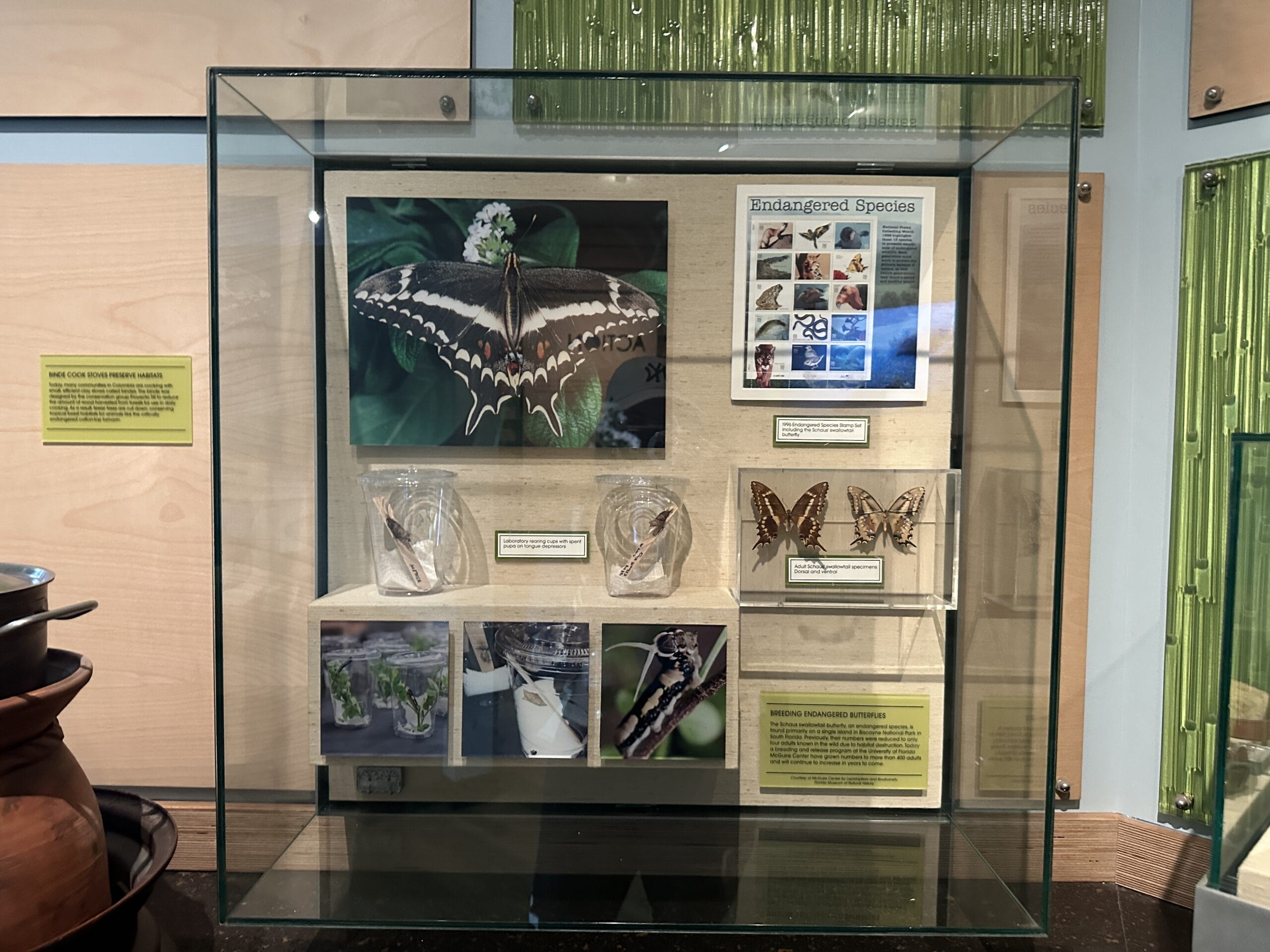
Controlled butterfly breeding is used to increase the population of swallowtail butterflies.
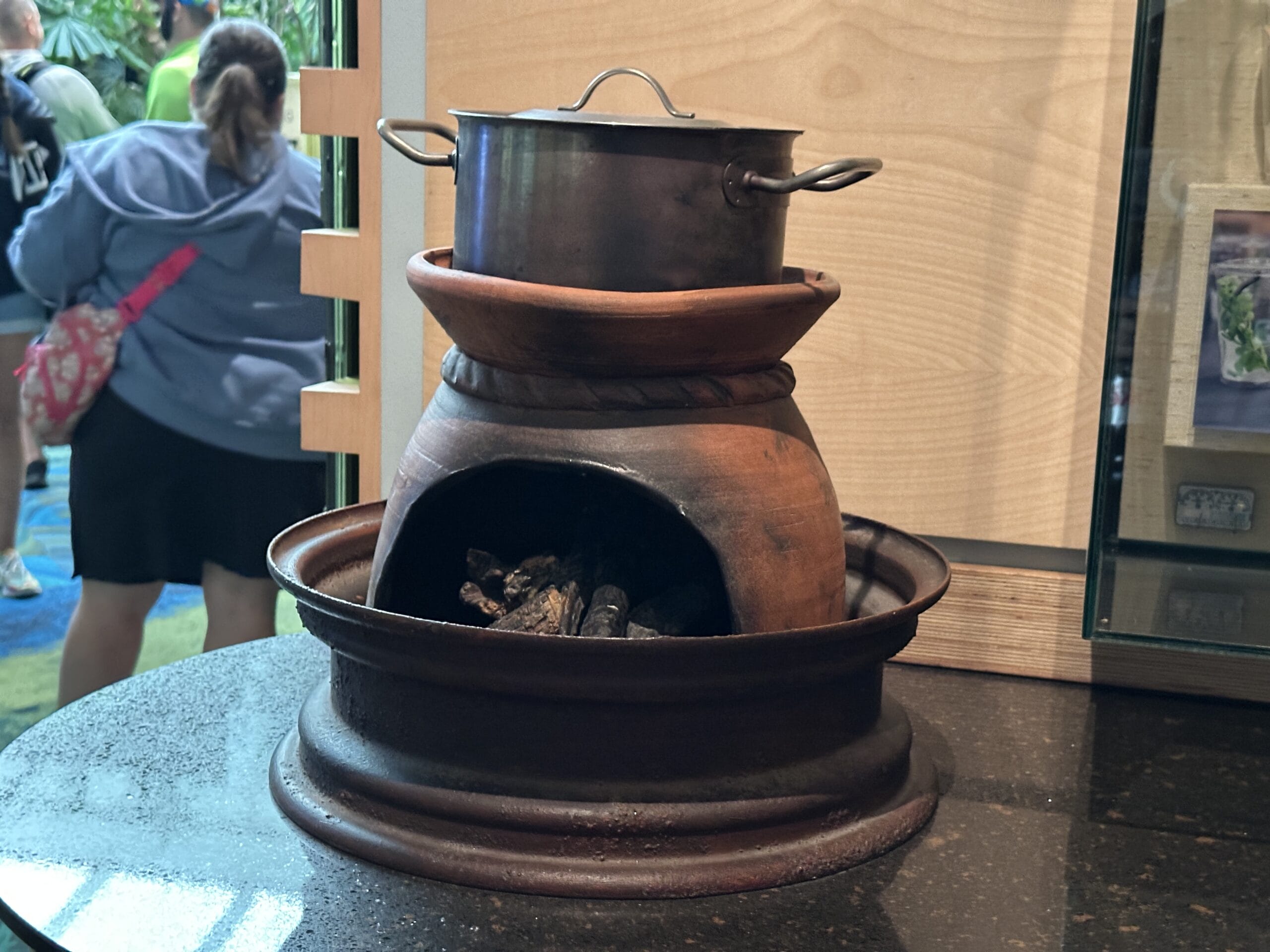
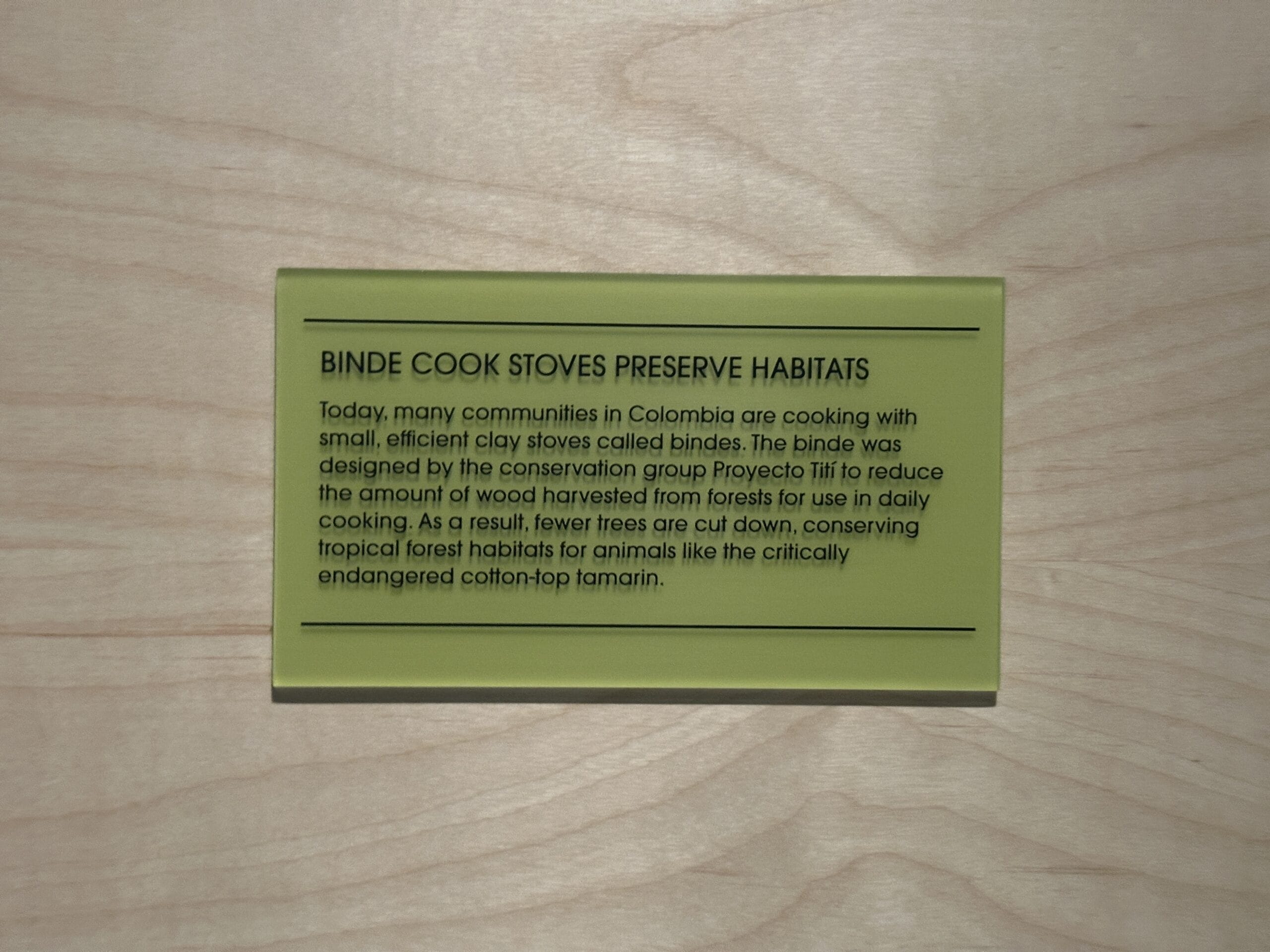
To reduce the use of wood from nearby forests, some Colombian communities use Binde Cook Stoves.
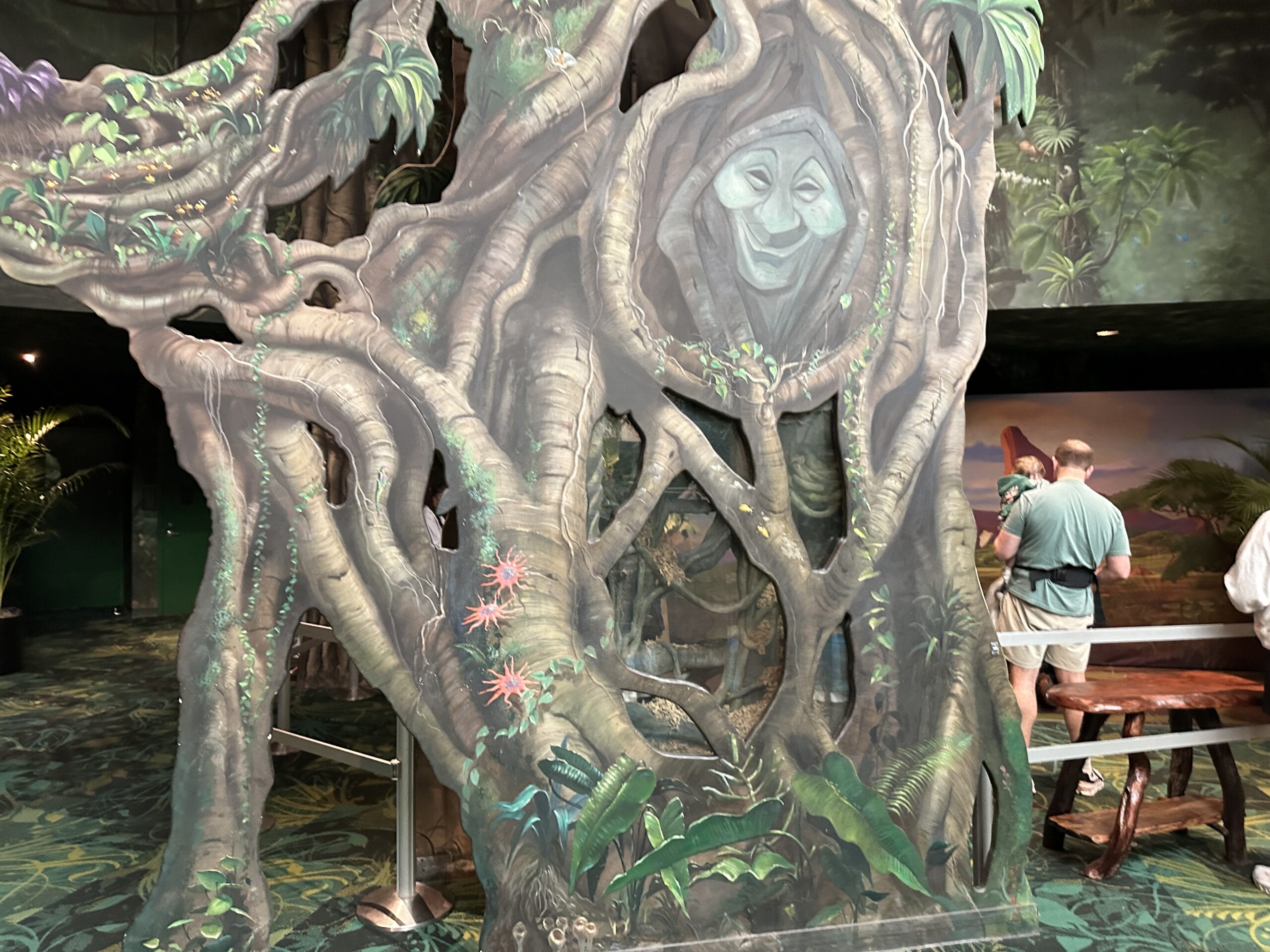
Exiting the Science Center, you may encounter Grandmother Willow from Pocahontas. She begins a series of fake trees and limbs that serve as home to more creatures and educational information about the rainforest. This was formerly the Song of the Rainforest experience, an audio tour of rainforest habitats hosted by Grandmother Willow. The audio booths were removed in 2018 to make way for the Animation Experience.
Watch our tour of Rafiki’s Planet Watch prior to the 2018/2019 renovation.
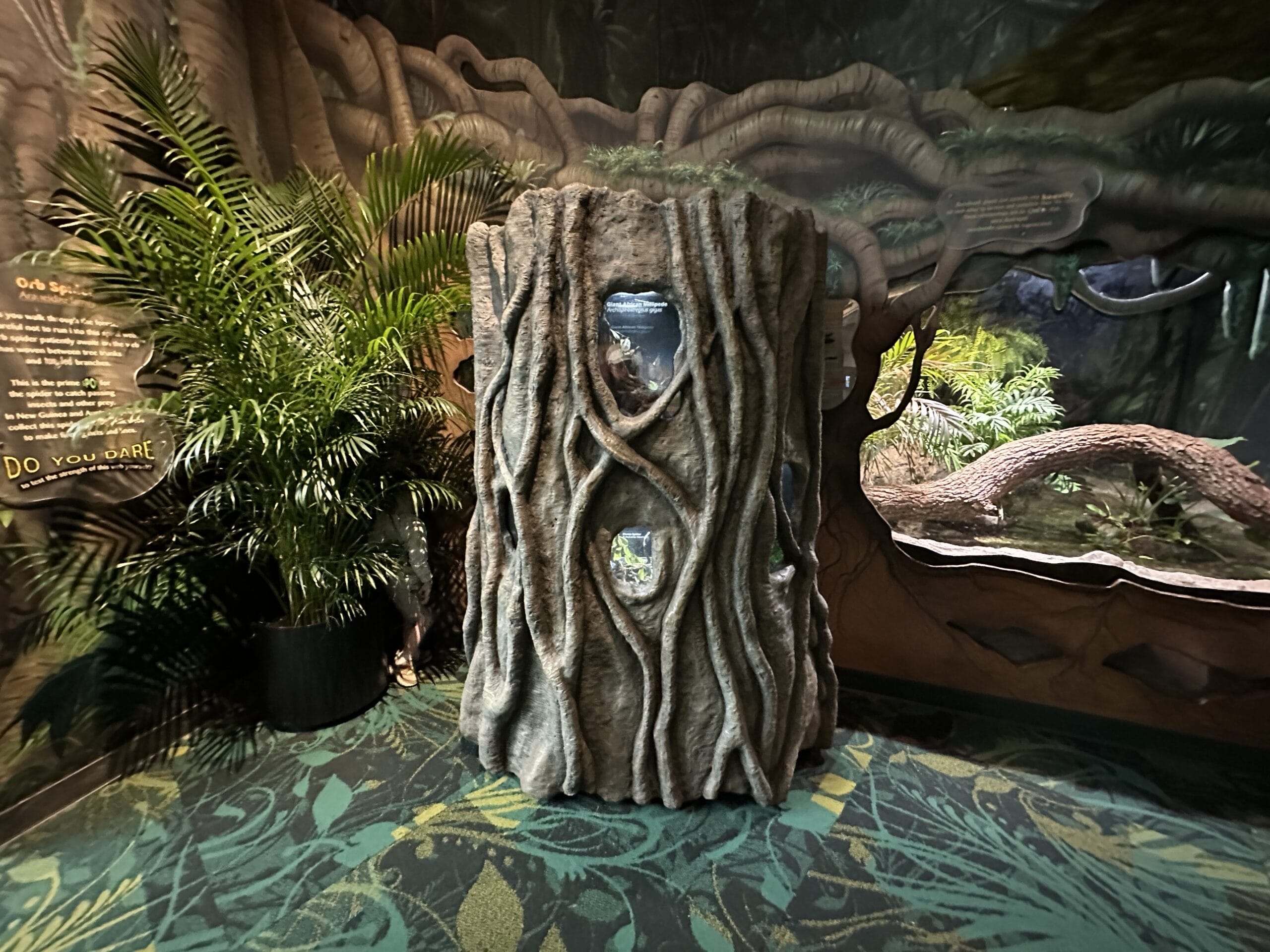
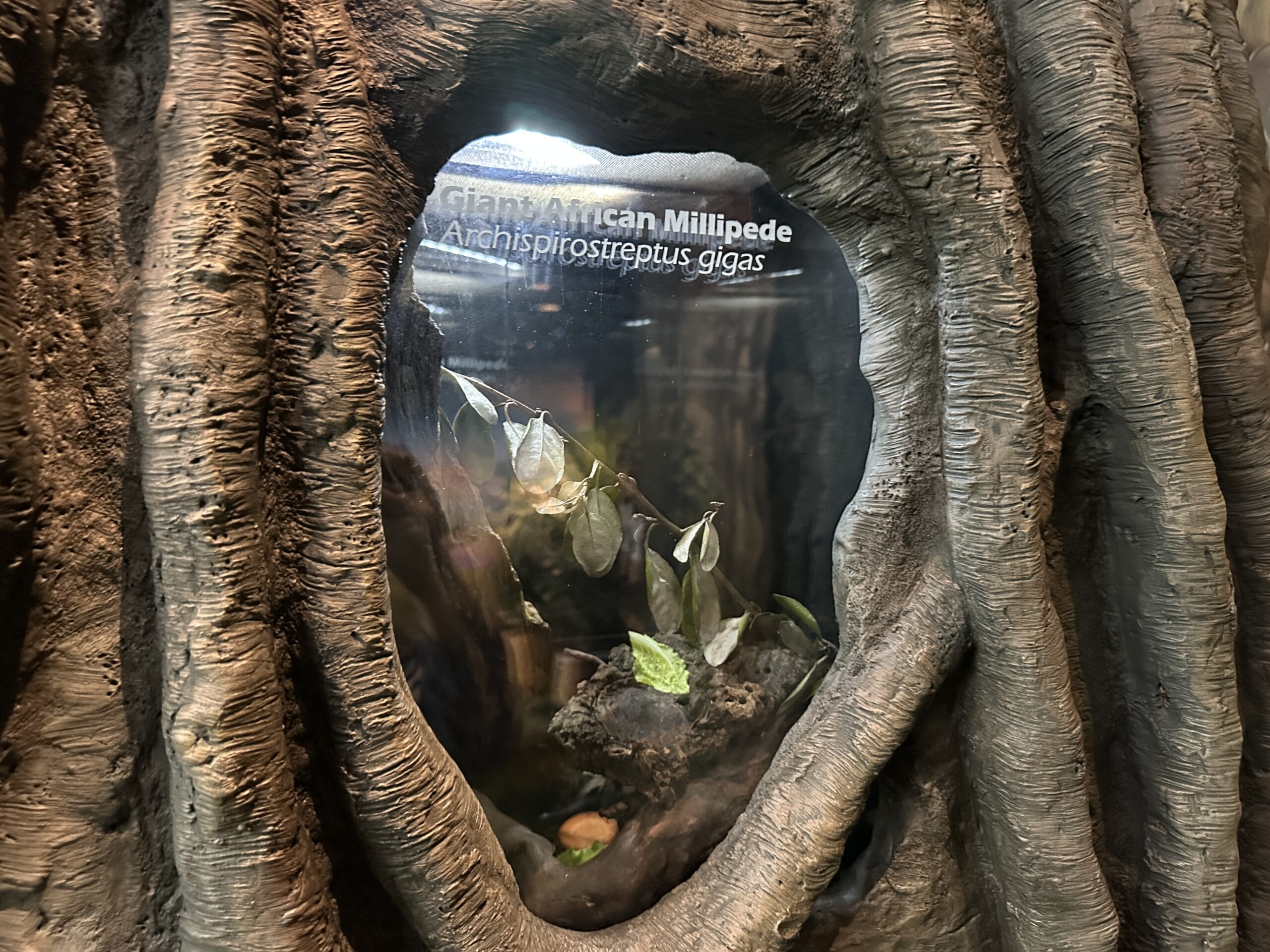
This forest space was previously used for the Animation Experience’s queue. Small animal enclosures are inside the trees. One small window offers a look at a Giant African Millipede.
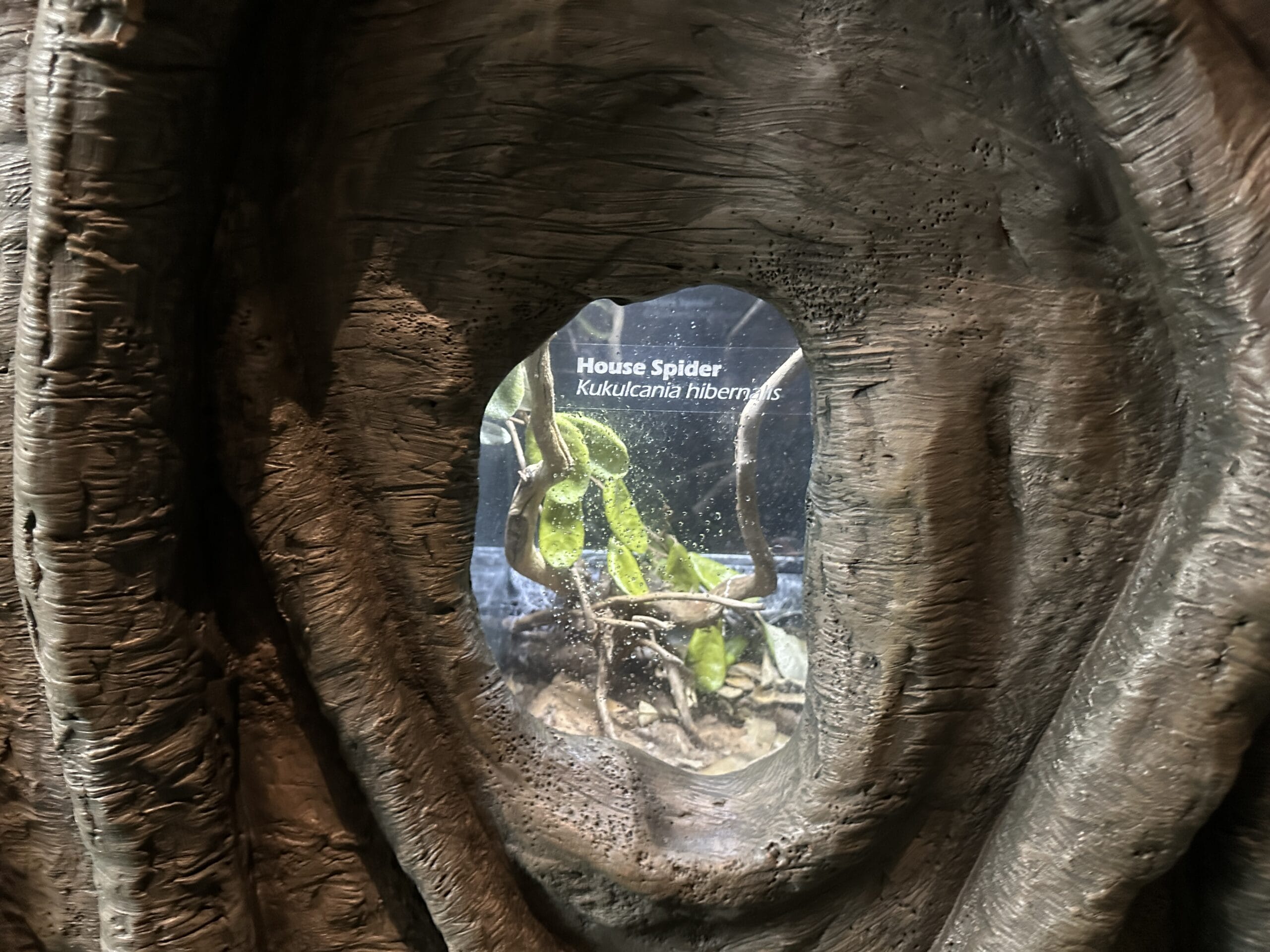
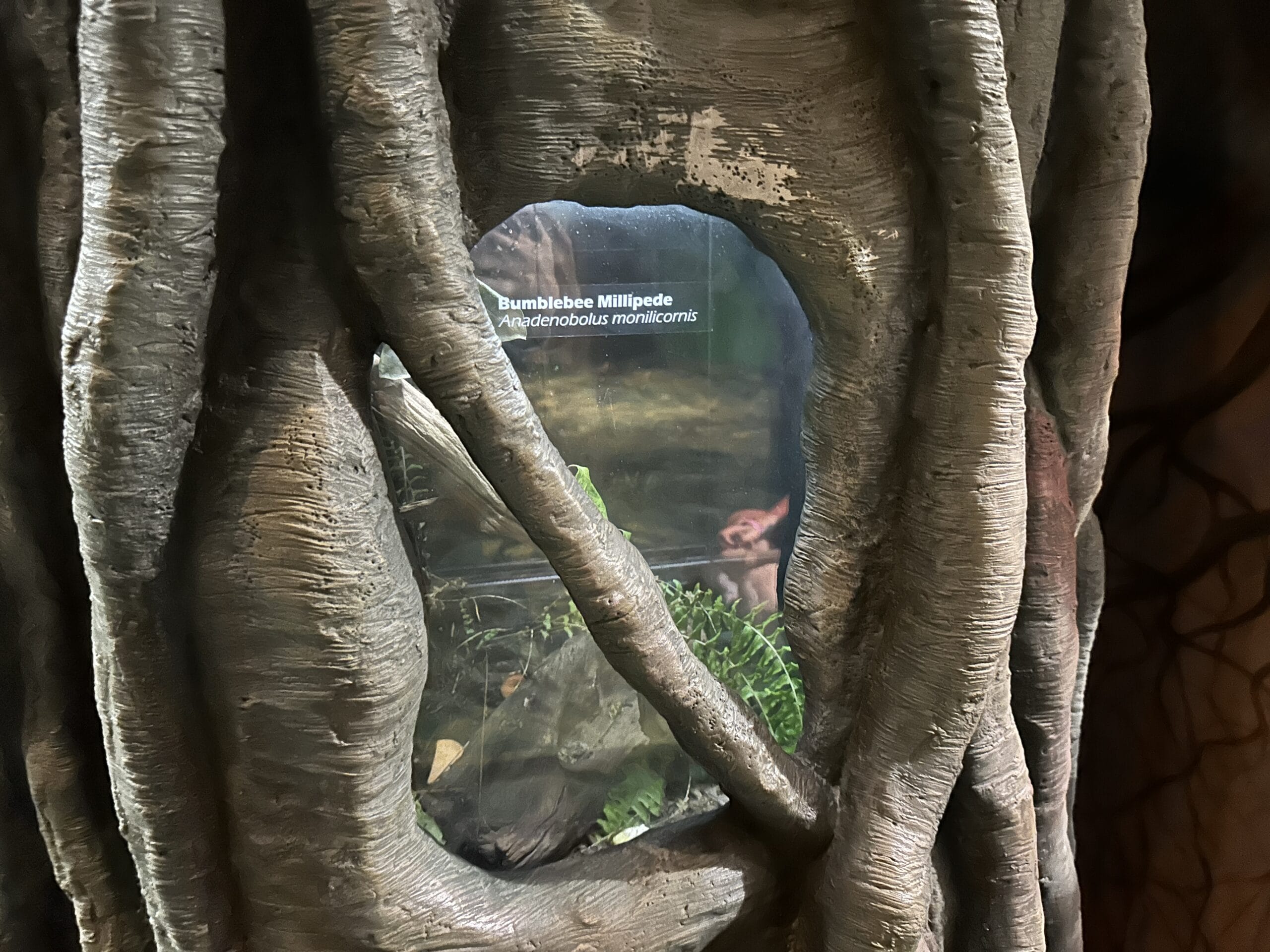
Other windows showcase a House Spider and Bubblebee Millipede.
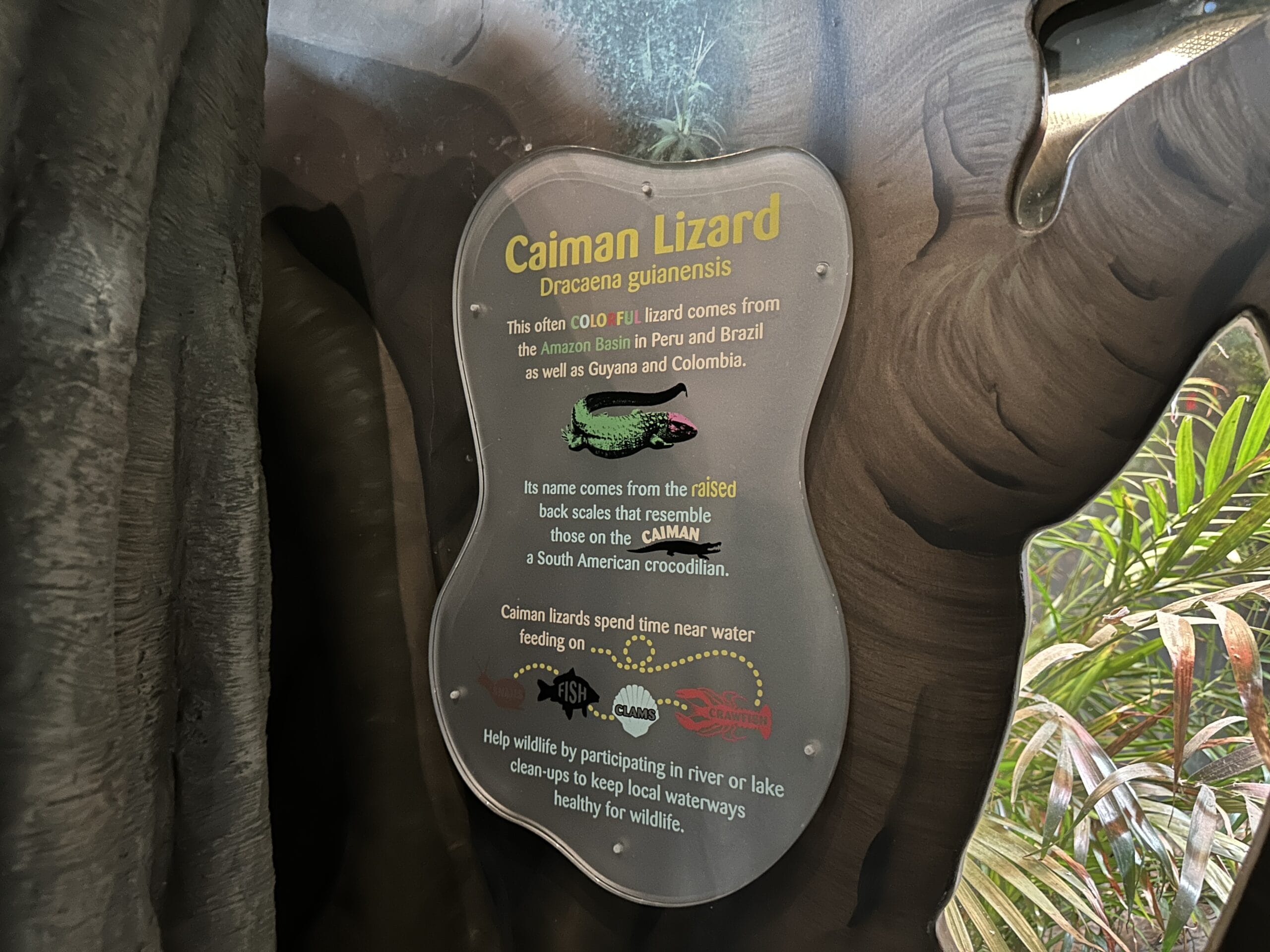
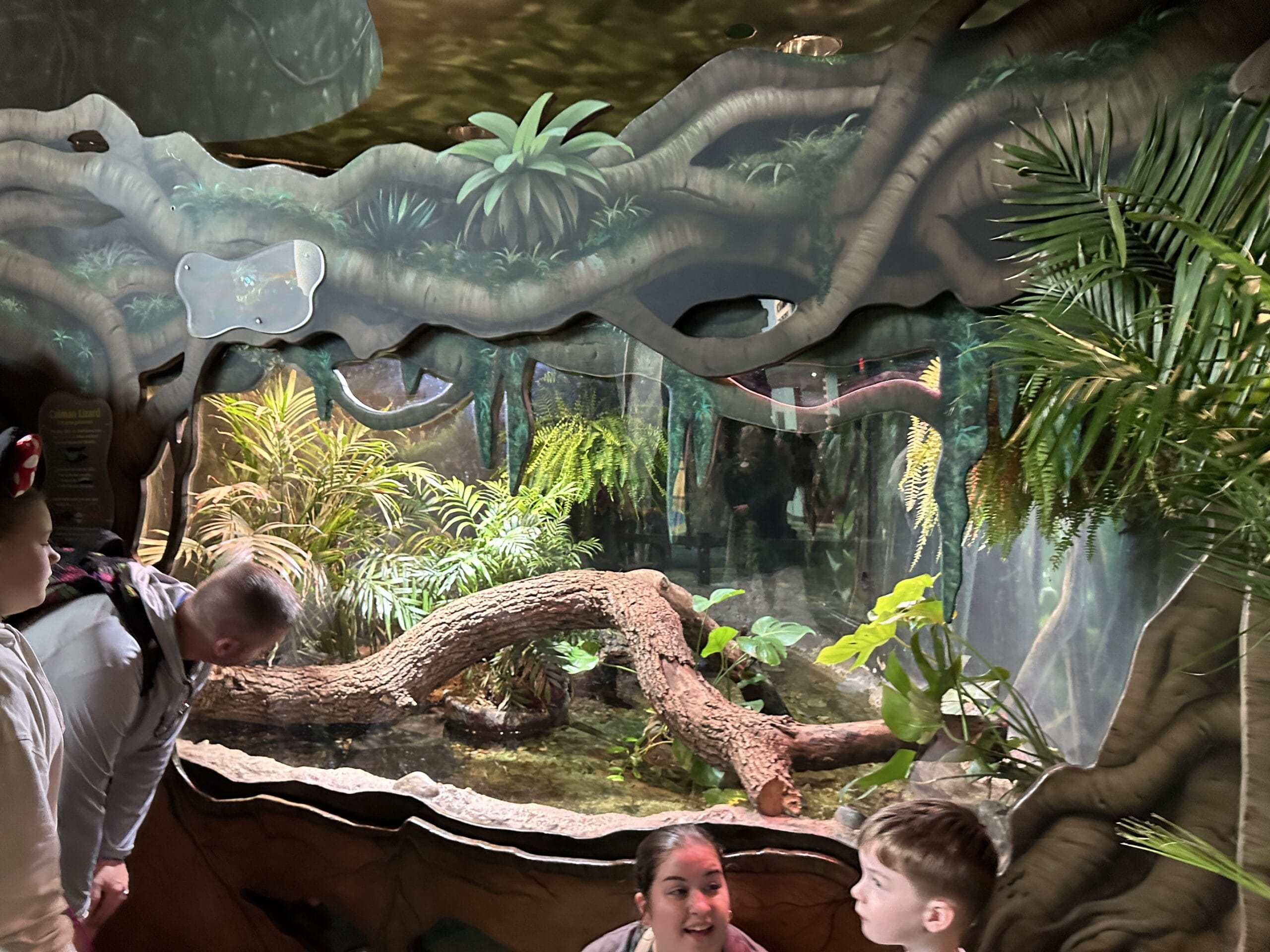
Signage provides information about Caiman Lizards, which are housed in a larger terrarium, and rainforests. The lizard terrarium is designed to mimic the rainforest.
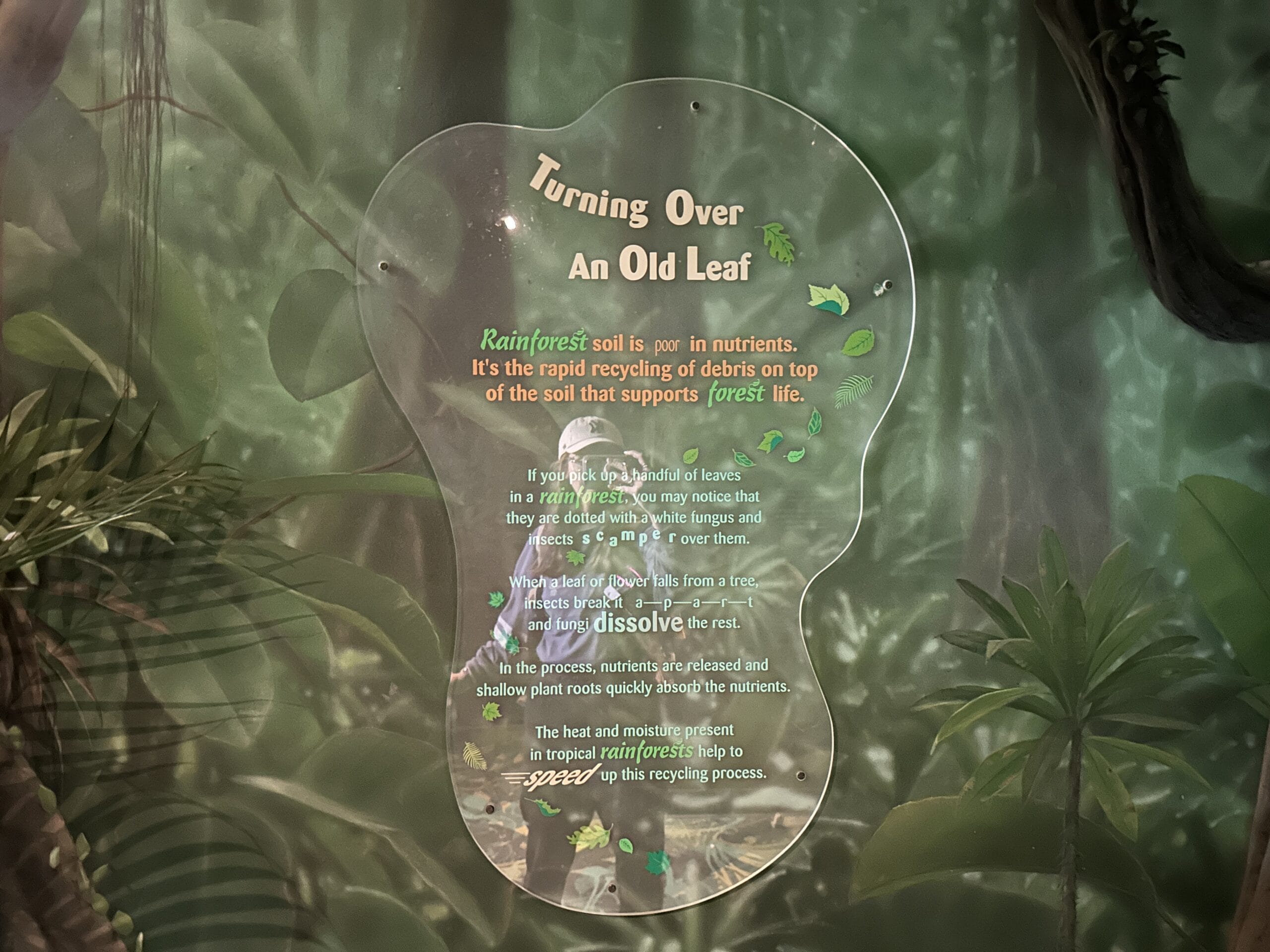
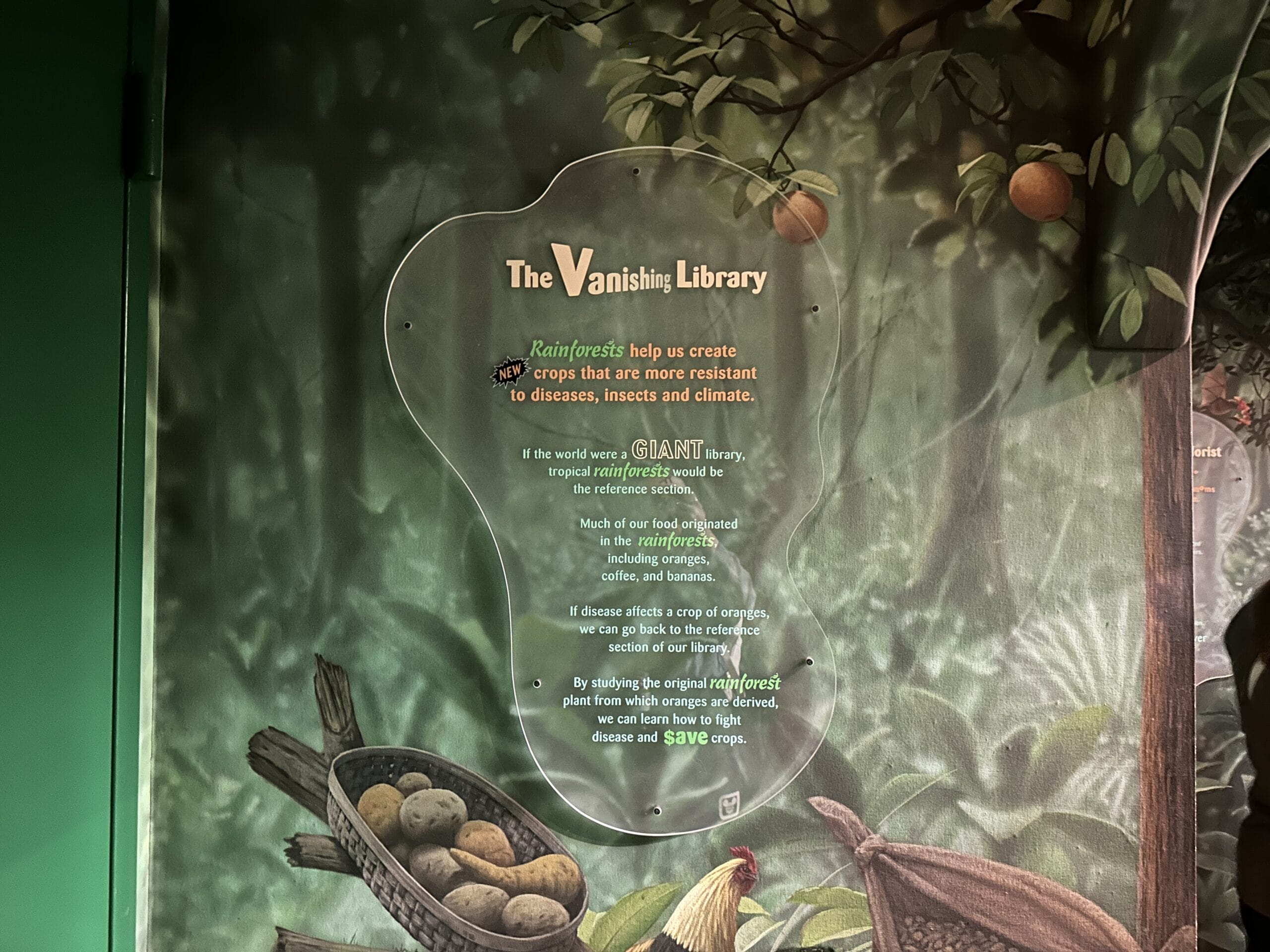
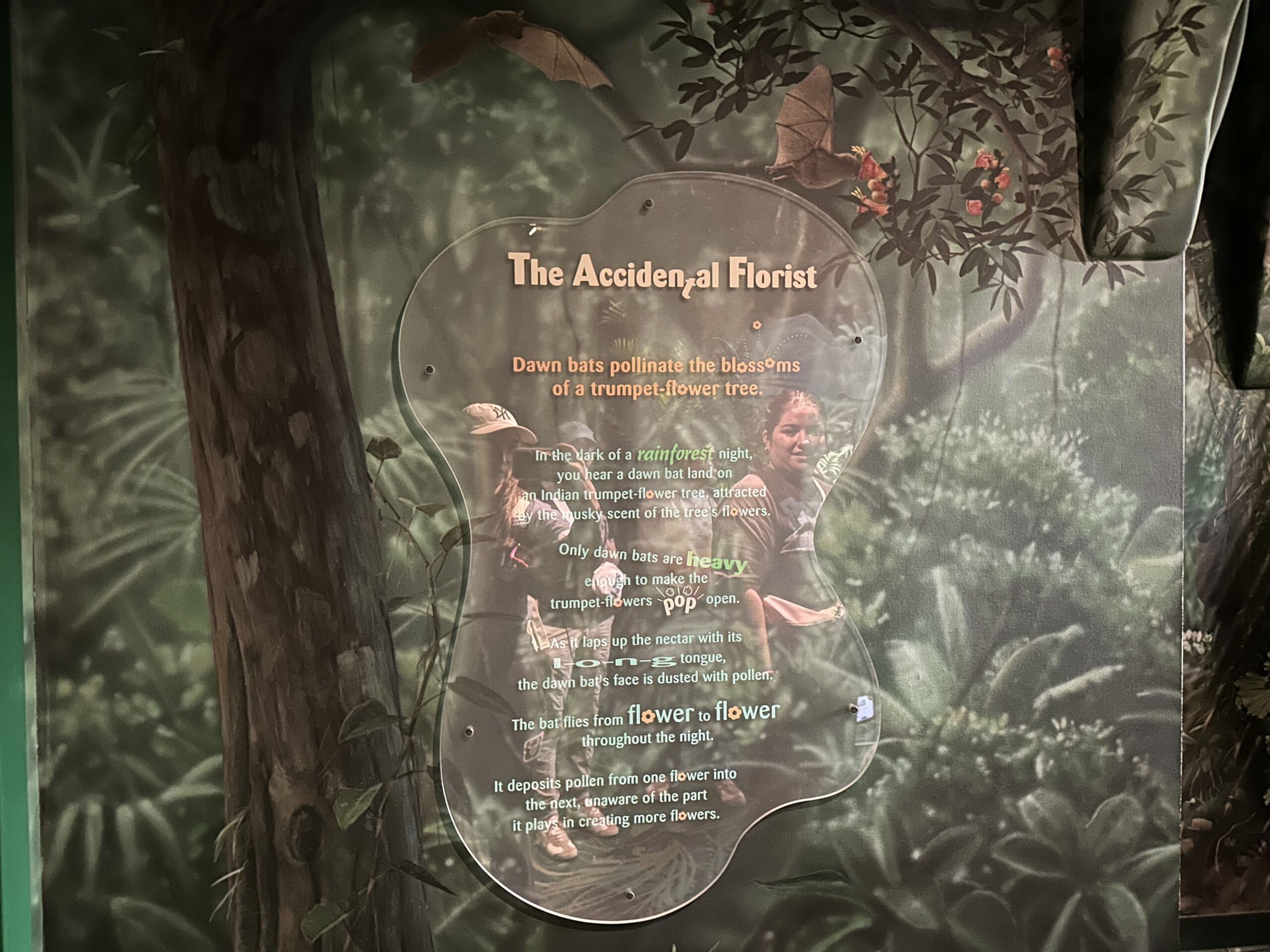
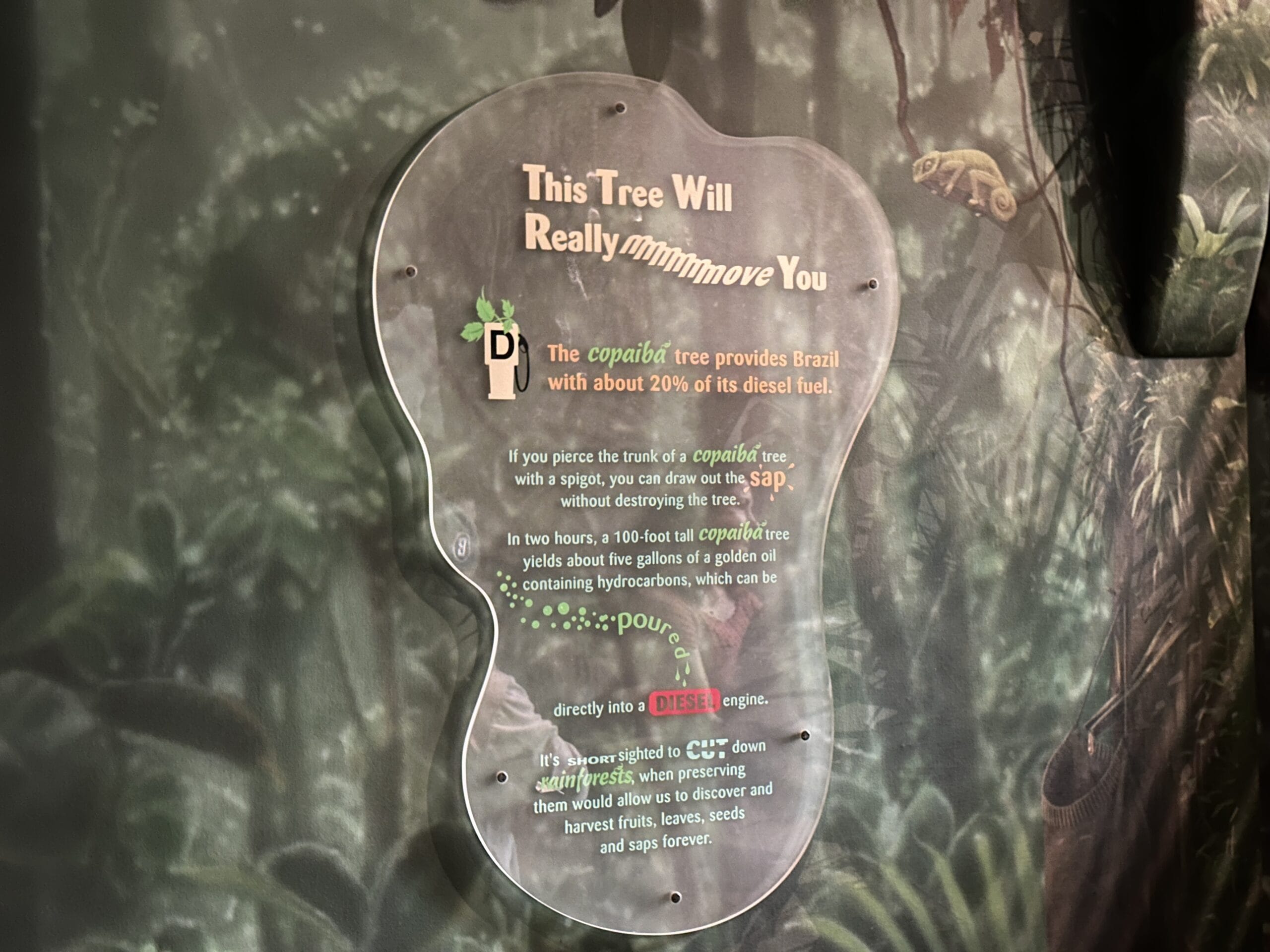
The signs discuss how important the rainforest is to the rest of the world. One is focused on bat pollination while another is about how trees in the rainforest created diesel fuel.
Timon and Rafiki Meet and Greet
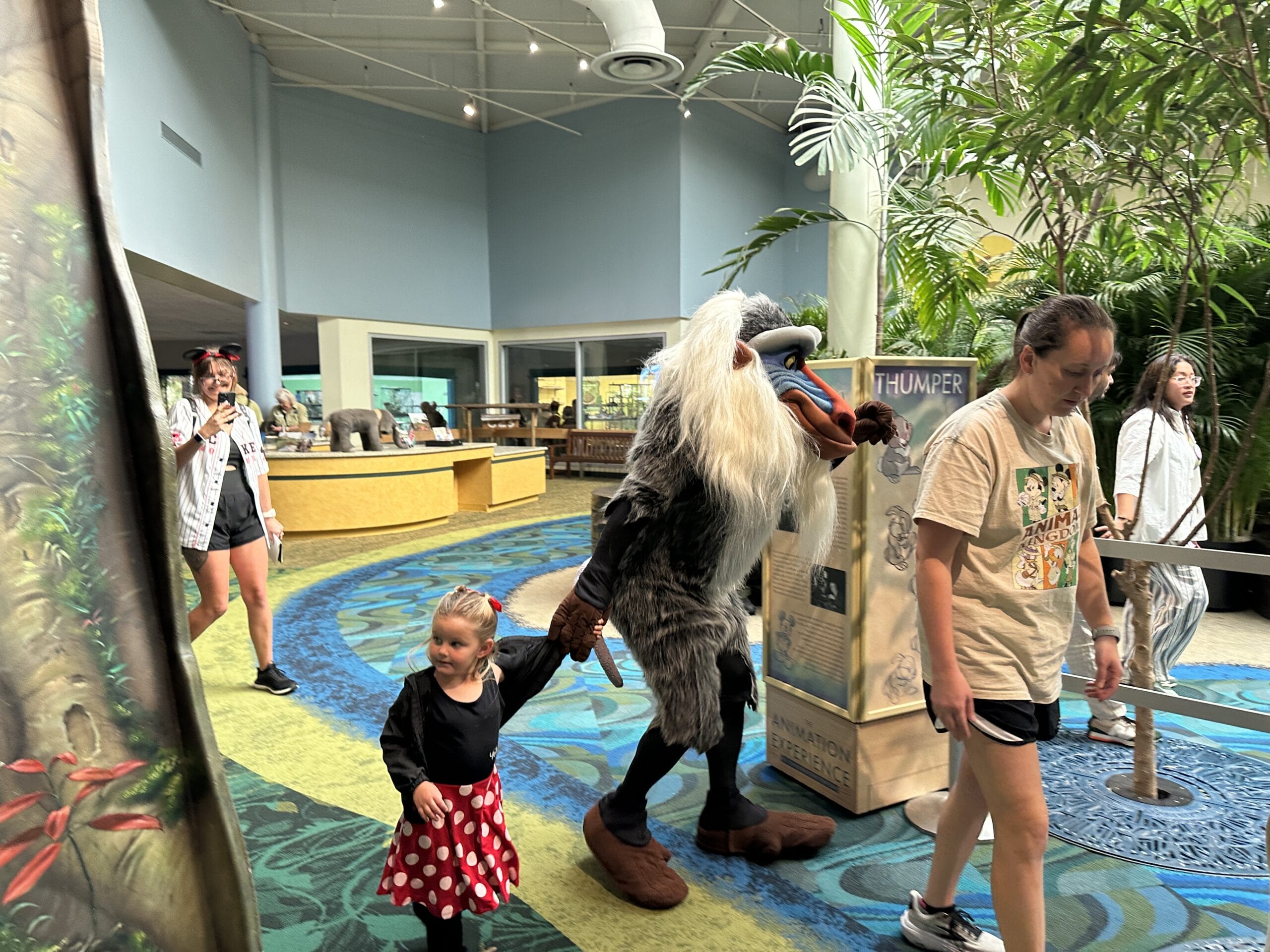
Timon and Rafiki alternated meet and greets in the former rainforest space in front of a Pride Rock backdrop. Before the 2019 renovation, the characters regularly appeared at Rafiki’s Planet Watch. They were then moved to Discovery Island Character Landing but were ultimately replaced by Moana.
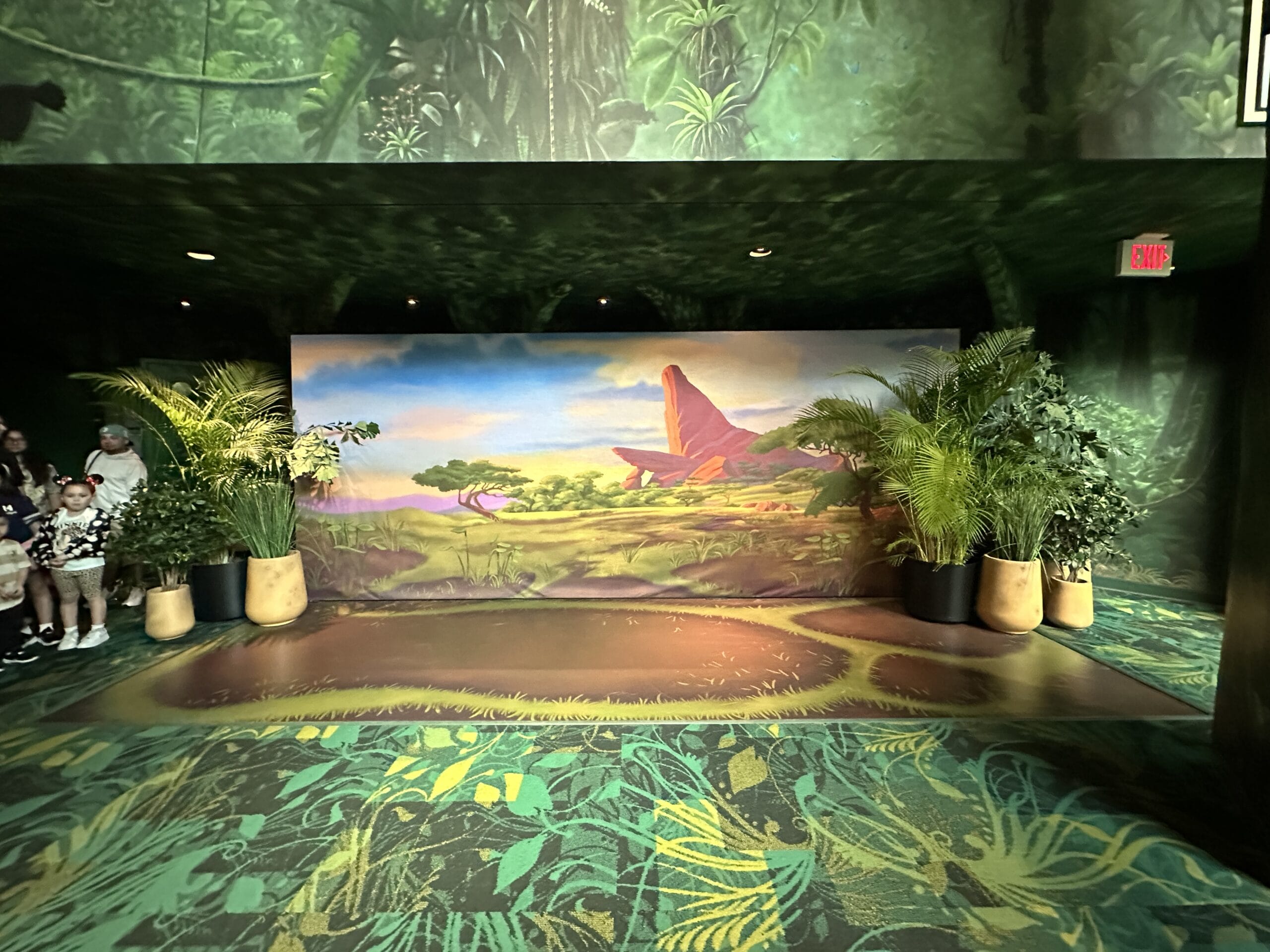
Timon and Rafiki returned to Rafiki’s Planet Watch in the summer of 2024 for the 30th anniversary of The Lion King. They met outside for the summer then moved indoors and the backdrop was eventually installed.
Wilderness Explorers
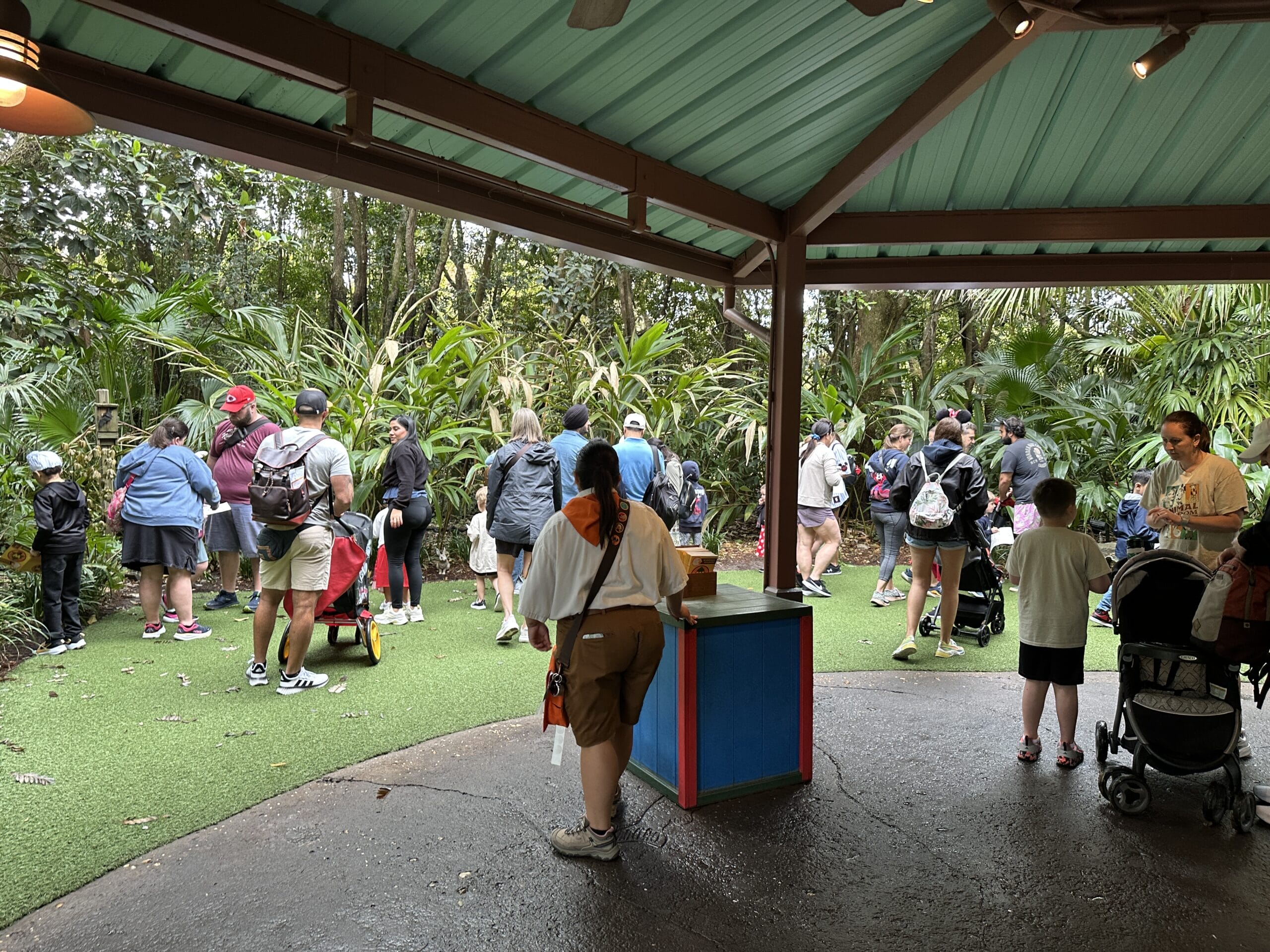
There are multiple Wilderness Explorers badges to be earned at Rafiki’s Planet Watch. The first location is along the pathway leading from the train station to Conservation Station. Guests search a “yard” for animal figures. A cast member tells them how properly taking care of a yard can help animals and gives them the Habitat Badge sticker.
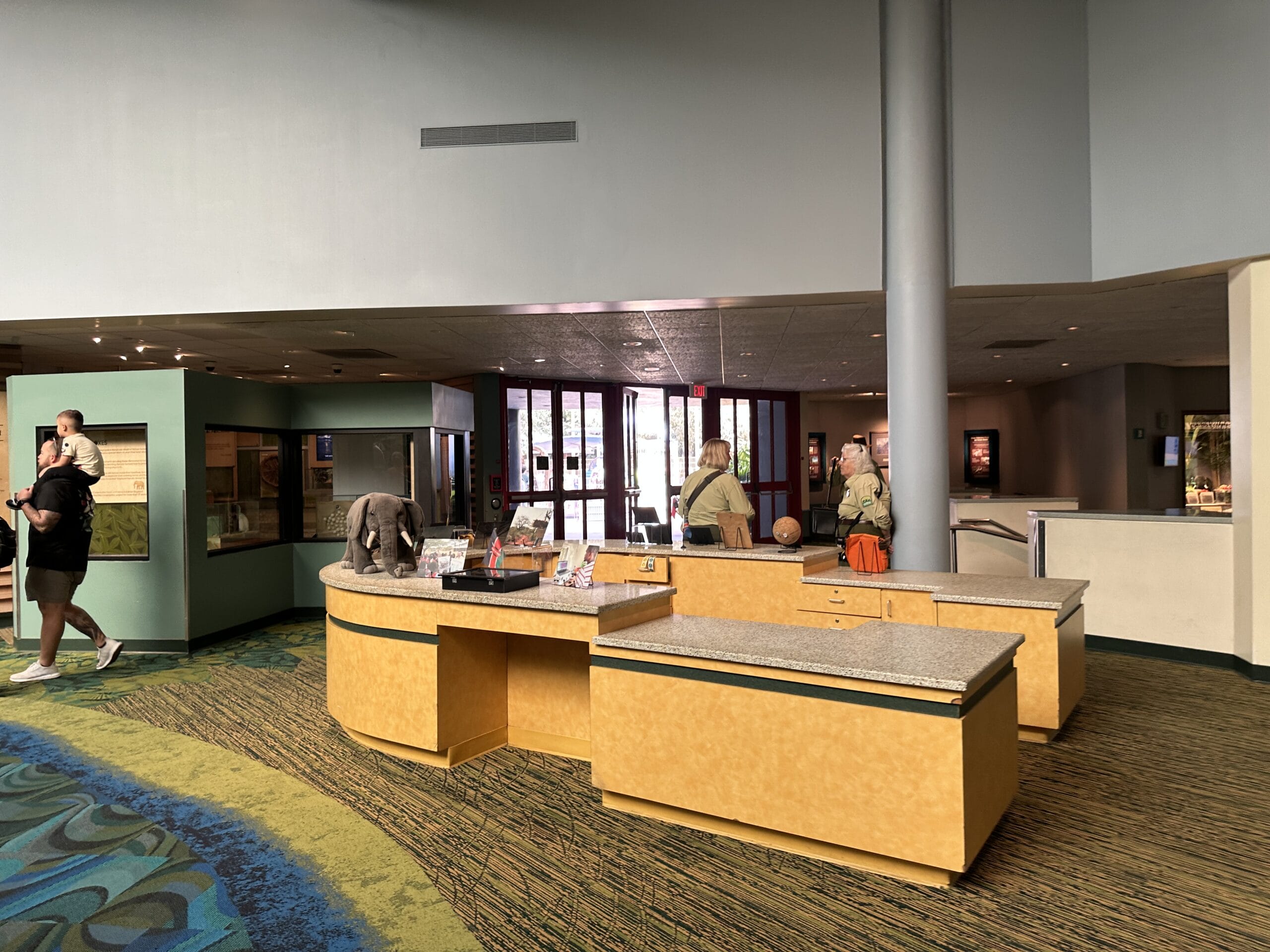
At the desk inside Conservation Station, Wilderness Explorers can learn about different conservation actions and recycling to receive the Conservation Badge and Recycling Badge.
Also in Conservation Station is the Animal Nutrition Badge. Guests earn this from a cast member near the Nutrition Center. And guests can get a Veterinary Badge from a cast member near the Veterinary Treatment Room.
In the mornings and evenings when Rafiki’s Planet Watch isn’t open, a Wilderness Explorers station for these stickers was available in Africa outside Harambe Station. We expect something similar to be in place while Rafiki’s Planet Watch is closed for the next several weeks.
The Animation Experience
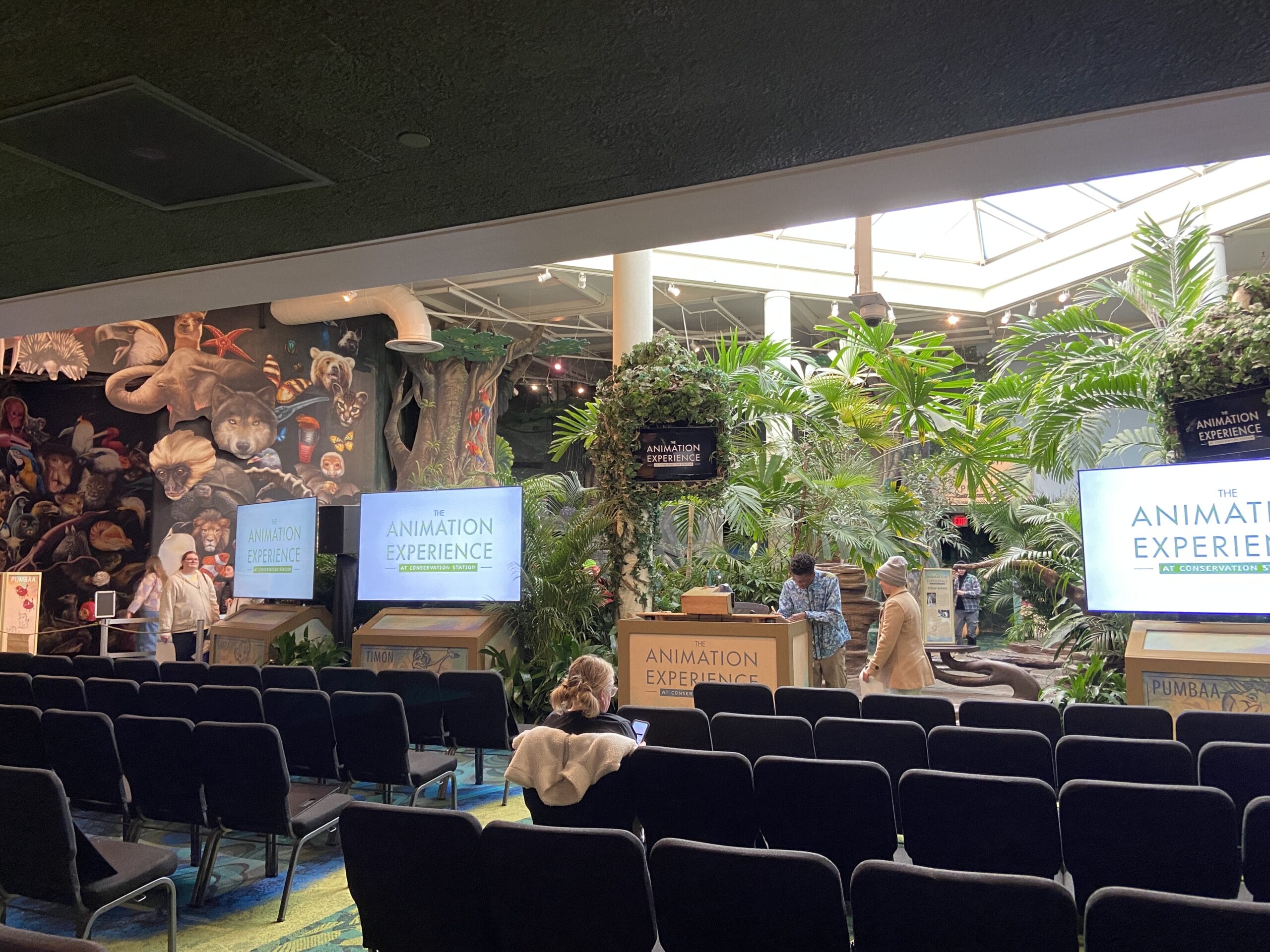
The Animation Experience opened at Conservation Station in 2019. The space previously held animal flats, signs, and screens. This is a classic Disney attraction where animators teach guests to draw different Disney characters. It was once at The Magic of Disney Animation in Disney’s Hollywood Studios but ended after Star Wars: Launch Bay took over that space in 2015.
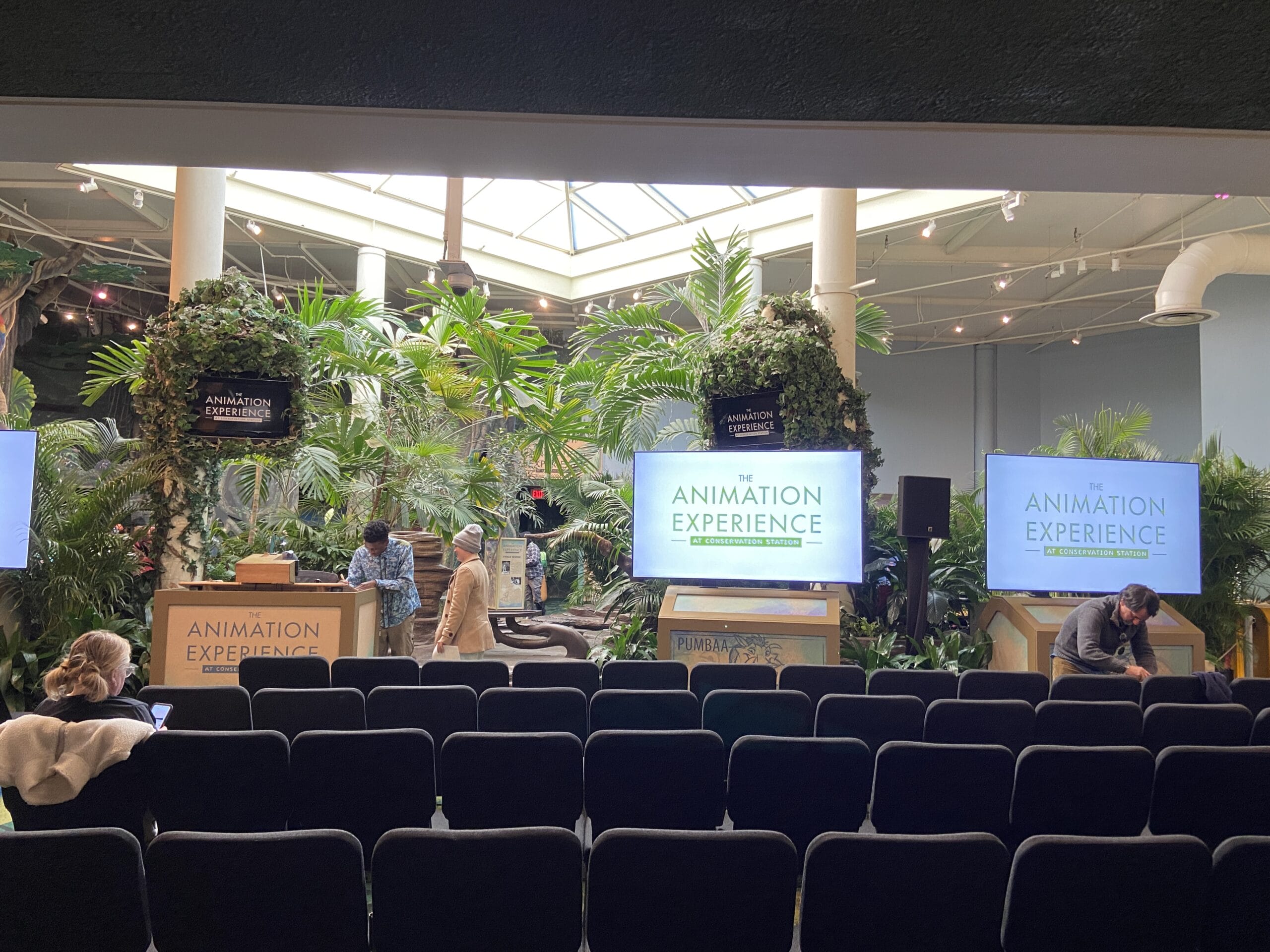
The Animation Experience will be removed as part of the Bluey takeover but a version will return to Disney’s Hollywood Studios with the new version of The Magic of Disney Animation this summer.
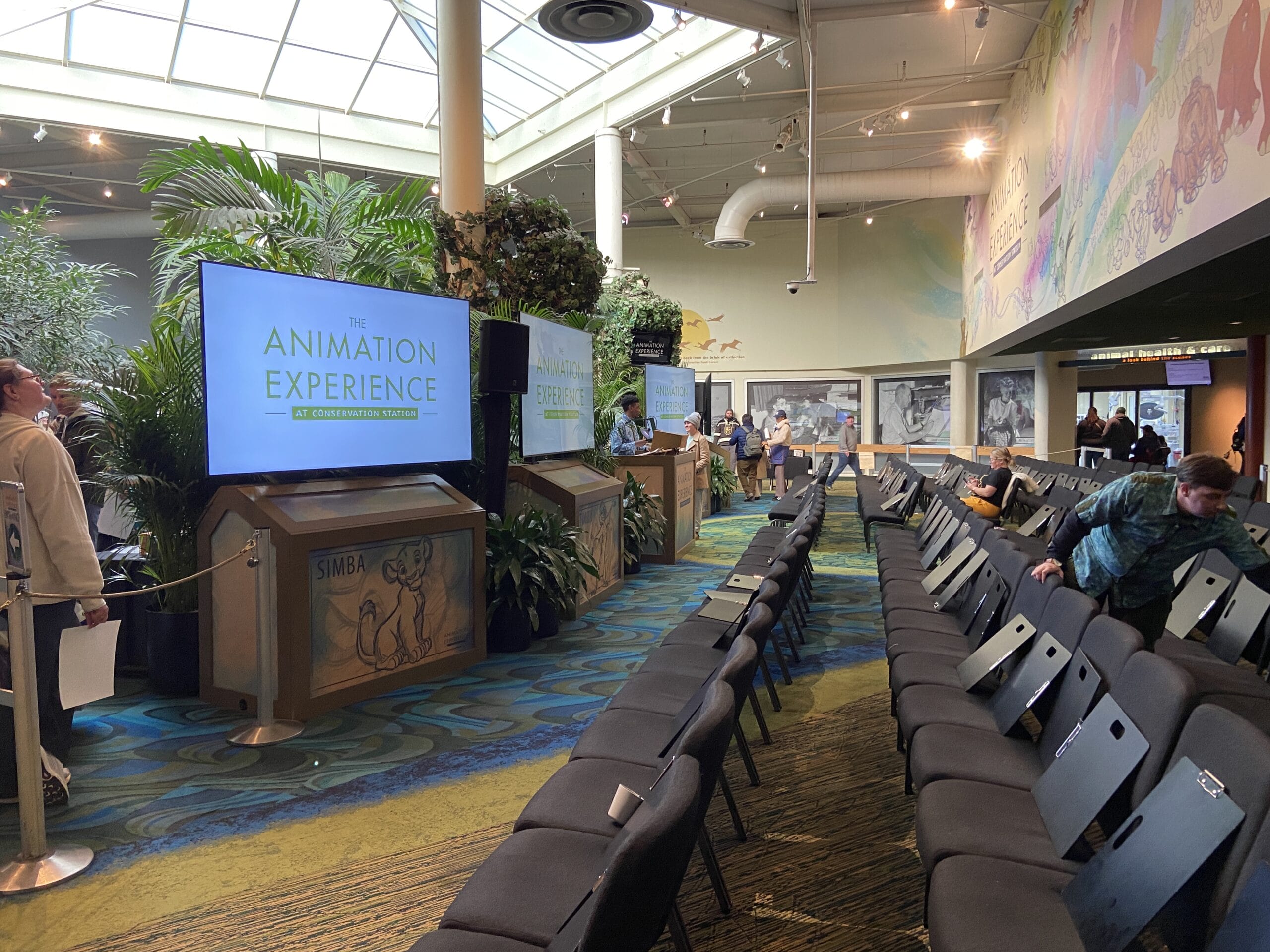
The Conservation Station version of the experience had four long rows of black armless chairs. Before each class, cast members made sure every chair had a clipboard.
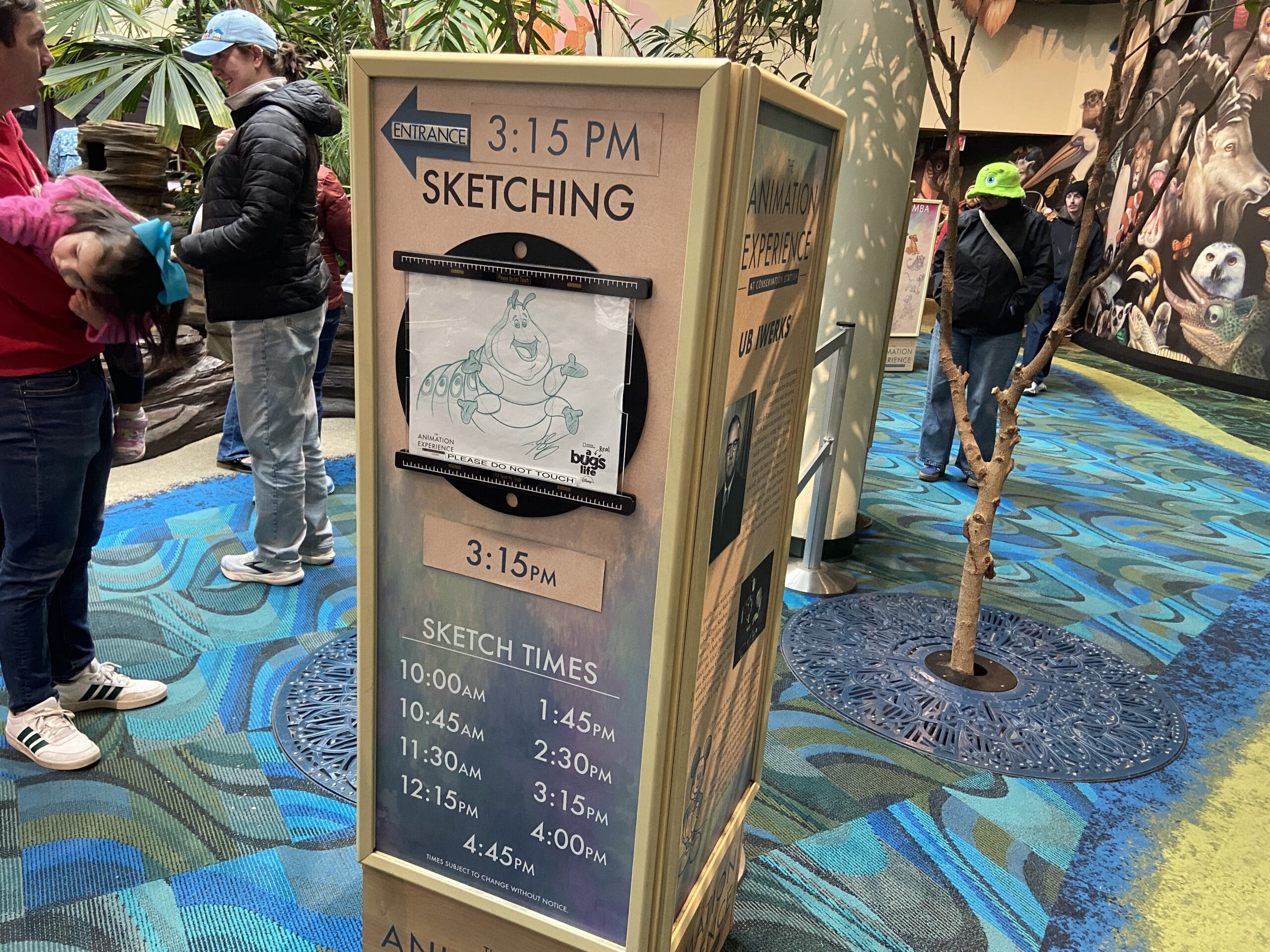
A column at the start of the queue displayed sketch times, including the next time and the next creature guests would be sketching. The class rotated through different characters like Crush from Finding Nemo and Heimlich from A Bug’s Life. In the queue, guests would pick up their sketch paper and pencils (without erasers). Cast members also had coloring books on hand for kids.
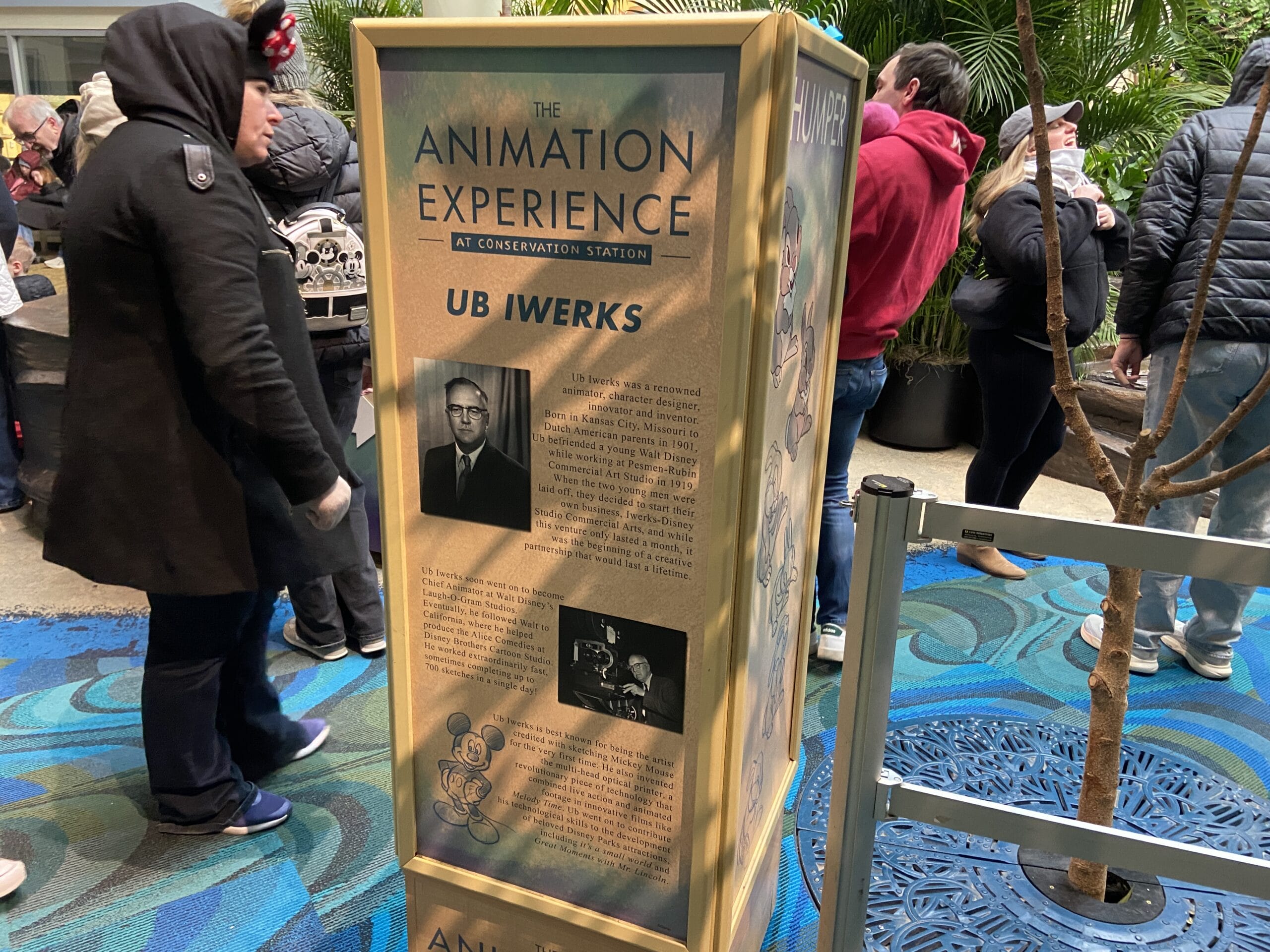
On the columns lining the queue was information about various Disney artists.
Ub Iwerks
Ub Iwerks was a renowned animator, character designer, innovator and inventor. Born in Kansas City, Missouri to Dutch American parents in 1901, Ub befriended a young Walt Disney while working at Pesmen-Rubin Commercial Art Studio in 1919. When the two young men were laid-off, they decided to start their own business, Iwerks-Disney Studio Commercial Arts, and while this venture only lasted a month, it was the beginning of a creative partnership that would last a lifetime.
Ub Iwerks soon went on to become Chief Animator at Walt Disney’s Laugh-O-Gram Studios. Eventually, he followed Walt to California, where he helped produce the Alice Comedies at Disney Brothers Cartoon Studio. He worked extraordinarily fast, sometimes completing up to 700 sketches in a single day!
Ub Iwerks is best known for being the artist credited with sketching Mickey Mouse for the very first time. He also invented the multi-head optical printer, a revolutionary piece of technology that combined live action and animated footage in innovative films like Melody Time. Ub went on to contribute his technological skills to the development of beloved Disney Parks attractions, including it’s a small world and Great Moments with Mr. Lincoln.
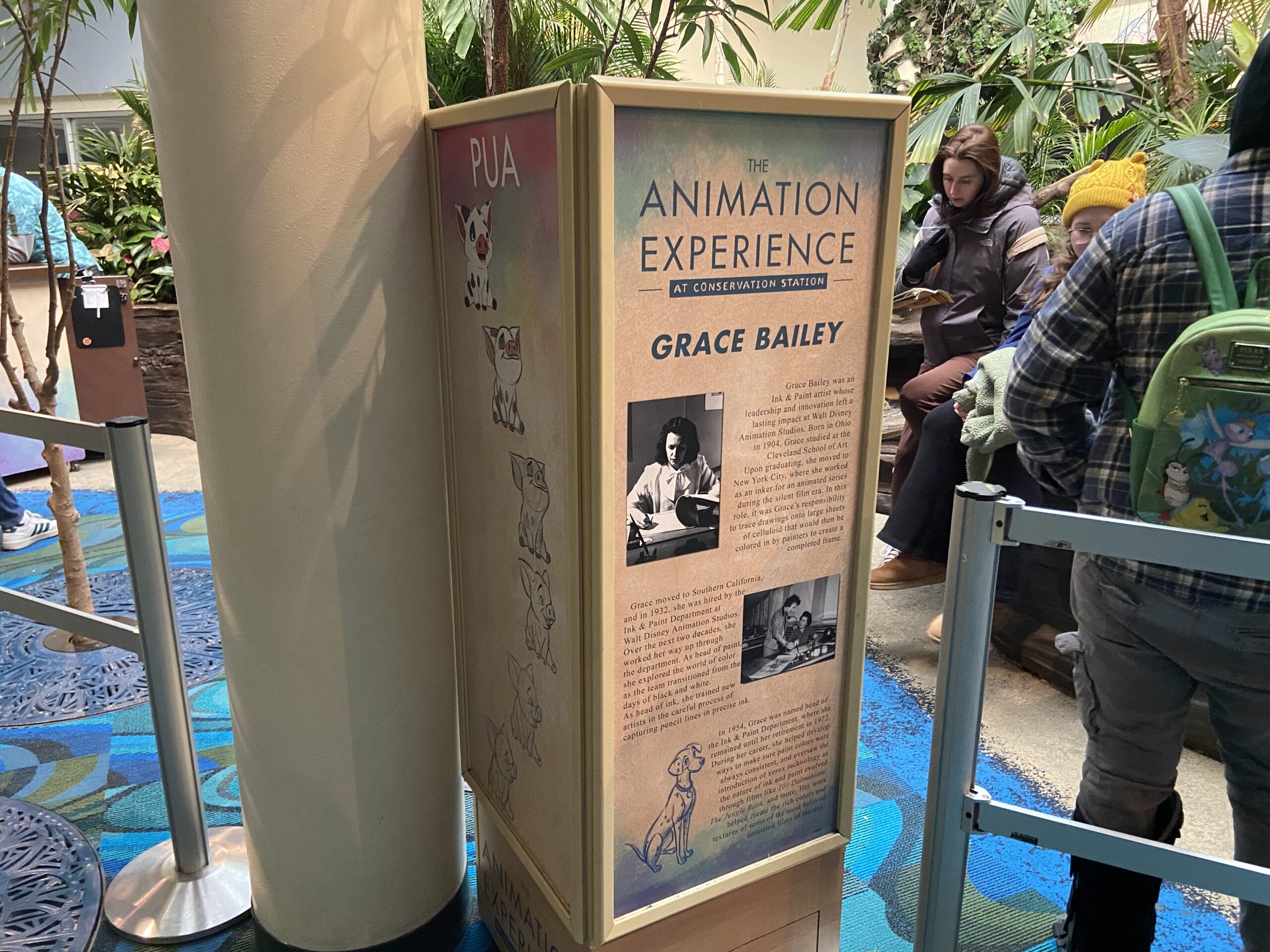
Grace Bailey
Grace Bailey was an Ink & Paint artist whose leadership and innovation left a lasting impact at Walt Disney Animation Studios. Born in Ohio in 1904, Grace studied at the Cleveland School of Art. Upon graduating, she moved to New York City, where she worked as an inker for an animated series during the silent film era. In this role, it was Grace’s responsibility to trave drawings onto large sheets of celluloid that would then be colored in by painters to create a completed frame.
Grace moved to Southern California, and in 1932, she was hired by the Ink & Paint Department at Walt Disney Animation Studios. Over the next two decades, she worked her way up through the department. As head of paint, she explored the world of color as the team transitioned from the days of black and white. As head of ink, she trained new artists in the careful process of capturing pencil lines in a precise ink.
In 1954, Grace was named head of the Ink & Paint Department, where she remained until her retirement in 1972. During her career, she helped develop ways to make sure paint colors were always consistent, and oversaw the introduction of xerox technology as the nature of ink and paint evolved through films like 101 Dalmatians, The Jungle Book, and more. Her work helped create the rich colors and textures of some of the most beloved animated films of the day.
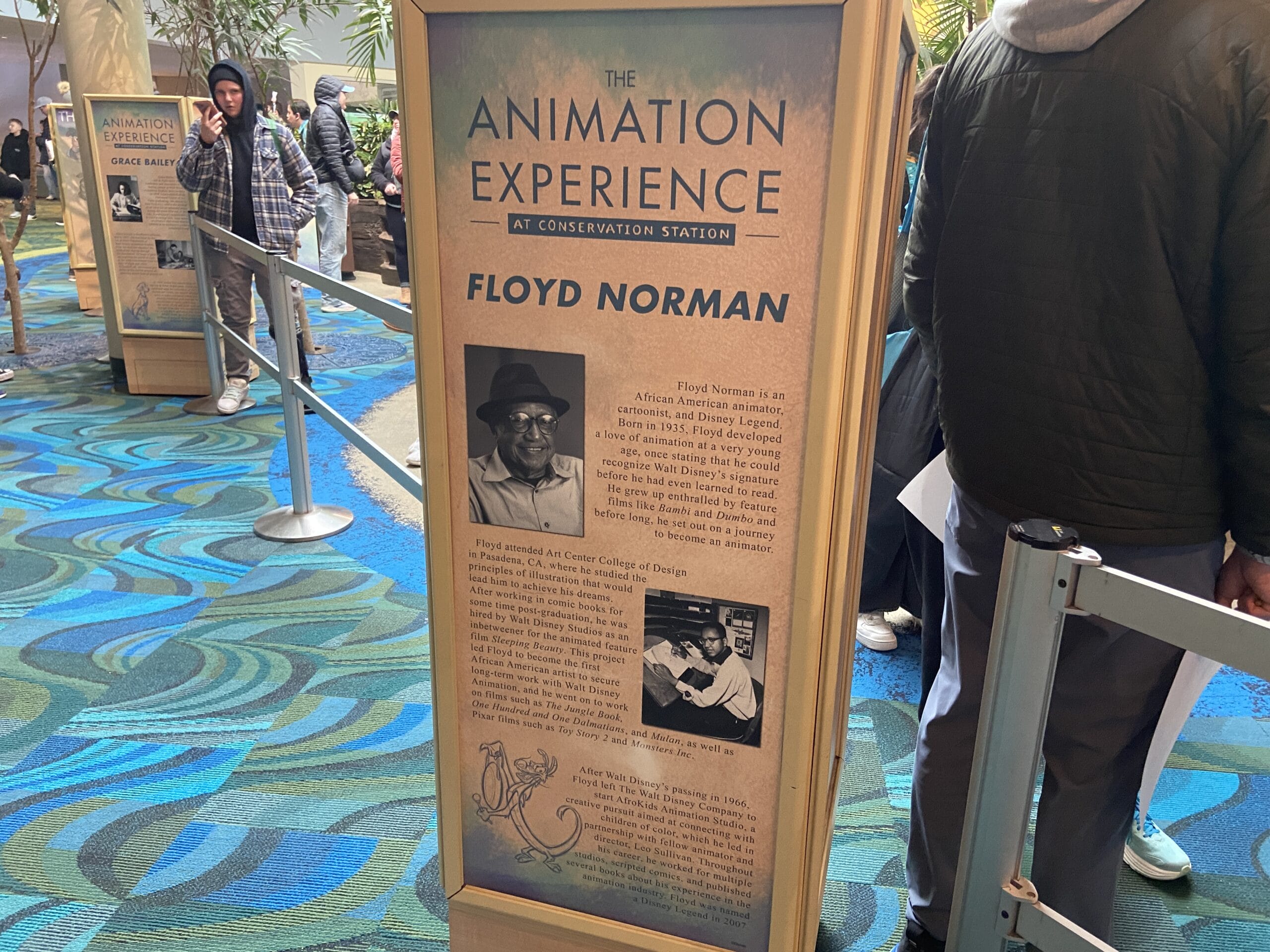
Floyd Norman
Floyd Norman is an African American animator, cartoonist, and Disney Legend. Born in 1935, Floyd developed a love of animation at a very young age, once stating that he could recognize Walt Disney’s signature before he had even learned to read. He grew up enthralled by feature films like Bambi and Dumbo and before long, he set out on a journey to become an animator.
Floyd attended Art Center College of Design in Pasadena, CA, where he studied the principles of illustration that would lead him to achieve his dreams. After working in comic books for some time post-graduation, he was hired by Walt Disney Studios as an inbetweener for the animated feature film Sleeping Beauty. This project led Floyd to become the first African American artist to secure long-term work with Walt Disney Animation, and he went on to work on films such as The Jungle Book, One Hundred and One Dalmatians, and Mulan, as well as Pixar films such as Toy Story 2 and Monsters, Inc.
After Walt Disney’s passing in 1966, Floyd left The Walt Disney Company to start AfroKids Animation Studio, a creative pursuit aimed at connecting with children of color, which he led in partnership with fellow animator and director, Lee Sullivan. Throughout his career, he worked for multiple studios, scripted comics, and published several books about his experience in the animation industry. Floyd was named a Disney Legend in 2007.
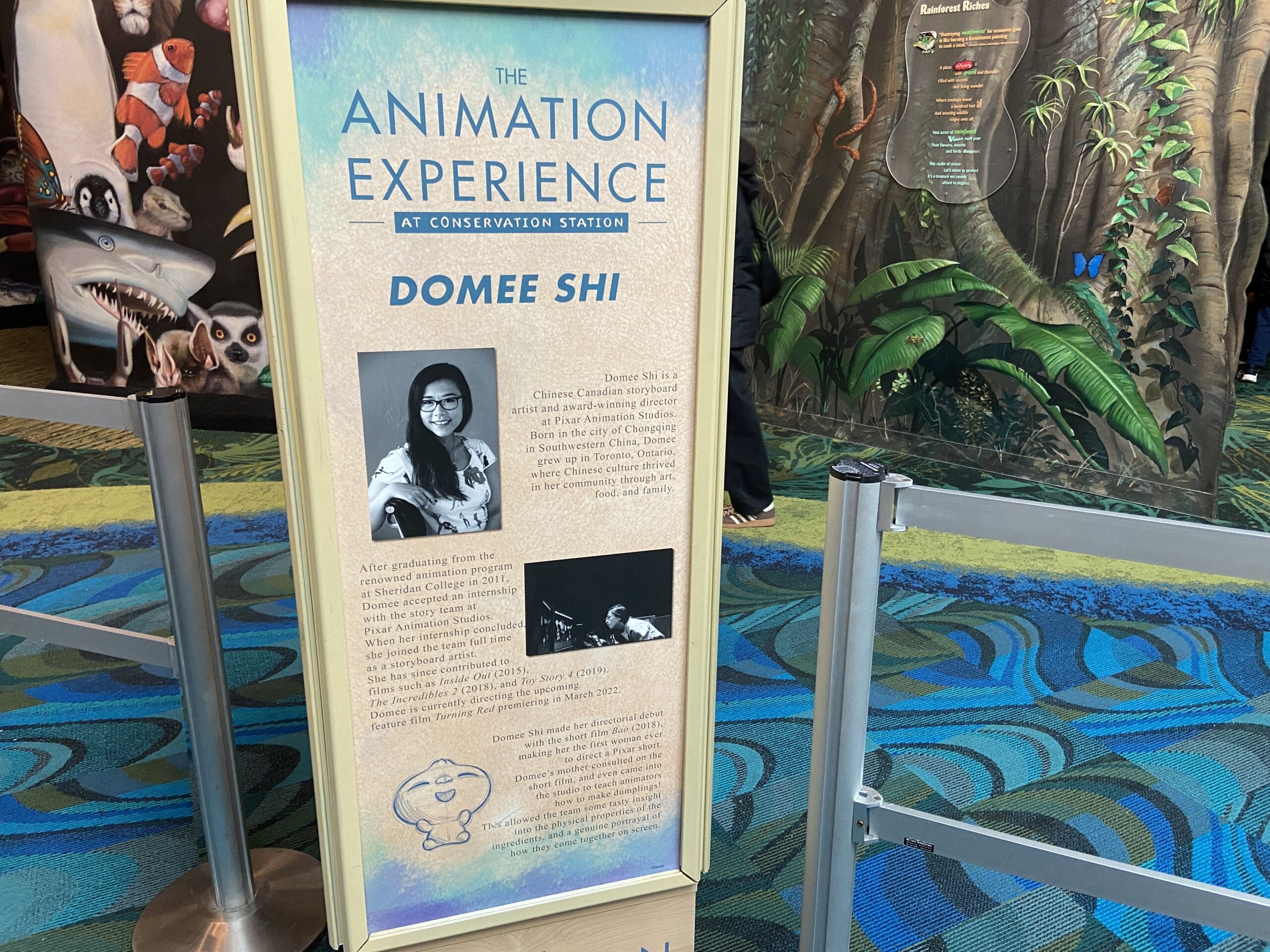
Domee Shi
Domee Shi is a Chinese Canadian storyboard artist and award-winning director at Pixar Animation Studios. Born in the city of Chongqing in Southwestern China, Domee grew up in Toronto, Ontario, where Chinese culture thrived in her community through art, food, and family.
After graduating from the renowned animation program at Sheridan College in 2011, Domee accepted an internship with the story team at Pixar Animation Studios. When her internship concluded, she joined the team full time as a storyboard artist. She has since contributed to films such as Inside Out (2015), The Incredibles 2 (2018), and Toy Story 4 (2019). Domee is currently directing the upcoming feature film Turning Red premiering in March 2022.
Domee Shi made her directorial debut with the short film Bao (2018), making her the first woman ever to direct a Pixar short. Domee’s mother consulted on the short film, and even came into the studio to teach animators how to make dumplings! This allowed the team some tasty insight into the physical properties of the ingredients, and a genuine portrayal of how they come together on screen.
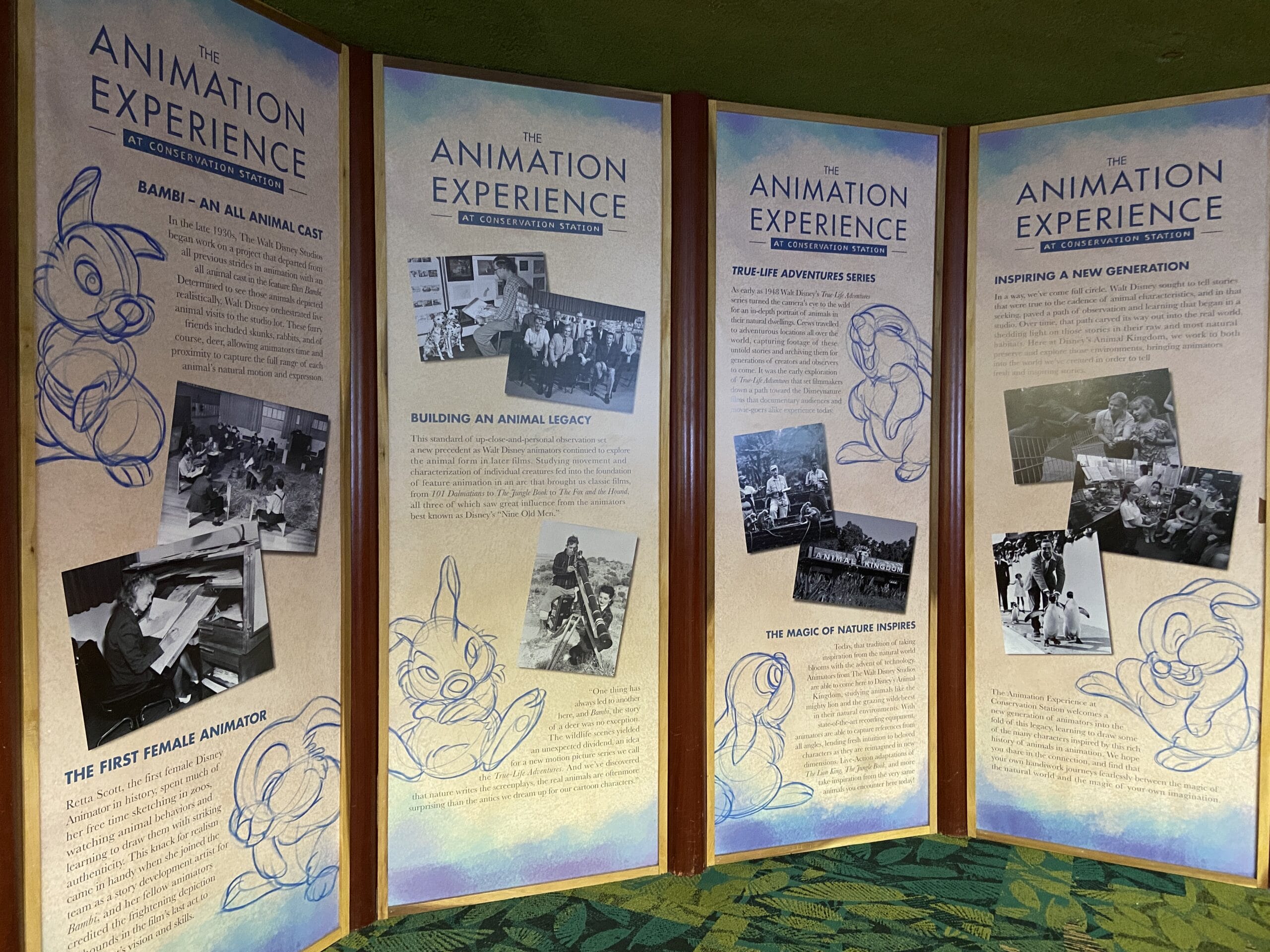
At the back of the space was a group of signs with more information about the history of Disney animation and animals. It featured photos of animators and Disney’s Animal Kingdom, as well as sketches of Thumper from Bambi.
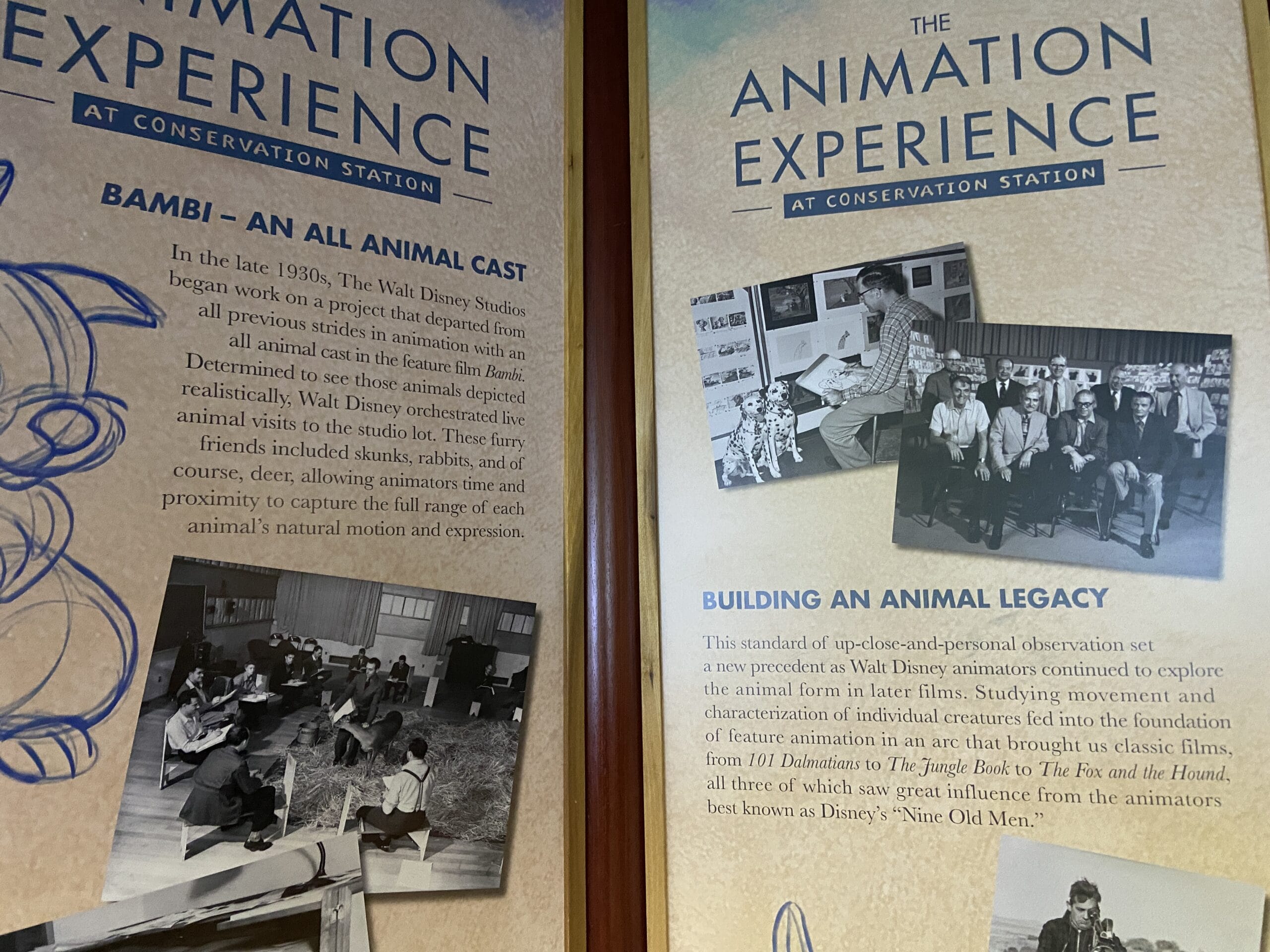
Bambi – An All Animal Cast
In the late 1930s, The Walt Disney Studios began work on a project that departed from all previous strides in animation with an all animal cast in the feature film Bambi. Determined to see those animals depicted realistically, Walt Disney orchestrated live animal visits to the studio lot. These furry friends included skunks, rabbits, and of course, deer, allowing animators time and proximity to capture the full range of each animal’s natural motion and expression.Building An Animal Legacy
This standard of up-close-and-personal observation set a new precedent as Walt Disney animators continued to explore the animal form in later films. Studying movement and characterization of individual creatures fed into the foundation of feature animation in an arc that brought us classic films from 101 Dalmatians to The Jungle Book to The Fox and the Hound, all three of which saw great influence from the animators best known as Disney’s “Nine Old Men.”
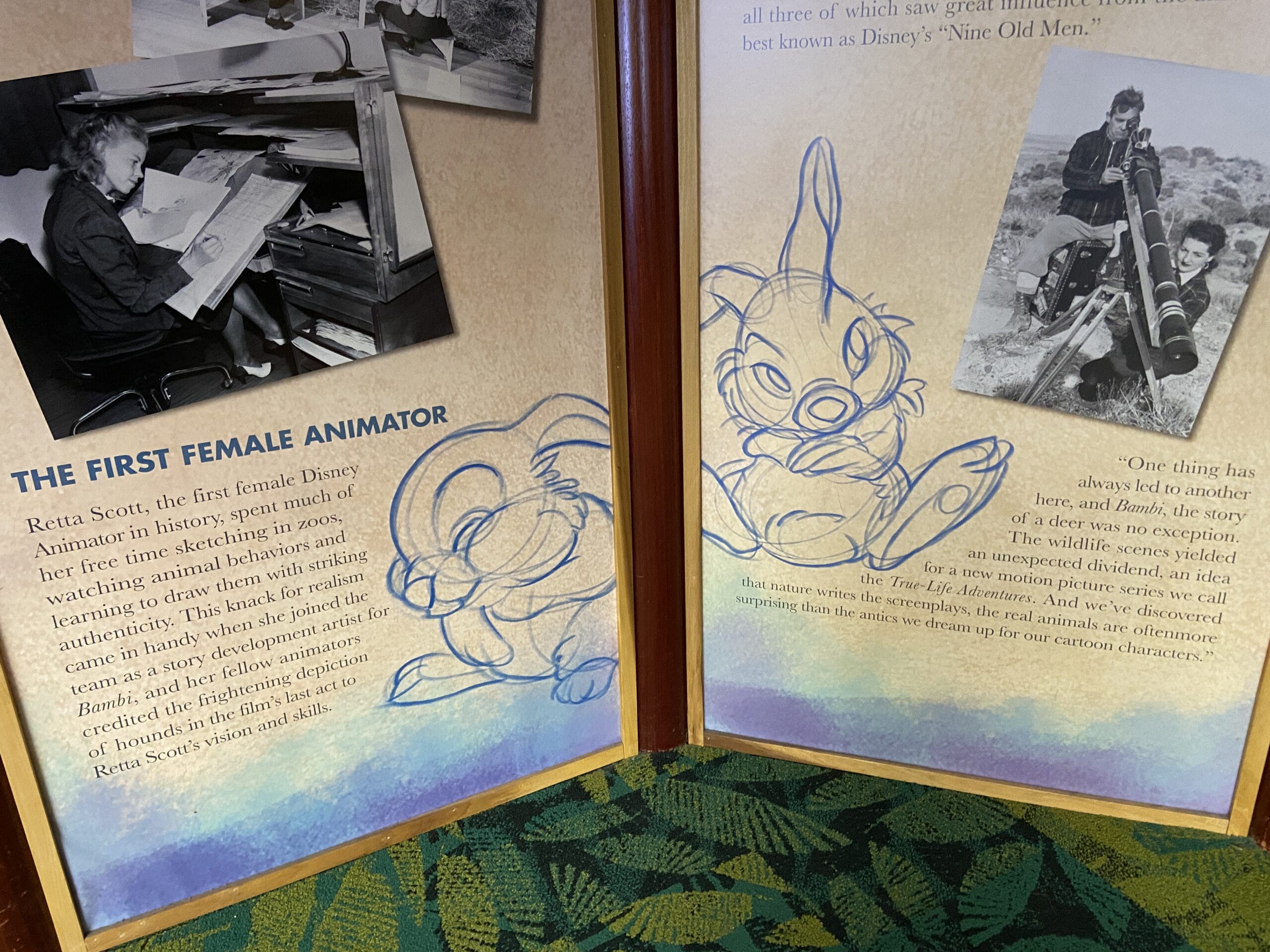
The First Female Animator
Retta Scott, the first female Disney Animator in history, spent much of her free time sketching in zoos, watching animal behaviors and learning to draw them with authenticity. This knack for realism came in handy when she joined the team as a story development artist for Bambi, and her fellow animators credited the frightening depiction of hounds in the film’s last act to Retta Scott’s vision and skills.“One thing has always led to another here, and Bambi, the story of a deer was no exception. The wildlife scenes yielded an unexpected dividend, an idea for a new motion picture series we call the True-Life Adventures. And we’ve discovered that nature writes the screenplays, the real animals are often more surprising than the antics we dream up for our cartoon characters.”
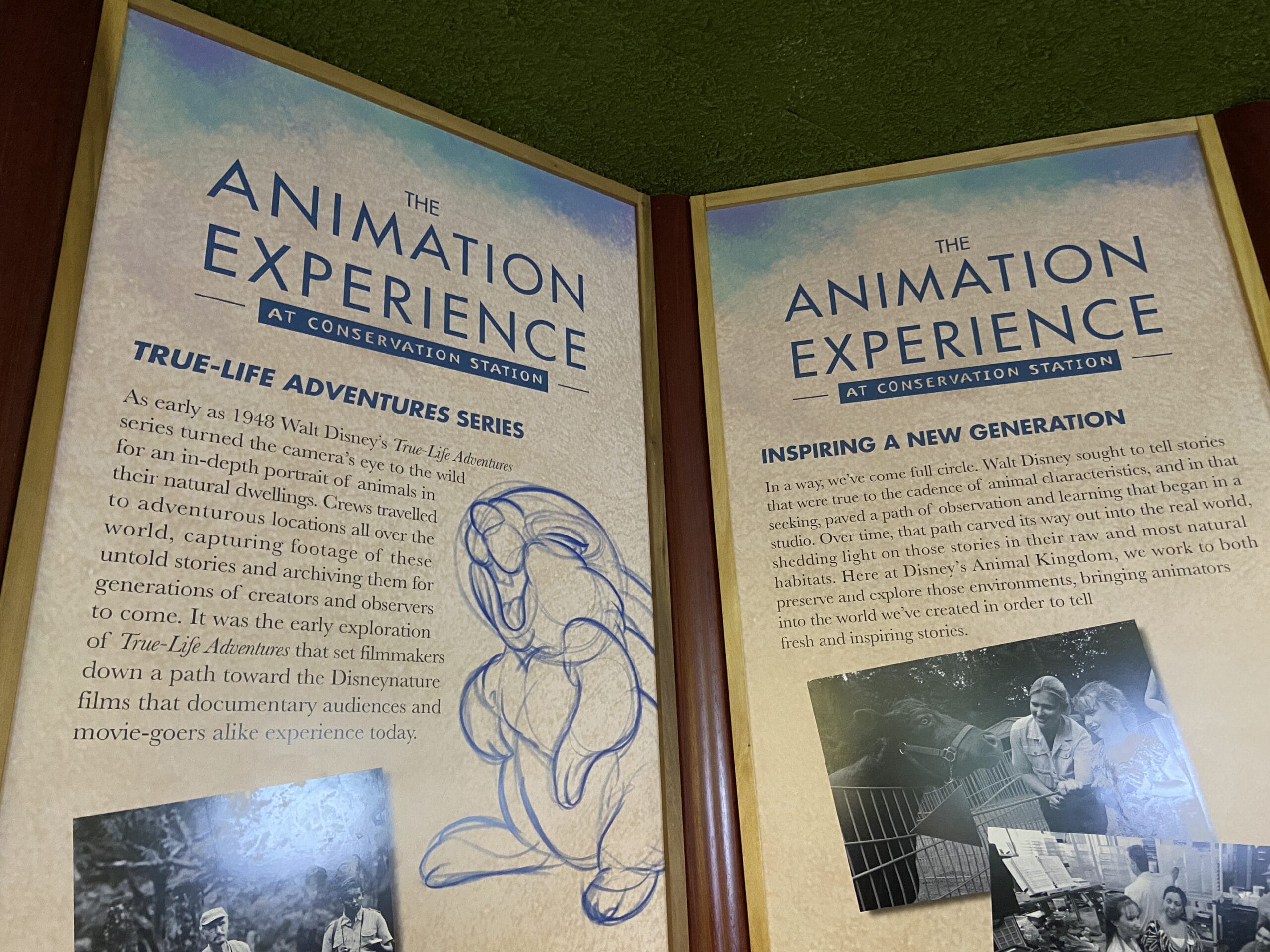
True-Life Adventure Series
As early as 1948 Walt Disney’s True-Life Adventures series turned the camera’s eye to the wild for an in-depth portrait of animals in their natural dwellings. Crews travelled to adventurous locations all over the world, capturing footage of these untold stories and archiving them for generations of creators and observers to come. It was the early exploration of True-Life Adventures that set filmmakers down a path toward the Disneynature films that documentary audiences and movie-goers alike experience today.Inspiring a New Generation
In a way, we’ve come full circle. Walt Disney sought to tell stories that were true to the cadence of animal characteristics, and in that seeking, paved a path of observation and learning that began in a studio. Over time, that path carved its way out into the real world, shedding light on those stories in their raw and most natural habitats. Here at Disney’s Animal Kingdom, we work to both preserve and explore those environments, bringing animators into the world we’ve created in order to tell fresh and inspiring stories.
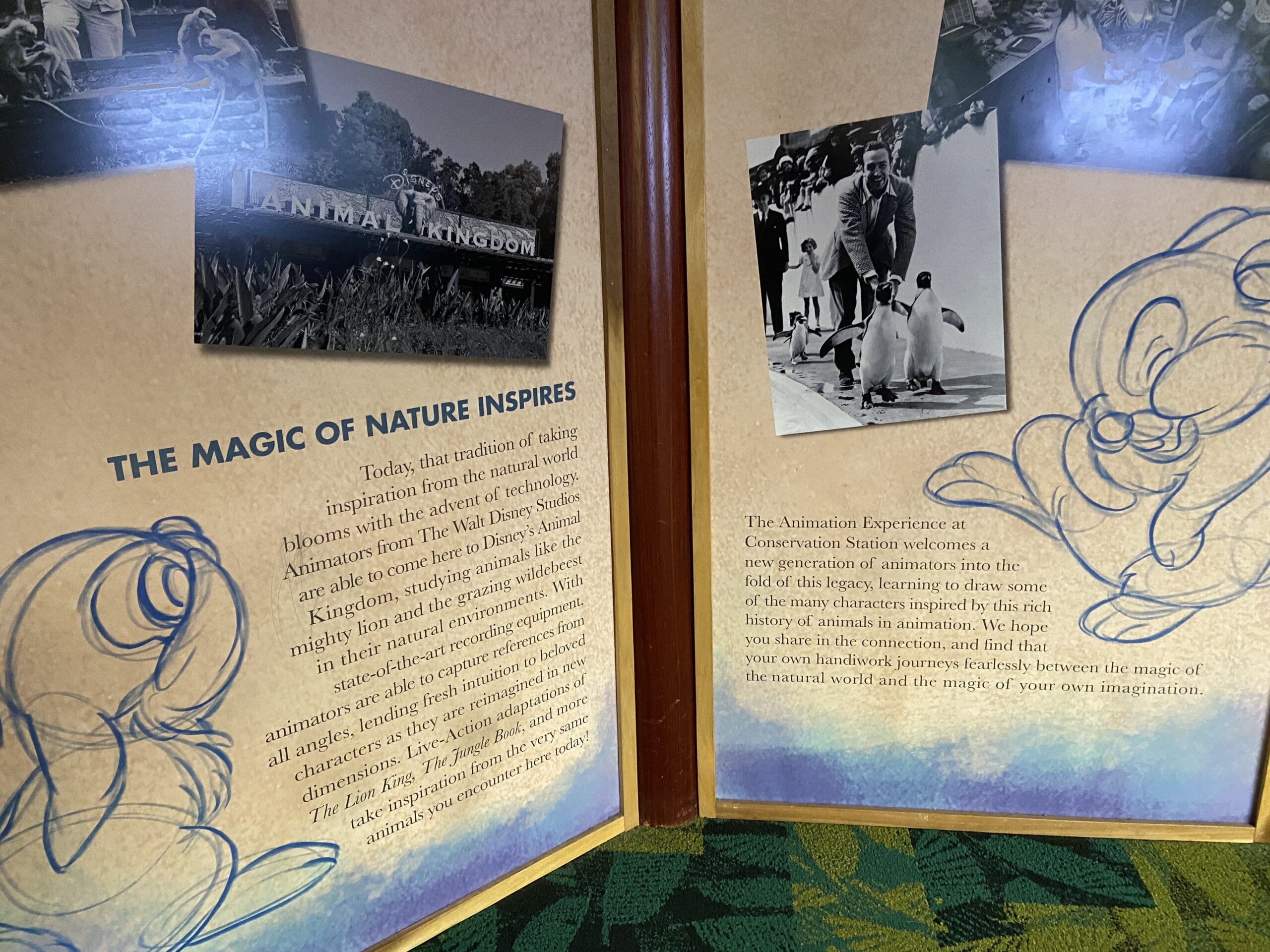
The Magic of Nature Inspires
Today, that tradition of taking inspiration from the natural world blooms with the advent of technology. Animators from The Walt Disney Studios are able to come here to Disney’s Animal Kingdom, studying animals like the mighty lion and the grazing wildebeest in their natural environments. With state-of-the-art recording equipment, animators are able to capture references from all angles, lending fresh intuition to beloved characters as they are reimagined in new dimensions. Live-Action adaptations of The Lion King, The Jungle Book, and more take inspiration from the very same animals you encounter here today!The Animation Experience at Conservation Station welcomes a new generation of animators into the fold of this legacy, learning to draw some of the many characters inspired by this rich history of animals in animation. We hope you share in the connection, and find that your own handiwork journeys fearlessly between the magic of the natural world and the magic of your own imagination.
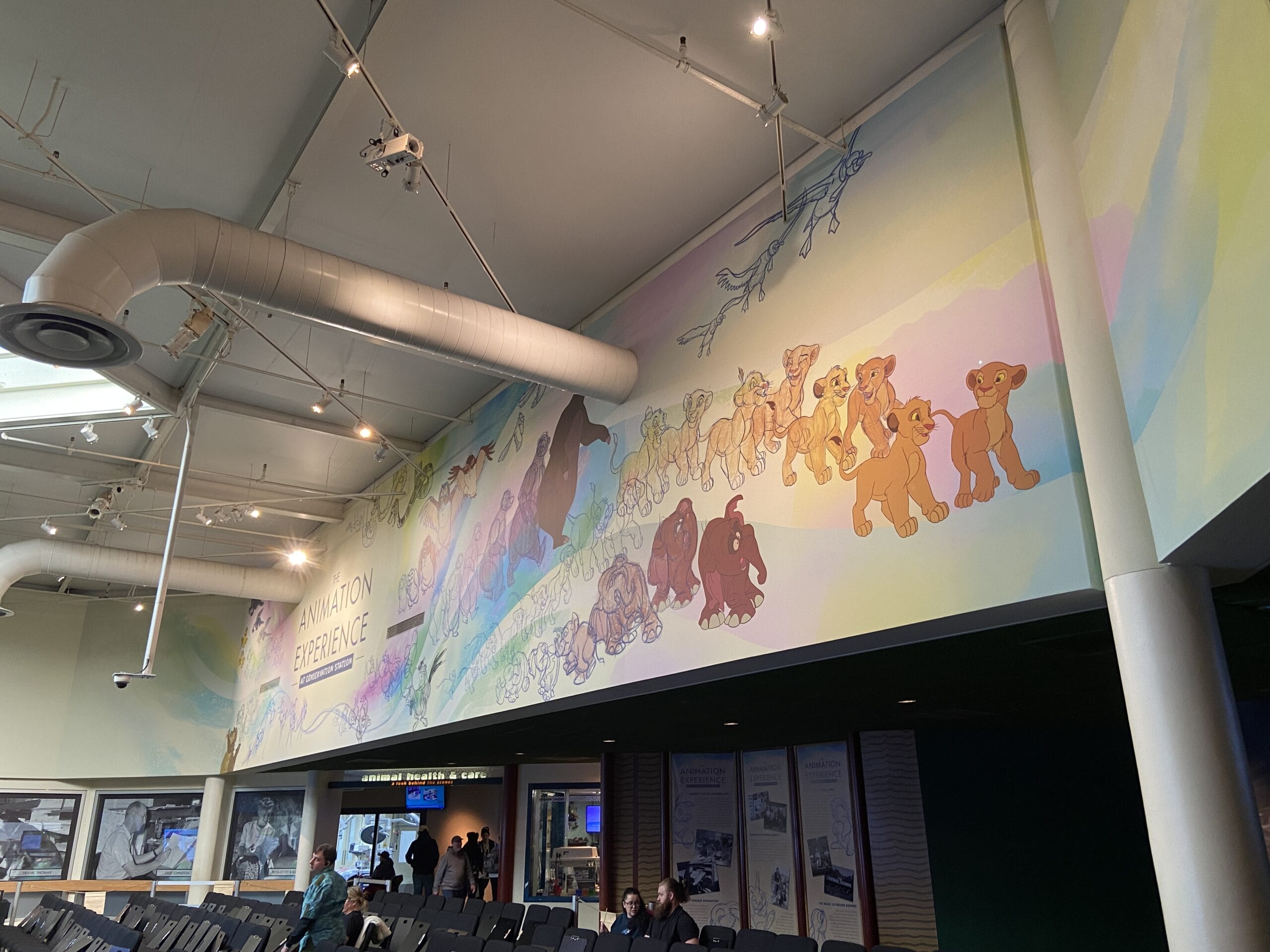
A mural above the seating area featured different classic Disney animals as sketches, partially-colored drawings, and full characters.
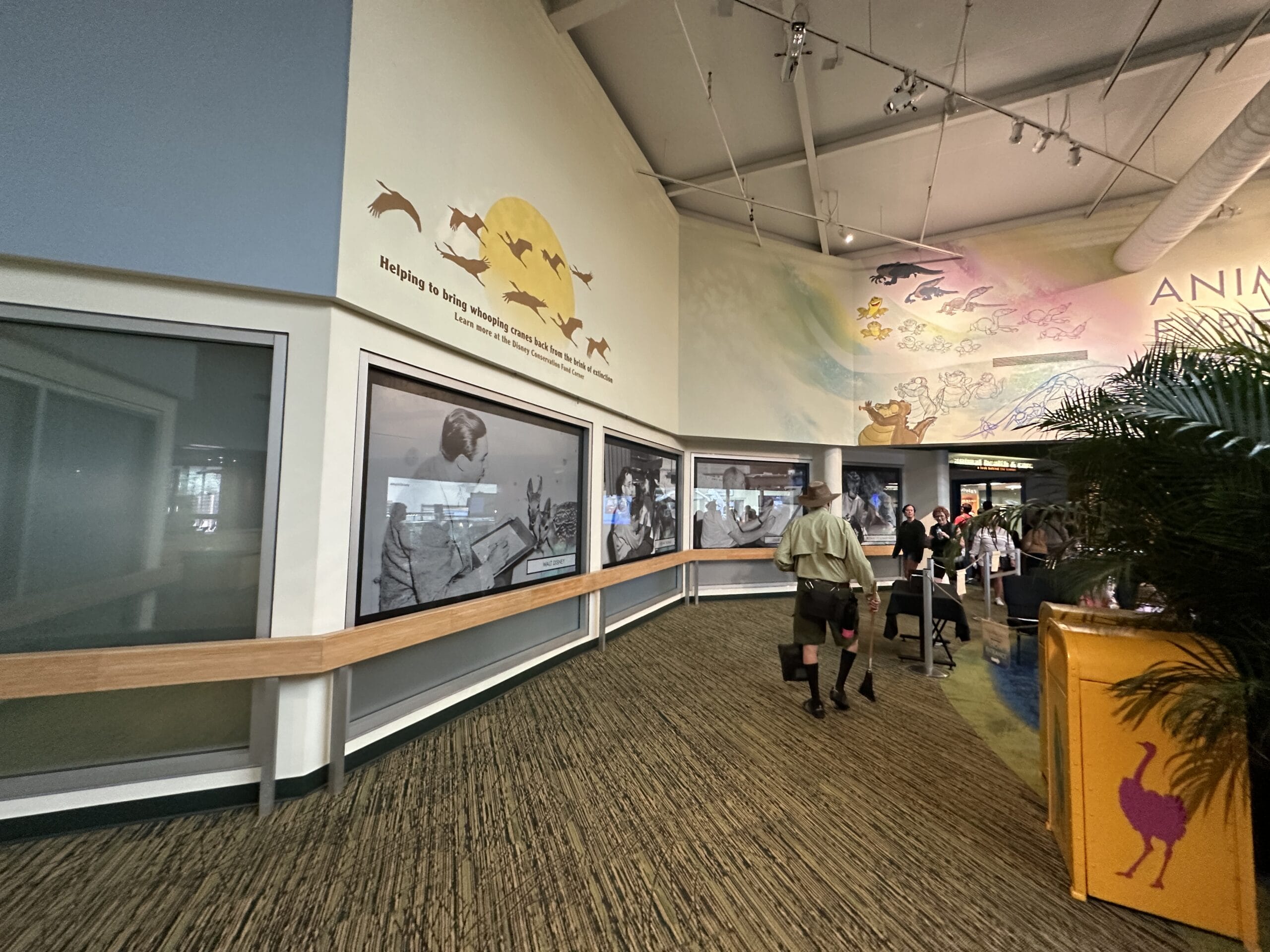
Black and white photos of Disney artists, including Walt, adorn frosted windows around the experience.
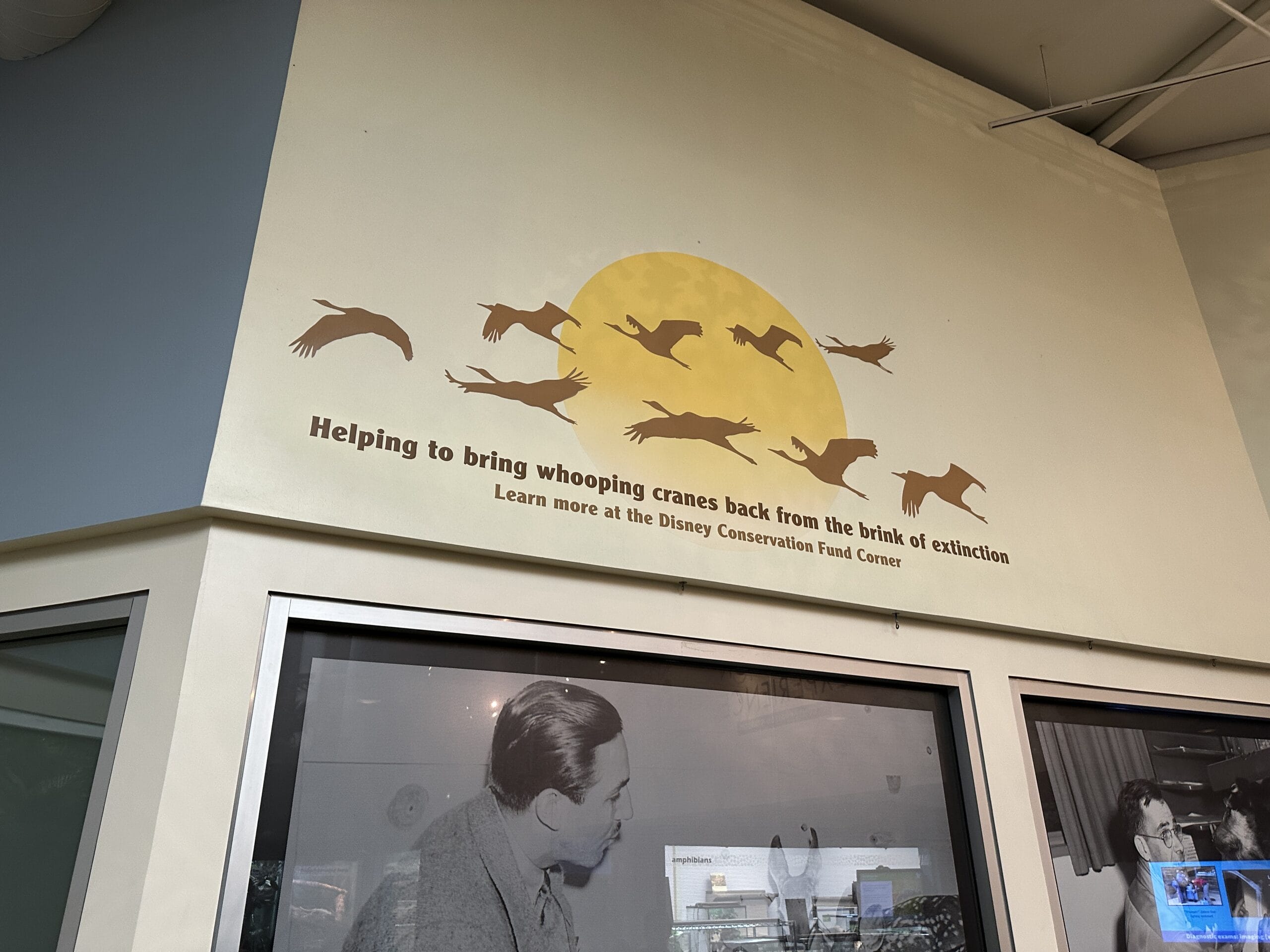
A mural above Walt’s photos reads “Helping to bring whooping cranes back from the brink of extinction.”
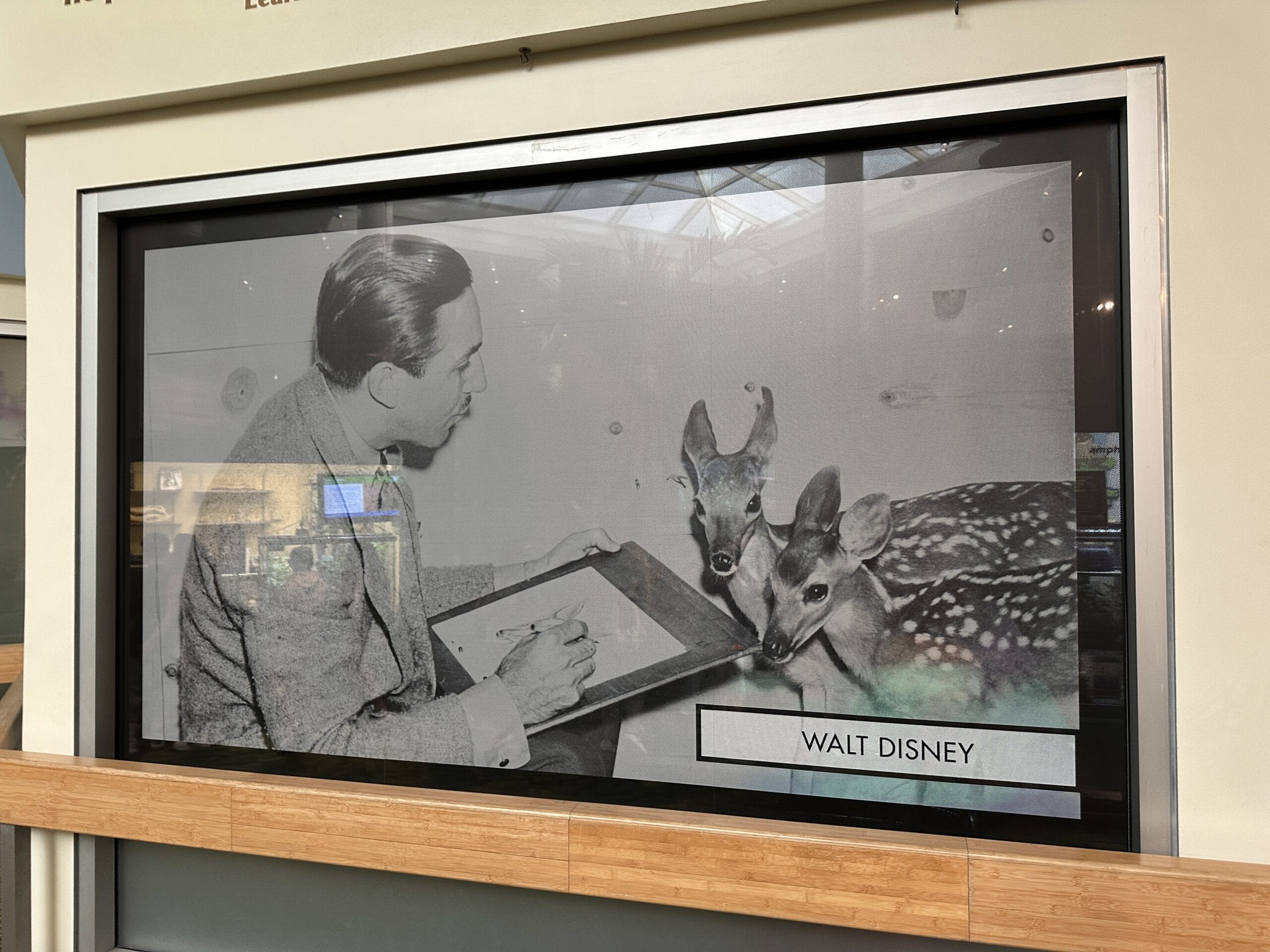
Walt is pictured sketching deer in research for Bambi.
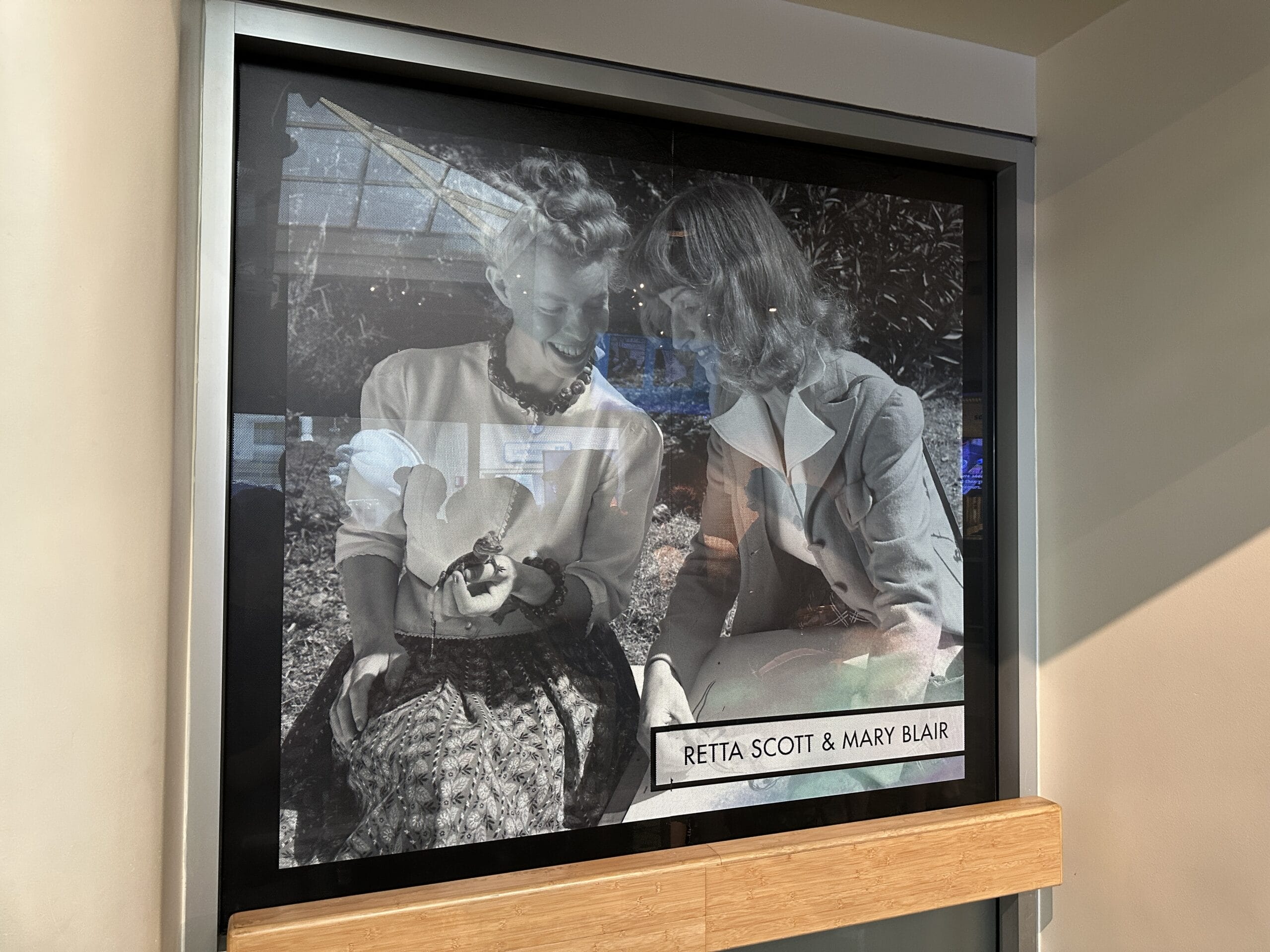
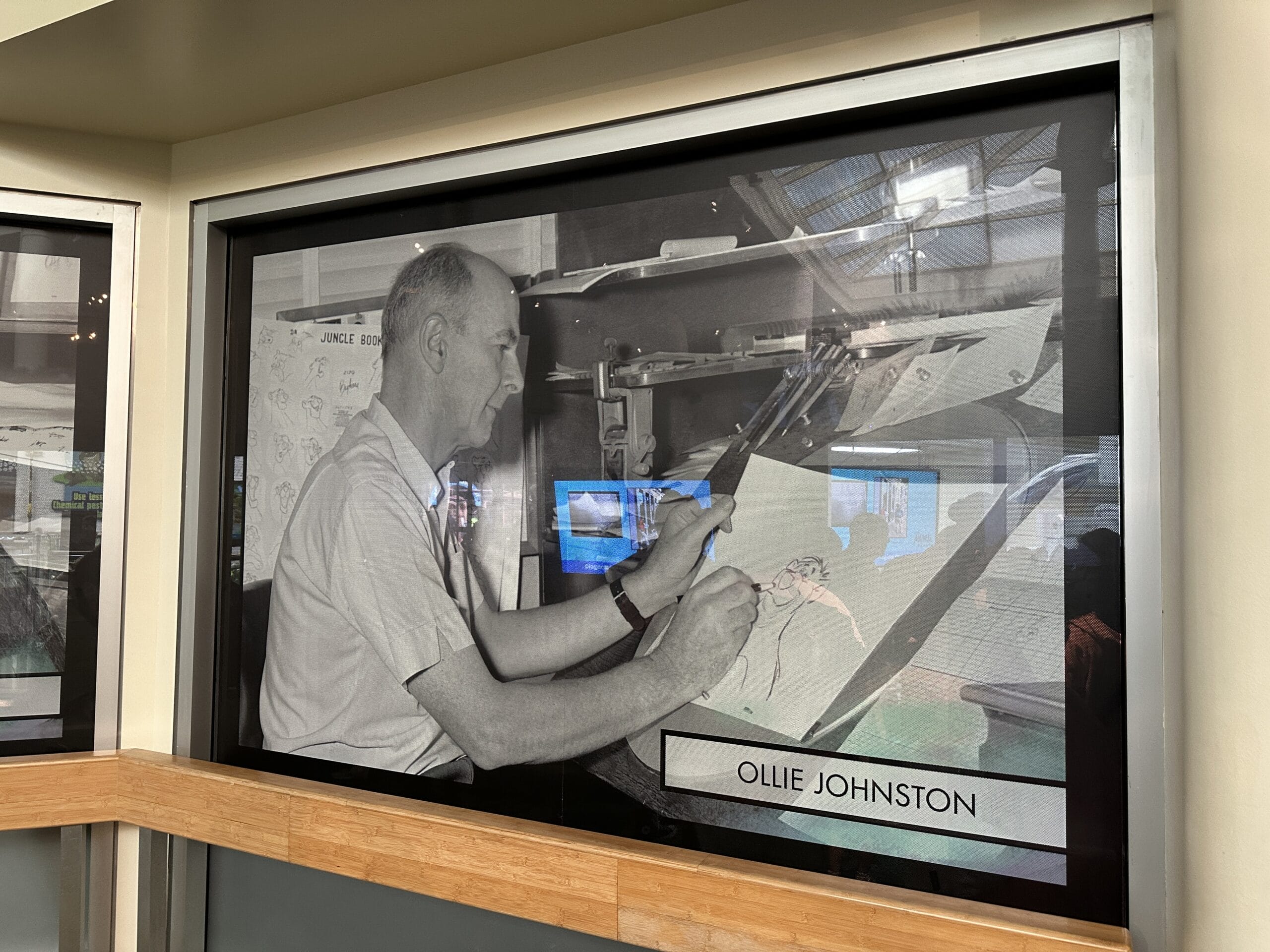
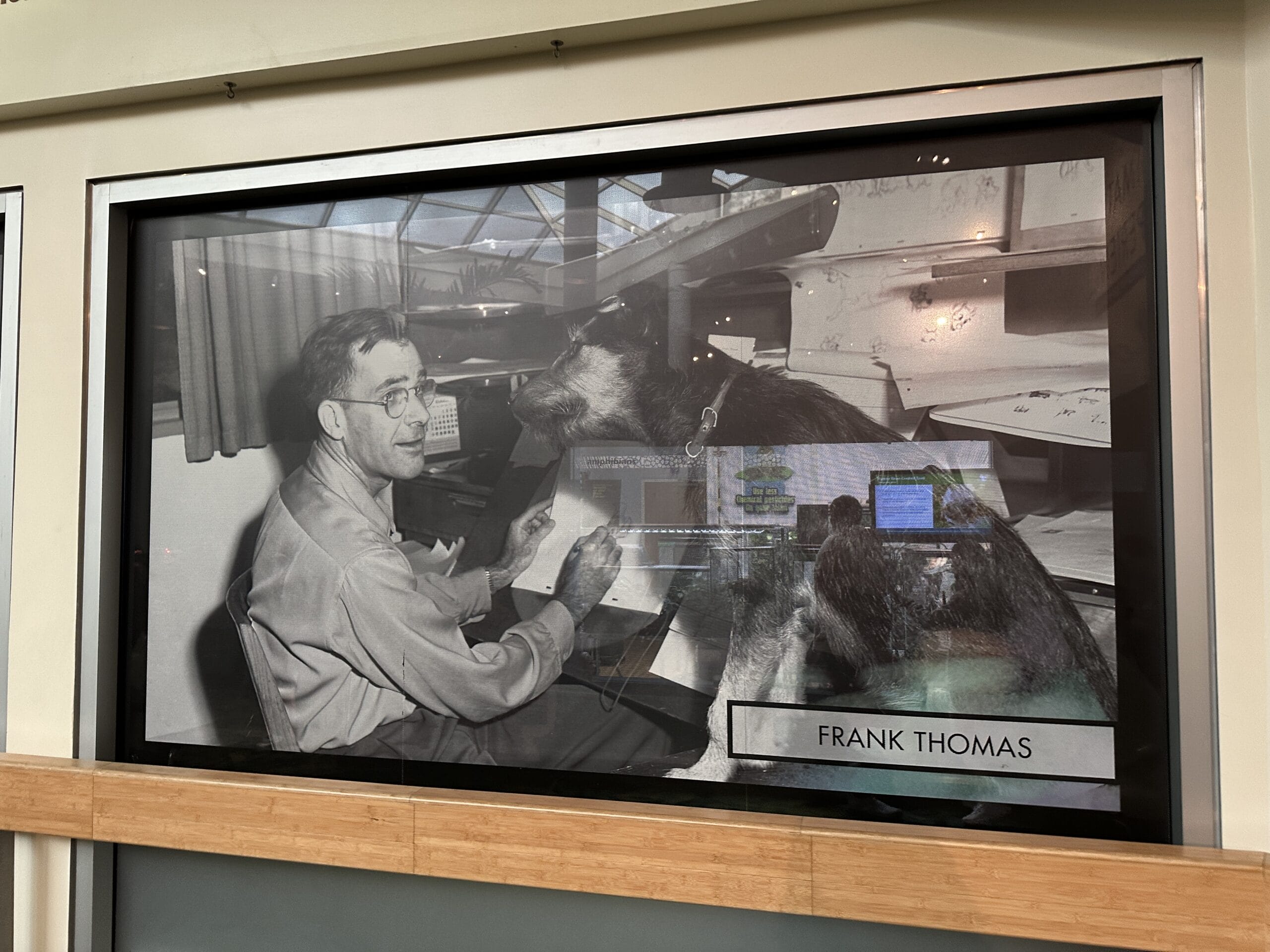
Other featured artists include Retta Scott, Mary Blair, Ollie Johnston, and Frank Thomas.
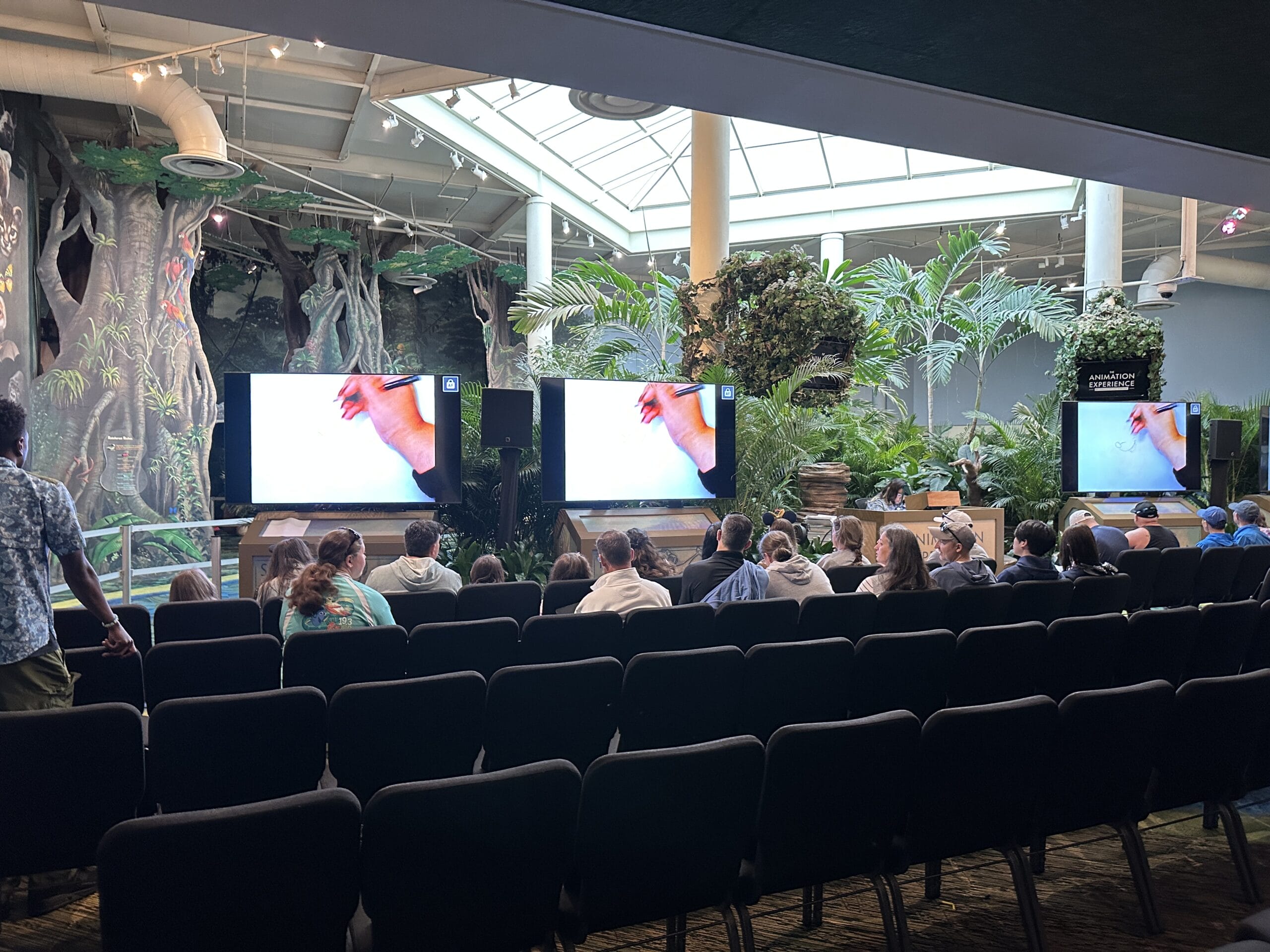
The animator who led the class sat at a podium in front of the chairs. A camera projected their live drawing onto large screens to the sides. Before the class actually began though, guests watched an introductory video, then a video about the connection between Disney animation and animals.
The animator led guests in a leisurely sketch class that took about 25 minutes. Guests could keep their sketches and there were bins at the exit if they wanted to leave their pencils.
Affection Section
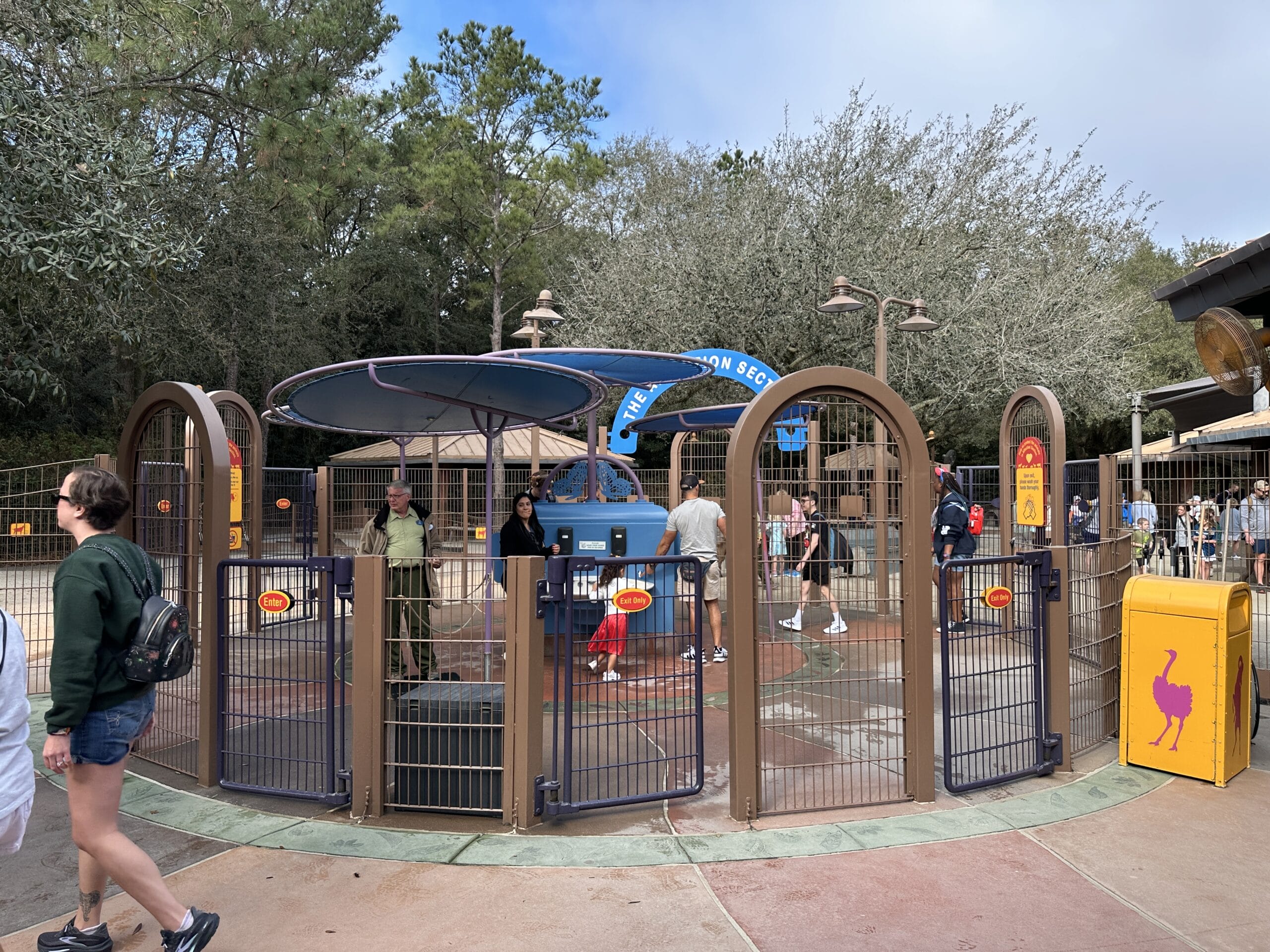
Affection Section is a petting zoo — until now full of goats, donkeys, sheep, and more. Guests entered through a gate and were first required to wash their hands.
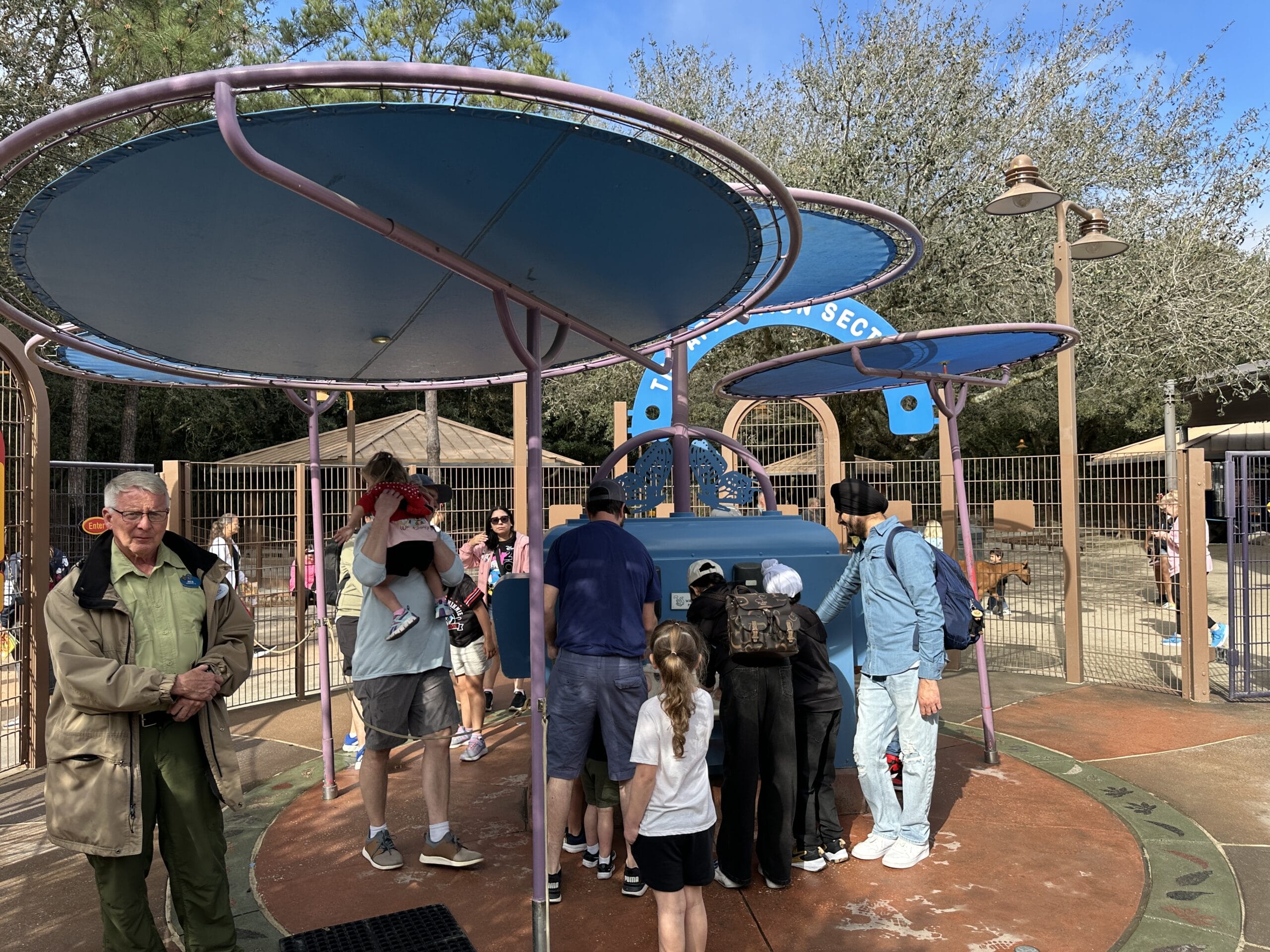
Guests were also encouraged to wash their hands when exiting. Another set of gates led into the actual zoo space.
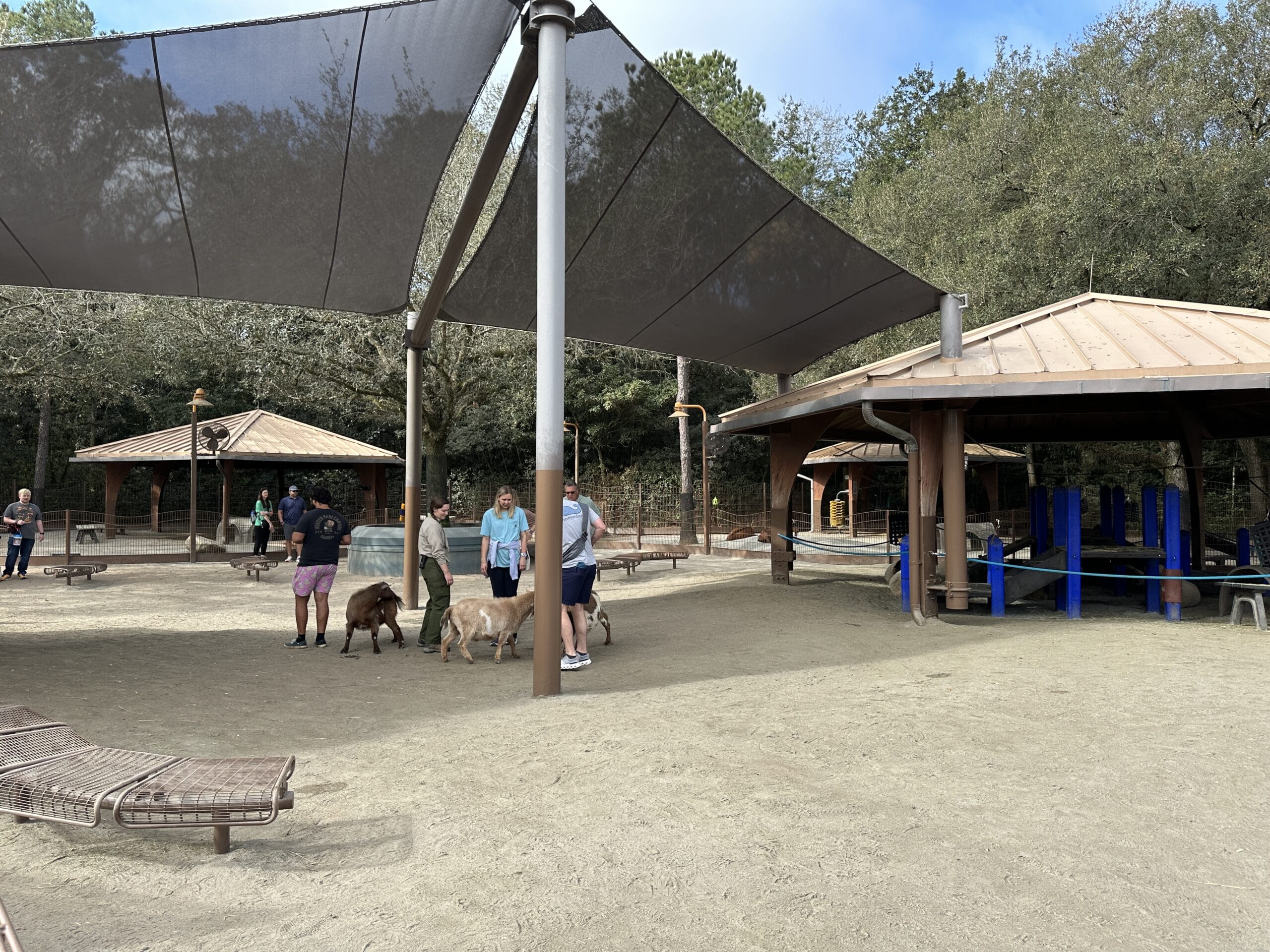
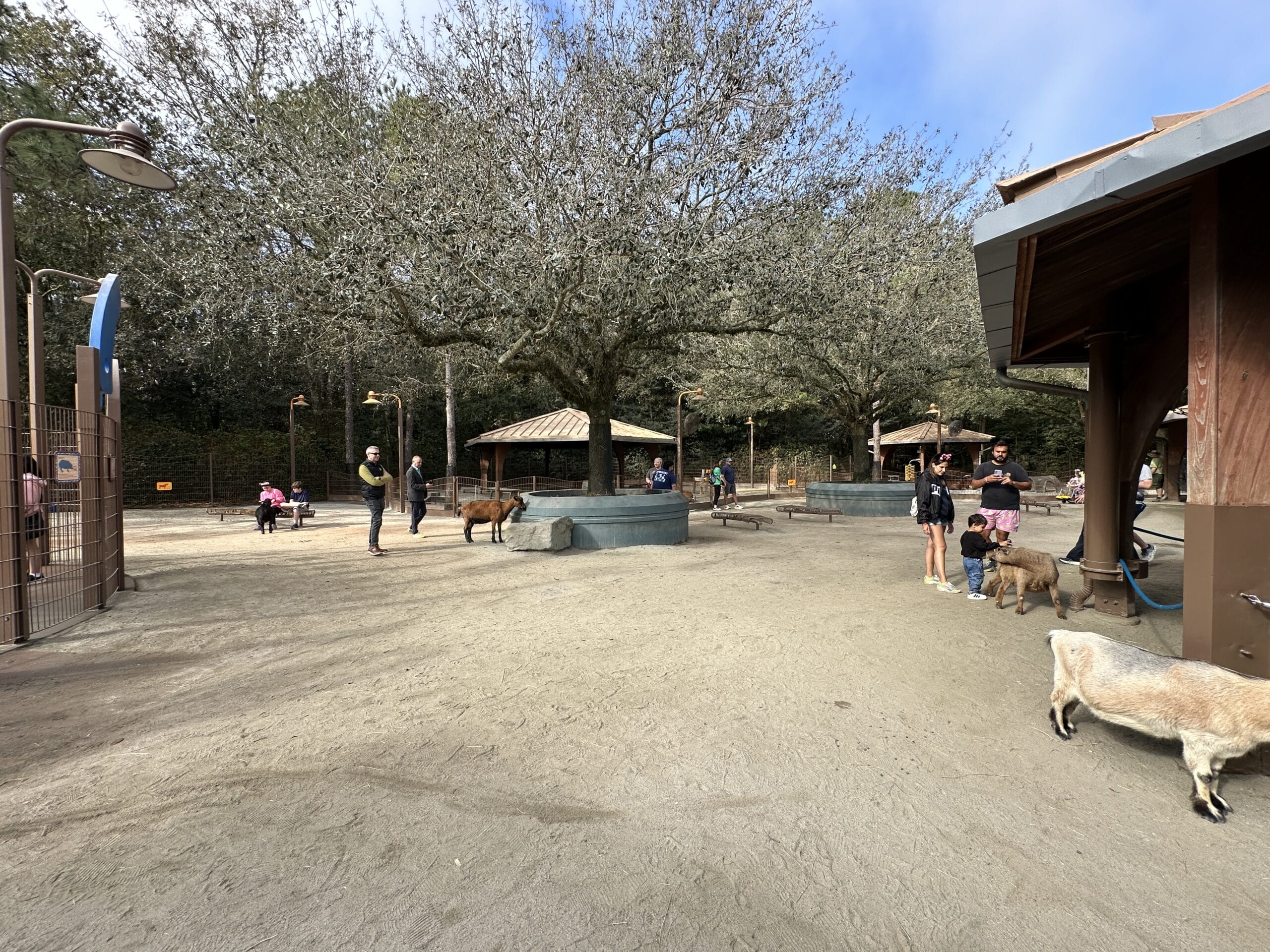
Some animals wandered free, others were in fenced-off viewing areas. Guests could freely pet the animals and even brush them. Cast members helped facilitate interactions and teach guests about each species. Some of the space was covered with large shades.
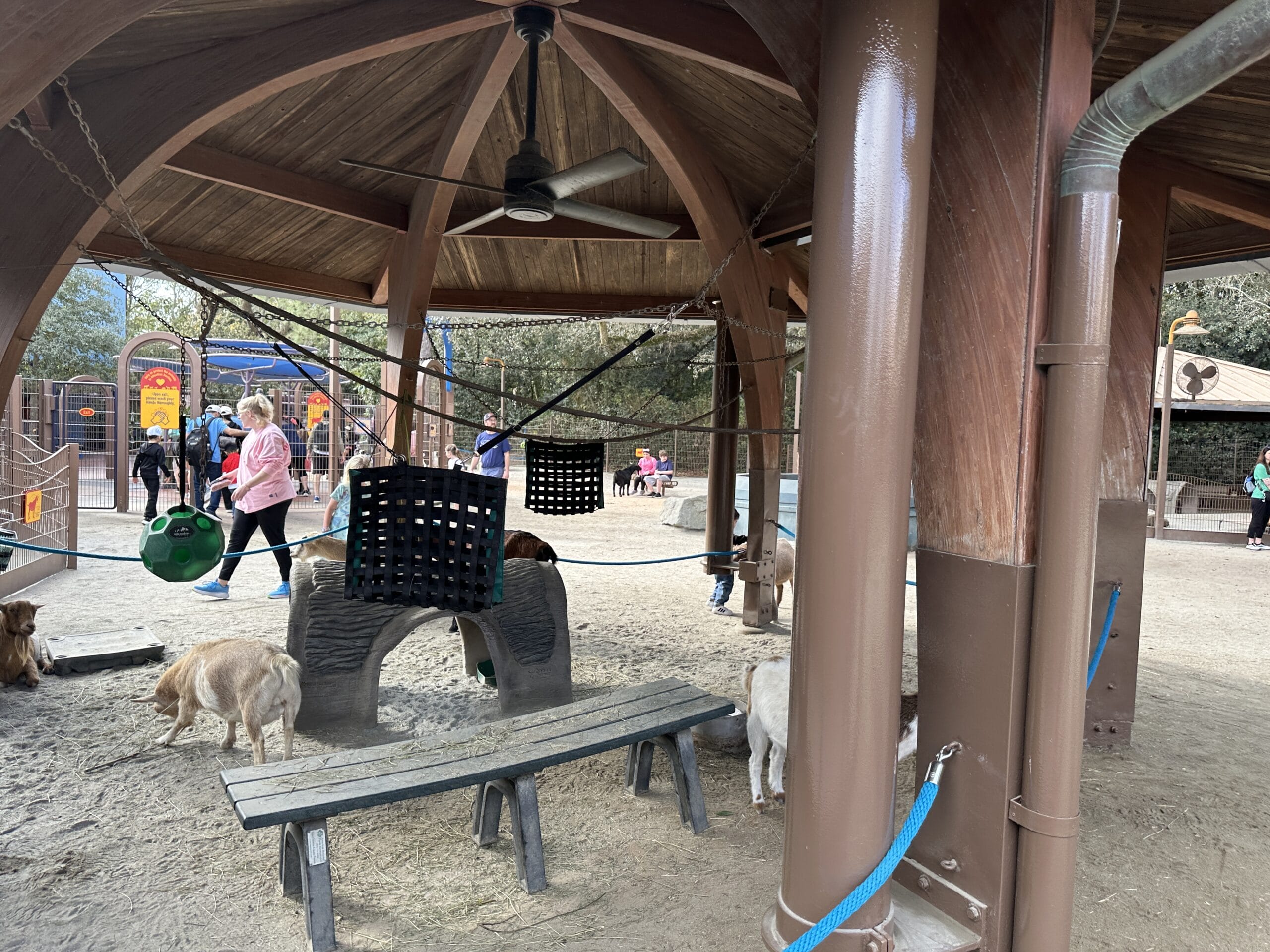
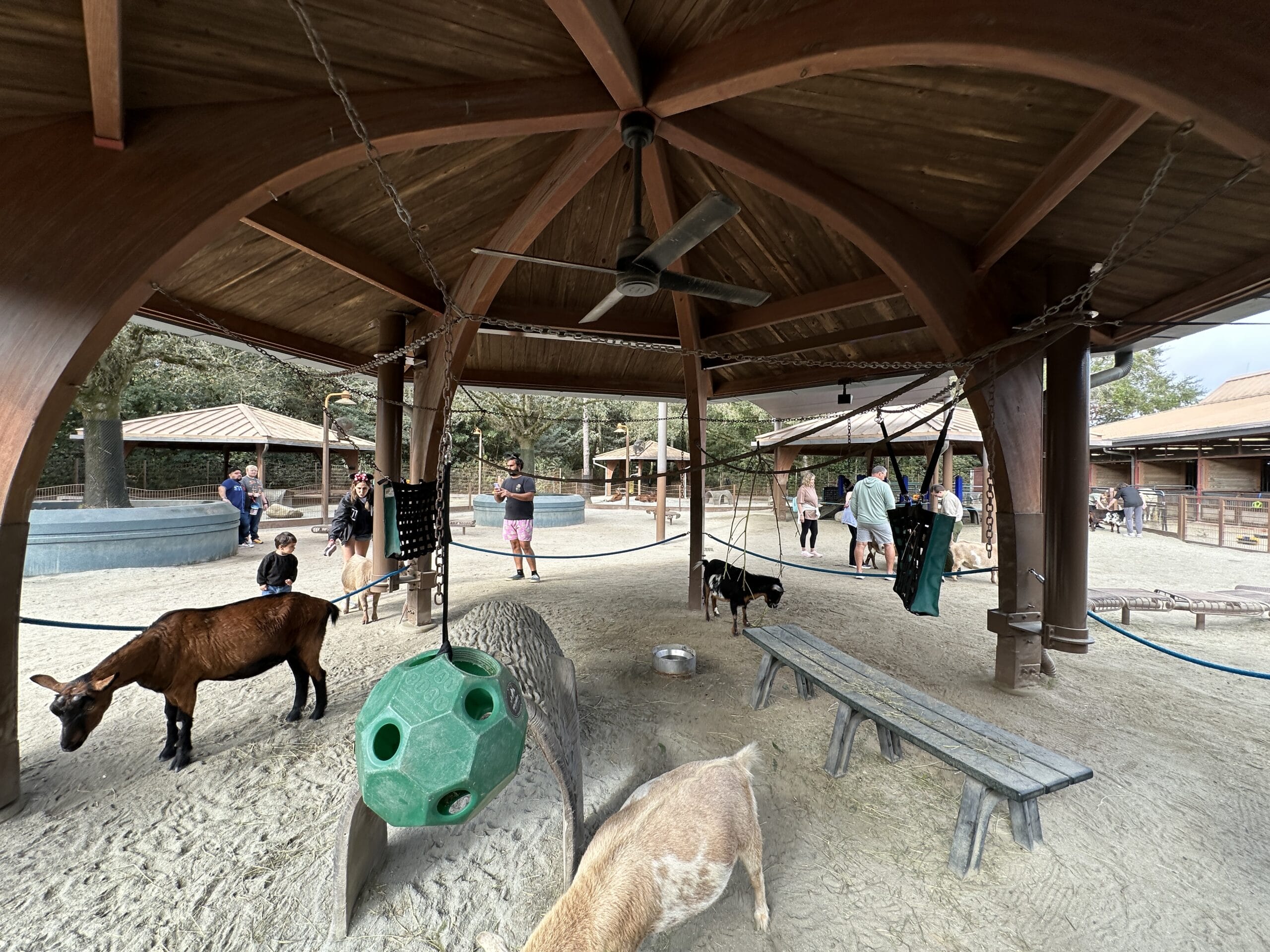
Under two pavilions were basically jungle gyms for the goats. Ropes blocked these spaces from guests so the goats could walk in and out as they pleased but guests couldn’t climb on the structures.
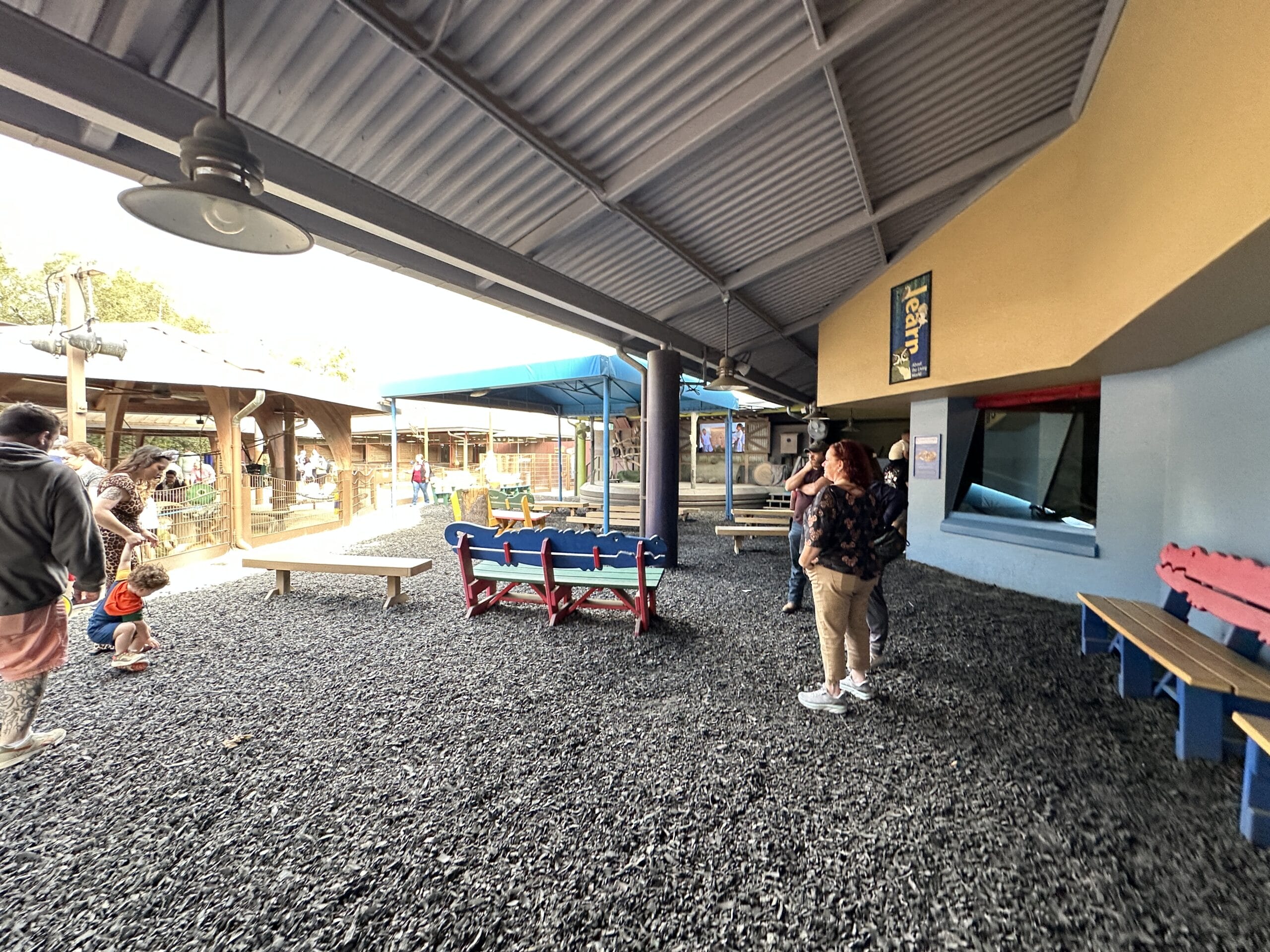
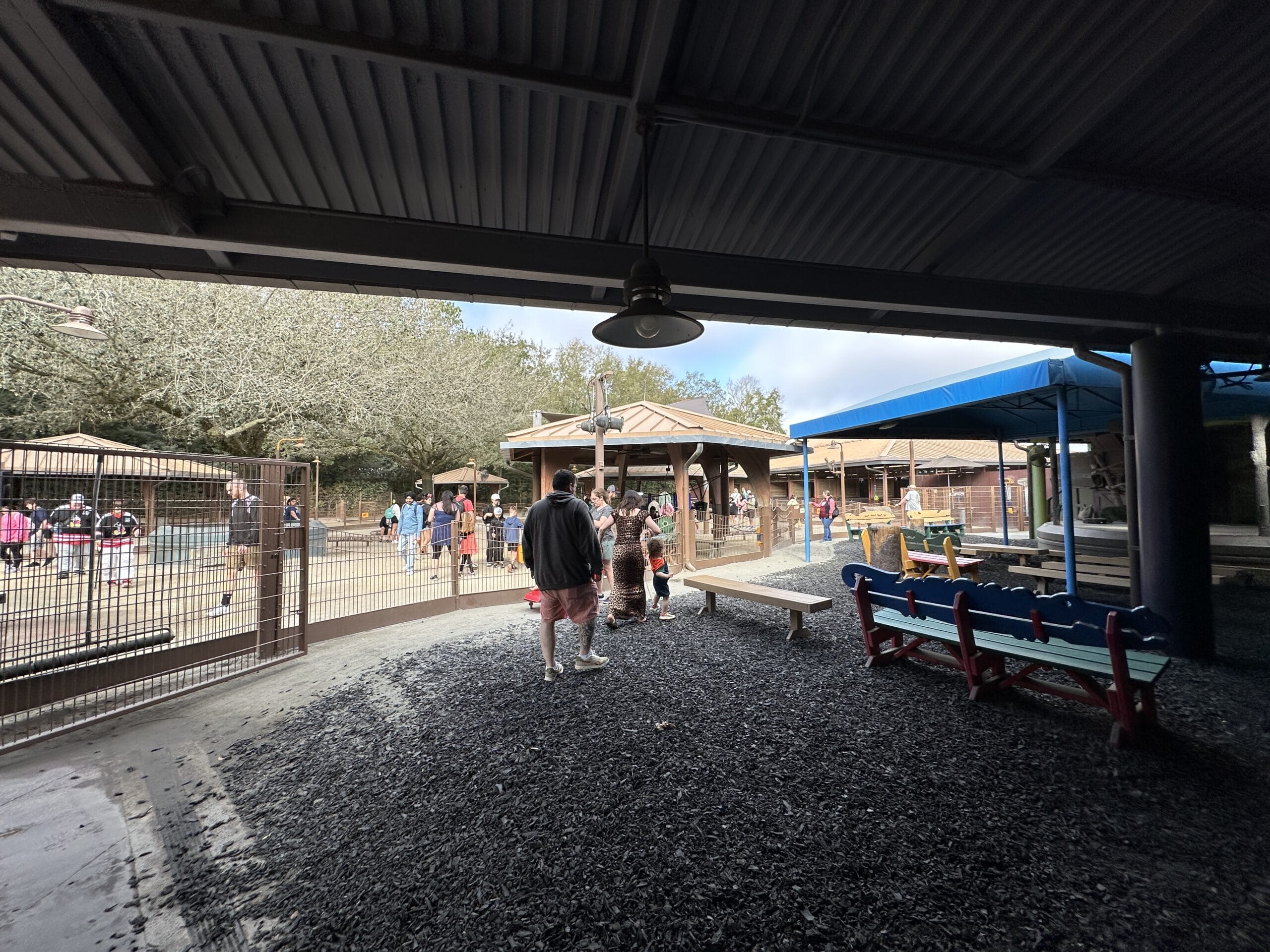
There were benches inside and outside Affection Section.
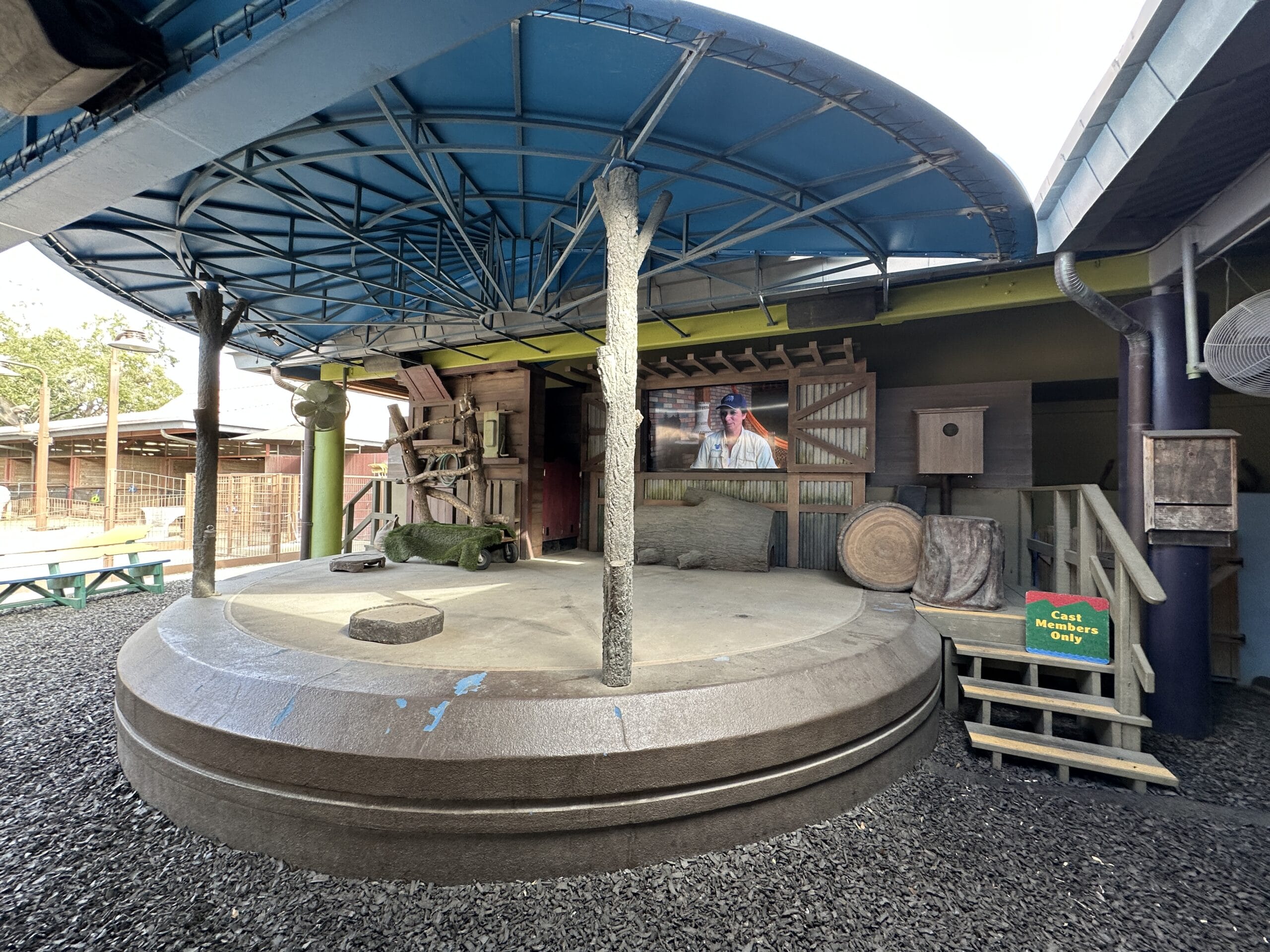
Cast members sometimes brought animals onto a nearby shaded stage for short presentations. A screen on the stage played informational videos when it wasn’t in use.
Though there were rumors Affection Section would permanently close, it will reopen, just with different animals. The animals currently at the petting zoo will be re-homed.
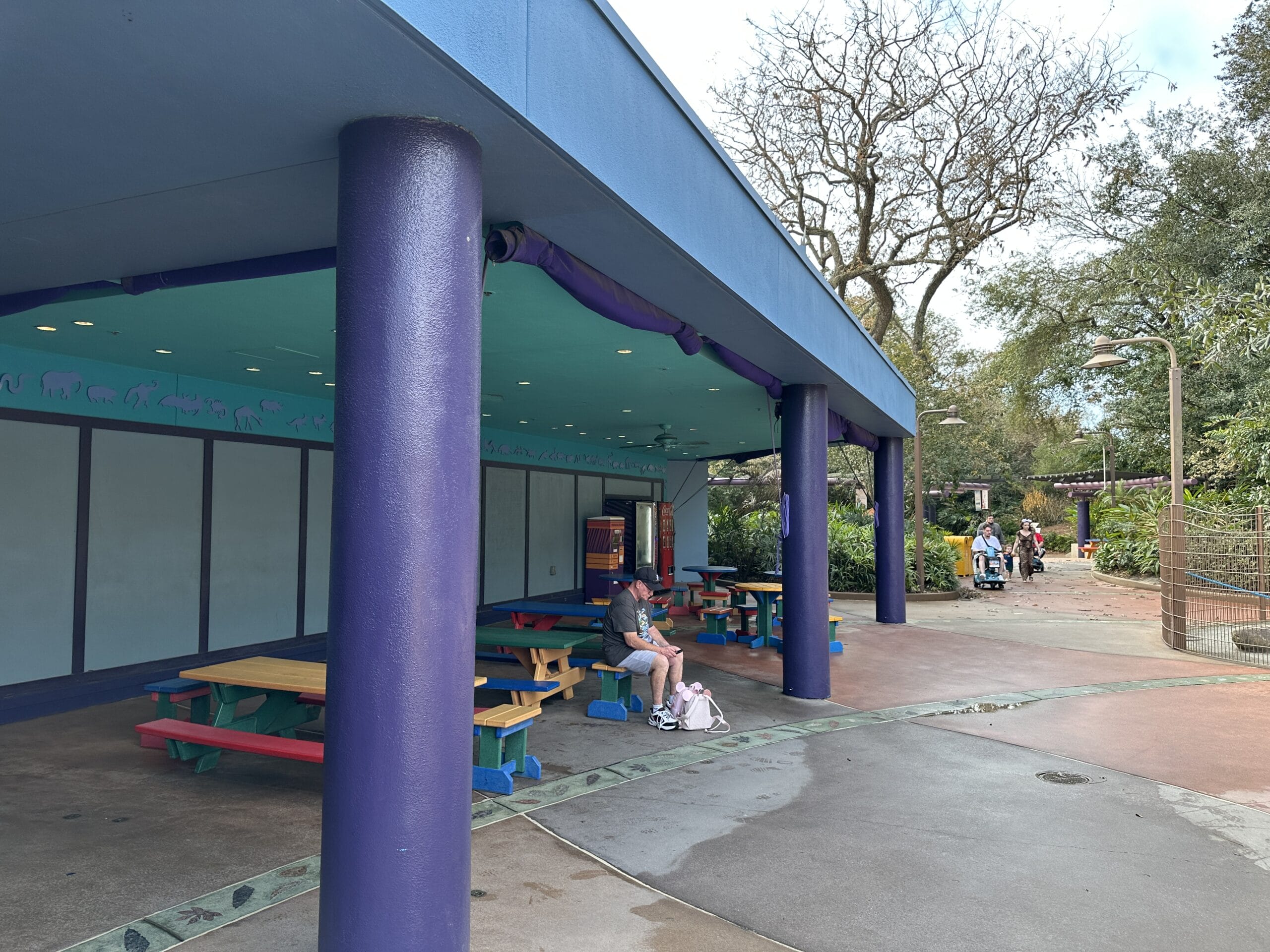
There used to be a small outdoor gift shop called Out of the Wild. This became a seating area in 2022. Colorful benches and tables provided a place for guests to sit and grab a snack or recharge before heading back to Animal Kingdom proper.
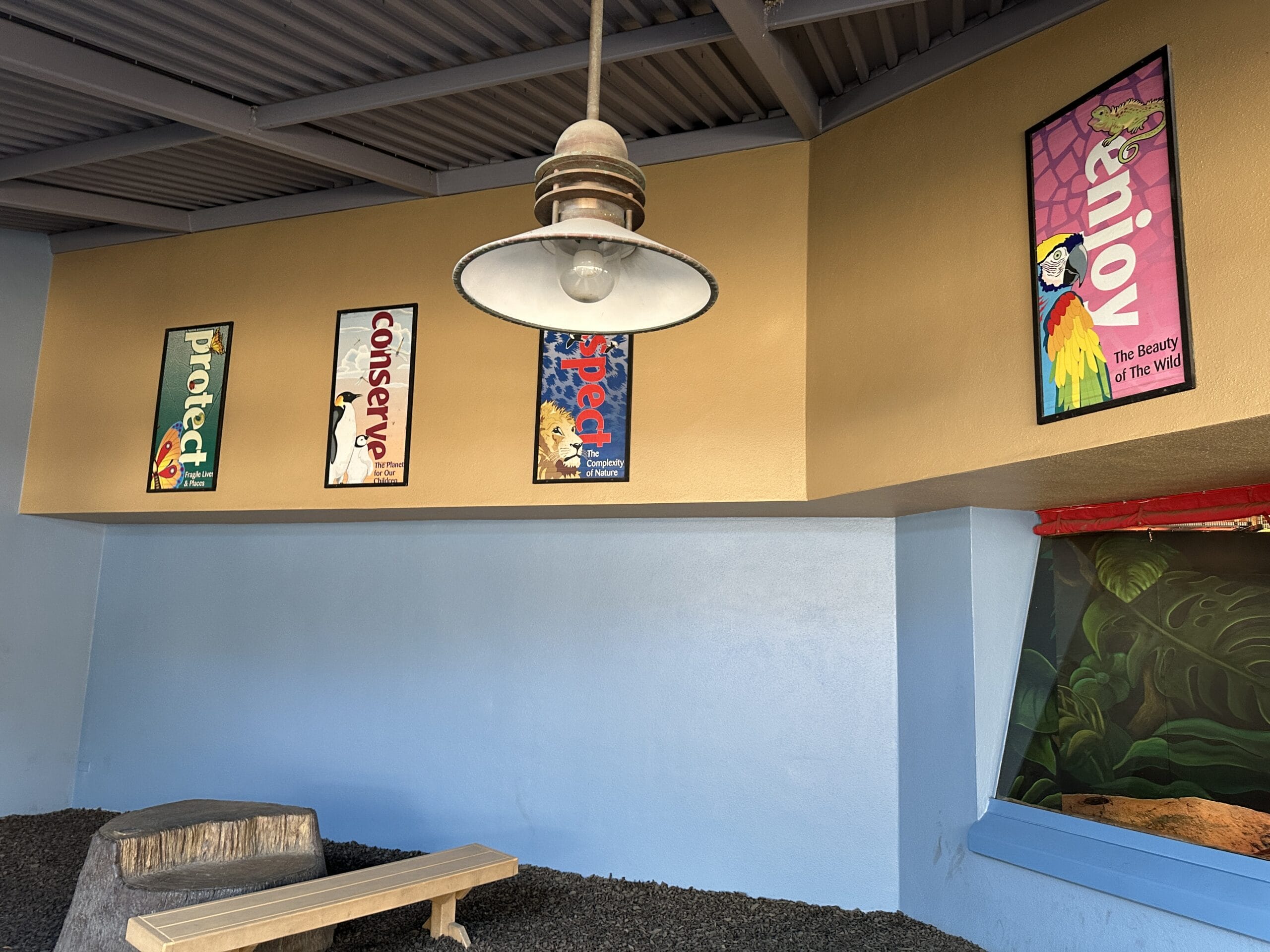
Windows in the exterior walls provided peeks into even more habitats. Signs above the windows featured animals and words to express how guests should interact with nature, such as “protect,” “conserve,” “respect,” and “enjoy.”
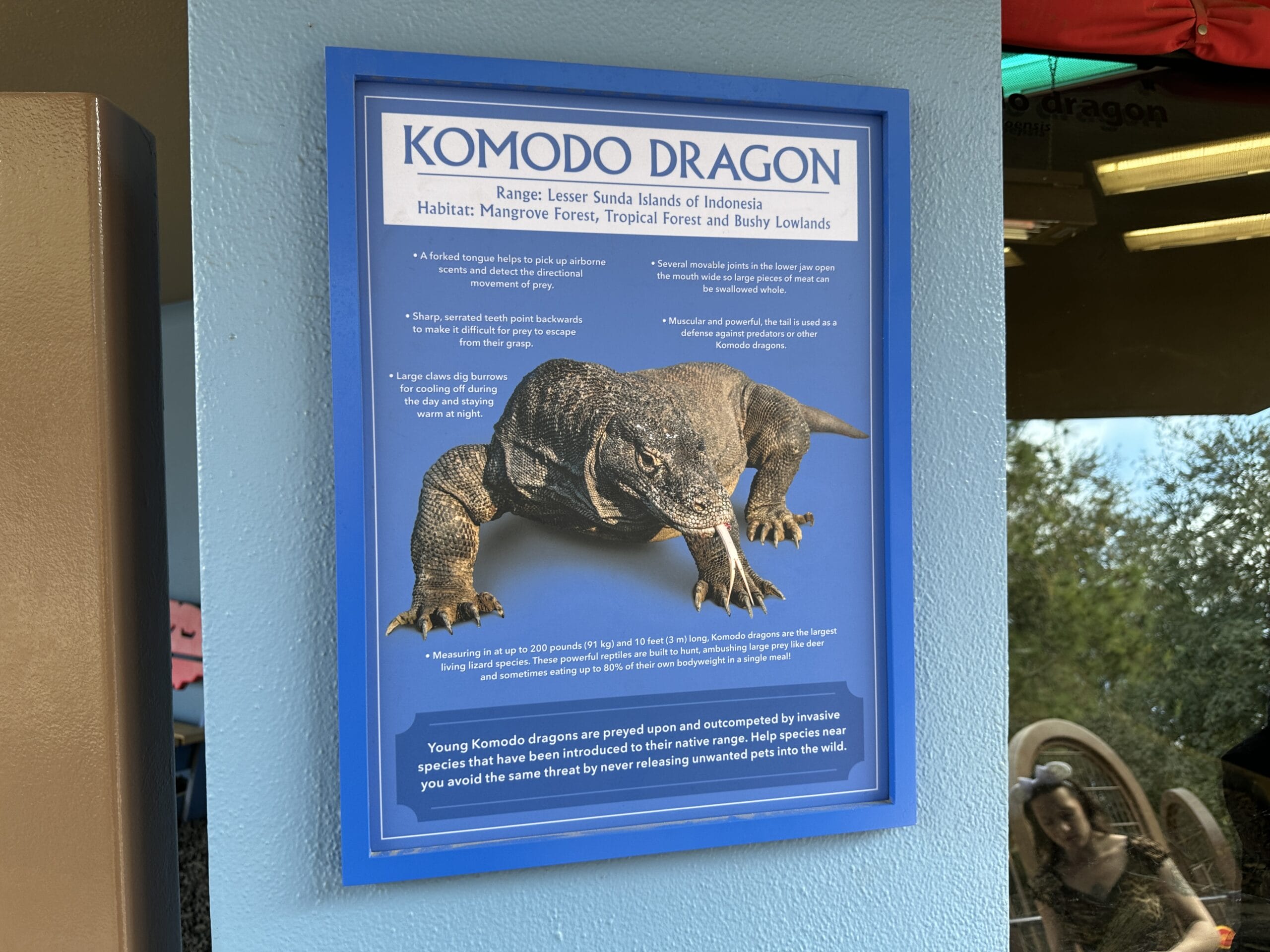
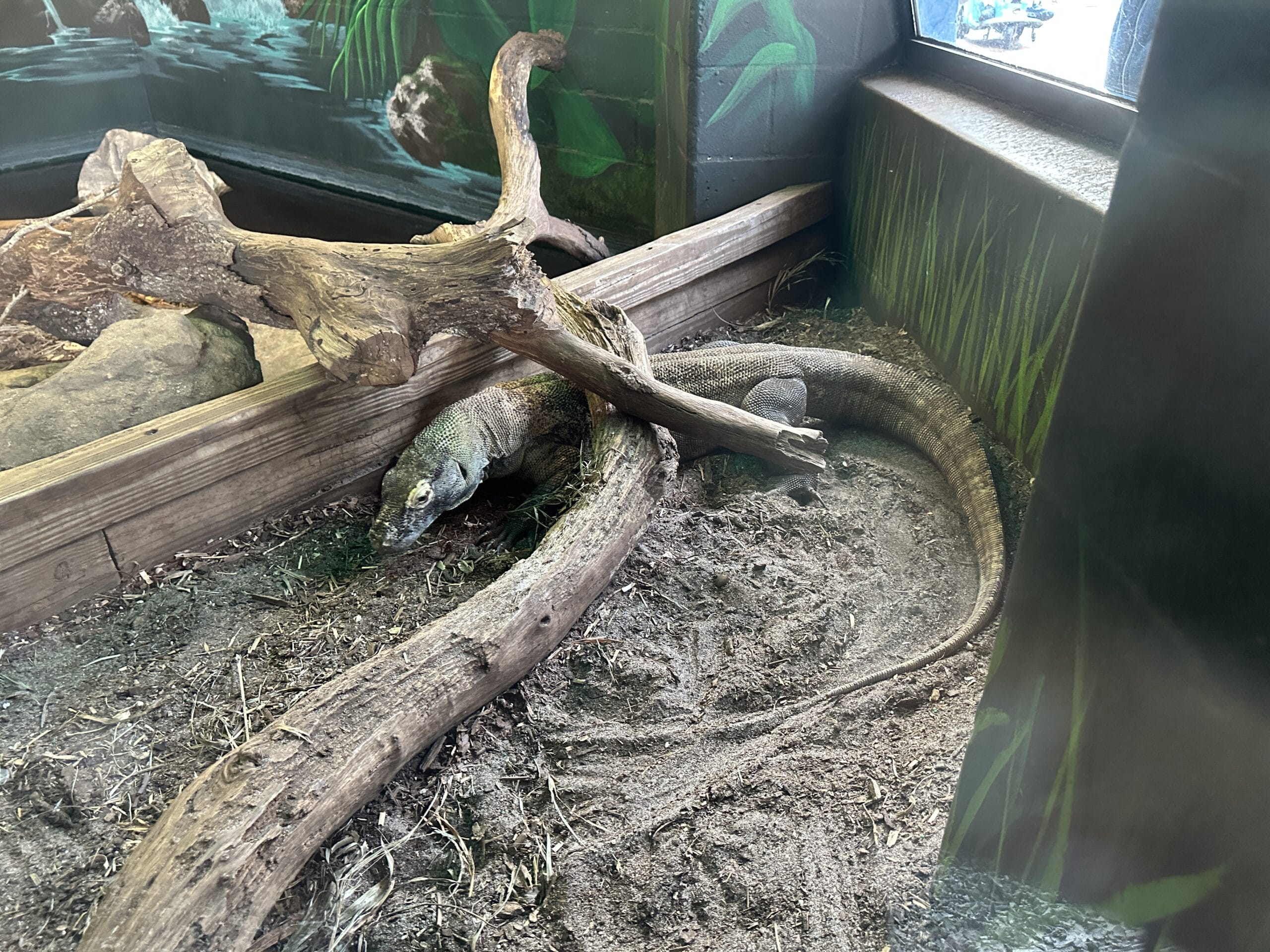
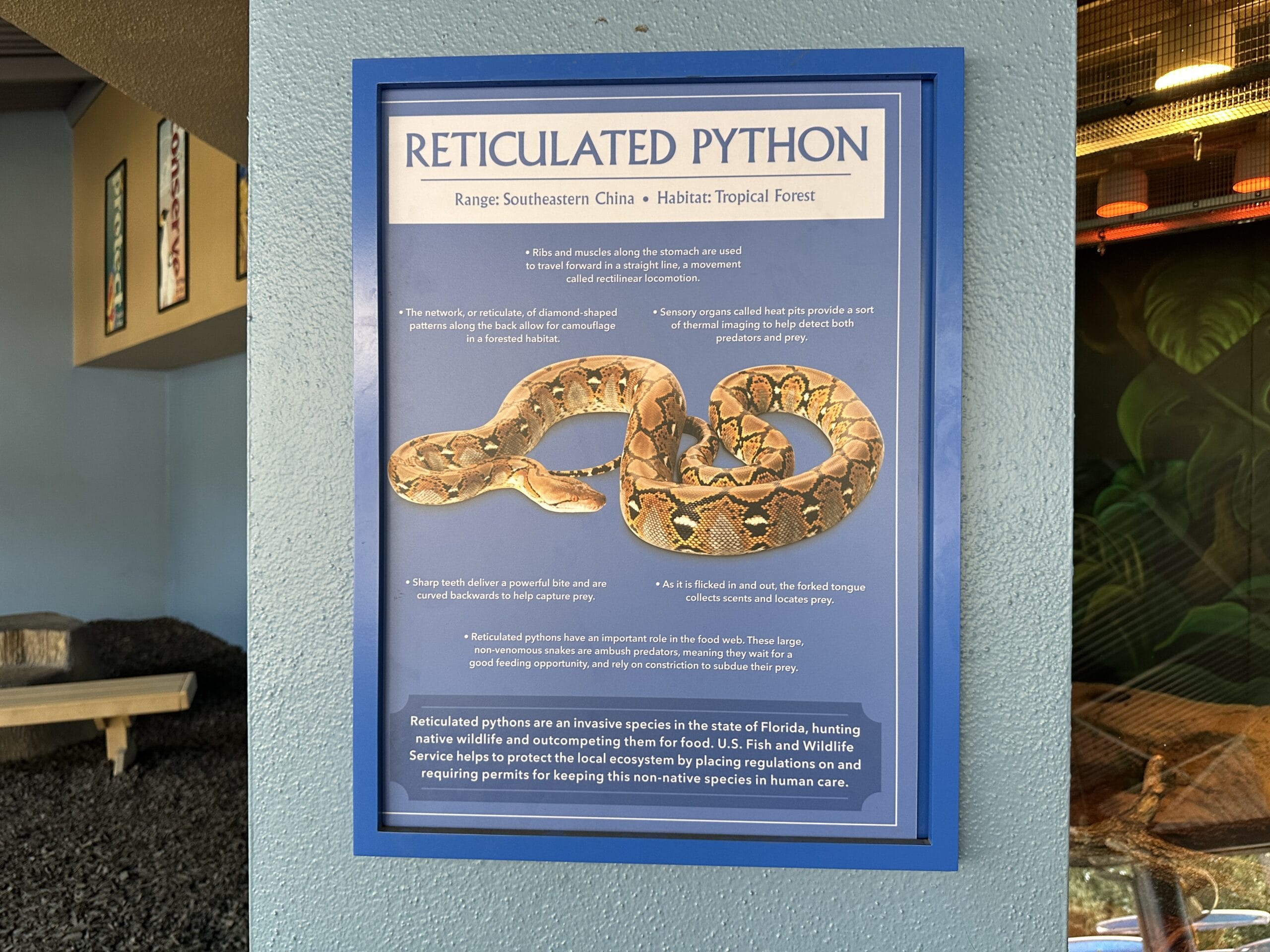
Several reptiles were on display including a Komodo Dragon and a Reticulated Python.
Exit
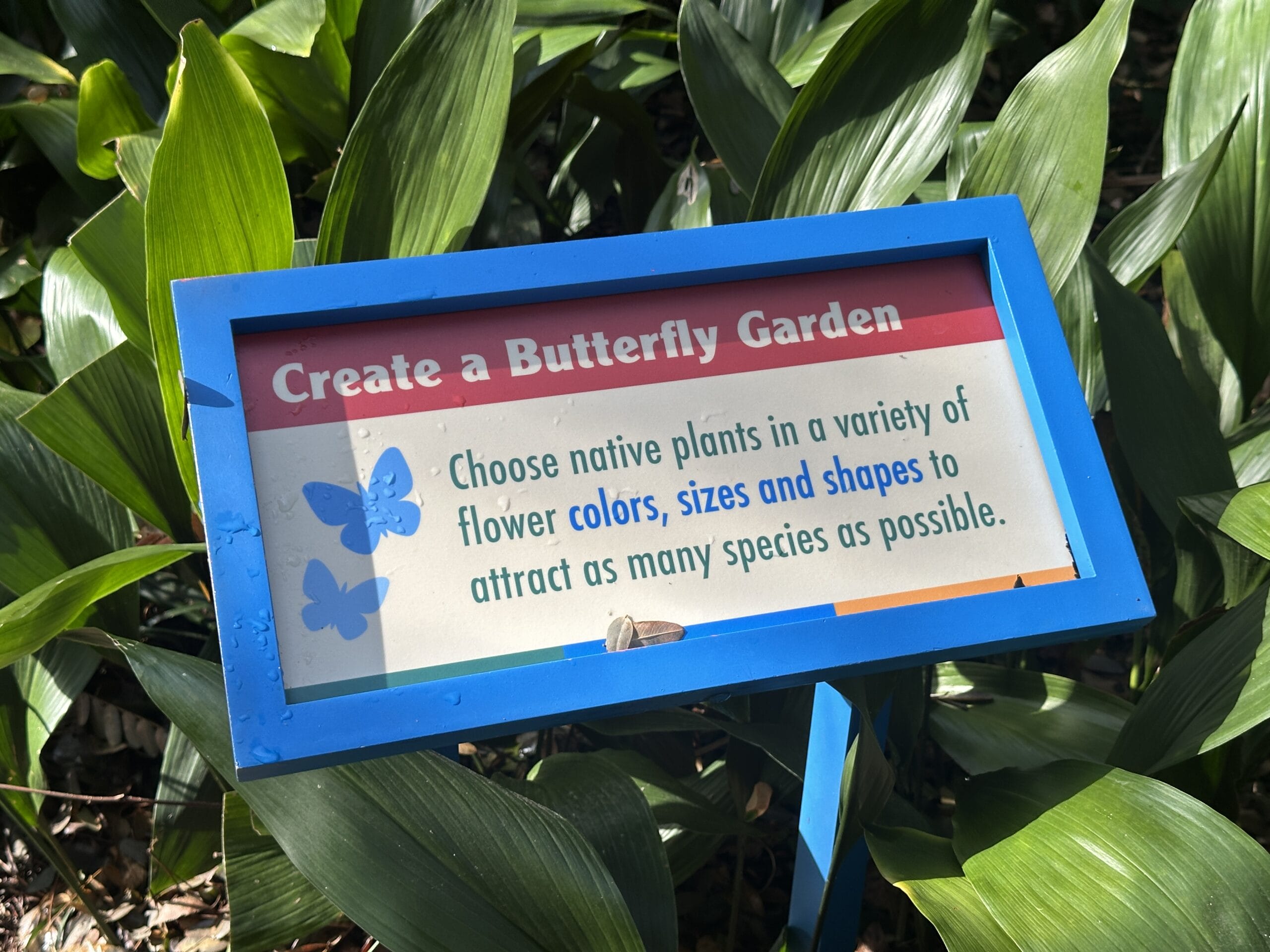
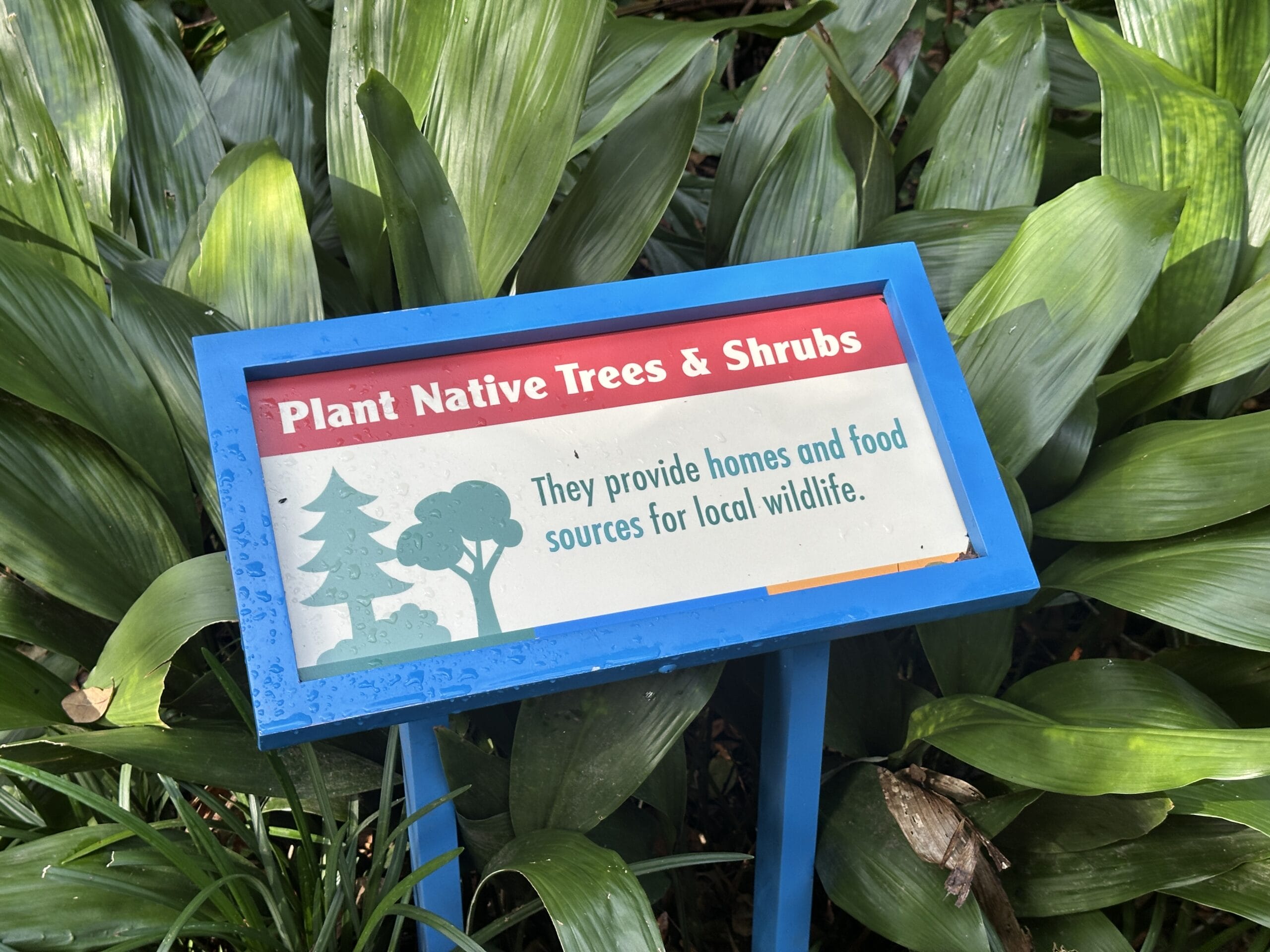
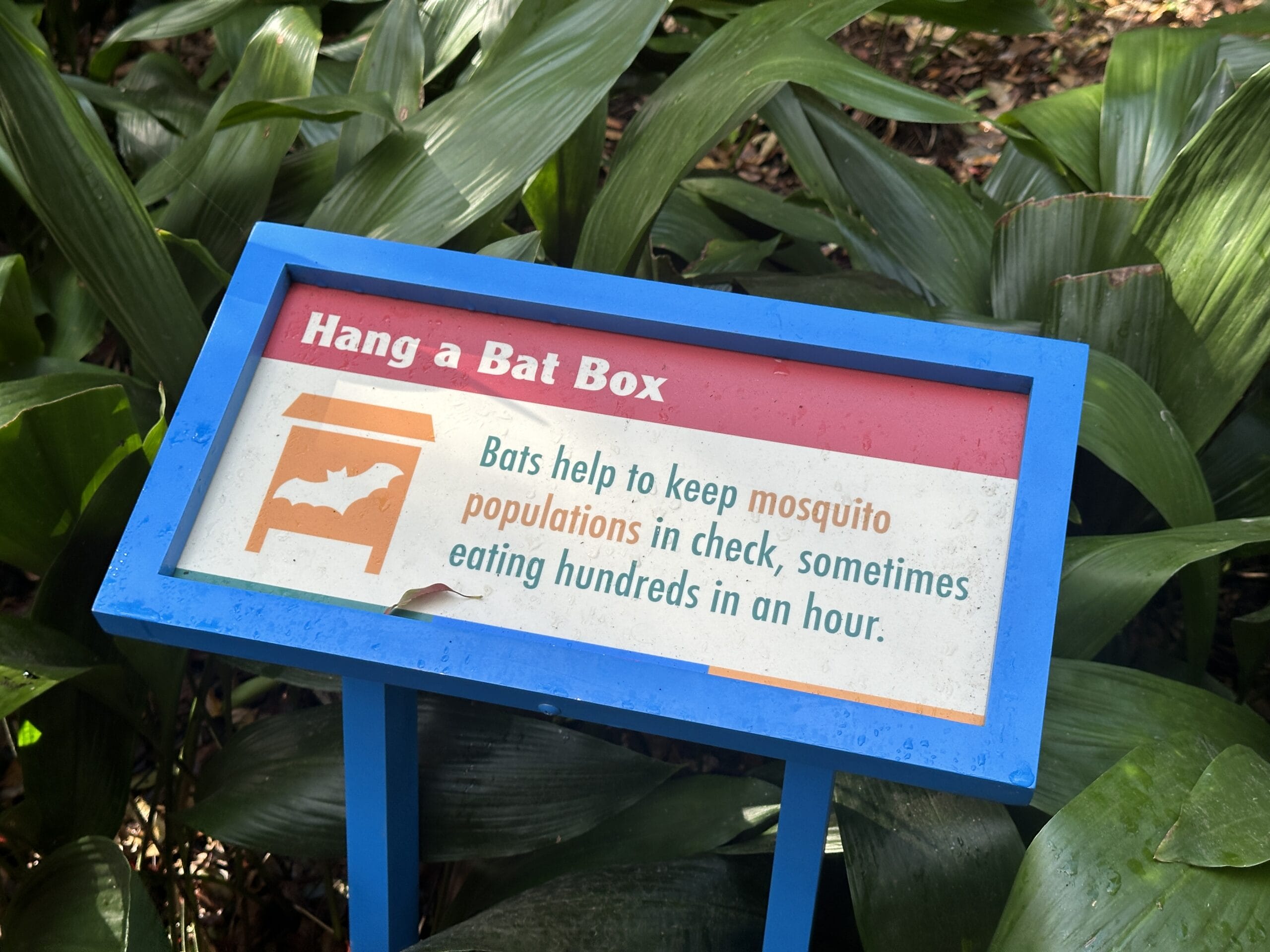
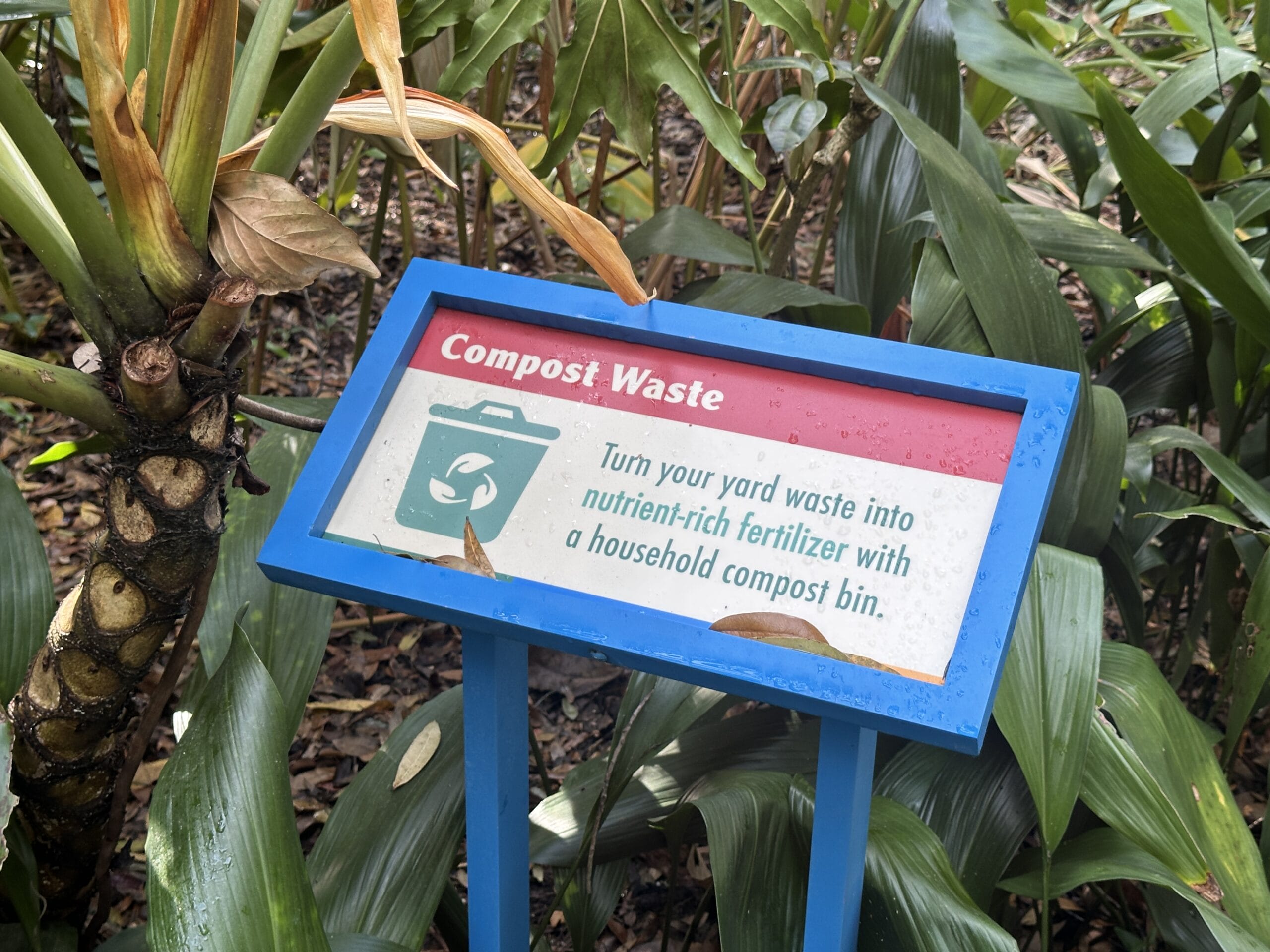
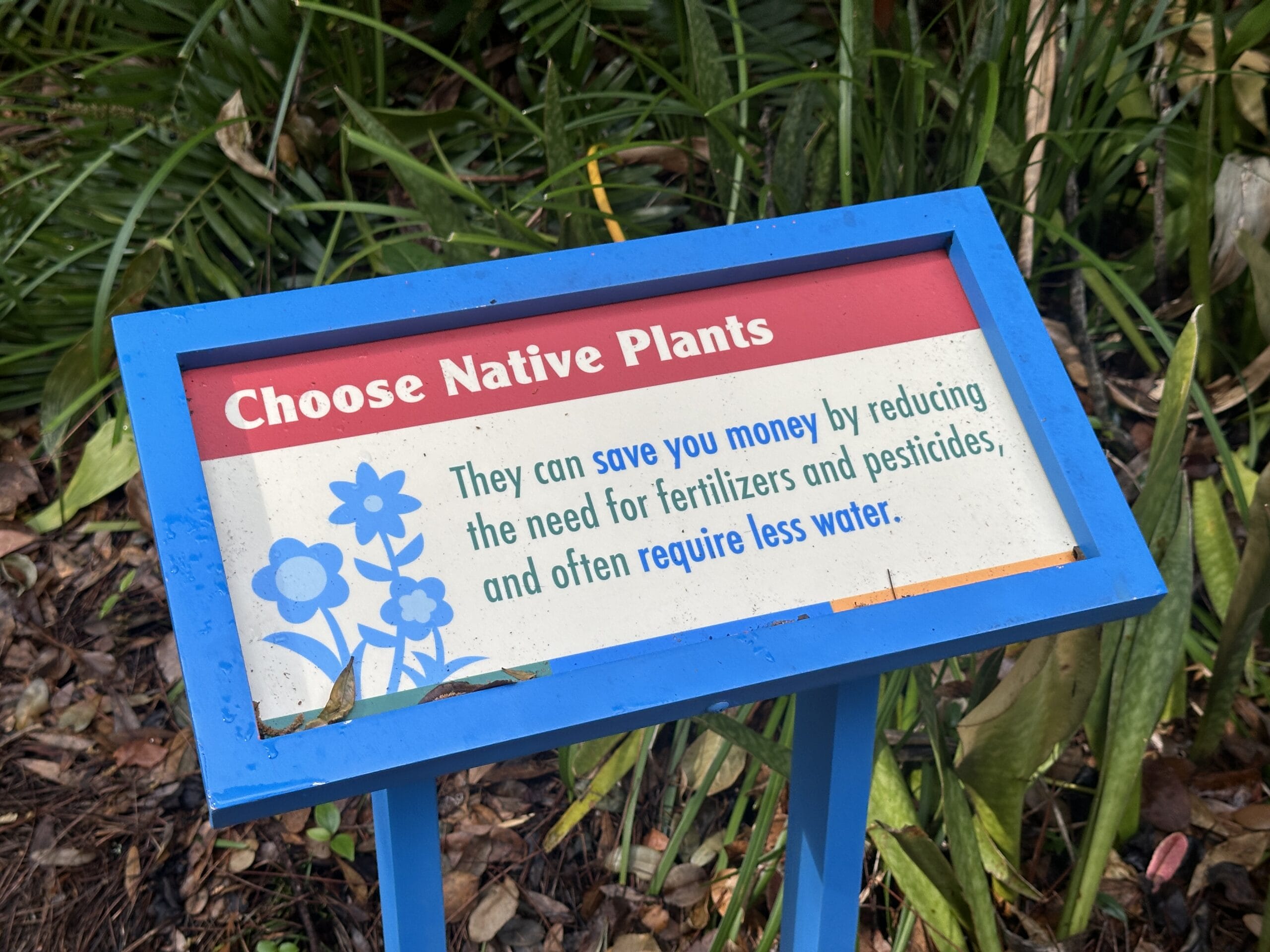
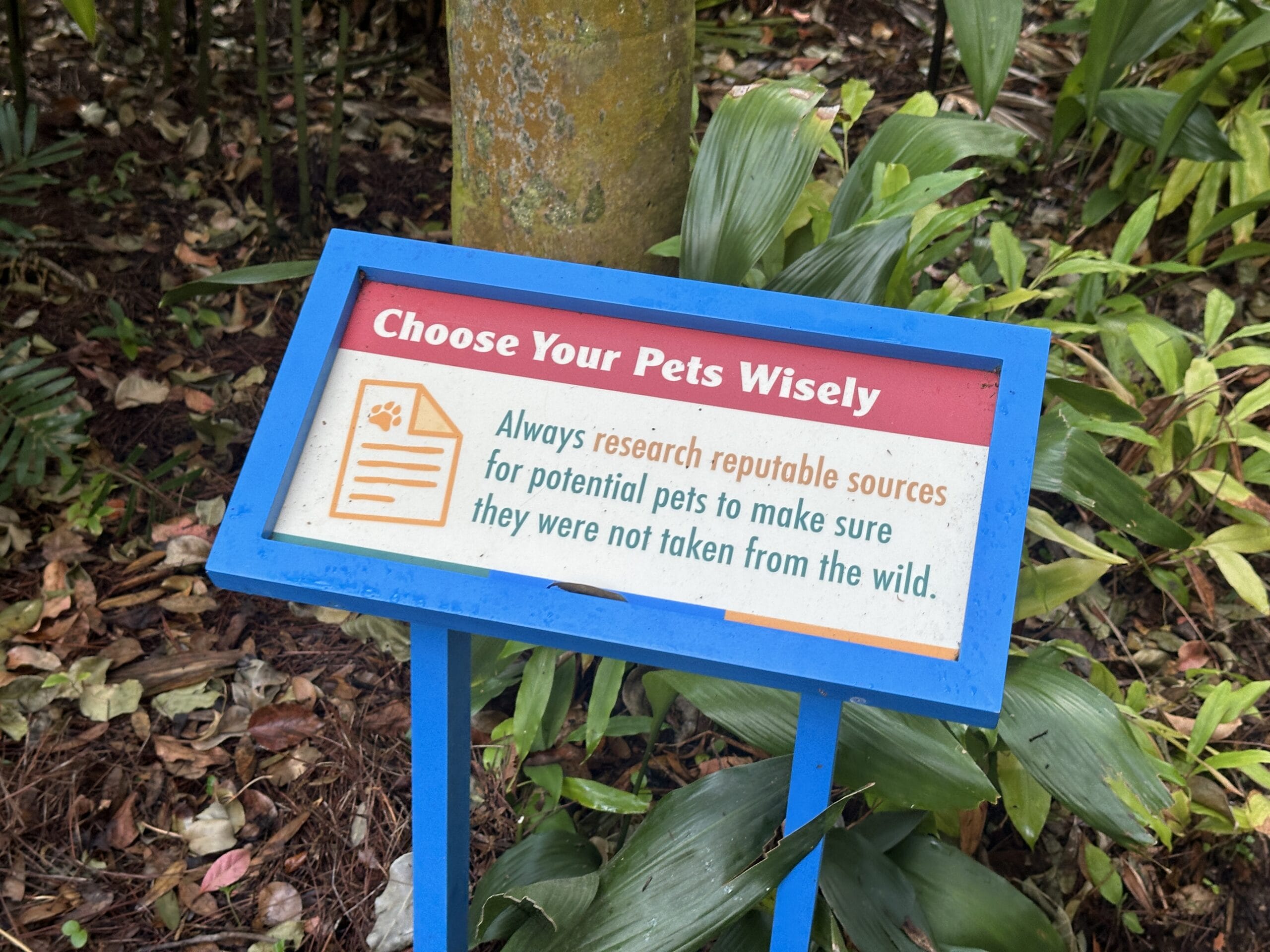
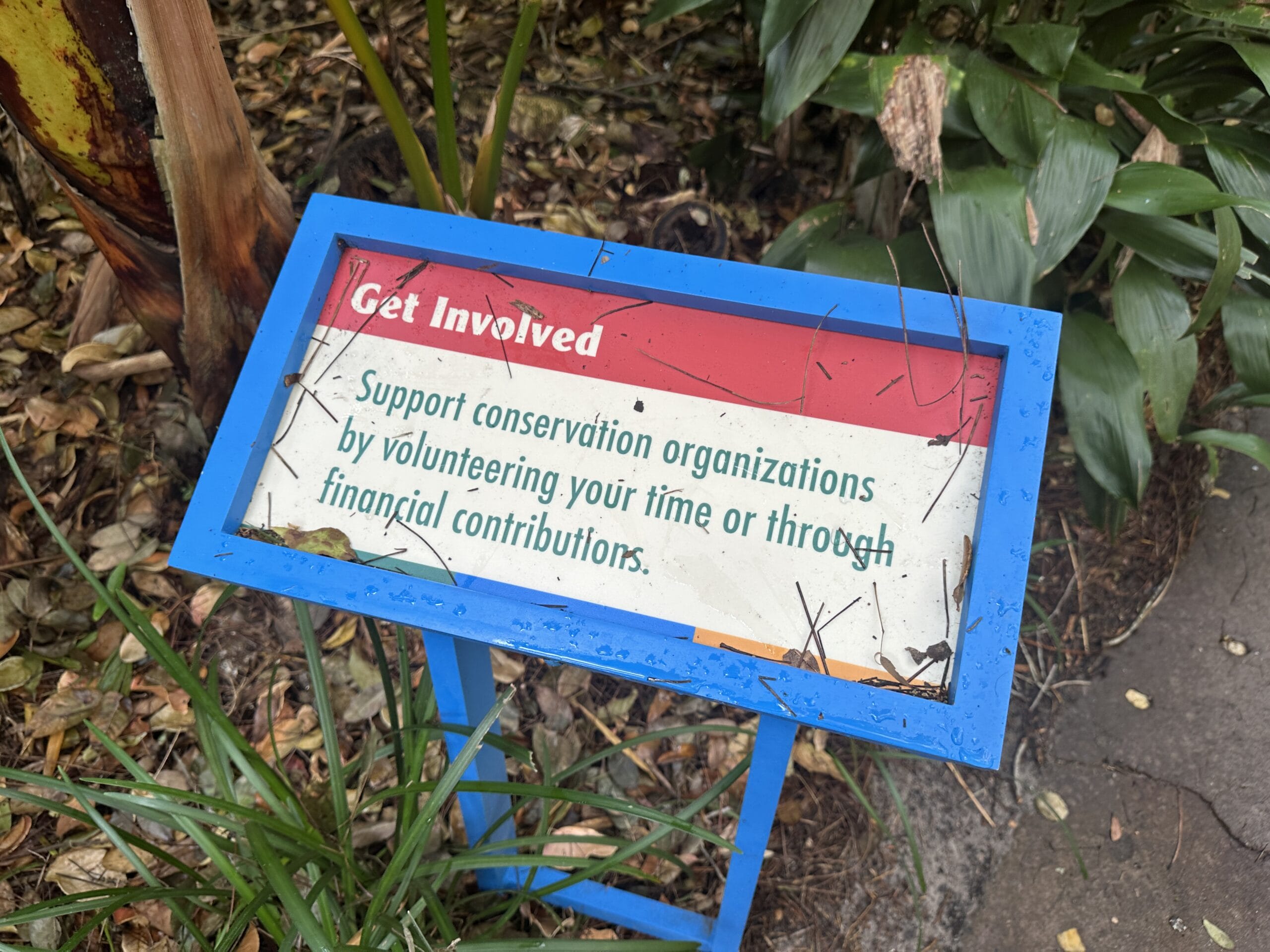
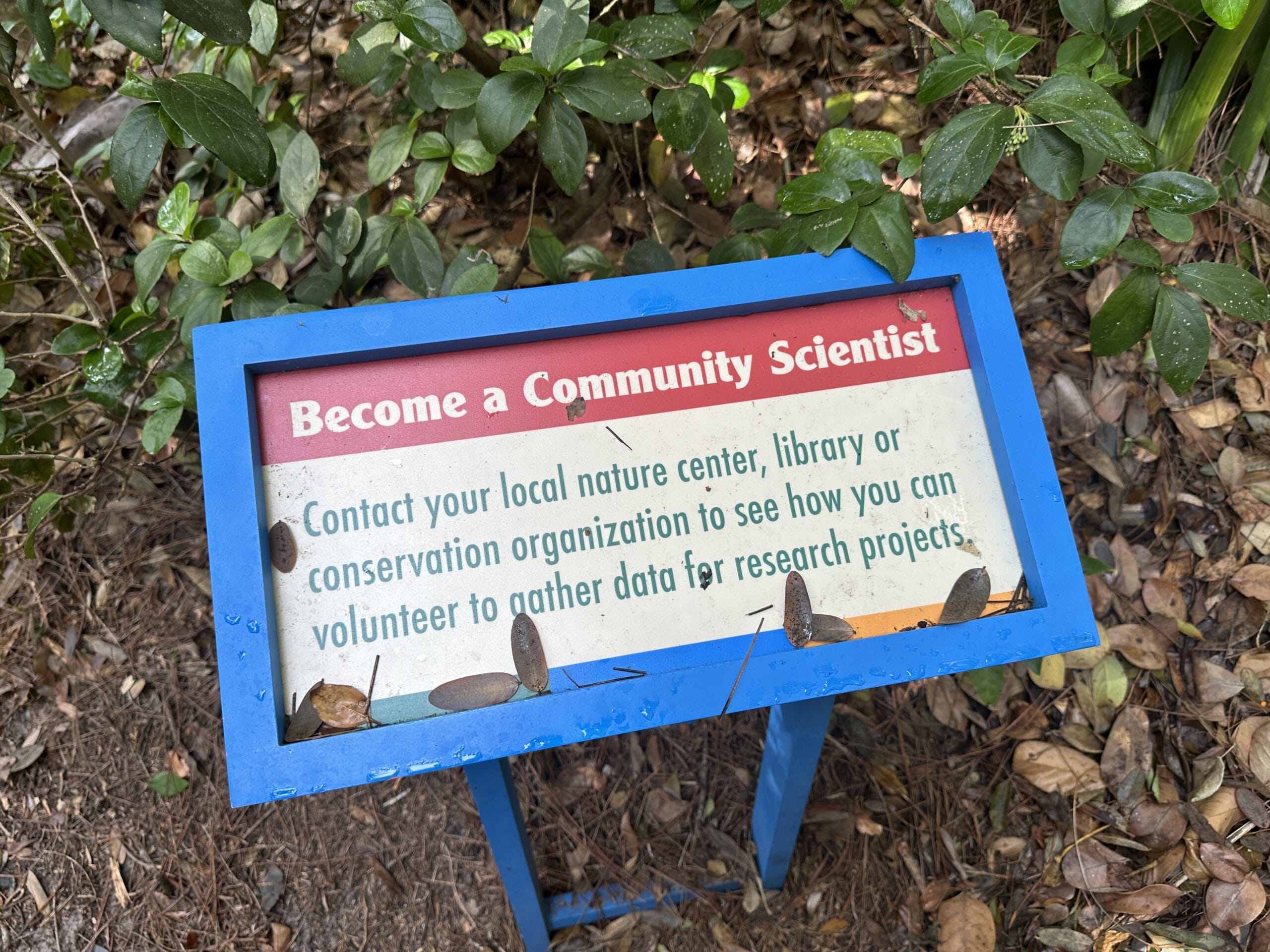
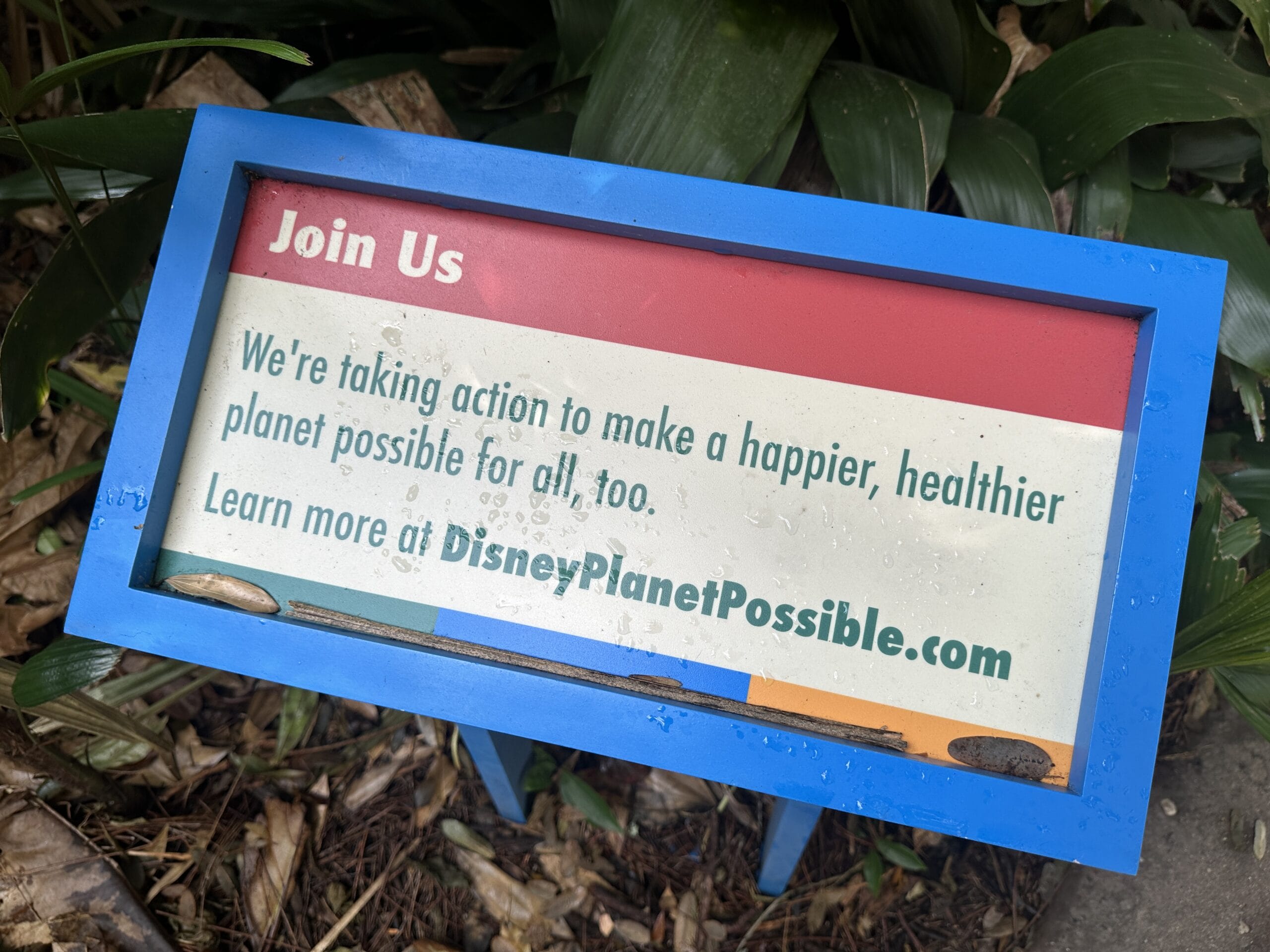
On the path back to the train station, there were more signs advertising ways that humanity can help conserve and protect nature.
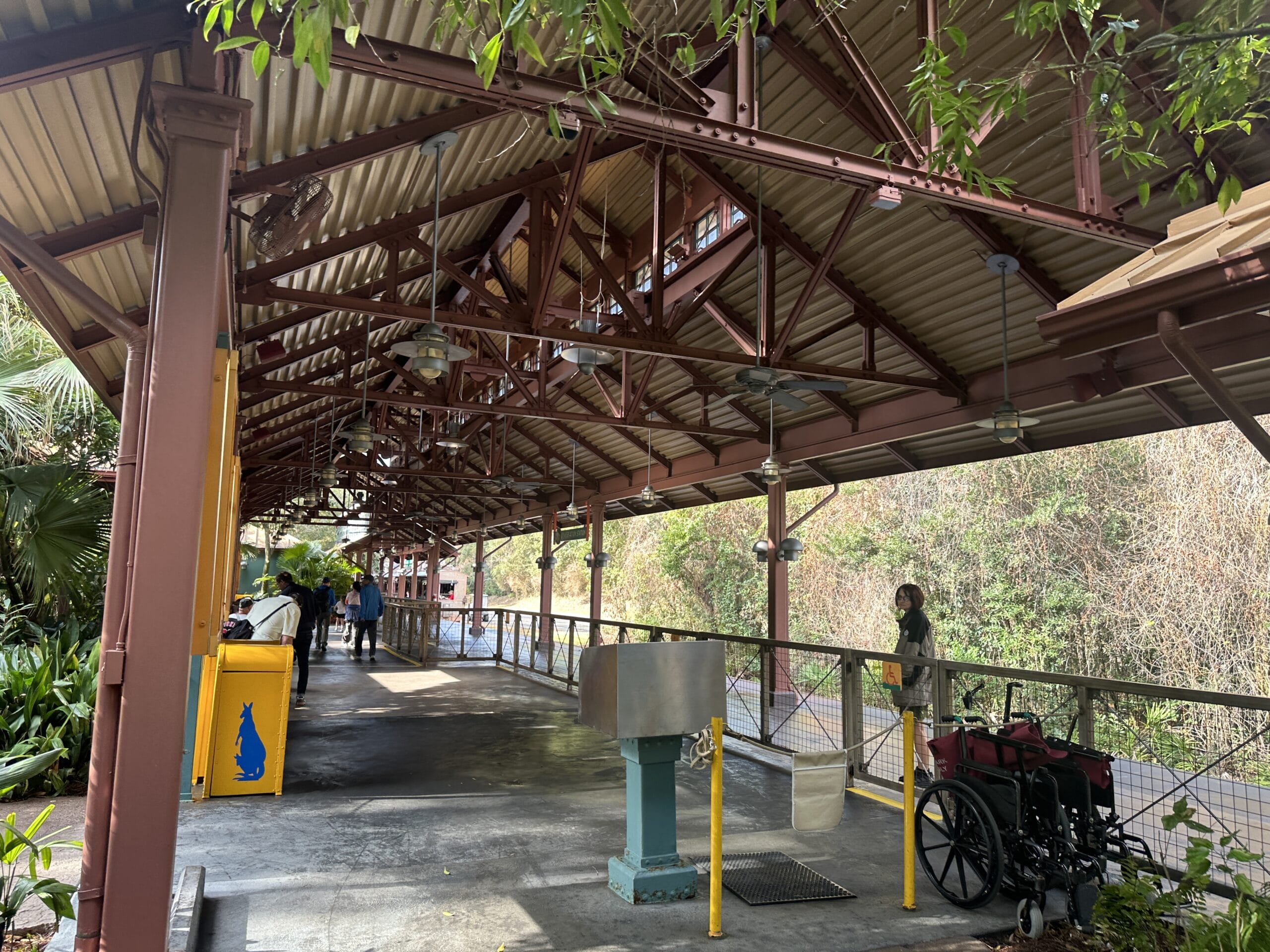
Guests return to the train station to take the Wildlife Express Train back to civilization.
Will you miss Rafiki’s Planet Watch in its current version or are you excited to see Bluey take over? Let us know on social media.
For the latest Disney Parks news and info, follow WDW News Today on Twitter, Facebook, and Instagram.