Aerosmith has left the building. Rock ‘n’ Roller Coaster Starring Aerosmith is closing to become Rock ‘n’ Roller Coaster Starring The Muppets. Take a last look at Disney’s Hollywood Studios roller coaster as it was before it gets reimagined.
Rock ‘n’ Roller Coaster Last Look
History
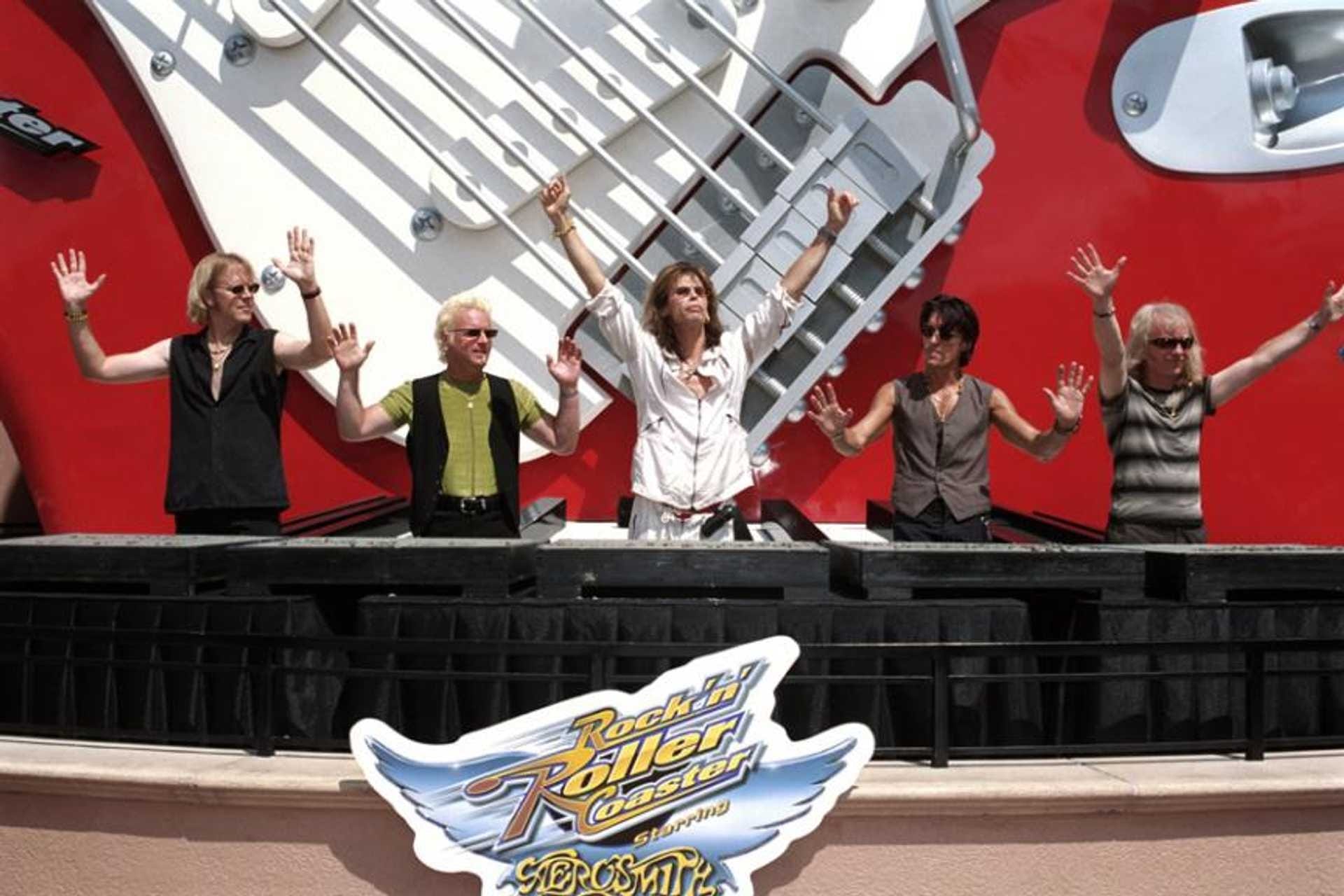
Rock ‘n’ Roller Coaster Starring Aerosmith was constructed by Vekoma. It opened its gates at Disney’s Hollywood Studios on July 29, 1999, as part of the park’s 10th anniversary celebrations. Aerosmith participated in a dedication ceremony.
Rock ‘n’ Roller Coaster was the first Walt Disney World coaster to feature multiple inversions. It was the second fastest ride at Walt Disney World, behind Test Track.
A Rock ‘n’ Roller Coaster clone called Rock ‘n’ Roller Coaster avec Aerosmith opened with Walt Disney Studios Park in Disneyland Paris in 2002. It closed in 2019 and was reimagined into Avengers Assemble: Flight Force.
March 1 is the last day to experience the Aerosmith version of Rock ‘n’ Roller Coaster at Disney’s Hollywood Studios. Though the ride track will remain the same, much of the ride’s trappings will change for Rock ‘n’ Roller Coaster Starring The Muppets, which will open in the summer of 2026.
Entrance
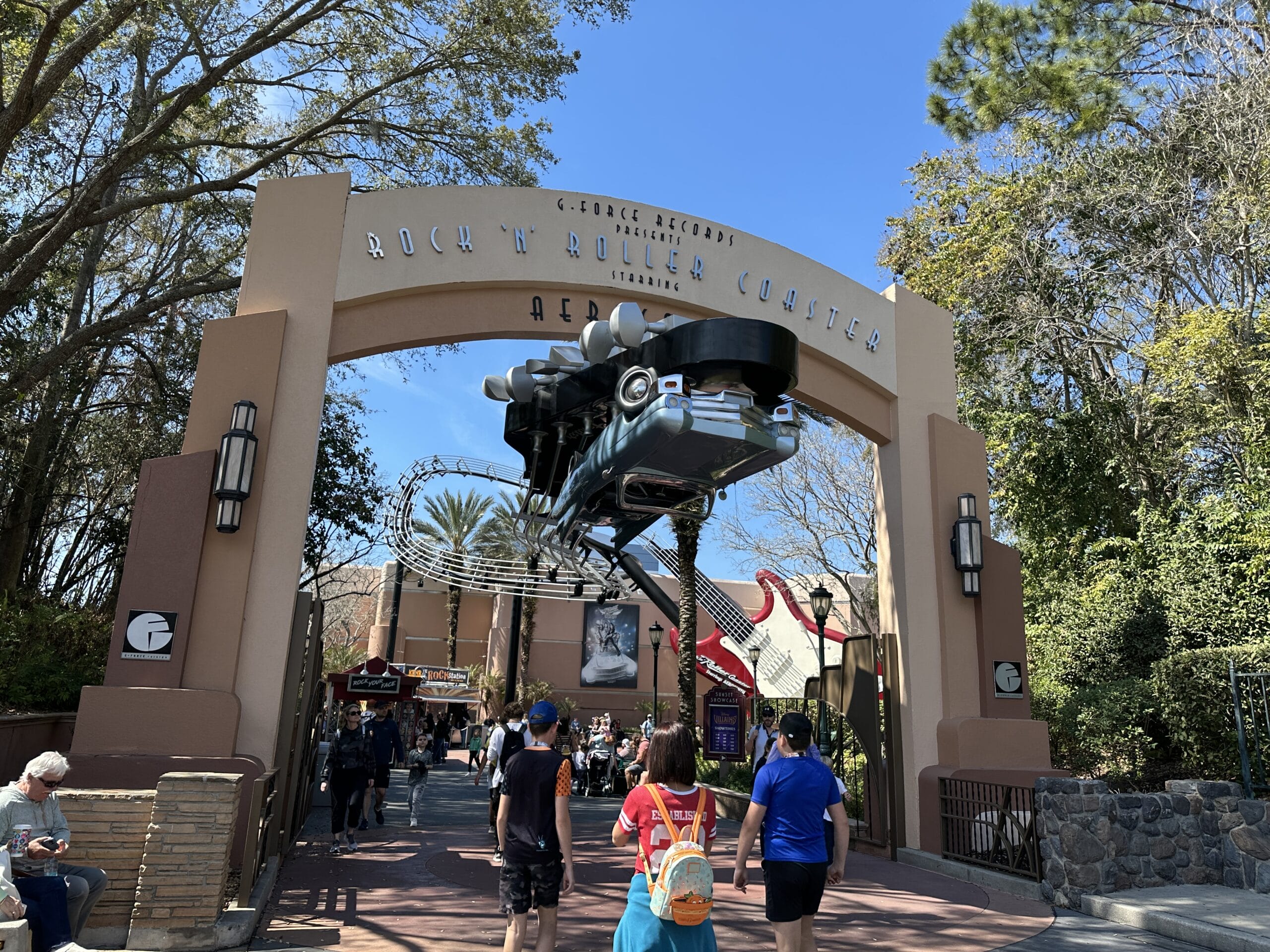
Guests reached Rock ‘n’ Roller Coaster Starring Aerosmith under an archway at the end of Sunset Boulevard, next to The Twilight Zone Tower of Terror. Signs for G-Force Records were on either side of the archway. According to the ride’s story, guests were entering G-Force Records for a backstage tour. The logo was circular, like a record, with notches representing a “G” and “F.”
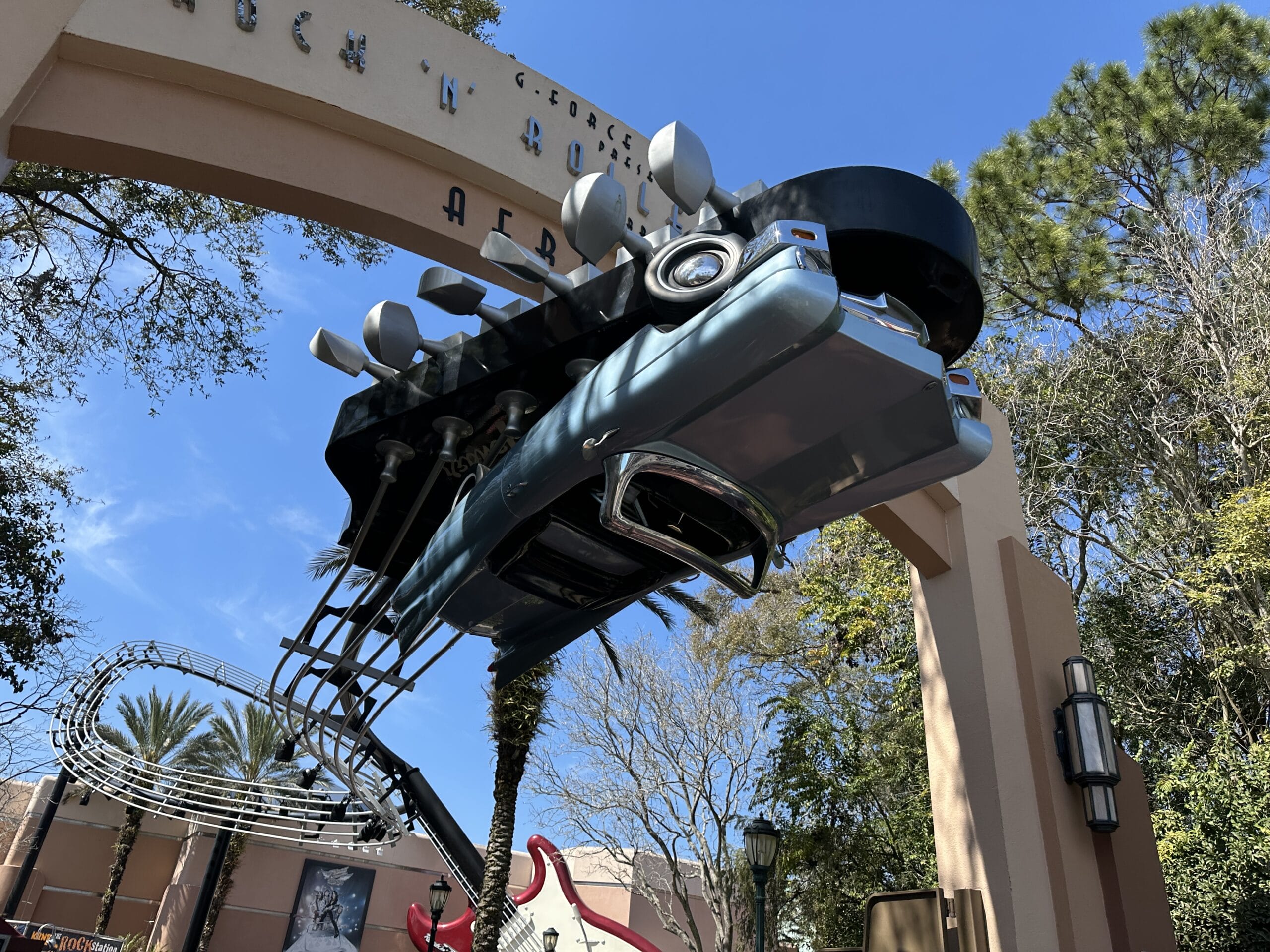
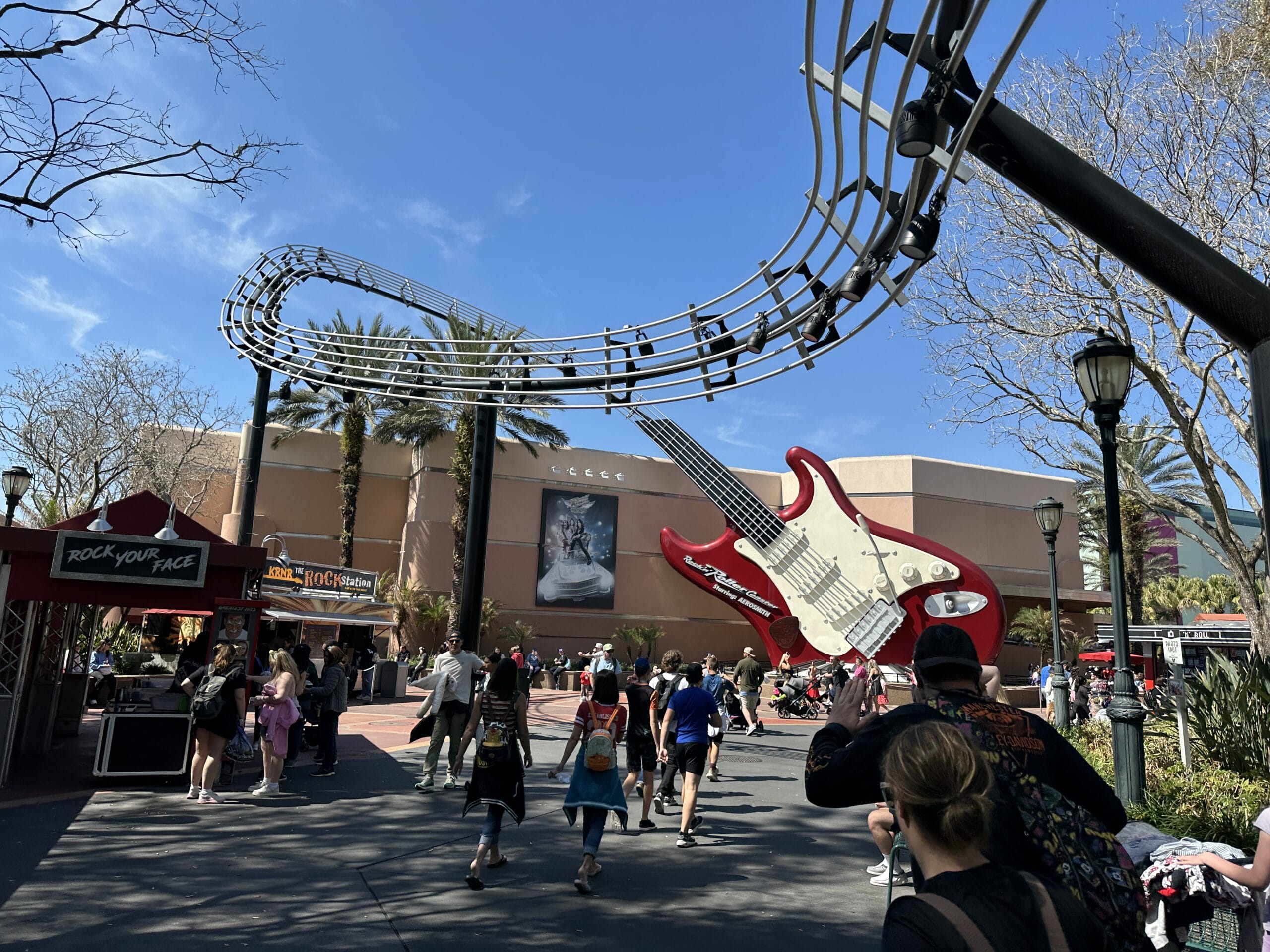
The top of the archway was adorned with a limousine riding upside-down on a guitar’s headstock — giving guests a preview of the ride they were about to experience. The strings of the guitar swirled over the courtyard. The metal strings were mounted with lights.

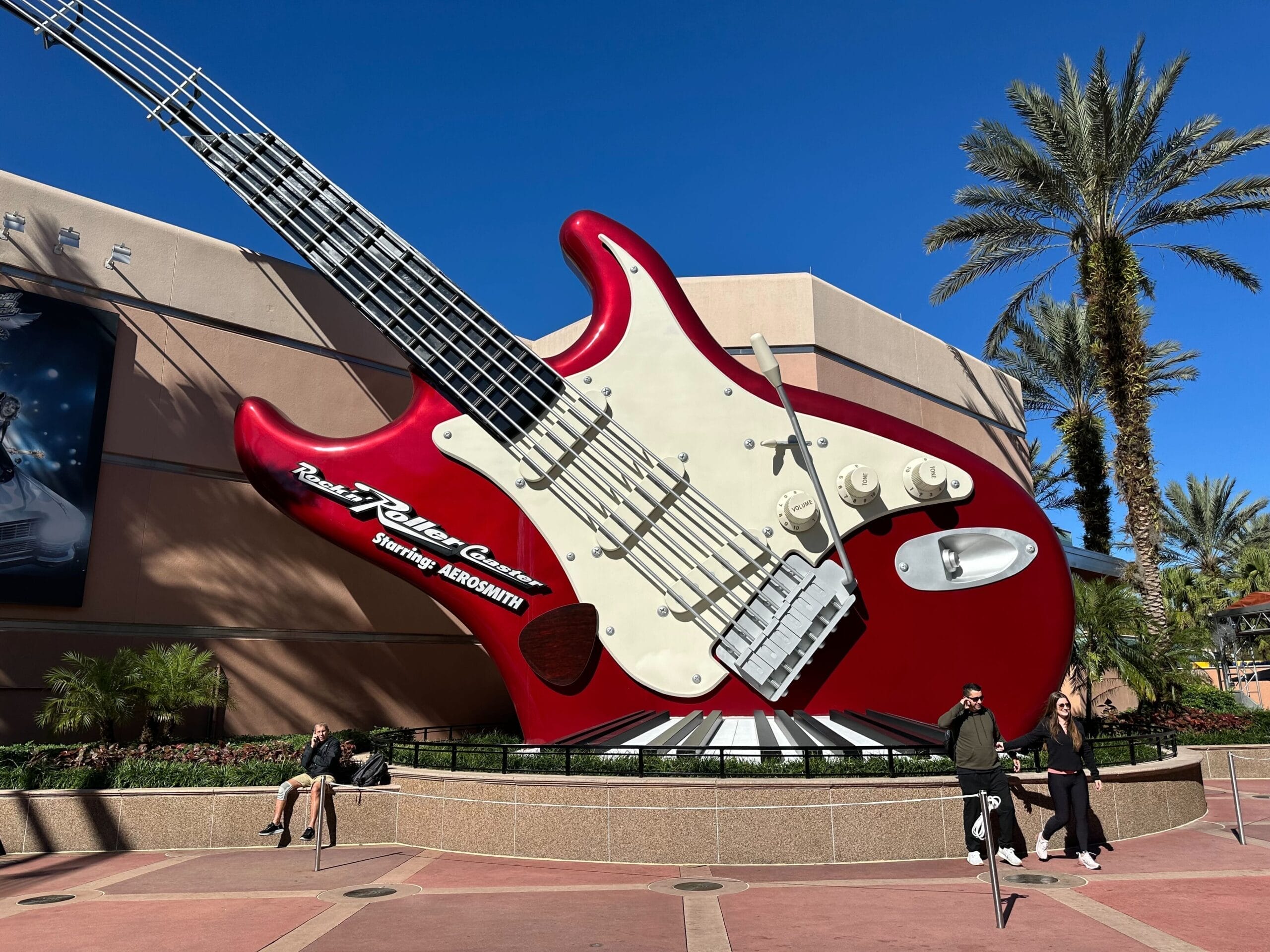
The strings ended at a red and white 40-foot-tall Fender Stratocaster. The instrument sat in a flowerbed with a series of piano keys right in front of the building. “Rock ‘n’ Roller Coaster Starring: AEROSMITH” was in white letters on the guitar next to a red guitar pick. The pick once featured the logo for Hanes, which sponsored the attraction for several years.
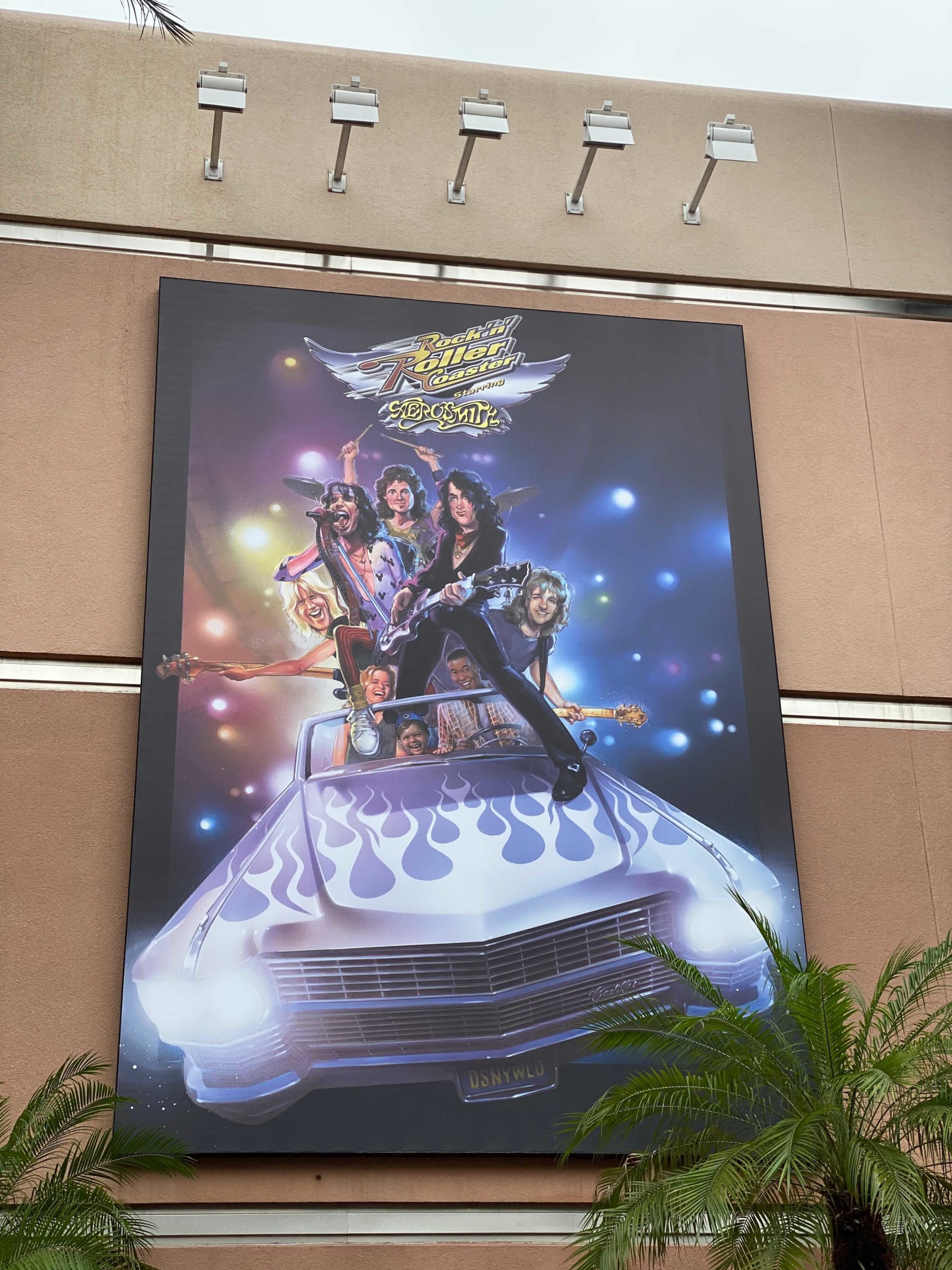
On the wall next to the guitar was a Rock ‘n’ Roller Coaster Starring Aerosmith poster. This featured caricatures of the band standing on a limo with guests inside. The license plate read “DSNYWLD.” A new version of this poster featuring the Muppets will replace the old version.

There was space in the courtyard for an extended outdoor queue, which could be set up with stanchions and ropes. Rock music played throughout the courtyard. The pavement was red and black.
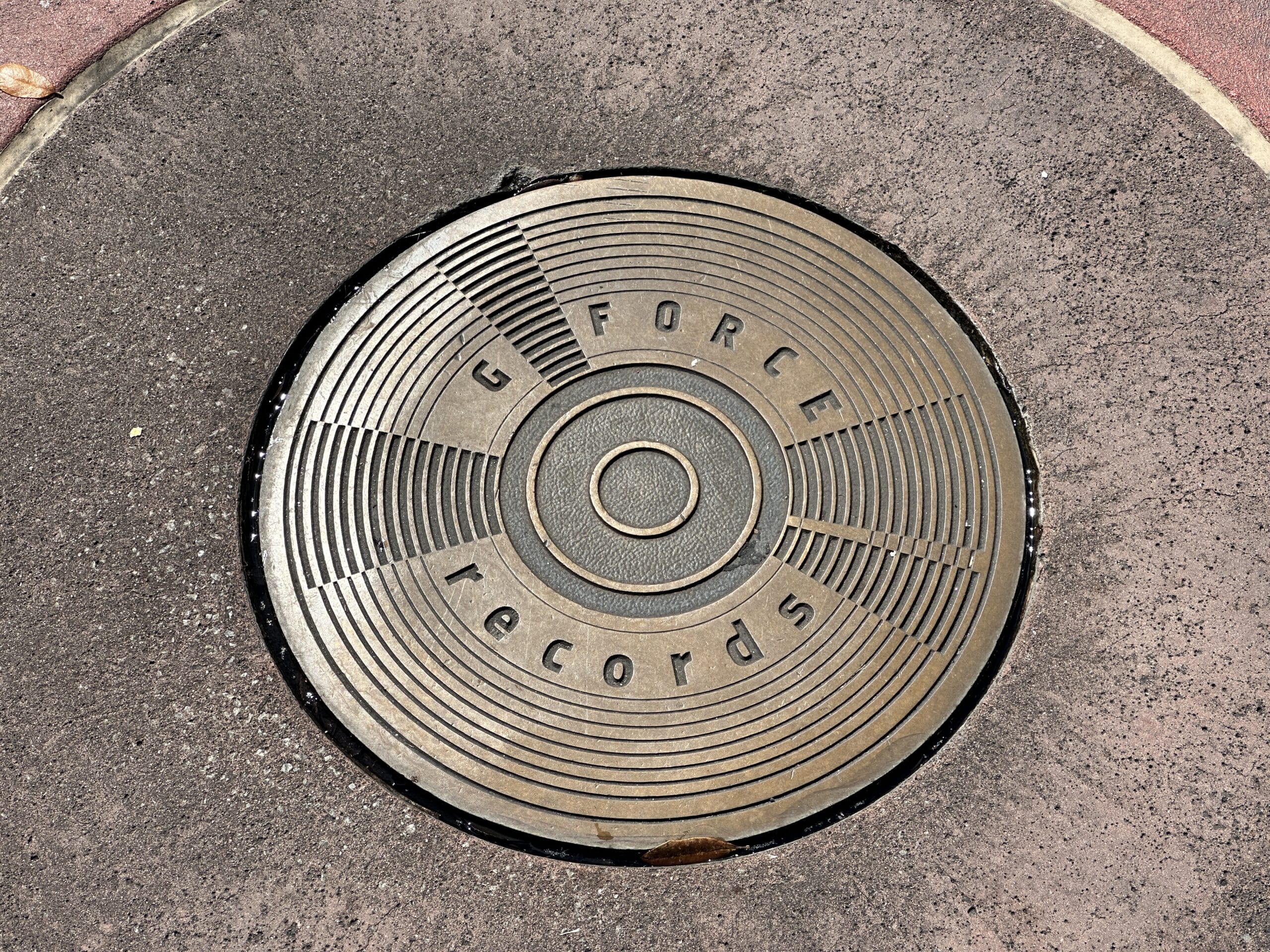
Metal medallions on the ground resembled records with “G-Force Records” carved into them. Record motifs continued throughout the courtyard and queue.
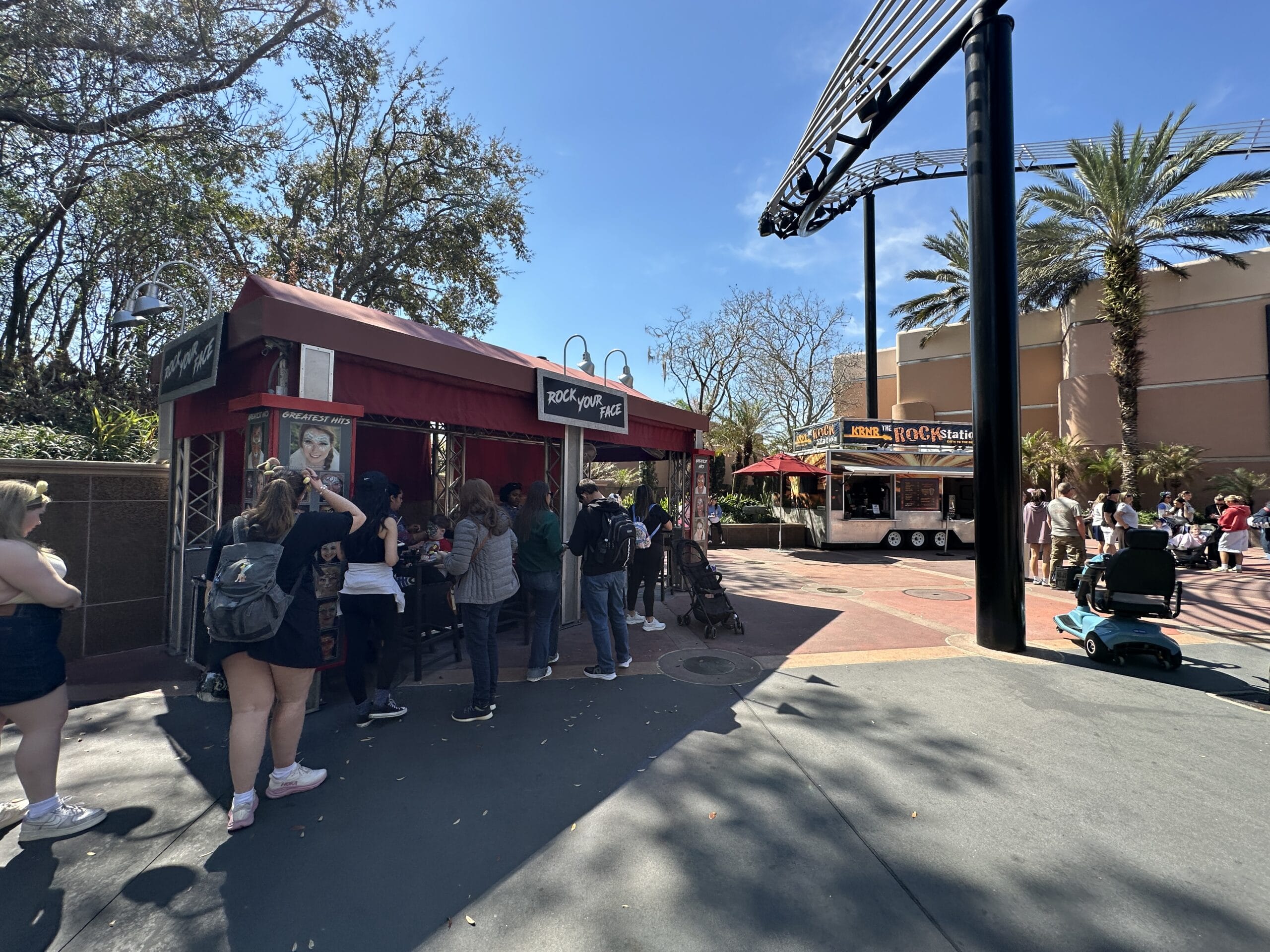
On the left was the “Rock Your Face” face painting station and KRNR: The Rock Station food truck.
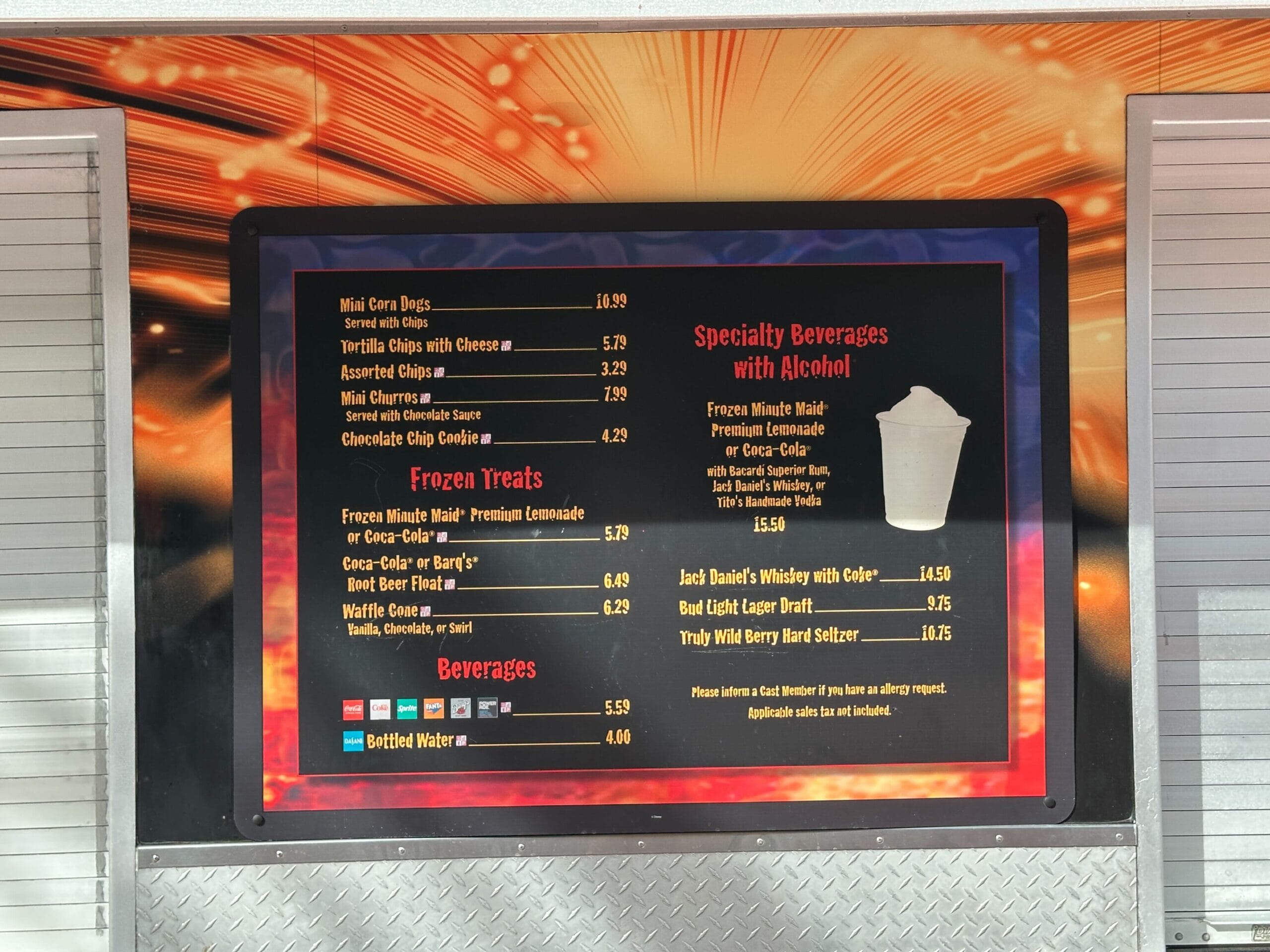
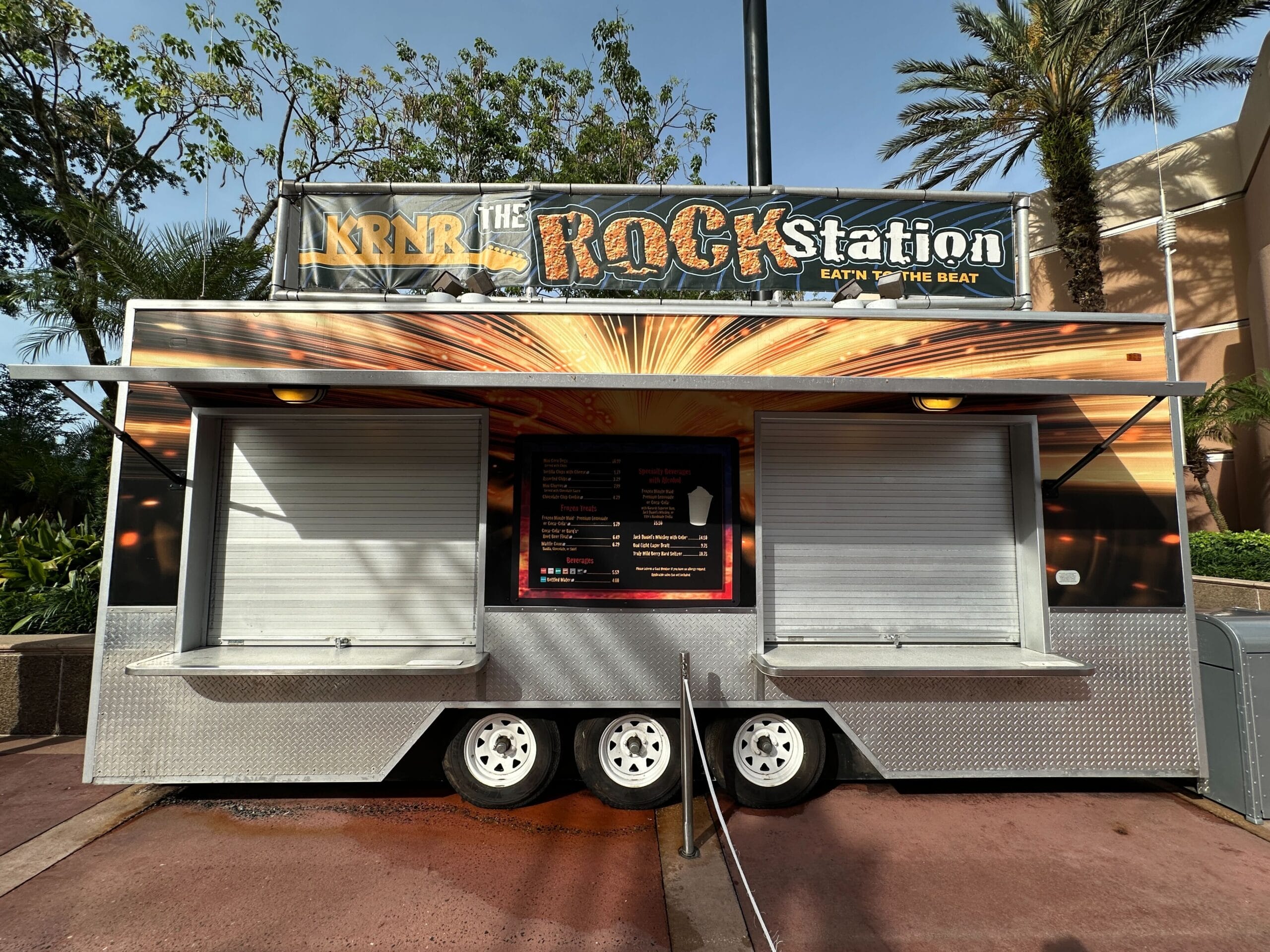
The food truck served mini corn dogs, chips, mini churros, chocolate chip cookies, frozen treats, beverages, and alcoholic drinks.
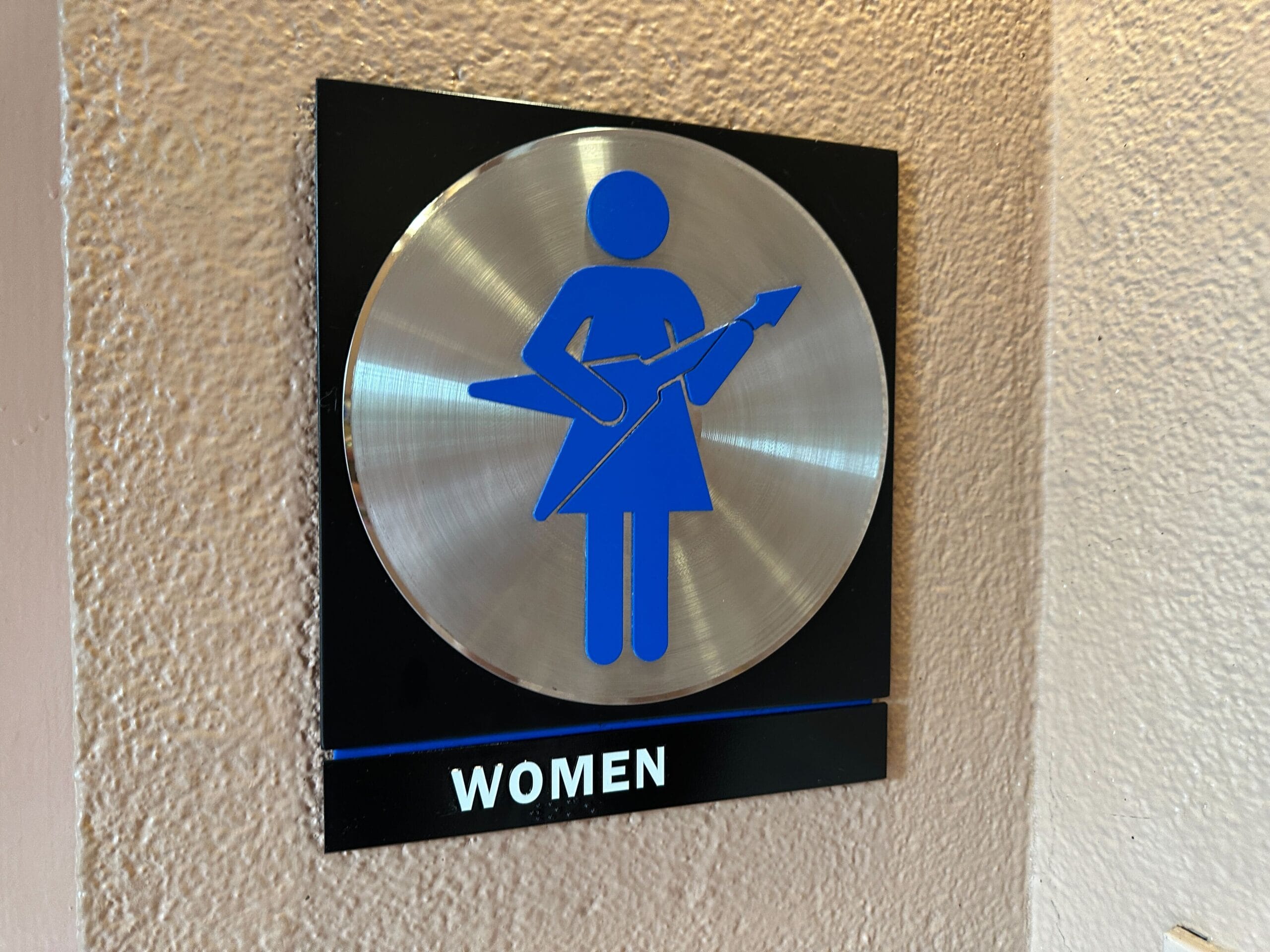
Even the area’s restrooms had record theming. The signs depicted the standard stick figure icons holding guitars against a silver record.
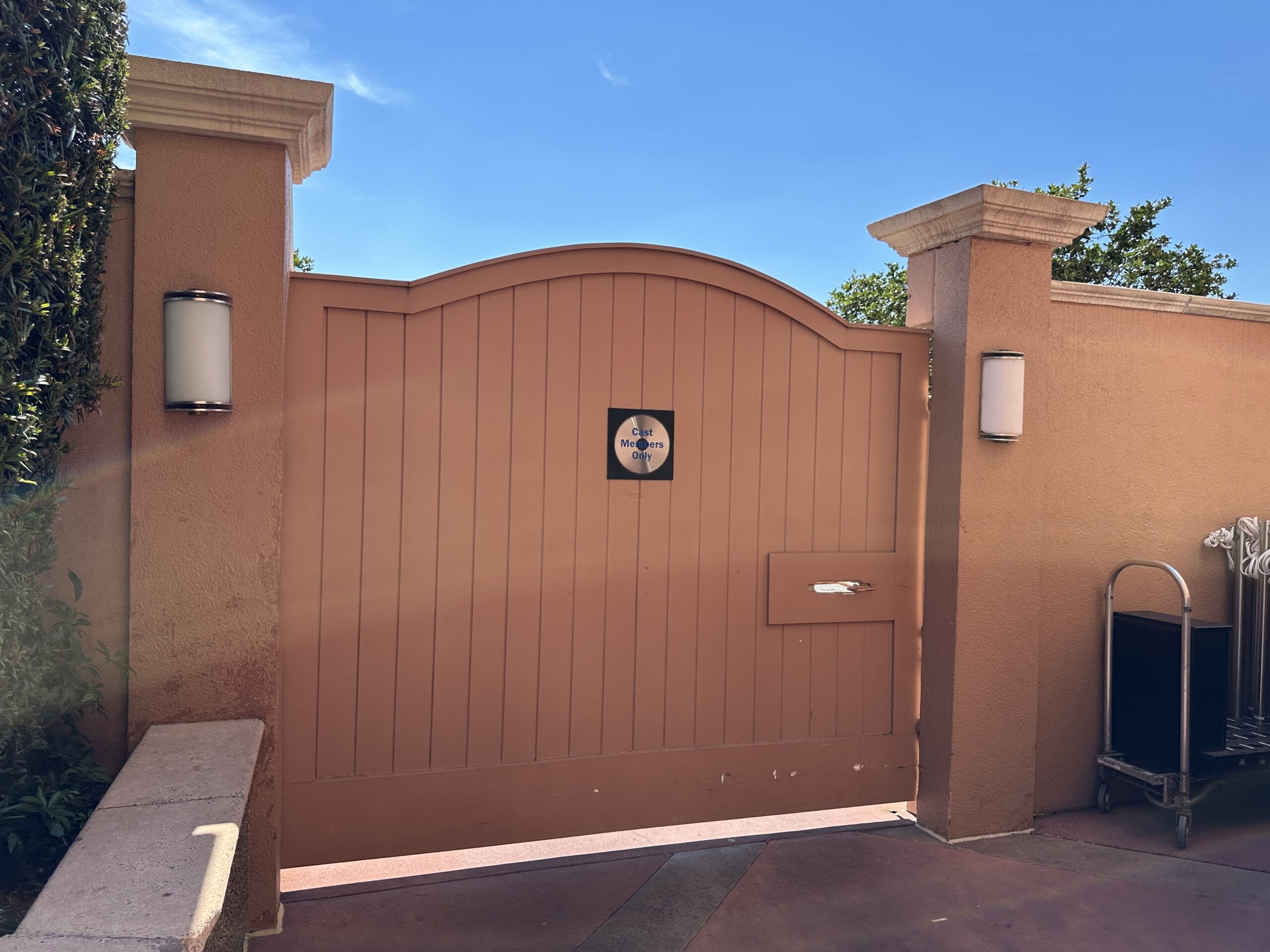
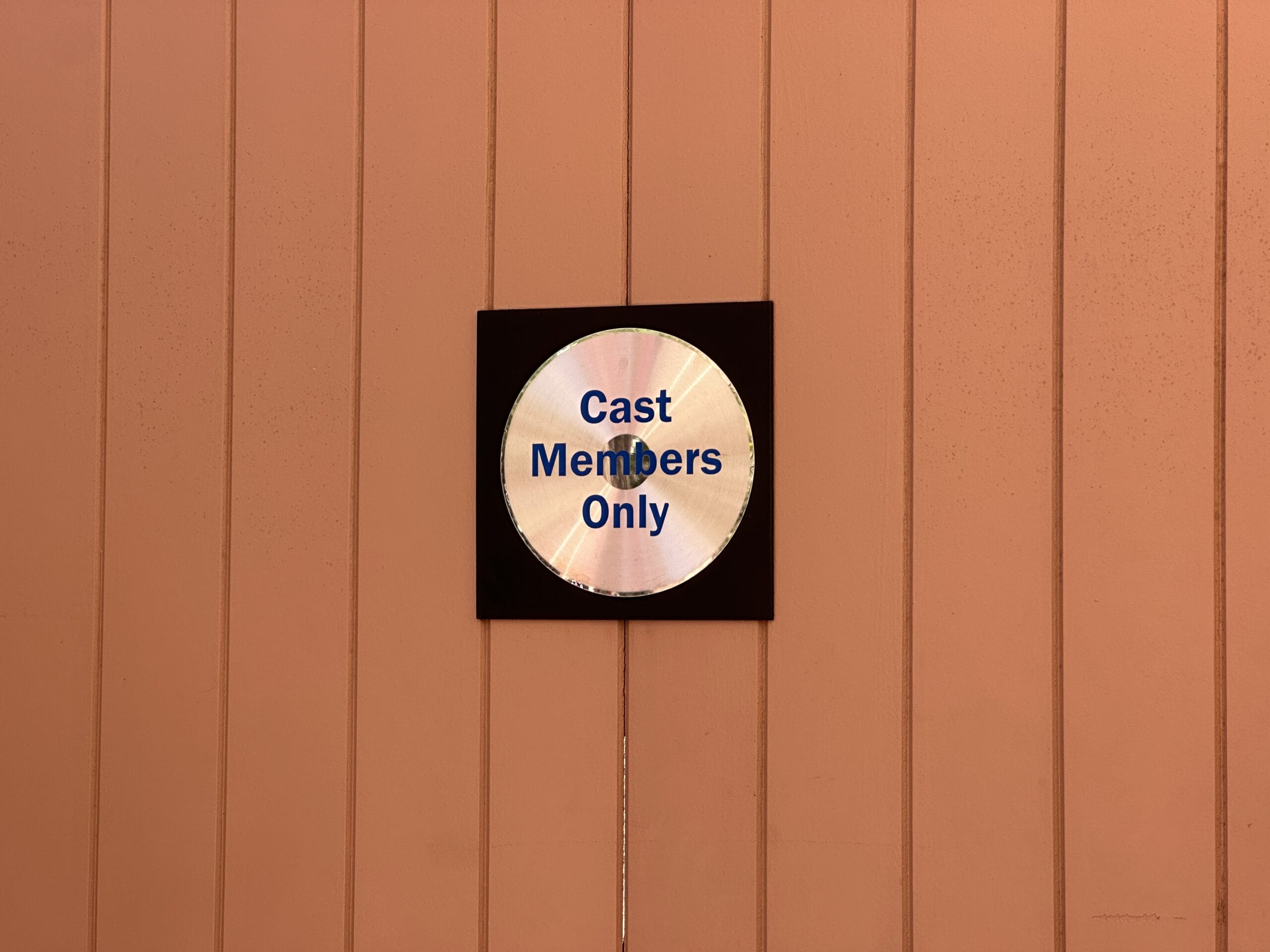
A record sign on a backstage gate read “Cast Members Only.”
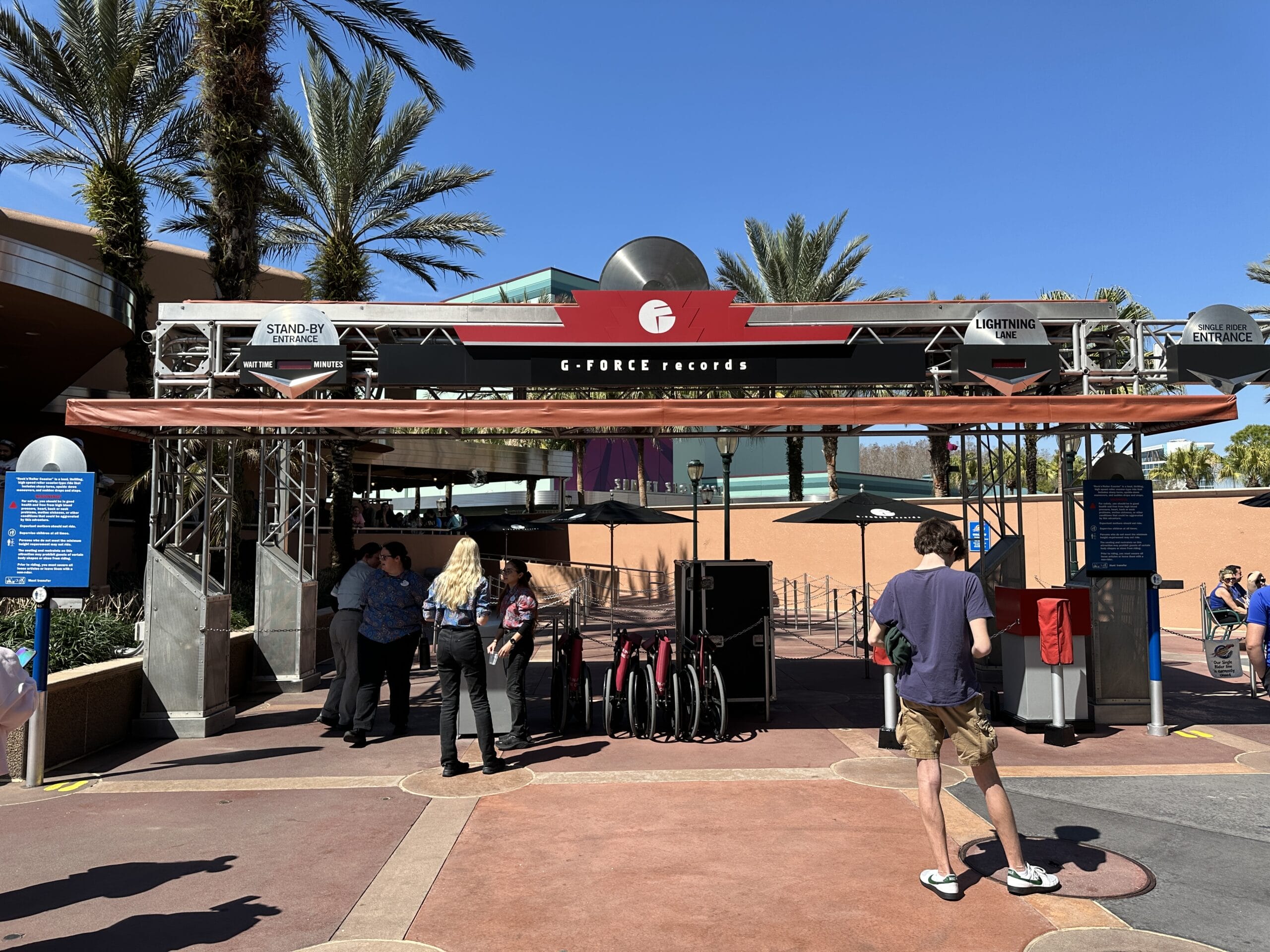
Guests entered the attraction through trusses on the right side of the building under a G-Force Records sign. The Stand-By Entrance, Lightning Lane, and Single Rider entrance signs all resembled records. The color scheme of the structure was silver, red, and black. Blue signs with safety information were on either side.
Queue
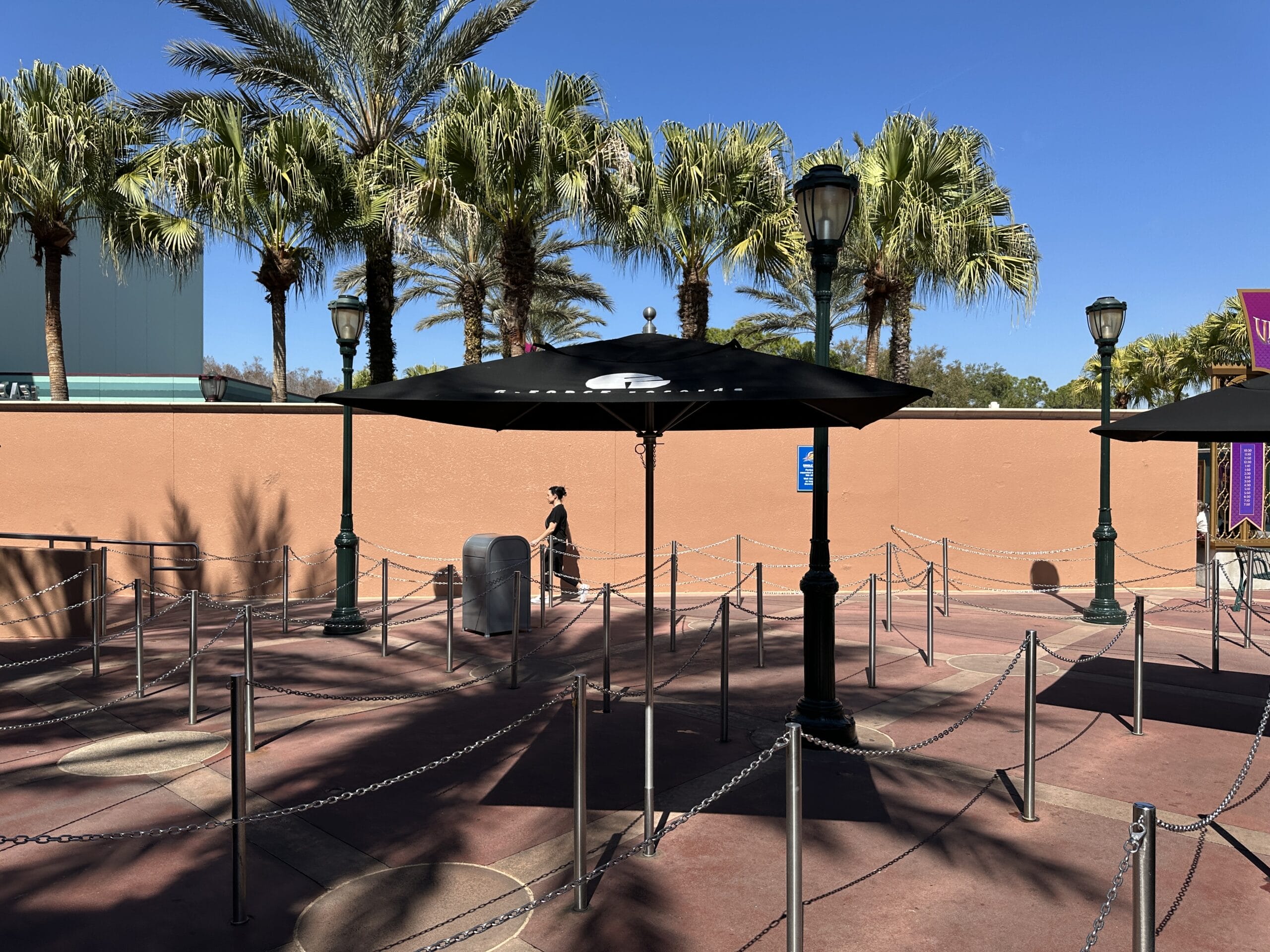
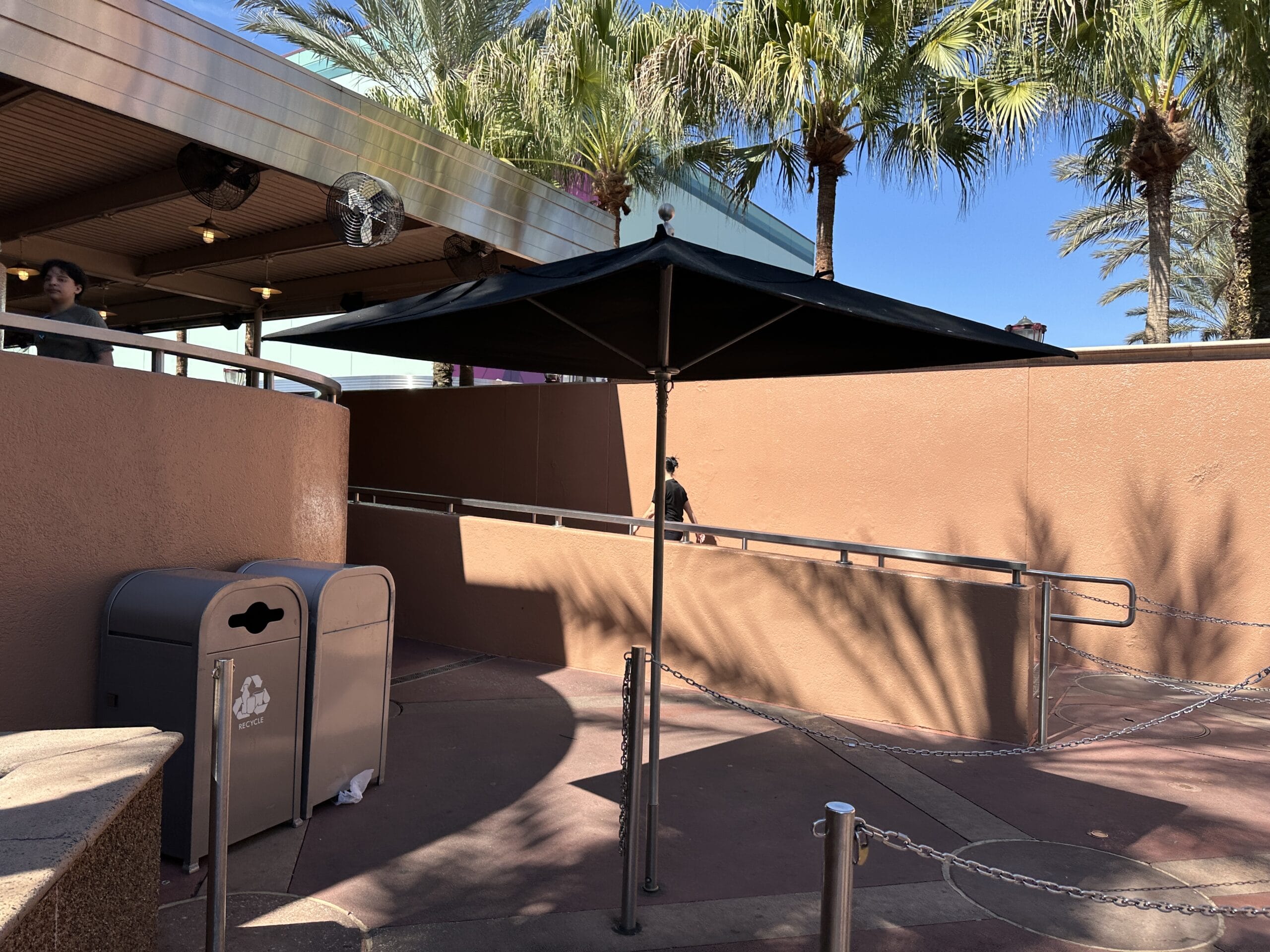
The first section of queue was outdoors, consisting of switchbacks under black G-Force Records umbrellas.
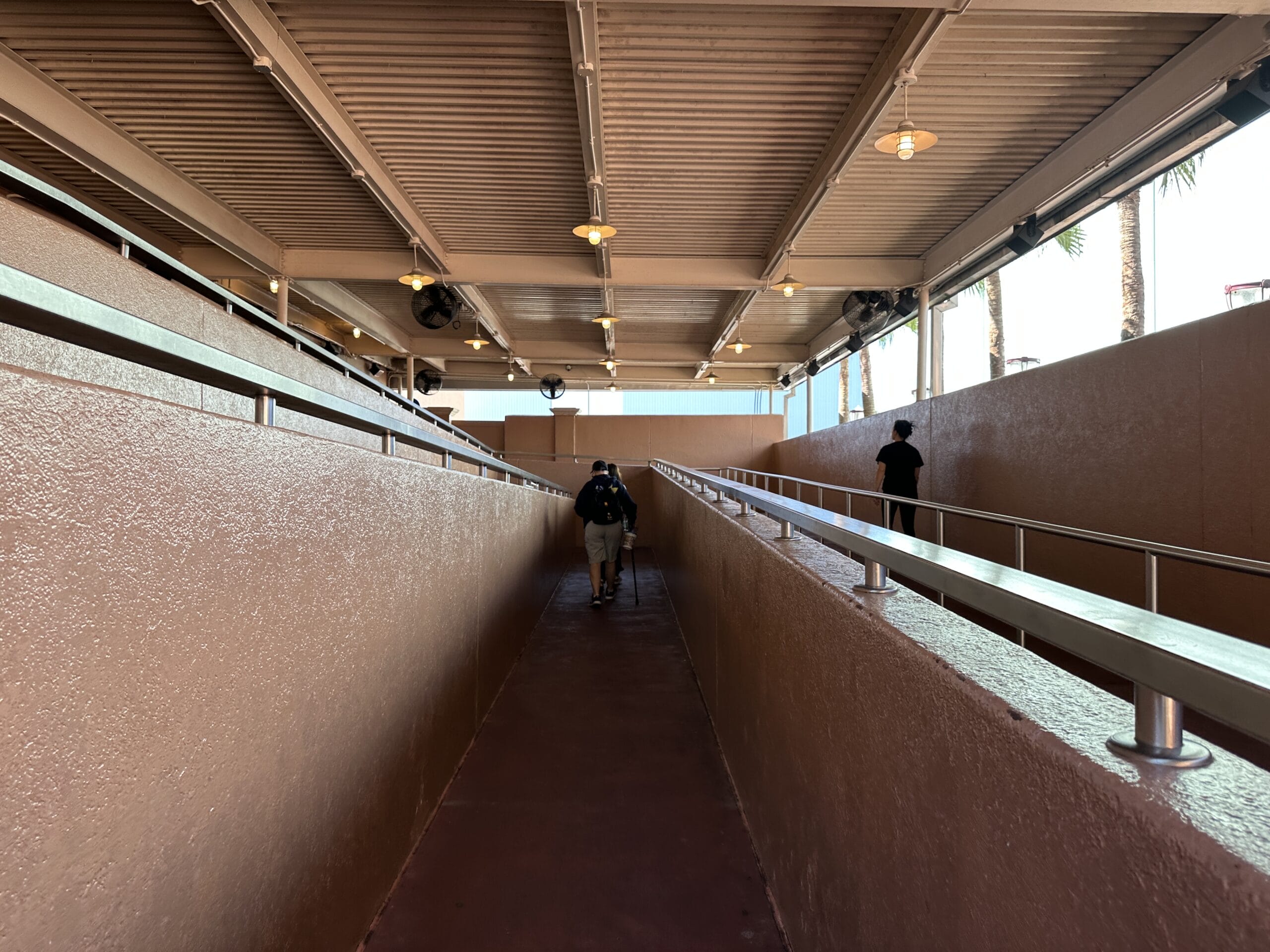
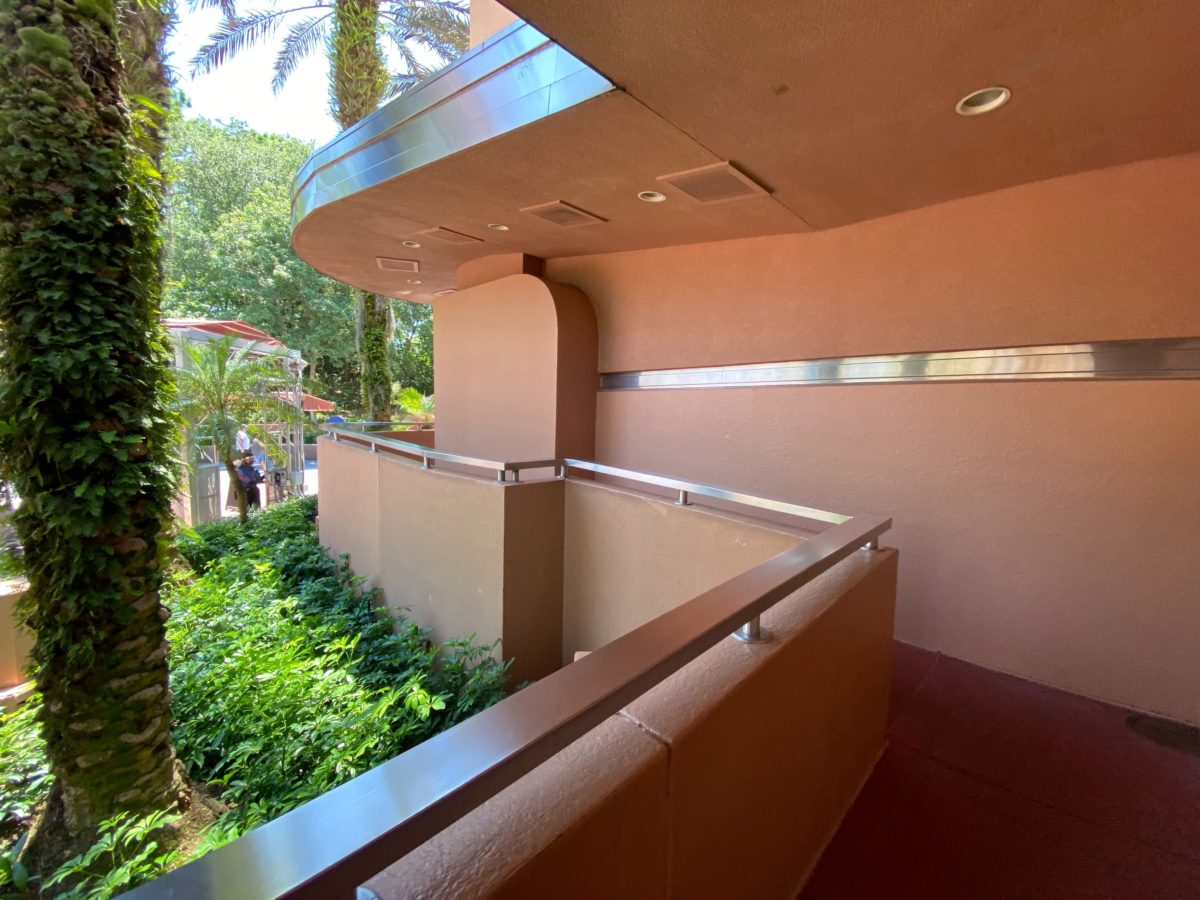
Guests then went up a series of covered ramps and made their way into the building.
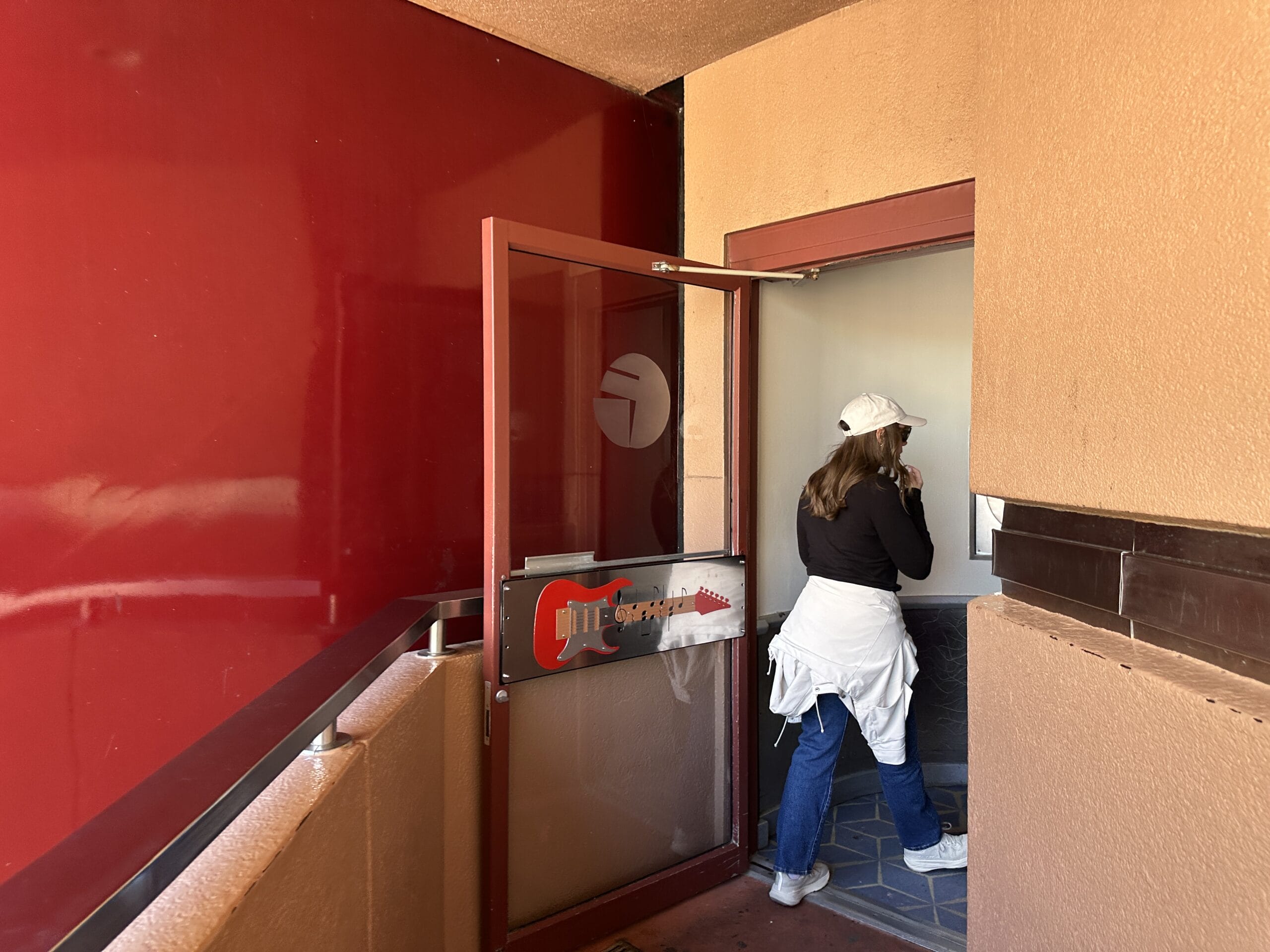
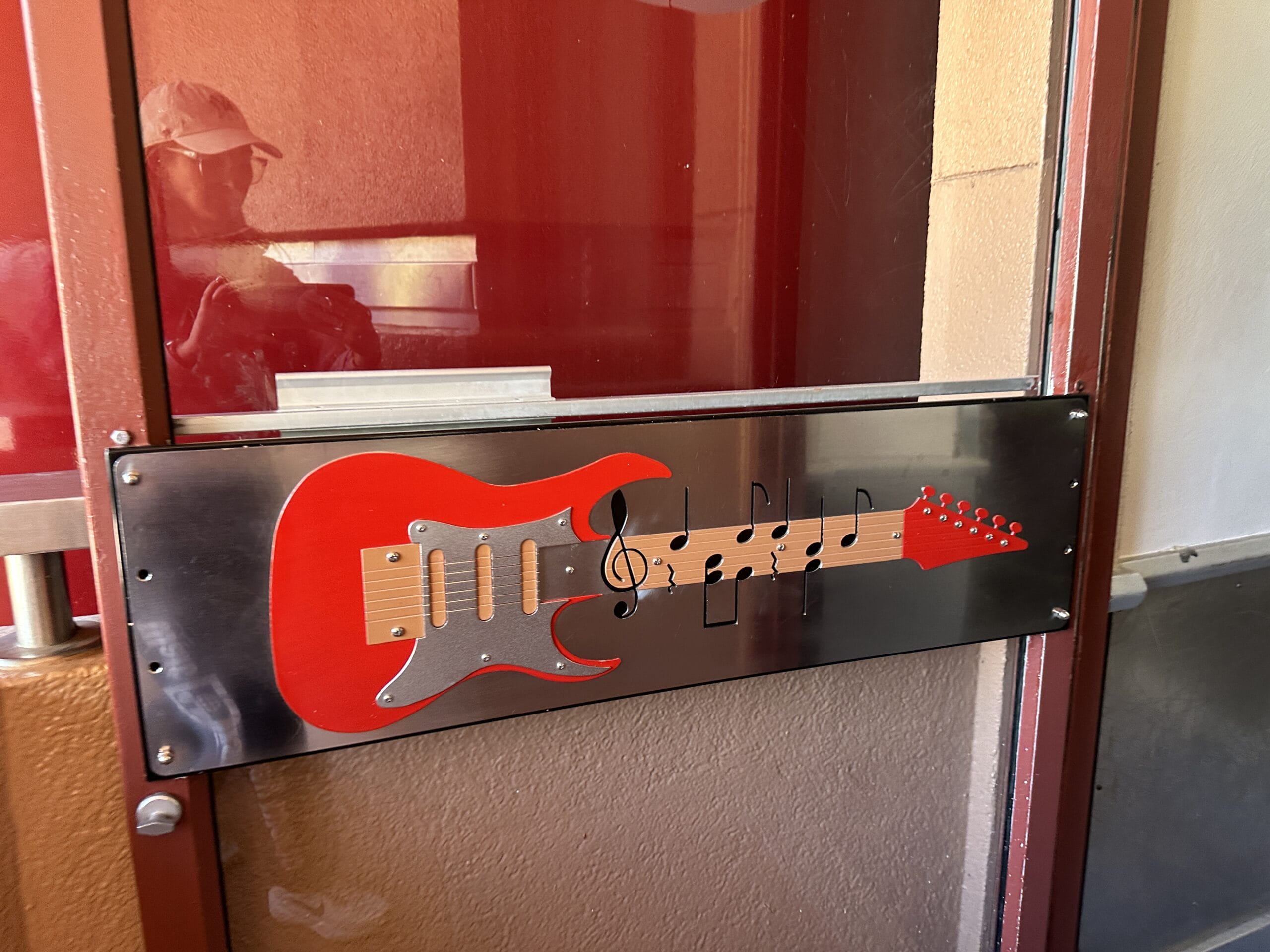
The door was emblazoned with the G-Force Records logo. There was also a guitar motif with music notes across the center.
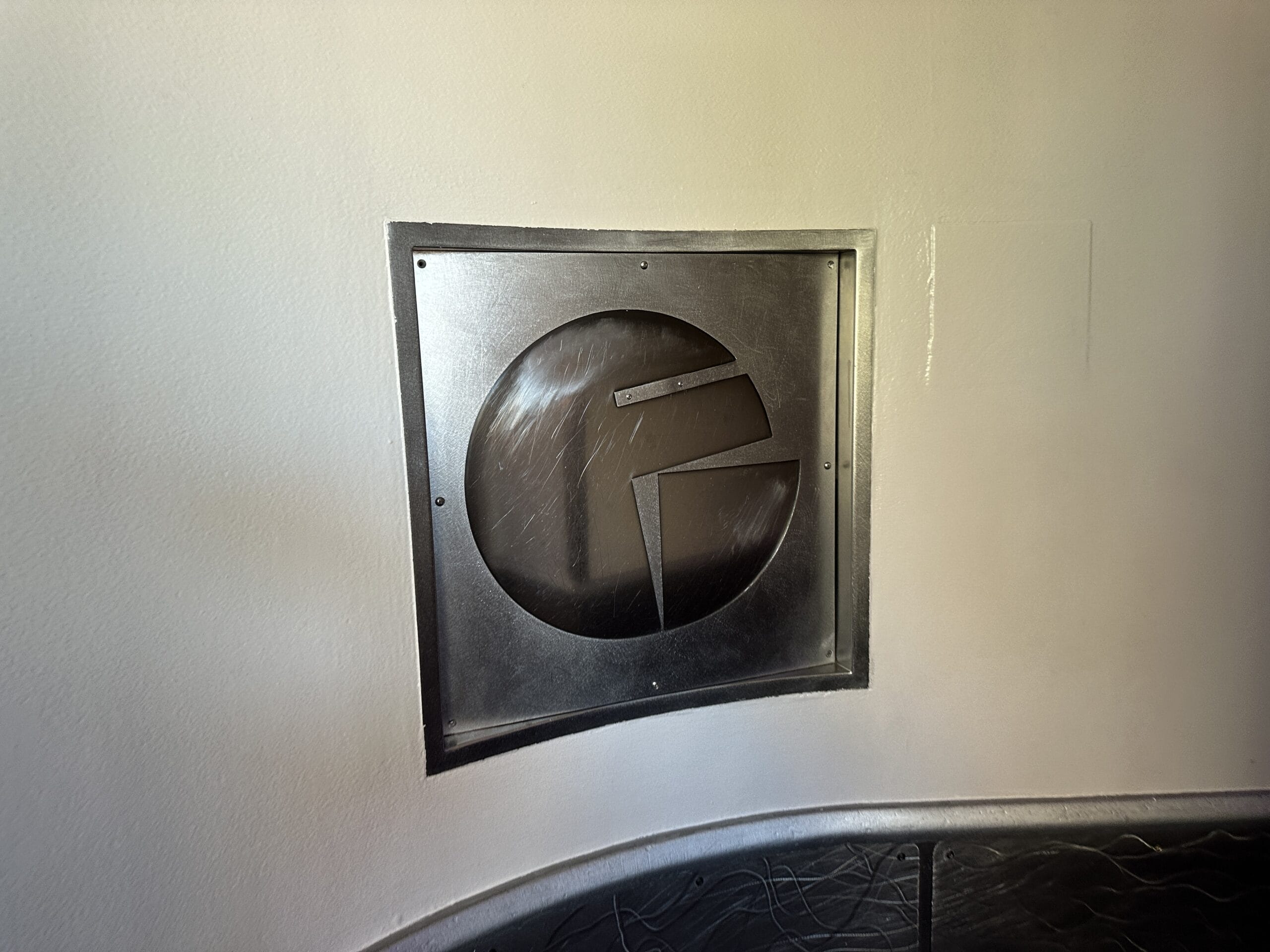
Guests went through a short hallway, passing another metallic version of the G-Force Records logo.
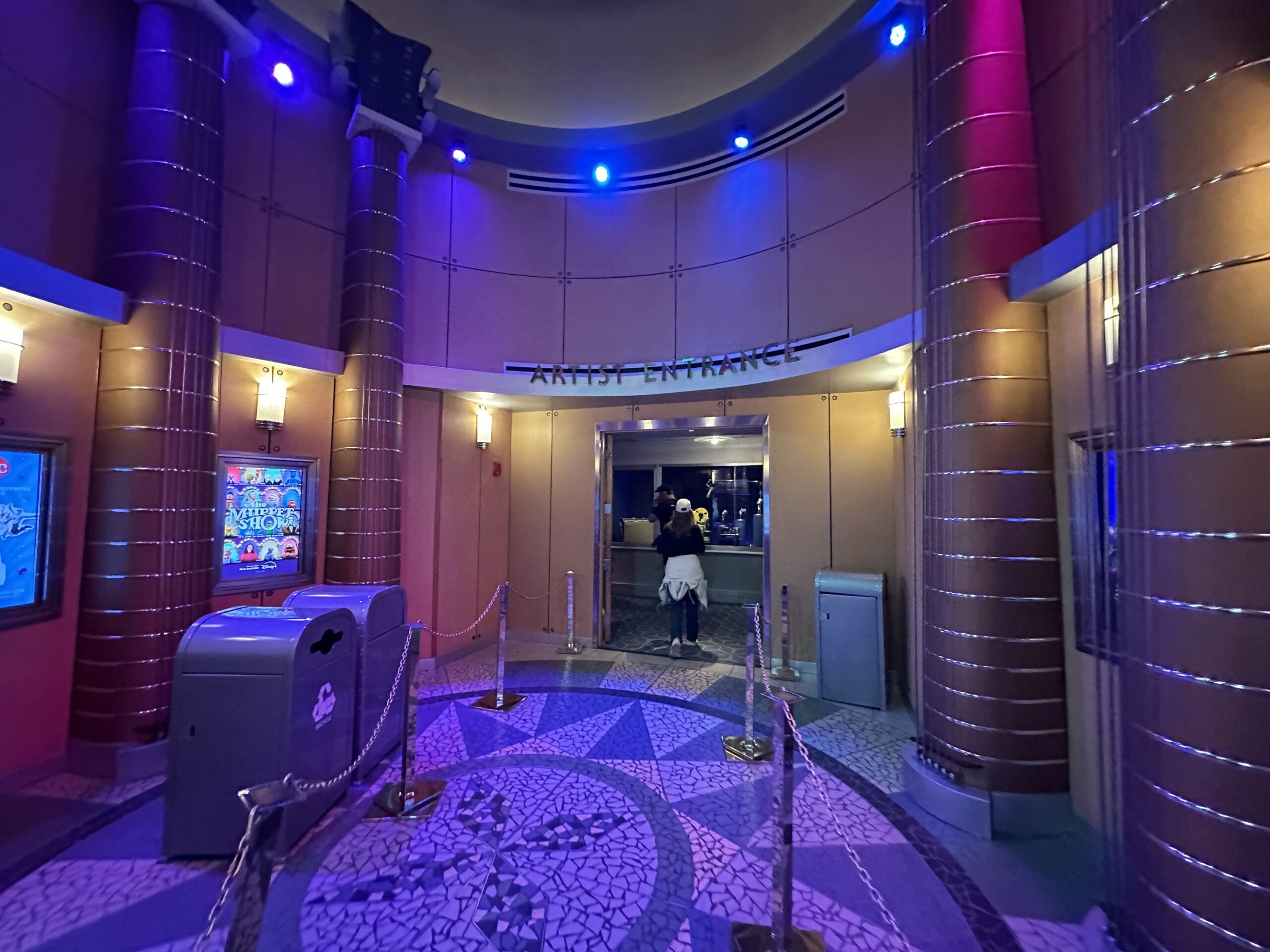
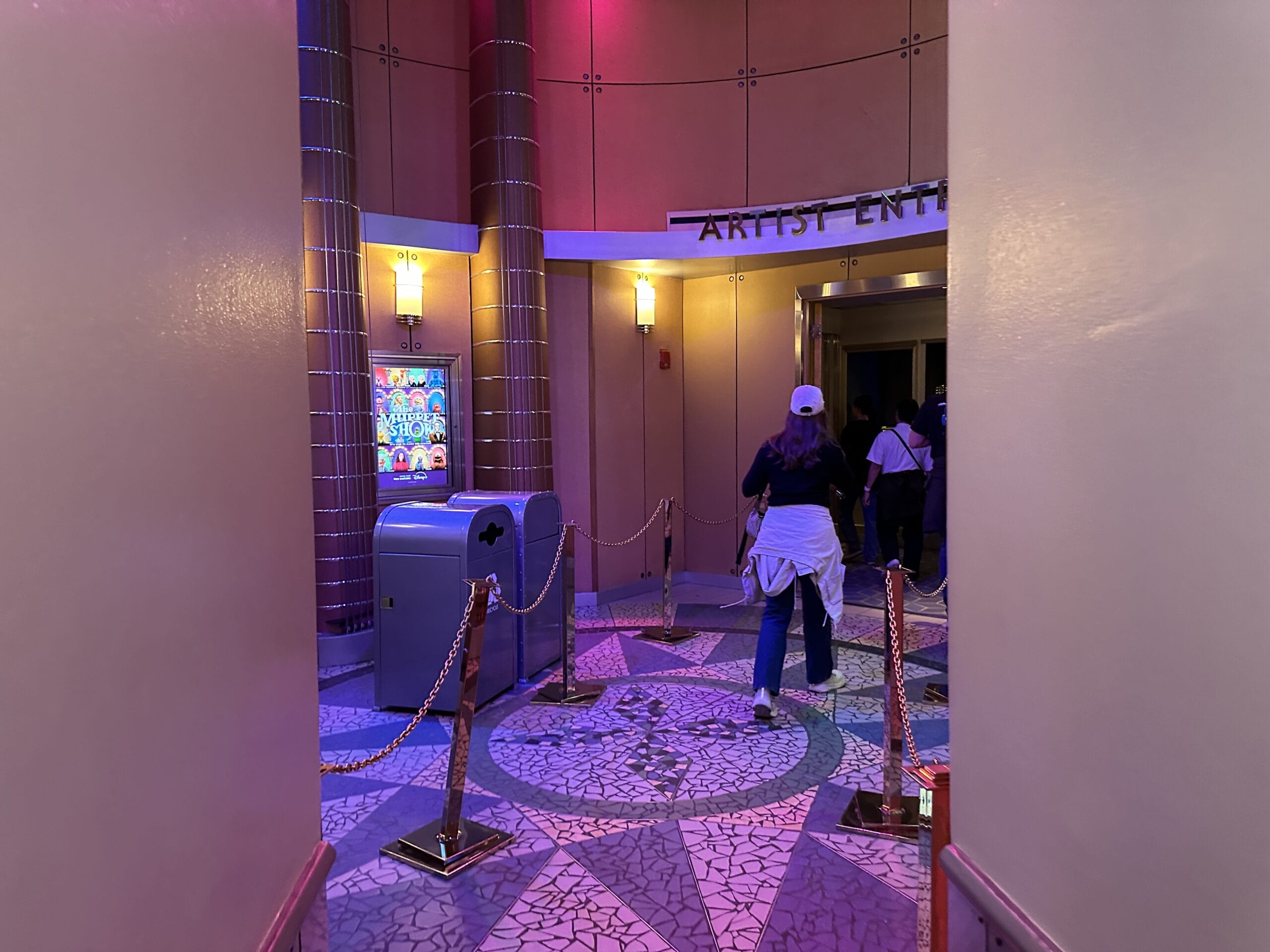
They then entered a rotunda, which was once adorned with posters for Walt Disney Records artists. Over the years, the posters were replaced with ads for various musical media like concert films and official Disney playlists.
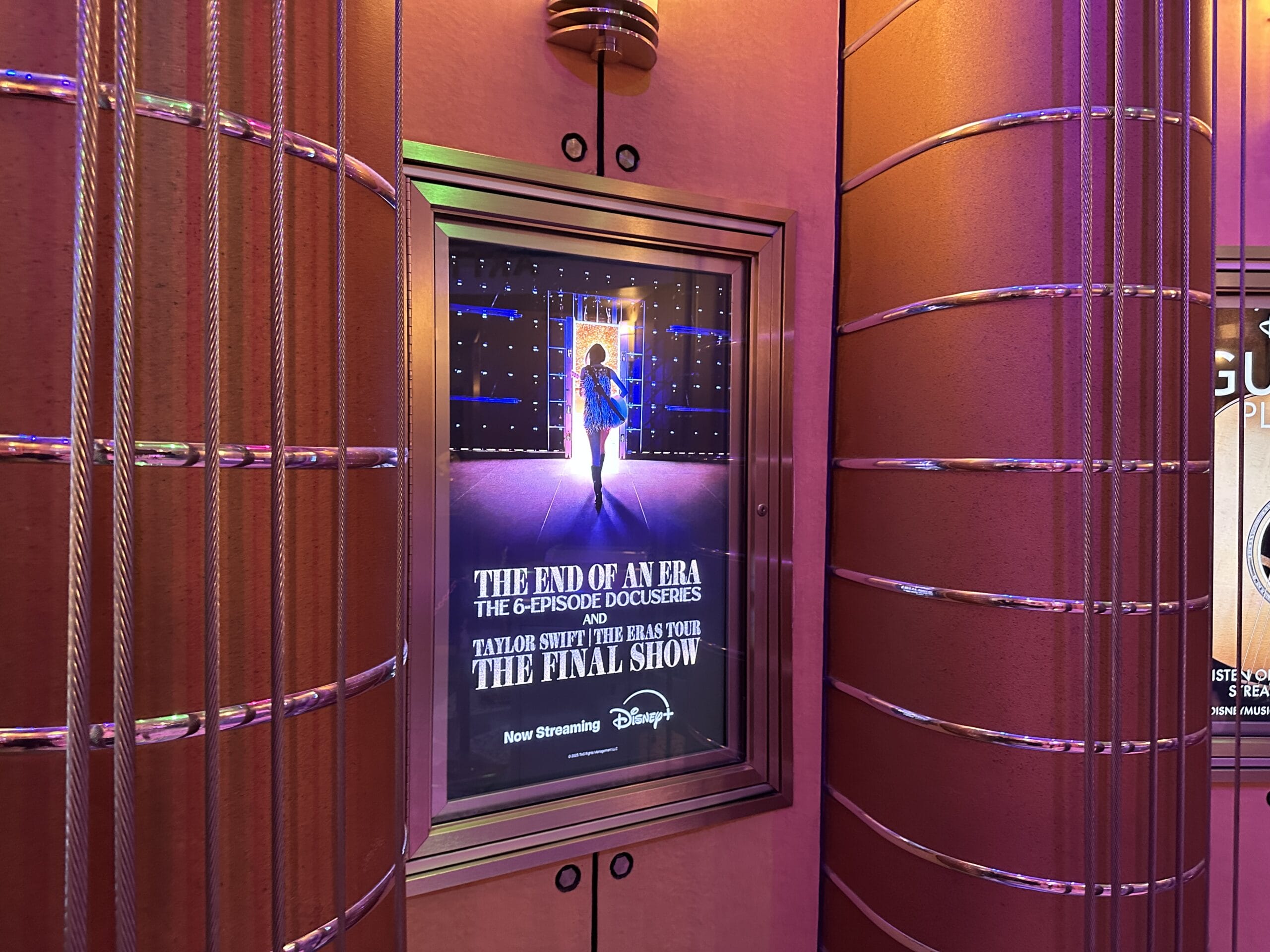
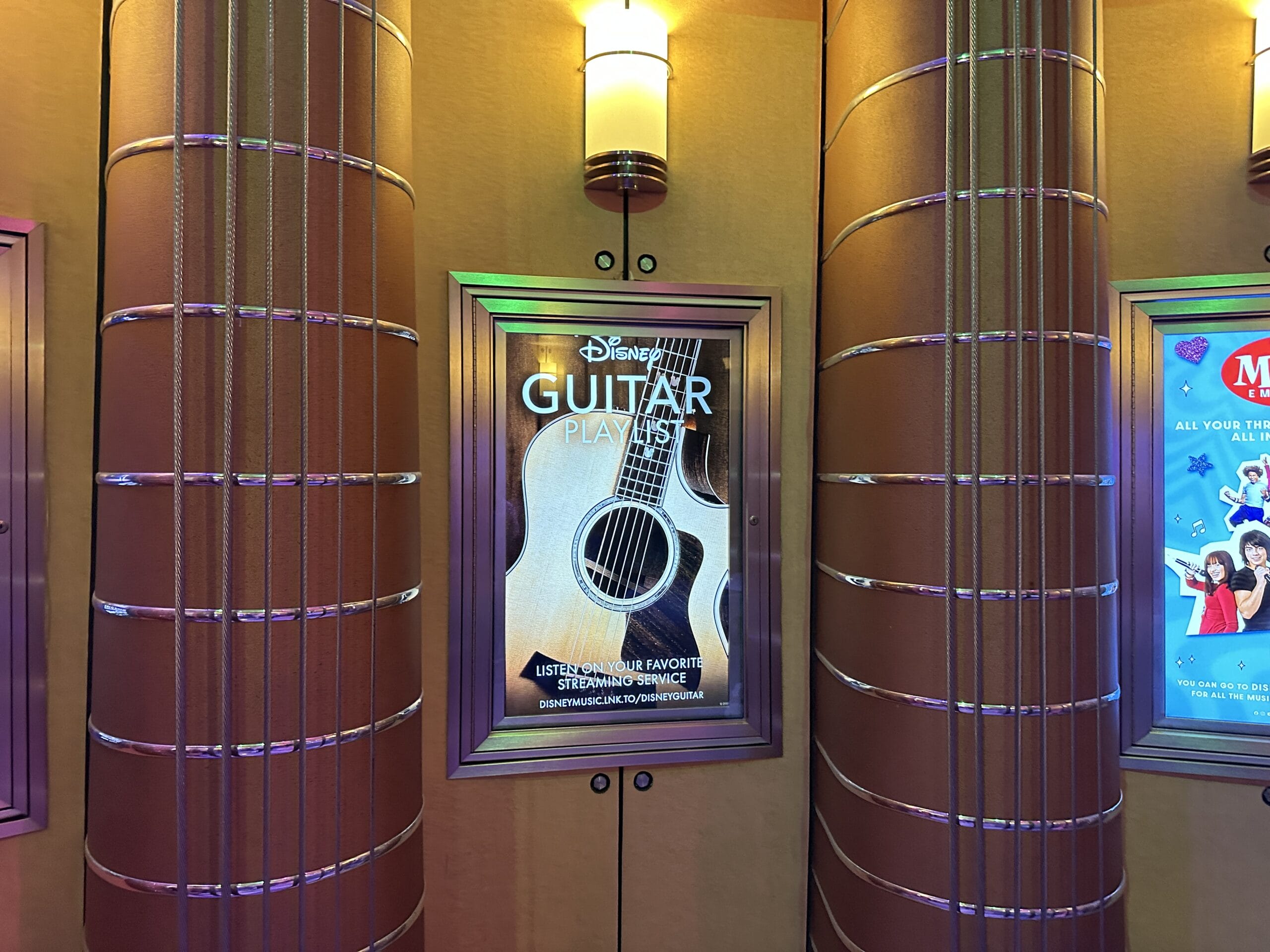
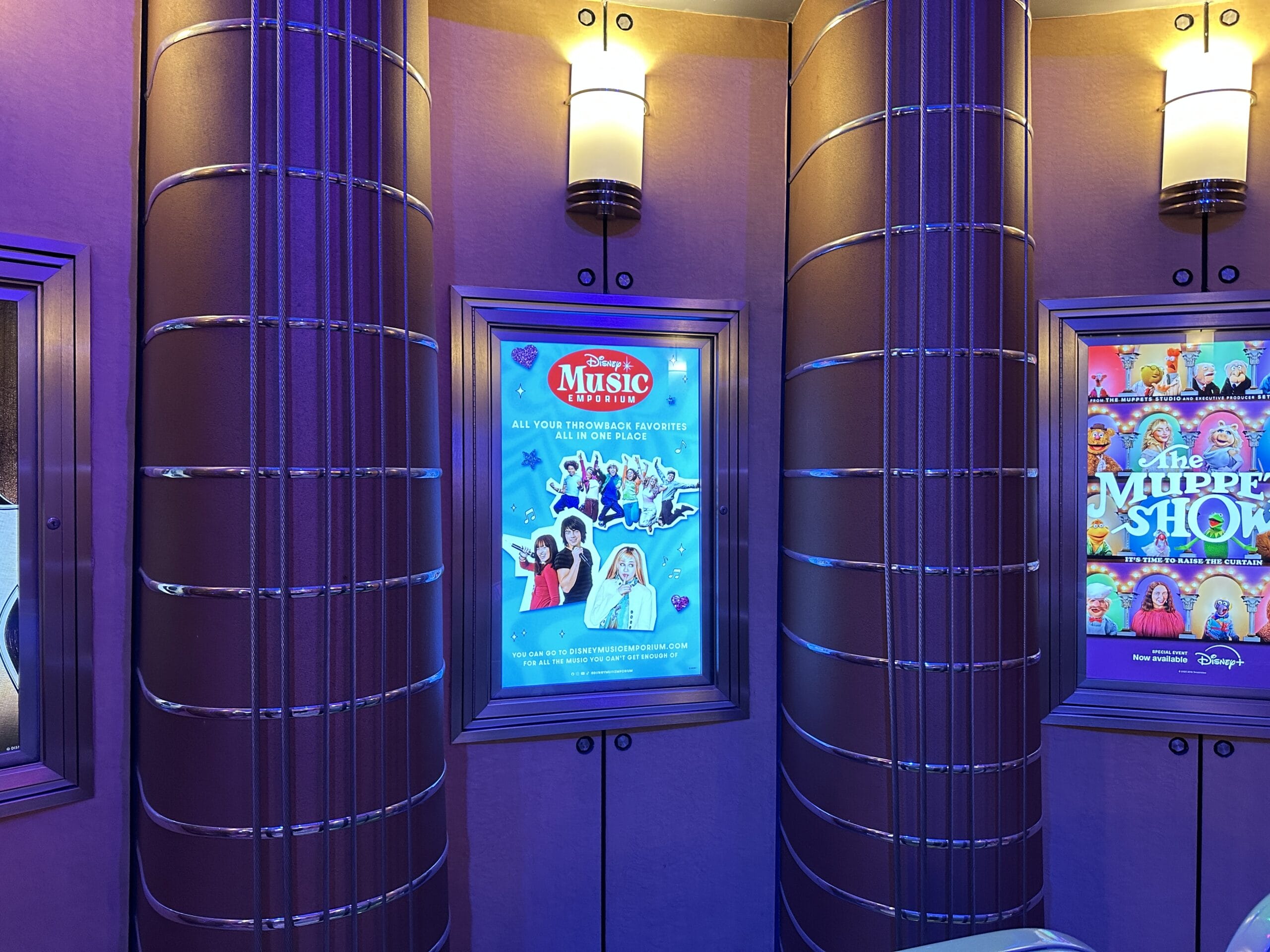
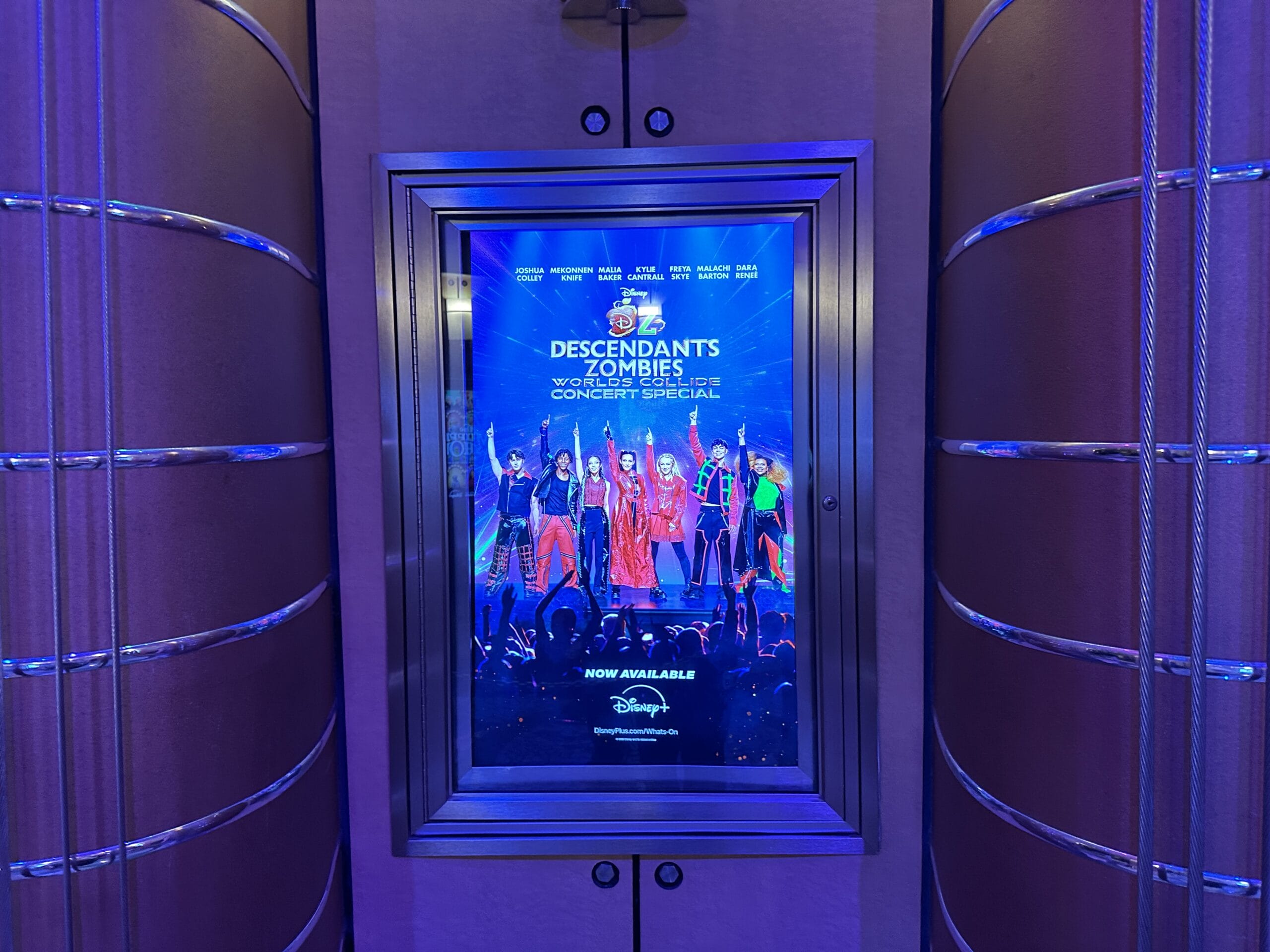
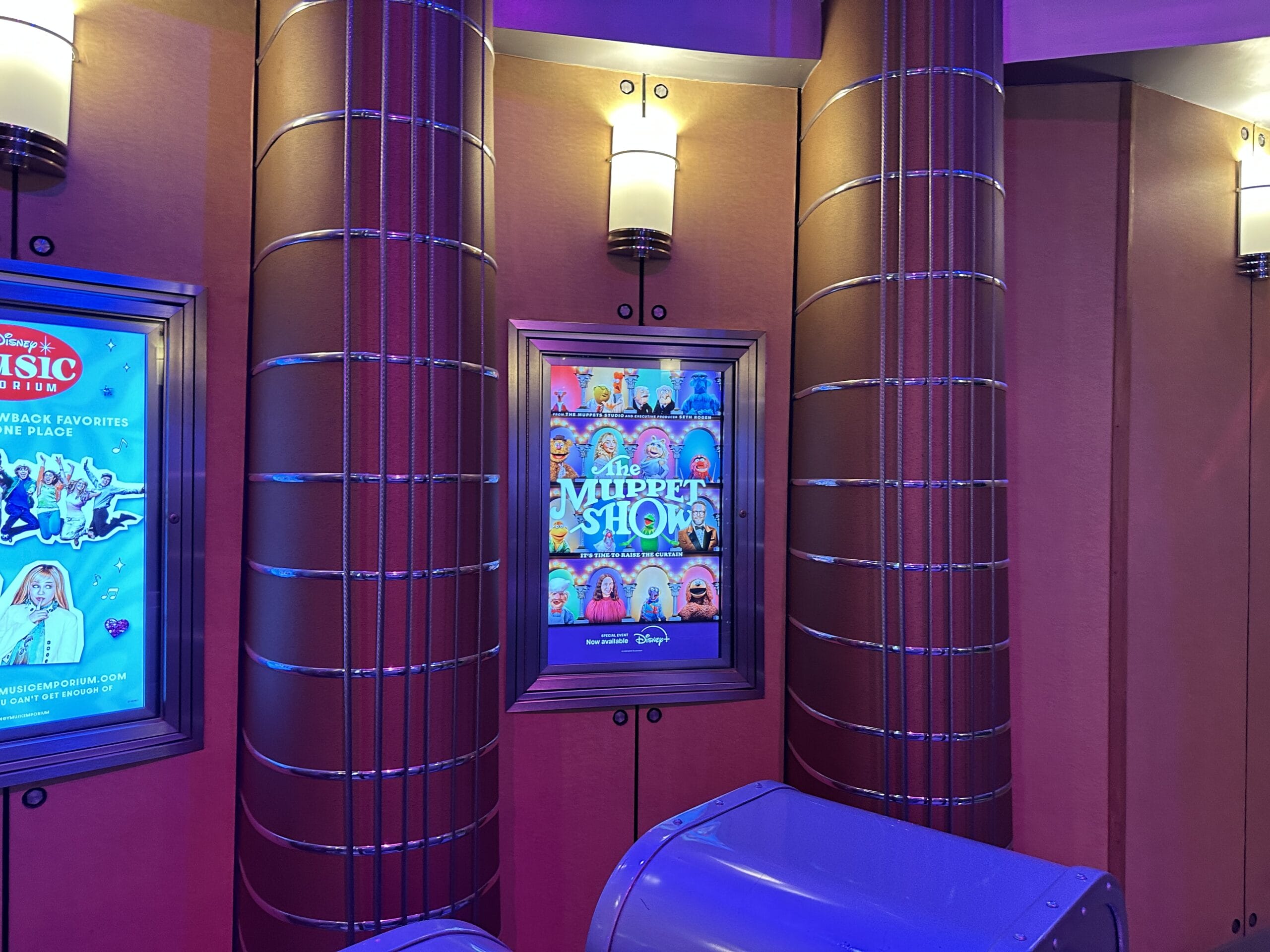
In the weeks before closing, the posters advertised Taylor Swift’s Eras Tour concert film and docuseries, the Disney Guitar Playlist, DisneyMusicEmporium.com, Descendants Zombies Worlds Collide Concert Special, The Muppet Show revival special, and more.
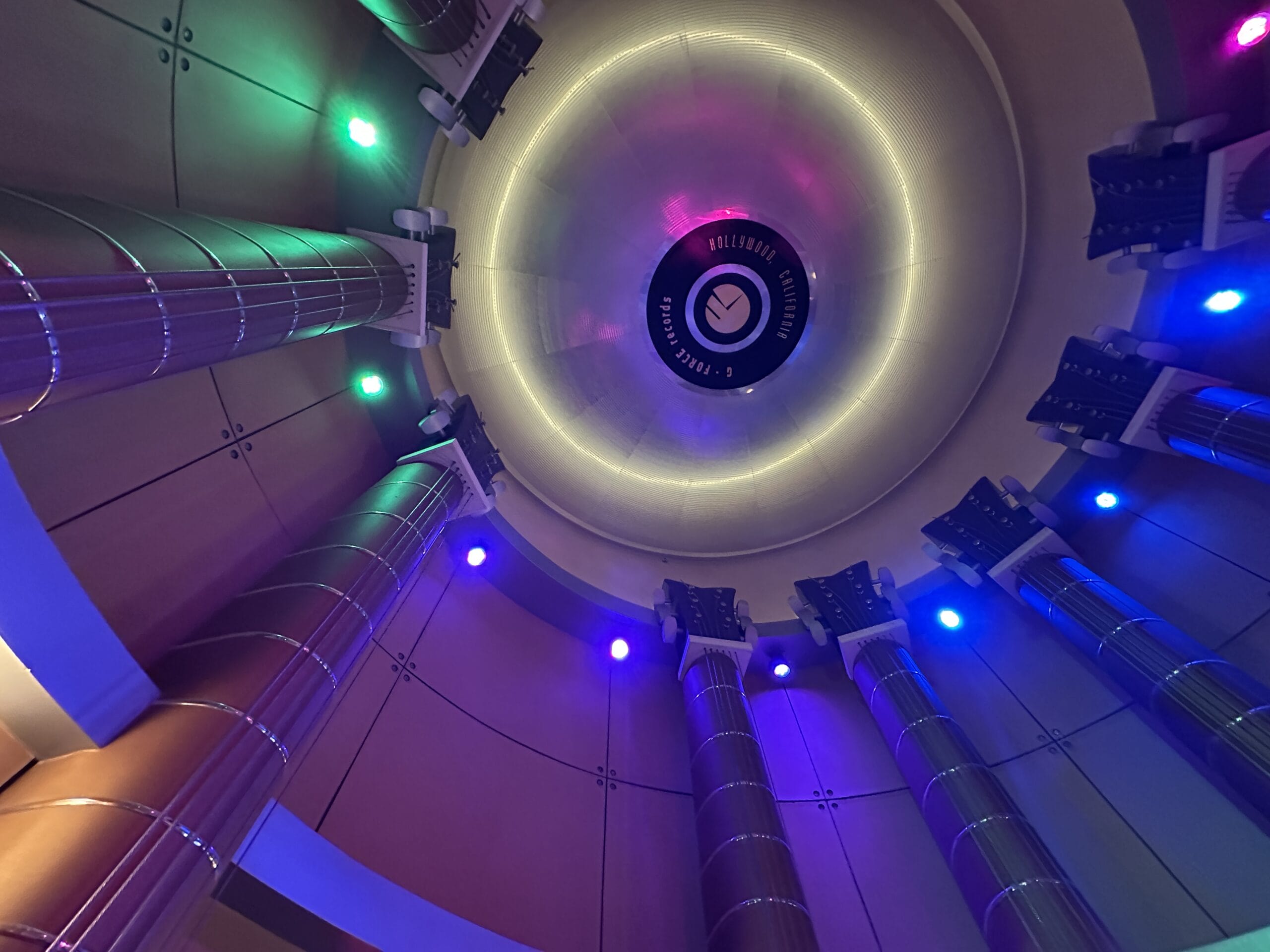
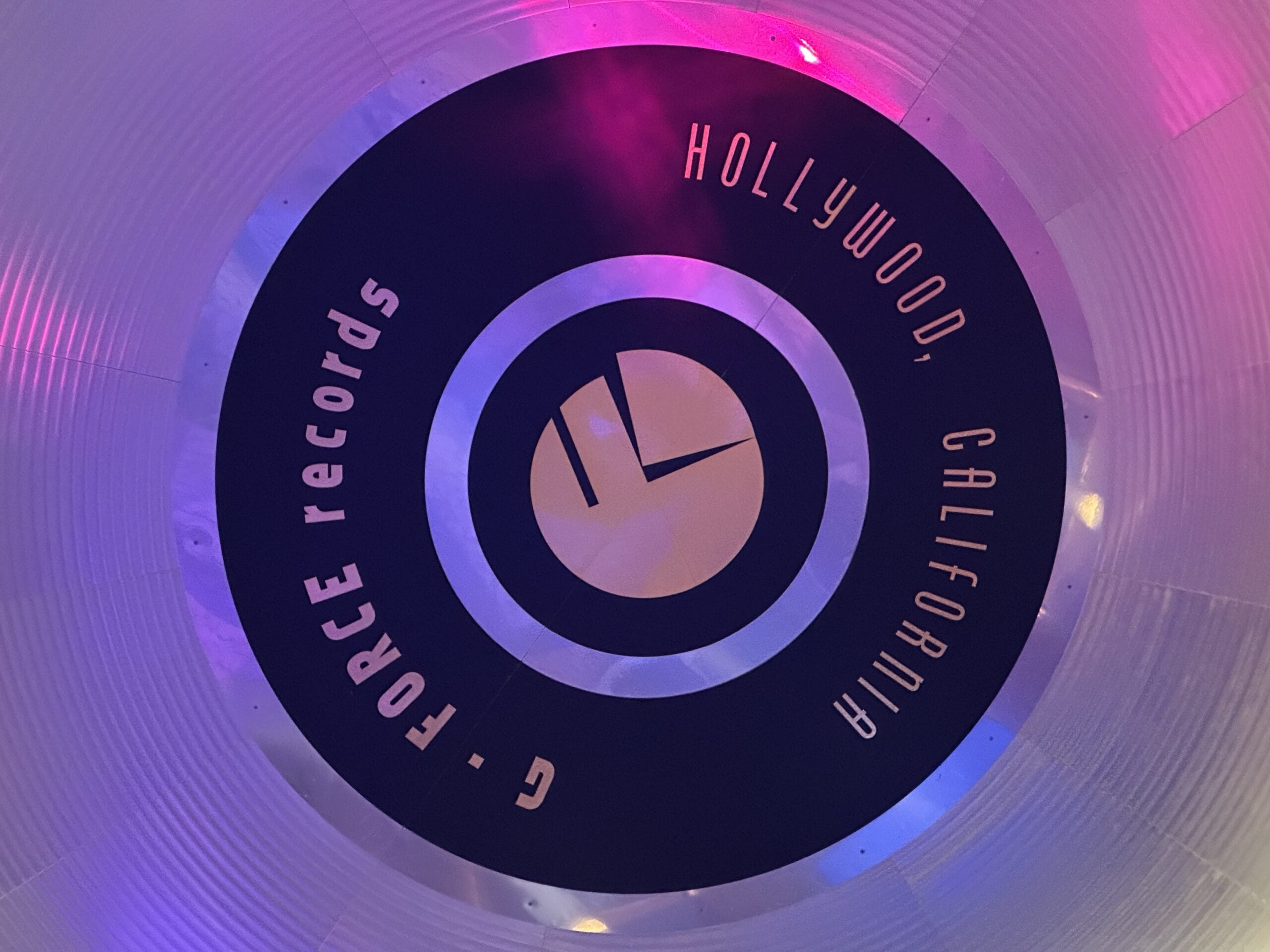
The columns between the posters resembled guitar necks with strings, leading up to headstocks. On the ceiling was a “G-Force Records Hollywood, California” decoration on a large light. Colorful lights flashed around the edge of the ceiling.
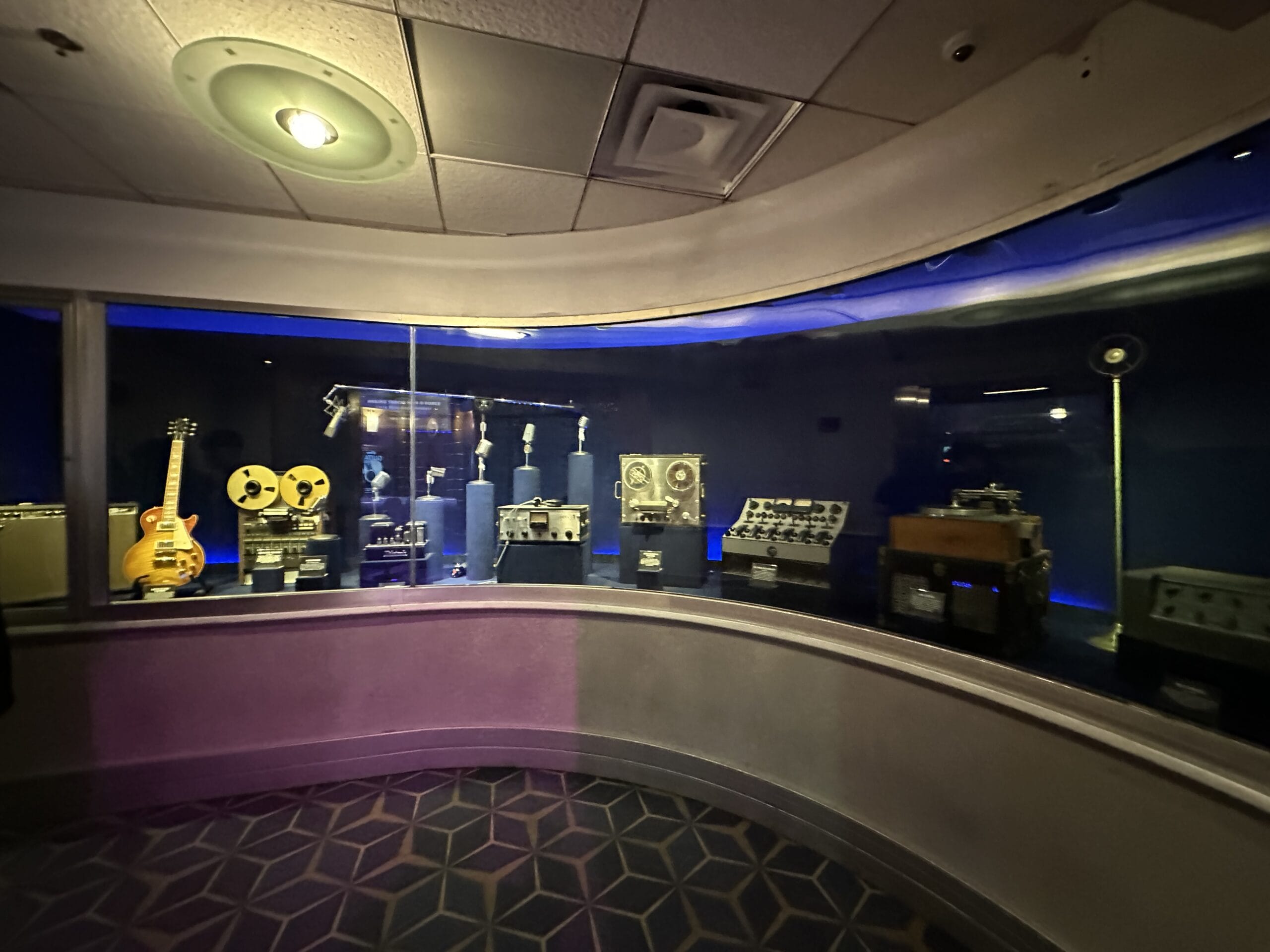
After passing under an “Artist Entrance” sign, guests walked by a long display case of vintage recording equipment.
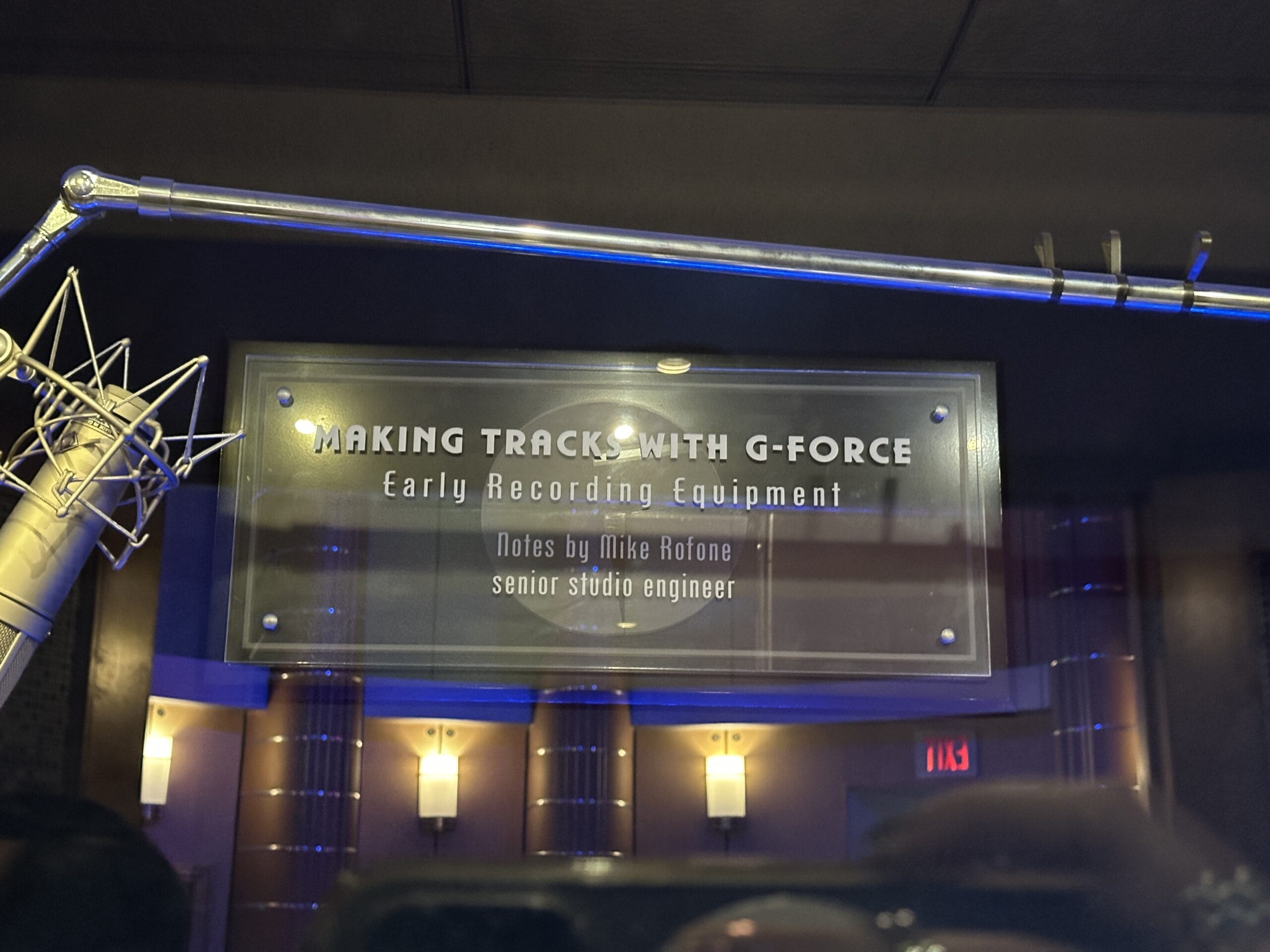
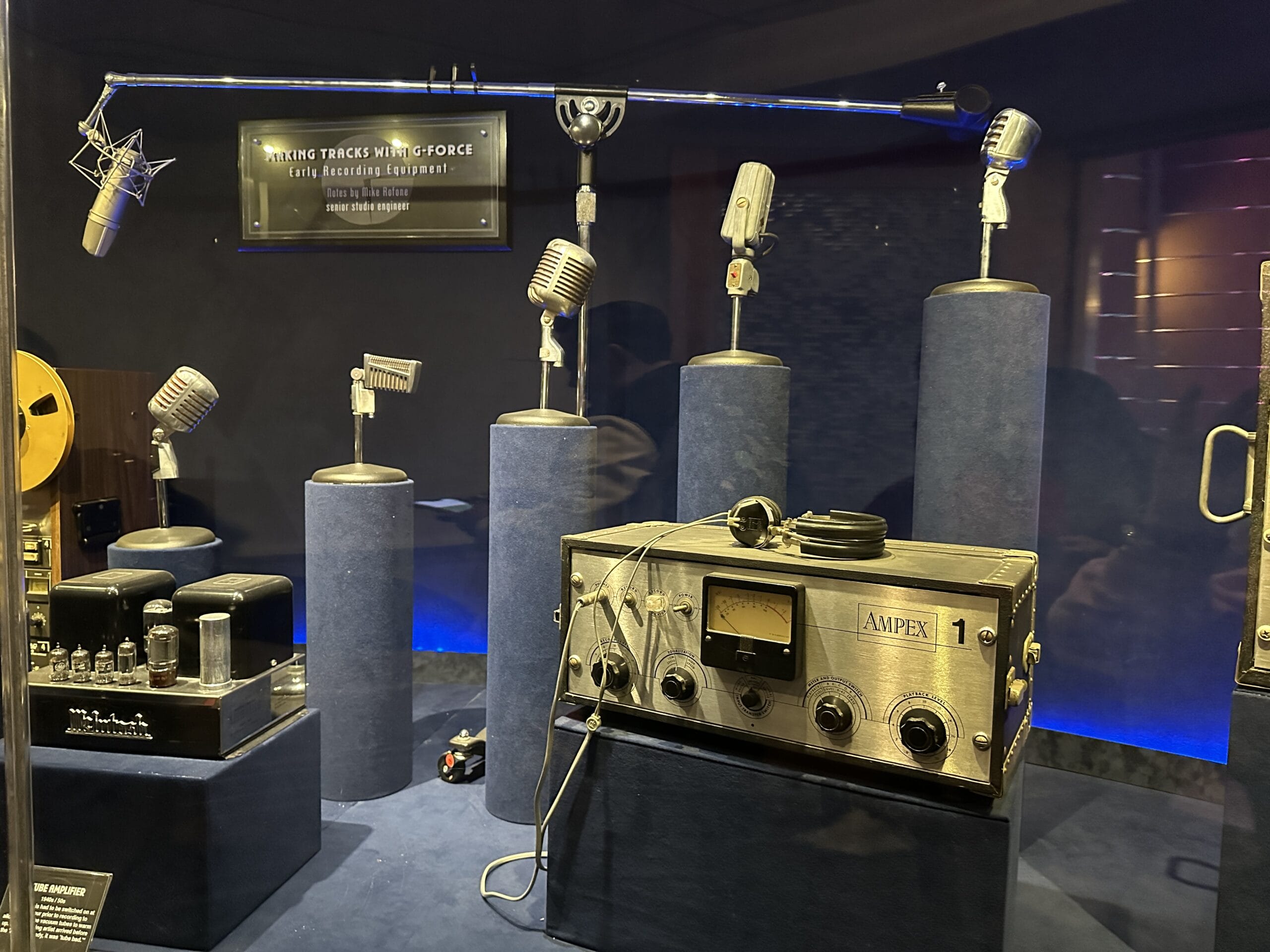
According to a sign, the placards for each piece of equipment featured notes by senior studio engineer Mike Rofone (a play on “microphone”).
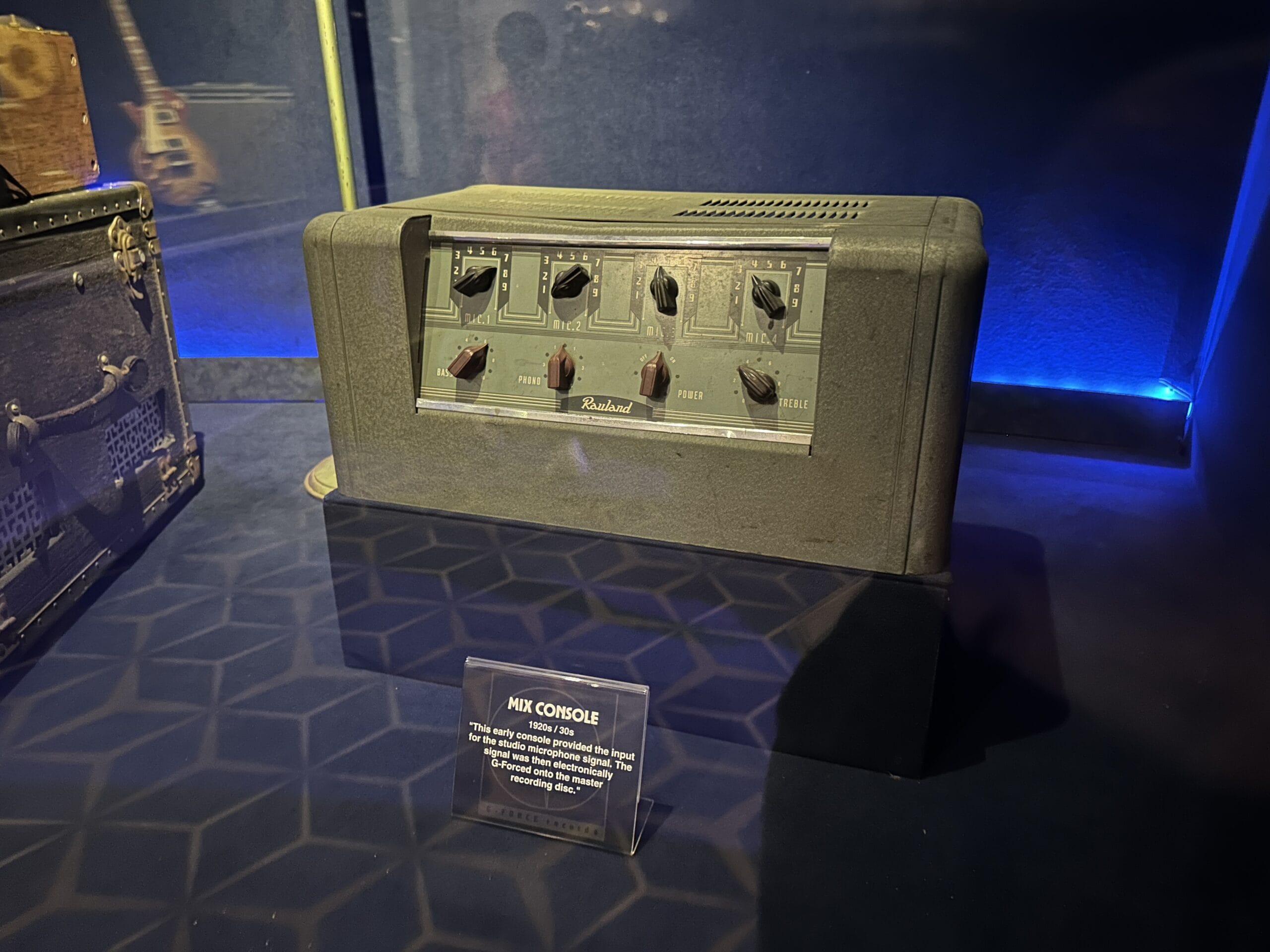
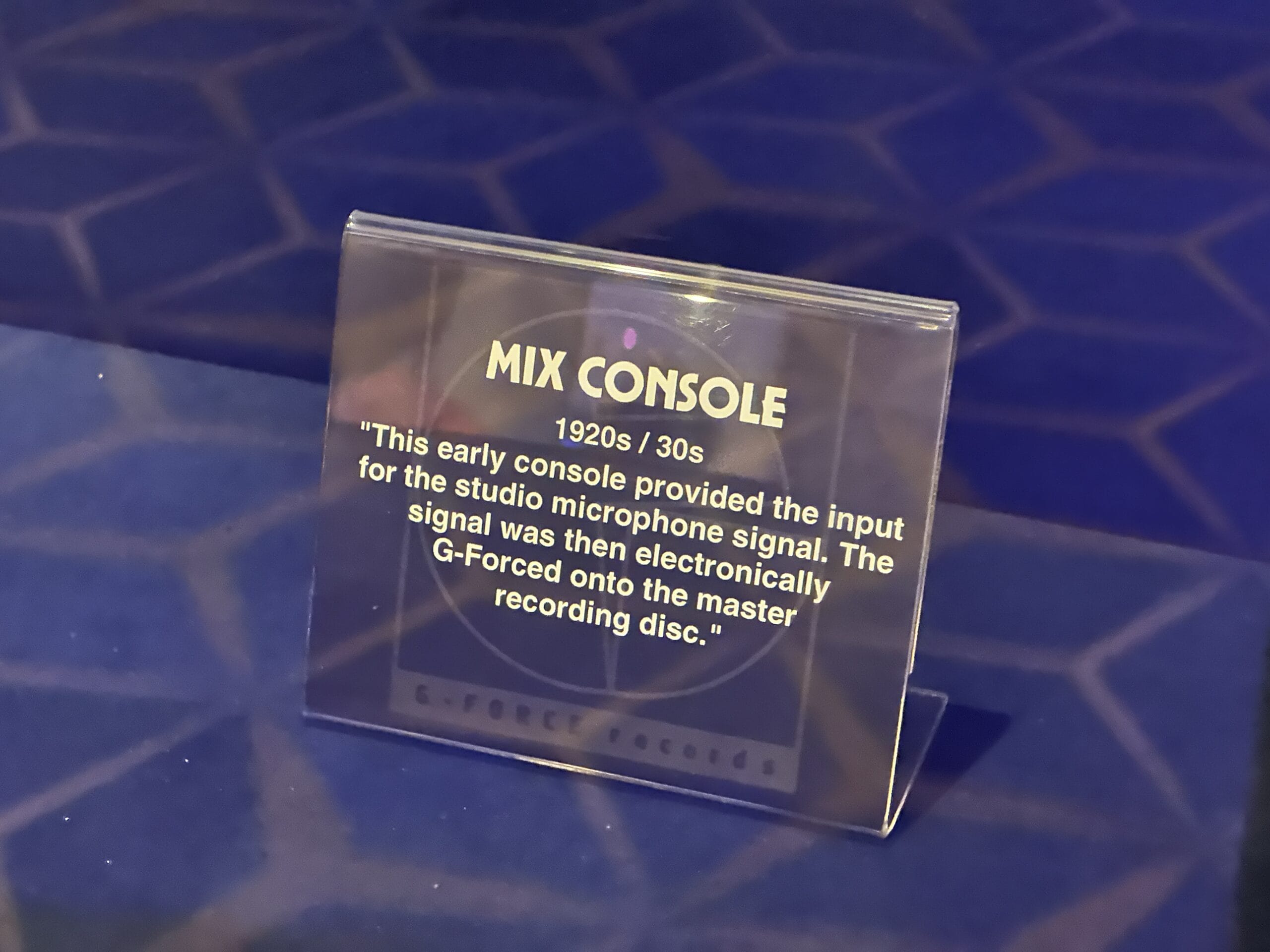
Mix Console
1920s / 30s
“This early console provided the input for the studio microphone signal. The signal was then electronically G-Forced onto the master recording disc.”
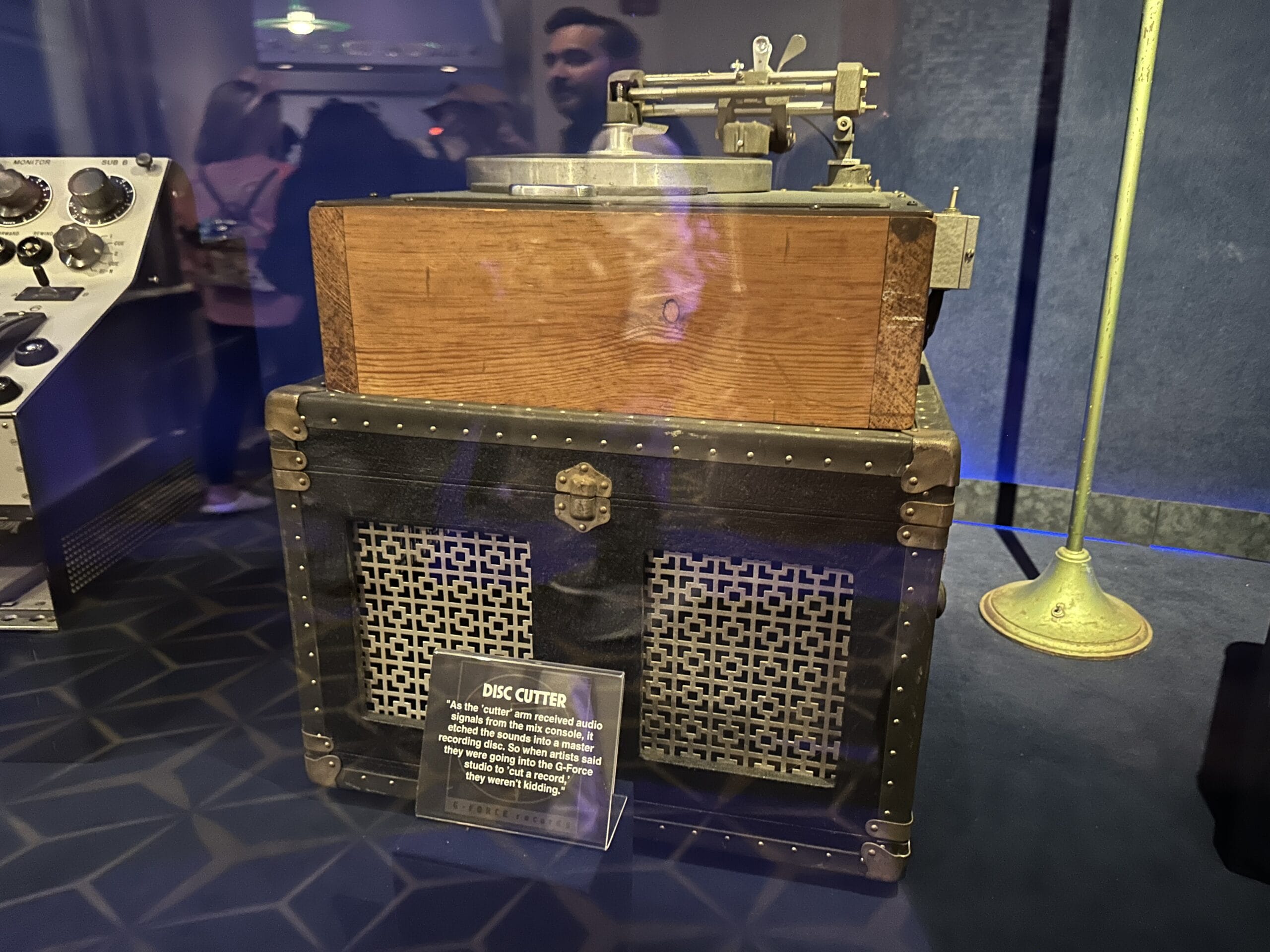
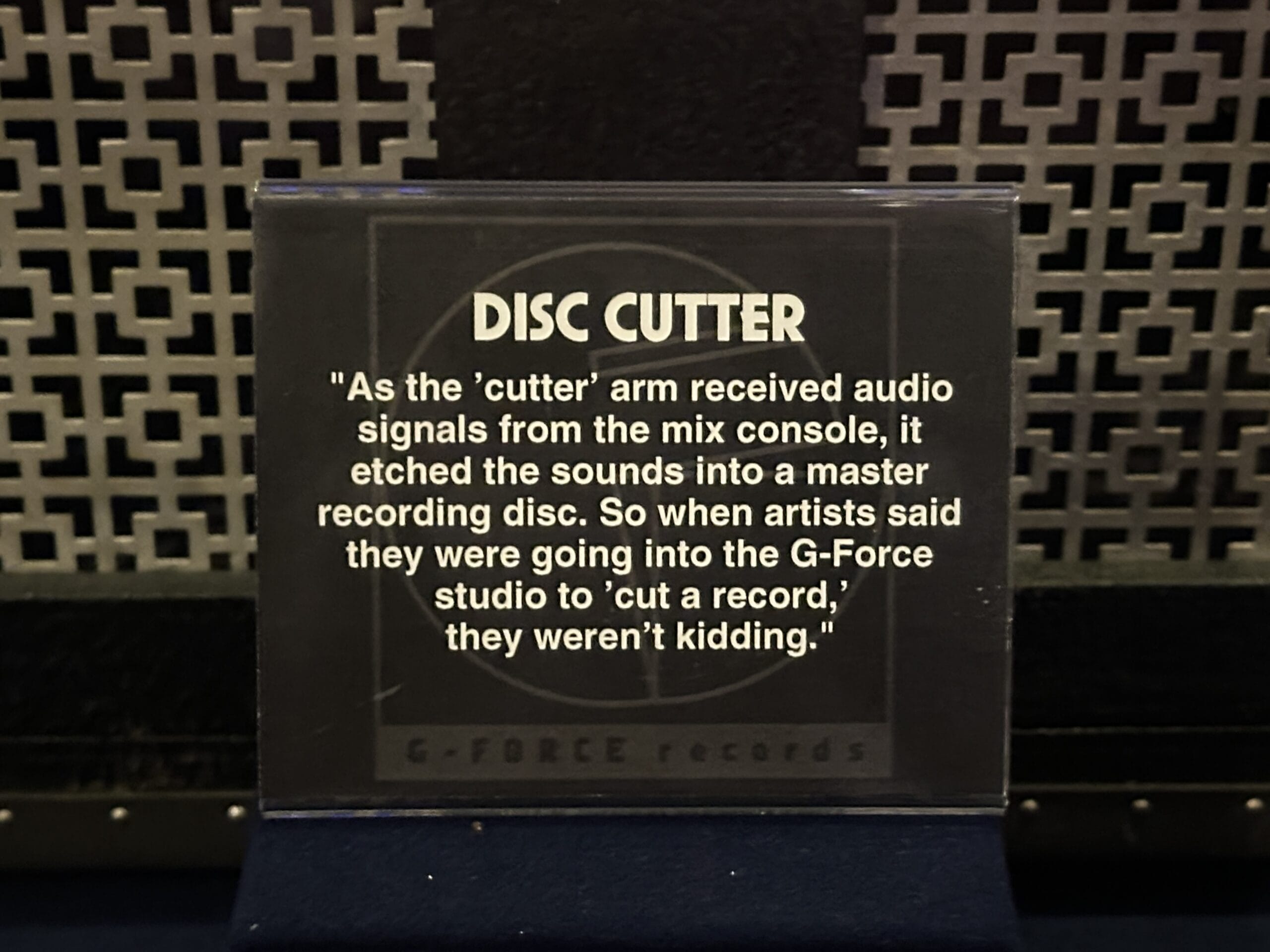
Disc Cutter
“As the ‘cutter’ arm received audio signals from the mix console, it etched the sounds into a master recording disc. So when artists said they were going into the G-Force studio to ‘cut a record,’ they weren’t kidding.”
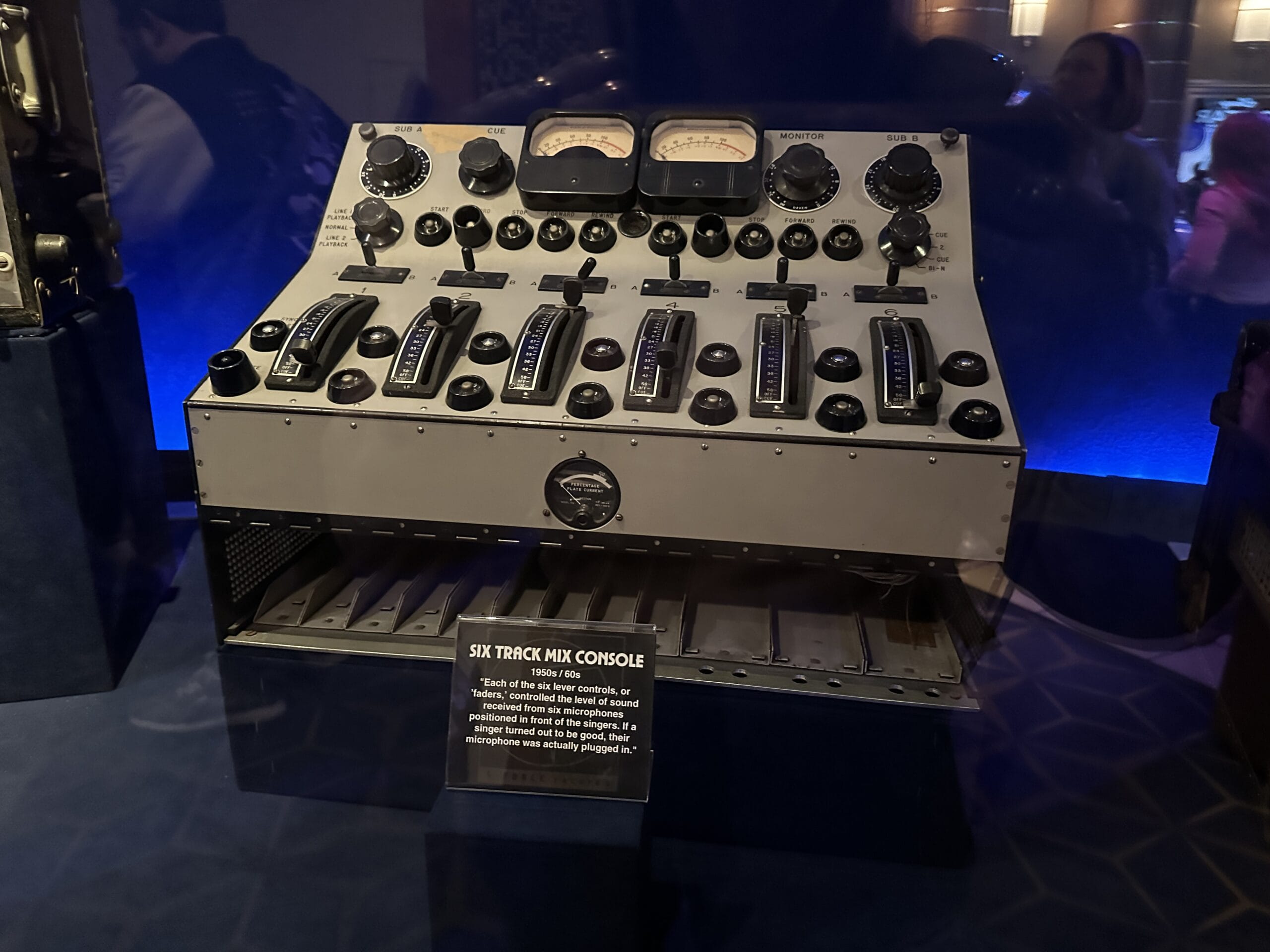
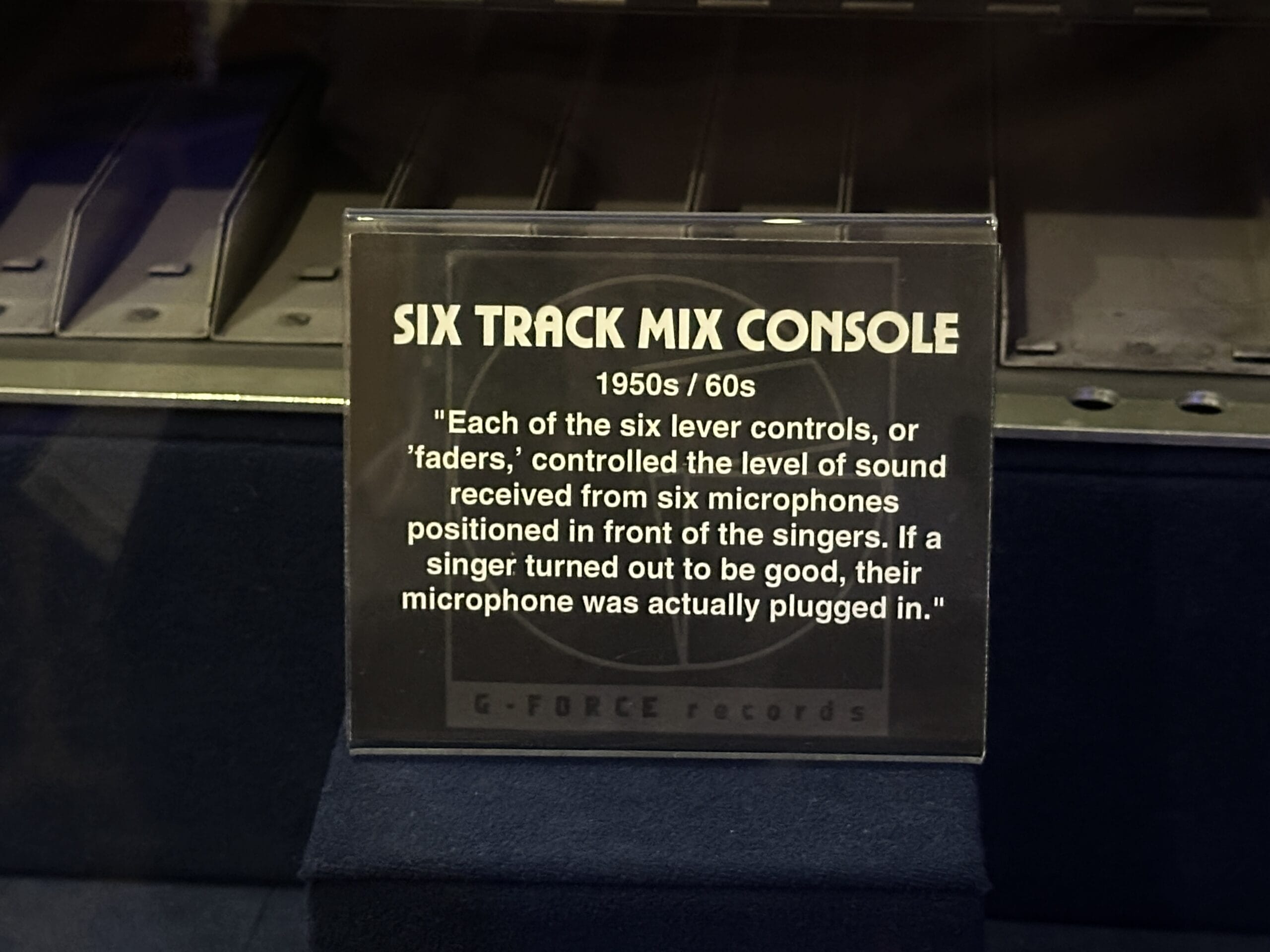
Six Track Mix Console
1950s / 60s
“Each of the six lever controls, or ‘faders,’ controlled the level of sound received from six microphones positioned in front of the singers. If a singer turned out to be good, their microphone was actually plugged in.”
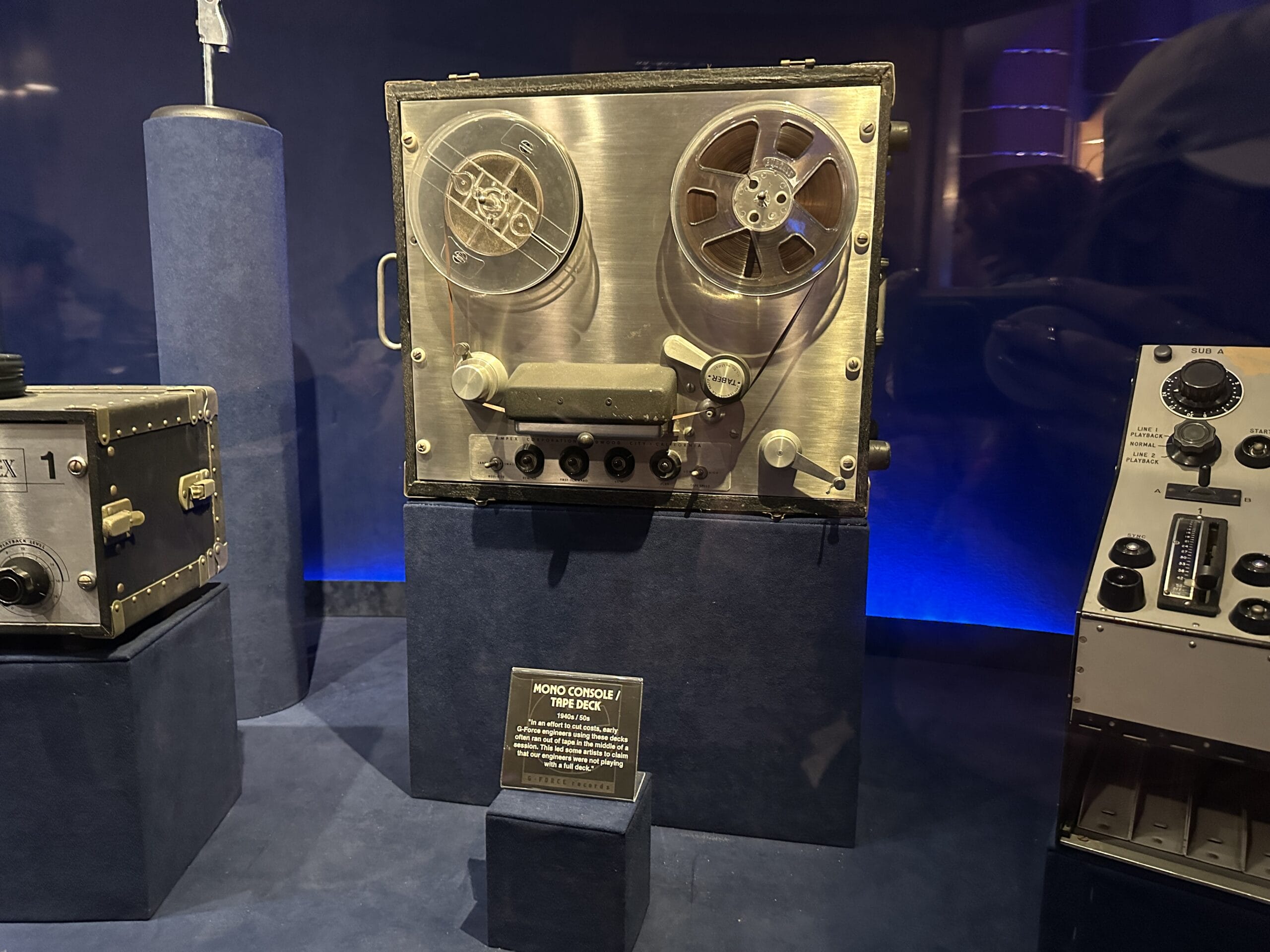
Mono Console / Tape Deck
1940s / 50s
“In an effort to cut costs, early G-Force engineers using these decks often ran out of tape in the middle of a session. This led some artists to claim that our engineers were not playing with a full deck.”
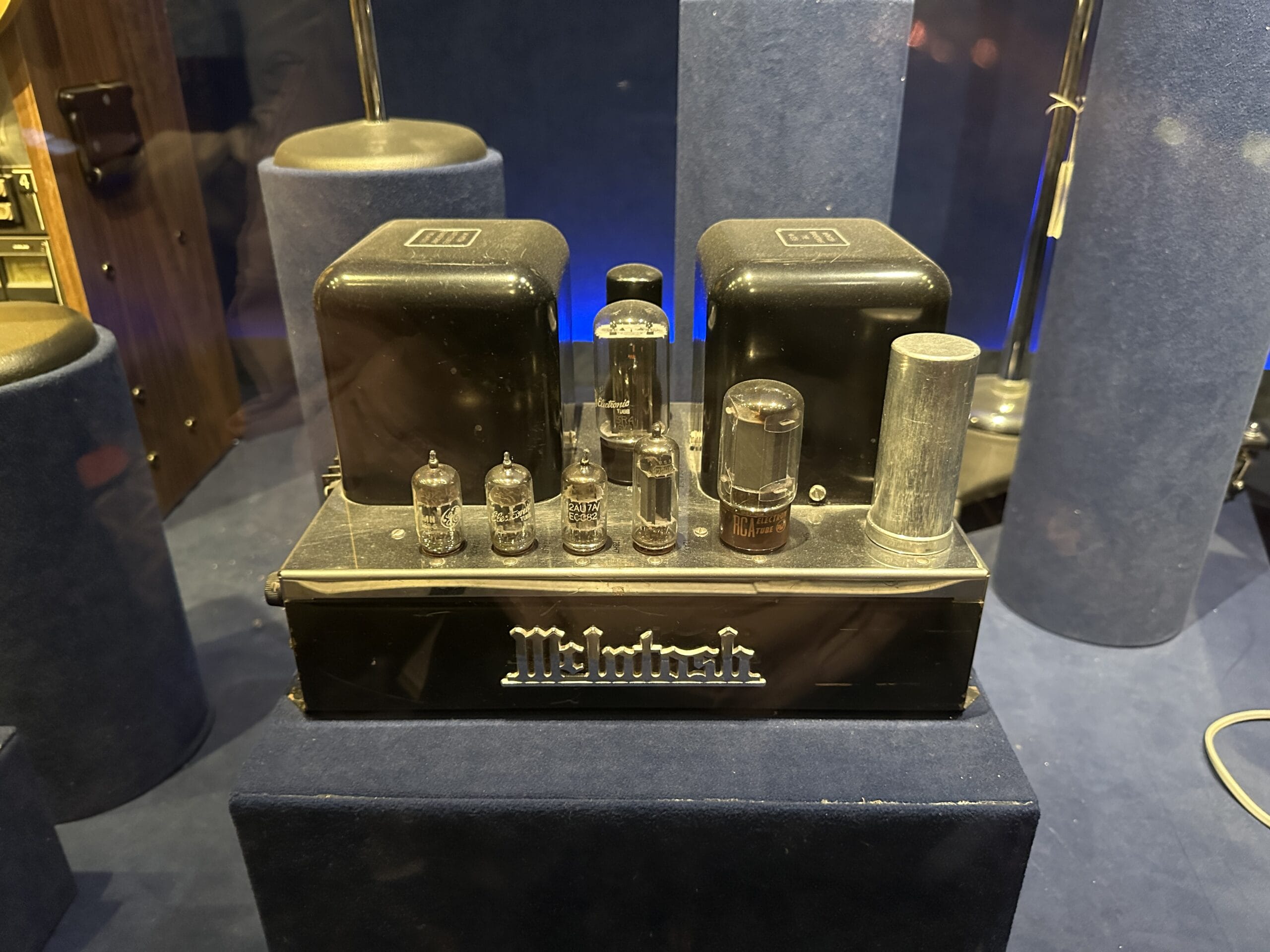
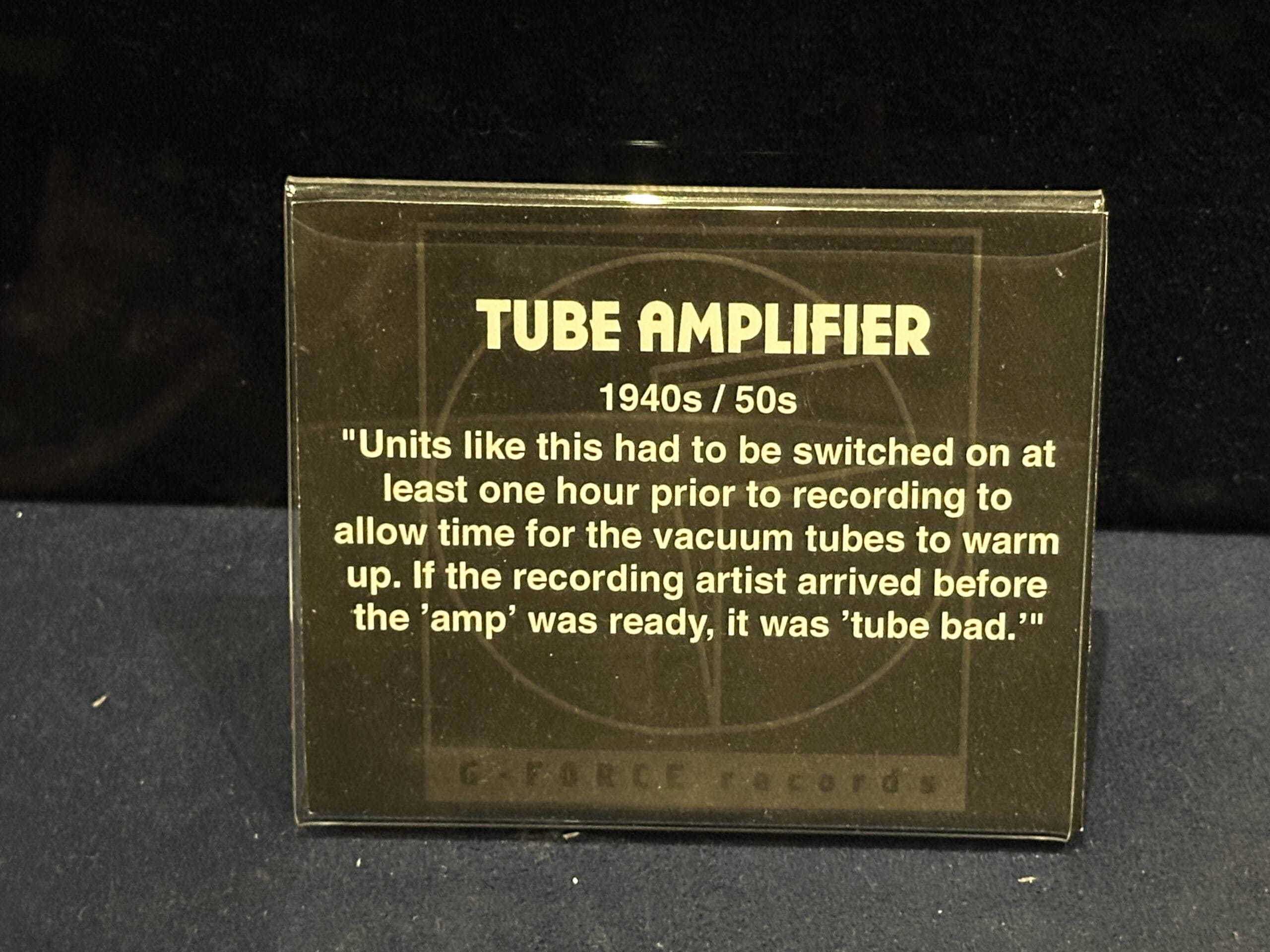
Tube Amplifier
1940s / 50s
“Units like this had to be switched on at least one hour prior to recording to allow time for the vacuum tubes to warm up. If the recording artist arrived before the ‘amp’ was ready, it was ‘tube bad.'”
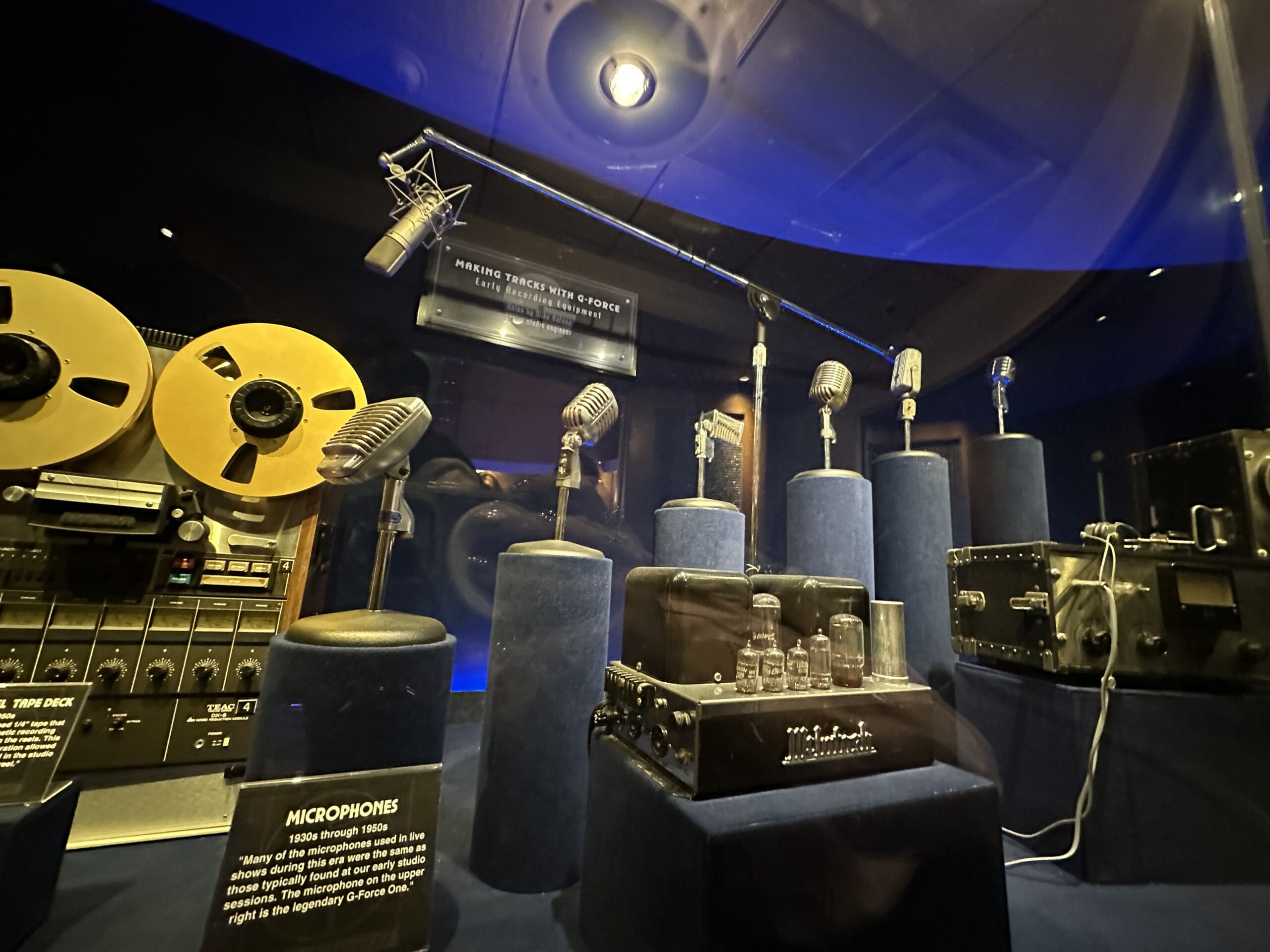
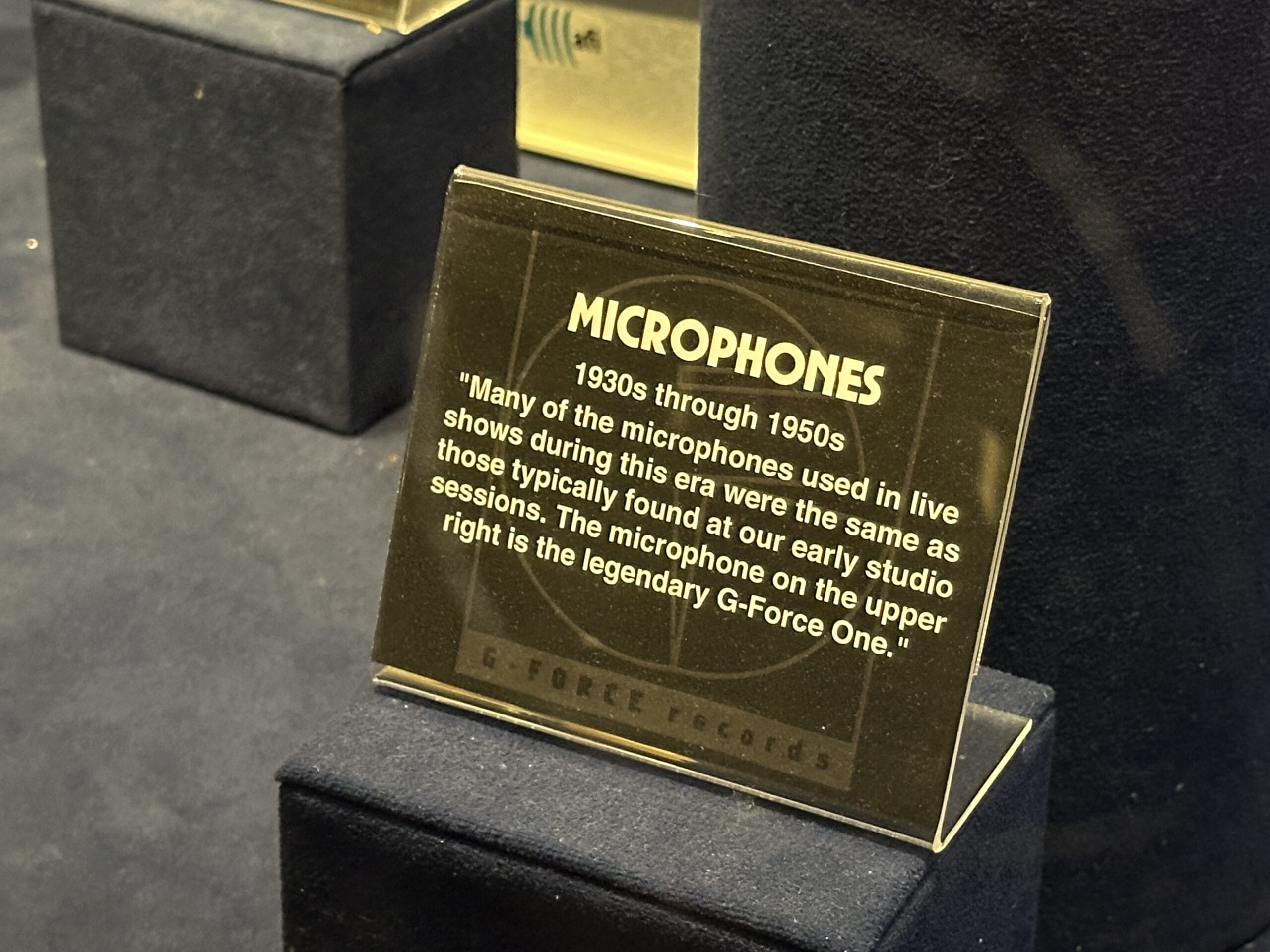
Microphones
1930s through 1950s
“Many of the microphones used in live shows during this era were the same as those typically found at our early studio sessions. The microphone on the upper right is the legendary G-Force One.”
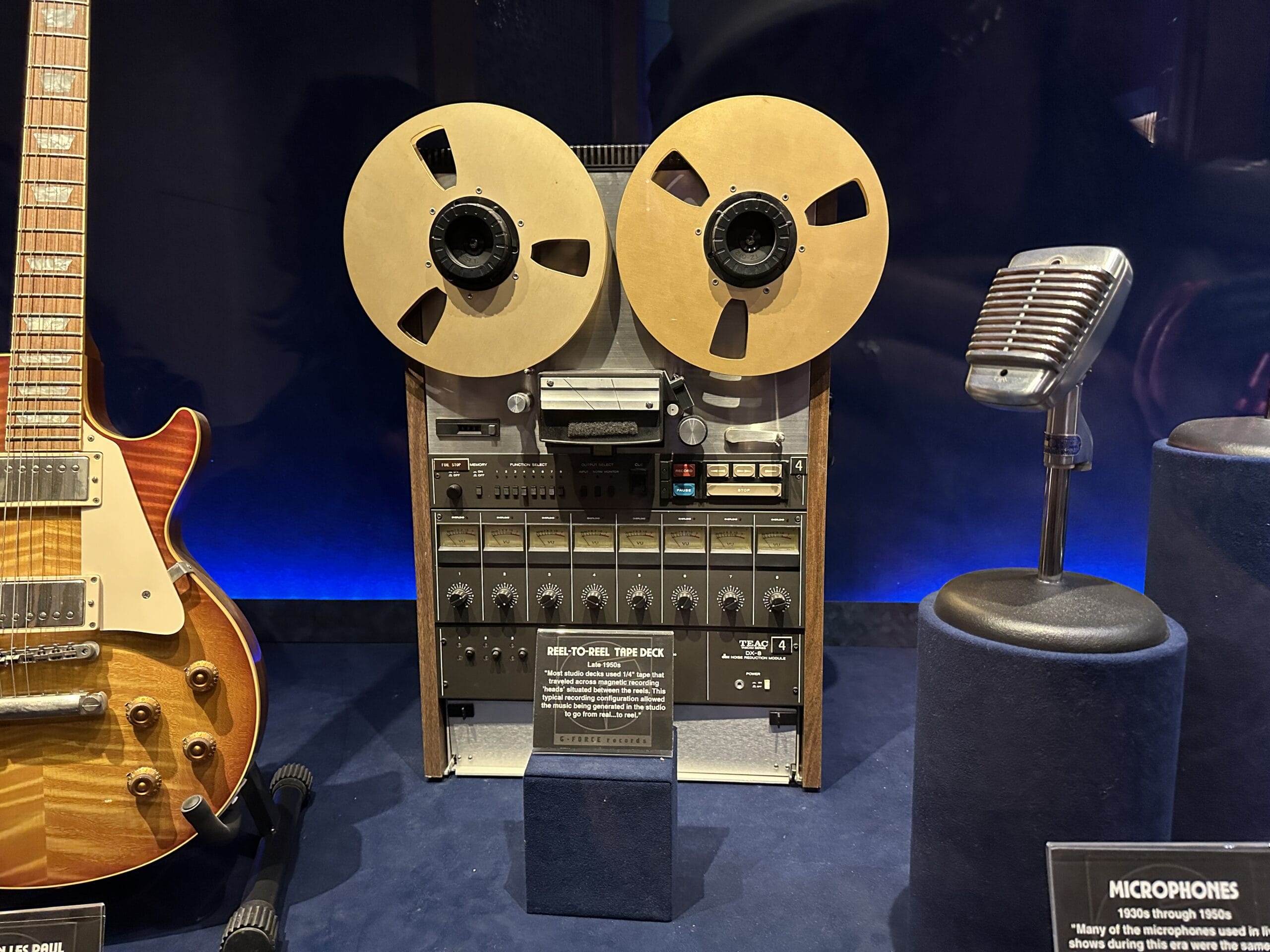
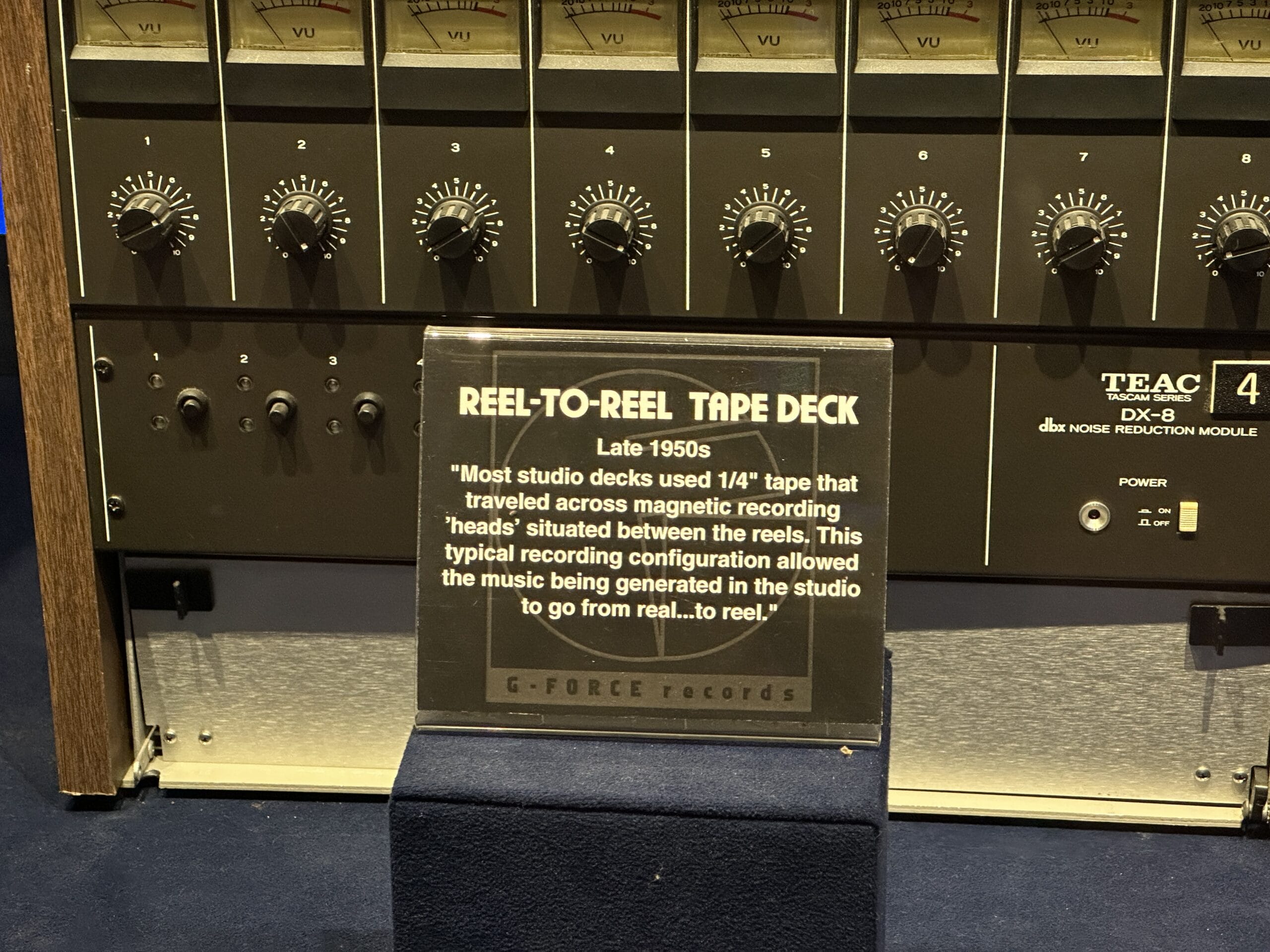
Reel-to-Reel Tape Deck
Late 1950s
“Most studio decks used 1/4″ tape that traveled across magnetic recording ‘heads’ situated between the reels. This typical recording configuration allowed the music being generated in the studio to go from real…to reel.”
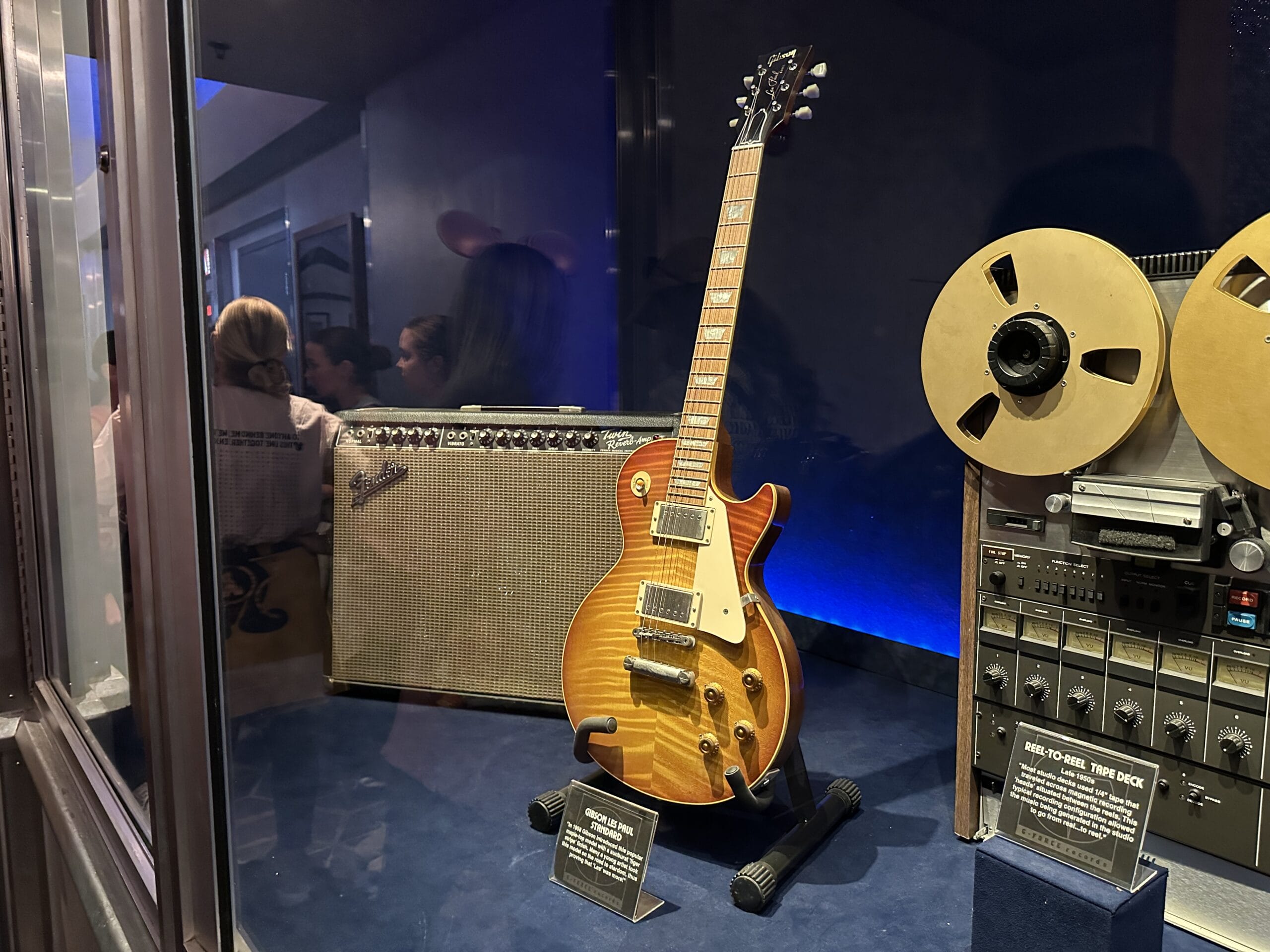
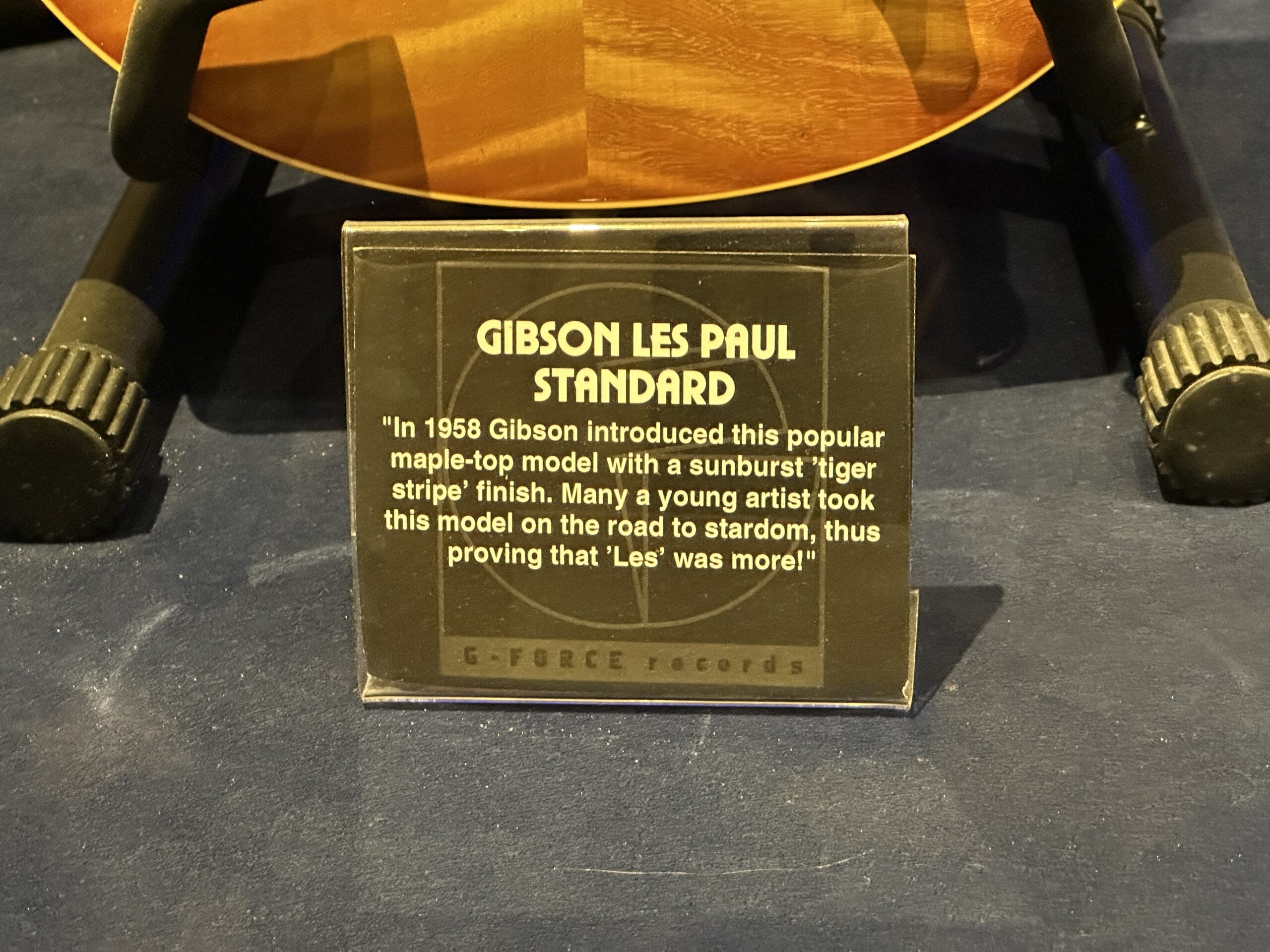
Gibson Les Paul Standard
“In 1958 Gibson introduced this popular mable-top model with a sunburst ‘tiger stripe’ finish. Many a young artist took this model on the road to stardom, thus proving that ‘Les’ was more!”
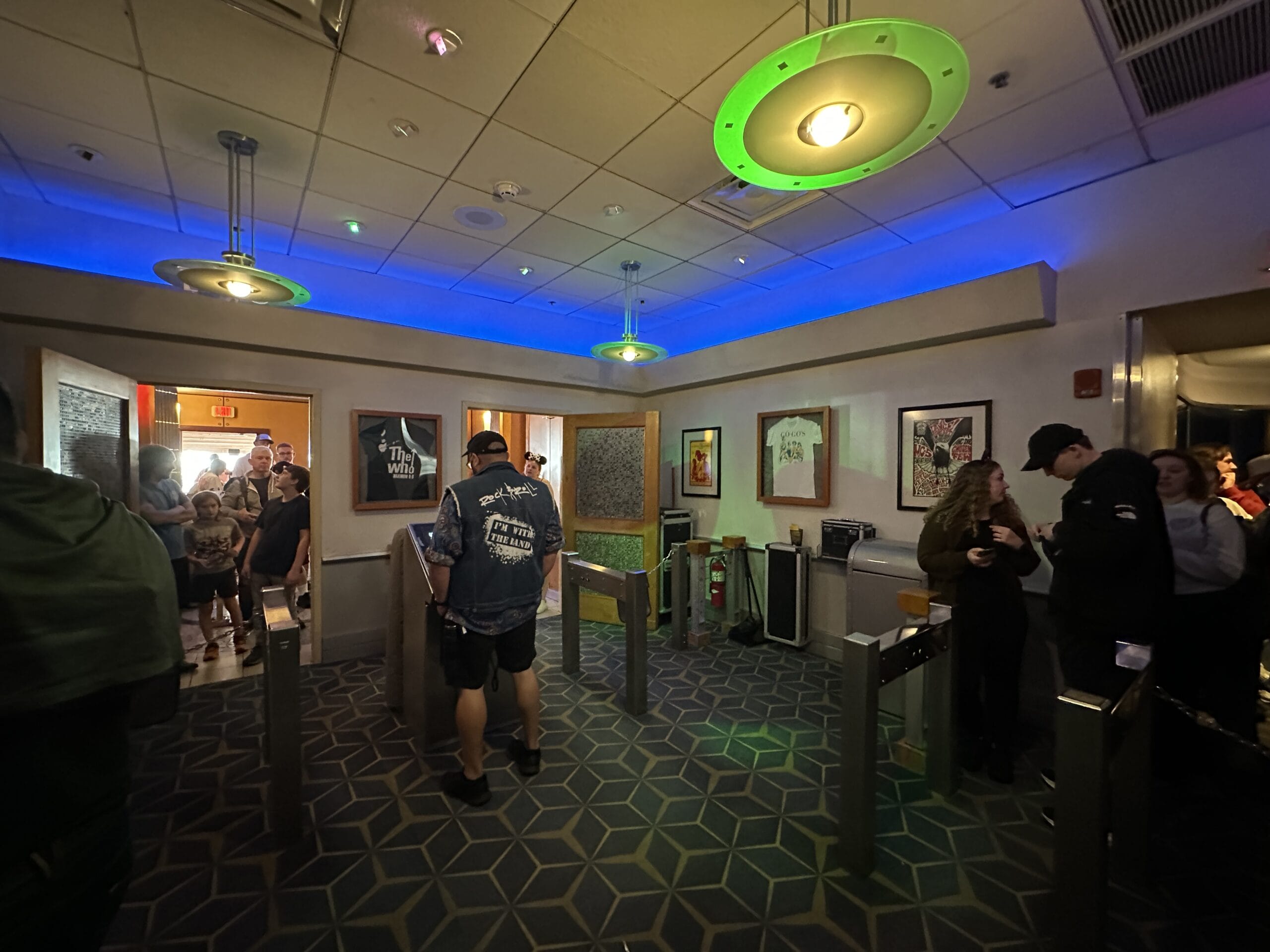
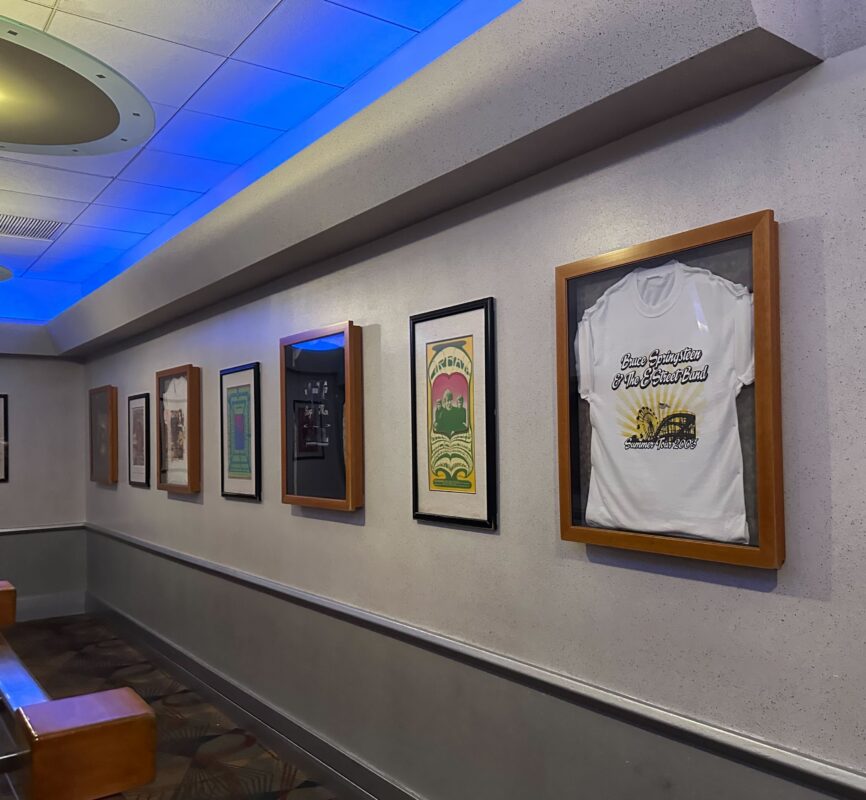
In the next space, Stand-By and Lightning Lane queues met up with each other. They passed Recording Studio A and headed down a hallway. Here was an exhibit of rock ‘n’ roll memorabilia — mainly t-shirts and posters for real artists.
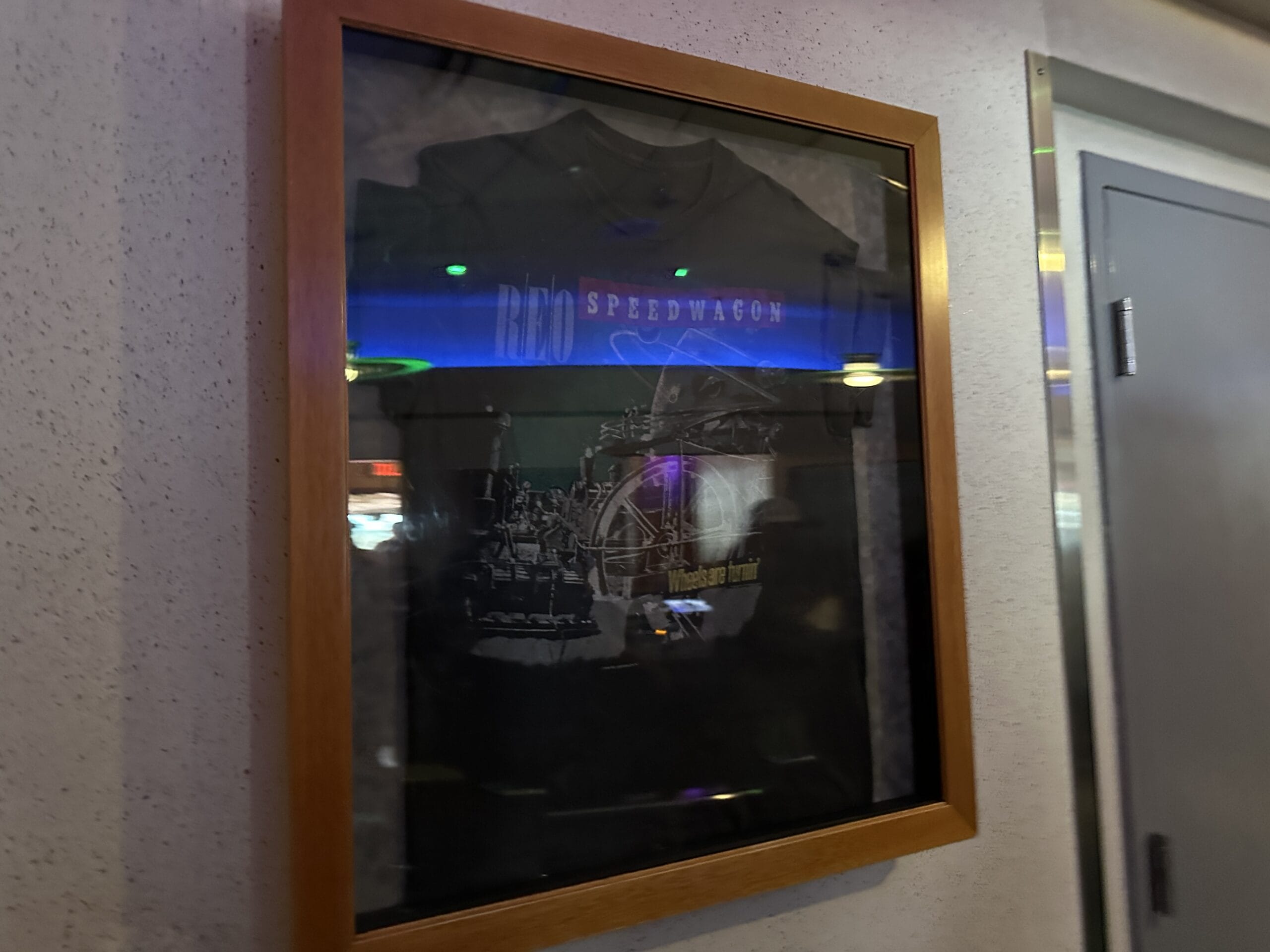
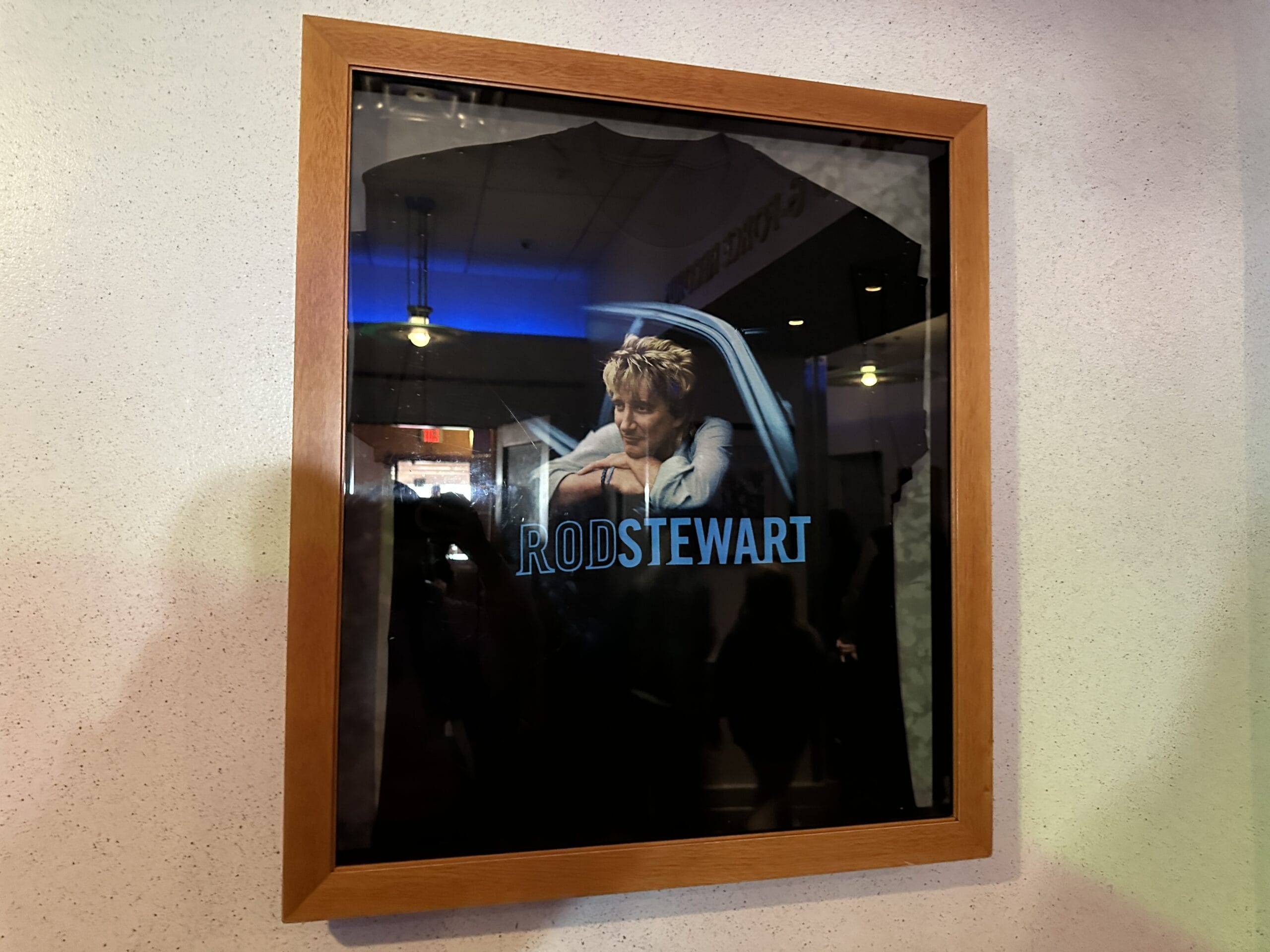
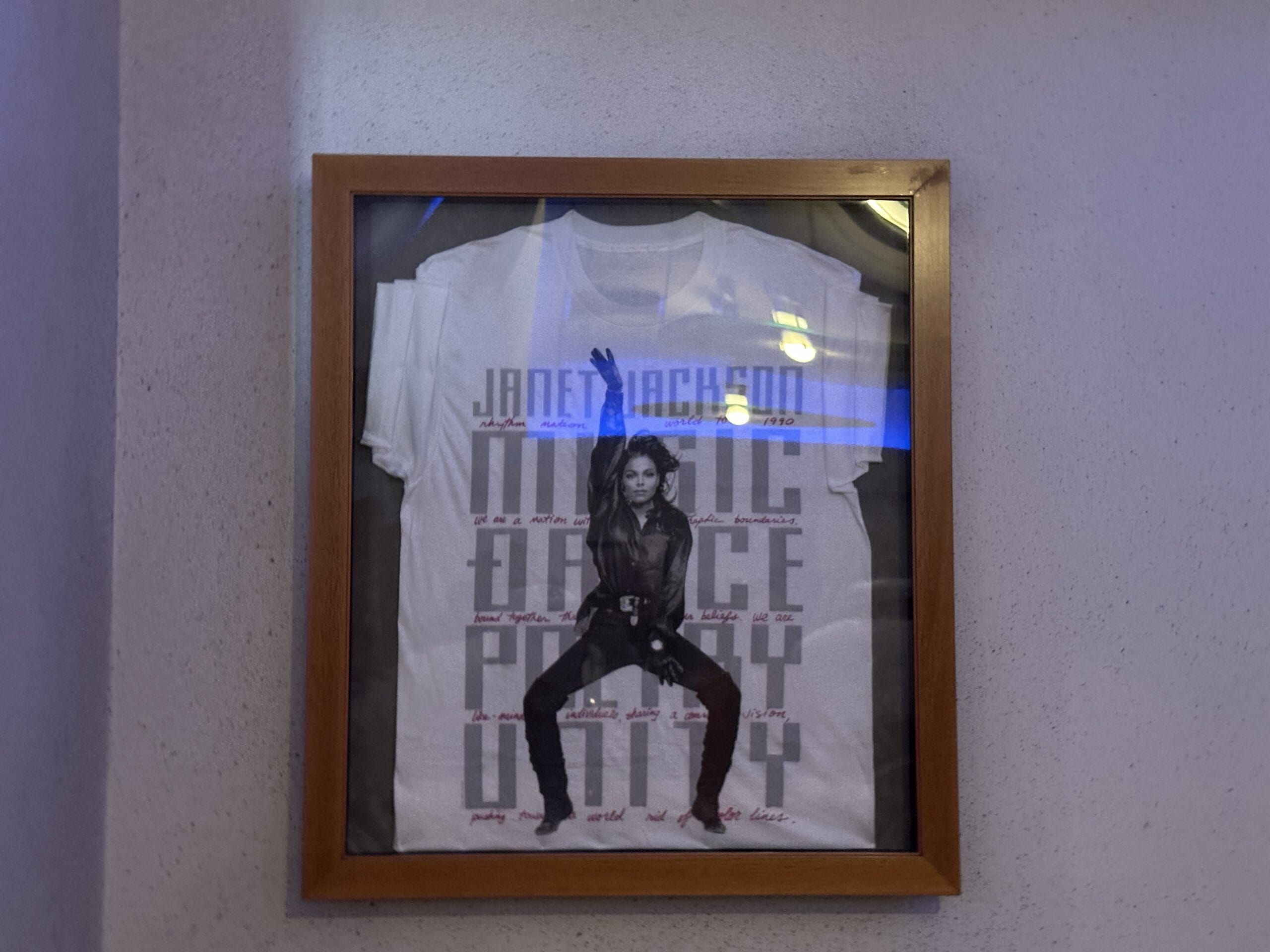
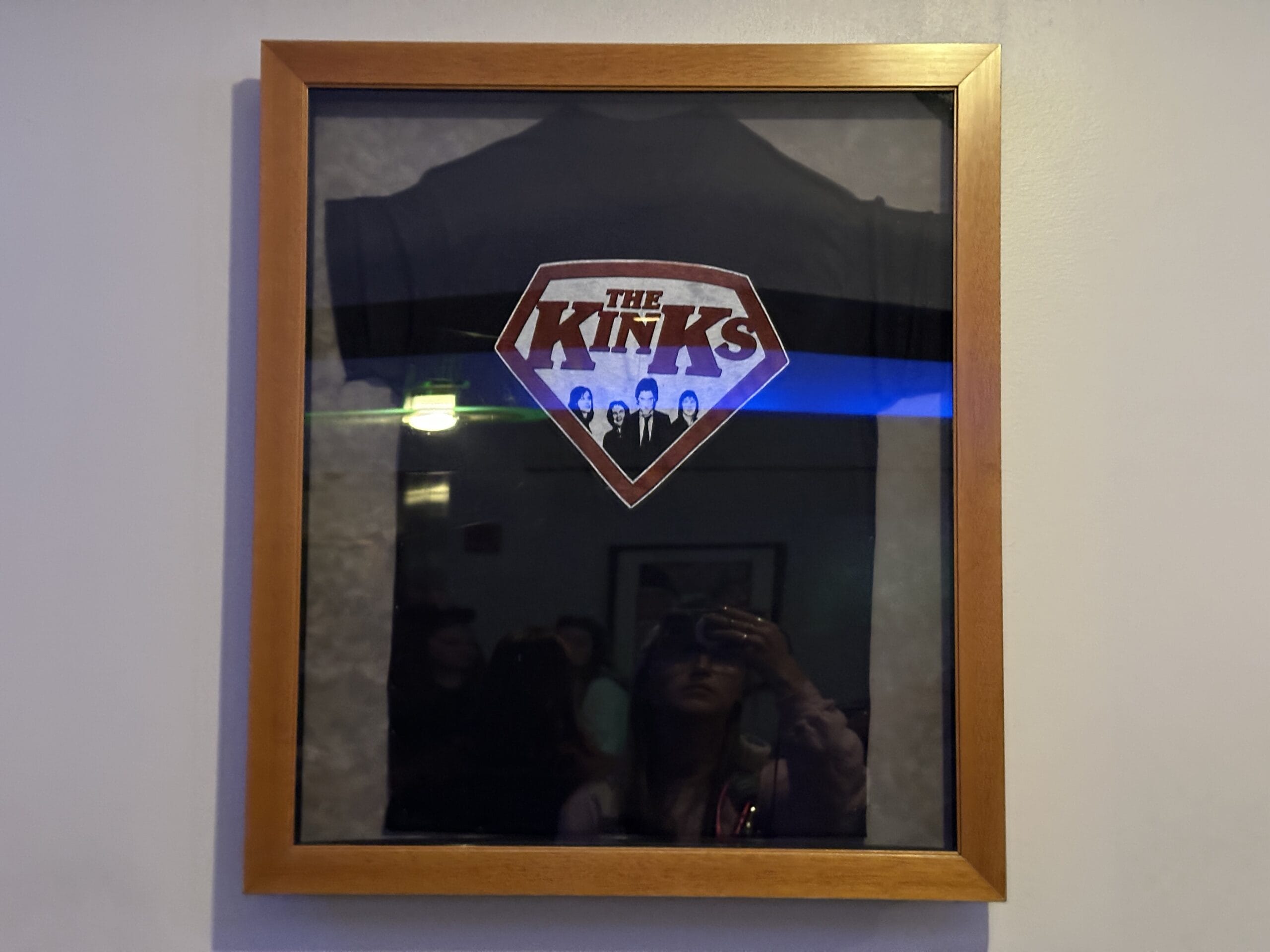
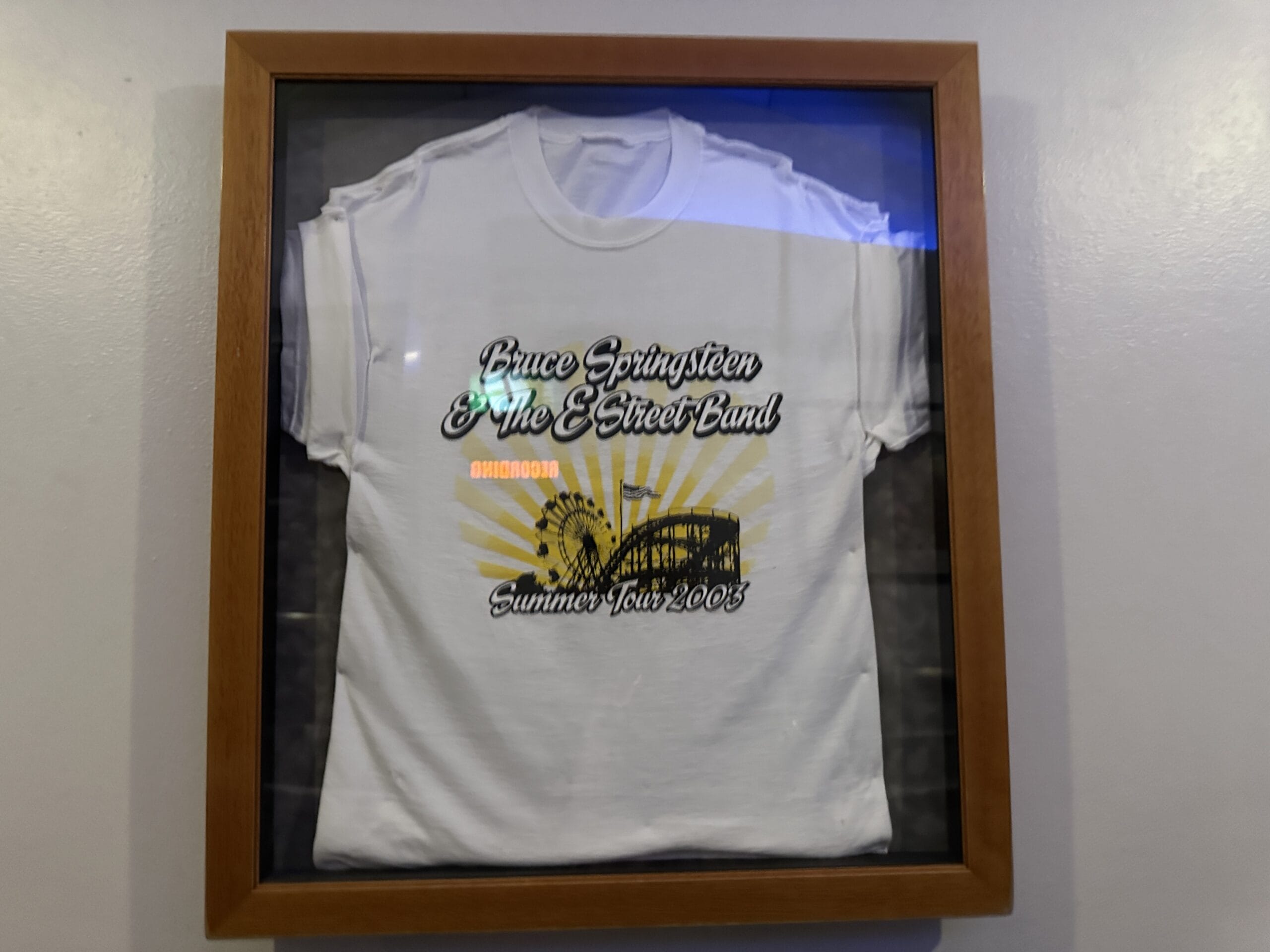
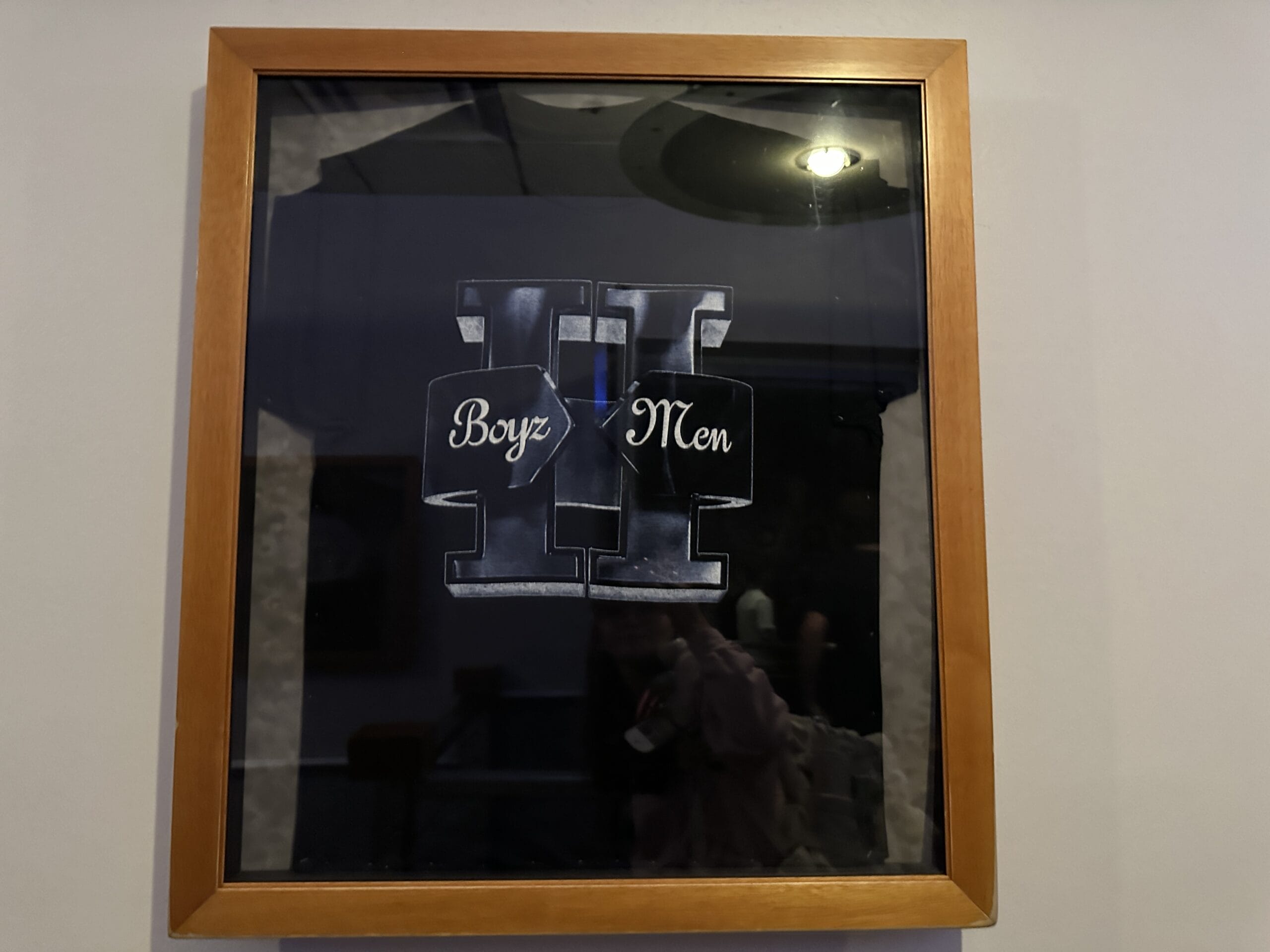
The framed t-shirts were for artists like REO Speedwagon, Rod Stewart, Janet Jackson, The Kinks, Bruce Springsteen & The E Street Band, Boyz II Men, and more.
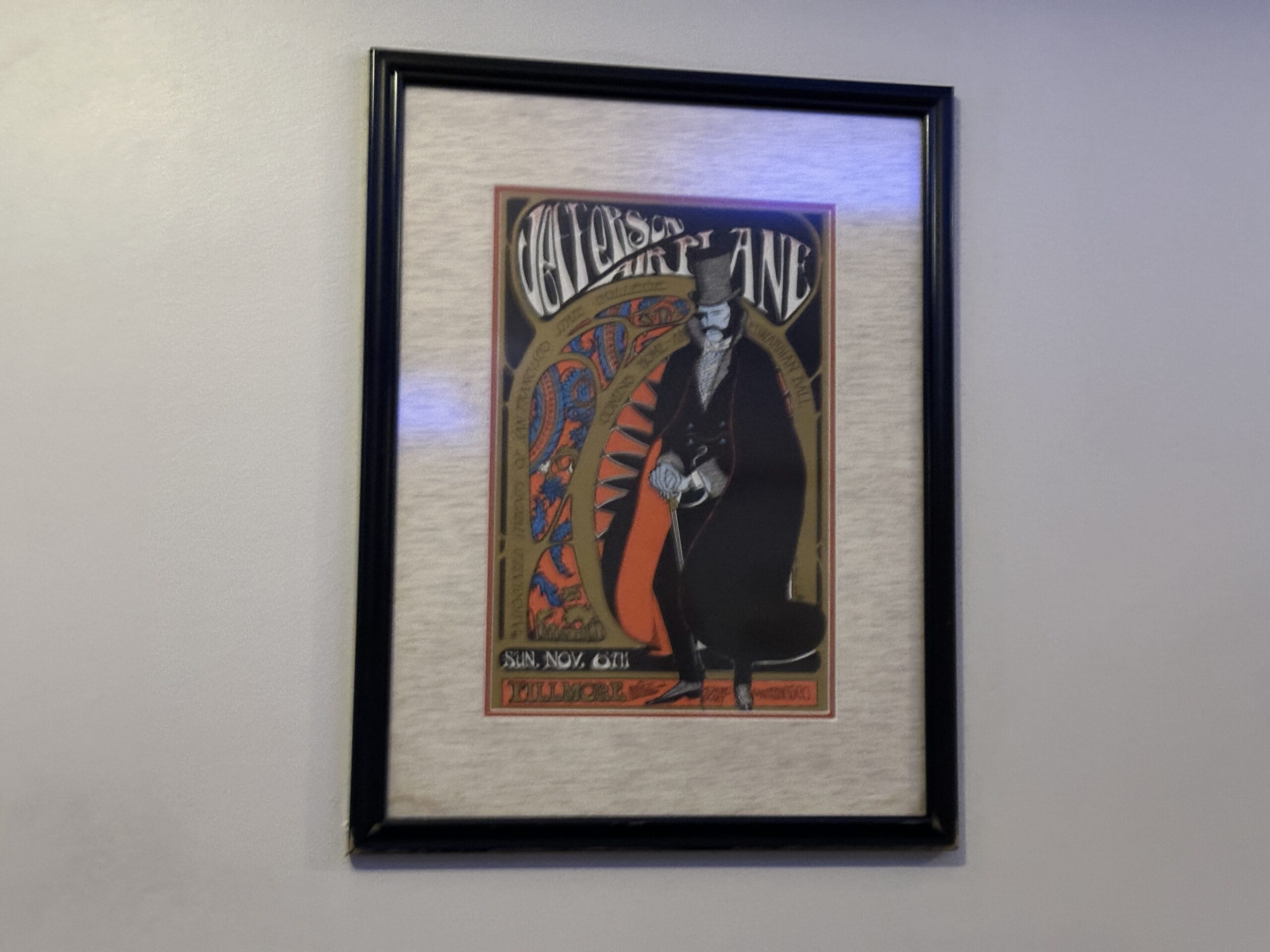
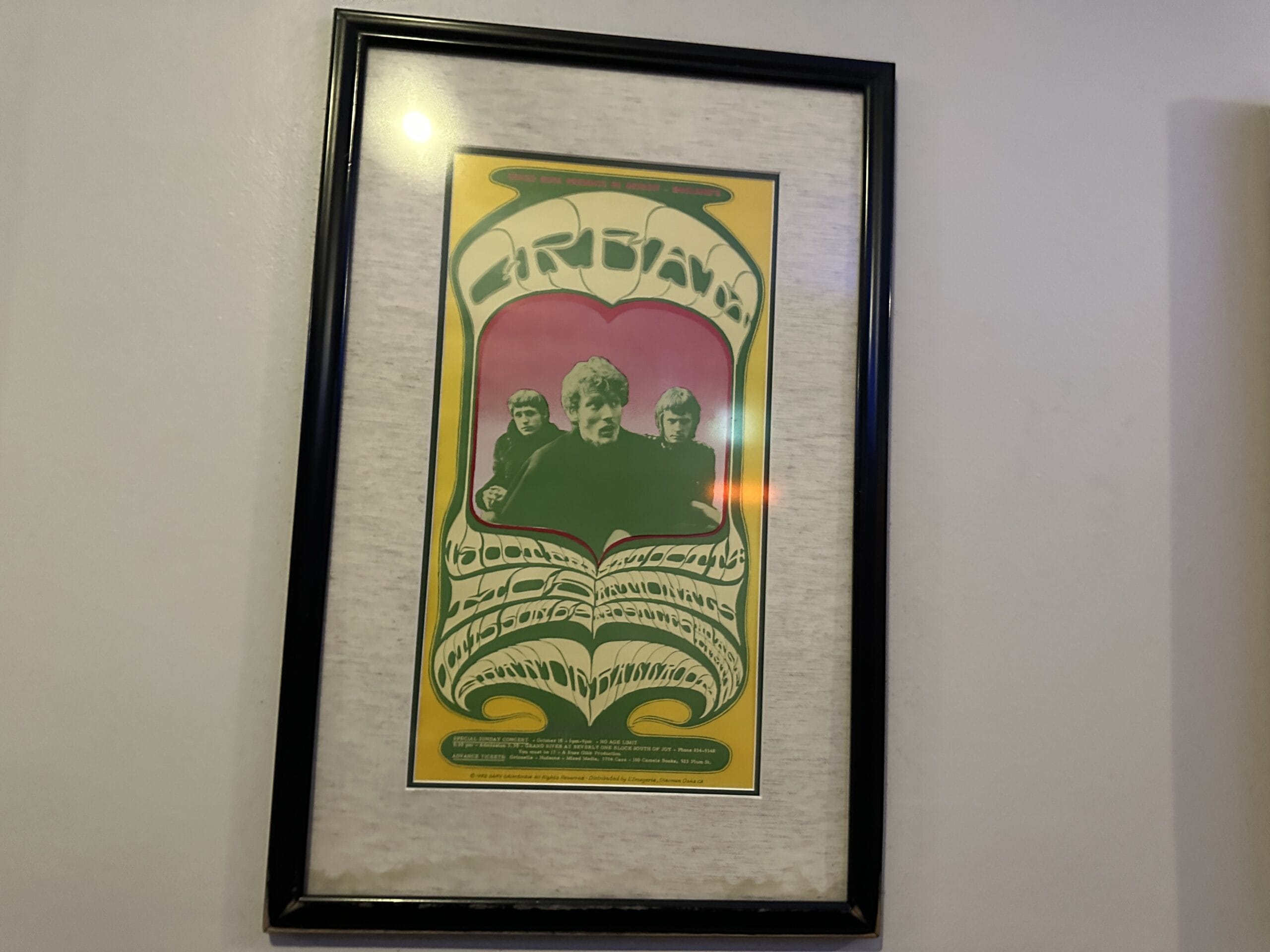
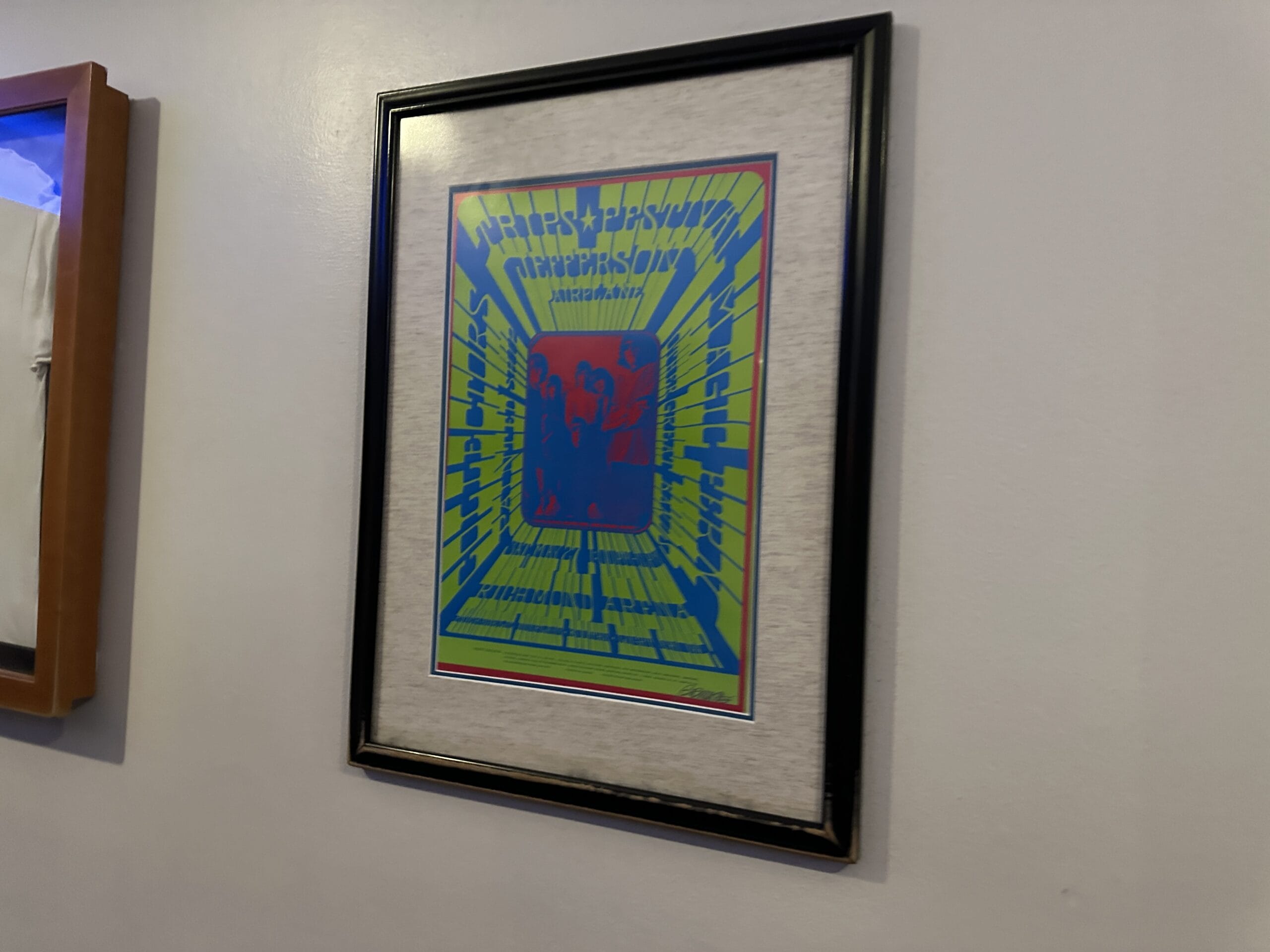
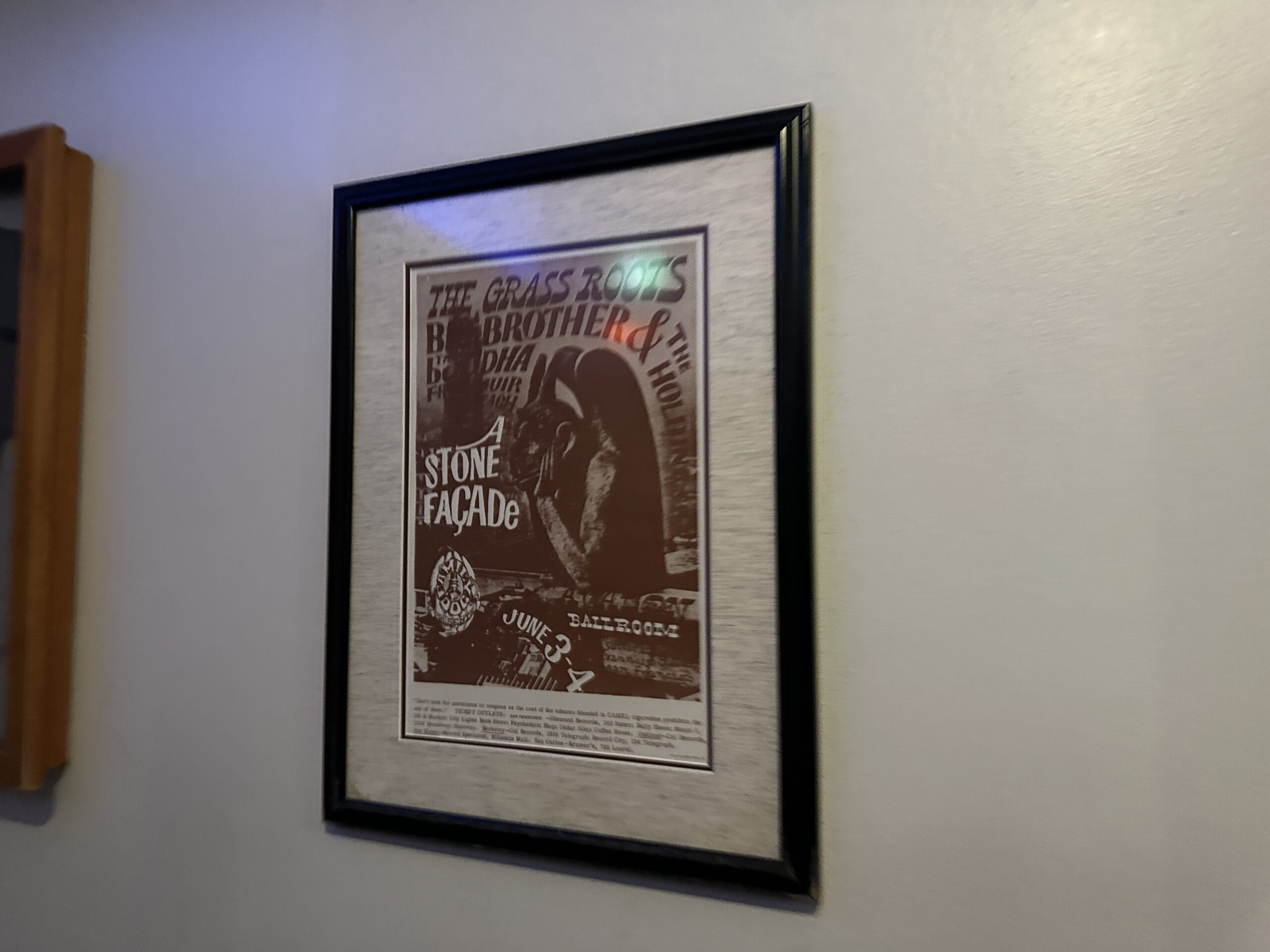
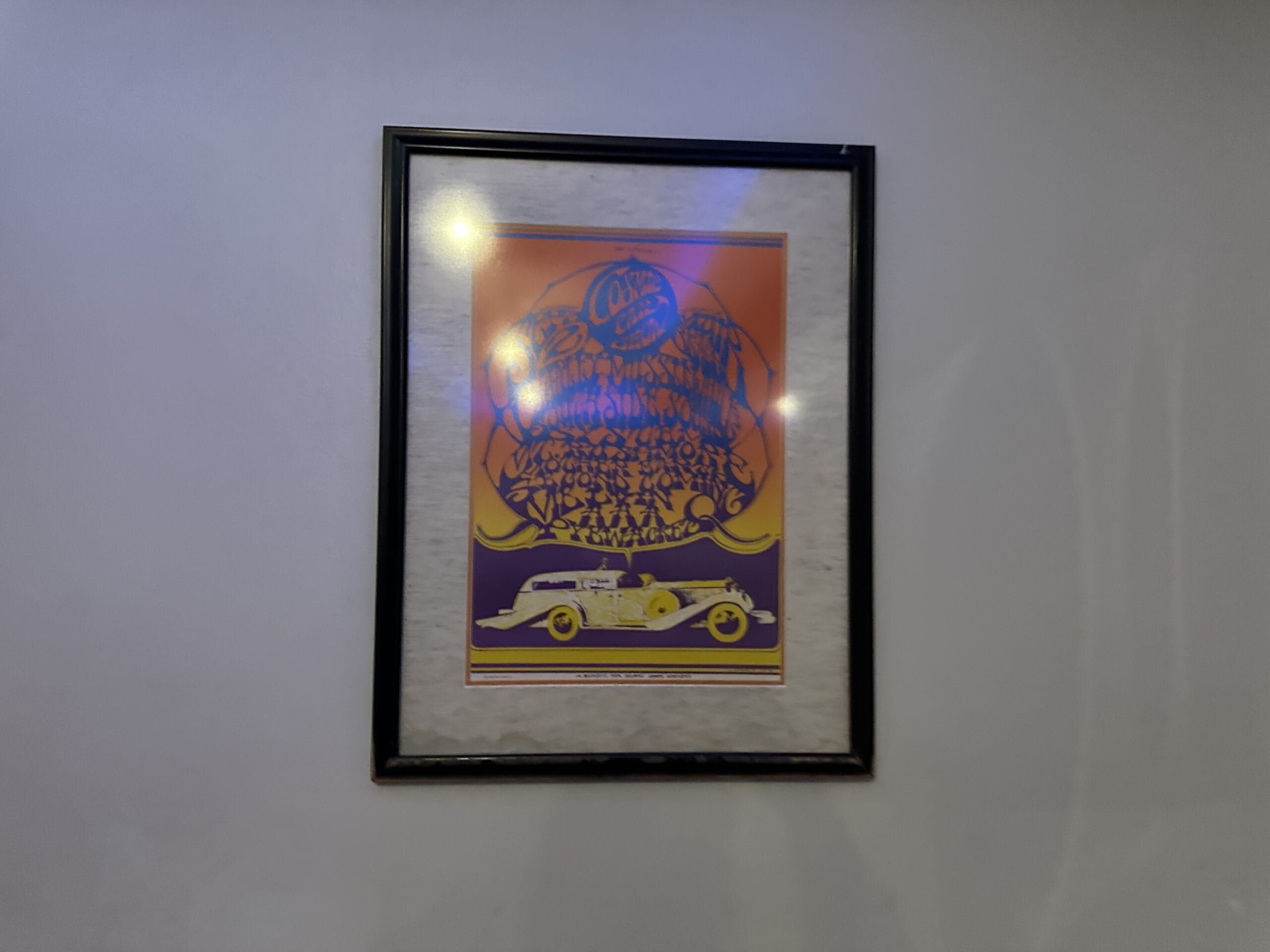
Posters advertised concerts, some for individual bands and others for groups of performers.
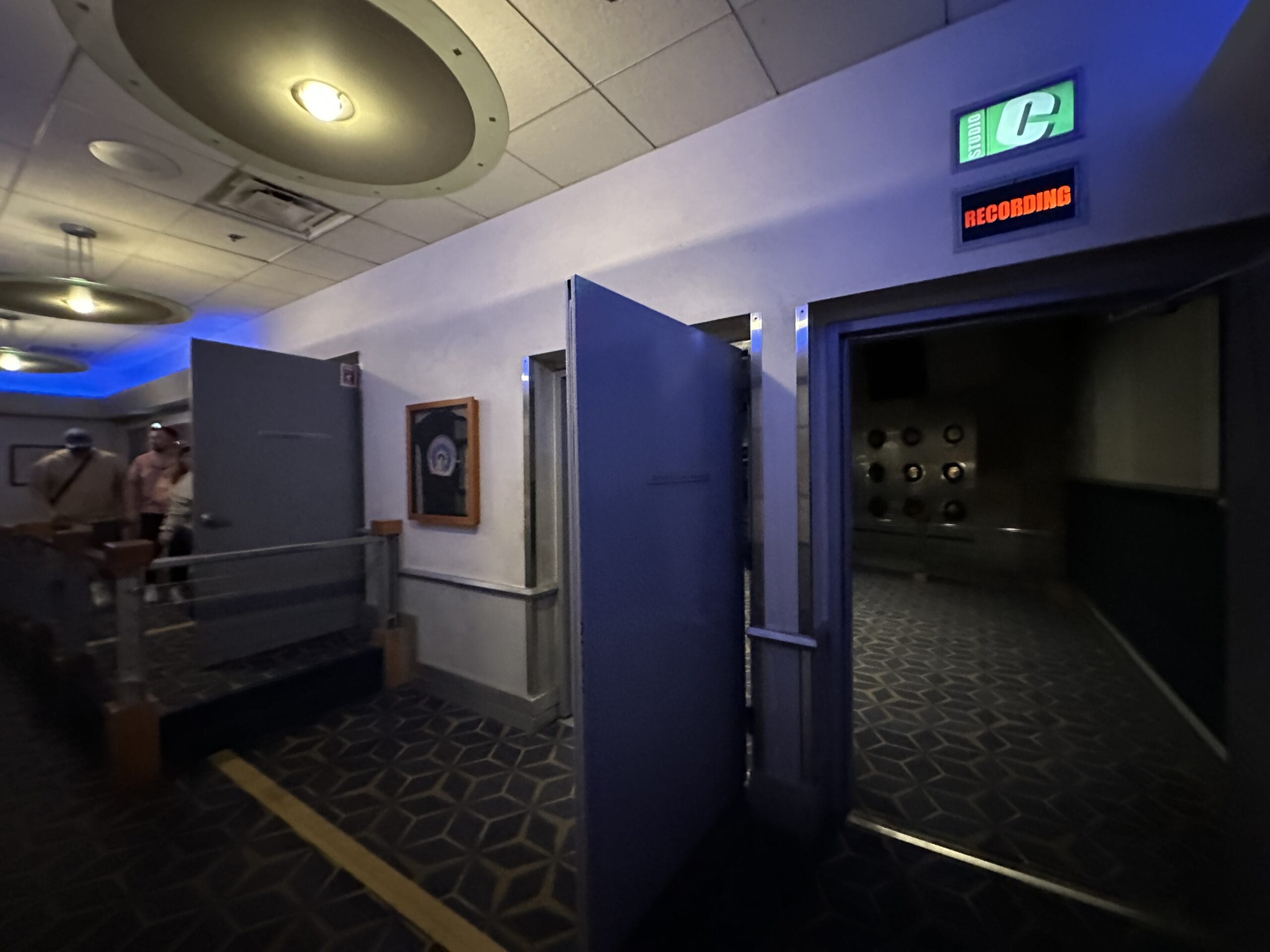
Guests then reached Recording Studios B and C. Cast members directed guests to one of these sets of doors, each with an illuminated “recording” sign above.
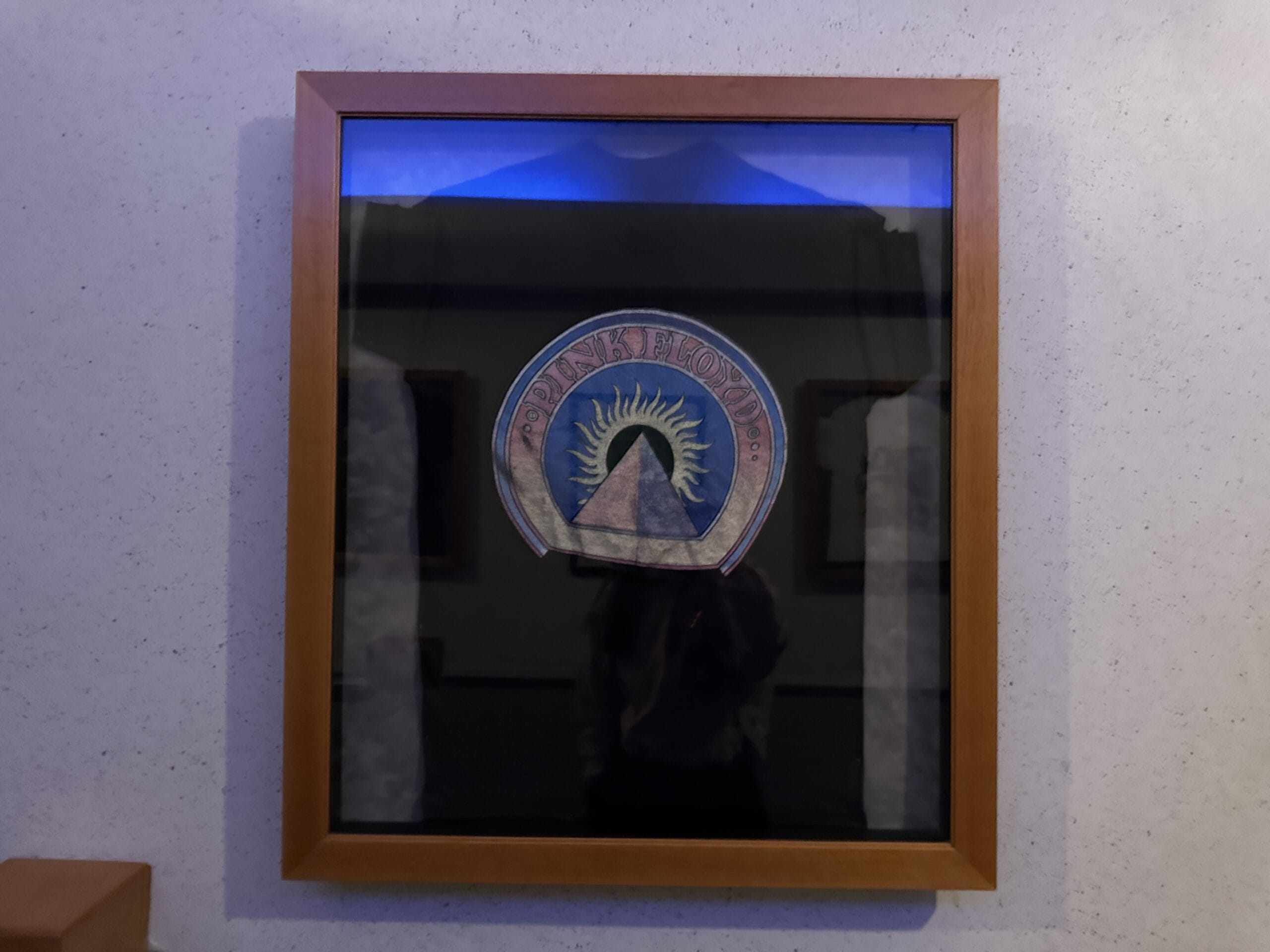
Between the studio doors was a Pink Floyd t-shirt.
Pre-Show
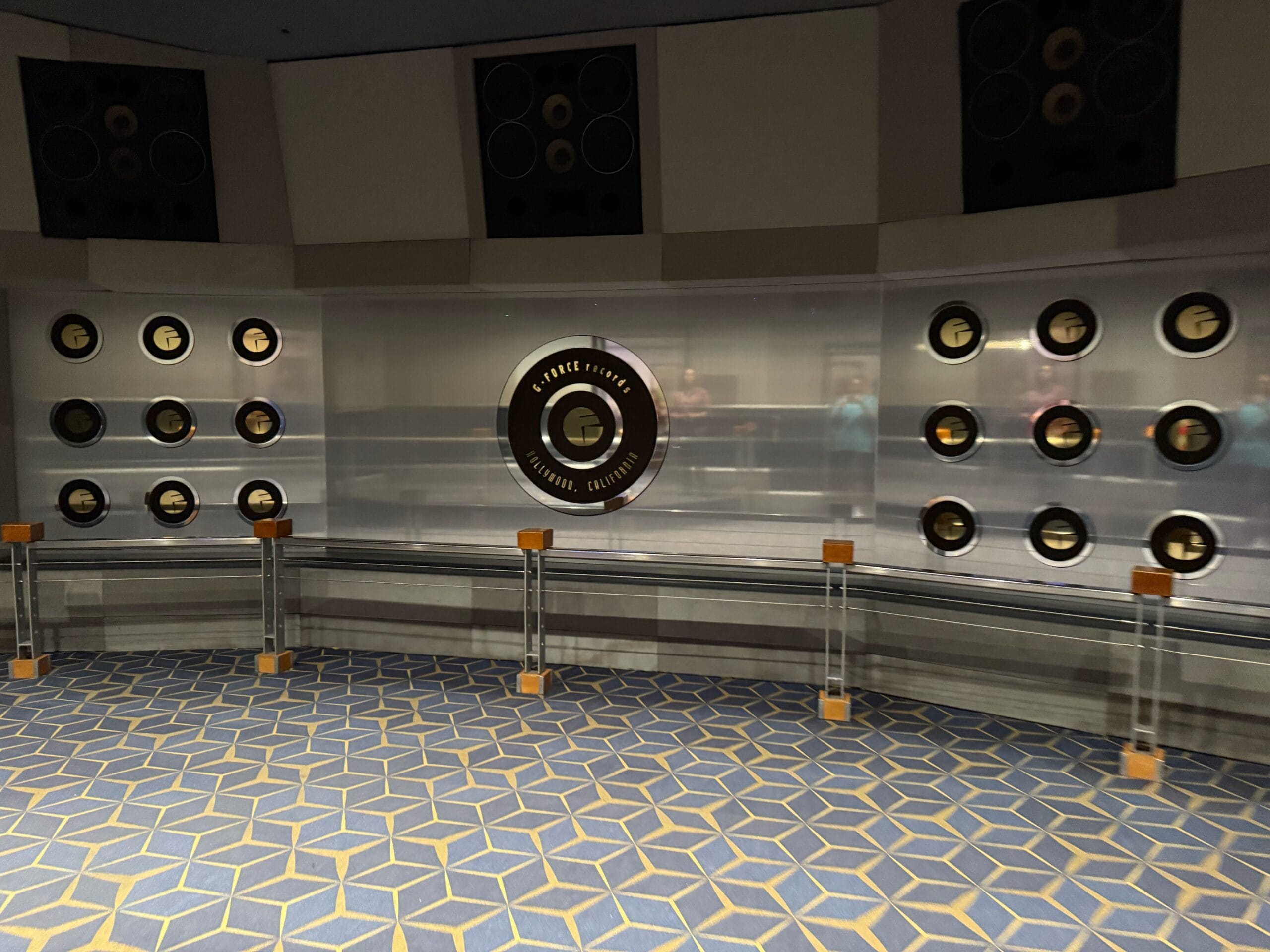
The Aerosmith pre-show closed in December so Disney could get started on changes early. The windows were covered by silver paneling featuring the G-Force Records logo.
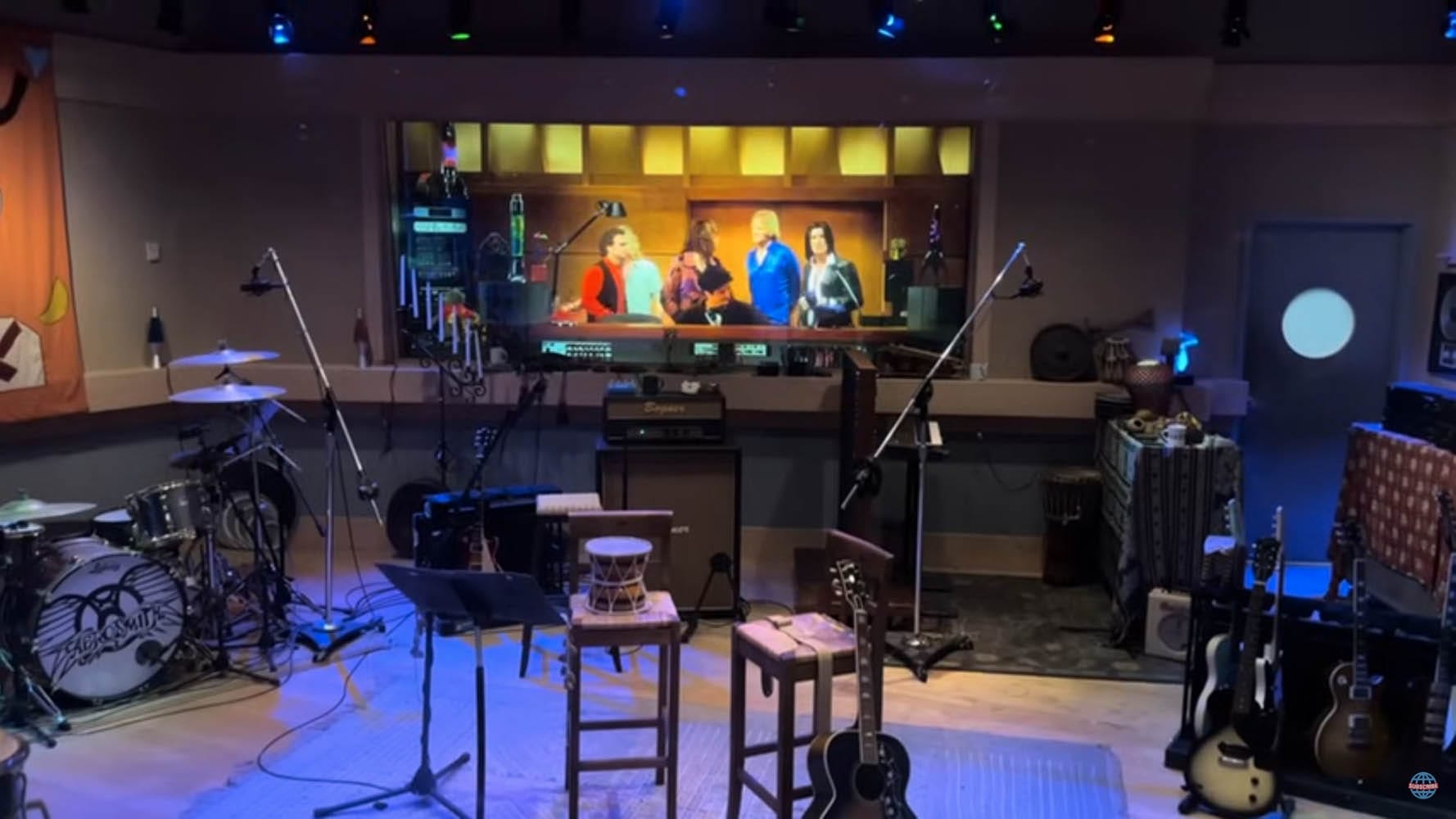
The pre-show had guests looking through a window into a recording booth full of instruments. Through another “window” on the other side, they could see Aerosmith and an audio engineer. As the band members discussed the track they just recorded, their manager (Illeana Douglas) entered to tell them they’re late for a concert. Through the doors behind her, a limo was seen arriving.
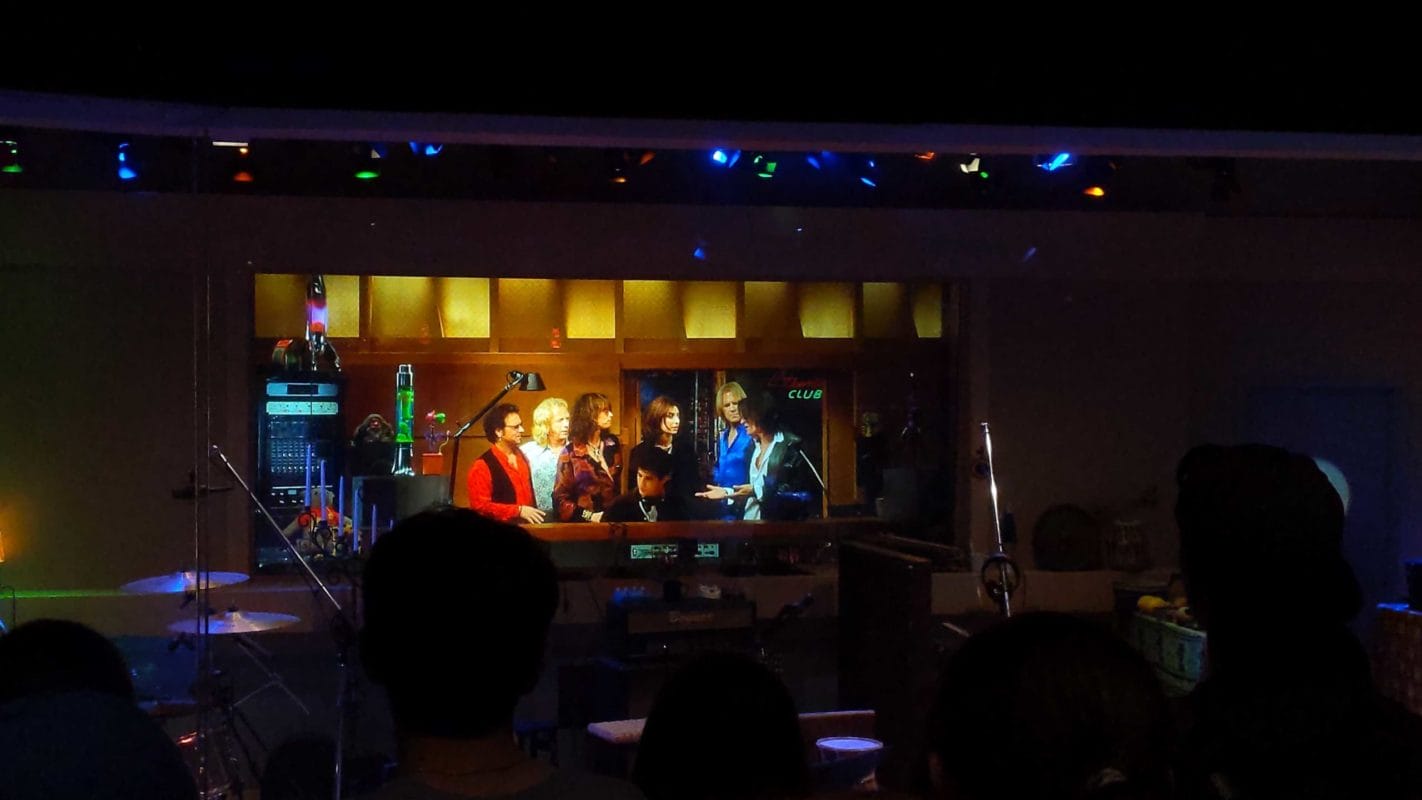
The band started getting ready to leave. Joe Perry asked “Chris,” the Disney cast member in the pre-show room, to grab his black Les Paul guitar. Just as the band members were about to exit, Steven Tyler stopped them and said they couldn’t just leave their fans behind. The cast member would shout, “How about some backstage passes?” Tyler said he loved that idea, and the manager reluctantly agreed.
As the band members got into their limo, the manager got on the phone, quickly counted the waiting guests, and requested a “super-stretch” limo. She then let guests know the concert is across town (at “The Forum,” a reference to L.A.’s Kia Forum), but she got them a “really fast car” now waiting in the alley.
The pre-show was designed so that if a cast member couldn’t participate, it would still make sense. In 2016, it was digitally altered to remove a potentially obscene hand gesture Tyler had made.
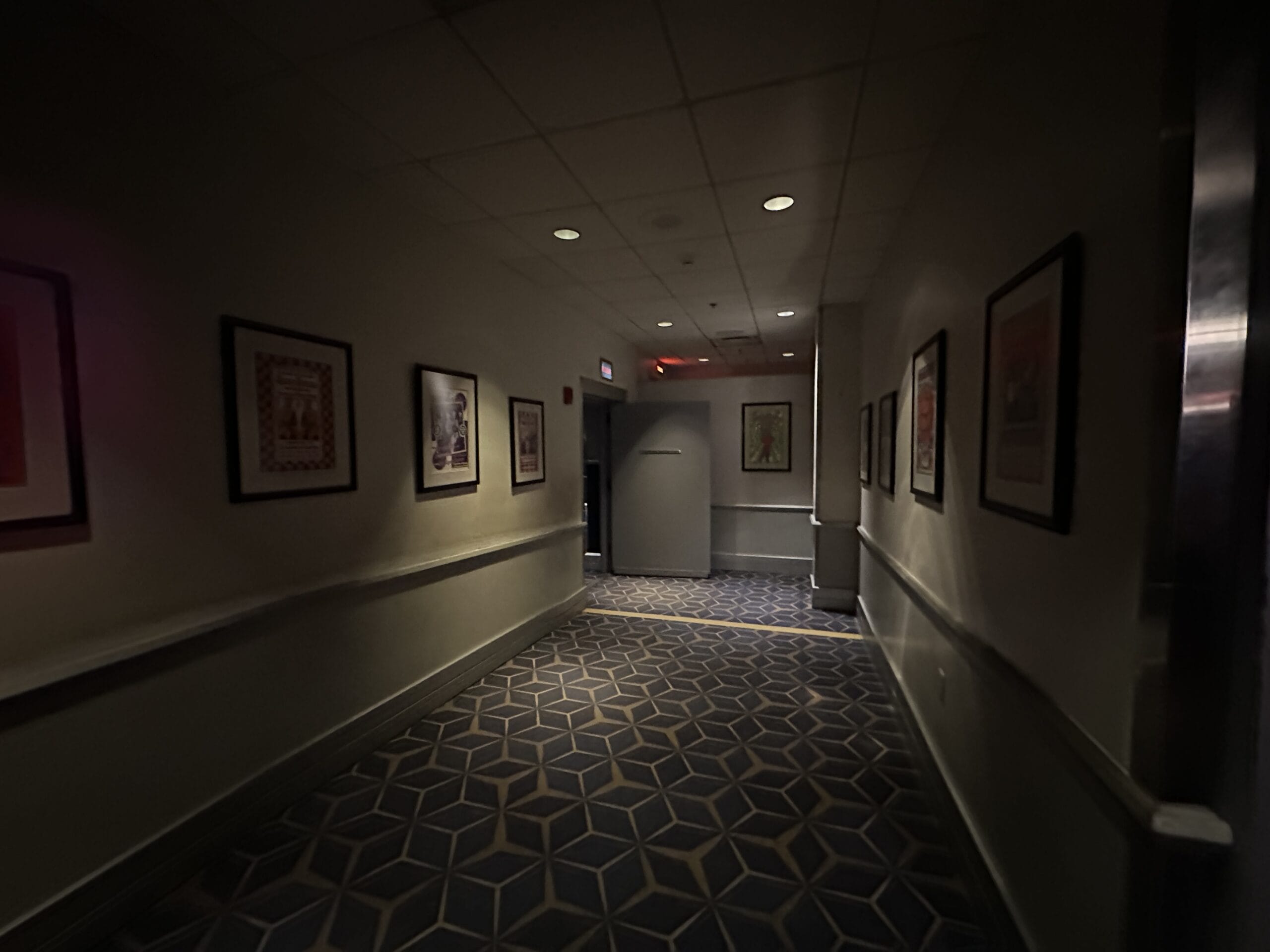
Guests walked down another hallway of posters to the alley.
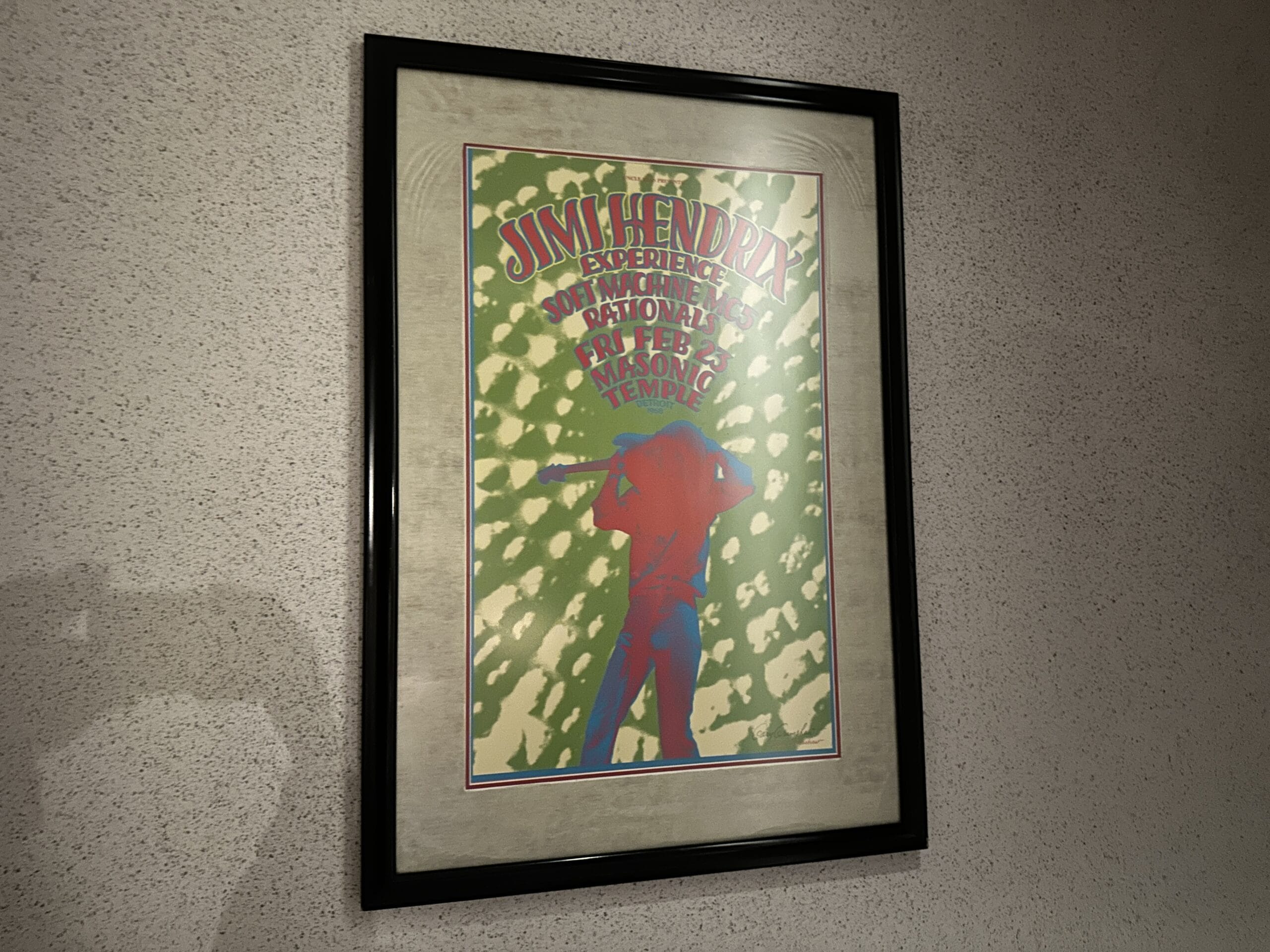
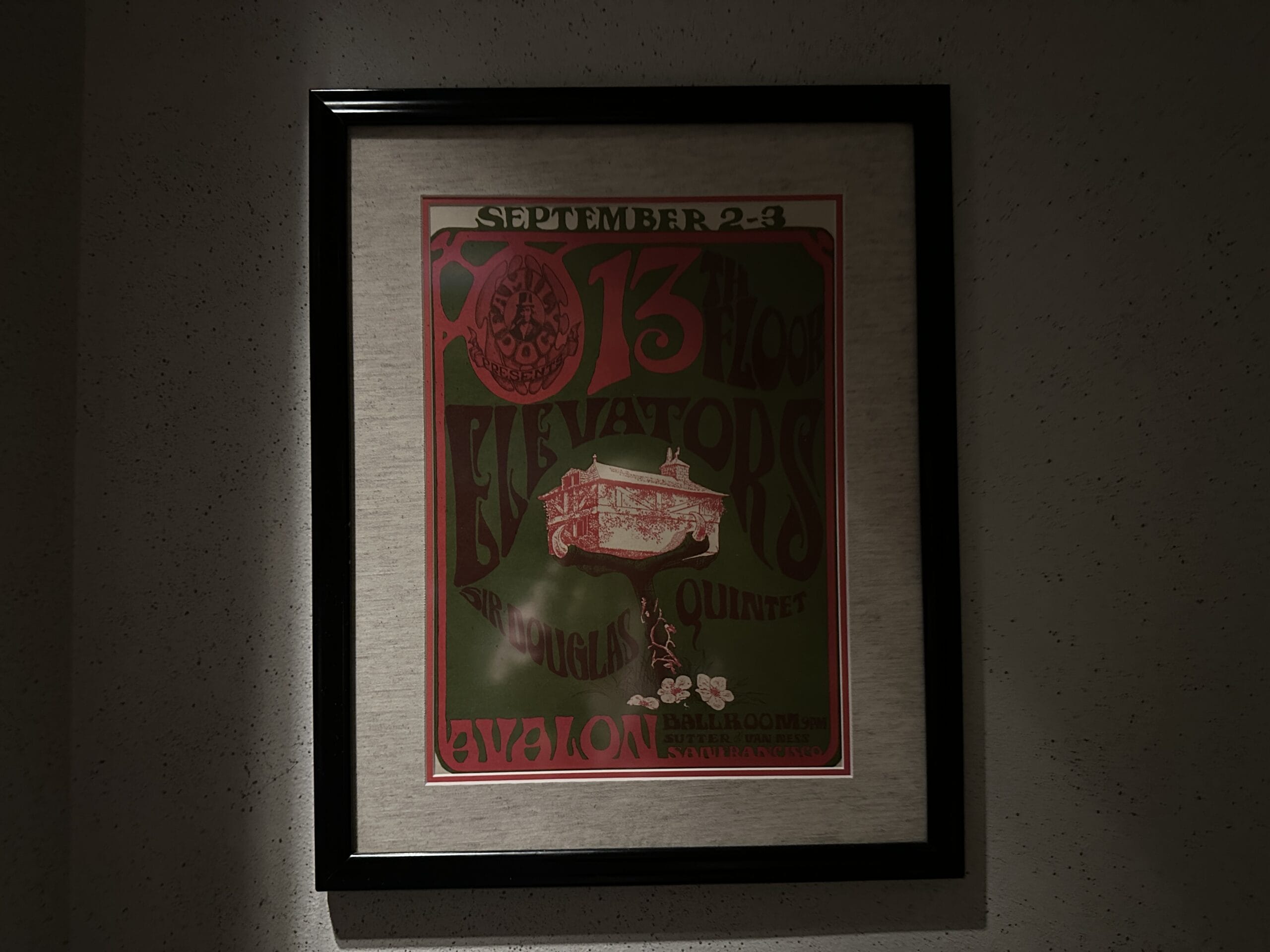
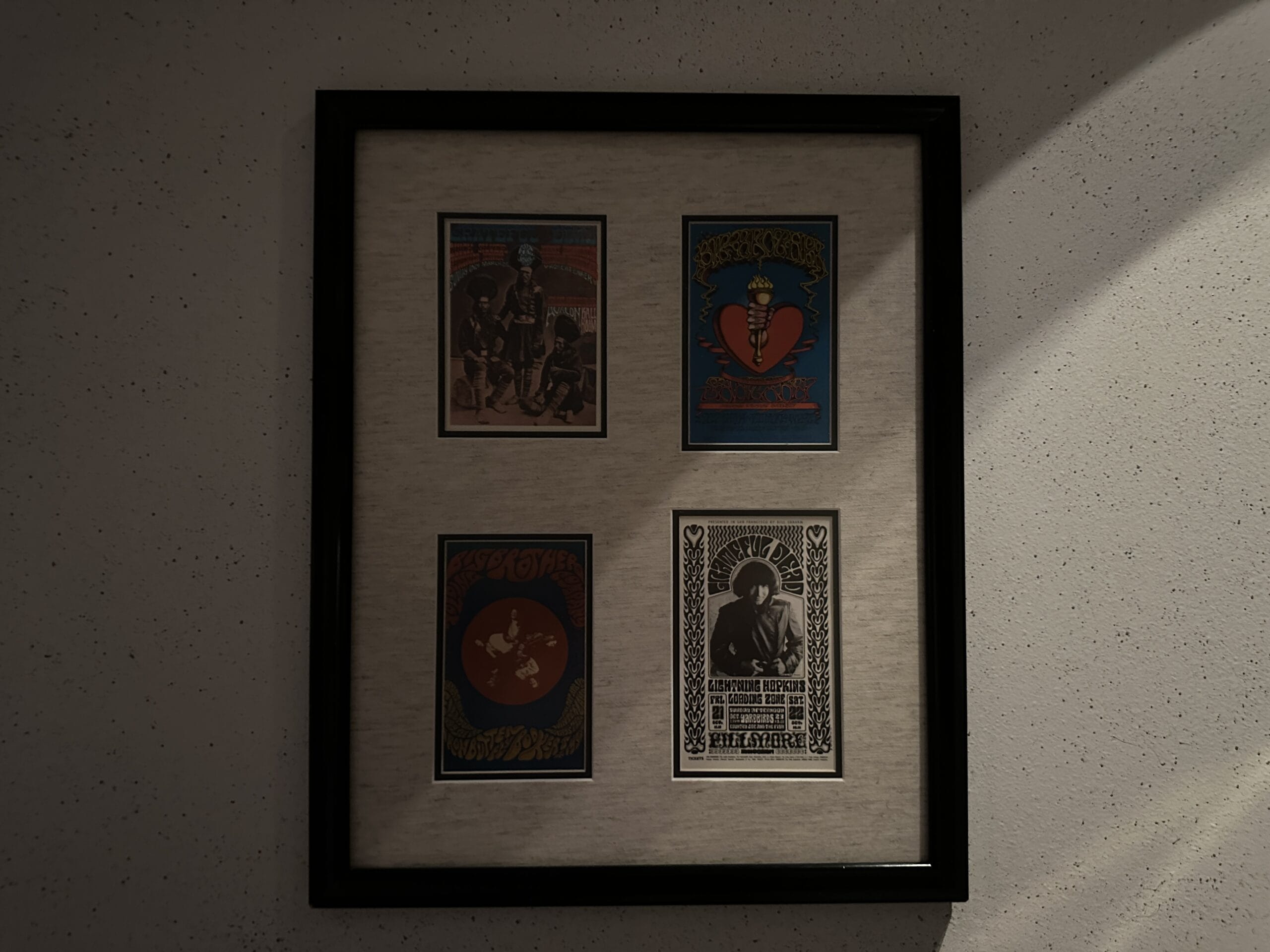
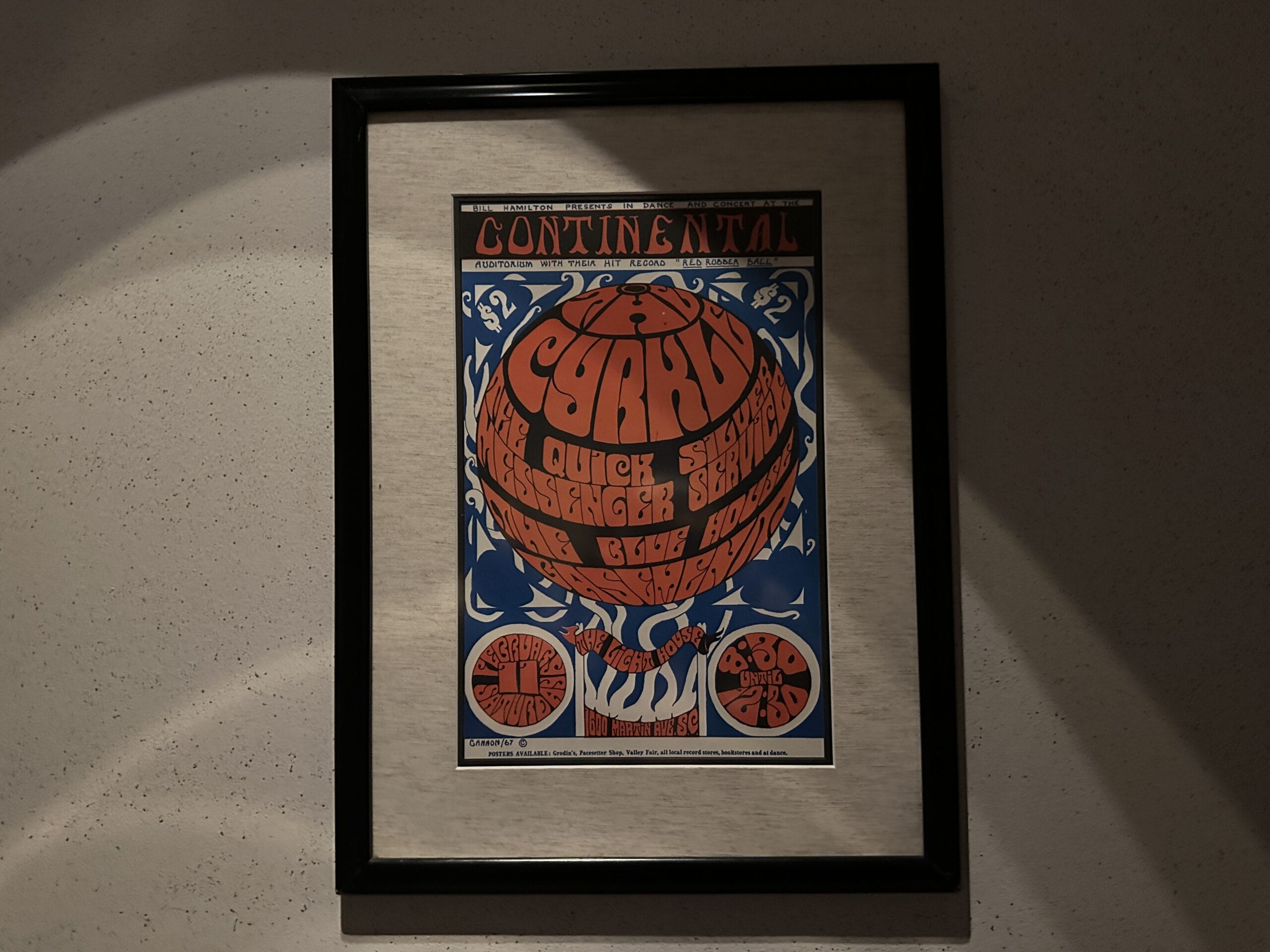
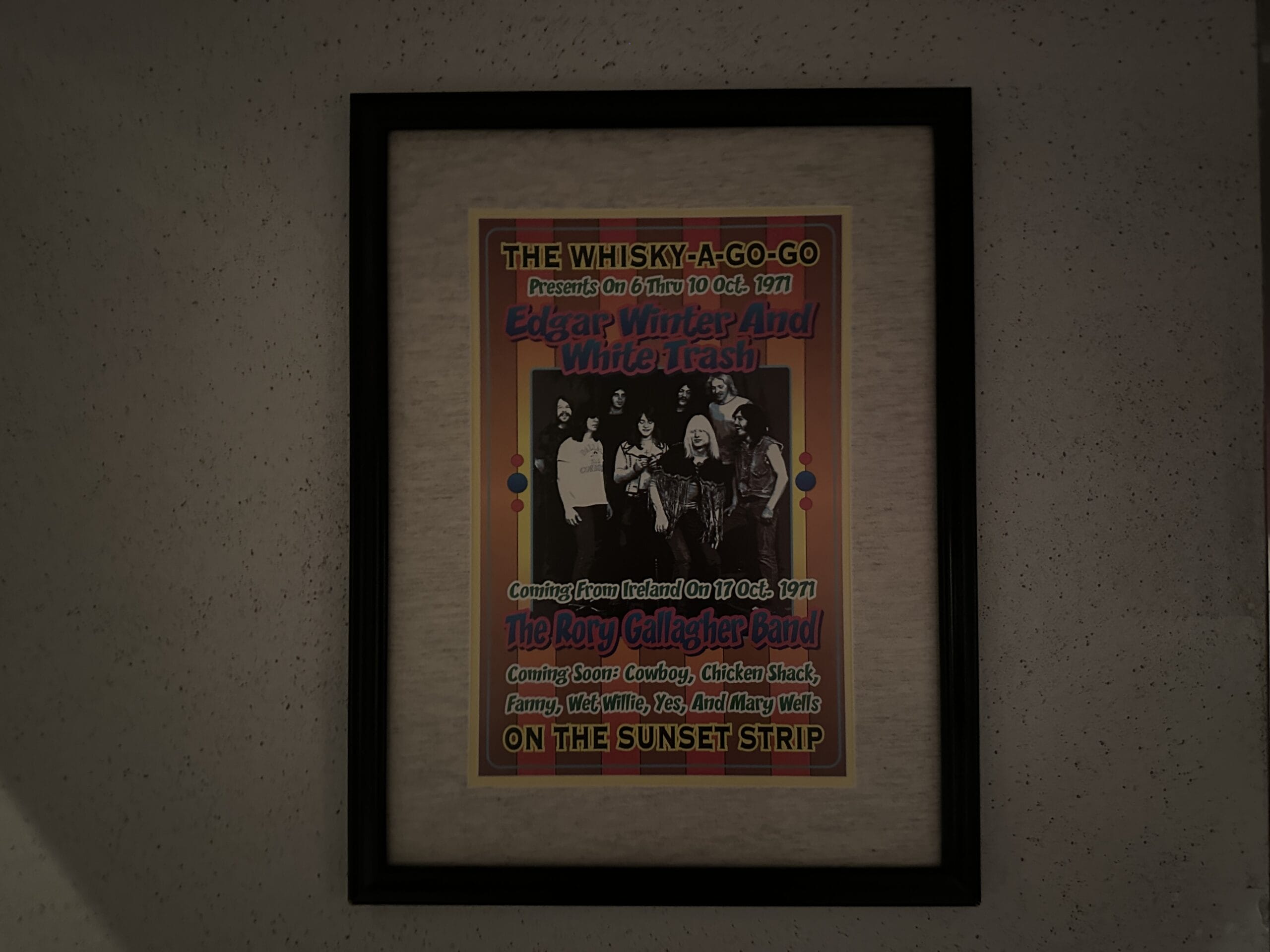
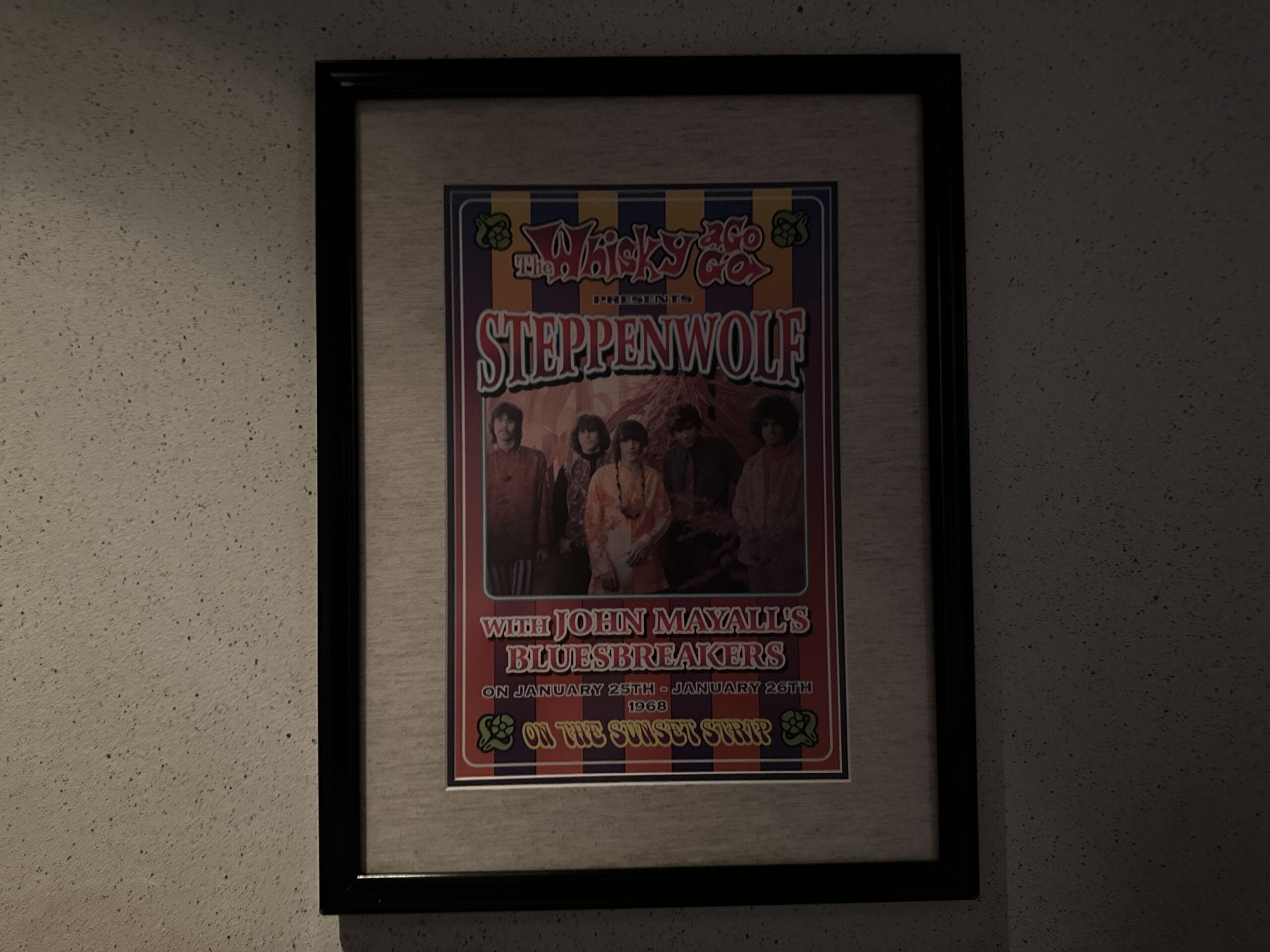
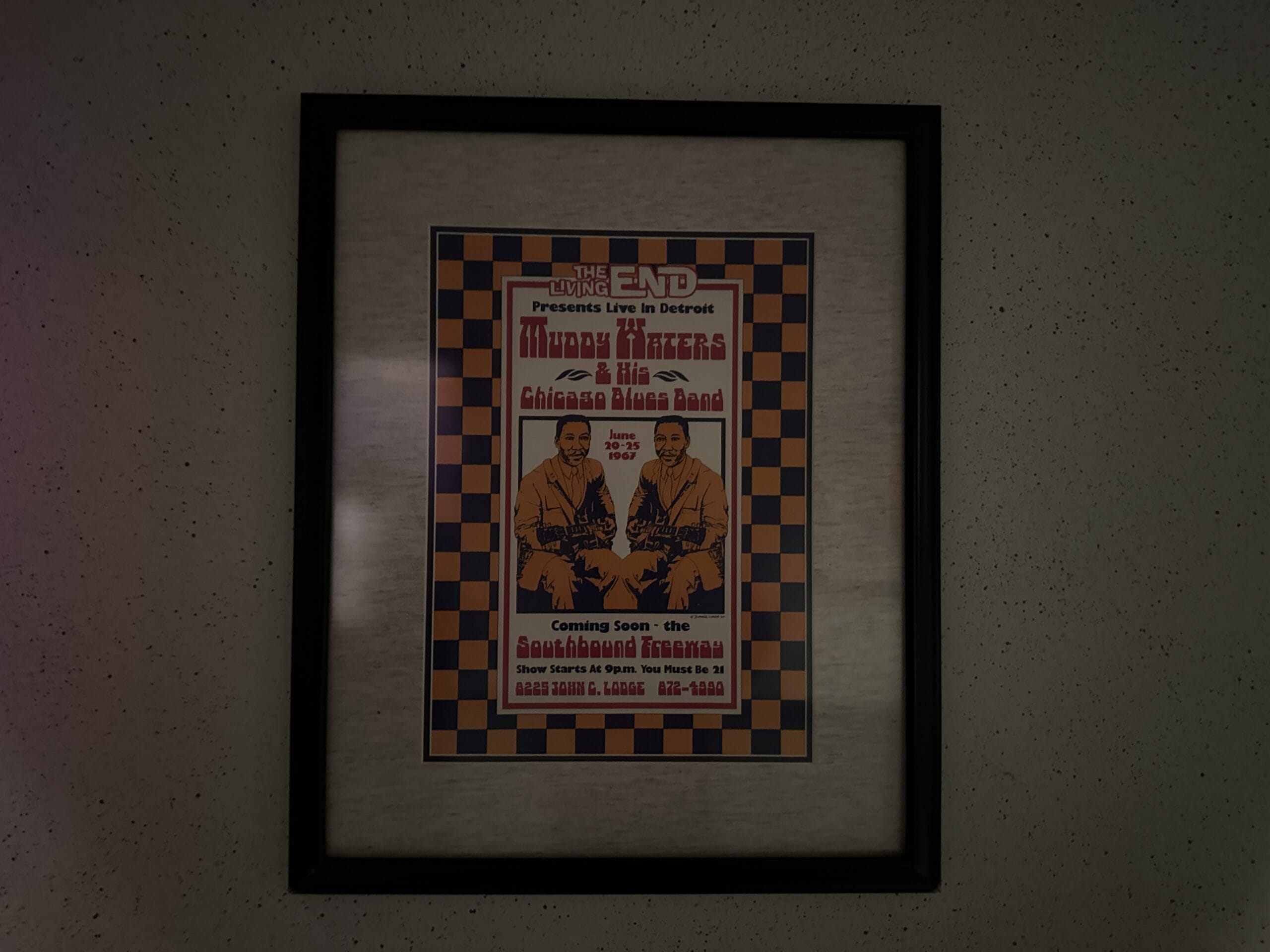
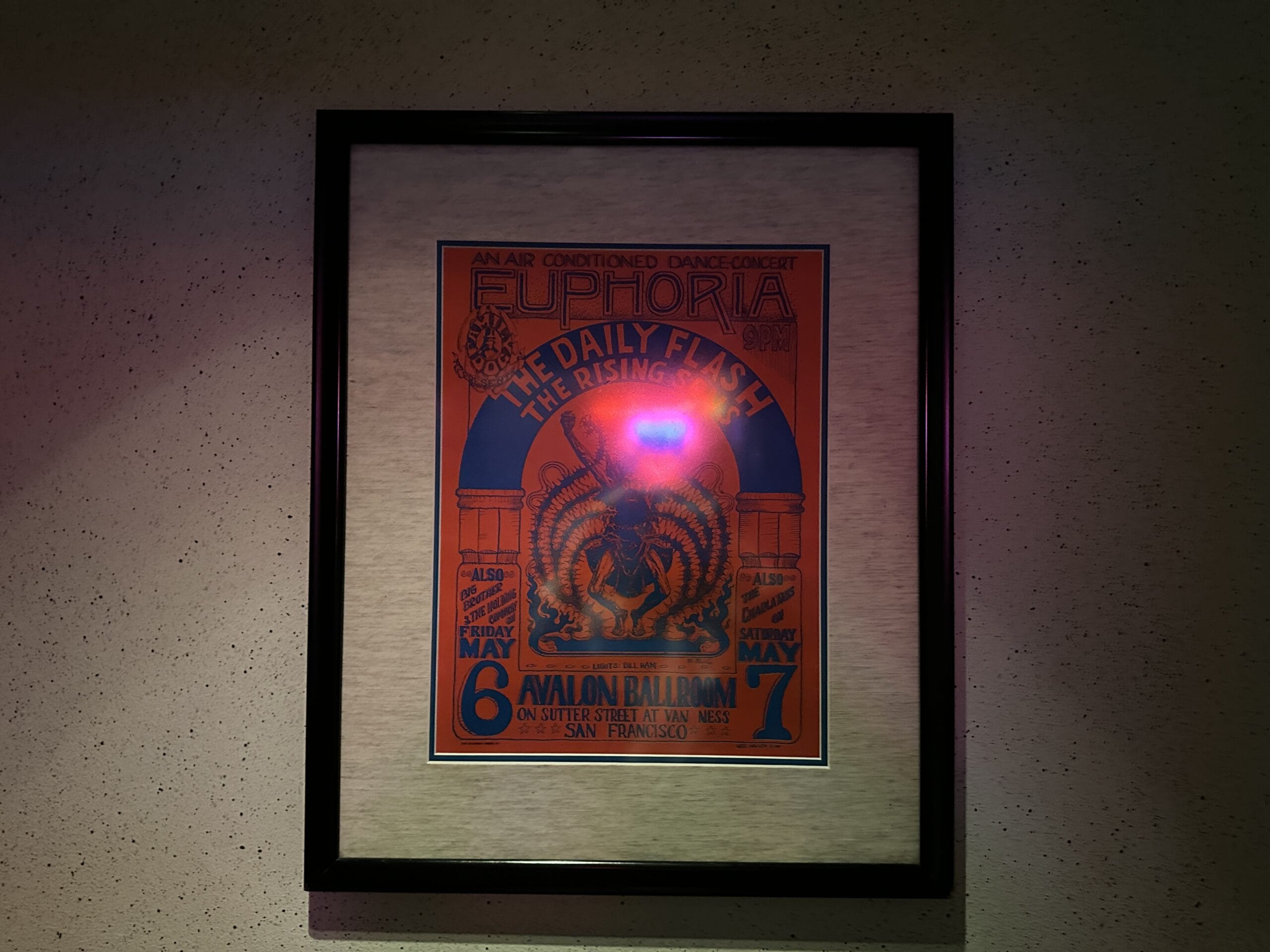
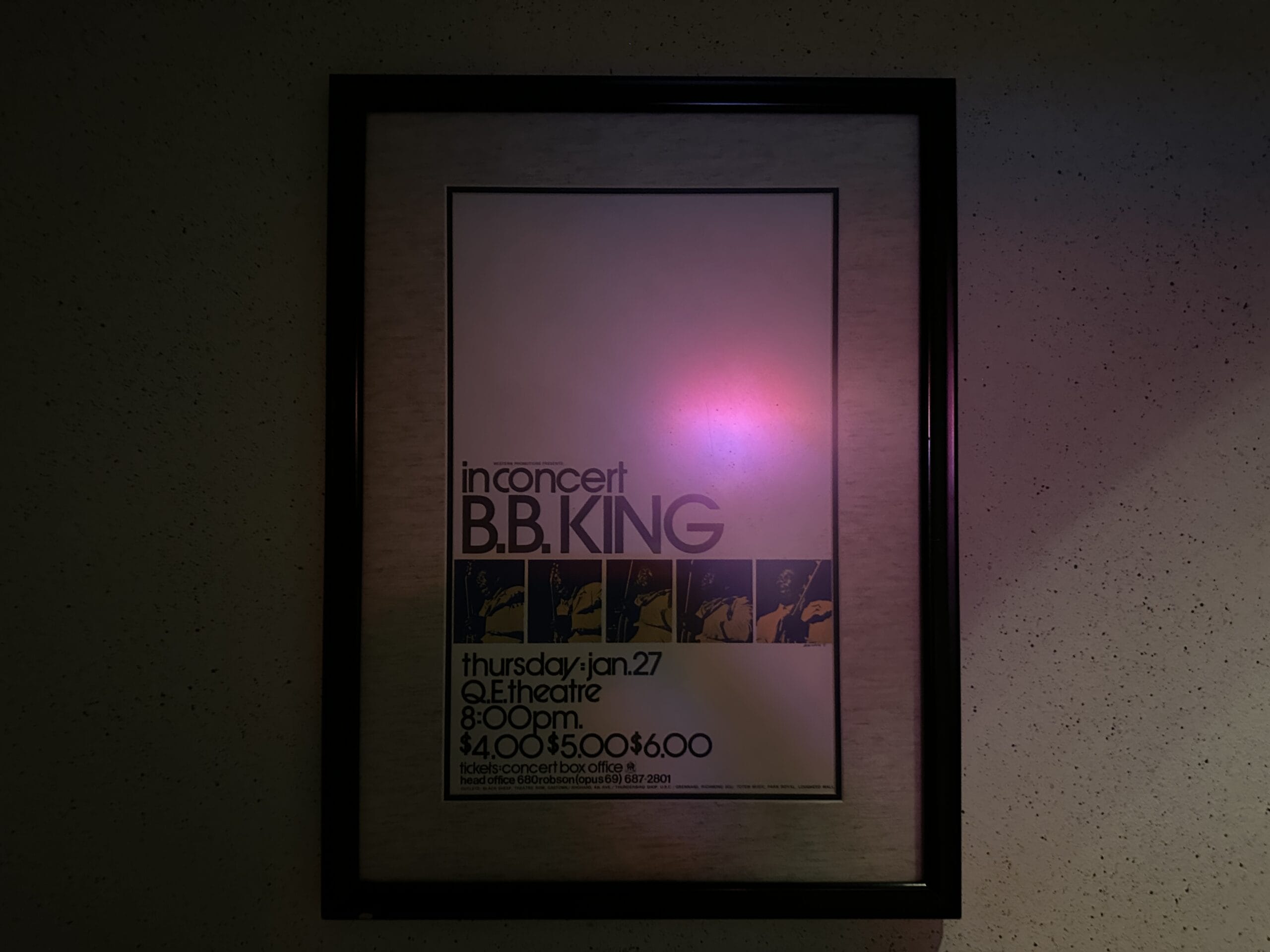
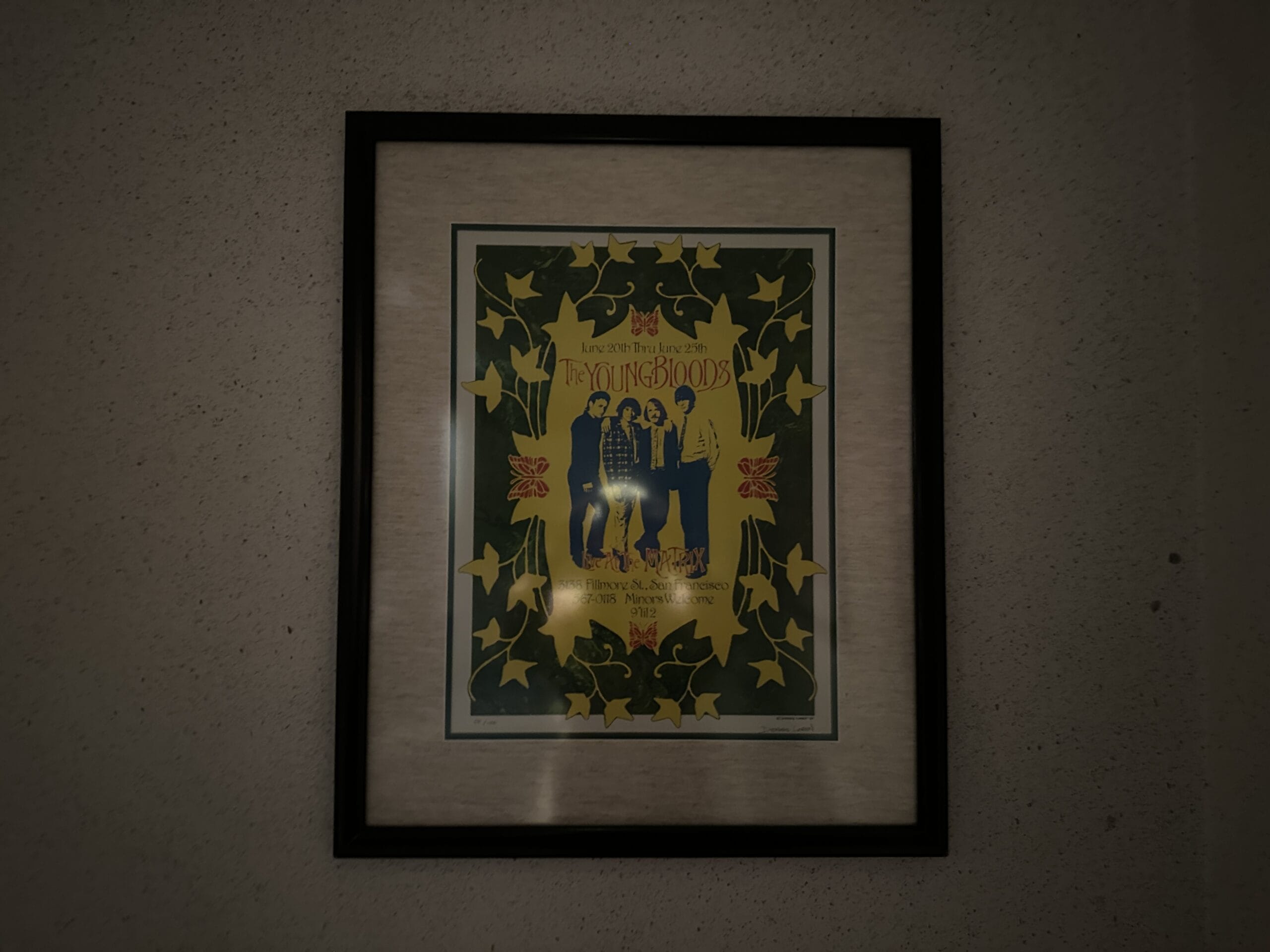
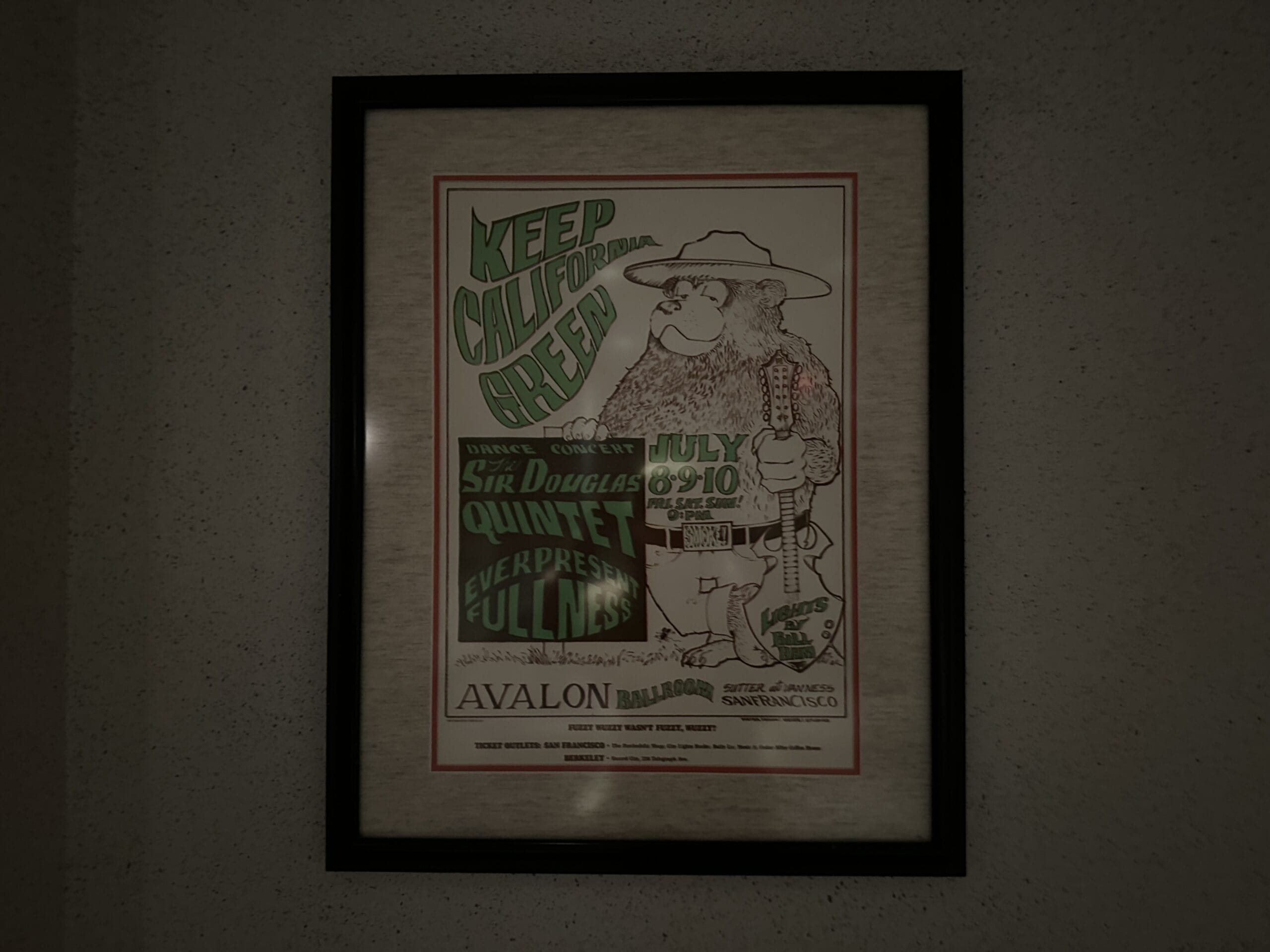
Like the first hallway, this exhibit consisted of retro concert posters for Jimi Hendrix, The Young Bloods, B.B. King, and many more.
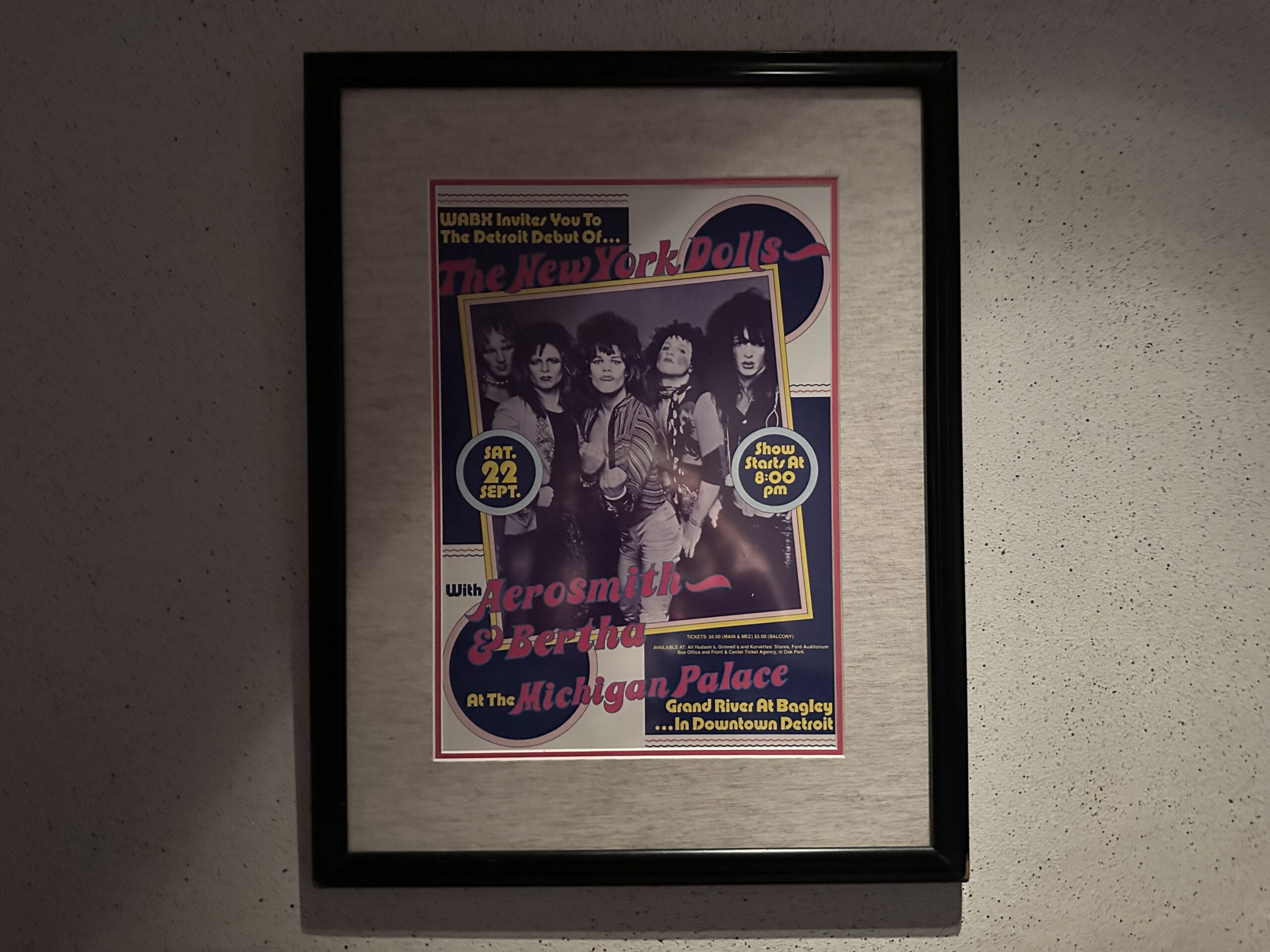
One poster was for The New York Dolls with Aerosmith & Bertha. The picture of the New York Dolls was actually the members of Aerosmith in drag.
Loading Area
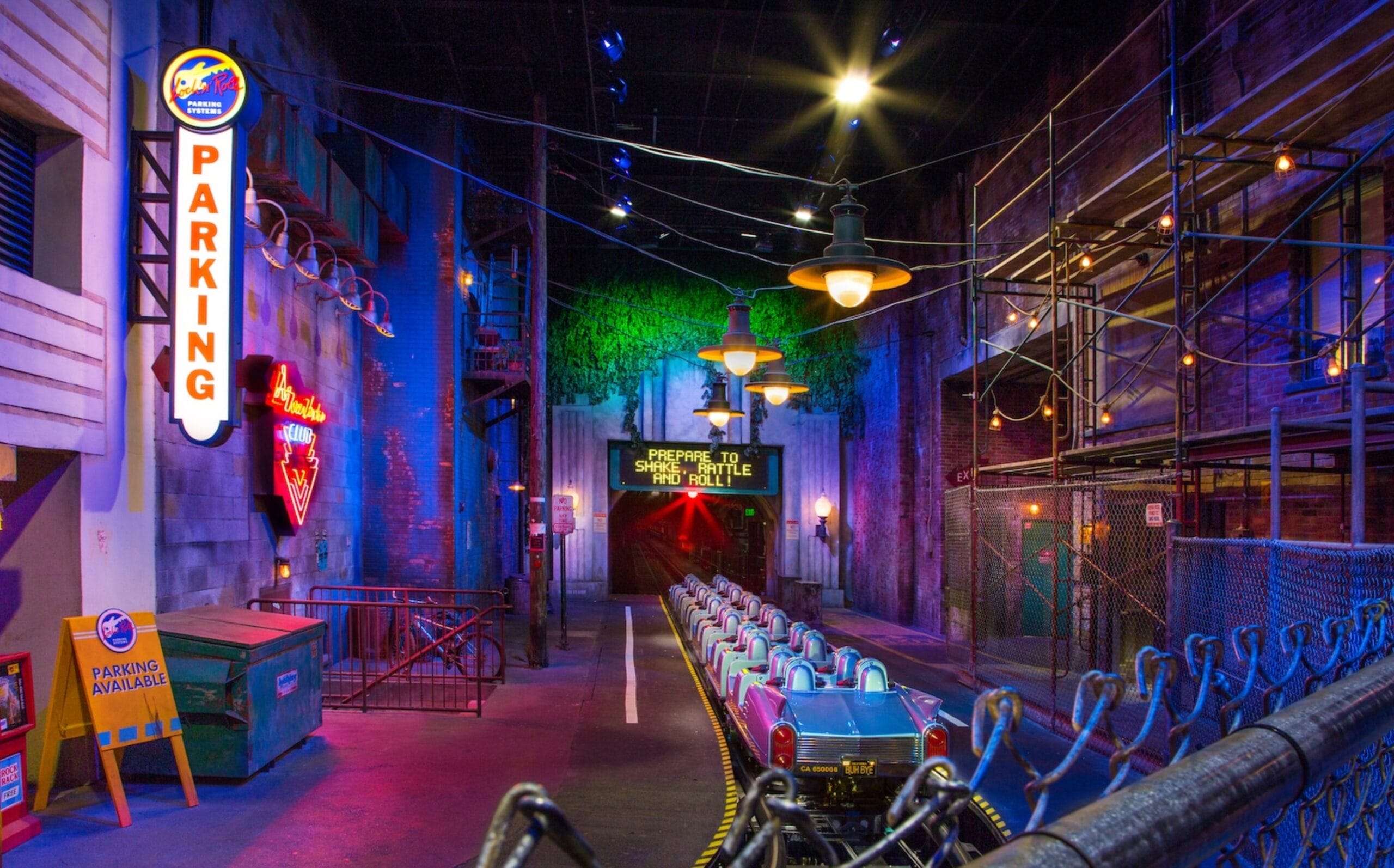
In the “alley,” a super-stretch limo was indeed waiting. Guests could usually watch a few launches before they boarded. They walked through a final section of the queue made up of scaffolding and fencing.
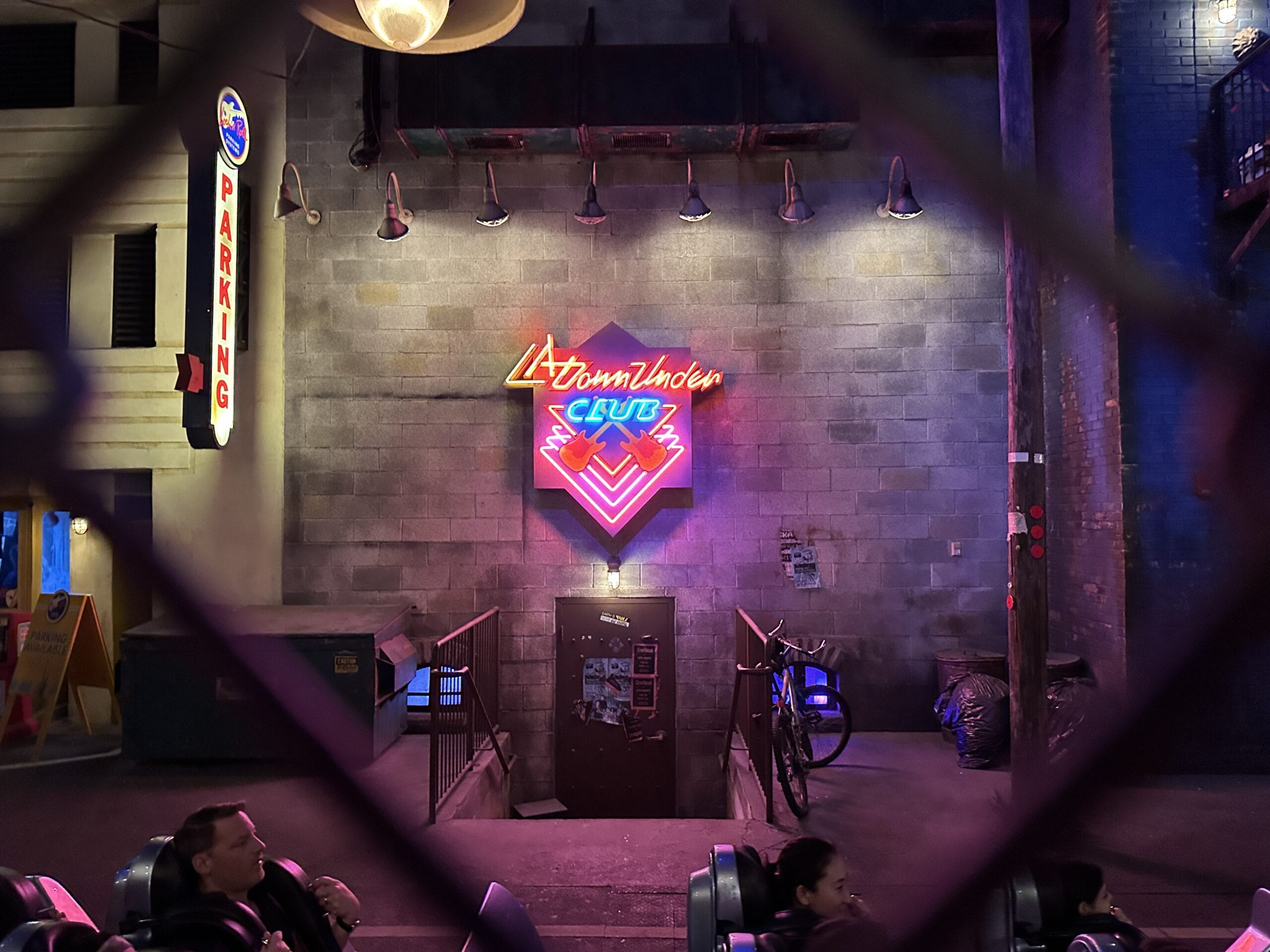
On the opposite side of the alley was a neon sign for the LA Down Under Club above a door plastered with flyers. A bike was parked near some trash cans and bags.
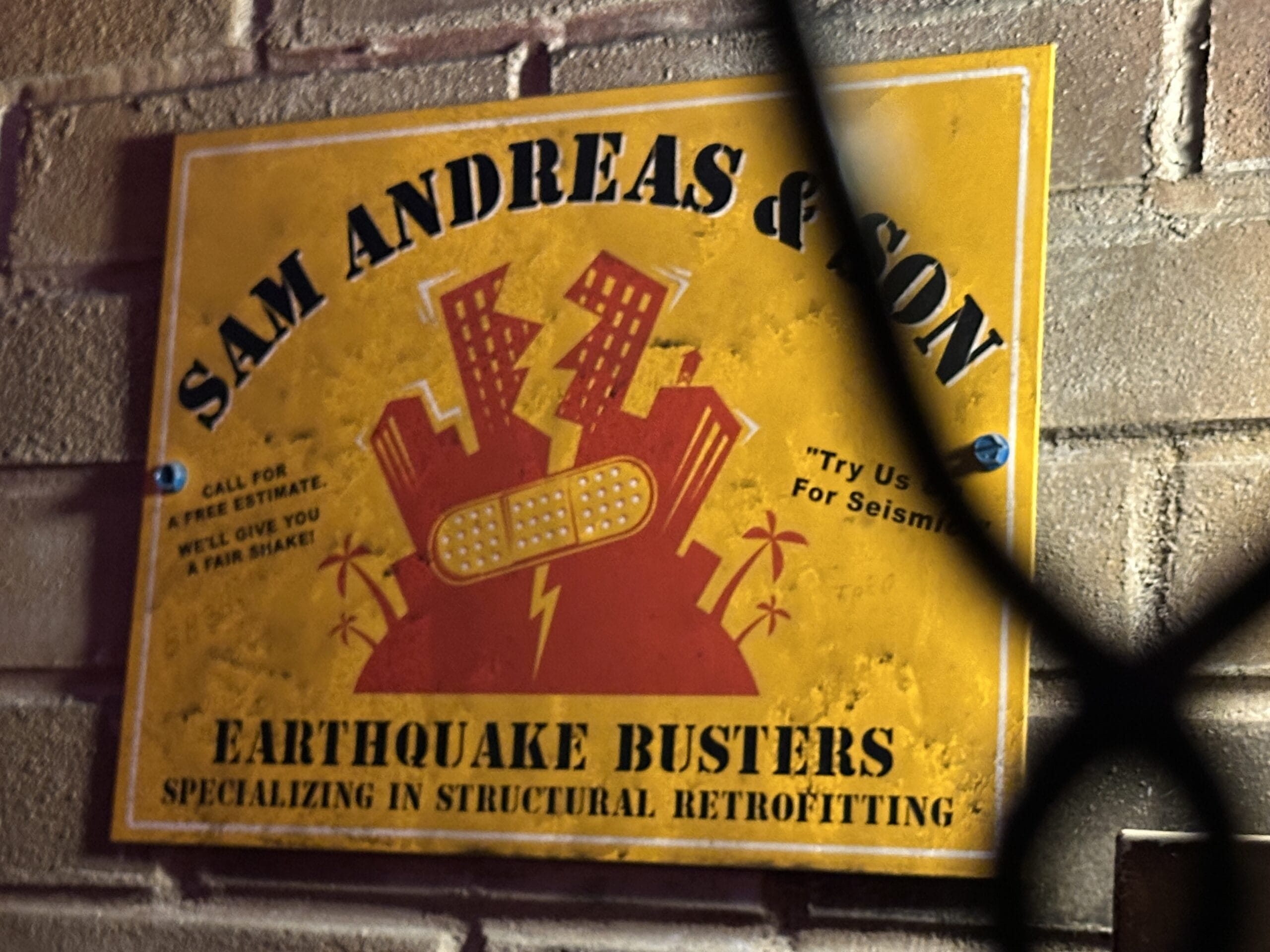
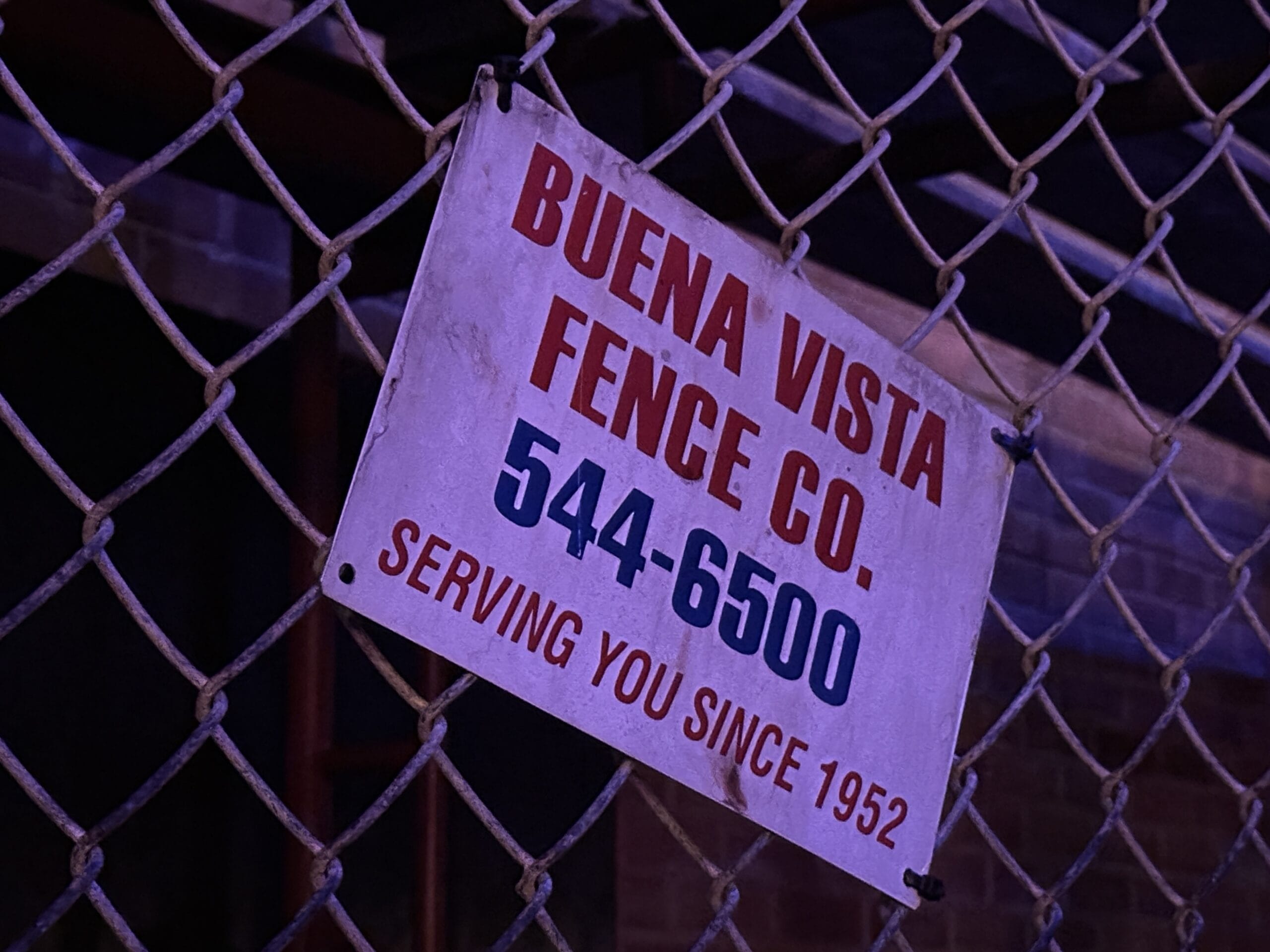
A sign advertised Sam Andreas & Son Earthquake Busters. The fencing, according to another sign, was provided by Buena Vista Fence Co, “serving you since 1952.”
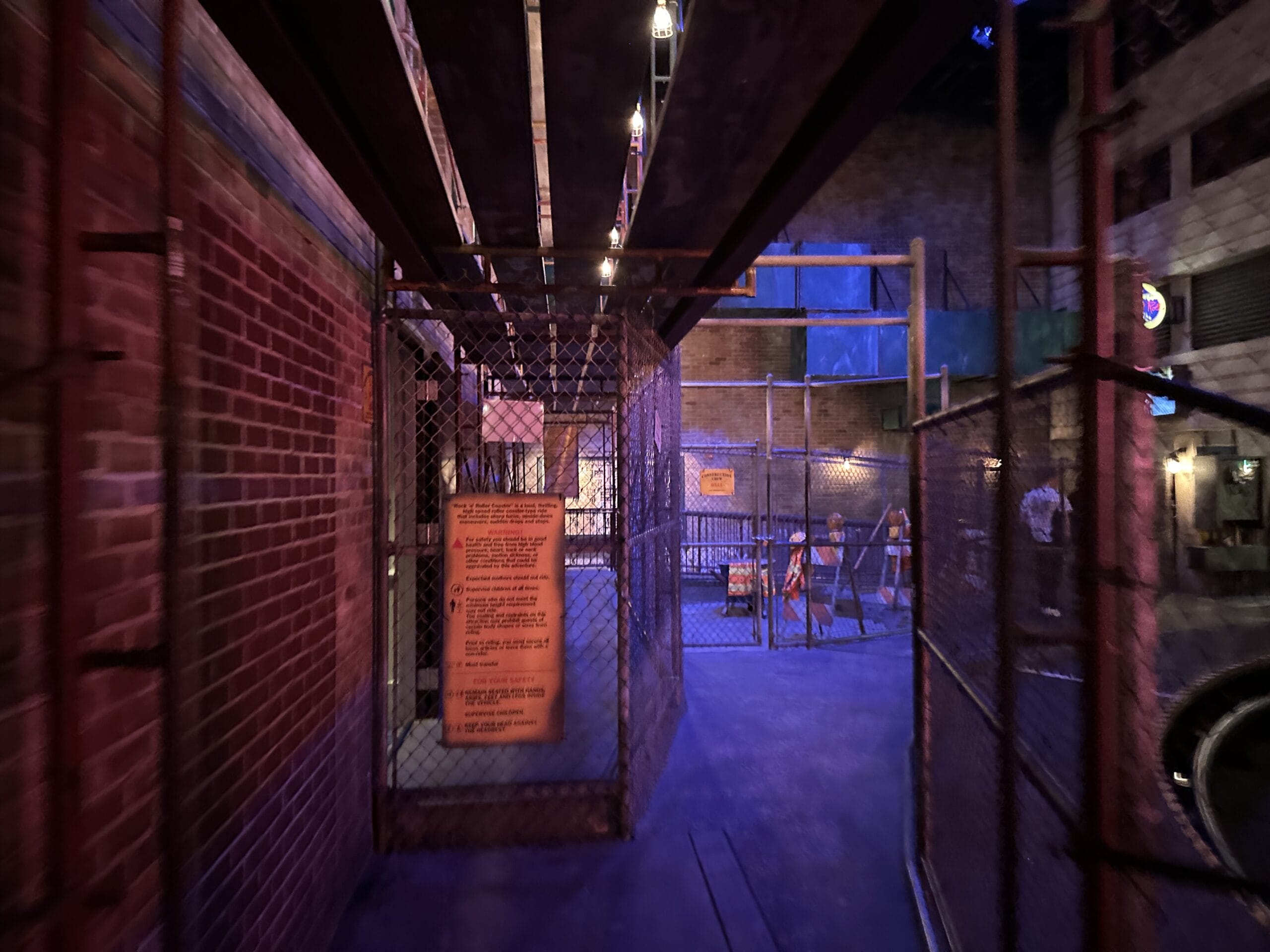
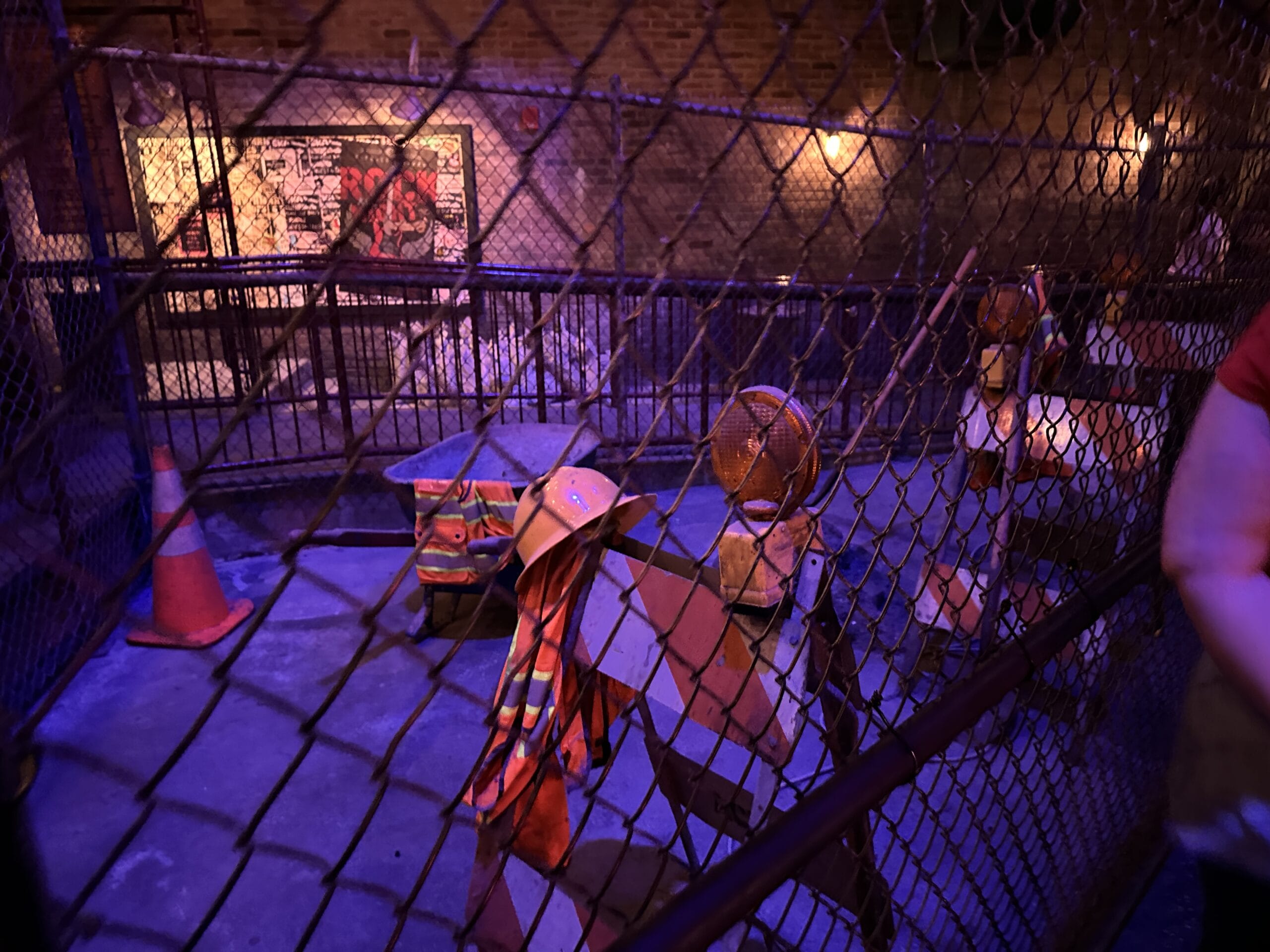
Guests passed a small construction zone of traffic cones and flashing orange lights.
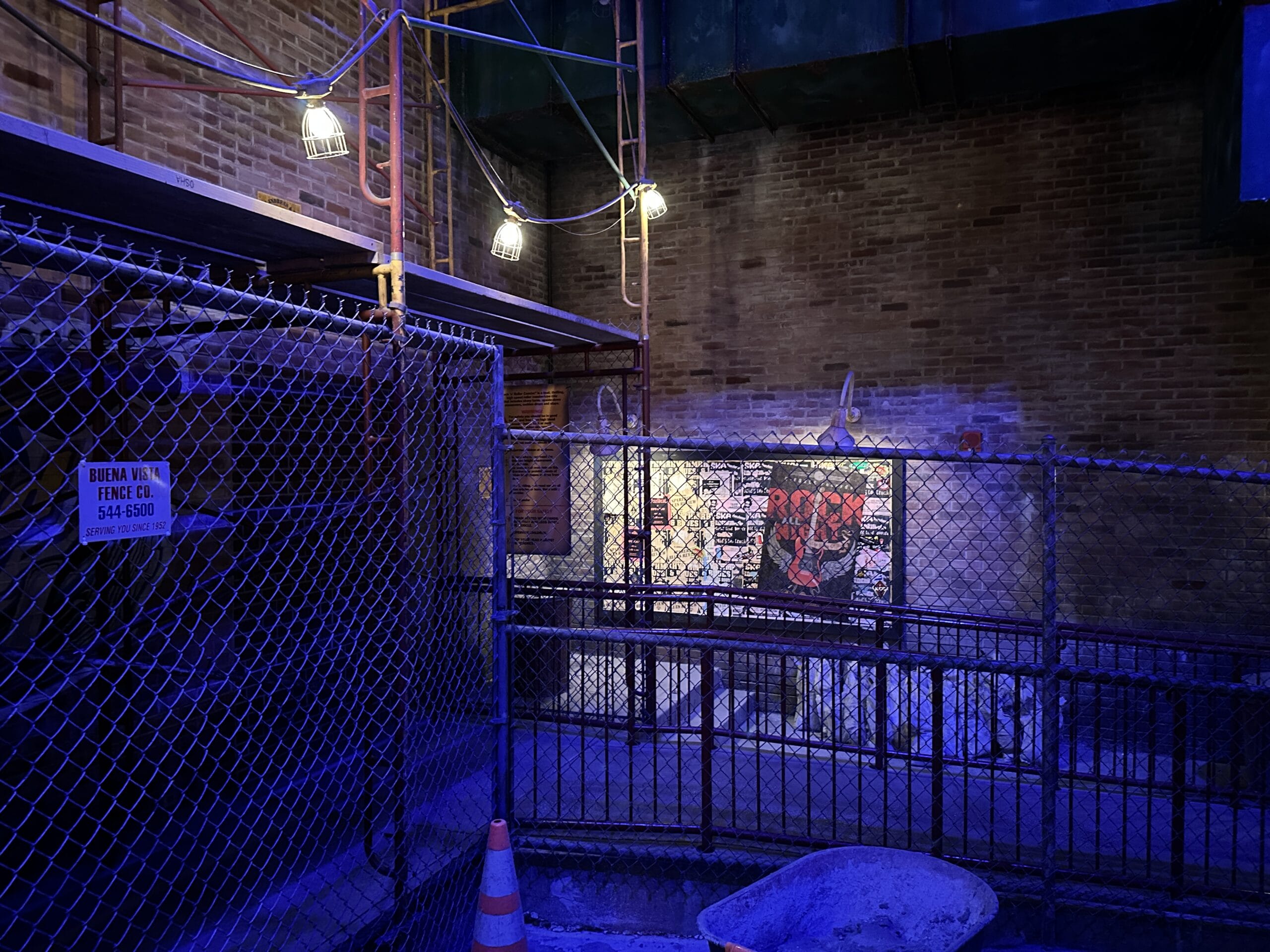
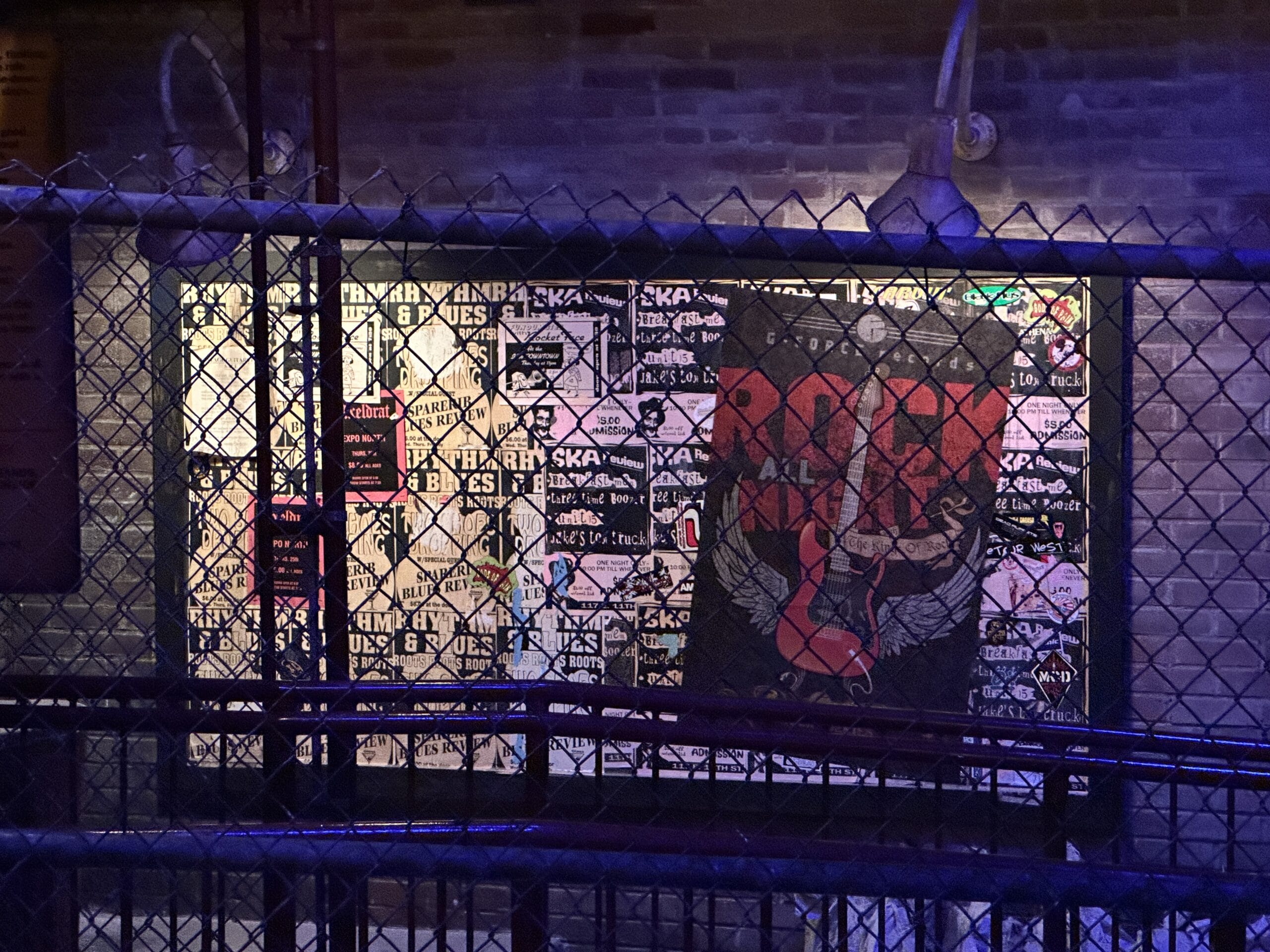
Beyond that was a ramp, which passed a board covered with “Rhythm & Blues” flyers. A large poster over these advertised G-Force Records’ “Rock All Night” event.
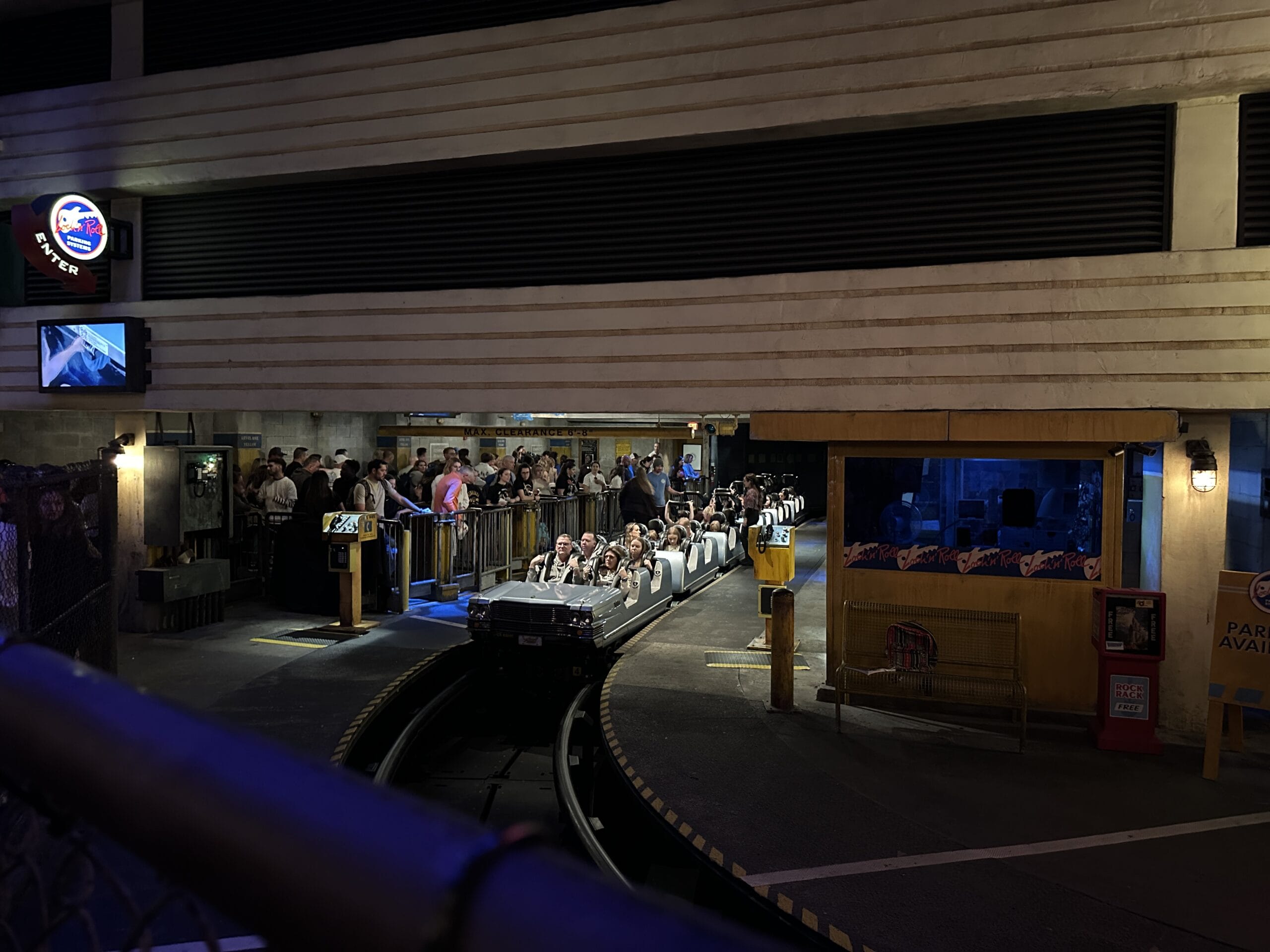
Guests then arrived at the concrete loading dock, which resembled the exit of a parking garage owned by Lock ‘n’ Roll Parking Systems.
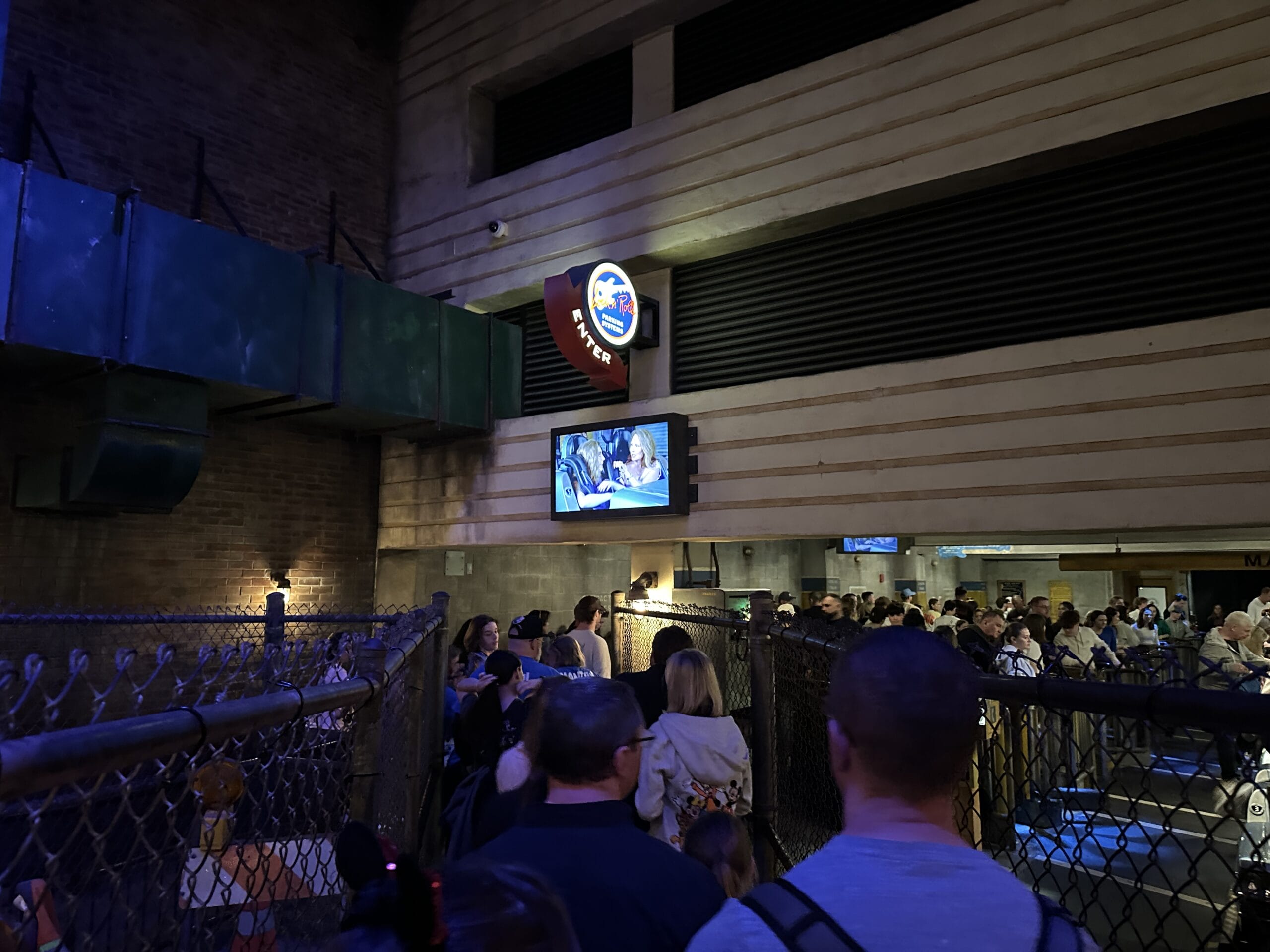
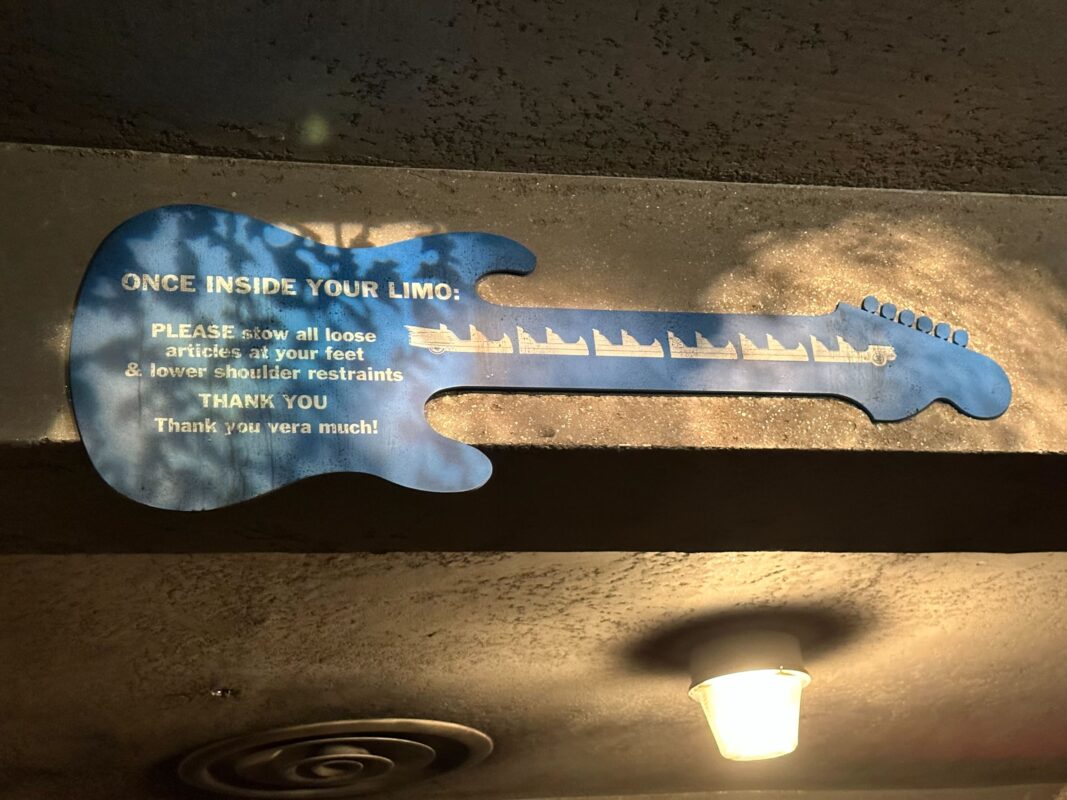
They passed under screens and guitar-shaped signs displaying safety information. Here’s what the blue guitars read:
Once Inside Your Limo
PLEASE stow all loose articles at your feet & lower shoulder restraints
THANK YOU
Thank you vera [sic] much!
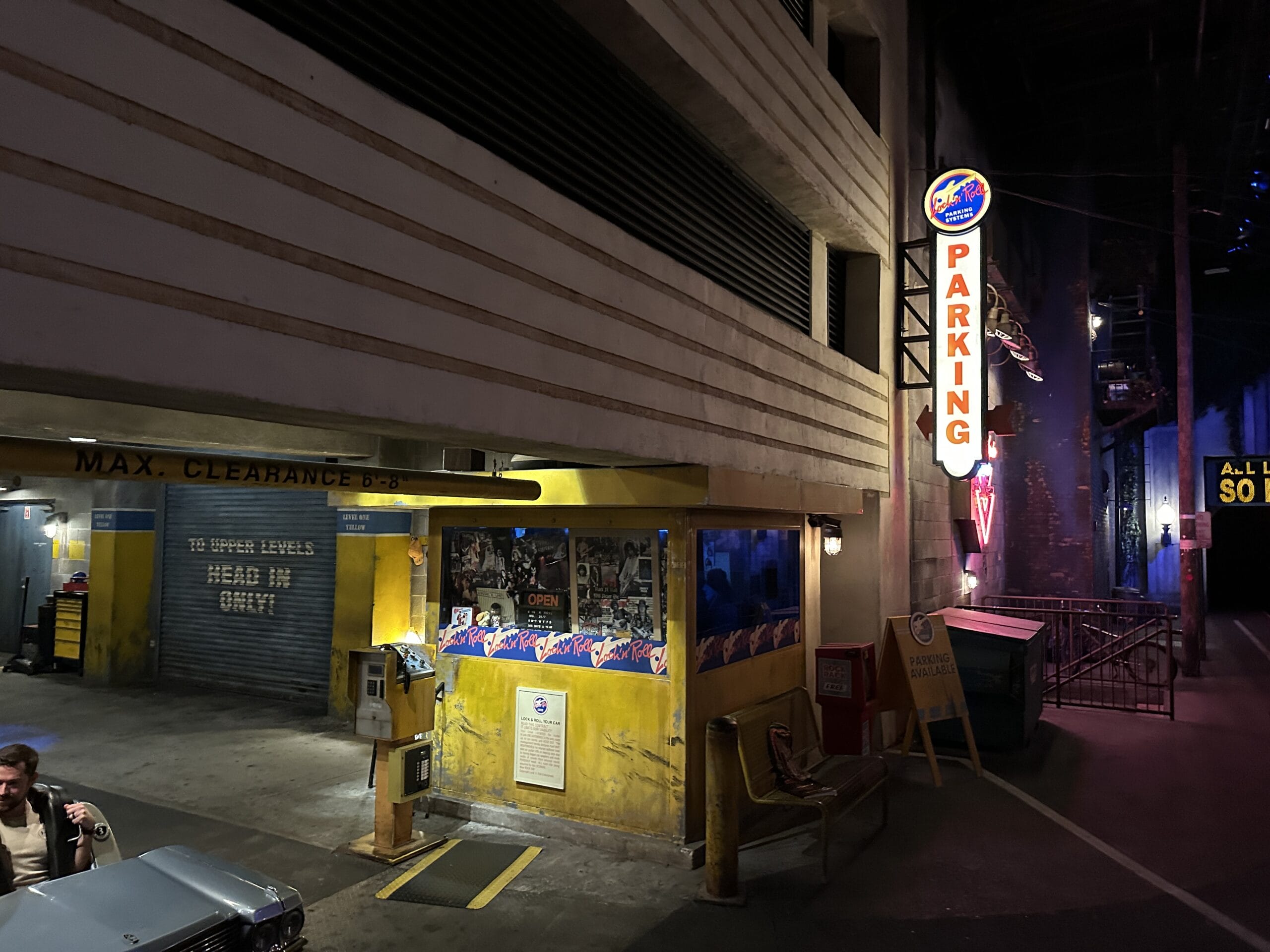
At the corner of the platform across from the guests was a toll booth. This acted as the control center for cast members.
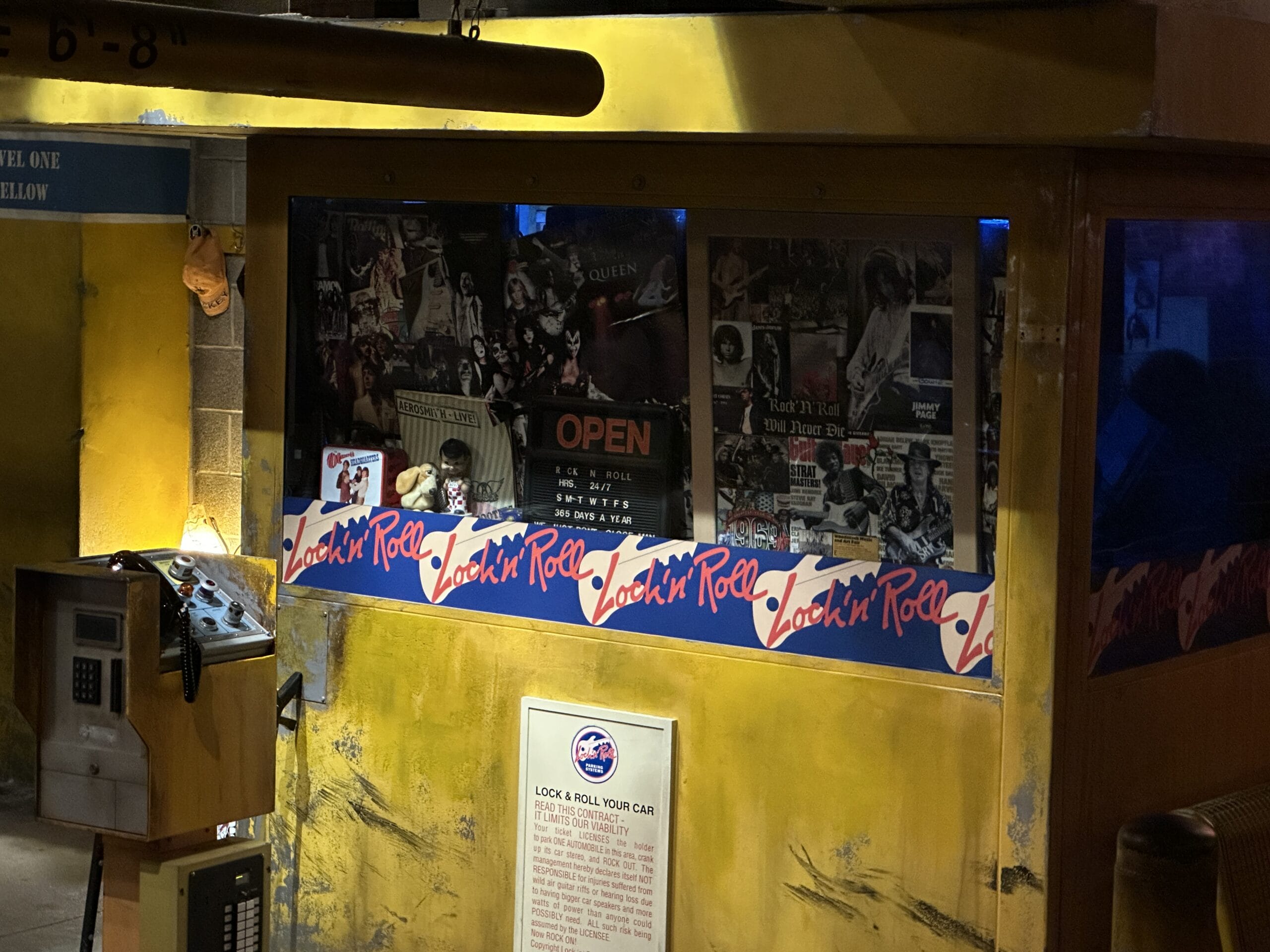
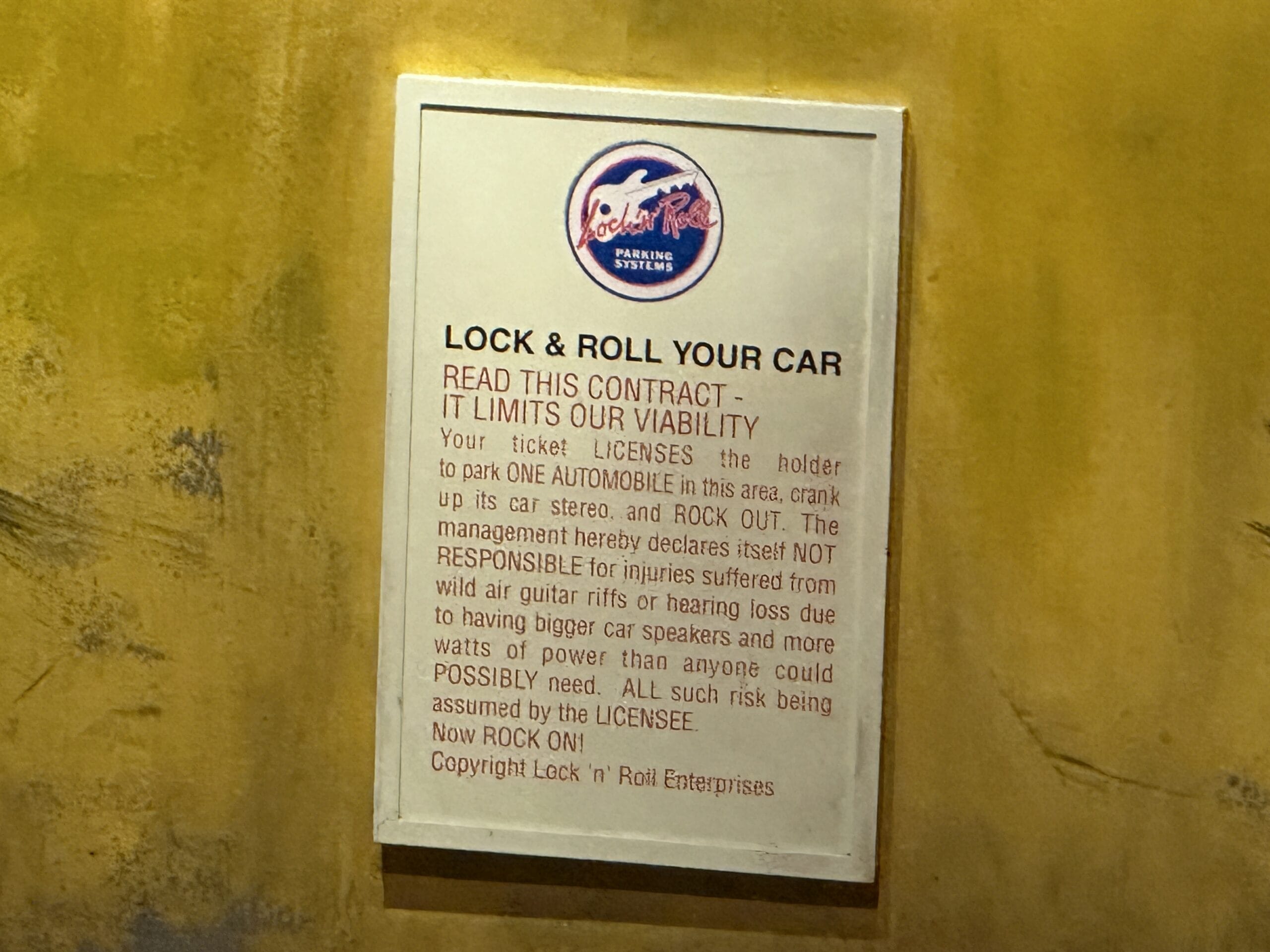
The front window of the toll booth was covered in rock ‘n’ roll posters. A sign read:
Lock & Roll Your Car
READ THIS CONTRACT – IT LIMITS OUR VIABILITY
Your ticket LICENSES the holder to park ONE AUTOMOBILE in this area, crank up its car stereo, and ROCK OUT. The management hereby declares itself NOT RESPONSIBLE for injuries suffered from wild air guitar riffs or hearing loss due to having bigger car speakers and more watts of power than anyone could POSSIBLY need. ALL such risk being assumed by the LICENSEE.
Now ROCK ON!
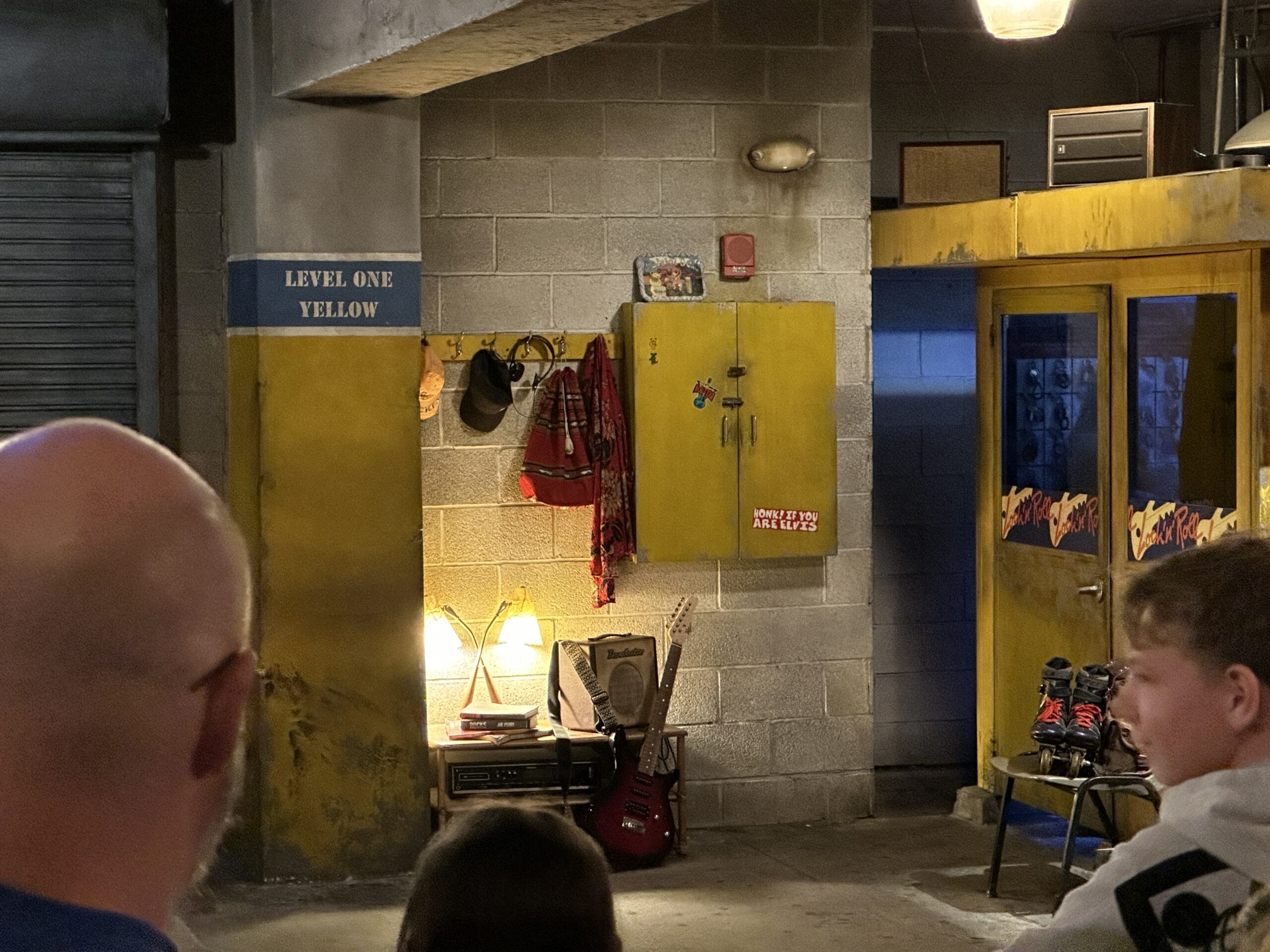
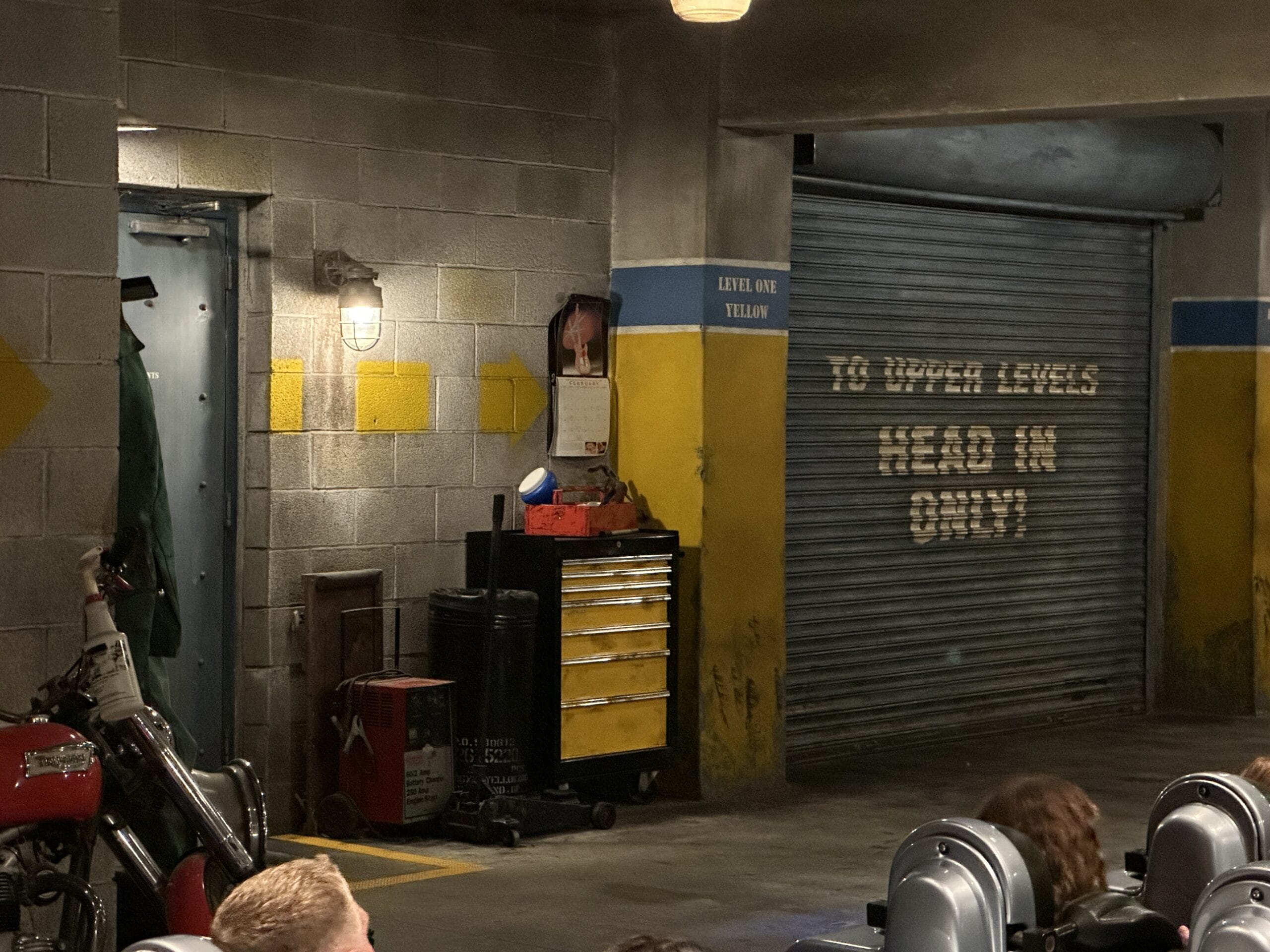
Props included a red guitar similar to the giant one outside, rollerblades, tools, and a book called Rocks, ostensibly by Aerosmith’s Joe Perry.
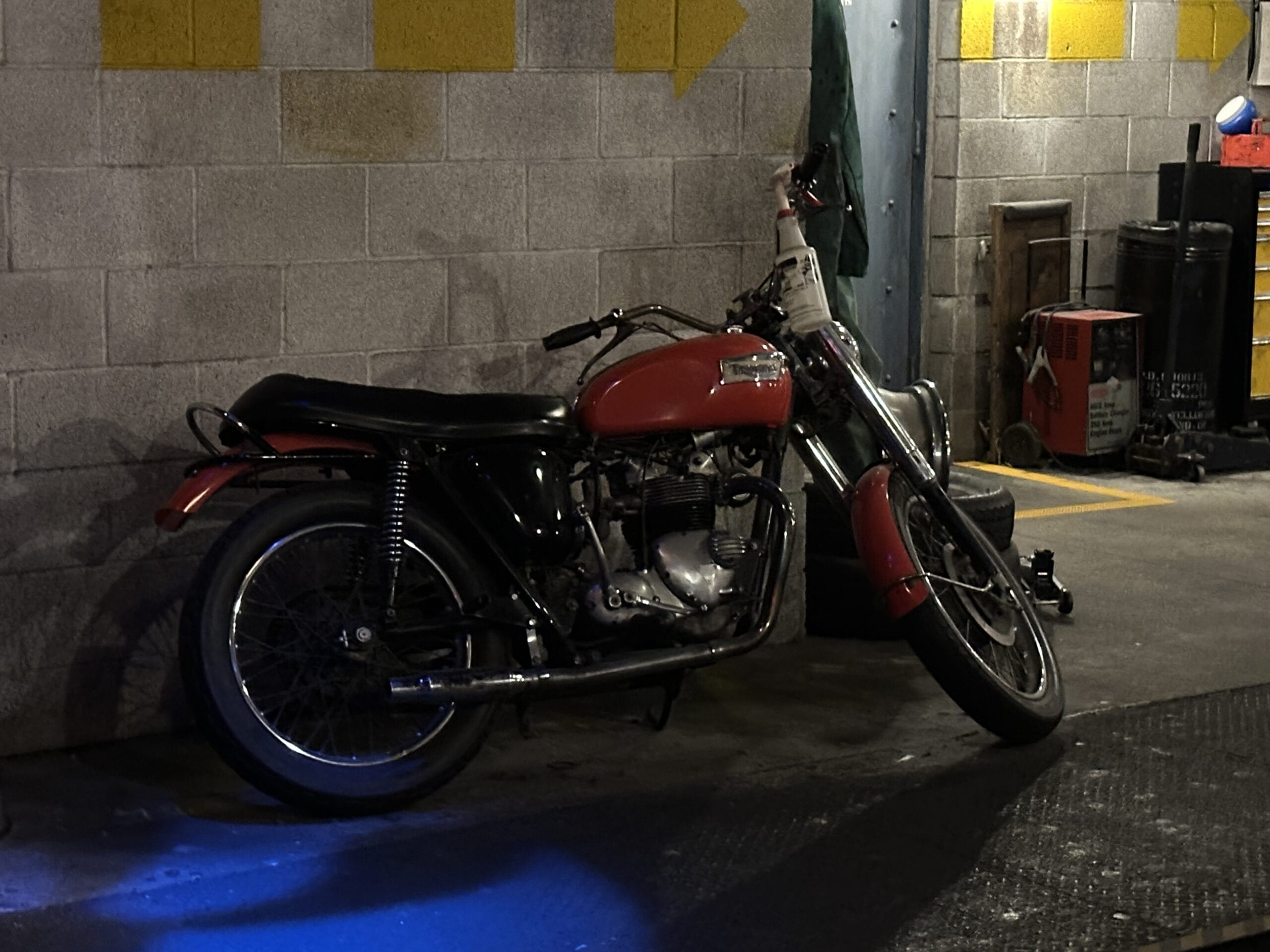
A motorcycle was parked near the back of the platform.
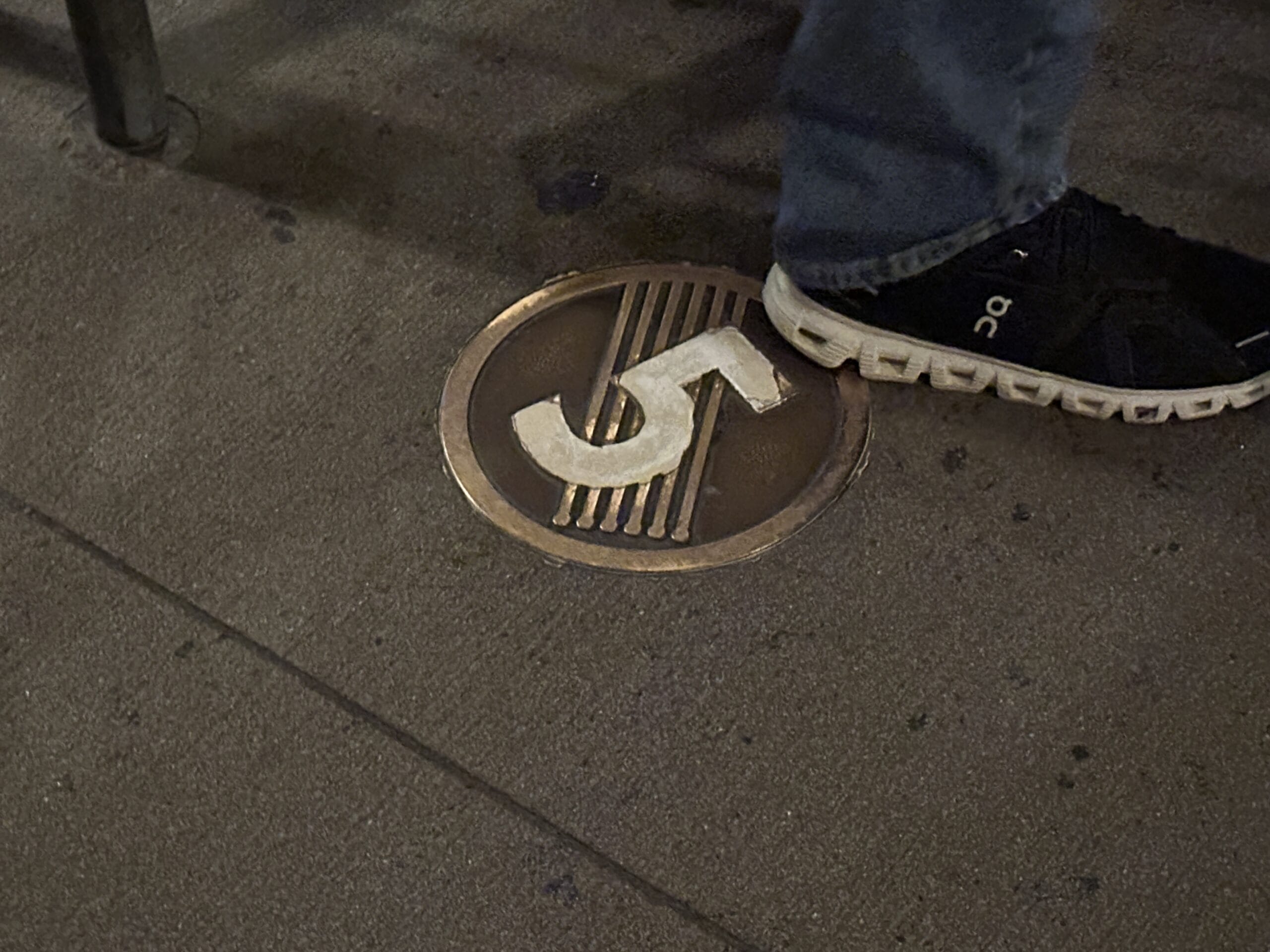
Cast members directed guests to a row for boarding. Each row was marked with a numbered medallion on the ground.
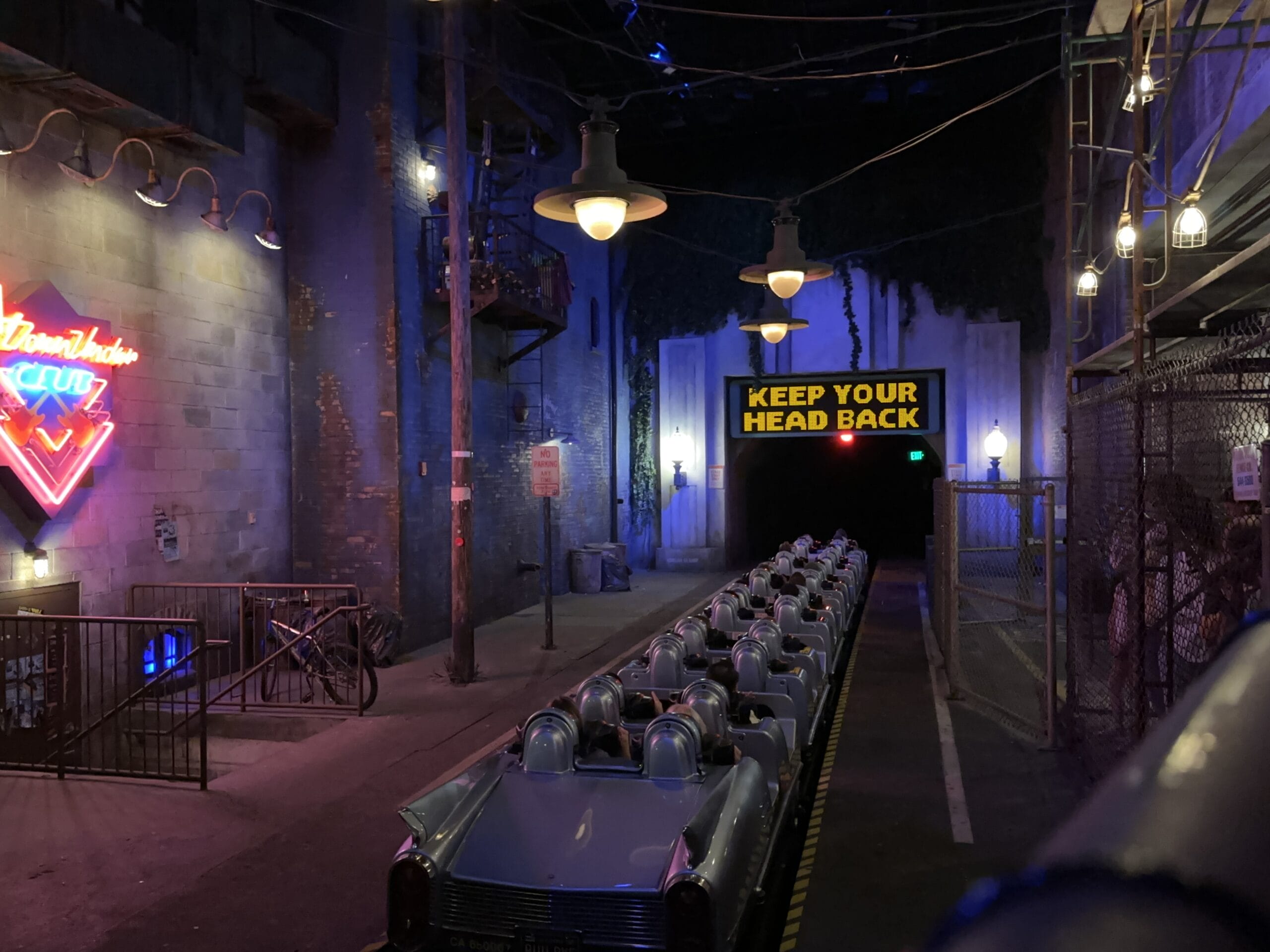
The coaster trains were super-stretch limos, but the design was influenced by the 1962-series Cadillac. They seated 24 passengers in six cars. Each train had a total of 125 speakers, 24 sub-woofers, and more than 32k watts of audio amplifier output power.
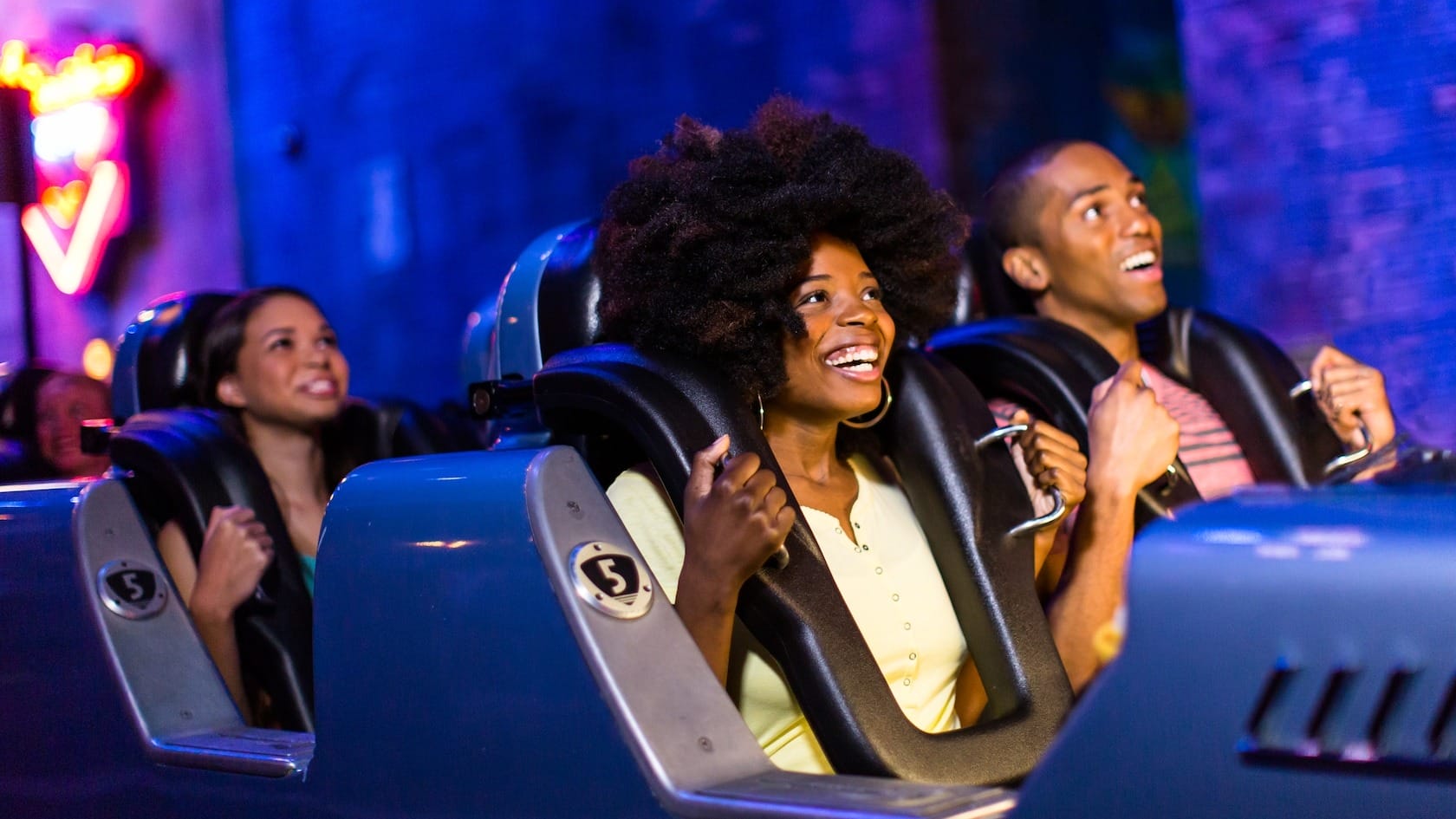
The seats had over-the-shoulder restraints with built-in handles.
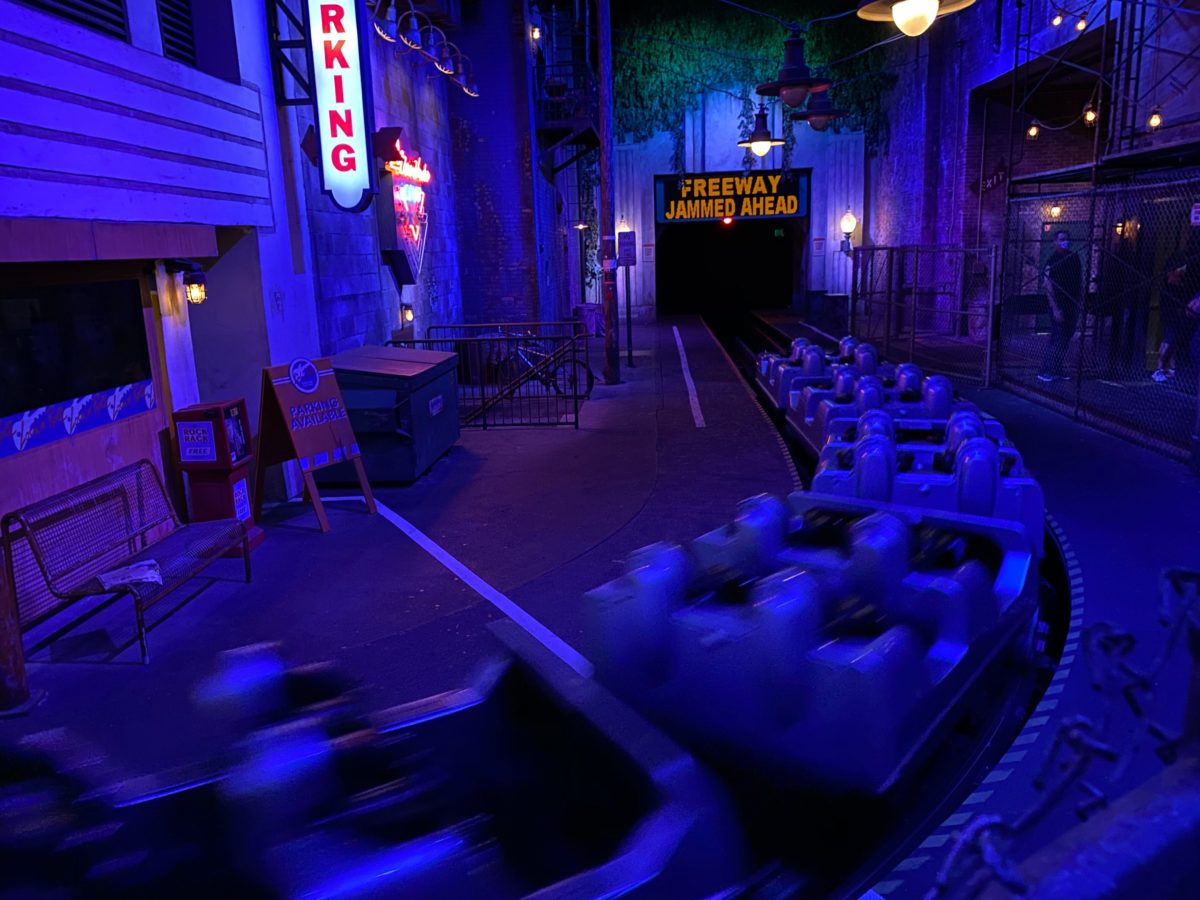
After guests boarded, the limo took them around the corner into the alley, where they faced a traffic sign informing them that the freeway was jammed. They also heard the broadcast of DJ Bill St. James. This radio commentary was previously provided by DJ Uncle Joe Benson.
Rock ‘n’ Roller Coaster POV Video
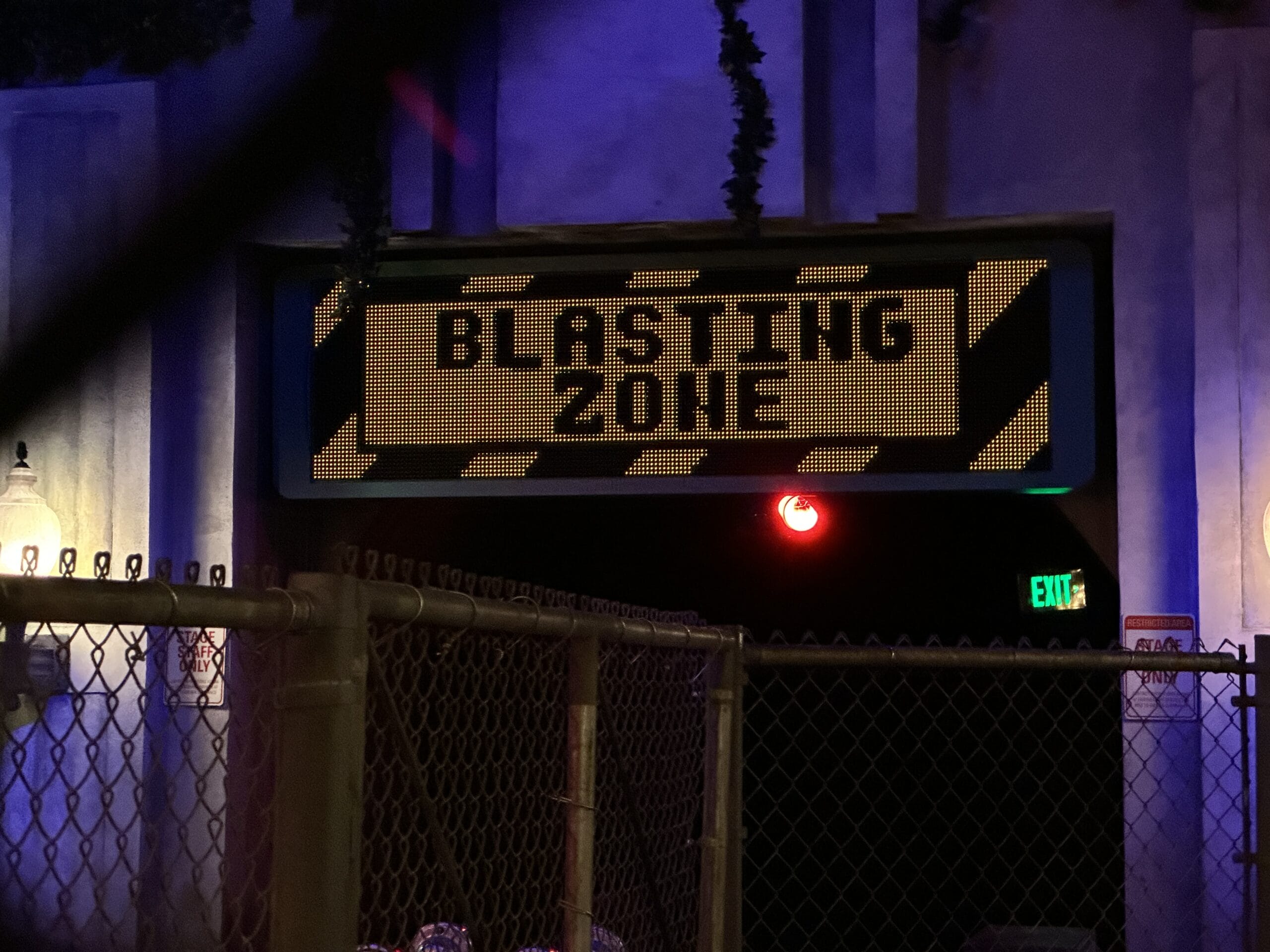
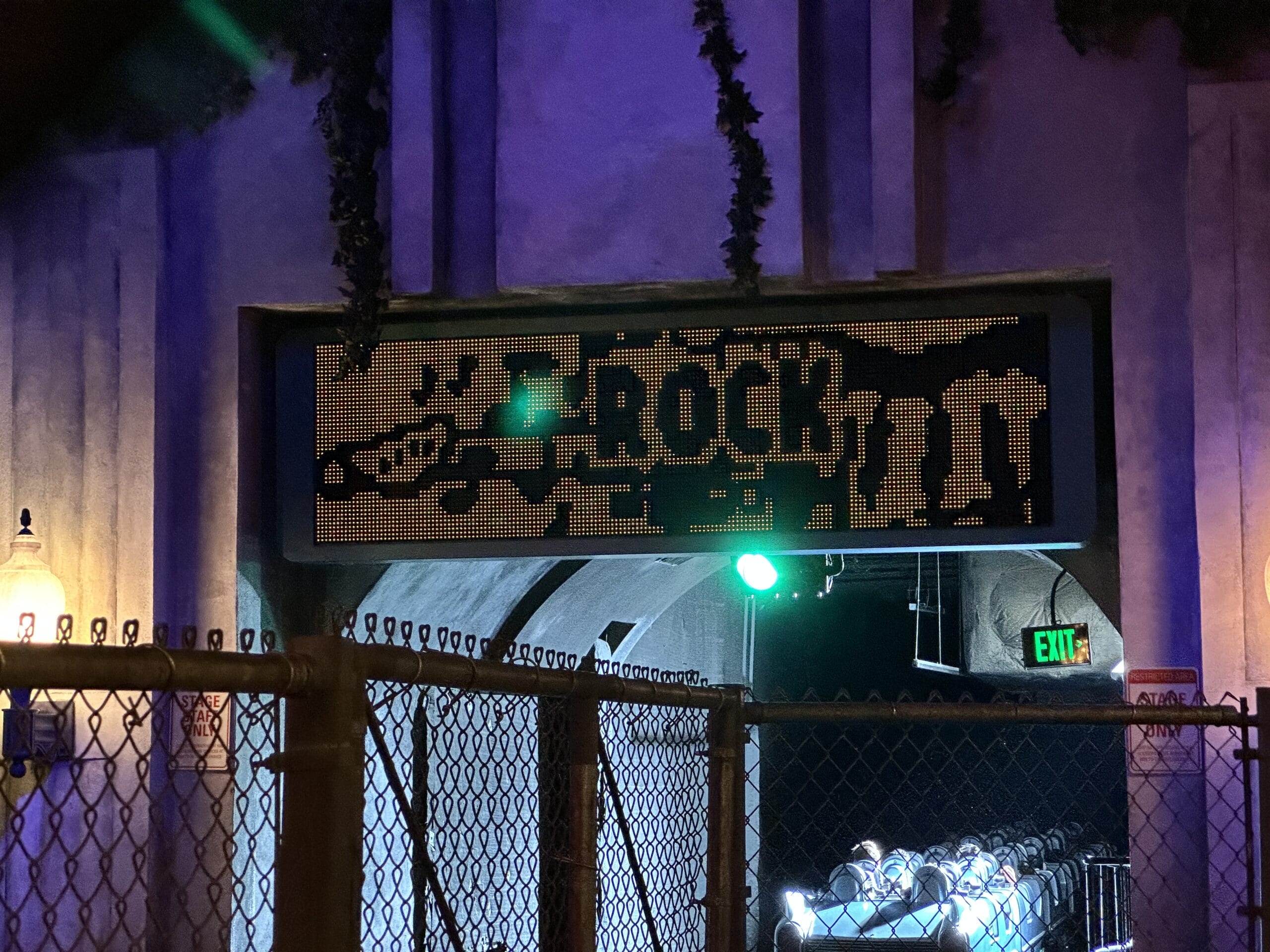
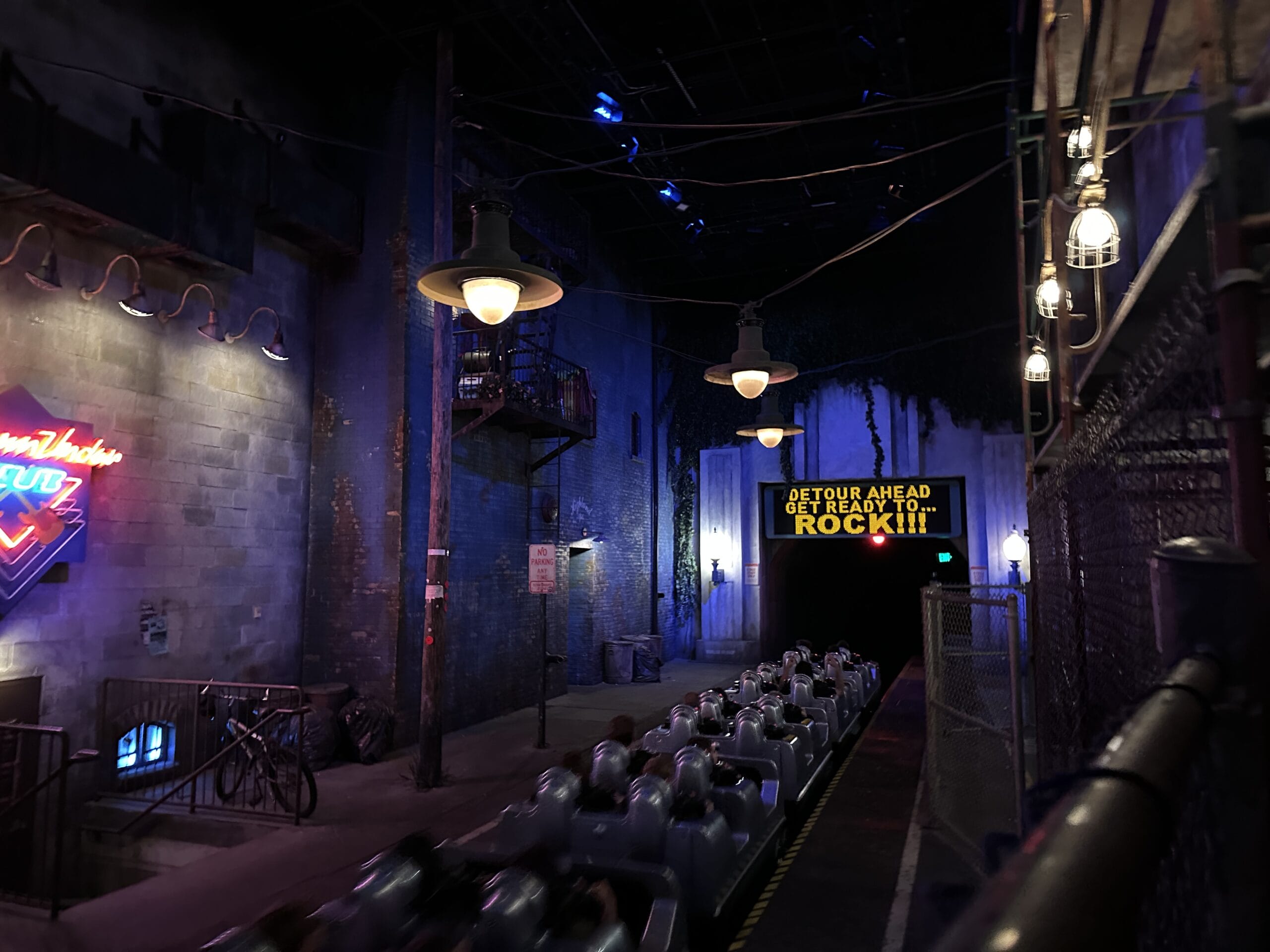
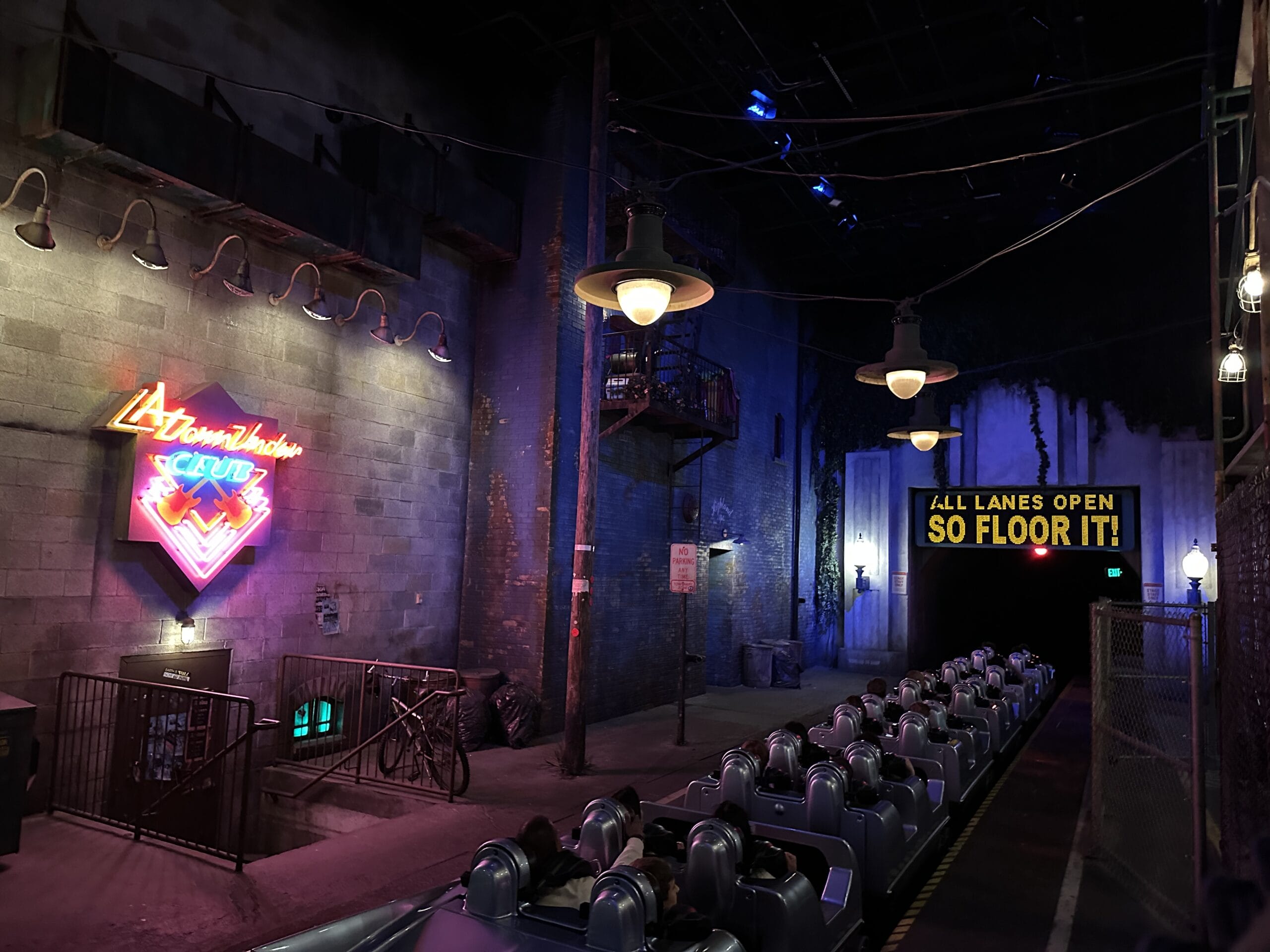
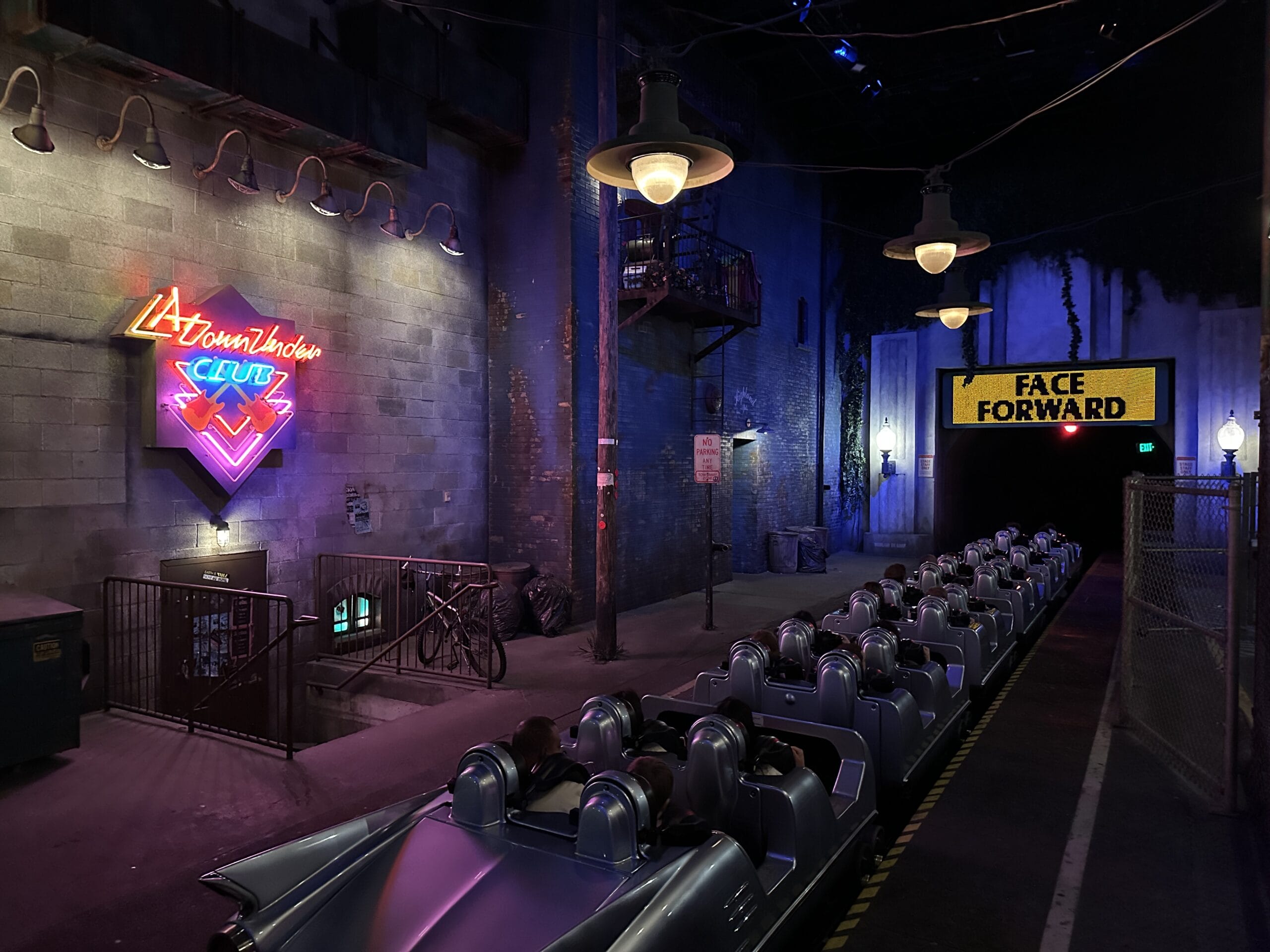
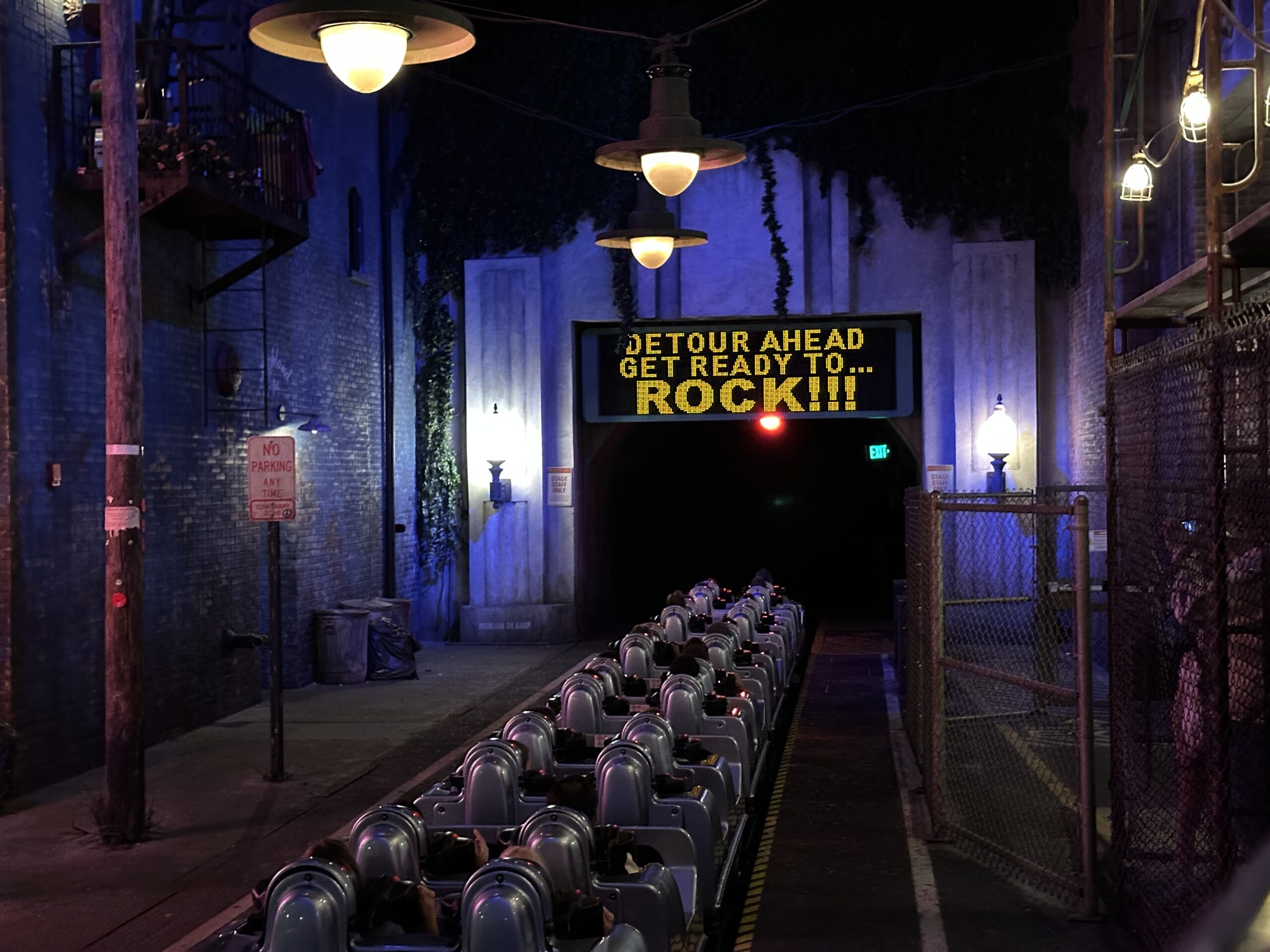
After flashing through a few different traffic and rock-related messages, the LED sign reminded guests to “face forward” and “keep your head back.” Steven Tyler then counted down from five, and the limo took off.
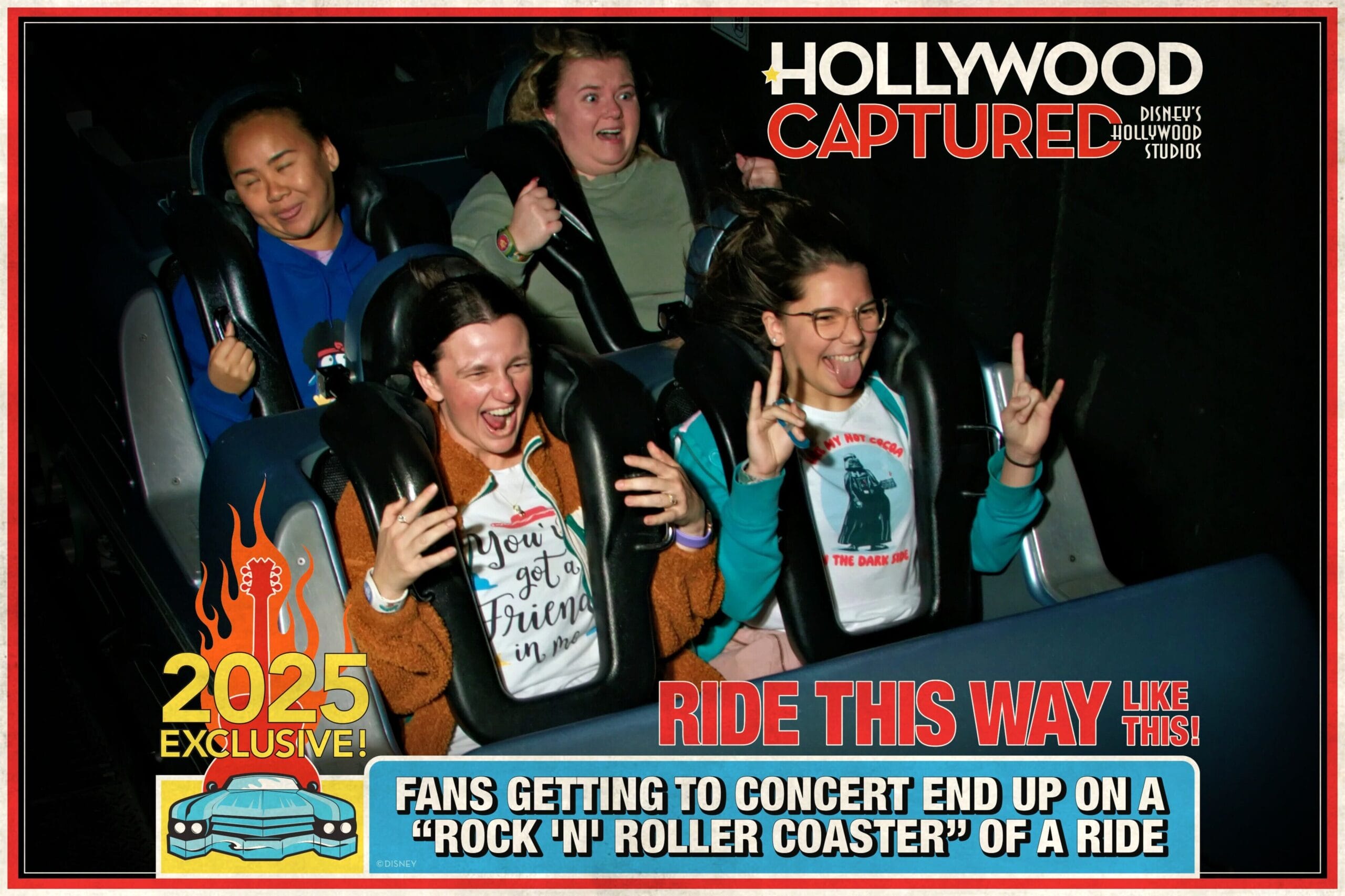
The limos went from 0-57 mph in 2.8 seconds. In the initial tunnel, the on-ride photo was taken. It featured graphics reading:
Hollywood Captured
Disney’s Hollywood StudiosRide This Way Like This!
Fans Getting to Concert End Up on a “Rock ‘n’ Roller Coaster” of a Ride
[Year] Exclusive!
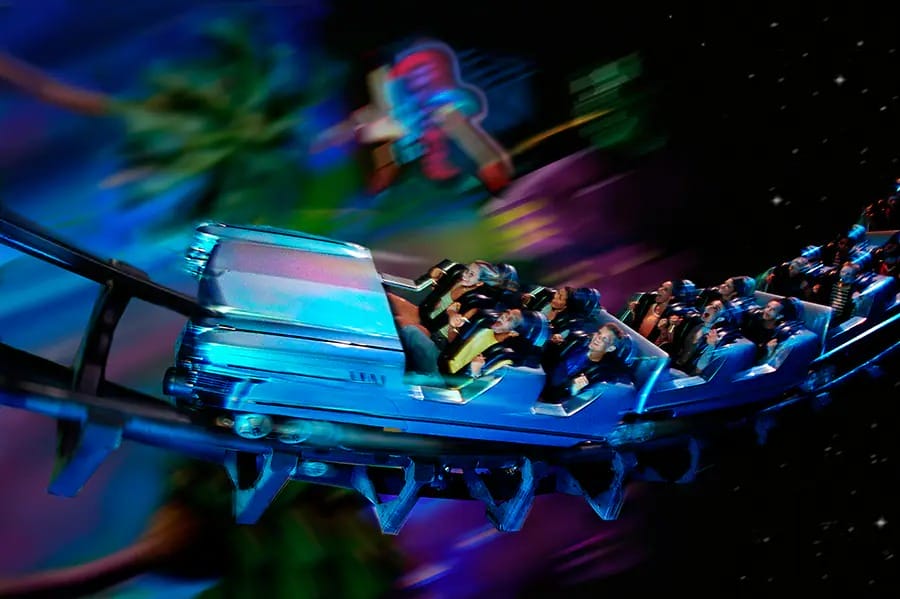
Music began — a different track for each train. Here’s the list of license plates and corresponding songs:
- 1QKLIMO: “Nine Lives”
- UGOBABE (previously UGOGIRL): “Love in an Elevator” and “Walk This Way”
- BUHBYE: “Young Lust”, “F.I.N.E.”, and “Love in an Elevator” (sung as “Love in a Roller-Coaster” in the last line)
- H8TRFFC: “Back in the Saddle” and “Dude (Looks Like a Lady)”
- 2FAST4U: “Sweet Emotion” (live)
“What Kind of Love Are You On” (sung as “What Kind of Ride Are You On” in the last line) was exclusively used for testing and maintenance.
The ride took guests into a g-force of 4 to 5 on each inversion. The track was 3,403 feet long. In addition to the speakers on the vehicle, there were 900 speakers throughout the attraction.
The ride went down a straightaway for several seconds, then rose into a sea serpent element with two inversions. This was followed by several overbanked curves, then the third inversion: a corkscrew. After that were more banked curves and a camelback hill.
During the 1:22 ride, guests passed vibrant neon props, mostly road signs representing I-5, I-10, and U.S. Route 101. But guests also passed the Hollywood sign, a skyscraper, and more.
It ended with cars slowing beneath signs for concert parking and coming to a stop at the V.I.P. backstage entrance.
Watch our full queue tour, pre-show, and ride POV of Rock ‘n’ Roller Coaster Starring Aerosmith:
Exit
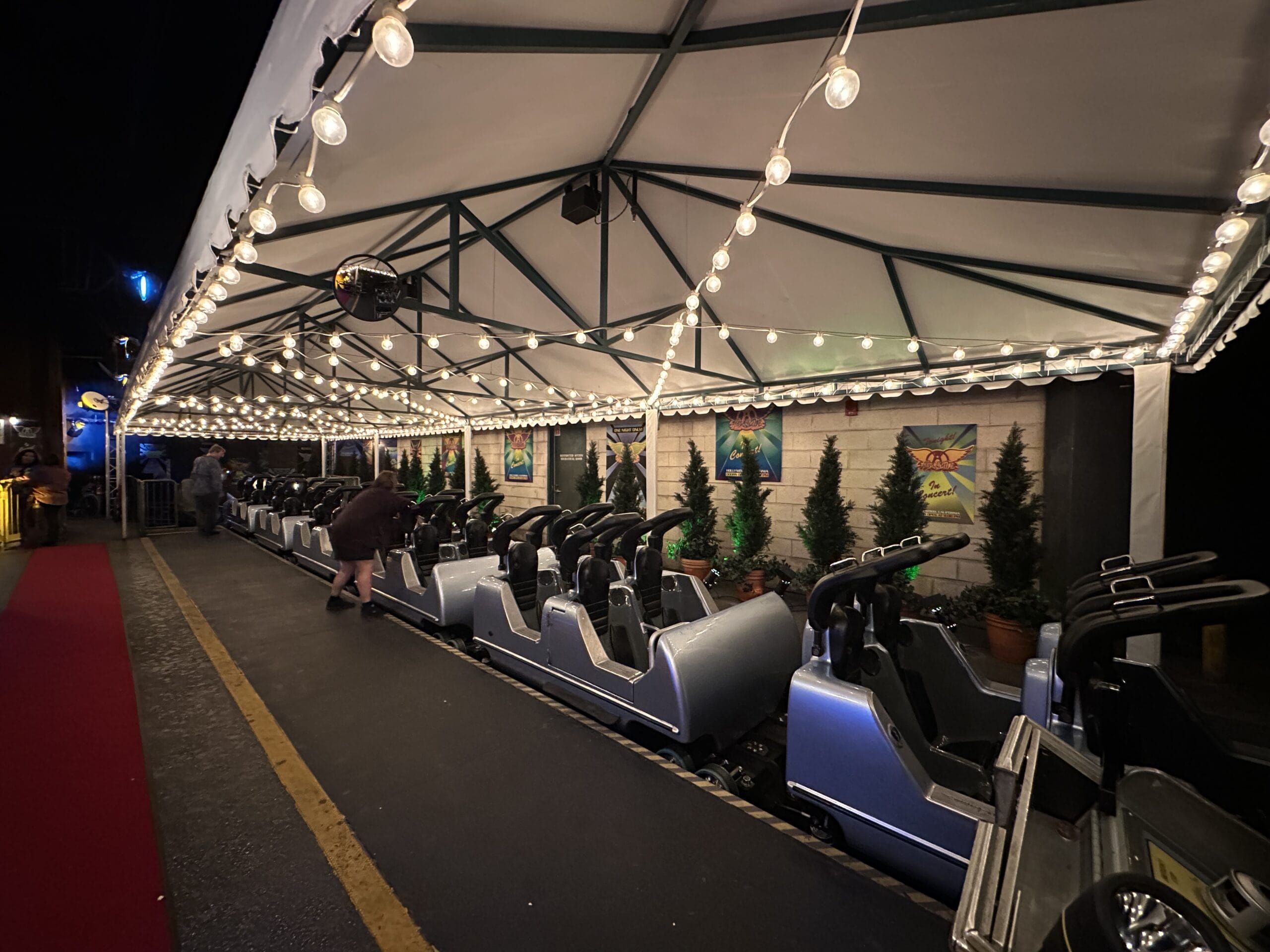
Guests exited under an illuminated canopy onto a red carpet. Posters along a white brick wall advertised the Aerosmith concert.
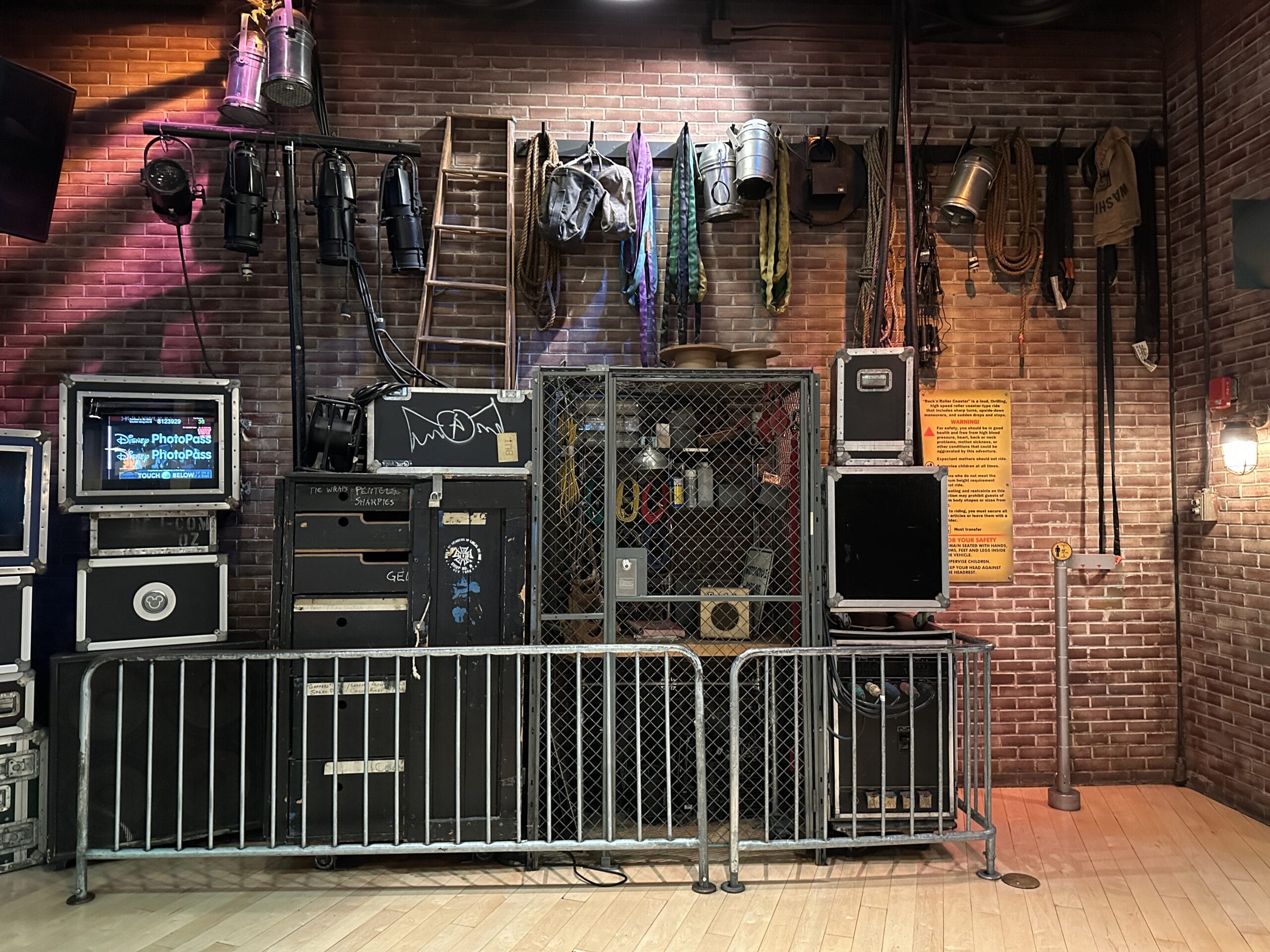
Guests passed by fencing, crates, and backstage equipment, entering the “V.I.P. party.” This led them into the gift shop, Rock Around The Shop.
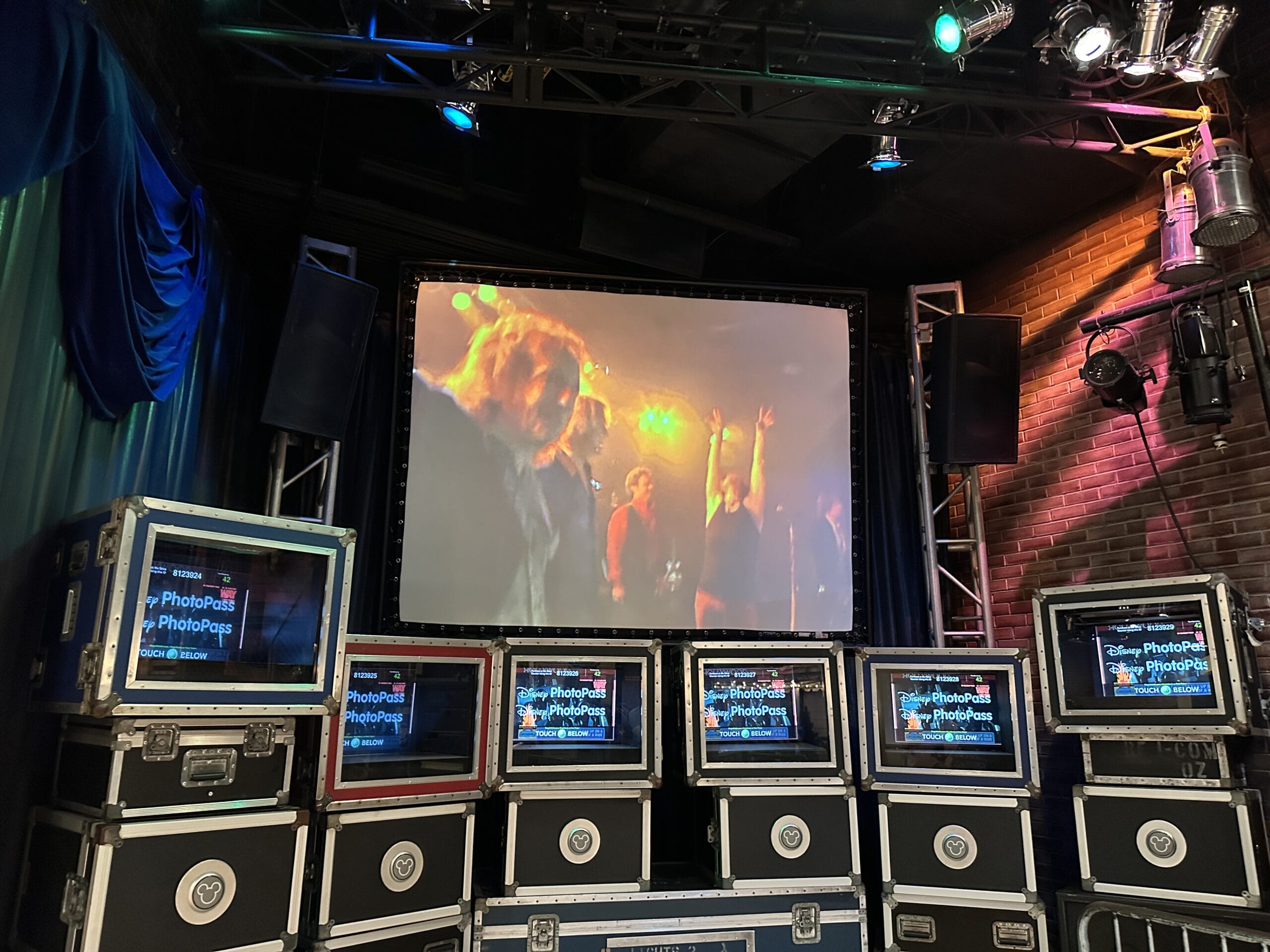
A projection screen played footage from an Aerosmith concert. Below this, screens displayed ride photos. These would automatically link to a guest’s MagicBand. Guests could also tap their MagicBand or ticket to ensure the photo was linked.
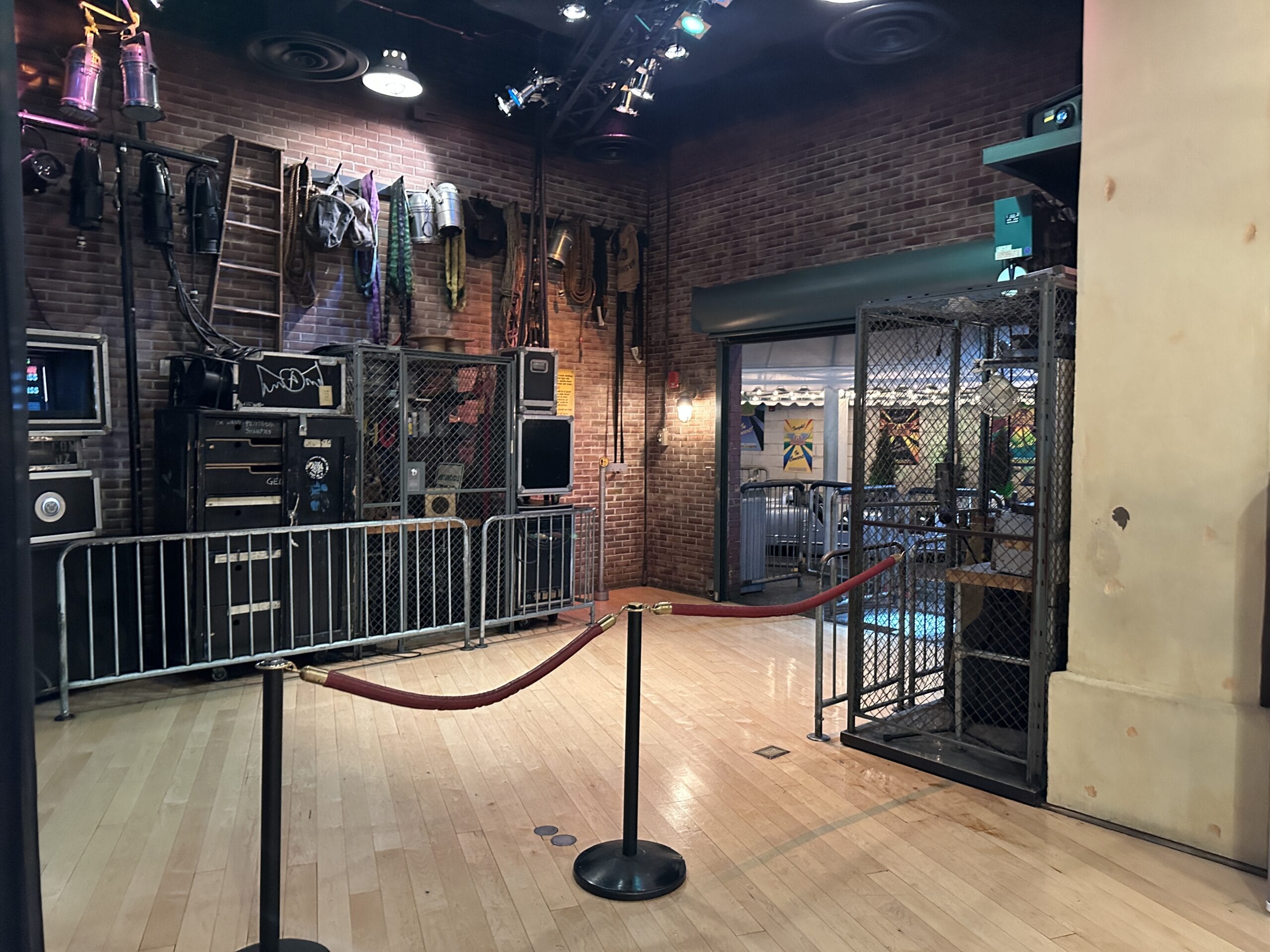
Beyond some red ropes, guests entered the store.
Rock Around the Shop
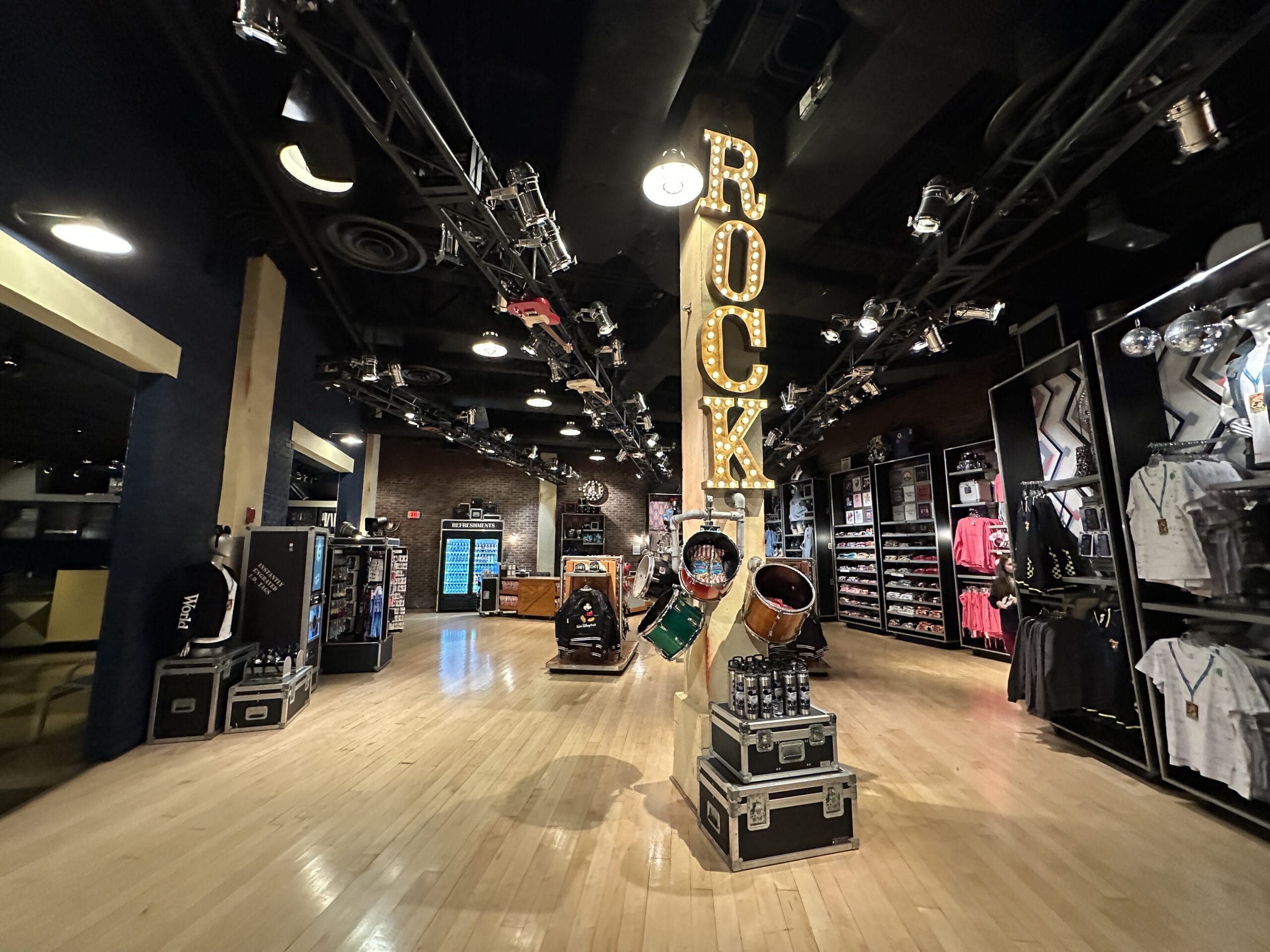
A large light-up “Rock” sign on a column greeted them. The shop had brick walls and display cases resembling open equipment crates. Some displays were made out of drums.
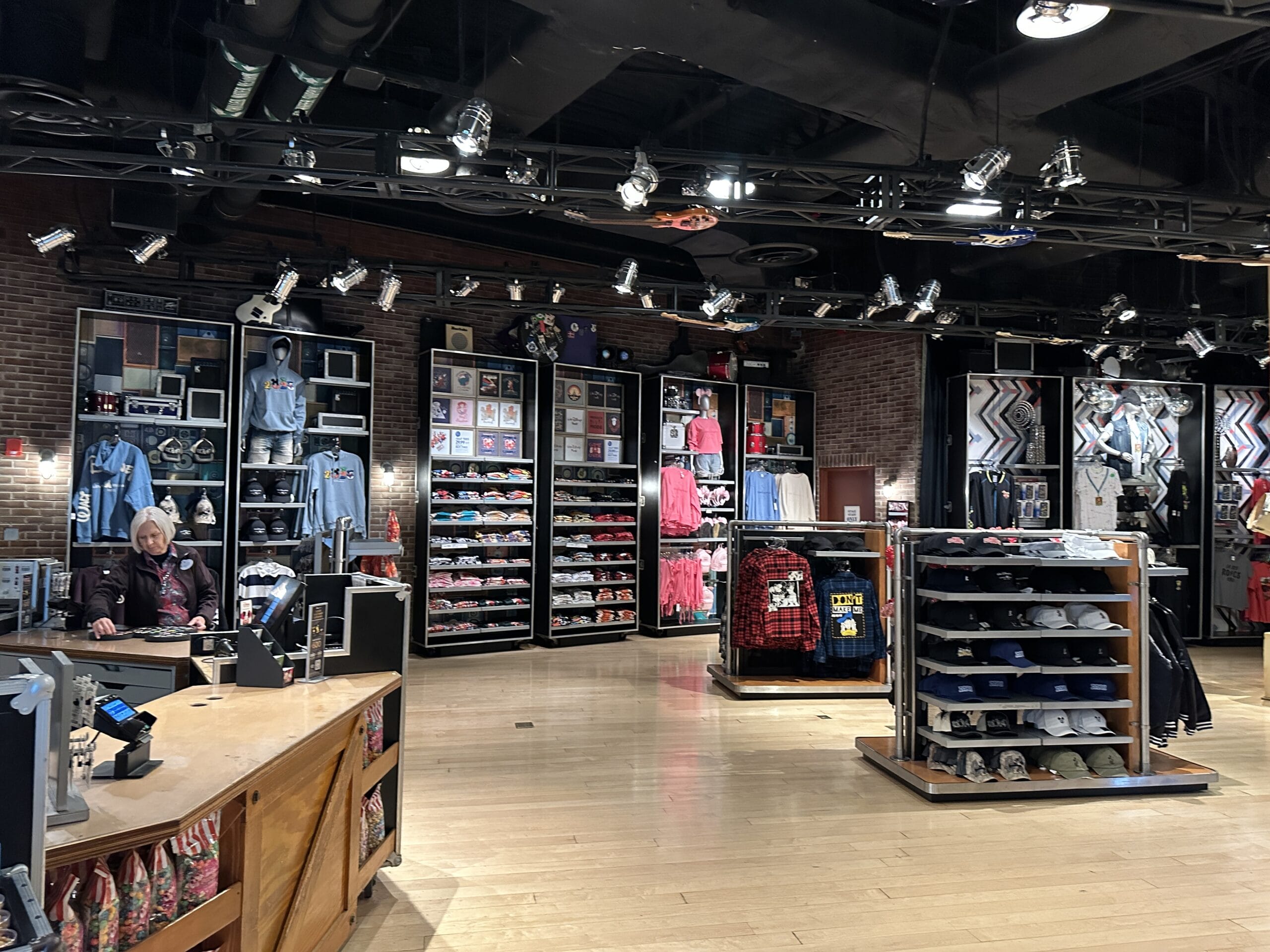
Other instruments and recording equipment were on display as props throughout.
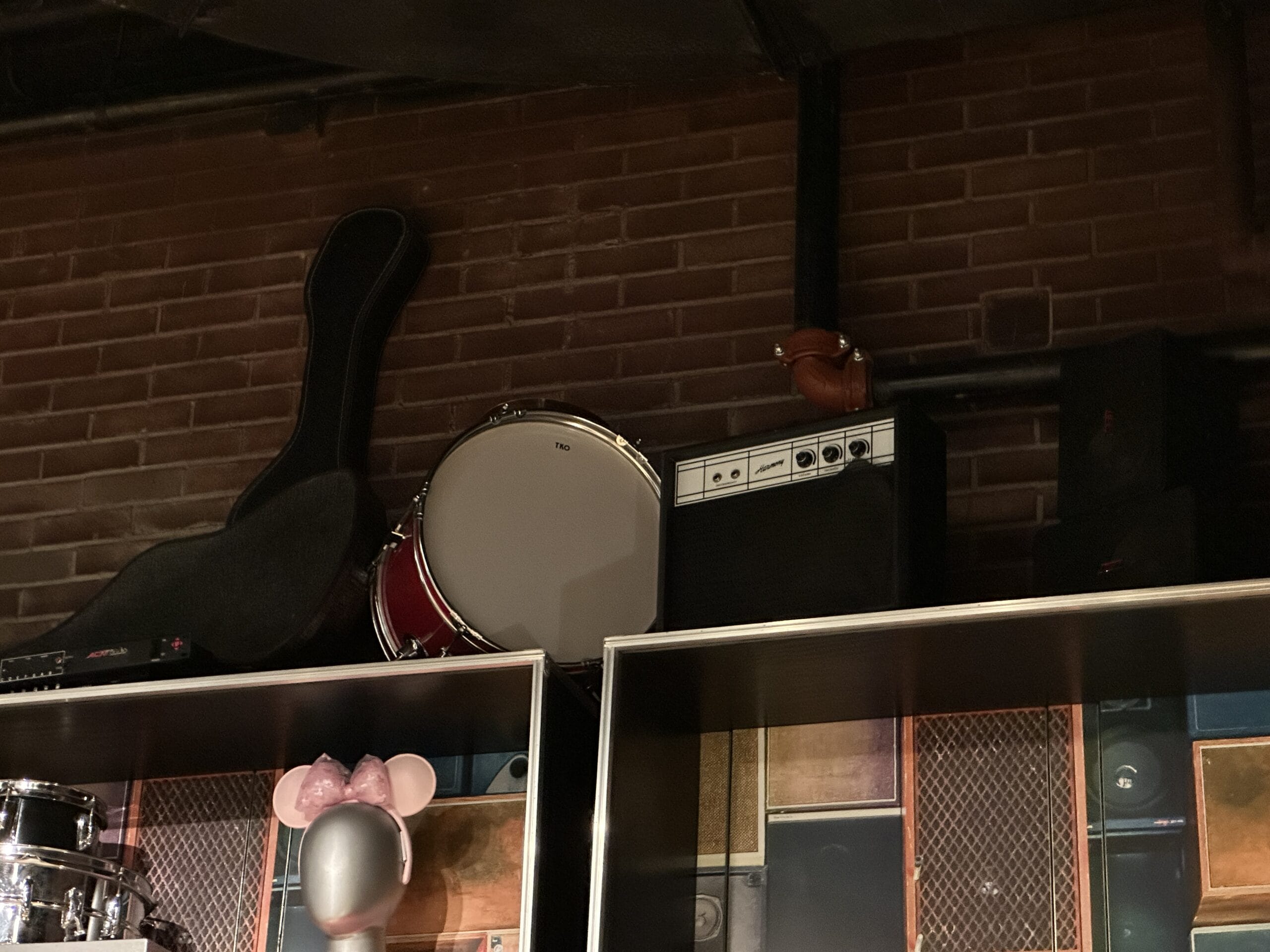
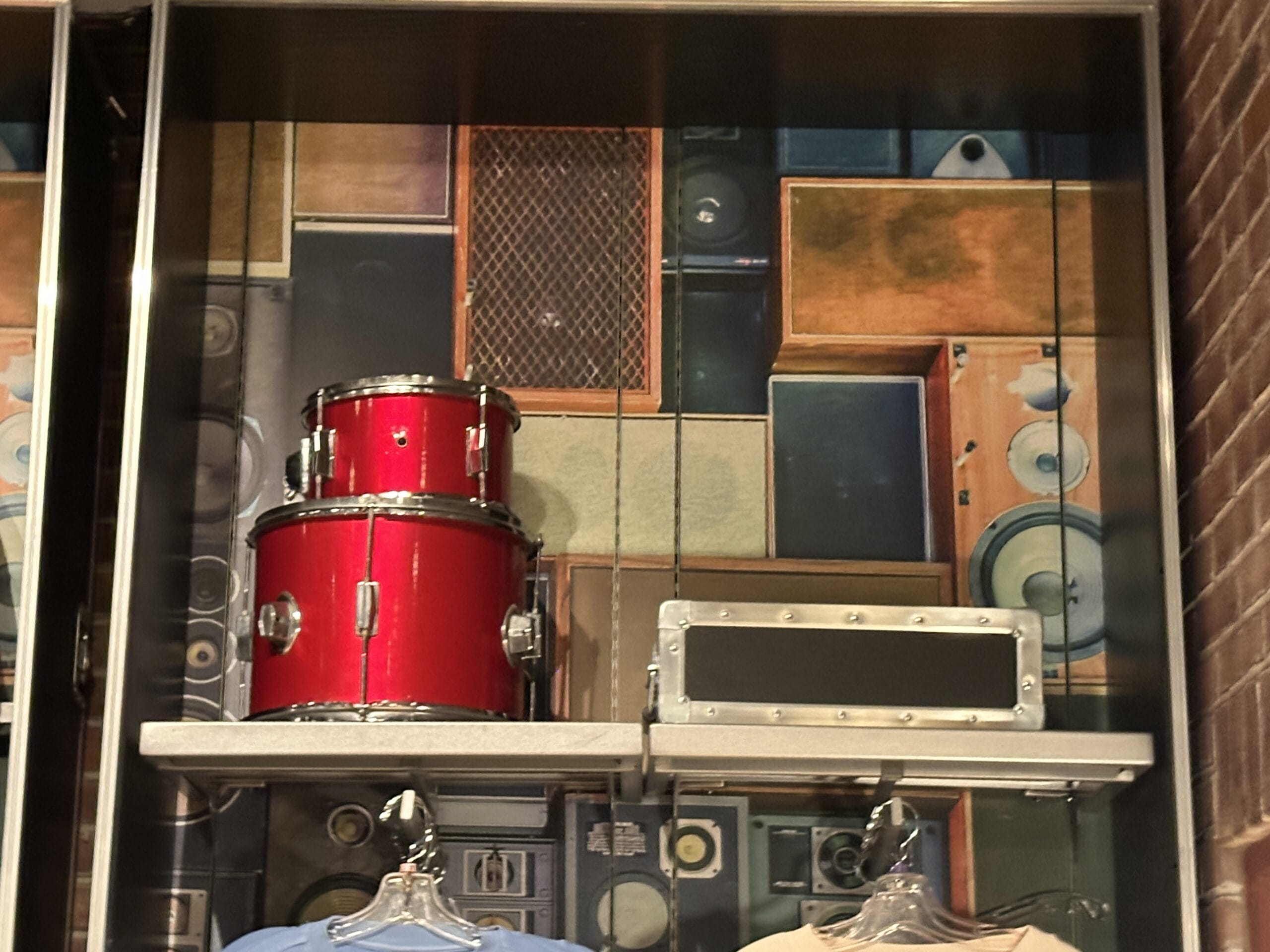
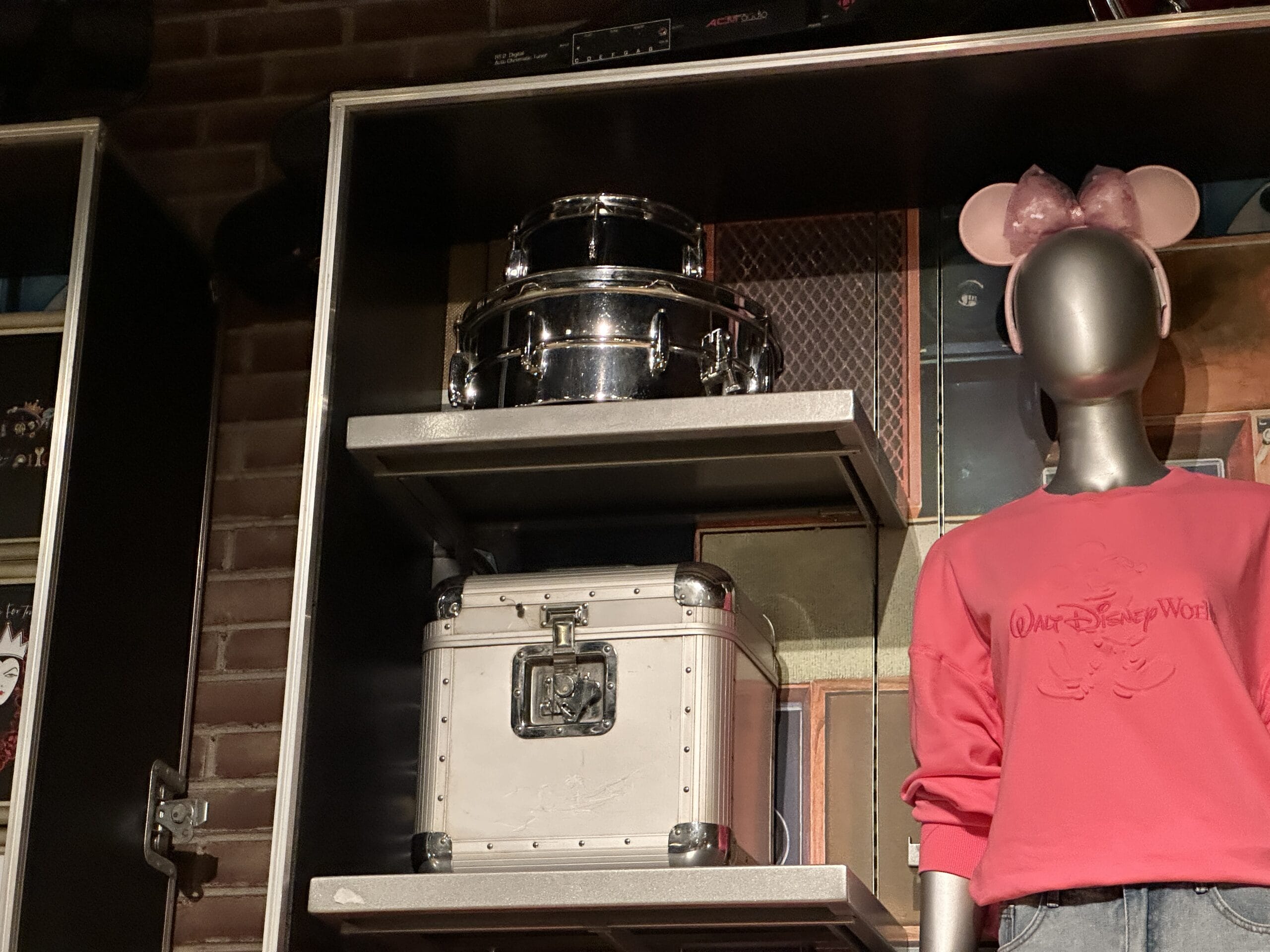
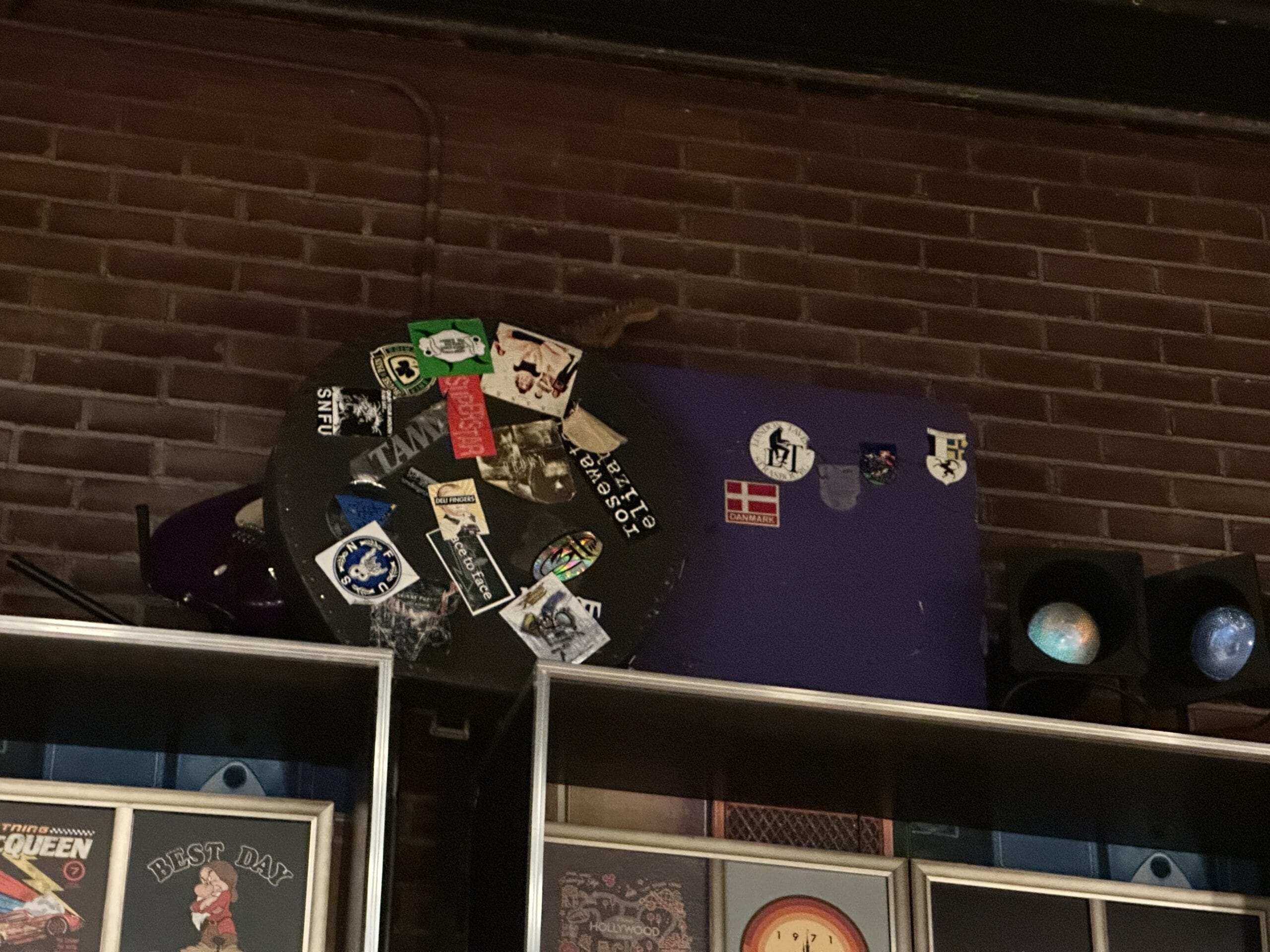
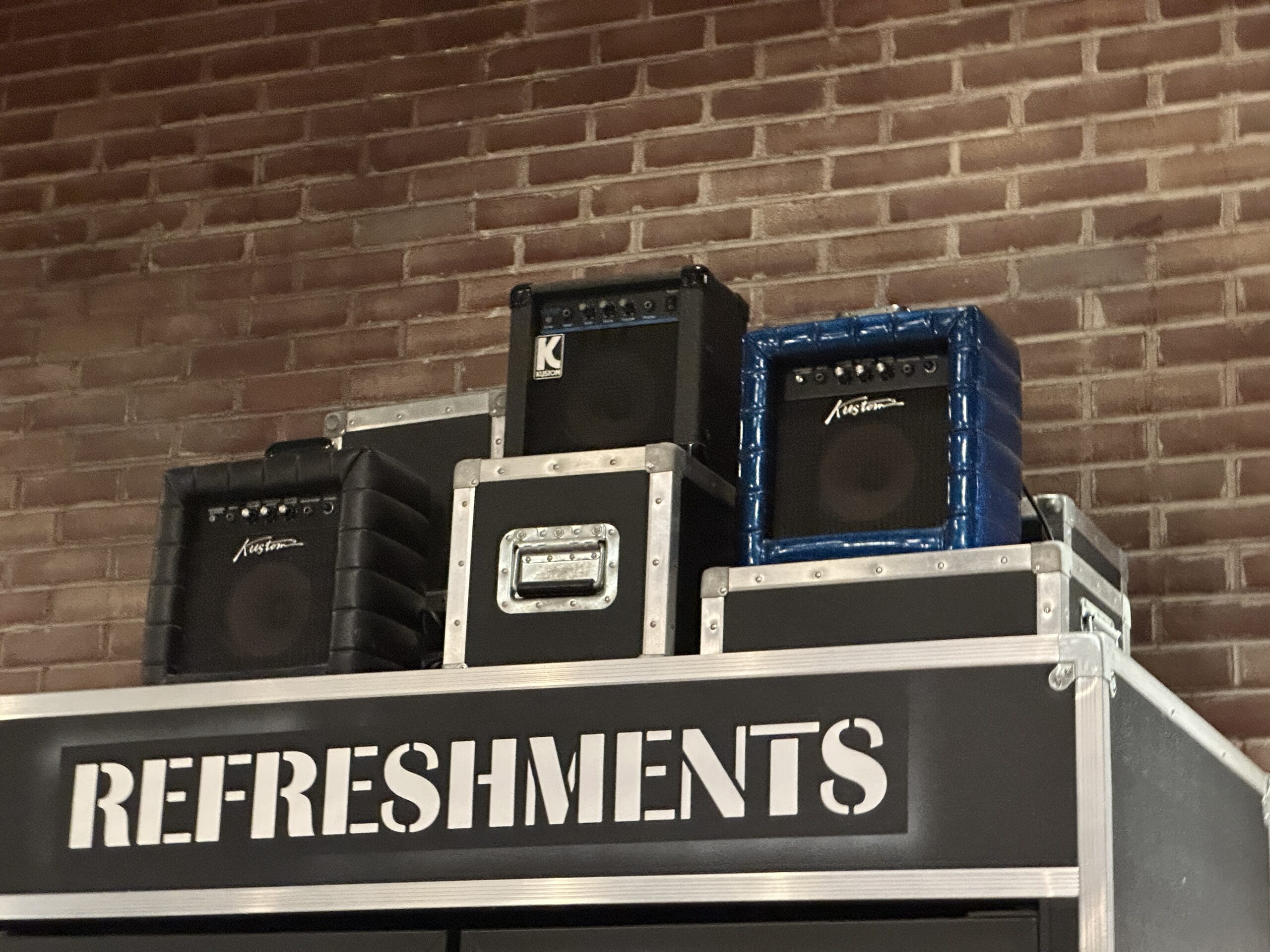
The backs of the display crates featured a speaker pattern so they looked more like they were holding equipment as well as merchandise. Guests could shop for Rock ‘n’ Roller Coaster or Aerosmith merchandise, as well as generic “rock ‘n’ roll” items.
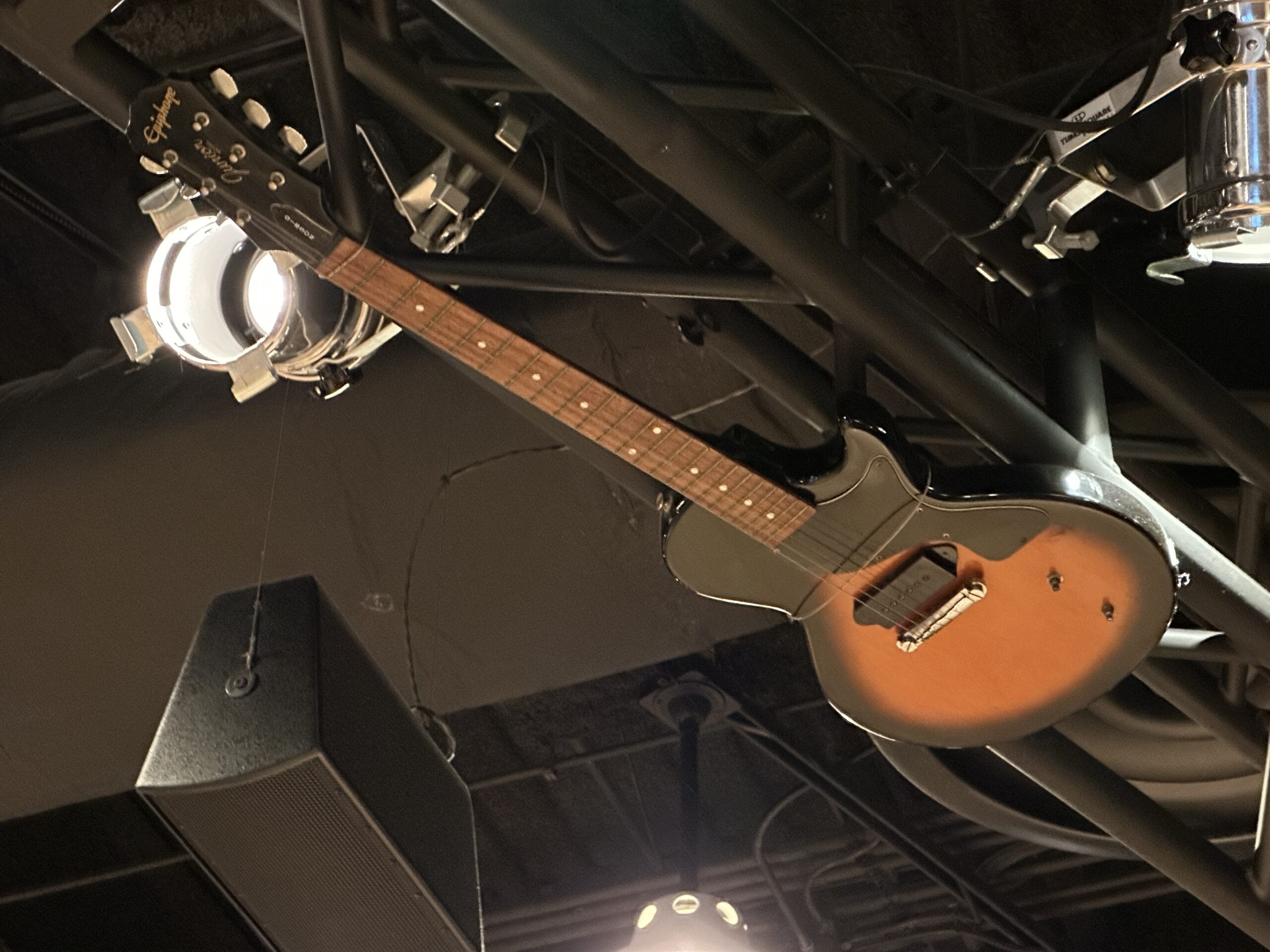
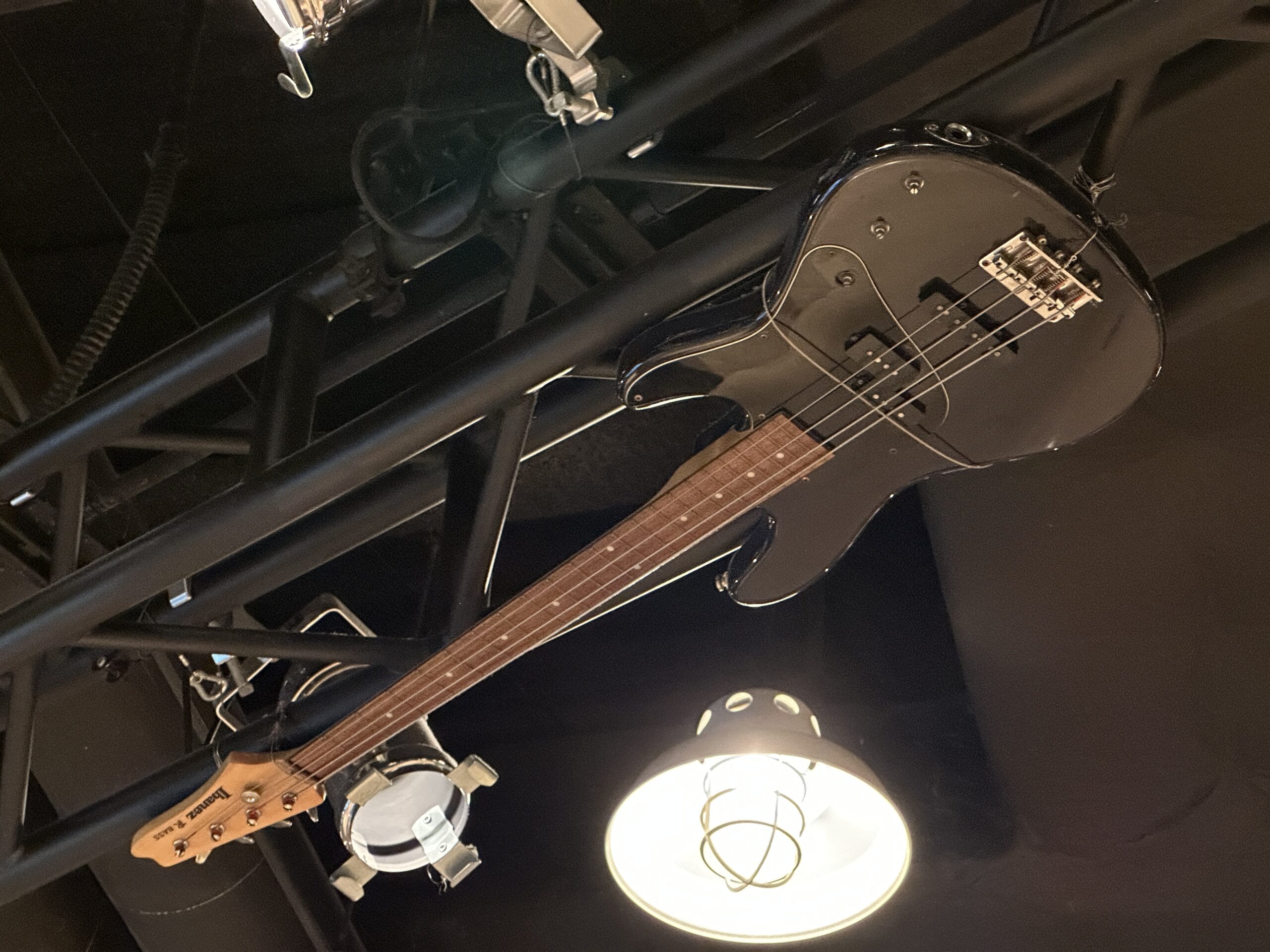
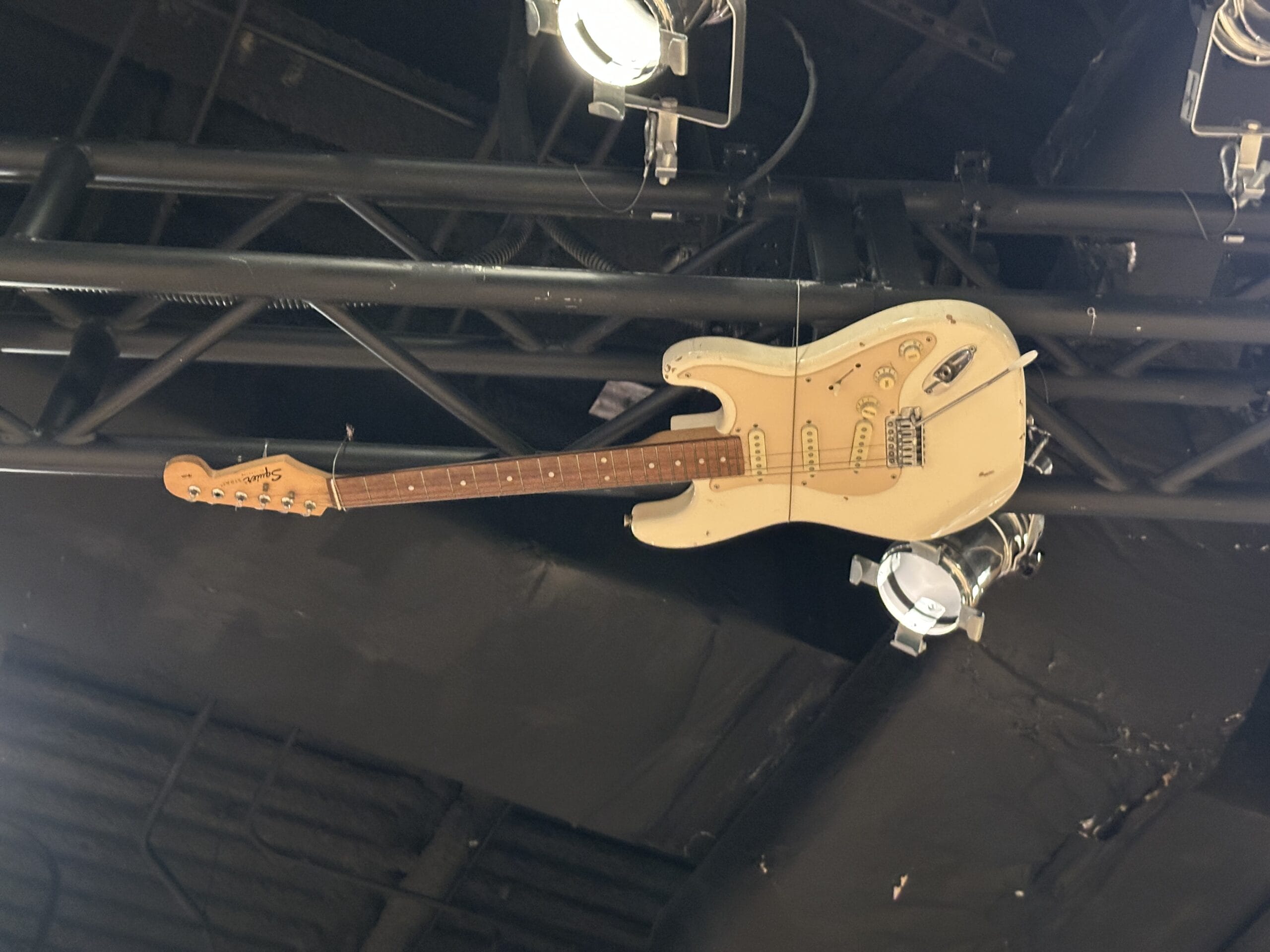
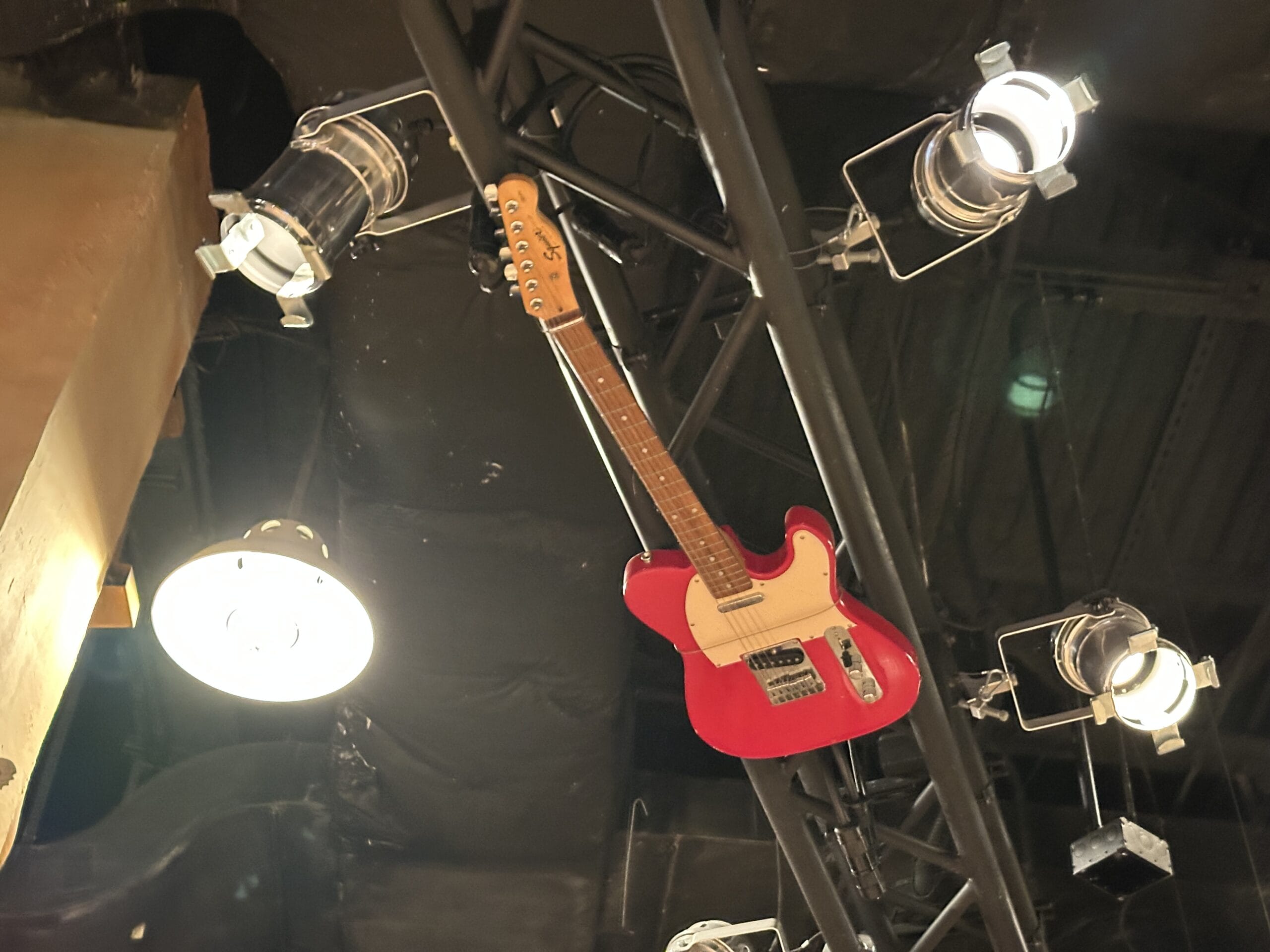
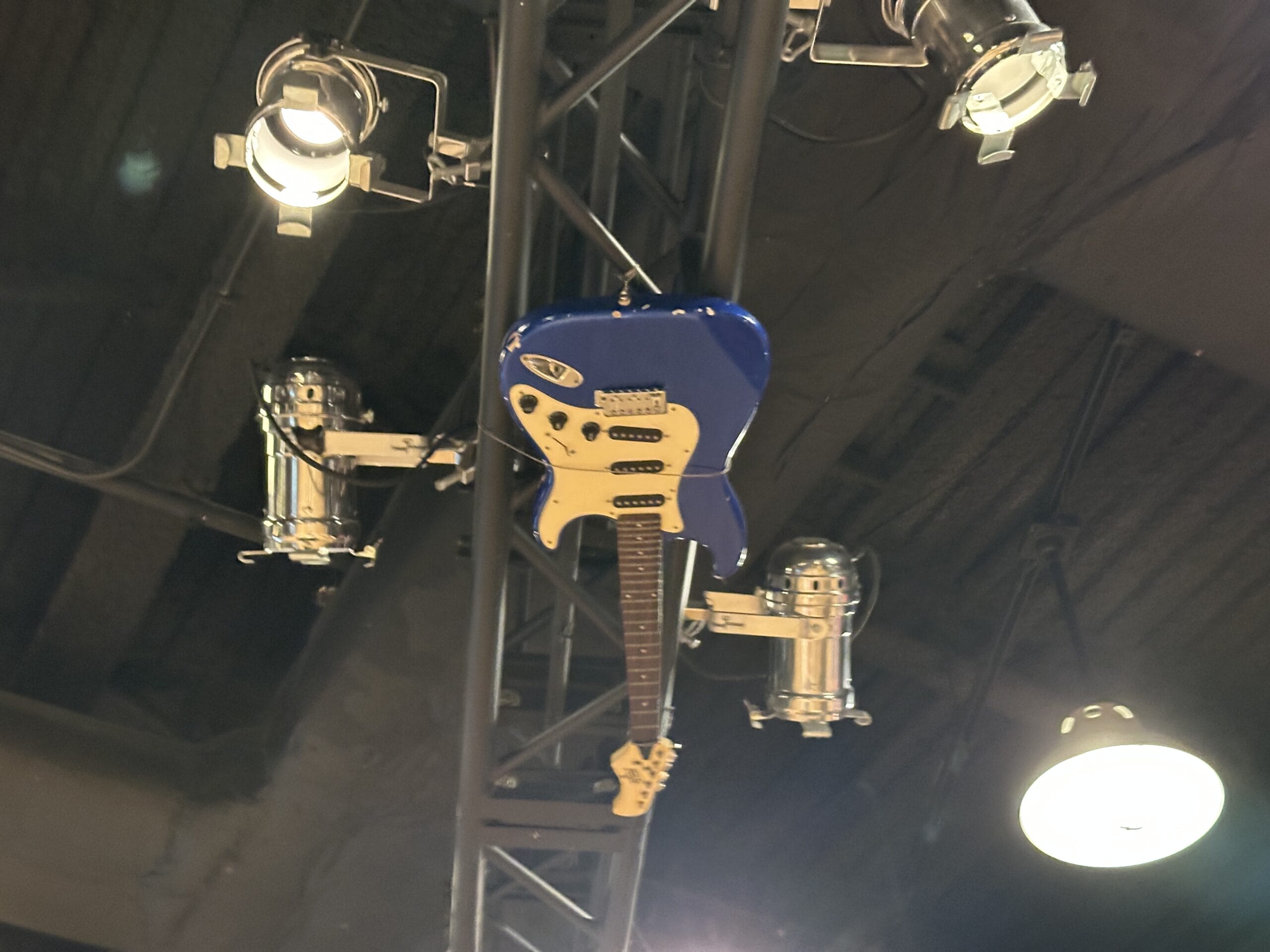
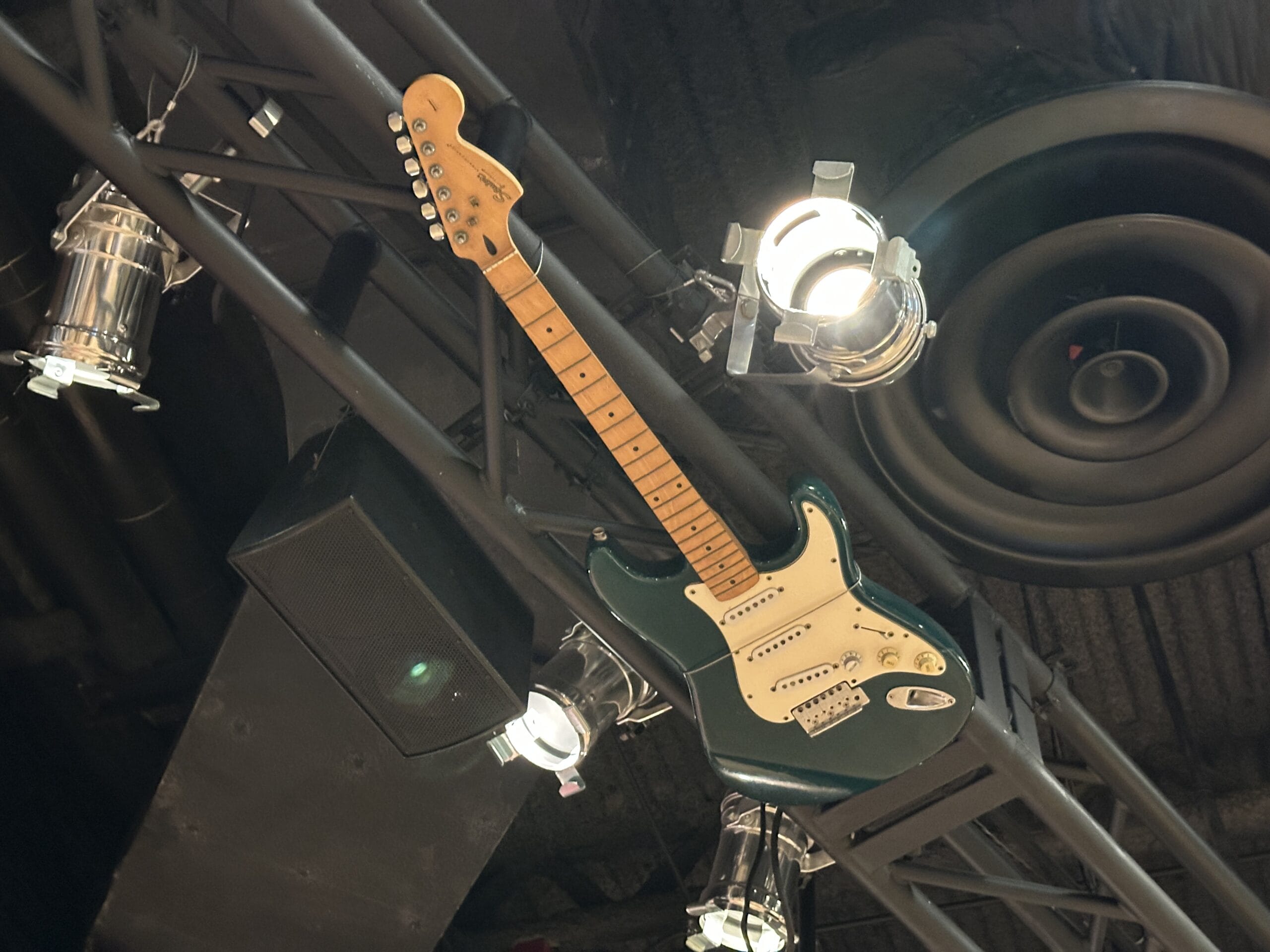
On the ceiling were stage lights and mounted guitars.
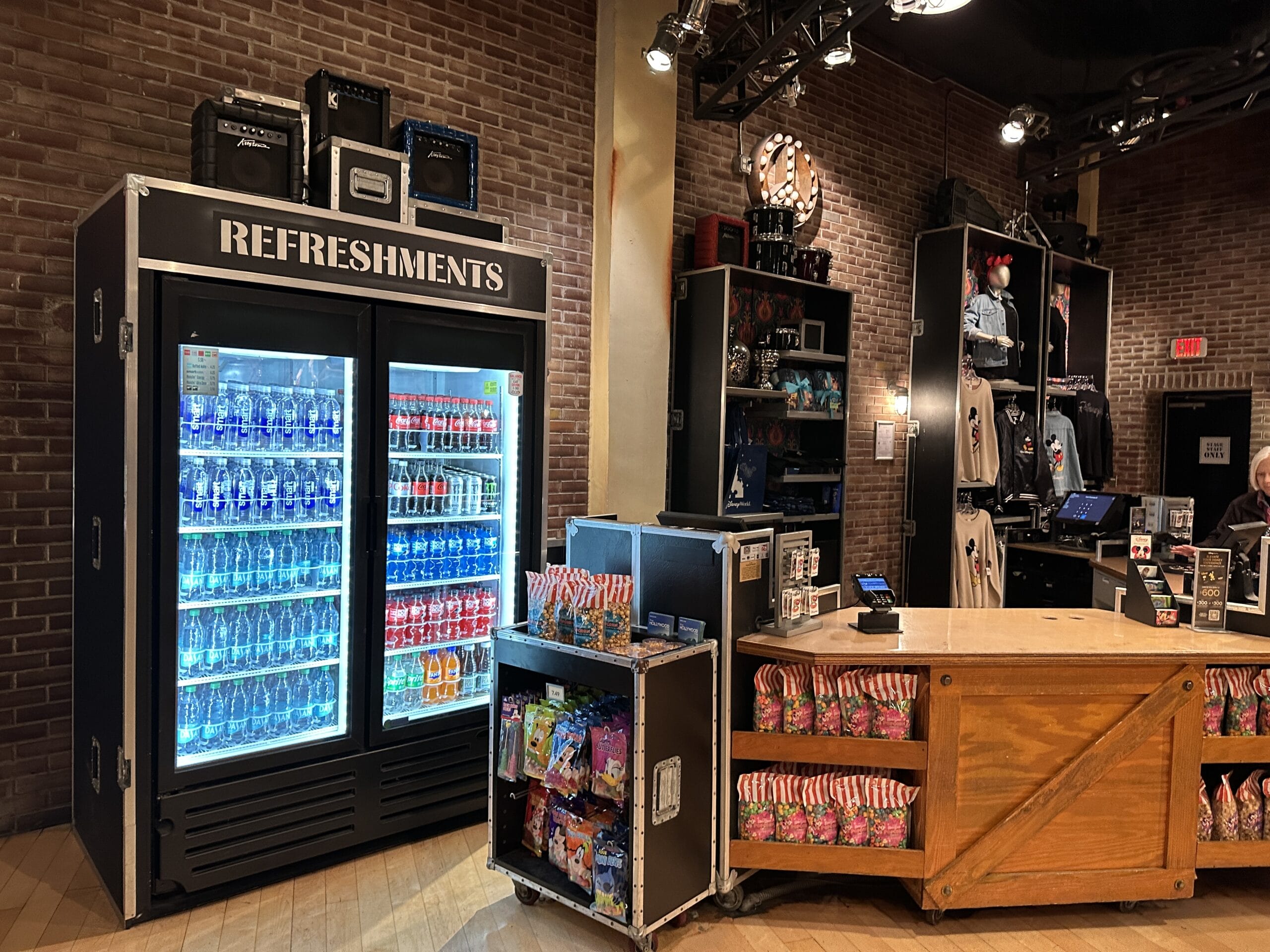
The check-out counter resembled wood crates and black rolling crates. A cooler of bottled beverages was nearby.
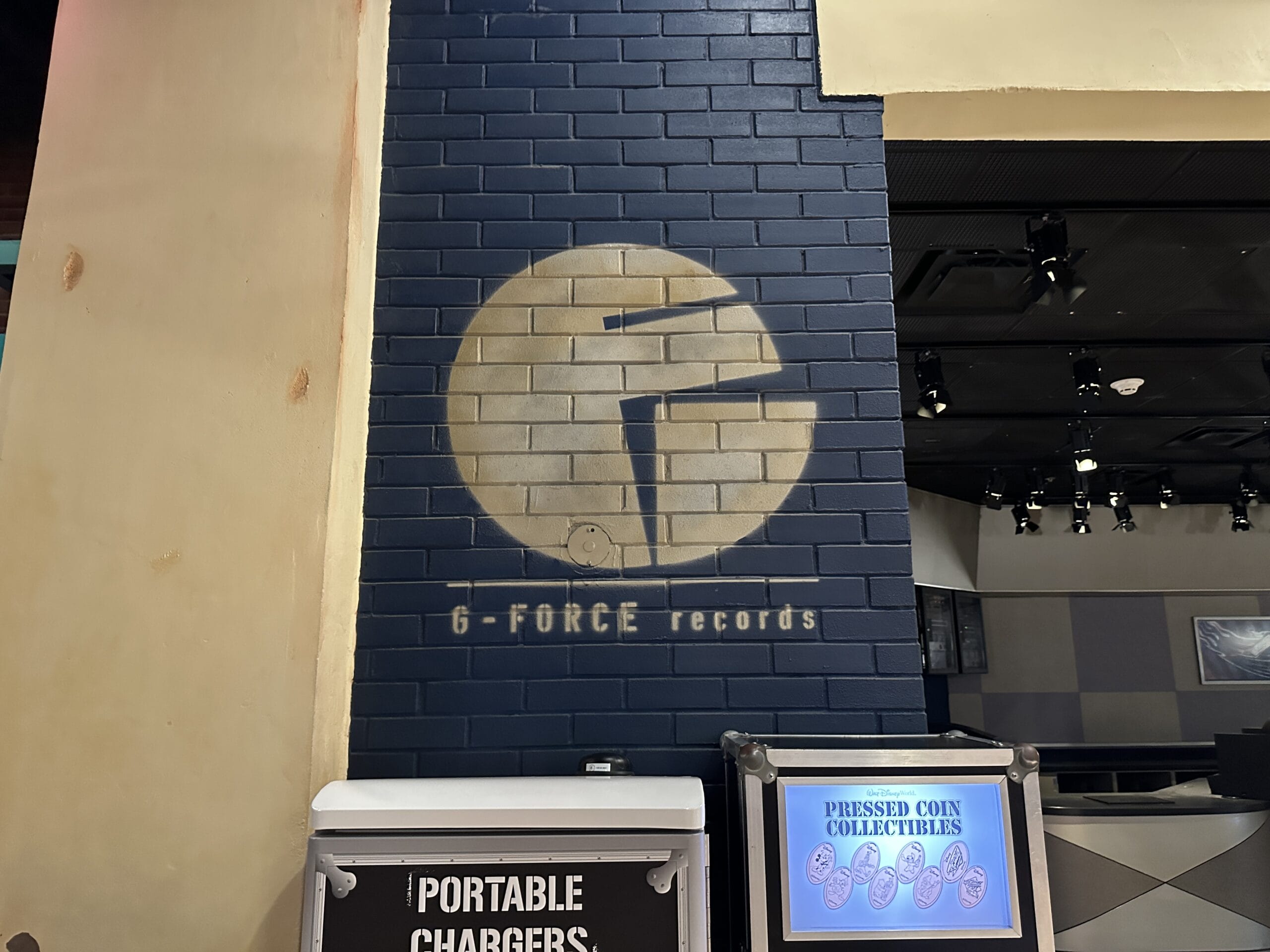
A spray-painted G-Force Records logo was above the FuelRod portable chargers and pressed penny machines. These machines will likely be moved out of the shop to be accessible during the closure.
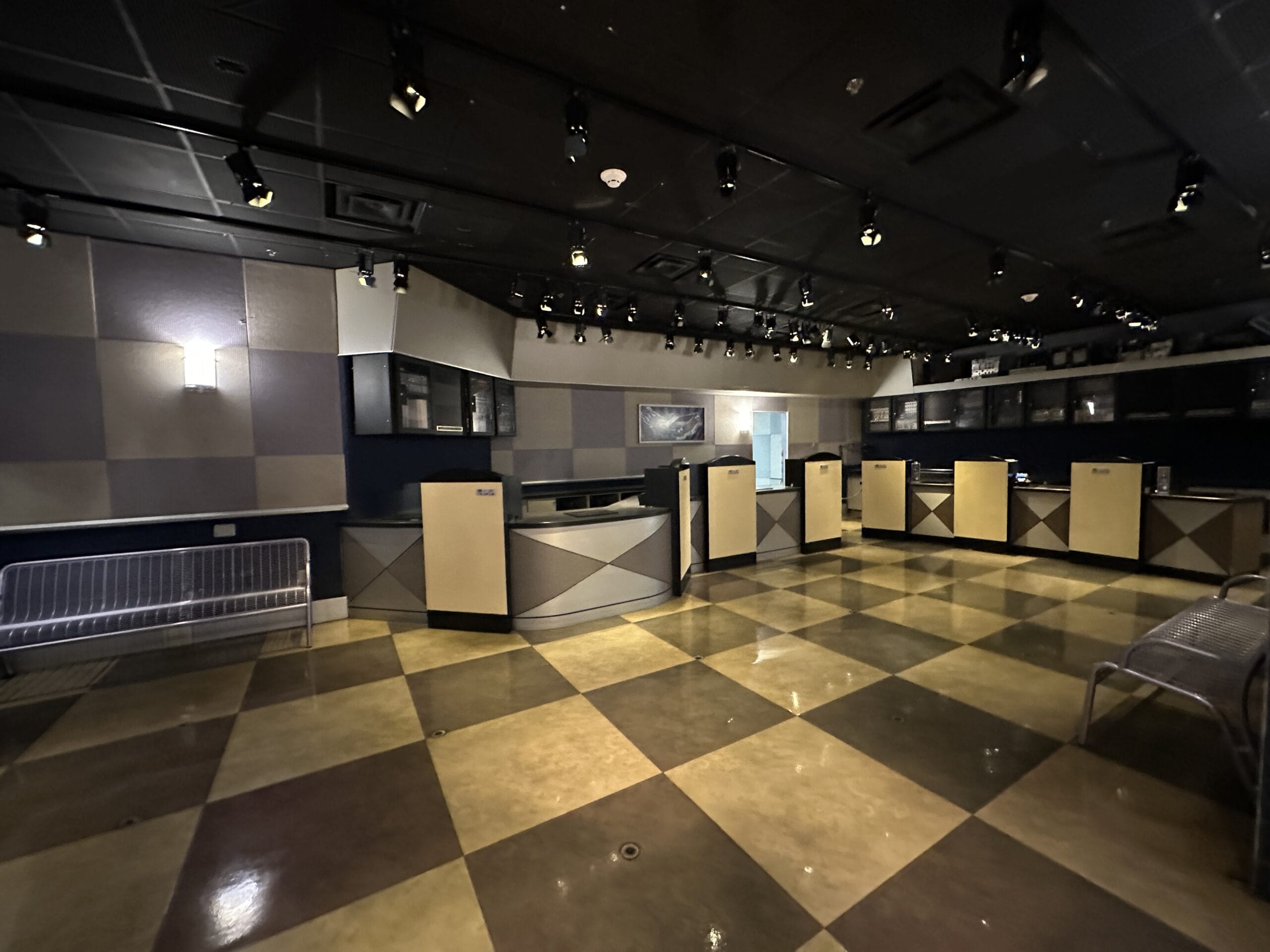
This tiled room to the side was where guests could previously purchase their on-ride photos. There was also once an Amazing Pictures photo station.
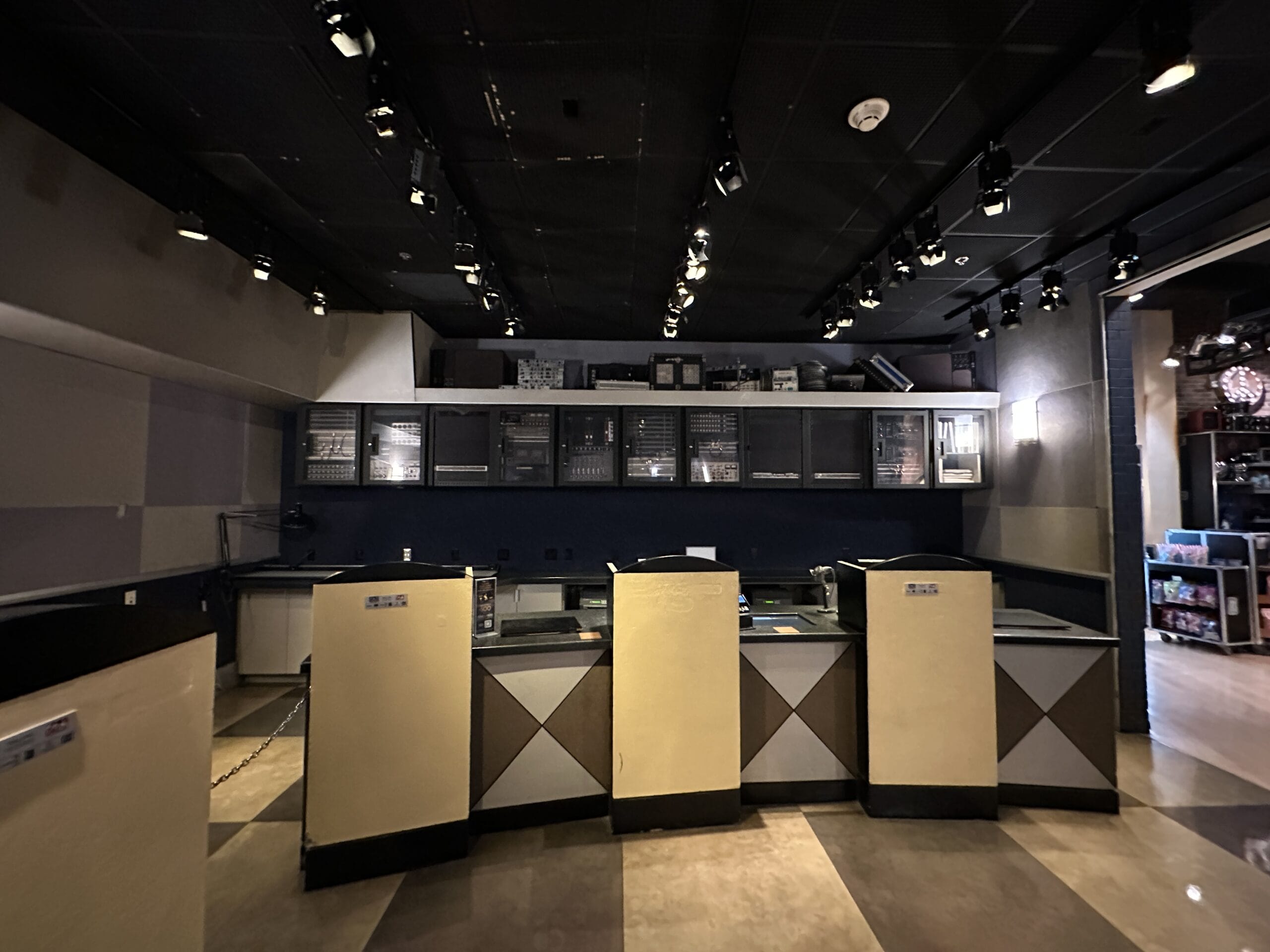
In recent years, it’s mostly become a waiting area with benches and extra check-out counters.
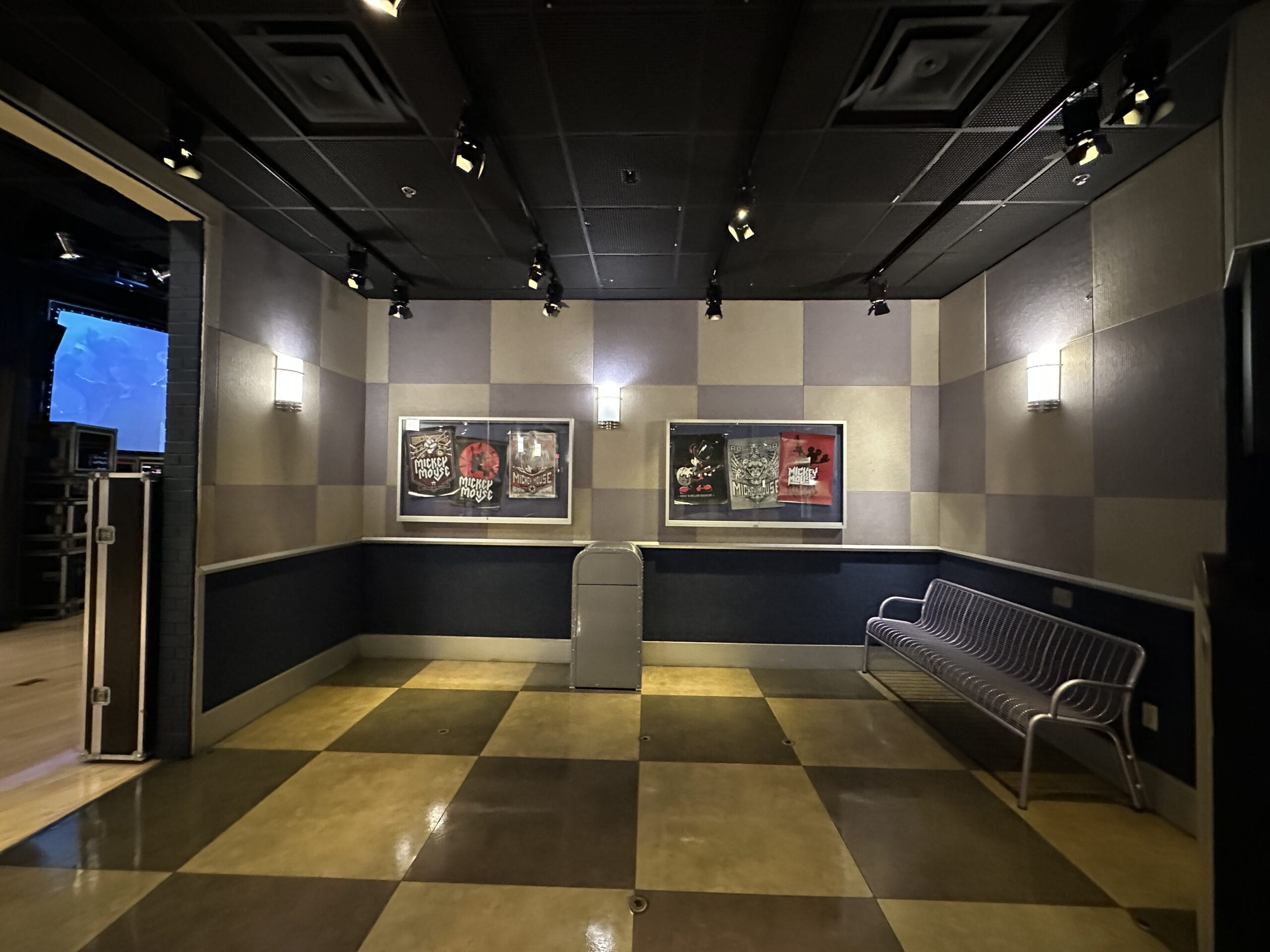
A pair of bulletin boards at one end displayed Mickey Mouse-inspired rock ‘n’ roll posters.
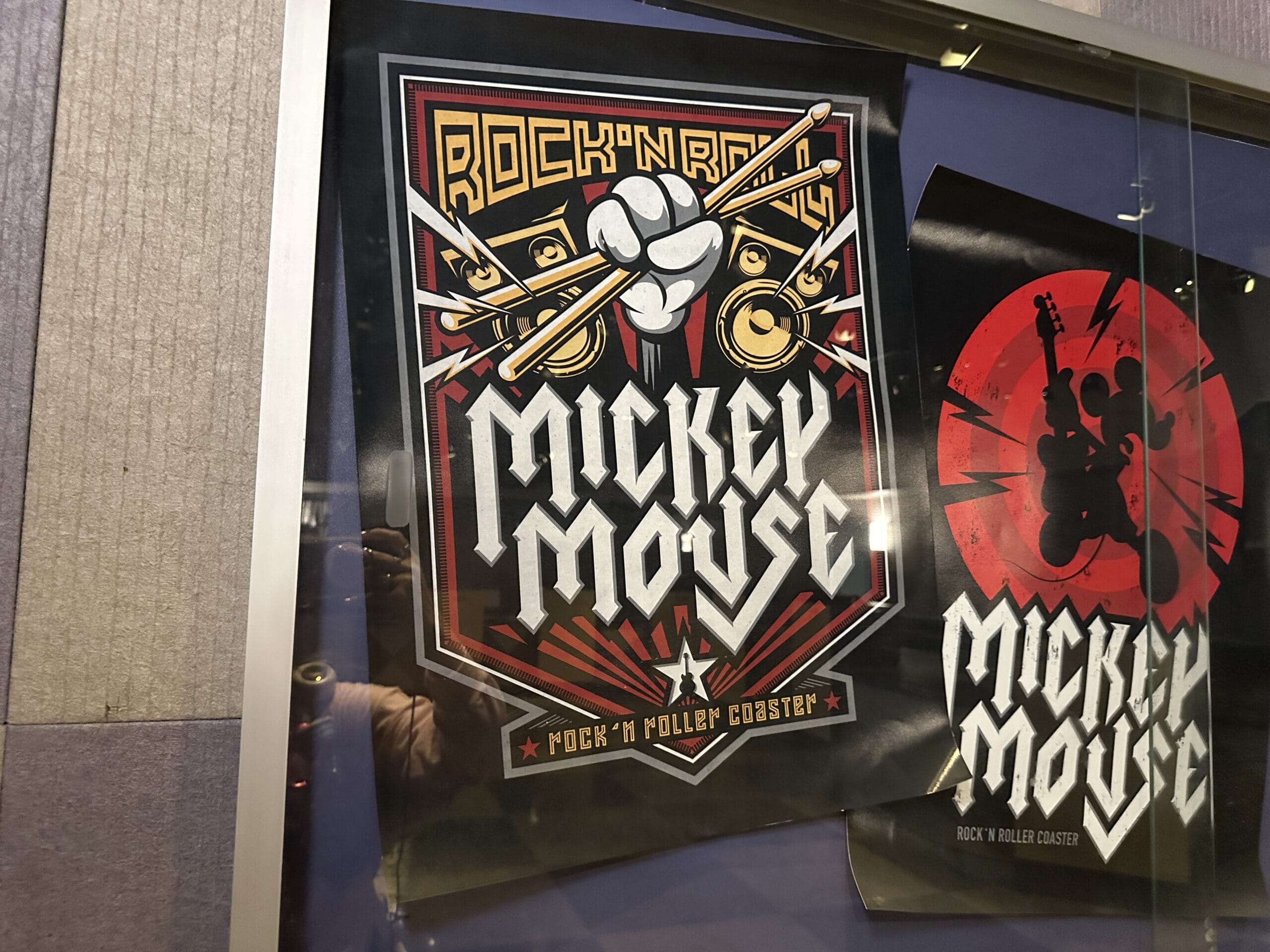
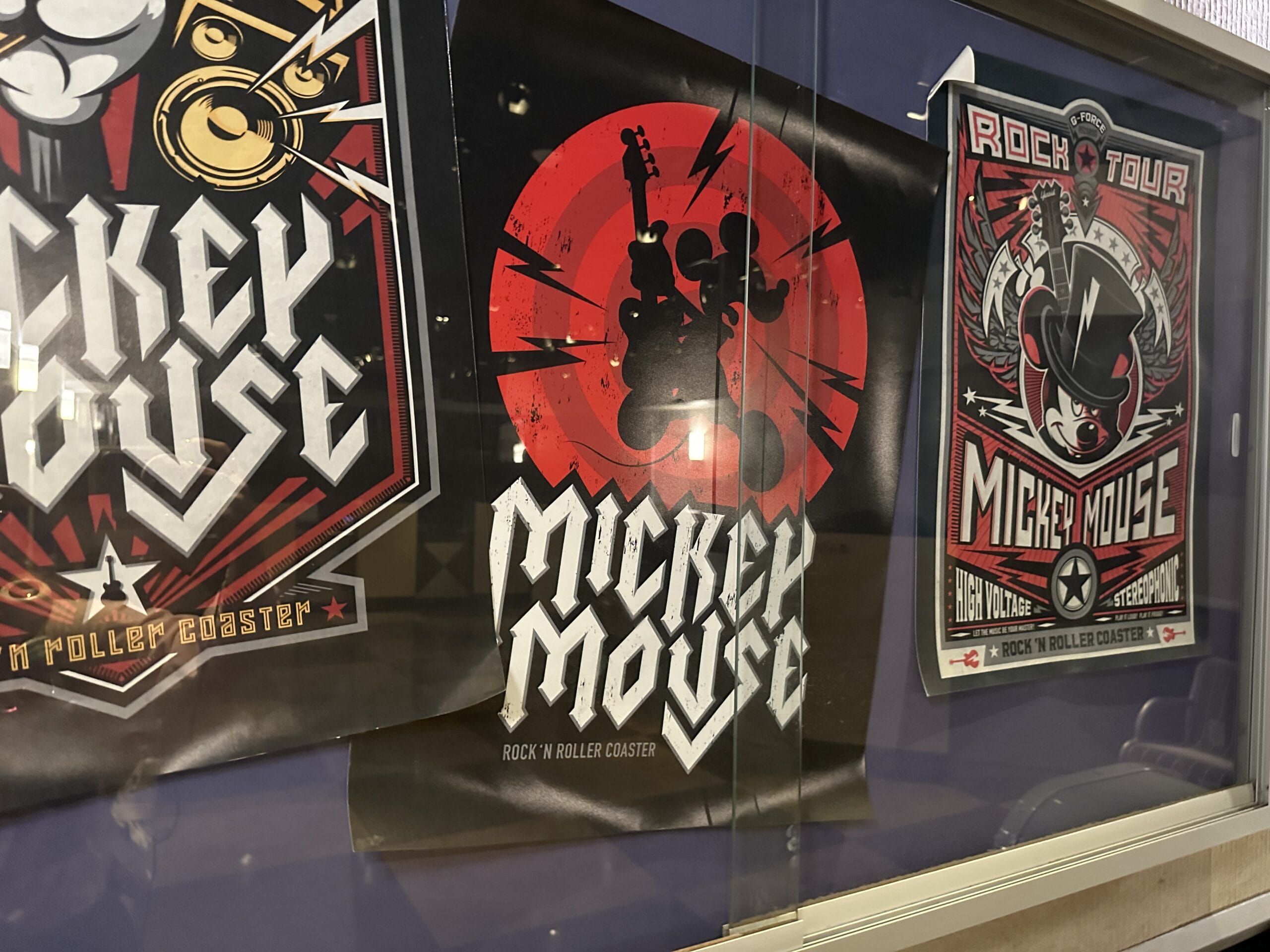
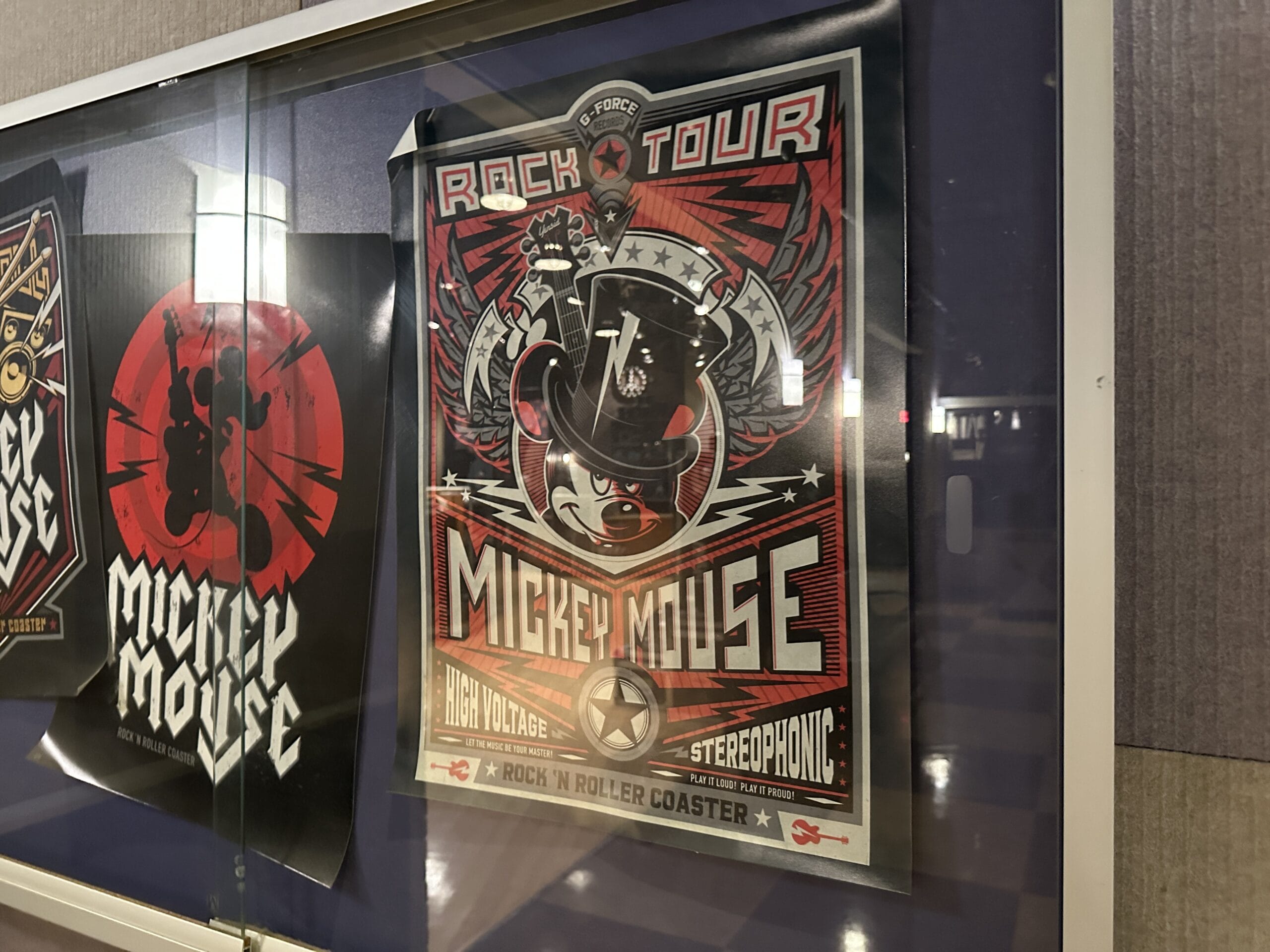
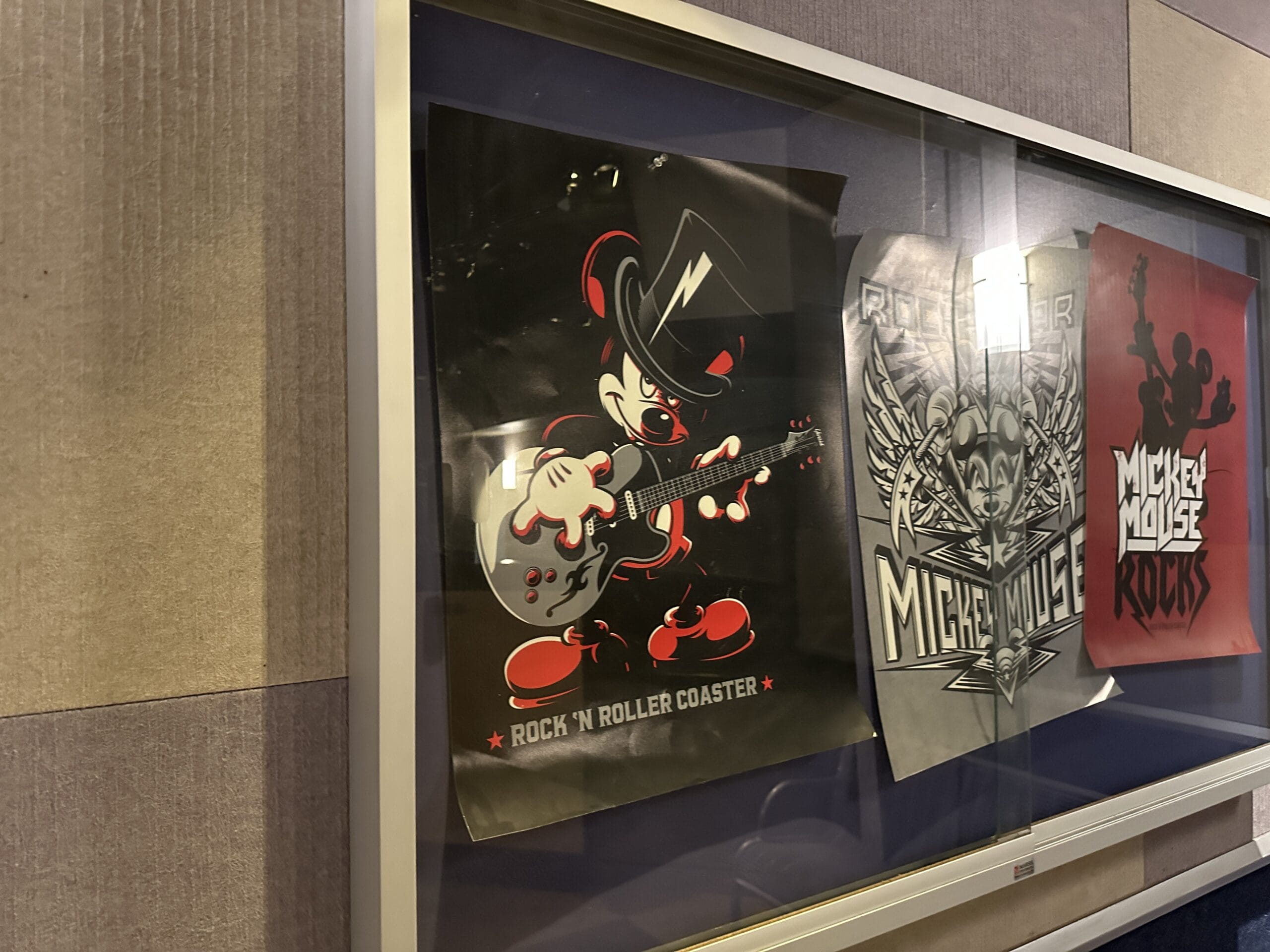
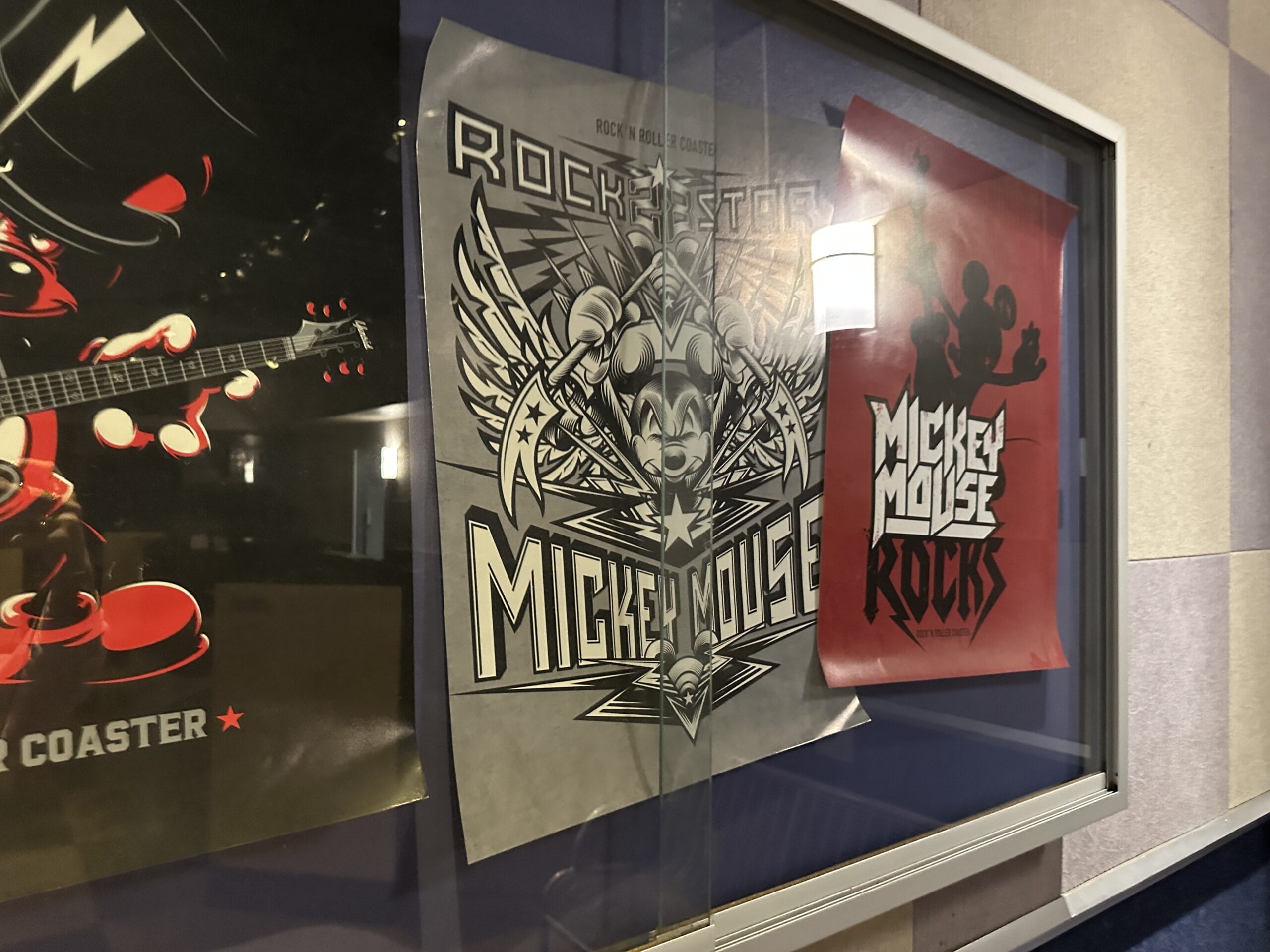
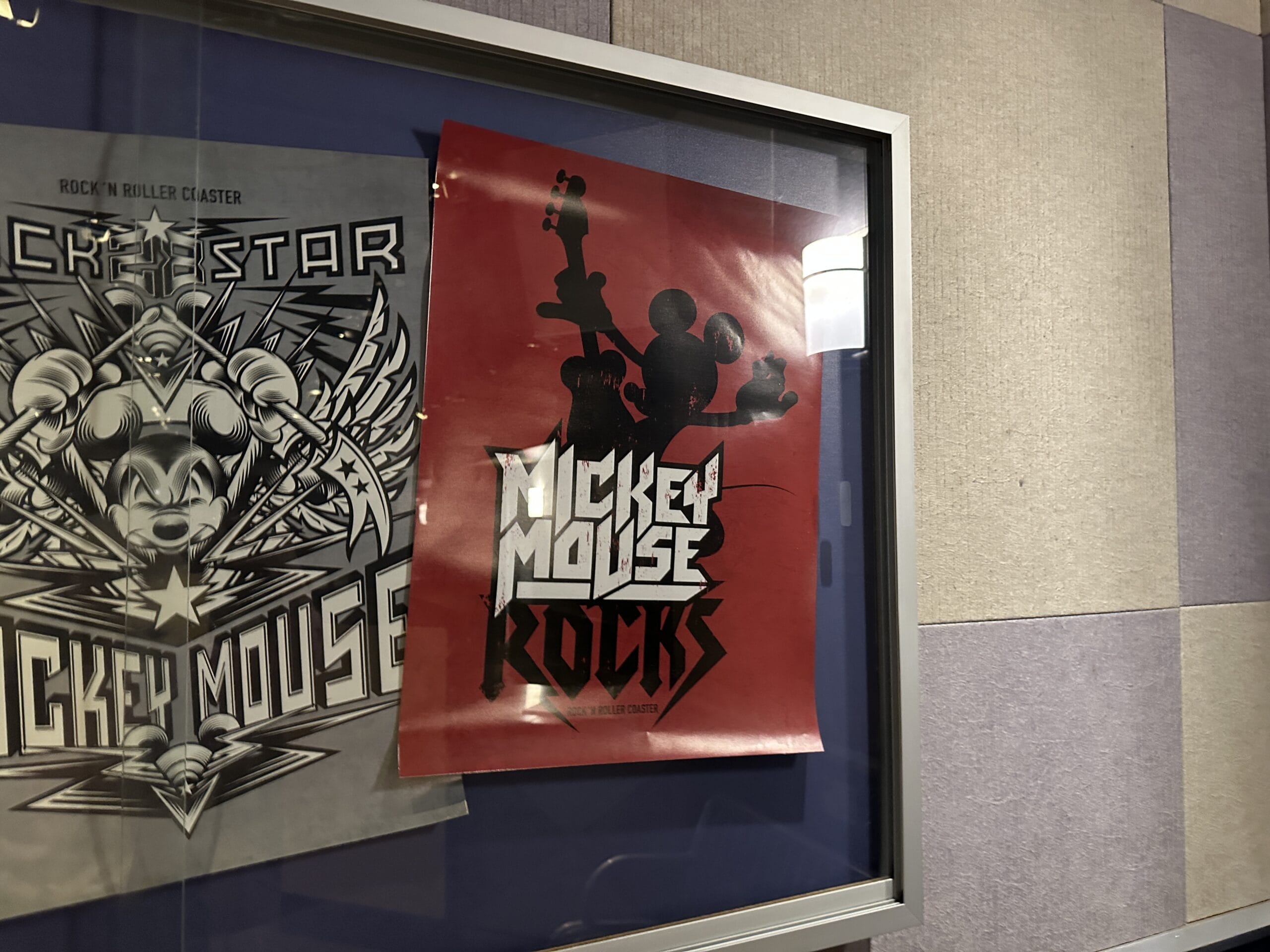
The posters were mostly red and black, depicting Mickey as a rock star with a guitar. Speakers in one poster featured a Mickey icon motif.
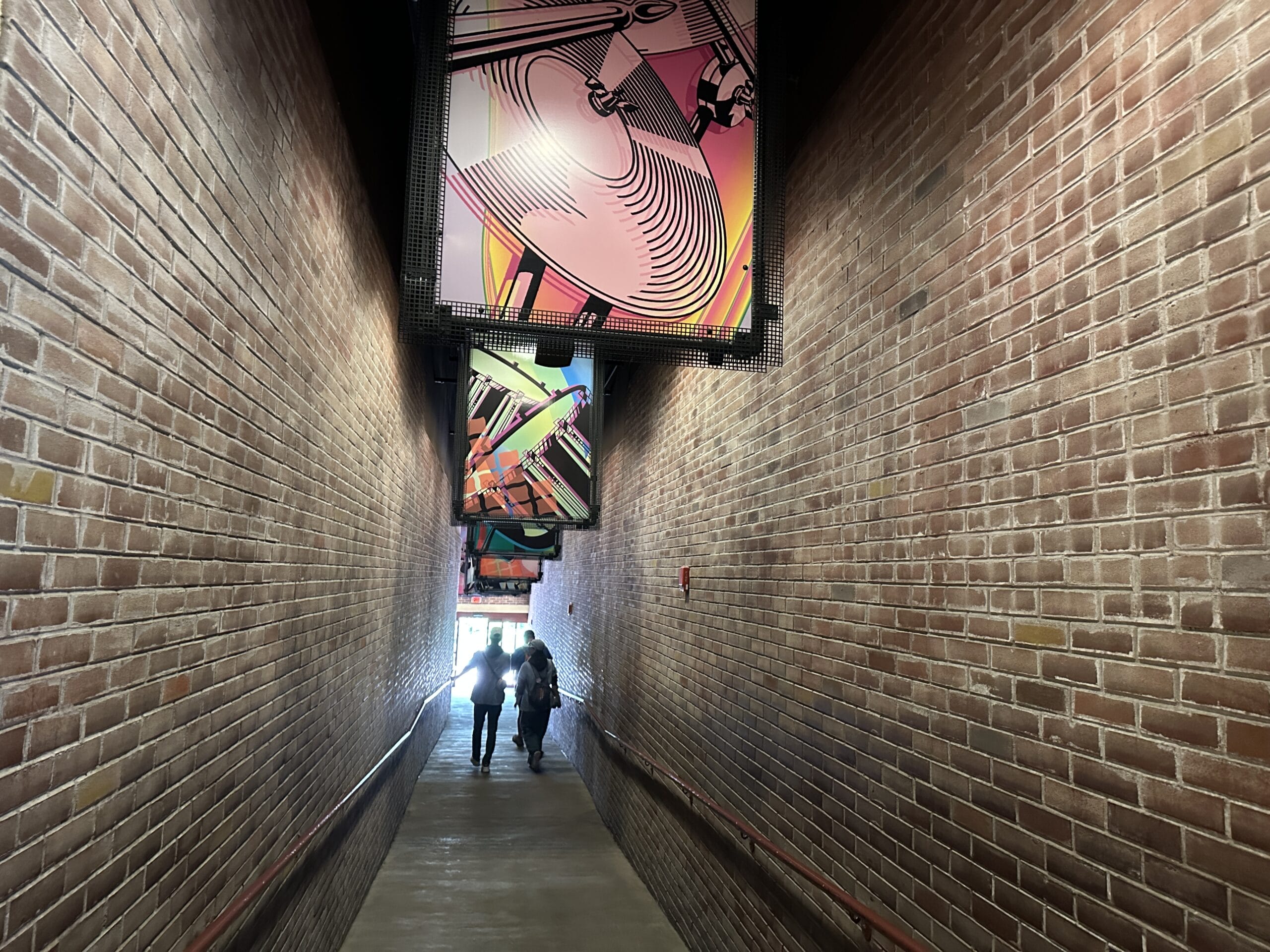
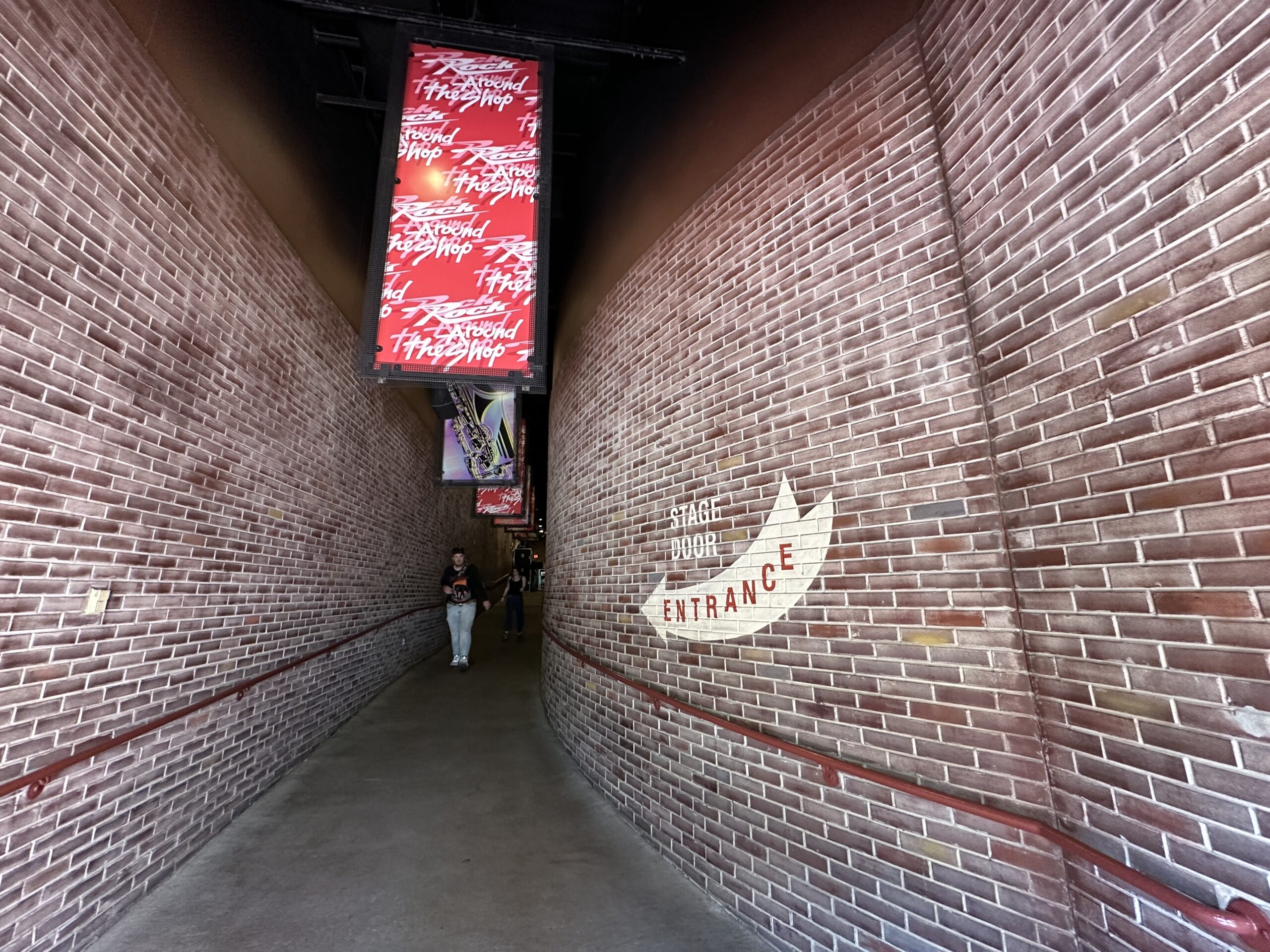
Guests who didn’t ride could enter the store down a brick hallway. This was also the exit.
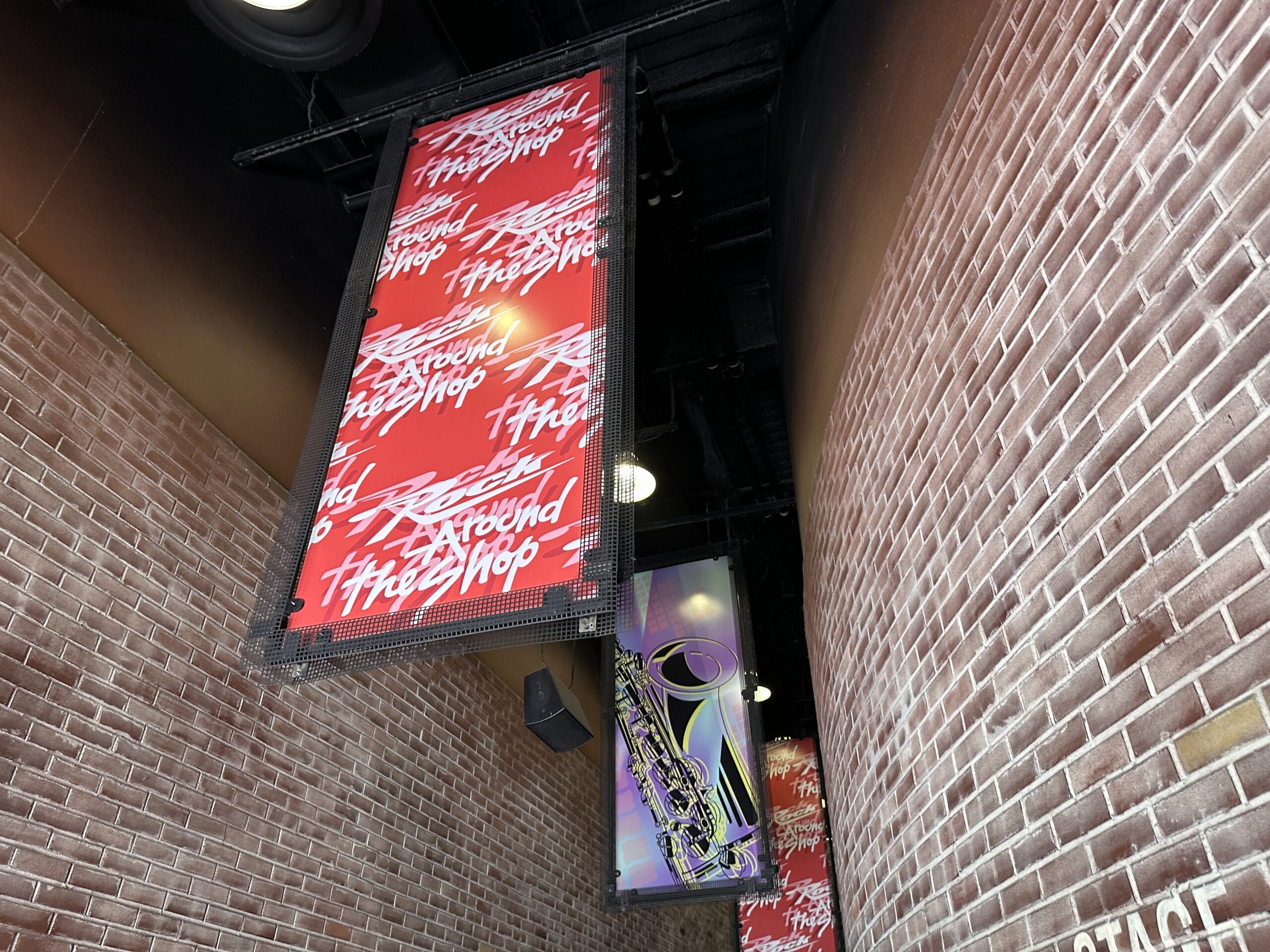
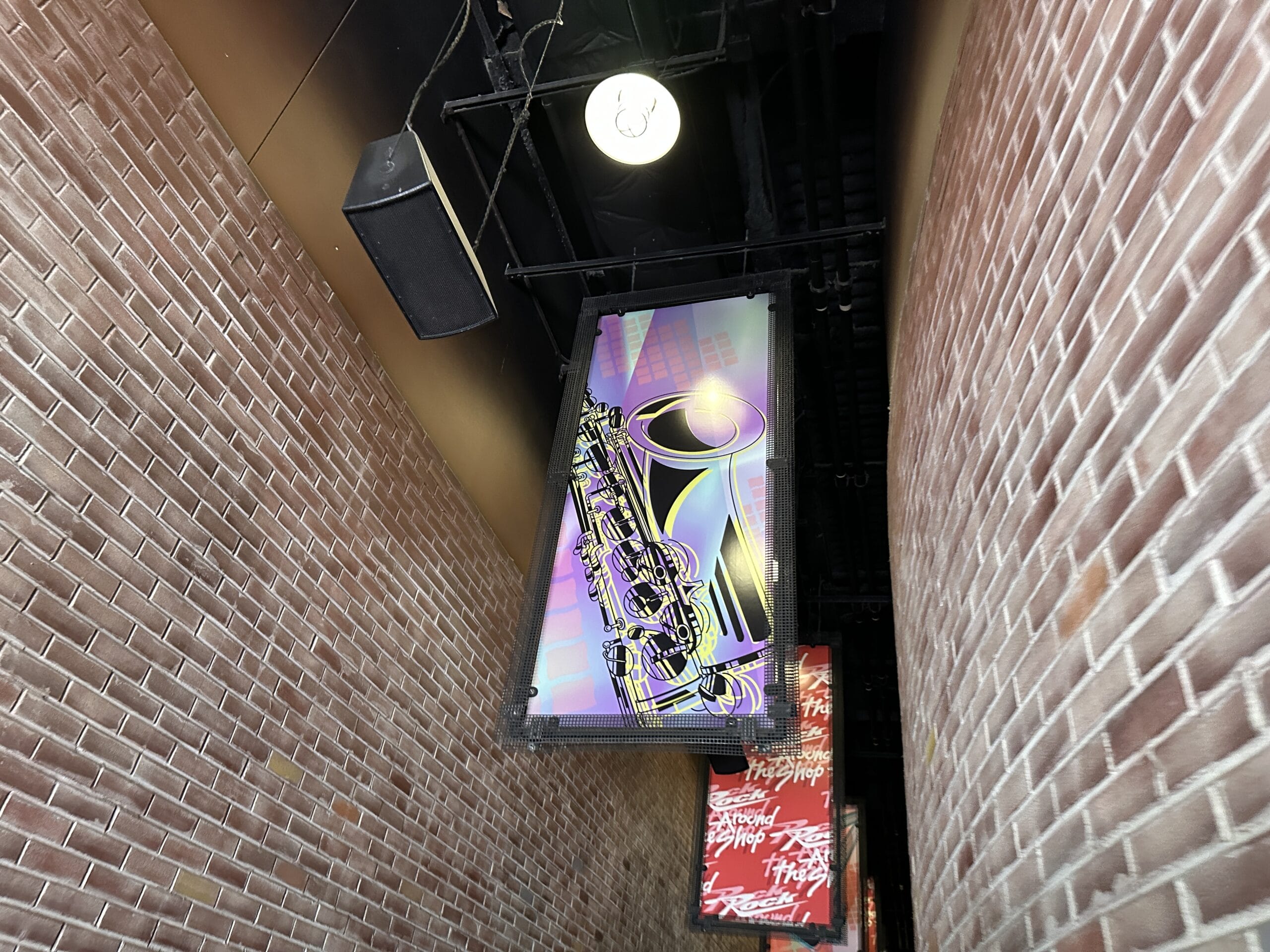
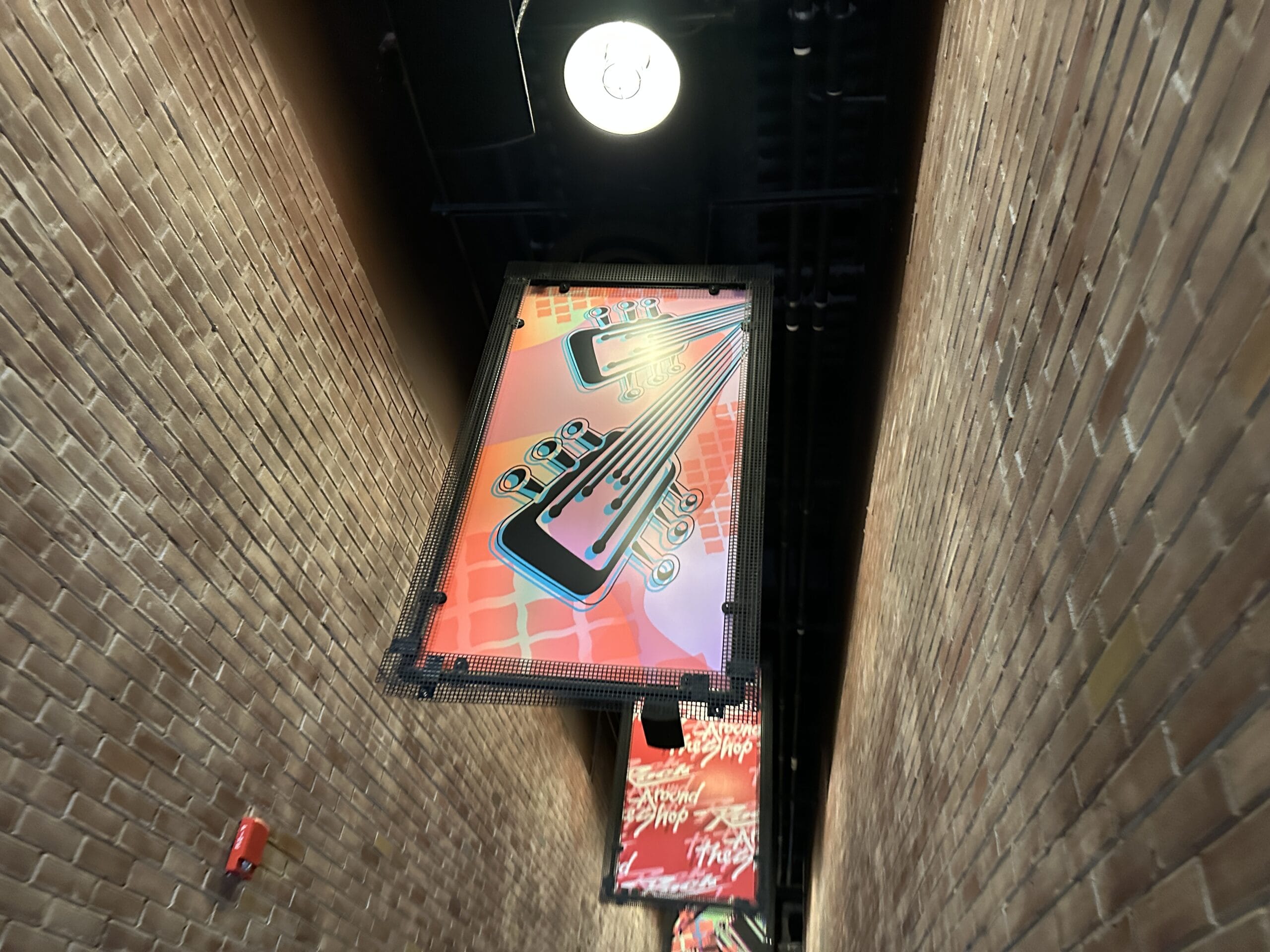
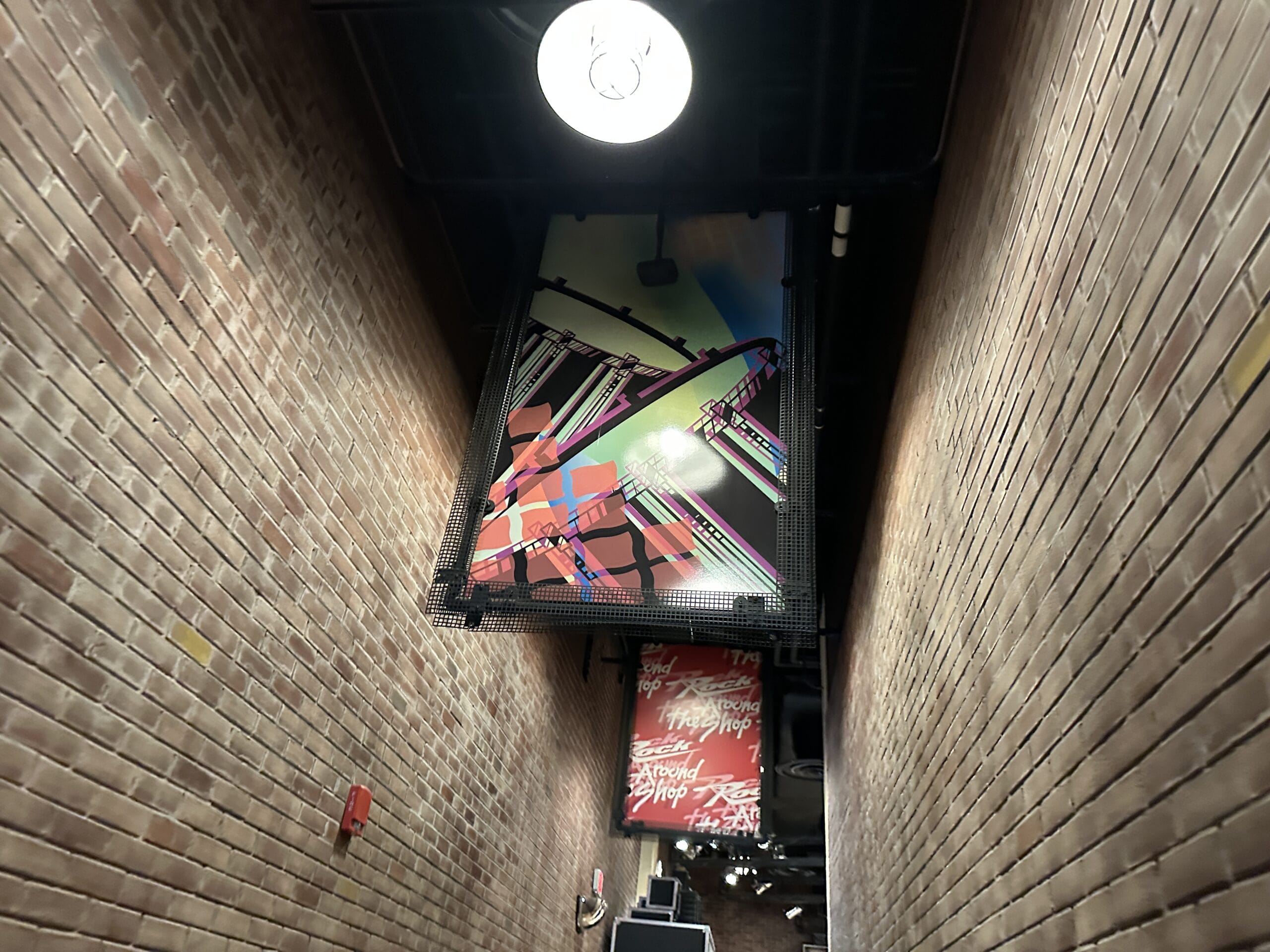
Hanging from the hallway’s tall ceiling were vibrant posters of “Rock Around the Shop” and musical instruments.

The gift shop was accessible from the outside, to the left of the giant guitar.
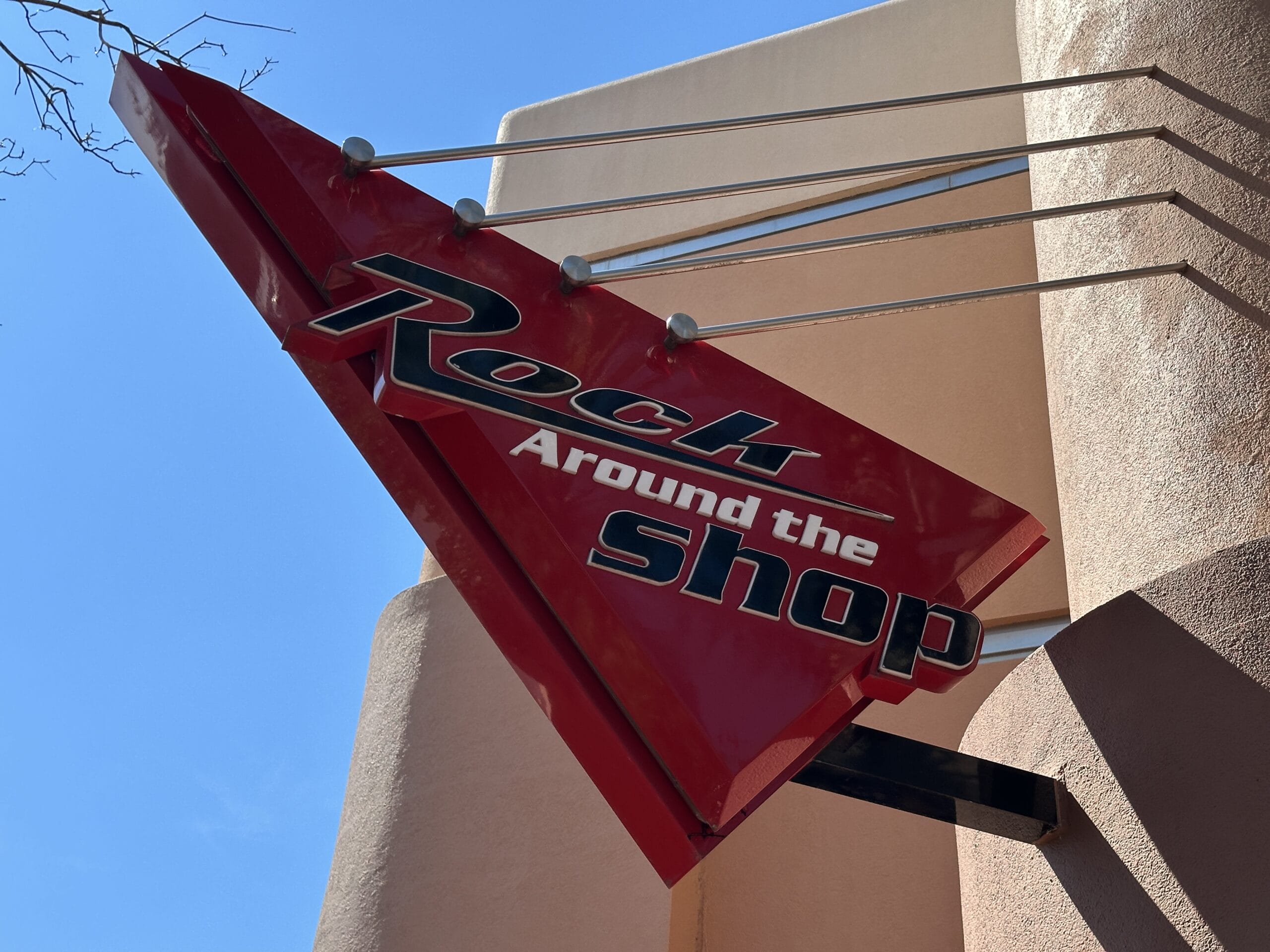
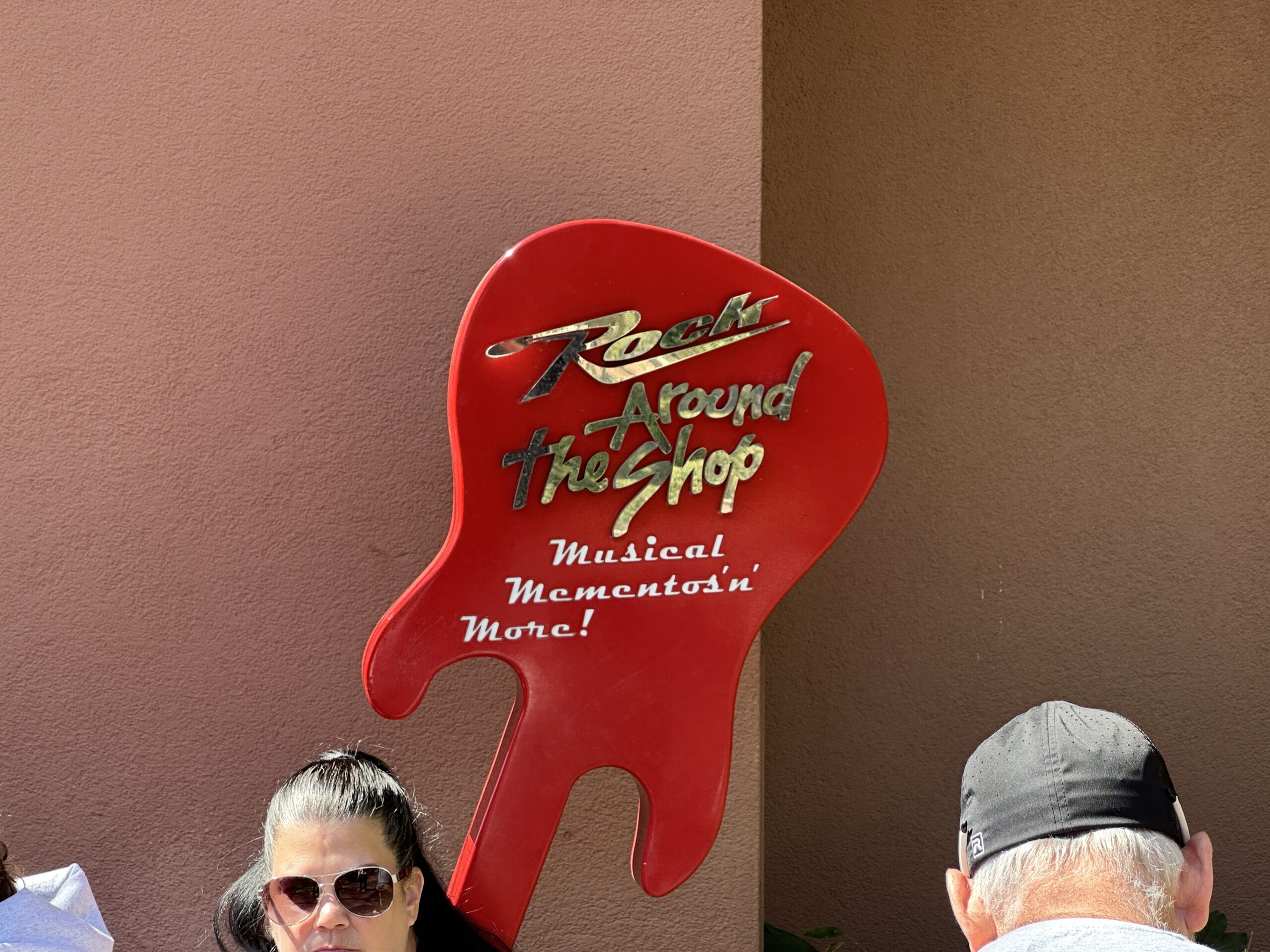
It had a triangular red sign and a guitar-shaped sign outside.
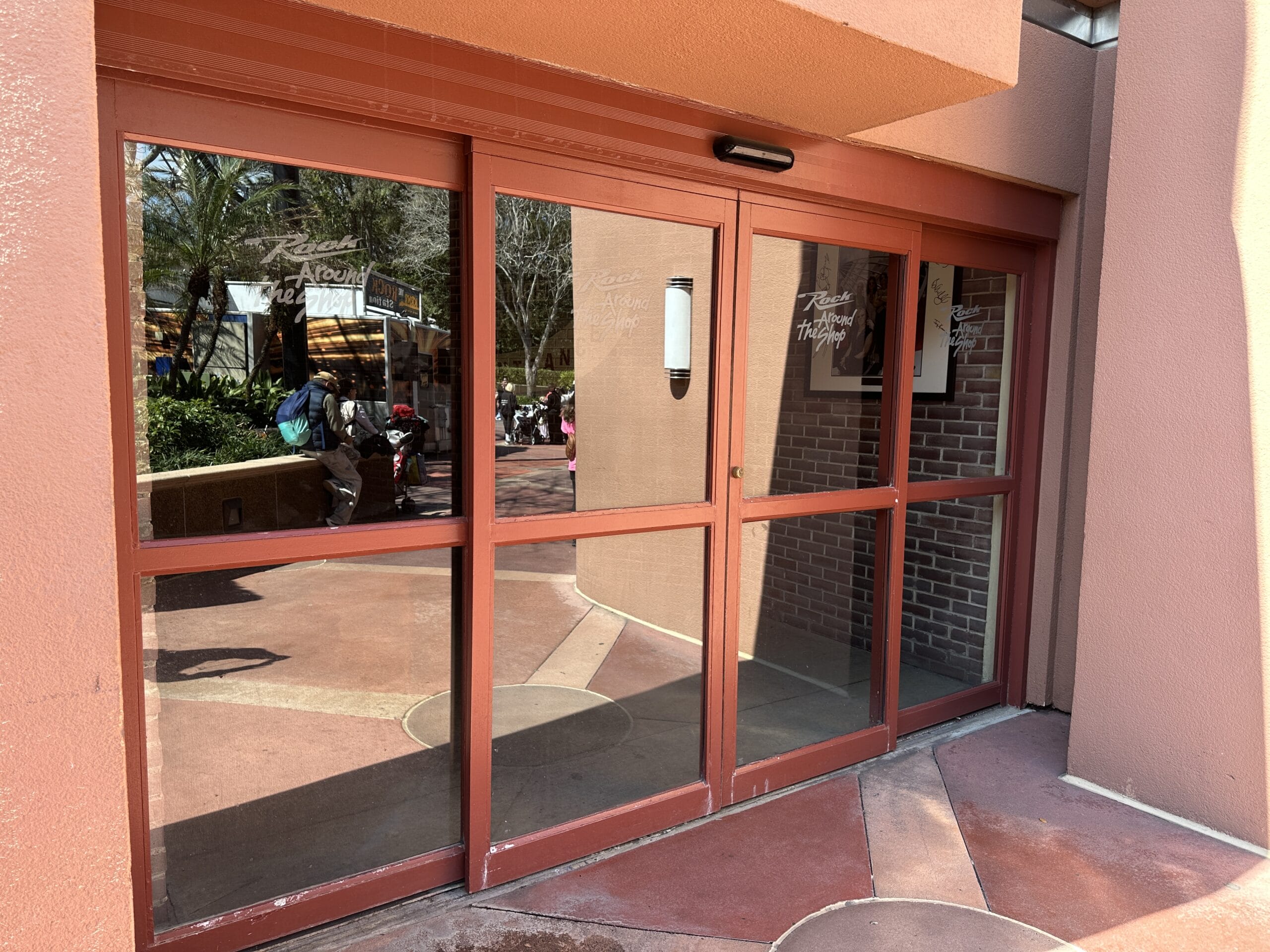
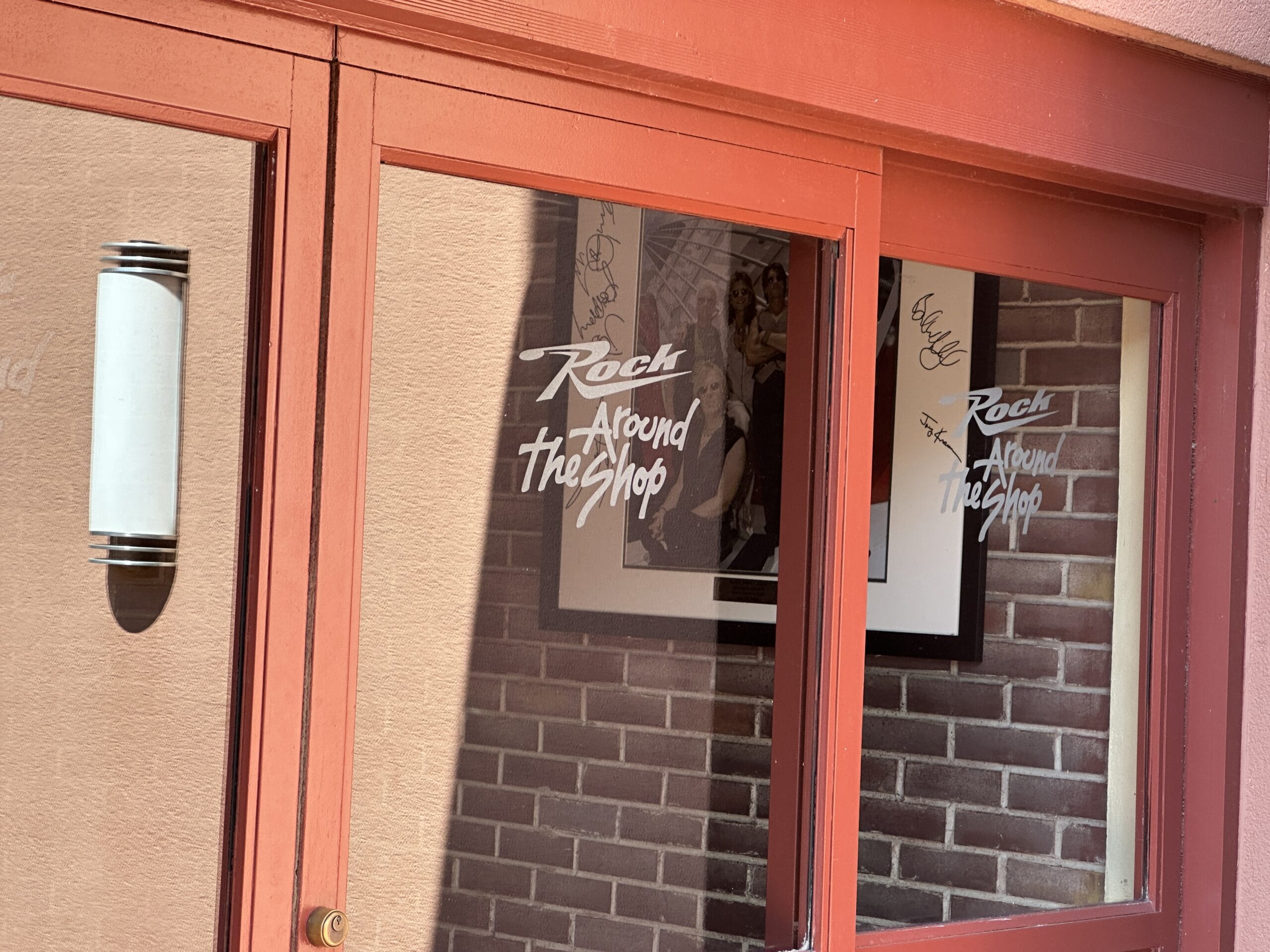
There were sliding glass doors with “Rock Around The Shop” on their windows.
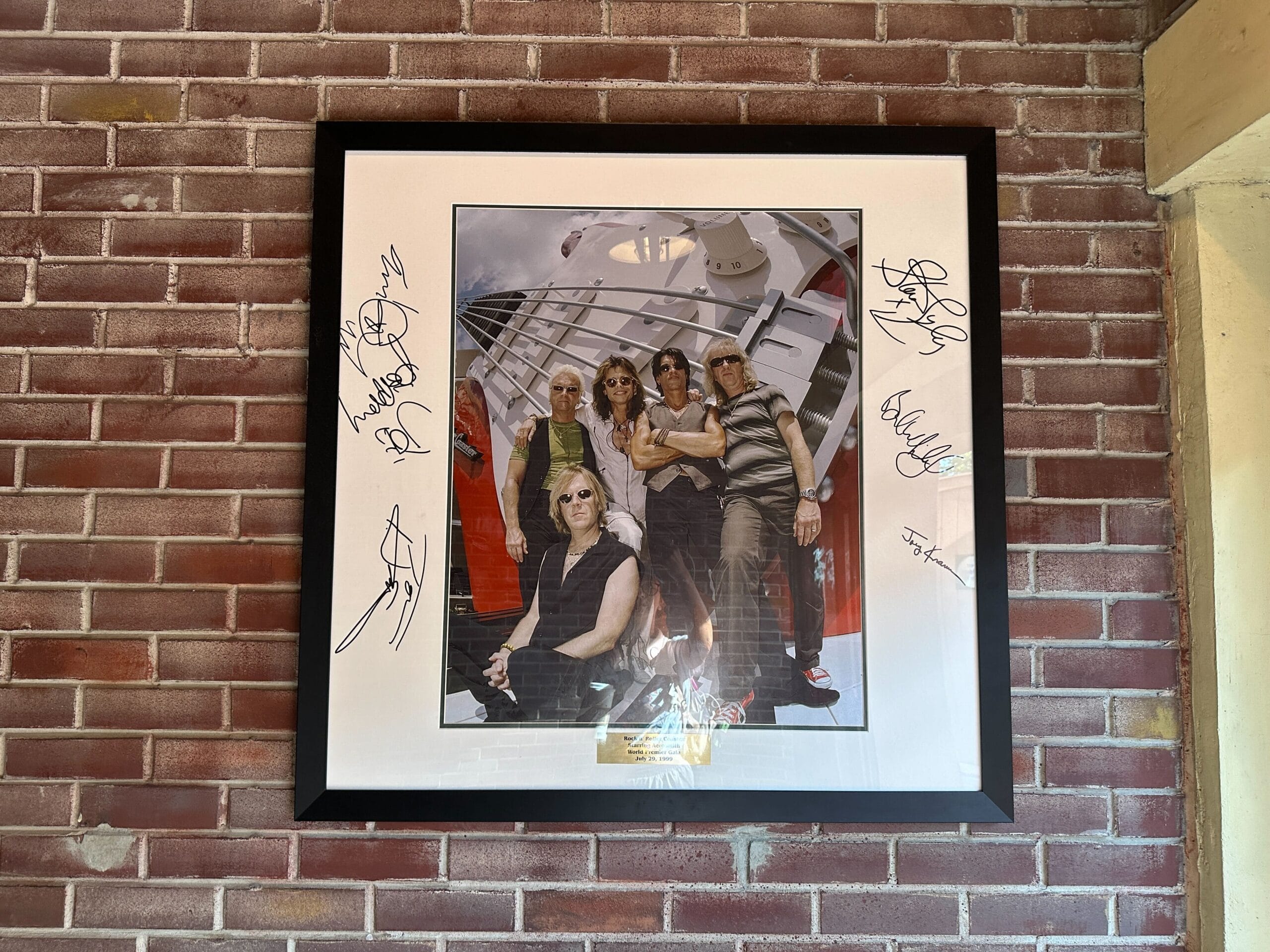
Inside the doors of the shop was a photo of Aerosmith from the ride’s grand opening, signed by each member of the band.
Will you miss Rock ‘n’ Roller Coaster Starring Aerosmith? Let us know on social media.
For the latest Disney Parks news and info, follow WDW News Today on Twitter, Facebook, and Instagram.